
A steel structure warehouse is made up of a primary steel frame, secondary steel members, roof and wall cladding panels, purlins, doors, windows, and drainage and ventilation systems.
When planning an industrial facility, you face severe risks like unpredictable construction delays, escalating maintenance costs, and structural integrity failures. These issues directly erode your operational efficiency and long-term profitability, creating unnecessary stress and wasted capital. This comprehensive engineering guide to prefabricated steel structure warehouse construction provides the detailed component breakdown you need to ensure a secure, cost-effective, and highly efficient build.
What is the Primary Frame of a Steel Structure Warehouse?
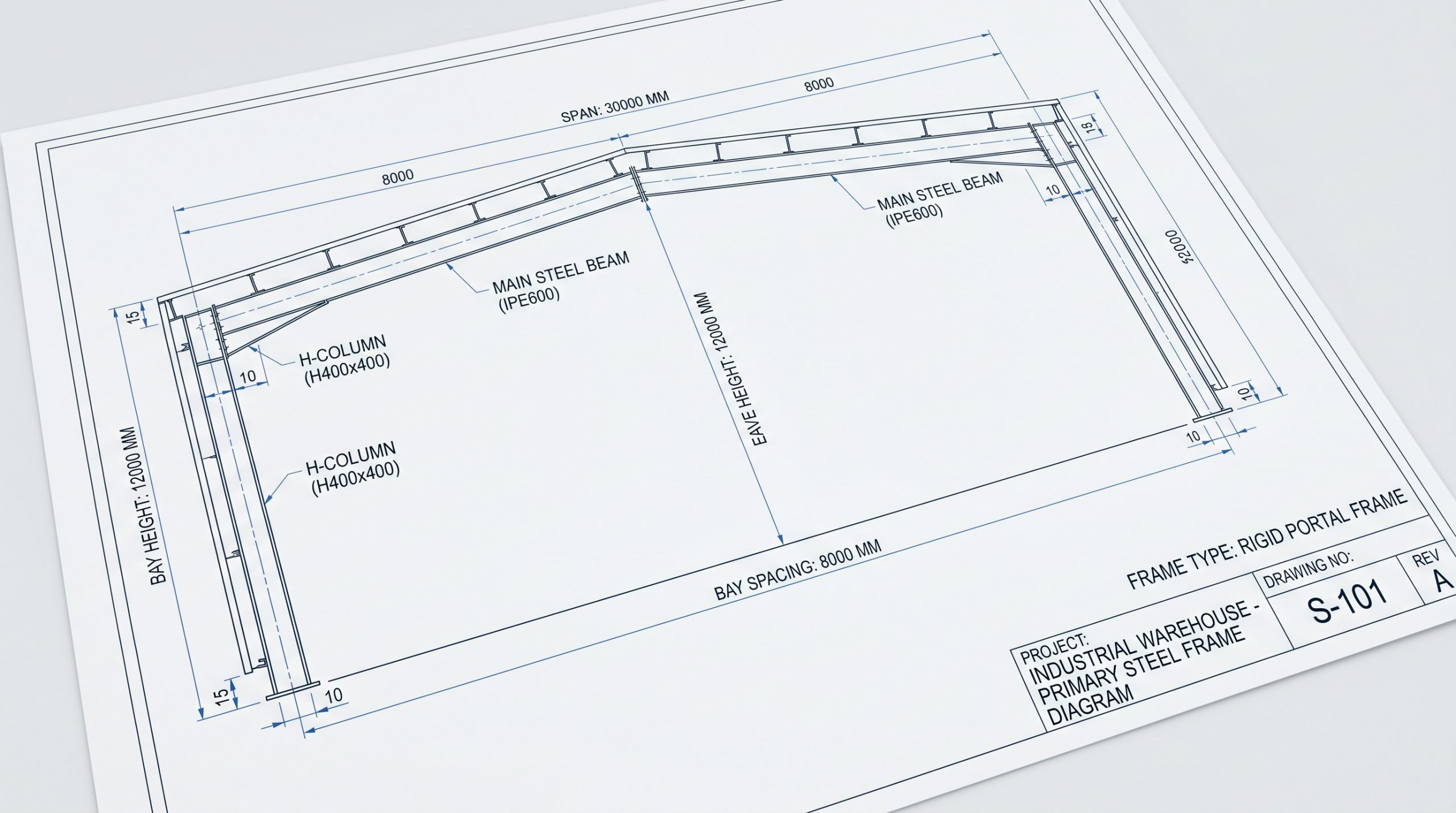
The primary frame of a steel structure warehouse consists of high-strength structural steel columns and roof beams that support the overall structural load of the building. These main members are engineered to transfer vertical and lateral forces, such as wind and seismic loads, safely down to the foundation.
Typically fabricated from high-grade Q355B structural steel, this framework serves as the rigid backbone of your entire industrial facility. Precision engineering ensures that these primary components install quickly on-site with bolt connections.
How Do Steel Columns Support Your Warehouse?
Steel columns are the vertical structural supports designed to bear the compressive weight of the roof and crane systems.
Here is the key: You must choose the right steel grade and column shape to match your height and load requirements.
- H-section columns: Ideal for rigid portal frame configurations.
- Box-section columns: Recommended for high-load or multi-story structures.
- Anchor bolt connection plates: Securely welded to the column base for foundation anchoring.
When you utilize precision-engineered columns, they prevent structural deflection under extreme weather events. These columns are sandblasted and primed to resist rust and environmental wear over decades.
What Role Do Roof Beams Play in Structural Integrity?
Roof beams are the horizontal or sloped primary structural members that form the portal frame and support the roof assembly.
Think about it. Without robust roof beams, your facility would lack the structural strength to handle heavy snow loads or integrated hanging crane equipment.
- Tapered or uniform H-beams: Optimized for span and weight.
- Rigid frame knee joints: High-strength bolted flange connections.
- Pre-drilled connection plates: Pre-engineered for seamless on-site installation.
Your engineering team determines the exact beam profile and thickness based on the clear span you require. This optimization ensures you get a wide, column-free interior space for maximized storage.
Key Takeaway: The primary steel frame determines the structural safety limit and spatial capacity of your facility, meaning investment in high-grade Q355B steel pays off in long-term safety and maximum usable clearance.
| Component | Material Grade | Core Function | Standard Coating | |
|---|---|---|---|---|
| Steel Columns | Q355B / Q235B | Vertical load-bearing support | Sandblasted, anti-corrosive primer & finish | |
| Roof Beams | Q355B / Q235B | Horizontal roof & span support | Heavy-duty zinc-rich primer |
Selecting the correct grade of primary steel is the single most important decision in preventing structural failures under extreme wind loads.
Why Are Secondary Members Needed in a Steel Structure Warehouse?
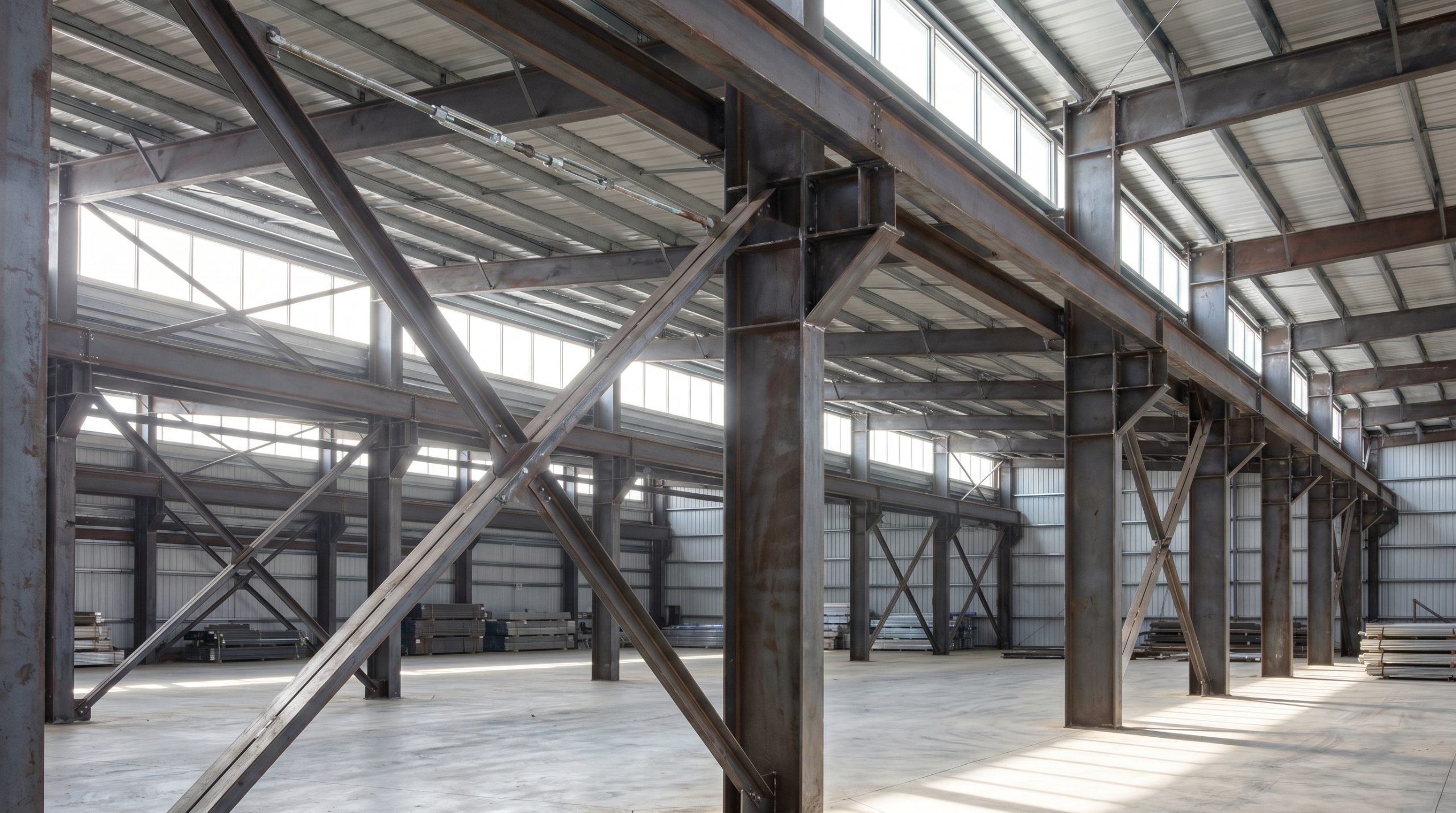
Secondary steel members are essential to a steel structure warehouse because they provide vital structural bracing, distribute lateral loads, and secure the primary frame from twisting or buckling. These components connect the main portal frames to create a rigid, unified, three-dimensional system.
Without these secondary elements, the primary columns and beams would remain vulnerable to structural failure under dynamic wind and seismic forces. They play a critical role in maintaining the perfect alignment of your entire building.
How Do Bracing Systems Stabilize the Building?
Bracing systems transfer the lateral forces acting on the walls and roof directly to the foundation.
The best part? These elements can be adjusted easily during construction to ensure perfect vertical alignment of the columns.
- X-bracing: Utilizing steel rods or angle steel for high-efficiency wind resistance.
- Horizontal roof bracing: Stabilizing the primary rafters.
- Column cross-bracing: Reinforcing the side walls of the structure.
You will find that proper bracing is crucial in coastal zones or high-wind areas. It ensures the structural frame stays square, protecting the exterior panels from warping or leaking.
What Are Tie Rods and Fly Bracings Used For?
Tie rods and fly bracings prevent lateral displacement of the primary rafters and keep the purlins from rotating under load.
But that’s not all. They also prevent structural steel elements from shifting during sudden thermal expansion or contraction.
- Fly bracing: Connecting the bottom flange of beams to purlins.
- Tie rods: Heavy-duty pipe or angle steel running between frame bays.
- Sag rods: Threaded steel rods keeping purlins straight and level.
Your structure depends on these minor connections to achieve its calculated load-bearing capacity. They are simple to install but act as critical insurance for your primary frame’s alignment.
Key Takeaway: Secondary steel members prevent structural twisting and localized failures, making them indispensable for warehouses located in regions prone to heavy winds or earthquakes.
| Component | Material/Type | Standard Dimension | Primary Role | |
|---|---|---|---|---|
| X-Bracing | Round bar or angle steel | Φ20mm to Φ32mm | Lateral wind load transfer | |
| Fly Bracing | L-angle steel | L50x5 to L75x6 | Prevents main beam buckling | |
| Tie Rods | Circular steel tube | Φ89mm to Φ114mm | Keeps structural frames aligned |
Integrating robust bracing configurations drastically reduces the risk of structural collapse during extreme weather events.
Build your steel structure warehouse now – durable, efficient, custom!
Email:sales@showhoo.com.cn
Phone/WhatsApp: + 86 186 7895 5927
Which Roof and Wall Panels Suit Your Steel Structure Warehouse?
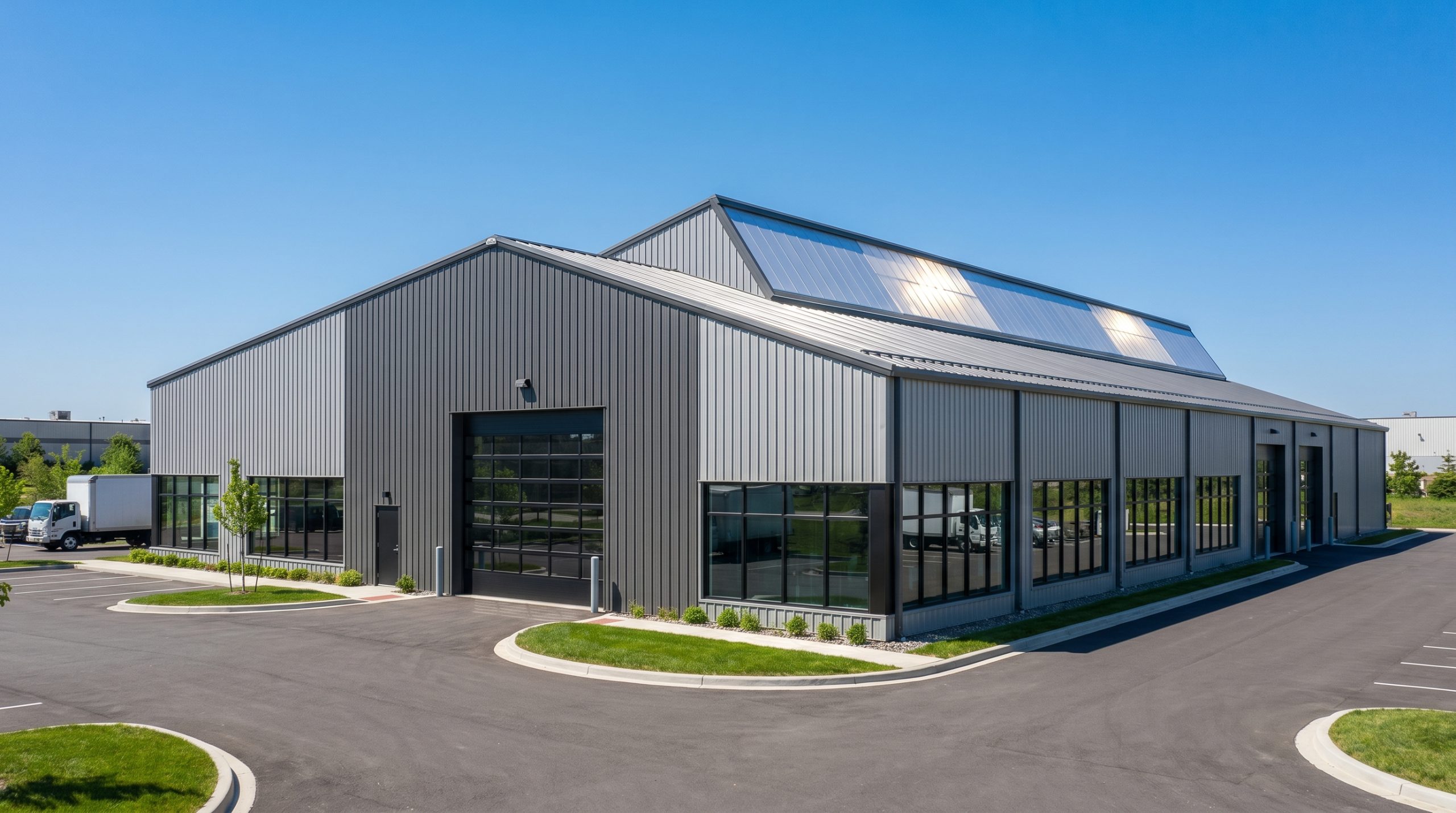
Selecting the right roof and wall panels for your steel structure warehouse is critical because they form the protective envelope that shields your assets from external elements and regulates internal climate. These panels determine your facility’s energy efficiency, aesthetic appeal, and fire resistance.
You can choose between single-skin corrugated metal sheets and fully insulated composite panels depending on your budget and environmental demands. The correct selection directly impacts your operating costs and the safety of stored inventory.
When Should You Choose Insulated Sandwich Panels?
Insulated sandwich panels are thermal barrier panels made of an insulating core sandwiched between two protective steel sheets.
Here is the key: If you run a temperature-controlled storage facility, sandwich panels are absolutely necessary to prevent heat transfer and energy waste.
- Polyurethane (PU/PIR) panels: Highest thermal insulation value.
- Rockwool panels: Maximum fire rating and sound absorption.
- EPS panels: Budget-friendly lightweight insulation.
When you invest in high-density insulation cores, you significantly lower your monthly heating and cooling bills. They also prevent internal moisture buildup, which can damage sensitive products.
Are Single-Skin Steel Sheets a Viable Option?
Single-skin corrugated steel sheets are non-insulated, high-strength metal panels designed for simple, cost-effective cladding.
Why does this matter? If your building does not require heating, these panels offer an exceptionally durable barrier at a fraction of the cost.
- Pre-painted galvanized steel (PPGI): Enhanced with Aluzinc coatings for rust prevention.
- Optimized thickness: Ranging from 0.3mm to 0.8mm for high durability.
- Deep corrugation profiles: Designed for efficient rainwater shedding.
You will appreciate their easy handling and ultra-fast installation times on site. If condensation is a concern, you can apply an anti-condensation felt to the underside.
Key Takeaway: Your choice between single sheets and insulated panels directly dictates the building’s thermodynamic performance, fire safety rating, and total upfront material investment.
| Panel Type | Core Insulation | Standard Thickness | Best Use Case | |
|---|---|---|---|---|
| Sandwich Panel (PU) | Polyurethane | 50mm – 150mm | Cold storage, climate-controlled spaces | |
| Sandwich Panel (Rockwool) | Mineral Rockwool | 50mm – 150mm | High fire risk environments | |
| Corrugated Sheet | None (Galvanized) | 0.4mm – 0.6mm | Unheated storage, dry climates |
Modern composite panels combine excellent thermal properties with superior fire resistance to safeguard valuable commercial assets.
What Is the Purpose of Purlins in a Steel Structure Warehouse?
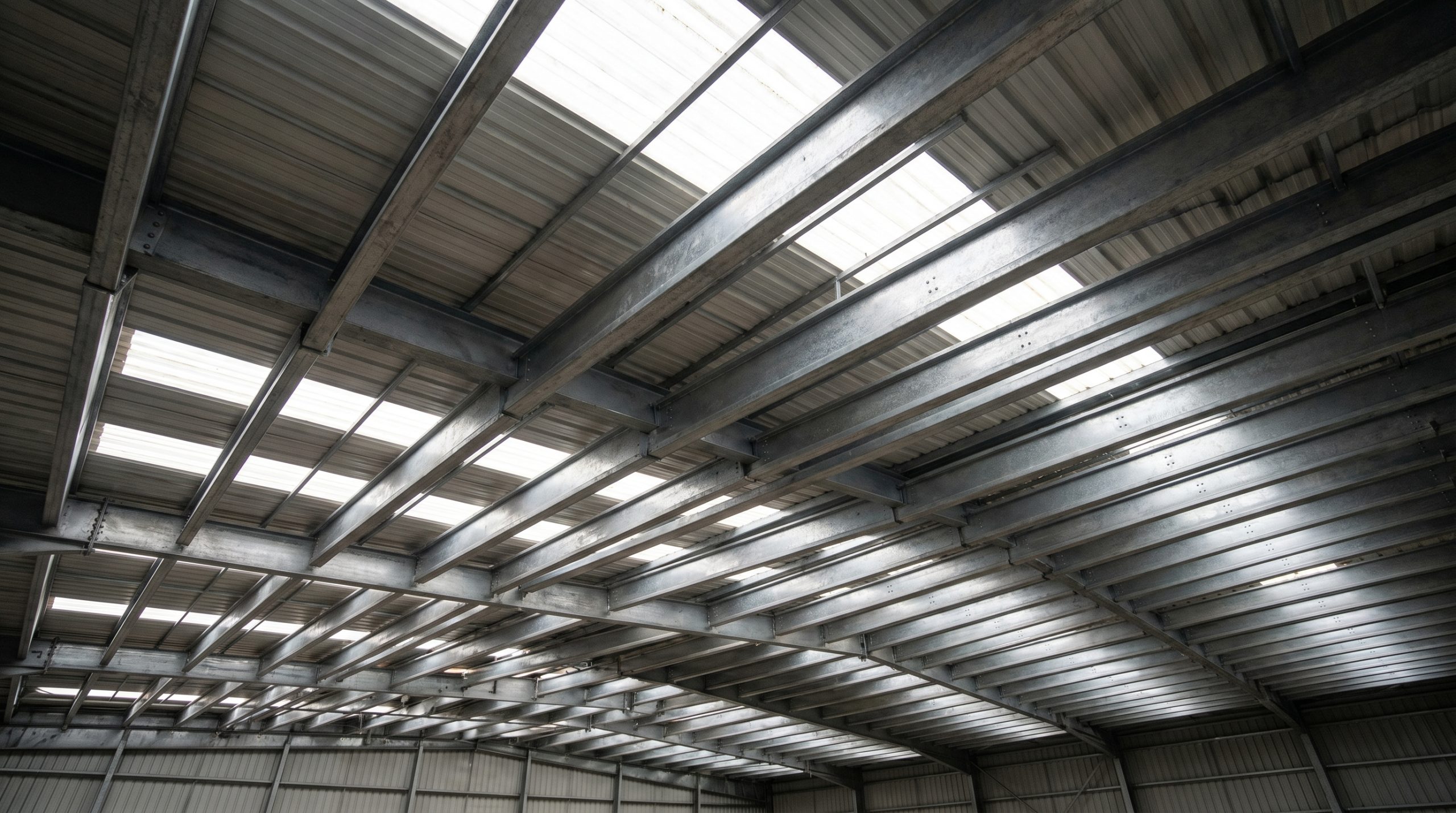
Purlins in a steel structure warehouse serve as the secondary structural supports that run horizontally across the rafters to support and secure the roof and wall cladding. They bridge the gap between the main frame sections and distribute the weight of the panels evenly.
Made from cold-formed galvanized steel, these structural elements must resist sagging and twisting while carrying heavy live and dead loads. They are critical for establishing a secure, flat plane for panel attachment.
How Do C and Z Purlins Differ in Performance?
C and Z purlins are roll-formed steel profiles with different cross-sections tailored for specific structural spans and structural systems.
The best part? Knowing how to choose between them can save you substantial material and installation costs during design.
- C-purlins: Ideal for single-span framing and wall girts.
- Z-purlins: Designed for continuous lap joining to double structural capacity.
- High-yield galvanized steel: Typically Q235 or Q355 standard.
When you utilize Z-purlins, you can overlap them over the frame rafters to create a stronger, more continuous beam. This layout dramatically increases the structural capacity of wide-span warehouses.
Why is Purlin Galvanization Critical for Longevity?
Galvanization is the process of applying a protective zinc coating to steel to prevent rust, corrosion, and environmental degradation.
Think about it. Purlins are positioned directly behind the roof sheets where condensation frequently gathers and pools.
- Hot-dip zinc coating: Standard of Z60 to Z275 g/m² for long-term protection.
- Self-healing properties: Zinc protects adjacent exposed cut edges from corrosion.
- Maintenance-free lifecycle: Lasting decades without needing paint.
Your facility cannot afford structural rusting in the secondary framing, as this leads directly to sagging roof sheets and water entry. Using galvanized components prevents structural failure and extends your building’s lifespan.
Key Takeaway: Utilizing high-tensile, galvanized C and Z purlins provides the flat, rust-resistant foundation needed for flawless, secure roof panel integration.
| Profile Type | Standard Coating | Typical Depth | Yield Strength | |
|---|---|---|---|---|
| C-Purlin | Galvanized Z60 – Z275 | 120mm – 300mm | Q235B / Q355B | |
| Z-Purlin | Galvanized Z60 – Z275 | 120mm – 300mm | Q235B / Q355B |
Optimizing purlin spacing and thickness reduces structural steel weight without compromising critical snow load capacities.
Build your steel structure warehouse now – durable, efficient, custom!
Email:sales@showhoo.com.cn
Phone/WhatsApp: + 86 186 7895 5927
How Do Openings Optimize a Steel Structure Warehouse?
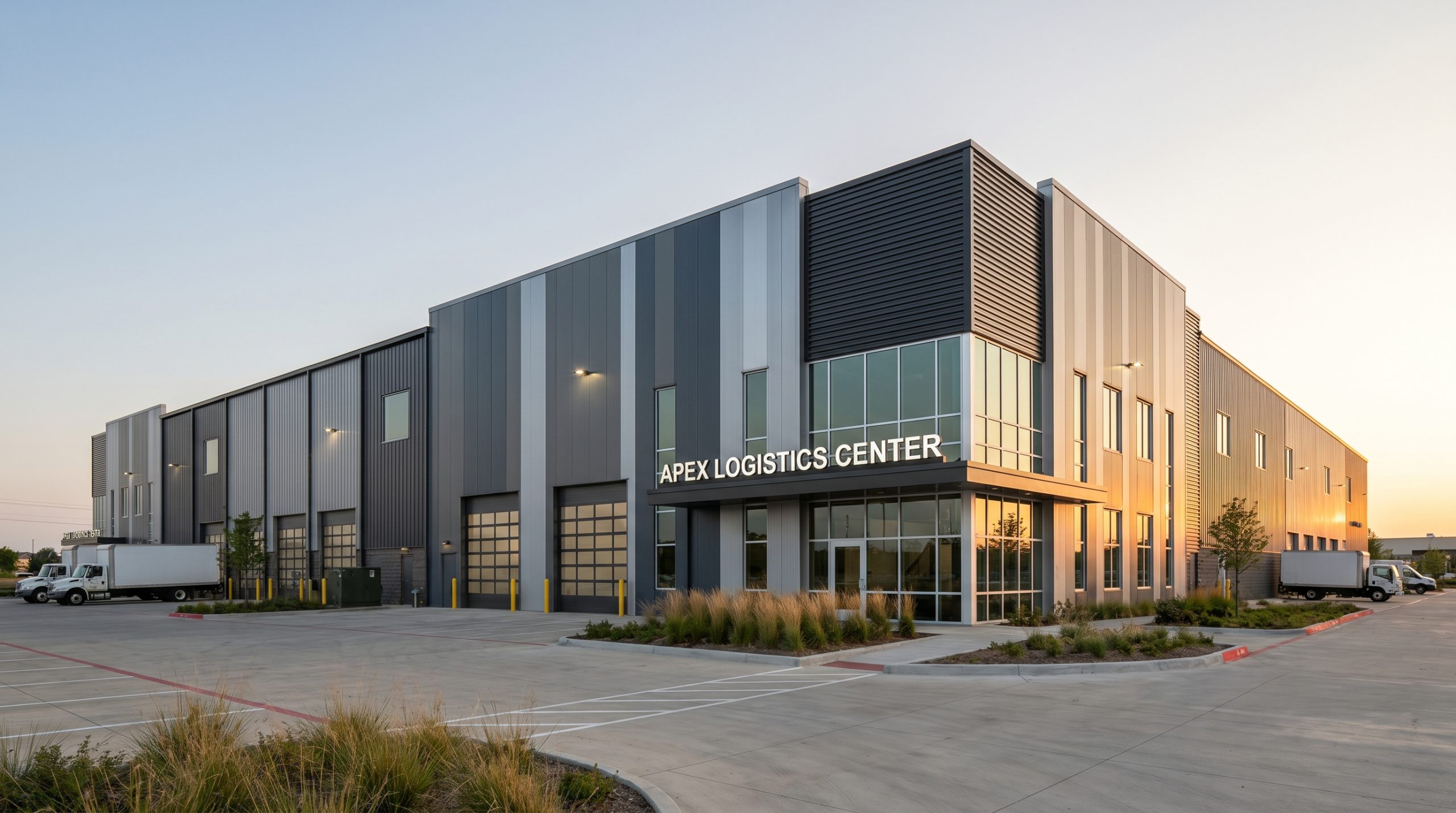
Openings optimize a steel structure warehouse by providing critical logistics access, natural illumination, and structural security for your daily operations. Properly planned and framed doors, windows, and skylights ensure that your facility remains highly functional, energy-efficient, and secure.
Neglecting these access points during the early engineering phase can lead to high energy consumption, poor material flow, and structural weakness at opening boundaries. Standardized framing and quality accessories make all the difference.
What Type of Industrial Doors Do You Need?
Industrial doors are heavy-duty access systems designed to facilitate smooth traffic, vehicle entry, and security for your logistics hub.
But that’s not all. The right industrial door must also preserve your facility’s internal temperature and security.
- Overhead sectional doors: Insulated, space-saving vertical track systems.
- Fast-acting rolling shutters: For high-frequency logistics zones.
- Steel emergency exit doors: Fire-rated with panic-bar hardware.
You must select door styles that match your specific cargo dimensions and daily operational frequency. Our prefabricated designs feature pre-engineered sub-framing to make installation seamless and structurally secure.
How Do Skylight Panels Save Energy in Your Facility?
Skylight panels are translucent, high-strength fiberglass or polycarbonate sheets integrated directly into the roof system to allow natural daylight to flood the interior.
Here is the key: Utilizing natural daylighting can cut your commercial electricity costs by up to forty percent.
- FRP (Fiberglass Reinforced Polyester): Tough, shatterproof materials.
- UV protection coating: Prevents yellowing and structural embrittlement.
- Excellent profile matching: Molded to fit steel panels perfectly for watertight seals.
When you place these panels strategically along the ridge or slopes, you create a bright, safe working environment for your team. This natural light improves productivity while reducing reliance on artificial high-bay light fixtures.
Key Takeaway: High-quality door frames, secure window assemblies, and UV-protected skylights dramatically lower operational energy costs while facilitating seamless material handling.
| Opening Type | Standard Material | Key Feature | Primary Benefit | |
|---|---|---|---|---|
| Sectional Door | Insulated steel & PU | Motorized vertical lift | Secure cargo logistics | |
| Skylight Panel | Polycarbonate / FRP | UV-resistant coating | Free, natural day-lighting | |
| Aluminium Window | Double-glazed alloy | Sliding/hinged design | Natural air & ventilation |
Correctly sizing and positioning wall and roof openings maintains structural balance while maximizing operational workflow efficiency.
Why Are Ventilation and Drainage Critical in a Steel Structure Warehouse?
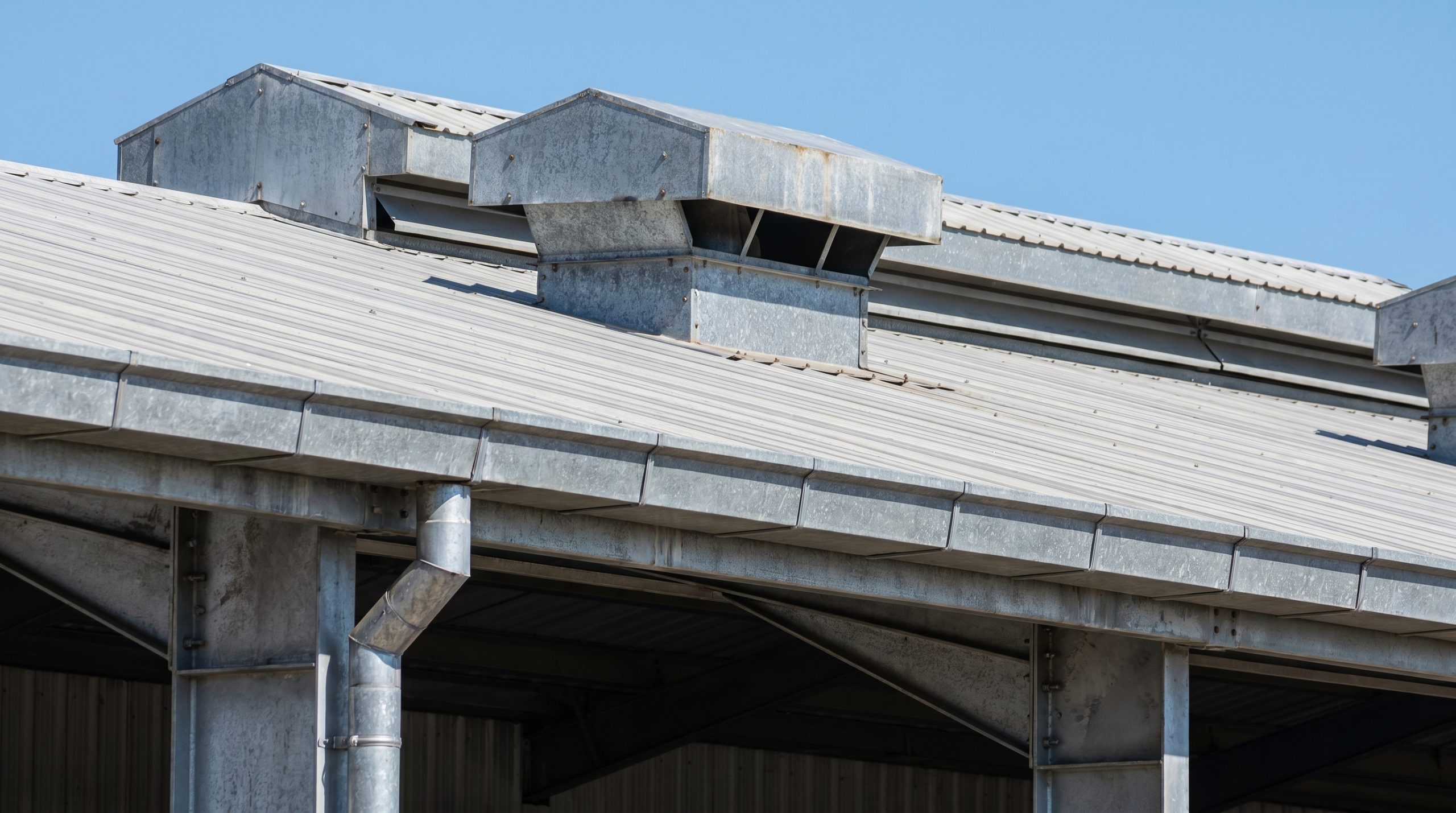
Ventilation and drainage are critical in a steel structure warehouse to prevent moisture buildup, protect structural metals from rust, and maintain a healthy, dry indoor environment. These active and passive systems work continuously to clear rainwater from the roof and expel hot, stagnant air from the interior.
Uncontrolled humidity or standing water can ruin your stored goods, compromise your foundations, and cause structural components to decay. A well-designed warehouse must integrate these environmental controls seamlessly.
How Do Gravity Roof Ventilators Improve Airflow?
Gravity roof ventilators are passive, non-powered air exhaust units installed along the ridge to release hot, stale indoor air naturally.
The best part? Because they operate solely on thermal buoyancy and wind pressure, they cost absolutely nothing to run.
- Continuous ridge ventilators: Runs along the entire roof peak.
- Wind-driven turbine ventilators: Spinning spherical exhausts for active air pulling.
- Louvers: Adjustable wall inlets to supply fresh, cooler air.
You will find that establishing a continuous airflow path drastically reduces indoor humidity and mold growth. This passive movement keeps your workforce comfortable and prevents inventory damage.
What Makes a High-Performance Drainage System?
A high-performance drainage system is a series of engineered gutters, downspouts, and fittings designed to guide torrential rainwater away from the building.
Think about it. A roof area of several thousand square meters can collect massive volumes of water that must be cleared rapidly to prevent structural overloading or leaks.
- Color-coated galvanized steel gutters: Rust-proof and visually integrated.
- Sized PVC or steel downspouts: Matched perfectly to local precipitation intensity.
- Waterproof flashing: Preventing water backup behind the eaves.
Your engineering team ensures that every downspout placement matches the calculated hydraulic load of your local climate zone. This calculation prevents water from pooling at the base and compromising the foundation.
Key Takeaway: Investing in passive roof ventilators and heavily galvanized, high-capacity drainage channels protects both your physical inventory and the foundational integrity of your building.
| Component | Material | Common Size/Type | Main Function | |
|---|---|---|---|---|
| Ridge Ventilator | Galvanized color steel | 600mm – 900mm throat | Passive hot air venting | |
| Eaves Gutter | Color steel / Stainless | Custom profile (0.5-0.8mm) | Rainwater collection | |
| Downspouts | PVC / Galvanized steel | Φ110mm / Φ160mm | Rapid water discharge |
Integrating structured drainage prevents water backflow and foundation saturation during high-volume rainfall events.
Conclusion
A modern steel structure warehouse is an intricate system of highly coordinated, engineered components working together. From the primary Q355B structural steel frame that forms the structural backbone, to the secondary bracing systems, insulated cladding, and high-performance drainage and ventilation systems, every single element must be calculated and designed with precision to achieve maximum efficiency and long-term durability. By understanding how these parts interact, project owners and warehouse operators can make highly informed procurement decisions that reduce installation costs, minimize operational maintenance, and maximize the functional lifetime of their industrial assets.
Navigating the complexities of steel warehouse design, local building codes, and material selection can be challenging, but you do not have to do it alone. Our engineering and manufacturing team is ready to design, manufacture, and deliver a fully customized, pre-engineered steel warehouse that completely resolves issues of long lead times, budget overruns, and structural vulnerabilities. We believe that an industrial building should be more than just shelter; it must be a precision-engineered engine for your operational success, built to stand strong for decades to come. To get a comprehensive design consultation and customized quotation for your upcoming project, please contact us today to connect with our specialists.
Build your steel structure warehouse now – durable, efficient, custom!
Email:sales@showhoo.com.cn
Phone/WhatsApp: + 86 186 7895 5927
Frequently Asked Questions (FAQ)
Can I add a mezzanine floor inside a steel structure warehouse?
Yes, you can easily integrate a heavy-duty mezzanine floor into your initial structural design. Our engineering team can design the primary columns and foundations to handle the extra structural loads, giving you valuable multi-level storage or office space.
What’s the best coating to prevent rust on the primary steel frame?
Hot-dip galvanizing or zinc-rich epoxy primers are the most reliable choices for long-term corrosion prevention. If your warehouse is located in a coastal area, we highly recommend hot-dip galvanizing to ensure the primary framework resists harsh, salty environments for decades.
How do I know if my steel warehouse needs insulated panels or single-skin sheets?
You should choose insulated panels if you plan to store temperature-sensitive inventory or if workers will spend long periods inside the space. If your primary goal is dry, unheated storage in mild climates, single-skin corrugated metal sheets offer a highly cost-effective and durable alternative.
Can I expand a steel structure warehouse after it has been built?
Yes, you can easily expand a steel warehouse lengthwise by adding new frame bays to the existing structure. Because our components are modular and bolted together, extending the building requires minimal disruption and uses standard, bolt-connected steel members.
How do I know if my building needs C-type or Z-type purlins?
Z-purlins are the superior choice for wide, continuous spans because they can be overlapped over support frames to increase structural capacity. C-purlins are typically best suited for simple, single-span situations like door framing, window frames, or wall girts.