
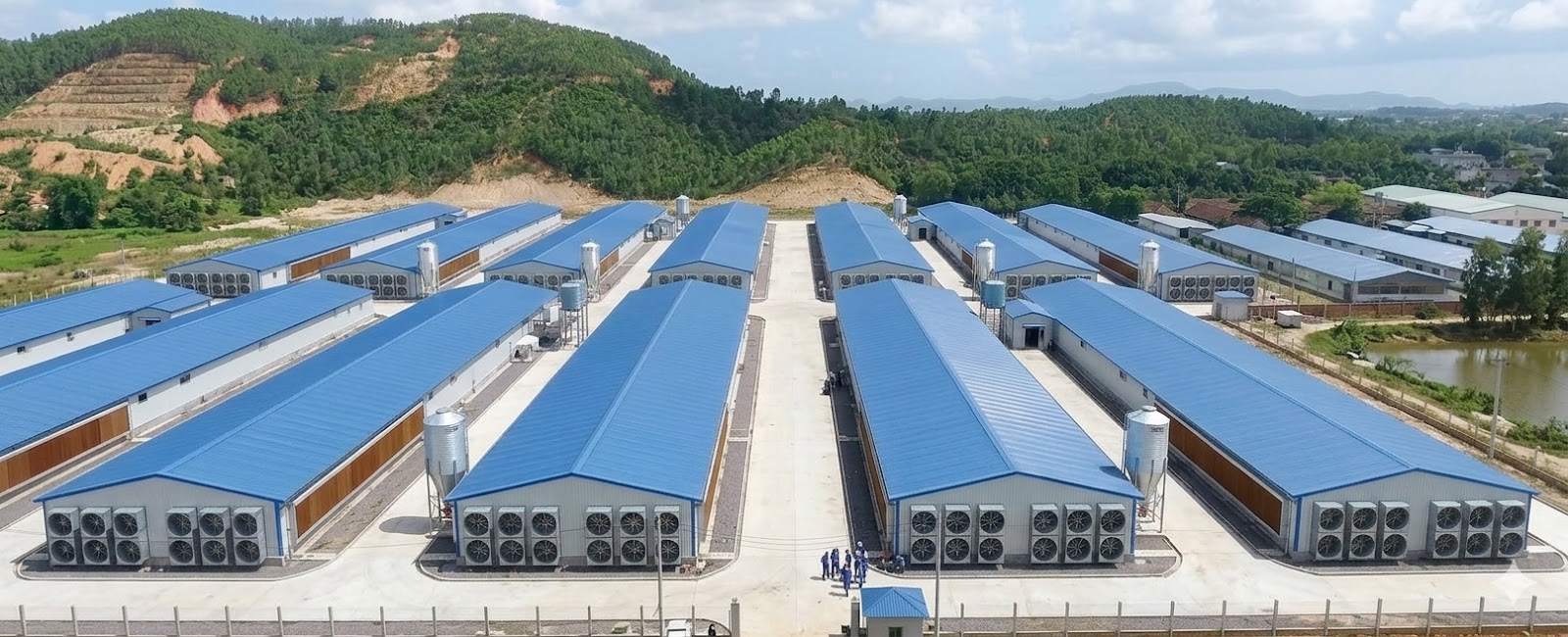
Steel Structure Chicken House for Commercial Poultry Farming
Factory-direct, climate-adapted chicken house solutions for overseas poultry projects
Get Your Chicken House QuoteWhy Choose Steel Structure Chicken House?
Why modern chicken houses are changing from traditional civil engineering sheds to steel structures
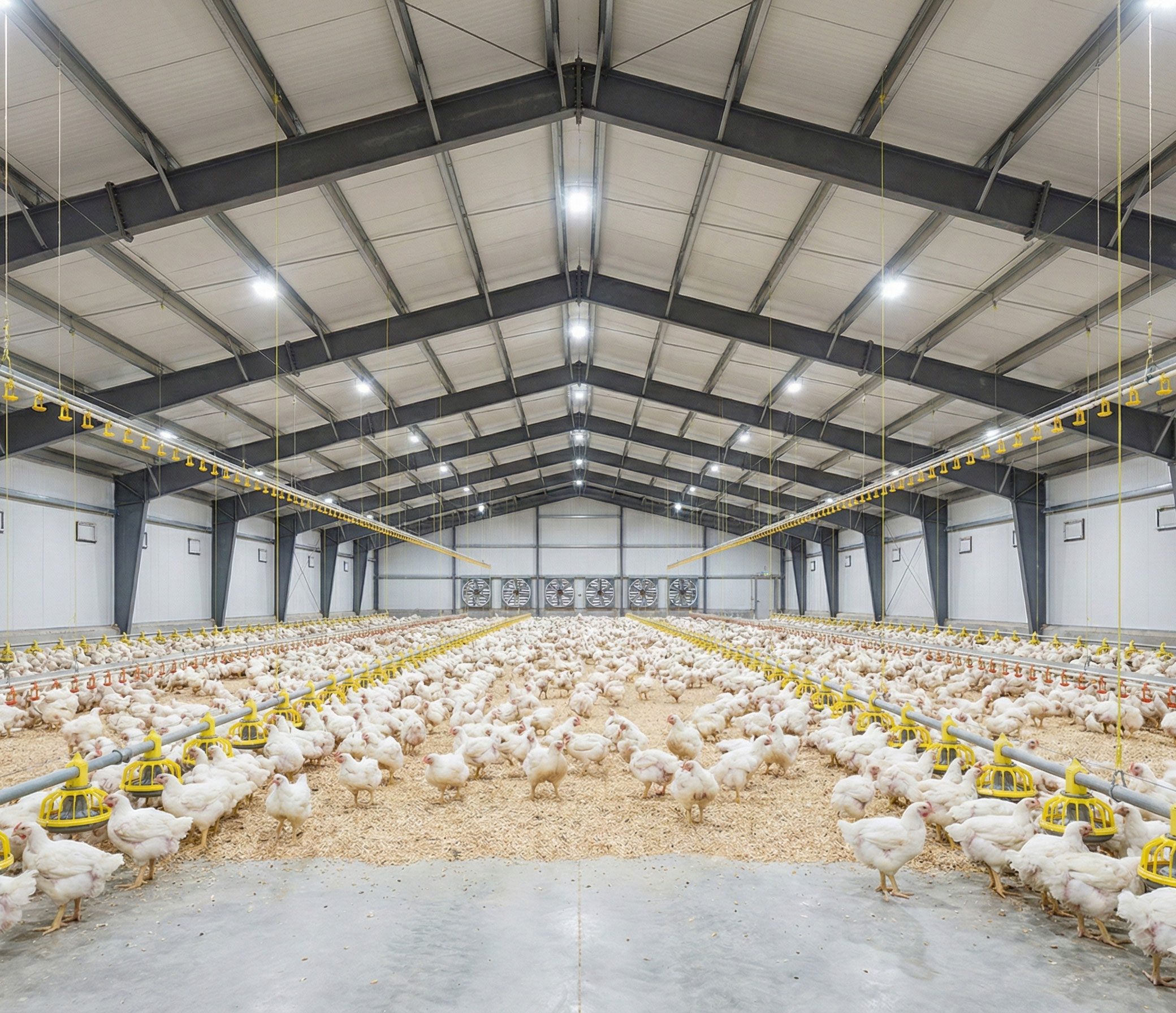
Flexible design, multiple material choices
Materials can be customized or recommended based on climate and experience. Steel structures also allow flexible layouts for different breeding needs.
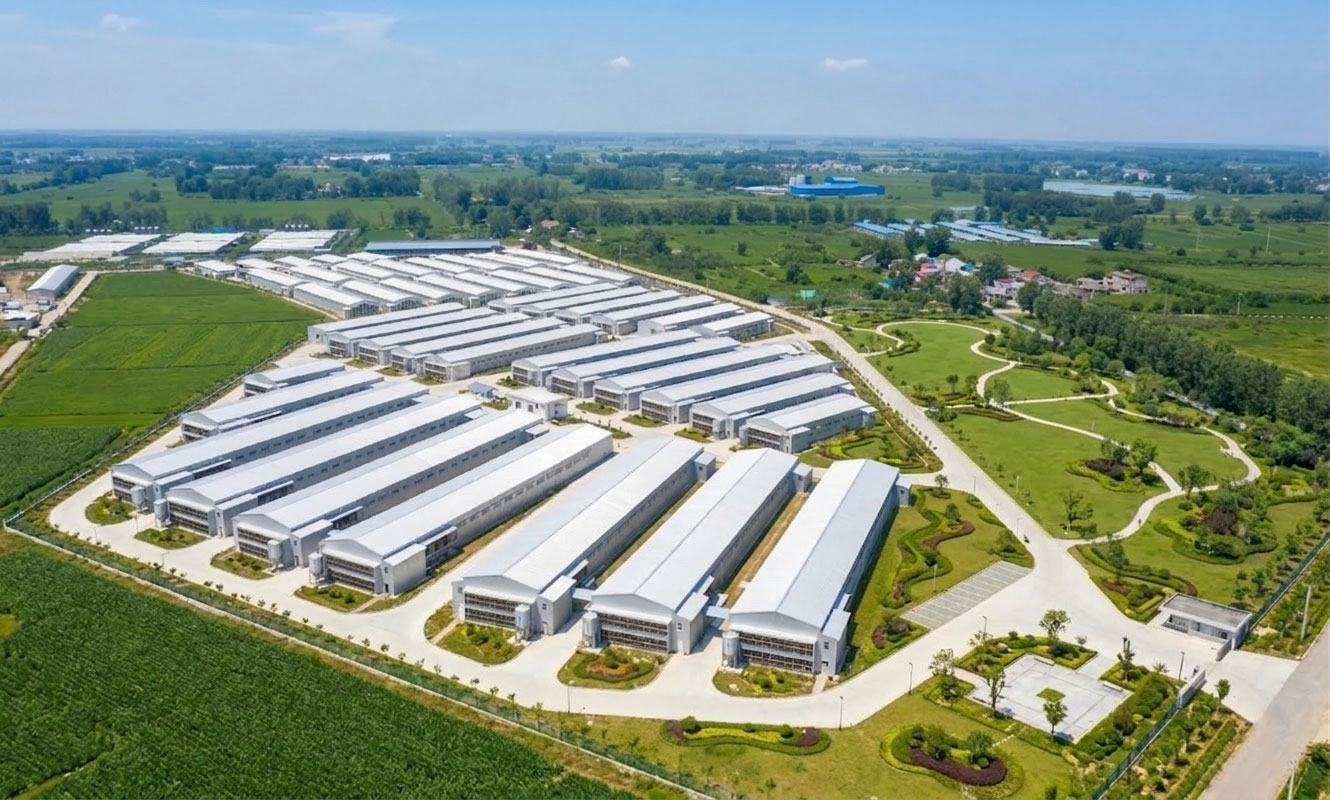
Shorter build time, faster capital turnover
Steel chicken houses are prefabricated for fast on-site assembly, shortening construction time and improving project turnover. And easy to dismantle and reuse.
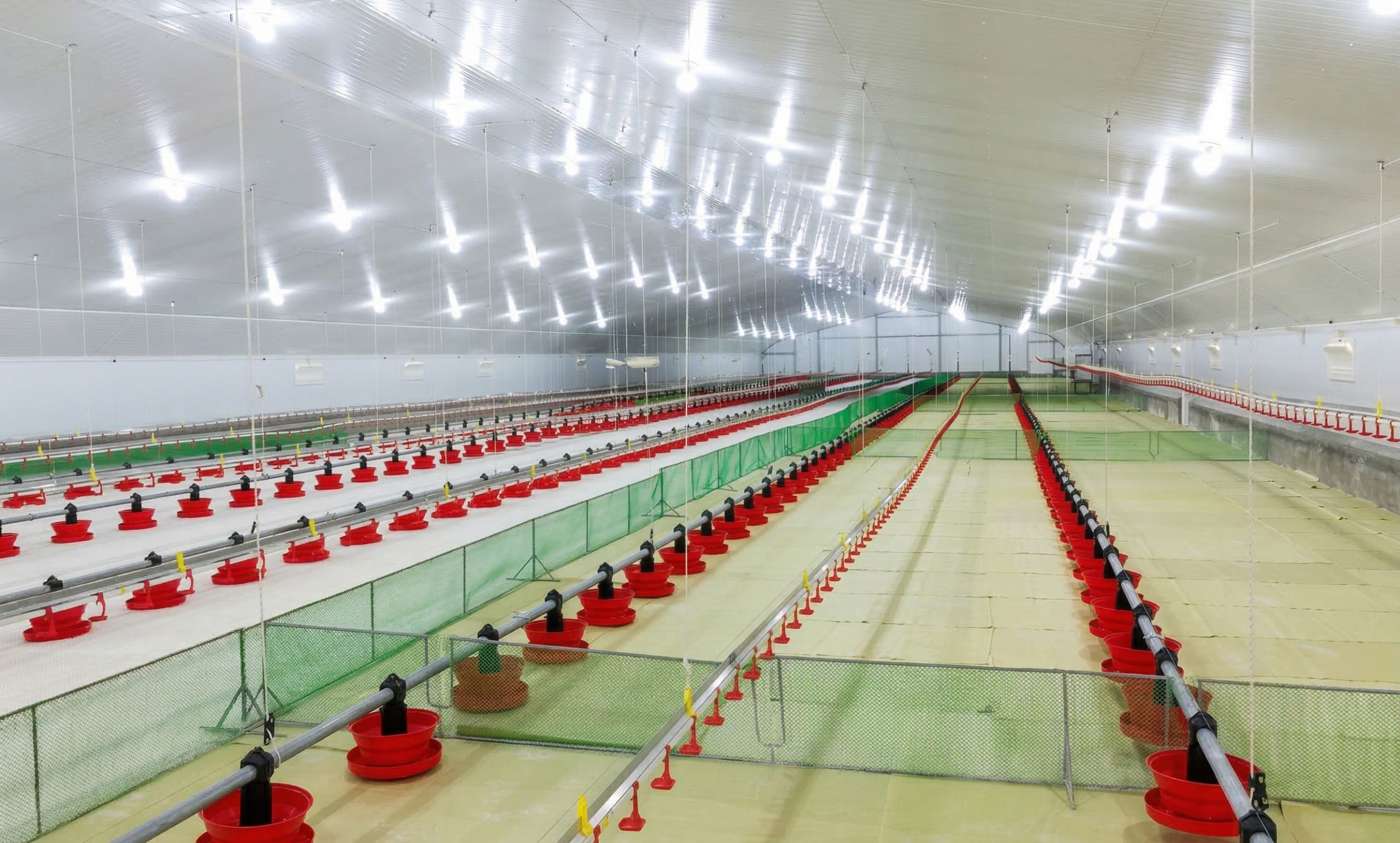
Easy to clean, disinfect, and control disease
Steel chicken houses have smooth surfaces and fewer dead corners, so they stay cleaner and are easier to wash and disinfect. This helps reduce disease spread, including avian influenza.
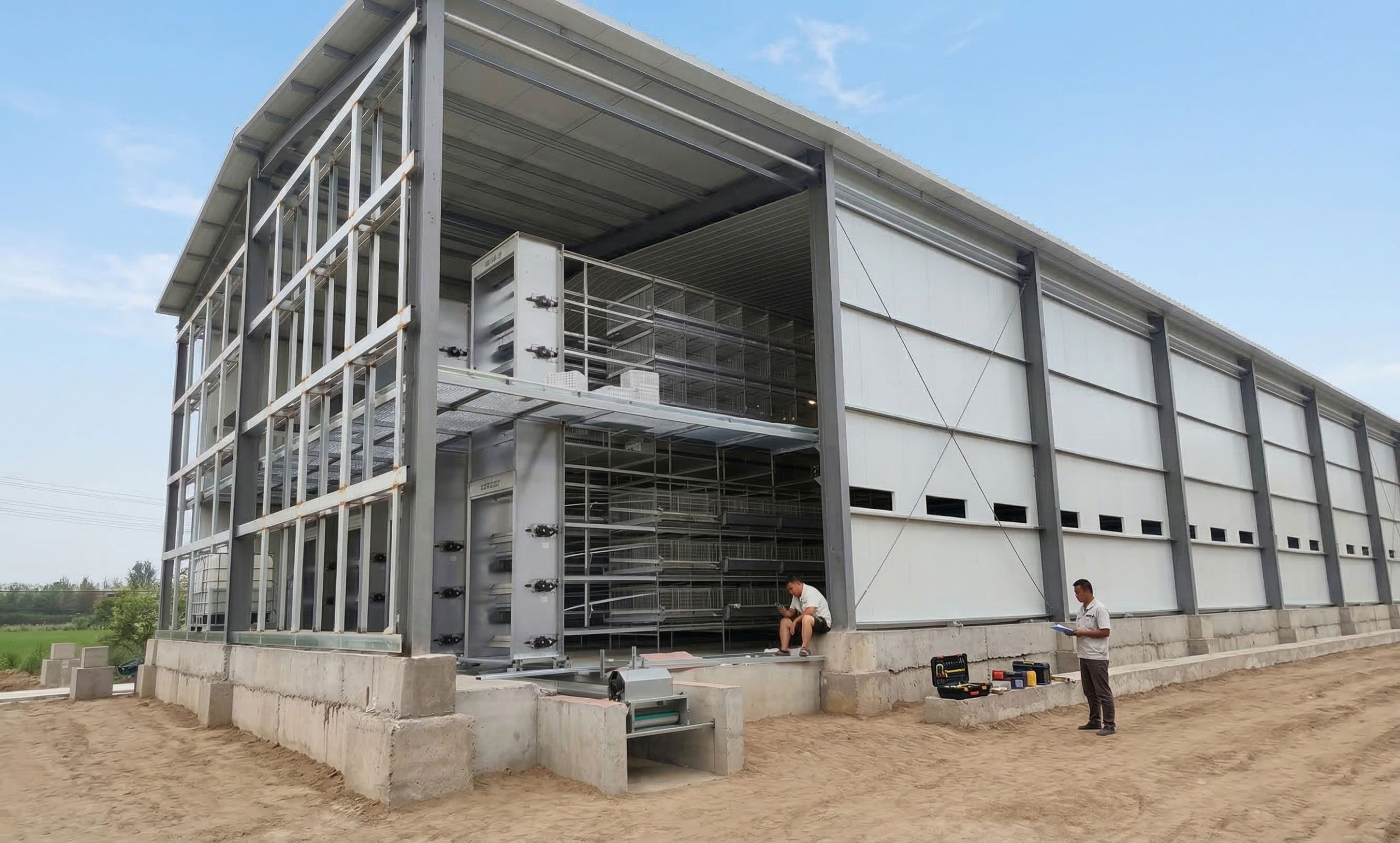
High space use, ideal for multi-level farming
Steel structures provide wide, column-free spaces, making them ideal for multi-layer cage farming to increase capacity, save land, and support intensive aquaculture.
Ready to modernize your poultry operation?
Discuss Your Project RequirementsFeeding Methods
Compare space requirements and equipment investments for your farm
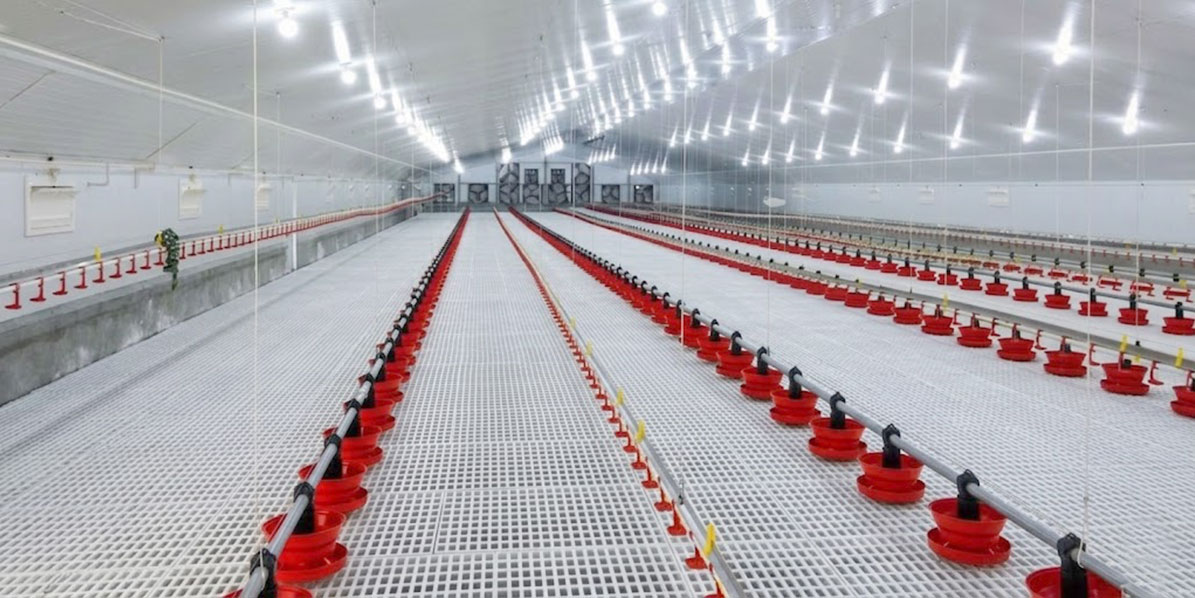
Floor Raising House (Free Range)
- Requires a large amount of land.
- Height of building is typically 2.1-3.0m.
- Width of building is 8-23m, ideally is 12-18m.
- Chickens will have enough activity space.
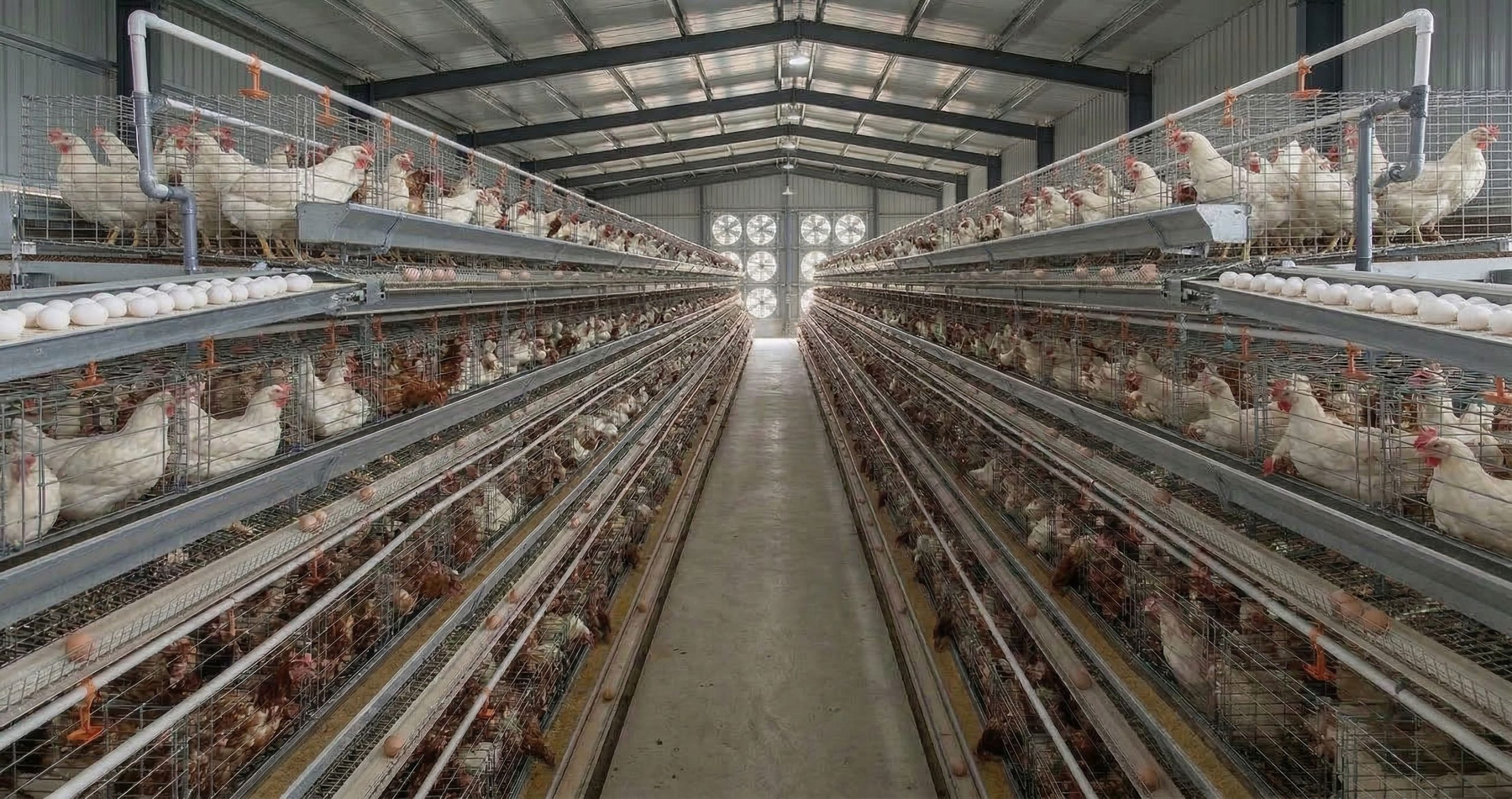
Cage Raising Poultry House (Cage System)
- High-density, multi-level breeding.
- The height of the housing depends on the cage tiers.
- Width of building is 12 to 18 meters, ideally 14-16 meters.
- Full use of the land to raise more chickens.
Not sure which feeding method is right for your project?
Discuss Your RequirementsTypes of Chicken House
Choose the right ventilation strategy based on your climate and production requirements
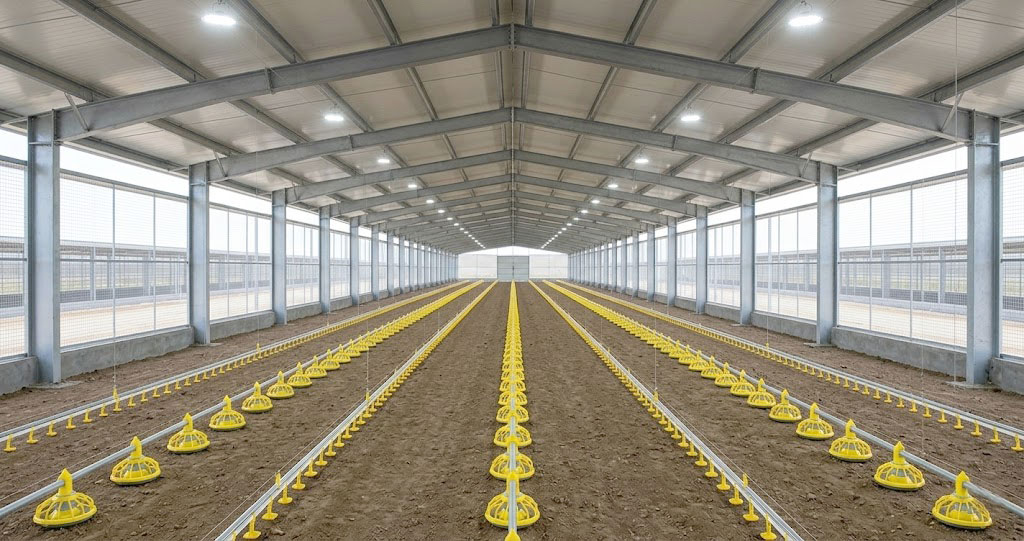
Open Side Chicken House
- Open mesh design for airflow and light
- Wire mesh is low-cost, simple, and fast to build.
- Not for cold climates or sensitive birds
A fully open-plan chicken house offers strong ventilation and low cost, but it requires strict control and biosecurity, so it must match the local climate and farming goals.
Learn when an open side chicken house is the right choice for climate, ventilation, bird type, and project budget.
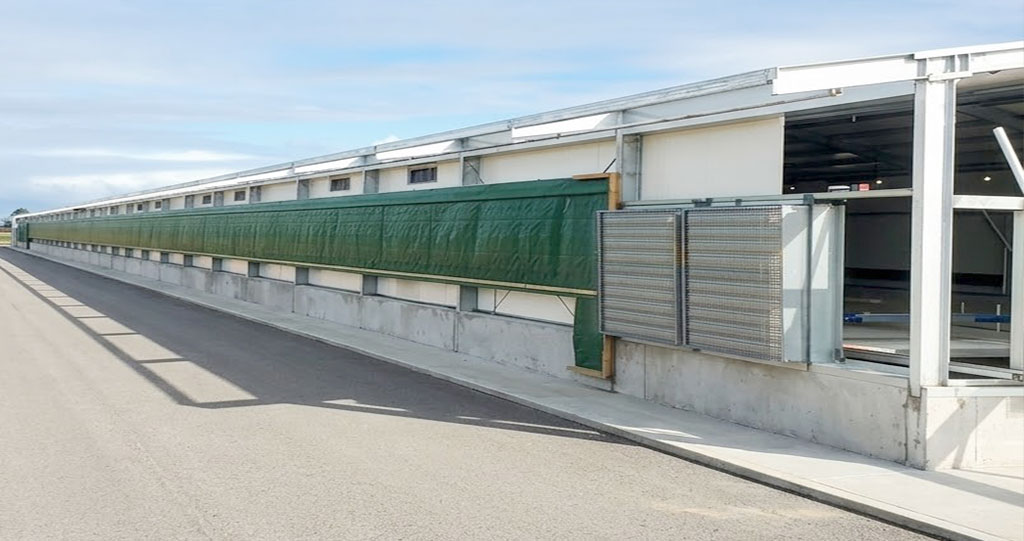
Semi-enclosed Chicken House
- Mesh and curtains regulate air, light, and heat
- This style chicken house uses heating, ventilation, cooling, and lighting systems based on weather conditions.
- Controlled housing for chicks, broilers, layers, and breeders.
Semi-enclosed chicken houses are cost-effective, energy-saving, and better protect broilers and layers than open side chicken houses.
Explore how a semi-enclosed chicken house balances climate control, energy use, construction cost, and production performance.
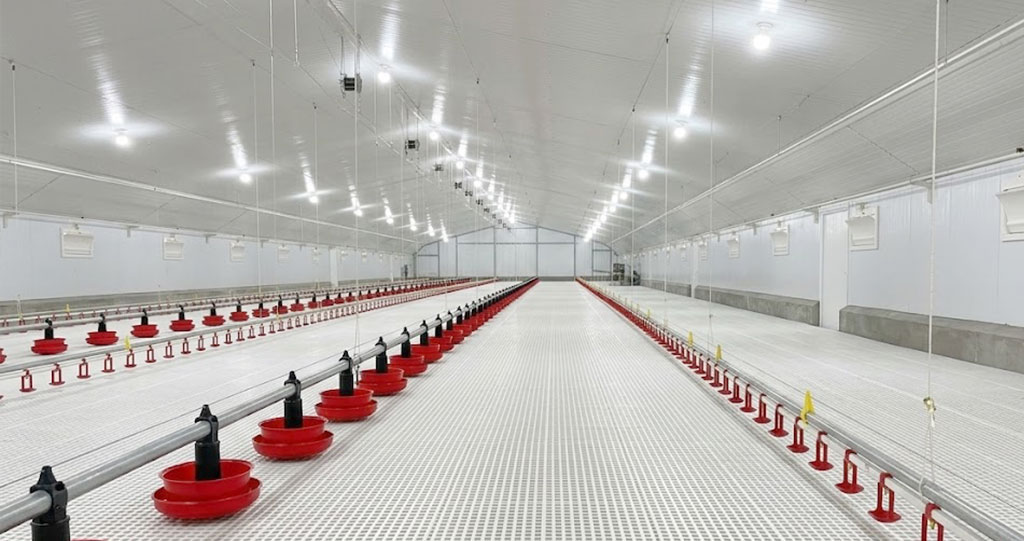
Enclosed Chicken House
- Stable housing, safer production.
- Automation ensures 24/7 control, better feed efficiency, lower mortality.
- Suitable for chicks, broilers, layers, and breeder chickens.
- Maintaining a constant temperature can improve breeding efficiency.
Closed chicken houses are efficient and automated, but require stable power and higher upfront investment.
Understand the design, equipment, power supply, automation, and investment requirements of an enclosed chicken house.
Need help selecting the right chicken house for your climate?
Discuss Your Chicken House NeedsOpen Side Chicken House
Natural ventilation design for warm climates — low cost, fast build, minimal energy
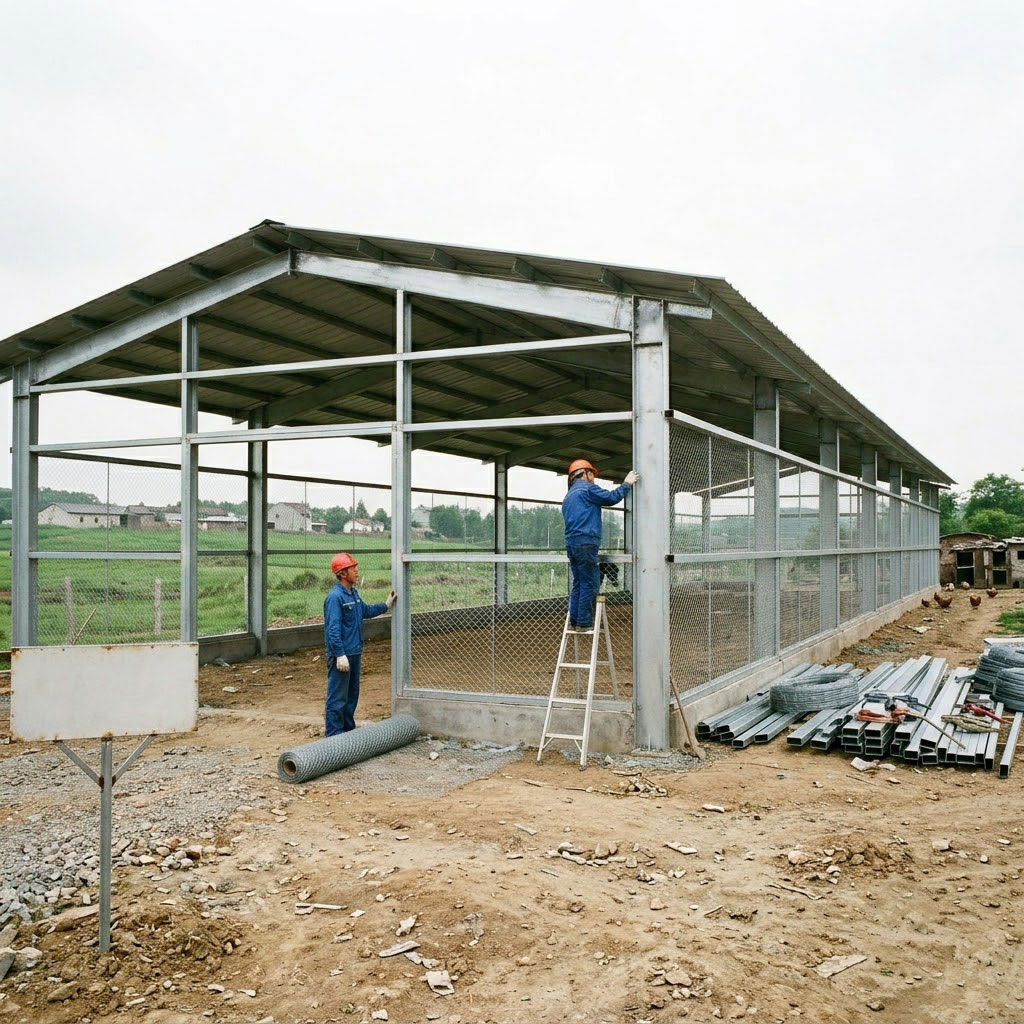
What is an Open Side Chicken House?
As the name suggests, the side walls are not fully enclosed — typically consisting of low walls (or no walls) + wire mesh + liftable roller curtains.
The core logic relies on natural ventilation and sunlight. In hot weather, raise the side curtains to allow natural airflow; in cold or rainy weather, lower the curtains for warmth and rain protection. Mainly used for broilers or layers.
Why Choose a Steel Structure?
- High corrosion resistance: Chicken manure produces large amounts of ammonia. Hot-dip galvanized H-beams ensure a lifespan of 15–20+ years.
- Large spans without middle columns: Steel can achieve 12–18m+ spans, maximizing floor area for automated equipment.
- Fast installation: All components are factory-prefabricated, greatly reducing overseas construction labor costs.
Core Components
- Primary frame: H-beams + steel tube columns or truss
- Secondary frame: Galvanized C/Z purlins for fixing roof panels and the bracings
- Roof: Insulated sandwich panels (EPS/glass wool/PU) or single-layer color steel with fiberglass insulation
- Sidewall: Galvanized wire mesh
- Auxiliary equipment: Drinking lines, feeding lines, silos, exhaust fans,etc.
Advantages, Disadvantages & Suitable Applications
- Very low construction cost: No wall/insulation materials, no expensive HVAC systems; minimal initial investment.
- Low operating cost: Relies on natural airflow and sunlight, greatly saving electricity.
- Short construction period: Quick capital recovery, suitable for farm owners eager to expand capacity.
- Disadvantage: Highly affected by weather; temperature and humidity are uncontrollable, so stocking density is relatively low.
Important Considerations
Wind load is critical for Open Side Chicken Houses. Since the sides are open, strong winds can generate significant uplift forces on the roof.
If structural calculations are not performed based on local wind speed, the roof can easily be blown off during typhoons. Always ensure engineering design accounts for your region's maximum wind conditions.
Open environments are also more easily exposed to airborne pathogens, requiring stronger biosecurity protocols.
Want to build an open side chicken house suited to your local climate?
Get Your Open Side House QuoteSemi-enclosed Chicken House
Balanced ventilation strategy combining natural airflow with mechanical assistance
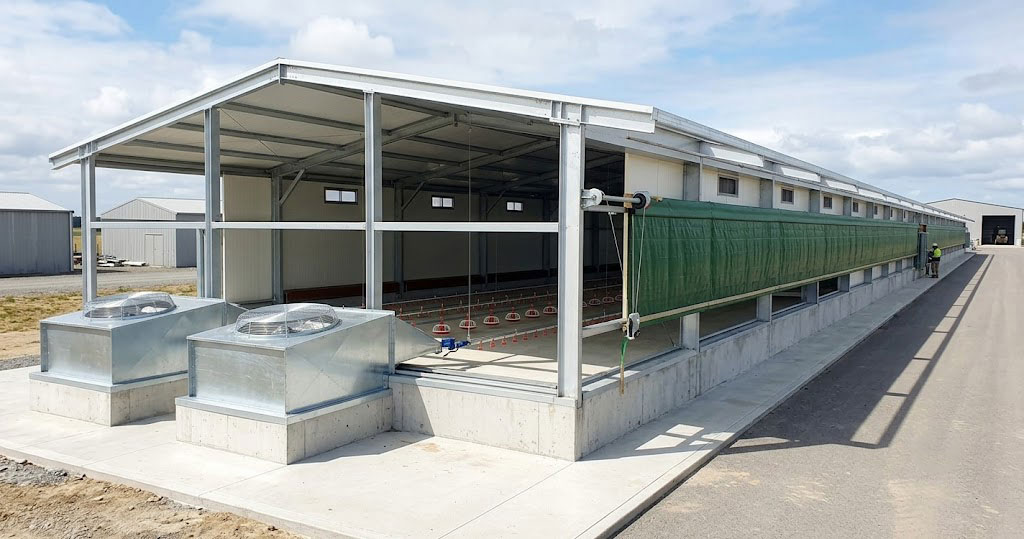
Definition: What is a Semi-enclosed Chicken House?
A Semi-enclosed Chicken House (also called a "Windowed Poultry House") is an intermediate product between fully open and fully enclosed houses.
Its core features: the building uses a higher proportion of solid enclosure (walls or sandwich panels) with a "natural ventilation + mechanical assistance" dual control logic. Open windows for natural airflow in good weather; close windows and rely on exhaust fans in bad weather.
Core Components
- Primary frame: Hot-dip galvanized H-beams or galvanized steel tubes — forms the load-bearing skeleton with higher capacity than open side houses due to heavier roof equipment.
- Secondary frame: Galvanized C/Z purlins, bracing, corner braces for fixing roof and wall panels.
- Sidewalls: Low walls (masonry/concrete) + insulated sliding/venetian windows, or sandwich panel half walls.
- Roof: 50mm or 75mm EPS, glass wool, or PU sandwich panels.
- Environmental control: Exhaust fans on sidewalls or gables; small cooling pad systems optional.
Important Considerations
Airtightness is crucial. In bad weather, windows are closed and negative-pressure ventilation relies entirely on exhaust fans.
If steel frame joints are poorly designed or roof/wall panel gaps are not properly sealed, air will leak through these gaps, causing chaotic airflow and dead zones. Chickens in these areas are prone to illness or death.
High-quality sealants and flashings are therefore essential for any semi-enclosed design.
Interested in a semi-enclosed chicken house for your farm?
Get Your Semi-enclosed House QuoteEnclosed / Tunnel-ventilated Chicken House
Full environment control for maximum production efficiency — the standard for modern industrial poultry farms
Definition and Operational Logic
A fully enclosed house is completely sealed, with almost no reliance on natural light or airflow. Its core logic is "artificial environment control."
Using high-precision environmental computers (e.g., Agal), the system automatically regulates temperature, humidity, air quality (ammonia/CO₂ levels), and lighting. Even in 40°C summer heat or -20°C winter cold, the interior is maintained at the chickens' optimal 22–24°C.
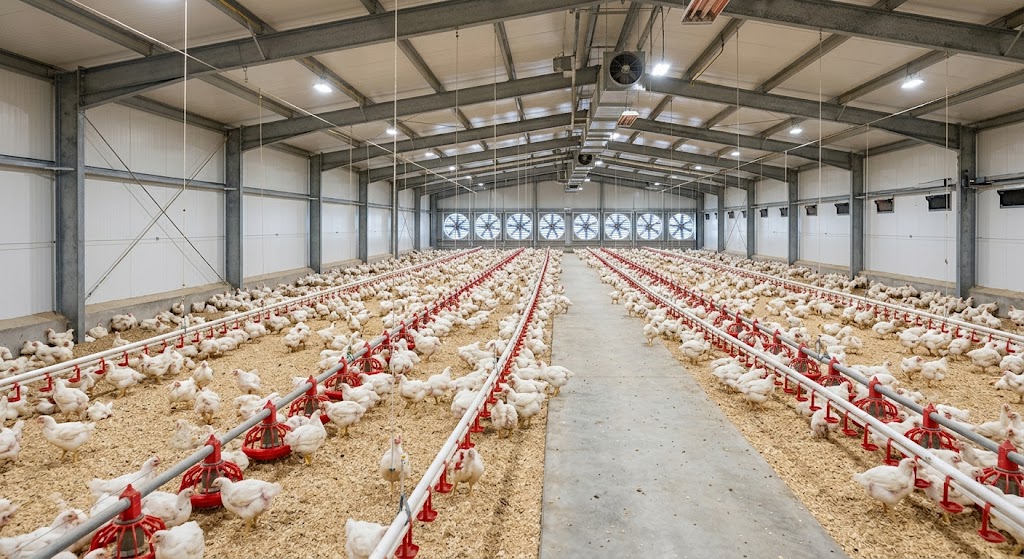
Steel Structure & Building Maintenance System
Because the house must be fully sealed with high insulation performance, the steel frame and panels are the most demanding among the three types:
- Primary steel frame: Hot-dip galvanized H-beams, portal frame design. Frame size and steel volume are significantly higher than in open or semi-enclosed types, to support heavy equipment such as full-length water lines, feed lines, large fans, and suspended ceilings.
- Secondary steel frame: Galvanized C/Z purlins, wall beams, dense wind-resistant columns, and X-bracing, ensuring structural stability under strong wind and internal negative pressure.
- High-spec enclosure: Roof and wall using 75mm or 100mm PU/PIR or high-quality glass wool/rock wool panels. Interior surfaces often use thick Galvalume or special anti-corrosion PVC coating to resist high ammonia concentrations.
- Ceiling: Most enclosed houses install a flat ceiling (PVC or lightweight sandwich panels) to reduce dead airflow zones — a significant part of the steel structure cost.
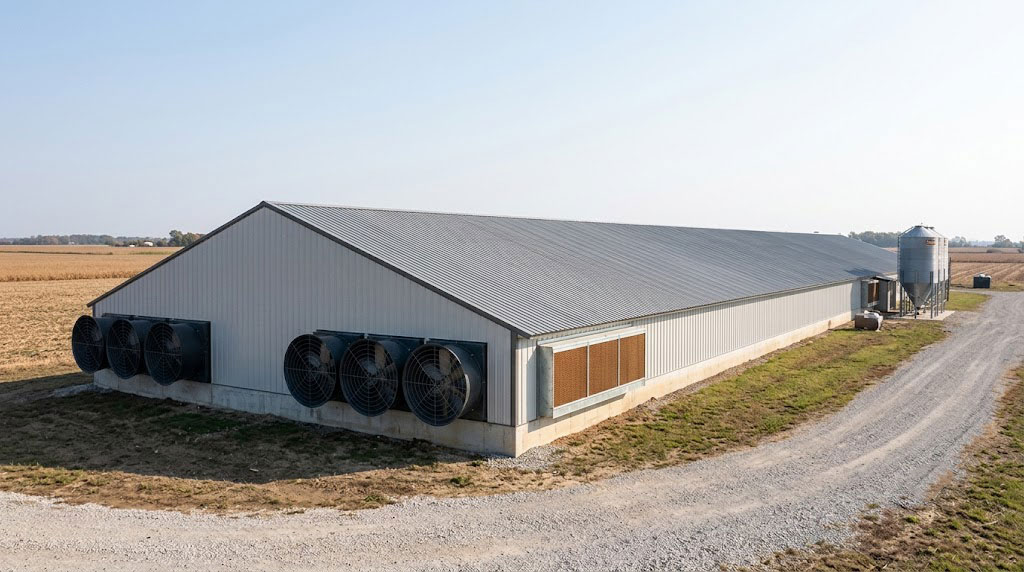
Core Equipment: Tunnel Ventilation System
- Inlet (front end): Large wet pads / cooling pads. When hot air enters, it is evaporatively cooled by 5–10°C.
- Outlet (rear gable): Rows of 50-inch high-power fiberglass or galvanized exhaust fans.
- Operation: Fans pull air out, creating negative pressure. Outdoor air is forced through the cooling pads, forming a high-speed airflow (2.5–3 m/s) along the house, quickly removing chicken body heat before exiting through the fans.
Important Considerations
Never lose power. Enclosed poultry houses depend heavily on mechanical ventilation. A prolonged power or fan failure can quickly create dangerous temperature and air-quality conditions, particularly during hot weather or late grow-out stages. Backup generators, emergency ventilation openings, alarm systems and routine generator testing should therefore be included in the farm’s risk-control plan.
Steel joint airtightness is critical. Improper design or leakage at the ridge or gable corners can cause negative-pressure failure, with air entering through gaps instead of cooling pads, creating local dead zones that kill chickens. High-quality flashings and foam strips are essential.
Interested in a fully enclosed tunnel-ventilated chicken house for your farm?
Get Your Enclosed House ProposalOpen Side vs Semi-enclosed vs Enclosed: Full Comparison
Key dimensions to help you choose the right chicken house type for your project
| Comparison Item | Open Side | Semi-Enclosed | Enclosed |
|---|---|---|---|
| Environmental Control Level | Mainly relies on natural ventilation | Combination of natural and mechanical ventilation | Mechanical environmental control |
| Initial Investment | Lower | Medium | Higher |
| Energy Dependency | Lower | Medium | Higher |
| Climate Adaptability | Suitable for mild or tropical regions | Suitable for regions with moderate climate variation | Suitable for high-density and refined management |
| Supportable Density | Depends on climate and local standards | Depends on ventilation design | Depends on equipment, ventilation, and welfare standards |
| Main Risks | Extreme weather, external pathogens | Air leakage, unstable ventilation control | Power, control system, and equipment failure |
| Suitable Customers | Budget-limited or low-density projects | Mid-scale upgrade projects | Industrial-scale commercial farming projects |
Final stocking density and equipment layout must be confirmed according to local regulations, bird type, target market weight, ventilation capacity and the poultry equipment supplier's design.
Not sure which type fits your budget and climate?
Get a Tailored RecommendationChicken House Structural Layouts
Different farming operations require purpose-built structural solutions
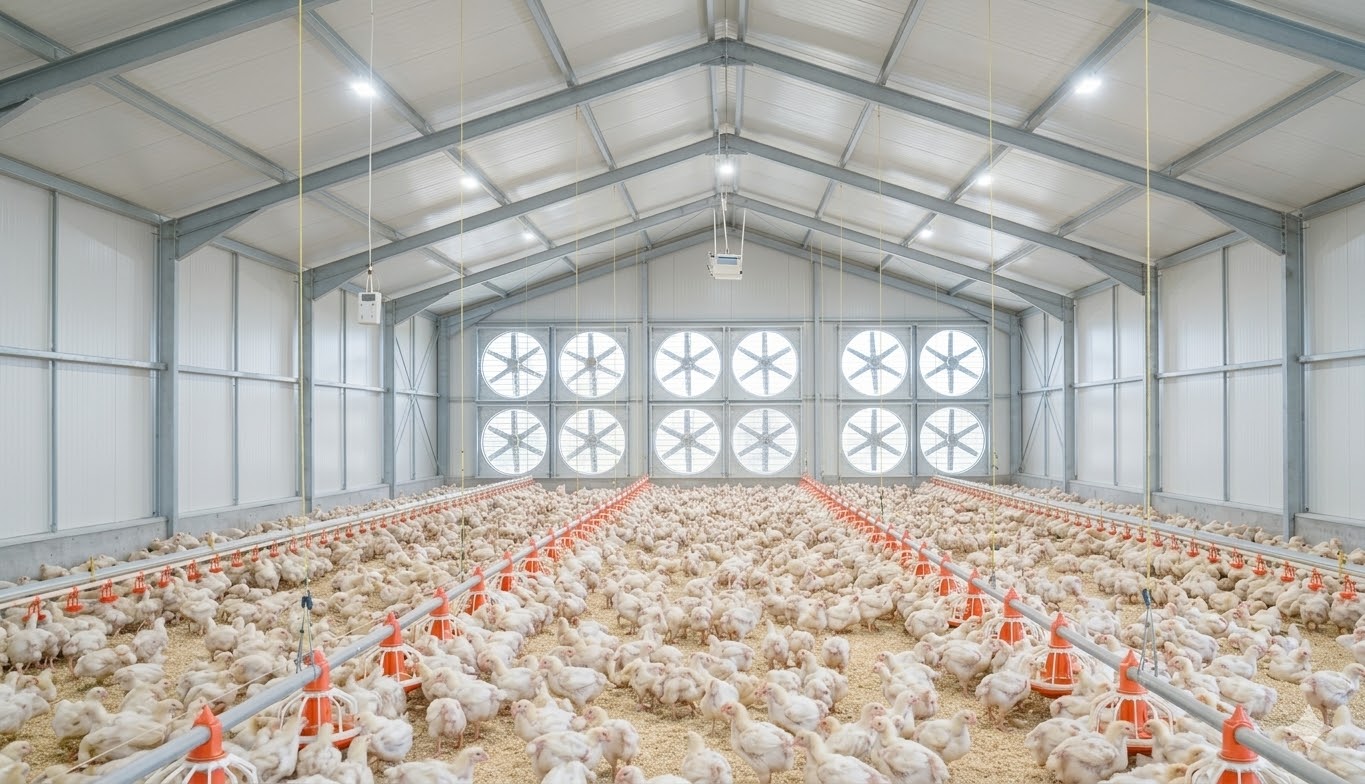
Design Without Inner Ceiling
- Main frame: painted or galvanized H-section steel, or galvanized steel tube.
- The roof: sandwich panels or color steel sheets + insulation materials
- The wall:sandwich panels or color steel sheets + insulation materials
The visible, warehouse-like structure makes installation easy, though enclosed designs use more electricity for climate control. Standard spans are 8-23m. Free-range houses are most economical at 12-18m wide and 2.1-3m high, while caged houses range from 3.5-8m high depending on cage size.
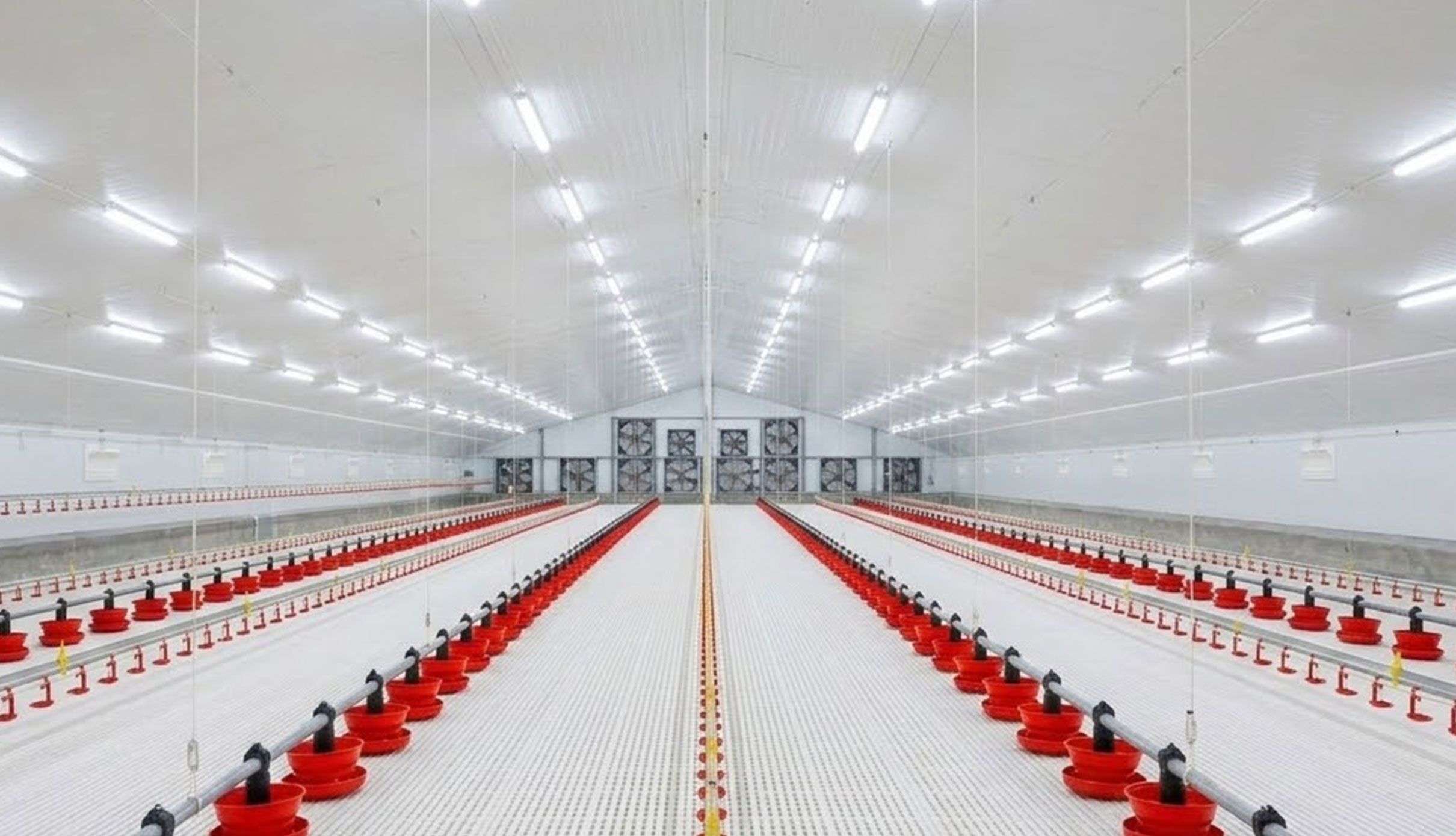
Design With Inner Ceiling
- Main frame: painted or hot-dip galvanized H-section steel, or galvanized steel tubes.
- The ceiling:corrugated steel sheet + insulation materials or sandwich panel.
- The roof usually uses sandwich panels or insulated corrugated steel sheets.
A suspended ceiling below the steel rafters hides the structure, reduces the climate-control area, saves electricity, and improves cleaning. The span is usually 8–23 m. For free-range chickens, 12–18 m span and 2.1–3 m height are more economical. For caged chickens, the height is usually 3.5–8 m.
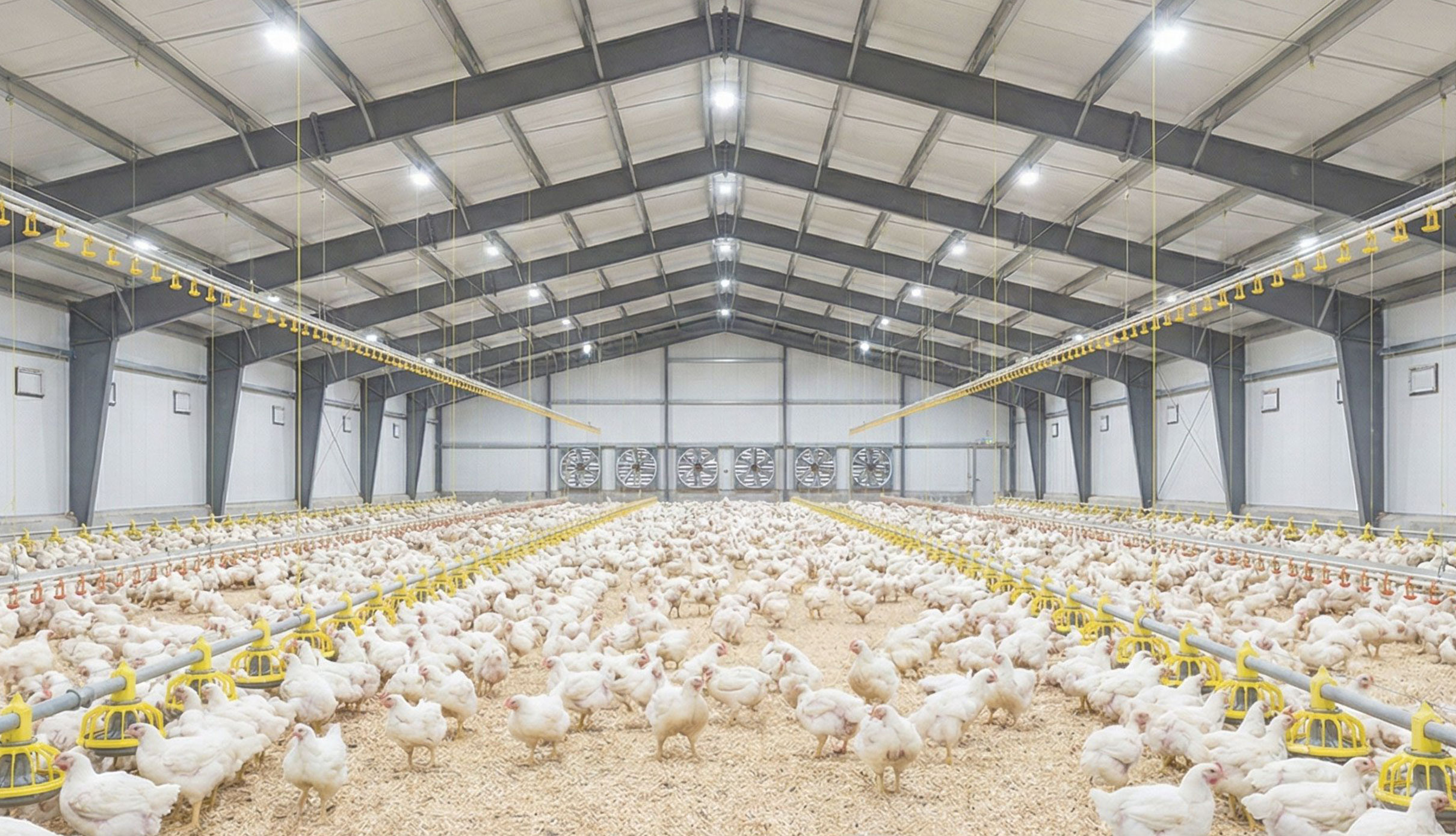
One Floor Poultry House
- The building structure is simple
- Ventilation and temperature control are relatively easy to manage
- Manual operation is convenient
It boasts mature technology, simple construction, and intuitive management, but suffers from relatively low land efficiency. It is currently the most commonly used building type in small and medium-sized farms, as well as some large-scale farms, both domestically and internationally.
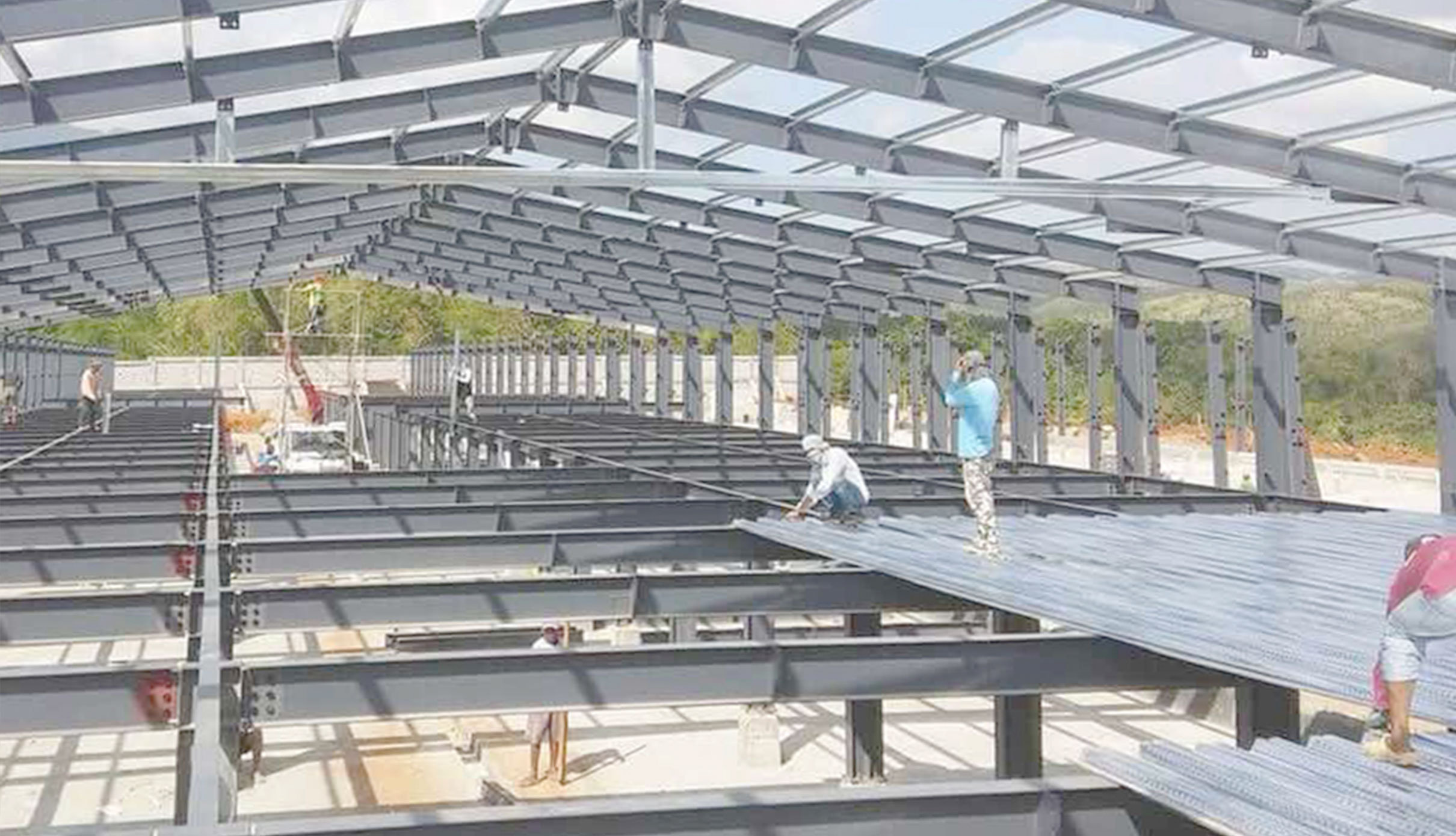
Double Floor Poultry House
- Land utilization rate doubled
- Construction costs were higher
- Ventilation and negative pressure control were more complex.
While retaining some of the management convenience of single-story chicken houses, it significantly improves production efficiency through vertical stacking. It can save land cost, but the construction cost will be higher.
Key Design Factors for a Commercial Chicken House
6 structural and environmental factors that directly affect poultry performance
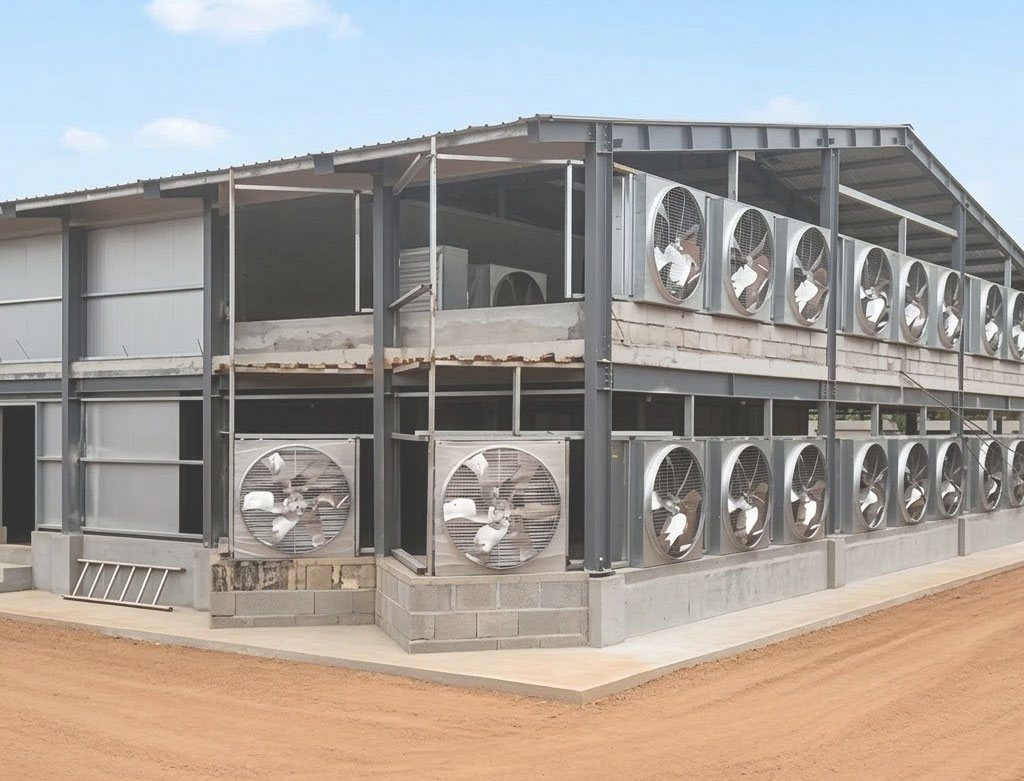
Ventilation & Airflow
Choose natural or automated ventilation based on climate and power to improve air quality and reduce mortality.
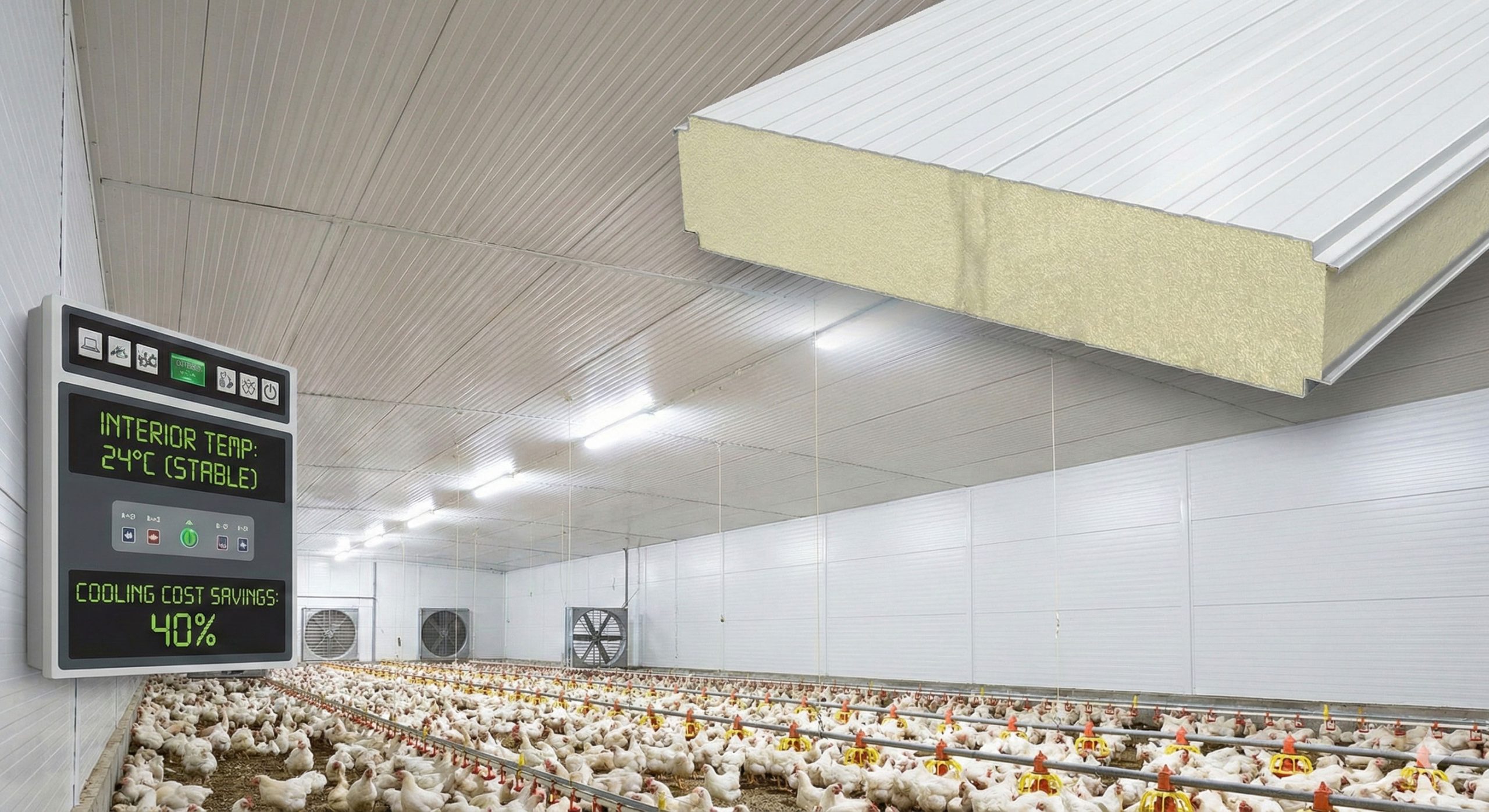
Thermal Insulation
Selecting insulation by climate and farming type cuts cooling costs and protects your investment.
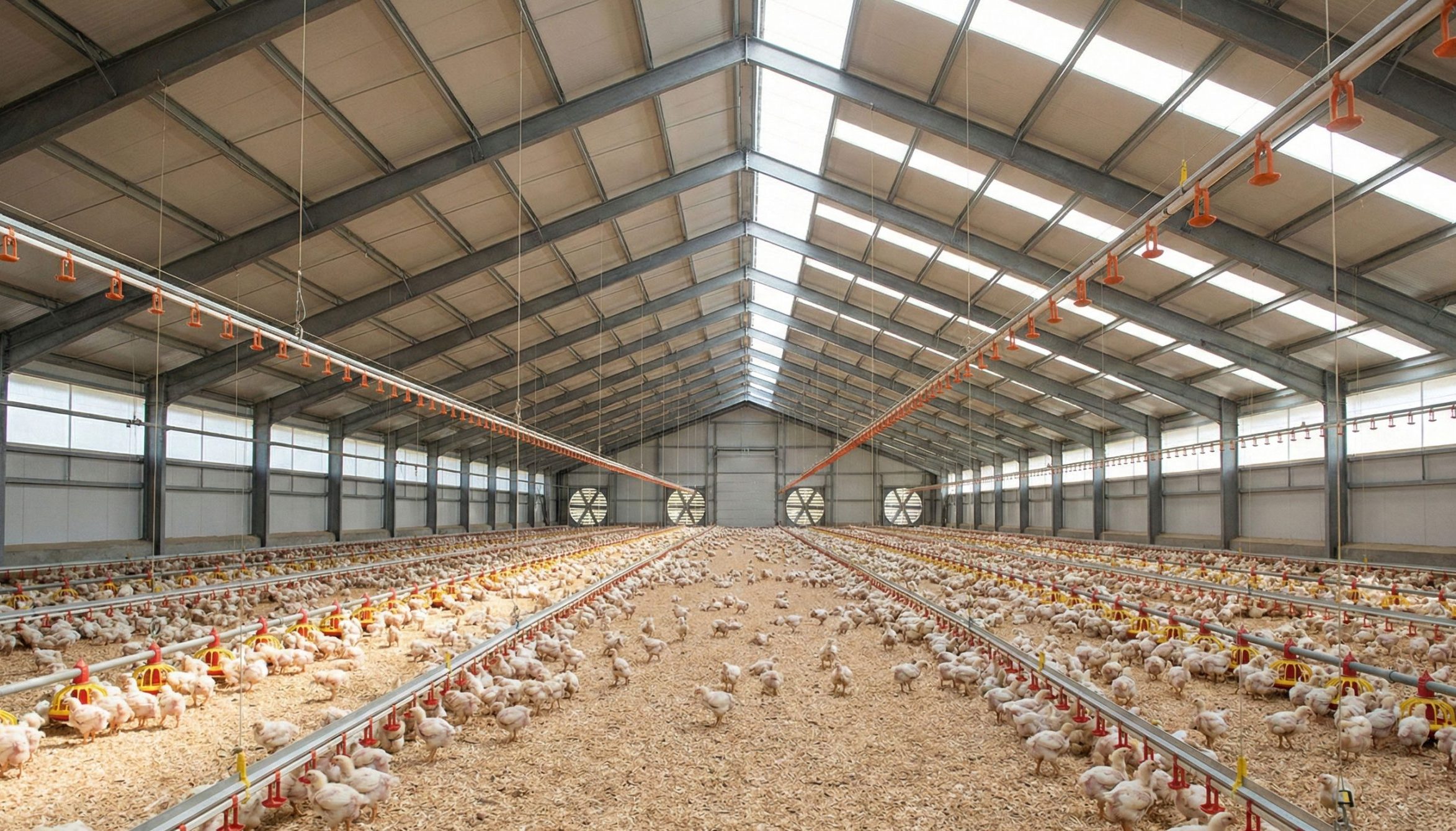
Structural Span & Height
Proper height and width improve airflow and reduce costs.
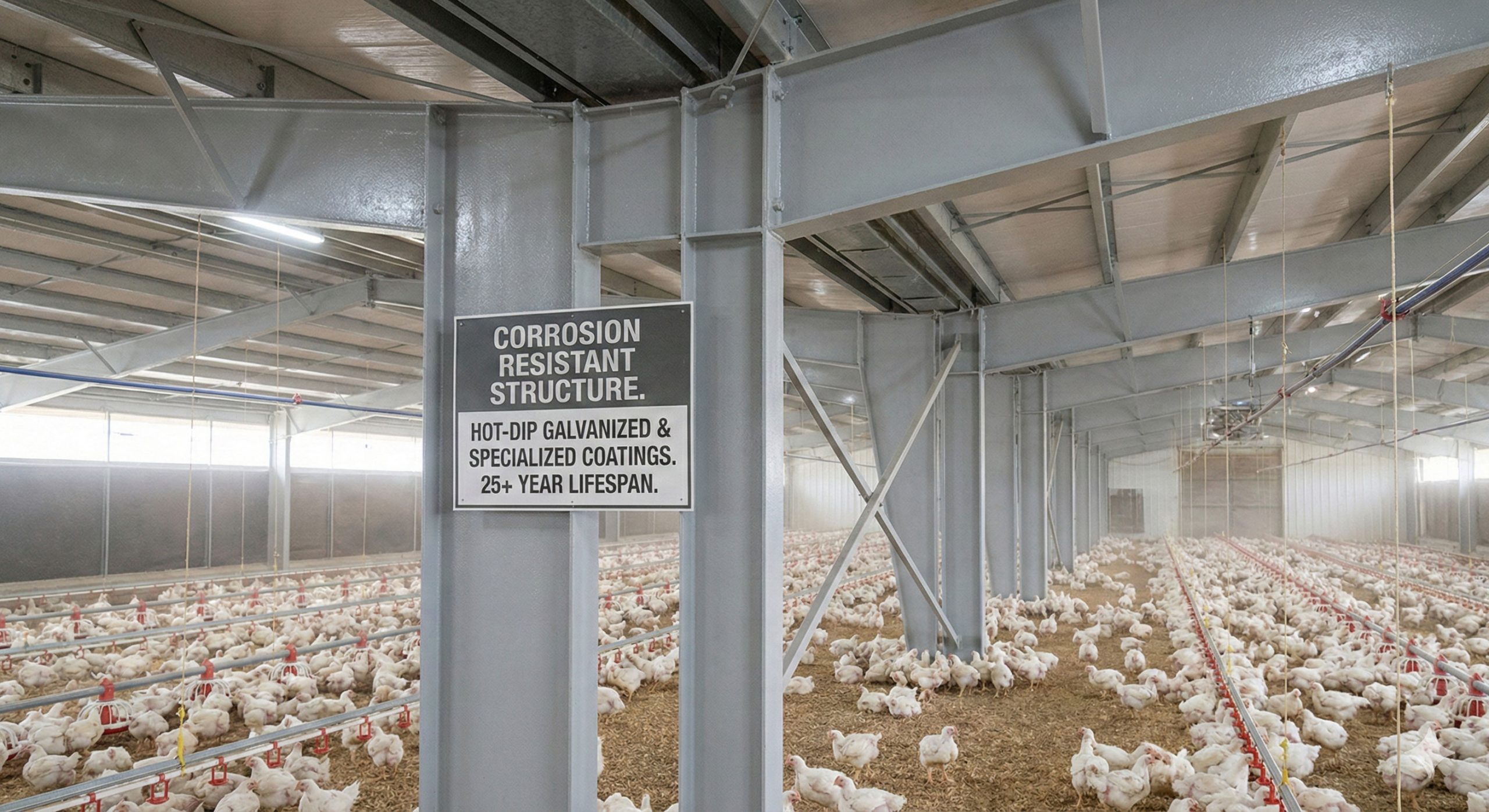
Corrosion Resistance
Surface treatment is chosen according to budget and local climate, using either hot-dip galvanizing or painting for optimal performance.
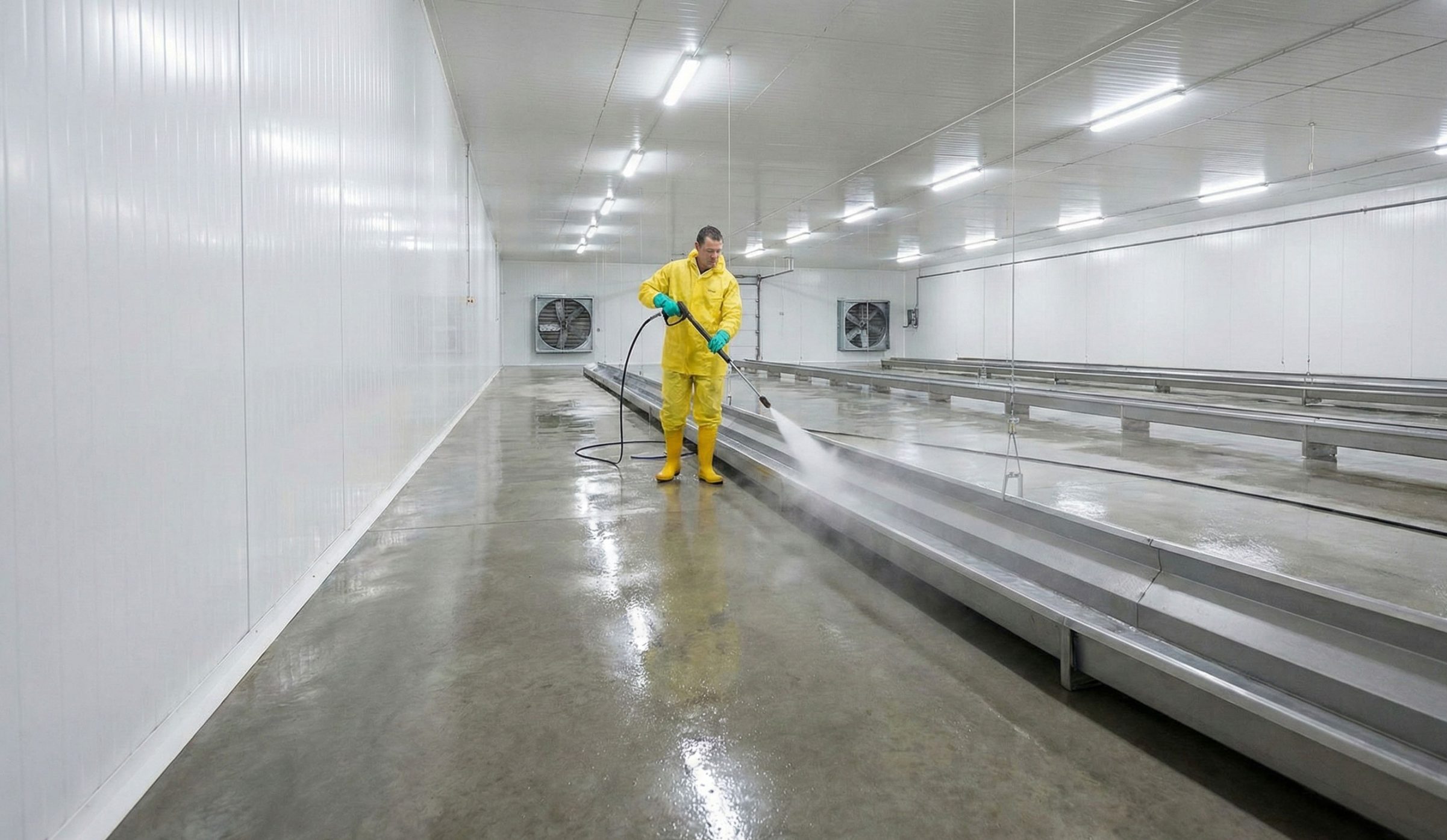
Cleaning & Maintenance
The smooth surface makes the chicken coop easier to clean and disinfect, helping reduce disease spread and lower chicken mortality.
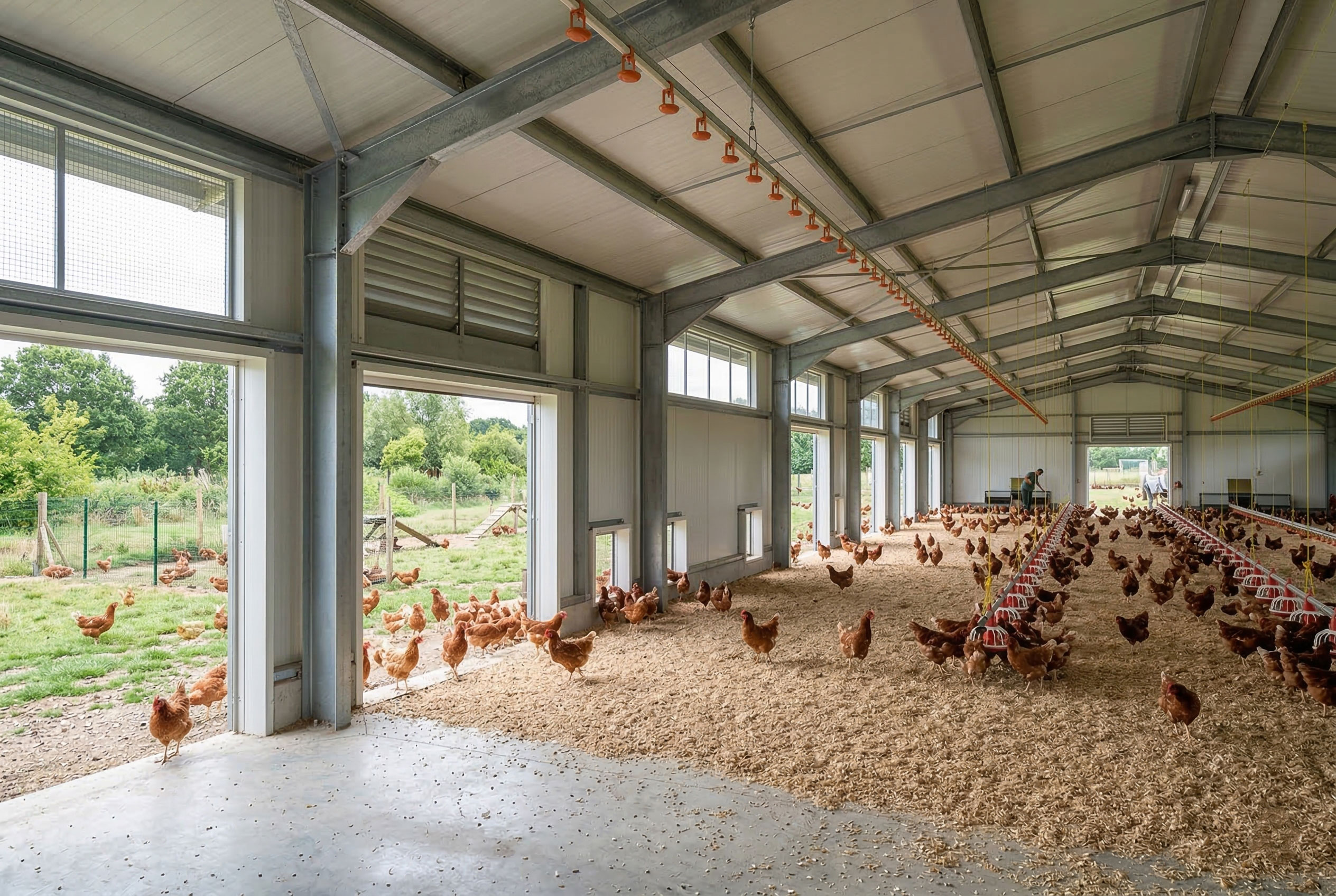
Policy requirements
Some countries and regions require free-range farming systems and do not allow cage rearing.
Want a design optimized for your climate and operation?
Plan Your Steel Chicken HouseStructural Compatibility with Automated Poultry Equipment
How steel structure design supports feeding, ventilation, and control systems
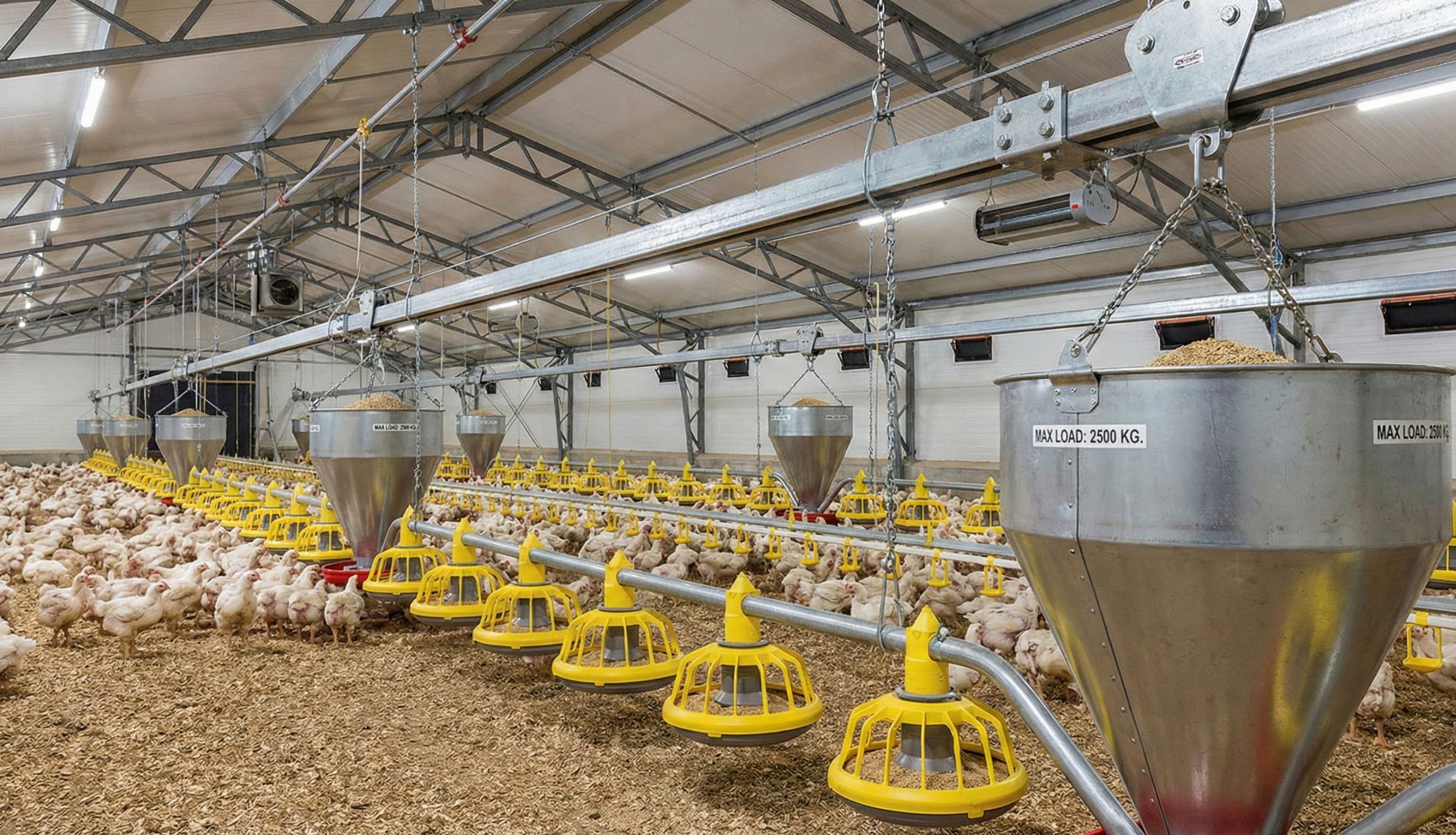
Automated Feeding Lines
Ceiling tracks pre-engineered for pan or chain feeders. Load-bearing calculations include full hopper weight plus dynamic forces.
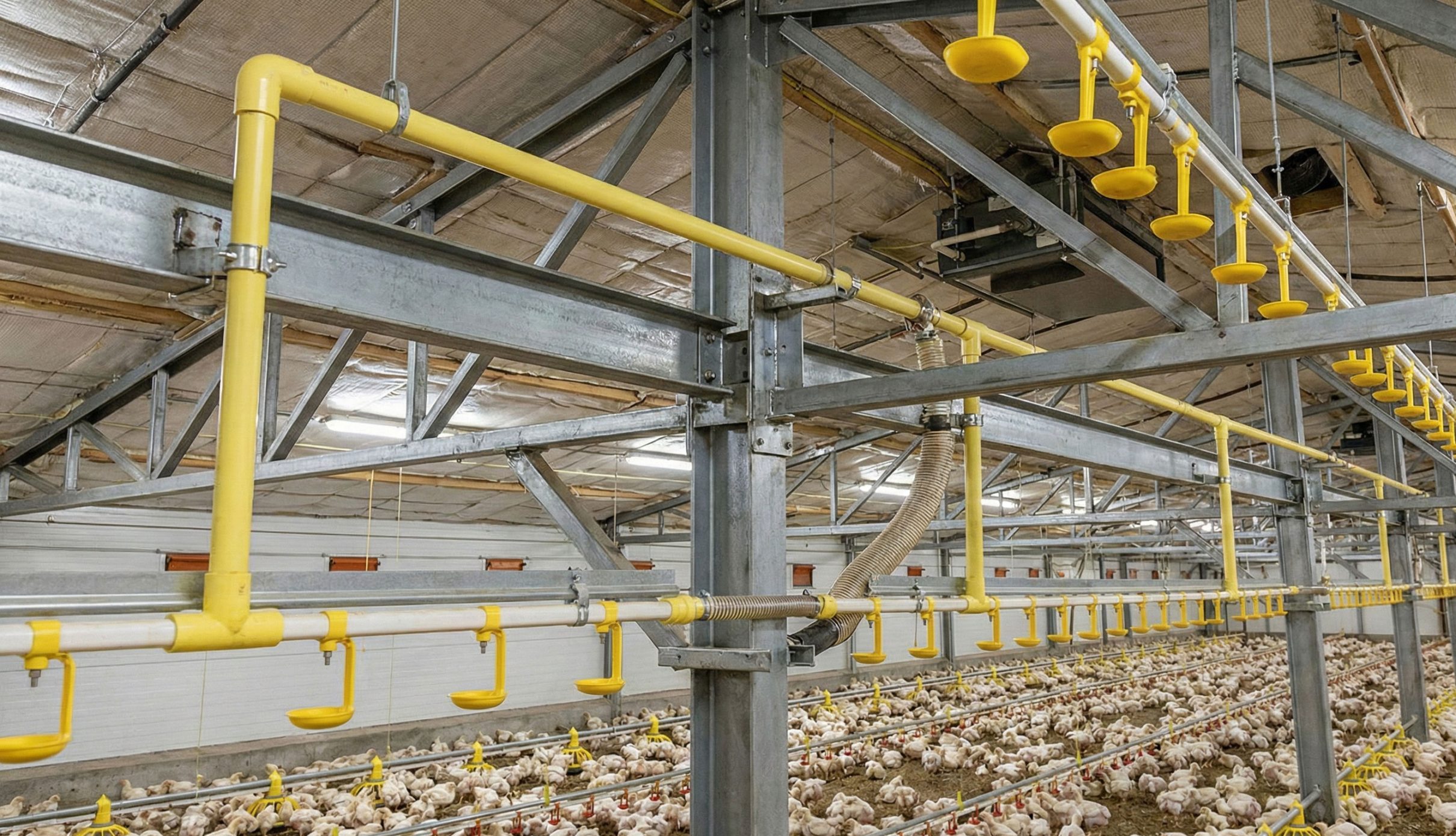
Drinking Water Systems
Nipple or cup drinker mounting points integrated into frame design. Plumbing pathways avoid thermal expansion conflicts.
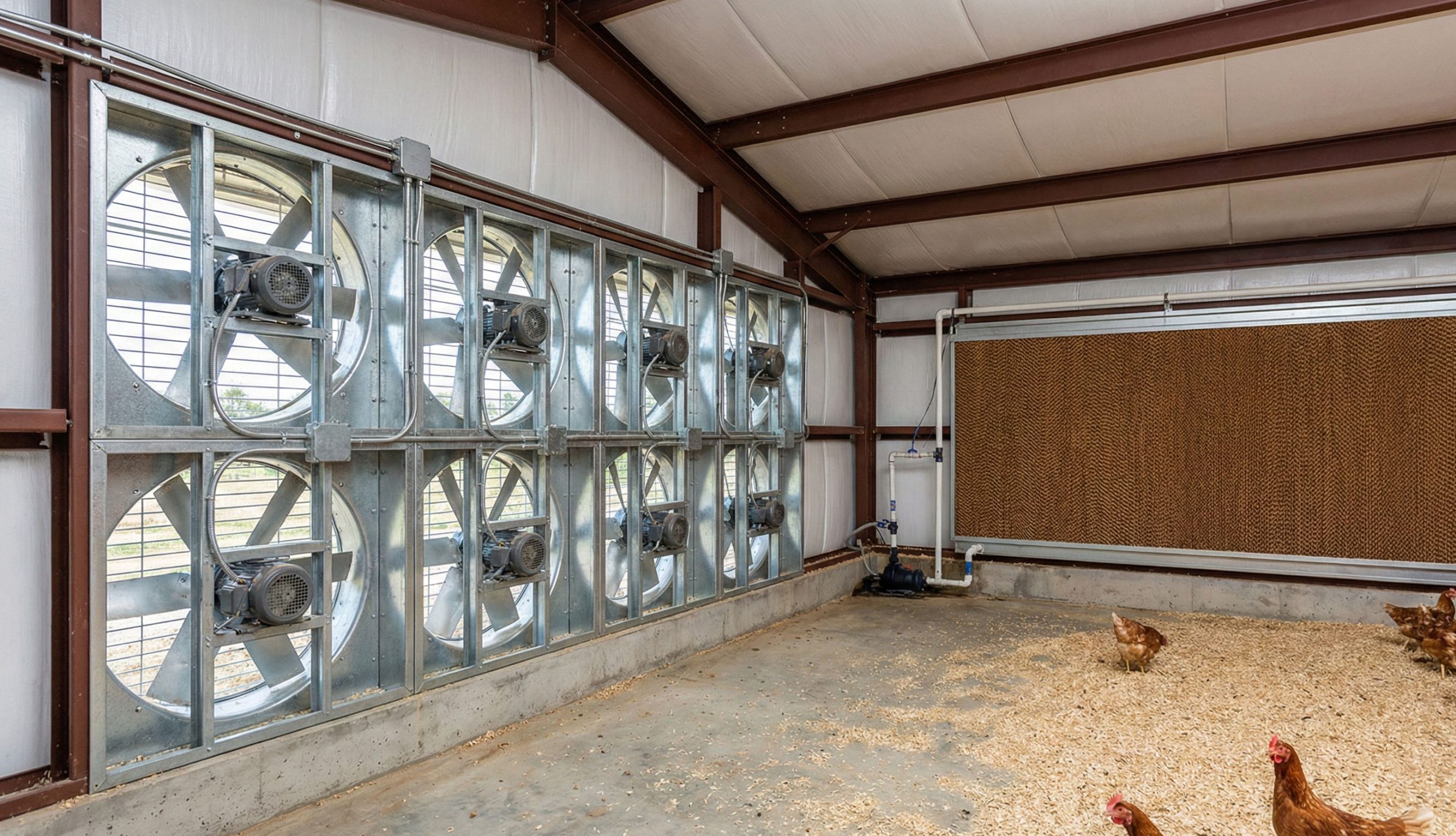
Fans & Cooling Pads
Structural openings sized for tunnel or cross-ventilation systems. Electrical conduits routed during fabrication for plug-and-play installation.
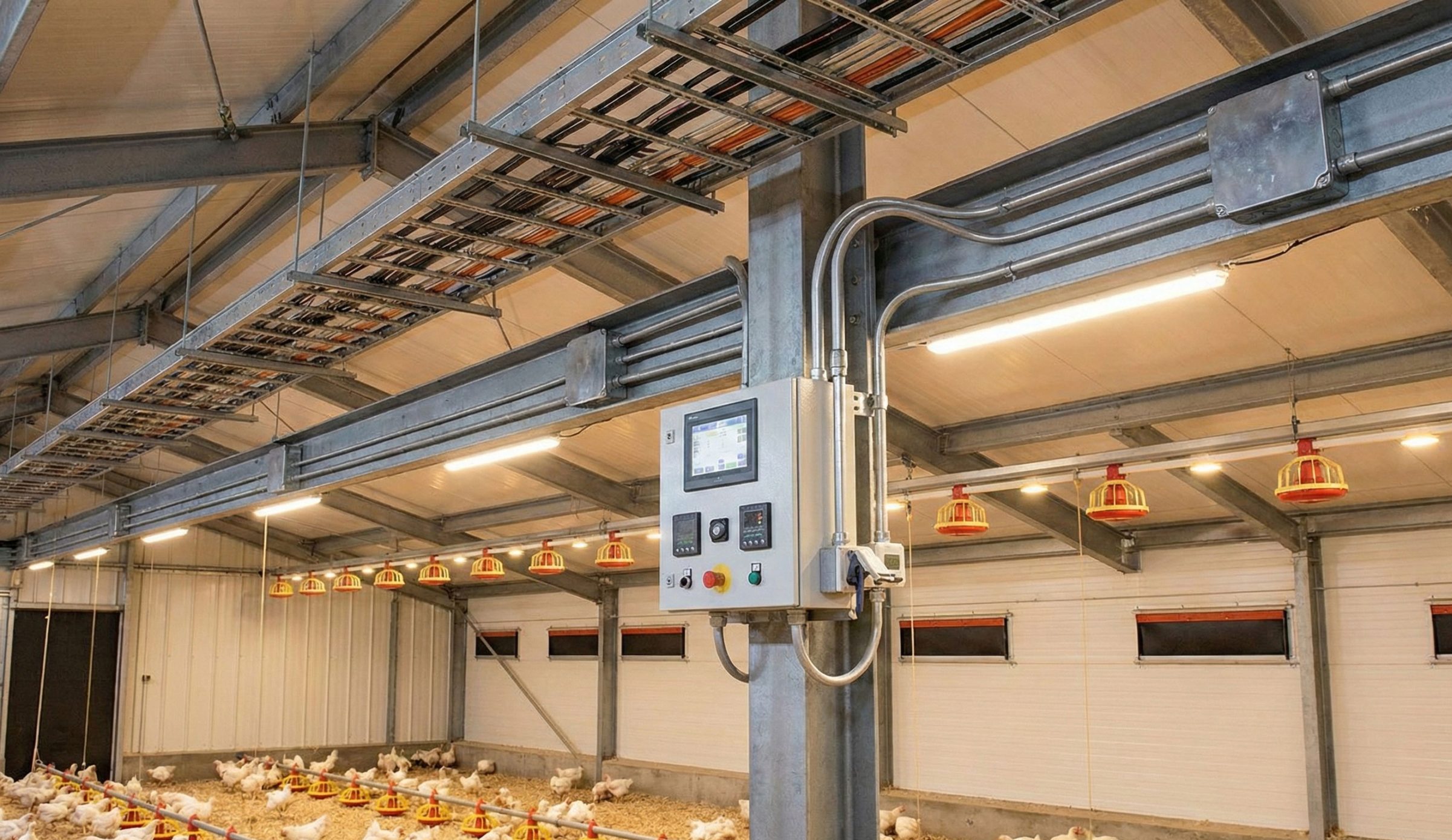
Lighting & Controls
Cable trays and junction boxes pre-positioned for dimming systems. Frame design allows future sensor upgrades without structural modification.
Why Choose Showhoo for Steel Structure Chicken Houses
A factory-based supplier that understands both steel and poultry farming
Real Factory, Not Trading Company
30,000+ tons annual production capacity with in-house fabrication. Direct quality control from raw steel material to finished components—no outsourcing delays or markup.
Poultry Building Experience
50+ countries delivered with specific chicken house projects. Engineers know bird behavior, ventilation needs, and biosecurity—not just structural calculations.
Design-for-Fabrication System
Tekla and AutoCAD models optimized for manufacturing efficiency. Detailed shop drawings eliminate field measurement errors and speed up installation 40%.
One-Stop Supply
Steel frame, insulated panels, doors, windows, and accessories from single source. Coordinated delivery reduces on-site storage and simplifies contractor management.
Overseas Project Expertise
1000+ completed international projects with container loading optimization. Export documentation, customs support, and remote installation guidance included as standard service.
Ready to work with an experienced chicken house manufacturer?
Contact Us About Your Poultry ProjectOverseas Steel Structure Chicken House Projects
Proven poultry buildings delivered to international farms
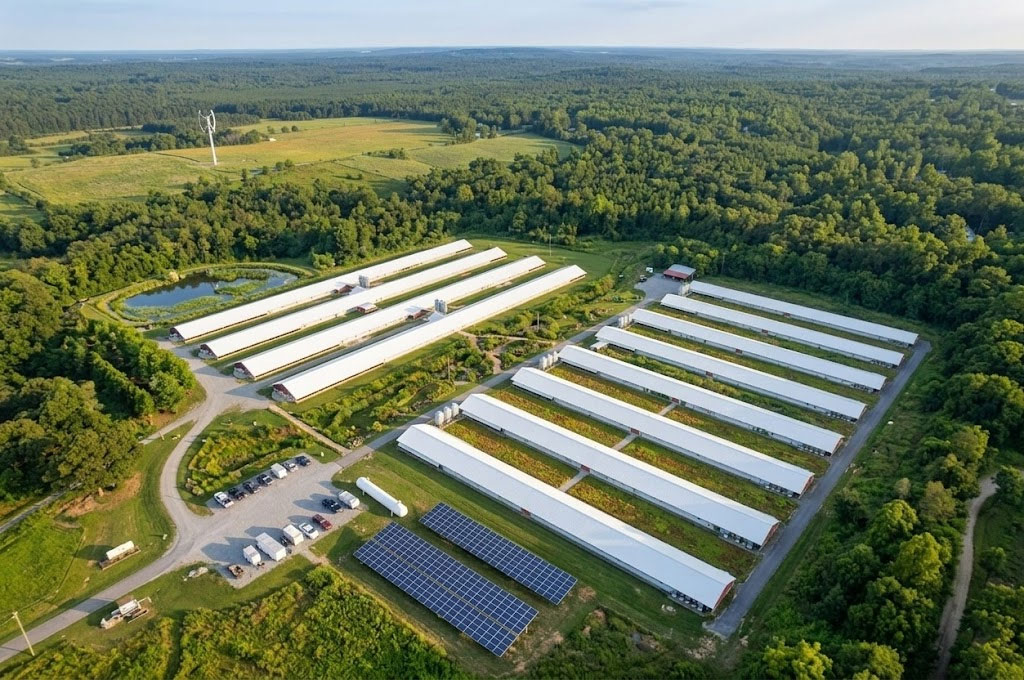
Philippines- Broiler farm
141 x 18m, 12 houses,
Closed tpye poultry house
The client started his broiler chicken farming business in 2016 and has maintained a development pace of building two chicken houses every two years. So far, we have cooperated on 12 chicken house construction projects.
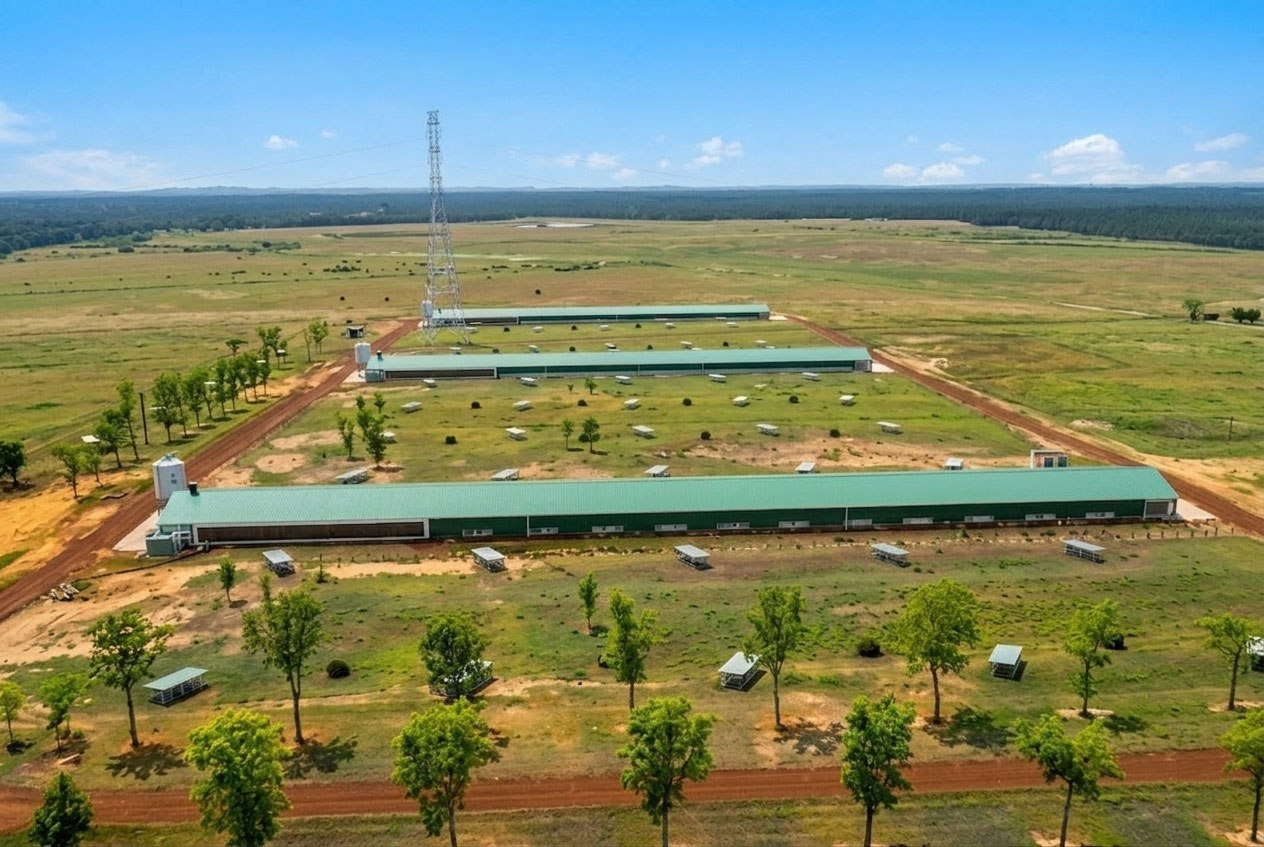
Australia - Free-range layer house
160 x 23m, 10 houses
Closed type poultry house
Each of the client's farms is large, allowing each layer to roam freely on the grass. The chicken houses are enclosed, but the walls can be opened, allowing the chickens to leave and enjoy the sunshine.
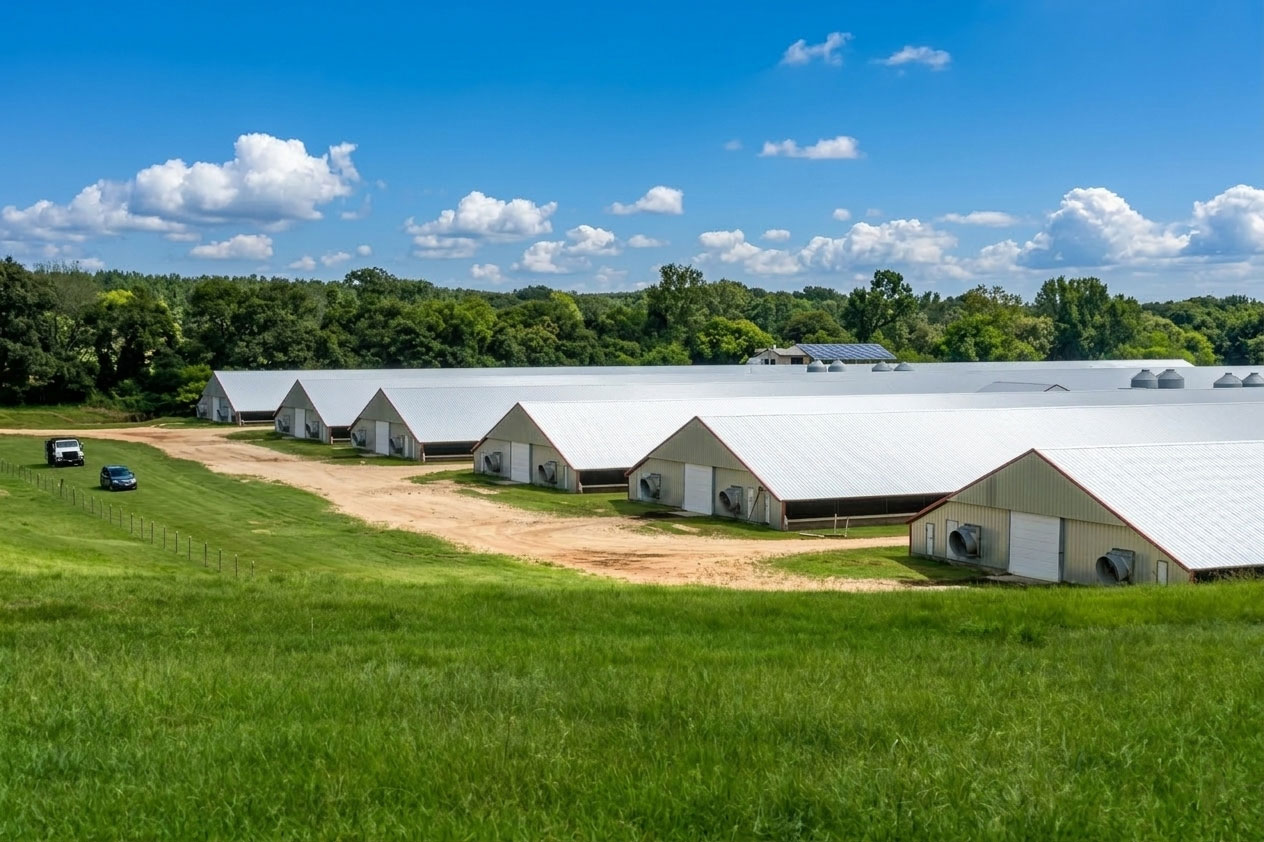
Mauritius - Broiler farm
60 x 10m, 15 houses
Open Side poultry house
The chicken house on this farm are all designed with metal windows that can be opened or closed base on the weather. We have now provided the farm with a hatchery, chicken houses, a slaughterhouse, and a cold storage buildings.
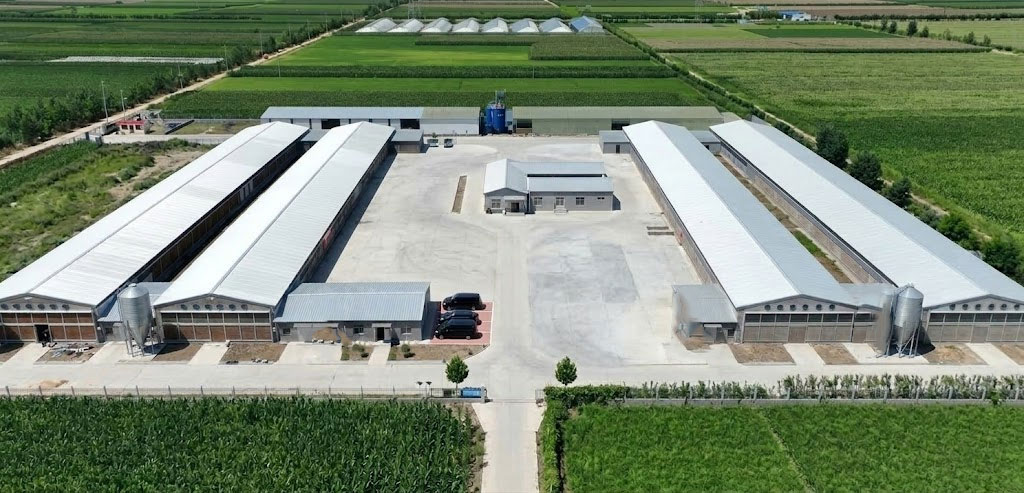
Mexico- Caged layer house
122 x 16m, 6 houses
Open side poultry house
The client used eight-layer cages, with an interior ceiling height of 7.5 meters. Roller curtain were chosen for the walls based on the local climate. The farm is still under development, the design is also continuously being optimized.
Want to see detailed project specifications?
Get a One-Stop Chicken House SolutionSteel Structure Chicken House FAQs
Below, you'll find answers to some of the most common questions about our custom steel chicken house solutions, design, and construction.
Get a Customized Steel Structure Chicken House Proposal
Tell us your farm size, climate, and poultry type
Receive a detailed technical proposal with structural drawings, material specifications, and delivered pricing within 24 hours.
- Climate-adapted design for your region
- Equipment integration planning included
- Factory-direct pricing with transparent costs
- Installation guidance and technical support