
Choosing the right panel system requires a clear understanding of your building’s thermal, structural, and environmental demands. Imagine investing in a state-of-the-art industrial facility only to find that within months, moisture begins to seep through the seams, temperature fluctuations disrupt your operations, and heating bills skyrocket. A poorly selected exterior envelope does more than ruin your interior environment; it accelerates structural corrosion, compromises stored inventory, and drains your operating capital through relentless energy losses. The solution lies in choosing premium, engineered roof and wall panels that seal your structure against the elements while maintaining long-term thermal efficiency.
Why Do Roof and Wall Panels Matter for Steel Buildings?
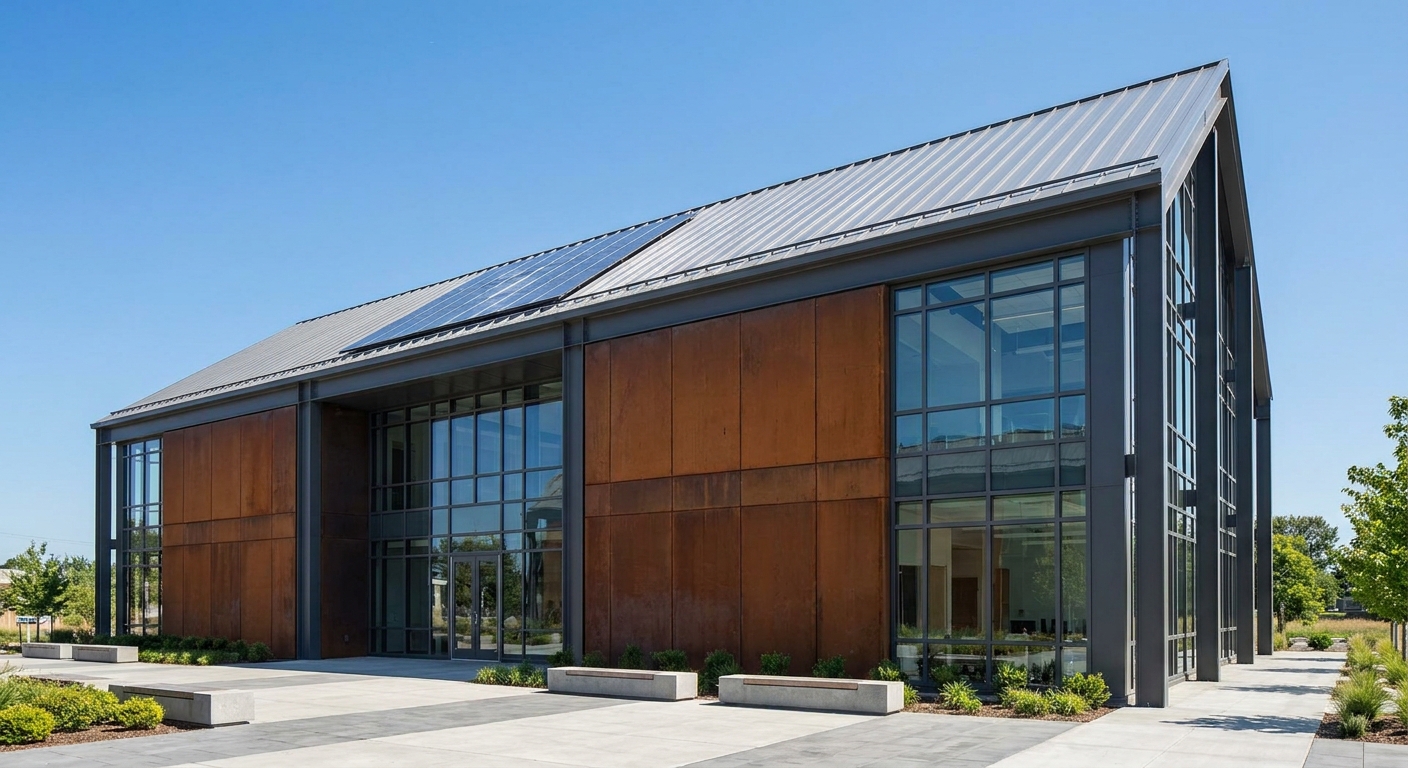
Roof and wall panels serve as the critical protective envelope that determines your steel building’s structural integrity, thermal efficiency, and overall lifespan. Without these high-performance barriers, raw structural steel remains fully exposed to aggressive weather and ambient humidity. Selecting the right combination is not just an aesthetic decision but a core structural requirement. These components act as a shield, preventing wind, rain, and heat from compromising your structural steel components.
Enhancing Structural Stability and Integrity
Modern exterior panels do more than keep the rain out of your facility. When properly engineered, they contribute directly to the building’s diaphragm strength, helping to distribute wind loads across the steel frame. This shear resistance adds an extra layer of stability against extreme lateral pressures.
Think about it:
- Structural support: Reduces the framing span requirements for secondary purlins.
- Load distribution: Effectively transfers external loads directly to the primary steel columns.
- Defense mechanisms: Minimizes structural racking during high-wind events.
Maximizing Thermal Control and Energy Efficiency
Achieving a highly controlled interior climate is impossible without an airtight, insulated envelope. High-quality panels act as a continuous thermal barrier, eliminating heat bridging and stabilizing indoor temperatures. This reduces the mechanical load on your heating, ventilation, and air conditioning systems.
Ultimately, this translates into consistent operational environments for sensitive equipment and inventory.
- Energy savings: Lowers monthly utility bills by preventing conditioned air escape.
- Condensation prevention: Inhibits moisture buildup along cold metal surfaces.
- Comfort enhancement: Maintains comfortable work zones for your on-site workforce.
Key Takeaway: Investing in high-performance envelope systems secures your primary steel frame against structural deterioration while creating a highly predictable and energy-efficient interior environment.
| Envelope Impact Category | Primary Structural Functions | Core Thermal & Environmental Benefits | |
|---|---|---|---|
| Mechanical Strength | Lateral load distribution and shear strength transfer | Deflection resistance under intense external loads | |
| Climatic Defense | Wind load resistance and purlin-span support | Complete elimination of thermal bridging and cold spots | |
| Material Priority | High-tensile steel skins and structural fastening | Polyurethane, Rockwool, or polystyrene cores |
Understanding how these components protect your framework shifts the focus to selecting the specific system type best suited for your goals.
What Are the Main Types of Roof and Wall Panels?
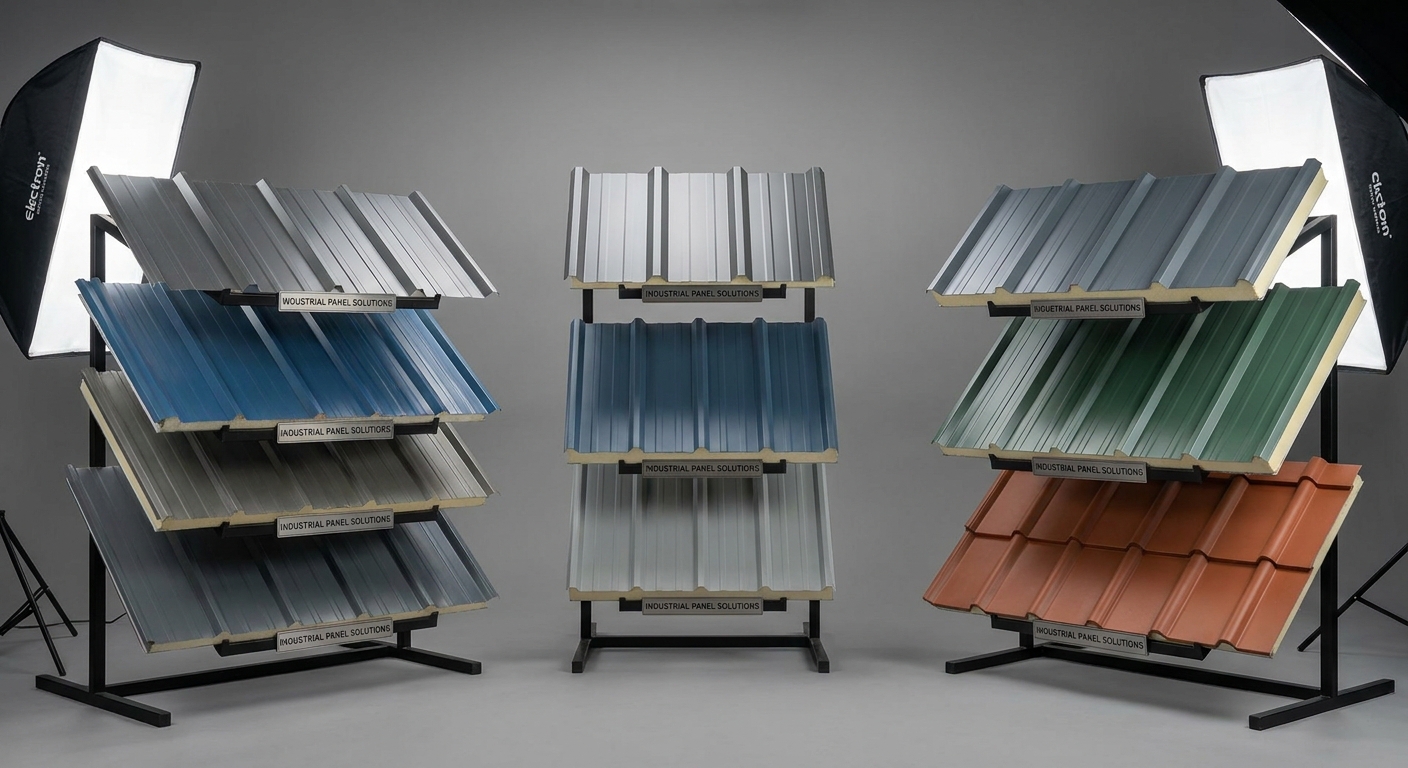
The main options available to builders are insulated sandwich panels and single-skin corrugated metal sheets. Your final selection will define both the thermal capabilities of the building and the complexity of its field installation. High-quality roof and wall panels must be evaluated based on the unique demands of your specific facility. Choosing correctly ensures that you balance upfront capital expenses with long-term operational savings.
Insulated Sandwich Panels for Premium Protection
Insulated sandwich panels feature a composite design with a high-density core bonded between two metal skins. This integrated configuration offers exceptional thermal efficiency and structural strength in a single component. They are the standard for temperature-controlled warehouses, cold rooms, and premium office facilities.
Let’s face it:
- Factory alignment: Pre-assembled units ensure consistent insulation density throughout.
- Speed of construction: Single-lift installation drastically reduces overall labor timelines.
- Aesthetic variety: Available in a wide array of flat, micro-rib, and architectural profiles.
Single-Skin Metal Sheets for Cost-Effective Coverage
Single-skin corrugated panels provide an economical envelope solution where strict climate control is not a necessity. These sheets are fabricated from high-tensile steel and can be paired with field-applied glass wool blankets for basic insulation. They are ideal for unheated agricultural barns, dry storage structures, and industrial canopies.
- Low initial cost: Perfect for projects operating on constrained initial capital.
- Lightweight profile: Puts minimal structural dead load on the supporting steel framework.
- Easy modification: Simple to cut and adjust directly on-site during installation.
Key Takeaway: Choosing between sandwich panels and single-skin sheets establishes your project’s baseline insulation capacity, thermal efficiency, and overall construction budget.
| Performance Parameter | Insulated Sandwich Panels | Single-Skin Metal Sheets | |
|---|---|---|---|
| Thermal Performance | High (Built-in continuous core insulation) | Low (Requires manual field-applied insulation) | |
| Installation Effort | Fast (Single-step lifting and interlocking) | Multi-step (If manual insulation is required) | |
| Initial Capital Cost | Higher upfront investment | Extremely economical initial material cost |
Evaluating these core characteristics directs our attention to the specific insulating materials that power sandwich panel performance.
Upgrade your building with high-performance panels today!
Email:sales@showhoo.com.cn
Phone/WhatsApp: + 86 186 7895 5927
How Do Sandwich Panel Core Materials Differ?
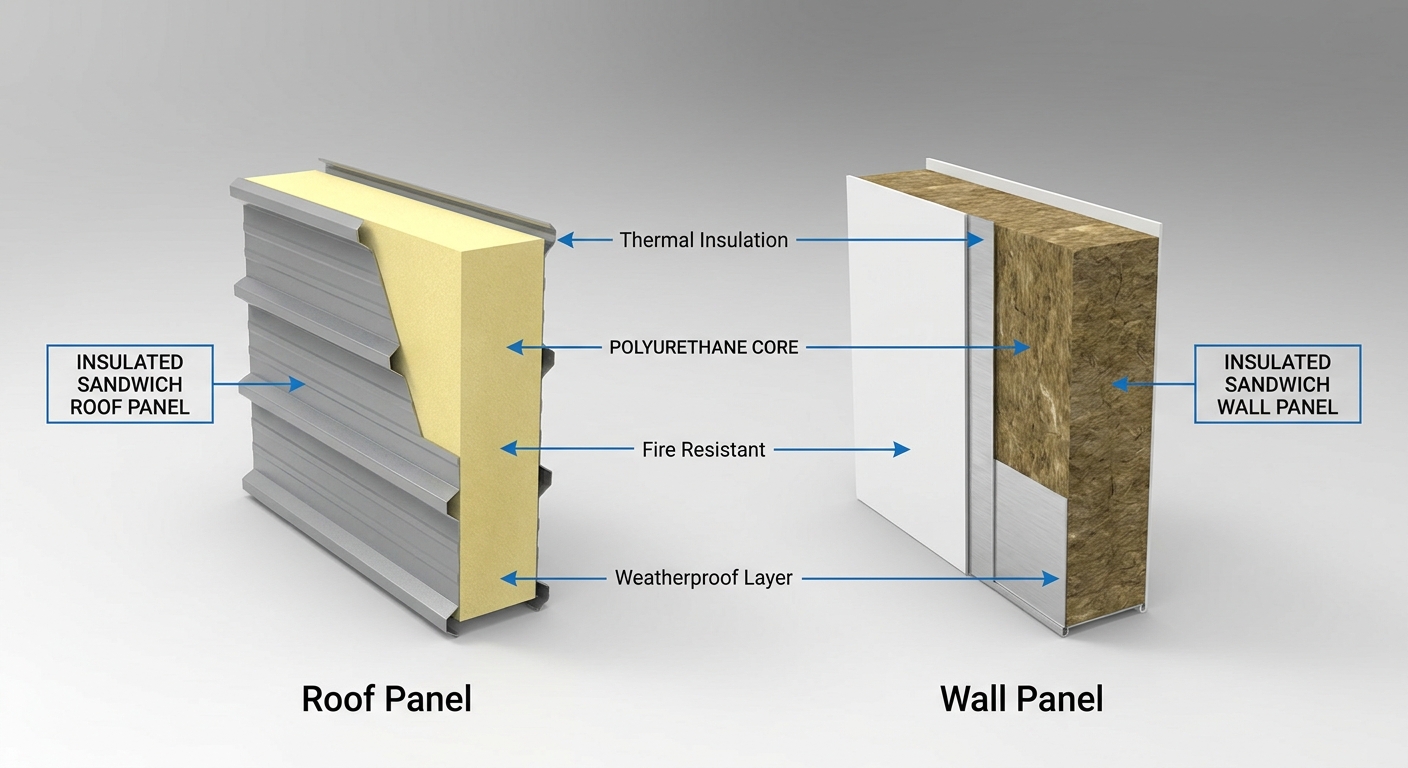
Sandwich panel core materials differ primarily in their thermal performance, fire resistance, and sound absorption capabilities. Choosing the wrong core material can leave your facility vulnerable to fire hazards or result in inadequate insulation. Advanced roof and wall panels utilize specific cores engineered to meet strict building codes and operational demands. By understanding these core material differences, you can design a building that is safe, efficient, and compliant.
Polyurethane and Polyisocyanurate Cores
Polyurethane (PU) and Polyisocyanurate (PIR) cores offer some of the highest thermal resistance values per inch on the market. Their closed-cell structure prevents moisture absorption and maintains high insulating efficiency over decades of use. PIR is especially favored in modern industrial builds due to its superior fire-retardant properties.
Here is the key:
- Thermal efficiency: Delivers outstanding R-values to minimize heating and cooling waste.
- Lightweight strength: Provides incredible rigidity without adding excessive bulk weight.
- Closed-cell matrix: Resists water vapor transmission and eliminates mold growth risks.
Rockwool and EPS Core Options
Rockwool, made from natural volcanic stone, provides unmatched fire protection and superior acoustic absorption. Expandable Polystyrene (EPS) offers a highly economical, lightweight alternative with good basic insulation performance. While EPS serves budget-conscious projects, Rockwool is essential for high-risk industrial plants and noisy manufacturing facilities.
- Absolute fire safety: Non-combustible core resists temperatures exceeding 1,000°C.
- Sound insulation: Dampens loud manufacturing noises to protect neighboring environments.
- Budget flexibility: EPS provides a lightweight, cost-effective insulation option.
Key Takeaway: Matching your panel core material to your insulation, acoustic, and fire-safety requirements ensures complete regulatory compliance and optimal interior performance.
| Core Type | Thermal R-Value | Fire Performance | Key Application | |
|---|---|---|---|---|
| PIR / PU | Excellent (highest per inch) | Fire retardant (Class B) | Cold storage & high-efficiency buildings | |
| Rockwool | Moderate | Outstanding (Class A non-combustible) | Power plants & acoustic-sensitive zones | |
| EPS | Good (economical) | Combustible (Class B/C) | Simple warehouses & dry storage units |
The performance differences of these core materials highlights why premium sandwich panels are valued differently than basic corrugated metal options.
How Do Corrugated Sheets Compare to Sandwich Panels?
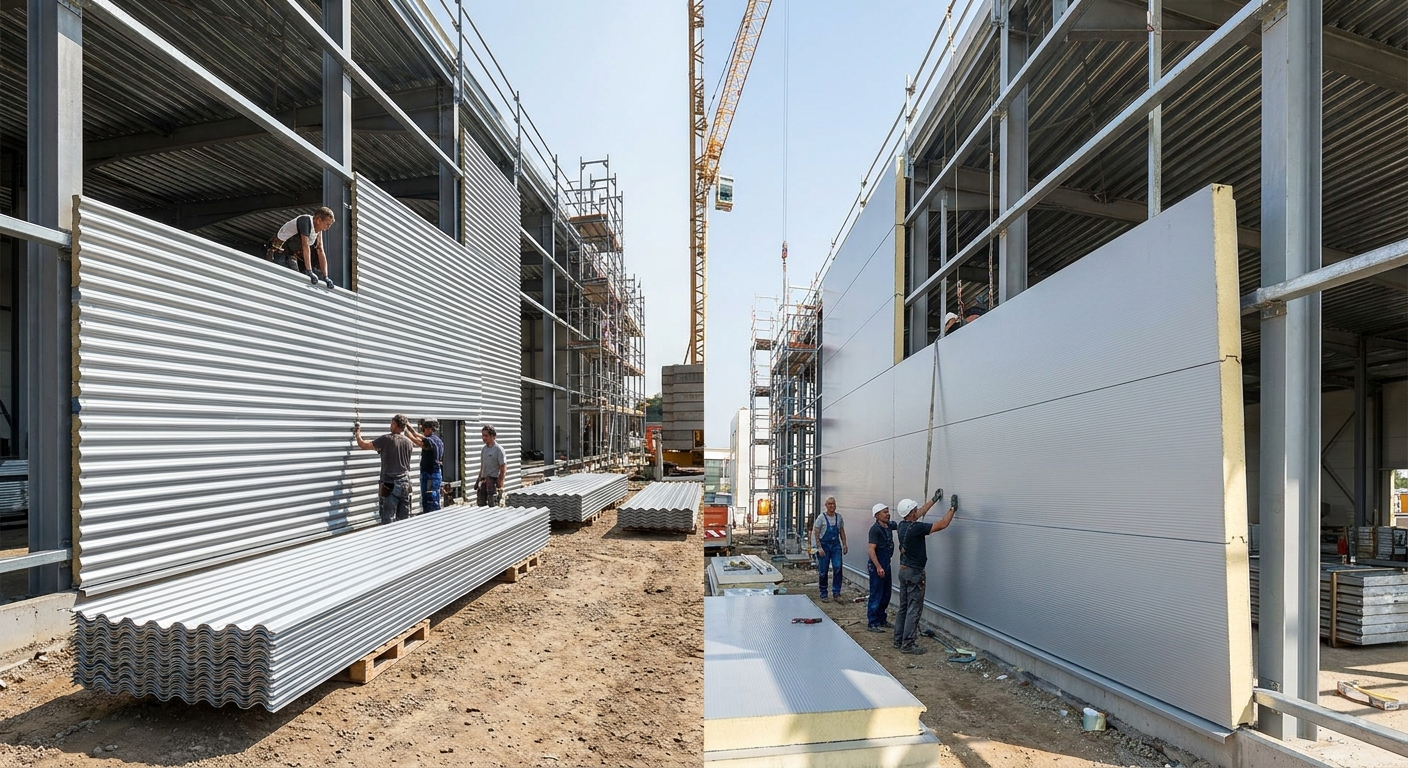
Corrugated sheets are lightweight and budget-friendly but lack the built-in thermal insulation and acoustic control of sandwich panels. Deciding between these two options is a pivotal step that impacts both your initial construction costs and future utility bills. High-performance roof and wall panels should align perfectly with your budget and building requirements. This comparison helps clarify which system delivers the best value for your industrial or commercial investment.
Structural and Installation Differences
Corrugated metal sheets require multi-step field installation if you plan to incorporate separate insulation blankets on-site. In contrast, sandwich panels are delivered to your site ready for immediate, single-lift installation. This structural simplicity speeds up the building enclosure process significantly.
The reality is:
- Framing demands: Corrugated sheets often require denser secondary purlin configurations.
- Assembly speed: Integrated sandwich panels slash on-site crane and crew times.
- Seal reliability: Interlocking sandwich panel joints offer much tighter environmental seals.
Operational and Lifecycle Performance
Over a multi-decade lifecycle, insulated panels protect against condensation that causes interior corrosion and rust. Single-skin sheets are highly susceptible to sweating in humid environments, which can damage stored goods. The superior durability of sandwich panel systems translates to minimal maintenance costs over time.
- Condensation control: Closed-cell panel systems completely eliminate internal sweating.
- Maintenance savings: High-durability coatings resist chalking and fading for decades.
- Long-term value: Premium insulation preserves the value of both structure and inventory.
Key Takeaway: While corrugated sheets offer unmatched initial savings, sandwich panels protect your structural investment and inventory from moisture and temperature-driven damages.
| Comparison Metric | Corrugated Metal Sheets | Insulated Sandwich Panels | |
|---|---|---|---|
| Thermal Bridging | High risk at all fastening points | Eliminated via continuous insulation core | |
| Installation Labor | Higher on-site assembly steps | Fast, single-step structural installation | |
| Condensation Control | Minimal (Requires auxiliary vapor barriers) | Excellent (Inherent vapor barrier properties) |
Evaluating these lifecycle operational differences demonstrates how external environmental factors directly influence your overall panel selection.
Upgrade your building with high-performance panels today!
Email:sales@showhoo.com.cn
Phone/WhatsApp: + 86 186 7895 5927
How Do Weather Conditions Affect Your Panel Choice?
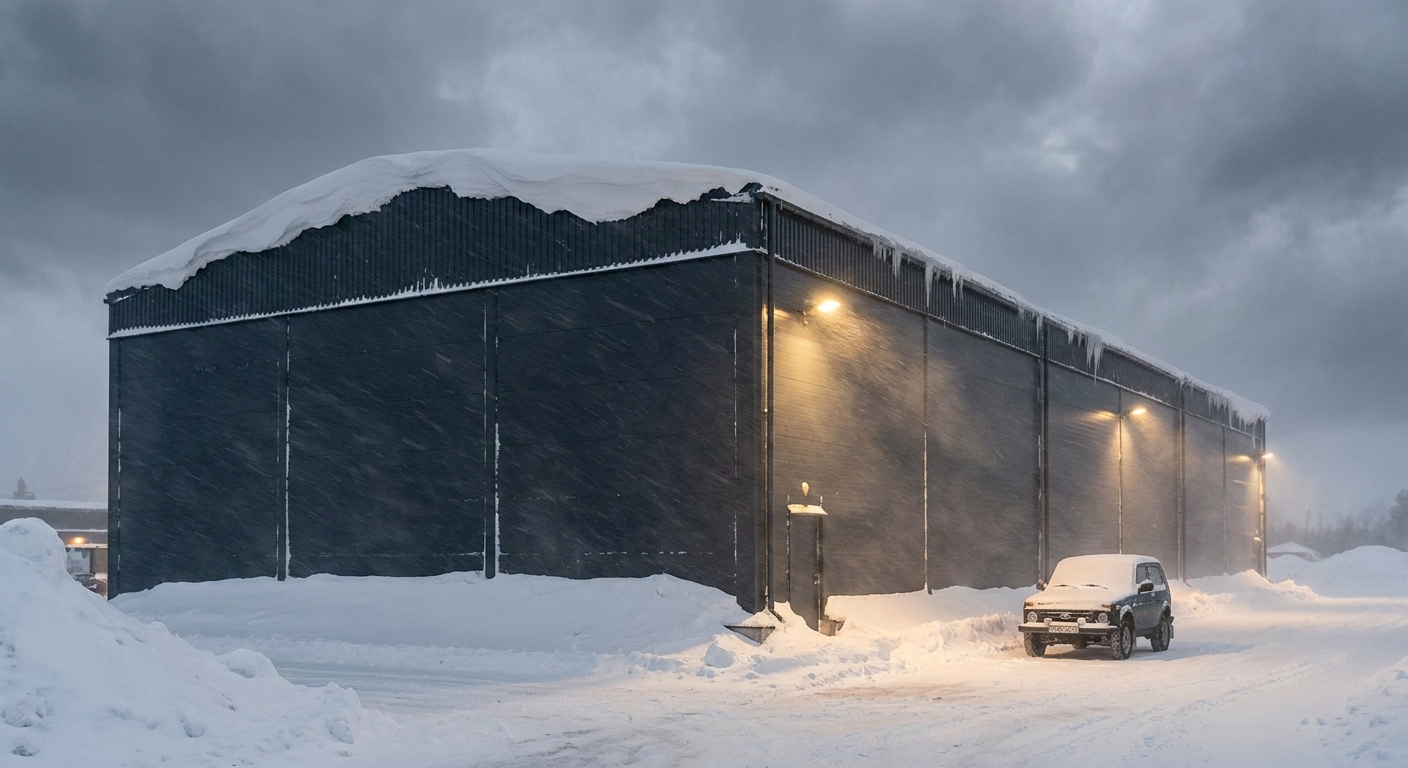
Local weather conditions dictate the level of insulation, wind load capacity, and corrosion resistance your panel system must provide. Buildings constructed in extreme environments face constant thermal and mechanical stresses. Choosing appropriate roof and wall panels ensures your structure remains safe, stable, and completely dry throughout the year. Let us examine how specialized configurations help you withstand local environmental challenges.
Designing for High Wind and Heavy Snow Loads
High-wind zones and heavy snow regions require panels with superior span capabilities and robust fastening systems. Your panel envelope must withstand intense positive and negative wind pressures without separating from the steel framework. Thick steel skins and engineered fasteners are vital to preventing structural peeling.
Consider this:
- Snow load capacity: Prevents structural deflection under heavy, moisture-laden winter packs.
- Wind uplift resistance: Secure interlocking joints prevent panel detachment during severe storms.
- Profile depth: Deeper rib patterns on roof panels increase their natural bending resistance.
Managing Extreme Temperatures and Humidity Levels
In hot, high-humidity, or coastal areas, panels face aggressive solar radiation and salt spray corrosion. Premium polyurethane cores and specialized anti-corrosive external coatings are necessary to prevent rapid rust and color fading. These heat-reflective coatings keep interior environments cool while saving on air conditioning.
- Corrosion resistance: Advanced coatings prevent rust in salty or chemically harsh air.
- Heat reflection: Cool-roof finishes bounce solar radiation away from the building.
- Vapor management: Airtight panel joints keep humid outdoor air from penetrating the interior.
Key Takeaway: Adapting your panel specifications to local weather loads prevents structural failure and drastically reduces energy consumption in extreme climates.
| Climate Challenge | Critical Panel Feature | Recommended Specification | |
|---|---|---|---|
| Coastal / Humid | High-performance protective coatings | PVDF or high-durability polyurethane finish | |
| High Snow / Wind | Thick steel skins and deep profiles | 0.6mm+ steel skin with high-rib designs | |
| Intense Heat | Highly efficient insulation & reflective paint | PIR core with solar-reflective (cool roof) coating |
Customizing panels to survive local weather is only possible when you select panels made from high-quality materials.
What Key Factors Define a High-Quality Panel?
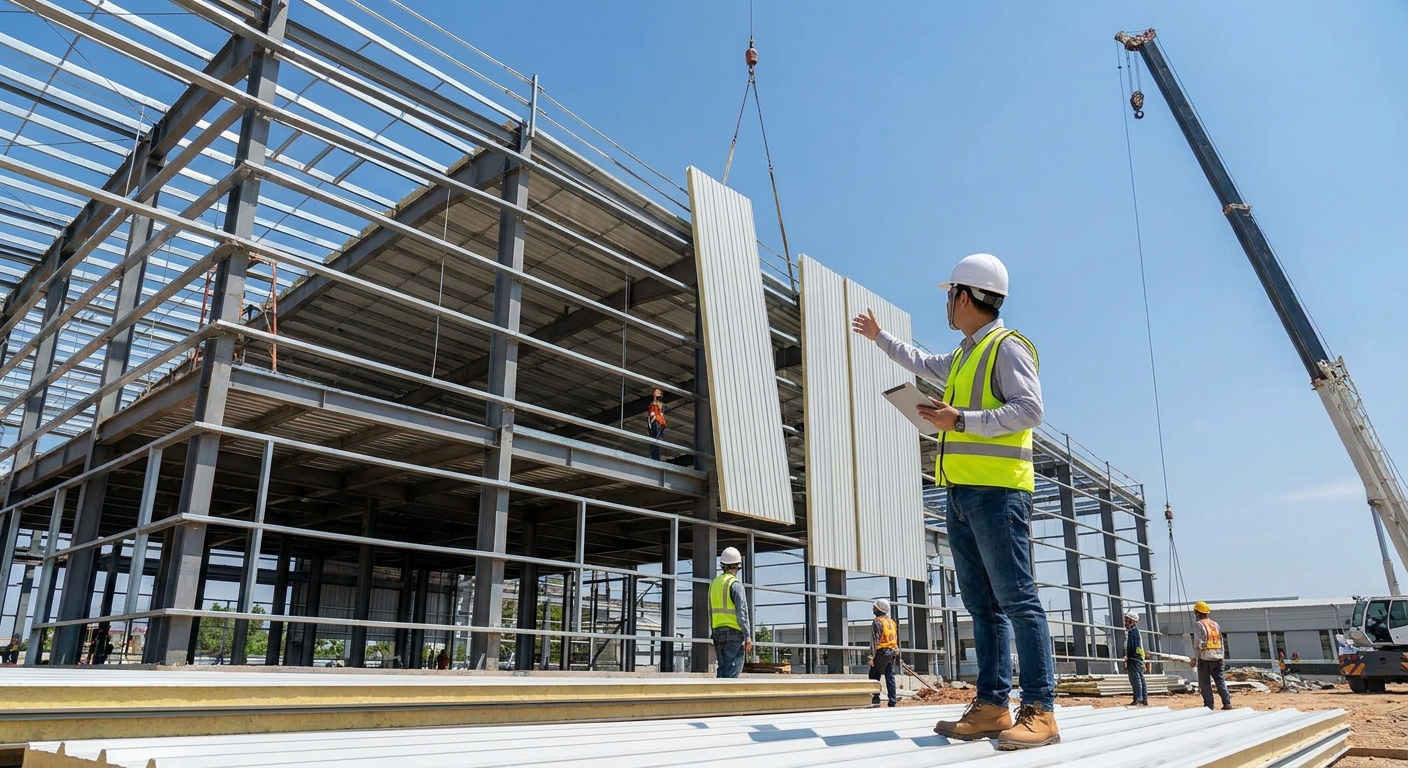
A high-quality panel is defined by its steel gauge thickness, protective coating durability, and the precision of its joint connections. Lower-grade panels often peel, rust prematurely, or fail along their locking seams within just a few years. Premium roof and wall panels utilize certified, high-tensile steel structural bases combined with state-of-the-art protective paint coatings. Understanding these quality markers helps you avoid underperforming materials that lead to expensive repairs.
Advanced Protective Coatings and Steel Grades
The external metal skin of your panels must be constructed from certified, hot-dip galvanized steel grades. This base steel is further protected by advanced paint systems like PVDF or Polyurethane to resist chemical attack and UV rays. These high-end coatings ensure the panel looks pristine and remains rust-free for decades.
Let’s review the options:
- PVDF coatings: Exceptional resistance to chalking, fading, and aggressive UV exposure.
- Galvanization layer: Heavy zinc coating protects the steel substrate from atmospheric rust.
- Steel gauge: Thicker skins (e.g., 0.5mm to 0.8mm) provide superior impact and dent resistance.
Precision Interlocking Joints and Sealants
The weakest point of any panel system is its joints where two sections lock together. High-quality panels feature computer-designed, interlocking male-female joint profiles that ensure a tight, perfect fit. These precision joints incorporate integrated factory-applied gaskets or site-applied sealants to create a continuous moisture barrier.
- Air tightness: Eliminates drafts and prevents expensive heat loss through the seams.
- Water resistance: Prevents heavy, wind-driven rain from penetrating the interior.
- Easy alignment: Precision manufacturing allows panels to slide easily into place during assembly.
Key Takeaway: Demanding certified steel grades, thick protective coatings, and precision joints ensures your steel building’s envelope remains weather-tight and maintenance-free for decades.
| Quality Parameter | Premium Standards | Budget Standards | |
|---|---|---|---|
| Base Metal Coating | Z275 (275 g/m² zinc) or AZ150 | Z100 or less (Thin, prone to rust) | |
| External Paint Type | PVDF (Fluorocarbon) or HDP | Standard PE (Polyester) | |
| Steel Skin Thickness | 0.5mm – 0.8mm (Heavy duty) | 0.3mm – 0.4mm (Flimsy, easily dented) |
These rigid quality standards directly translate to the structural durability required for specialized steel building applications.
Upgrade your building with high-performance panels today!
Email:sales@showhoo.com.cn
Phone/WhatsApp: + 86 186 7895 5927
Which Panel Solutions Suit Different Steel Buildings?
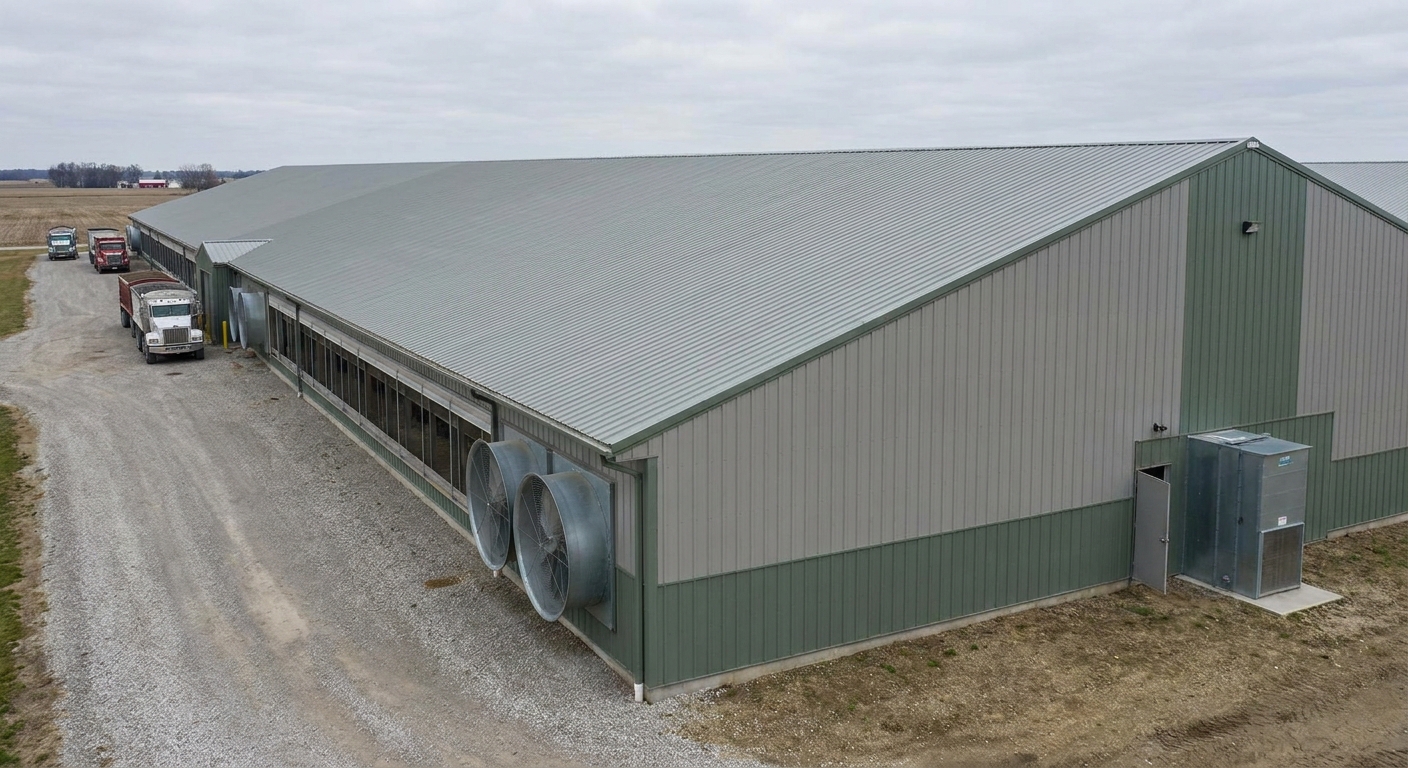
The right panel solution depends on whether your steel building serves an industrial, commercial, or agricultural purpose. Each application presents specific environmental conditions that call for distinct panel configurations. Specialized roof and wall panels must be engineered to address these unique internal environments. Let us explore the optimal panel systems designed to enhance the operations of various building types.
Industrial and Manufacturing Workshop Demands
Industrial workshops and factories often deal with high temperatures, heavy machinery noise, and fire risks. For these facilities, Rockwool or PIR core sandwich panels are highly recommended to provide safety and sound dampening. These panels can support overhead crane layouts and withstand demanding industrial conditions.
Keep in mind:
- Acoustic insulation: Dampens internal machinery noise to comply with health and safety codes.
- Fire resistance: Rockwool cores prevent fire spread in chemical and high-temperature environments.
- Durability: Strong metal skins resist impacts from heavy equipment and on-site movement.
Specialized Agricultural and Livestock Enclosures
Livestock buildings, such as modern poultry and pig sheds, feature highly corrosive environments due to ammonia gas and high humidity. These structures require agricultural-grade panels with specialized internal anti-corrosive coatings like PVC or PET. Using standard coatings in these conditions will lead to panel failure within a few years.
- Chemical resistance: Specialized inner skins resist ammonia vapor and frequent sanitization.
- Climate control: High-efficiency insulation cores maintain stable temperatures for animal health.
- Hygiene standards: Washable surfaces prevent bacteria buildup and support flock safety.
Key Takeaway: Choosing industry-specific panel skins and core materials protects your structural envelope from internal chemical degradation and supports operational productivity.
| Building Type | Recommended Core Material | Recommended Coating | |
|---|---|---|---|
| Industrial Workshop | Rockwool / PIR | Standard PE or PVDF (External) | |
| Agricultural Shed | PIR / PU | Anti-corrosive PET or PVC film (Internal) | |
| Commercial Showroom | PIR / PU | PVDF (Aesthetic architectural finish) |
Selecting appropriate application-specific panels helps you avoid costly errors during the construction phase.
How Does Proper Installation Prevent Panel Damage?
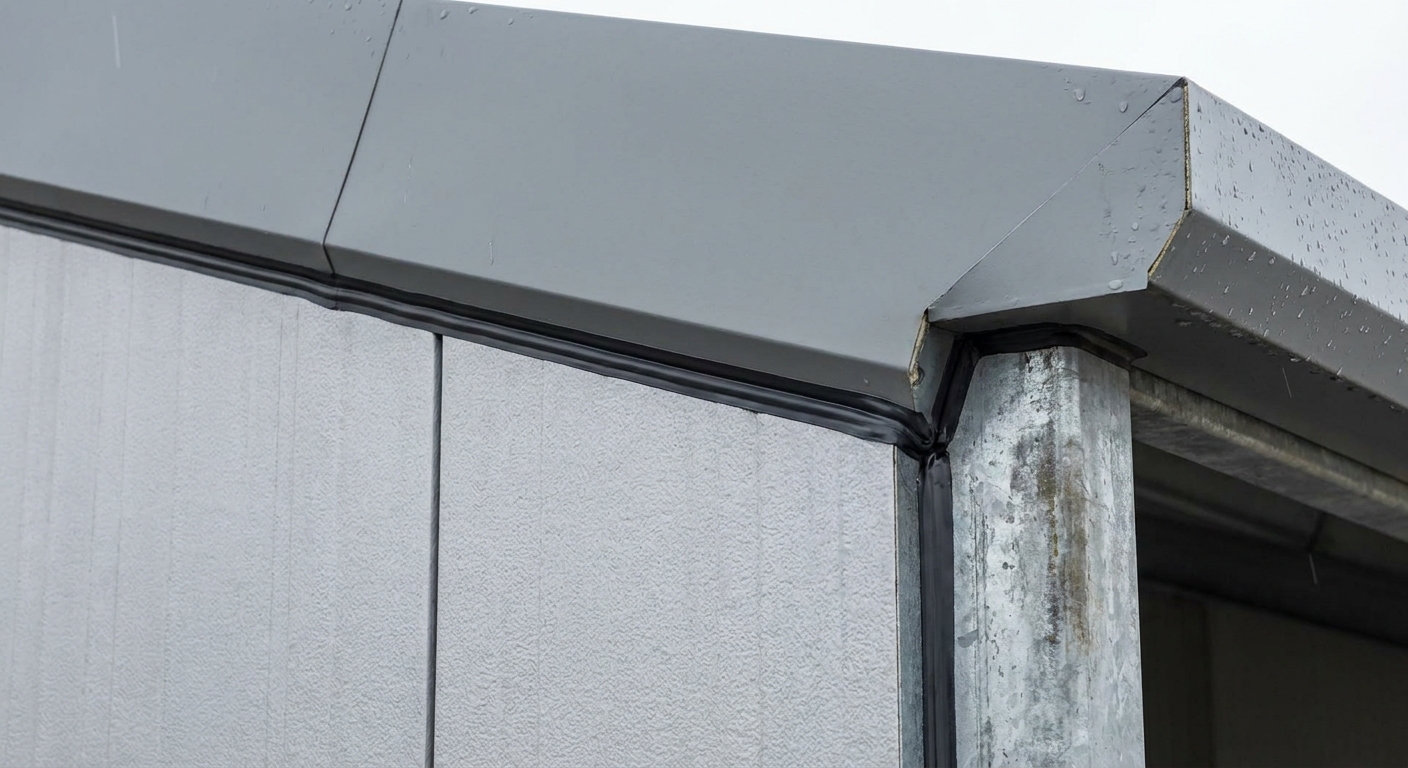
Proper installation prevents panel damage by ensuring airtight joints, correct thermal expansion allowance, and completely water-resistant fastening. Even the highest-quality materials will fail if they are poorly aligned or incorrectly secured during construction. High-performance roof and wall panels must be installed by skilled professionals who strictly follow structural engineering plans. Understanding these key installation guidelines will help you protect your investment from costly construction errors.
Executing Flawless Joint Sealing and Fastening
Airtight seals along panel joints are essential to prevent moisture penetration and heat loss. Installers must apply weather-proofing sealants and use premium fasteners with durable EPDM washers. These rubber washers compress to form a watertight seal, stopping rain from leaking through fastener holes.
But that’s not all:
- Fastener tightness: Screws must be driven perfectly straight to avoid damaging the EPDM washers.
- Continuous sealant: Sealing tape must run smoothly along joints without any gaps.
- Precision alignment: Panels must be perfectly squared before fastening to avoid gaps.
Accommodating Natural Thermal Expansion and Contraction
Metal panels expand when heated by the sun and contract when temperatures drop. If panels are fastened too tightly or lack expansion joints, they can buckle, warp, or pull fasteners loose. Proper installation plans include expansion zones that allow panels to move slightly without damaging the structure.
- Buckling prevention: Allows panels to expand in summer heat without bowing.
- Joint preservation: Keeps interlocking connections secure during extreme temperature changes.
- Noise reduction: Eliminates the loud popping noises caused by restricted metal movement.
Key Takeaway: Using professional installation methods and high-quality fasteners keeps your panel system completely watertight and structurally stable for the long term.
| Installation Step | Critical Risk Factor | Best Practice Solution | |
|---|---|---|---|
| Panel Alignment | Sloping gaps and joint failure | Use laser levels to align every panel before fastening | |
| Fastener Driving | Over-tightened or crooked screws | Use torque-controlled drills to seat EPDM washers perfectly | |
| Sealant Application | Gaps in weather seals leading to leaks | Apply continuous, high-grade butyl sealant tape along joints |
Ensuring precise on-site installation completes your envelope design, paving the way for a successful steel building project.
Conclusion: Ready to Choose the Best Panels for Your Project?
Selecting the correct panel system is a critical decision that defines your steel building’s safety, efficiency, and lifespan. This guide has shown how high-quality materials protect your structure, lower energy costs, and prevent moisture damage. We design and deliver custom prefabricated steel buildings complete with high-performance paneling systems tailored to your site’s weather and operations. To get a custom quote and design consultation for your next project, contact us today to work directly with our engineering team. Let us build a durable, efficient structure that supports your business growth for decades to come.
Upgrade your building with high-performance panels today!
Email:sales@showhoo.com.cn
Phone/WhatsApp: + 86 186 7895 5927
Frequently Asked Questions About Roof and Wall Panels
What’s the best panel system for a cold storage warehouse?
Choose polyurethane or polyisocyanurate (PIR) core sandwich panels. Their closed-cell insulation core provides the exceptional thermal resistance and vapor barrier performance required to keep cold storage environments stable and energy-efficient.
Can I install solar panels on top of these roof panels?
Yes, you can. High-rib sandwich roof panels are engineered to support solar mounting systems, allowing you to install solar arrays securely without compromising the roof’s waterproofing.
How do I know if my building needs sandwich panels or corrugated sheets?
Evaluate your interior climate control requirements. If your building needs heating, cooling, or strict humidity control, choose sandwich panels; for unheated warehouses or agricultural shelters, corrugated sheets are a highly cost-effective choice.
Can I paint my panels a custom color after installation?
No, it is highly recommended to select pre-painted panels with factory-applied coatings. Factory coatings like PVDF are baked on under controlled conditions, providing a much higher level of durability and rust protection than field-applied paint.
How do I know if my panels have been installed correctly?
Inspect the joint seams, trim details, and fastener seals. A correct installation will show perfectly straight panel lines, fully sealed joints with no gaps, and fasteners seated straight with slightly compressed EPDM washers.