
A layer cage system for chicken farming is an advanced vertical husbandry setup designed to house laying hens in multi-tier wire cages, facilitating automated feeding, egg collection, and waste disposal to maximize commercial yield.
Imagine walking into your poultry farm only to find cracked eggs, high feed waste, and birds suffering from poor air quality due to floor waste buildup. Managing these daily inefficiencies manually drains your operating cash flow and limits your capacity to scale up. Fortunately, upgrading your operation to a modern Cage Raising Poultry House provides a bio-secure, highly efficient, and automated environment that eliminates these productivity bottlenecks.
Why build a Cage Raising Poultry House?
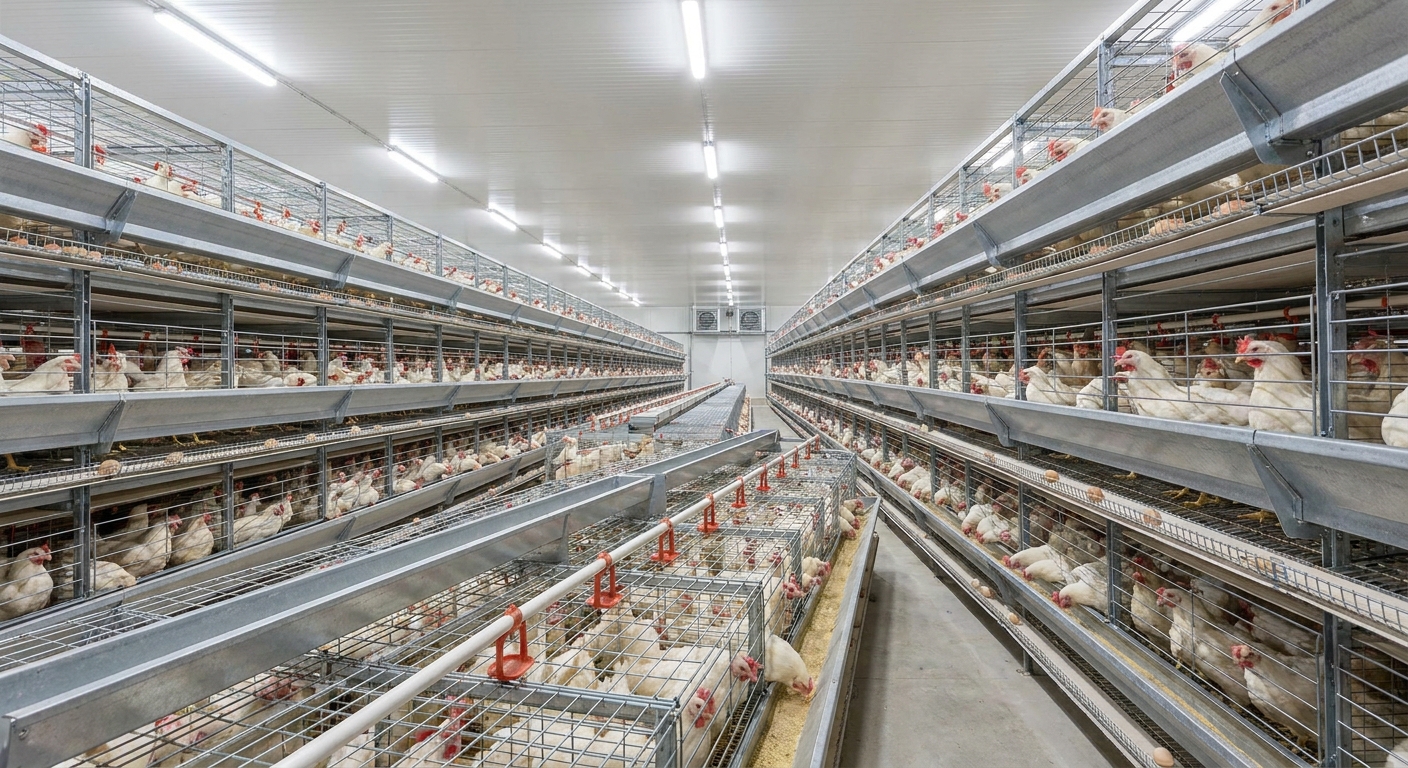
Building a Cage Raising Poultry House is essential because it allows you to optimize vertical land use, drastically reduce mortality rates, and automate time-consuming daily farming tasks. When you transition to a modern steel-frame building, you establish a reliable microclimate that protects your investment from external weather shocks.
How does vertical density boost profits?
Maximizing your available square footage is the quickest way to multiply your bottom line. Traditional floor-rearing methods waste valuable space, whereas multi-tier cage configurations allow you to stock up to five times more layers per square meter.
Think about it.
- Dramatic building footprint reduction.
- More efficient climate control.
- Higher egg collection density.
By concentrating your flock vertically, you also minimize the heating and cooling costs required per bird. This density represents a highly cost-effective path to scaling up your daily egg production.
What makes biosecurity so much easier here?
Keeping your layers isolated from their own droppings is a fundamental rule of disease prevention. In a cage setup, waste falls directly through wire mesh onto automated collection belts, removing contamination risks immediately.
But that is not all.
- Minimal parasite exposure.
- Easier individual bird inspection.
- Faster quarantine actions.
You will notice a massive reduction in veterinary costs and medication bills. Healthy, stress-free birds consistently produce premium-quality eggs with fewer cracks and zero dirt.
Key Takeaway: Vertical layer cages dramatically increase stocking density while keeping birds completely separated from waste, which lowers disease rates and raises egg quality.
| Metric | Cage Raising System | Traditional Floor System | |
|---|---|---|---|
| Stocking Density | High (Up to 20 birds/m²) | Low (5-8 birds/m²) | |
| Disease Risk | Very Low | Moderate to High | |
| Egg Cleanliness | Excellent (99% Clean) | Poor (Frequent washes) |
As shown, vertical cage setups provide superior space utilization and hygiene parameters compared to traditional open floor designs.
How to design a Cage Raising Poultry House?
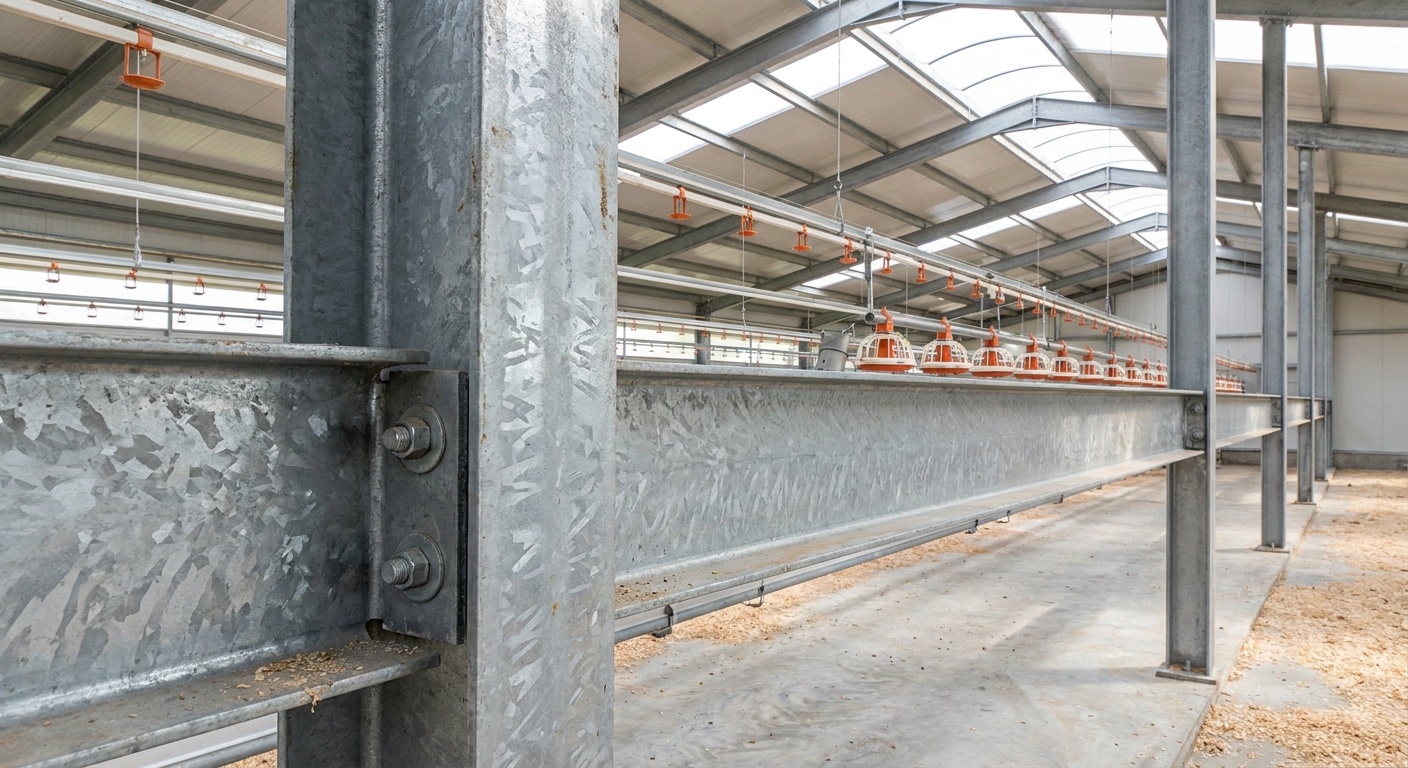
Designing a Cage Raising Poultry House requires aligning the building’s physical dimensions with the specific layout of your multi-tier battery cages to ensure seamless mechanical automation. You need to calculate exact clearances for your feeding hoppers, manure belts, and ventilation pathways before fabricating the primary steel structure.
Why is clear-span design crucial for layouts?
A column-free interior provides the ultimate layout flexibility for your automated cage rows. If your building contains load-bearing columns inside, they will block the installation of long-run cage systems and disrupt automated operations.
Here is the kicker.
- Unobstructed pathways for egg belts.
- Customizable aisle widths for staff.
- Easier installation of end-of-row equipment.
Using a clear-span steel structure workshop design ensures you can squeeze every inch of usable space out of your layout. It guarantees that future equipment upgrades won’t be hindered by rigid physical obstacles.
How to plan clearances for automated machinery?
Your multi-tier cages must have sufficient head space for optimal air distribution and automated feed distribution. If you pack the cages too close to the ceiling, you will choke the airflow and cause extreme heat pockets at the top tiers.
Let’s dive in.
- Minimum 1.5-meter clearance at the roof apex.
- Sufficient space for automated manure drives.
- Wide side walkways for simple machine maintenance.
You should carefully match your building’s frame specifications with the physical footprints provided by your machinery supplier. This avoids costly on-site modifications during the final assembly phase.
Key Takeaway: Designing your structure with clear-span steel frames prevents machinery blockages and leaves plenty of space for ventilation and automation systems.
| Parameter | Clear-Span Steel Frame | Traditional Pillar Frame | |
|---|---|---|---|
| Layout Flexibility | Maximum (No columns) | Restricted by support pillars | |
| Machine Compatibility | High (Accommodates all setups) | Low (Requires custom cage lengths) | |
| Installation Speed | Fast (Prefabricated joints) | Slow (Complex field adjustments) |
Selecting a clear-span portal frame ensures your automated cage lines can run without structural interference.
Start Your Profitable Cage Raising Poultry House Today !
Email:sales@showhoo.com.cn
Phone/WhatsApp: + 86 186 7895 5927
What costs a Cage Raising Poultry House setup?
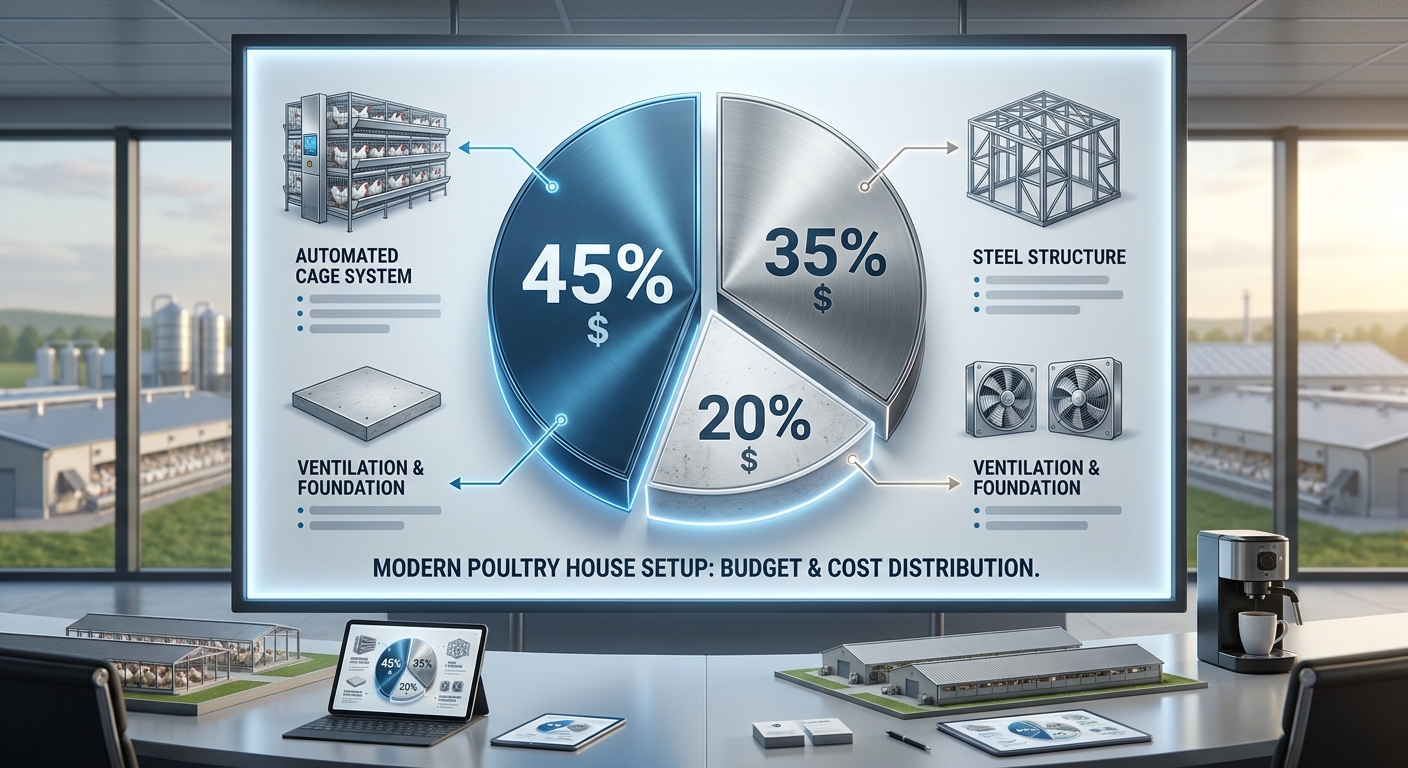
The cost of a Cage Raising Poultry House setup ranges from initial raw material fabrication to internal automation equipment procurement, with steel frames and cage lines making up the bulk of your investment. While the upfront capital might seem demanding, analyzing these numbers as a long-term investment reveals rapid payback periods.
What are the primary structural budget drivers?
Your structural budget is heavily influenced by the steel thickness, the type of anti-corrosive coatings, and local engineering load requirements. Opting for high-durability steel protects your flock against extreme weather events and structural decay.
Think about it.
- Hot-dip galvanization vs paint finishes.
- Insulation panel thickness and density.
- Wind and snow load structural reinforcements.
By spending on a premium prefabricated chicken house engineering package upfront, you prevent expensive structural repairs down the road. This foundational strength keeps your business operating smoothly for decades.
How do operating savings offset initial machinery costs?
High-tier automated cage systems carry a higher price tag than basic manual configurations. However, the labor savings and reduced feed waste they deliver will quickly repay your initial equipment investments.
But that is not all.
- Reduced manual feeding labor hours.
- Minimized feed spillage and rodent consumption.
- Lower veterinary expenses due to biosecurity.
You will achieve a lower feed conversion ratio, meaning your hens utilize nutrients more efficiently to produce eggs. This operational boost directly inflates your monthly profit margins.
Key Takeaway: Investing in durable structural steel and premium cage automation lowers long-term operational overhead, resulting in a healthier overall ROI.
| Cost Category | Percent of Total Budget | Long-Term Operational Impact | |
|---|---|---|---|
| Steel Frame & Cladding | 35% | Eliminates structural decay & pest risks | |
| Automated Cage Lines | 45% | Lowers labor costs & feed waste by 30% | |
| Civils, Foundation & HVAC | 20% | Stabilizes the internal microclimate |
Balancing your capital allocation across these three primary areas ensures you build an asset that is structurally sound and highly efficient.
Where to locate a Cage Raising Poultry House?
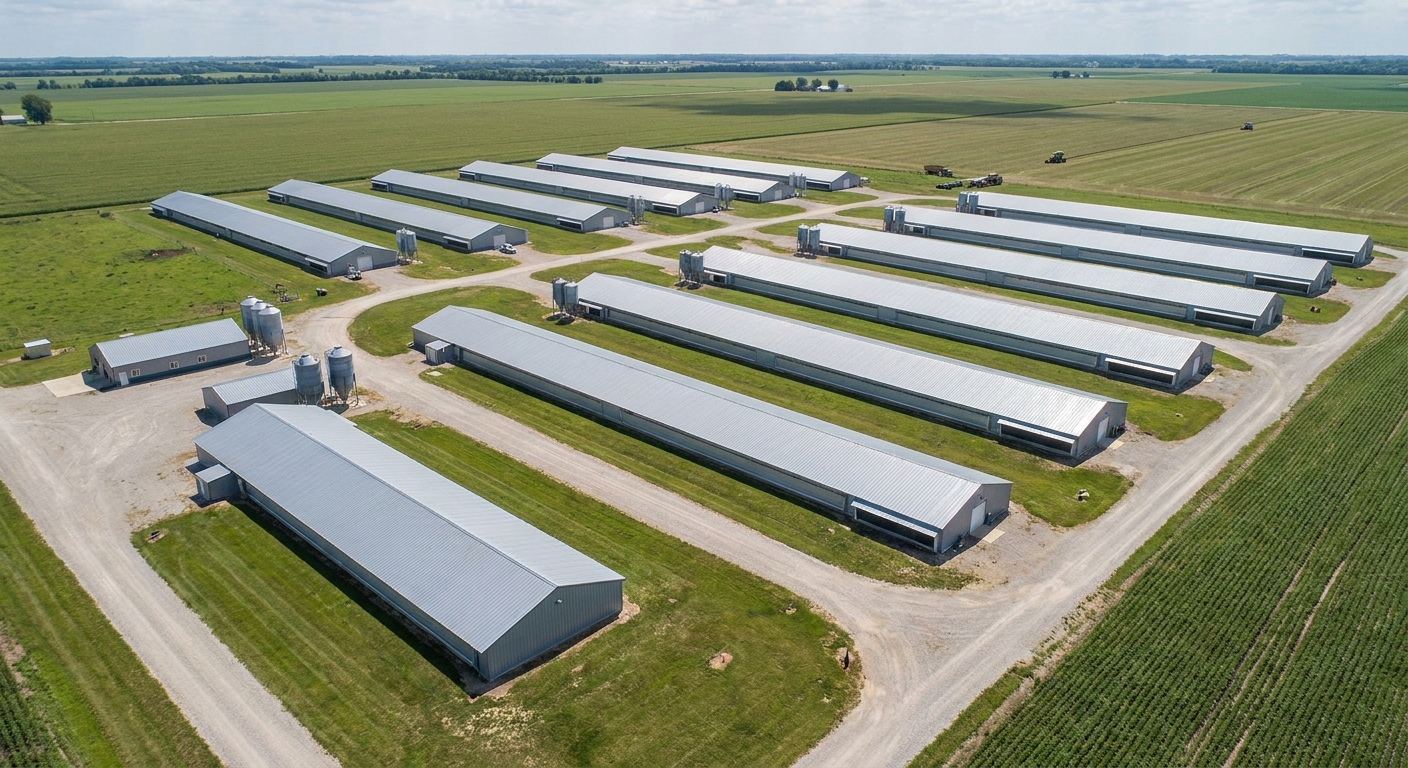
Locating your Cage Raising Poultry House requires a site with flat terrain, strict biosecurity isolation from neighboring farms, and reliable access to utility grids and transport routes. You must also consider local wind directions and climatic factors to maximize natural ventilation benefits. This geographical placement directly affects your daily logistics costs and energy consumption.
Why does terrain flatness save foundation costs?
Building on sloped or uneven ground requires extensive cut-and-fill earthworks that can blow your budget before construction even begins. A flat site allows you to lay a uniform concrete slab foundation with minimal structural leveling issues.
Here is the kicker.
- Lower excavation and retaining wall costs.
- Perfect alignment for long steel framing members.
- Easier access for heavy on-site assembly cranes.
You want a level surface so that your long automated battery cages remain perfectly straight. If the foundation slopes even slightly, it puts immense mechanical stress on your automated conveyors.
How do wind patterns affect your cooling strategy?
Aligning your building along the path of dominant wind currents can either assist or disrupt your mechanical ventilation strategy. Positioning the poultry house correctly ensures that summer breezes naturally cool the building, reducing energy bills.
Let’s dive in.
- Perpendicular layout to dominant breezes.
- Reduced electrical load on exhaust fans.
- Sufficient spacing between adjacent barns to prevent airflow blocks.
You must prevent stale air from one building blowing directly into another’s fresh air inlets. Proper spacing is a key element of modern bio-secure site layouts inside your steel structure warehouse zones.
Key Takeaway: Positioning your poultry house on flat, isolated ground with correct wind alignment lowers your setup costs and protects your flock’s health.
| Site Parameter | Ideal Condition | Structural / Operational Benefit | |
|---|---|---|---|
| Topography | Flat (<2% Slope) | Reduces concrete foundation costs | |
| Biosecurity Zone | >1 km from other farms | Minimizes cross-contamination hazards | |
| Wind Direction | Perpendicular to summer breeze | Enhances ventilation efficiency |
Evaluating these geographical factors early protects your steel building from high-stress environmental conditions.
How to ventilate a Cage Raising Poultry House?
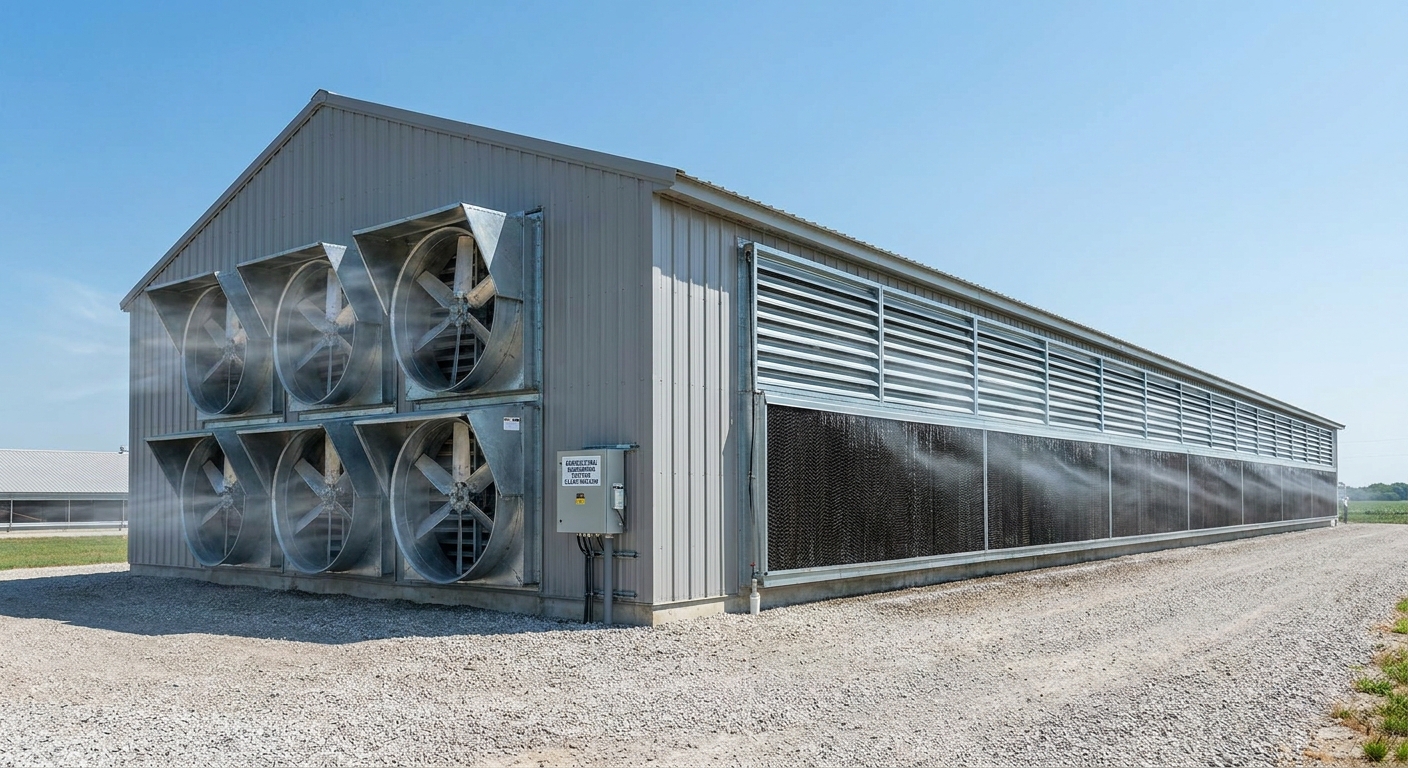
Ventilating a Cage Raising Poultry House is achieved through negative pressure systems that combine high-capacity exhaust fans with evaporative cooling pads to maintain stable airflow and remove ammonia gases. Because bird density is extremely high in cage environments, continuous climate control is non-negotiable for flock survival. Without proper airflow, your layers will quickly suffer from heat stress and respiratory issues.
What is negative pressure ventilation?
This system uses powerful exhaust fans on one end of the building to pull stale air out, creating a vacuum that draws fresh air in. As the air passes through side inlets, it circulates uniformly through the cage rows before exiting.
Think about it.
- Consistent temperature across all cage tiers.
- Elimination of dead airflow spots in aisles.
- Continuous extraction of toxic ammonia fumes.
You will have full control over the wind speed inside your structure. This keeps your flock comfortable even on the most humid summer afternoons.
How do evaporative cooling pads work?
When outdoor temperatures rise dangerously, drawing fresh air through wet cellulose cooling pads lowers the internal heat significantly. The passing air absorbs water vapor, cooling down by up to ten degrees Celsius in dry climates.
But that is not all.
- Cost-effective alternative to air conditioning.
- Highly compatible with automated control panels.
- Maintains ideal humidity ranges inside the house.
This simple system protects your laying hens from sudden mortality spikes during heatwaves. It ensures your egg production rates remain steady throughout the year.
Key Takeaway: Combining exhaust fans with wet cooling pads creates a reliable negative pressure system that keeps birds cool and air clean.
| Ventilation Element | Primary Equipment | Core Climate Function | |
|---|---|---|---|
| Air Extraction | Large Tunnel Fans | Removes stale air, carbon dioxide, and ammonia | |
| Cooling Mechanism | Cellulose Wet Pads | Lowers incoming air temperature through evaporation | |
| Air Distribution | Wall-mounted Air Inlets | Directs fresh air uniformly through cage lines |
As demonstrated, integrating these mechanical components ensures a balanced and stress-free microclimate for high-density egg production.
Which heating suits a Cage Raising Poultry House?
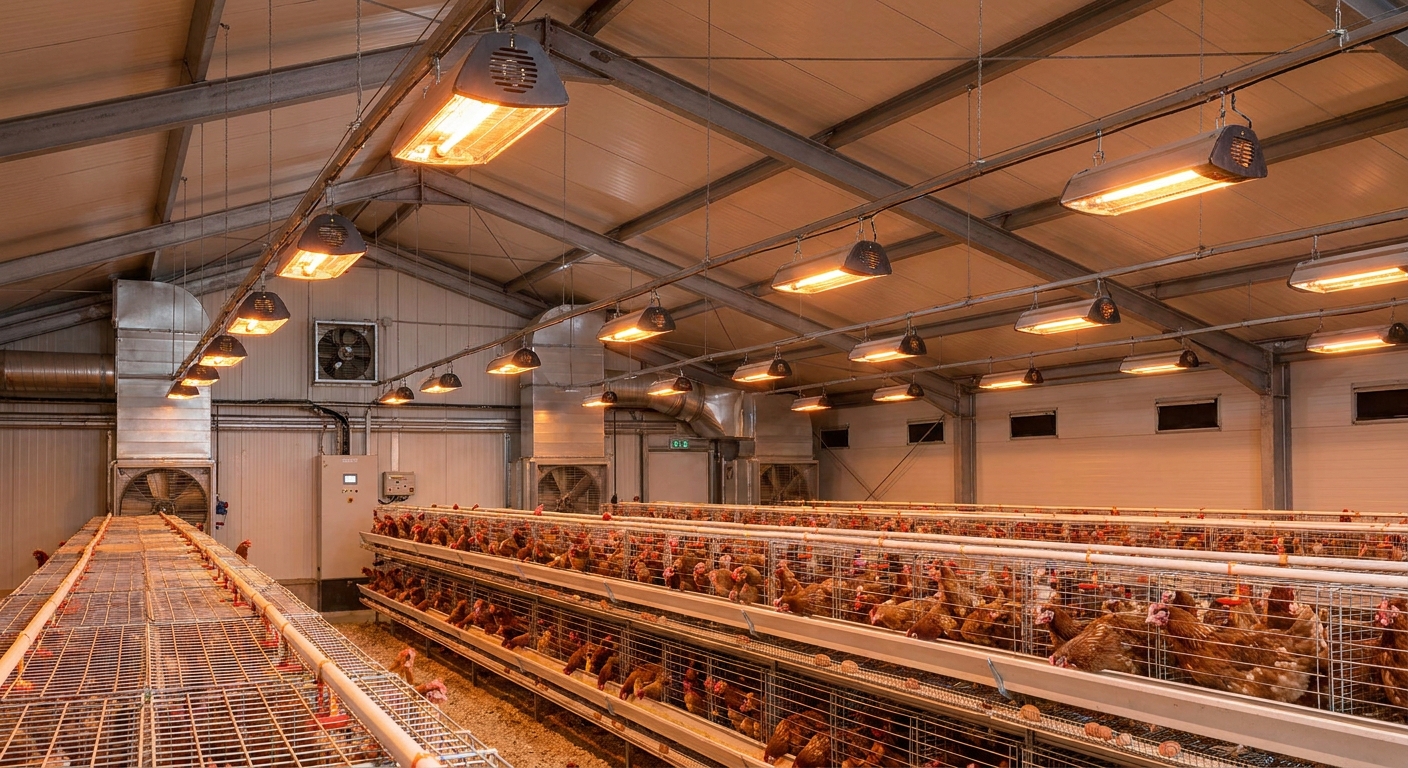
The best heating system for a Cage Raising Poultry House is gas-fired space heaters or hot-water radiator pipes that distribute uniform warmth without increasing humidity or creating dangerous carbon monoxide pockets. During cold seasons or when raising young pullets, maintaining a stable temperature is vital to prevent drafts. You must select a heating method that integrates seamlessly with your automated climate controller.
Why choose gas space heaters?
Gas heaters deliver instant, high-capacity warmth to the entire space, ensuring cold drafts are neutralized immediately. They are highly responsive and can be cycled on or off within seconds by your automated controller.
Here is the kicker.
- Extremely fast heating times.
- Highly automated temperature sensors.
- Lower fuel costs in many geographic regions.
You can position these heaters strategically to ensure that heat is distributed evenly across all vertical tiers. This prevents cold spots where hens might stop laying eggs.
How do hot-water radiator systems compare?
Hot-water radiator pipes running along the walls provide an exceptionally stable, dry heat source that does not consume oxygen inside the barn. This system keeps the air quality exceptionally clean and is perfect for sensitive young birds.
Think about it.
- Zero carbon monoxide emissions inside the structure.
- Extremely low operating noise to reduce flock stress.
- Saves on long-term fuel costs through central boilers.
While the initial installation cost for a boiler network is higher, the biosecurity and air quality benefits are unmatched. This setup keeps your operating environment safe and stable.
Key Takeaway: Selecting a modern heating system like gas space heaters or hot-water piping ensures your layers remain warm and productive during winter.
| Heating System Type | Warm-Up Speed | Internal Air Quality Impact | Capital Cost | |
|---|---|---|---|---|
| Gas Space Heaters | Very Fast | Moderate (Consumes oxygen) | Lower Initial Cost | |
| Hot-Water Radiators | Slow to Moderate | Excellent (No emissions) | Higher Initial Cost | |
| Infrared Brooder Lamps | Fast (Localized) | Good | Moderate (Localized use only) |
Choose gas heaters for immediate, flexible warmth, or invest in hot-water pipes for maximum air quality and safety.
Start Your Profitable Cage Raising Poultry House Today !
Email:sales@showhoo.com.cn
Phone/WhatsApp: + 86 186 7895 5927
How to light a Cage Raising Poultry House?
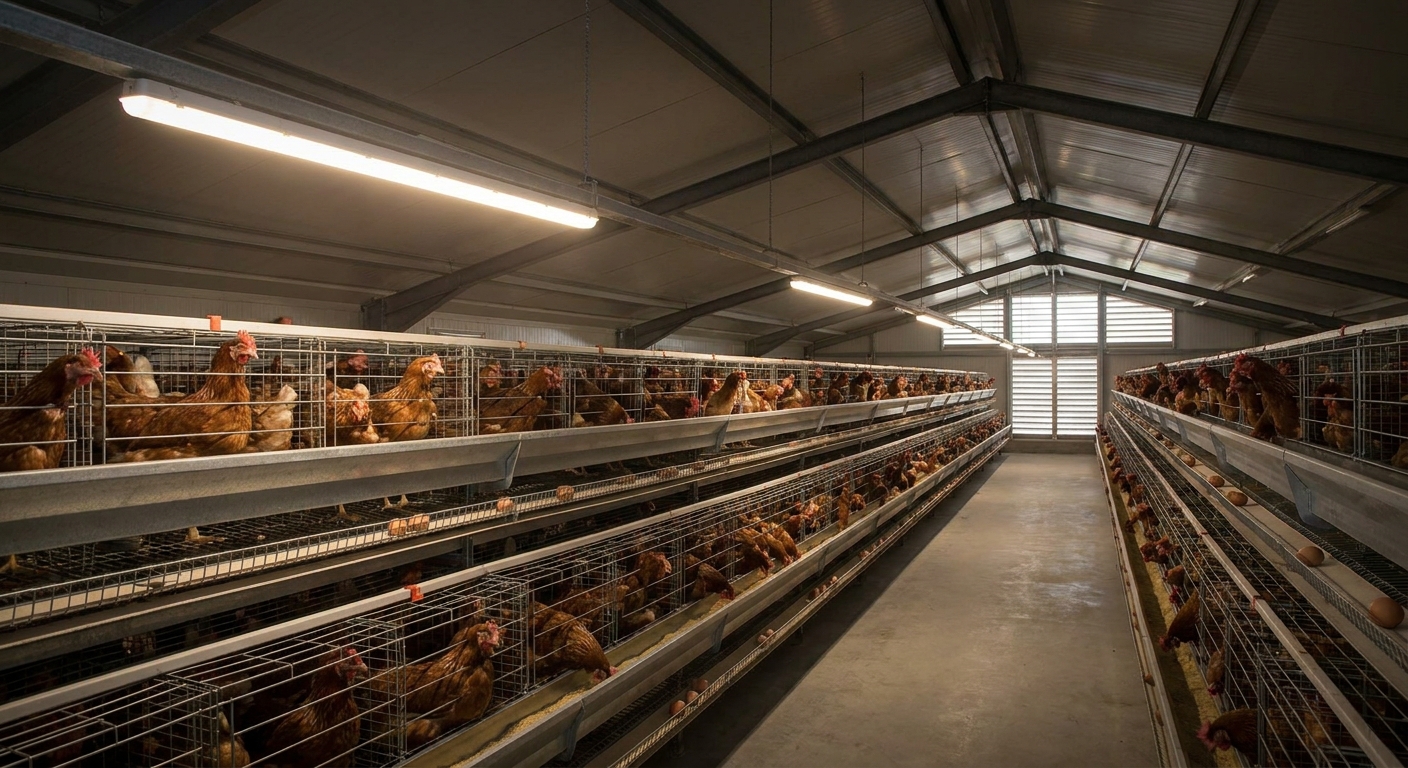
Lighting a Cage Raising Poultry House requires dimmable LED tube lights spaced uniformly along the aisles to provide a consistent photoperiod that stimulates egg-laying hormones. Hens are highly sensitive to light cycles, and irregular illumination can cause severe drop-offs in egg production. You must design a system that reaches all vertical tiers without leaving dark zones.
Why are dimmable LEDs superior?
Standard light bulbs flicker and cause chronic stress to birds, which directly harms their laying productivity. High-quality LED lights produce a stable, continuous spectrum that mimics natural sunlight and saves energy.
Let’s dive in.
- Energy savings of up to 70% compared to incandescent bulbs.
- Waterproof and dustproof designs for easy cleaning.
- Smooth dimming options to simulate dawn and dusk.
You can control the intensity of the light to manage flock behavior and prevent pecking. This minor adjustment saves lives and keeps your birds exceptionally calm.
How to design the lighting layout for multi-tier cages?
With multi-tier cage stacks, a single overhead light source will cast deep shadows on the lower rows. Spacing multiple rows of LED tubes vertically or along every aisle ensures uniform light distribution.
But that is not all.
- Eliminates dark corners where birds might underperform.
- Allows your staff to easily inspect lower-tier layers.
- Maintains consistent egg-laying triggers across all tiers.
You will achieve highly uniform laying rates across your entire flock. This consistent lighting strategy is a key secret of top-performing poultry integrations.
Key Takeaway: Uniform, dimmable LED lighting paths are essential to maintain stable egg-laying hormones and lower electricity consumption.
| Light Source Type | Service Lifespan | Energy Efficiency | Dimmability & Uniformity | |
|---|---|---|---|---|
| Modern Agricultural LED | 50,000+ Hours | High (70% savings) | Excellent (0-100% smooth) | |
| Fluorescent Tube | 10,000 Hours | Medium | Poor (flickers & hard to dim) | |
| Incandescent Bulb | 1,000 Hours | Low | Good but extremely hot |
Installing specialized poultry-grade LED lights is the most cost-effective way to guarantee uniform egg output.
How to clean a Cage Raising Poultry House?
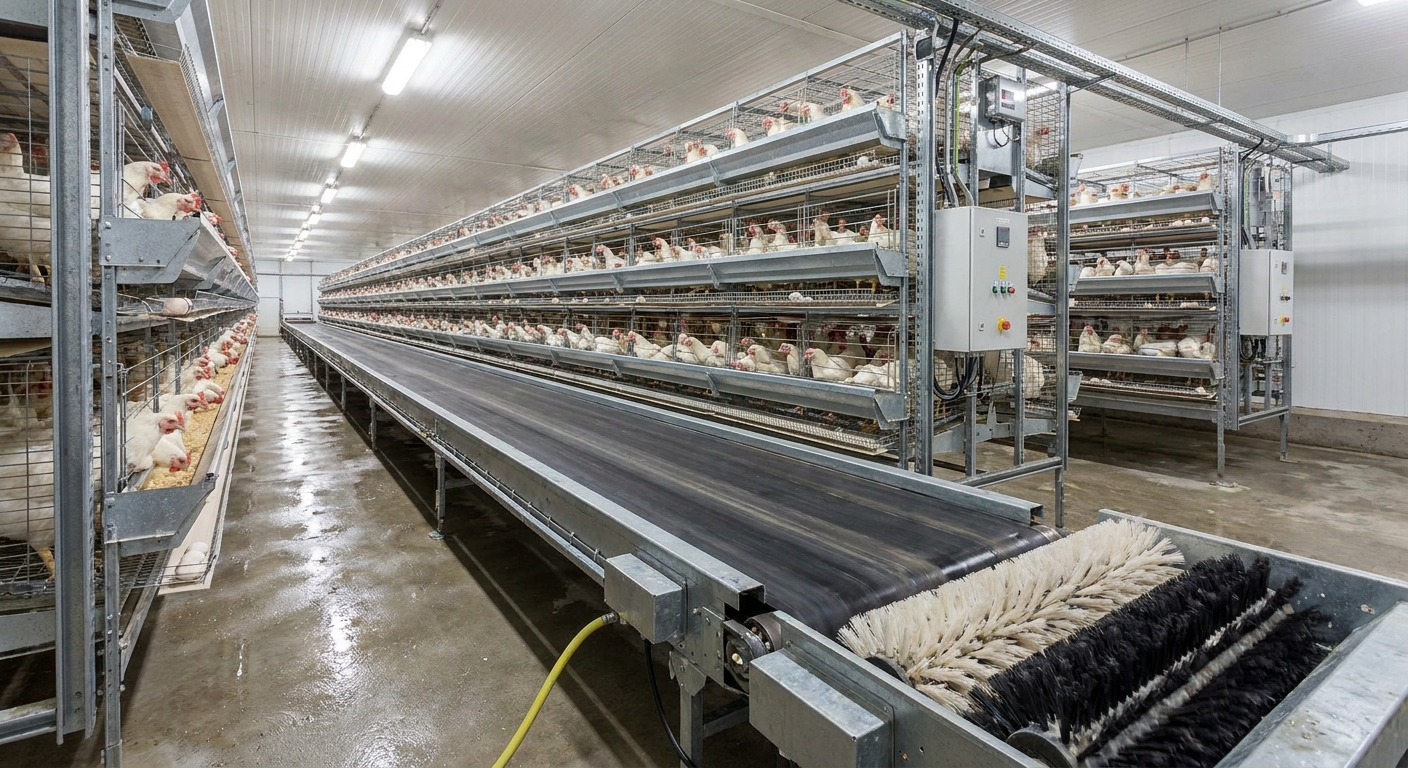
Cleaning a Cage Raising Poultry House is performed using automated polypropylene manure belts under each tier that transport waste to cross-conveyors, removing it from the building daily. Managing fresh manure promptly is the absolute best way to control ammonia buildup inside your farm. This rapid cleaning process maintains superior air quality and prevents respiratory distress in your flock.
How do automatic manure belts work?
Heavy-duty conveyor belts run directly beneath the wire floor of each cage tier to catch all droppings. When the drive motor is activated, the belts roll the waste out to the end of the building, where it is elevated onto waiting trucks.
Think about it.
- Polypropylene belts offer extreme chemical resistance.
- Daily removal prevents toxic gas accumulation.
- Zero manual shoveling required, saving labor hours.
You will cut down your daily cleanup labor requirements by nearly ninety percent. This structural efficiency keeps your operating costs extremely low.
What is the deep cleaning routine between flocks?
Once a flock is retired, you must completely wash and disinfect the entire steel structure and cage system. Using high-pressure washers with agricultural-grade sanitizers ensures that any lingering pathogens are neutralized before new chicks arrive.
Here is the kicker.
- Complete system shutdown for bio-secure resting periods.
- High-pressure washing of galvanized frames.
- Flushing of the automated drinking lines.
You must choose a building structure made of hot-dip galvanized steel to withstand regular chemical washes. For example, our about our factory information highlights our dedication to hot-dip galvanized frame processing, ensuring our buildings won’t rust.
Key Takeaway: Automated manure belts combined with a chemical-resistant galvanized steel structure make daily cleaning and terminal disinfection fast and easy.
| Cleaning Task | Automation Level | Frequency | Primary Benefit | |
|---|---|---|---|---|
| Manure Removal | Fully Automated | Daily | Lowers ammonia levels to under 10 ppm | |
| Water Line Flush | Semi-Automated | Weekly | Prevents biofilm and bacterial growth | |
| Deep Sanitation | Manual / Power Wash | Between Flock Batches | Breaks disease cycles completely |
Implementing daily automated waste removal is the most powerful action you can take to maintain premium air quality.
Who installs your Cage Raising Poultry House?
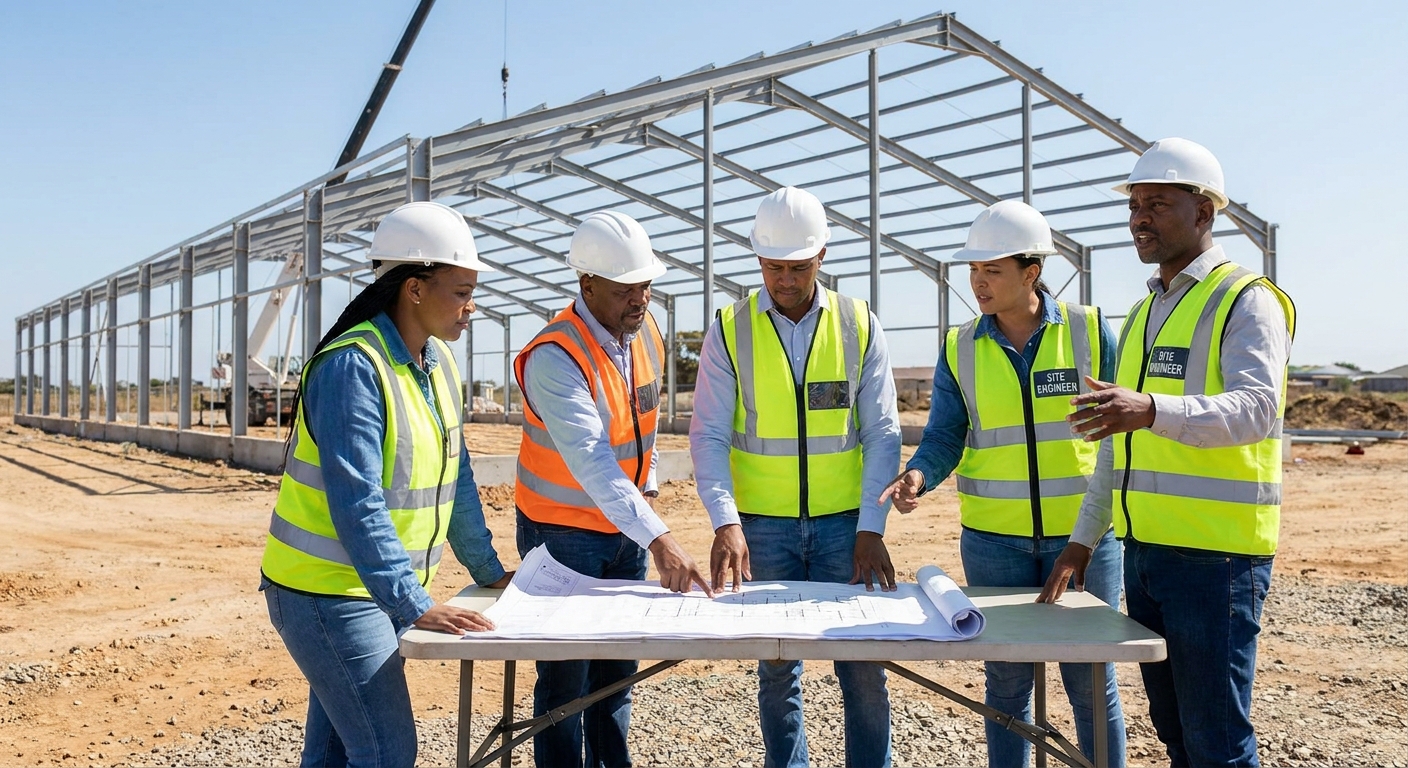
Installing your Cage Raising Poultry House should be handled by a professional steel structure engineering team to ensure precise structural alignment and valid product warranties. Heavy machinery like automatic egg collectors and manure conveyors require absolute precision to function without binding. If your primary steel frames are misaligned by even a few millimeters, it can cause severe mechanical issues later.
Why hire certified steel installers?
Certified engineers understand the complex load calculations required for high-density agricultural structures. They ensure that all columns, trusses, and bracing are fastened according to strict engineering blueprints.
But that is not all.
- Professional alignment of main load-bearing frames.
- Proper tensioning of bracing rods and bolts.
- Guaranteed compliance with local wind and snow codes.
Working with a trusted fabricator ensures your materials arrive on-site with clear markings for rapid assembly. This coordination minimizes errors and shortens your construction timeline significantly.
What is the benefit of turnkey construction services?
Turnkey services handle everything from site grading and concrete works to final steel cladding and cage integration. This single-point of accountability eliminates the friction of managing multiple third-party contractors yourself.
Let’s dive in.
- One dedicated team from design to completion.
- Elimination of costly project management delays.
- Consistent quality across civil and mechanical works.
You can focus entirely on your upcoming farming operations while the experts handle the technical assembly. To get customized engineering calculations for your location, you can submit a consultation request directly to our design team.
Key Takeaway: Relying on certified engineering teams for your steel assembly avoids mechanical misalignment and ensures long-term operational peace of mind.
| Execution Model | Assembly Timeline | Alignment Accuracy | Structural Warranty | |
|---|---|---|---|---|
| Professional Engineering Team | 4 – 6 Weeks | Perfect (laser aligned) | Full Manufacturer Warranty | |
| General Local Contractor | 8 – 12 Weeks | Variable | Limited coverage | |
| DIY Management | 12+ Weeks | High Risk of errors | Voided warranty |
Investing in professional, certified installers is the best way to safeguard both your building and your equipment investments.
FAQ: Your Cage Raising Poultry House guide?
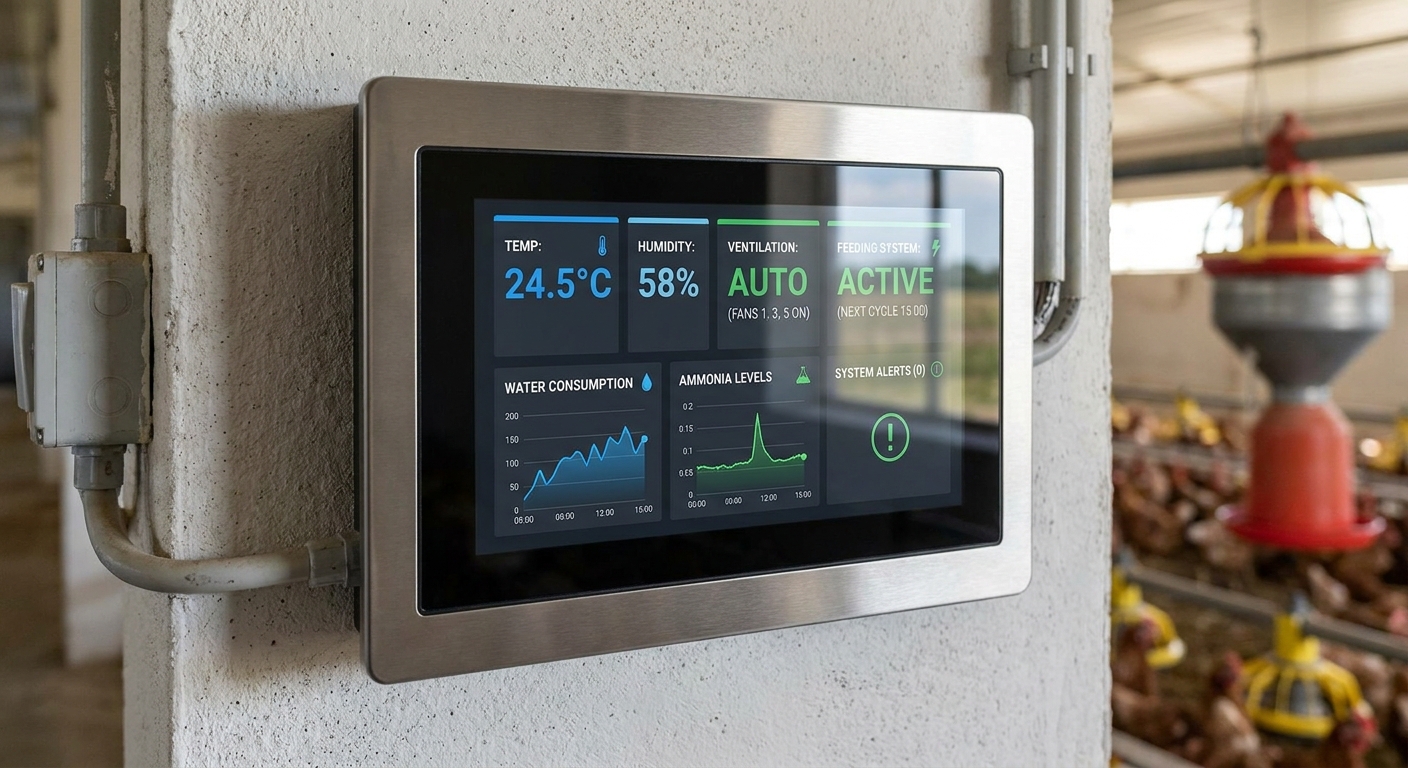
Our Cage Raising Poultry House guide answers critical questions regarding initial terrain setup, ideal insulation materials, and the mechanics of modern automated poultry equipment. To help you navigate the planning phase of your commercial poultry farm, we have compiled the most frequent questions asked by growers worldwide. These professional insights will help you design a more secure, productive, and cost-effective agricultural asset.
Frequently asked planning and design questions?
Before investing in a new building, you must understand how structural components interact with your environment. Let’s address the most common concerns regarding steel agricultural structures.
Think about it.
- How terrain slope impacts foundation slabs.
- The importance of insulation in controlling ammonia.
- Why heavy galvanization is non-negotiable for longevity.
Here are the direct answers to your technical questions.
Can I install an automatic manure system on an existing concrete slab?
Yes, but you will likely need to construct elevated mounting frames or modify the existing concrete channels to align perfectly with the conveyor drive motors. This retroactive installation is much more complex and expensive than incorporating it into your initial architectural designs.
What’s the best insulation material for extreme climates?
Polyurethane (PU) sandwich panels are the industry gold standard. They deliver exceptionally high thermal resistance and feature a non-porous surface that resists water absorption and ammonia degradation.
How do I know if my building needs extra wind reinforcement?
Your local building codes and historic weather patterns will determine this. Our engineering department uses advanced software to calculate exact wind and seismic load requirements based on your specific geographic coordinates.
Can I transition from floor-raising to a cage system inside my old wood barn?
No, it is highly discouraged. Wooden structures absorb moisture and ammonia fumes, which leads to rot, pest infestations, and poor structural load-bearing capacity that cannot support the weight of modern multi-tier battery cages.
What’s the best way to control ammonia levels automatically?
Integrating your exhaust fans with a digital ammonia sensor control panel is the most effective method. When gas levels exceed 10 ppm, the system automatically ramps up fan speeds to flush the air and keep your birds safe.
Conclusion
Transitioning from outdated floor systems to an engineered B2B poultry house represents a massive leap in commercial efficiency and flock biosecurity. By eliminating cracked eggs, high feed spillage, and manual manure labor, you establish an agricultural business built for long-term growth. We are committed to engineering heavy-duty, hot-dip galvanized steel buildings that integrate seamlessly with your automated egg, feed, and ventilation systems. We invite you to contact us today to receive your customized structural layout and a factory-direct quote. Let’s work together to build a cleaner, smarter, and highly profitable future for commercial poultry farming worldwide.
Start Your Profitable Cage Raising Poultry House Today !
Email:sales@showhoo.com.cn
Phone/WhatsApp: + 86 186 7895 5927