
An optimized Free Range House offers layers and broilers safe shelter while allowing unrestricted access to fresh pasture for natural foraging. As a commercial poultry producer, you are likely all too familiar with the constant anxiety of sudden weather shifts, soaring feed costs, and predator incursions. Watching your flock suffer from heat stress or predator attacks is both heartbreaking and financially devastating. Finding a durable, highly protective Free Range House that optimizes pasture health while ensuring bird security can completely transform your agricultural enterprise.
What is a Free Range House and how does it work?
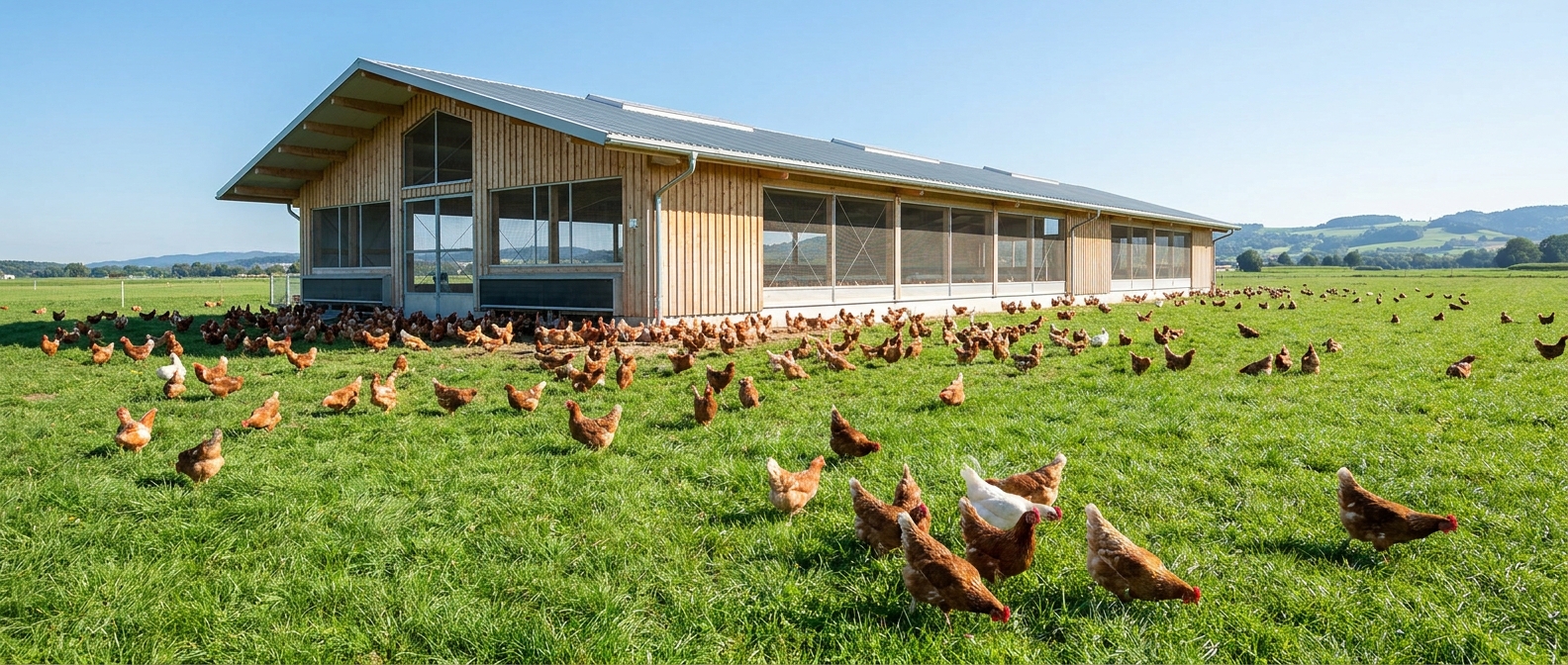
A Free Range House works by providing a secure indoor space for roosting, nesting, and feeding while allowing the flock daily access to outdoor pasture. This specialized Free Range House system utilizes natural bird behavior to improve both animal welfare and soil agronomy through rotational grazing.
Historically, poultry farms shifted from open-range shelters to total indoor confinement in the mid-1950s. Today, a modern revival of pasture-based farming is driven by high-margin B2B markets demanding exceptional egg quality and verified animal welfare.
Transitioning to Active Forage Management
Transitioning your flock from static confinement to active forage management leverages natural avian instincts to fertilize pasture soils. You will see a dramatic agronomic impact as nitrogen deposition from poultry manure stimulates rapid grass regrowth.
Think about it: Healthy soil means healthier poultry. By actively managing grazing, you allow the land time to rest while your birds enjoy premium insect forage and fresh vegetation.
- Natural nitrogen deposition improves soil structure and organic matter.
- Insect foraging offsets expensive commercial feed costs.
- Low stocking densities break the life cycles of soil-borne parasites.
The Nutritional and Ecological Benefits
Pasture-raised eggs offer superior nutritional profiles including higher levels of Vitamin A, E, and Omega-3 fatty acids compared to conventional indoor systems. You can leverage these high-margin benefits to capture premium B2B markets that value verifiable pasture welfare labels.
Here is the catch: You must maintain strict pasture rotation to prevent overgrazing and protect the turf from permanent damage. By balancing flock movement, you secure both soil fertility and premium egg yields.
- High-margin branding opportunities for pasture-raised products.
- Exceptional vitamin profiles that command top market prices.
- Natural pathogen suppression through rotational pasture rest periods.
Key Takeaway: Implementing a pasture-based system improves bird health and soil fertility while allowing you to tap into high-value premium markets. Proper rotation is key to sustaining these environmental and financial benefits over time.
| Grazing Metric | Confinement System | Pastured Poultry System | |
|---|---|---|---|
| Egg Nutrition | Standard Vitamin Levels | Elevated Vitamin A, E, & Omega-3 | |
| Soil Impact | None (Manure Accumulated) | High (Natural Nitrogen Fertilizer) | |
| Market Premium | Baseline Commodity Pricing | High-Margin Specialty Pricing |
Analyzing how foraging mechanics benefit your land and product quality is the first step to scaling a successful pastured operation.
Why does wind safety matter for a Free Range House?
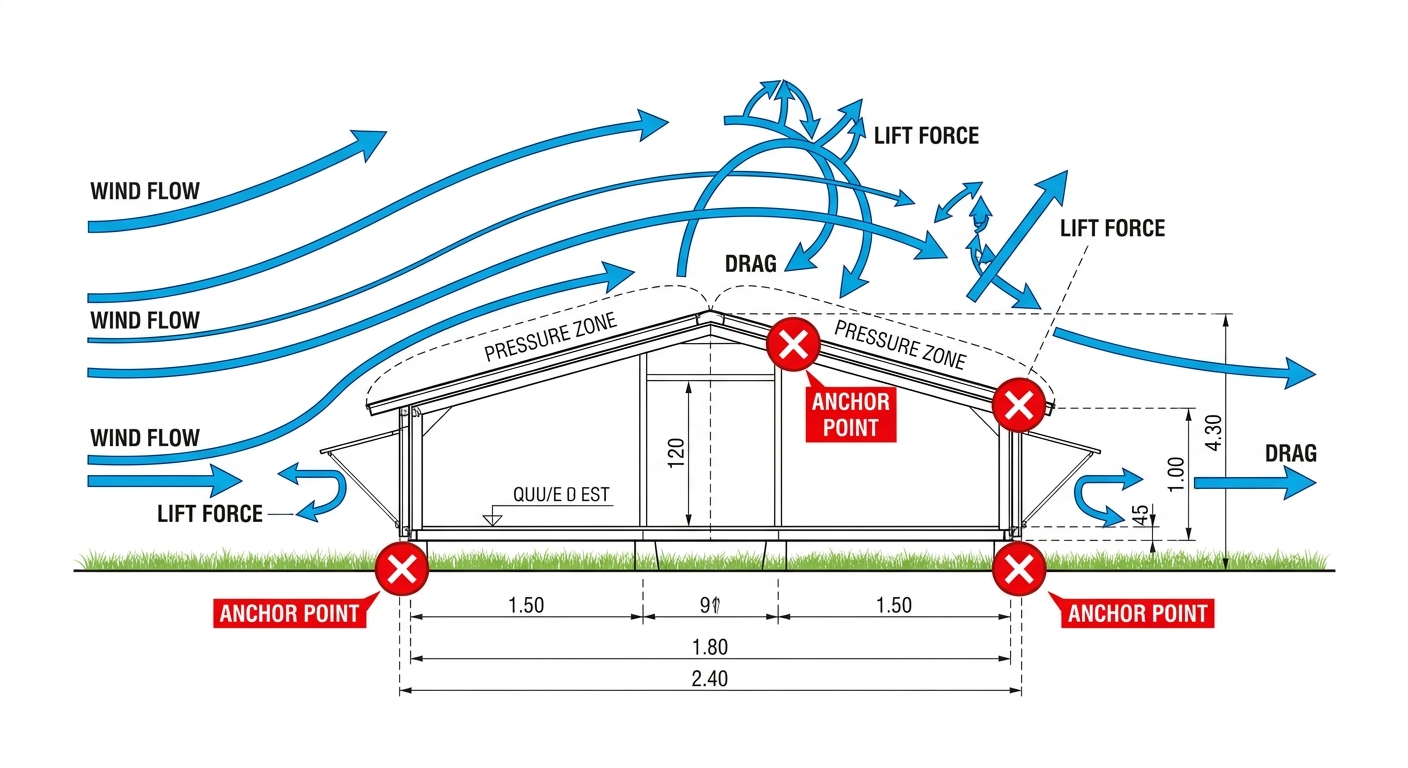
Wind safety matters because open pastures expose lightweight mobile shelters to extreme lift and drag forces that can cause catastrophic structural failure. Investing in a robustly engineered Free Range House ensures your flock remains safe even during sudden severe thermal storms.
Balancing a lightweight structure for easy transport with the heavy ballast required for high-wind stability is a critical engineering challenge. Using stable low-profile designs reduces the drag coefficient and prevents the shelter from lifting off the ground.
Designing for Low-Profile Aerodynamics
Utilizing a specific 5:8 height-to-depth ratio for your shelter roof significantly minimizes aerodynamic wind resistance. You should avoid tall, single-slope shed designs that act like sails on flat pasture lands.
But there is more: By selecting high-tensile steel frames over flexible PVC, you guarantee the structural integrity of your coop under extreme lateral wind loads. This protects your capital investment from sudden destruction.
- Low-slope gable roofs direct wind over the structure smoothly.
- High-tensile steel resists bending and joint failure.
- Reduced height-to-depth ratios prevent tipping on open fields.
Staking and Ground Anchoring Systems
Securing your mobile shelter with heavy-duty ground augers and earth anchors provides essential protection against high-altitude wind currents. You can use quick-release carabiners and high-strength straps to ensure efficient moves during your rotation schedule.
Let’s face it: An unanchored shelter on an open pasture is a disaster waiting to happen. Taking five minutes to secure your tethering lines will save you thousands of dollars in structural damage.
- Screw-in earth anchors offer high pull-out resistance in sandy or clay soils.
- Heavy-duty tie-down straps absorb sudden gust energy without breaking.
- Natural windbreaks like hedges provide strategic topography protection.
Key Takeaway: Aerodynamic geometry and secure anchoring systems are vital to protecting lightweight pasture shelters from catastrophic wind damage. Combining low-profile frames with robust ground anchors guarantees flock safety on open grasslands.
| Wind Protection Method | Advantages | Disadvantages | |
|---|---|---|---|
| Low-Slope Roofs | Excellent wind deflection, lower drag | Reduced interior vertical headroom | |
| Ground Augers | Highest pull-out resistance | Requires manual setup at each move | |
| Natural Windbreaks | Zero operational cost, shade source | Static location limits grazing rotation |
Evaluating wind load vectors and anchoring stability protects your investment from sudden meteorological disasters.
Build a Safer Free Range House—Request Your Quote Today !
Email:sales@showhoo.com.cn
Phone/WhatsApp: + 86 186 7895 5927
How does a Free Range House handle extreme weather?
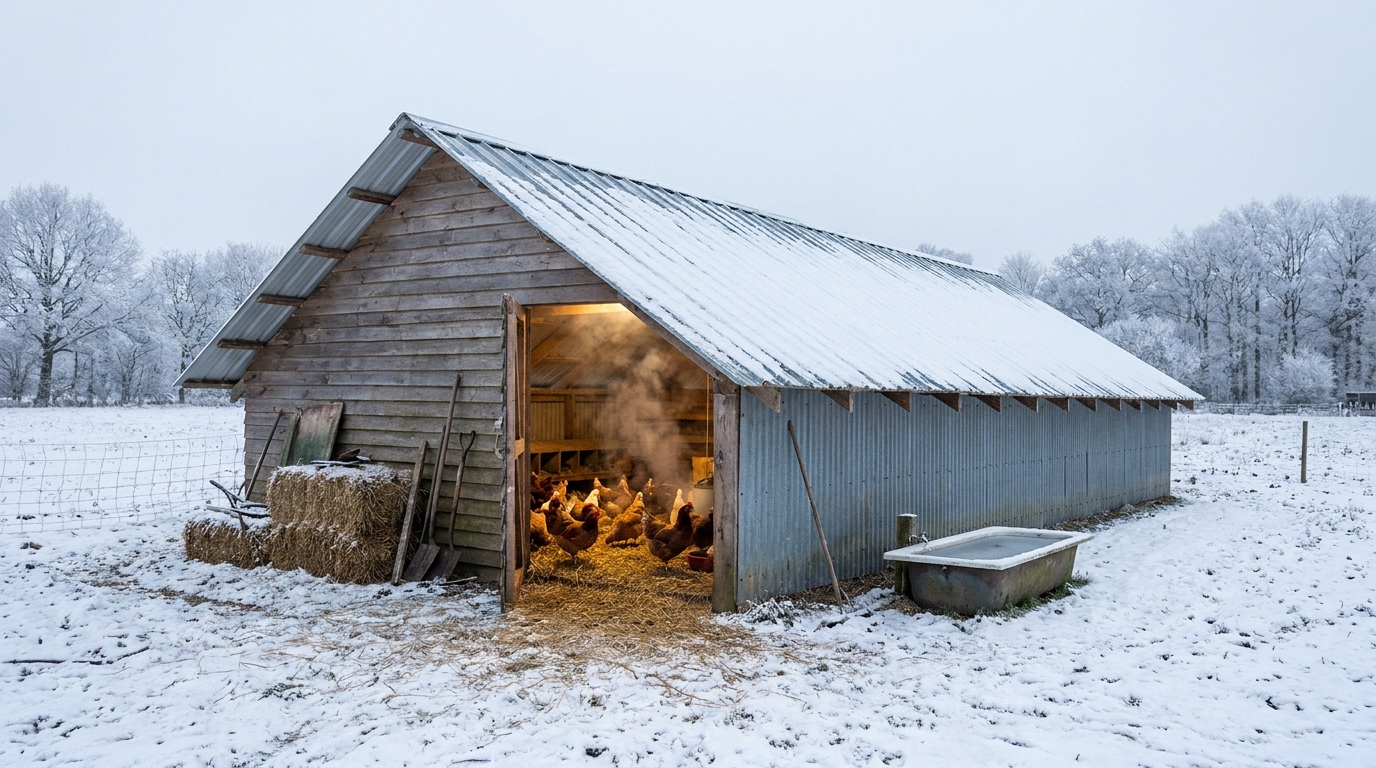
A Free Range House handles extreme weather by employing reflective insulation to combat summer heat stress and passive deep-litter composting to generate winter warmth. Adapting your Free Range House with adjustable ventilation structures ensures a stable microclimate for maximum flock productivity year-round.
Poultry have narrow thermal limits, making rapid temperature spikes or freezing drafts highly dangerous to their survival. Integrating smart ventilation controls protects layers from respiratory illness while preserving valuable egg production rates.
Combating Intense Summer Heat Stress
Installing double-sided aluminized bubble insulation underneath a white metal roof deflects radiant heat away from your birds. You must also position outdoor water lines in shaded pasture zones so your flock stays hydrated without leaving safety.
Think about it: When temperatures climb, chickens naturally seek shade and refuse to cross hot, open ground. Keeping their water and resting areas cool prevents heat exhaustion and mortality.
- White metal roofing reflects up to eighty percent of solar radiation.
- Shaded pasture water lines prevent water from reaching tepid, unpalatable temperatures.
- Integrated solar-powered fans drive continuous cross-ventilation during stagnant, humid afternoons.
Winter Comfort and Deep Litter Systems
Relying on an active deep litter system generates passive bottom-up heat through aerobic decomposition of carbon bedding material. You can eliminate cold drafts at bird level by raising adjustable curtains while keeping essential ridge vents open for moisture escape.
Here is the catch: Too much moisture inside the house leads to dangerous ammonia buildup and respiratory distress. Balancing insulation with continuous, draft-free ventilation is critical to overwintering successfully.
- Deep wood shavings or straw beds compost naturally to produce heat.
- Ridge vents release damp, warm air before it condenses on birds.
- Insulated water loops prevent freezing down to sub-zero temperatures.
Key Takeaway: Combining reflective roof insulation with deep litter management allows your poultry to thrive in both extreme summer heat and winter freezes. Maintaining draft-free moisture ventilation is the most critical element of cold-weather management.
| Weather Challenge | Primary Solution | Critical Metric | |
|---|---|---|---|
| Summer Heat | Reflective insulation & shading | Temperature below 85°F (29°C) | |
| Winter Cold | Deep litter composting & closed eaves | Minimum draft at bird level | |
| Excess Humidity | Ridge venting & passive cross-flow | Ammonia levels under 10 ppm |
Designing climate-resilient housing mitigates seasonal mortality rates and stabilizes year-round B2B yields.
Can a Free Range House protect birds from predators?
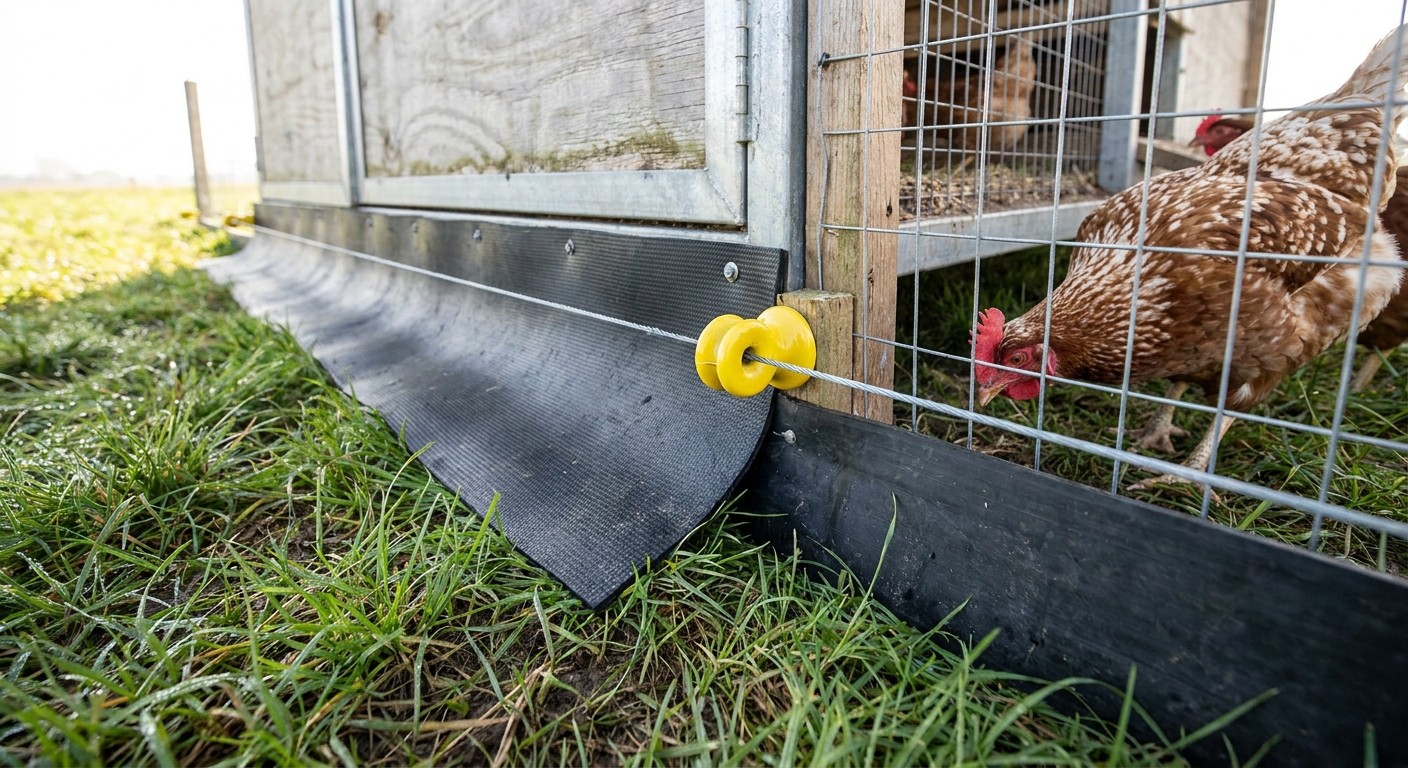
A Free Range House protects birds from predators by combining physical barriers like steel hardware cloth with heavy-duty ground-level perimeter skirts. Operating a highly secure Free Range House ensures that both daytime aerial raptors and nocturnal burrowing pests are completely excluded from the flock.
Traditional chicken wire is too weak to resist determined chewing from foxes, raccoons, or weasels. Upgrading your perimeter shielding and integrating electric fencing creates a multi-layered defense system that guarantees continuous safety.
Securing Against Daytime Aerial Strikes
Integrating portable artificial shade canopies and planting fast-growing pasture crops gives your layers immediate cover from overhead hawks and eagles. You can also utilize trained guardian geese or livestock guardian dogs to actively patrol the range perimeter.
But there is more: Aerial predators rely on open, clear sightlines to execute precise diving strikes. By breaking up the pasture view with physical covers, you significantly reduce their hunting success rate.
- Portable shade structures provide quick escape shelters across open pastures.
- Guardian dogs deter both ground pests and large birds of prey.
- Tall pasture cover hides foraging birds from high-altitude aerial scans.
Excluding Nocturnal Burrowing Pests
Installing half-inch steel hardware cloth over all doors and windows prevents nimble weasels and raccoons from squeezing inside. You must also eliminate the gap beneath your mobile skids by attaching heavy rubber flaps that seal against uneven turf.
Let’s face it: Predators are highly opportunistic and will exploit any structural gap larger than a human thumb. Taking the time to seal every joint with steel wire is your best defense.
- Heavy-duty rubber skirts prevent predators from crawling under the skid.
- Steel hardware cloth resists clawing and chewing far better than chicken wire.
- Positive-locking door latches prevent clever raccoons from opening access hatches.
Key Takeaway: Effective predator defense requires a combination of daytime aerial cover, nocturnal structural sealing, and high-tensile hardware cloth. Sealing ground-level gaps under skids keeps burrowing predators at bay overnight.
| Threat Type | Primary Predator | Engineering Defense | |
|---|---|---|---|
| Daytime Aerial | Hawks, Eagles | Shade canopies & guardian animals | |
| Nocturnal Ground | Foxes, Coyotes | Electric perimeter wiring & rubber skirts | |
| Burrowing / Small | Weasels, Rats | Half-inch steel hardware cloth over vents |
Designing a robust physical and electrical barrier creates a stress-free environment for both your birds and your farm managers.
Why choose a mobile pen as a Free Range House?
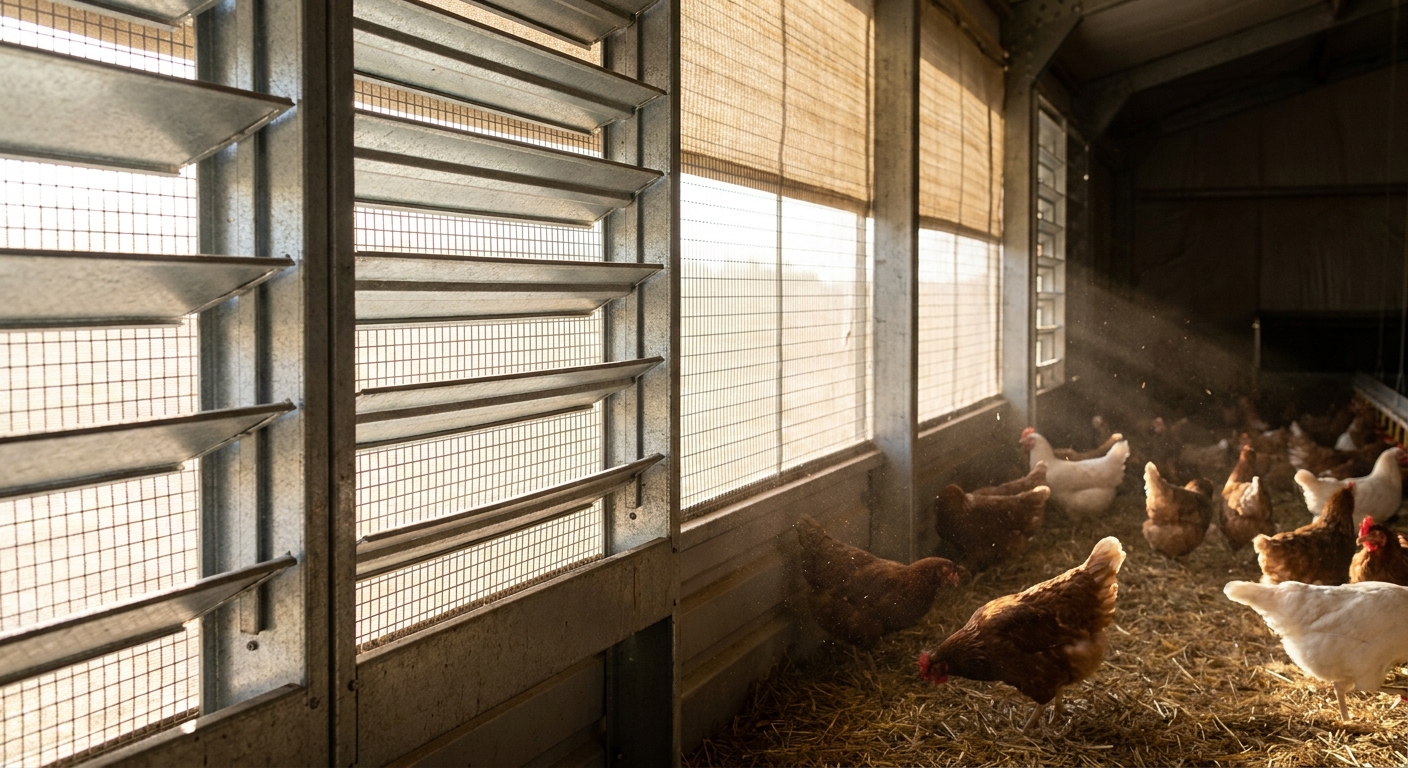
Choosing a mobile pen as a Free Range House is ideal because daily relocation prevents toxic manure accumulation while providing your flock with fresh foraging ground. This dynamic Free Range House design disrupts the life cycles of soil-borne pathogens, ensuring excellent flock health without chemical interventions.
Standard static coops quickly turn the surrounding earth into barren, muddy zones packed with harmful bacteria. Mobile pens, when engineered with lightweight but durable framing, allow you to rotate your flock efficiently across clean pasture.
The Power of Daily Relocation
Relocating your pasture pen daily distributes nitrogen-rich manure evenly across your fields to stimulate robust grass growth. You will notice that your birds forage with intense energy when introduced to fresh clover, consuming insects that would otherwise vector parasites.
Think about it: Fresh pasture is the ultimate natural sanitizing agent. By moving your flock to clean grass every morning, you completely break the cycle of coccidiosis and gut pathogens.
- Rapid turf recovery prevents bare soil erosion.
- Constant access to fresh greens lowers commercial feed demand.
- Even manure dispersion serves as a high-quality, free fertilizer.
Balancing Portability with Structural Strength
Building with light softwood frames reinforced by plywood corner gussets provides a high weight-to-strength ratio for manual towing. You can attach heavy-duty transport wheels with lever dollies to lift and roll the pen without stressing or injuring your birds.
Here is the catch: Using ultra-light materials like cheap PVC can lead to structural sagging and high-wind vulnerability. Investing in a properly engineered timber or light steel mobile frame prevents costly structural failures.
- Plywood corner gussets stabilize joints during bumpy field moves.
- Levered transport wheels allow single-operator movement on pasture.
- Galvanized roofing sheets offer durable protection with minimal total weight.
Key Takeaway: Mobile pasture pens offer unmatched manure distribution and pathogen control when rotated daily. Using lightweight, braced timber or metal framing paired with transport wheels ensures this daily chore remains fast and safe.
| Structural Metric | Braced Timber Mobile Pen | Lightweight PVC Frame | |
|---|---|---|---|
| Lifespan | 5 to 10 Years | 1 to 2 Years (UV Degradation) | |
| Wind Resistance | High (Heavy, stable base) | Low (Prone to flipping) | |
| Mobility | Requires lever wheels or dollies | Can be easily dragged by hand |
Weighing the trade-offs between frame weight and structural longevity helps you choose the perfect mobile pen for your daily pasture routine.
Is a hoophouse design ideal for a Free Range House?
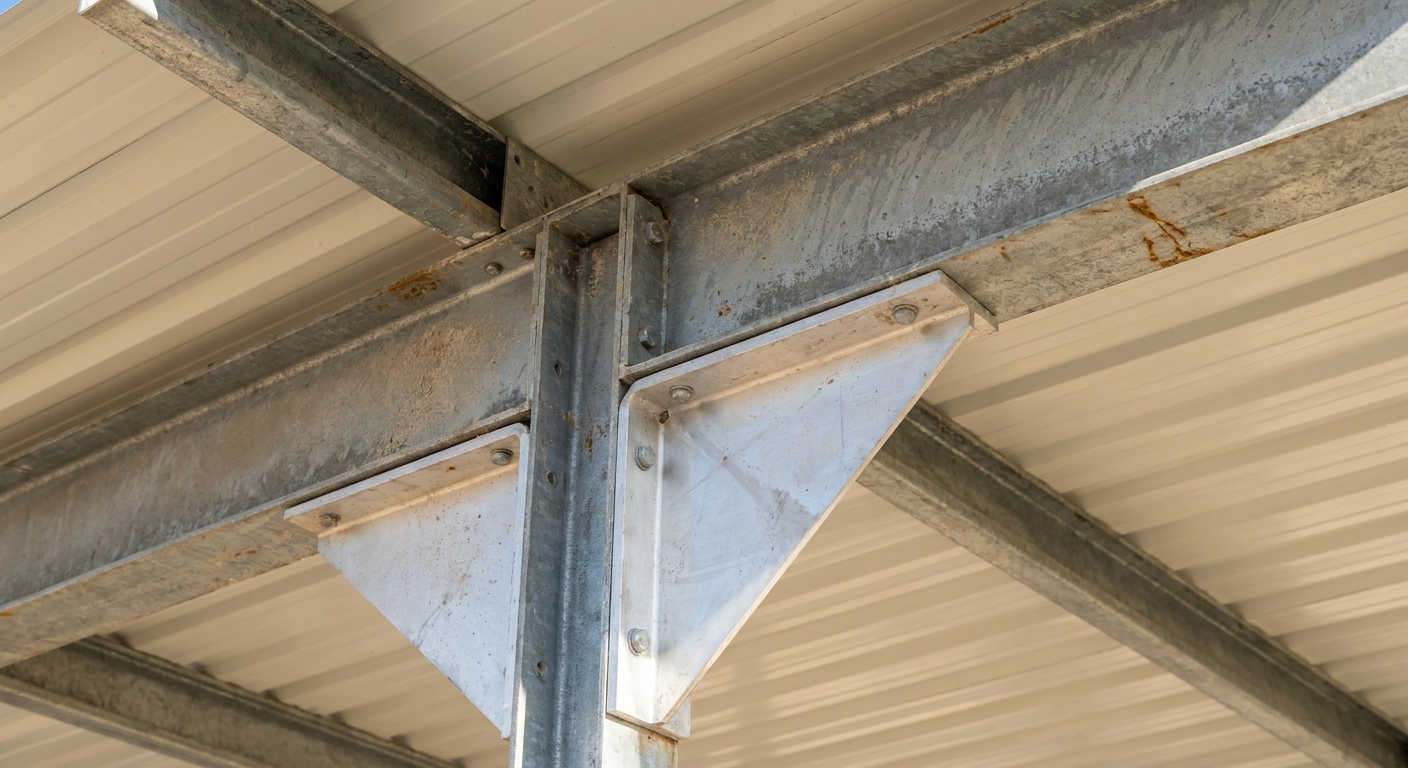
Yes, a hoophouse design is an exceptionally cost-effective option for a Free Range House because its arched geometry distributes high wind loads while maximizing interior headroom. Selecting this arched Free Range House configuration allows you to scale up flock sizes quickly without spending a fortune on heavy traditional framing.
Bending heavy-duty galvanized cattle panels into tensioned Gothic arches creates a rigid structure that naturally resists snow loads and high winds. Wrapping this frame in heavy-duty polyethylene tarps provides excellent protection from the elements at a fraction of the cost.
Cattle Panel Assembly Dynamics
Fastening the ends of your arched cattle panels to treated timber skids creates a solid, towable foundation on uneven pastures. You must install lateral purlins along the length of the hoops to prevent the structure from collapsing under heavy snow or rain loads.
But there is more: The natural spring tension of curved steel panels provides built-in shock absorption during transport. This structural flexibility prevents the joints from cracking when towing across rough agricultural terrain.
- Curved Gothic arches deflect strong lateral wind currents smoothly.
- Treated wood skids resist ground rot and moisture damage.
- Lateral metal purlins distribute mechanical stress evenly along the frame.
Selecting and Tensioning Cover Tarps
Specifying a heavy-duty, co-extruded polyethylene tarp of at least twelve mils thickness ensures long-term resistance to intense UV rays. You can use ratchet tie-downs and heavy-duty bungee systems to keep the cover perfectly tight and prevent wind-induced tearing.
Let’s face it: A loose, flapping tarp is the number one cause of hoophouse structural failure in high winds. Spending extra time to pull your cover drum-tight will prevent costly mid-season replacements.
- Co-extruded white and silver tarps reflect summer heat while letting in ambient light.
- Ratchet straps provide continuous tension adjustments as materials stretch.
- Reinforced contact points prevent friction wear against the underlying wire arches.
Key Takeaway: Arched cattle panel hoophouses offer exceptional interior space and wind resistance at a low capital cost. Ensuring proper structural cross-bracing and maintaining tight tarp tension are vital to extending the lifespan of these structures.
| Hoophouse Component | Recommended Specification | Primary Function | |
|---|---|---|---|
| Galvanized Panels | 4-gauge steel cattle panels | Creates the rigid arched skeleton | |
| Poly Cover | 12 mil UV-stabilized white poly | Protects flock from rain, snow, and sun | |
| Base Skids | 4×4 pressure-treated timber | Serves as the structural towable base |
Implementing a hoophouse frame offers high spatial efficiency and rapid ROI for expanding poultry operations.
Build a Safer Free Range House—Request Your Quote Today !
Email:sales@showhoo.com.cn
Phone/WhatsApp: + 86 186 7895 5927
How do you move a tractor-scale Free Range House?
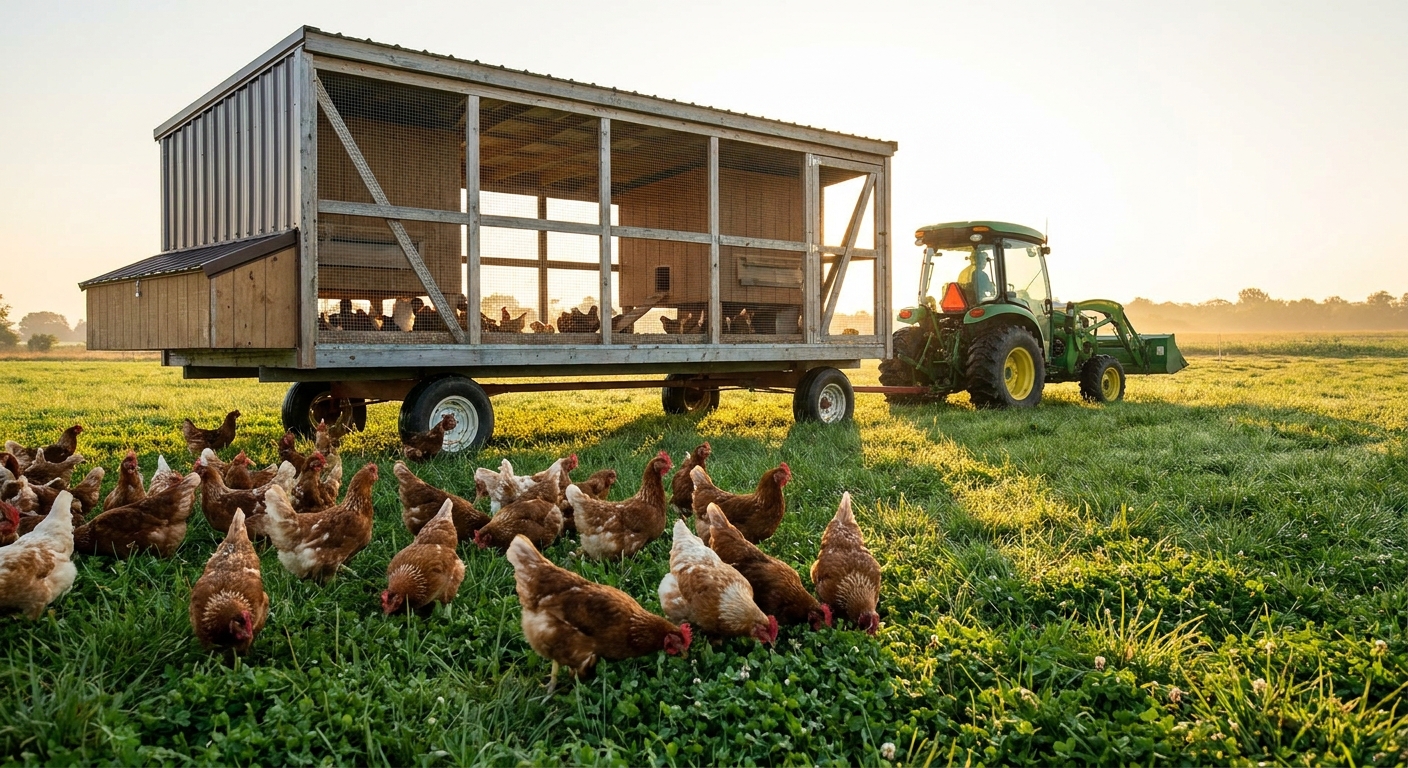
You move a tractor-scale Free Range House by utilizing a heavy-duty skid frame towed by a utility tractor or utility vehicle. Moving this large-scale Free Range House requires careful planning to maintain your pasture rotation cycle while preventing damage to the turf or stressing your flock.
A well-engineered skid system features forty-five-degree beveled skid ends that glide smoothly over the grass instead of digging in and tearing up soil. Attaching heavy steel eyebolts directly to the main frame members ensures safe tow-point distribution during movement.
Engineering Heavy-Duty Skid Frames
Selecting pressure-treated wood beams or thick-walled steel box tubing for your skids provides the high structural durability needed for frequent towing. You should position tow points on the skid flanks to distribute pulling stress across the entire chassis.
Think about it: If your tow points are weak, a sudden pull on uneven ground will tear the frame apart. Heavy-duty through-bolts with steel backing plates are essential for securing your tow lines.
- Beveled skid noses prevent soil gouging on wet pastures.
- Steel box tubing skids offer unmatched lifespan and low friction.
- Through-bored cable loops ensure secure connection to tractor drawbars.
Managing Flock Homing Instincts During Rotations
Relocating your range shelter in short increments of under fifty feet keeps your laying hens oriented to their nesting territory. If you must execute a major move across the farm, keeping the flock locked inside the house for twenty-four hours helps re-anchor their homing instinct.
Here is the catch: Moving the coop too far without securing your birds can lead to confused layers wandering back to the old location, leaving them vulnerable to predators. Maintaining a consistent shelter orientation relative to the sun helps keep your flock calm and organized.
- Short, frequent moves prevent birds from losing track of their indoor nests.
- Temporary lock-ins re-establish the coop as the flock’s safe home base.
- Consistent entry door orientation minimizes confusion during daily turn-outs.
Key Takeaway: Successful large-scale moves depend on a heavy-duty skid frame with beveled noses and a towing schedule that respects your birds’ homing instincts. Keeping moves short and consistent protects both the pasture turf and flock behavior.
| Movement Metric | Value / Recommendation | Operational Impact | |
|---|---|---|---|
| Beveled Skid Angle | 45 degrees | Prevents soil piling and turf damage | |
| Max Move Distance | Under 50 feet per rotation | Keeps laying hens oriented to their nests | |
| Homing Lock-in Time | 24 to 48 hours (for long moves) | Re-anchors flock to new pasture quadrant |
Integrating structured towing mechanics into your pasture workflow keeps operations smooth and prevents bird injury.
Should your Free Range House have a solid floor?
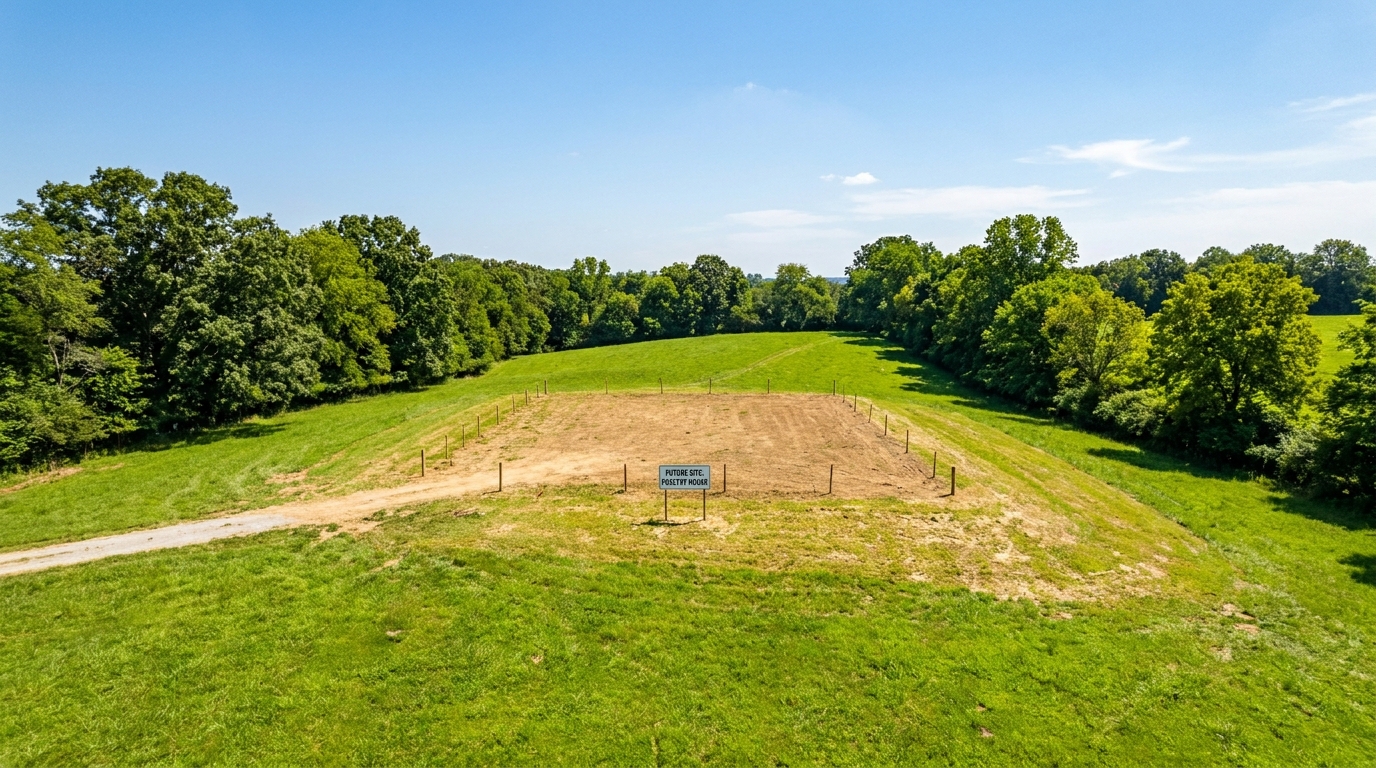
Deciding whether your Free Range House should have a solid floor depends on your local predator pressure and your willingness to manage regular manure cleanouts. Opting for a floorless Free Range House eliminates litter scraping labor but exposes your birds to damp ground during severe rain runoffs.
Conversely, a solid floor offers unmatched protection against burrowing rodents and nocturnal predators while keeping the interior dry and warm. Balancing your pasture soil management objectives with your daily labor availability will guide you to the perfect architectural choice.
Floorless Systems versus Bare Ground Dynamics
Operating a floorless range house deposits nitrogen-rich manure directly onto the pasture soil, saving you countless hours of labor-intensive cleanout chores. You must manage active drainage pathways around the shelter to prevent rain runoff from flooding the indoor roosting areas.
But there is more: A floorless setup is only successful if you rotate the structure frequently. Leaving a floorless unit in one spot for too long leads to localized mud zones and high parasite concentrations.
- Zero interior scraping labor saves significant operational costs.
- Direct manure deposition fertilizes pasture grasses naturally.
- Elevated roosting structures protect birds from damp soil contact.
Mitigating Breast Blisters with Proper Roosting
Providing rounded softwood perches of at least two inches in width prevents painful breast blisters and foot lesions in roosting layers. You can arrange these perches in a staggered, tiered step formation to accommodate high stocking densities while maintaining social order.
Let’s face it: Chickens have a natural nesting drive and will stress themselves out if forced to sleep on a cold, flat floor. Proper perch density ensures a calm, healthy flock during overnight hours.
- Two-by-two rounded softwoods protect tender footpads from bumblefoot infections.
- Staggered tiers allow dominant birds to roost comfortably at higher levels.
- Periodic natural oil treatments on perches prevent blood-sucking mite infestations.
Key Takeaway: Floorless range units save massive cleanout labor but require frequent pasture rotations to prevent mud buildup and parasite accumulation. Proper rounded roosting bars are essential in both systems to ensure overnight flock comfort and health.
| Parameter / Choice | Floorless Pasture Unit | Solid-Floored Shelter | |
|---|---|---|---|
| Manure Management | Deposited directly on pasture | Requires manual scraping & deep litter | |
| Predator Security | Moderate (Requires skirts/electric wires) | Superior (Total isolation from ground) | |
| Flock Health Risk | High parasite load if static | Wet litter ammonia buildup if unventilated |
Aligning your flooring architecture with your pasture rotation cycle minimizes labor and maximizes biosecurity.
What are the fixed options for a Free Range House?
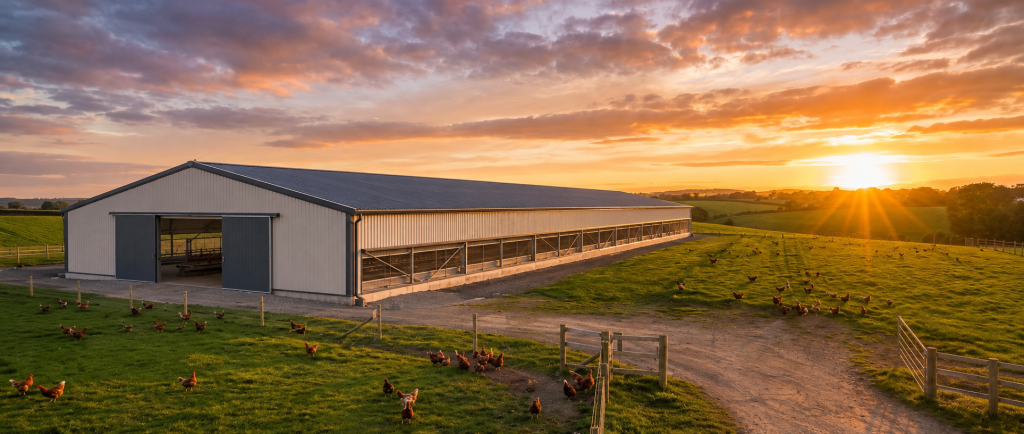
Fixed options for a Free Range House include permanent multi-yard radial fencing systems that rotate your flock through distinct paddocks surrounding a central steel structure. Implementing a fixed Free Range House system works exceptionally well for large-scale B2B commercial egg producers who require centralized egg collection and automated feeding.
To prevent the high-nitrogen “mud zone” effect common around fixed entryways, installing porous gravel aprons is a critical design step. This layout combines the durability of a permanent structure with the agronomic benefits of pasture rotation.
Implementing Multi-Yard Radial Fencing
Setting up a “spoke-and-wheel” pasture layout allows you to direct your birds into four to six separate paddocks from a single, static facility. You can rotate access doors every three to six weeks, giving each pasture section ample rest to restore lush green vegetation.
Think about it: This design eliminates the heavy labor of moving giant coops while still delivering the ecological benefits of fresh pasture foraging. It is the ultimate hybrid solution for commercial-scale growers.
- Centralized steel buildings simplify power, water, and egg automation.
- Radial paddocks optimize pasture recovery without moving heavy machinery.
- High-tensile perimeter fences keep large predators out of the grazing zones.
Mitigating Entryway Mud and Pathogens
Laying down a thick porous pad of coarse gravel or wood chips at your pop-hole doorways prevents mud from accumulating on wet days. You should also mount wide eaves and rain gutters to divert roof runoff far away from the active chicken entries.
Here is the catch: If you neglect the entryway, high-traffic mud zones will quickly become breeding grounds for harmful bacteria like E. coli. Keeping these high-traffic thresholds dry is vital to protecting flock biosecurity.
- Porous stone aprons filter water away and scrape mud from birds’ feet.
- Rain gutters prevent roof runoff from pooling near the entry points.
- Restricting heavy feed to outdoor paddock zones baits birds away from static doorways.
Key Takeaway: Permanent range houses with radial multi-yard fencing deliver high automation efficiencies while preserving pasture health. Installing stone aprons and rain gutters at entryways prevents muddy, pathogen-dense zones from threatening flock health.
| Fixed House Element | Implementation Spec | Primary B2B Benefit | |
|---|---|---|---|
| Radial Paddocks | 4 to 6 separate grazing zones | Allows pasture recovery without moving coop | |
| Porous Entry Pad | 6-inch gravel layer at pop-holes | Eliminates mud and reduces bacteria pooling | |
| Rain Gutters | Seamless aluminum on eaves | Prevents soil erosion and pooling around doors |
Blending automated indoor systems with rotational outdoor paddocks maximizes both labor efficiency and bird welfare.
How do you size a Free Range House for stocking?
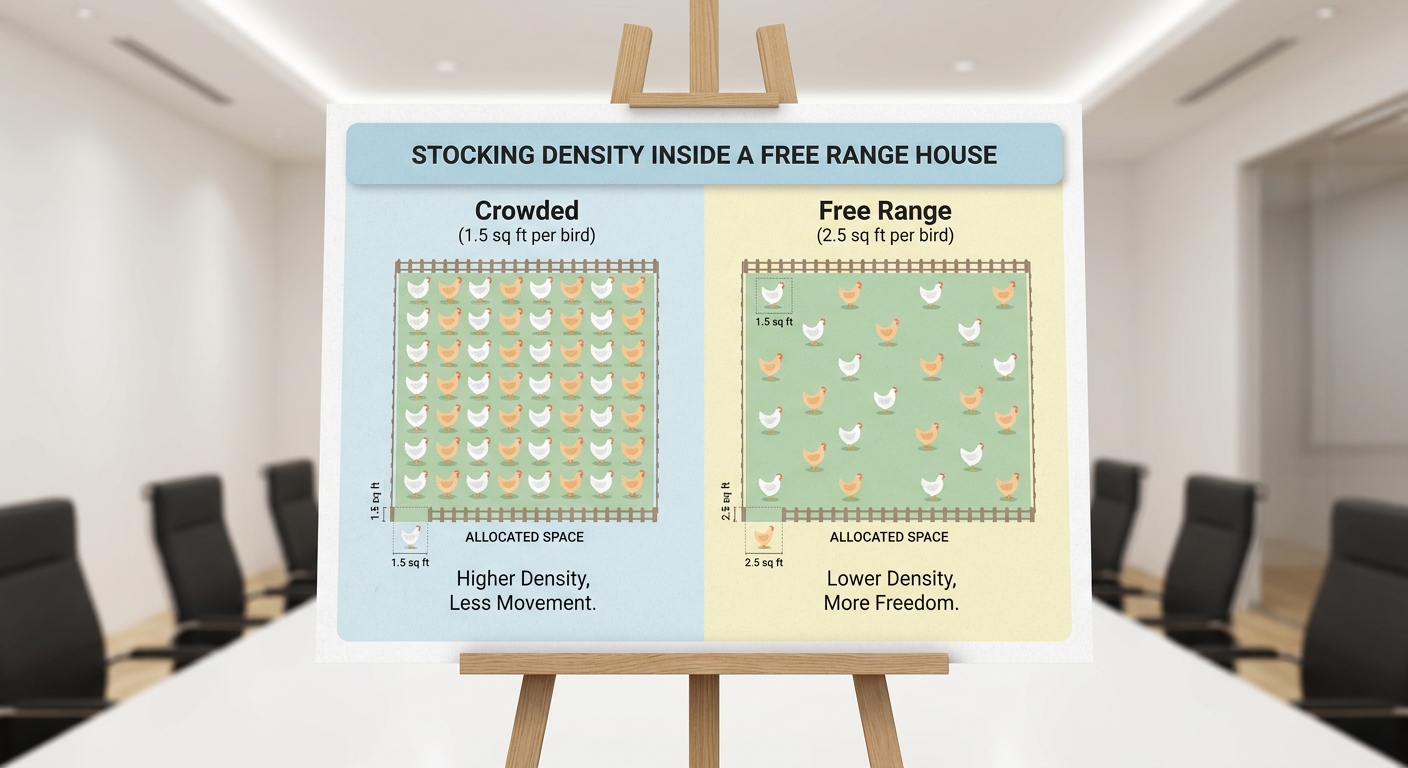
Sizing a Free Range House for stocking requires matching the square footage of your indoor roosts and outdoor pastures to the behavioral needs of your layers or broilers. Standard B2B operational rules dictate that an integrated Free Range House should provide at least two square feet of indoor floor space per active layer.
Overcrowding your coop increases social stress, which can lead to feather pecking and a steep drop in egg laying rates. Calculating the perfect stocking density ensures a calm flock, sustainable pasture wear, and maximum yield on your investment.
Space Ratios for Active Layers
Allocating sufficient roosting perch space of about eight to ten inches per bird keeps your laying flock calm during overnight hours. You should provide at least one nesting box for every four to five hens to prevent egg breakage and competition.
But there is more: If your birds spend the entire winter season indoors, you must scale up their housing allowance to four square feet per bird. This extra space prevents stress-induced behaviors when freezing outdoor temperatures limit pasture access.
- Provide 1.25 to 1.5 square feet of indoor shelter if feed is positioned outdoors.
- Offer at least 2 to 2.5 square feet per bird for integrated indoor feeding.
- Scale up to 4 square feet per bird for cold-climate winter confinement.
Calculating Total Pasture Footprint
Restricting your long-term stocking density to between fifty and one hundred birds per acre preserves your pasture’s turf health. You must balance the nitrogen output of your birds with the growth rate of your grasses to avoid burning the soil with ammonia.
Let’s face it: Overloading your pasture will quickly turn a beautiful green meadow into a barren, dusty wasteland. Sticking to sustainable land ratios keeps your soil vibrant and your flock highly productive.
- Keep total flock sizing aligned with local pasture grass regeneration rates.
- Rotate paddock access to prevent toxic nitrate accumulations in the soil.
- Adjust stocking density dynamically based on seasonal rainfall and forage availability.
Key Takeaway: Proper stocking density requires balancing indoor shelter space with sustainable outdoor pasture acreage. Giving layers at least two square feet indoors and restricting pasture rates to under one hundred birds per acre protects both bird welfare and turf longevity.
| Housing System Segment | Space Recommendation | Main Operational Goal | |
|---|---|---|---|
| Roosting Shelter Only | 1.25 to 1.5 sq ft per bird | Over-night rest protection | |
| Integrated Indoor Housing | 2.0 to 2.5 sq ft per bird | All-season shelter with feeding | |
| Sustainable Pasture Land | 50 to 100 birds per acre | Soil preservation & natural foraging |
Calculating precise stocking formulas prevents stress-induced flock issues and maintains a thriving pasture ecosystem.
Conclusion
Managing a high-performance pasture poultry operation requires balancing structural durability, climate control, predator defense, and pasture rotation. Traditional wooden or flimsy PVC coops often fail under intense wind loads, rot quickly in damp soils, and leave your birds vulnerable to predators.
Showhoo solves these critical commercial challenges by manufacturing custom, climate-adapted steel structure poultry buildings engineered to handle severe winds, heavy snows, and extreme thermal conditions. Whether you are scaling up a mobile tractor system or implementing an automated multi-yard radial facility, Showhoo provides factory-direct, highly secure, and energy-efficient designs tailored to your farm’s unique geographical needs. Protect your investment, reduce your seasonal mortality rates, and optimize your operational labor by choosing a professional steel structure. To get a personalized project quote and start building your future-proof facility, contact us today .
Build a Safer Free Range House—Request Your Quote Today !
Email:sales@showhoo.com.cn
Phone/WhatsApp: + 86 186 7895 5927
Frequently Asked Questions
Can I build a Free Range House using cheap PVC pipes?
No. While PVC pipe is cheap, lightweight, and easy to construct, it is highly vulnerable to UV degradation and wind damage. Over time, solar exposure makes PVC brittle, leading to structural failures under moderate wind loads. For long-term commercial operations, high-tensile steel, aluminum, or treated wood framing is highly recommended.
What’s the best way to anchor a Free Range House against high winds?
Absolutely. The most reliable anchoring method is to use heavy-duty ground augers or screw-in earth anchors at the corners. For mobile houses that are moved frequently, you can secure just the windward corner with a heavy-duty ratchet strap connected to an earth anchor, or select a low-profile, heavy-skid design that naturally resists wind lift.
How do I know if my Free Range House needs a solid floor?
Yes. A solid floor is best if you struggle with wet pastures, muddy runoff, or burrowing predators like rats and weasels. However, solid floors require regular manual cleanout and deep litter management. If you prefer low-labor systems where manure is left directly on the pasture, a floorless house with elevated roosting bars is the ideal choice.
How often should I rotate my Free Range House to a new pasture location?
Yes. Rotation frequency depends on stocking density and weather conditions. Floorless daily-move pens must be moved once or twice a day to protect grass roots and provide fresh forage. Larger, skid-mounted houses can remain in place for one to three months, provided you use wide-area pasture fencing and monitor the turf near the doors for signs of wear.
Can I manage a large layer flock with multiple small mobile houses?
Absolutely. Dividing a large flock among several smaller, widely separated mobile houses is highly effective. This approach distributes manure evenly, reduces localized turf destruction, and prevents the “mud zone” effect common around large, static facilities. It also improves biosecurity by isolating disease outbreaks to individual coops.