
Poultry house insulation design is the strategic planning and integration of high-performance thermal barriers to optimize indoor climate control, and this complete guide provides the definitive technical blueprint you need to maximize commercial flock performance and reduce operating costs. You are watching your flock’s growth rates plummet while your winter heating and summer cooling bills spiral completely out of control. It feels like throwing money into a drafty barn, leaving you stressed about tight margins and bird welfare. Fortunately, there is a better way to regain absolute control of your indoor climate and protect your investments. By implementing a high-performance poultry house insulation design , you can build an airtight shield that keeps thermal stress out and keeps operational profits in.
What Is Poultry House Insulation Design and Why Is It Important?
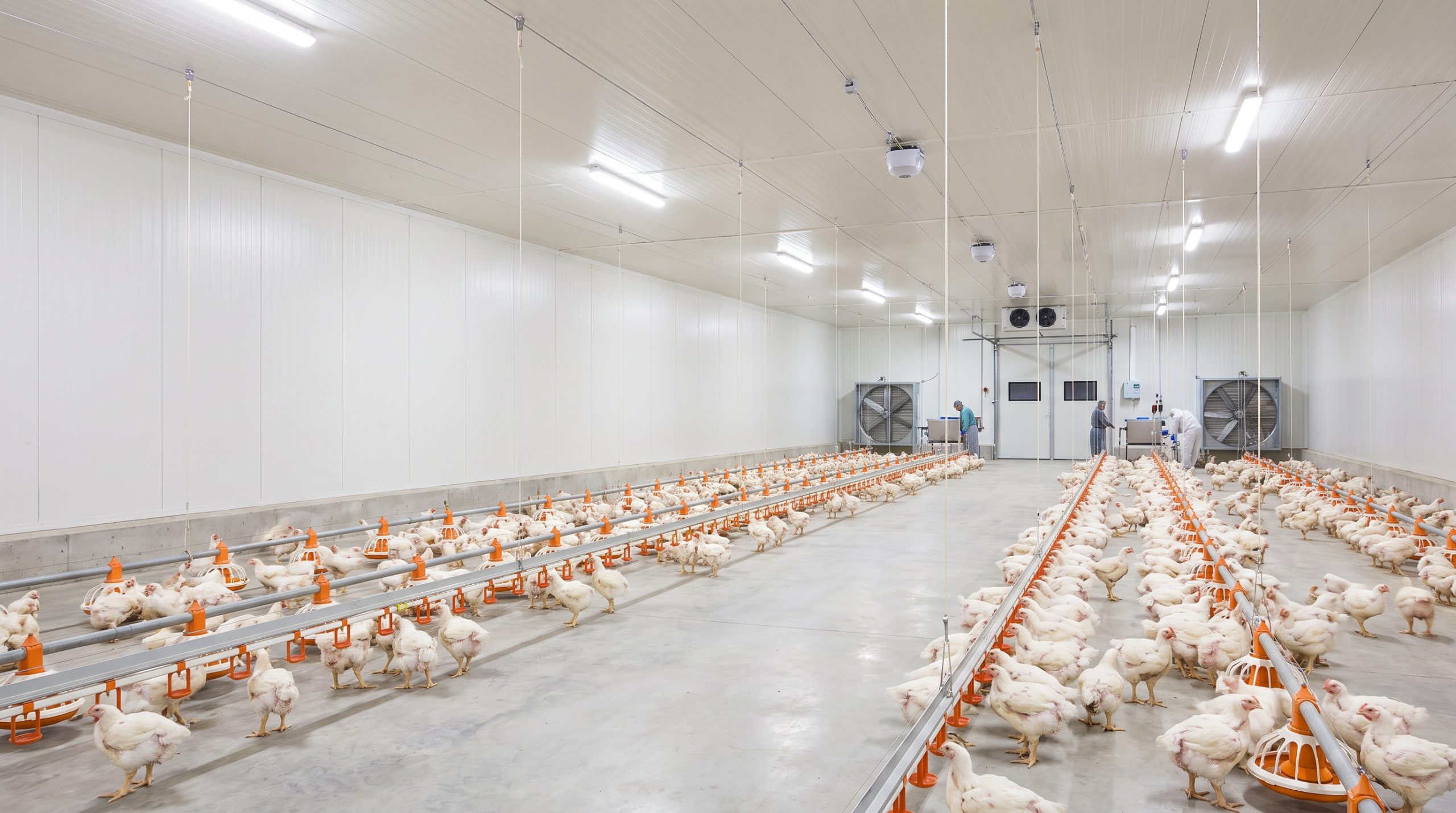
Poultry house insulation design is the science of creating a thermally stable barrier around your flock to eliminate external temperature fluctuations and maximize feed conversion ratios. This comprehensive poultry house insulation design is the foundation of high-yield farming because it directly affects bird metabolic rates and resource utilization. Without it, your ventilation system works twice as hard, wasting valuable energy and stressing your animals.
Why Is Climate Regulation Crucial for Chickens?
Birds have narrow thermoneutral zones where they can grow and produce efficiently without wasting energy on body temperature maintenance. If the house gets too cold or too hot, birds redirect feed energy from meat or egg production toward staying warm or cooling down.
- Feed conversion rates (FCR) worsen significantly under thermal stress.
- Mortality rates spike due to heat stroke or respiratory distress.
- Laying rates and eggshell quality drop rapidly.
How Does Insulation Reduce Energy Expenditures?
High-performance insulation acts as a permanent barrier that blocks heat transfer, meaning your heaters and fans do not have to run continuously. Think about it: Every unit of heat that leaks through an uninsulated roof in winter is money directly lost from your pocket. Sealing the envelope stabilizes the indoor temperature and slashes fuel and electricity costs.
Can Insulation Improve Overall Flock Health?
Yes, a stable microclimate drastically lowers bird stress and strengthens their immune systems. Damp, drafty environments encourage the growth of harmful pathogens and lead to costly outbreaks. And the best part? An insulated, dry environment keeps litter quality high, which prevents ammonia buildup and reduces footpad dermatitis.
Key Takeaway: Correct insulation design keeps bird stress to an absolute minimum, ensuring maximum growth and lower veterinary costs.
| Climate Factor | Uninsulated Impact | Insulated Performance | |
|---|---|---|---|
| Feed Conversion | Wasted on thermoregulation | Optimized for growth | |
| Humidity & Litter | Wet litter, high ammonia | Dry litter, low ammonia | |
| HVAC Energy Use | Continuous, high expense | Cycled, highly cost-effective |
This visual summary highlights how robust insulation directly protects your bottom line against operational instability.
What Factors Determine Poultry House Insulation Requirements?
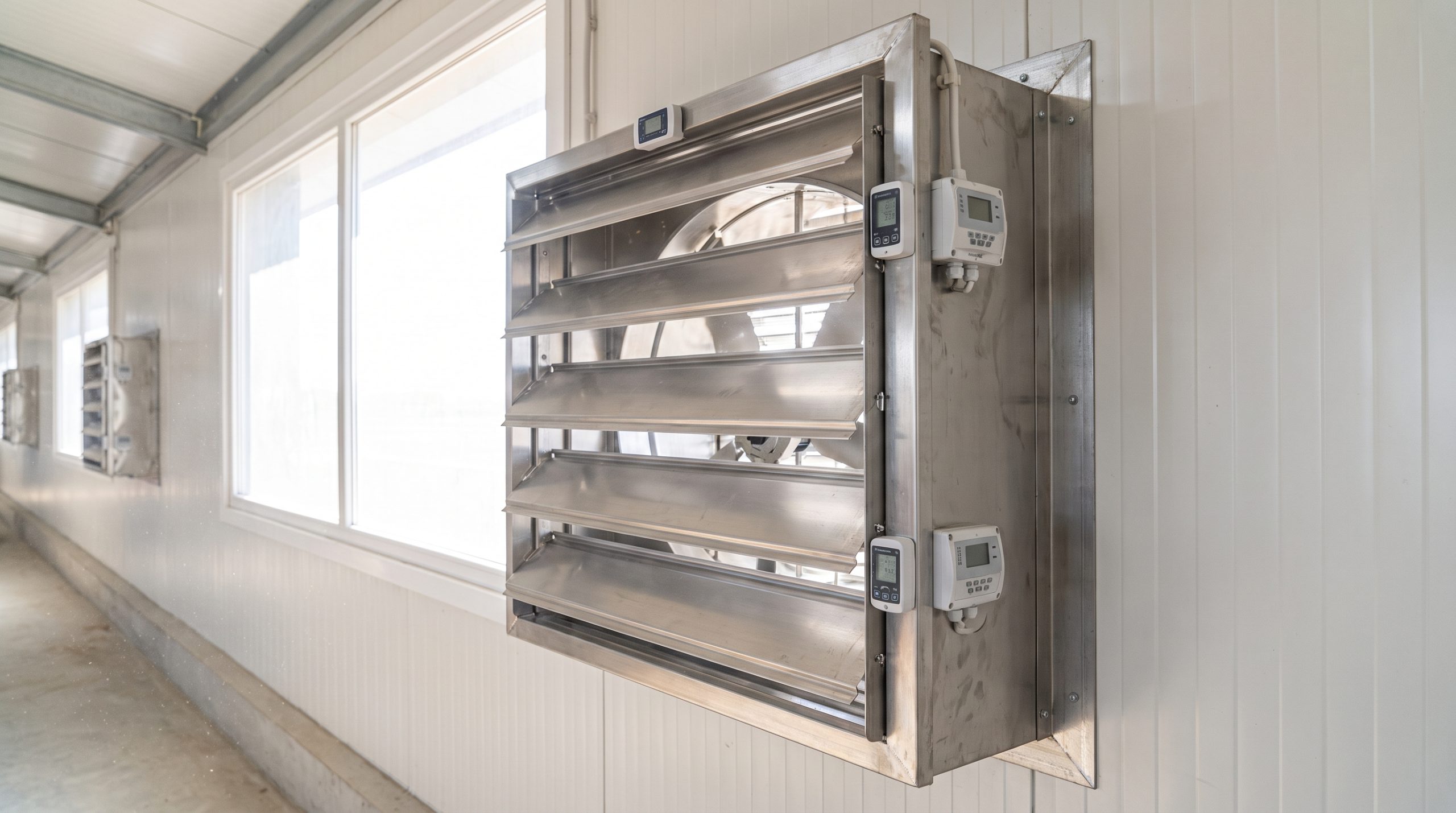
The specific insulation requirements of your facility are driven by local climatic extremes, bird stocking density, and the age-specific temperature needs of your flock. Selecting the right poultry house insulation design requires a thorough evaluation of environmental and biological variables. Since different poultry species and growth stages demand precise ambient conditions, your building’s envelope must adapt to these needs.
How Do Local Weather Extremes Affect Your Setup?
Your local climate dictates the level of thermal protection your facility needs to withstand seasonal extremes. High-temperature regions require robust roof insulation to block solar radiation, whereas freezing zones demand heavy wall insulation to retain flock-generated heat.
- Tropical zones demand highly reflective roof systems.
- Arctic zones require thick, continuous wall panels.
- Temperate regions need flexible designs that handle sharp seasonal changes.
Why Do Bird Age and Stocking Density Matter?
Day-old chicks require a warm environment of around 32°C to 35°C, while fully grown broilers generate massive amounts of metabolic heat and need a much cooler room. Here is the thing: High stocking densities produce dense heat zones that must be managed by ventilation, whereas low-density or brooding houses require high heat retention to protect young chicks.
How Does Indoor Humidity Impact Insulation Performance?
Poultry houses produce high levels of moisture from bird respiration and droppings, which can quickly degrade poor insulation. If moisture penetrates the insulation layer, the thermal resistance drops to near zero, destroying your climate control. What’s the catch? You must choose materials with excellent vapor barrier properties to prevent structural rot and maintain high thermal performance.
Key Takeaway: Tailoring insulation to your local weather and flock profile prevents costly system underperformance and structural damage.
| Factor | High-Demand Scenario | Design Response | |
|---|---|---|---|
| Geographic Climate | Extreme hot/cold seasons | Higher R-value sandwich panels | |
| Flock Stage | Brooding chicks (high heat) | Tight thermal envelope, zero drafts | |
| Humidity Level | High vapor emission | Closed-cell water-resistant panels |
Evaluating these biological and climate factors allows you to engineer a custom envelope that handles seasonal shifts with ease.
Build a Better-Insulated Poultry House—Get a Quote Today !
Email:sales@showhoo.com.cn
Phone/WhatsApp: + 86 186 7895 5927
How Do You Determine the Required R-Value and U-Value?
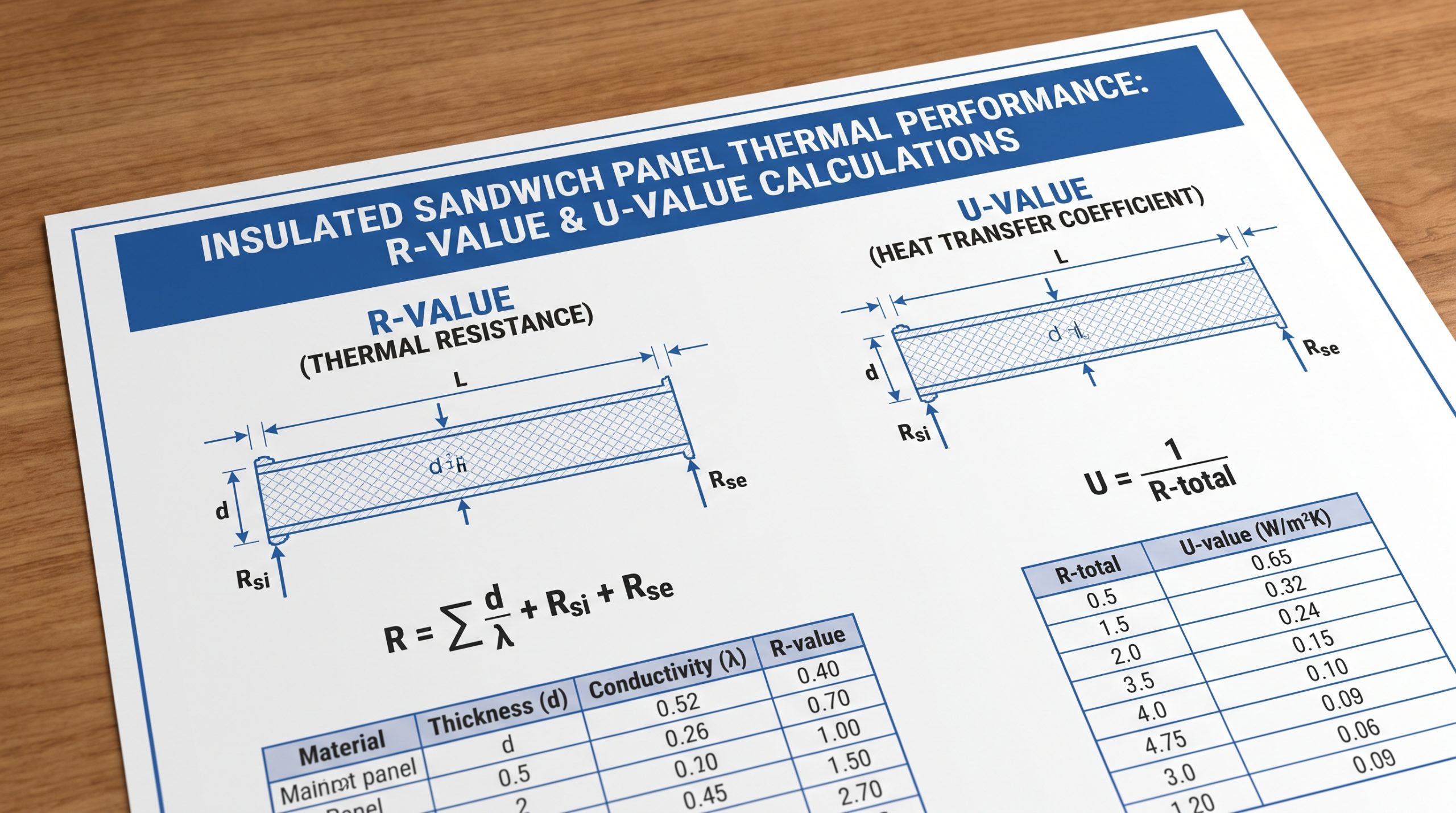
You determine the required R-value and U-value by aligning your geographic climate zone with standard agricultural engineering recommendations for minimum thermal resistance. Calculating thermal performance is a vital step in any successful poultry house insulation design because it defines how well your building resists heat flow. These scientific values prevent guessing games, letting you buy the exact panel thickness required for your regional weather.
What Is the Difference Between R-Value and U-Value?
The R-value measures a material’s resistance to heat flow, meaning a higher R-value provides better insulation performance. Conversely, the U-value represents the rate of heat transfer, meaning a lower U-value signifies a more efficient thermal barrier.
- R-Value: Thermal resistance (higher is better).
- U-Value: Thermal transmittance (lower is better).
- Mathematical relation: U=1/R, showing their inverse relationship.
How Do You Calculate Your Target Thermal Values?
To calculate the total thermal performance of your walls or roof, you must add together the individual thermal resistances of every layer, including cladding, insulation, and internal liners. And the best part? Using integrated panels, such as those found in modern steel structure poultry house systems, simplifies this calculation because the manufacturer provides certified pre-calculated values.
Why Do Global Climatic Zones Require Unique R-Values?
Hot tropical climates focus primarily on high roof R-values to repel intense solar radiation and keep birds cool. Cold northern regions require both walls and roofs to have high R-values to keep precious heat inside during deep winter freezes. Here is the thing: Using an insufficient R-value in a harsh zone forces your mechanical systems to run non-stop, raising maintenance costs.
Key Takeaway: Knowing your target R-value ensures you invest in the correct thickness without overpaying for unnecessary materials.
| Climatic Zone | Recommended Wall R-Value (h·ft²·°F/Btu) | Recommended Roof R-Value (h·ft²·°F/Btu) | Target U-Value (W/m²K) | |
|---|---|---|---|---|
| Tropical / Hot | R-8 to R-12 | R-16 to R-20 | ~0.28 to 0.35 | |
| Temperate / Mild | R-12 to R-15 | R-20 to R-24 | ~0.24 to 0.28 | |
| Cold / Arctic | R-15 to R-20 | R-25 to R-30 | ~0.19 to 0.23 |
Aligning your build with these standardized values guarantees a stable thermal boundary across all seasons.
How Do You Select the Right Chicken House Insulation Thickness?
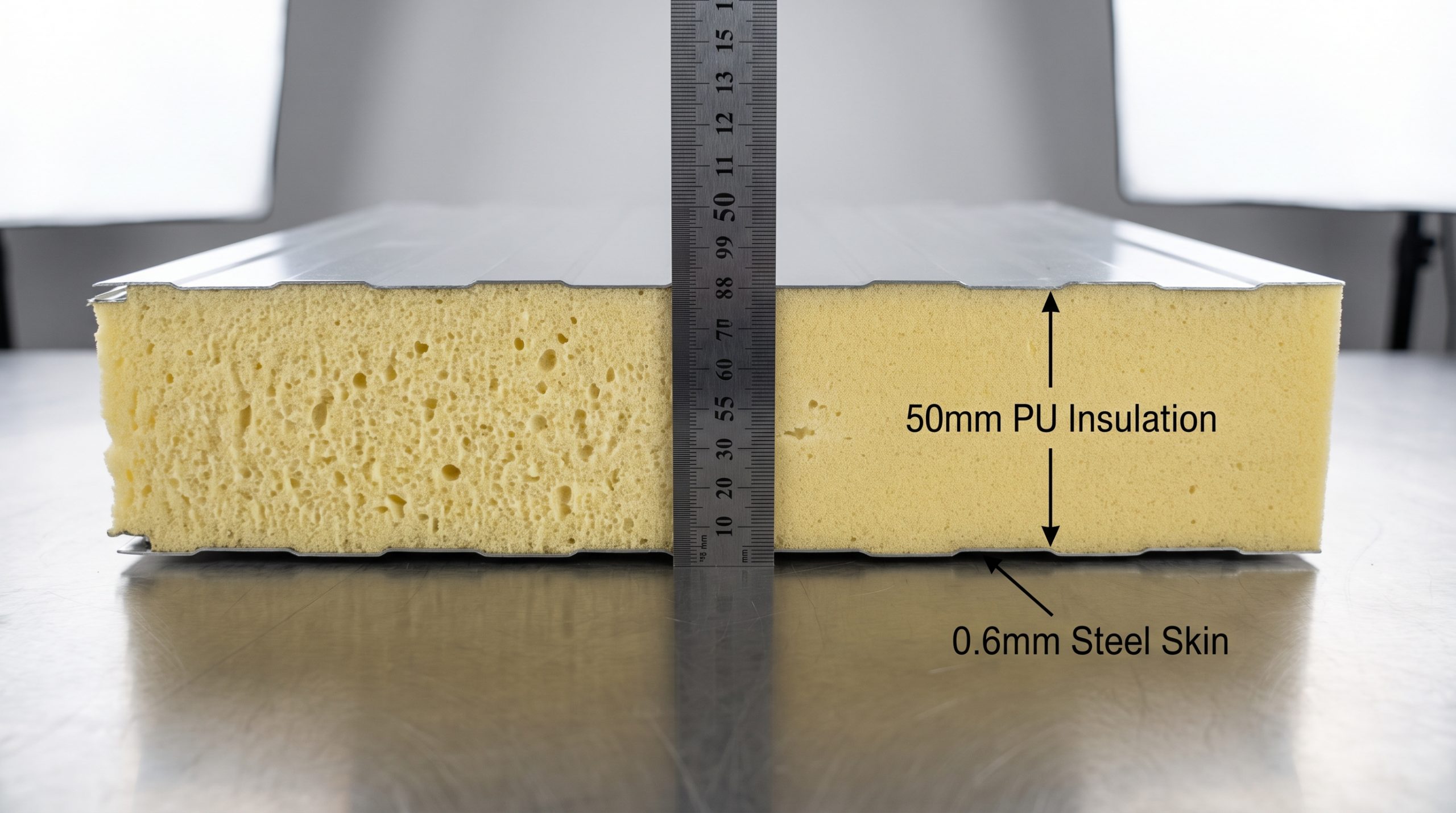
You select the correct insulation thickness by balancing your local climate demands with the thermal conductivity rating of your chosen insulation material. Achieving the perfect thickness in your poultry house insulation design prevents unnecessary structural costs while securing top-tier thermal defense. If the insulation is too thin, you will face high heating and cooling costs; if it is too thick, you are wasting capital budget.
How Does Panel Thickness Impact Temperature Stability?
Thicker insulation creates a more robust barrier that slows down heat movement, keeping the inside temperature steady when outdoor temperatures spike or drop. This thermal inertia is especially valuable during sudden storm fronts or heatwaves.
- Thicker panels delay solar heat penetration by several hours.
- This delay shifts the peak cooling load to cooler evening hours.
- It protects your birds from sudden, lethal temperature shocks.
What Are the Standard Thickness Ranges for Roofs and Walls?
For most modern poultry farms, polyurethane sandwich panels range from 50mm to 100mm in thickness. Wall panels are often slightly thinner than roof panels because roofs bear the brunt of direct sunlight all day long. Think about it: Standard configurations include 50mm walls and 75mm roofs for moderate climates, moving up to 100mm for extreme cold or heat.
Is Thicker Insulation Always the Best Choice?
While thicker panels offer superior insulation, there is a point of diminishing returns where adding thickness does not save enough energy to justify the extra cost. And the best part? You can work with expert manufacturers to run a cost-benefit analysis, finding the exact point where thickness meets maximum profitability.
Key Takeaway: Selecting the correct panel thickness avoids wasted upfront costs while guaranteeing year-round climate safety.
| Panel Thickness | Thermal Resistance | Primary Application | Target Climate | |
|---|---|---|---|---|
| 50 mm | Moderate | Wall Panels | Mild / Subtropical | |
| 75 mm | High | Roof / Wall Panels | Temperate to Hot | |
| 100 mm | Ultra-High | Roof Panels | Extreme Cold / Desert |
Choosing the correct thickness helps you invest wisely, ensuring you only pay for the exact insulation your region demands.
PU Versus EPS Poultry Panels: Which Material Is Better?
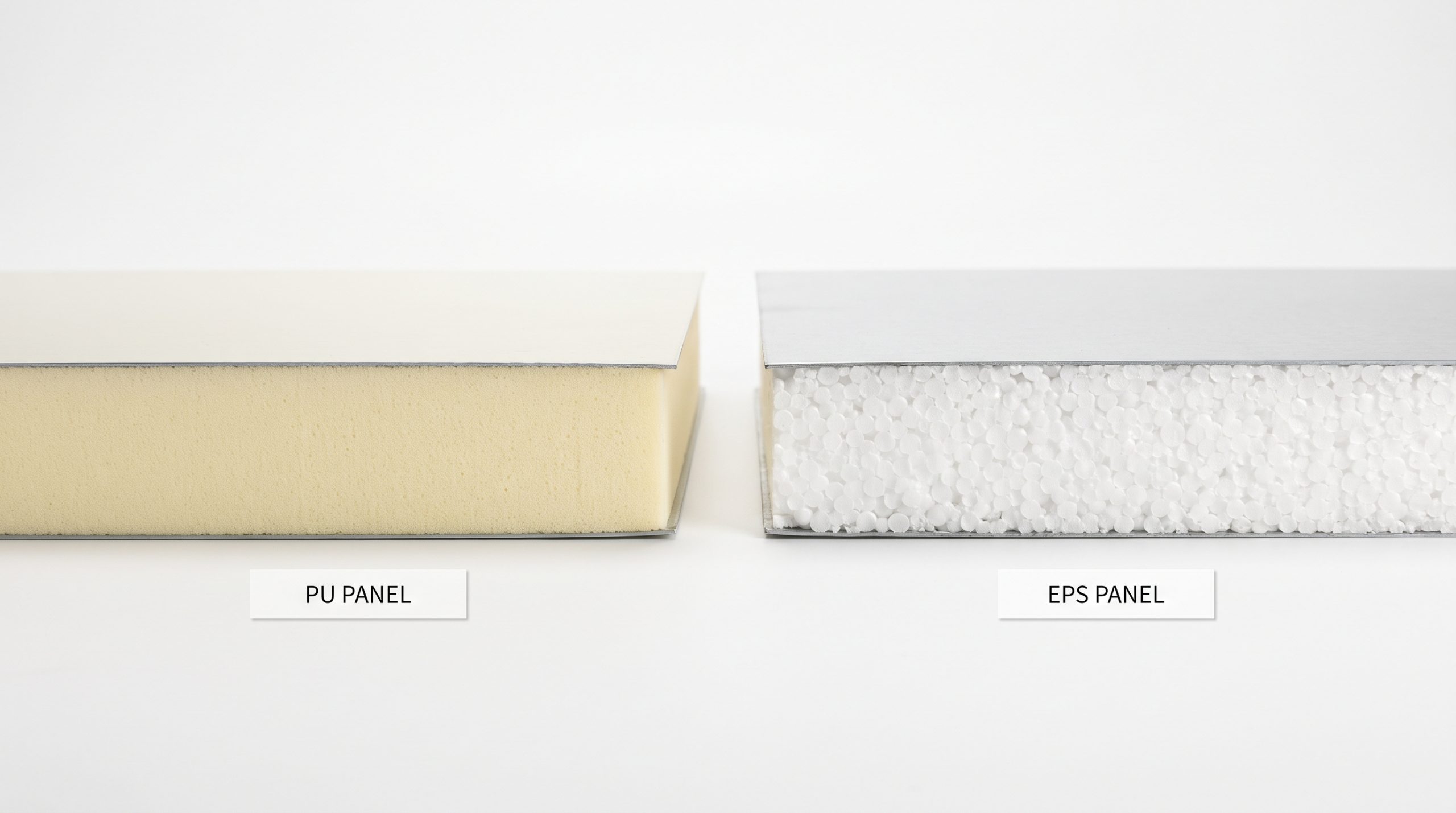
Polyurethane (PU) panels are superior to Expanded Polystyrene (EPS) panels because they offer twice the thermal efficiency and far better resistance to moisture and pests. Choosing the core material is the most critical decision in your poultry house insulation design because it determines the long-term durability and efficiency of your facility. Understanding the physical differences between these two cores is essential for making a profitable decision.
Which Material Offers Better Thermal Efficiency?
Polyurethane (PU) has a much lower thermal conductivity than EPS, meaning you can achieve the same target R-value with a much thinner PU panel.
- PU panels achieve a high R-value at half the thickness of EPS.
- Thinner panels reduce transport costs and structural load.
- High-efficiency pu sandwich panels provide a tighter thermal barrier.
How Do PU and EPS Panels Compare in Moisture Resistance?
Poultry houses are high-humidity zones that undergo regular pressure washing, making moisture resistance critical for your insulation’s lifespan. PU features a closed-cell structure that completely repels water, whereas EPS has open voids that can absorb water over time. What’s the catch? Once EPS absorbs moisture, its insulation value drops permanently, and it can harbor dangerous mold and bacteria.
Which Panel Material Is More Cost-Effective Long-Term?
EPS panels are cheaper upfront, but they require greater thickness and suffer from performance degradation, making them more expensive over time. PU panels resist pests, water, and structural sagging, maintaining their R-value for decades. And the best part? The energy savings from using PU panels usually pay back the initial price difference within the first few flock cycles.
Key Takeaway: Polyurethane panels are the superior choice for modern poultry operations, offering unmatched durability and thermal performance.
| Feature | Polyurethane (PU) Panels | Expanded Polystyrene (EPS) Panels | |
|---|---|---|---|
| Thermal Conductivity | Ultra-low (~0.022 W/m·K) | Moderate (~0.038 W/m·K) | |
| Cell Structure | Closed-cell (waterproof) | Partially open (absorbent) | |
| Pest Resistance | High (hard for rodents to nest) | Low (rodents easily tunnel) |
Comparing these physical properties reveals why PU panels are the industry standard for high-biosecurity farming.
How Do You Design Insulation for Roofs, Walls, and Ceilings?
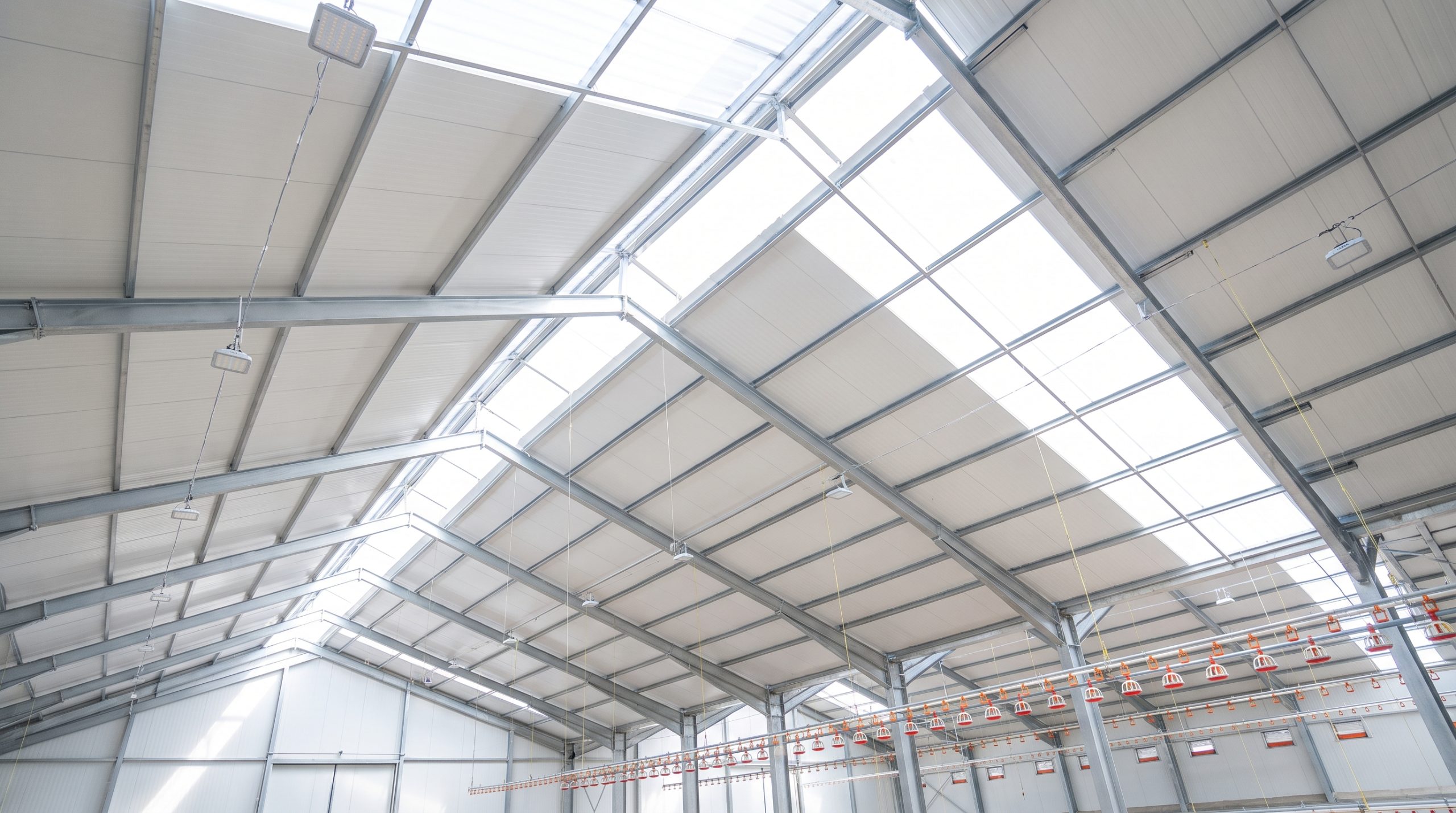
You design poultry insulation by treating the roof as your main defense against solar heat, the walls as your perimeter shield, and the ceiling as a barrier to control active air volume. A successful poultry house insulation design must address the unique physical forces acting on different parts of the building envelope. Simply putting the same panel everywhere without considering local heat dynamics is inefficient.
Why Is Roof Insulation Your Primary Shield?
The roof absorbs direct sunlight all day, making it the largest source of heat entering your poultry house during summer. Proper roof insulation keeps the ceiling cool, preventing radiant heat from stressing the birds below.
- Roofs require the highest R-value in the entire building.
- Solid insulation prevents condensation from dripping onto dry litter.
- It protects your steel frame from hot, humid indoor air.
How Do Wall Panels Support Structural Integrity?
Wall panels provide essential structural support while keeping drafts and temperature swings out of your poultry facility. They must be durable enough to handle high wind loads and regular cleaning while maintaining an airtight seal at the floor joint. Here is the thing: Modern walls use tongue-and-groove joint systems to lock out drafts and keep your climate controlled.
What Role Do Drop Ceilings Play in Energy Control?
Installing a drop ceiling reduces the total air volume your ventilation system has to heat or cool, saving energy. And the best part?
- It creates a clean attic space that keeps electrical and structural elements safe from corrosive gases.
- It improves air velocity during tunnel ventilation by creating a smooth ceiling.
- It prevents heat loss through the roof structure during cold weather.
Key Takeaway: A balanced design covering the roof, walls, and ceiling keeps your building thermally secure and lowers energy bills.
| Building Component | Primary Hazard | Design Requirement | Recommended Solution | |
|---|---|---|---|---|
| Roof | Intense solar heat gain | Maximum R-value, waterproof | 75mm – 100mm PU Panels | |
| Wall | Drafts, impact, moisture | Structural strength, tight joints | 50mm – 75mm PU Panels | |
| Ceiling | Excess air volume | Air seal, smooth surface | Drop ceiling panel system |
Dividing your insulation strategy into these three target areas ensures complete, cost-effective environmental control.
Build a Better-Insulated Poultry House—Get a Quote Today !
Email:sales@showhoo.com.cn
Phone/WhatsApp: + 86 186 7895 5927
How Can You Prevent Thermal Bridges, Air Leakage and Condensation?
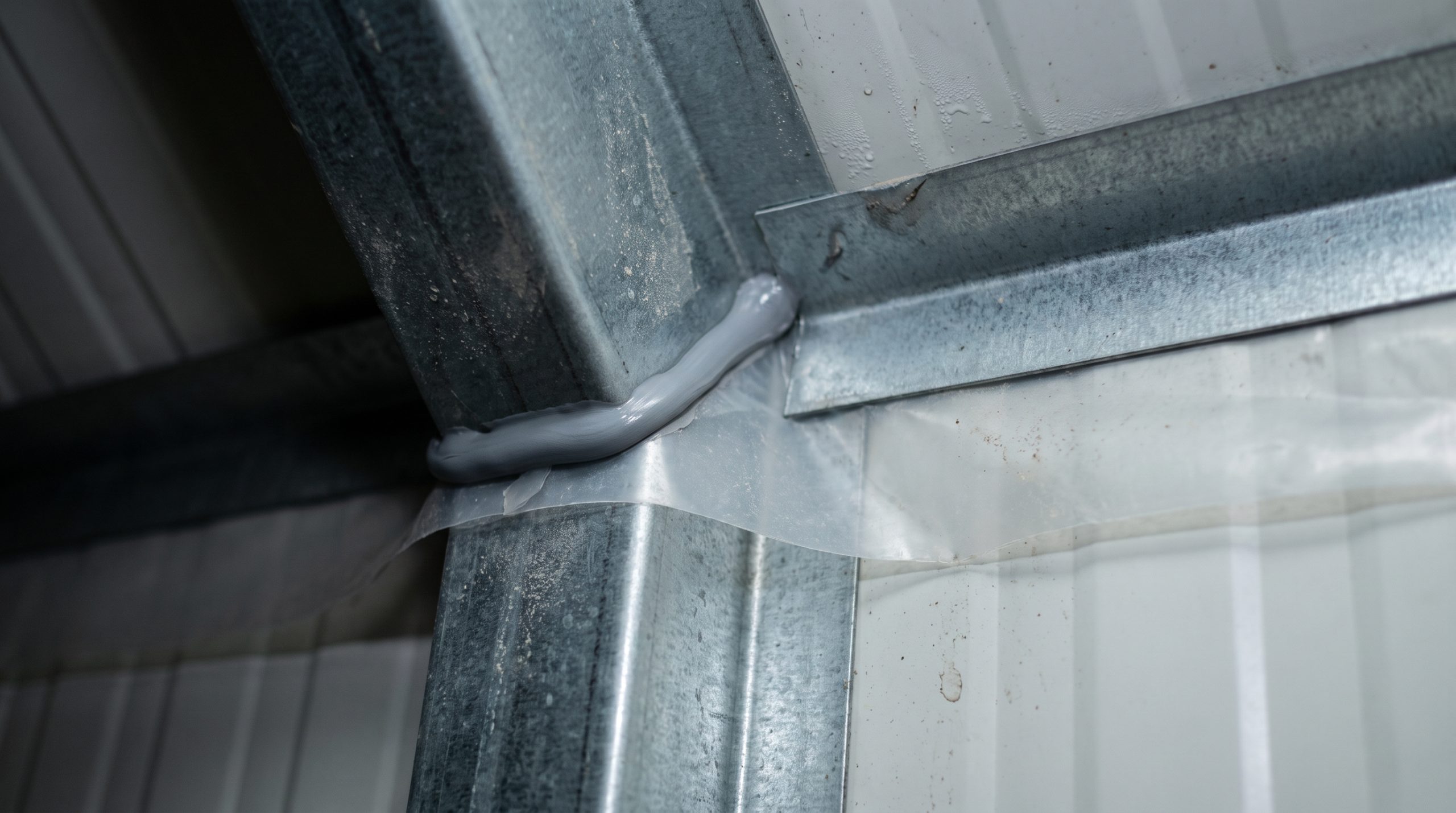
You prevent thermal bridges, air leakage, and condensation by using continuous insulation barriers, airtight joint sealants, and high-quality vapor barriers. To make your poultry house insulation design work effectively, you must eliminate minor leaks and thermal weak spots. Even the thickest insulation will fail if warm, moist air can escape through joints and steel columns.
What Are Thermal Bridges and How Do You Stop Them?
A thermal bridge occurs when highly conductive materials, like steel bolts or frames, bypass your insulation layer and let heat flow directly through your walls.
- Unprotected steel columns conduct heat incredibly fast.
- They create cold spots that cause condensation inside the building.
- You can stop this by using non-conductive thermal breaks at all joints.
Why Is Airtightness Critical for Structural Protection?
Air leakage through small gaps in your wall joints allows moist air to escape, causing mold growth and damaging structural frames. It also makes it difficult to maintain the negative pressure required for tunnel ventilation systems. Think about it: Using high-quality sealants and foam strips along all panel joints locks out draft pathways and keeps your ventilation system efficient.
How Do You Keep Condensation Out of the Frame?
Condensation forms when warm, humid air from inside the house touches cold structural steel or panels. And the best part? By using a continuous vapor barrier on the warm side of your insulation, you block moisture from reaching cold surfaces, preventing rust and mold.
Key Takeaway: Sealing joints and eliminating thermal bridges keeps your structure dry and your ventilation operating at peak efficiency.
| Problem Area | Risk Factor | Prevention Technique | Materials Used | |
|---|---|---|---|---|
| Panel Joints | Air leaks, drafts | Tongue-and-groove locking | PU foam sealant, PVC gaskets | |
| Steel Columns | Thermal bridging | Exterior cladding, thermal breaks | Insulated spacer blocks | |
| Roof Gaps | Condensation, rot | Continuous vapor barrier | PE membrane, joint tape |
Sealing these weak spots protects your investment, keeping moisture out and energy efficiency high.
How Does Insulation Work with Ventilation, Heating and Cooling?
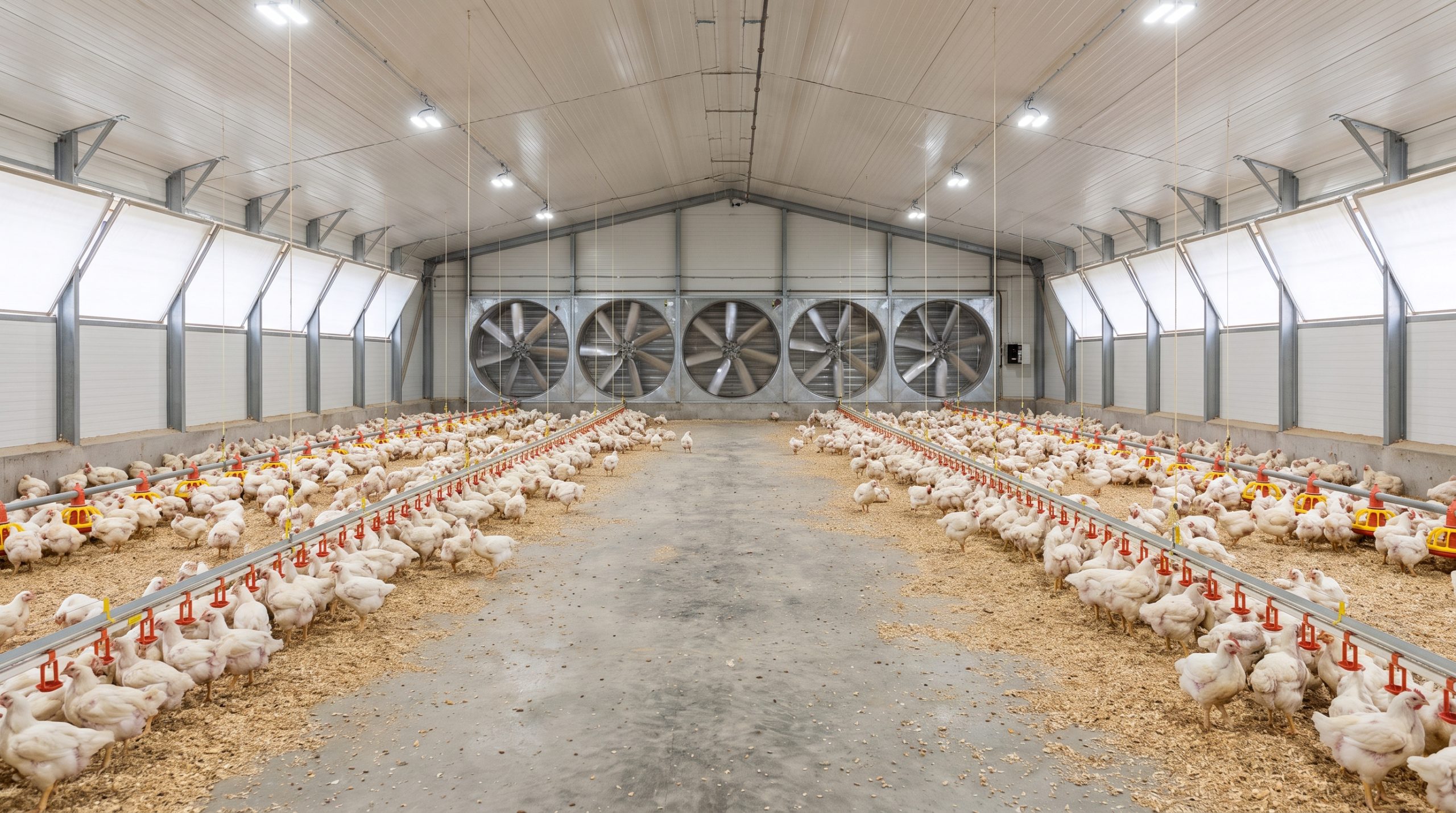
Insulation works alongside ventilation, heating, and cooling systems by maintaining a stable thermal boundary that allows mechanical equipment to control the environment with minimal energy. A high-quality poultry house insulation design acts as the foundation for your ventilation, heating, and cooling systems. Without insulation, these expensive systems must run continuously to fight outdoor weather changes, leading to high utility bills and frequent equipment failures.
Why Is Insulation Essential for Tunnel Ventilation?
Tunnel ventilation relies on high air velocity to create a wind-chill effect that cools your flock during hot summer days.
- Well-insulated walls keep the internal air cool and fresh.
- They ensure uniform wind velocity throughout the building.
- They prevent heat pockets from forming near the back of the house.
How Does Proper Insulation Optimize Heating Efficiency?
During winter or brooding periods, heaters work to keep young chicks warm and comfortable. Insulated walls and ceilings hold this heat inside, allowing your heating systems to cycle off more often, saving fuel. What’s the catch? An airtight building envelope stops warm air from escaping, keeping the floor area warm where your chicks need it most.
What Is the Relationship Between Insulation and Cooling Pads?
Cooling pads add humidity to the incoming air to lower temperatures, but this system only works if the house is sealed and insulated. And the best part? Keeping your insulation dry and intact ensures that cooling pads can lower temperatures evenly without causing damp litter.
Key Takeaway: Combining high-quality insulation with efficient HVAC systems lowers your energy costs while keeping your flock comfortable.
| System | Operational Goal | How Insulation Helps | Direct Benefit | |
|---|---|---|---|---|
| Heating | Maintain brooding temperatures | Retains furnace heat | Slashes LPG/fuel consumption | |
| Tunnel Ventilation | High-speed airflow cooling | Blocks radiant solar heat | Prevents heat stress zones | |
| Evaporative Pads | Lower inlet air temperature | Prevents ambient temperature rise | Increases cooling efficiency |
This perfect balance between structure and mechanics keeps your flock healthy while reducing energy costs.
What Are the Installation and Hygiene Requirements for Insulation?
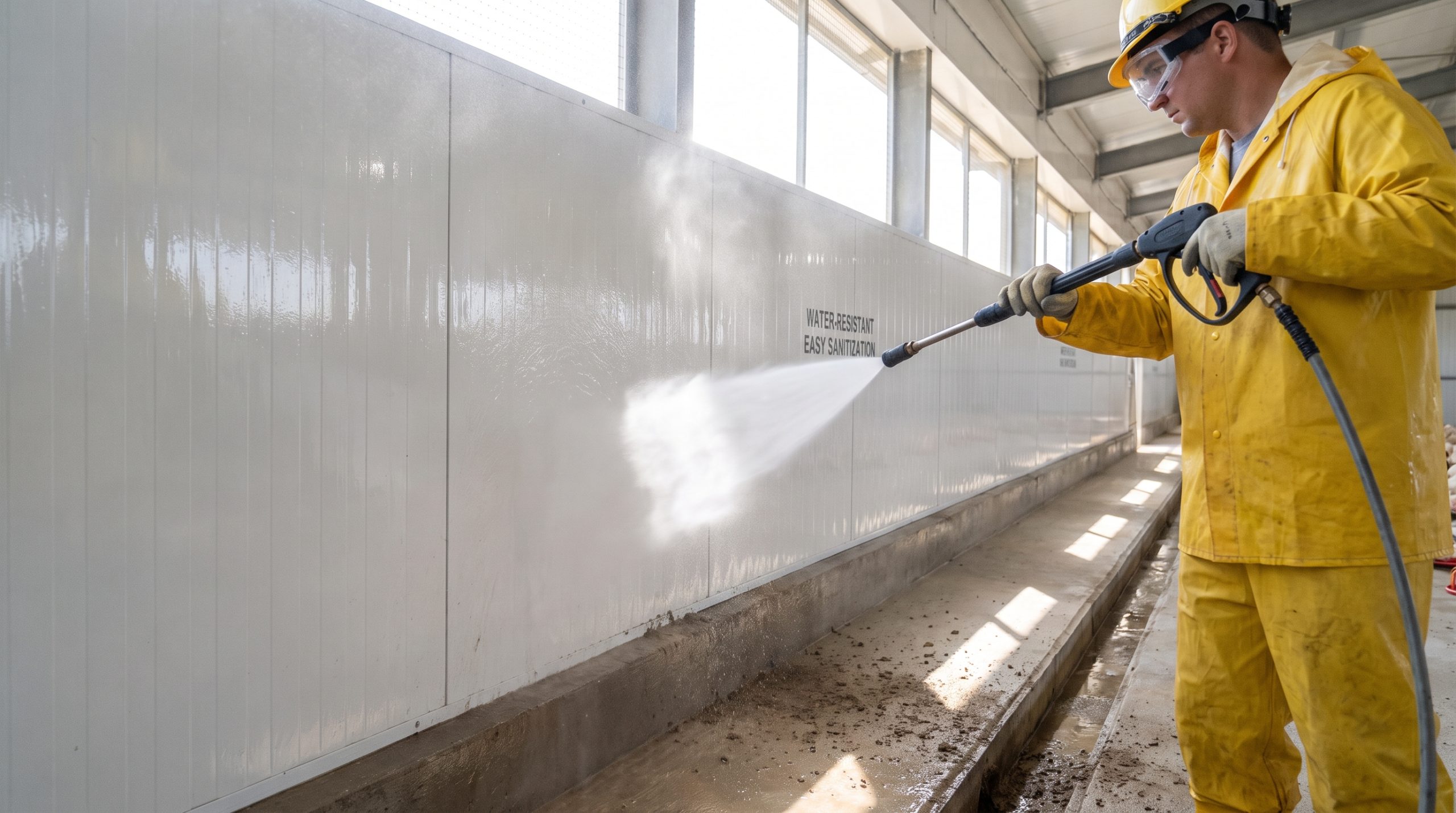
Insulation must be installed using tight-fitting, corrosion-resistant systems that can withstand high-pressure water washing and regular chemical disinfection. For a poultry house insulation design to succeed, it must stand up to the tough daily conditions of commercial farming. The internal surfaces are exposed to corrosive gases, high humidity, and regular deep-cleaning cycles.
How Can You Ensure Fast and Secure Panel Installation?
Using pre-engineered sandwich panels speeds up construction and ensures a consistent, high-quality thermal envelope.
- Lightweight panels reduce the load on your steel framing.
- Standard interlocking joints ensure a perfect, airtight seal.
- Pre-painted steel skins protect the panels from damage during installation.
Why Must Insulation Materials Withstand Heavy Washing?
Between flock cycles, the entire building must be thoroughly cleaned and disinfected to remove pathogens and keep the environment healthy. Think about it: You must use water-resistant panels, such as our high-durability products , to prevent water from penetrating the core during high-pressure washing.
- Surfaces must resist chemical cleaners and acidic sanitizers.
- Materials must not absorb water or warp under pressure.
- Waterproof joints keep the interior framing completely dry.
How Do Cleanable Panels Support Biosecurity Protocols?
Smooth, non-porous walls prevent dust, bacteria, and pests from finding hiding spots, keeping your biosecurity standards high. And the best part? Smooth panel surfaces make cleaning quick and easy, reducing down-time between flocks so you can start your next cycle sooner.
Key Takeaway: Using durable, easy-to-clean insulation panels protects your biosecurity and extends the lifespan of your facility.
| Requirement | Operational Hazard | Ideal Solution | |
|---|---|---|---|
| High-Pressure Washing | Core saturation and rot | Closed-cell PU core panels | |
| Chemical Disinfection | Surface corrosion | Pre-painted galvanized steel skins | |
| Fast Sanitization | Pathogen buildup in joints | PVC joint profiles and sealant caps |
Choosing cleanable, durable materials ensures your facility stays bio-secure and lasts for decades.
How Do You Evaluate Insulation Costs and Supplier Proposals?

You evaluate insulation costs by looking beyond the initial purchase price to consider long-term energy savings, durability, and the completeness of the supplier’s engineering support. When planning your poultry house insulation design, it is important to balance upfront material costs with long-term energy savings. A cheap, low-quality panel might save money today, but it will lead to higher energy bills and maintenance costs down the road.
How Do You Measure the ROI of Premium Insulation?
To calculate the real return on investment (ROI) of your insulation, you must compare the higher initial cost of quality materials against the energy savings and improved flock performance they provide over time.
- High-efficiency panels cut monthly fuel and electricity bills.
- Improved feed conversion rates lead to heavier birds and higher profits.
- Stronger materials last longer, eliminating early replacement costs.
What Should You Look for in a Supplier Proposal?
A complete B2B proposal should offer more than just a price per square meter; it should detail panel performance, technical specs, and installation support. Here is the thing: Check the certified R-values and core density. Confirm that all steel skins feature corrosion-resistant coatings, and ensure the quote includes necessary accessories like flashings, sealants, and fasteners.
How Can Turnkey Engineering Designs Minimize Risks?
Working with a supplier that offers complete engineering and material packages reduces mistakes and keeps your project on track. And the best part? An integrated turnkey solution ensures that every joint, panel, and support column is designed to work together, saving you time and stress.
Key Takeaway: Choosing a supplier based on total value, rather than just the lowest price, ensures a reliable, highly profitable facility.
| Cost Component | Low-Cost Option (e.g., cheap EPS) | Premium Option (e.g., PU Sandwich) | |
|---|---|---|---|
| Upfront Material Cost | Low | Moderate to High | |
| 10-Year Energy Cost | Extremely High (degraded performance) | Low (stable, high efficiency) | |
| Structural Lifespan | Short (prone to rot and pests) | Extremely Long (durable and secure) |
Investing in high-quality materials ensures your farm remains profitable and efficient for years to come.
Conclusion
Managing a modern poultry farm is a constant battle against rising energy costs, unpredictable weather, and tight profit margins. When your buildings suffer from weak insulation, drafts, and moisture damage, your birds suffer, and your profits slip away. But you do not have to settle for inefficient structures that drain your budget.
At Showhoo Building, we provide complete engineering, premium-grade polyurethane sandwich panels, and turnkey construction solutions tailored to your farm’s needs. We believe that sustainable agricultural progress starts with smart, energy-efficient engineering. Let us help you build a highly productive, biosecure facility that protects your flock and maximizes your returns. To take the first step toward a more efficient, high-yield poultry farm, contact us today for a custom quote and design consultation.
Build a Better-Insulated Poultry House—Get a Quote Today !
Email:sales@showhoo.com.cn
Phone/WhatsApp: + 86 186 7895 5927
FAQ
What is the best insulation material for a modern broiler house?
Polyurethane (PU) sandwich panels are the absolute best choice. They offer twice the thermal efficiency of standard materials, provide a complete vapor barrier, and are highly resistant to pests, moisture, and high-pressure washing.
Can I use standard residential insulation inside my poultry farm?
No, you absolutely should not use residential insulation in commercial poultry houses. Residential materials like fiberglass blankets easily absorb water, collapse under high humidity, harbor pests, and cannot withstand heavy sanitation washing.
How do I know if my existing poultry house has poor insulation?
You can identify poor insulation by monitoring uneven indoor temperatures and watching for condensation on the ceiling. If you notice wet litter, high heating bills, or dramatic temperature swings inside during hot days, your insulation is failing.
Is roof insulation more important than wall insulation in hot climates?
Yes, roof insulation is much more critical in hot regions. Since the roof receives direct, intense solar radiation all day, a high roof R-value is essential to prevent radiant heat from penetrating the ceiling and stressing your birds.
Will high-quality insulation help reduce my ventilation energy bills?
Yes, premium insulation will significantly lower your ventilation and heating energy costs. It maintains a tight thermal boundary, allowing your exhaust fans and heaters to run efficiently without wasting energy fighting external air leaks.