
Selecting high-performance cladding elements is the ultimate way to protect your industrial warehouse because they provide an impenetrable barrier against structural wear, extreme weather, and thermal inefficiency. Building a large-scale industrial facility involves substantial capital investment, but a single weakness in structural insulation or weatherproofing can ruin valuable inventory and disrupt operations. Imagine watching your hard-earned profits vanish due to structural leaks, soaring energy bills, or mold outbreaks caused by cheap, substandard building materials. Fortunately, choosing premium roof and wall panels engineered for modern steel structure warehouses offers complete protection and long-term structural integrity.
Why choose these roof and wall panels?
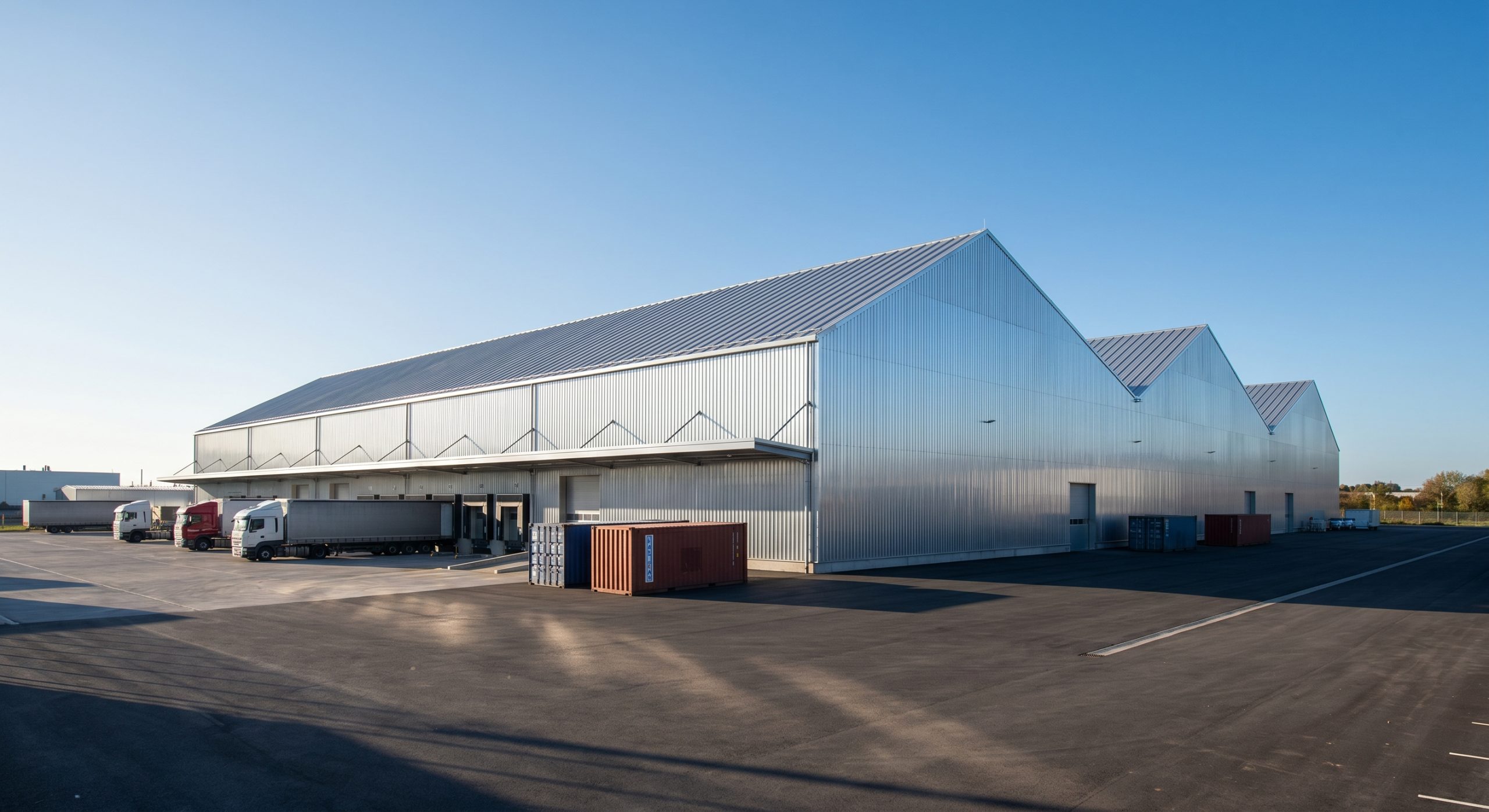
When constructing a modern industrial facility, selecting premium roof and wall panels is crucial for long-term reliability. These specialized cladding materials act as the primary shield for your steel structure warehouse. They keep out moisture, wind, and heat while ensuring structural longevity.
Choosing high-grade materials dramatically reduces ongoing maintenance costs. It also ensures that your physical assets and sensitive machinery remain perfectly protected year-round. Investing in quality upfront protects your bottom line for decades to come.
What is the risk of cheap warehouse panels?
Let’s face it: substandard materials will deteriorate quickly under extreme weather conditions, leading to costly structural repairs. Rust, cracks, and insulation failure can rapidly compromise your entire inventory.
- Accelerated rusting of structural steel frames.
- Severe water damage to stored machinery.
- Skyrocketing utility costs from compromised insulation.
How do premium panels secure your assets?
Think about it: high-quality materials deliver superior structural strength and exceptional weatherproofing. They are lightweight, highly durable, and custom-designed for quick assembly.
- Engineered protection against Category 5 hurricanes.
- Exceptional thermal resistance to lower operational expenses.
- Vibrant, long-lasting aesthetic finishes.
Key Takeaway: Premium cladding systems ensure structural safety while minimizing operating overhead.
| Panel Parameter | Substandard Cladding | Premium Panels | |
|---|---|---|---|
| Lifespan | 5-10 Years | 30+ Years | |
| Maintenance | High & Frequent | Minimal | |
| Thermal Value | Poor / None | Outstanding |
Premium panels outperform standard solutions across all key durability and thermal efficiency metrics.
What makes roof and wall panels secure?
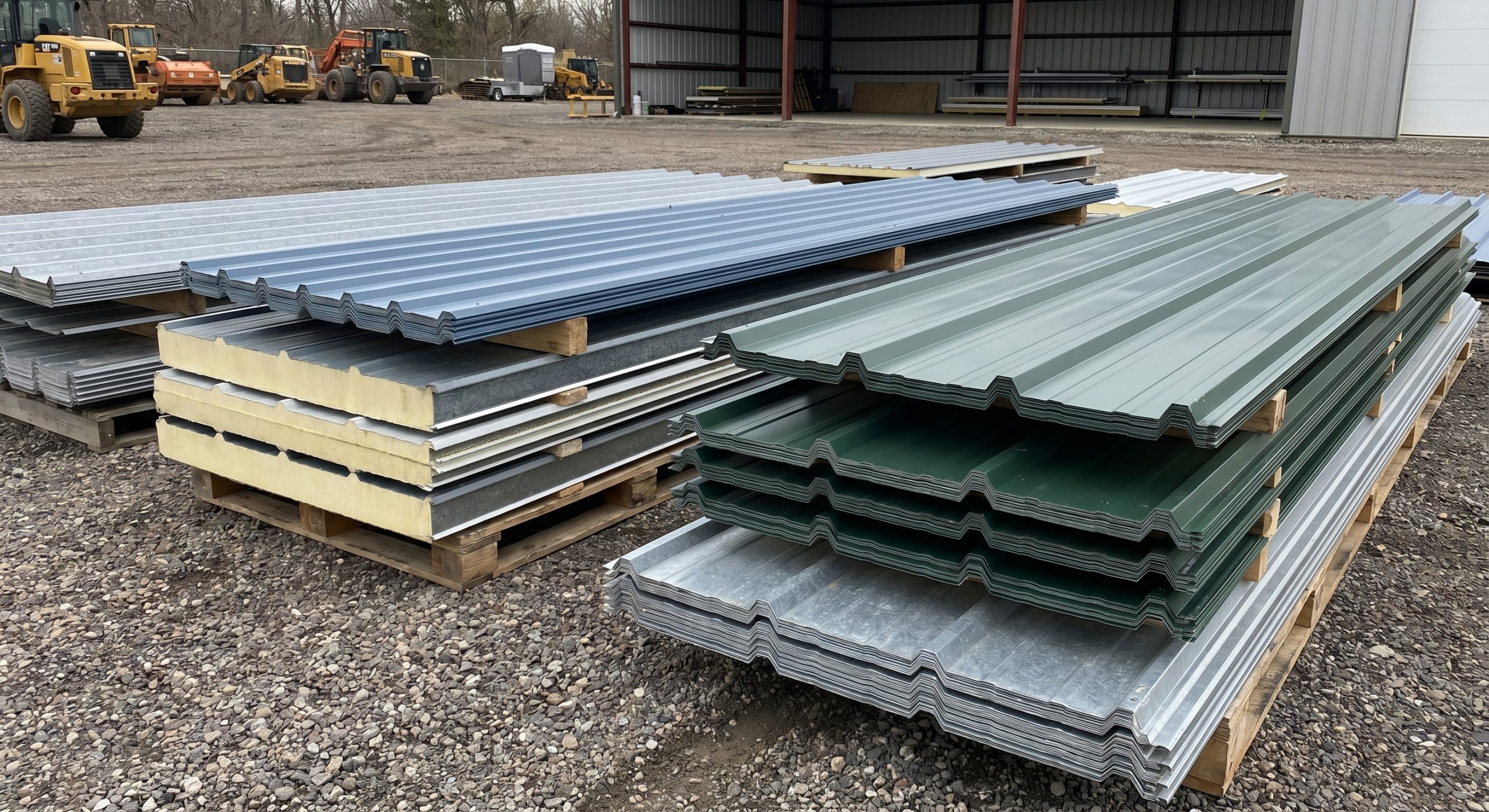
Warehouse roofing systems bear the brunt of harsh solar radiation, torrential rain, and heavy snow loads. Robust steel roof sheets are engineered specifically to handle these extreme environmental challenges. They provide superior load-bearing capacity and leak-proof security.
The specialized locking mechanisms on modern panels prevent any water ingress. This ensures that your facility remains dry and operational even during historic storms. Let’s explore the key design elements that make these systems so effective.
Are standing seam roofs actually leak-proof?
Here is why: standing seam roof profiles hide fasteners beneath the steel skin to eliminate vulnerable penetration points. This advanced design ensures a completely continuous barrier against rainfall.
- Concealed fasteners prevent rust at connection points.
- Raised seams lift water flow away from joints.
- Thermal expansion joints allow natural shifting without damage.
Do they handle heavy snow and wind loads?
Let’s get real: premium steel profiles feature optimized rib heights that distribute heavy external loads evenly across the structure. This structural ribbing prevents bending or collapse under extreme weather conditions.
- High-tensile steel core ensures outstanding structural strength.
- Deformation-resistant profiles maintain architectural shape.
- Engineered to meet strict local building wind codes.
Key Takeaway: Concealed-fastener steel roofing offers the ultimate protection against water penetration and mechanical loads.
| Roof System | Joint Type | Wind Resistance | Water Barrier | |
|---|---|---|---|---|
| Screw-Down | Exposed Screws | Medium | Moderate | |
| Standing Seam | Concealed Locking | Extremely High | 100% Waterproof |
Opting for standing seam profiles minimizes the risk of leaks over the building’s lifecycle.
Protect Your Warehouse with Premium Roof and Wall Panels Today
Email:sales@showhoo.com.cn
Phone/WhatsApp: + 86 186 7895 5927
How do roof and wall panels shield walls?
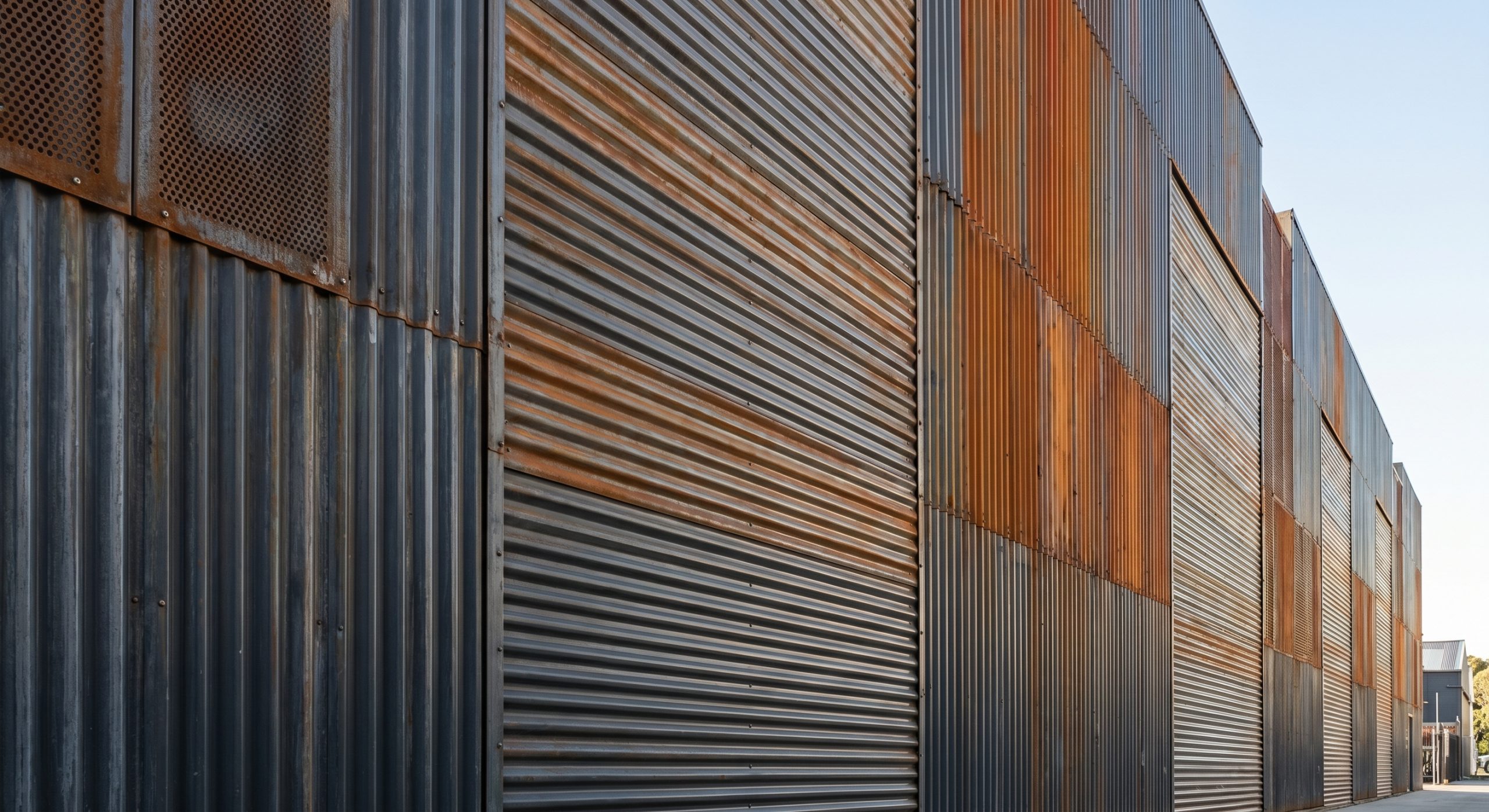
Wall envelopes need to balance visual appeal with rugged physical protection. High-durability roof and wall panels provide your steel structure warehouse with an attractive, modern exterior. They shield the internal steel framework from moisture, corrosion, and physical impact.
Modern exterior systems are lightweight, which reduces structural loads on the primary frame. This allows you to construct faster while keeping foundation costs low. Let’s break down how modern design enhances wall protection.
How do sandwich wall panels outperform concrete?
Think about it: sandwich panels combine structural strength, insulation, and aesthetic finishing into a single, pre-engineered unit. Concrete blocks require tedious multi-step installations that extend your project timeline.
- Up to 50% faster installation times.
- Built-in insulation layer eliminates secondary insulation steps.
- Extremely lightweight design lowers foundation costs.
Can wall systems resist heavy physical impact?
Here is the truth: engineered steel skins utilize thick outer gauges to absorb physical impacts from warehouse vehicles and tools. Their multi-layered design distributes impact forces safely across the frame.
- High-yield steel skins resist denting.
- Flexible core materials absorb impact energy.
- Quick-replace interlocking designs simplify repairs.
Key Takeaway: Lightweight wall systems speed up construction while delivering superior insulation and impact resistance.
| Wall Material | Installation Speed | Built-in Insulation | Foundation Load | |
|---|---|---|---|---|
| Concrete Block | Very Slow | No | Heavy | |
| Sandwich Panel | Extremely Fast | Yes | Very Light |
Multi-layer steel panels provide a faster, more energy-efficient alternative to traditional concrete walls.
Which roof and wall panels save energy?
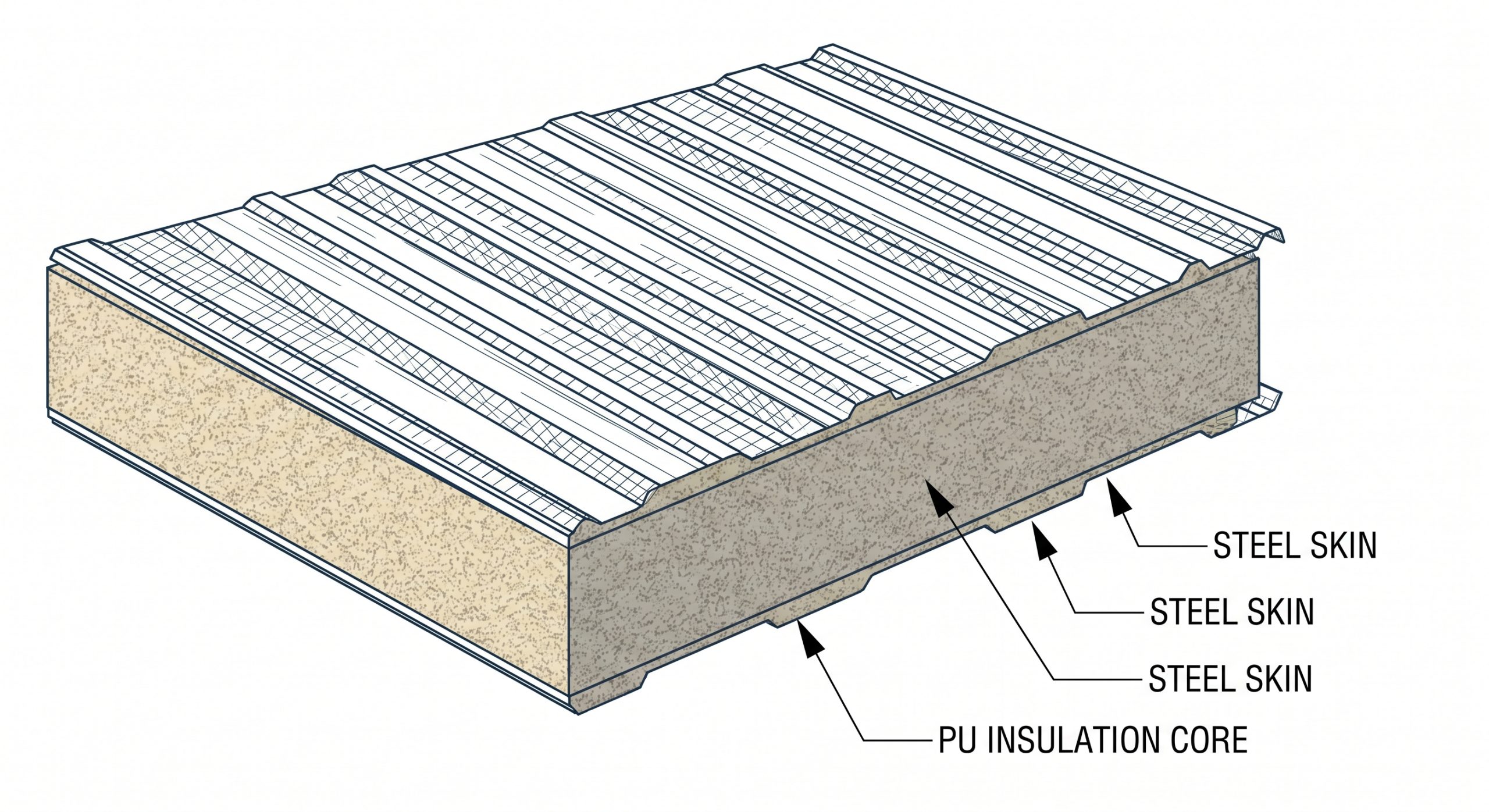
Rising energy prices make operational thermal efficiency a top priority for warehouse managers. Specialized insulated systems are designed to minimize heat transfer through the building envelope. This keeps your indoor climate stable while lowering heating and cooling expenses.
The choice of core insulation material determines the overall thermal performance of your warehouse walls. Different materials offer unique advantages in fire safety, thermal resistance, and acoustic control. Let’s examine the options.
Why is polyurethane the king of insulation?
Here is why: polyurethane core material provides the highest thermal resistance value per inch of thickness. This exceptional efficiency lets you use thinner panels to achieve outstanding R-values.
- Highest thermal resistance (R-value) in the industry.
- Closed-cell structure blocks air and moisture infiltration.
- Strong, rigid adhesion to outer steel skins.
Do you need fire-rated rock wool panels?
Let’s face it: warehouses storing flammable materials require maximum fire protection. Rock wool core panels are completely non-combustible and can withstand extreme temperatures for several hours.
- Class A fire rating for ultimate safety.
- Outstanding acoustic sound dampening properties.
- Highly breathable material prevents vapor trapping.
Key Takeaway: Choosing the right core insulation material directly impacts your operational costs and facility safety.
| Insulation Core | R-Value Per Inch | Fire Resistance | Acoustic Performance | |
|---|---|---|---|---|
| Polyurethane (PU/PIR) | Excellent (R-7.2) | Good | Moderate | |
| Rock Wool | Good (R-3.8) | Class A Non-combustible | Excellent | |
| EPS (Polystyrene) | Moderate (R-4.0) | Standard | Low |
Align your core insulation selection with your specific energy saving and fire protection requirements.
Can roof and wall panels lower heating bills?
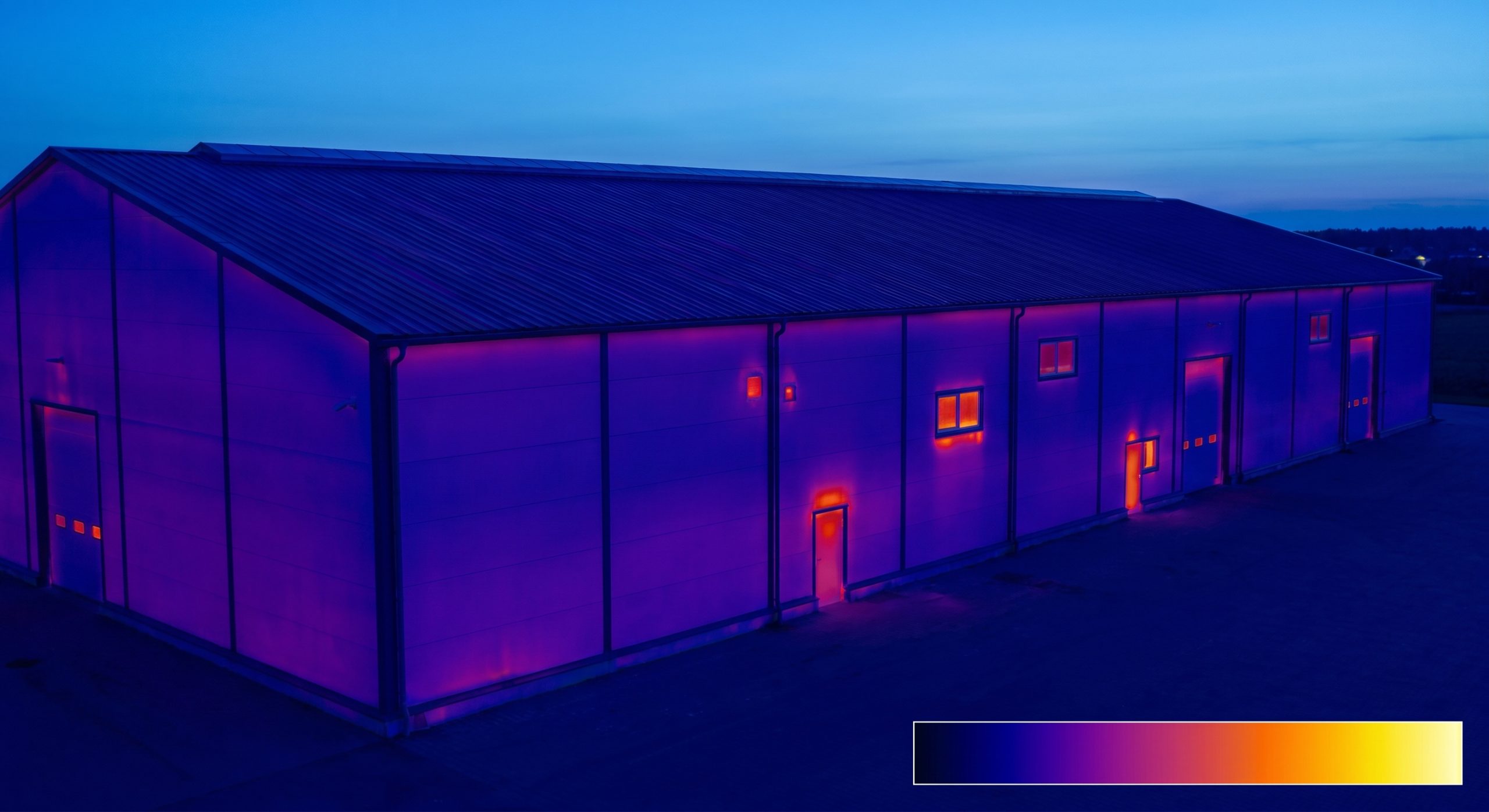
Controlling operational costs requires reducing energy leaks throughout the warehouse envelope. Installing high-performance roof and wall panels seals your facility and stops expensive climate-controlled air from escaping. This ensures complete environmental control.
Thermal bridging can silently drain your energy budget if not addressed. Let’s look at how advanced joint designs and insulated panels combat energy loss.
What is thermal bridging and how do we stop it?
Believe it or not: thermal bridges occur when metal components conduct heat directly through the insulated envelope. Advanced tongue-and-groove joints create a continuous thermal barrier to stop this heat loss.
- Interlocking joint profiles eliminate air gaps.
- Integrated thermal breaks prevent metal-to-metal contact.
- Maintains consistent indoor temperatures throughout the year.
How much can you save on monthly utility costs?
Here is the math: upgrading to tightly sealed insulated panels can reduce heating and cooling costs by up to forty percent. This dramatic savings ensures a fast return on your structural investment.
- Reduces HVAC workload to extend equipment lifespan.
- Protects temperature-sensitive goods from thermal spikes.
- Lowers carbon footprint to meet local green building codes.
Key Takeaway: Continuous insulation and thermal-break joints prevent energy loss to deliver substantial utility savings.
| Insulation Standard | Daily Energy Leakage | Relative Utility Cost | |
|---|---|---|---|
| Traditional Single-Skin | High | 100% (Baseline) | |
| Advanced Thermal Break | Near Zero | 60% (40% Savings) |
Sealing thermal bridges is the most cost-effective way to lower seasonal heating and cooling expenses.
Are roof and wall panels highly durable?
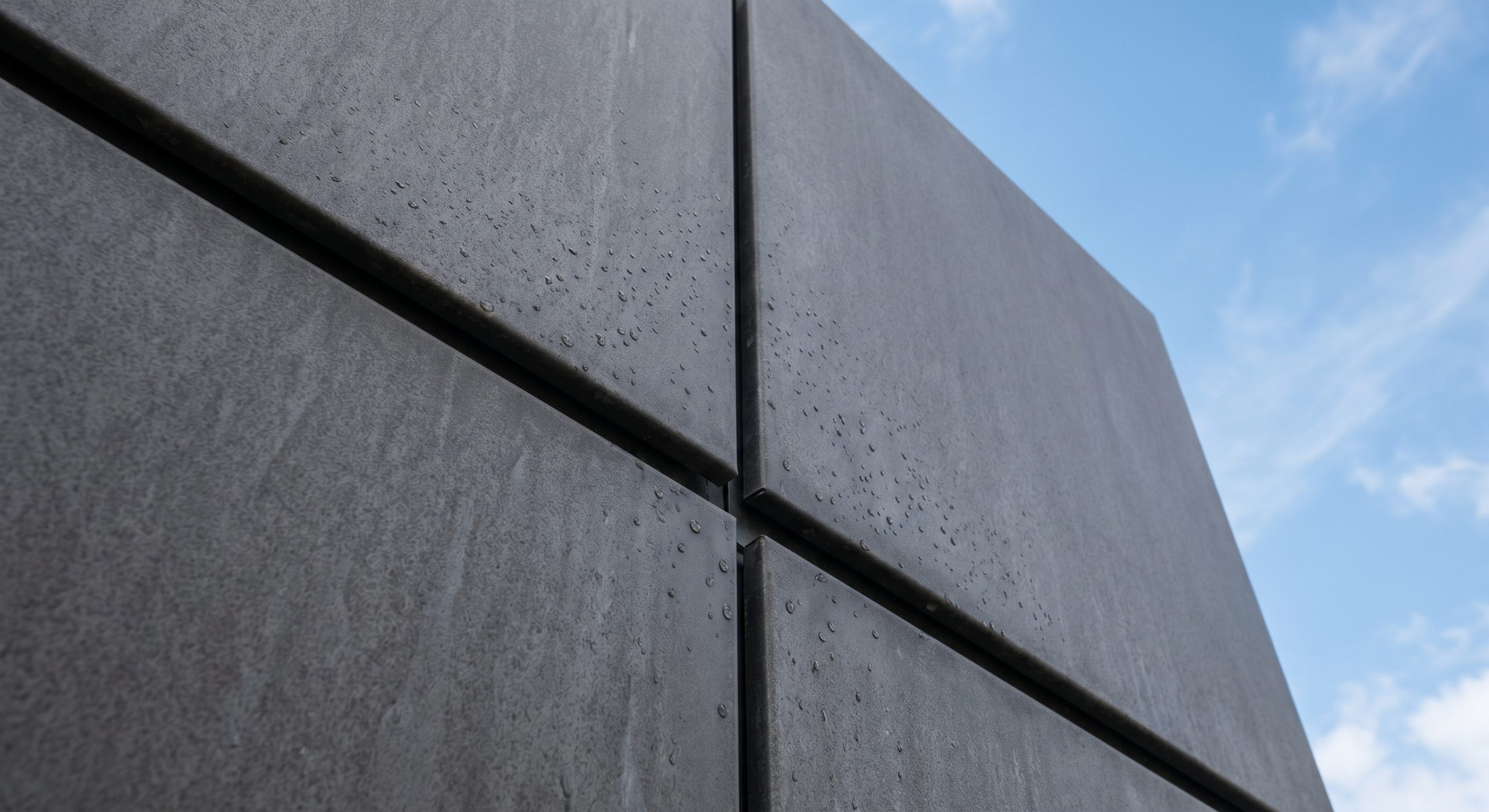
Industrial environments subject building materials to corrosive chemical fumes, high humidity, and intense ultraviolet light. Steel building panels require advanced, multi-layer surface protection to prevent rust and degradation. This specialized protection ensures a long lifespan.
Pre-painted and galvanized finishes provide dual-layer sacrificial protection to the steel core. This ensures that the panels maintain their structural integrity and appearance for decades without costly maintenance.
Why is hot-dip galvanization essential?
Here is why: hot-dip galvanization coats the steel substrate with a protective zinc layer that heals itself if scratched. This prevents rust from spreading underneath the outer paint coat.
- Sacrificial zinc coating blocks oxygen and water.
- Self-healing properties protect minor surface scratches.
- Extends panel service life to over thirty years.
Which paint coatings resist sun damage best?
Think about it: fluoropolymer and high-durability polyester coatings offer the best resistance to intense UV radiation and color fading. They keep your warehouse looking brand new even after decades under the sun.
- Fluoropolymer (PVDF) resists extreme chalking and fading.
- High-Durability Polyester (HDP) offers excellent cost-to-performance.
- Anti-corrosive primer coats prevent paint peeling.
Key Takeaway: Combining galvanized steel with premium paint systems delivers unbeatable rust resistance and color retention.
| Coating Type | UV Resistance | Corrosion Protection | Maintenance Cycle | |
|---|---|---|---|---|
| Standard Polyester (PE) | Moderate | Standard | 5-7 Years | |
| High-Durability (HDP) | Excellent | High | 12-15 Years | |
| Fluoropolymer (PVDF) | Superior | Extremely High | 20+ Years |
Selecting a PVDF coating is highly recommended for coastal or high-UV industrial areas.
Protect Your Warehouse with Premium Roof and Wall Panels Today
Email:sales@showhoo.com.cn
Phone/WhatsApp: + 86 186 7895 5927
How are roof and wall panels engineered?
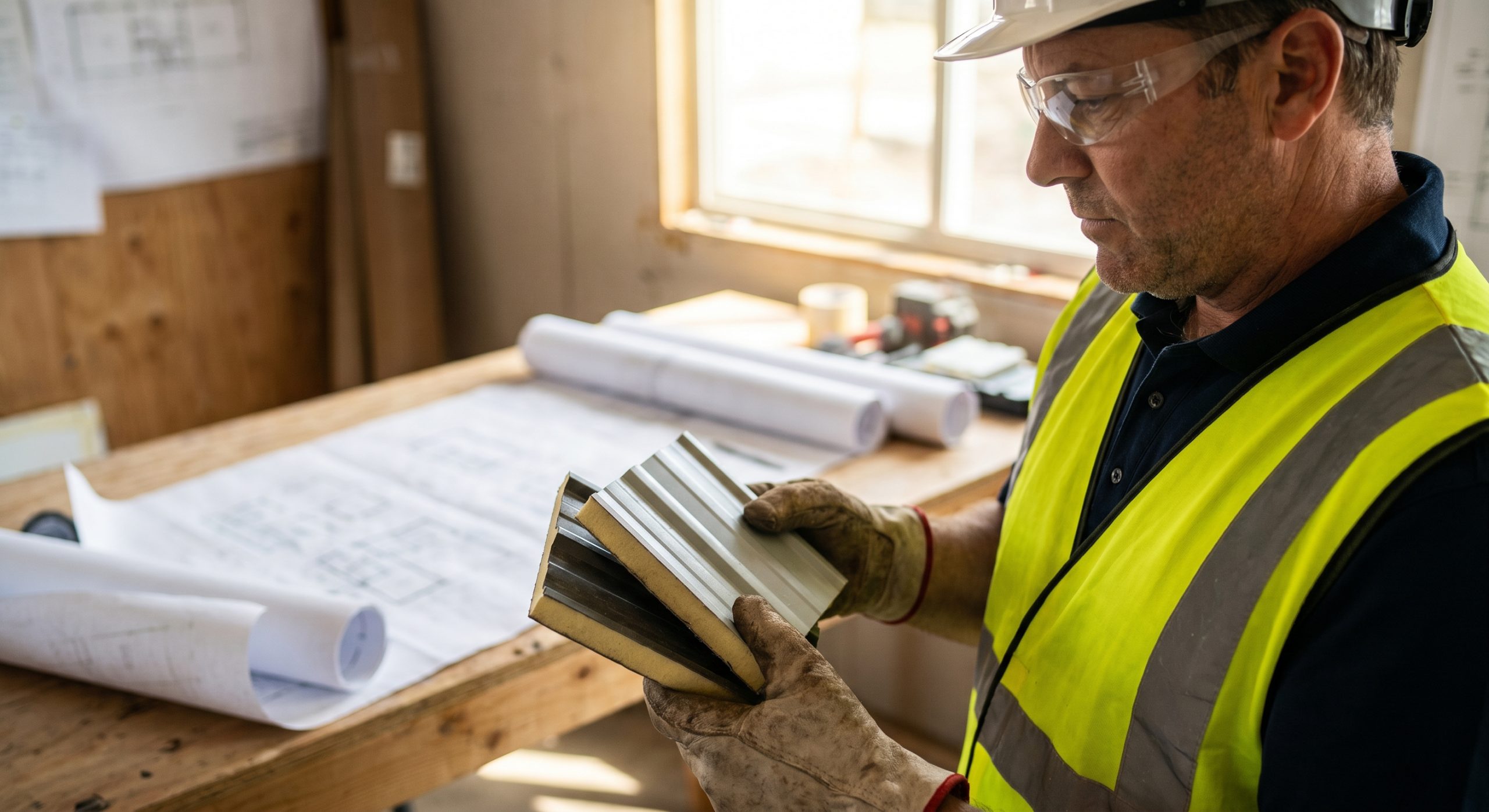
High-performance engineering ensures that modern roof and wall panels handle extreme mechanical stresses with ease. Every element of the panel profile is designed to optimize load distribution and water shedding. This meticulous design guarantees reliable operation.
Standard panel thicknesses range from fifty millimeters to two hundred millimeters, allowing for precise customization based on your local climate. Let’s look at how detailed material engineering delivers superior performance.
What is the optimal steel skin thickness?
Let’s face it: using the correct steel skin thickness prevents panel flexing and structural weakness. Standard industrial applications typically utilize steel thicknesses ranging from 0.4mm to 0.6mm.
- 0.4mm skins are cost-effective for indoor partitions.
- 0.5mm skins offer the perfect balance for exterior walls.
- 0.6mm skins provide heavy-duty security for roof profiles.
How do joint profiles prevent moisture?
Here is the secret: interlocking male-female joint designs prevent water from creeping inward via capillary action. This ensures that your insulation core remains completely dry.
- Male-female interlocking profiles seal tightly.
- Factory-applied gaskets block water infiltration.
- Capillary grooves drain away trapped moisture.
Key Takeaway: Matching steel gauge and joint design to environmental demands prevents structural failure.
| Steel Thickness | Structural Rigidity | Common Application | Cost Profile | |
|---|---|---|---|---|
| 0.4 mm | Moderate | Indoor Partitions | Economical | |
| 0.5 mm | High | Standard Exterior Walls | Balanced | |
| 0.6 mm | Very High | Heavy-Load Roofs | Premium |
Choose 0.5mm to 0.6mm steel skins for heavy-duty exterior applications to ensure robust impact protection.
How to install roof and wall panels fast?
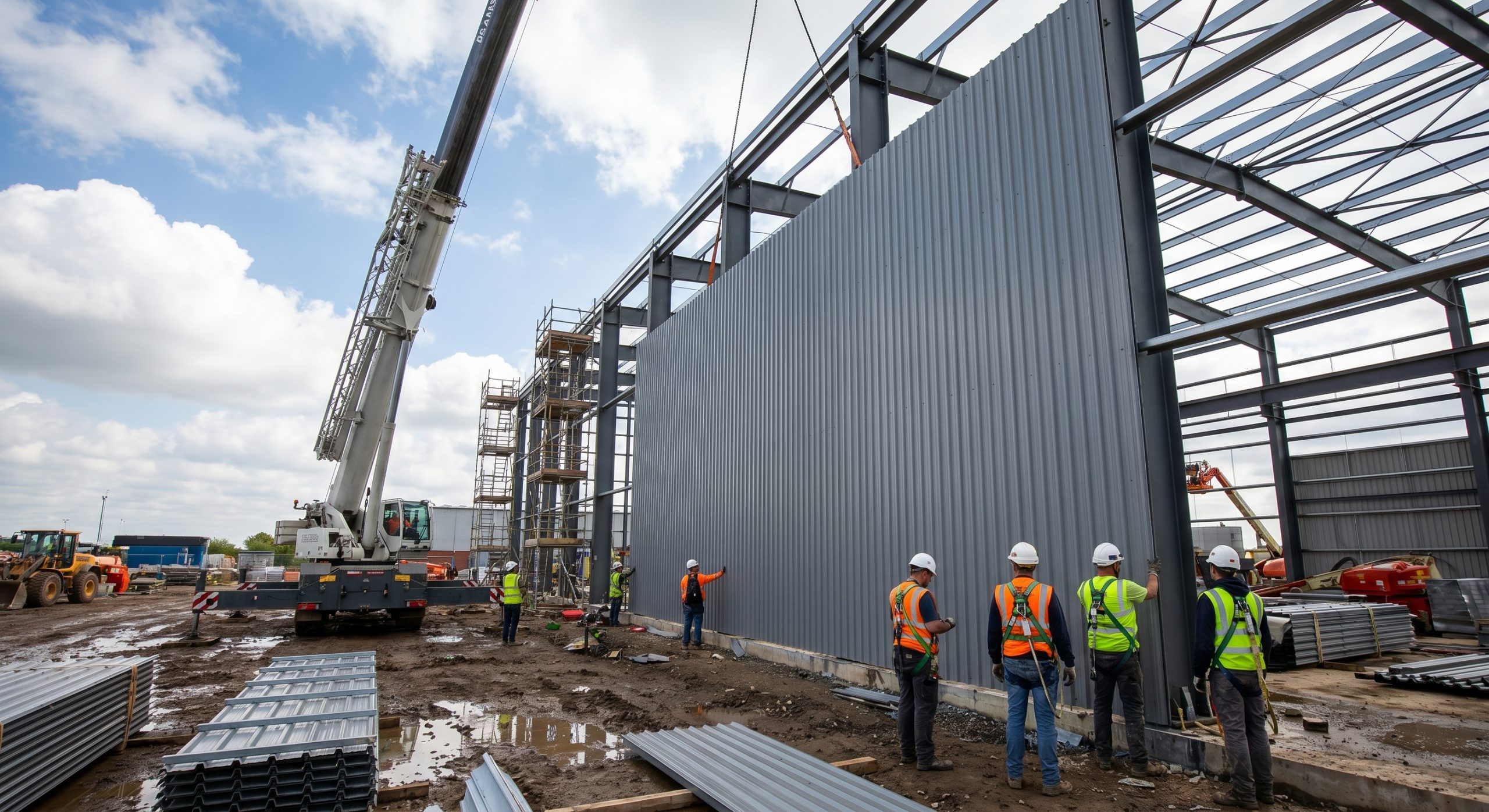
Long construction delays directly delay your operational launch and hurt your overall project profitability. Pre-engineered steel building panels are specifically designed for rapid, straightforward installation on steel frames. This minimizes labor costs and reduces on-site errors.
The lightweight, interlocking design allows small crews to enclose large warehouse areas in record time. Let’s explore the key installation steps that speed up construction.
What tools make installation efficient?
Here is why: specialized lifting equipment and precision fastening systems eliminate guesswork and speed up material handling. Using these tools guarantees a perfect, airtight seal across your building envelope.
- Vacuum lifters protect panel finishes during installation.
- Self-drilling screws reduce fastening time by half.
- Laser alignment tools ensure perfectly straight walls.
How does panel design reduce site labor?
Think about it: pre-fabricated, modular components arrive on-site cut to precise lengths to eliminate waste and field modifications. This plug-and-play assembly process reduces required labor hours.
- Pre-cut lengths eliminate field trimming.
- Tongue-and-groove joints slide easily into place.
- All-weather installation prevents rainy-day shutdowns.
Key Takeaway: Modular panel design simplifies on-site assembly to slash overall labor costs.
| Installation Method | Average Crew Size | Enclosure Rate (Daily) | |
|---|---|---|---|
| Brick / Masonry | 8-10 Workers | 50 Square Meters | |
| Prefabricated Panels | 3-4 Workers | 250+ Square Meters |
Modular panels install up to five times faster than traditional masonry systems.
Which roof and wall panels fit your needs?
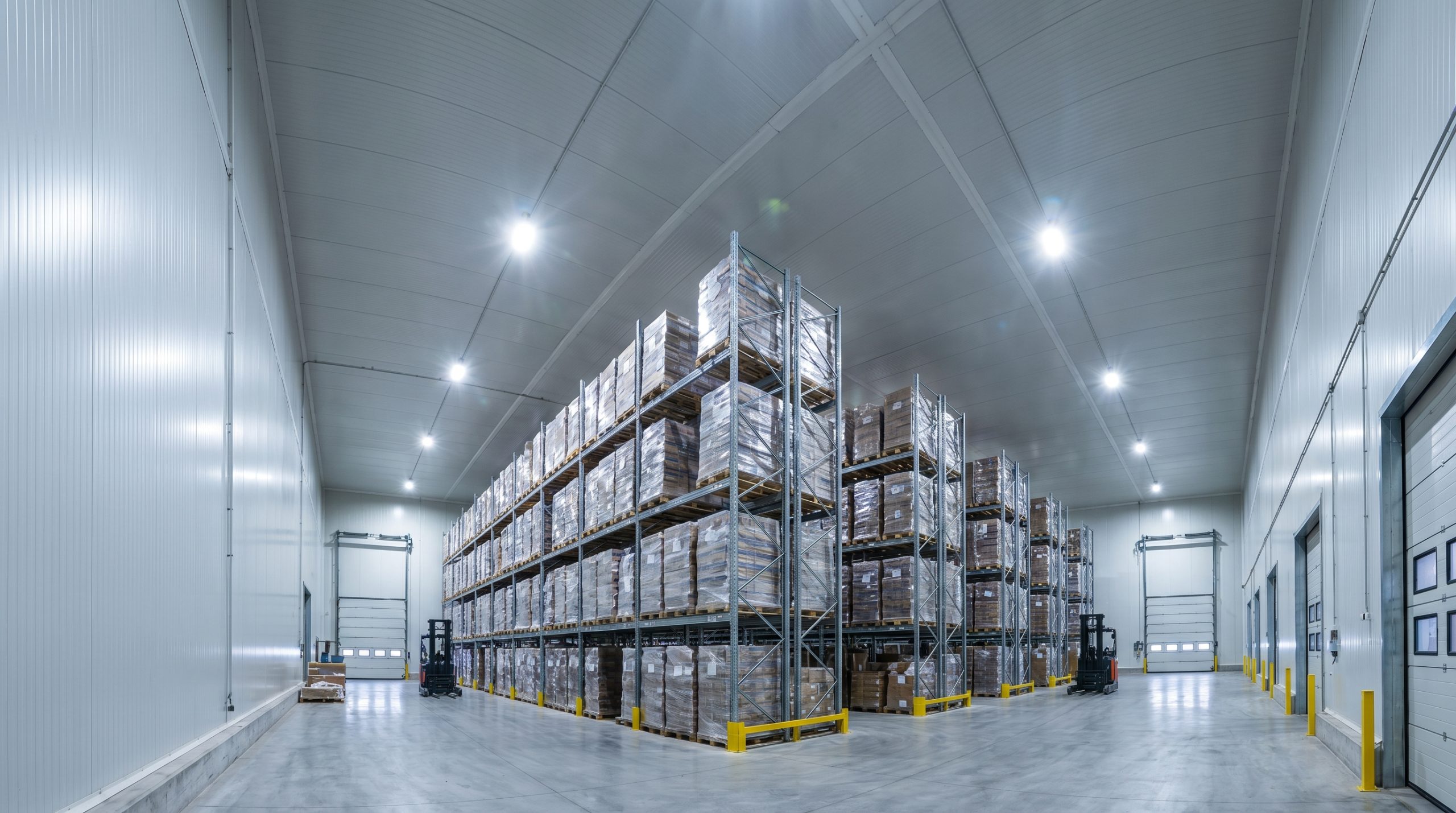
Selecting the perfect cladding system requires careful assessment of your specific warehouse application and local weather. High-performance roof and wall panels must be custom-configured to handle unique temperature, humidity, and fire safety requirements. This tailored approach ensures optimal results.
We have compiled answers to the most common questions warehouse planners ask during the material selection process. These direct insights will help you make a confident, well-informed purchasing decision.
Can I customize the color and pattern of panels?
Absolutely: you can customize your building panels with over twenty standard colors, custom color matching, and unique textures like wood grains. This customization lets you align the warehouse exterior perfectly with your corporate branding.
- Over twenty standard color palettes available.
- Custom wood grain and textured finishes.
- UV-resistant paint options prevent color fading.
What’s the best core material for cold storage?
Here is the truth: polyurethane (PU/PIR) is the absolute best insulation core for cold storage warehouses due to its superior thermal efficiency and closed-cell moisture resistance. It keeps operating temperatures stable while minimizing compressor wear.
- Outstanding R-values preserve cold temperatures.
- Water-resistant core prevents frost accumulation.
- Thicker configurations up to 200mm available.
How do I know if I need rock wool instead of PU?
It is simple: you should choose rock wool core panels if your warehouse stores highly flammable materials or requires a strict fire-rated safety barrier. Rock wool offers unparalleled fire resistance and outstanding sound dampening properties.
- Inorganic fibers resist combustion completely.
- Perfect for acoustic-dampening requirements.
- Ideal for manufacturing areas with high heat outputs.
Key Takeaway: Matching your insulation core to your warehouse’s specific operational environment maximizes safety and efficiency.
Ready for premium roof and wall panels?
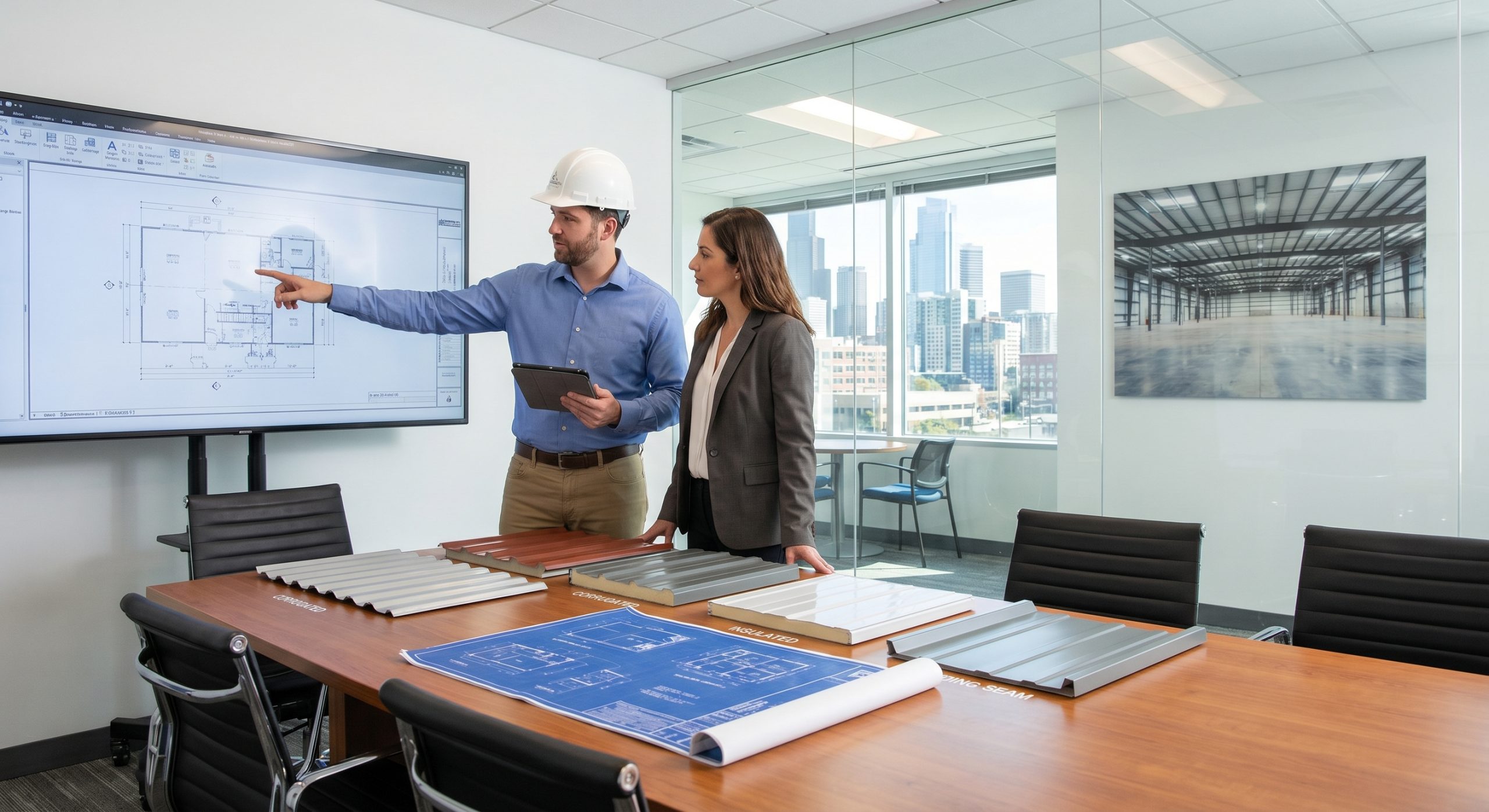
Securing your inventory, lowering energy costs, and ensuring long-term structural durability all depend on choosing premium cladding systems. Investing in the right materials today saves you from expensive structural repairs and skyrocketing energy bills tomorrow.
Showhoo specializes in providing high-quality, pre-engineered solutions tailored specifically to your unique industrial construction requirements. Our team of experienced engineering specialists is ready to guide you from design to final on-site installation.
What can Showhoo do for your construction project?
Look no further: Showhoo delivers complete, customized structural systems engineered to your precise environmental conditions and architectural preferences. We provide end-to-end technical support to ensure your building project runs seamlessly.
- Precision custom engineering for perfect on-site fit.
- Comprehensive material selection guidance and advice.
- Direct manufacturer-to-site shipping for maximum cost savings.
How do you get a custom quote for your warehouse?
Don’t wait: getting started is simple and hassle-free. To protect your valuable industrial investment and build a highly energy-efficient facility, contact us today for a free technical consultation.
- Free structural engineering consultation.
- Highly accurate, transparent cost estimates.
- Fast, reliable global shipping schedules.
Key Takeaway: Partnering with Showhoo delivers premium quality products, expert engineering, and unmatched long-term value.
| Project Phase | Service Provided by Showhoo | Your Value Benefit | |
|---|---|---|---|
| Design & Planning | Custom Engineering & Calculations | Zero Structural Errors | |
| Fabrication | Premium Manufacturing Standards | Exceptional Durability | |
| Logistics | Direct Factory-to-Site Shipping | Lower Overall Costs |
Partnering with a dedicated manufacturer ensures seamless coordination and lower construction costs. Together, we build the resilient, energy-efficient spaces that power tomorrow’s global supply chain.
Protect Your Warehouse with Premium Roof and Wall Panels Today
Email:sales@showhoo.com.cn
Phone/WhatsApp: + 86 186 7895 5927