
A modern steel framing system delivers better construction in 2026by replacing unstable organic timber with high-precision, cold-formed steel profiles that ensure lifetime structural integrity. Traditional building projects are often plagued by skyrocketing timber costs, warped joists, and unpredictable structural failures that blow budgets out of proportion. You watch in frustration as moisture causes wood rot, mold develops behind drywall, and termites compromise the structural core of your building. Fortunately, transitioning to metal frame construction eliminates these material hazards completely while accelerating your project timelines.
What is metal frame construction?
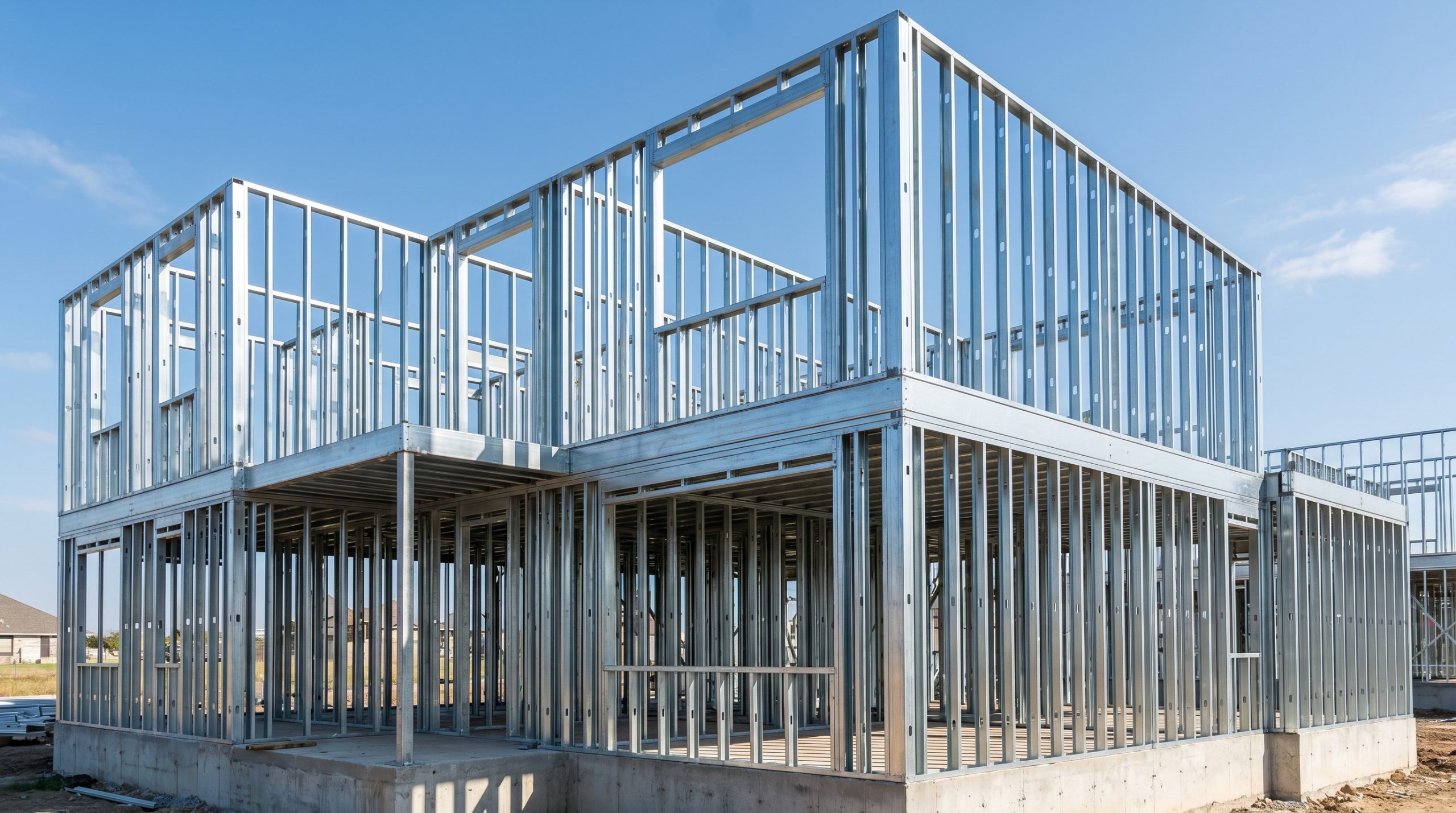
What is metal frame construction? It is an advanced structural engineering method that uses cold-formed steel profiles to build durable load-bearing building skeletons. This method is rapidly replacing traditional wood framing due to its physical consistency and long-term durability. You will see that steel components do not warp, shrink, or split over decades of service.
This system is engineered for maximum performance under extreme environments. It guarantees that your walls remain perfectly straight and your structures remain perfectly plumb.
Core Definition of Cold-Formed Steel Systems
When you build with cold-formed steel, you utilize steel sheets rolled at room temperature to increase yield strength. Look: this mechanical process changes the structural properties of raw steel, making it incredibly light yet strong. You will enjoy components manufactured to exact tolerances of less than a millimeter.
This engineered precision delivers clear advantages:
- Zero moisture retention or shrinking.
- Flawless compatibility with drywall.
- Rapid structural assembly.
Structural Roles of Studs, Tracks, and Joists
You will find that a steel skeleton relies on a synchronized grid of vertical studs, horizontal tracks, and structural joists. But that’s not all: if you do not understand how these components interact, you risk compromising the structural load paths. Vertical studs bear the primary vertical loads, while tracks anchor them to concrete floors.
Manufacturing and the Roll-Forming Process
Automated roll-forming machines transform raw galvanized steel coils into finished profiles with high precision. You can upload CAD designs directly to these computerized systems to pre-punch service holes before delivery. This completely eliminates on-site cutting and speeds up electrical routing.
| Component | Raw Material | Common Thickness | Primary Application | |
|---|---|---|---|---|
| CFS Studs | Galvanized Steel | 0.8mm to 2.0mm | Vertical Load-Bearing Walls | |
| Tracks | Zinc-Coated Steel | 1.0mm to 2.5mm | Floor & Ceiling Anchors | |
| Joists | High-Tensile Steel | 1.2mm to 3.0mm | Roof & Floor Spans |
This data highlights why modern builders are shifting away from timber toward highly calibrated steel profiles.
Key Takeaway: Understanding cold-formed components allows you to pre-plan mechanical services, saving you massive amounts of on-site labor and eliminating errors.
Why select metal frame construction?
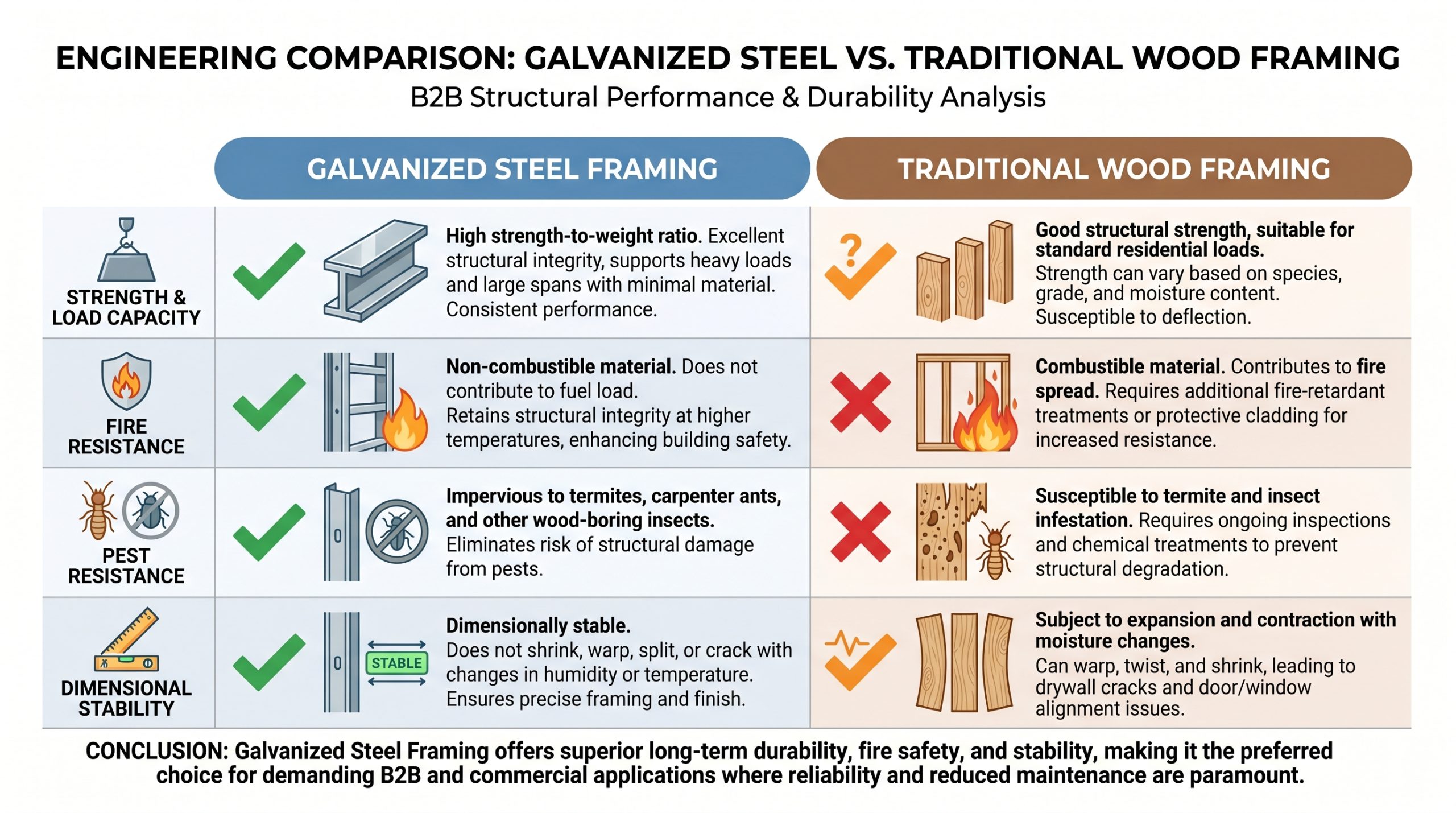
You should select metal frame construction because it delivers unmatched strength, fire resistance, and complete immunity to organic decay. This engineering choice eliminates major liabilities like rot, mold, and insect damage from day one. You can rest assured that your commercial or residential structures remain safe under severe conditions.
This robust material ensures your investment remains structurally sound over its lifetime. It reduces maintenance overheads and speeds up project delivery times significantly.
Unmatched Strength-to-Weight Ratio
You will immediately notice that steel offers the highest strength-to-weight ratio of any load-bearing building material. Look: this physical advantage allows you to design wider, column-free spans while using a lighter foundation. You will save money on concrete works right from the start.
High Fire and Combustion Resistance
Because steel is non-combustible, you can significantly lower the overall fire risk of your property. But that’s not all: if a fire occurs, the framing will not ignite, emit smoke, or accelerate the spread of flames.
This non-combustible nature protects lives and assets while keeping your structural integrity intact.
- Zero contribution to fuel load in a building fire.
- Minimizes secondary fire spread through wall cavities.
- Helps achieve superior fire-resistance ratings.
Complete Immunity to Rot and Insect Pests
You do not have to worry about wood-boring pests or moisture-induced rot ruining your building’s core structure. Steel completely eliminates the need for ongoing chemical pesticide treatments on your site. You will keep your property structurally sound without constant inspections.
| Material Feature | Galvanized Steel | Structural Timber | Performance Winner | |
|---|---|---|---|---|
| Combustibility | Non-combustible | Highly Flammable | Steel | |
| Rot & Moisture | 100% Resistant | High Risk of Decay | Steel | |
| Pest Vulnerability | Immune to Termites | High Risk | Steel |
This comparison clearly shows why developers are moving away from vulnerable biological materials.
Key Takeaway: Investing in steel eliminates long-term pest and rot maintenance liabilities, securing the long-term value of your property.
Build Faster, Stronger, and Smarter with Metal Frame Construction.
Email:sales@showhoo.com.cn
Phone/WhatsApp: + 86 186 7895 5927
Is metal frame construction green?
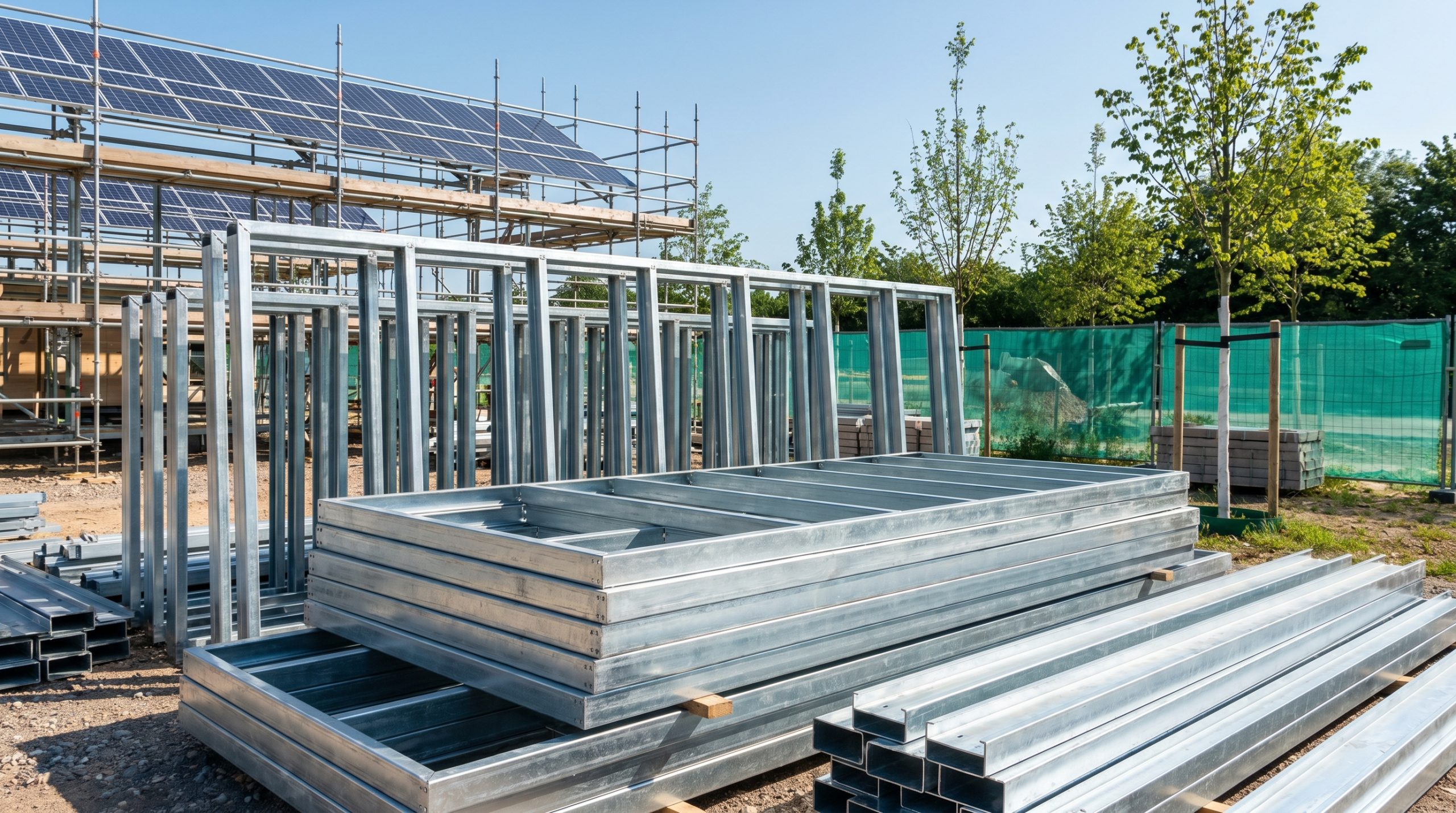
Yes, metal frame construction is highly green because steel is the most recycled material on Earth and produces minimal site waste. By selecting steel, you drastically reduce the depletion of global forests and lower your carbon footprint. You will find that steel construction sites remain exceptionally clean and organized.
This circular material is recycled continuously without losing its physical properties. It allows you to build energy-efficient structures that respect the natural environment.
Recyclability and Reduced Site Waste
You can recycle your framing components infinitely without any loss in mechanical performance. Look: while timber off-cuts are burned or dumped, your steel scraps are entirely circular. You will minimize physical waste on your construction site to nearly zero.
Contributing to Global Green Building Certifications
When you build with steel, you earn direct points under global green building rating systems like LEED or BREEAM. But that’s not all: eco-conscious commercial spaces consistently attract higher-paying corporate tenants. You will enhance your business’s environmental reputation.
These certified green ratings help you:
- Qualify for regional green tax incentives.
- Lower your overall carbon footprint.
- Boost tenant occupancy rates.
Energy Efficiency and Lifetime Resource Conservation
You will achieve exceptional energy efficiency by pairing tight steel frames with continuous rigid external insulation. This advanced insulation strategy blocks cold air drafts and maintains stable indoor temperatures. You will enjoy lower monthly utility bills over the building’s operational lifecycle.
| Environmental Metric | Steel Framing | Wood Framing | Eco-Impact | |
|---|---|---|---|---|
| Recycled Content | Up to 90% | Very Low (New Trees) | Steel is highly circular | |
| Jobsite Waste | Less than 2% | Around 10% – 15% | Steel saves landfill space | |
| Recyclability | 100% Recyclable | Non-recyclable if treated | Steel preserves resources |
This comparative resource data proves that steel offers a far more sustainable lifecycle than organic options.
Key Takeaway: Designing with energy-efficient steel framing reduces lifetime energy usage and lowers long-term operational costs.
How to build metal frame construction?

You build metal frame construction by laying a perfectly flat concrete foundation and assembling pre-fabricated steel wall panels with self-drilling screws. This engineered workflow eliminates manual field cuts and speeds up on-site assembly. You will find that a trained team can erect a complete building structure in a fraction of the standard timeline.
This systematic method relies on precise planning and computerized component coordination. It simplifies plumbing, electrical, and HVAC installations later in the build.
Groundwork and Foundation Coordination
You must coordinate your foundation layout to extreme tolerances of millimeter-level accuracy. Look: because steel does not warp or flex to fit errors, a perfectly level concrete slab is essential. You will secure a straight structural build by getting this groundwork correct.
Precision Connection and Fastener Techniques
You will join your structural steel profiles using specialized high-shear self-drilling screws and heavy anchor bolts. But that’s not all: these rigid connections prevent the physical shifting and structural squeaking common in timber-frame properties. You will deliver a silent, structurally secure building.
Key connection benefits include:
- Outstanding shear resistance under load.
- Permanent joints that never loosen.
- Fast, reliable mechanical fastening.
Off-site Panelization vs. Stick-built On-site Assembly
You can assemble your structures on-site or choose the speed of off-site factory wall panelization. Prefabricating walls in a dry, climate-controlled factory ensures perfect quality control and limits weather delays. You will save valuable days by manufacturing components while the slab is pouring.
| Method | Labor Cost | Quality Control | Speed of Construction | |
|---|---|---|---|---|
| Off-Site Panelization | Low On-Site | Extremely High | Ultra-Fast Assembly | |
| Stick-Built On-Site | Medium to High | Moderate | Standard Pace |
This operational breakdown indicates why modern commercial builders overwhelmingly select pre-fabricated panelization.
Key Takeaway: Choosing off-site panelization maximizes your field efficiency, drastically shortening your critical path schedule.
What limits metal frame construction?
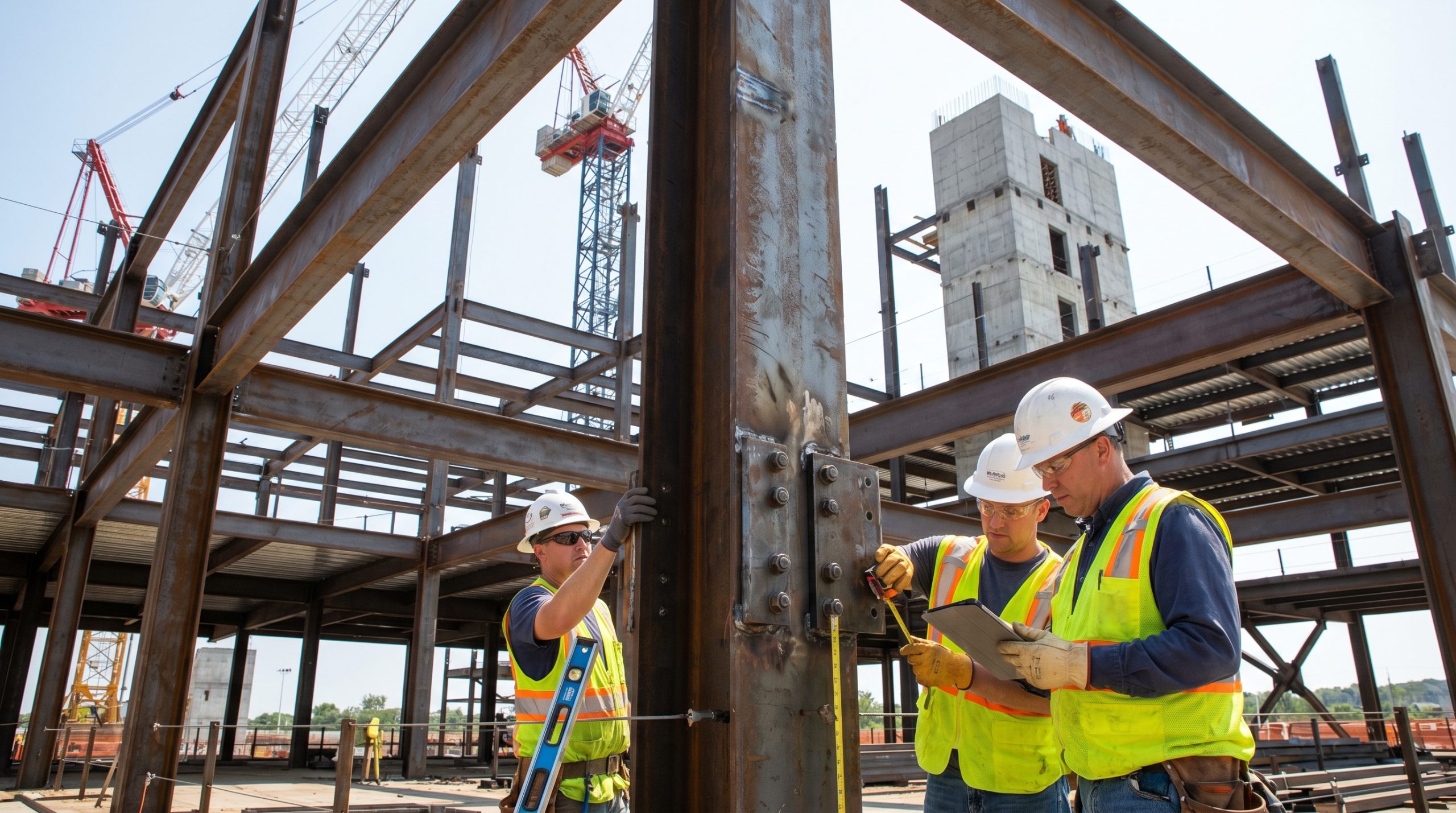
The main structural limits of metal frame construction include high thermal conductivity, acoustic bridging, and potential corrosion in coastal climates. Fortunately, modern building science provides highly effective, cheap solutions for all of these material limits. You can design around these challenges during the early planning stages with complete confidence.
By addressing thermal and acoustic parameters during engineering design, you ensure code compliance and maximum tenant comfort. This keeps your building performing beautifully over long periods.
Resolving Thermal Bridging and Heat Transfer
You must break the thermal path by installing continuous rigid board insulation on the exterior of your steel studs. Look: this simple exterior shell prevents energy from escaping through highly conductive steel. You will drastically lower heating and cooling bills while preventing condensation issues.
Managing Acoustic and Sound Transmission
You will isolate sound transmission by utilizing resilient drywall furring channels and double-stud party walls. But that’s not all: these simple details isolate mechanical vibrations and block unwanted noises between rooms. You will provide a peaceful, quiet indoor space for your clients.
Acoustic isolation solutions include:
- Using resilient sound clips to decouple drywall.
- Filling cavities with high-density rockwool batts.
- Applying sound-damping seals at wall plates.
Mitigating Corrosion in Humid Environments
You do not have to worry about oxidation if you specify high-quality steel studs coated with thick zinc galvanization. This sacrificial layer chemically defends the core steel from moisture and humid coastal air. You will secure a stable, corrosion-free frame that lasts for generations.
| Challenge | Primary Impact | Recommended Solution | |
|---|---|---|---|
| Thermal Bridging | Energy Loss / Condensation | Continuous Rigid Foam Board | |
| Sound Transmission | High Acoustic Bleed | Resilient Channels & Double Studs | |
| Moisture / Corrosion | Rust & Structural Damage | High-Grade Galvanized Steel (G90) |
This summary chart shows how simple construction details overcome steel’s native limits.
Key Takeaway: Integrating thermal breaks and zinc protection early ensures your building meets high performance standards without issues.
Who uses metal frame construction?
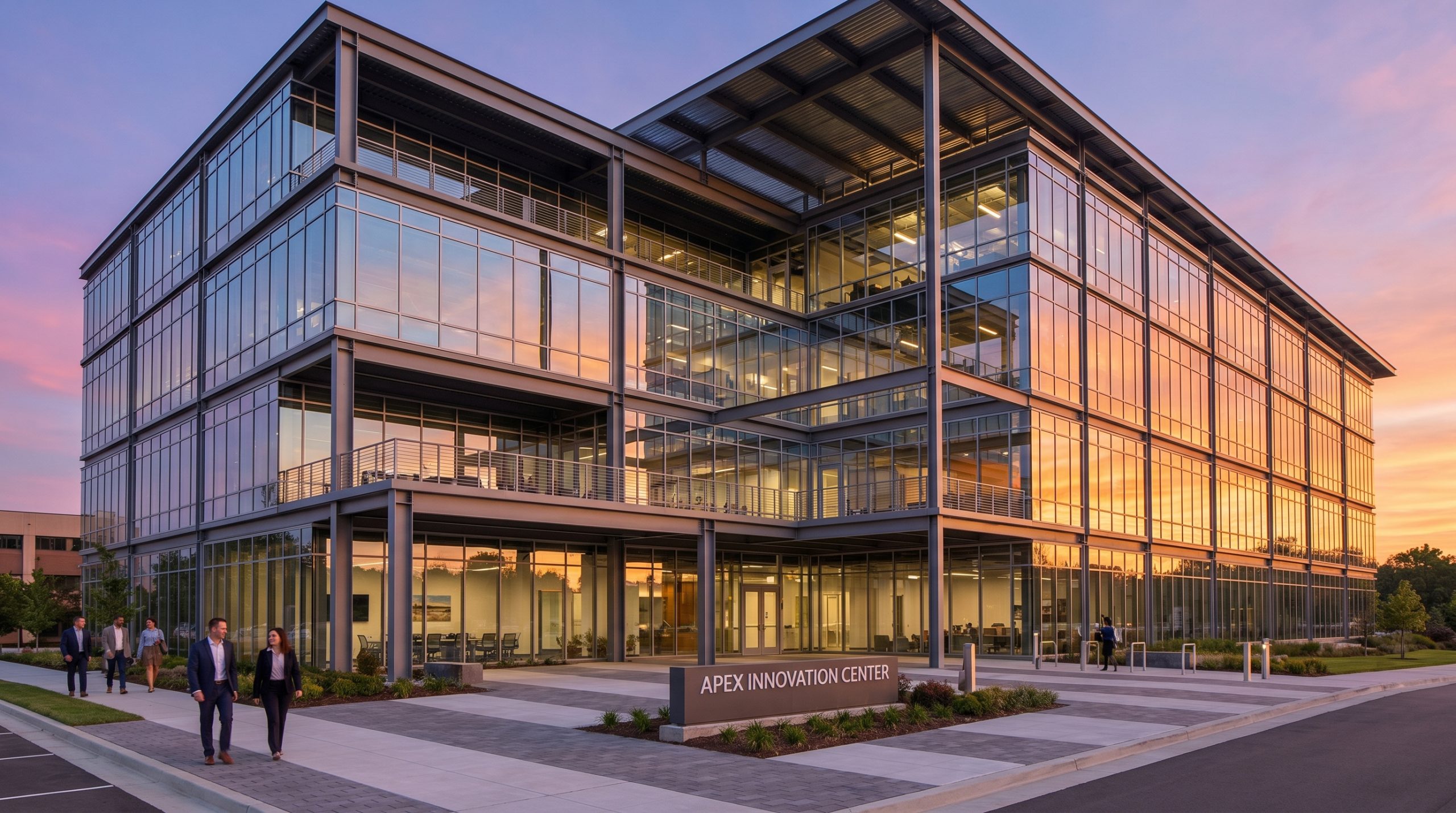
Commercial developers, custom home builders, and industrial operators widely use metal frame construction to build highly durable, large-span, and safe buildings. This versatile building system is perfect for high-density multi-family housing, custom modern villas, and large-span warehouses. You will find that leading construction firms specify steel framing to minimize project risks and accelerate completion times.
This system is chosen because of its immense flexibility and reliable mechanical characteristics. It easily adapts to complex architectural plans and harsh regional climates.
Mid-rise and High-rise Commercial Developers
You will gain a massive competitive edge by choosing steel for your next mid-rise commercial development. Look: because steel is lightweight and incredibly strong, you can build taller structures without overloading the soil. You will get your commercial property on the market and earning rent months faster than traditional structures.
Single-family and Multi-family Residential Builders
You can design striking, modern open-plan homes with vast window expanses by utilizing the high load capacity of steel. But that’s not all: steel framing guarantees that walls stay perfectly straight and corners stay perfectly square over time. You will eliminate costly warranty calls for drywall cracks or warped doors.
Residential framing features include:
- Vast architectural freedom with wide spans.
- Clean, pest-free structural cavities.
- Outstanding resistance to high winds.
Industrial and Agricultural Infrastructure Projects
You will maximize your industrial output by designing huge, column-free clear spans using high-tensile steel trusses. This uninterrupted floor space lets you easily navigate forklifts, locate heavy assembly machinery, and store agricultural goods. You will adapt the layout as your business expands without worrying about structural columns.
| Sector | Core Requirement | Why Steel Fits | Key Benefit | |
|---|---|---|---|---|
| Commercial | Rapid Construction | Prefabricated Panels | Early Lease Occupancy | |
| Residential | Straight Walls, Open Plan | High Tensile Strength | Low Maintenance Call-Backs | |
| Industrial | Wide Clear Spans | High Load Capacity | Maximum Usable Space |
The market data shows how steel’s unique mechanical features serve different industries perfectly.
Key Takeaway: Choosing steel framing allows you to build highly specialized structures tailored precisely to your operational needs.
Build Faster, Stronger, and Smarter with Metal Frame Construction.
Email:sales@showhoo.com.cn
Phone/WhatsApp: + 86 186 7895 5927
Is metal frame construction cheaper?
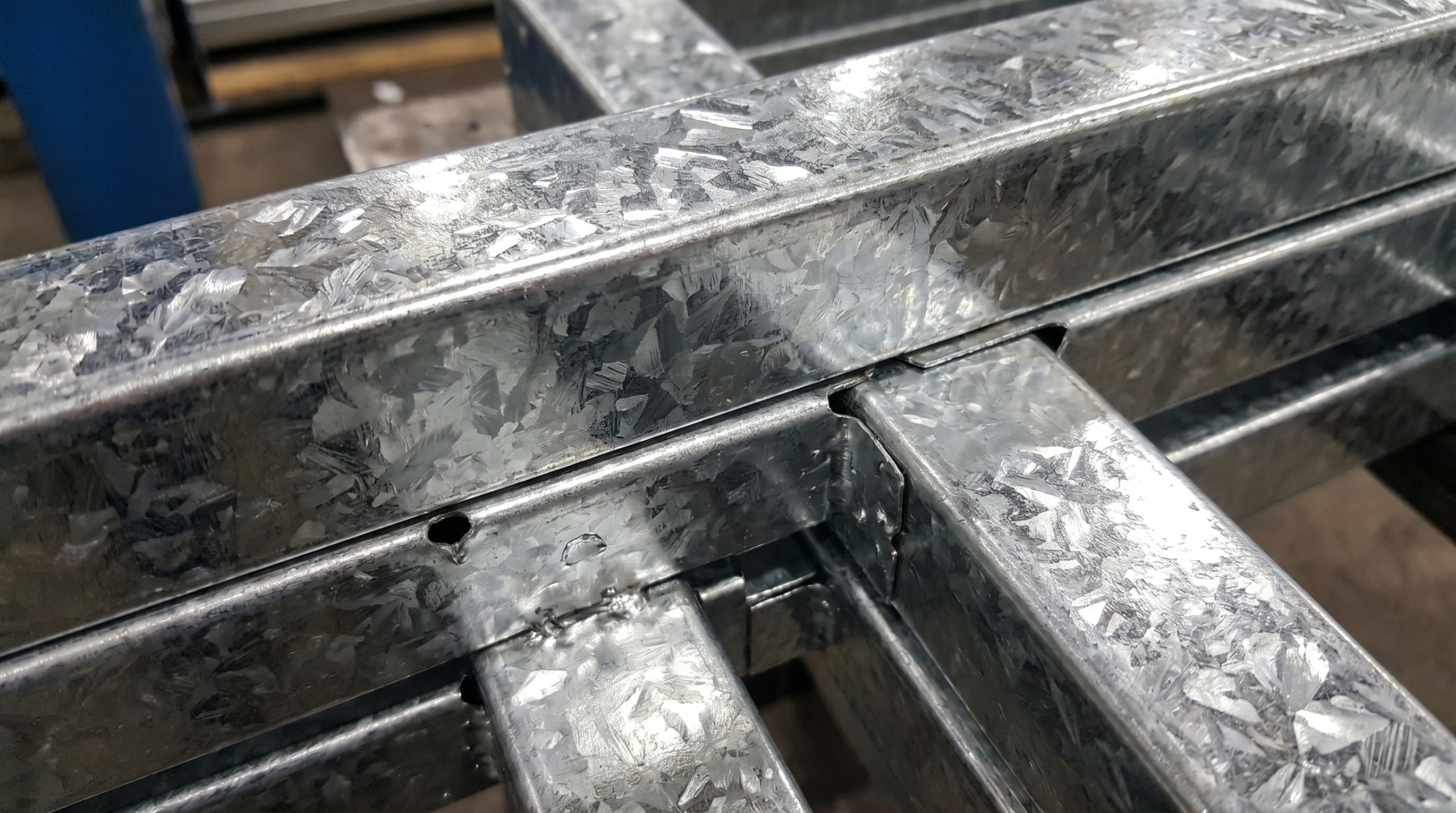
Yes, metal frame construction is cheaper overall because it drastically reduces on-site labor hours, minimizes material waste, and lowers structural insurance premiums. While raw steel can sometimes have a slightly higher upfront material cost, the process savings are substantial. You will save money on crane rentals, waste disposal, and post-construction repairs.
This financial advantage becomes even clearer when you calculate the shortened development cycle and earlier rental revenue. It represents an excellent return on investment for smart builders.
Upfront Material Volatility vs. Labor Efficiency
You will offset any material price changes through the massive labor savings realized during the fast erection phase. Look: pre-cut, pre-punched components assemble so quickly that a small framing crew can complete the job. You will keep your field labor costs highly predictable and manageable.
Long-Term Maintenance and Operating Savings
You will slash your ongoing maintenance budget because galvanized steel does not degrade, rot, or settle. But that’s not all: a dimensionally stable steel frame keeps windows and doors sealing tightly, reducing HVAC air loss. You will enjoy lower monthly energy costs and avoid expensive structural repairs.
Operational cost reductions include:
- Zero expensive termite repair bills.
- Prolonged lifespans for drywall and finishes.
- Reduced building energy consumption.
Significant Insurance Premium Reductions
You will secure significant premium discounts from underwriters because steel is non-combustible and highly safe. These ongoing insurance savings apply during both the construction phase and the decades-long operational life of the asset. You will enjoy a much healthier cash flow from day one.
| Cost Category | Steel Framing System | Wood Framing System | Savings Realized | |
|---|---|---|---|---|
| On-Site Labor | Low (Pre-fabricated) | High (Manual stick-built) | Significant Labor Savings | |
| Material Waste | Under 2% | 10% – 15% | Lower Disposal & Material Costs | |
| Insurance | 20% – 40% Cheaper | High Premium | Substantial Lifetime Savings |
The financial comparison demonstrates that steel’s process efficiencies outweigh any initial material premium.
Key Takeaway: Investing in steel framing optimizes your cash flow by cutting active labor hours, insurance overhead, and waste.
How is metal frame construction coated?
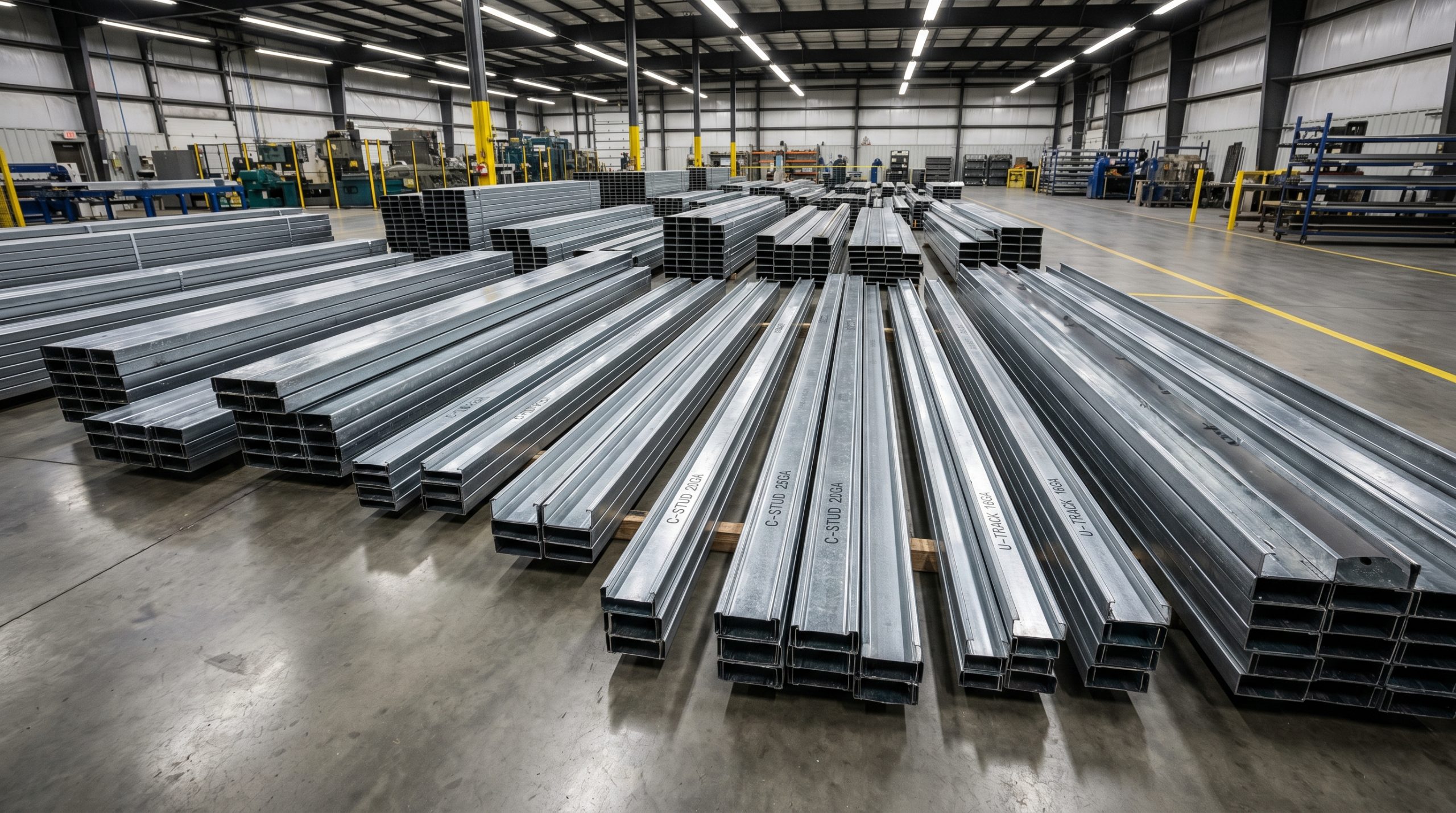
Modern metal frame construction is coated using hot-dip zinc galvanization and advanced polymer coatings to prevent rust and corrosion. These protective finishes ensure that your structure remains entirely safe from atmospheric oxidation and moisture damage. You can easily select the appropriate coating level to suit the specific climate of your project.
This chemical barrier guarantees that your building frame remains dry, clean, and sound. It provides absolute peace of mind even in demanding seaside locations.
Galvanization and Zinc Protective Layers
You will enjoy complete moisture protection through the proven science of continuous hot-dip zinc galvanization. Look: the zinc layer acts as a sacrificial shield, taking on oxidation to save the structural steel core. You will protect raw steel cuts and connections automatically over many years.
Advanced Powder Coating for Severe Climates
You should specify advanced electrostatic powder coatings for steel structures that are permanently exposed to rain and coastal air. But that’s not all: this durable polymer finish resists fading, mechanical scratches, and severe chemical exposure. You will preserve both the structural integrity and clean aesthetics of your building.
Powder coating qualities include:
- High resistance to salty marine air.
- Clean, uniform color customization.
- Eco-friendly formulation without toxic VOCs.
Paint and Cladding Assembly Barriers
You will build an impenetrable moisture barrier by combining zinc-coated steel with vapor-permeable house wraps and physical drainage planes. These building envelope details drain away any rainwater leaks, keeping your interior cavities perfectly dry and mold-free. You will maintain a highly healthy indoor environment for all tenants.
| Coating Type | Coating Method | Best Environment | Primary Protection Mode | |
|---|---|---|---|---|
| Galvanized Zinc (G90) | Hot-dip continuous | Standard wall cavities | Sacrificial zinc barrier | |
| Powder Coating | Electrostatic polymer | Coastal / Exposed frames | Impermeable plastic shield | |
| Vapor-Permeable Wraps | Mechanical sheeting | Humid / High-rain areas | Physical water shedding |
This comparison outlines how proper steel treatments and barriers easily combat environmental moisture.
Key Takeaway: Combining high-quality zinc coatings with moisture barriers guarantees a highly dry and long-lasting structural frame.
Is metal frame construction durable?
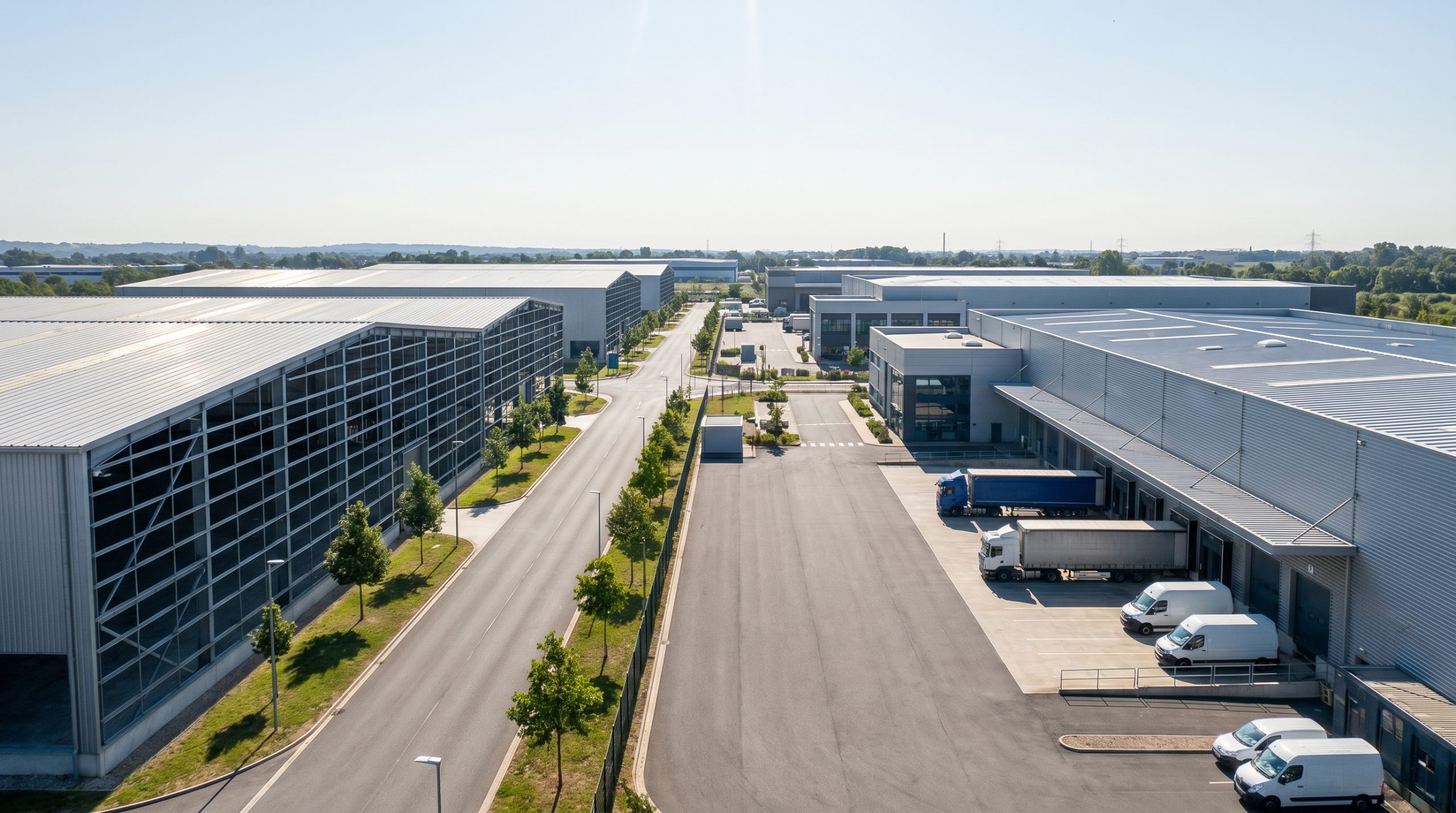
Yes, metal frame construction is highly durable because steel is immune to pests, rot, and material fatigue, while offering exceptional resistance to extreme earthquakes and storms. Unlike organic timber framing, high-quality steel does not experience warping, sagging, or mechanical failure over decades of heavy service. You will own a structure that keeps its precise alignment, straight walls, and perfect doors forever.
This physical longevity ensures that your asset commands a premium resale value down the line. It serves as a rock-solid foundation for any long-term investment strategy.
Outstanding Performance Under Seismic Loadings
You will sleep easily knowing your steel building is highly ductile and absorbs earthquake shock waves safely. Look: while rigid timber or brick walls can crack and fail, steel frames flex without losing their structural load capacity. You will dramatically reduce the risk of structural collapse during severe seismic events.
Weather-Tightness and Extreme Wind Deflection
You can face heavy coastal winds with full confidence because steel framing is securely anchored directly to concrete slabs. But that’s not all: high-tensile fasteners and brackets ensure that your wall studs will never pull out under heavy wind shear. You will safeguard your building’s dry envelope from intense storm damage.
Wind-resistant advantages include:
- Extremely high mechanical shear values.
- Monolithic frame assembly for zero draft leakage.
- Robust anchorage that prevents lifting forces.
Structural Longevity Exceeding 100 Years
You will enjoy a design lifecycle exceeding one hundred years by choosing galvanized cold-formed steel frames. Steel components do not experience physical aging, structural warping, or mechanical fatigue, guaranteeing a perfectly safe and straight building core over its lifetime. You will minimize physical building depreciation to nearly zero.
| Durability Factor | Steel Frame Capability | Wood Frame Capability | Long-Term Winner | |
|---|---|---|---|---|
| Seismic Safety | High ductility and energy absorption | Low ductility; prone to splitting | Steel | |
| Wind Resistance | High screw shear and heavy anchors | Nail pulling and wind damage | Steel | |
| Design Life | Exceeds 100 years | 40-60 years (prone to decay) | Steel |
These performance metrics prove why steel frames outperform organic materials under extreme natural forces.
Key Takeaway: Using steel’s natural durability protects your assets, ensuring lower long-term repair costs.
What is next for metal frame construction?
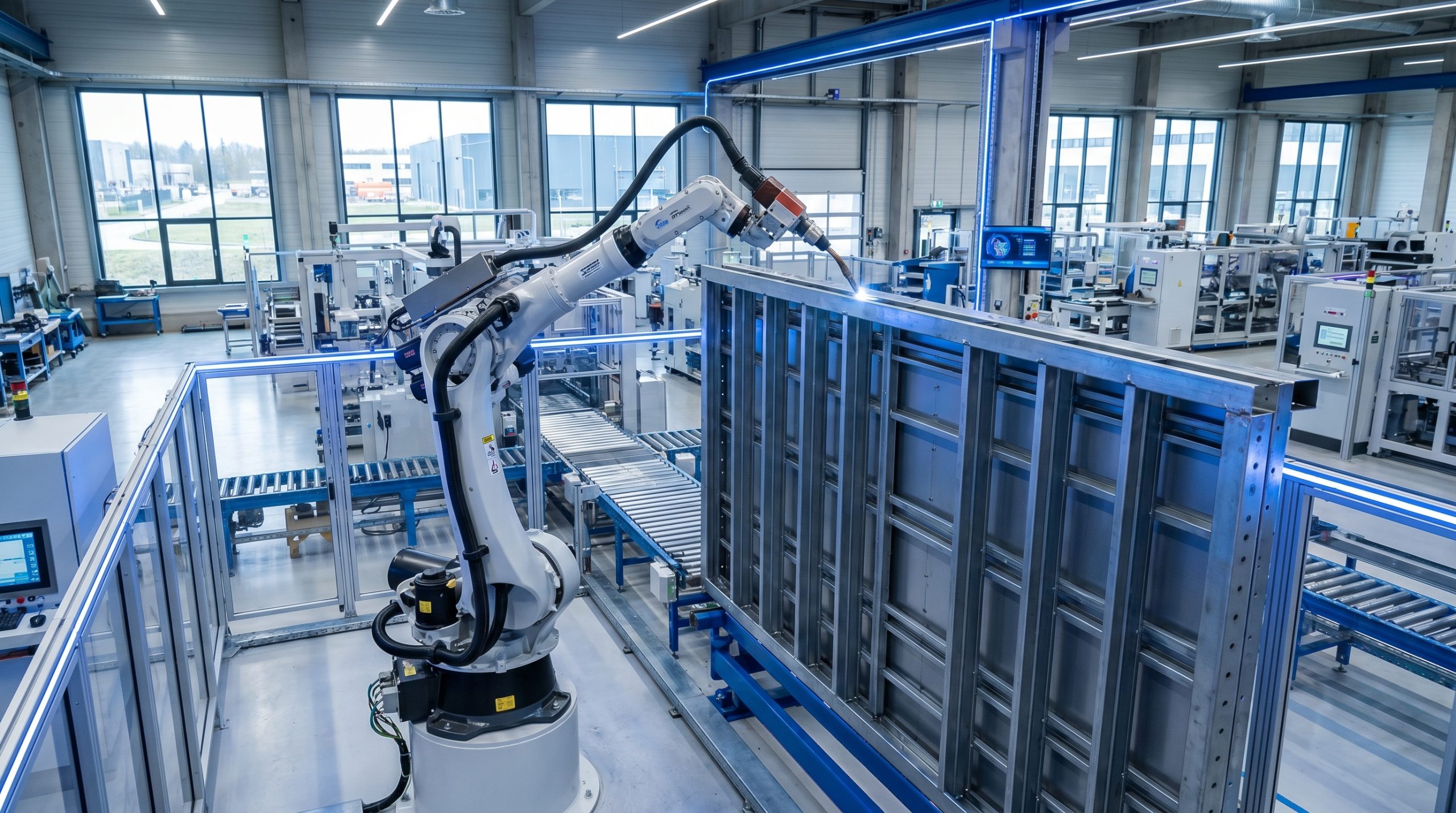
The future of metal frame construction relies on advanced 3D BIM software integration, AI-driven quality checks, and automated robotic installation. These technical innovations speed up factory production, eliminate design errors, and lower physical field labor requirements. You will benefit from highly efficient building structures that are manufactured with robotic precision.
This technological leap is transforming construction from a chaotic manual trade into a highly controlled digital system. It represents a massive upgrade in quality and predictability for global developers.
Integration of Advanced 3D BIM Software
You will avoid structural clashes on-site by modeling your building virtually using advanced 3D BIM programs. Look: these highly accurate digital blueprints transmit dimensional data straight to factory roll-forming machinery. You will eliminate field measurement mistakes and coordinate electrical plumbing paths seamlessly.
AI-Driven Quality Control in Smart Manufacturing
You can expect perfect steel framing components thanks to AI-driven camera systems inside modern roll-forming factories. But that’s not all: computer vision scans every profile for structural micro-cracks or dimensional variations in real-time. You will always receive highly reliable, flaw-free materials on your building site.
Smart manufacturing delivers:
- Consistent mechanical and structural values.
- Zero physical material defects.
- Reduced carbon footprint via material optimization.
Robotics and Installation Site Automation
You will watch your building rise rapidly as robotic assembly arms begin pre-assembling panels directly on site. This automation speeds up repetitive screwing and lifting steps, keeping your workers highly safe and reducing physical injury rates. You will complete massive commercial developments with highly streamlined, efficient field crews.
| Tech Trend | Operational Impact | Development Speed | Long-Term Advantage | |
|---|---|---|---|---|
| 3D BIM Software | Eliminates design clashes | Zero delays during site assembly | Error-free building structures | |
| AI Quality Control | Guarantees zero defects | Faster factory inspections | Extremely reliable materials | |
| Robotics | Slashes manual site labor | Rapid wall panel installation | Lower costs and safer sites |
This technical analysis demonstrates how digital integration is reshaping the future of construction.
Key Takeaway: Embracing advanced automation keeps your building business efficient, competitive, and highly profitable.
Accelerate Your Success with Showhoo Building
Conventional building materials like wood and concrete introduce unpredictable costs, mold hazards, and lengthy project delays that slow your business growth. We solve these critical challenges by engineering state-of-the-art steel structure workshops, prefabricated buildings, and light steel framing systems customized to your exact requirements. We provide you with precision-manufactured steel components, comprehensive technical support, and rapid global delivery, enabling you to build stronger, safer, and faster. Our vision is clear: to construct a more durable and efficient world by putting high-precision structural steel at the core of every building.
If you are ready to eliminate construction delays, reduce structural waste, and maximize your project ROI, contact us today to receive your custom, high-performance structural steel quote.
Build Faster, Stronger, and Smarter with Metal Frame Construction.
Email:sales@showhoo.com.cn
Phone/WhatsApp: + 86 186 7895 5927
Frequently Asked Questions About Steel Framing
- Can I use steel framing for residential villas?Yes, light steel framing is exceptionally well-suited for residential villas because it offers perfect dimensional stability and allows for open-concept layouts.
- What’s the best way to prevent thermal bridging in steel structures?The best method is installing continuous rigid insulation on the exterior of your steel frame to break the thermal bridge.
- How do I know if my local building codes allow metal frame construction?Yes, most national and international building codes fully approve cold-formed steel framing, provided your engineering plans are stamped by a certified engineer.
- Can I remodel or modify a steel-framed building in the future?Yes, you can easily modify or remodel steel buildings by using self-drilling screws and standard structural framing tools.
- What’s the best coating to prevent rust in wet coastal climates?The best choice is specifying heavy-duty hot-dip galvanized steel coatings like G90, combined with high-quality vapor barriers.