
Building a warehouse typically costs between 15 and 20 per square foot for the basic building shell. As your business outgrows its current footprint, you likely face the frustration of cramped aisles and inefficient logistics that stifle your growth potential. These operational bottlenecks agitate your bottom line by increasing labor hours and slowing down order fulfillment. Implementing a strategic cost to build 50,000 sq ft warehouse plan allows you to streamline operations and secure a resilient asset for your future distribution needs.
How much does it cost to build a warehouse?
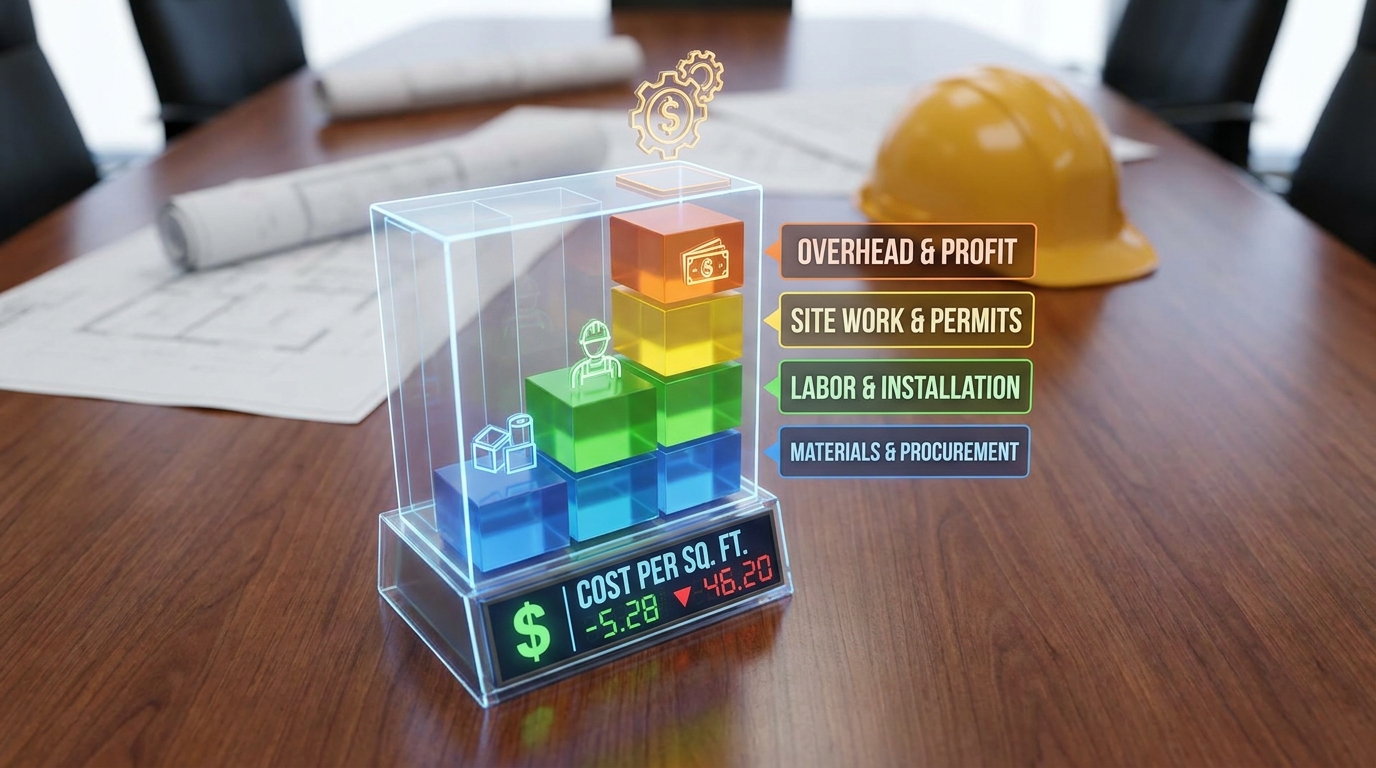
The average price for a turnkey warehouse project ranges from 625,000 for smalle run its to over 3,125,000 when calculating the total cost to build 50,000 sq ft warehouse. These figures fluctuate based on your specific requirements for material gauge, slab thickness, and local labor rates.
What are the primary cost drivers?
You must account for more than just the steel and concrete when budgeting for your facility. Hard costs, including site grading and structural materials, often make up the bulk of the initial investment.
But that’s not all. You also need to factor in:
- Foundation rebar and concrete
- Steel framing and wall panels
- Roofing systems and insulation
- Interior office build-outs
How do foundation costs impact the budget?
A standard concrete foundation typically adds about $6 per square foot to your total expenditure. Because warehouses support heavy inventory loads, you cannot afford to skimp on high-quality rebar reinforcement.
Here is the kicker: specialized flooring for heavy machinery can increase this specific line item by 20% or more. You should consult with an engineer to determine the exact slab requirements for your expected floor load.
Key TakeawayBudgeting for a warehouse requires a balance between initial structural costs and long-term utility. Focusing on high-quality foundations ensures your building remains stable under massive industrial loads.
| Cost Category | Average Price (Per Sq Ft) | Percentage of Budget | |
|---|---|---|---|
| Building Shell | 15−20 | 55% | |
| Concrete Foundation | 6−8 | 25% | |
| Site Work & Permits | 3−5 | 15% | |
| Finishes & Accessories | 1−2 | 5% |
Comprehensive budgeting should always include a 10% contingency fund for unforeseen site conditions.
What factors influence warehouse construction prices?
Your geographical location and the current market price of raw steel are the most significant variables in the cost to build 50,000 sq ft warehouse . While a prefabricated design helps stabilize costs, local zoning laws and environmental permits can introduce unexpected expenses into your timeline.
Does location matter for your budget?
You will find that building in a major logistics hub often carries higher land acquisition costs but lower transportation fees for materials. Regional labor shortages can also drive up the price of specialized welding and assembly teams.
- Proximity to major highways
- Availability of local skilled labor
- Regional building code requirements
- Environmental impact assessment fees
How do design complexities add up?
Are you planning for a simple dry storage facility or a complex multi-room logistics center? Adding multiple loading docks or mezzanine levels will naturally increase both the architectural design fees and the total material volume required.
Think about it this way: every additional wall or specialized door requires more engineering and labor. You can minimize these costs by sticking to standard dimensions that maximize the efficiency of steel manufacturing.
Key TakeawayStrategic site selection and simplified structural designs are your most effective tools for controlling construction overhead. Minimizing custom modifications ensures faster assembly and lower engineering costs.
| Design Factor | Impact on Cost | Planning Priority | |
|---|---|---|---|
| Location | High | Critical | |
| Structural Complexity | Medium | High | |
| Material Quality | Medium | Moderate | |
| Labor Availability | High | High |
Selecting a site with existing infrastructure can save thousands in utility connection fees.
How does facility size affect your total investment?
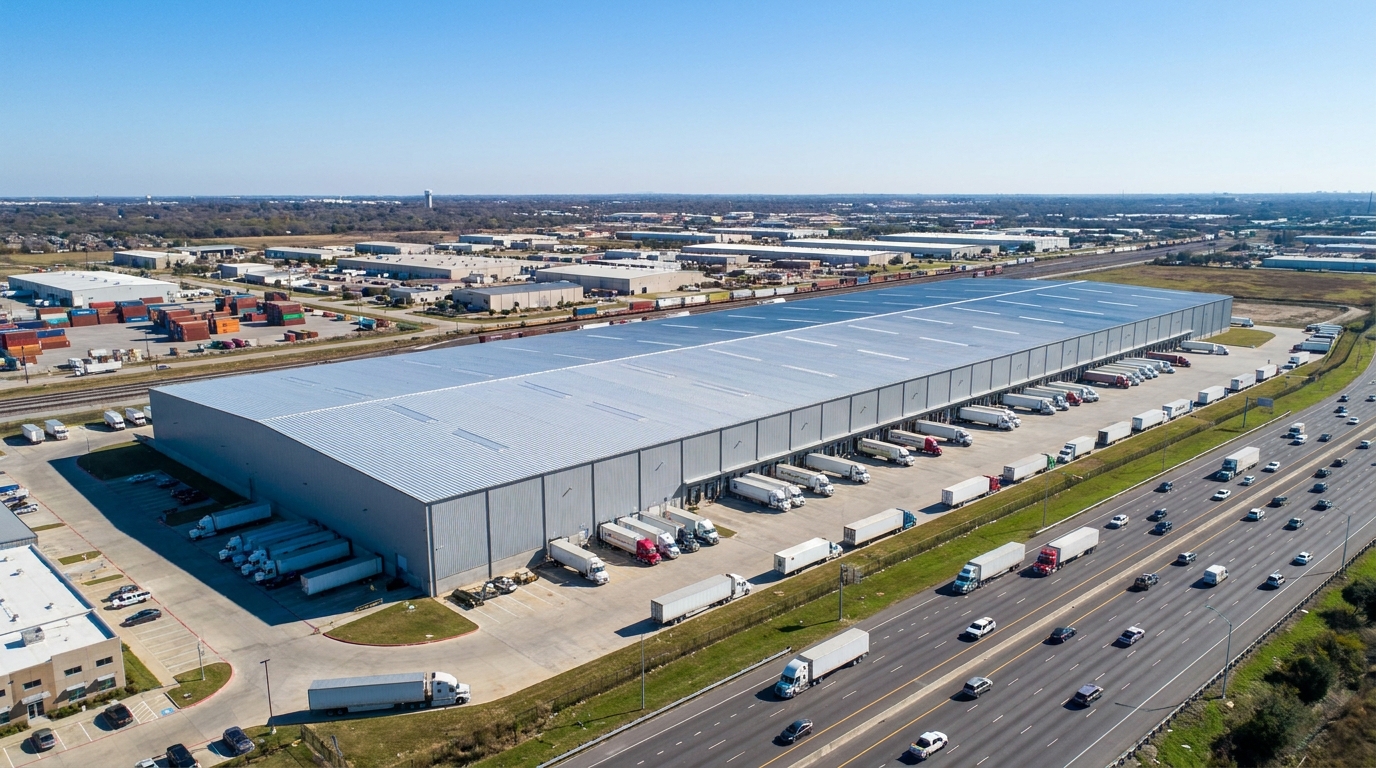
Economies of scale play a vital role because the price per square foot generally decreases as the total cost to build 50,000 sq ft warehouse area increases. Larger projects allow for bulk purchasing of steel and more efficient use of heavy machinery during the grading and foundation phases.
Why is larger often more efficient?
When you build bigger, the fixed costs like architectural design and site mobilization are spread over a much larger area. This means that a 100,000 sq ft facility will often have a lower unit price than a 10,000 sq ft workshop.
The truth is:
- Bulk material discounts are easier to negotiate.
- Construction crews maintain better momentum on large sites.
- Specialized equipment rental costs are better amortized.
Is flexibility worth the extra cost?
How do you know if you should build for today or plan for the next ten years? Investing in a larger footprint now prevents the massive disruption of a future expansion project.
Here is the kicker: adding 20% more space during initial construction is significantly cheaper than a separate addition later. You should analyze your growth projections carefully before finalizing your building dimensions.
Key TakeawayChoosing a larger initial footprint maximizes your return on investment by lowering the unit cost per square foot. Future-proofing your facility today saves you from expensive retrofitting and expansion costs tomorrow.
| Warehouse Size (Sq Ft) | Estimated Cost (Shell) | Average Cost Per Sq Ft | |
|---|---|---|---|
| 10,000 | $200,000 | $20 | |
| 20,000 | $380,000 | $19 | |
| 50,000 | $900,000 | $18 | |
| 100,000 | $1,700,000 | $17 |
Building bigger initially provides the lowest possible price point for long-term industrial storage.
Can energy efficiency reduce your long-term costs?
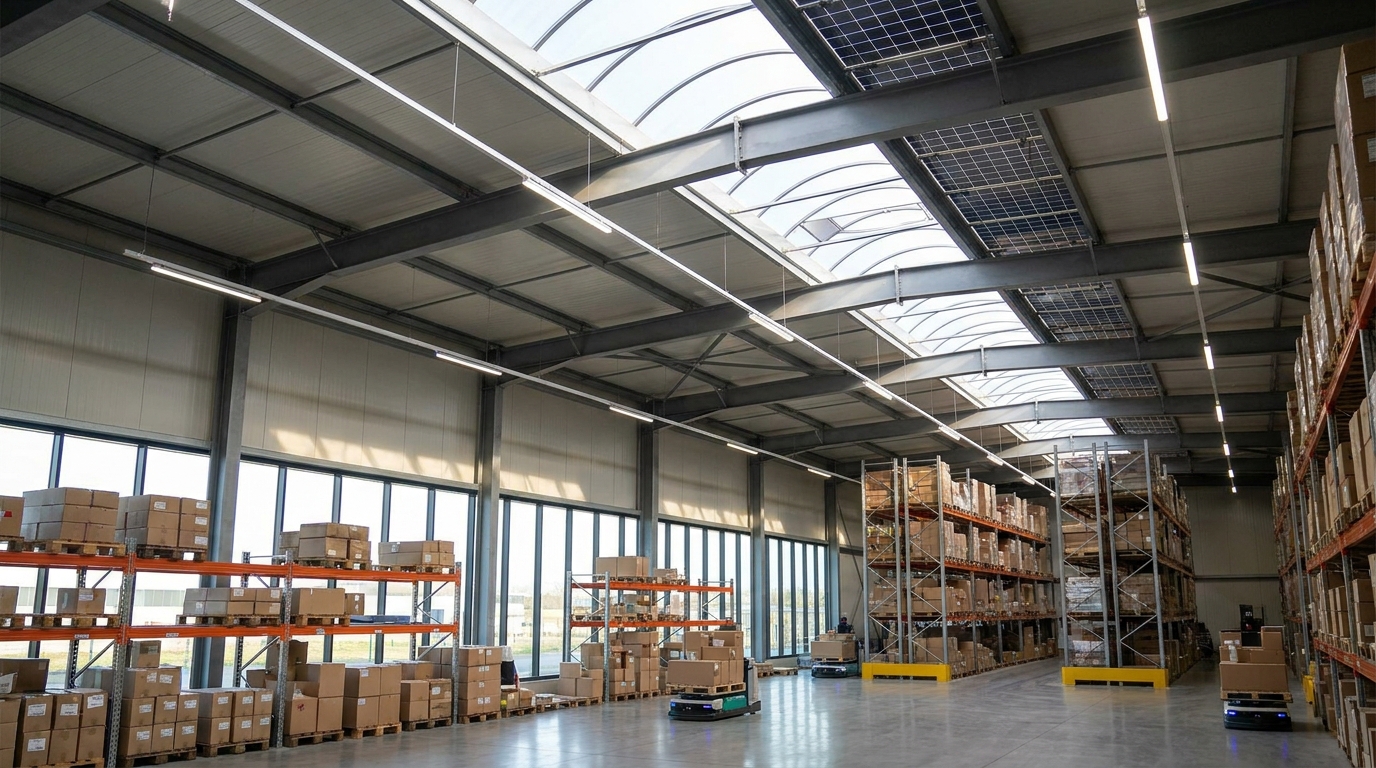
Integrating energy-efficient systems can lower your monthly utility bills by up to 30%, offsetting the initial cost to build 50,000 sq ft warehouse . Modern insulation and lighting solutions are not just environmental choices; they are critical financial strategies for any industrial operation.
Why prioritize natural lighting?
You can significantly reduce your reliance on the electrical grid by incorporating skylights and high-efficiency window panels. Natural light also boosts employee morale and reduces the error rate in picking and packing operations.
But that’s not all:
- Reduced heat gain from artificial bulbs.
- Lower monthly maintenance for lighting fixtures.
- Improved visibility in high-traffic loading zones.
What role does insulation play?
Do you really need high-performance insulation for a dry storage facility? Maintaining a stable interior temperature prevents inventory damage and reduces the strain on your HVAC systems during extreme weather.
It’s simpler than you think: better insulation means your heating and cooling units run less often. You will see the savings directly on your operational balance sheet every single month.
Key TakeawayEnergy-efficient investments like LED lighting and high-R-value insulation pay for themselves through reduced operational overhead. A “green” warehouse is ultimately a more profitable warehouse over its 30-year lifespan.
| Efficiency Feature | Initial Cost | Estimated Savings | |
|---|---|---|---|
| LED Lighting | Medium | 40% Lower Bills | |
| Skylights | Low | 15% Lower Bills | |
| High-Grade Insulation | Medium | 25% Climate Savings | |
| Motion Sensors | Low | 10% Utility Savings |
Prioritizing thermal barriers is the most cost-effective way to stabilize your long-term utility expenses.
What are the primary stages of building a warehouse?
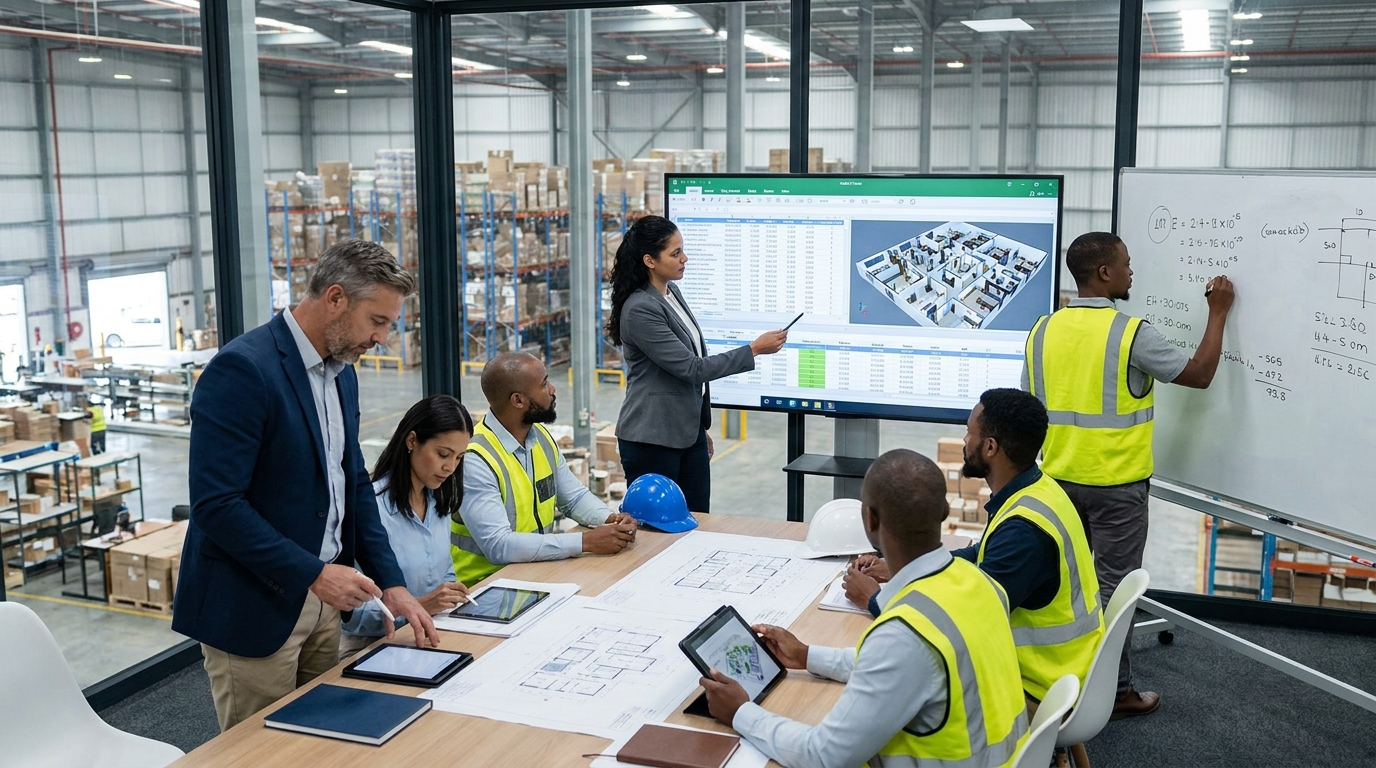
The construction journey starts with a detailed feasibility study and concludes with a final project closeout to verify the cost to build 50,000 sq ft warehouse. Understanding the logical progression from site selection to owner occupancy ensures you stay on schedule and within your allocated budget.
What happens during preconstruction?
You must work closely with architects and engineers to finalize your floor plans and secure the necessary building permits. This stage is where you identify potential hurdles, such as soil quality or local utility restrictions, before they become expensive problems.
- Soil testing and site survey
- Structural engineering designs
- Permit application and approval
- Contractor bidding and selection
How does the physical build proceed?
Once the site is cleared, the focus shifts to earthwork and the pouring of the concrete foundation. This is followed by the rapid erection of the steel frame and the installation of the roof and wall panels.
Here is the kicker: the speed of steel assembly is what makes pre-engineered buildings so cost-effective. You can see the structure take shape in a matter of weeks rather than months.
Key TakeawayMeticulous planning during the preconstruction phase is the best way to avoid delays during actual physical assembly. A clear roadmap allows your team to coordinate materials and labor without overlapping schedules.
| Project Stage | Typical Duration | Critical Goal | |
|---|---|---|---|
| Initiation | 2 – 4 Weeks | Feasibility | |
| Preconstruction | 8 – 12 Weeks | Permitting | |
| Construction | 20 – 24 Weeks | Structural Integrity | |
| Closeout | 2 – 3 Weeks | Handover |
Starting your planning phase at least six months before your desired move-in date is highly recommended.
How much time is required for warehouse construction?
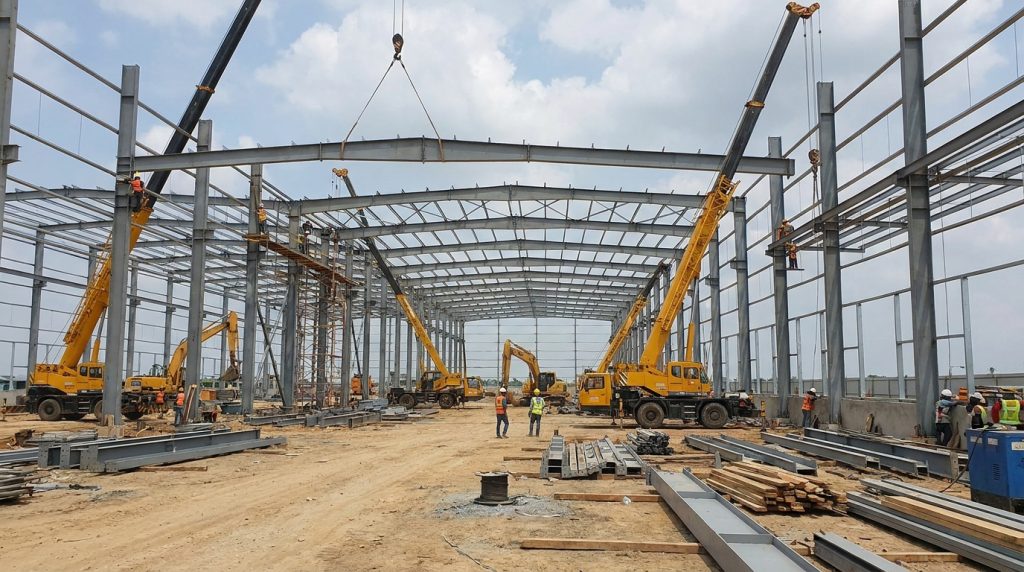
In the United States, completing the physical assembly and finishing for the cost to build 50,000 sq ft warehouse takes an average of 165 days. However, this timeline can be compressed if you utilize prefabricated steel components that are manufactured off-site and delivered ready for installation.
What factors cause project delays?
You might encounter setbacks due to extreme weather, supply chain disruptions for specialized materials, or slow municipal inspection processes. Managing these risks requires a buffer in your schedule and a proactive project manager.
Think about it this way:
- Winter foundations require specialized heating.
- Late-stage design changes halt the production line.
- Missing site permits can stop work for weeks.
How can you accelerate the timeline?
Can you finish your warehouse faster without sacrificing quality? Choosing a one-stop manufacturer ensures that all components are designed to fit together perfectly, eliminating the need for on-site modifications.
The truth is: synchronized delivery of frame, panels, and fasteners keeps your crew moving without downtime. You can save weeks of labor by simply having the right parts arrive in the correct sequence.
Key TakeawayPrefabricated building systems offer the fastest path from groundbreaking to full operation. Minimizing on-site fabrication reduces labor hours and helps you meet aggressive commercial deadlines.
| Region | Average Build Time | Main Driver | |
|---|---|---|---|
| United States | 165 Days | Regulatory Reviews | |
| United Kingdom | 86 Days | Fast-Track Permits | |
| France | 213 Days | Admin Complexity | |
| Australia | 120 Days | Standardized Designs |
Utilizing a project management software suite helps track material deliveries and labor milestones in real time.
Why is climate control essential for your inventory?
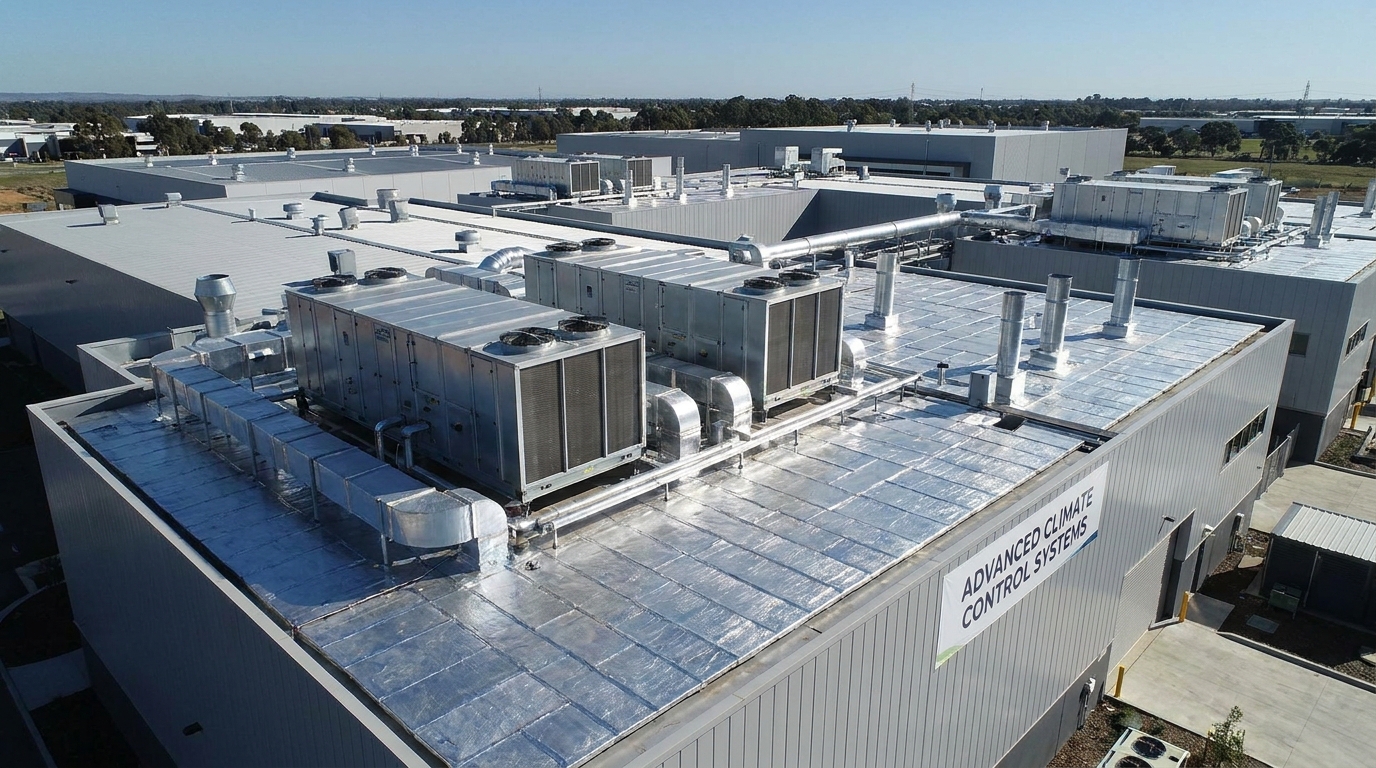
Proper climate regulation protects the integrity of your stored goods and must be factored into the cost to build 50,000 sq ft warehouse. Without active temperature and humidity management, you risk the growth of mold or the degradation of sensitive electronics and pharmaceuticals.
How do you regulate temperature?
You should install industrial HVAC systems or high-volume, low-speed (HVLS) fans to maintain a consistent airflow throughout the facility. This prevents “hot spots” that can occur in high-ceiling environments where warm air naturally collects.
But that’s not all:
- Air-cooling systems for perishable goods.
- Microprocessors for real-time monitoring.
- Sealed docking bays to prevent heat loss.
What about humidity management?
How do you know if your humidity levels are too high for your inventory? Excess moisture can destroy cardboard packaging and cause metal components to rust before they even reach your customers.
Here is the kicker: dehumidifiers are a relatively low-cost investment that can save thousands in damaged stock. You should place sensors at multiple heights to ensure the entire volume of the warehouse stays within your target range.
Key TakeawayInvesting in climate control is a risk management strategy that preserves the value of your inventory. A well-ventilated space also improves the health and safety conditions for your warehouse staff.
| Control Method | Purpose | Equipment | |
|---|---|---|---|
| Temperature | Prevents Spoilage | HVAC Units | |
| Humidity | Stops Mold/Rust | Dehumidifiers | |
| Airflow | Equalizes Environment | HVLS Fans | |
| Monitoring | Quality Assurance | Smart Sensors |
Maintaining a temperature range of 35-45 degrees Fahrenheit is standard for many cold-storage logistics.
What maintenance costs should you expect post-build?
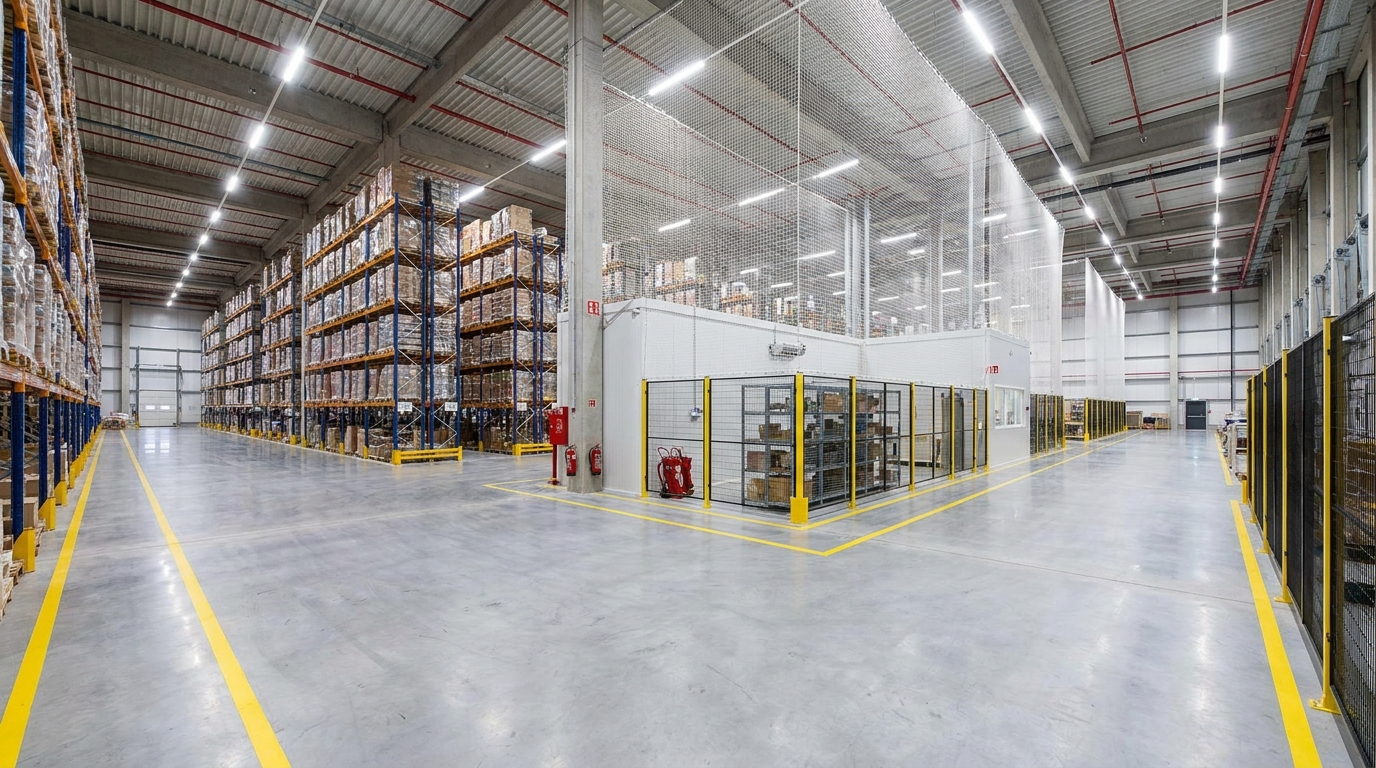
While steel structures are highly durable, you must still budget for ongoing inspections and repairs to protect your cost to build 50,000 sq ft warehouse investment. Neglecting minor issues like roof leaks or pest intrusions can lead to catastrophic structural damage and lost revenue.
What does routine maintenance involve?
You need to schedule annual inspections of your roofing system and fasteners to ensure no components have loosened due to wind or seismic activity. Keeping your drainage gutters clear prevents water from pooling and causing premature corrosion on your wall panels.
- Bi-annual roof inspections
- HVAC system servicing
- Fire suppression system testing
- Floor slab joint maintenance
How can you prevent pest damage?
Rodents and insects can quickly compromise your inventory and create unsanitary working conditions. Implementing a proactive pest control plan is a small monthly expense that prevents a massive headache during health and safety audits.
Think about it this way: a single hole in a seal can invite an infestation. You should regularly check the weather stripping on all personnel doors and loading docks to keep your facility airtight.
Key TakeawayA proactive maintenance schedule extends the life of your warehouse by decades. Catching small structural issues early prevents the need for expensive emergency repairs that could halt your operations.
| Maintenance Task | Frequency | Estimated Annual Cost | |
|---|---|---|---|
| Roof Inspection | Twice Yearly | 500−1,500 | |
| Pest Control | Monthly | 200−600 | |
| HVAC Service | Twice Yearly | 1,000−3,000 | |
| Fire Safety | Yearly | 800−2,000 |
Setting aside 1% of your total building cost for annual maintenance is a smart fiscal practice for facility managers.
How does steel manufacturing impact project quality?
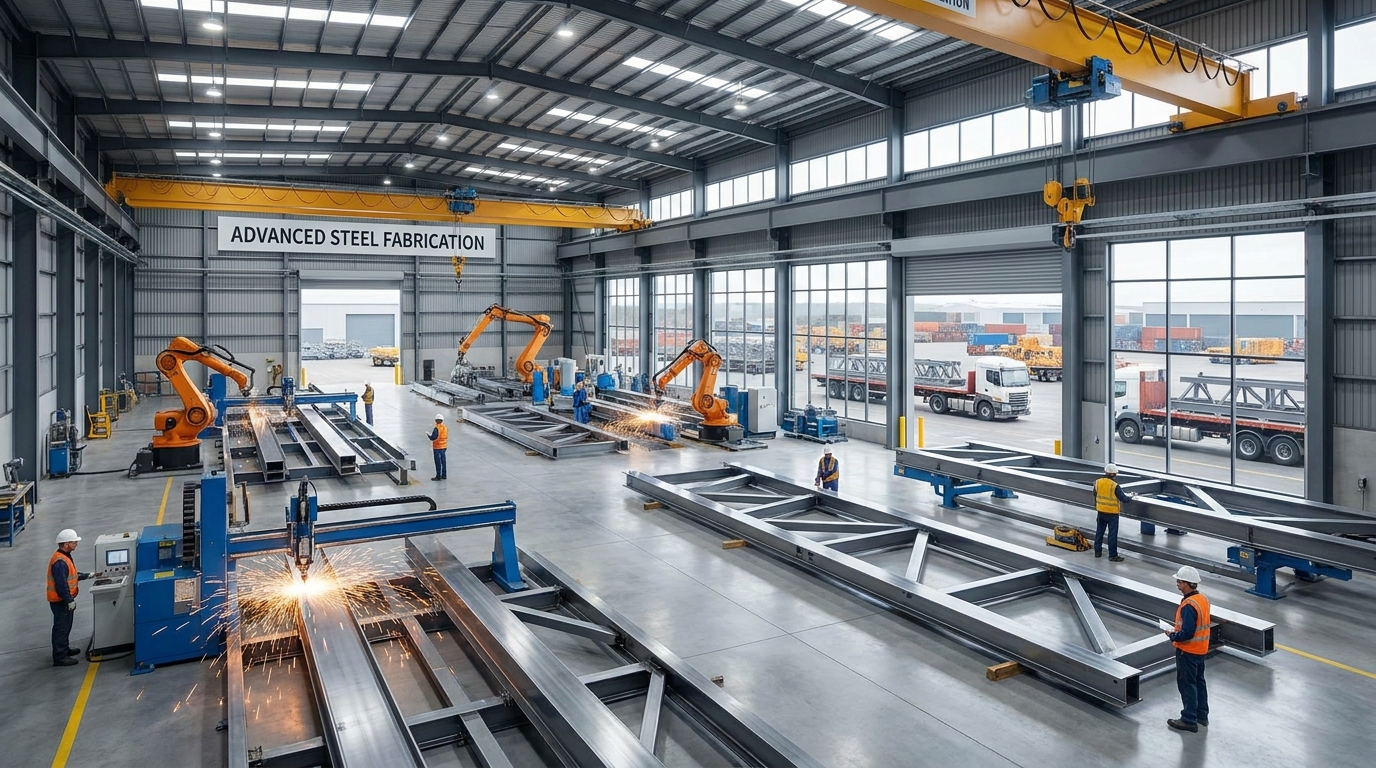
High-precision manufacturing ensures that every beam and panel fits perfectly, reducing the labor required for the cost to build 50,000 sq ft warehouse. When you source from a factory that uses automated welding and sandblasting, you receive a product with superior structural integrity and corrosion resistance.
Why is factory-direct quality better?
You eliminate the risk of mismatched parts that often occurs with outsourced fabrication. Direct control over the production line means that every hole is pre-drilled according to exact engineering specifications.
- Full traceability of raw materials
- Consistent welding standards
- High-grade protective coatings
- Optimized material usage
Does the coating system matter?
Are you building in a coastal area or a high-humidity environment? Choosing the right paint or galvanization system ensures that your steel frame remains rust-free for the next 50 years.
Here is the kicker: sandblasting before painting provides a much stronger bond for the protective layer. You should insist on mill certificates for all steel to verify the quality of the raw materials being used.
Key TakeawayPrecision-engineered steel components reduce on-site errors and speed up the total construction timeline. Superior coating systems protect your building from environmental degradation, ensuring long-term structural safety.
| Process Step | Quality Benefit | Outcome | |
|---|---|---|---|
| CNC Cutting | Extreme Precision | Seamless Fitting | |
| Submerged Welding | Stronger Bonds | Structural Safety | |
| Sandblasting | Surface Prep | Better Paint Adhesion | |
| Hot-Dip Galv | Corrosion Proof | 50+ Year Lifespan |
Automated fabrication reduces the chance of human error during the critical welding and fitting stages.
Why choose professional steel structure solutions?
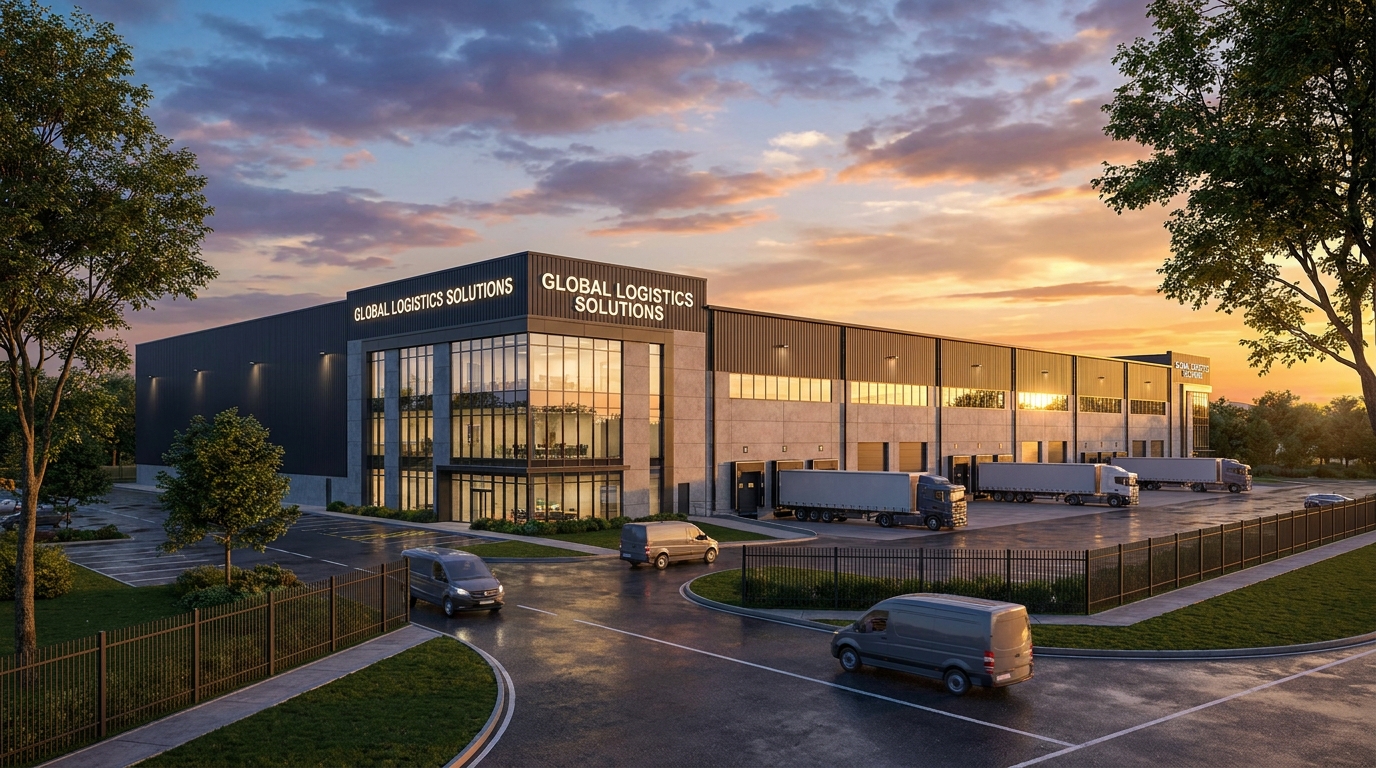
Partnering with an experienced manufacturer allows you to secure factory-direct pricing while ensuring your cost to build 50,000 sq ft warehouse meets all local building codes. A professional team provides the engineering expertise needed to handle wind, snow, and seismic loads specific to your site location.
What are the benefits of integrated delivery?
You receive a complete, installation-ready system that includes everything from the primary frame to the last fastener. This “all-in-one” approach prevents the frustration of missing parts that can stall your construction crew.
But that’s not all:
- Custom design support from engineers.
- Clear bill of materials (BOM) for easy sorting.
- Installation guidance with detailed drawings.
- Fast turnaround for global shipping.
How do you get a customized quote?
Are you ready to move from planning to execution? You can receive a detailed quotation within 24 hours by sharing your project dimensions and intended use with a building specialist.
The truth is: transparency in pricing is the foundation of a successful partnership. You should look for a manufacturer that provides clear cost breakdowns and realistic delivery timelines to help you plan your business expansion with confidence.
Key TakeawayProfessional steel structures offer the best balance of durability, speed, and cost-effectiveness. Choosing an integrated supplier simplifies the procurement process and guarantees a buildable, high-quality industrial facility.
| Solution Feature | Business Advantage | Long-Term Value | |
|---|---|---|---|
| Direct Pricing | No Middleman Markups | Higher Margin | |
| Code Compliance | Guaranteed Safety | Resale Value | |
| Integrated Supply | No Missing Parts | Lower Labor Cost | |
| Expert Engineering | Optimized Design | Material Efficiency |
Consulting with a specialist early in the design phase can help you identify cost-saving layout modifications.
Conclusion
At Showhoo, we are dedicated to transforming your vision of an industrial powerhouse into a physical reality. Our brand vision centers on engineering excellence and providing a seamless “one-stop” experience for global developers. Whether you are expanding a logistics hub or building your first production plant, what we can do for you is provide a high-precision, cost-effective steel solution that stands the test of time. To take the first step toward your new facility, contact us today for a comprehensive consultation and project estimate.
Frequently Asked Questions
Can I customize the door and window placements in my warehouse?Yes. You can position industrial roller doors, sliding doors, and windows according to your specific workflow needs during the design phase.
What’s the best way to handle snow and wind load requirements?Professional manufacturers use specialized engineering software to adapt your building’s frame and panel thickness to meet your local municipal safety codes.
How do I know if I need a permit for my warehouse?You should always consult with your local zoning department, as they define the specific land use and environmental requirements for your regional jurisdiction.
How do I know if steel is better than concrete for my warehouse?Steel is generally faster to erect and offers larger clear-span areas, making it the preferred choice for modern logistics and distribution centers.
Can I install the building myself with a local crew?Yes. You will receive detailed installation drawings and marked components, allowing a competent local contractor to assemble the structure with minimal difficulty.