
While many use the terms interchangeably, there is a significant functional and technical difference between these two facility types. Choosing the wrong structure can lead to operational bottlenecks or expensive structural retrofitting that halts your business growth. If you are planning a new project, securing a high-quality commercial warehouse provides the efficiency needed for storage, whereas industrial space caters to manufacturing. By identifying the specific engineering requirements of your operations early, you avoid the trap of investing in a building that cannot support your equipment or logistics flow.
1. What defines a modern commercial warehouse?
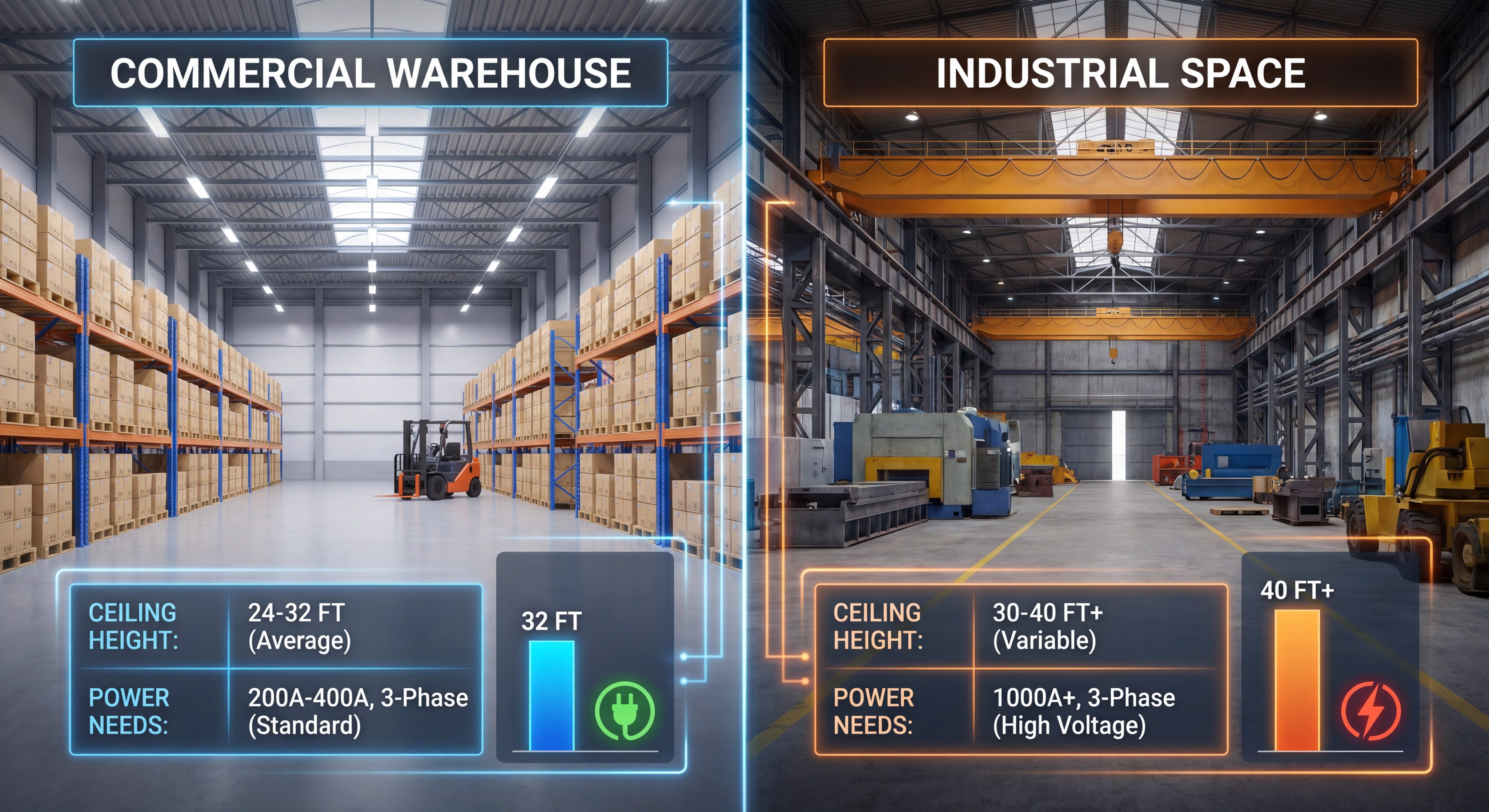
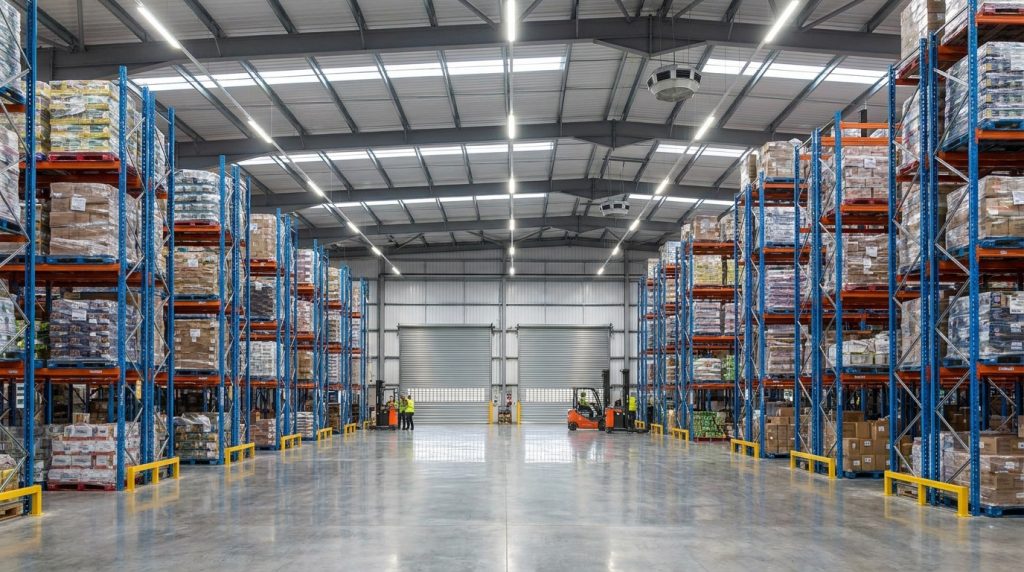
A commercial warehouse is a specialized building designed primarily for the efficient storage, protection, and distribution of goods. These structures prioritize clear-span volume and easy access for logistics vehicles to maximize throughput. You will typically find these buildings situated near major transportation hubs to facilitate rapid shipping.
How do you optimize vertical space?
When you design for storage, the “clear height” of the building becomes your most valuable asset for racking. Most modern facilities utilize vertical volume to increase pallet capacity without expanding the footprint.
- High-bay racking integration.
- Automated storage and retrieval systems (ASRS).
- Sufficient clearance for fire suppression sprinklers. But that’s not all. You must also consider how these heights impact your heating and cooling costs during the winter months.
Are loading docks a primary feature?
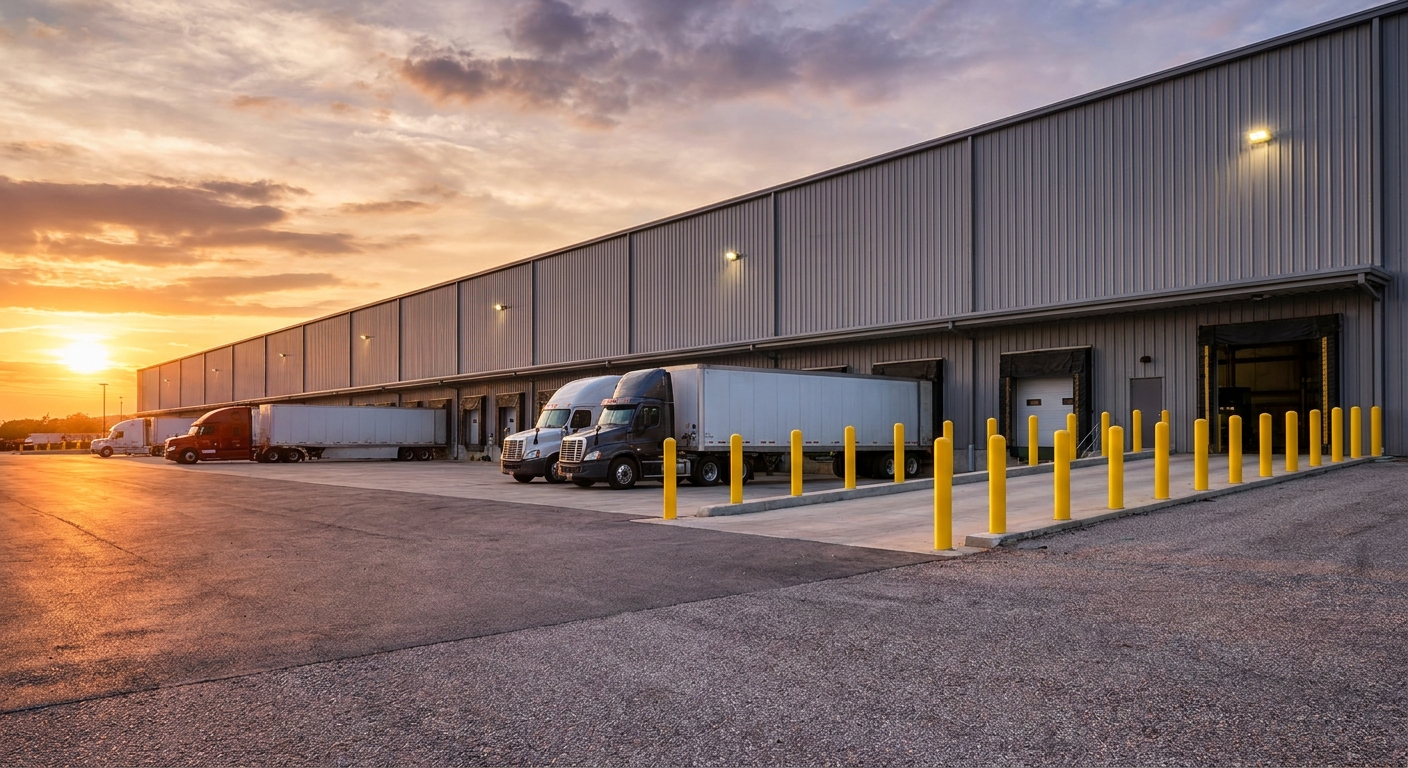
Loading docks are the heartbeat of any distribution center, allowing for the seamless movement of inventory in and out. You need to ensure the dock height matches your fleet’s requirements to prevent loading delays.
- Standard dock levelers for varied truck heights.
- Weather seals to protect sensitive cargo.
- Wide staging areas for sorted pallet movement. Here is the kicker: If you underestimate the number of bays you need, your facility will suffer from terminal congestion.
Key Takeaway: Commercial warehouses are logistics engines that prioritize storage density and fast vehicle turnover above all else.
| Feature | Requirement | Benefit | |
|---|---|---|---|
| Clear Height | 24 – 40 feet | Maximizes vertical storage | |
| Floor Load | Standard Reinforced | Supports heavy racking systems | |
| Access | Multiple Dock Bays | Facilitates rapid logistics |
Proper planning for dock placement ensures your logistics operation never hits a functional dead end.
2. How does industrial space differ from warehousing?
Industrial space is a category of real estate used for the production, manufacturing, or assembly of goods rather than just storage. Unlike a standard commercial warehouse , these facilities are equipped with heavy-duty utilities and structural reinforcements for machinery. You will often see these buildings housing complex production lines and engineering departments.
Is manufacturing infrastructure different?
Industrial sites require specific floor layouts that can accommodate stationary machinery and assembly workers. You must plan for dedicated zones that separate human activity from hazardous production areas.
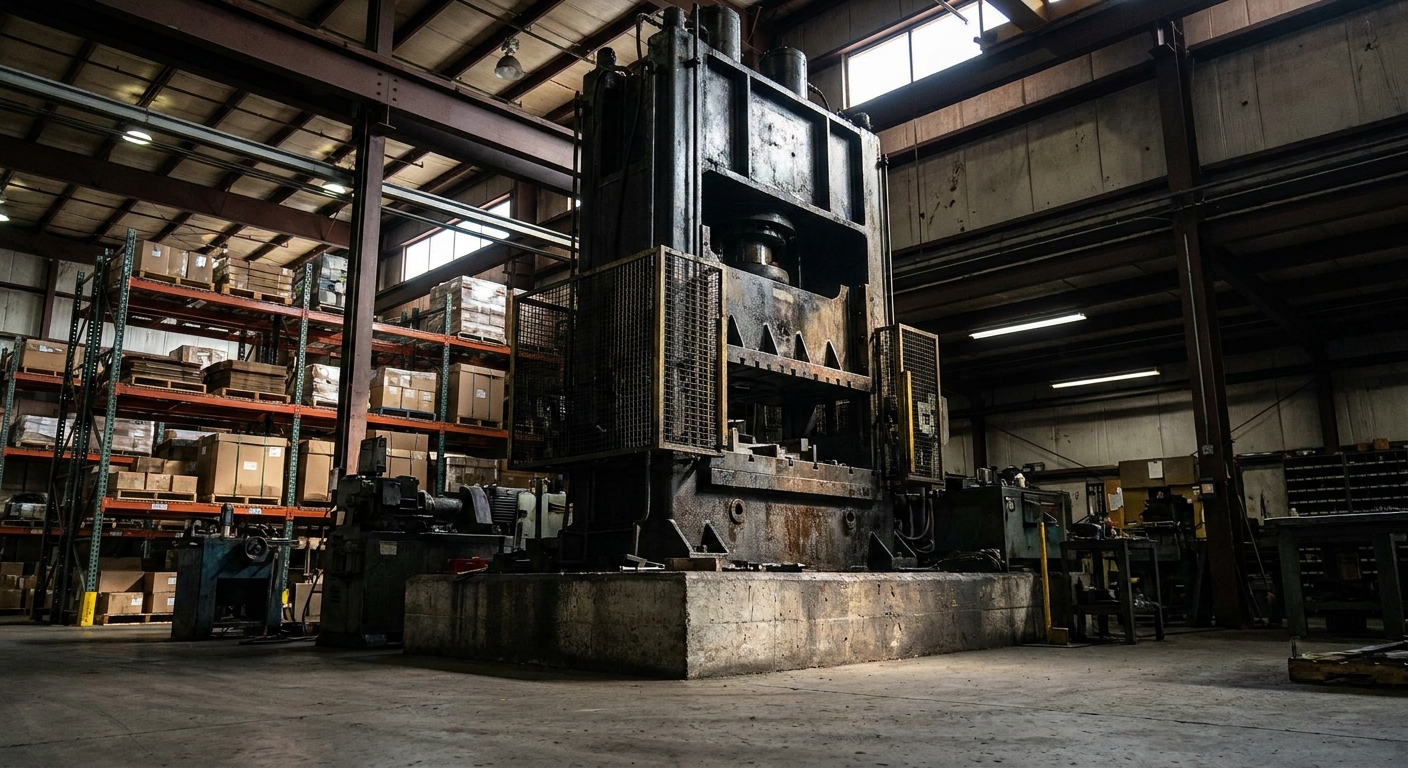
- Reinforced foundations for heavy presses.
- Integrated assembly line floor tracks.
- Dedicated safety corridors for personnel. The point is this: You cannot simply place a heavy production line on a standard warehouse floor without risking structural cracks.
What about mixed-use office space?
Because these sites house the core of a business, you often need a higher percentage of office space integrated into the steel structure. This allows your engineering and administrative teams to stay close to the actual production floor.
- Mezzanine offices for floor oversight.
- Climate-controlled labs and testing rooms.
- High-occupancy restrooms and breakrooms. Believe it or not, many industrial buildings allocate up to 20% of their area for office use, compared to the 5% seen in storage.
Key Takeaway: Industrial spaces are active work environments that focus on the “creation” of value rather than just the “custody” of inventory.
| Aspect | Warehouse | Industrial | |
|---|---|---|---|
| Primary Goal | Storage & Transit | Manufacturing & Assembly | |
| Office Ratio | 5% or less | 10% to 25% | |
| Utility Demand | Low (Lighting/HVAC) | High (3-Phase Power/Gas) |
Industrial facilities serve as the home for your entire workforce and production lifecycle.
3. Is floor load capacity different for industrial use?
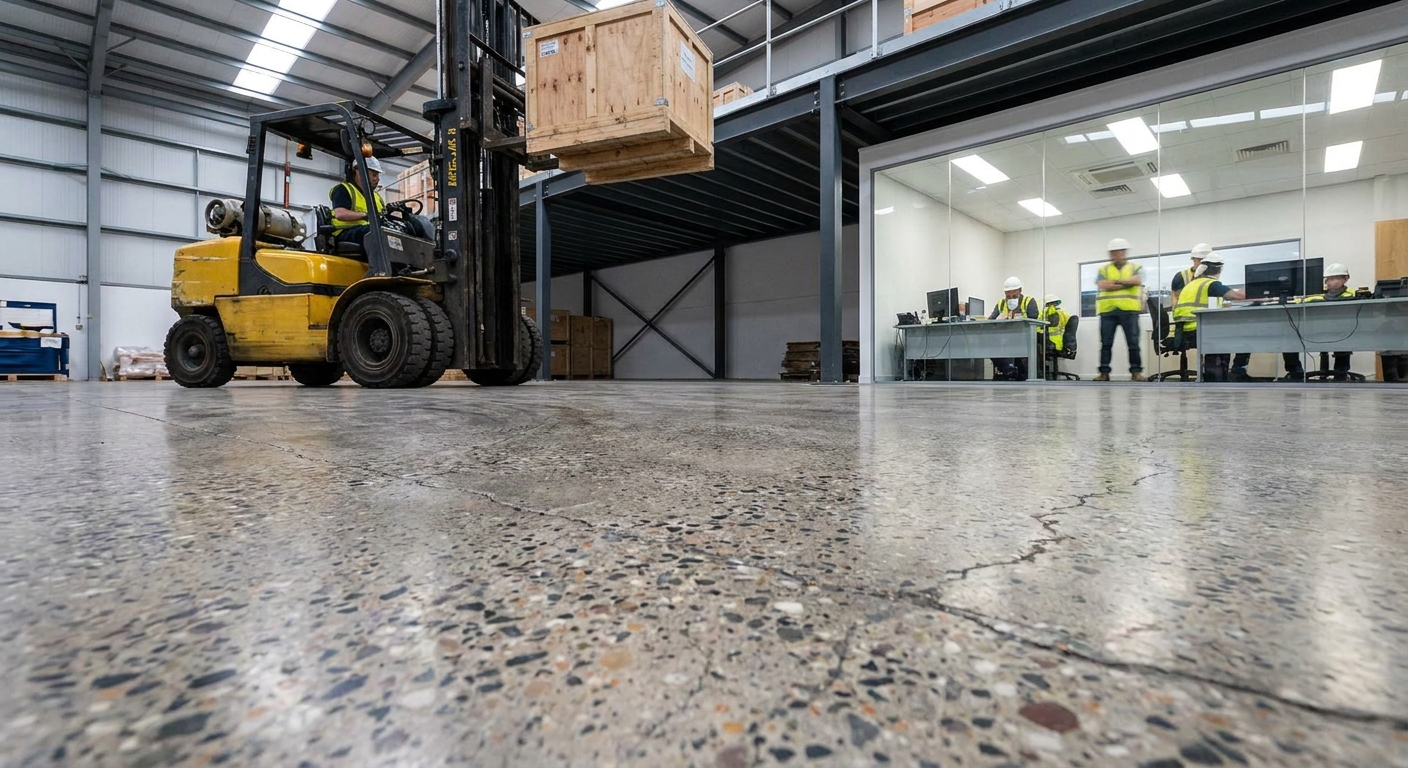
Yes, industrial facilities almost always require significantly higher floor load capacities to support the weight and vibration of heavy machinery. While a standard commercial warehouse floor is designed for the static weight of racks, industrial slabs must handle dynamic forces. You must consult with engineers to ensure the concrete thickness meets the specific PSI (pounds per square inch) requirements of your equipment.
Why do you need thicker slabs?
If you plan to install heavy industrial presses or CNC machines, a standard 6-inch slab might fail under the concentrated weight. You need reinforced concrete that can dissipate energy and prevent localized sinking over time.
- Increased rebar density for structural integrity.
- Specialized vapor barriers for moisture control.
- Laser-leveled floors for precision machine operation. Think about it: A single machine could weigh more than an entire row of storage racks combined.
How does vibration impact the building?
Dynamic loads from rotating machinery can cause harmonic vibrations that damage the steel frame if not properly dampened. You must incorporate isolation joints in the floor to prevent these vibrations from traveling through the structure.
- Rubber isolation pads under heavy equipment.
- Expansion joints to manage thermal movement.
- Independent foundations for the heaviest machines. But wait, there is more. You also need a smooth surface to ensure that high-reach forklifts can operate without swaying at peak heights.
Key Takeaway: Industrial floor engineering is a science of weight distribution and vibration management that exceeds storage standards.
| Load Type | Standard Warehouse | Heavy Industrial | |
|---|---|---|---|
| Static Load | High (Racking) | Moderate (Workstations) | |
| Dynamic Load | Low (Forklifts) | High (Moving Machinery) | |
| Slab Thickness | 6 to 8 inches | 10 to 14+ inches |
Choosing a thicker slab during the initial build is far cheaper than trying to reinforce it later.
4. Why do industrial sites require higher power loads?
Industrial facilities require massive electrical capacity to drive high-voltage machinery and heavy assembly tools. While a standard commercial warehouse primarily uses electricity for lighting and basic HVAC, an industrial site is a power-hungry environment. You must ensure your building is connected to a high-capacity grid with 3-phase power capabilities.
Can your grid support manufacturing?
When you start a production line, the initial power surge can trip standard breakers if the system isn’t designed for high “inrush” currents. You need a robust electrical panel and sub-distribution system that can handle continuous high-amperage draws.
- High-voltage transformers for site distribution.
- Multiple sub-panels for localized machine power.
- Power factor correction to reduce utility waste. Now, here is the kicker: If you don’t plan for power scalability, you will be stuck paying for expensive utility upgrades as you grow.
Do you need specialized cabling?
Industrial environments often require heavy-gauge wiring and shielded cables to prevent electrical interference between machines. You must consider the placement of electrical drops to keep your production floor free of tripping hazards and cluttered conduits.
- Overhead busbars for flexible machine placement.
- Underground conduits for permanent heavy equipment.
- Shielded data lines for smart factory sensors. You see, a well-planned electrical layout allows you to move machines without re-wiring the entire building.
Key Takeaway: Electrical infrastructure in industrial buildings is designed for high-voltage reliability and future production expansion.
| Electrical Component | Warehouse Standard | Industrial Standard | |
|---|---|---|---|
| Amperage | 200 – 400 Amps | 1200 – 4000+ Amps | |
| Power Phase | Single or 3-Phase | Heavy-Duty 3-Phase | |
| Distribution | Simple Lighting Circuits | Complex Machine Circuits |
Robust power systems ensure your production lines never face an unexpected outage.
5. Do clear span requirements vary between these spaces?
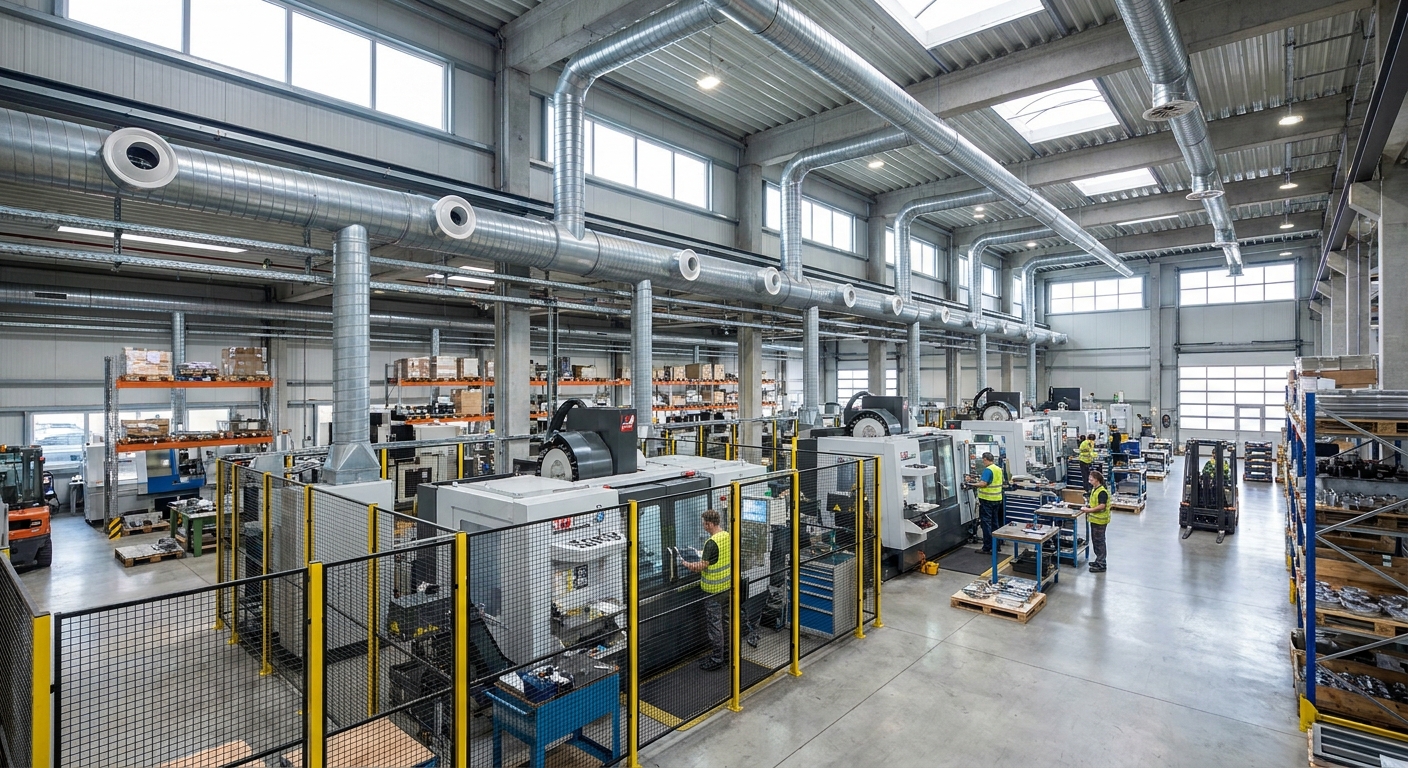
Clear span refers to the distance between supporting columns, and it is a critical factor for both types of buildings. In a commercial warehouse, you want the widest possible clear span to allow for unobstructed racking and forklift lanes. Conversely, industrial spaces sometimes trade clear span width for the structural strength needed to support overhead cranes or heavy mezzanine levels.
Why do warehouses favor wide spans?
When you have a column-free interior, you gain the flexibility to reconfigure your storage racks as your inventory changes. You can achieve spans up to 40 meters without internal pillars using advanced steel H-section frames.
- Maximum utilization of floor square footage.
- No “dead zones” behind structural pillars.
- Faster movement for wide-turning logistics vehicles. But here is the thing: Wider spans require heavier steel beams, which can increase your initial material investment.
Does industrial work allow for columns?
In an industrial setting, you might find that having strategically placed columns is beneficial for mounting equipment or piping. You can use these internal supports to hang tools, electrical panels, or localized ventilation hoods.
- Support for heavy overhead bridge cranes.
- Mounting points for air and gas lines.
- Reduced steel costs for very large footprints. Keep this in mind: If you need to move large items through the shop, you still need to keep the center aisle clear of obstructions.
Key Takeaway: Warehouses prioritize unobstructed volume, while industrial designs balance span width with structural utility mounting needs.
| Structure Type | Clear Span Goal | Common Width | |
|---|---|---|---|
| Warehouse | Unobstructed Flow | 30m – 40m+ | |
| Industrial | Equipment Support | 18m – 24m (with columns) | |
| Flex Space | Hybrid Efficiency | 24m – 30m |
Clear-span design is the most effective way to future-proof your building for different storage needs.
6. What ventilation systems are needed for industrial plants?
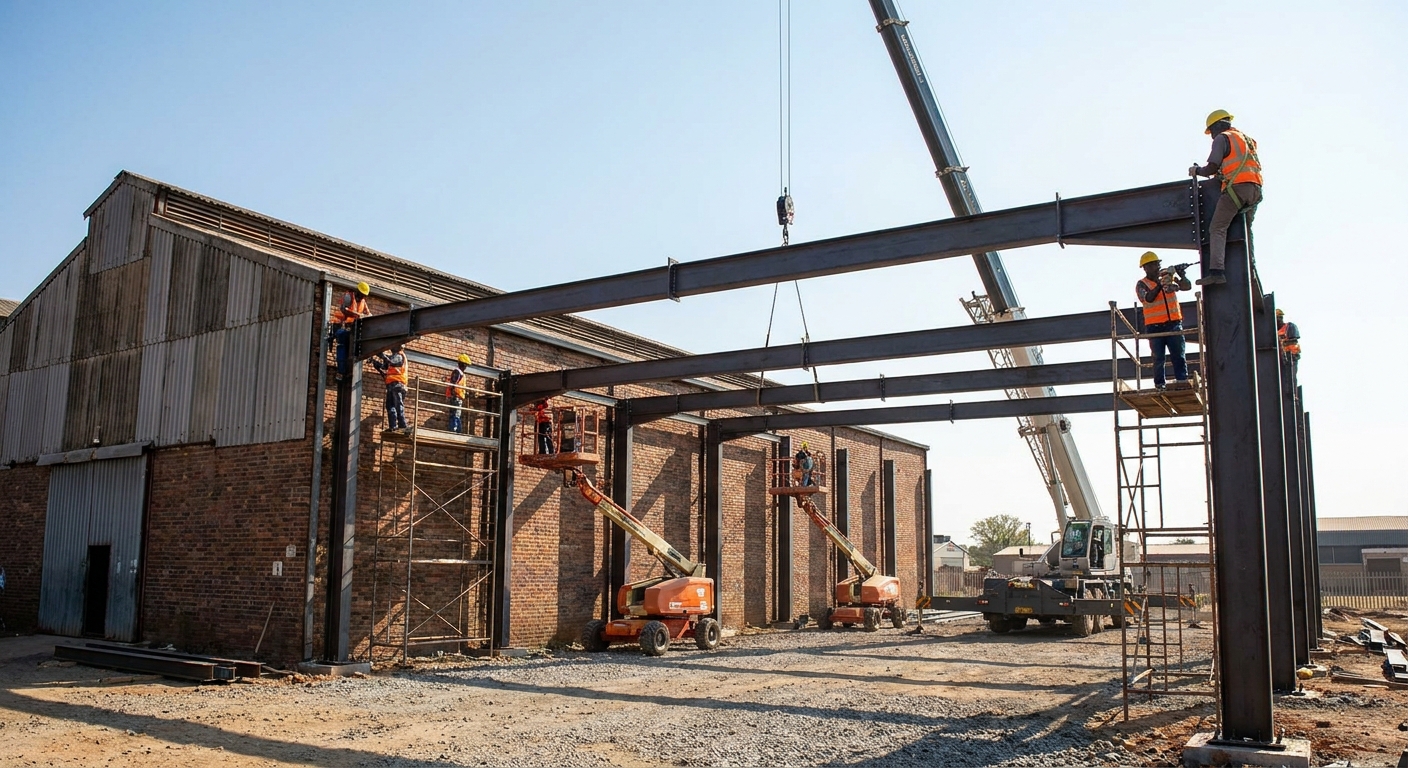
Manufacturing processes often generate heat, dust, or chemical fumes that must be actively removed from the environment. A standard commercial warehouse usually relies on passive ventilation or basic air exchange to keep the air fresh. However, if you are running an industrial plant, you need high-capacity mechanical exhaust systems to maintain air quality and worker safety.
How do you manage air quality?
When you weld, grind, or use chemicals, you need localized extraction systems that pull contaminants away from the source. You must integrate these systems into the building’s roof design to ensure proper discharge and compliance with environmental laws.
- High-efficiency particulate air (HEPA) filters.
- Localized fume extractors for welding stations.
- Continuous air monitoring sensors. The reality is this: Poor ventilation doesn’t just hurt productivity; it can lead to massive fines from safety regulators.
Is heat dissipation a major concern?
Large machinery generates a significant amount of heat that can make the building unbearable for your employees. You need to incorporate industrial-grade roof fans and louvers that can cycle the entire building’s air volume multiple times per hour.
- Automated ridge vents for heat escape.
- High-volume low-speed (HVLS) fans for circulation.
- Wall-mounted intake louvers for cross-breeze. Wait, there is more. You should also consider using insulated sandwich panels to keep the internal temperature stable regardless of external weather.
Key Takeaway: Industrial ventilation is a health and safety requirement that demands active mechanical systems and strategic building design.
| Ventilation Feature | Warehouse Need | Industrial Need | |
|---|---|---|---|
| Air Exchange Rate | Low (1-2 times/hour) | High (6-15 times/hour) | |
| Filtration | Standard Dust Guards | Chemical & Fume Scrubbers | |
| Cooling | Passive/HVLS Fans | Active Mechanical Exhaust |
Active air management protects both your expensive machinery and your most valuable asset—your people.
7. Can commercial warehouses support heavy overhead cranes?
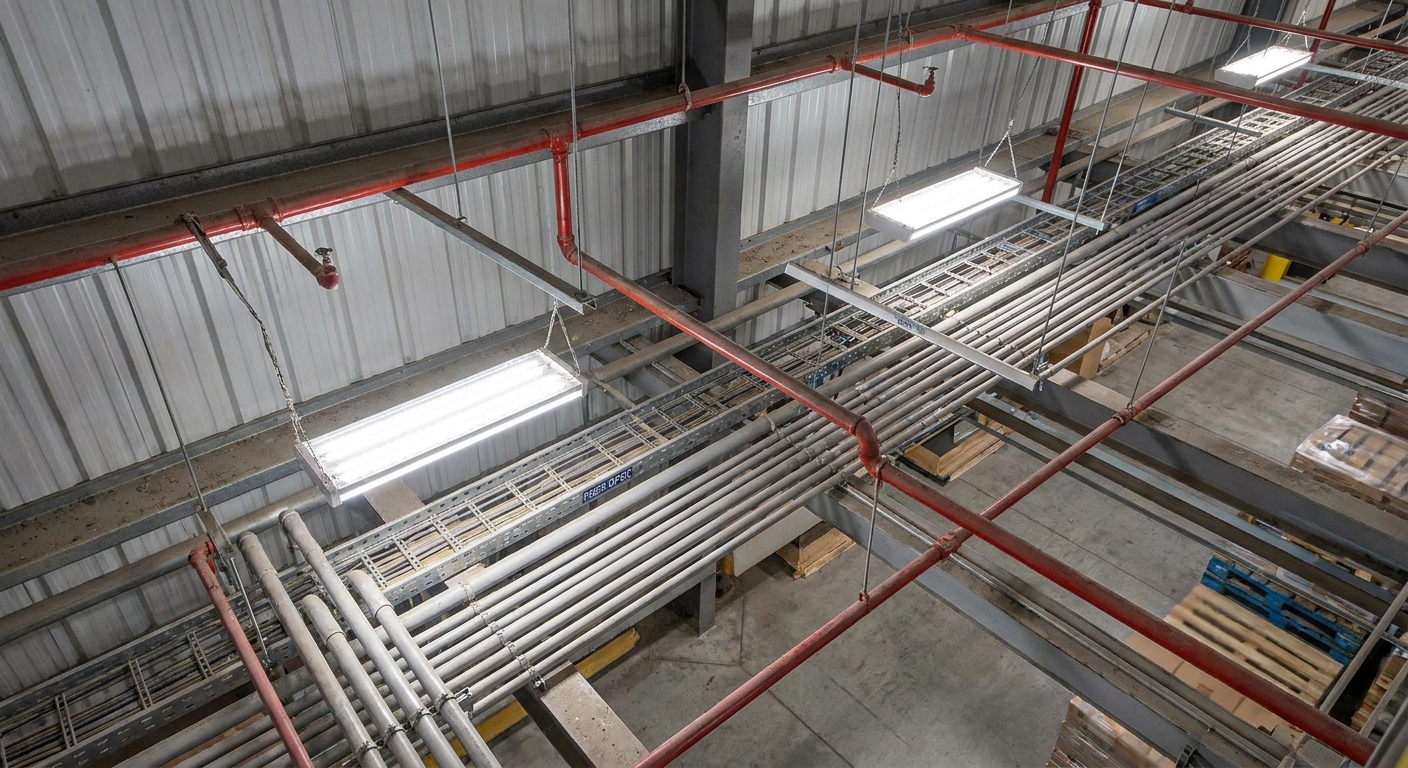
Most standard commercial warehouse designs are not built to handle the lateral and vertical stresses of an overhead bridge crane. If your project requires lifting heavy steel or components, you must specify this during the design phase so the steel columns can be reinforced. You will need a building that incorporates “crane beams” or “brackets” as part of the primary structural skeleton.
Do cranes change the steel spec?
When you add a crane, the weight of the load is transferred directly into the building’s frame, requiring thicker H-section steel. You must ensure the foundations under the columns are also widened to prevent the building from shifting under the moving weight.
- Heavier column sections for vertical support.
- Reinforced eave joints for lateral stability.
- Dedicated rails for the crane trolley to run on. Check this out: Retrofitting a crane into an existing warehouse can cost three times as much as including it in the original build.
Are jib cranes a better alternative?
If you only need to lift items at a specific workstation, you might consider a jib crane that attaches to a single column. This allows you to maintain your open floor plan while providing lifting power exactly where your team needs it most.
- 360-degree rotation for workstation flexibility.
- Lower structural impact on the overall frame.
- Cost-effective for light assembly tasks. But don’t forget: You still need a reinforced floor pad to anchor the base of the jib crane securely.
Key Takeaway: Crane integration requires specialized engineering that fundamentally changes the structural requirements of a steel building.
| Crane Type | Lift Capacity | Structural Impact | |
|---|---|---|---|
| Bridge Crane | 5 to 50+ Tons | Very High (Requires heavy frame) | |
| Gantry Crane | 1 to 10 Tons | Moderate (Floor-based) | |
| Jib Crane | 0.5 to 2 Tons | High (localized to one column) |
Designing for cranes from day one ensures your facility can handle the heaviest tasks of your industry.
8. How does zoning impact your facility selection?
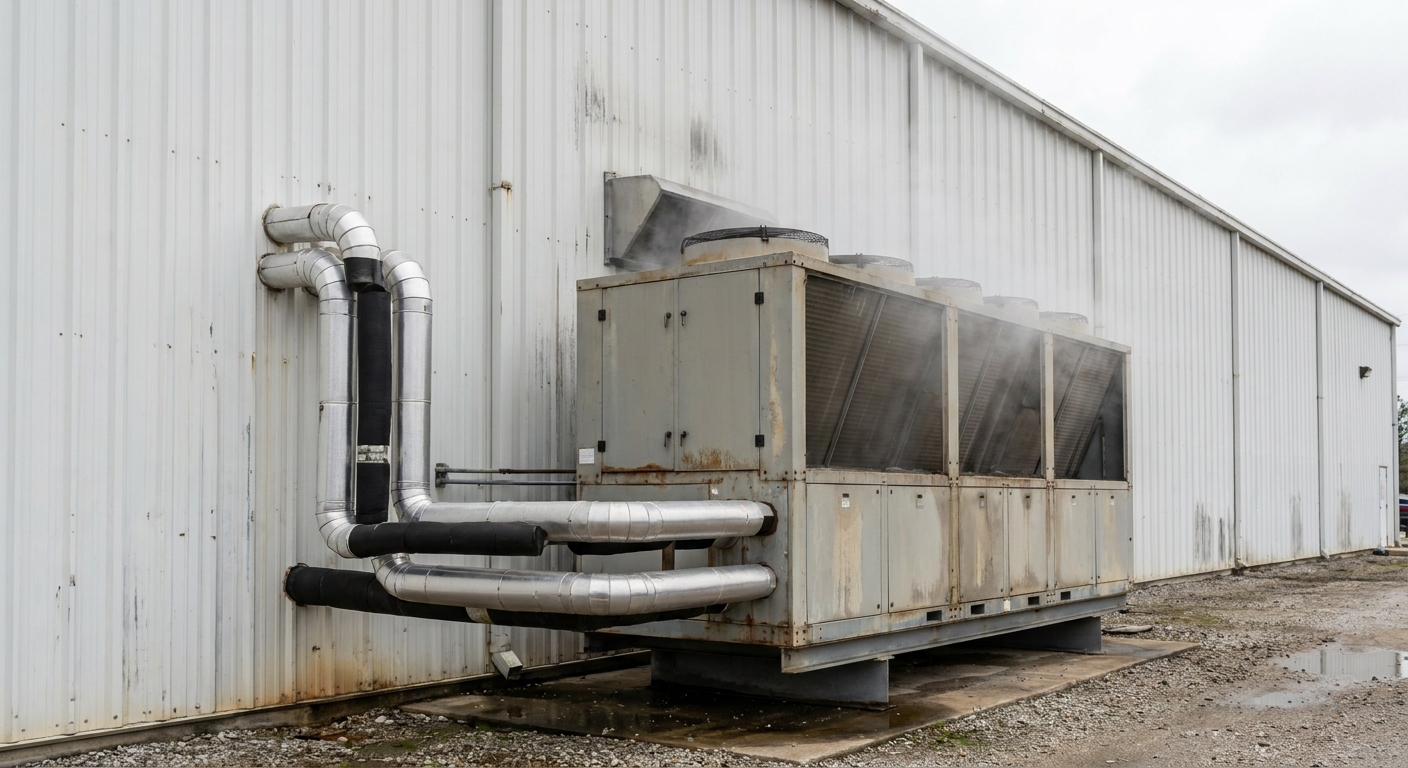
Zoning laws dictate exactly what activities you can perform inside your commercial warehouse or industrial space. You will find that “Light Industrial” zoning usually allows for warehousing and clean assembly, but “Heavy Industrial” is required for intense manufacturing. You must verify the local land-use permits before you commit to a specific site or building design.
Can you store hazardous materials?
If your inventory includes flammable liquids or chemicals, you need a facility that meets specific environmental and fire safety zoning requirements. You must incorporate secondary containment systems and specialized firewalls to satisfy local safety inspectors.
- Specialized chemical storage rooms.
- Explosion-proof lighting and electrical.
- Increased setback distances from property lines. Here is the bottom line: Choosing a site with the wrong zoning can prevent you from even opening your doors to business.
How does noise impact your location?
Manufacturing facilities often produce noise levels that are prohibited near residential or light-commercial areas. You need to ensure your site is zoned for “24/7” operations if your production schedule requires night shifts.
- Acoustic insulation for wall panels.
- Buffer zones to minimize community impact.
- Compliance with local decibel limits. You see, an industrial site in the wrong zone will lead to constant complaints and potential legal shutdowns from the city.
Key Takeaway: Zoning is the legal foundation of your project and determines the operational limits of your physical facility.
| Zoning Type | Typical Use | Restriction Level | |
|---|---|---|---|
| Light Industrial | Warehousing/Clean Assembly | Moderate (Noise/Traffic) | |
| Heavy Industrial | Manufacturing/Processing | High (Environmental/Safety) | |
| Flex/Commercial | Showrooms/Distribution | Low (High public access) |
Always secure a zoning confirmation letter before finalizing your building’s engineering drawings.
9. Which facility offers a better long-term ROI?
Determining the best return on investment (ROI) depends on whether your business model focuses on “logistics efficiency” or “production output.” A commercial warehouse typically has lower initial build costs and is easier to lease to a wide variety of tenants if you ever move. However, a custom industrial space can significantly lower your production costs, providing a much higher long-term profit margin for manufacturers.
Is a warehouse easier to sell?
Because a warehouse is a “general purpose” structure, it holds its value well in the secondary real estate market. You will find it much easier to find a buyer or tenant for a storage building than for a highly specialized manufacturing plant.
- Broad market appeal for logistics firms.
- Lower maintenance costs for vacant periods.
- Faster construction time leads to quicker occupancy. But wait, there is more. The rapid assembly of steel warehouses means you can start generating revenue months earlier than traditional builds.
Why invest in specialized industrial?
While the upfront costs for industrial features are higher, they act as a force multiplier for your manufacturing efficiency. You can recoup the extra investment through faster production cycles and lower energy costs from optimized utility layouts.
- Custom layouts reduce material handling time.
- Integrated systems lower utility overhead.
- Higher barriers to entry for local competitors. Think about it: A building that is perfectly tuned to your machine flow is an asset that pays for itself every single day.
Key Takeaway: Warehouses offer liquidity and flexibility, while industrial spaces provide a competitive edge through operational optimization.
| ROI Factor | Warehouse | Industrial | |
|---|---|---|---|
| Initial Cost | Lower ($ per sq ft) | Higher (Utility/Structural) | |
| Resale Value | High (General Appeal) | Variable (Needs specific buyer) | |
| Operational Payback | Slow (Rental/Storage fees) | Fast (Manufacturing efficiency) |
Investing in the right building type prevents the massive “hidden cost” of operational inefficiency.
10. When should you choose a custom steel building?
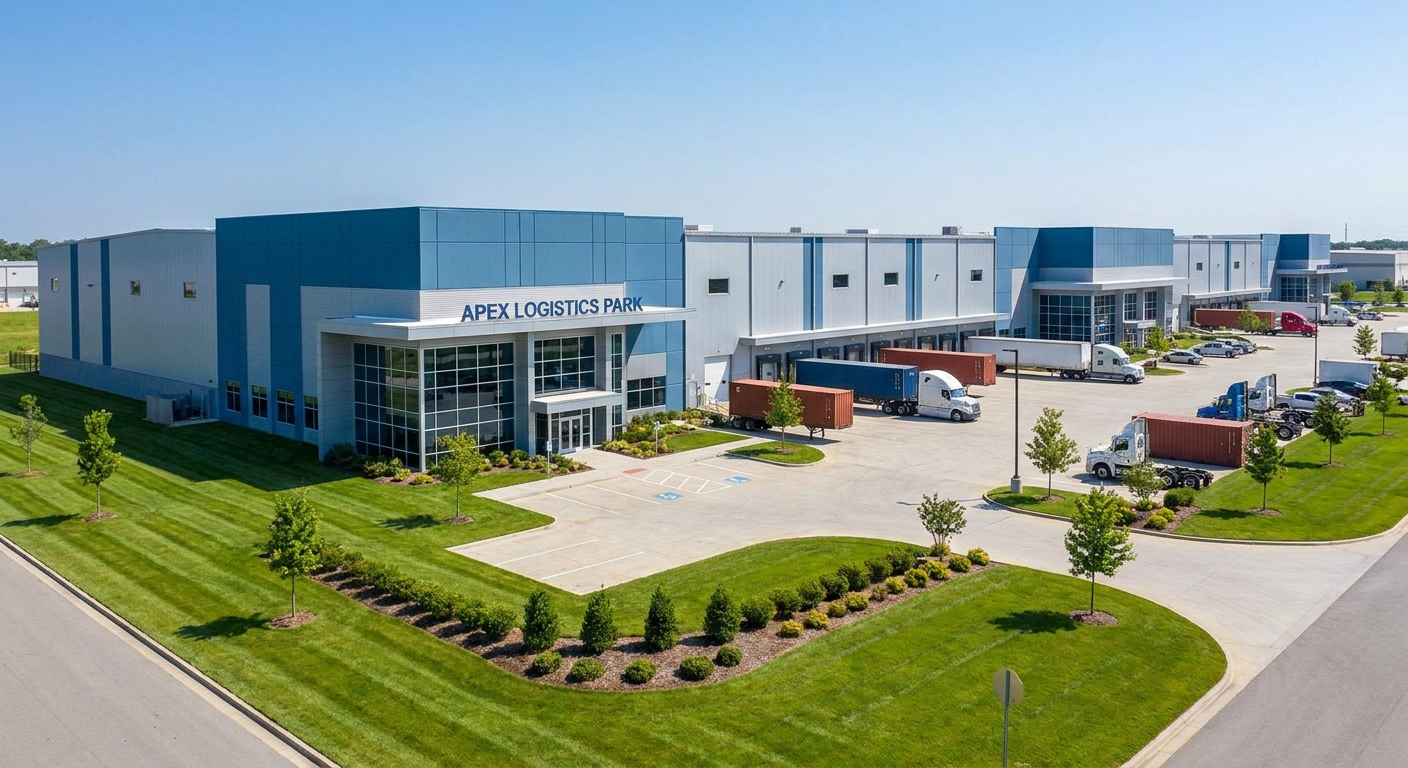
You should choose a custom-engineered steel building when your operational needs exceed the capabilities of standard “off-the-shelf” properties. A custom commercial warehouse allows you to dictate every dimension, from the eave height to the specific placement of heavy-duty doors. You gain a facility that is built around your workflow, rather than forcing your workflow to fit into a pre-existing box.
Can you design for extreme climates?
If your facility is located in a region with high winds, heavy snow, or seismic activity, a custom design is non-negotiable for safety. You need a structure that is calculated for your specific GPS coordinates to ensure it survives decades of harsh weather.
- Wind load calculations for coastal regions.
- Snow load reinforcement for colder climates.
- Anti-corrosion coatings for humid environments. Here is the kicker: A building designed for a different climate could collapse under a heavy snow load that it wasn’t engineered to carry.
How does customization speed up assembly?
Custom prefabricated steel buildings are manufactured in a factory with extreme precision, meaning every bolt hole aligns perfectly on-site. You will find that these kits go up much faster than traditional construction, reducing your labor costs and project timelines.
- No re-cutting or welding required on site.
- Clear labeling for rapid component sorting.
- Reduced waste compared to on-site fabrication. You see, the precision of the factory-direct model eliminates the most common delays in commercial construction projects.
Key Takeaway: Custom steel buildings provide the exact technical specifications required for safety, efficiency, and rapid business expansion.
| Construction Method | Timeline | Customization Level | |
|---|---|---|---|
| Prefab Steel | 4 – 8 Weeks (Assembly) | High (Fully Tailored) | |
| Concrete Tilt-Up | 4 – 6 Months | Moderate (Template Based) | |
| Traditional Masonry | 8 – 12 Months | Low (Cost Prohibitive) |
A custom-designed facility is the most powerful tool you can give to your operations team.
FAQ
Can I run a small production line in a commercial warehouse? Yes, but you must verify that the electrical capacity and floor thickness can support your specific machines. Many “flex” warehouses are designed for light assembly but may lack the high-voltage power needed for heavy industrial use.
What’s the best way to determine the height I need for storage? You should calculate the height of your tallest forklift’s reach and add 4 to 6 feet for fire sprinkler clearance. Most modern logistics hubs now aim for at least a 32-foot clear height to maximize vertical ROI.
Can I convert an industrial space into a warehouse easily? Usually, yes, because industrial spaces are “over-engineered” compared to warehouses. You will have more power and floor strength than you need, though you might have fewer loading docks than a dedicated distribution center requires.
What’s the best material for a low-maintenance commercial building? Prefabricated steel with high-quality corrosion-resistant coatings is the industry standard. Steel doesn’t warp, rot, or attract pests, and modern paint finishes can last for 20 years or more without needing a refresh.
Can I add a second floor to a steel warehouse later? You can, but only if the original columns and foundations were designed to carry the extra weight. It is always better to plan for a mezzanine level during the initial design phase to avoid expensive foundation underpinning later.
Conclusion
Distinguishing between warehouse and industrial space is the first step in ensuring your capital investment delivers long-term value. Whether you require the high-density storage of a commercial warehouse or the robust manufacturing power of an industrial site, the structural integrity of your building is the foundation of your success. At Showhoo Building, we specialize in factory-direct steel structures that bridge the gap between these two worlds, providing 40% faster build times and custom engineering for 50+ countries. If you are ready to build a facility that perfectly matches your operational demands, contact us today for a custom quote and design consultation.