
Designing a high-performance horse barn requires balancing superior equine safety with long-term structural resilience. Many owners face the nightmare of wood rot, termite damage, and high maintenance costs when using traditional building materials. Imagine the stress of a structural failure during a severe storm or the constant fear of fire hazards in a timber-framed facility. The modern solution is a precision-engineered horse stable building made of steel, which offers a sterile, fire-resistant, and durable environment for you and your horses.
Why choose a steel horse stable building for durability?
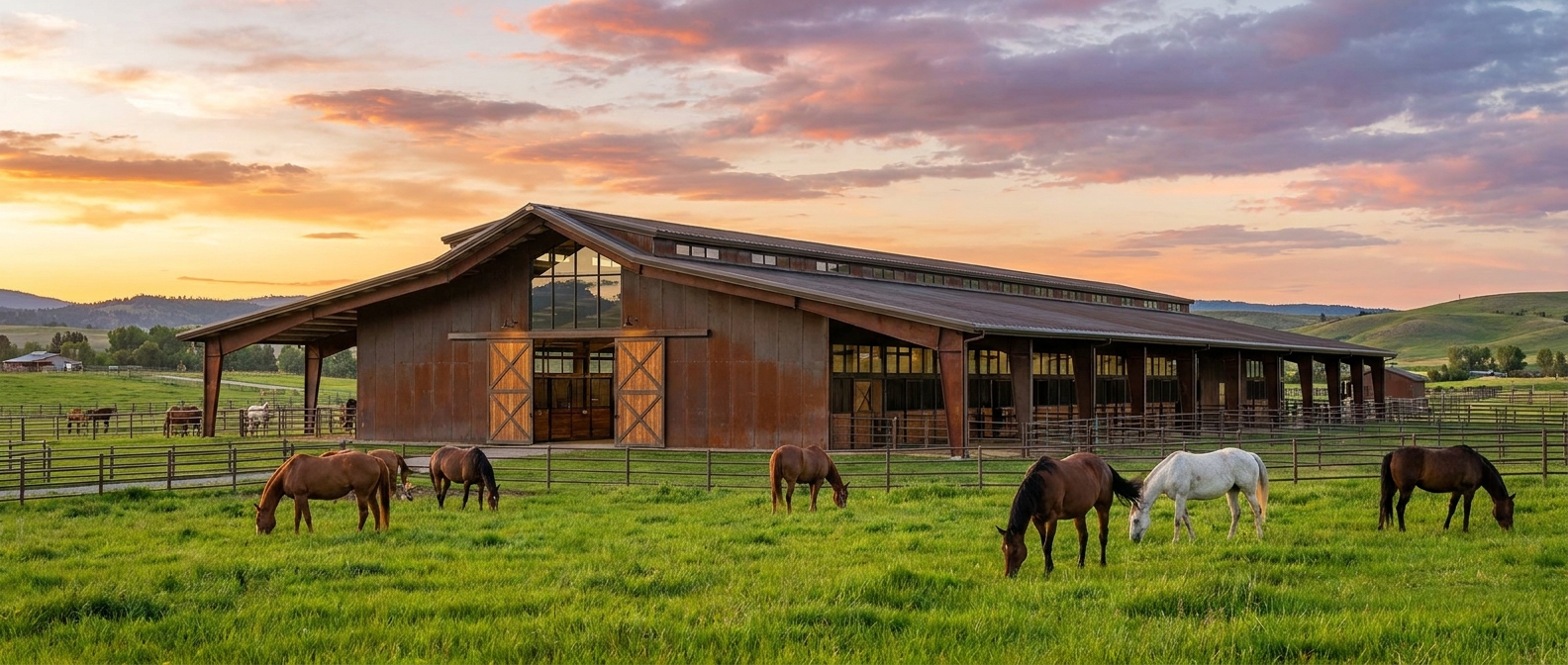
Steel structures provide unmatched resistance to environmental stressors that typically degrade agricultural buildings. Using a steel horse stable building ensures that your facility remains standing for decades without the warping or decay common in wood.
Is steel really fire resistant?
Non-combustible steel frames significantly reduce the risk of catastrophic loss during a fire. This is the most critical safety feature for any high-value equestrian operation.
- Steel does not feed flames.
- Lower insurance premiums for fire-rated structures.
- Safer environment for overnight stabling.
Think about it.
How does it resist pests?
Termites and wood-boring insects cannot damage the structural integrity of a steel frame. You also eliminate the risk of horses chewing on the beams, a behavior known as cribbing.
- 100% termite proof.
- No rot or mold growth.
- Chemical-free pest resistance.
Key Takeaway: Choosing steel provides a “set-it-and-forget-it” solution for structural longevity, drastically reducing the total cost of ownership over the building’s life.
Summary: Steel Durability Factors
| Factor | Steel Benefit | Maintenance Level | |
|---|---|---|---|
| Fire Safety | Non-combustible | Zero maintenance | |
| Pest Resistance | Termite/Rodent proof | Zero maintenance | |
| Lifespan | 50+ Years | Extremely Low |
Steel’s inherent resistance to biological and thermal degradation makes it the most fiscally responsible choice for long-term equestrian infrastructure.
What is the ideal layout for a horse stable building?
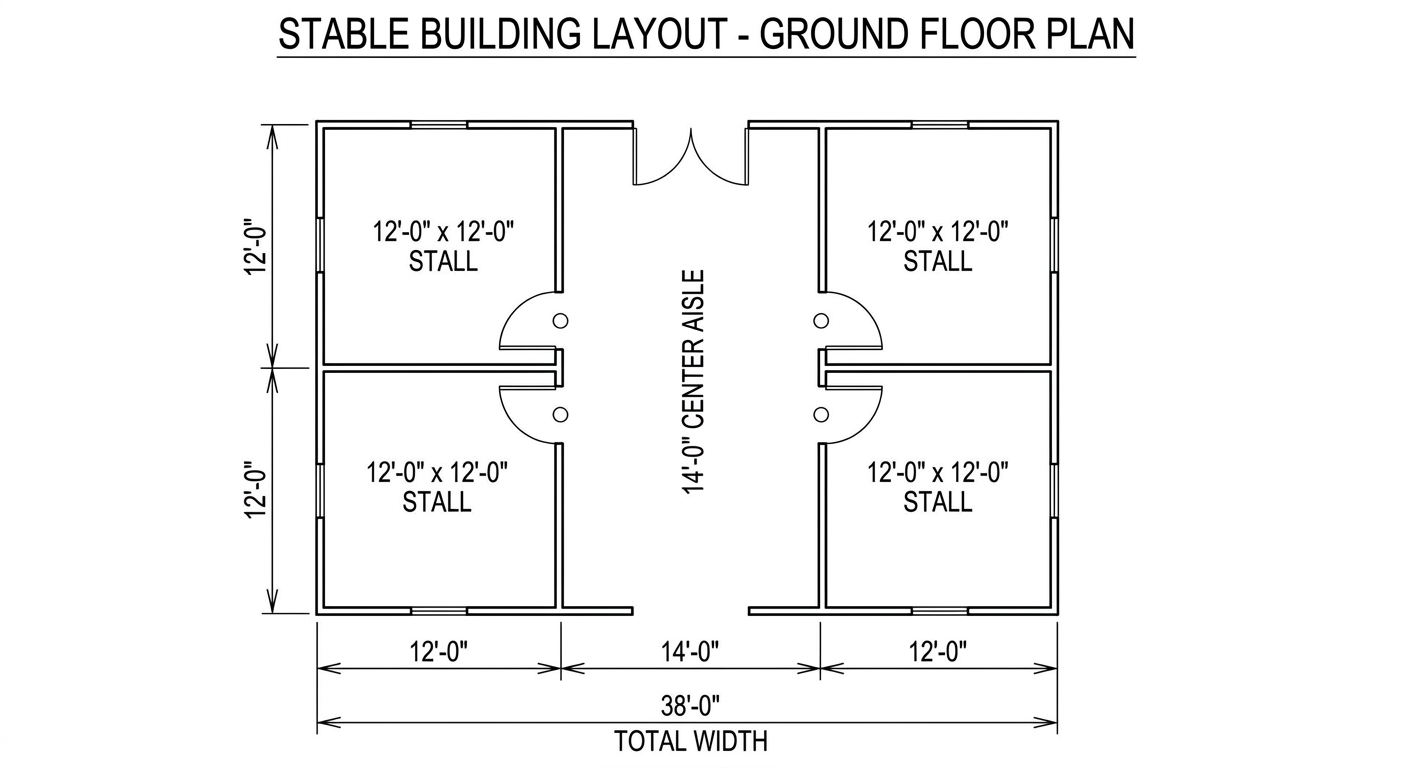
The center-aisle floor plan is widely considered the most efficient layout for modern operations. A professional layout for a horse stable building ensures that feeding, mucking, and grooming happen within a protected, streamlined environment.
Center-aisle vs. Shed Row?
Center-aisle designs protect handlers from the weather while providing a central hub for all activities. Shed row barns are more affordable but lack the interior workspace needed for year-round care.
- Center aisles offer all-weather access.
- Shed rows provide maximum natural ventilation.
- Mixed designs can include porches for extra shade.
Here’s the best part:
Standard stall dimensions
Industry standards suggest 12×12 stalls for average horses to ensure they can turn and lie down comfortably. Larger drafts or foaling stalls should be expanded to at least 14×14 or 12×24.
- 12×12 is standard for 1,000lb horses.
- 10×10 is adequate for small ponies.
- 14×14 is required for draft breeds.
Key Takeaway: A well-planned layout minimizes labor time and maximizes horse comfort by placing high-traffic areas like tack rooms near the stalls.
Summary: Layout Specifications
| Component | Standard Dimension | Benefit | |
|---|---|---|---|
| Main Aisle | 12′ – 14′ Wide | Safe horse passage | |
| Standard Stall | 12′ x 12′ | Optimal comfort | |
| Ceiling Height | 10′ – 12′ | Air circulation |
Strategic aisle width prevents congestion during peak training hours and allows for emergency vehicle access if necessary.
Email:sales@showhoo.com.cn
Phone/WhatsApp:+86 186 7895 5927
How does interior design affect horse stable building safety?
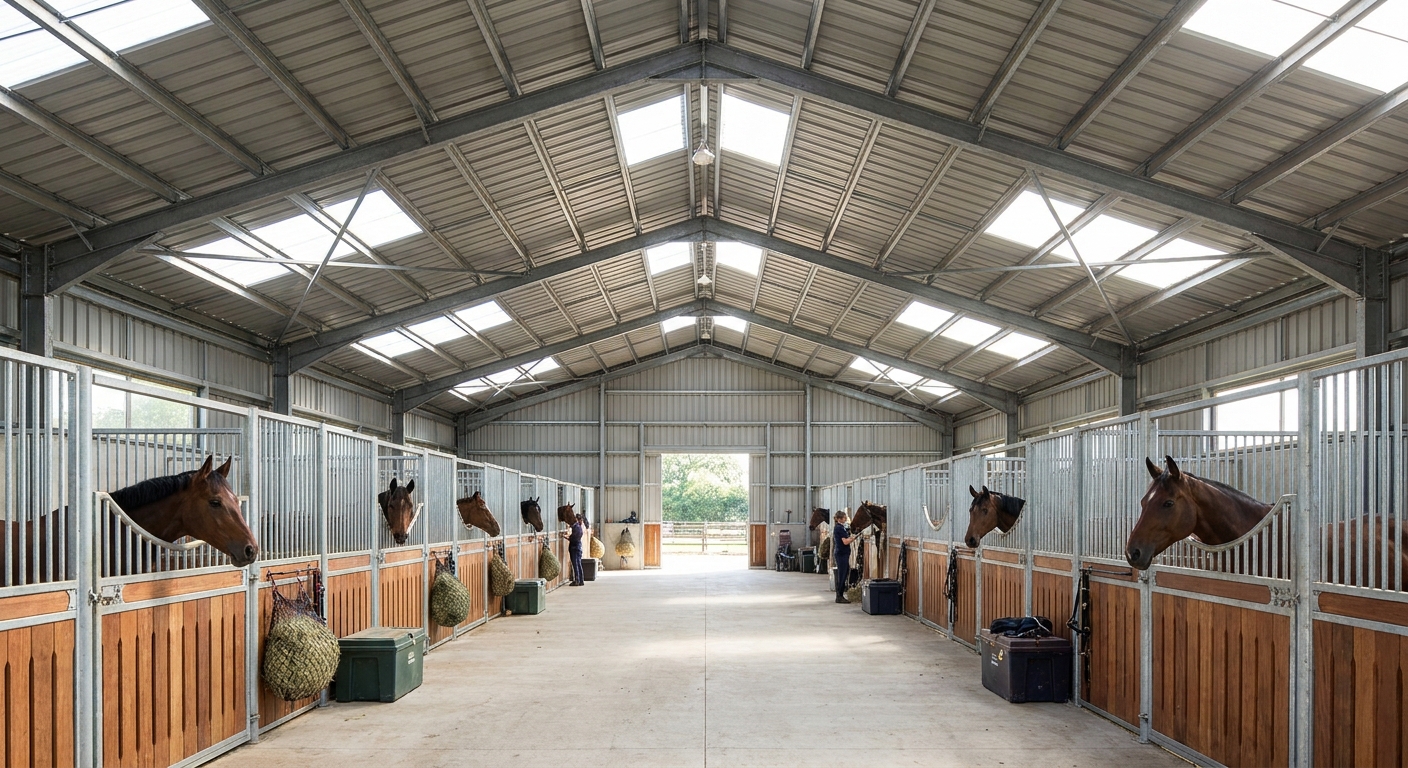
Safety-focused interior design eliminates sharp edges and tight corners that could cause equine injuries. Integrating safety features into your horse stable building interior protects both the horses and the staff working with them daily.
Are stall dividers safe?
Stall dividers should be constructed with heavy-duty steel grills that prevent horses from getting a hoof caught. Solid lower walls prevent aggressive neighbors from kicking each other through the partitions.
- Use 1-inch steel bars spaced 3 inches apart.
- Solid wood or steel lower panels (4-5 feet high).
- Smooth, powder-coated finishes to prevent scratches.
But that’s not all.
Managing high traffic
Aisleways must be kept clear of protrusions like low-hanging lights or protruding water buckets. Using recessed fixtures and heavy-duty sliding doors keeps the path safe for skittish animals.
- Recessed lighting fixtures.
- Sliding doors with heavy-duty tracks.
- Flush-mounted hay racks.
Key Takeaway: The best interior designs prioritize “invisible” safety, where the structure naturally guides movement without creating hazards.
Summary: Interior Safety Elements
| Feature | Requirement | Safety Goal | |
|---|---|---|---|
| Bar Spacing | Max 3 inches | Prevent hoof entrapment | |
| Door Type | Sliding | No aisle obstruction | |
| Wall Finish | Flush / Smooth | Prevent skin abrasions |
Minimizing visual and physical obstructions in high-traffic zones significantly reduces the flight response in sensitive horses.
Can aesthetics match function in a horse stable building?
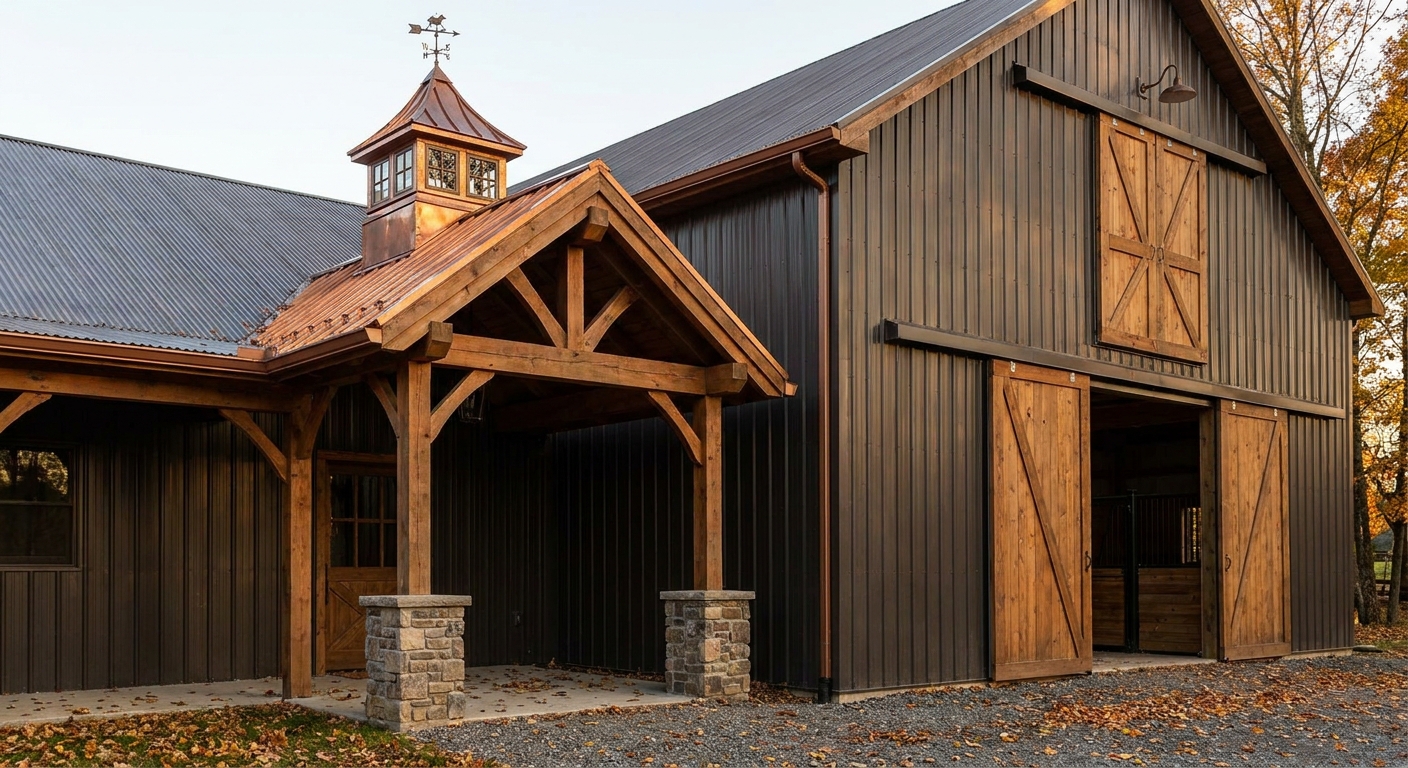
Modern steel buildings can be customized with architectural elements that rival traditional timber barns in beauty. You can achieve a high-end aesthetic for a horse stable building by selecting premium finishes and decorative roof accents.
Decorative cupolas?
Adding a copper-topped or steel cupola provides a classic barn silhouette while serving as a functional exhaust point for hot air. They transform a simple utility building into a professional landmark.
- Weather vanes add a traditional touch.
- Functional vents improve airflow.
- Enhances property resale value.
Wait, there’s more:
Custom color schemes
Modern paint systems allow for a vast array of color combinations, including wainscoting and contrasting trim. You can match your barn to existing estate buildings for a cohesive look.
- Classic “Barn Red” with white trim.
- Sophisticated charcoal and silver.
- Forest green for rural blending.
Key Takeaway: Aesthetics and function are not mutually exclusive; features like porches and cupolas improve ventilation while adding significant curb appeal.
Summary: Aesthetic Customizations
| Element | Decorative Use | Functional Use | |
|---|---|---|---|
| Cupola | Visual focal point | Heat exhaustion | |
| Wainscoting | Color contrast | Wall protection | |
| Portico | Grand entrance | Shade / Shelter |
Investing in architectural details pays dividends through increased property valuation and a more professional business image.
Is a prefab horse stable building better than traditional wood?
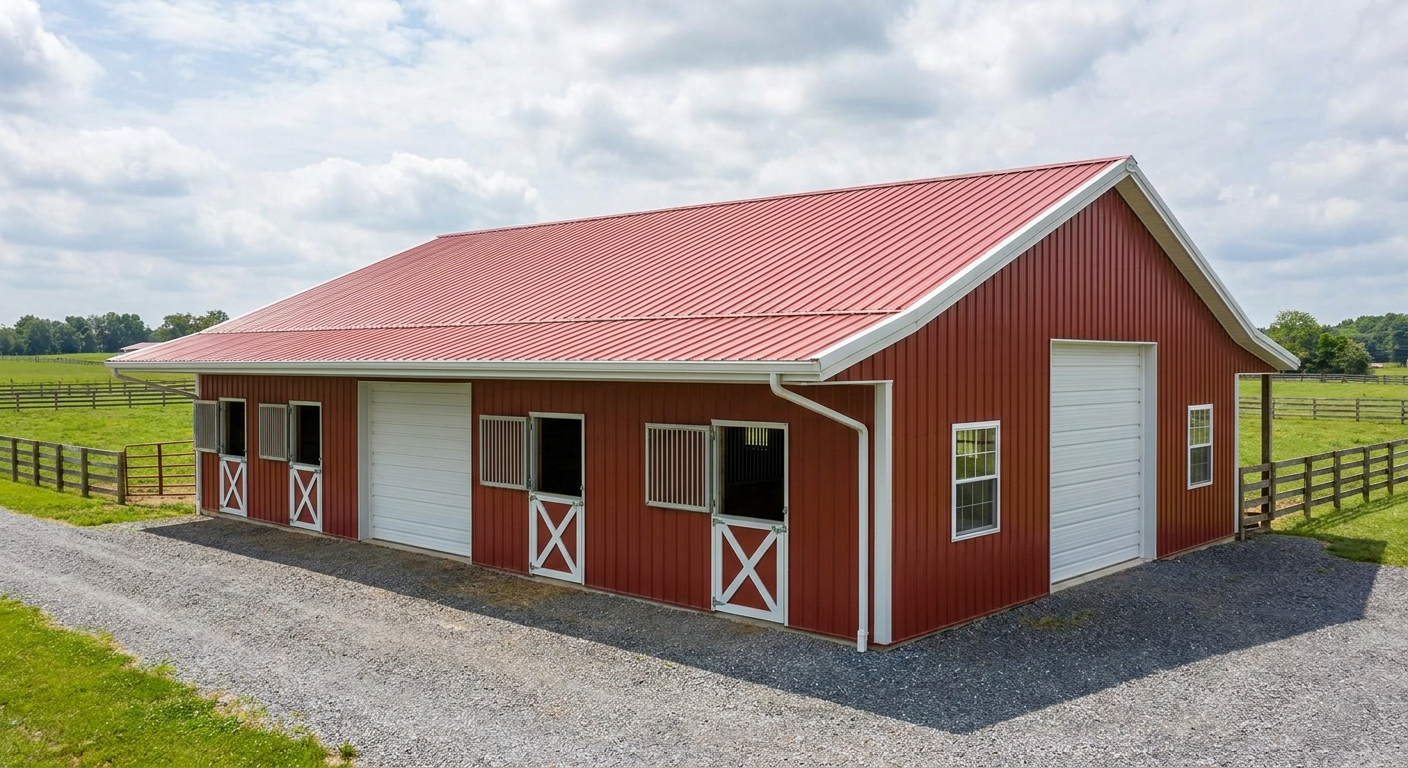
Prefabrication offers a level of precision and speed that site-built wood structures simply cannot match. A prefab horse stable building is manufactured in a controlled factory environment to ensure every bolt hole and connection is perfect.
Speed of construction?
Because components arrive pre-cut and pre-drilled, the on-site assembly time is reduced by up to 50%. This minimizes the disruption to your horses and the surrounding property.
- No on-site cutting or welding.
- Sequential part labeling for easy assembly.
- Reduced labor costs.
Think about it.
Cost of ownership
While the initial material cost may be higher than low-grade timber, the long-term savings in maintenance are substantial. You won’t spend money on painting, rot repair, or pest treatments every few years.
- Low annual maintenance budget.
- Higher resistance to severe weather.
- Sustainable and recyclable materials.
Key Takeaway: Prefabricated steel offers the most predictable construction timeline and the lowest lifetime maintenance burden for equestrian owners.
Summary: Prefab vs. Wood Comparison
| Metric | Prefab Steel | Traditional Wood | |
|---|---|---|---|
| Build Time | 2-4 Weeks | 2-4 Months | |
| Maintenance | Minimal | High (Painting/Rot) | |
| Precision | High (Factory-cut) | Low (Site-cut) |
The reduction in on-site construction variables allows for more accurate budgeting and faster project completion for commercial facilities.
How do H-section frames improve horse stable building strength?
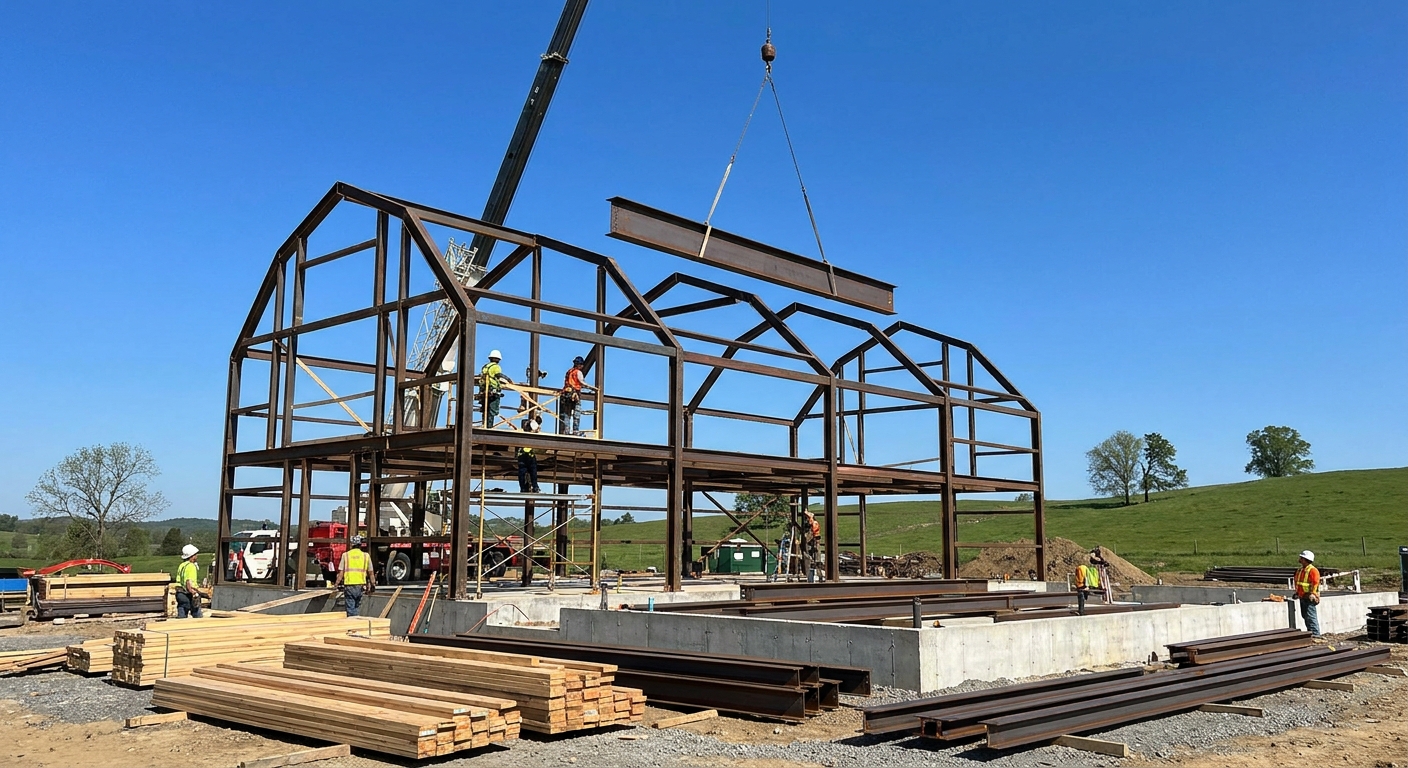
H-section steel frames allow for massive clear-span interiors without the need for intrusive support columns. The structural strength of an H-section horse stable building provides the stability needed for large riding arenas or wide center aisles.
Clear-span advantages?
By eliminating interior columns, you create a safer environment where horses cannot collide with structural supports. This also allows for total flexibility when placing stall partitions.
- Unlimited interior layout options.
- Safer for riding and handling.
- Easier for mechanical mucking equipment.
Here’s the best part:
Engineering for storms
H-section frames are engineered to withstand specific wind and snow loads based on your local building codes. This “rigid frame” design is far superior to light-gauge metal or wood pole barns.
- High wind uplift resistance.
- Supports heavy snow loads easily.
- Seismic-resistant engineering.
Key Takeaway: H-section steel is the “backbone” of professional-grade barns, offering the safety of a permanent, rigid structure that protects your horses during extreme events.
Summary: Frame Strength Benefits
| Feature | H-Section Steel | Benefit | |
|---|---|---|---|
| Clear-Span | Up to 100’+ wide | Column-free space | |
| Frame Rigidness | High-strength bolts | Storm resilience | |
| Material | Q355B / Q235B | Industrial durability |
Utilizing industrial-grade H-beams ensures the primary structure remains plumb and square regardless of shifting environmental loads.
Email:sales@showhoo.com.cn
Phone/WhatsApp:+86 186 7895 5927
Why is lighting critical for your horse stable building?
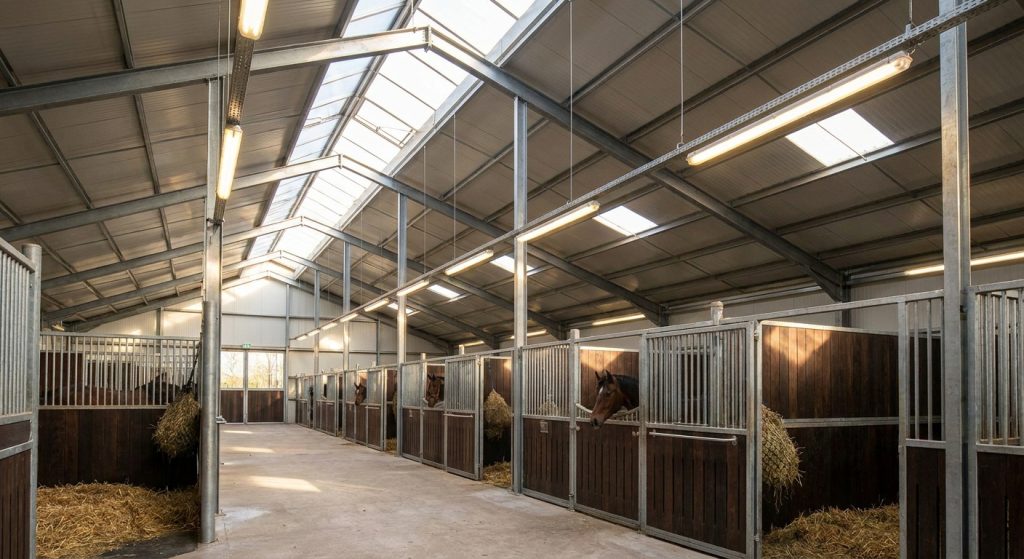
Proper illumination is essential for performing health checks and safely handling horses during evening hours. In a horse stable building, combining natural and artificial light creates a stress-free atmosphere for the animals.
Natural vs. Artificial?
Translucent roof panels (skylights) provide free, diffused natural light during the day, which helps maintain a horse’s natural circadian rhythm. LED fixtures provide high-output, flicker-free light for nighttime chores.
- Skylights reduce electricity bills.
- LEDs stay cool and are fire-safe.
- Even lighting prevents “spook zones.”
Think about it.
Lighting for grooming
The grooming and wash bays require specialized, waterproof lighting that eliminates shadows under the horse’s belly. This allows you to spot minor injuries or skin conditions before they become serious problems.
- Vapor-proof LED fixtures.
- High color rendering (CRI) for health checks.
- Position lights to the side, not just directly overhead.
Key Takeaway: Lighting should be designed to eliminate shadows and glare, as horses have vision that is highly sensitive to sudden changes in light intensity.
Summary: Lighting Standards
| Light Type | Best Location | Primary Function | |
|---|---|---|---|
| Skylight Panels | Roof Center | Daytime ambient light | |
| LED High-Bay | Main Aisle | General nighttime use | |
| Vapor-Proof LED | Wash Bay | Focused, safe illumination |
A well-lit barn environment improves staff productivity and reduces the risk of accidents during early morning and late-night shifts.
How can ventilation protect your horse stable building?
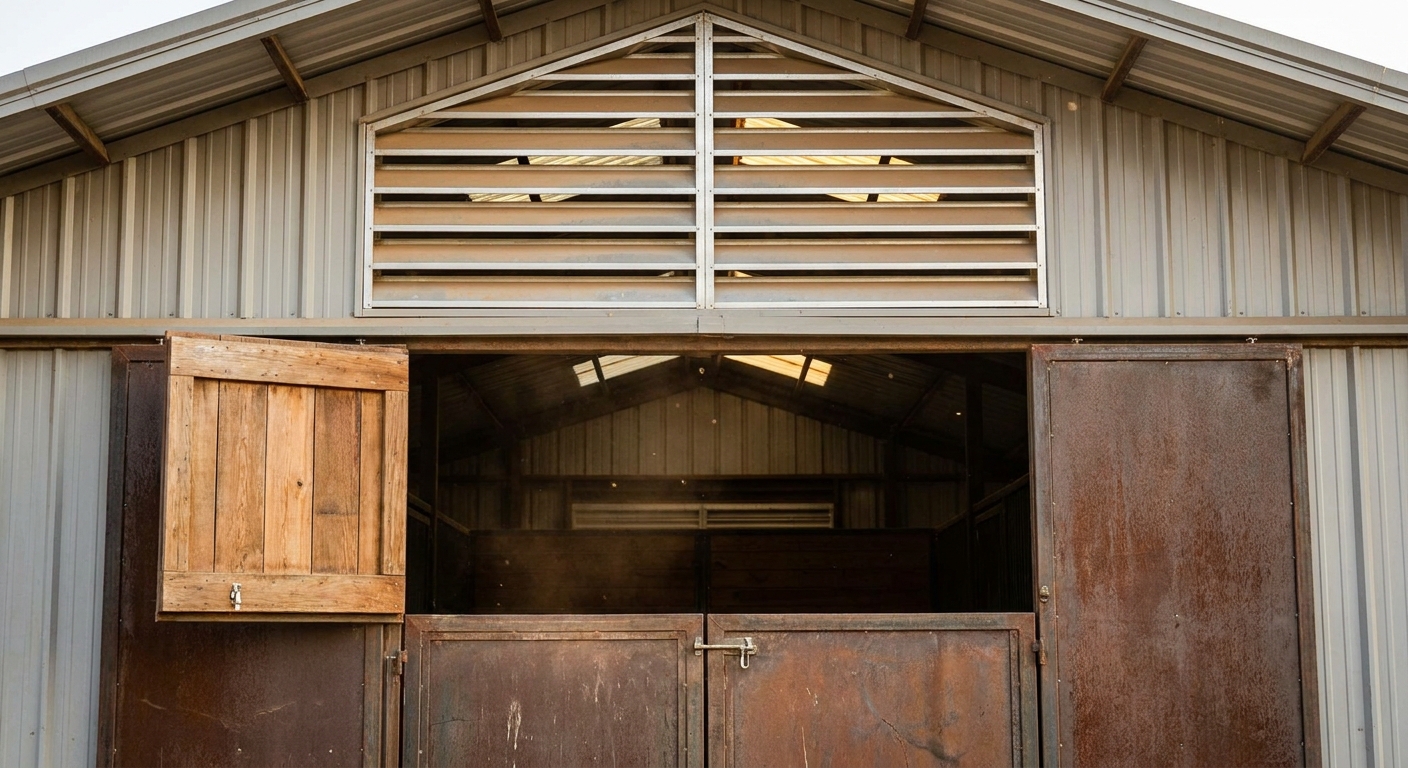
Effective ventilation is the most important factor in preventing respiratory illnesses like heaves or pneumonia. A high-quality horse stable building must utilize natural convection to keep the air fresh and free of ammonia.
What are gable vents?
Gable vents are placed at the highest points of the building’s ends to allow hot air and moisture to escape. This creates a “chimney effect” that pulls fresh air in through the doors and windows.
- Constant air exchange.
- Prevents condensation on steel panels.
- Reduces summer heat buildup.
Wait, there’s more:
The benefit of Dutch doors
Dutch doors allow the top half to remain open, providing each horse with a direct source of fresh air and a view of the outside. This reduces boredom and respiratory stress simultaneously.
- Improves equine mental health.
- Secondary source of fresh air intake.
- Allows for individual temperature control.
Key Takeaway: Ventilation is not about high-speed fans; it is about creating a continuous, gentle flow of air that removes dust, pathogens, and ammonia.
Summary: Ventilation Tools
| Component | Function | Impact on Air Quality | |
|---|---|---|---|
| Ridge / Gable Vents | Exhaust hot air | High | |
| Dutch Doors | Individual air intake | Medium | |
| Eave Vents | Passive intake | High |
Maintaining air quality is the most effective way to protect the long-term athletic potential and lung health of your horses.
What wash bay features does a horse stable building need?
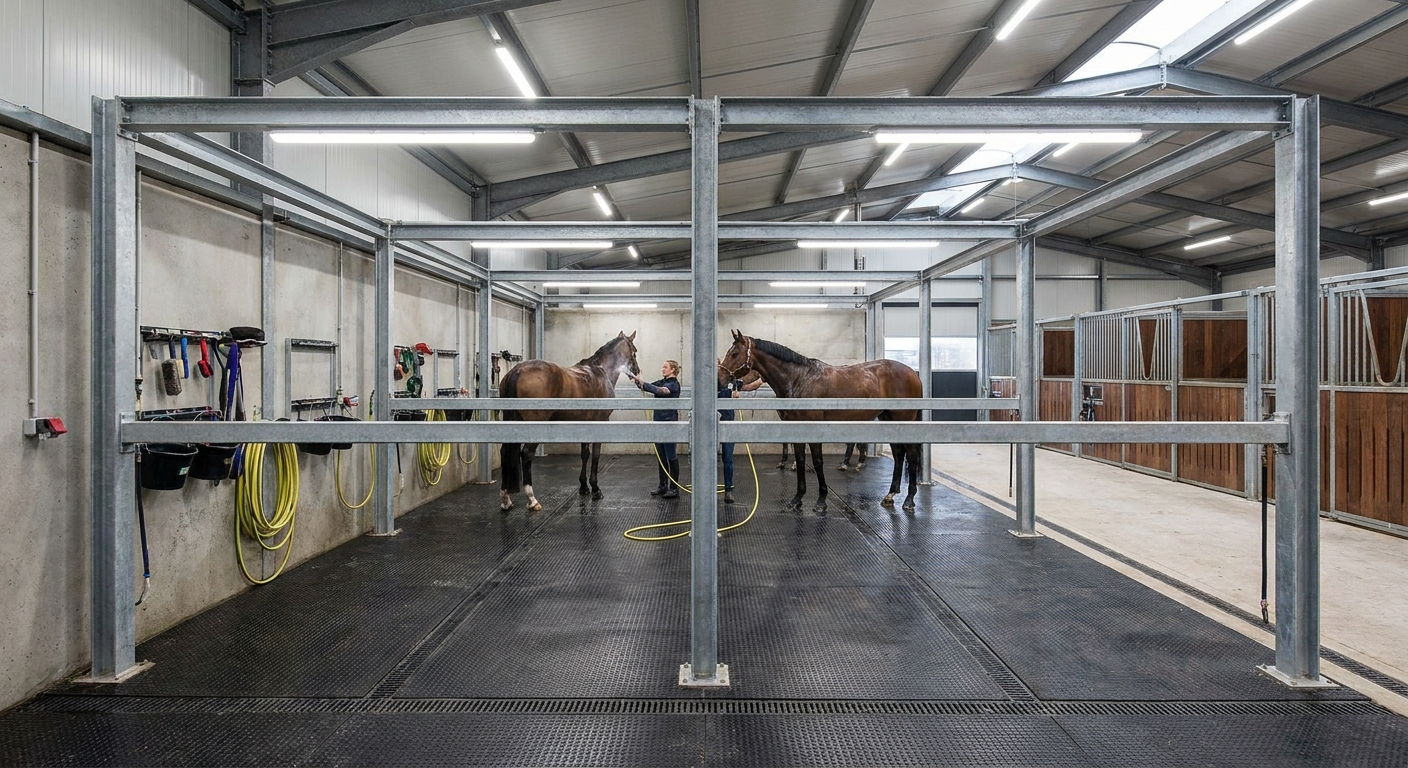
A professional wash bay requires durable, moisture-resistant materials and safe, non-slip surfaces. Integrating a high-end wash bay into your horse stable building adds a layer of professionalism and convenience for horse care.
Plumbing layout?
Plumbing should be recessed or protected by steel shielding to prevent horses from accidentally breaking pipes or valves. Overhead “swivel booms” for hoses keep the floor clear of tripping hazards.
- Protects pipes from freezing.
- Swivel booms prevent hose tangles.
- Easy-access shut-off valves.
Here’s the best part:
Safe drainage systems
The floor must be sloped precisely toward a high-capacity drain to prevent standing water. Standing water is a slip hazard and can lead to hoof health issues if the area remains damp.
- Trench drains with heavy-duty grates.
- 1-2% slope toward the drain.
- Hair traps to prevent plumbing clogs.
Key Takeaway: A wash bay is a high-moisture zone; using galvanized steel frames and waterproof wall panels in this area is essential to prevent corrosion.
Summary: Wash Bay Essentials
| Feature | Requirement | Benefit | |
|---|---|---|---|
| Wall Panel | Waterproof / Durable | Easy cleaning | |
| Hose Boom | 360-degree swivel | Safe horse handling | |
| Flooring | Non-slip textured | Injury prevention |
The wash bay should be centrally located to minimize the distance horses must travel while wet, especially in colder climates.
Which flooring is best for a horse stable building stall?
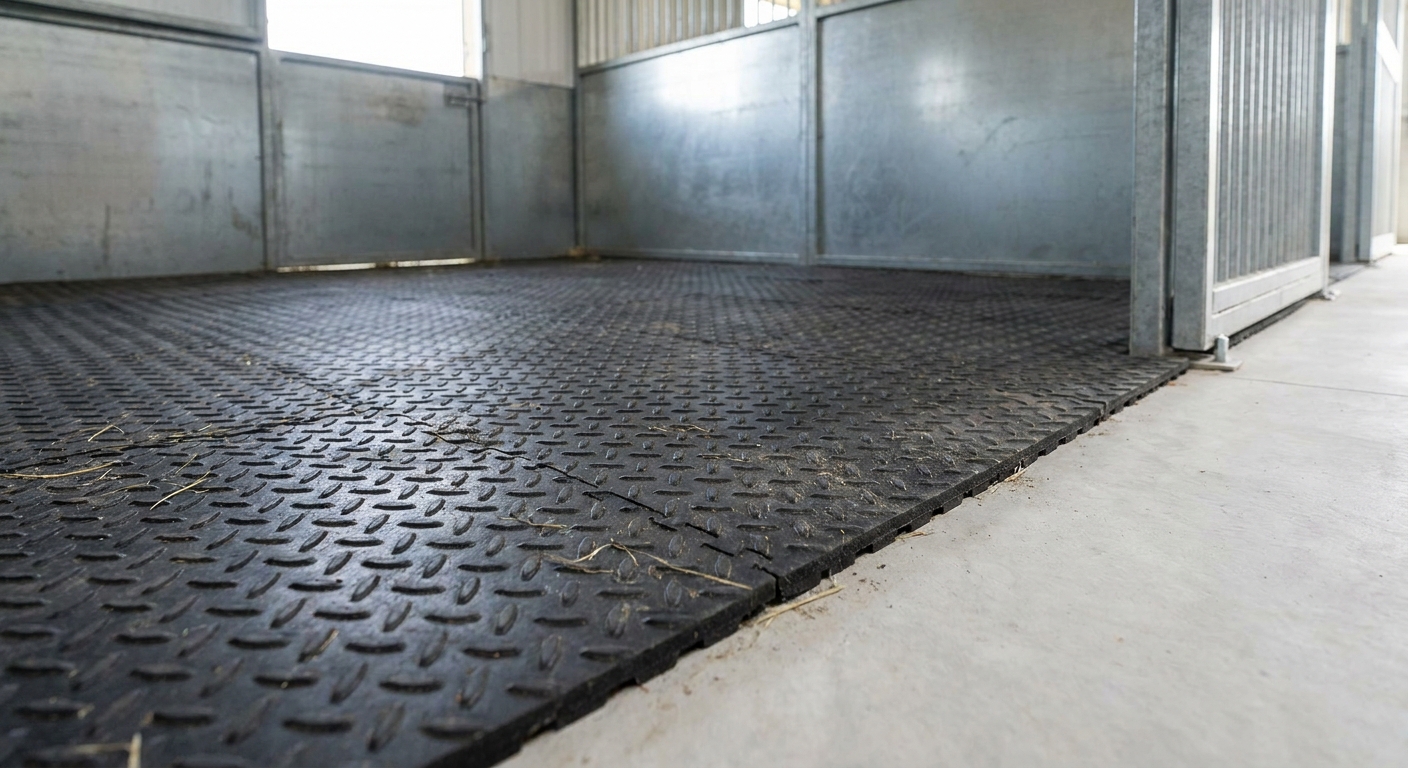
The best stall flooring combines a solid base with a resilient, cushioned top layer to protect horse joints. In a modern horse stable building, high-density rubber mats installed over a concrete or crushed stone base offer the best results.
Why use rubber mats?
Rubber mats provide essential “give” that bare concrete lacks, reducing the strain on a horse’s legs and hooves. They also provide insulation against the cold ground during winter months.
- Reduces bedding costs by up to 50%.
- Easier on joints and tendons.
- Provides superior traction.
Think about it.
Maintenance and cleaning
Textured rubber surfaces are easy to sweep and can be pressure-washed for total sanitization. Unlike dirt floors, they do not develop “holes” or uneven spots that can cause a horse to trip.
- Non-porous surfaces.
- Prevents urine from soaking into the ground.
- Long-lasting and durable.
Key Takeaway: Investing in high-quality mats pays for itself through reduced bedding expenses and fewer vet bills related to joint fatigue or lameness.
Summary: Flooring Comparison
| Material | Comfort Level | Drainage | Durability | |
|---|---|---|---|---|
| Rubber Mats | Excellent | Fair (Seams) | High | |
| Bare Concrete | Poor | Poor | Extremely High | |
| Dirt / Clay | Good | Good | Low |
A consistent, level floor surface is critical for maintaining correct hoof balance and overall equine skeletal alignment.
Conclusion
Constructing a world-class horse barn is a significant investment that requires expert planning and superior materials. By choosing a steel structure, you solve the chronic problems of fire risk, rot, and high maintenance that plague traditional barns. Our precision-engineered buildings are designed to provide a safe, healthy, and beautiful sanctuary for your horses while offering you a maintenance-free future. At Showhoo, we are committed to elevating the standards of the equestrian industry through engineering excellence and factory-direct value. We are here to help you design, fabricate, and deliver the barn of your dreams. To start your journey with a partner that understands equine safety, contact us today for a free design consultation and quote.
Email:sales@showhoo.com.cn
Phone/WhatsApp:+86 186 7895 5927
FAQ
Can I customize the number of stalls in my barn?Yes, the clear-span nature of steel frames allows you to place as many stalls as your floor plan permits without worrying about support pillars.
What’s the best way to prevent condensation on the roof?Using insulated sandwich panels or anti-condensation coatings on the interior of the steel panels is the most effective solution.
How do I know if my soil can support a steel barn?A soil bearing test should be conducted to determine the foundation requirements, typically a reinforced concrete slab or pier system.
Can I add onto a steel barn in the future?Yes, steel buildings are modular by nature, making it relatively simple to extend the length of the building to add more stalls or storage.
What’s the best way to secure stall doors?Using heavy-duty sliding tracks with self-cleaning bottom guides is the most reliable way to ensure doors operate smoothly and safely.