
Building a new sanctuary or expanding your existing facility often involves navigating a complex web of architectural demands, rising material costs, and lengthy construction schedules. You may feel overwhelmed by the pressure of managing multiple contractors while trying to keep the project within a tight budget for your congregation. This uncertainty often leads to delayed progress and compromises on the vision of your community space. The most effective solution is a professional church design build approach using steel structures, which integrates engineering and fabrication into a single, streamlined process to ensure your project is completed with precision and speed.
What Is the Church Design-Build Process from Concept to Completion?
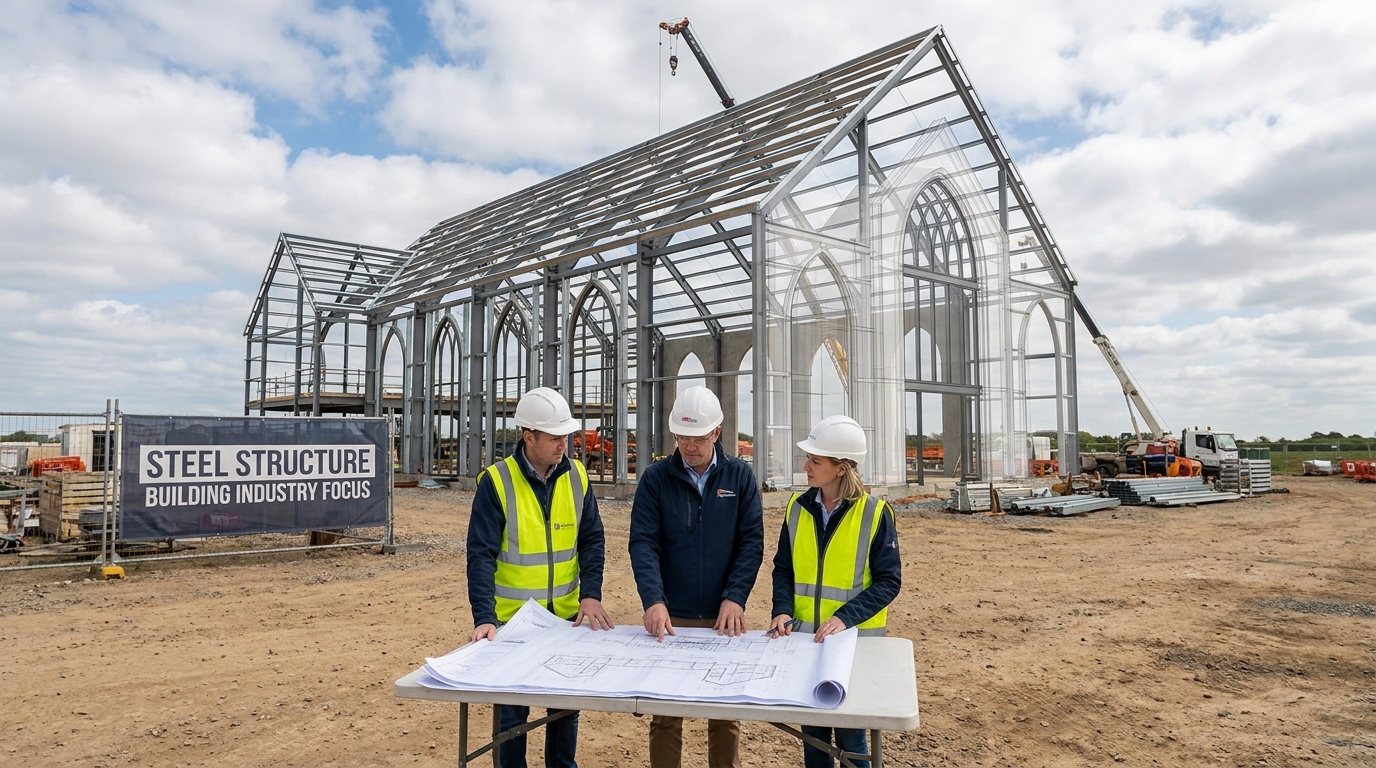
The church design-build process is a unified project delivery system where a single manufacturer or contractor manages both the design and the construction phases. This method simplifies the church design build experience by providing a single point of contact for the congregation’s leadership. It ensures that the architectural vision is perfectly aligned with the structural engineering and fabrication capabilities from the very beginning.
Phase 1: Conceptual Design and Planning
This initial stage focuses on translating your ministry’s needs into a functional floor plan and architectural concept. Architects and engineers work together to determine the necessary clear spans and aesthetic requirements.
Here is the deal:
- Definition of seating capacity and multi-purpose needs.
- Preliminary site analysis and foundation planning.
- Selection of primary steel frame configurations.
Phase 2: Engineering and Fabrication
Once the concept is approved, the project moves into high-precision engineering where every H-section beam and column is detailed for production. The steel components are then manufactured in a controlled factory environment to ensure exact specifications.
Look:
- Creation of detailed 3D structural models.
- Automated cutting, welding, and sandblasting of steel members.
- Application of protective coatings or galvanization.
Phase 3: Site Installation and Finish
The final phase involves shipping the prefabricated components to the site for rapid assembly by local or specialized crews. Because the parts are pre-punched and marked, the structure goes up much faster than traditional masonry.
The best part?
- Sequence-based delivery for efficient unloading.
- Bolt-together assembly that minimizes on-site welding.
- Installation of roof and wall panels to enclose the space.
Key Takeaway: The integrated nature of this process eliminates communication gaps between designers and builders, leading to a more cohesive and professional project outcome.
| Stage | Primary Activity | Key Benefit | |
|---|---|---|---|
| Planning | Needs Assessment | Vision alignment | |
| Fabrication | Steel Manufacturing | Quality control | |
| Installation | Rapid Assembly | Time savings |
Review this structural workflow to identify where your current planning might benefit from professional integration.
Why Are Steel Structures the Best Choice for Modern Church Construction?
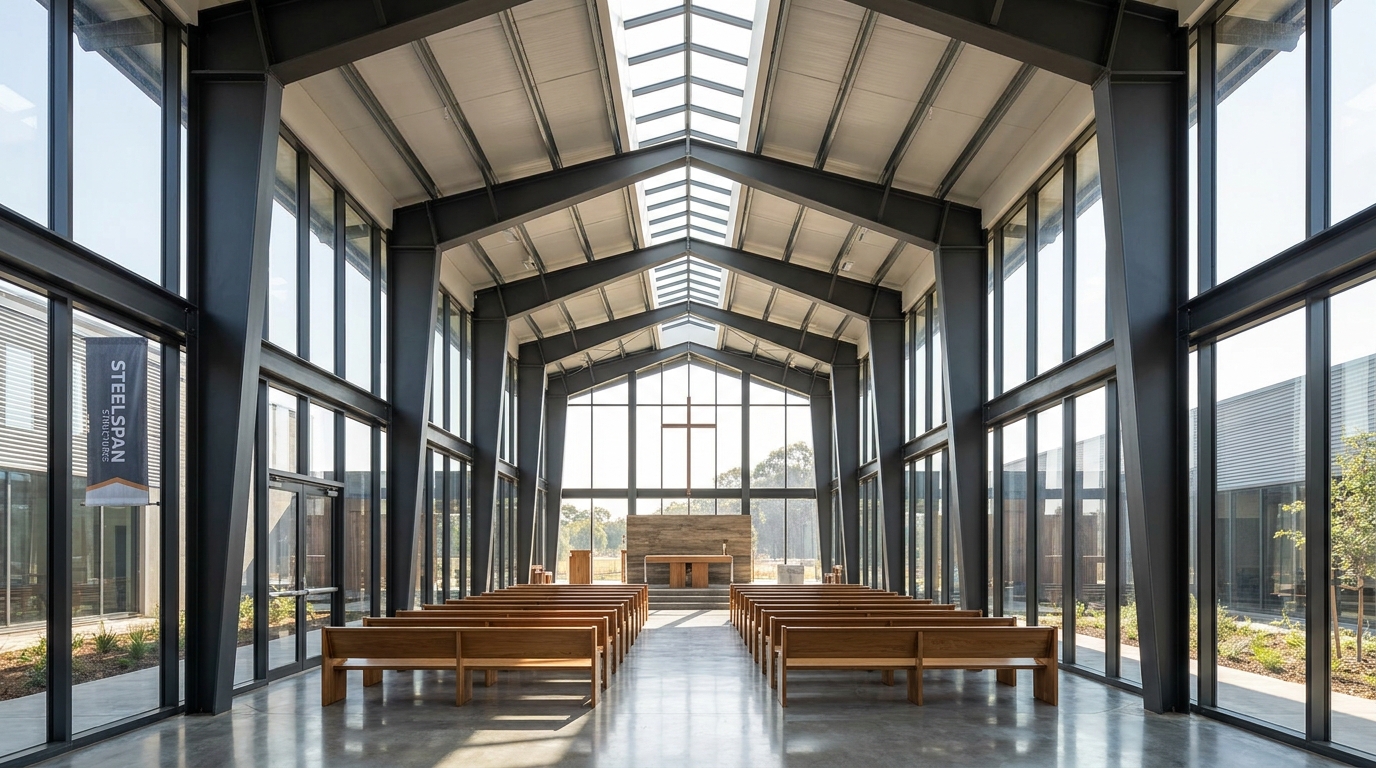
Steel structures provide the ideal combination of strength, speed, and versatility required for contemporary religious facilities. Utilizing a church design build model with steel allows for expansive sanctuaries that are free from obstructive interior columns. This material is also resistant to many of the environmental threats that plague traditional wood-frame or masonry buildings over time.
Structural Integrity and Longevity
Steel is a non-combustible material that offers superior resistance to fire, rot, and pest infestations like termites. It maintains its structural integrity for decades with minimal maintenance requirements.
Here is the deal:
- High strength-to-weight ratio for safer builds.
- Resistance to warping, cracking, and shrinking.
- Long-term durability in diverse climates.
Clear Span Versatility
The inherent strength of steel allows for massive clear spans of up to 40 meters or more without the need for internal support pillars. This creates an unobstructed line of sight for the congregation toward the pulpit or altar.
The best part?
- Open floor plans for flexible seating.
- Ability to house large stages and choir lofts.
- Modern, airy architectural possibilities.
Fire and Pest Resistance
Unlike traditional timber construction, steel does not provide fuel for fires and is completely impervious to wood-boring insects. This can lead to significantly lower insurance premiums for the church organization.
Look:
- Non-combustible framing materials.
- Reduced risk of structural failure during fire events.
- Elimination of costly pest control treatments.
Key Takeaway: Steel offers a permanent, low-maintenance solution that protects the congregation’s investment while providing the aesthetic freedom needed for modern worship.
| Feature | Steel Benefit | Impact on Church | |
|---|---|---|---|
| Strength | High Load Capacity | Large open sanctuaries | |
| Material | Inorganic | No rot or termites | |
| Safety | Fire Resistant | Lower insurance costs |
Evaluate these structural benefits against your long-term maintenance budget to see the value of steel.
Email:sales@showhoo.com.cn
Phone/WhatsApp:+86 186 7895 5927
How Can You Integrate Modern Architectural Designs in Steel Churches?
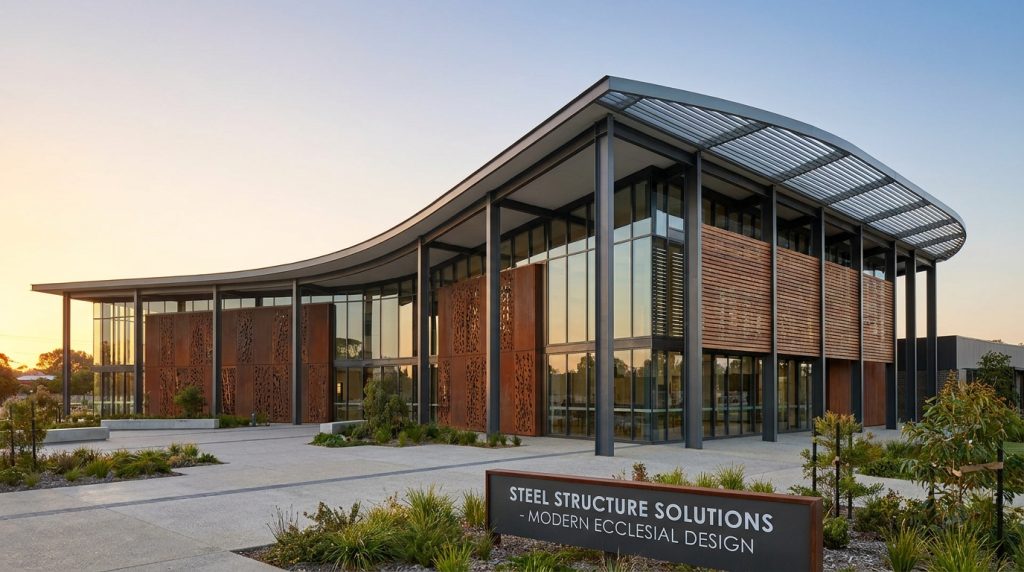
Modern architectural designs are easily achieved in steel churches through the use of creative cladding, varied rooflines, and expansive glass features. The church design build framework supports these aesthetic choices by ensuring the steel skeleton is engineered to carry the loads of decorative facades. You are no longer restricted to a “metal building” look, as steel can be finished with stone, brick, or modern composite panels.
External Cladding and Finishes
The exterior of a steel church can be customized with a variety of materials to match any neighborhood aesthetic or historical style. Insulated sandwich panels offer both high-end finishes and superior thermal performance.
Look:
- Integration of brick or stone veneers.
- Use of decorative glass curtain walls.
- Variety of color options for metal roof and wall panels.
Interior Spatial Innovation
Steel’s ability to support heavy loads allows for unique interior features such as mezzanine levels, suspended lighting rigs, and vaulted ceilings. These elements enhance the worship experience and provide additional functional space.
Here is the deal:
- Elevated balcony seating for larger crowds.
- Integrated soaring ceilings for improved acoustics.
- Flexible partitioning for Sunday school rooms.
Integrating Natural Light
Large window openings and skylights are easily incorporated into steel frames to bring in natural light, which is a hallmark of modern church architecture. This reduces the reliance on artificial lighting and creates a welcoming atmosphere.
The best part?
- Strategic placement of clerestory windows.
- Support for heavy, high-performance glass units.
- Enhanced connection between indoor and outdoor spaces.
Key Takeaway: Modern steel construction is a canvas for architectural creativity, allowing for beautiful, light-filled spaces that inspire worship and community.
| Design Element | Steel Capability | Aesthetic Result | |
|---|---|---|---|
| Large Windows | High Load Headers | Natural light/Views | |
| Tall Ceilings | Rigid Frame Design | Majestic interiors | |
| Exterior Mix | Compatible Fastening | Stone/Brick textures |
Analyze these design options to determine how your facility can achieve a high-end look using a steel core.
How Do Design-Build Methods Ensure Cost Efficiency and Fast Delivery?
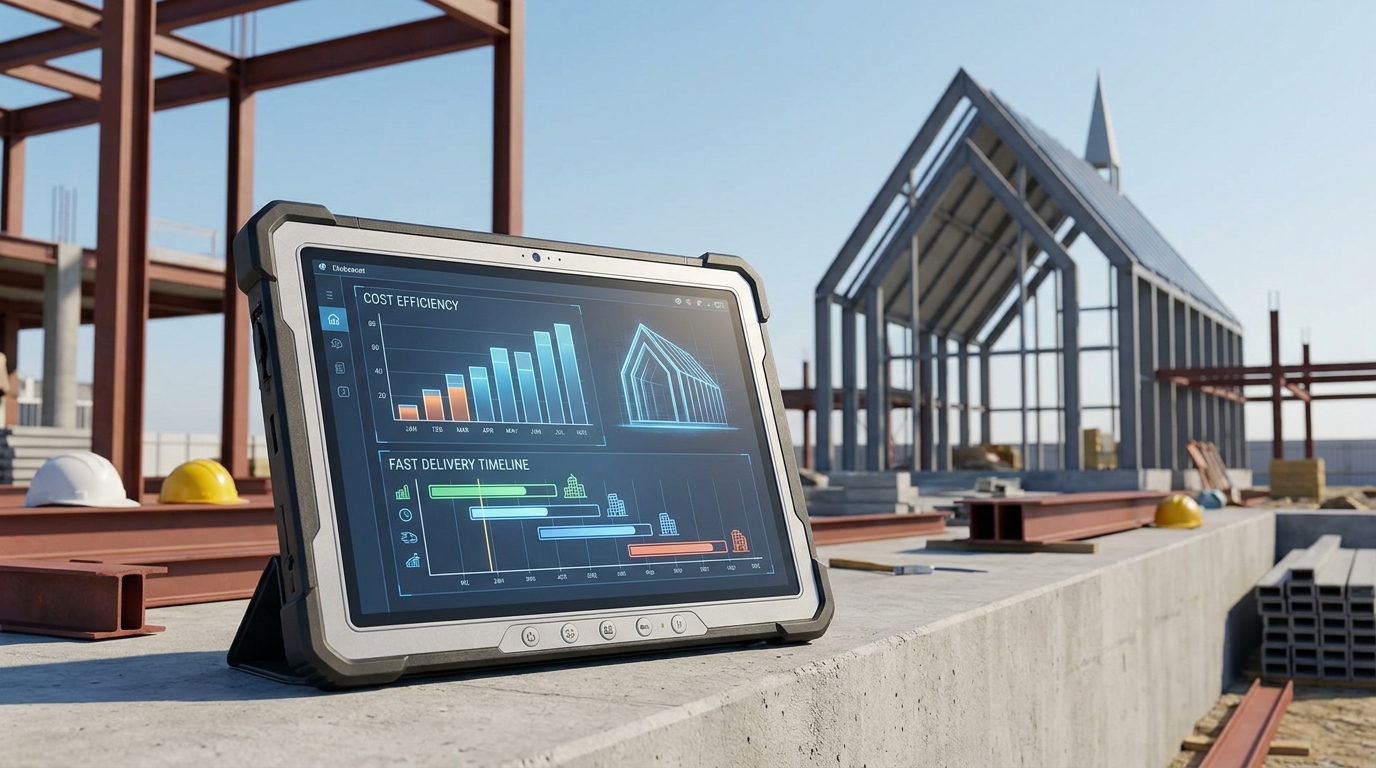
The design-build method eliminates the traditional friction between architects and contractors, which often leads to costly change orders and delays. By choosing a church design build approach, you consolidate the responsibility for the budget and timeline into one professional team. This synergy allows for the early procurement of steel materials and the overlapping of design and fabrication phases.
Reduced Material Waste
Because every component is engineered to the millimeter in a 3D environment, there is virtually no waste of raw materials during the fabrication process. This precision ensures that you only pay for the material that actually ends up in your building.
The best part?
- Accurate Bill of Materials (BOM) from the start.
- Factory-controlled cutting and drilling.
- Lower disposal costs at the construction site.
Faster On-Site Assembly
A pre-engineered steel building can be erected in a fraction of the time required for traditional construction methods. Components arrive on-site ready for assembly, which drastically reduces labor hours and equipment rental costs.
Look:
- Pre-punched holes for fast bolting.
- Detailed installation drawings provided in advance.
- Weather-independent fabrication in the factory.
Predictable Budget Management
The design-build model provides a more accurate cost estimate early in the project, helping church boards make informed financial decisions. This transparency reduces the risk of mid-project “surprises” that can drain emergency funds.
Here is the deal:
- Fixed pricing options for structural packages.
- Fewer administrative costs from multiple contracts.
- Integrated supply chain reduces middleman markups.
Key Takeaway: Efficiency in both time and material usage makes the design-build model the most financially responsible choice for growing congregations.
| Efficiency Factor | Traditional Method | Design-Build Method | |
|---|---|---|---|
| Project Timeline | Sequential & Slower | Overlapped & Faster | |
| Budget Risk | High (Change Orders) | Low (Single Responsibility) | |
| On-site Labor | High (Cutting/Fitting) | Low (Bolt Assembly) |
Compare these timeline and budget factors to see how much faster your congregation could move into a new space.
Can Steel Church Layouts Be Customized for Diverse Congregational Needs?
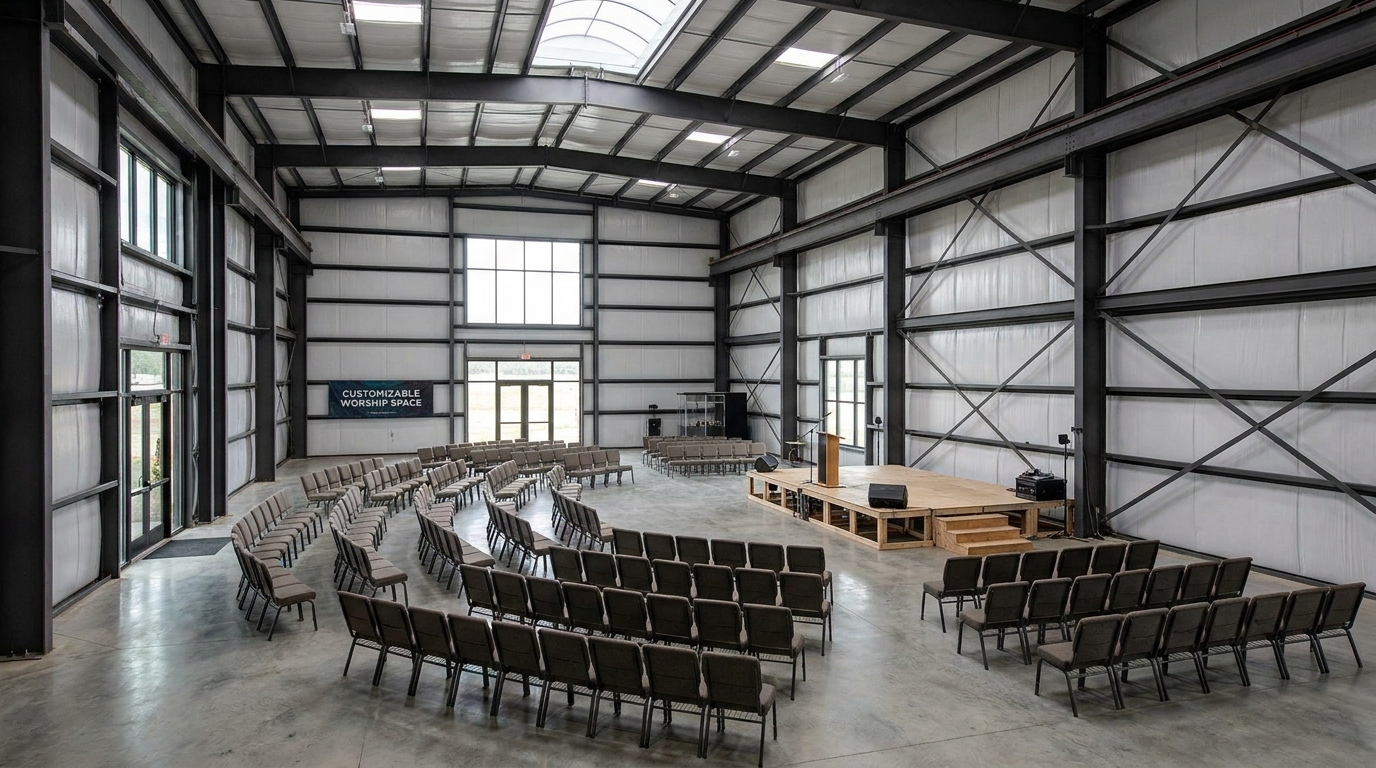
Steel church layouts are exceptionally customizable, allowing for a variety of rooms and functions within a single building footprint. The church design build process takes into account the diverse needs of your community, such as childcare, fellowship halls, and administrative offices. Interior non-load-bearing walls can be moved or added without compromising the stability of the main steel frame.
Multi-Purpose Hall Design
Congregations often need a space that serves as a sanctuary on Sundays and a gymnasium or banquet hall during the week. Steel structures provide the height and width necessary for these flexible, multi-purpose environments.
Look:
- High clearance for sports or performances.
- Wide spans for unobstructed fellowship events.
- Easy integration of movable partition walls.
Future Expansion Capabilities
One of the greatest benefits of steel is the ease with which a building can be expanded as the congregation grows. End-walls can be designed for easy removal, allowing new sections to be bolted onto the existing frame.
The best part?
- Scalable design for phased construction.
- Minimal disruption to existing building use.
- Cost-effective way to add square footage later.
Specialized Acoustic Integration
Modern steel buildings can be engineered to accommodate specialized acoustic panels and sound-dampening insulation. This ensures that the sanctuary provides high-quality sound for both spoken word and musical performances.
Here is the deal:
- Support for heavy sound-deadening materials.
- Engineering for optimal speaker placement.
- Integration of thermal and acoustic insulation.
Key Takeaway: The flexibility of steel ensures that your building can evolve alongside your ministry, serving various needs today and in the future.
| Layout Feature | Customization Level | Ministry Use | |
|---|---|---|---|
| Clear Span Area | Maximum | Sanctuary / Gym | |
| Internal Walls | High (Flexible) | Offices / Classrooms | |
| Building Ends | Removable | Future Expansion |
Consider your ministry’s 10-year growth plan and how a flexible steel layout can support those goals.
Is Steel Construction a Sustainable Solution for Modern Church Projects?
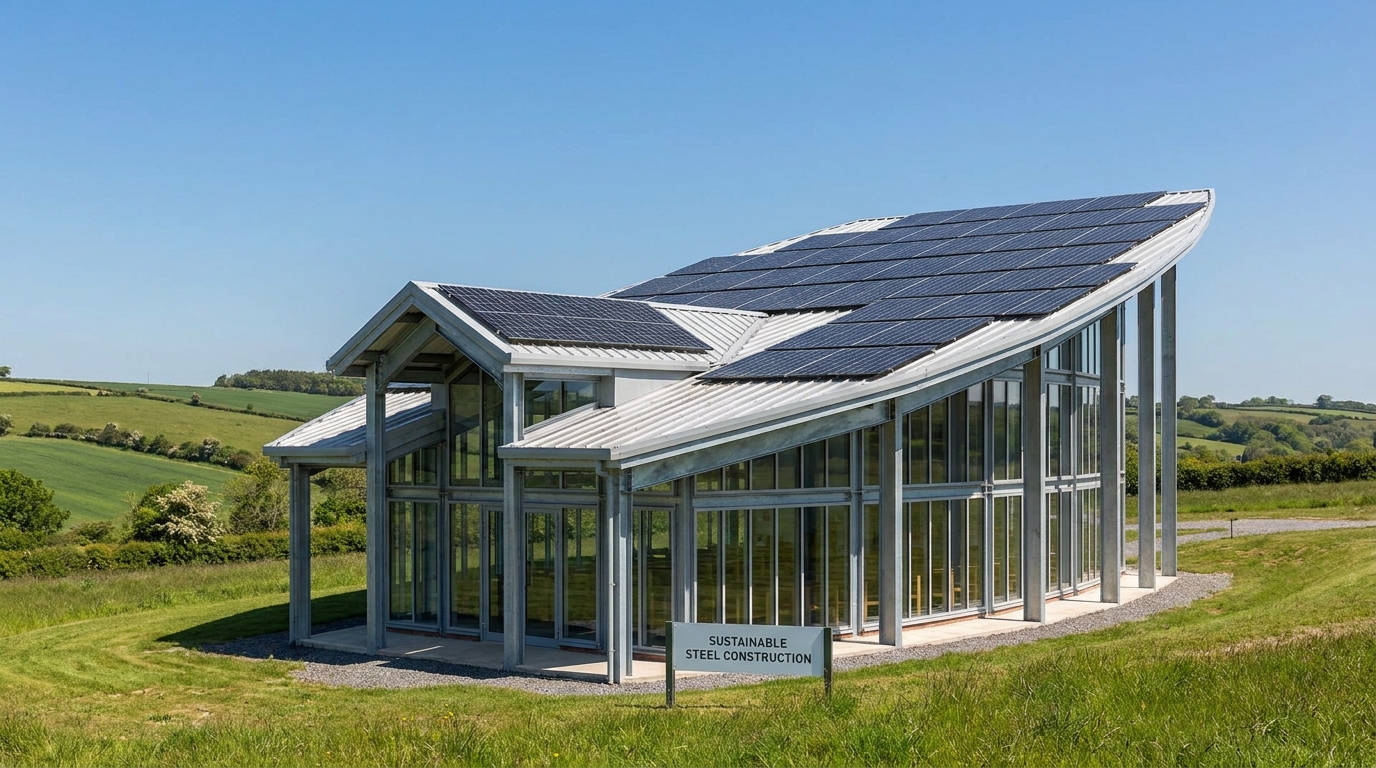
Steel is a highly sustainable building material because it is 100% recyclable and often contains a high percentage of recycled content. Selecting a church design build strategy that prioritizes steel shows a commitment to environmental stewardship. Furthermore, modern steel buildings are designed to be highly energy-efficient, reducing the ongoing carbon footprint of the church.
Recyclability and Reduced Carbon Footprint
Steel can be recycled indefinitely without losing its strength or quality, which keeps construction waste out of landfills. Choosing steel supports a circular economy and reduces the environmental impact of new construction.
Look:
- High recycled steel content in H-beams.
- Zero waste at the fabrication facility.
- Full recyclability at the end of the building life.
Energy-Efficient Building Envelopes
Modern steel structures utilize advanced insulation systems, such as glass wool or sandwich panels, to maintain stable indoor temperatures. This reduces the energy required for heating and cooling, leading to lower utility bills for the church.
The best part?
- High R-value insulation options.
- Reflective roof coatings to reduce heat gain.
- Tight building seals to prevent air leakage.
Minimal On-Site Environmental Impact
Because components are prefabricated off-site, the construction site experience is much cleaner and quieter. This minimizes the disturbance to the local ecosystem and the surrounding neighborhood during the build.
Here is the deal:
- Less dust and noise on-site.
- Shorter duration of site activity.
- Reduced heavy machinery impact on soil.
Key Takeaway: Building with steel allows your congregation to fulfill its role as stewards of the environment while enjoying lower long-term operating costs.
| Sustainability Goal | Steel Contribution | Church Impact | |
|---|---|---|---|
| Waste Reduction | Precision Fabrication | Environmentally Friendly | |
| Energy Savings | High-Quality Insulation | Lower Monthly Bills | |
| Resource Care | 100% Recyclable | Long-term Stewardship |
Examine the energy-saving features of modern steel cladding to estimate your potential utility savings.
Email:sales@showhoo.com.cn
Phone/WhatsApp:+86 186 7895 5927
How Are Safety and Compliance Standards Managed in Steel Church Projects?
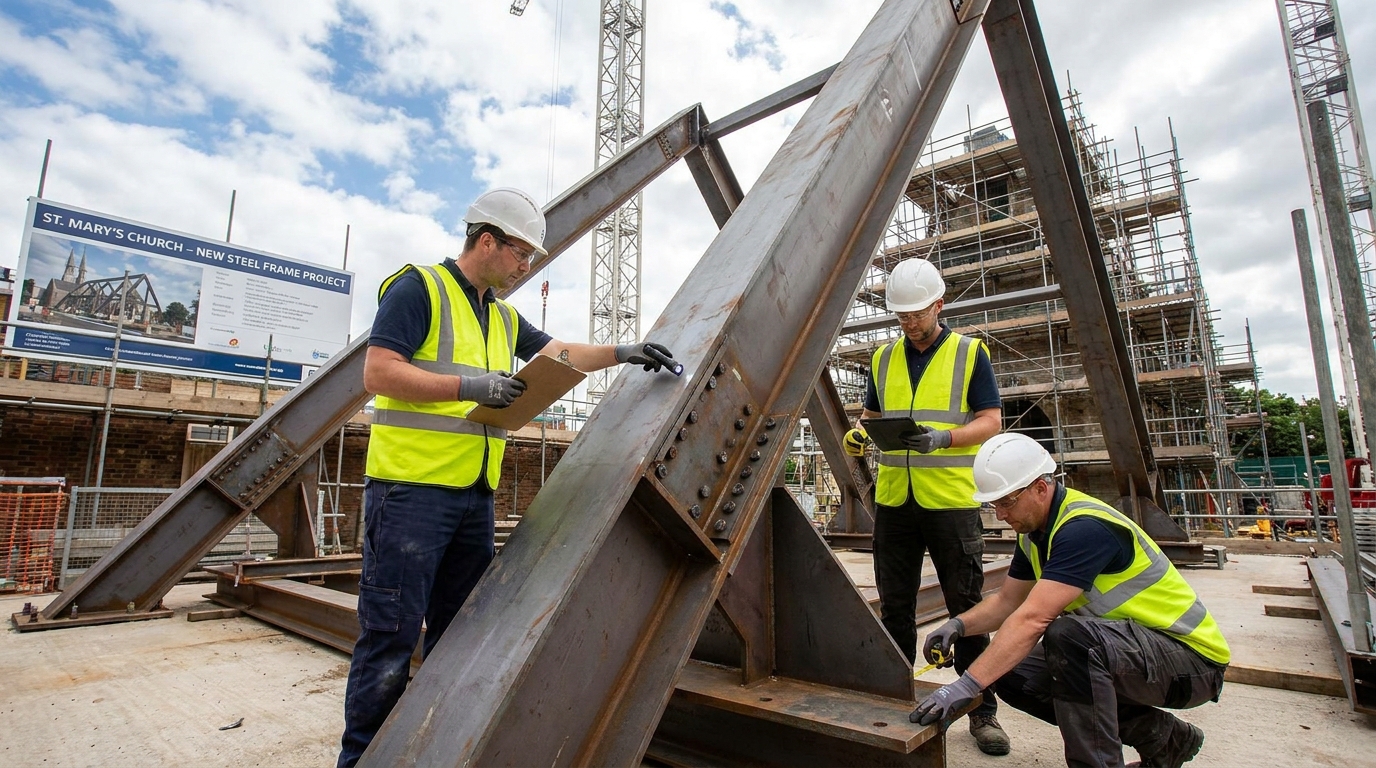
Safety and compliance are managed through rigorous engineering calculations and adherence to international building codes. During the church design build phase, engineers design the structure to withstand specific local loads, including high winds, heavy snow, and seismic activity. This ensures that the sanctuary remains a safe haven for the community even during extreme weather events.
Adherence to Local Building Codes
Every steel structure is engineered to meet or exceed the specific building codes of the project’s location. This includes compliance with standards like the AISC (American Institute of Steel Construction) or Eurocodes.
Here is the deal:
- Custom engineering for local wind speeds.
- Calculations for regional snow load requirements.
- Seismic design for earthquake-prone areas.
Rigorous Quality Control Processes
Quality control starts at the mill and continues through every stage of welding and fabrication. Independent third-party inspections are often welcomed to verify the structural integrity of the components before they leave the factory.
The best part?
- Mill test certificates for all raw steel.
- Certified welding processes and inspections.
- Precise alignment checks before shipping.
Structural Stability in Extreme Weather
Steel’s ductility allows it to absorb energy and deform without collapsing, which is critical during earthquakes or hurricanes. This provides a level of safety that traditional rigid masonry often cannot match.
Look:
- High-strength bolt connections.
- Integrated bracing systems for lateral stability.
- Corrosion-resistant coatings for coastal areas.
Key Takeaway: The precision of factory-engineered steel ensures that every building is a robust, code-compliant structure that prioritizes human safety.
| Compliance Area | Management Method | Safety Result | |
|---|---|---|---|
| Structural Load | 3D Engineering Analysis | Stable in Storms | |
| Material Quality | Mill Certificates | Reliable Strength | |
| Fabrication | QC Checkpoints | No Field Failures |
Verify your local building requirements to see how custom steel engineering can meet your specific safety needs.
What Can Case Studies Teach Us About Successful Church Design-Builds?
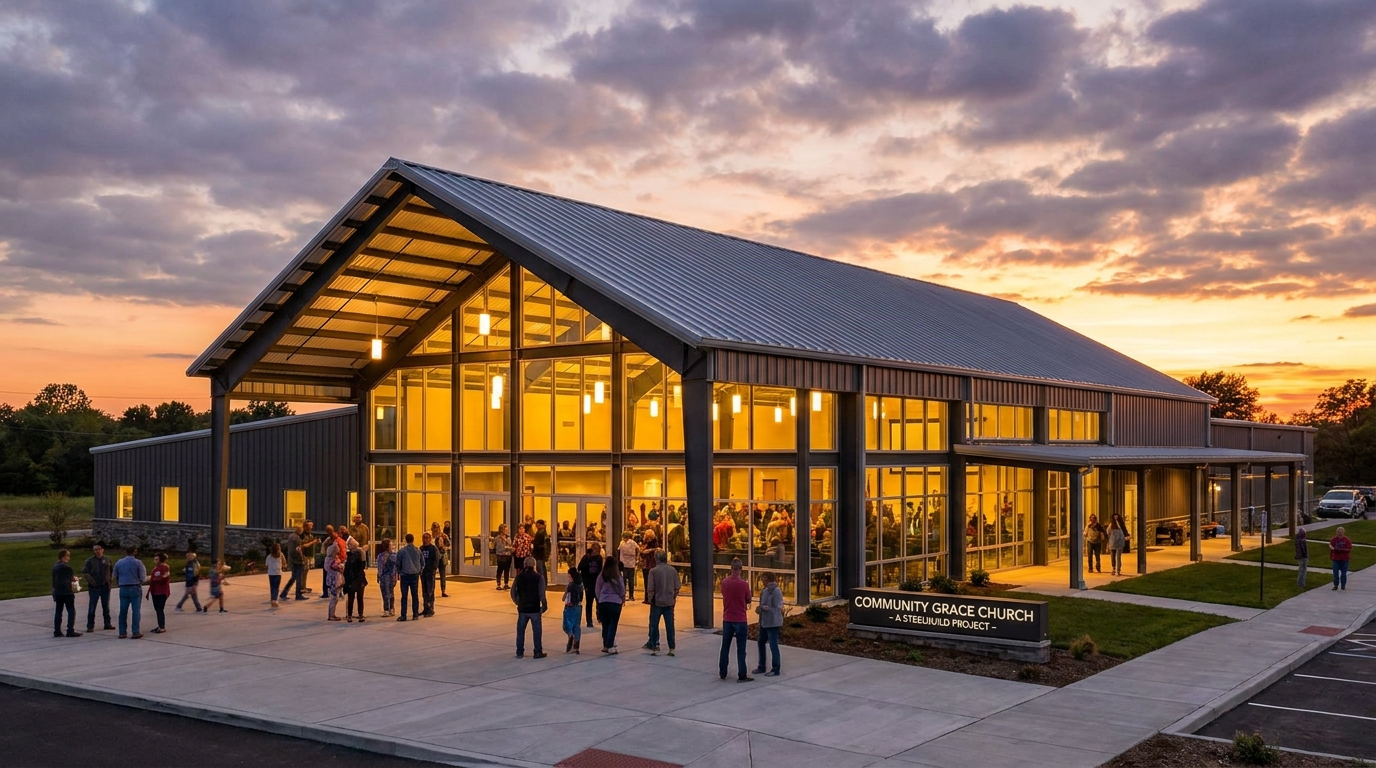
Case studies of successful projects highlight the importance of early manufacturer involvement and clear communication. In many church design build scenarios, congregations have saved months on their timelines by opting for prefabricated steel over traditional builds. These real-world examples serve as a roadmap for avoiding common pitfalls and maximizing the benefits of steel construction.
Lessons in Timeline Optimization
Projects that utilize the design-build model consistently meet their grand opening dates because the fabrication and site prep happen simultaneously. Case studies show that this synchronization is the key to managing a successful church expansion.
Look:
- Concurrent scheduling of foundation and fabrication.
- Reduction in unexpected site delays.
- Faster path to building occupancy.
Overcoming Global Logistics Challenges
Successful international projects demonstrate how clear labeling and organized packing lists prevent errors at remote job sites. Case studies often show that a well-documented Bill of Materials is essential for smooth customs clearance and unloading.
The best part?
- Sequential loading for easy site sorting.
- Protected packaging to prevent transit damage.
- Comprehensive documentation for international shipping.
Success in Remote Site Assembly
Case studies from rural or remote locations show that steel buildings can be erected successfully with limited local equipment. The bolt-together nature of the components makes it possible for smaller crews to achieve professional results.
Here is the deal:
- No specialized heavy machinery required for small spans.
- Easy-to-follow erection manuals.
- Remote support from the manufacturing team.
Key Takeaway: Learning from past projects helps church leaders set realistic expectations and choose the most reliable path for their own construction journey.
| Case Study Focus | Outcome Observed | Strategy to Replicate | |
|---|---|---|---|
| Timeline | 30% faster completion | Simultaneous Workflows | |
| Logistics | Zero missing parts | Detailed Labeling/BOM | |
| Assembly | Simple site erection | Pre-engineered Bolting |
Read through similar project profiles to understand the logistics and timelines involved in a steel build.
How Do You Successfully Collaboration with a Steel Structure Manufacturer?
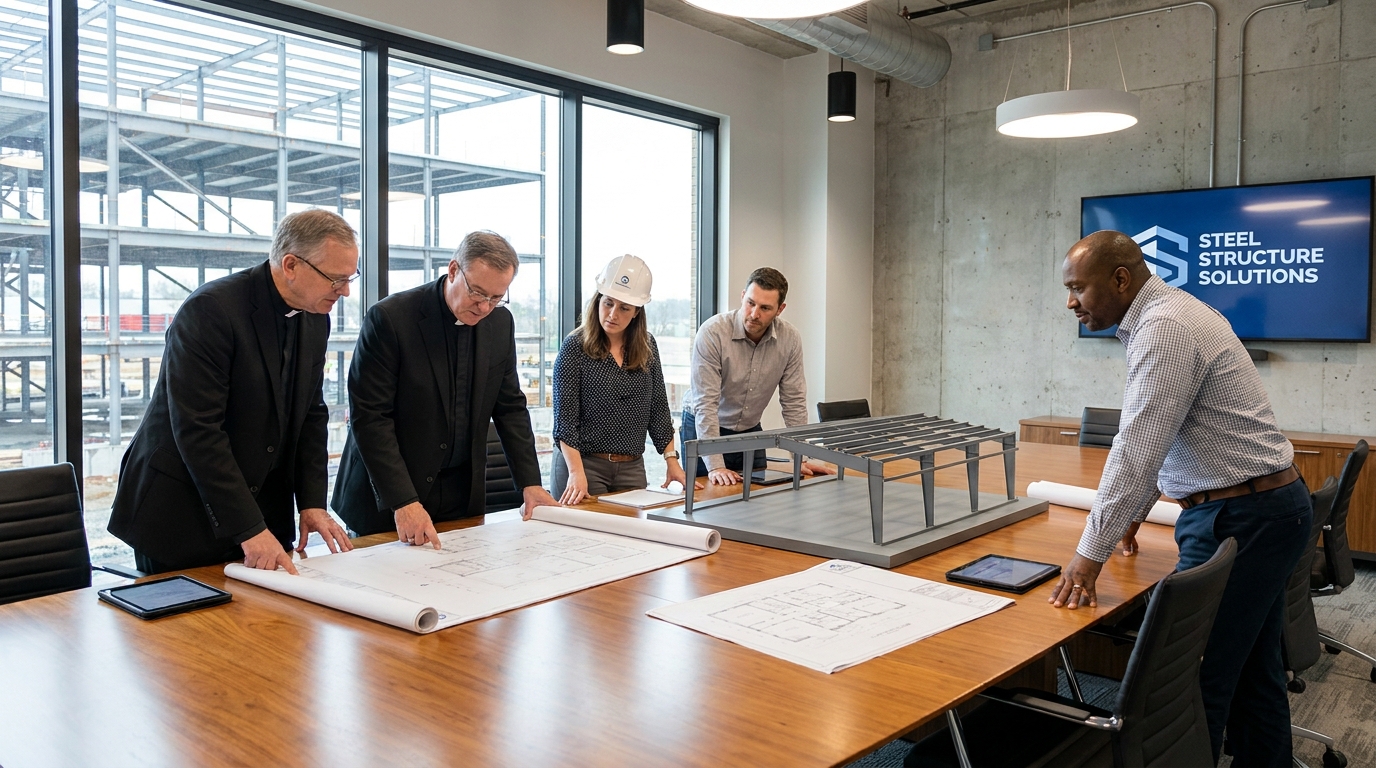
Successful collaboration starts with providing the manufacturer with detailed project requirements and site-specific environmental data. In a church design build partnership, the manufacturer acts as an extension of your planning committee, offering technical insights that can save money and improve functionality. Open lines of communication regarding the building’s intended use and aesthetic goals are vital for a smooth process.
Providing Accurate Site Requirements
You must provide the manufacturer with details about your site’s terrain, local climate, and any existing infrastructure. This allows the engineering team to optimize the steel frame for your specific location.
The best part?
- Customized engineering for your specific lot.
- Proper drainage and foundation coordination.
- Accurate wind and snow load integration.
Leveraging Engineering Expertise
Manufacturers have deep experience with hundreds of different building types and can suggest structural optimizations you might not have considered. Don’t hesitate to ask for their advice on spanning distances or roof pitches.
Look:
- Optimization of steel weight to reduce cost.
- Suggestions for efficient floor plan layouts.
- Guidance on the best cladding systems for your climate.
Managing Logistics and Delivery
Clear communication about delivery schedules and site access is essential to prevent bottlenecks. You should coordinate with the manufacturer to ensure that cranes and labor are ready exactly when the steel arrives.
Here is the deal:
- Scheduled delivery windows.
- Coordination of shipping containers or flatbeds.
- Verification of site access for large trucks.
Key Takeaway: A collaborative approach turns the manufacturer into a strategic partner, ensuring the structural success of your church project.
| Collaboration Task | Your Responsibility | Manufacturer’s Role | |
|---|---|---|---|
| Information | Provide site data | Analysis & Engineering | |
| Feedback | Review 3D models | Adjust design specs | |
| Logistics | Prep the site | Deliver on schedule |
Contact an engineering specialist to discuss your site data and begin the collaborative design process.
What Are the Future Trends in Church Design-Build and Steel Construction?
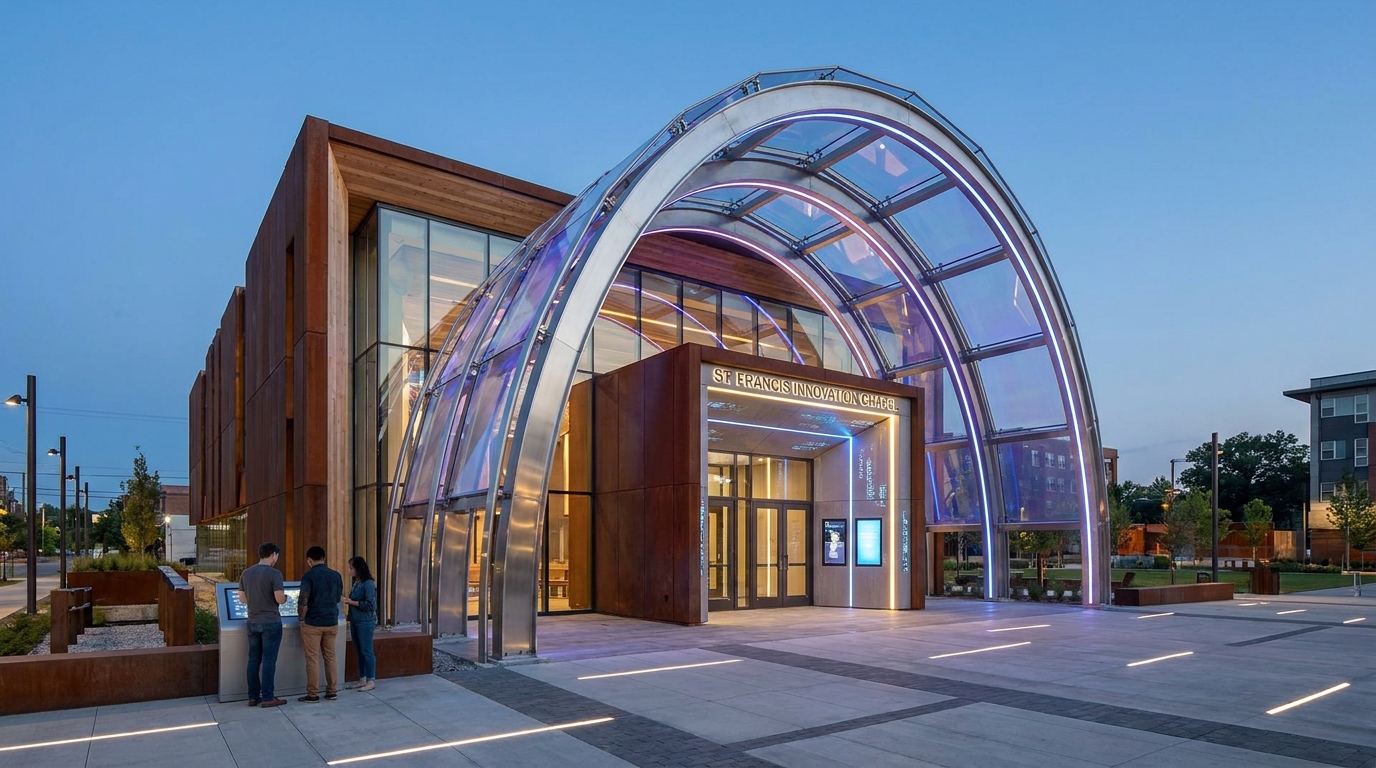
Future trends include the increased use of Building Information Modeling (BIM) and the integration of sustainable technologies like solar arrays directly into steel roof systems. The church design build industry is also seeing a shift toward “hybrid” aesthetics where steel frames are combined with modular interior components for even faster delivery. These innovations ensure that churches built today will remain functional and efficient for the next generation.
Advancements in Prefabrication
Technology is allowing for even more complex components to be prefabricated in the factory, including integrated electrical and plumbing raceways within steel members. This further reduces the amount of work required by trades on the construction site.
Look:
- More complex modular sub-assemblies.
- Integration of smart building sensors.
- Higher levels of factory-finished surfaces.
Integration of Smart Technology
Modern steel churches are being designed to house sophisticated audio-visual and automation systems from the outset. Engineering the steel frame to support large LED screens and complex lighting grids is becoming a standard requirement.
Here is the deal:
- Built-in support for massive media displays.
- Dedicated pathways for data and power cables.
- Remote-controlled lighting and HVAC systems.
Hybrid Aesthetic Trends
The combination of industrial steel with warm, natural materials like wood and glass is a growing trend in modern worship spaces. This “industrial-chic” look provides a contemporary feel while maintaining the cost-effectiveness of a steel building.
The best part?
- Visual interest through mixed materials.
- Modern look that appeals to younger generations.
- High-durability finishes that require less cleaning.
Key Takeaway: Staying ahead of these trends ensures that your new church building is not only modern today but also adaptable to the technological needs of the future.
| Future Trend | Core Technology | Church Benefit | |
|---|---|---|---|
| Smart Systems | IoT / Integrated AV | Enhanced Worship | |
| Modular Prep | Advanced BIM | Even Faster Builds | |
| Hybrid Look | Mixed Materials | Contemporary Appeal |
Investigate how integrating smart technology into your steel design can enhance your ministry’s outreach.
Invest in Your Community with Innovative Church Design Build Solutions
The path to a new sanctuary doesn’t have to be fraught with delays, budget overruns, and structural compromises. By choosing a modern steel structure and a professional design-build delivery model, you can overcome the challenges of traditional construction and provide your congregation with a durable, beautiful, and cost-effective home. From expansive clear spans that create a sense of awe to the sustainable materials that respect your role as stewards of the earth, steel is the superior choice for the modern ministry.
We are committed to helping you realize your vision through engineered excellence and direct factory support. Whether you are building a small community chapel or a massive multi-purpose worship center, our team is ready to guide you through every step of the process. Contact us today to receive a customized quote and take the first step toward building a legacy for your congregation.
Email:sales@showhoo.com.cn
Phone/WhatsApp:+86 186 7895 5927
Frequently Asked Questions
Can I customize the exterior of a steel church to look like a traditional brick building?
Yes. Steel structures are designed to support various cladding options, including brick veneers, stone, and stucco, allowing you to achieve a traditional aesthetic with a modern structural core.
What’s the best way to handle acoustics in a large metal church building?
The most effective method is integrating acoustic insulation and specialized wall panels during the design phase. Steel’s high ceilings also allow for strategic baffles and sound-absorbing materials to be placed high above the congregation.
How do I know if a steel church is right for my local climate?
Every steel building is custom-engineered based on your specific location’s wind, snow, and seismic data. This ensures the structure is perfectly suited to handle the environmental stresses of your region.
Can I expand my steel church building in the future as my congregation grows?
Yes, steel buildings are inherently scalable. Because they are modular and use bolt-together connections, adding new sections or extending the length of the building is far simpler than with masonry or wood construction.
What’s the best timeline expectation for a church design-build project?
While every project varies, a steel design-build project typically saves 30% to 50% on construction time compared to traditional methods. From final design approval, many structures can be erected on-site in just a few weeks.