
Modern metal church buildings serve as the ultimate guide to modern sanctuaries because they offer a structurally superior, cost-effective, and aesthetically versatile solution for expanding congregations. Imagine sitting in a crowded building committee meeting, looking at outdated blueprints while facing the stress of skyrocketing timber costs, constant labor delays, and a dwindling budget that threatens to stall your ministry’s vision. The anxiety of seeing your hard-earned funds consumed by construction waste and extended timelines is enough to overwhelm any spiritual leadership team. Fortunately, a pre-engineered steel structural package provides the perfect answer to these problems, enabling you to build a beautiful, open-concept 2000 sqft church building in half the time of traditional construction without sacrificing sacred architectural beauty or taking on unsustainable debt.
Can metal church buildings look traditional?
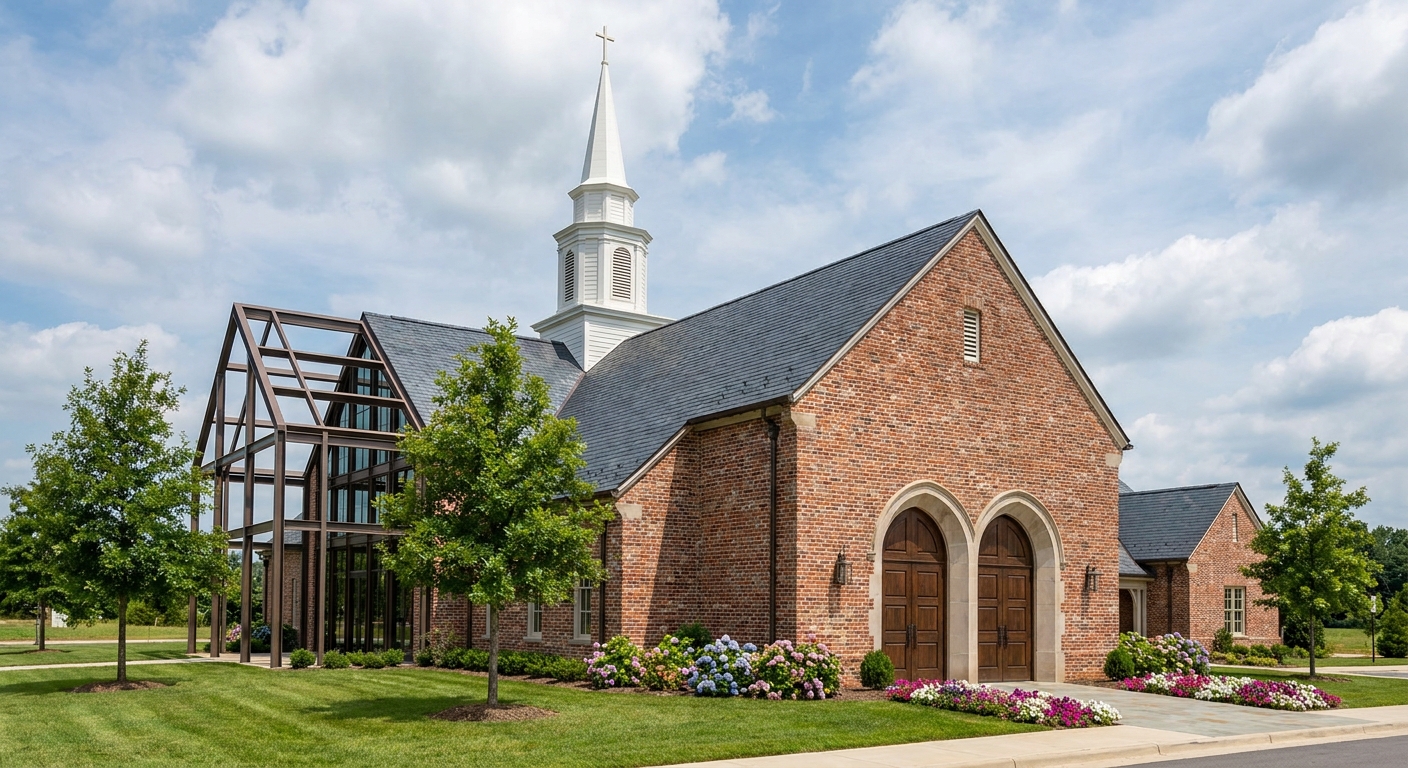
Yes, metal church buildings can look completely traditional because they easily support exterior finishes like brick, natural stone, stucco, or fiber-cement siding. When you plan a 2000 sqft church building , there is absolutely no need to sacrifice classic sacred aesthetics for modern structural performance. Steel framing easily integrates wood-accented porticos and warm, welcoming entryways that match any historic style. This versatility allows your building committee to preserve traditional beauty while benefiting from modern efficiency.
Moreover, pre-engineered steel frames can be customized to support steep roof pitches and classic cathedral-style ceilings. This means you can easily mount custom steeples, bell towers, and exterior structural crosses directly to the roof beams. With precision-engineered window openings, integrating arched frames and stained-glass installations is straightforward. Ultimately, you can build a facility that looks indistinguishable from a traditional masonry church by utilizing a customized steel frame package .
Can we add brick, stone, or stucco veneers?
You will be glad to know that steel frames are designed to carry the heavy loads of traditional masonry veneers. Here is why it matters: secondary structural components like wall girts provide secure anchor points for attaching brick, stone, or insulated metal panels.
- Brick and stone veneers: Effortlessly install deep, classic masonry finishes around the base of the building.
- Stucco and fiber cement: Achieve a clean, modern-rustic look with minimal maintenance requirements.
- Wood-grain siding panels: Add the warmth of real timber without the risks of insect rot or weather damage.
By choosing these finishes, you protect your church from the elements while honoring the architectural heritage of your community.
Is it possible to customize roofs and steeples?
Modern engineering makes it simple to integrate traditional soaring architectural elements. But that’s not all. The heavy structural skeleton of a steel church is pre-engineered to safely bear the wind loads of large steeples and heavy copper bells.
- High-pitch rooflines: Custom frames support steep pitches up to a 12:12 ratio for a dramatic Gothic look.
- Stained-glass framing: Pre-cut window headers accommodate beautiful arched stained-glass windows perfectly.
- Integrated steeples: Secure your steeple directly to the primary steel columns for maximum structural wind resistance.
You can rest easy knowing these high-wind features are fully engineered and code-compliant from day one.
Key Takeaway: Combining a rigid steel frame with classic stone cladding and custom steeples ensures your sanctuary maintains a sacred, traditional appearance while remaining structurally superior.
| Architectural Finish | Steel Compatibility | Aesthetic and Structural Benefit | |
|---|---|---|---|
| Brick & Stone Veneer | Fully Compatible | Adds a heavy, timeless masonry appearance to outer walls | |
| High-Pitch Roof | Customizable up to 12:12 | Creates soaring cathedral-style ceilings and classic profiles | |
| Stained Glass Openings | Precision Pre-punched | Ensures perfect, secure fitment for arched art windows | |
| Steeples & Crosses | Engineered Load Support | Safely anchors heavy focal features directly to structural beams |
Understanding how steel supports traditional beauty makes it easier to plan a cost-effective, timeless sanctuary for your ministry.
How does steel lower church construction costs?
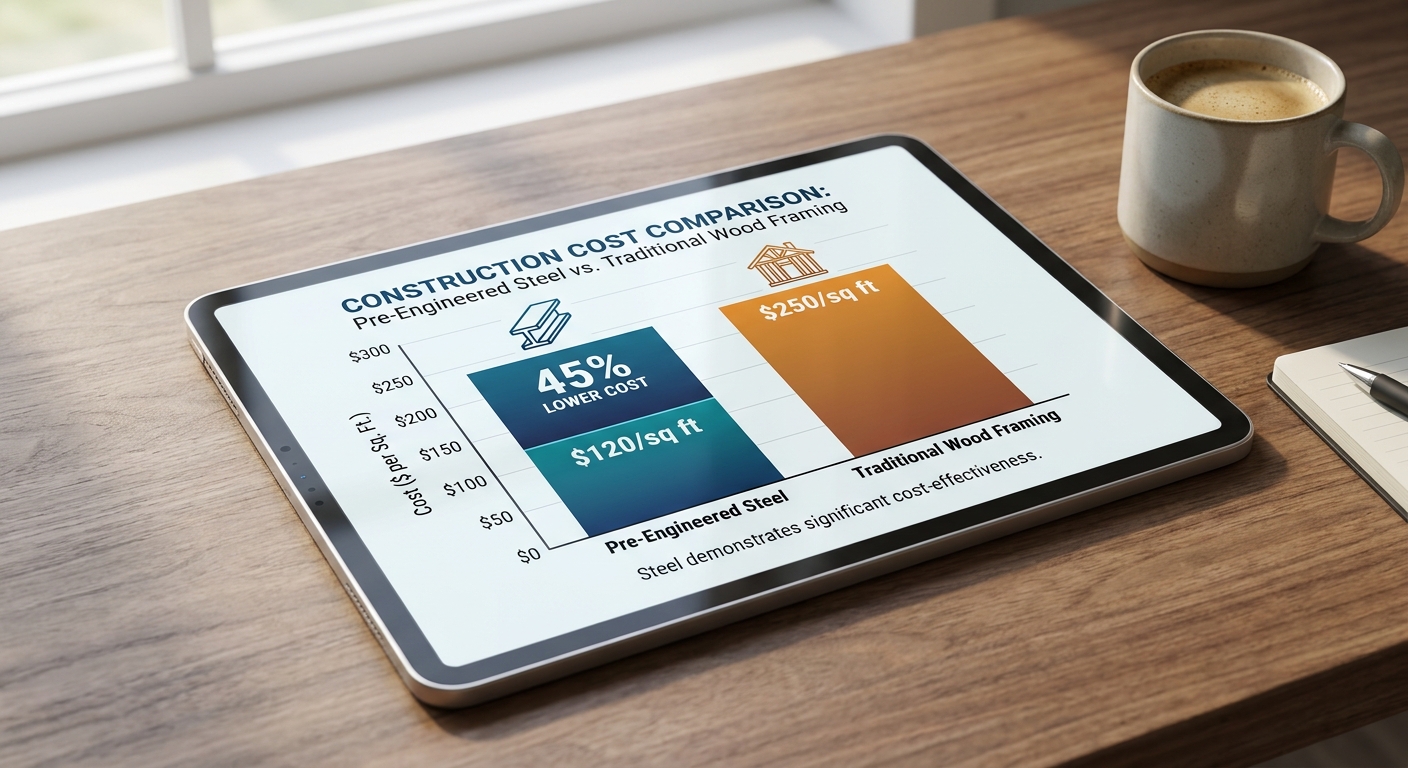
Steel lowers church construction costs by shifting manufacturing to a highly precise factory, reducing expensive on-site labor and eliminating material waste. Designing a budget-friendly 2000 sqft church building is much easier when every column, beam, and connection plate is pre-engineered. Because components arrive ready to be bolted together, your crew avoids tedious measuring and on-site cutting. This streamlined approach keeps your initial construction budget highly predictable and secure.
In addition to saving on labor, steel structures require lighter foundation designs compared to heavy masonry or timber. Since steel distributes weight with high structural efficiency, you save on raw concrete materials and deep excavation fees. Over the lifespan of the building, the non-combustible nature of steel lowers your operational insurance premiums. These combined savings allow your ministry to invest more funds directly into local community outreach.
How does factory fabrication minimize waste?
Every framing component is cut to precise millimeter tolerances in a computer-controlled facility. Look at this: because the raw materials are managed under strict quality protocols, site scrap is kept under one percent.
- No waste clean-up fees: You will not have to pay for costly dumpster rentals or material disposal.
- Zero on-site corrections: Precision pre-punched bolt holes prevent manual modification errors in the field.
- Transparent factory pricing: Purchasing directly from Showhoo keeps your material margins clear and predictable.
This factory-direct approach means your hard-raised funds are spent entirely on building materials rather than wasted off-cuts.
Is steel more economical than wood over time?
While timber prices are highly volatile, steel offers a stable and long-term economical choice. Here’s why it matters: steel resists common degradation factors like moisture, wood rot, warping, and insect infestation, saving thousands in maintenance.
- Stable material costs: Fixed-price steel quotes help your committee secure predictable bank loans.
- Lower long-term maintenance: Metal framing does not require regular chemical treatments or structural adjustments.
- Reduced utility overhead: Tight pre-engineered fits maximize insulation performance, lowering monthly utility bills.
You can build with peace of mind, knowing that your ongoing operational costs will remain highly manageable.
Key Takeaway: Selecting a factory-direct pre-engineered metal structure reduces both your immediate construction labor costs and your long-term maintenance overhead, ensuring excellent stewardship of church funds.
| Cost Component | Pre-Engineered Steel | Conventional Wood Framing | |
|---|---|---|---|
| Material Waste | Less than 1% (factory-controlled) | 10% to 15% (on-site scrap) | |
| On-Site Labor Demand | Low (rapid bolt-together kit) | High (prolonged framing and cutting) | |
| Termite & Rot Risk | Non-existent | High (requires ongoing chemical treatments) | |
| Foundation Costs | Optimized (lighter structural weight) | Heavy (demands extensive masonry work) |
Now that we have explored the direct cost-saving benefits, let us look at the specific materials that make steel so durable.
Build your 2000 sqft church building fast, strong, and cost-efficient.
Email:sales@showhoo.com.cn
Phone/WhatsApp: + 86 186 7895 5927
What structural elements ensure long-term durability?
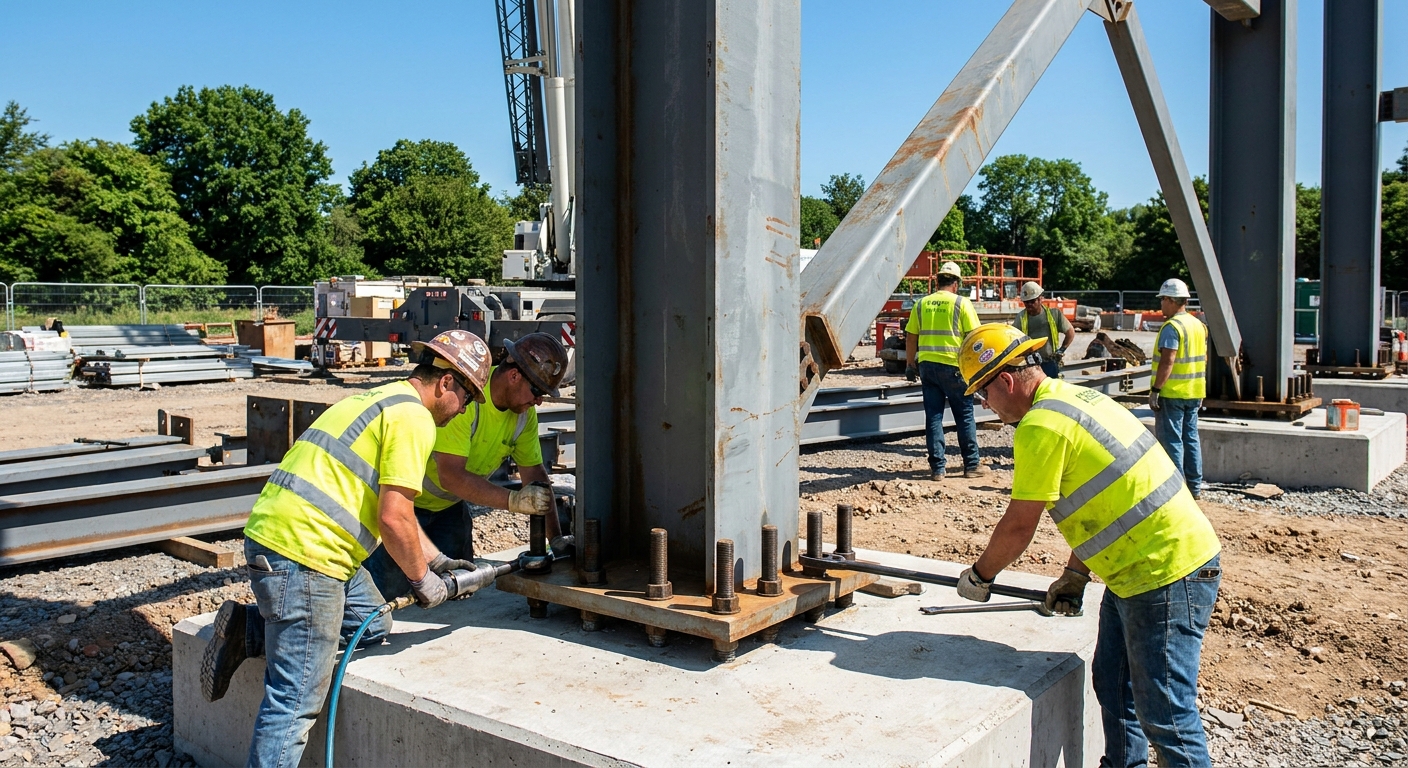
Heavy-duty H-section steel columns, galvanized C and Z purlins, and high-tensile structural bolts ensure the long-term durability of metal churches. When erecting a robust 2000 sqft church building , utilizing premium structural materials is non-negotiable for public safety. These commercial-grade components resist corrosion, rust, and structural fatigue over decades of continuous use. This structural resilience guarantees that your sanctuary remains a safe haven for your community for generations.
Furthermore, the primary steel members undergo advanced automated welding processes to withstand extreme weather. This high level of precision protects structural connections from expanding, contracting, or loosening under heavy stress. Specialized primers and galvanization treatments safeguard every beam from coastal humidity and interior condensation. By choosing these industrial-grade materials, you eliminate the risk of structural sagging or expensive structural repairs.
Why use high-grade H-section steel?
Your sanctuary is built upon a rugged skeleton of Q235B or Q355B H-section steel columns. But that’s not all. This commercial-grade material possesses the highest strength-to-weight ratio of any common construction medium.
- High load-bearing capacity: Easily supports massive roof systems and complex multi-tier seating layouts.
- Seismic and wind resistance: Absorbs heavy seismic vibrations and extreme wind shear without structural failure.
- No warping or cracking: Unlike wood, H-section steel retains its precise shape and strength indefinitely.
This industrial foundation ensures that your building maintains its structural integrity even during severe natural disasters.
What is the role of secondary galvanized framing?
Secondary framing elements, such as C and Z purlins, support your roof and wall cladding. Here’s why it matters: heavy zinc galvanization prevents rust from forming in areas where moisture often condenses.
- Rust-proof barriers: Zinc coatings shield secondary framing from humidity and salt air.
- High-tensile fasteners: High-strength structural bolts lock components together to prevent vibration noise.
- Long-lasting panels: SMP-painted roof and wall panels resist chalking and fading for up to 30 years.
You can trust that these advanced protective layers will keep your building looking brand-new with minimal upkeep.
Key Takeaway: Sourcing commercial-grade H-section steel and galvanized secondary framing guarantees a maintenance-free, 50-plus-year lifespan for your sanctuary.
| Structural Component | Material Grade | Primary Protective Finish | |
|---|---|---|---|
| Primary Framing | Q235B / Q355B H-Section Steel | Anti-corrosive primer or Hot-Dip Galvanization | |
| Secondary Framing | Galvanized C & Z Purlins | Heavy Zinc Coating (120-275 g/m²) | |
| Roof & Wall Panels | High-Tensile Steel (0.5mm – 0.8mm) | SMP or PVDF Multi-Layer Paint Finish | |
| Structural Hardware | Grade 8.8 High-Strength Bolts | Dacromet or Zinc Plated Coatings |
With a durable frame in place, we can explore how these modern structures adapt to the active life of your congregation.
How can modern metal buildings serve congregations?
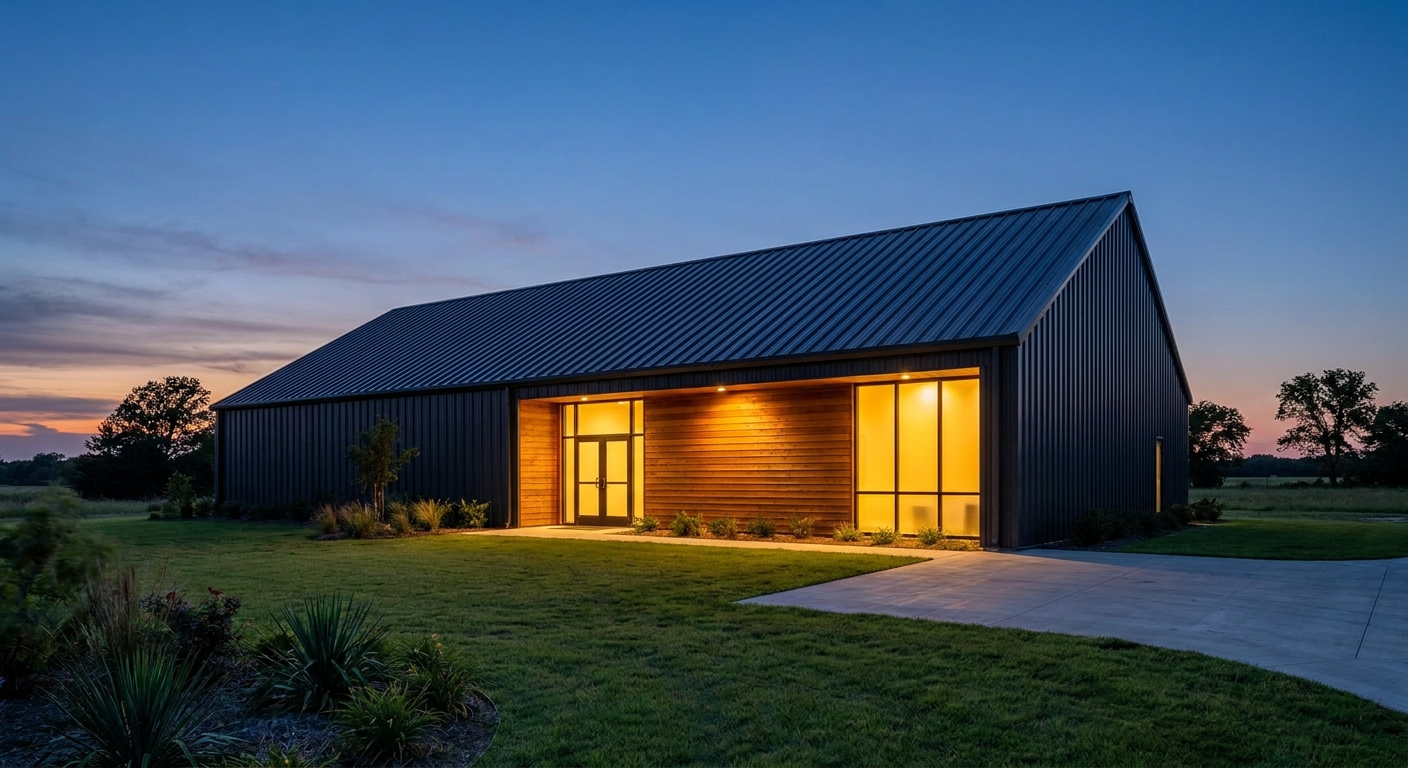
Modern metal buildings serve congregations by offering highly functional, warm, and aesthetically pleasing environments that foster spiritual growth and community fellowship. A modern 2000 sqft church building is the perfect hub for Sunday worship and mid-week youth activities. The flexible, open interior allows you to host dinner events, counseling sessions, and administrative meetings in the same location. This multi-purpose utility ensures that your church remains an active, vibrant center of local life.
Additionally, contemporary steel architectural designs incorporate beautiful wooden entryways and expansive glass facades to create a welcoming atmosphere. Soft, warm interior lighting reflecting off clean concrete floors offers a peaceful and sacred vibe. These structures show that modern efficiency and spiritual warmth can coexist beautifully. By opting for customizable church building plans , you build a facility that fits your ministry’s unique personality and local vision.
Can we integrate wooden accents and warm lighting?
You do not have to settle for an industrial aesthetic that feels cold or sterile. Look at this: you can easily combine clean steel framing with natural wood siding, cedar posts, and soft, glowing lighting.
- Warm exterior accents: Add natural cedar vertical planks around your entryway to create a rustic, welcoming charm.
- Large glass storefronts: Install floor-to-ceiling windows to flood your foyer with bright, natural sunlight.
- Elegant interior finishes: Paint exposed ceiling trusses to look like classic timber beams or modern industrial accents.
These stylistic touches guarantee that your visitors feel comfortable, welcomed, and inspired from the moment they arrive.
Is steel suitable for multipurpose community work?
Because your sanctuary has no interior columns, the open-concept layout easily adapts to multiple community programs. Here’s why it matters: you can host youth groups, local food banks, and dynamic worship services in the exact same room.
- Rapid spatial transitions: Easily swap pews for dining tables and folding chairs within minutes.
- Integrated storage spaces: Design deep wall closets to store tables and sound equipment when not in use.
- Dedicated outreach zones: Allocate space for administrative offices and modern counseling rooms.
This multi-use flexibility ensures that you are utilizing your building assets to their absolute maximum potential throughout the entire week.
Key Takeaway: Modern steel buildings deliver a warm, beautiful aesthetic and outstanding layout versatility, making them highly effective tools for active community ministry and multi-purpose worship.
| Feature | Traditional Wood/Masonry | Modern Custom Steel | |
|---|---|---|---|
| Interior Openness | Limited by load-bearing pillars | Unlimited (up to 150+ ft clear spans) | |
| Aesthetic Versatility | Fixed, classic stone or timber | Highly adaptable (supports wood, glass, and steel accents) | |
| Space Utilization | Rigid, single-purpose floor plans | Highly flexible, multi-purpose transition zones | |
| Expansion Potential | Expensive, structurally complex | Simple, modular bolt-on expansion panels |
To successfully execute these versatile activities, let us examine the optimal layout configurations for your new worship sanctuary.
What layouts work best for worship sanctuaries?
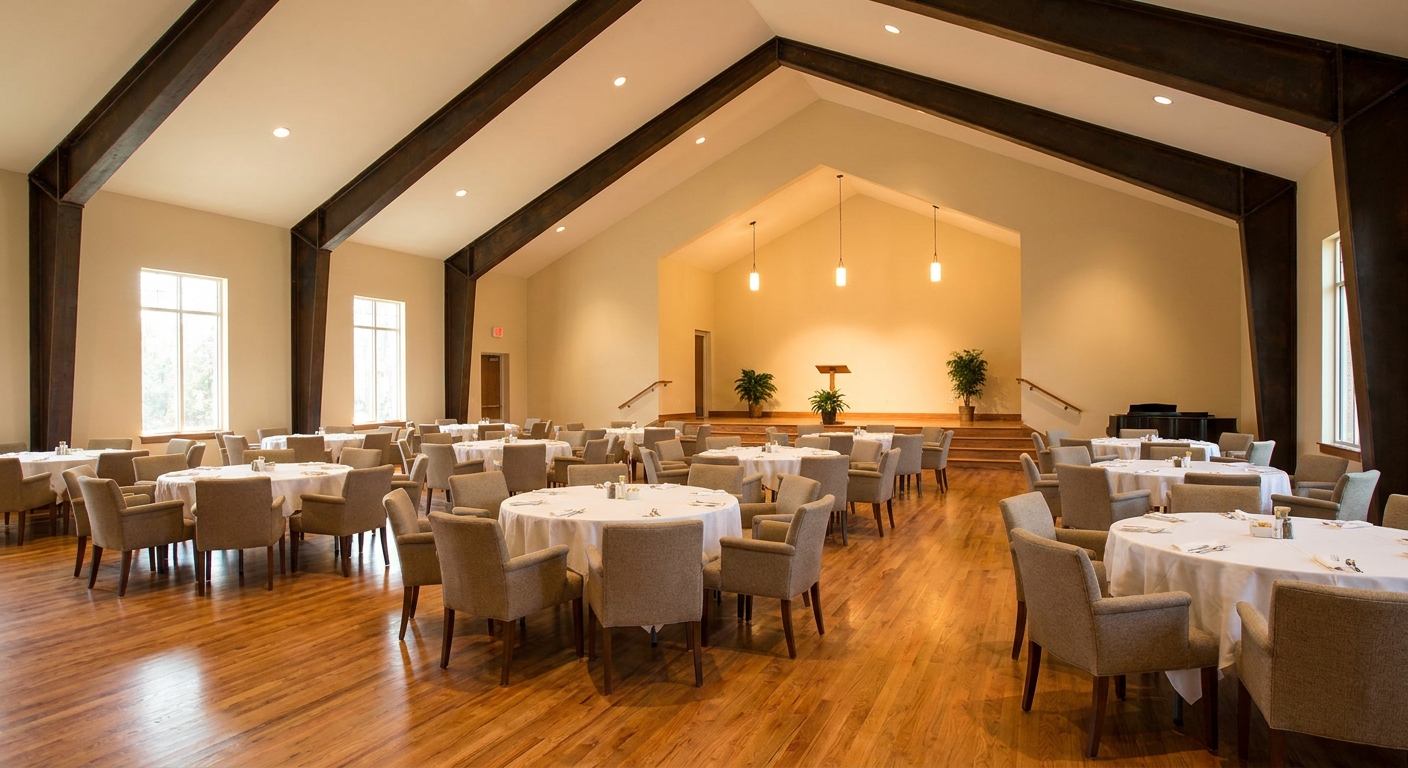
The best layouts for worship sanctuaries prioritize open-concept seating, clear focal points, and easy-to-navigate welcome areas that accommodate all members. For a modern 2000 sqft church building , allocating space wisely ensures your sanctuary seats up to 150 worshipers comfortably. Designing a wide, column-free floor plan allows for unobstructed views of the pulpit and worship band. This structural layout provides an engaging, intimate environment that encourages congregational participation.
In addition to the main sanctuary, you must plan for an inviting foyer, ADA-compliant restrooms, and administrative office space. A welcoming entryway acts as a connection hub, offering visitors a warm place to chat before services begin. Using a customized metal building layout allows you to position rooms strategically to avoid sound bleed during quiet worship moments. This balanced allocation of space maximizes both spiritual and social gathering opportunities.
How do you calculate sanctuary seating?
Planning your seating configuration is simple when you follow standard public assembly guidelines. Look at this: allocating eight to ten square feet per worshiper provides plenty of room for comfortable seating, wide aisles, and safety egress.
- Comfortable chair layouts: Interlocking worship chairs offer maximum flexibility and can be easily rearranged.
- Classic wooden pews: Rigid pews deliver a traditional feel and anchor your sanctuary’s visual aesthetics.
- Aisles and safety zones: Keep center and side aisles clear to ensure code compliance and wheelchair accessibility.
Following these dimensions will help you design a comfortable, safe environment where visitors feel relaxed and focused on the service.
Can we divide the space for multiple classrooms?
You will love how easily a clear-span metal building can be segmented into smaller classrooms. But that’s not all. You can install heavy acoustic folding doors that slide open for large gatherings and close for Sunday school.
- Operable acoustic partitions: Divide your main room into quiet classrooms without permanent wall installations.
- Dedicated youth zones: Set up safe, colorful spaces for children’s ministries and nursery activities.
- Soundboard and AV booths: Position a raised tech booth at the rear of the room for clear sound mixing.
This adaptive design guarantees that your building serves as a highly functional, seven-day-a-week community resource.
Key Takeaway: Designing your sanctuary layout around a column-free clear span provides the ultimate flexibility to balance seating capacity with comfortable multi-use classrooms.
| Floor Plan Allocation | Target Space Share | Practical Capacity (2,000 sq ft footprint) | |
|---|---|---|---|
| Sanctuary / Worship Hall | 65% to 70% | 130 to 150 comfortable seats | |
| Foyer & Welcome Center | 15% to 20% | Standing room for 40 to 50 visitors | |
| ADA-Compliant Restrooms | 10% | Fully accessible male and female facilities | |
| Admin Office & Tech Booth | 5% | 1 private pastor’s office and a sound mixing station |
Once your custom floor plan is finalized, the actual speed of steel construction will bring your vision to life in record time.
How fast can a steel church be constructed?
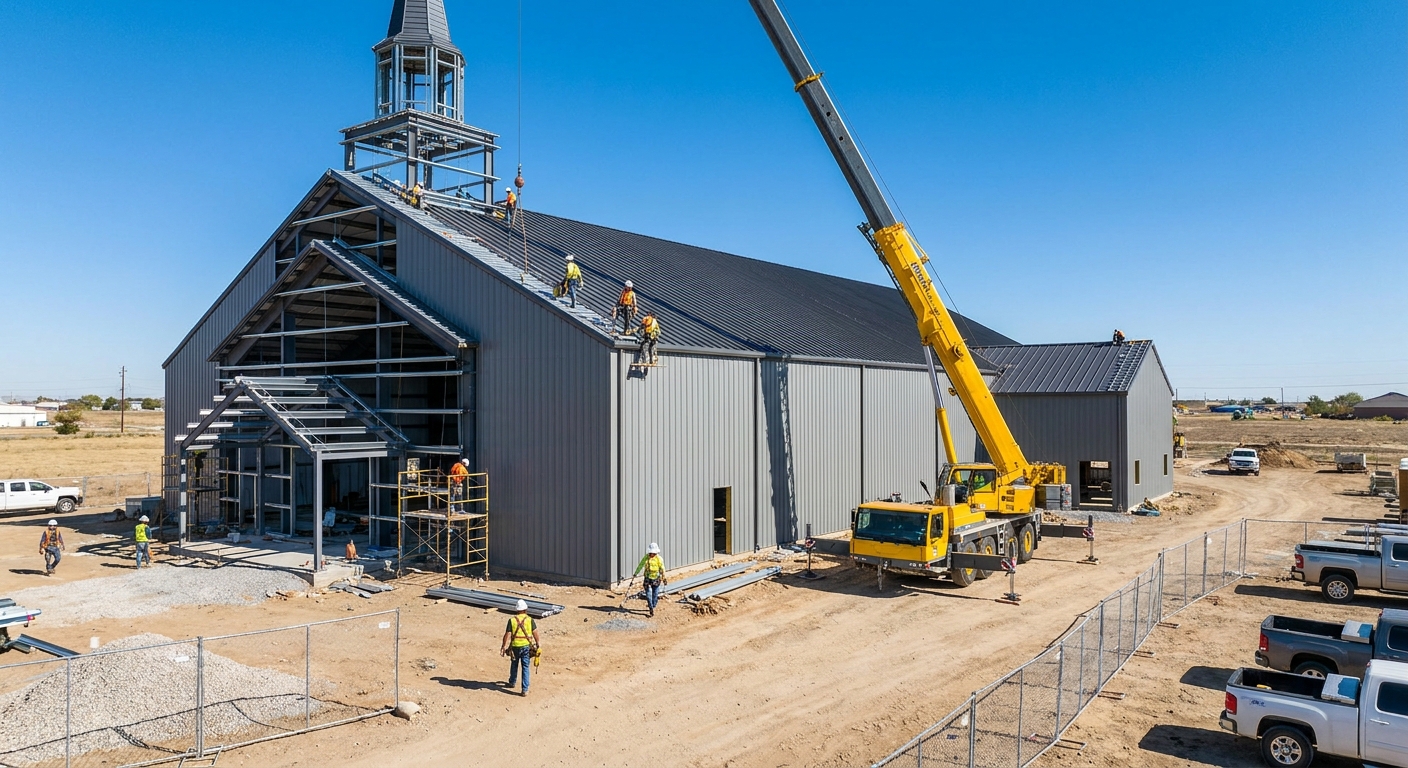
A steel church can be constructed in half the time of traditional wood or masonry projects because all framing components are delivered pre-engineered and ready for immediate assembly. When erecting a 2000 sqft church building, reducing time-to-occupancy saves valuable rental fees and keeps structural campaigns exciting. Your general contractor can easily bolt the heavy columns and rafters together on a pre-poured concrete foundation. This systematic approach cuts the structural framing timeline down to just a few weeks.
Furthermore, pre-engineered metal buildings are shipped with clear engineering drawings and sequentially numbered parts. This detailed organization means your local crew doesn’t waste time measuring or cutting raw materials on-site. Once the primary skeleton is locked in, the exterior wall and roof panels install rapidly. This swift enclosure allows interior trades to begin electrical, drywall, and plumbing work weeks ahead of schedule.
Why do prefab kits speed up site work?
Traditional framing relies on slow, labor-intensive processes that are easily stalled by material shortages. But that’s not all. A factory-direct steel structural package arrives as a complete, highly integrated kit.
- Pre-punched bolt holes: Align columns and rafters effortlessly without on-site drilling or welding.
- Pre-cut window openings: Framing headers are integrated at the factory, saving hours of site layout planning.
- Numbered components: Every beam and purlin matches a specific layout drawing, simplifying the assembly sequence.
By bypassing tedious site fabrication, you drastically reduce your dependence on highly specialized local labor.
How does weather impact steel erection?
Rain and humidity can severely warp wood framing and cause mold growth, which stalls traditional schedules. Here’s why it matters: commercial steel is completely impervious to weather, allowing construction to proceed safely in any season.
- Rapid roof enclosure: Once the metal roof panels are secured, the building is “dried-in” and protected.
- Year-round erection: Steel framing can be bolted together even during cold winter months without structural risk.
- Fewer coordination delays: Rapid assembly means you avoid coordinating dozens of overlapping structural sub-contractors.
This construction speed enables you to move your congregation into their new spiritual home far sooner than you thought possible.
Key Takeaway: Prefabricated steel components cut total construction schedules by 40% to 50%, enabling rapid dry-in times that allow interior trades to start work immediately.
| Construction Phase | Pre-Engineered Steel System | Traditional Wood & Brick | |
|---|---|---|---|
| Structural Framing Erection | 2 to 3 weeks | 6 to 8 weeks | |
| Dry-In Cladding Installation | 1 to 2 weeks | 4 to 5 weeks | |
| Weather Susceptibility | Extremely Low (materials are impervious) | High (exposure leads to wood warp and rot) | |
| Average Total Timeline | 6 to 8 weeks | 16 to 24 weeks |
An accelerated dry-in phase provides the perfect foundation for installing advanced insulation to maximize energy efficiency.
Build your 2000 sqft church building fast, strong, and cost-efficient.
Email:sales@showhoo.com.cn
Phone/WhatsApp: + 86 186 7895 5927
How do you maximize energy efficiency?
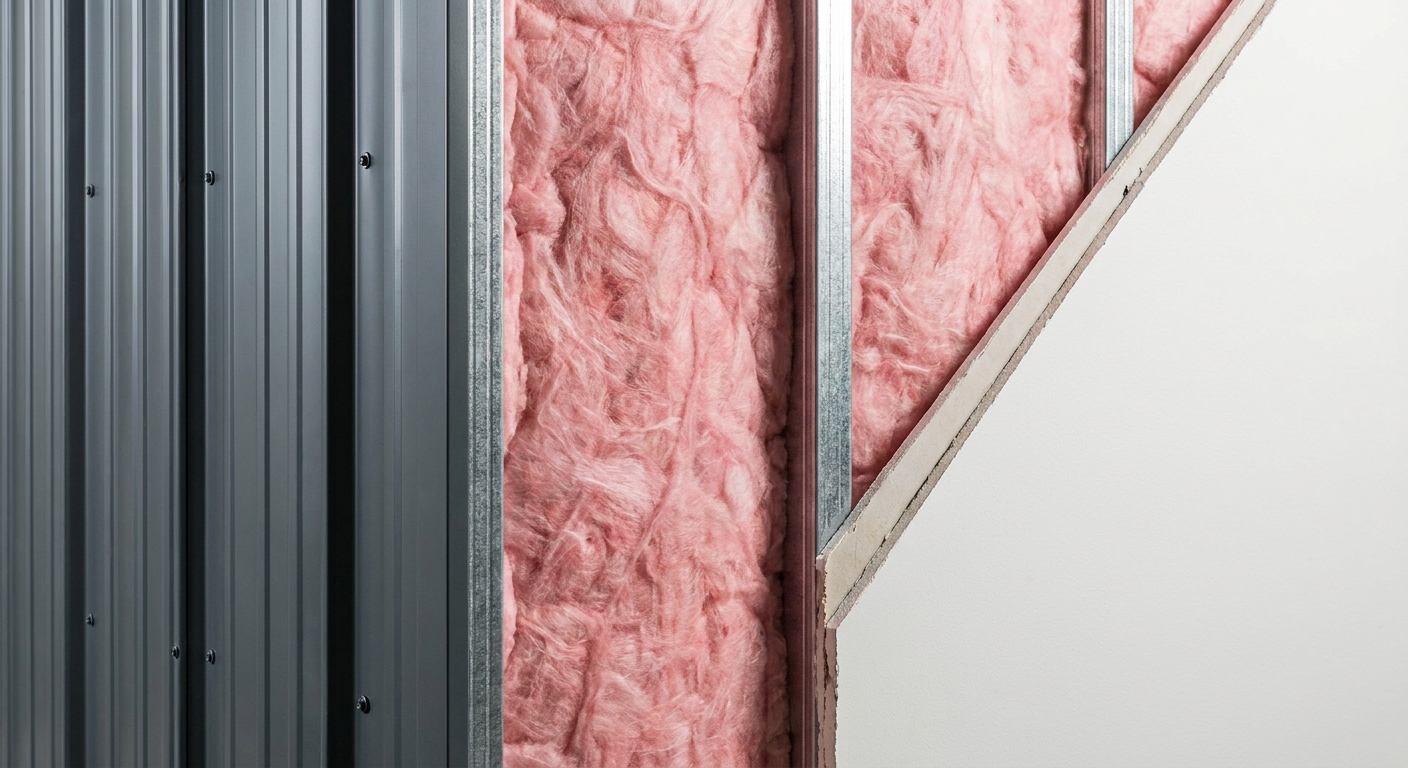
You can maximize energy efficiency by installing high-R-value insulation blankets and utilizing insulated sandwich panels that prevent heat transfer and lower monthly heating bills. When operating a heating-heavy 2000 sqft church building , managing monthly utility bills is essential for protecting your administrative budget. Combining thick insulation layers with reflective metal roofs ensures that your indoor climate remains extremely stable. This thermal protection keeps your members warm in the winter and cool in the summer.
Moreover, modern insulated wall panels completely eliminate thermal bridging, which is a major cause of energy loss in traditional structures. These panels create a continuous thermal envelope around your entire sanctuary, blocking cold drafts and moisture. Utilizing a high-performance roof coating reflects radiant solar energy away from the building, further reducing summer cooling demands. These long-term utility savings free up critical resources for your weekly ministries and outreach.
Which insulation types perform best?
Selecting the right thermal barrier depends on your local climate and building budget. Look at this: modern steel structures easily accommodate a variety of high-performance insulation systems.
- Double-layer fiberglass: Offers exceptional R-value by utilizing thick blankets rolled over the purlins.
- Polyurethane sandwich panels: Deliver continuous, premium insulation with built-in interior and exterior finishes.
- Vapor-barrier facing: Prevents internal condensation from gathering inside your walls and causing mold.
By matching insulation to your local weather patterns, you guarantee a comfortable, draft-free worship experience for your congregation.
How do reflective roofs lower cooling costs?
Sanctuaries with tall, vaulted ceilings can trap hot air and put immense stress on your HVAC system. Here’s why it matters: reflective “cool roof” coatings bounce up to eighty percent of solar heat away from the building.
- Lower AC demand: Bouncing solar heat away reduces AC workload, cutting electricity consumption by 25 percent.
- Acoustic sound dampening: Thick insulation blankets absorb the loud sound of heavy rain on metal panels.
- Reduced thermal stress: Reflective coatings extend the lifespan of your roof panels by minimizing thermal expansion.
You will enjoy quiet, peaceful worship services while maintaining exceptionally low operating costs.
Key Takeaway: Implementing a continuous insulation barrier and cool roof system lowers monthly HVAC operating costs, allowing more money to remain in your church ministry funds.
| Insulation Option | Average R-Value | Best Structural Application | |
|---|---|---|---|
| Fiberglass Blanket | R-11 to R-19 | Cost-effective insulation for standard metal roofs and walls | |
| Double-Layer System | R-25 to R-30 | Severe climates that require advanced, continuous thermal barriers | |
| PU Sandwich Panel | R-7 per inch of thickness | Premium panels with pre-finished, clean interior wall surfaces | |
| Rockwool Panel | R-4 per inch of thickness | Areas demanding maximum fire safety and professional acoustic dampening |
Now that you understand the operational savings of an efficient building, let us look at how congregations can easily finance this project.
How should congregations finance steel structures?

Congregations should finance steel structures by matching targeted building campaigns with fixed factory quotes and pursuing specialized religious lenders who understand church donation cycles. For a 2000 sqft church building, having fixed material pricing from the start makes securing a bank loan straightforward. Presenting pre-engineered engineering plans to your lender reduces their perceived risk and speeds up approval times. This financial clarity allows your building committee to move forward with absolute confidence.
Furthermore, you can easily implement a phased building strategy to avoid taking on heavy debt. Pre-engineered steel frames are modular, allowing you to build the main sanctuary now and add classrooms or a fellowship wing later. This flexibility helps you expand the facility using cash reserves as your membership naturally grows over time. By keeping your upfront debt low, you protect your church’s weekly cash flow and long-term financial health.
How do we approach specialized church lenders?
Traditional commercial banks often struggle to understand spiritual tithing and irregular donation patterns. Look at this: partnering with specialized religious credit unions or dedicated church lenders makes the entire loan process far easier.
- Faith-based lending terms: These lenders base loan approvals on consistent tithing histories rather than business profit margins.
- Fixed construction loans: Lock in competitive interest rates during the brief fabrication and erection phases.
- Comprehensive material quotes: Presenting detailed factory specifications from Showhoo builds immediate trust with underwriters.
You will find that working with the right financial partner makes bringing your vision to life much less stressful.
What is a phased construction strategy?
You do not have to build your entire dream campus on day one. But that’s not all. Pre-engineered steel packages allow for seamless, cost-effective modular expansions as your ministry’s needs grow.
- Phase one sanctuary: Erect the core worship hall, foyer, and essential restroom facilities first.
- Future modular add-ons: Simply bolt secondary frames onto the existing structure to create new classrooms.
- Debt-free expansion: Fund future expansions directly through cash campaigns without renegotiating your primary mortgage.
This phased approach keeps your building goals realistic and fully aligned with your local fundraising success.
Key Takeaway: Presenting fixed factory-direct material costs to specialized church lenders and adopting a phased growth plan protects your ministry from taking on unsustainable debt.
| Funding Approach | Key Structural Advantage | Best Suited For | |
|---|---|---|---|
| Phased Development | Eliminates heavy upfront debt; grows with cash reserves | Rapidly growing congregations with limited starting capital | |
| Specialized Church Lenders | Offers flexible terms based on historic tithing patterns | Established churches with a predictable monthly income | |
| Targeted Capital Campaigns | Promotes high community engagement and zero debt overhead | Local ministries with highly active, dedicated donor bases |
With secure financing in place, it is vital to know how your steel structure will perform against unpredictable weather events.
How does steel perform in extreme weather?
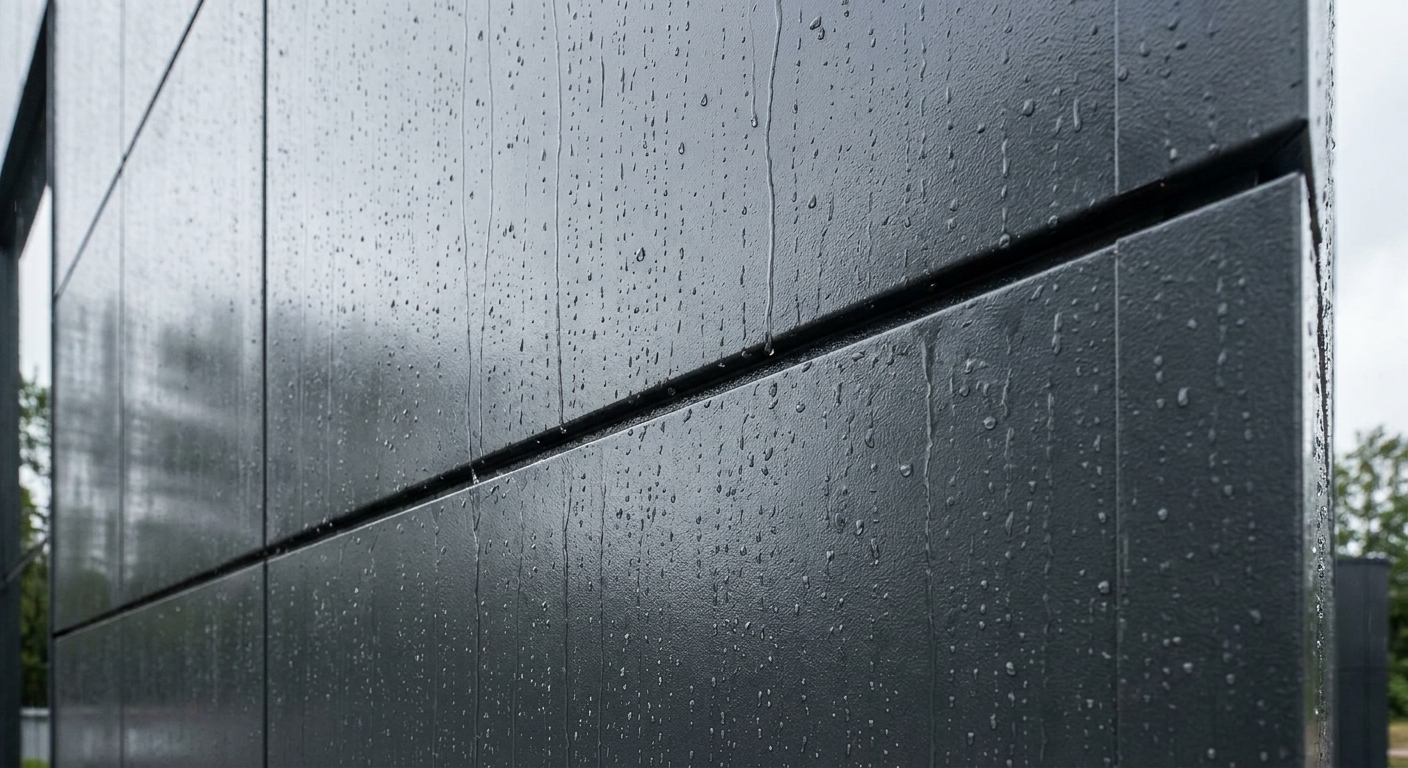
Steel performs exceptionally well in extreme weather conditions because its high strength-to-weight ratio and water-tight connections resist heavy rain, high winds, and severe snow loads. Protecting a public gathering space like a 2000 sqft church building requires materials that will never weaken when exposed to the elements. Precision-engineered steel frames are designed to meet or exceed local building codes for natural disasters, ensuring safety. This structural security provides your congregation with a reliable, weather-tested sanctuary during any storm.
Additionally, commercial-grade steel does not absorb moisture, preventing the common wood rot and mold issues caused by heavy rainfall. Advanced, interlocking roof panels shed water efficiently and feature hidden fasteners to eliminate leak risks. Multi-layer painted steel sheets resist scratching, rust, and salt air corrosion over decades of exposure. This extreme weather resistance keeps your building looking pristine and structurally sound with virtually zero repair costs.
How does steel withstand high winds and seismic activity?
You will find comfort in knowing that steel buildings are designed to flex slightly without losing structural strength. Here’s why it matters: heavy-duty steel columns and cross-bracing absorb extreme kinetic energy from wind and earthquakes safely.
- High tensile strength: Steel resists snapping or cracking under intense, sudden structural loads.
- Custom engineering: Every frame is custom-designed to match the exact wind and snow codes of your local area.
- Rigid structural connections: High-strength structural bolts hold major connections secure during severe storms.
This engineering precision guarantees that your church building remains a safe shelter for local families in times of emergency.
Does moisture or rain cause rust on metal walls?
Many people worry that heavy rainfall will lead to unsightly rust streaks on their metal church walls. But that’s not all. Modern cladding panels are coated with a highly protective zinc-aluminum Galvalume layer.
- Galvalume steel bases: This advanced metal coating blocks water from making contact with the raw steel core.
- SMP and PVDF paints: Premium silicone-modified polyester finishes prevent peeling, fading, and chalking.
- Self-sealing fasteners: Neoprene-washer screws seal every point of entry to keep moisture from seeping inside.
These multi-layered defenses mean you will never have to worry about water damage or rust ruining your beautiful exterior.
Key Takeaway: Precision engineering and advanced Galvalume finishes ensure that your steel sanctuary easily survives high winds, torrential rain, and seismic forces.
| Weather Threat | Steel Structure Defense | Safety and Maintenance Benefit | |
|---|---|---|---|
| Extreme Winds | Rigid primary frame with steel cross-bracing | Safely deflects wind loads up to 150+ mph | |
| Heavy Rainfall | Interlocking panels and hidden self-sealing fasteners | Eliminates moisture entry, rot, and mold growth | |
| Severe Snow Loads | Heavy-duty roof purlins and steep-pitch design | Prevents structural collapse under heavy winter accumulation | |
| Seismic Vibrations | Flexible high-tensile steel connections | Absorbs ground movement without cracking or failing |
Now let us summarize the fundamental reasons why steel is the ultimate choice for your modern sanctuary.
Why choose a metal structure for your church?
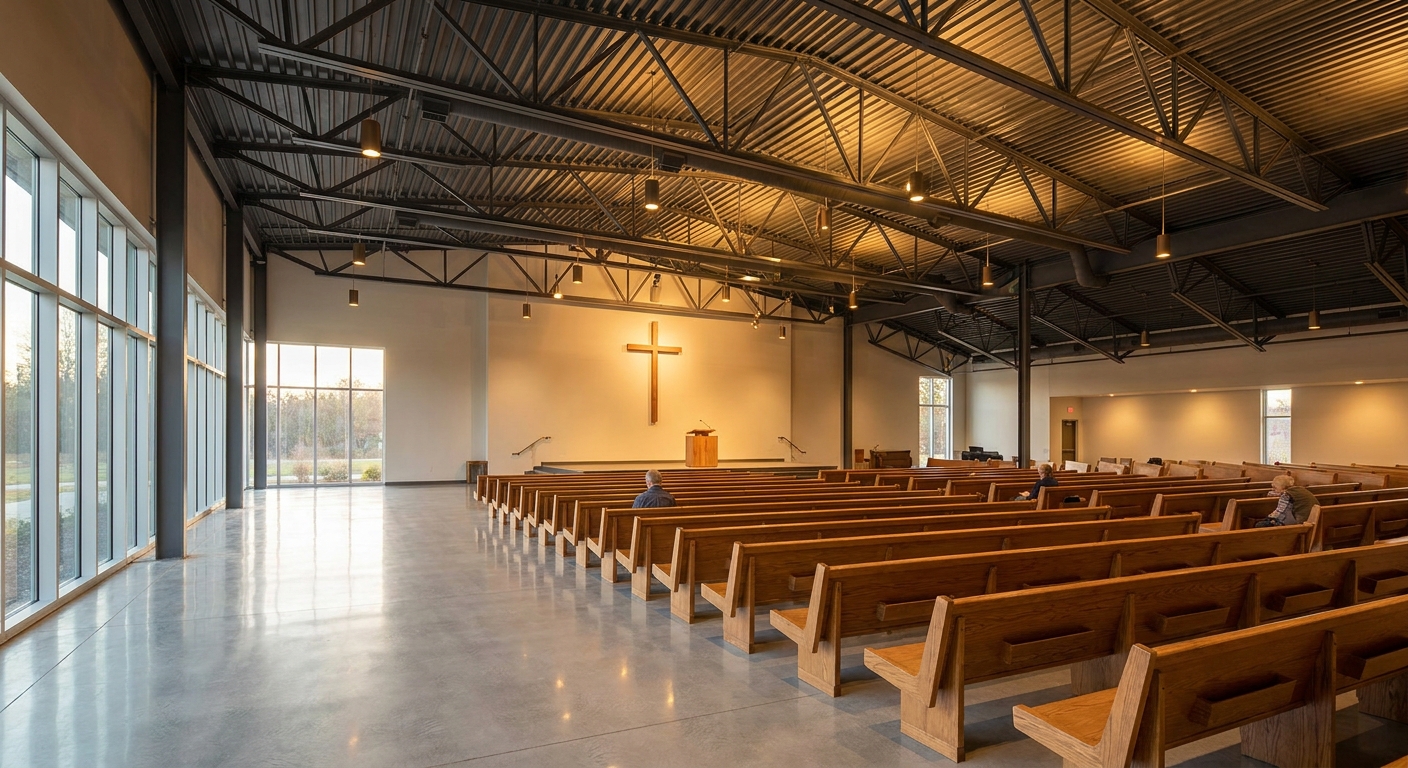
You should choose a metal structure for your church because it offers rapid construction, unparalleled design flexibility, and a highly durable public space that saves your ministry money. Building a modern 2000 sqft church building with steel ensures your congregation can move into their new sanctuary months ahead of schedule. The column-free interior maximizes every square inch of space, providing optimal sightlines and versatile seating layouts. This smart investment allows your leadership team to focus resources on community outreach rather than building maintenance.
Furthermore, pre-engineered steel buildings are highly energy-efficient and built to withstand extreme weather for over fifty years. This longevity ensures that your congregation has a beautiful, safe home that will serve future generations. By purchasing directly from a manufacturer like Showhoo, you secure a fixed price and avoid costly middleman markups. In the end, steel provides the perfect balance of modern strength, classic beauty, and wise financial stewardship.
How does steel maximize your ministry resources?
Every dollar your ministry saves on construction is a dollar that can go directly toward local youth programs and foreign missions. Look at this: building with steel cuts your overall project expenses by thirty to fifty percent.
- Slashed maintenance costs: You will never have to spend money on wood rot, termite treatments, or structural sag repairs.
- Lower monthly utility bills: Tight, insulated metal envelopes keep heating and cooling costs highly manageable.
- Affordable future expansion: The modular design makes adding classrooms or office wings simple and cheap.
By choosing a steel structural package , you protect your church’s finances and ensure your capital is used wisely.
Is a steel sanctuary a lasting legacy?
You want to build a house of worship that will serve your children and grandchildren for decades to come. Here’s why it matters: pre-engineered commercial steel buildings retain their strength, safety, and value for over fifty years.
- Indestructible framing: Steel will not warp, sag, rot, or burn over decades of continuous use.
- Retained aesthetic value: High-performance paint finishes resist chalking and fading, keeping your building looking beautiful.
- Enduring community shelter: A rigid, storm-resistant steel sanctuary serves as a reliable emergency haven for your neighborhood.
Investing in steel guarantees that you are creating a lasting, secure legacy of faith and community service.
Key Takeaway: Choosing a pre-engineered metal structure delivers a modern, cost-effective sanctuary that maximizes your ministry budget and provides a safe, lasting home for generations.
| Core Value | Steel Building Advantage | Practical Benefit to Ministry | |
|---|---|---|---|
| Cost Savings | 30% to 50% lower total project cost | Frees up critical funds for direct community outreach | |
| Erection Speed | Shaved months off the construction schedule | Allows your congregation to move in and worship sooner | |
| Durability | 50+ year structural lifespan with low maintenance | Eliminates expensive, unexpected structural repairs | |
| Design Freedom | Open clear spans up to 150+ feet | Enables infinite seating layouts and easy future expansions |
With all the benefits clearly detailed, let us take the final steps to launch your building journey.
Launching Your Congregation’s Next Chapter
Planning and funding a new sanctuary should be an inspiring spiritual milestone, not a source of overwhelming financial stress and construction delays. By choosing a pre-engineered steel building, you solve the dual challenges of tight budgets and slow construction timelines while securing a beautiful, open-concept space that fits your unique ministry needs. At Showhoo, we specialize in delivering custom-designed, factory-direct steel packages that simplify the construction process from initial blueprints to the final bolt. We are committed to empowering faith communities with durable, cost-effective, and energy-efficient facilities that serve as welcoming hubs of hope and local outreach. Let us help you bring your vision to life without taking on unsustainable debt or compromising on quality. To get started on your customized design and receive a free project estimate, contact us today to connect with our expert structural engineering team.
Build your 2000 sqft church building fast, strong, and cost-efficient.
Email:sales@showhoo.com.cn
Phone/WhatsApp: + 86 186 7895 5927
Frequently Asked Questions
Can I customize the interior layout of my metal church over time?
Yes, you can easily modify your interior layout at any time because pre-engineered steel structures utilize clear-span framing. Since there are no load-bearing interior columns, you are free to relocate partition walls, add new classrooms, or expand your sanctuary seating without compromising the building’s structural integrity. This modular layout flexibility makes future renovations simple and inexpensive.
What’s the best insulation system for keeping heating bills low?
A double-layer fiberglass blanket system or polyurethane sandwich panels provide the best thermal protection for a steel sanctuary. These insulation types create a tight, continuous envelope that prevents thermal bridging and draft leaks, keeping your interior climate extremely stable. Implementing these systems drastically reduces the energy needed to heat tall, vaulted sanctuaries.
How do I know if a metal building will meet our local structural codes?
Your pre-engineered steel kit is custom-engineered specifically to meet or exceed your local municipality’s exact wind, snow, and seismic codes. Professional structural engineers calculate the precise dimensions of every column and bolt connection to match your zip code’s environment. This custom structural drafting ensures that your building easily passes local inspections and secures necessary permits.
Can I install traditional wood finishes on the walls and ceiling?
Yes, you can easily install traditional drywall, warm wood-grain paneling, or exposed timber-like accents inside your metal sanctuary. Secondary steel wall girts and roof purlins provide a secure, straight framework for mounting standard wood studs, acoustic panels, or decorative drywall. This compatibility allows you to achieve a classic, warm, and highly reverent interior atmosphere.