
An Open Side Chicken House is a highly efficient poultry farming structure featuring partially open side walls designed to maximize natural ventilation and lower overall production costs. Managing a poultry farm in hot, tropical climates can be an absolute nightmare when heat waves strike and electricity bills for cooling start to skyrocket. If your flock overheats, bird health rapidly declines, mortality rates spike, and your hard-earned profits completely evaporate. That is why smart farmers are turning to this structural design, which leverages natural breezes to keep birds comfortable without draining operational budgets.
What Is an Open Side Chicken House?
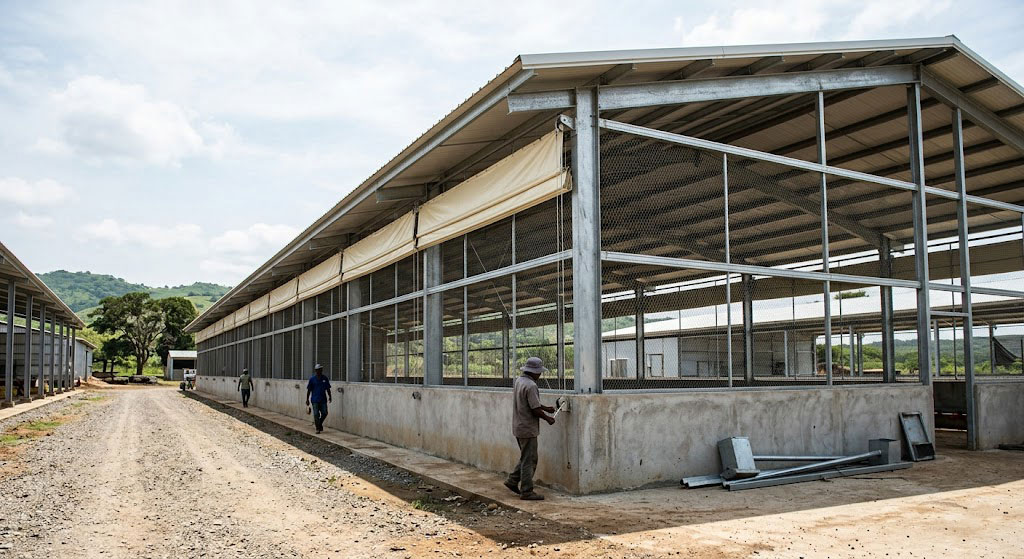
An Open Side Chicken House is a specialized poultry building designed with open or semi-open longitudinal side walls to maximize natural cross-ventilation. This structure typically utilizes durable concrete dwarf walls along the bottom, heavy-duty galvanized wire mesh along the open sides, and adjustable PVC curtains. You can dynamically adjust these side curtains to control temperature, block heavy rains, and maintain excellent interior air quality.
What Are the Core Features?
An open-sided poultry house relies entirely on natural wind currents to sweep away excess heat, moisture, and ammonia gases. The primary structural components are engineered to withstand local wind loads while keeping the interior as breathable as possible.
- Concrete dwarf walls to protect the bottom structural frame from moisture.
- Galvanized anti-climb wire mesh to prevent predator entry.
- Heavy-duty adjustable curtains for flexible weather protection.
You will find that this open configuration dramatically reduces the initial construction costs. It creates a highly functional, healthy environment specifically optimized for warm climatic regions.
How Does It Differ from Closed Systems?
While closed poultry houses rely on heavy negative-pressure exhaust fans and cooling pads, this system utilizes natural breeze and light. Closed systems offer precise computer-controlled environments but demand massive electrical infrastructure and constant energy consumption.
- Exceptionally low daily operational and utility expenses.
- Higher reliance on local ambient climate and weather conditions.
- Much simpler mechanical maintenance and repair requirements.
If you want to minimize your carbon footprint and save on monthly electricity bills, this design is the ideal choice. It naturally provides clean air to your flock day and night.
| Feature Comparison | Open Side House | Closed House System |
|---|---|---|
| Ventilation Method | Natural wind & curtains | Mechanical exhaust fans |
| Initial Investment | Highly budget-friendly | Premium capital expense |
| Power Consumption | Extremely low | Substantial and constant |
Analyzing these architectural differences helps you choose the most cost-effective housing system that aligns with your regional environment.
Key Takeaway: Knowing how this open structural design differs from closed houses allows you to choose the most budget-friendly system for your tropical poultry project.
How Does an Open Side Chicken House Work?
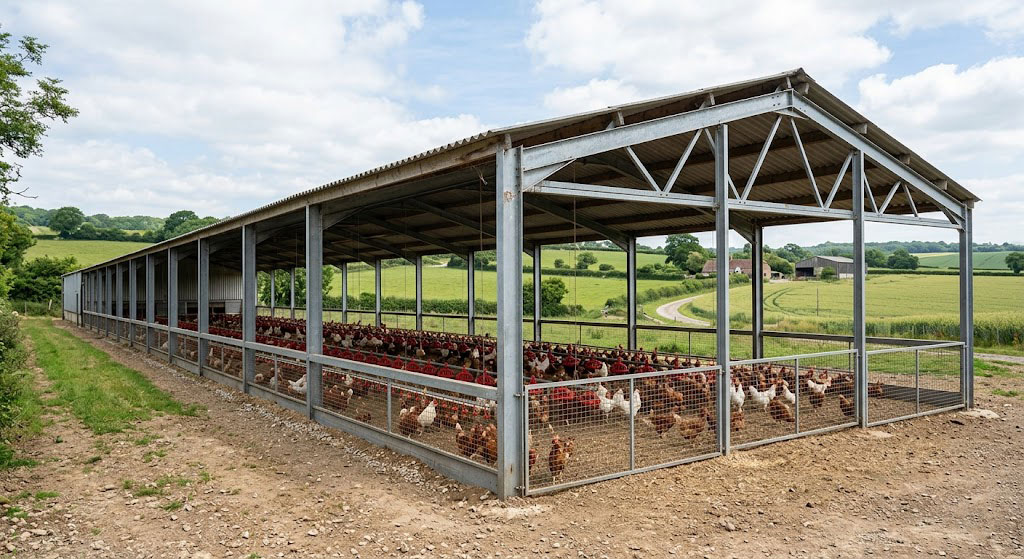
It works by utilizing natural cross-ventilation to remove heat, moisture, and ammonia from the rearing environment. The physical layout of the Open Side Chicken House allows fresh air to enter from the windward side and push stale air out through the opposite side. You do not need massive exhaust fans running twenty-four hours a day to maintain basic air quality.
How Does Natural Ventilation Work?
Wind direction and house orientation are the key forces driving this natural ventilation process. Air flows horizontally across the width of the building, carrying away the heat and dust generated by the birds.
- Orienting the building perpendicular to the prevailing summer winds.
- Keeping the house width narrow to prevent stagnant pockets.
- Maintaining adequate eave heights to allow hot air to rise and escape.
You must plan your site layout carefully to avoid blocking the natural breeze. Proper spacing between parallel structures ensures unobstructed wind movement for all your birds.
How Do Curtains Regulate the Environment?
Adjustable side curtains act as the primary climate control mechanism in this type of housing. When temperatures drop during the night or heavy rain storms arrive, you can raise or lower the curtains to protect your flock.
- Manual winches for smaller, cost-effective operations.
- Motorized automated winches for larger commercial farms.
- Highly durable, UV-resistant PVC curtain materials.
This flexibility keeps your birds safe from sudden, chilling drafts and blowing rain. It gives you reliable control over the internal microclimate with minimal mechanical complexity.
| Weather Condition | Curtain Position | Airflow Level |
|---|---|---|
| Hot & Calm Days | Fully opened | Maximum natural draft |
| Heavy Rain Storms | Closed on windward side | Managed interior protection |
| Chilly Night Hours | Partially closed | Low draft conservation |
Understanding curtain positions ensures your birds remain comfortable and stress-free during sudden weather changes.
Key Takeaway: Mastering curtain adjustments allows you to maintain stable interior conditions and protect your flock from thermal shock.
Build Your Open Side Chicken House—Get a Free Quote !
Email:sales@showhoo.com.cn
Phone/WhatsApp: + 86 186 7895 5927
What Are the Main Components of the Structure?
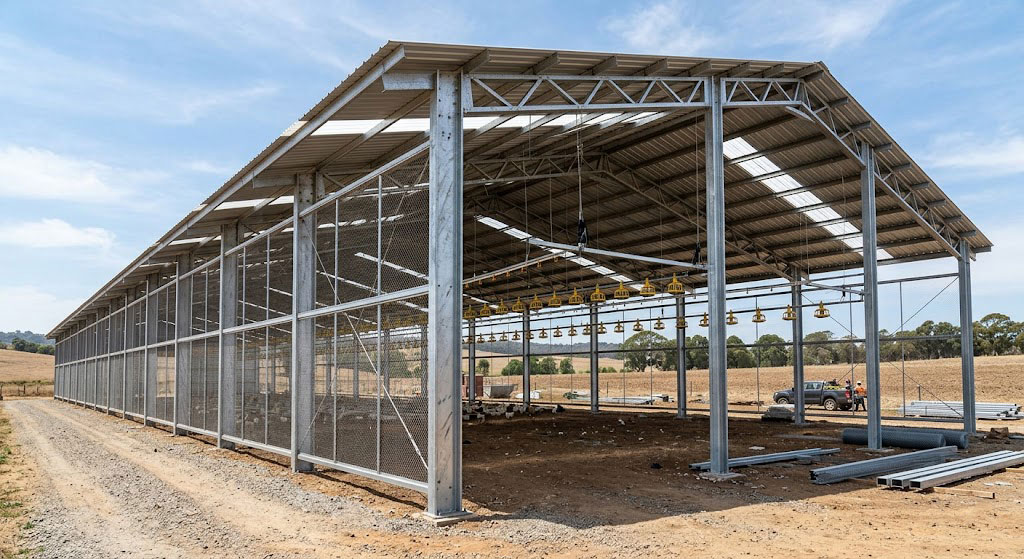
The core structural assembly consists of a high-strength steel frame, a protective roofing system, and durable side wall meshes. Every Open Side Chicken House must be engineered to support suspended equipment loads while resisting strong external wind forces. You need to invest in premium galvanized steel to prevent rust and ensure structural integrity over decades.
Why Is the Steel Frame Essential?
The main frame holds up the entire roof load, heavy feeding systems, water lines, and structural bracing. It typically uses pre-engineered steel columns and trusses that bolt together seamlessly on site.
- High-strength H-section steel columns and roof rafters.
- Galvanized C or Z-section purlins to support roof panels.
- Integrated cross-bracing systems for robust wind resistance.
You will benefit immensely from pre-fabricated steel components because they eliminate the need for on-site welding. This drastically reduces your overall installation time and local labor expenses.
What Roles Do Roofing and Walls Play?
The roof blocks intense solar radiation, while the open side walls provide ventilation while keeping predators out. Single-skin steel sheets or insulated sandwich panels are the standard choices for roofing material.
- Insulated sandwich panels to significantly reduce solar heat transfer.
- Heavy-gauge galvanized wire mesh to exclude wild birds and pests.
- Extra-wide roof eaves to prevent rain from blowing into the house.
Choosing the right combination of roof insulation and mesh keeps your internal temperatures stable. It also establishes a strong barrier against external biological hazards.
| Component | Recommended Material | Structural Purpose |
|---|---|---|
| Primary Frame | Q355B structural steel | Main load-bearing skeleton |
| Roof Decking | EPS or fiberglass sandwich panel | Solar heat insulation |
| Side Mesh | Hot-dip galvanized wire mesh | Predator and bird exclusion |
Selecting premium galvanized structural components prevents premature rust in high-humidity poultry environments.
Key Takeaway: Investing in high-quality structural steel frames and insulated roof panels guarantees the physical safety and long-term durability of your poultry building.
Where Is an Open Side Chicken House Suitable?
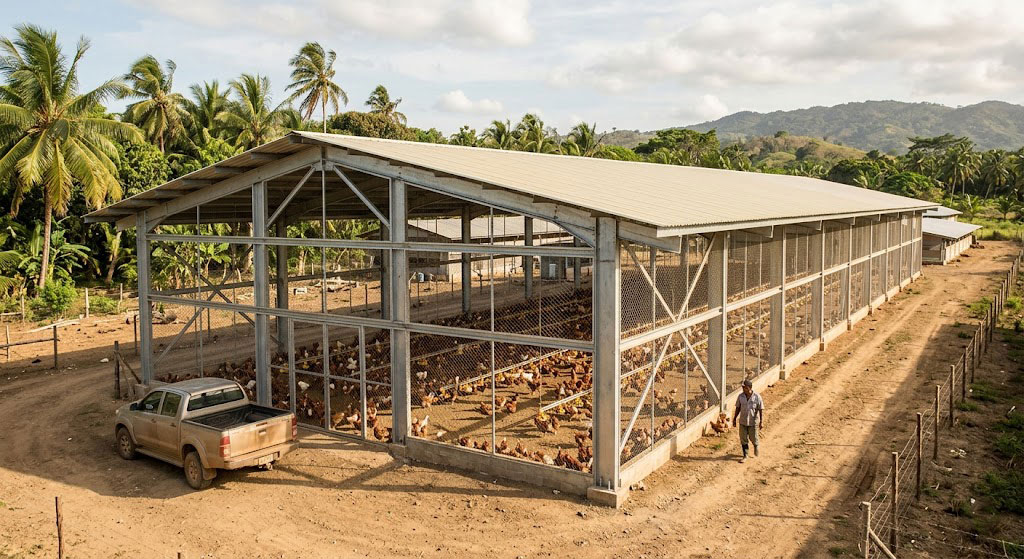
This type of poultry housing is highly suitable for warm, tropical, and sub-tropical regions with consistent natural breezes. Constructing an Open Side Chicken House in cold, northern climates is not recommended because low temperatures can severely stress the birds. You must evaluate your local climate data carefully before finalizing your building design.
Which Climatic Regions Work Best?
Regions that enjoy warm temperatures year-round and mild winters are the perfect fit for this open design. The constant natural wind acts as a free, highly effective cooling agent for your flock.
- Tropical areas of Southeast Asia and equatorial Africa.
- Warm coastal regions of Central and South America.
- Sub-tropical zones that experience minimal freezing temperatures.
If your farm is located in an area with freezing winters, heating costs will become unsustainable. Stick to warm geographical locations to achieve the highest energy efficiency.
Which Farming Scales Are Ideal?
Small to medium-scale poultry farmers find this open system highly manageable and incredibly cost-effective. It is also an excellent option for free-range or organic poultry setups where birds need easy daily access to outdoor runs.
- Family-owned farms and smallholder poultry projects.
- Low to medium-density broiler and layer operations.
- Free-range or pasture-raised chicken systems.
You can scale your business gradually by simply adding modular steel bays to your existing house. This keeps your capital expenditure perfectly aligned with your business growth.
| Climatic Parameter | Ideal Range | Operational Limits |
|---|---|---|
| Average Temperature | 22°C to 34°C | 15°C to 38°C |
| Local Wind Speed | 1.5 to 3.5 m/s | 0.5 to 6.0 m/s |
| Winter Minimum | Above 10°C | Above 5°C |
Analyzing these regional climate parameters ensures your open poultry farm remains highly productive throughout the year.
Key Takeaway: Confirming that your local climate is warm and breezy ensures that an open-sided house will provide excellent bird comfort.
What Are the Advantages of the Structure?
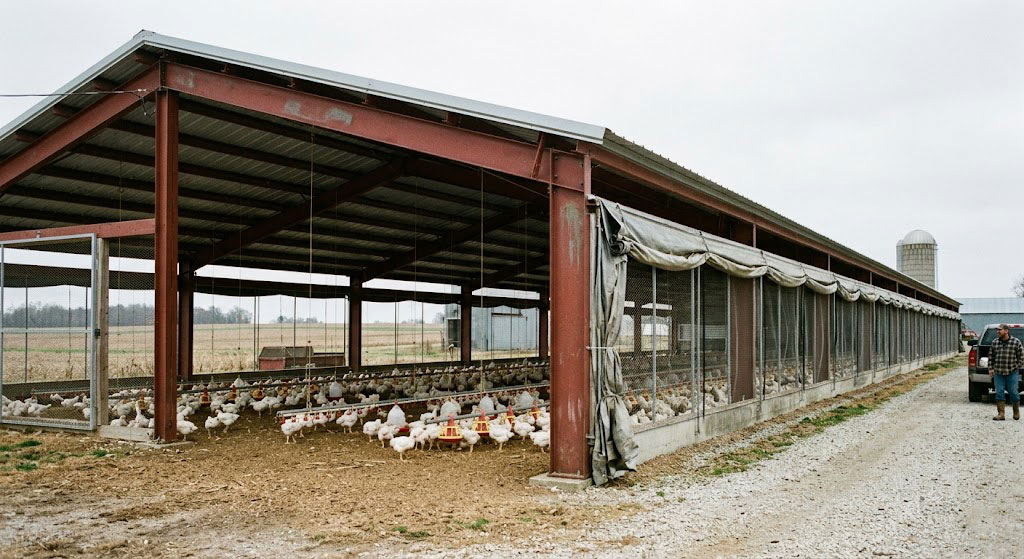
The primary advantages of this structure are its incredibly low energy consumption and highly cost-effective construction. A steel-framed Open Side Chicken House offers an affordable pathway to modernizing your farm without incurring massive debt. You will save thousands of dollars on monthly utility bills compared to closed-house systems.
Why Is the Initial Cost Lower?
You do not have to buy expensive environmental control systems, heavy insulation panels, or multiple heavy-duty exhaust fans. The structure itself uses fewer raw materials, which reduces both manufacturing and shipping costs.
- Fewer structural wall panels required
- No need for high-end electronic controllers
- Lighter foundation design requirements
This translates to a much faster return on your investment. You can allocate your saved capital towards high-quality feed and superior chick genetics.
How Does It Reduce Operating Costs?
Running a poultry farm can be incredibly expensive when electricity rates are high. By relying on natural wind, your daily power consumption drops to almost zero during mild weather.
- Zero power needed for daytime ventilation
- Lower maintenance costs for mechanical parts
- Reduced risk of massive bird loss during power outages
You will enjoy peace of mind knowing that a sudden power failure won’t suffocate your flock. It is a highly resilient way to manage your agricultural business.
| Expense Type | Open Side House | Traditional Closed House |
|---|---|---|
| Monthly Power Bill | Minimal | Substantial |
| Equipment Service | Low | High |
| Structural Upkeep | Minimal | Regular |
Minimizing recurring operating expenses drastically improves your farm’s bottom-line profitability.
Key Takeaway: Capitalize on natural airflow to slash your overhead costs and build a highly profitable poultry business.
What Are the Limitations of the System?
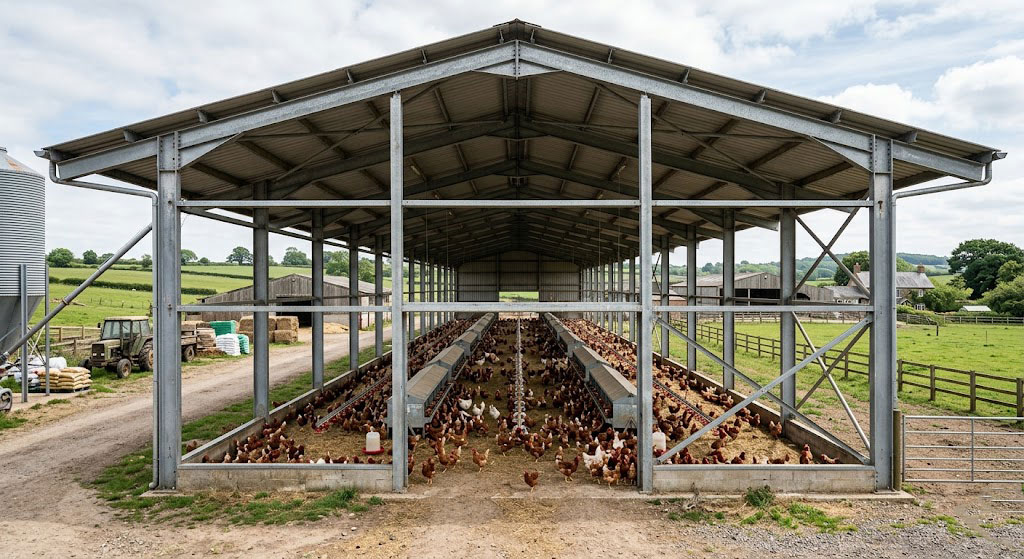
While highly efficient, this system makes your flock more vulnerable to extreme outdoor weather variations. Managing an Open Side Chicken House requires a proactive approach because you cannot control temperature and humidity with the push of a button. You must understand these challenges to implement effective backup solutions.
How Do Weather Extremes Affect Birds?
Sudden cold drafts, intense heat waves, or prolonged high humidity can cause severe stress to your poultry. When ambient temperatures surpass 38°C with no wind, birds cannot cool themselves naturally.
- Increased risk of heat stress on windless days
- Fluctuations in egg production rates
- Vulnerability to sudden monsoon downpours
You will need to monitor weather forecasts closely to adjust curtains on time. It demands more daily attention than fully automated closed systems.
What Are the Biosecurity Challenges?
Because the side walls are open, keeping wild birds, rodents, and insects completely out of the house is extremely difficult. Wild birds are major carriers of avian influenza and other devastating viral diseases.
- Higher exposure to airborne pathogens
- Difficulty in complete pest exclusion
- Challenging dust and odor containment
You must install high-density wire mesh and maintain strict sanitation protocols around the perimeter. Taking these steps is crucial to safeguarding your biological assets.
| Challenge | Impact Level | Primary Mitigation Strategy |
|---|---|---|
| Heat Waves | High | Install overhead circulation fans |
| Disease Vectors | Medium | Use small-aperture wire mesh |
| Heavy Storms | High | Implement heavy-duty reinforced curtains |
Identifying these operational vulnerabilities allows you to implement reliable preventative measures before issues arise.
Key Takeaway: Address biological and climatic risks early by installing auxiliary fans and high-grade protective meshes.
Build Your Open Side Chicken House—Get a Free Quote !
Email:sales@showhoo.com.cn
Phone/WhatsApp: + 86 186 7895 5927
What Is the Typical Size and Layout?
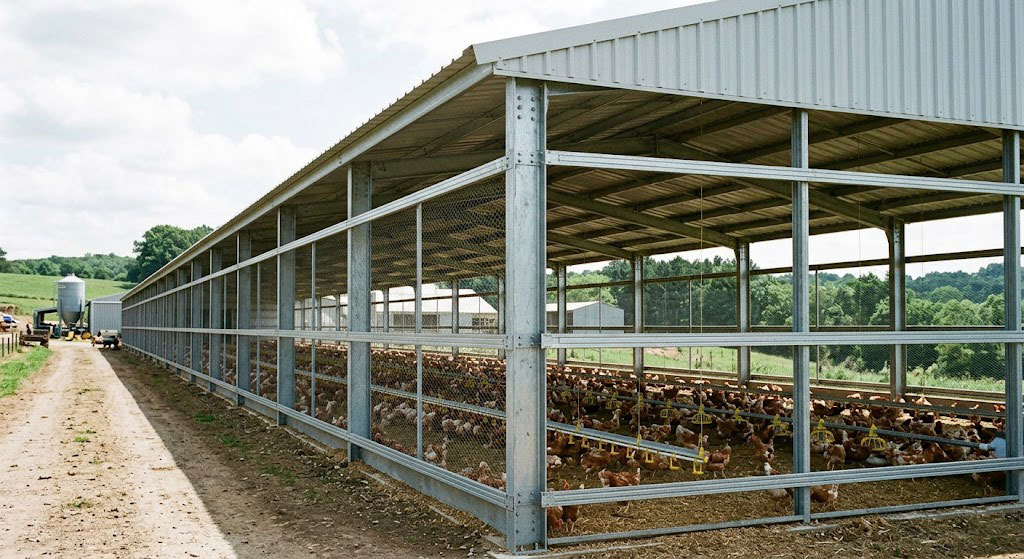
The standard layout of this poultry house focuses on maximizing horizontal natural wind penetration across the building. When designing an Open Side Chicken House, maintaining a narrow width is crucial so that fresh air can reach the center easily. You should consult structural engineers to find the perfect dimensions for your land.
What Are the Ideal Dimensions?
Keeping the building width within a specific range ensures that stale air doesn’t stagnate in the middle of the house. The length can be extended based on your total bird capacity and land availability.
- Width: 8 to 12 meters (maximum 15 meters)
- Eave Height: 2.5 to 3.5 meters
- Dwarf Wall Height: 30 to 50 centimeters
You will find that an eave height below 2.5 meters restricts ventilation. Conversely, going too high increases the risk of rain blowing inside during storms.
How to Arrange Multiple Houses?
If you are planning a multi-house farm, you must leave ample space between parallel buildings. Otherwise, the windward house will block the vital breeze from reaching the leeward structures.
- Minimum distance of 15 to 20 meters between houses
- Staggered layout to maximize wind access
- Service roads placed between buildings for easy logistics
This strategic arrangement prevents the accumulation of heat and gases between your buildings. It ensures a healthy, highly ventilated environment across your entire property.
| Parameter | Recommended Standard | Why It Matters |
|---|---|---|
| House Width | 10 Meters | Ensures cross-ventilation reaches the center |
| Eave Height | 3.0 Meters | Optimizes hot air escape and rain protection |
| Inter-house Gap | 18 Meters | Prevents wind blockage from adjacent buildings |
Adhering to these structural dimensions guarantees optimal air quality and easy movement of birds.
Key Takeaway: Keep your poultry house narrow and spaced out to ensure natural wind remains your most effective cooling tool.
How to Optimize Ventilation and Cooling?
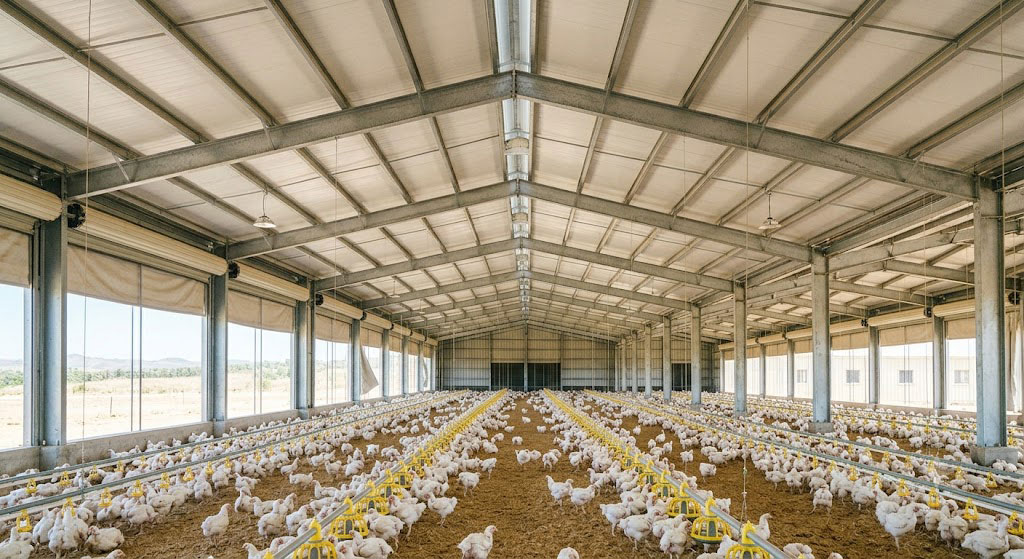
Maximizing airflow is the most effective way to prevent heat stress and maintain high production levels in your flock. Adding mechanical accessories to your Open Side Chicken House provides a powerful backup cooling method when natural wind speeds drop. You can create a highly resilient microclimate by combining natural and mechanical systems.
When Are Circulation Fans Needed?
On hot, humid days with zero ambient wind, natural ventilation alone cannot keep your birds cool. Suspended circulation fans push air directly over the birds, facilitating evaporative cooling from their bodies.
- Place fans every 10 to 15 meters along the length
- Angle fans downward at 15 degrees toward the birds
- Use energy-efficient variable-speed motors
You can run these fans only when temperatures rise above a certain threshold. This smart operation keeps your electricity bills extremely manageable while protecting your birds.
Can Roof Sprinklers Assist Cooling?
Installing roof misting or sprinkler systems can reduce the interior temperature by several degrees during peak afternoon heat. As water evaporates from the roof surface, it pulls heat away from the building.
- High-pressure misting nozzles along the eaves
- Reflective roof coatings to bounce off solar rays
- Automated timers linked to temperature sensors
You will notice a dramatic drop in heat-related mortality once these systems are active. It is an affordable, highly practical upgrade for hot climatic zones.
| System Type | Best Temp. Range | Expected Cooling Effect |
|---|---|---|
| Circulation Fans | Above 28°C | 2°C to 3°C (Wind chill) |
| Roof Sprinklers | Above 32°C | 3°C to 5°C (Surface cooling) |
| Reflective Paint | All climates | Red-hot roof reduction |
Combining reflective coatings with targeted circulation fans yields the most significant cooling results.
Key Takeaway: Implement low-cost auxiliary cooling systems to protect your birds during dangerous mid-day heat waves.
Why Do Materials and Corrosion Protection Matter?
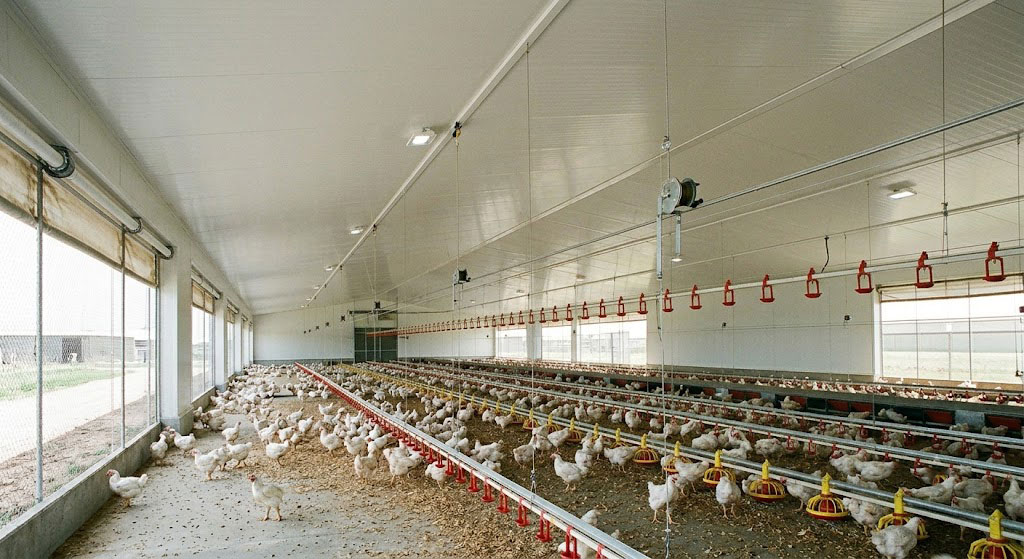
The high humidity, dust, and ammonia levels inside a poultry building create an extremely corrosive environment for steel frames. Selecting premium materials for your Open Side Chicken House ensures that your building remains structurally sound for over twenty years. You must prioritize high-grade rust protection to protect your capital investment from structural decay.
Why Is Galvanization Critical?
Plain steel will rust within a couple of years when exposed to chicken manure, cleaning water, and corrosive gases. Hot-dip galvanization coats the steel with a thick layer of zinc, preventing rust.
- Minimum galvanization standard of 275 g/m²
- Corrosion resistance against acidic ammonia vapors
- Longer structural life with zero maintenance costs
You will save a substantial amount of money on painting and structural repairs over the years. It is always wiser to invest in galvanized components from day one.
How to Protect the Columns and Joints?
Column bases and welded joints are the most vulnerable parts of the steel structure because moisture accumulates there. Using concrete encasements for the column bases keeps them dry and away from bird waste.
- Concrete plinths extending 30 cm above floor level
- Zinc-rich epoxy paint for field-welded connections
- Stainless steel fasteners for secondary wire mesh
If you neglect these critical joints, local corrosion can compromise the entire frame. Taking these simple precautions ensures your building stands strong against environmental wear.
| Part Name | Corrosion Risk | Recommended Protection |
|---|---|---|
| Column Base | Extreme (Manure contact) | Concrete plinth + Hot-dip galvanization |
| Roof Purlins | Medium (Humid air) | Pre-galvanized C-beams |
| Steel Wire Mesh | High (Exterior rain) | Heavy-gauge PVC-coated wire mesh |
Protecting vulnerable steel joints prevents structural failure and extends the building lifespan.
Key Takeaway: Choose hot-dip galvanized steel and protect your column bases with concrete to avoid costly structural rust.
How to Choose an Open Side Chicken House Supplier?
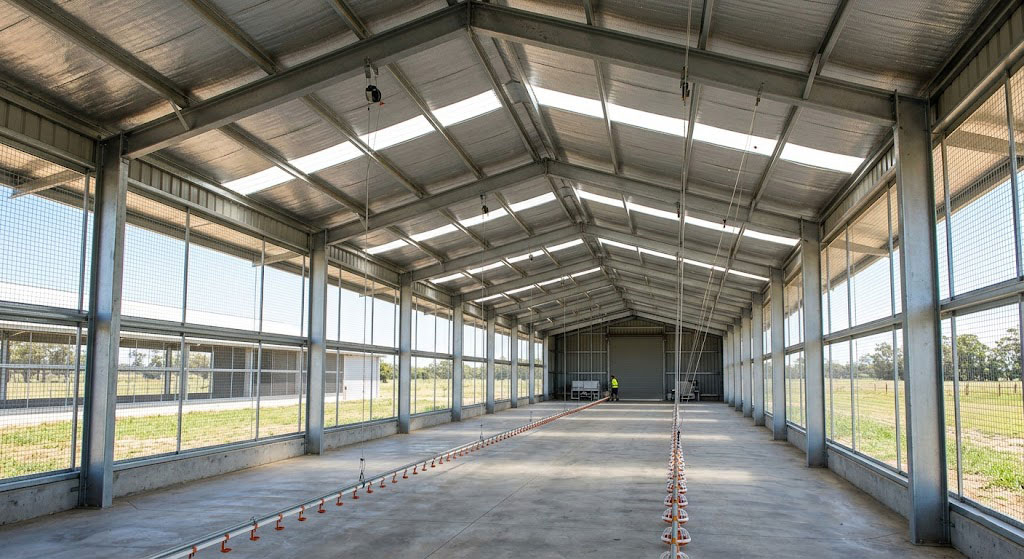
Selecting an experienced pre-engineered steel manufacturer is the most critical decision for your poultry farming project. A reliable partner will custom-design your Open Side Chicken House based on your local wind speed and site conditions. You should look for comprehensive design capabilities and robust after-sales support instead of simply picking the cheapest option.
Why Avoid Cheap Quotations?
Some suppliers offer extremely low prices by reducing steel thickness, using lower-grade raw materials, or skipping structural bracing. This compromise can lead to roof sagging or total collapse during a tropical storm.
- Insufficient steel weight and thin sections
- Lack of proper structural wind load calculation
- Incomplete accessories like gutters and downspouts
You will end up paying double if you have to repair a poorly manufactured building. Look for detailed material lists with exact steel weights before signing any contract.
What Design Documents Are Needed?
A professional engineering supplier must provide complete construction drawings, foundation reaction loads, and easy-to-follow installation manuals. These documents ensure your local contractor can build the structure safely.
- 3D structural models and detailed CAD drawings
- Accurate bolt connection details for fast assembly
- Foundation layout plans with concrete specifications
You will save precious time and prevent expensive construction errors with clear blueprints. Make sure your supplier offers video or remote engineer support during installation.
| Supplier Criteria | Trusted Manufacturer | Low-Cost Middleman |
|---|---|---|
| Design Engineering | Full calculations provided | No calculations, only basic sketches |
| Steel Quality | Certified Q355B structural steel | Non-certified or mixed steel grades |
| Installation Support | Detailed manual + video guidance | No support provided after shipping |
Evaluating suppliers on design depth and material quality prevents catastrophic failures in the field.
Key Takeaway: Prioritize engineering quality, comprehensive design files, and proven manufacturing standards over low-cost compromises.
Conclusion: Partnering for Sustainable Poultry Success
Building a highly productive farm requires finding the perfect balance between initial capital costs and long-term operational efficiency. An open-sided poultry layout solves your cooling challenges naturally, reducing energy bills while keeping your flock healthy and profitable. We are dedicated to providing durable, engineered steel structures that stand up to harsh farming environments and severe tropical weather. If you are ready to take your poultry operation to the next level with customized, heavy-duty structures, we invite you to contact us today for a free design consultation. Our goal is to build long-term value for farmers worldwide through high-quality structural steel solutions that empower sustainable agricultural growth.
Build Your Open Side Chicken House—Get a Free Quote !
Email:sales@showhoo.com.cn
Phone/WhatsApp: + 86 186 7895 5927
Frequently Asked Questions
Can I convert an open-sided house into a closed system in the future?
Yes, you can easily upgrade this structure by replacing wire mesh with insulated wall panels and adding negative pressure exhaust fans. This modular flexibility is a key benefit of choosing a pre-engineered steel framing system.
What is the best width for an open-sided poultry building?
The ideal width is between 8 to 12 meters to ensure natural cross-ventilation reaches the center. Going wider than 15 meters will cause stagnant hot air pockets, which increases heat stress risks.
How do I know if my area is suitable for this type of chicken house?
Your area is suitable if the climate remains warm or moderate year-round with rare sub-zero freezing spells. If your region has high humidity but reliable breezes, the open-sided design will work exceptionally well.
Can I build this house on a hilly or uneven terrain?
Yes, but you must complete proper land leveling and concrete foundation work before the steel frame is delivered. Structural engineers can adjust column lengths to accommodate slight terrain variations if needed.
How do I protect the steel columns from high moisture and bird waste?
You should build 30 to 50 cm concrete dwarf walls and mount the steel columns on elevated concrete plinths. This simple foundation detail keeps corrosive materials away from the structural steel bases.