
Managing extreme weather while keeping structural costs low is a massive headache for modern poultry farm owners. If your birds suffer from devastating heat stress or freezing draft leaks, your mortality rates skyrocket and feed conversion efficiency plunges into a costly deficit. To survive in today’s highly competitive market, you need a smart infrastructure upgrade that balances capital expenditure with environmental control. The innovative Semi-enclosed Chicken House provides the perfect solution by merging natural airflow with automated systems.
What Is a Semi-Enclosed Chicken House?
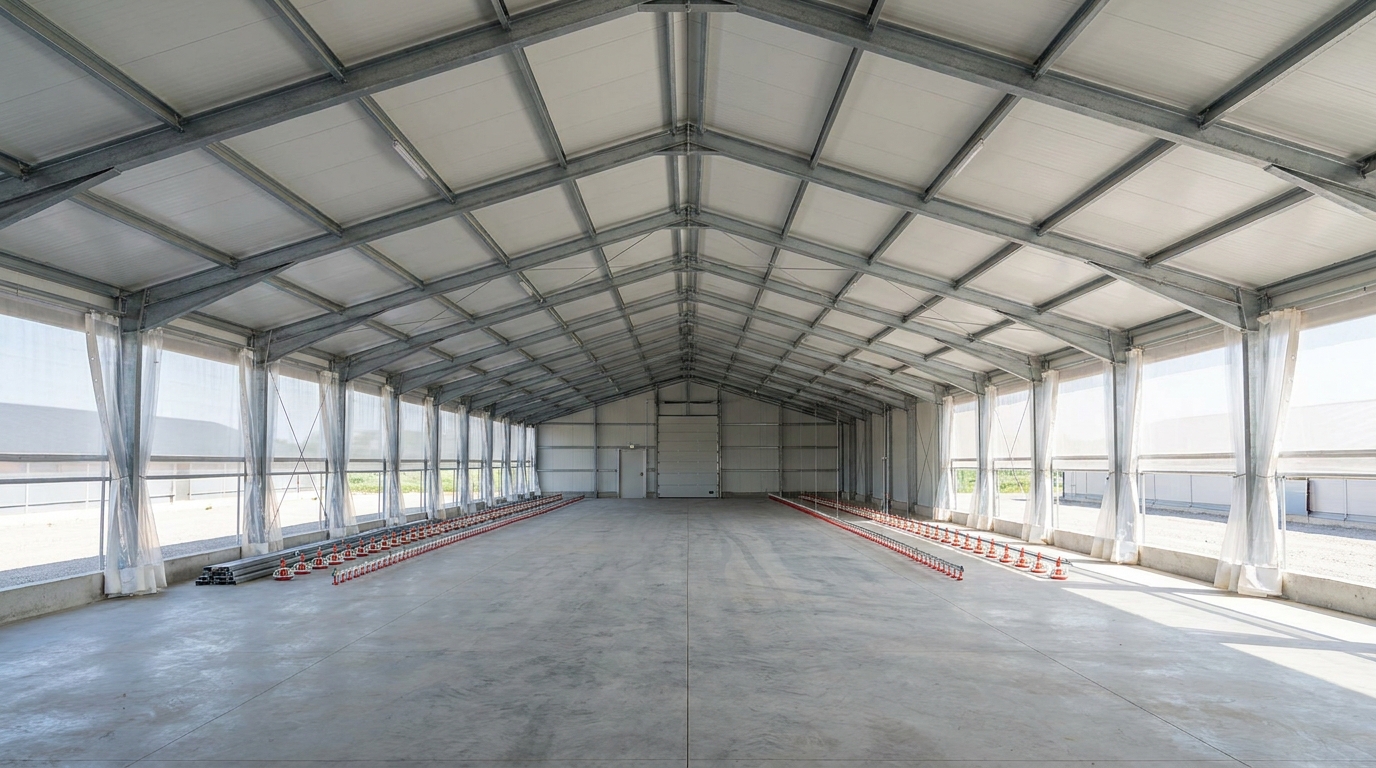
Understanding the layout of a modern farm begins with defining the structure. A Semi-enclosed Chicken House utilizes a robust steel frame combined with dynamic side curtains and mechanical exhaust fans. This balanced system lets you utilize free outdoor airflow when the weather is favorable while still maintaining mechanical ventilation during harsh conditions. It serves as an adaptable hybrid solution for growers worldwide.
What Are its Core Structural Features?
You will notice that the core of this layout relies on a clear-span steel frame that completely eliminates internal support columns. This wide, open space allows you to install automated feeding lines and manure removal systems without any physical obstructions.
Here is the thing:
- Hot-dip galvanized steel columns resist corrosion.
- Strong truss roof structures handle high wind loads.
- Adjustable side wall curtains control natural lighting and drafts.
This engineering ensures that your farm remains highly functional for over two decades.
How Do Natural and Fans Work Together?
You can think of this design as a hybrid breathing system. When ambient temperatures are perfect, you simply roll down the side curtains to let natural breezes cool your birds without using electricity.
But wait, there is more.
- Automated winches raise the curtains during sudden downpours.
- Exhaust fans pull stale air out when natural breezes die down.
- Air inlets keep fresh oxygen circulating evenly throughout the room.
This dual-mode operation drastically reduces your daily power bills.
Is It Suitable for Broilers and Layers?
You will find that both broilers and layers thrive exceptionally well in this versatile environment. Broilers benefit from the rapid, uniform airflow that prevents heat pockets, while layers enjoy stable temperatures that keep egg production rates highly consistent.
Think about it.
- Broilers achieve better weight gain with steady oxygen levels.
- Layers remain stress-free, reducing egg breakage rates.
- Pullets grow uniformly thanks to controllable draft barriers.
This adaptability makes it a safe, profitable investment for any poultry enterprise.
| Feature | Natural Mode | Mechanical Mode | |
|---|---|---|---|
| Trigger Condition | Moderate ambient temperatures | Extreme heat or freezing cold | |
| Power Consumption | Near zero electrical usage | Moderate to high fan usage | |
| Air Source | Open side curtains | Dedicated air inlets | |
| Key Benefit | Drastic reduction in utility bills | Precise temperature control |
Always monitor local wind patterns before deciding when to transition from natural drafts to mechanical fans.
Key Takeaway: Utilizing this hybrid layout ensures that you protect your birds from unexpected weather shifts while slashing your monthly energy expenses.
How Does a Semi-Enclosed Chicken House Work?
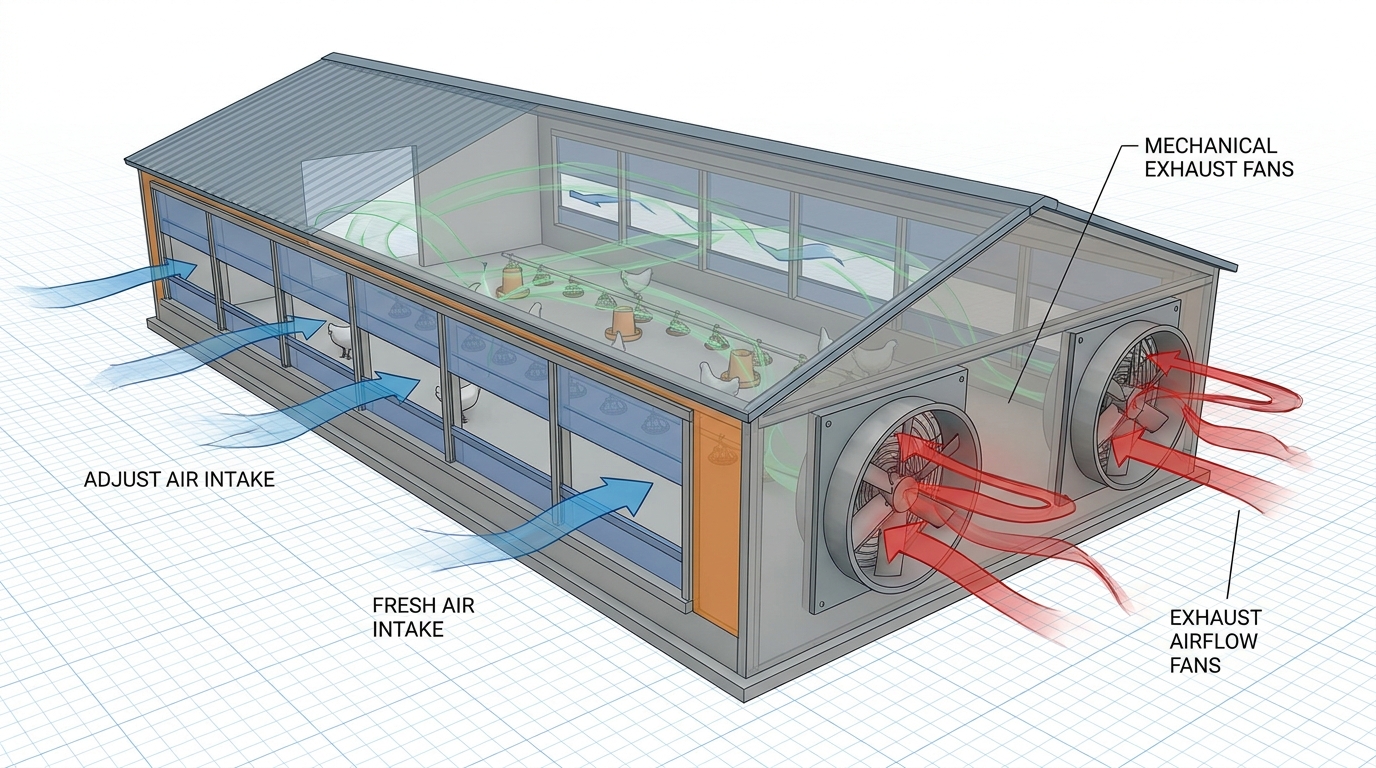
To keep your flock healthy, you must understand how this dynamic system processes air inside the building. A Semi-enclosed Chicken House relies on pressure differentials to exchange warm, stale indoor air with clean, cool outdoor air. By combining automatic curtains with high-capacity end fans, you gain complete command over your poultry microclimate.
How Does It Cool in Mild Weather?
You can save massive amounts of electricity during spring and autumn by letting the environment do the hard work. During these mild seasons, you open the side curtains fully to allow cross-ventilation to sweep away excess heat and moisture.
Here is the thing:
- Cross-winds naturalize indoor humidity levels quickly.
- Passive air currents sweep away toxic ammonia vapors.
- Zero fan operation keeps your mechanical wear-and-tear low.
This simple operation maximizes your seasonal profit margins effortlessly.
What Happens During Hot or Humid Days?
You must switch tactics when summer heatwaves threaten to induce dangerous thermal stress in your flock. At this point, you raise the side curtains to seal the house and activate your heavy-duty negative pressure exhaust fans.
Let that sink in.
- Exhaust fans create a powerful vacuum effect.
- Air is drawn through wet cooling pads at the far end.
- Wind-chill effects make the birds feel much cooler.
This rapid transition keeps your mortality rates near zero even during blistering summer peaks.
How Are Curtains and Inlets Adjusted?
You do not have to manually pull ropes all day to keep up with changing weather patterns. Modern controller units monitor indoor sensors and automatically adjust the winch motors to position curtains and air inlets perfectly.
Think about it.
- Automatic winches react instantly to temperature drops.
- Inlets adjust their openings to prevent chilling drafts.
- Staged curtain drops prevent sudden pressure drops inside.
This automated precision guarantees a stable, stress-free environment for your birds.
| Parameter | Mild Weather Setting | Hot Weather Setting | |
|---|---|---|---|
| Curtain Position | Fully or partially open | Completely closed and sealed | |
| Fan Status | Turned off or running at minimum | Running at maximum capacity | |
| Cooling Pad System | Deactivated | Fully active with water pumps | |
| Air Speed | Gentle, passive breeze | High-velocity wind-chill effect |
Regularly calibrate your curtain winches to prevent mechanical binding and uneven airflow gaps.
Key Takeaway: Mastering these seasonal adjustments protects your flock from thermal shock while optimizing your facility’s operational efficiency.
Build a Smarter Semi-Enclosed Chicken House—Get a Quote !
Email:sales@showhoo.com.cn
Phone/WhatsApp: + 86 186 7895 5927
What Are the Pros and Cons of This System?
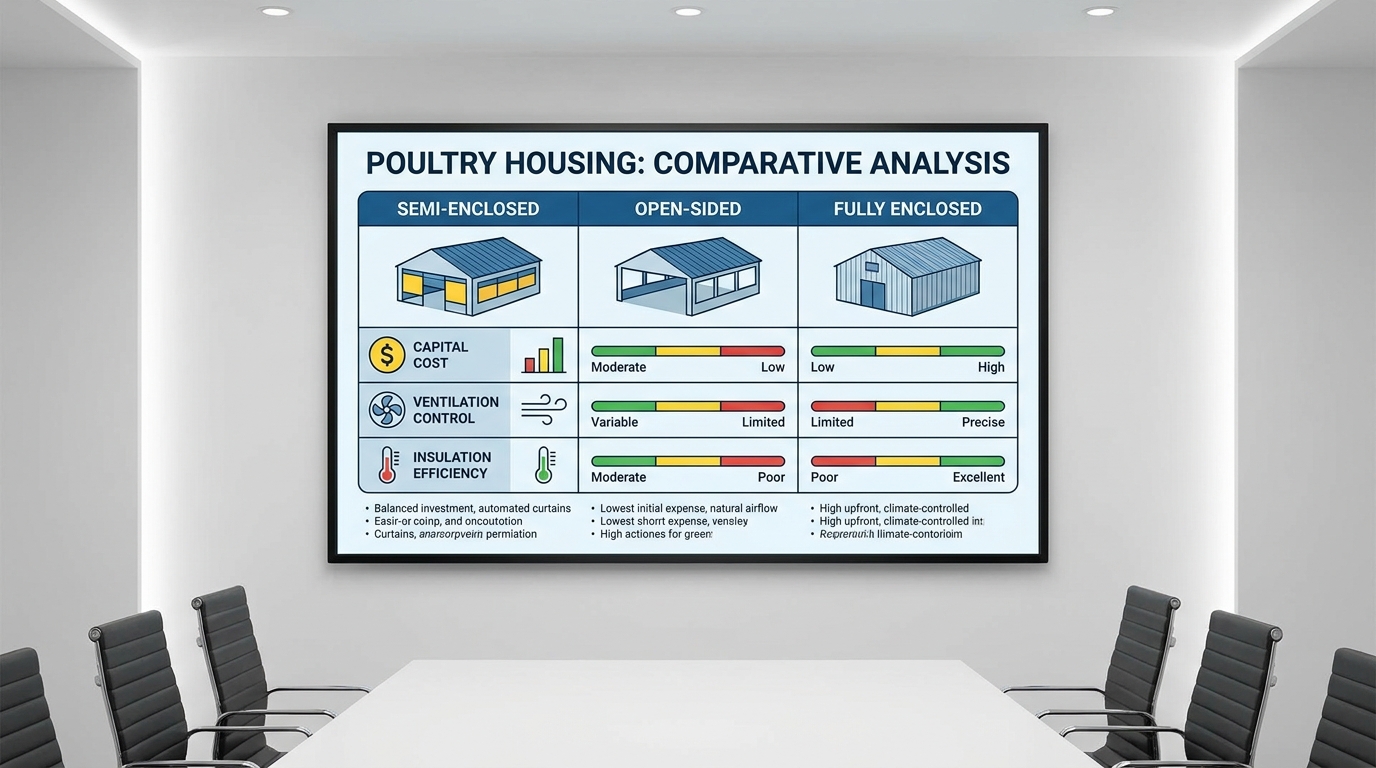
Every infrastructure choice involves trade-offs that directly affect your long-term bottom line. Selecting a Semi-enclosed Chicken House offers an exceptional compromise between high-tech climate control and low startup costs. Examining these advantages and limits helps you make a secure investment decision.
Does It Lower Your Capital Expenses?
You will enjoy significantly lower initial building costs compared to constructing a fully sealed, insulated bunker house. Because this layout utilizes natural air for part of the year, you do not need to purchase as many expensive industrial fans.
Here is the thing:
- Reduced electrical infrastructure limits your wiring costs.
- Fewer exhaust fans mean lower equipment purchase costs.
- Simple wall framing speeds up overall construction time.
These upfront savings keep cash in your pocket for feed and stock purchases.
How Much Better Is It Than Open Houses?
You will notice a massive leap in bird performance when upgrading from a basic open-sided shelter. While open sheds leave your birds completely vulnerable to sudden storms and heatwaves, this system gives you a mechanical backup.
But wait, there is more.
- Biosecurity improves due to tighter mesh barriers.
- Feed conversion ratios improve as birds stay comfortable.
- Predators and wild birds are kept far away from feed.
This extra control transforms your unpredictable farm into a highly stable business.
What Climate Challenges Will You Face?
You must remain aware that this system is not a magic bullet for every region on earth. In extremely cold climates or super-humid tropical zones, the lack of heavy wall insulation can make temperature control difficult.
Think about it.
- Extreme winter freezes require extra heating energy.
- High ambient humidity limits cooling pad evaporation.
- Sudden storms require fast mechanical reaction times.
Understanding these local limits allows you to prepare proper operational workarounds.
| Category | Semi-Enclosed System | Open-Sided System | Enclosed Chicken House | |
|---|---|---|---|---|
| Initial Cost | Moderate | Very Low | High | |
| Operating Cost | Low to Medium | Low | High | |
| Climate Control | Moderate-High | Poor | Excellent | |
| Biosecurity | Good | Poor | Excellent |
Assess your local ten-year weather history to ensure extreme seasons do not outpace curtain insulation levels.
Key Takeaway: Choosing this balanced model gives you robust climate protection and excellent biosecurity without the crushing debt of a fully sealed facility.
How Does It Compare to Other Poultry Houses?
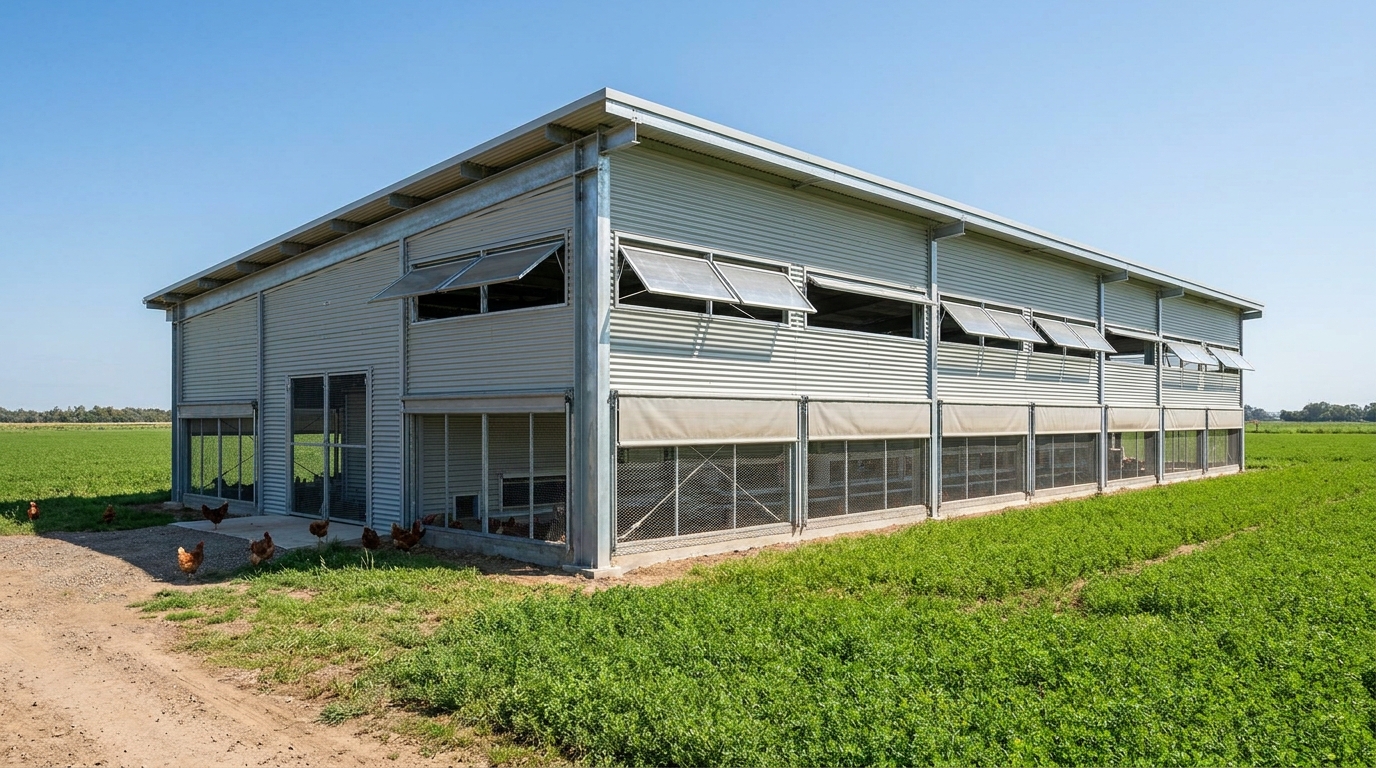
Finding the perfect balance for your next project requires a direct look at the competition. The Semi-enclosed Chicken House sits right in the middle of the spectrum, offering better security than open sheds and better cost savings than closed warehouses. Let us analyze how these systems stack up across key performance indicators.
Which Has the Best Cost-to-Value Ratio?
You want the absolute most value out of every single dollar you invest in your steel structure. A semi-enclosed layout minimizes your structural and electrical investments while giving you enough mechanical power to handle hot days.
Here is the thing:
- It saves up to forty percent on monthly power bills.
- Construction costs are significantly cheaper than insulated panel designs.
- It maintains competitive bird survival rates.
This combination offers the highest return on investment for small and medium farms.
How Do Ventilation and Control Differ?
You will find that ventilation control is highly dynamic in a semi-enclosed facility. Unlike fully closed houses that run fans continuously, this hybrid system shifts seamlessly between passive cross-breezes and high-speed tunnel flows.
But wait, there is more.
- Open houses rely purely on unpredictable natural winds.
- Closed houses offer automated control but zero passive options.
- Semi-enclosed systems give you the best of both worlds.
This dual-mode capability keeps you prepared for any weather emergency.
Which Housing Type Best Fits Your Project?
You should base your final building selection on your local climate, flock size, and available investment capital. If you live in a region with moderate temperatures and experience high seasonal electricity costs, the choice is clear.
Think about it.
- Choose open-sided if capital is extremely restricted.
- Choose semi-enclosed for balanced, cost-effective growth.
- Choose fully closed for ultra-dense, industrial scale operations.
Aligning your business goals with your building type ensures long-term operational success.
| Feature | Open-Sided | Semi-Enclosed | Enclosed | |
|---|---|---|---|---|
| Electricity Dependency | None | Low to Moderate | Extremely High | |
| Flock Density Cap | Low | Medium to High | Maximum | |
| Risk of Power Loss | Zero | Moderate | Critical | |
| Environmental Stability | Low | Stable | Perfect |
Always calculate the local price of electricity per kilowatt-hour before committing to a Enclosed Chicken House design.
Key Takeaway: Selecting a hybrid layout protects your business from crushing utility bills while maintaining a secure, modern growing space.
What Climates Suit a Semi-Enclosed House?
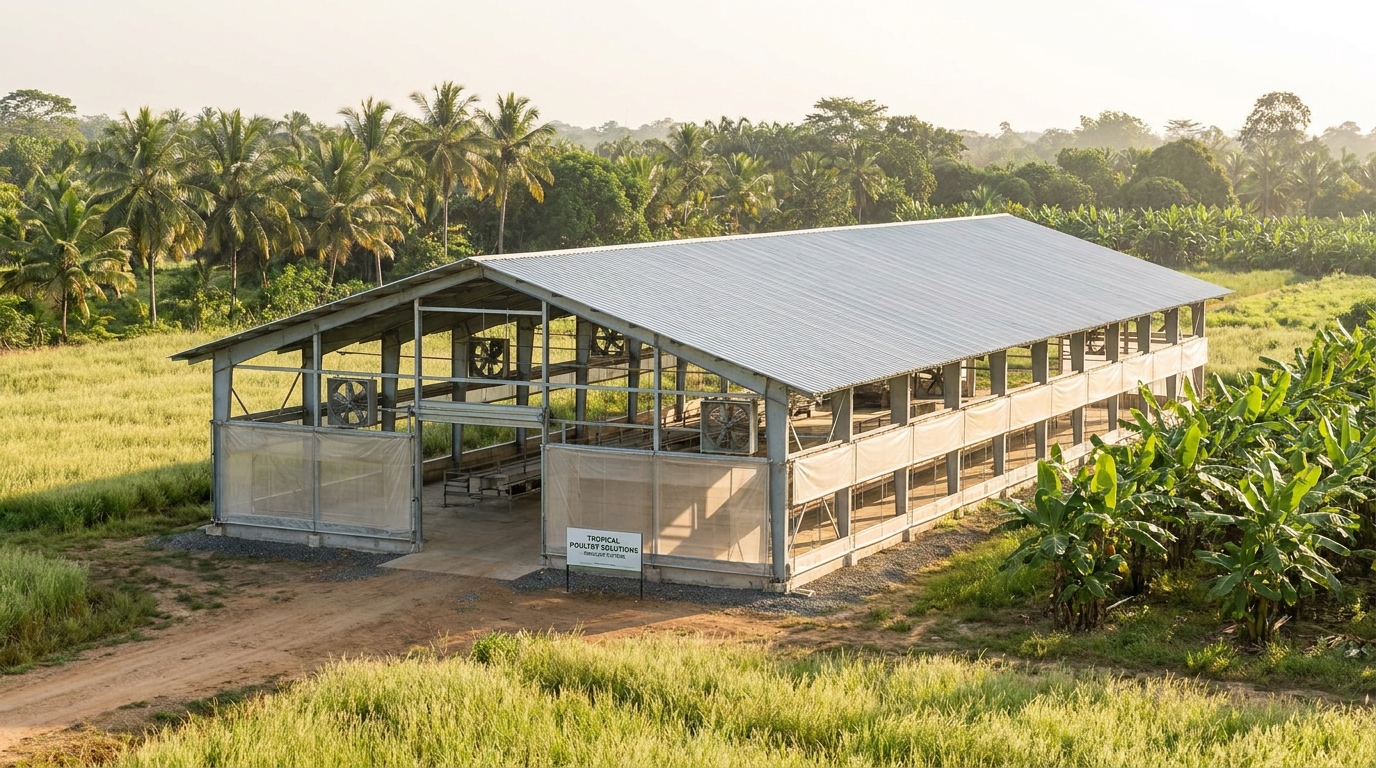
Geographic location plays a massive role in how your poultry building performs day in and day out. A Semi-enclosed Chicken House is highly adaptable, but it truly shines in regions that experience moderate seasonal shifts. Let us explore how you can optimize this structure for your specific local weather patterns.
Why Is It Ideal for Moderate Climates?
You will experience peak efficiency if your farm is located in a temperate zone with mild winters and warm summers. In these perfect zones, you can keep the curtains wide open for most of the year to enjoy free ventilation.
Here is the thing:
- Heating costs stay low because winters are gentle.
- Free natural breezes keep your summer fan usage minimal.
- Birds remain comfortable with little mechanical intervention.
This natural alignment keeps your operational overhead incredibly low.
How Do You Manage It in Humid Tropics?
You can still succeed in tropical zones by utilizing high-velocity fans to create a powerful wind-chill effect. Because high humidity slows down evaporative cooling, moving air quickly across the birds is your best defense against heat stress.
But wait, there is more.
- Wider building spacing prevents blocking natural cross-winds.
- Thick, UV-resistant curtains block out direct tropical sunlight.
- Heavy-duty fans run during sticky, windless afternoons.
These strategic adjustments keep your tropical flock growing strong without massive losses.
What Upgrades Are Needed for Cold Seasons?
You will need to implement a few winterization upgrades if your region experiences freezing winter temperatures. Double-layered insulated curtains and tightly sealed air inlets are critical to keeping cold drafts away from your birds.
Think about it.
- Double-layer curtains trap a pocket of insulating air.
- Ceiling-mounted heaters keep warm air circulating down.
- Minimum ventilation cycles clear moisture without freezing the floor.
A few smart winter upgrades keep your birds warm and productive all winter long.
| Climate Type | Main Ventilation Mode | Required Upgrades | |
|---|---|---|---|
| Temperate/Mild | Natural cross-breeze | Standard winches, basic fans | |
| Humid Tropical | High-velocity tunnel flow | Extra exhaust fans, misting lines | |
| Cold/Sub-freezing | Minimum mechanical cycle | Insulated curtains, space heaters |
Ensure your side curtains overlap the wall framing by at least fifteen centimeters to prevent cold air leaks.
Key Takeaway: Adapting your curtains and fans to your local climate zones ensures high bird comfort and maximum energy savings year-round.
What Structural Materials Are Best Selected?
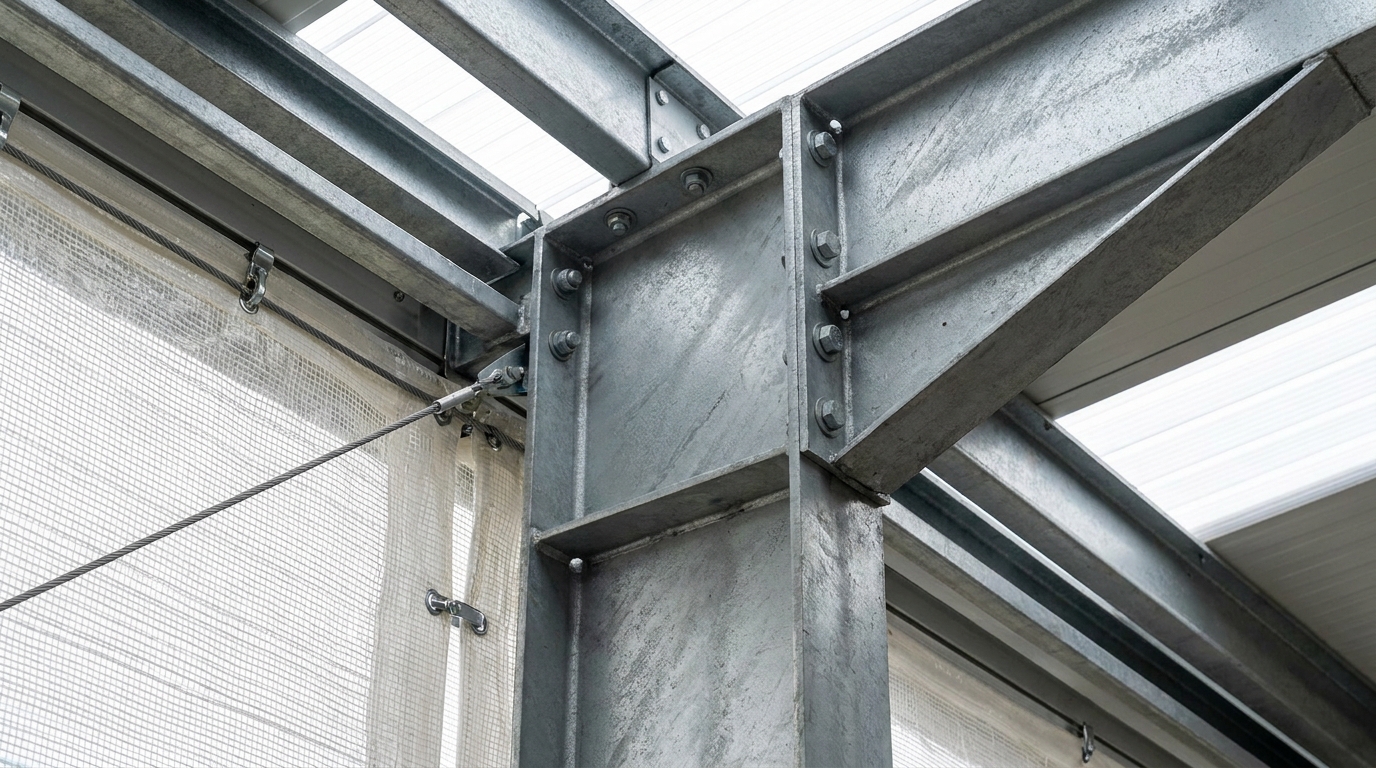
A poultry building is only as good as the materials used to manufacture its structural skeleton. Building a high-quality Semi-enclosed Chicken House requires durable steel framing that can handle high humidity, ammonia, and heavy winds. Choosing the right materials today saves you thousands of dollars in repairs down the road.
Why Choose Prefab Steel Frames and Columns?
You will find that prefabricated steel frames are vastly superior to traditional wood or concrete structures. They arrive at your job site ready for rapid bolt-together assembly, saving you massive amounts of construction labor.
Here is the thing:
- Hot-dip galvanized H-beams resist rust for decades.
- Steel will not harbor wood-boring pests or rot.
- Engineered steel frames easily withstand high wind loads.
This solid steel backbone ensures your farm investment remains secure for over twenty years.
What Cladding and Curtains Work Best?
You need tough, weather-resistant cladding materials to protect your flock from the elements. The roof should feature insulated sandwich panels or single-layer color sheets backed by thick glass wool insulation to block solar heat.
But wait, there is more.
- High-density polyethylene curtains resist UV degradation.
- Anti-tear woven materials prevent damage during high winds.
- Insulated sandwich panels keep the roof cool in summer.
Using high-grade cladding keeps your indoor climate stable and protects your building’s interior.
How Do You Prevent Corrosion from Ammonia?
You must realize that chicken manure releases highly corrosive ammonia gas that can slowly eat away at raw steel. To prevent this, all steel components must undergo hot-dip galvanization or receive specialized anti-corrosion paint coatings.
Think about it.
- Galvanized coatings self-heal small scratches over time.
- Stainless steel fasteners prevent rusting at joint connections.
- Protective paint layers block acidic moisture from reaching steel.
Taking these anti-corrosion measures keeps your building structurally sound and looking brand new.
| Component | Standard Material | Premium Upgrade | |
|---|---|---|---|
| Main Columns | Painted H-shaped steel | Hot-dip galvanized H-beams | |
| Roof Panels | Single color sheet + glass wool | Polyurethane (PU) sandwich panels | |
| Side Curtains | Single-layer PVC | Double-layer insulated PE | |
| Fasteners | Galvanized steel bolts | Marine-grade stainless steel |
Always check that your steel supplier provides certified hot-dip galvanization matching international standards.
Key Takeaway: Investing in high-grade galvanized steel and UV-protected curtains prevents rust failure and keeps your maintenance costs to an absolute minimum.
Build a Smarter Semi-Enclosed Chicken House—Get a Quote !
Email:sales@showhoo.com.cn
Phone/WhatsApp: + 86 186 7895 5927
How Do You Design Ventilation and Cooling?
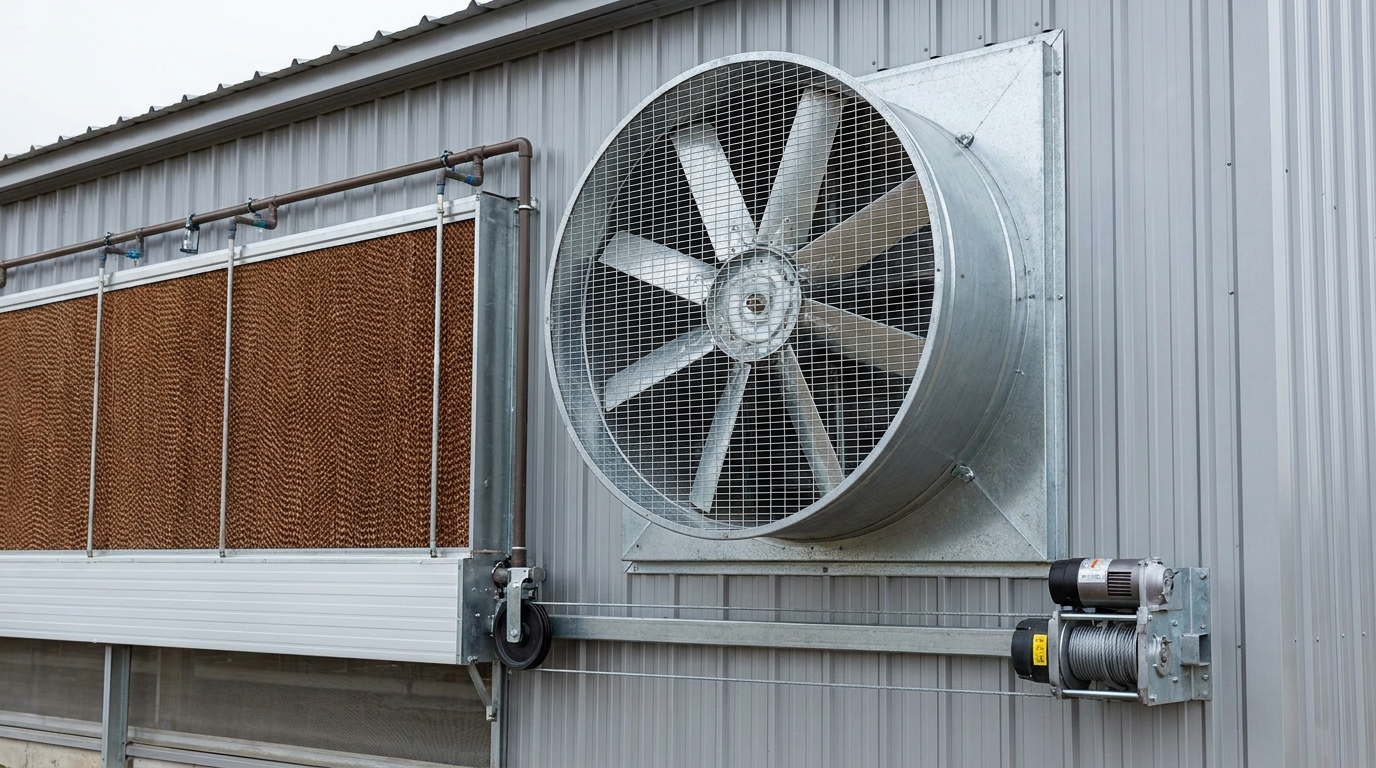
Engineering the perfect airflow is the absolute secret to keeping your birds healthy and highly productive. Within a Semi-enclosed Chicken House, you must balance natural wind paths with the placement of mechanical cooling equipment. A well-designed ventilation layout removes heat, moisture, and dust before they can harm your birds.
What Are the Rules for Side Curtains?
You must position your side curtains at the perfect height to allow natural breezes to flow directly across your birds. If the curtains are too high, the fresh air will pass over the flock, leaving stale air trapped at ground level.
Here is the thing:
- Set curtain openings to align with bird height.
- Install bottom draft barriers to protect young chicks.
- Use wind-resistant guide ropes to keep curtains stable.
Proper curtain height control ensures a continuous supply of clean air where your birds need it most.
Where Should Fans and Inlets Be Placed?
You need to position your high-capacity exhaust fans at one end of the house to pull air cleanly through the entire length of the building. Placing air inlets along the opposite walls ensures that fresh air is distributed evenly without leaving any dead zones.
But wait, there is more.
- End-wall fans create a reliable, high-speed tunnel air path.
- Side wall inlets prevent cold air from dropping directly on birds.
- Symmetrical fan spacing ensures uniform air pressure.
This layout creates a consistent wind-chill effect that keeps your birds comfortable from end to end.
How Do Cooling Pads Prevent Heat Stress?
You can lower incoming air temperatures by up to ten degrees Celsius by installing high-efficiency evaporative cooling pads. As hot outside air is pulled through the wet cellulose pads, the water evaporates and cools the air instantly.
Think about it.
- Water pumps keep the cooling pads evenly saturated.
- Exhaust fans pull the chilled air deep into the house.
- Algae-resistant coatings keep your pads clean and free-flowing.
This simple, natural process is your absolute best defense against devastating summer heat waves.
| Ventilation Device | Primary Function | Ideal Placement | |
|---|---|---|---|
| Exhaust Fans | Pull stale air out of building | Rear end-wall | |
| Cooling Pads | Lower incoming air temperature | Front end-wall or side walls | |
| Air Inlets | Distribute fresh air evenly | Upper side walls | |
| Side Curtains | Allow natural cross-ventilation | Full length of side walls |
Always size your cooling pads to match the total cubic-feet-per-minute rating of your exhaust fans.
Key Takeaway: Combining properly placed fans, inlets, and cooling pads ensures that your birds stay cool, calm, and highly productive in any weather.
How Do You Plan the Layout and Capacity?
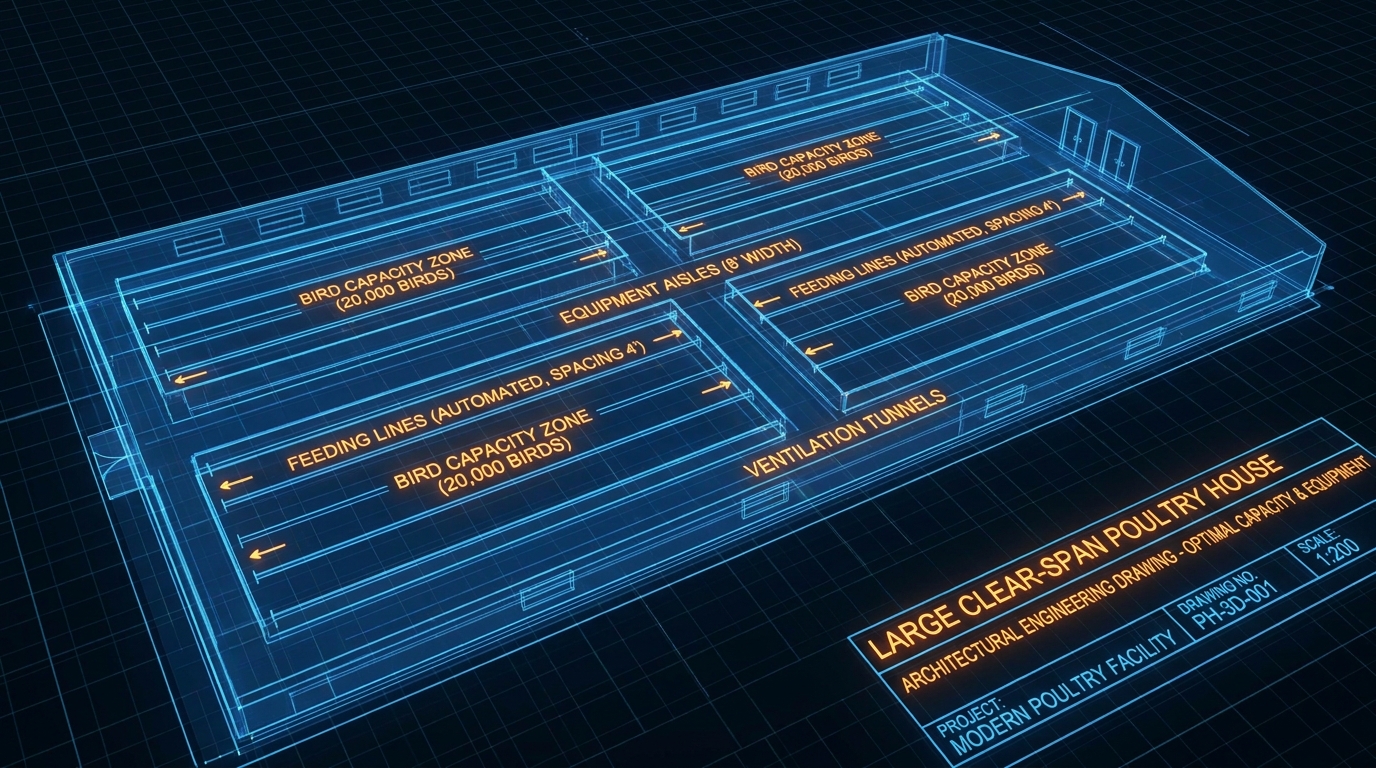
Maximizing your land use while preventing overcrowding is a critical step in planning your farm blueprint. A Semi-enclosed Chicken House must be designed with the correct dimensions to optimize both automated equipment layout and natural airflow. Proper planning prevents structural bottlenecks and ensures a high survival rate for your flock.
How Do You Calculate Space Per Bird?
You must calculate your flock density carefully to prevent overcrowded conditions that lead to stress and disease. The ideal density depends on whether you are raising broilers on the floor or layers in multi-tier cages.
Here is the thing:
- Floor broilers need at least one square meter per twelve birds.
- Caged layers require detailed cage volume calculations.
- Leaving adequate space prevents wet litter and ammonia build-up.
Giving your birds enough room to grow is the foundation of a healthy, high-yield flock.
What Are the Best Width and Height Layouts?
You will get the best natural ventilation results by keeping your building width between twelve and fifteen meters. If your house is too wide, natural cross-breezes cannot reach the center, leaving a hot, stale air pocket in the middle of your flock.
But wait, there is more.
- A eave height of two and a half to three meters is ideal.
- A symmetrical roof pitch helps heat rise away from birds.
- Standard building lengths range from sixty to one hundred meters.
These classic dimensions maximize natural airflow while keeping structural steel costs highly economical.
Where Should Service Aisles Be Located?
You need wide, clear central and side aisles to make daily bird inspections and egg collection fast and easy. Planning these pathways in your initial blueprint ensures that your automated machinery has plenty of room to operate.
Think about it.
- Central aisles allow easy passage for automated egg trolleys.
- Side pathways let you monitor curtain and fan performance easily.
- Smooth concrete floors make cleaning between flocks incredibly fast.
A well-planned layout saves you hundreds of hours of manual labor over the lifetime of your farm.
| Layout Parameter | Recommended Dimension | Purpose | |
|---|---|---|---|
| House Width | 12 to 15 meters | Optimizes natural cross-ventilation | |
| Eave Height | 2.5 to 3 meters | Keeps warm air rising above birds | |
| Aisle Width | 1 to 1.2 meters | Allows passage for workers and carts | |
| Flock Density | 10 to 15 birds/m² | Prevents heat stress and disease |
Never build a curtain-sided house wider than sixteen meters, or you will suffer from severe ventilation dead zones.
Key Takeaway: Designing your house with optimal widths and heights ensures excellent natural air circulation and makes daily farm chores highly efficient.
What Equipment Is Essential for Operation?
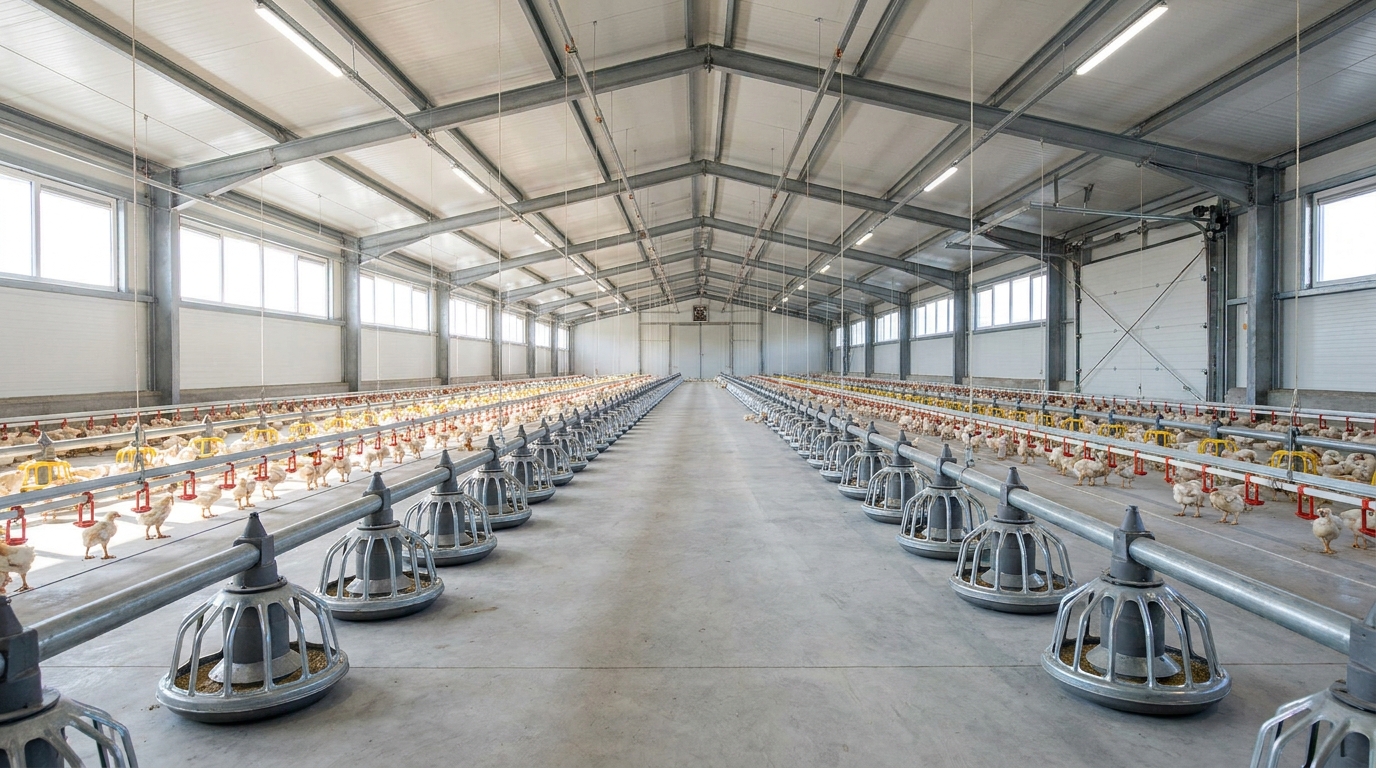
Operating a modern poultry farm successfully requires a reliable network of automated systems working in perfect harmony. Inside your Semi-enclosed Chicken House, you need high-quality feeding, drinking, heating, and control equipment. These advanced systems reduce labor costs and keep your flock growing uniformly.
How Do Feeders and Drinkers Save Labor?
You can eliminate hours of backbreaking manual labor by installing automated pan feeding and nipple drinking lines. These systems deliver fresh feed and clean water directly to your birds on a continuous, automated schedule.
Here is the thing:
- Nipple drinkers prevent water spills, keeping your litter dry.
- Feed pans distribute feed evenly to reduce bird competition.
- Automated winches let you lift lines for easy cleaning.
Automating your feeding and watering keeps your birds healthy and slashes your daily labor expenses.
What Heating and Lighting Is Required?
You must provide reliable heat during the first few weeks of a chick’s life when they cannot regulate their own body temperature. Additionally, a programmable LED lighting system is essential for stimulating egg production and feed intake.
But wait, there is more.
- Gas brooders provide localized, efficient heat for young chicks.
- Dimmable LED lights simulate natural sunrises and sunsets.
- Waterproof light fixtures handle high-pressure cleaning cycles easily.
Proper light and heat management accelerates chick growth and keeps your egg production rates highly profitable.
Which Controllers Keep the House Stable?
You need a reliable, computerized climate controller to act as the brain of your entire poultry operation. This smart device monitors temperature and humidity sensors and automatically coordinates your fans, curtains, and heaters.
Think about it.
- Smart controllers react instantly to sudden weather shifts.
- Alarm systems alert you immediately to power failures.
- Detailed data logs help you track environmental trends over time.
A high-quality controller gives you total peace of mind, knowing your flock is always safe and comfortable.
| Equipment Type | Core Function | Key Advantage | |
|---|---|---|---|
| Nipple Drinkers | Deliver clean water continuously | Prevents wet litter and disease | |
| Pan Feeders | Automate feed distribution | Minimizes feed waste and labor | |
| Smart Controller | Coordinate fans, curtains, heat | Maintains a perfectly stable climate | |
| LED Lighting | Control day-length and behavior | Stimulates uniform bird growth |
Always install a backup generator with an automatic transfer switch to protect your birds during power outages.
Key Takeaway: Equipping your house with automated systems dramatically reduces labor costs while maximizing your flock’s growth and health.
How Much Does a Semi-Enclosed House Cost?
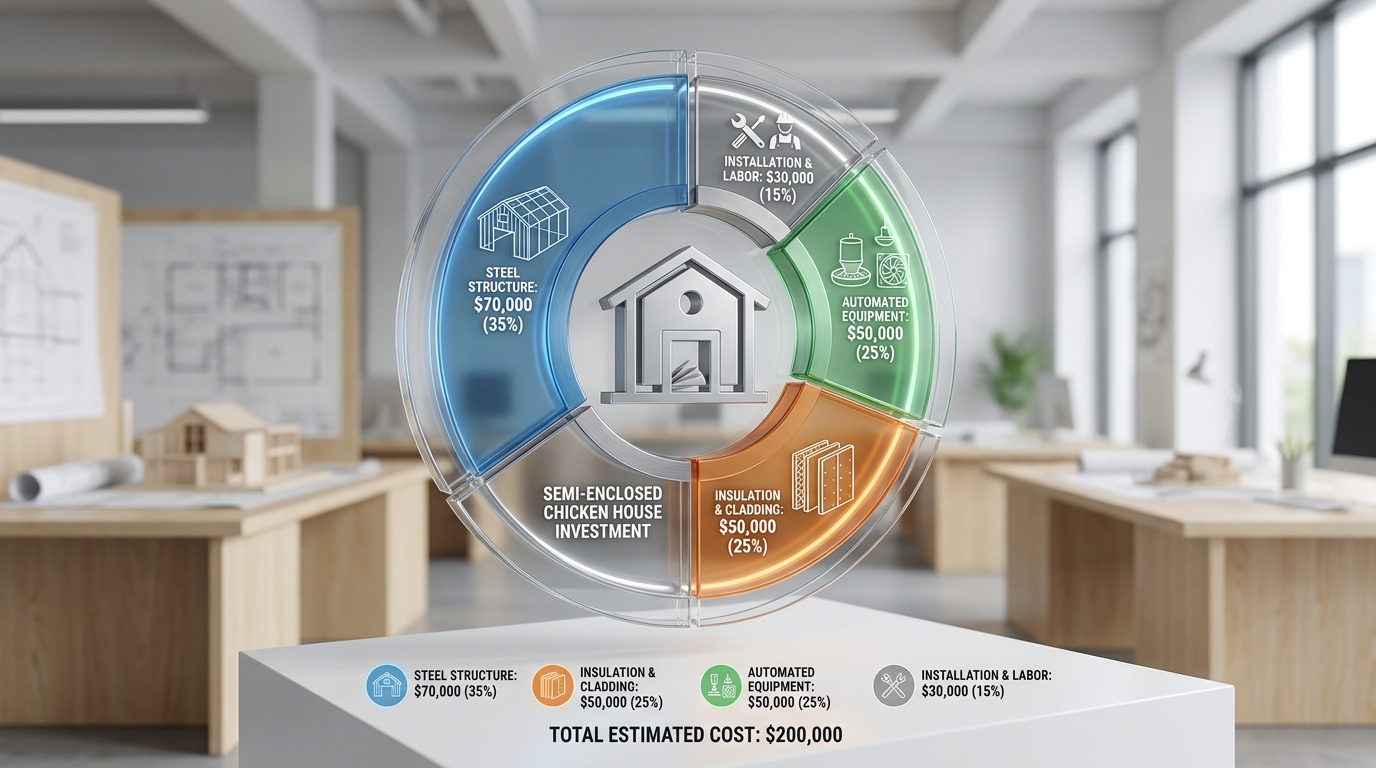
Understanding your total investment is critical to planning a successful, highly profitable farming business. The cost of a Semi-enclosed Chicken House is highly competitive, offering a much lower price point than fully sealed structures. Let us break down the primary expenses so you can budget your poultry project with absolute confidence.
What Drives the Core Construction Cost?
You will find that the main cost drivers are the steel structure fabrication, foundation concrete, and wall cladding materials. Standard steel poultry structures typically range from forty to one hundred US dollars per square meter.
Here is the thing:
- Hot-dip galvanized steel framing costs slightly more upfront.
- Concrete slab foundation costs vary based on your local terrain.
- Insulated roof panels are a highly recommended, cost-saving upgrade.
Investing in high-quality structural steel today prevents expensive structural maintenance issues in the future.
What Are the Equipment and Shipping Fees?
You must also budget for your automated farming equipment and the international shipping fees to deliver components to your site. Shipping rates fluctuate based on container availability and the total distance to your destination port.
But wait, there is more.
- Silo and feeding line costs depend on your flock size.
- Fan and cooling pad prices vary by local climate needs.
- Prefabricated parts pack tightly into shipping containers.
Getting a complete package deal from one manufacturer reduces shipping coordination headaches and saves you money.
What Details Do We Need for a Quote?
You can secure an accurate, highly customized quote quickly by preparing your basic project specifications ahead of time. Knowing your target bird capacity, local wind loads, and land dimensions helps engineers design the perfect layout.
Think about it.
- Specify your target bird count and breed type.
- Provide your local maximum wind and snow load data.
- Share your preferred land dimensions and layout orientation.
Providing these key details ensures you receive a fast, accurate quote tailored to your exact needs.
| Budget Category | Estimated Cost Share | Key Components Included | |
|---|---|---|---|
| Steel Structure | 35% to 45% | H-columns, roof beams, purlins, bracing | |
| Insulation & Cladding | 20% to 25% | Roof panels, side curtains, fasteners | |
| Automated Equipment | 25% to 30% | Feeders, drinkers, fans, controllers | |
| Installation & Labor | 10% to 15% | On-site assembly, electrical wiring |
Always request a detailed material list with steel grades and galvanization weights before signing a purchase contract.
Key Takeaway: Planning your budget across clear structural and equipment categories prevents unexpected costs and ensures a highly profitable project.
Summary and Next Steps
Investing in the right infrastructure is the ultimate key to conquering modern poultry farming challenges like soaring feed costs, extreme summer heatwaves, and rising power bills. By choosing an engineered, hybrid-ventilated steel structure, you eliminate environmental stress factors and build a highly secure, biosecure foundation for your business. As poultry steel structure experts, our team is dedicated to designing and manufacturing robust, customized steel poultry houses that help farmers around the globe maximize their production efficiency and achieve sustainable growth. If you are ready to elevate your farming operation with a durable, cost-effective steel building solution, contact us today to start planning your custom layout.
Build a Smarter Semi-Enclosed Chicken House—Get a Quote !
Email:sales@showhoo.com.cn
Phone/WhatsApp: + 86 186 7895 5927
Frequently Asked Questions
Can I convert my open-sided poultry house into a semi-enclosed one?
Yes, you can easily upgrade your existing open-sided house. By installing automated side curtains, sealing any major draft gaps, and adding mechanical exhaust fans at one end, you can transform your open shelter into a highly controllable hybrid system.
How do I know if a semi-enclosed chicken house is right for my climate?
You should analyze your local seasonal temperature fluctuations first. If your region experiences moderate seasons with hot summer afternoons but mild winters, this hybrid system will deliver the perfect balance of low electricity costs and excellent bird protection.
What is the best material for poultry house curtains?
High-density polyethylene (PE) is the absolute best material for durable side curtains. This fabric is highly resistant to tearing, holds up exceptionally well against harsh UV rays, and can be ordered in insulated double-layer formats for colder climates.
Can I run this system completely without electricity?
No, you cannot operate a modern semi-enclosed house entirely without electricity. While you will save massive amounts of power by using natural ventilation during mild weather, you still require electricity to run the exhaust fans and automatic feeders during hot days.