
A warehouse building is a specialized industrial structure designed for the efficient storage, handling, and distribution of goods and raw materials. If you are struggling with rising operational costs or cluttered inventory, your current facility might be the bottleneck. Inefficient space utilization and poor thermal regulation can quickly erode your profit margins and frustrate your logistics team. By investing in a professionally engineered warehouse building , you solve these logistical headaches with a durable, clear-span solution tailored to your exact operational requirements.
Why Choose Specialized Warehouse Designs?
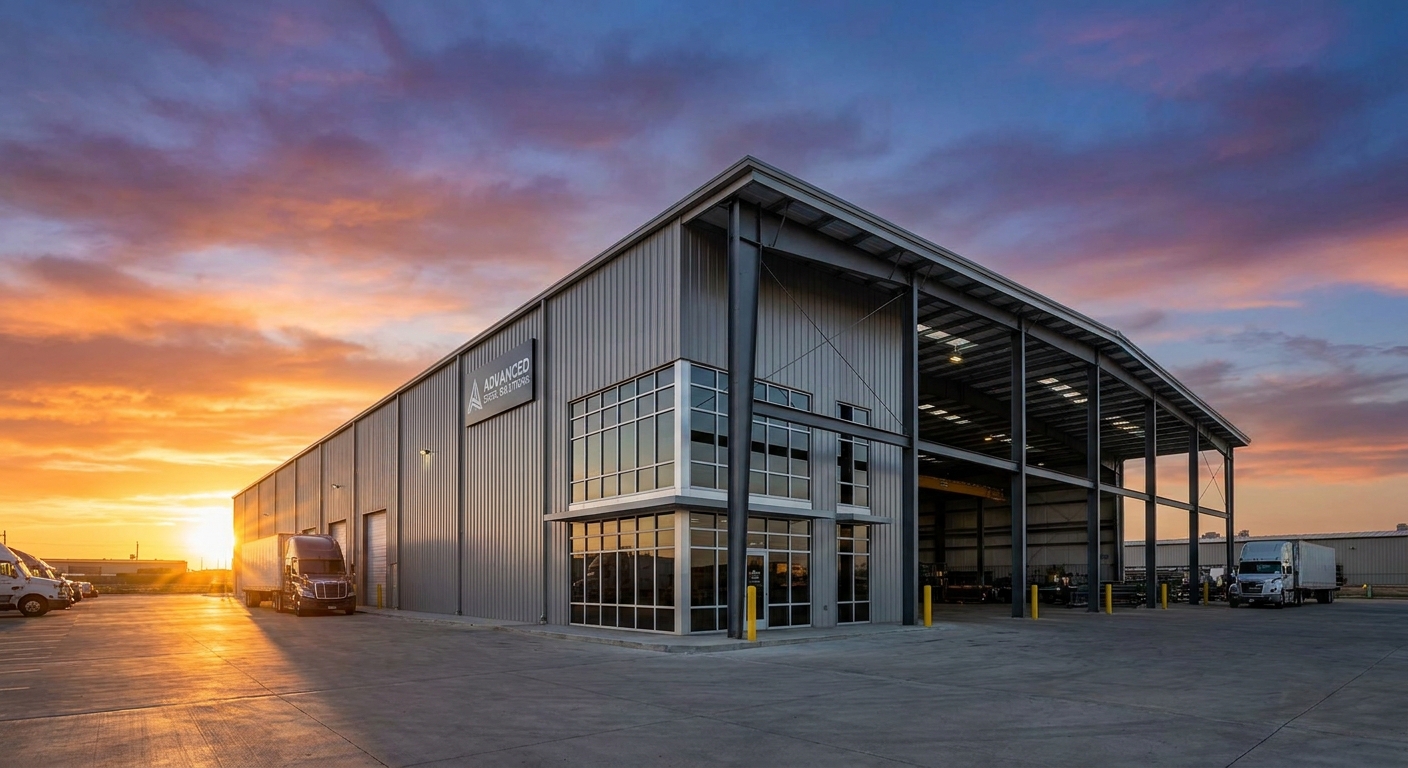
Specialized designs ensure that your warehouse building matches your specific material handling needs rather than forcing you to adapt to a generic box. When you customize your facility, you directly impact your long-term return on investment by optimizing every square meter of floor space.
Is customization necessary for material handling?
You need a layout that aligns with your specific equipment and throughput speeds. If your steel structure isn’t tailored, you will face constant delays and potential damage to high-value inventory. Think about it:
- Wide clear spans allow for unobstructed forklift movement.
- High eave heights accommodate vertical racking systems.
- Custom door placements streamline the loading process.
How does specialized design impact long-term ROI?
A precision-engineered facility reduces maintenance costs and improves energy efficiency from day one. You avoid the expensive retrofitting costs that plague owners of generic industrial buildings. The best part?
- Lower utility bills through integrated insulation.
- Faster fulfillment cycles increase annual revenue.
- Durable steel components require minimal repair.
Key Takeaway: Customizing your design ensures your facility remains an asset that grows with your business rather than a restrictive expense.
| Feature | Impact on ROI | Efficiency Gain | |
|---|---|---|---|
| Clear Span | High | 25% better space use | |
| High Eave Height | Medium | 40% more storage volume | |
| Custom Layout | Very High | 15% faster fulfillment |
Strategic design choices translate directly into measurable operational savings and increased storage capacity.
What Are the Main Types of Warehouses?
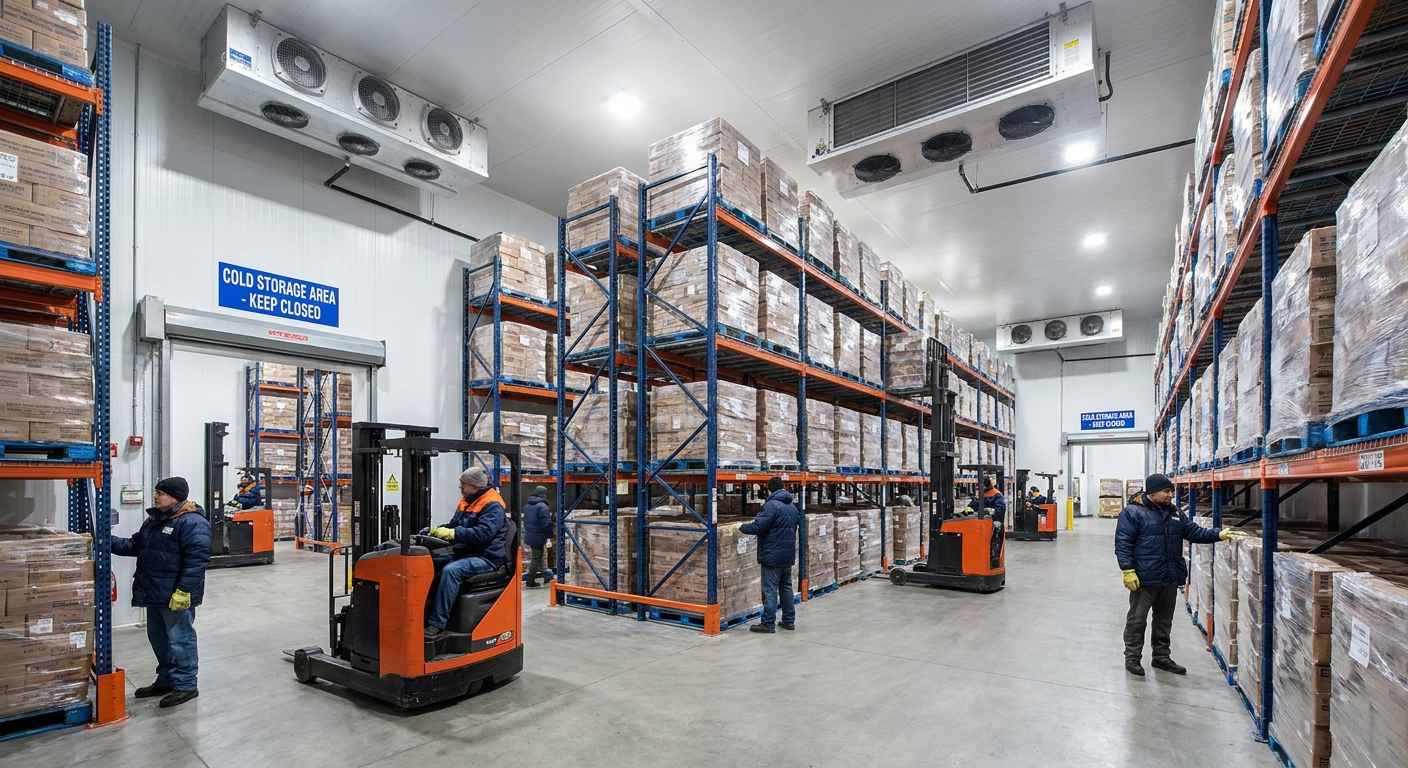
The main types of facilities include general storage, refrigerated units, and hazardous material centers, all of which fall under the category of a warehouse building . Choosing the right type depends entirely on the environmental sensitivity and safety requirements of the products you intend to store.
How do refrigerated facilities differ?
Refrigerated units require heavy-duty thermal barriers and specialized vapor seals to maintain consistent sub-zero temperatures. You must ensure the structural steel is treated to withstand high-moisture environments without corroding. Here is the kicker:
- High-density sandwich panels are essential for insulation.
- Specialized flooring prevents frost heave in the subsoil.
- Rapid-rise doors minimize thermal loss during transit.
What are requirements for hazardous storage?
Hazardous material facilities prioritize containment and specialized fire suppression to protect your personnel and the surrounding environment. You must integrate spill containment berms and explosion-proof electrical systems into the initial build. But wait, there’s more:
- Fire-rated wall systems isolate volatile sections.
- Specialized ventilation prevents the buildup of toxic fumes.
- Chemical-resistant floor coatings protect the slab.
Key Takeaway: Selecting the specific warehouse type for your industry ensures regulatory compliance and optimal product shelf life.
| Warehouse Type | Primary Focus | Key Component | |
|---|---|---|---|
| Cold Storage | Temperature Control | PIR/PU Sandwich Panels | |
| HazMat | Safety & Containment | Fire-Rated Partitions | |
| General Purpose | Volume & Speed | Clear-Span Steel Frame |
Matching the building type to your commodity is the first step in mitigating environmental and operational risks.
How Do Building Attributes Drive Success?
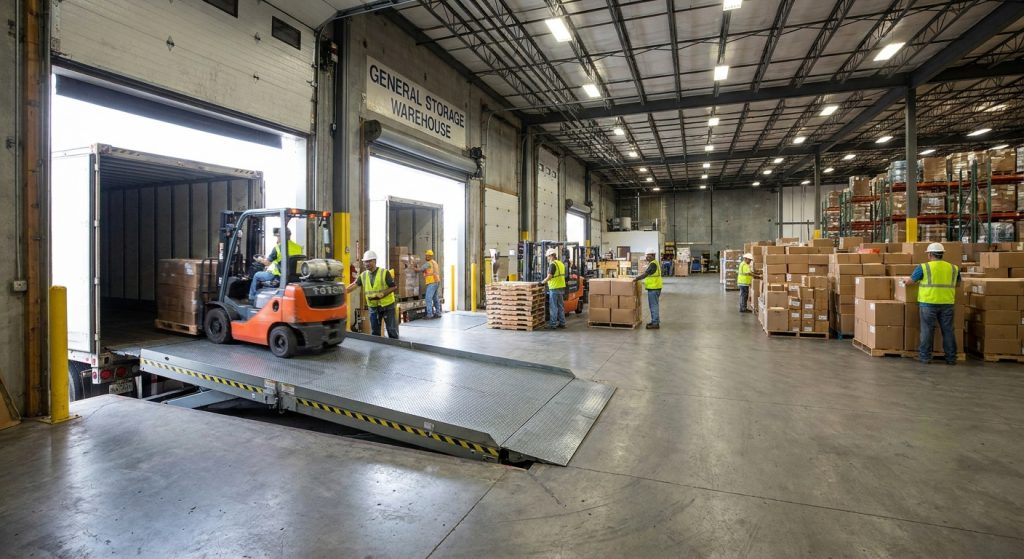
Success for a warehouse building is driven by a combination of professional corporate image, worker satisfaction, and low operating costs. When your facility looks professional and functions flawlessly, you attract higher-quality tenants and maintain a more productive workforce.
Why is corporate image important?
Your building serves as a physical representation of your brand’s reliability and modern capabilities to every visiting client. A sleek, well-maintained steel facade tells your partners that you value precision and care for their products. Think about it:
- Modern metal siding options enhance aesthetic appeal.
- Organized loading docks reflect operational efficiency.
- Clean architectural lines project a stable business image.
How does worker satisfaction correlate?
Employees who work in a safe, well-lit, and climate-controlled environment are significantly more productive and less likely to quit. You reduce hiring costs by providing a workplace that respects the physical demands of logistics labor. Here is the kicker:
- Proper ventilation reduces heat-related fatigue.
- Ergonomic dock levels prevent back injuries.
- Bright interior finishes improve visibility and morale.
Key Takeaway: High-quality building attributes create a virtuous cycle of professional branding and high employee retention rates.
| Attribute | Benefit | Long-term Value | |
|---|---|---|---|
| Aesthetic Facade | Brand Trust | Higher Property Value | |
| Ergonomic Docks | Safety | Reduced Insurance Premiums | |
| Climate Control | Comfort | 10% Higher Productivity |
A facility that prioritizes both form and function outperforms generic structures in every commercial metric.
Which Space Configurations Maximize Flow?
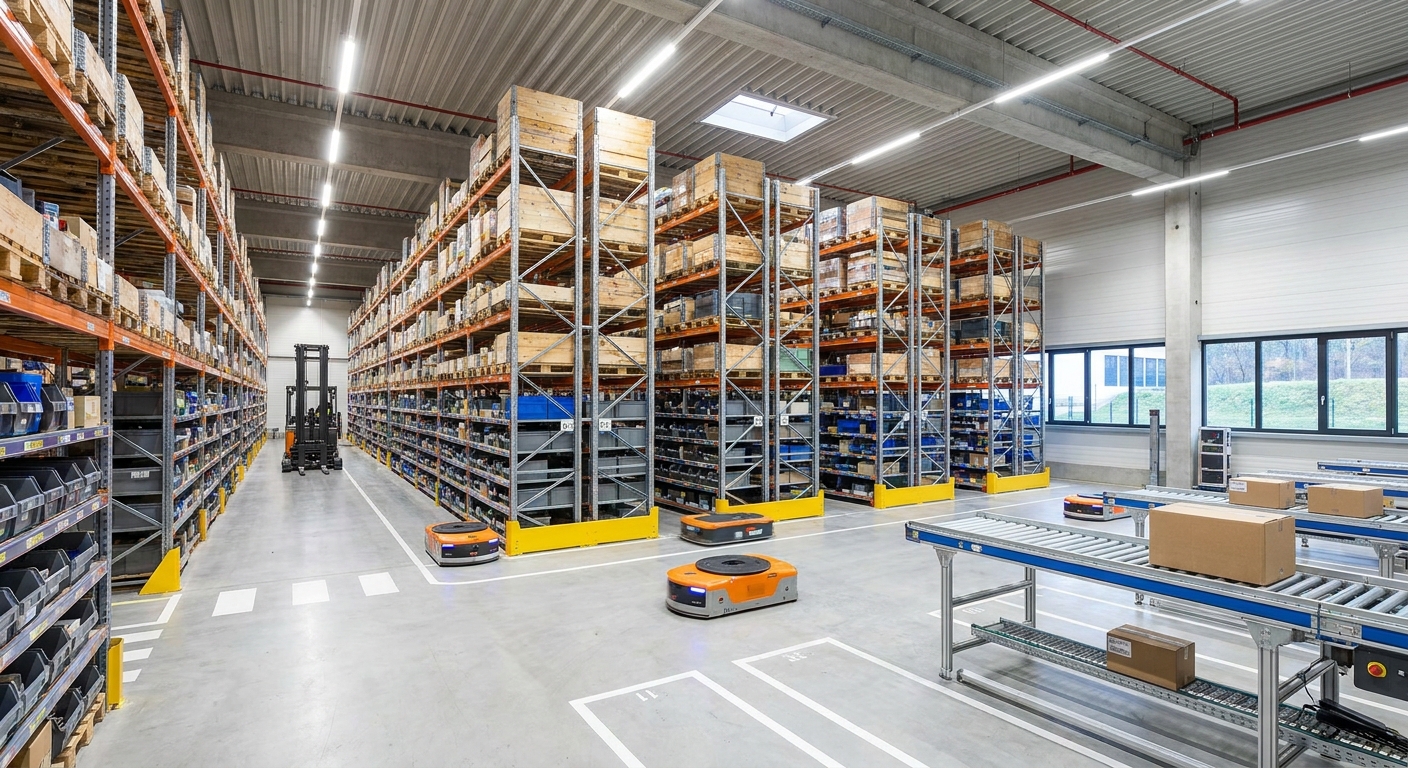
Space configurations maximize flow by separating inbound and outbound traffic within the warehouse building to prevent logistics bottlenecks. You must plan your layout to support “just-in-time” business practices where speed is the most critical metric for success.
Why is separation of shipping critical?
Dividing your receiving and shipping areas prevents cross-traffic congestion that leads to accidents and misplaced orders. You create a “one-way” flow that allows your team to move products from the dock to the rack without backtracking. But that is not all:
- Dedicated staging areas speed up inventory logging.
- Clear lane marking prevents forklift collisions.
- Separate docks allow for simultaneous loading/unloading.
Can flexible layouts accommodate growth?
A modular steel design allows you to reconfigure your internal racking or add mezzanine levels as your inventory volume increases. You should choose a portal frame system that offers the widest possible clear spans for future flexibility. Look at it this way:
- Mezzanines double your usable square footage.
- Movable partitions allow for temporary cold zones.
- Scalable steel frames simplify future expansions.
Key Takeaway: Intelligent flow planning reduces the physical distance products travel, directly cutting your labor costs per order.
| Configuration | Flow Style | Best For | |
|---|---|---|---|
| U-Shaped | Circular | Small to Medium Facilities | |
| I-Shaped | Straight | High-Volume Cross-Docking | |
| L-Shaped | Perpendicular | Specialized Sorting Needs |
Optimized internal geometry ensures that your logistics operations remain lean and responsive to market changes.
Why Is Floor Durability So Critical?
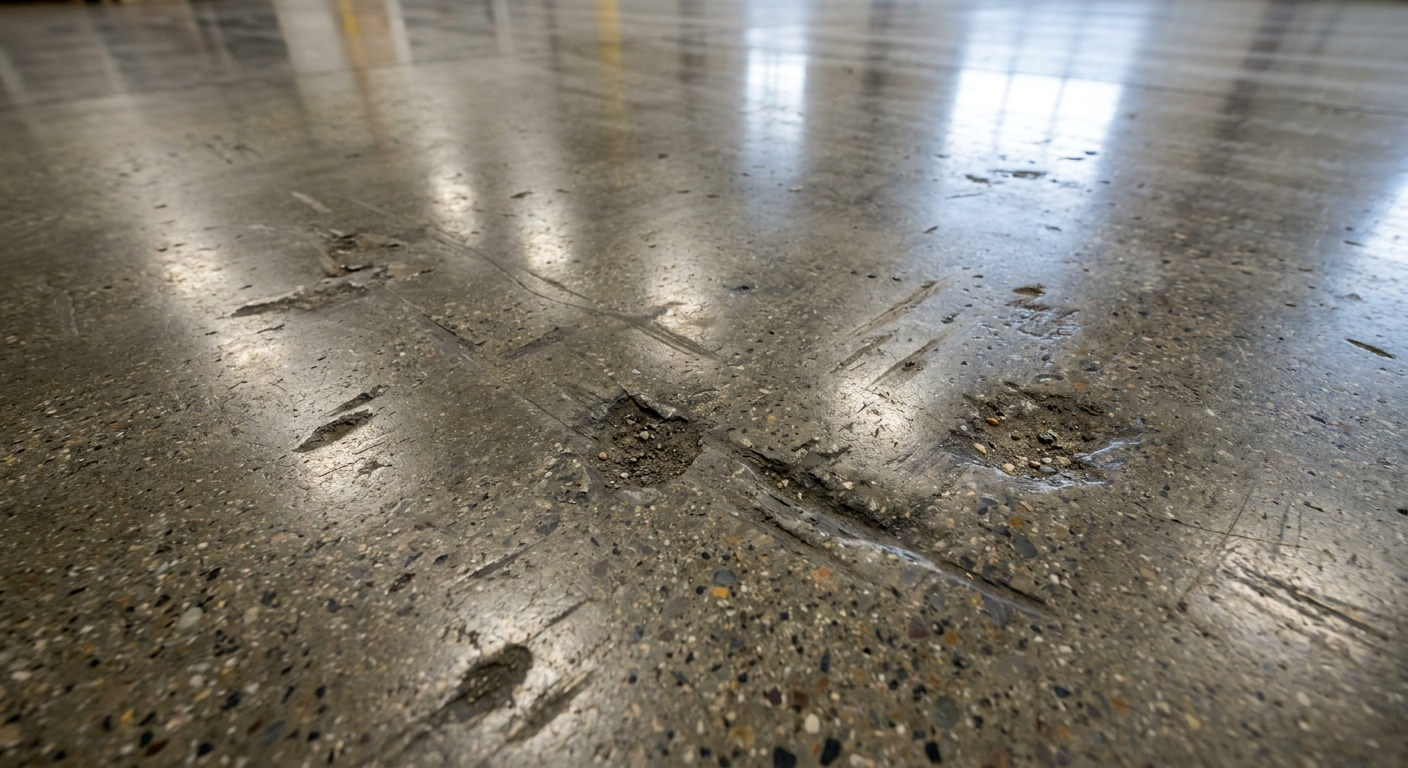
Floor durability is critical for a warehouse building because the slab must support massive racking loads and constant heavy forklift traffic without cracking. If your floor fails, your entire operation stops while expensive repairs are conducted on the underlying concrete.
What are risks of uneven slabs?
Uneven floors cause high-bay racking systems to lean, creating a severe tipping hazard for pallets stored at great heights. You also face increased maintenance costs for your forklifts due to constant vibration and tire wear from surface irregularities. Believe it or not:
- Laser-leveled floors are mandatory for VNA trucks.
- Smooth transitions prevent product spills.
- Flat surfaces reduce mast swaying on lift equipment.
How do hardeners protect against abrasion?
Chemical hardeners and epoxy coatings create a dust-proof surface that resists the grinding action of heavy industrial wheels. You ensure that your floor remains easy to clean and free of the concrete dust that can settle on and damage sensitive inventory. Think about it:
- Liquid hardeners increase surface density.
- Epoxy coatings resist oil and chemical leaks.
- Polished finishes improve light reflectivity.
Key Takeaway: Investing in a high-tolerance, hardened floor slab prevents the operational downtime caused by surface degradation.
| Floor Treatment | Benefit | Durability Rating | |
|---|---|---|---|
| Liquid Hardener | Dust-proofing | High | |
| Epoxy Coating | Chemical Resistance | Very High | |
| Fiber Reinforcement | Crack Control | Maximum |
The floor is the hardest-working component of your building; its quality dictates your maximum racking height.
Can Sustainable Design Reduce Costs?
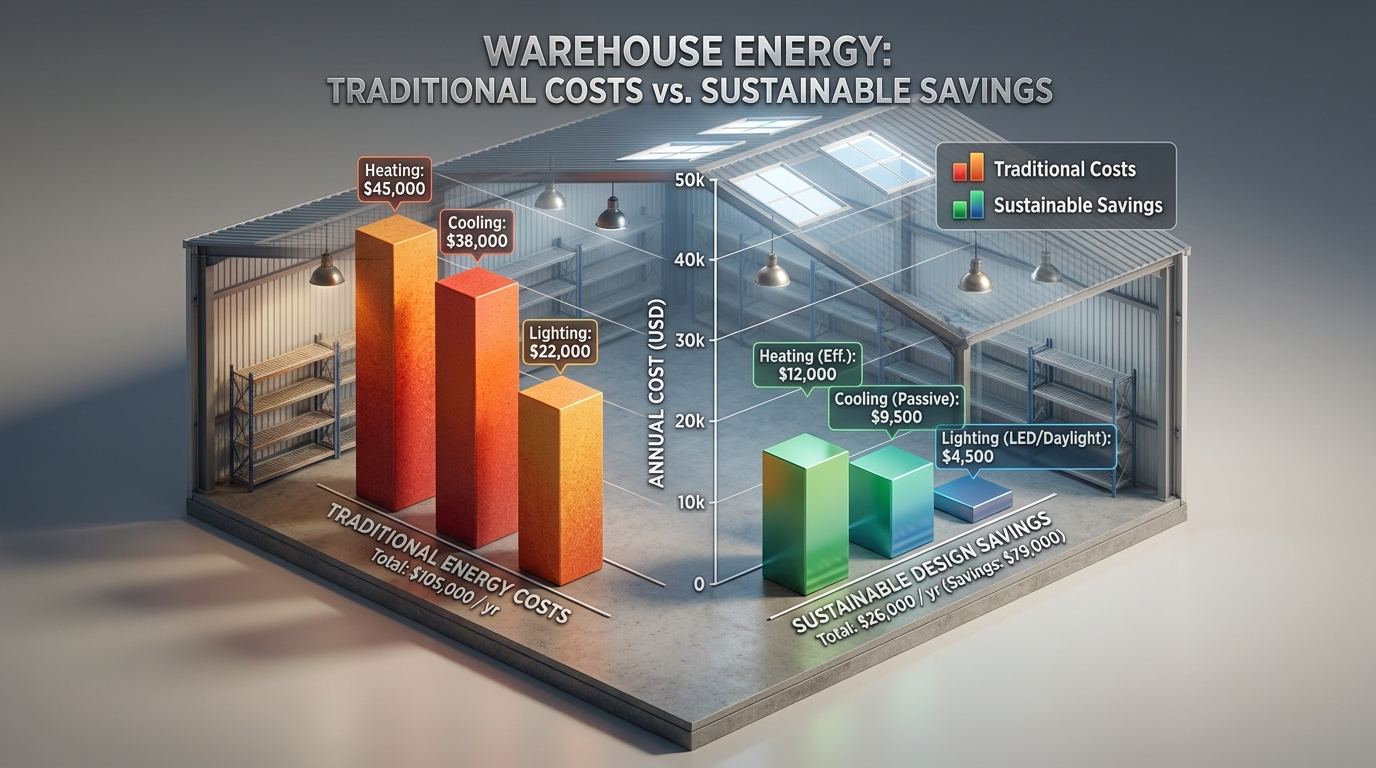
Sustainable design significantly reduces the operational overhead of a warehouse building by lowering energy consumption for lighting and climate control. By integrating green technologies, you future-proof your facility against rising utility costs and carbon regulations.
How do light roofs influence loads?
Cool roofs use reflective materials to bounce solar radiation away from the building, keeping the interior naturally cooler during summer months. You save thousands on HVAC operating costs by preventing the “oven effect” common in traditional dark-roofed warehouses. Here is the kicker:
- White TPO membranes reflect up to 85% of sunlight.
- Lower roof temperatures extend the life of the HVAC.
- Reduced thermal expansion protects structural joints.
Can solar power distribution?
The massive surface area of a warehouse roof provides the perfect platform for large-scale solar arrays that can power your entire material handling fleet. You can potentially eliminate your electricity bill and even sell excess power back to the grid. But wait, there’s more:
- On-site power protects against grid outages.
- Electric forklift charging becomes virtually free.
- Green energy credits improve your tax position.
Key Takeaway: Sustainability is no longer just an ethical choice; it is a strategic financial move to slash monthly utility expenses.
| Green Feature | Cost Savings | Environmental Impact | |
|---|---|---|---|
| Solar Panels | High | Carbon Neutrality | |
| Cool Roof | Medium | Heat Island Reduction | |
| LED Lighting | Low to Medium | 75% Energy Reduction |
Sustainable buildings command higher resale values and lower long-term operating costs than traditional structures.
How to Ensure Worker Safety and Security?
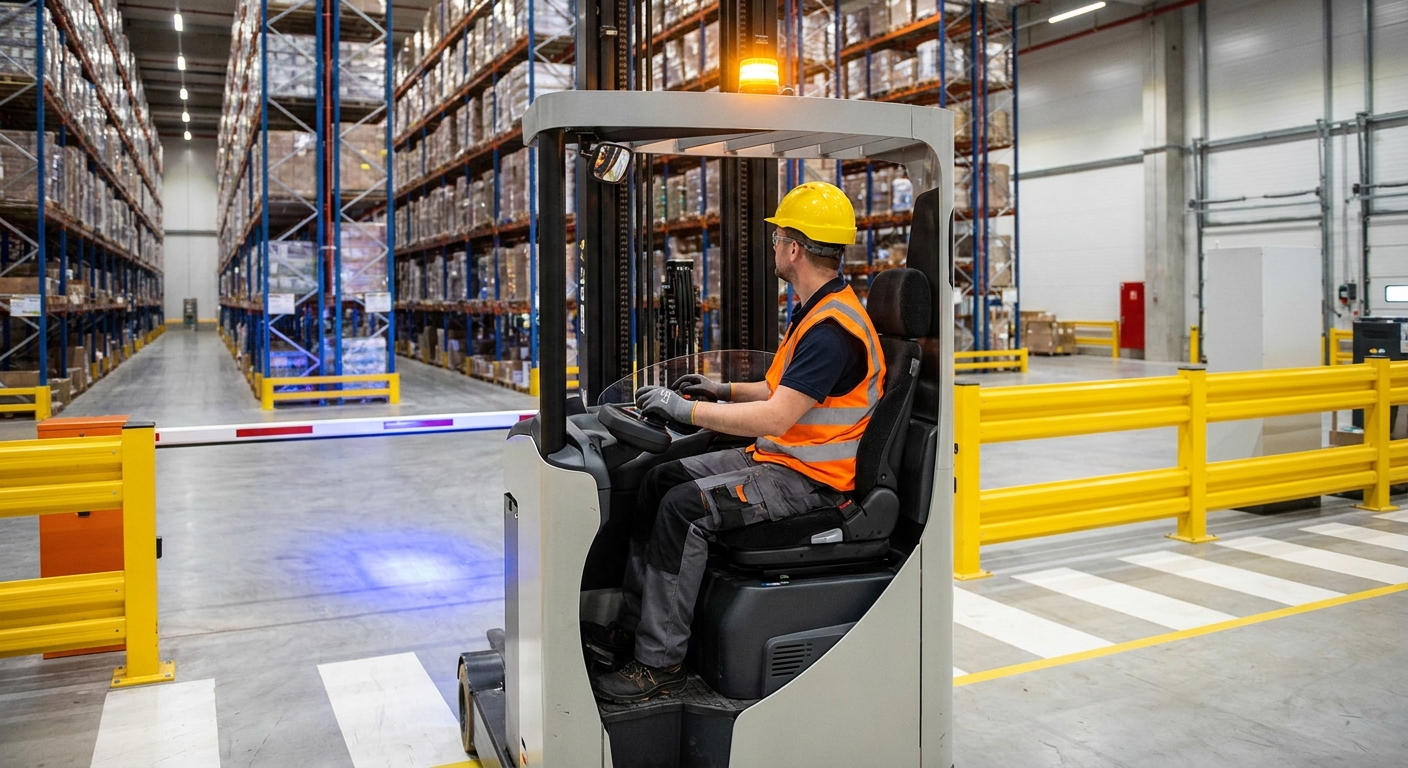
Ensuring safety in a warehouse building requires a combination of physical barriers, advanced fire suppression, and strict pest-proofing measures. You have a legal and moral obligation to provide an environment where your team can work without fear of injury.
What measures prevent dock disorders?
Automated dock levelers and vehicle restraints eliminate the dangerous gaps between the trailer and the floor where most warehouse accidents occur. You must also install bright safety yellow guardrails to separate pedestrian pathways from active forklift zones. Think about it:
- Non-slip floor textures prevent falls.
- Integrated seals keep rain and ice off the dock.
- Light communication systems prevent early drive-offs.
How are fire systems graded?
Fire sprinkler systems must be specifically designed based on the “commodity class” and the height of your pallet storage to ensure effective suppression. You cannot rely on a standard system if you are storing high-hazard items like plastics or chemicals. Here is the kicker:
- ESFR sprinklers are the gold standard for high-bay storage.
- Smoke vents allow heat to escape, protecting the frame.
- Fire pumps ensure constant water pressure.
Key Takeaway: A comprehensive safety strategy reduces your insurance premiums and protects your most valuable asset: your people.
| Safety Layer | Hardware Needed | Primary Risk Mitigated | |
|---|---|---|---|
| Pedestrian Safety | Bollards & Railings | Forklift Collisions | |
| Fire Protection | ESFR Sprinklers | Structural Collapse | |
| Perimeter Security | CCTV & Fencing | Theft & Vandalism |
Integrating safety into the building’s DNA is far more effective than trying to manage risk through policy alone.
What Features Improve Workplace Comfort?
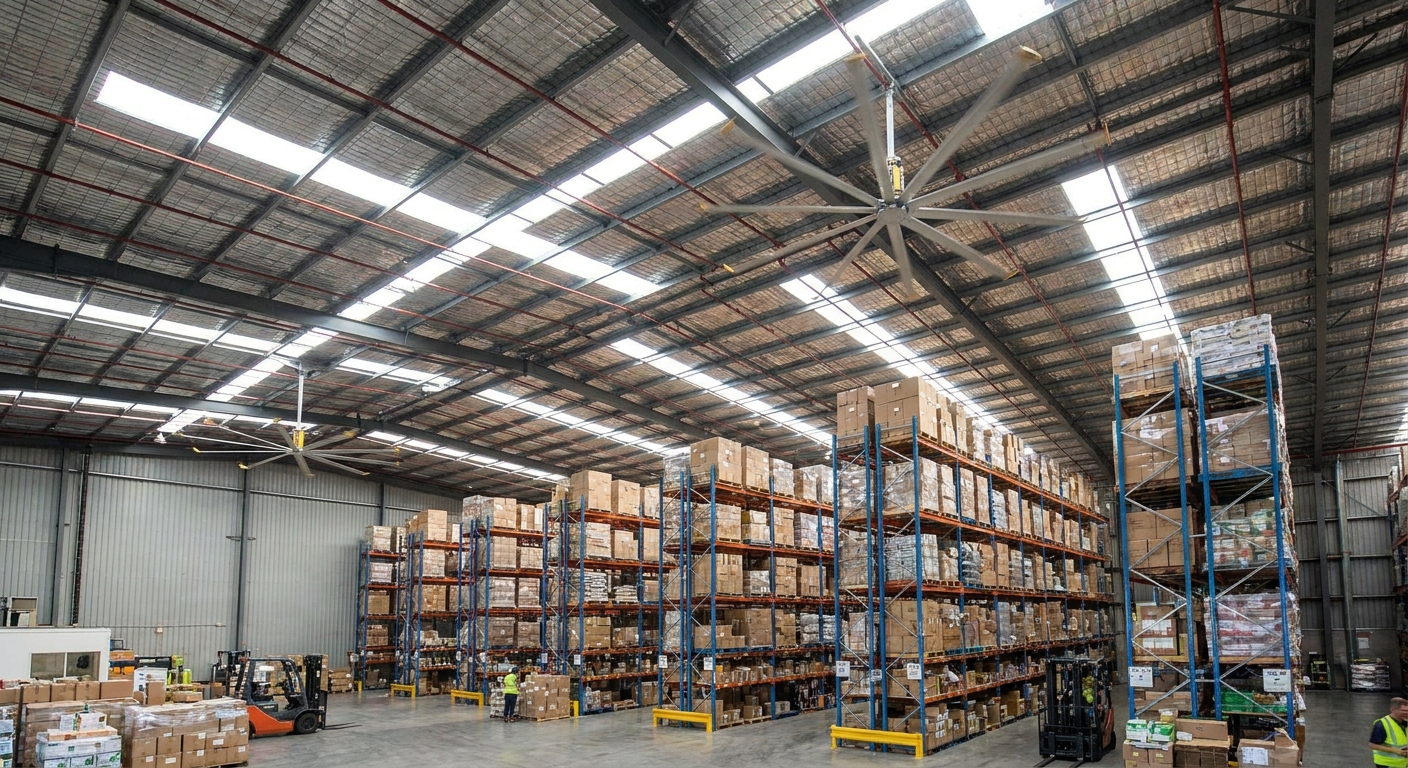
Workplace comfort in a warehouse building is achieved through natural daylighting, high-quality air filtration, and effective thermal destratification. You will find that personnel who are not fighting extreme temperatures or poor air quality are more focused and efficient.
How does daylighting affect personnel?
Natural light from industrial skylights reduces eye strain and regulates the circadian rhythms of your workers, leading to better mood and alertness. You also drastically reduce your daytime electrical lighting requirements, saving money while improving the atmosphere. But wait, there’s more:
- Translucent panels provide soft, even lighting.
- Prismatic skylights eliminate harsh glare.
- Natural light makes the space feel larger and cleaner.
Why are CO2 sensors essential?
CO2 sensors ensure that your ventilation system only runs when necessary, bringing in fresh air only when occupancy levels demand it. You maintain high indoor air quality without the energy waste of constantly running massive exhaust fans. Think about it:
- Sensors prevent the buildup of forklift exhaust.
- Proper air exchange reduces the spread of illness.
- Smart systems save on heating and cooling loss.
Key Takeaway: A comfortable warehouse is a productive warehouse; minor investments in air and light yield major dividends in output.
| Comfort Feature | Benefit | Cost to Implement | |
|---|---|---|---|
| HVLS Fans | Thermal Comfort | Low | |
| Skylights | Better Vision | Medium | |
| CO2 Monitoring | Air Quality | Low |
Productivity and personnel health are directly linked to the environmental quality of the industrial workspace.
How Is Technology Shaping Modern Storage?
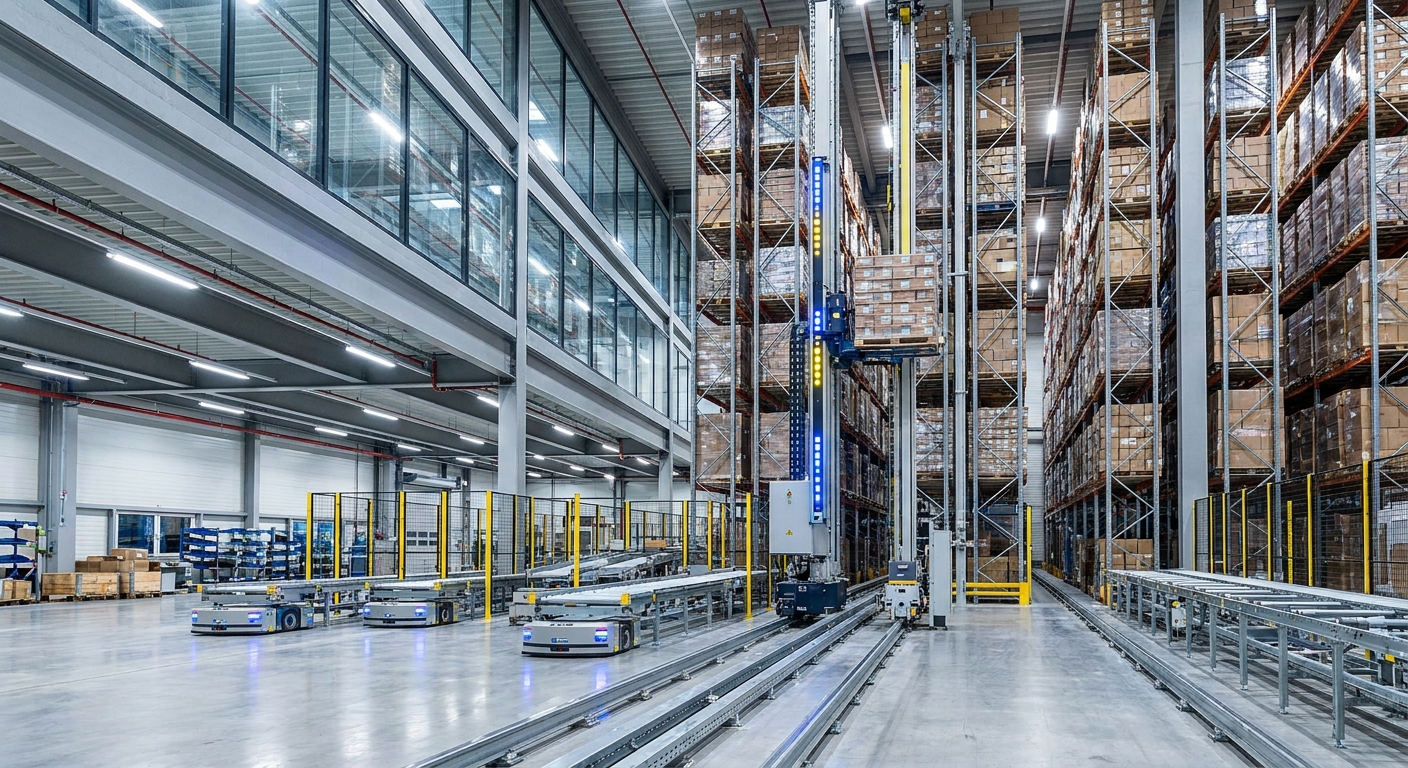
Technology is reshaping the warehouse building by integrating Automated Storage and Retrieval Systems (AS/RS) that allow for much denser and faster storage solutions. You must ensure your building’s structural design can support the precision rails and high-speed robotic cranes used in modern automation.
How do AS/RS systems work?
Robotic cranes move along precision-engineered steel tracks to retrieve pallets from heights that are impossible for human-operated forklifts to reach safely. You can essentially triple your storage capacity within the same building footprint by going vertical with automation. Look at it this way:
- Automated systems operate 24/7 without breaks.
- Human error in inventory counting is eliminated.
- High-speed shuttles drastically reduce cycle times.
Why is broadband a core requirement?
A modern facility requires a robust fiber-optic backbone to support the real-time data exchange between your Warehouse Management System (WMS) and your automated hardware. You cannot run a modern logistics hub on spotty Wi-Fi; you need dedicated, high-speed connectivity. Here is the kicker:
- Smart sensors track every pallet in real-time.
- Remote monitoring allows for predictive maintenance.
- Cloud-based logistics link you to global shipping networks.
Key Takeaway: Building with technology in mind ensures your facility remains competitive in an increasingly automated global market.
| Tech Integration | Benefit | Building Requirement | |
|---|---|---|---|
| AS/RS Robots | Maximum Density | Super-Flat Floors | |
| WMS Software | Perfect Accuracy | Full Wi-Fi Coverage | |
| IoT Sensors | Preventive Maintenance | Integrated Data Wiring |
Automation turns a simple storage box into a high-speed data-driven fulfillment engine.
Which Codes Govern Warehouse Construction?
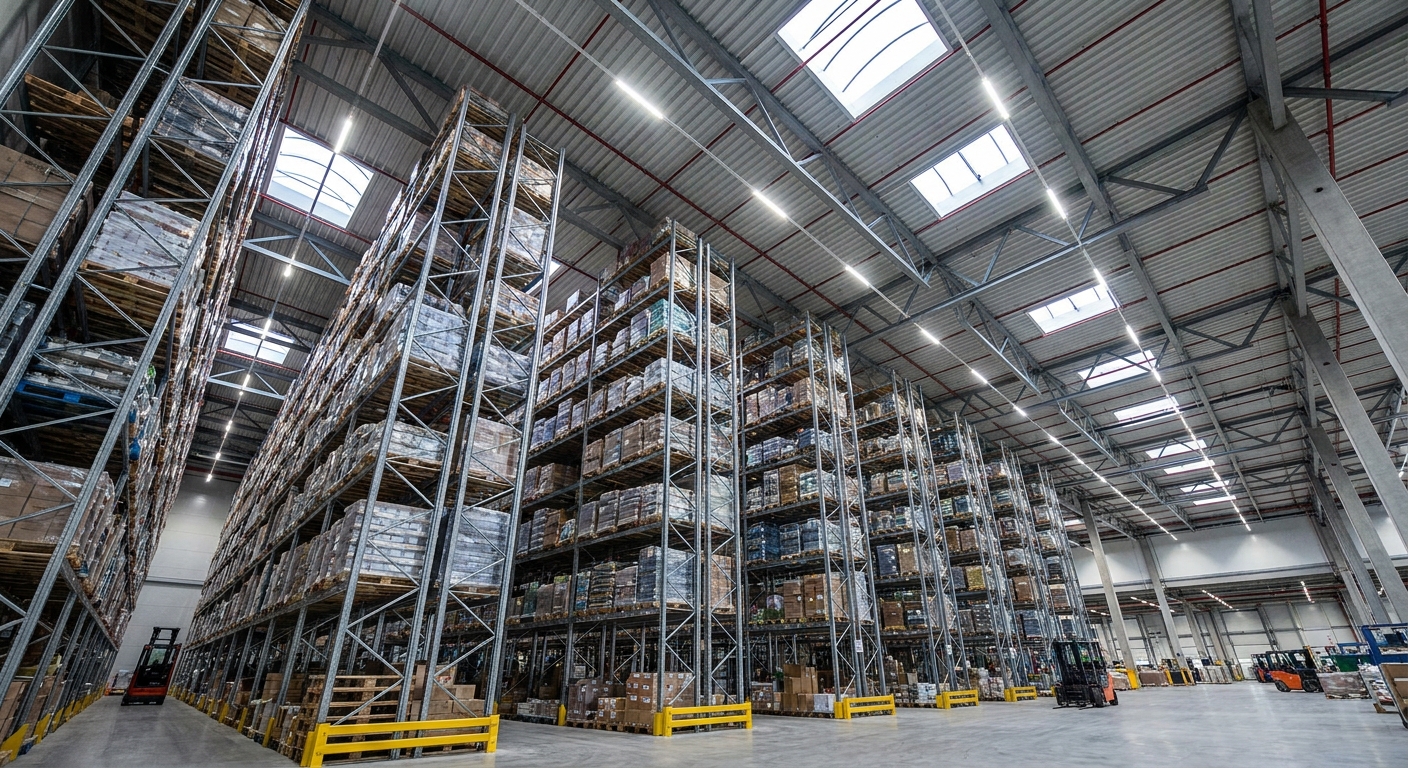
Warehouse construction is governed by strict local building codes and international standards like OSHA and NFPA within the warehouse building sector. You must adhere to these regulations to ensure legal compliance, avoid heavy fines, and secure your operating permits.
How do OSHA standards dictate safety?
OSHA mandates specific height requirements for guardrails, clear markings for fire exits, and strict training protocols for heavy machinery operations. You must design your mezzanine stairs and platform edges to meet these precise safety dimensions. Think about it:
- Toe boards are required on all elevated platforms.
- Specific lighting levels must be met for safety.
- Load capacity signs must be visible on all racks.
Which NFPA standards apply?
NFPA 13 and 230 are the critical codes for fire suppression and general storage, dictating everything from pipe size to the distance between the top of your racks and the roof. You must consult with a fire engineer early in the design phase to ensure your building’s structural steel is properly protected. But that is not all:
- In-rack sprinklers may be required for high piles.
- Fire walls must have specific hourly ratings.
- Exit travel distances are strictly limited.
Key Takeaway: Strict code compliance is the only way to protect your business from legal liability and catastrophic structural failure.
| Regulatory Body | Primary Concern | Common Requirement | |
|---|---|---|---|
| OSHA | Worker Safety | Guardrails & Signage | |
| NFPA | Fire Control | Sprinkler Density | |
| Local IBC | Structural Integrity | Wind & Snow Loads |
Compliance is a non-negotiable foundation for any legitimate industrial construction project.
Warehouse Building FAQ
Can I convert an existing warehouse for cold storage?Yes, but it requires significant retrofitting including high-performance insulation, vapor barriers, and specialized flooring. You must also ensure the existing slab can handle the thermal stresses and the increased weight of heavy-duty racking.
How do I know if I need a clear-span structure?You need a clear-span design if your operation requires large, open areas for manufacturing or high-density storage where columns would interfere with forklift paths. Clear spans provide the ultimate flexibility for changing your layout as your business evolves.
Can a steel warehouse withstand extreme weather?Modern steel buildings are engineered to withstand specific regional wind, snow, and seismic loads as dictated by local building codes. You must provide your project location details so engineers can calculate the exact steel thickness and bracing required for your environment.
Secure Your Logistics Future Today
Building a world-class facility requires a partner who understands the complexities of industrial engineering and global logistics. From factory-direct pricing to custom clear-span designs, we provide the integrated solutions you need to scale your operations efficiently. Don’t let an outdated building hold your business back; contact us today for a free quote and let our experts design a structure that drives your success.