
A modern steel structure warehouse building maximizes your storage efficiency by combining high-strength clear-span framing with optimized vertical configurations to eliminate space-wasting structural columns. Traditional brick-and-mortar logistics centers often suffer from rigid interior support columns, limited vertical clearances, and slow material flow. When your logistics team struggles to maneuver heavy forklifts around massive support columns, or when you run out of vertical racking space, your shipping cycles drag and your overhead margins shrink. Transitioning to a pre-engineered steel structure warehouse building offers an exceptionally rapid, adaptable, and cost-efficient environment tailored to optimize your global supply chain.
Why Choose a Steel Structure Warehouse Building?
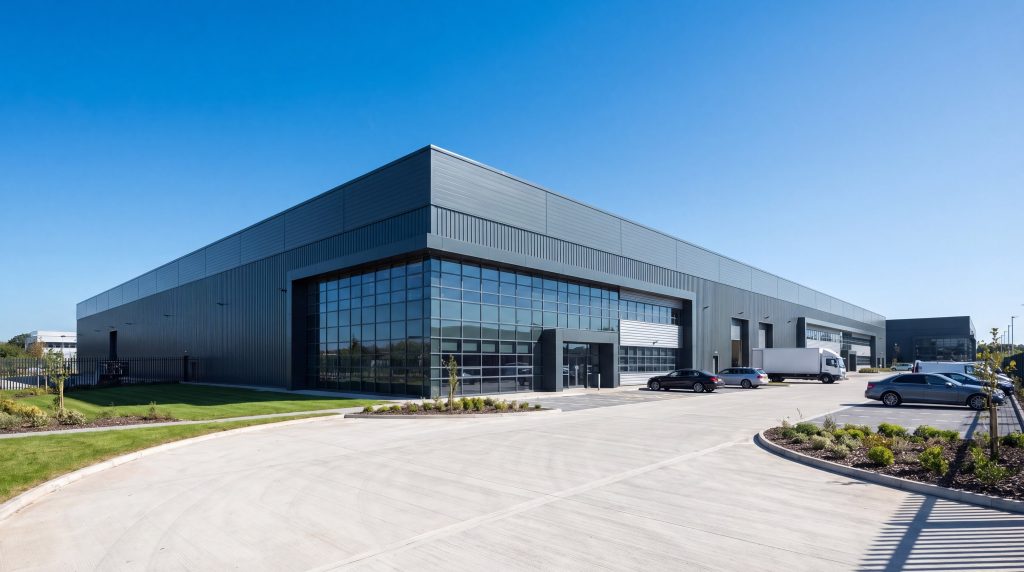
Choosing a pre-engineered steel structure warehouse building provides you with column-free space configurations and exceptional structural strength that traditional building frameworks simply cannot replicate. This engineered flexibility allows you to customize your interior layouts from day one to accommodate changing inventory needs.
How do you maximize interior floor space?
Removing physical obstructions is the fastest way to streamline your logistics. Here is the deal: structural steel allows for column-free spans of up to 40 meters without requiring a single central column.
- Uninterrupted paths for automated guided vehicles.
- Flexible floor arrangements for changing inventories.
- Maximized safety during high-speed forklift maneuvers.
You will find that this open layout allows your logistics team to access inventory faster and complete shipments on schedule.
What is the durability in harsh climates?
High-strength steel frames stand strong against high winds, earthquakes, and heavy snow loads. Because the primary framework is treated with protective zinc coatings, you will not have to worry about pest damage or wood rot over time.
Protecting your stored inventory from the elements is your absolute priority.
Key Takeaway: Relying on structural steel gives you a durable, low-maintenance building envelope that shields your commercial goods for decades.
| Performance Category | Pre-Engineered Steel | Traditional Timber Framed | |
|---|---|---|---|
| Typical Clear Span | Up to 40 meters, depending on structural calculations | Limited to 15-20 meters | |
| Pest Resistance | Steel Frame Is Not a Food Source for Termites | Highly Vulnerable | |
| Service Lifespan | A steel warehouse can provide long-term service when correctly designed, protected, installed and maintained. | 20-30 Years (Decay risk) |
When you evaluate the physical durability of these systems, understanding the commercial cost factors becomes the next logical step.
What Does a Steel Structure Warehouse Building Cost?
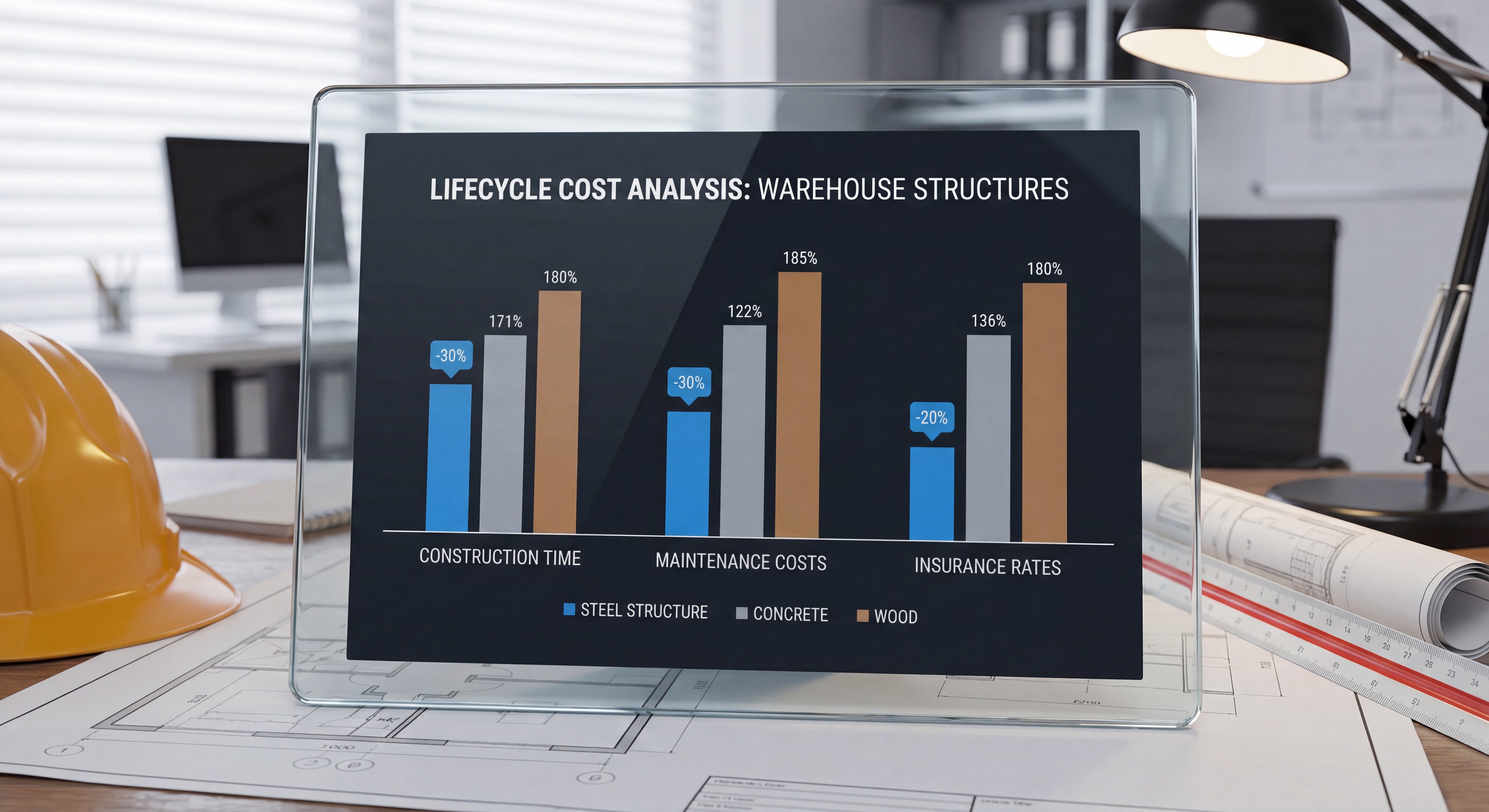
Investing in a premium steel structure warehouse building delivers superior cost-efficiency because prefabricated building components are built in a controlled factory setting and assembled rapidly on site. This highly optimized workflow protects your initial budget from expensive surprises and labor overruns.
How do you reduce initial capital expenses?
Your initial project development budget remains under control because pre-engineered components arrive ready for direct bolt assembly. Look: this precise pre-cutting process reduces on-site labor requirements by up to 50% compared to wet concrete construction.
- Minimal material waste during site preparation.
- Lower foundation loads requiring less concrete.
- Shorter crane and heavy machinery rental windows.
Saving money on construction labor means you can allocate more of your budget toward modern material-handling equipment.
What are the long-term operational savings?
The financial benefits of structural steel continue to pile up long after the initial assembly phase is complete. Commercial insurance companies offer highly favorable rates because steel is naturally non-combustible and fire-safe.
You will save thousands of dollars annually on repairs, plastering, and seasonal sealing.
Key Takeaway: Low maintenance demands ensure that your operating margins remain high over the building’s lifecycle.
| Expense Category | Pre-Engineered Steel | Concrete / Masonry | |
|---|---|---|---|
| On-Site Labor Hours | Low (Bolt-together) | Extremely High (Wet works) | |
| Insurance Premium | Favorable (Non-combustible) | Standard Rates | |
| Repairs & Maintenance | Minimal Wash & Inspect | Periodic Plaster Repair |
Once you understand the substantial financial benefits, designing a layout that matches your operations is the next key phase.
Build Your Steel Structure Warehouse Today – Fast & Durable !
Email:sales@showhoo.com.cn
Phone/WhatsApp: + 86 186 7895 5927
How to Design a Steel Structure Warehouse Building?
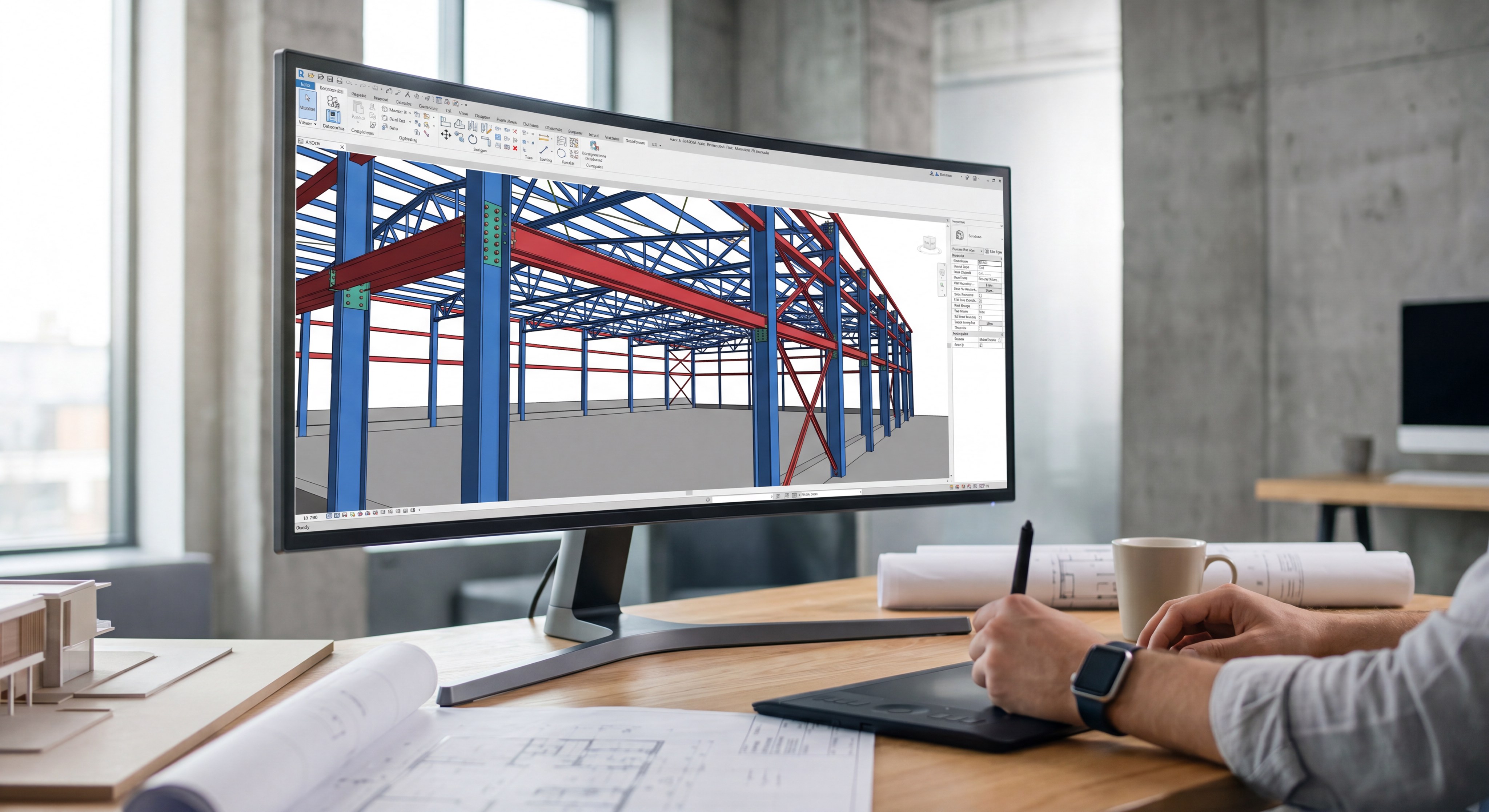
To plan a highly functional facility, you must design a steel structure warehouse building that prioritizes structural load parameters, clear vertical heights, and seamless logistics traffic flow. Customizing these design elements guarantees that your investment remains highly productive for years.
How do you determine operational layout needs?
Your daily workflow dictates the absolute best positions for loading docks, personnel doors, and office spaces. Think about it: placing high-speed doors in the wrong spot can create permanent bottlenecks in your shipping lines.
- Aligning primary columns with standard pallet grids.
- Sizing bays to match your forklifts’ turning circles.
- Planning ceiling heights for future mezzanine levels.
You should design your floor space to encourage a continuous, one-way flow of materials from receiving to dispatch.
Can you customize for regional environmental loads?
Professional engineers must customize your frame to withstand local weather conditions and regional tectonic hazards. Utilizing specialized design software ensures that your roof pitch and frame thickness match local building codes perfectly.
This careful engineering prevents seasonal damage and keeps your operations running smoothly during winter storms.
Key Takeaway: Tailored structural engineering protects your long-term logistics investment and guarantees full compliance with municipal codes.
| Design Parameter | Operational Benefit | Standard Industrial Spec | |
|---|---|---|---|
| Eave Height | Vertical racking space | 8 to 12 meters | |
| Bay Spacing | Smooth traffic intervals | 6 to 9 meters | |
| Roof Pitch | Rain & snow runoff | 1:10 (10% slope) |
Choosing these design parameters lets you select the exact materials needed to bring your blueprint to life.
What Materials Suit a Steel Structure Warehouse Building?
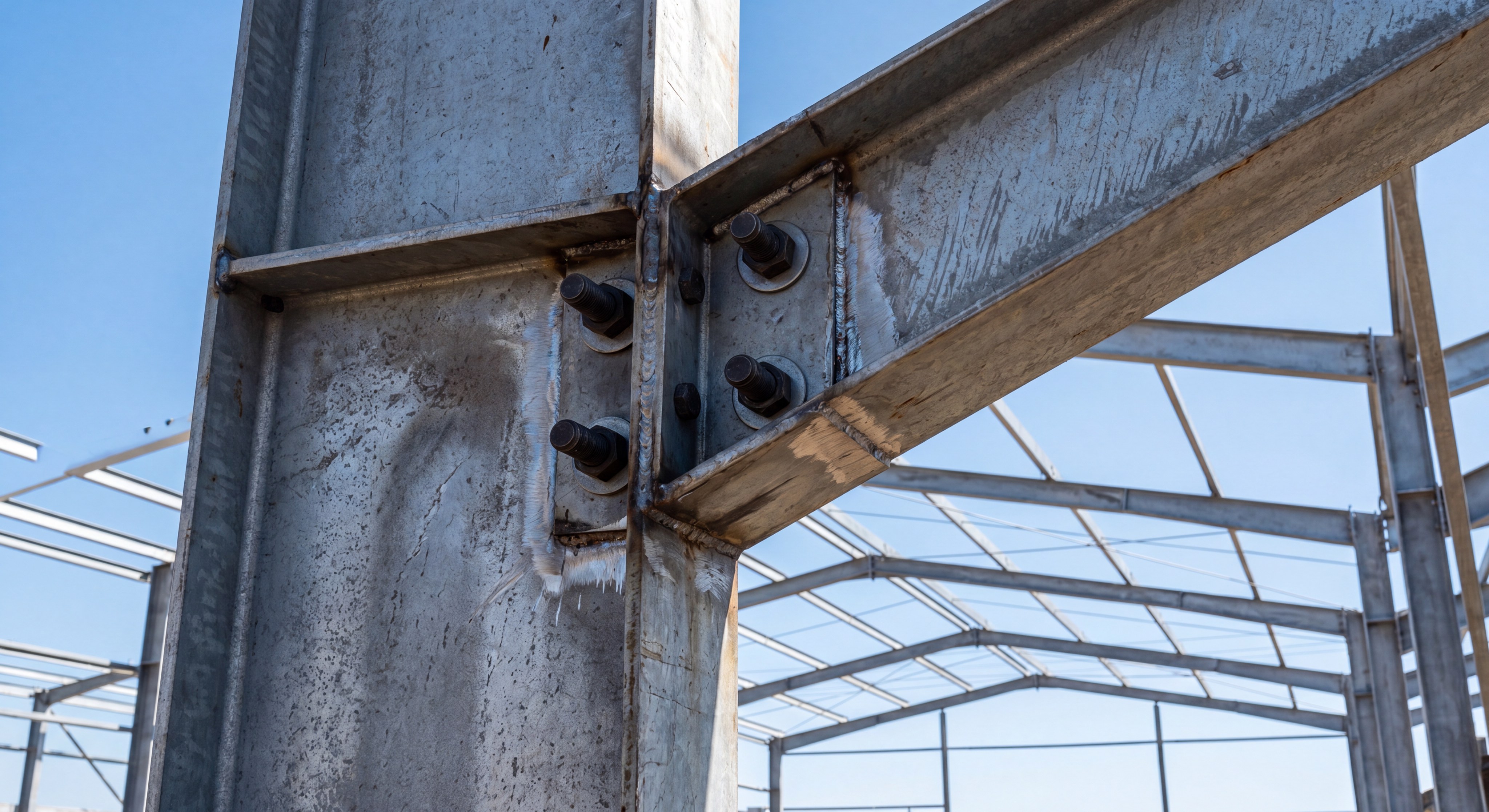
The high durability of a premium steel structure warehouse building depends entirely on using high-tensile structural steel sections and corrosion-resistant fasteners. Selecting the correct steel grades ensures that the skeleton remains perfectly straight and rigid under immense operational loads.
Why is the primary frame material crucial?
Your warehouse frame acts as the heavy skeleton that supports all environmental and dynamic building loads. Believe it or not: high-grade Q235B or Q355B structural steel delivers the exceptional yield strength required to span massive distances without sag.
- Hot-rolled steel beams that resist structural deformation.
- Factory-applied anti-corrosion primer for harsh climates.
- Heavy-duty galvanized plates for high-stress connections.
You can trust that these premium materials will maintain their physical shape even during severe windstorms.
What role do secondary framing systems play?
Secondary structural components hold your roof and wall panels in perfect alignment. These elements, including C and Z-section purlins, distribute dynamic wind loads safely down to the primary frame columns.
Using tension-rod cross bracing stops structural swaying during sudden wind shifts.
Key Takeaway: Combining premium primary frames with high-strength secondary systems creates a highly durable industrial workspace.
| Structural Component | Material Standard | Core Treatment | |
|---|---|---|---|
| Columns & Rafters | Q235B or Q355B structural steel | Zinc-Rich Primer or Galvanized | |
| Purlins & Girts | Cold-Rolled Galvanized Steel | Continuous Zinc Coating | |
| Tension Bracing | Round Steel Bar / Angle Steel | Painted / Electro-galvanized |
After securing a heavy steel skeleton, choosing the right wall and roof panels is the next step to seal your facility.
Which Panels Fit a Steel Structure Warehouse Building?
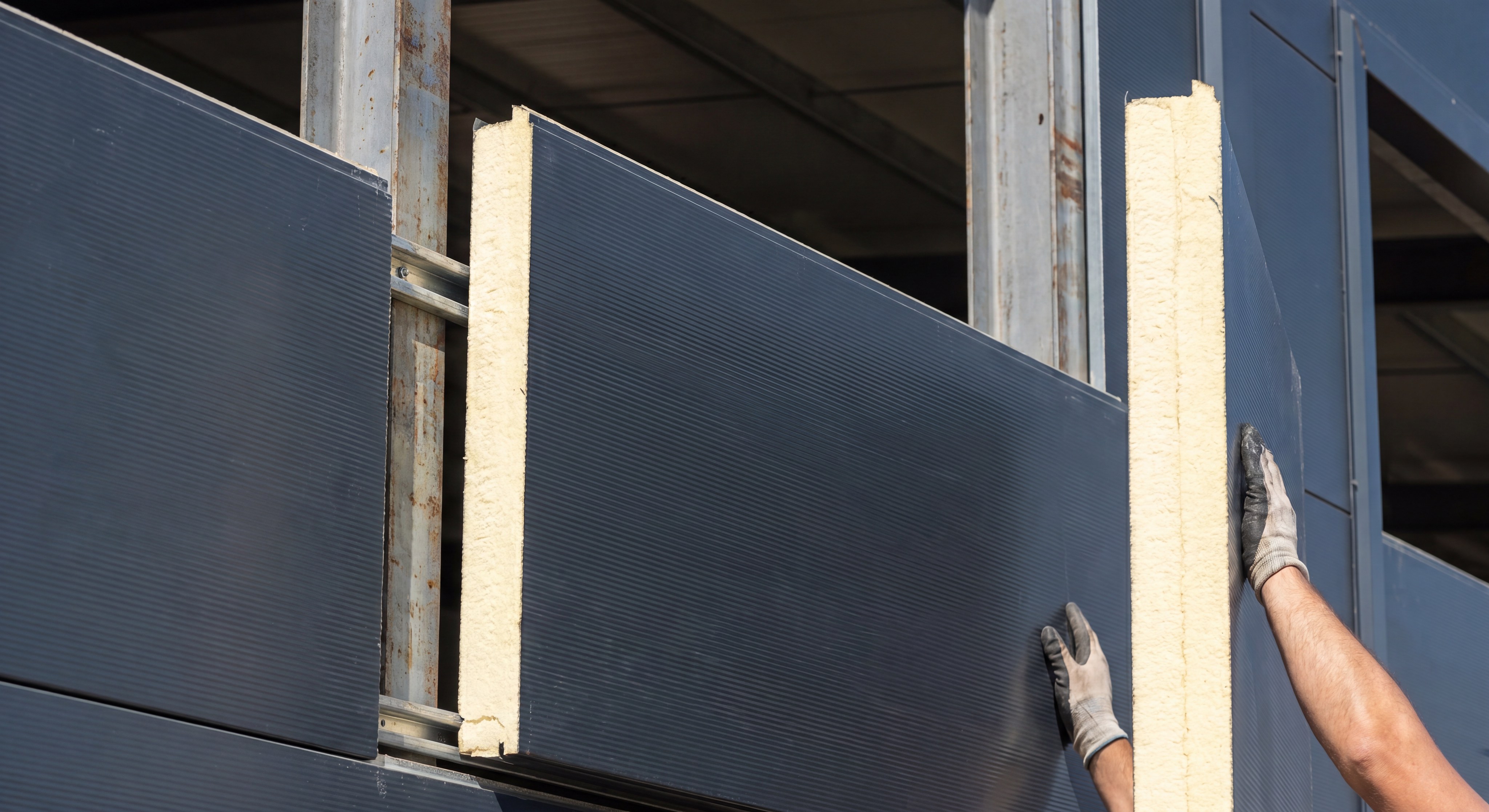
Outfitting your steel structure warehouse building with high-performance insulated panels helps you manage interior temperatures and lower your energy consumption. These panels come in several configurations to protect your stored assets from external heat and moisture.
How do you achieve superior thermal control?
Climate control is essential for preventing structural condensation and protecting temperature-sensitive raw materials. In fact: polyurethane sandwich panels create an airtight thermal barrier that drastically cuts your HVAC operating costs.
- Dense insulation cores that provide high thermal resistance.
- Interlocking tongue-and-groove joints to stop air leaks.
- Protective coatings that reflect direct summer sunlight.
You will observe a dramatic drop in your monthly electricity bills by using these energy-efficient panels.
Why are rapid wall panel systems beneficial?
Pre-finished modular panels accelerate your construction timeline and reduce on-site labor delays. Because these panels are colored and sealed at the factory, your team can skip on-site painting entirely.
This quick dry-in process allows your interior layout work to begin much sooner than scheduled.
Key Takeaway: Investing in modern composite panels is the best way to control energy costs and accelerate your operational timeline.
| Panel Category | Core Material | Best Storage Application | |
|---|---|---|---|
| Sandwich Panel | Polyurethane (PU/PIR) | Temperature-Controlled Goods | |
| Rockwool Panel | Compressed Mineral Wool | High-Risk & Chemical Storage | |
| Single-Skin Metal | Corrugated Steel | General Dry Goods Storage |
Once your walls are selected, pouring a reinforced concrete floor ensures your logistics team can move safely.
How is a Steel Structure Warehouse Building Floor Made?
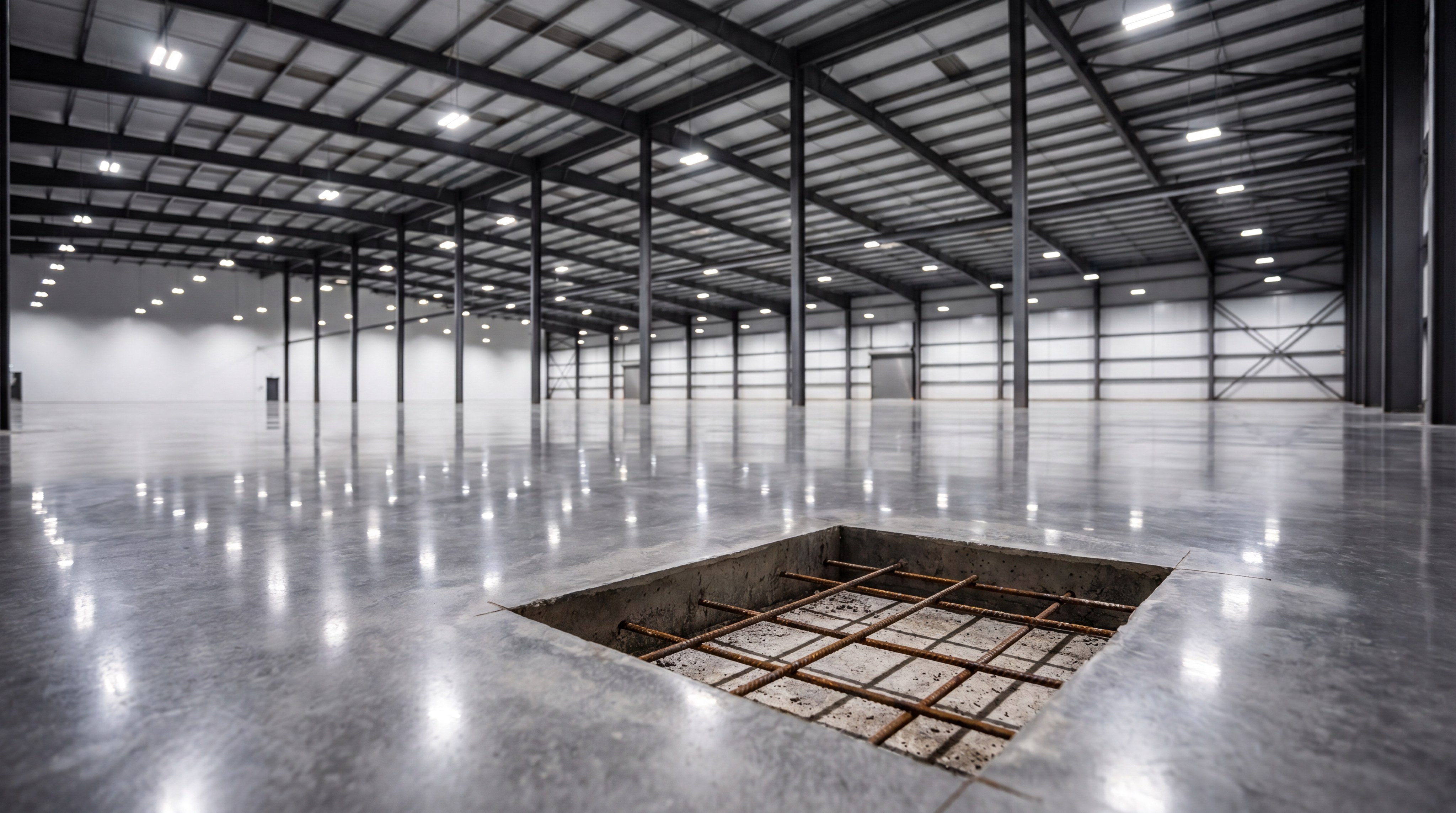
The concrete foundation of a steel structure warehouse building utilizes deep footings and high-strength anchor bolts to distribute the structural load securely into the soil. This engineered base prevents settling and supports the heavy vertical columns of your facility.
Why is precise anchor bolt alignment critical?
Securing the steel columns to the concrete requires incredible physical alignment. But wait, there is more: using laser-guided positioning templates ensures that the bolts line up perfectly with your prefabricated steel column plates.
- Pre-engineered structural plates that slide on effortlessly.
- Heavy-duty concrete footings designed for high shear forces.
- Galvanized anchor bolts that resist chemical corrosion.
You will avoid expensive field modifications and major construction delays by enforcing strict accuracy during the pour.
How to build a high-capacity floor slab?
Your logistics operations put constant physical stress on the warehouse floor. To prevent surface cracks and structural sinkage, you must use high-PSI concrete reinforced with heavy-duty steel rebar grids.
A dense vapor barrier under the slab stops ground moisture from rising and spoiling your inventory.
Key Takeaway: A level, high-load concrete floor keeps your forklifts running safely and protects your inventory from humidity.
| Floor Element | Standard Specification | Operational Focus | |
|---|---|---|---|
| Concrete Slab | 4,000+ PSI Reinforced | Forklift wheel load resistance | |
| Vapor Barrier | 15-mil Polyolefin | Preventing soil moisture rise | |
| Anchor Bolts | Grade 8.8 High-Strength | Solid structural connection |
With a solid floor cured, you can install the storage racks that make your vertical space usable.
Build Your Steel Structure Warehouse Today – Fast & Durable !
Email:sales@showhoo.com.cn
Phone/WhatsApp: + 86 186 7895 5927
Which Racks Suit a Steel Structure Warehouse Building?
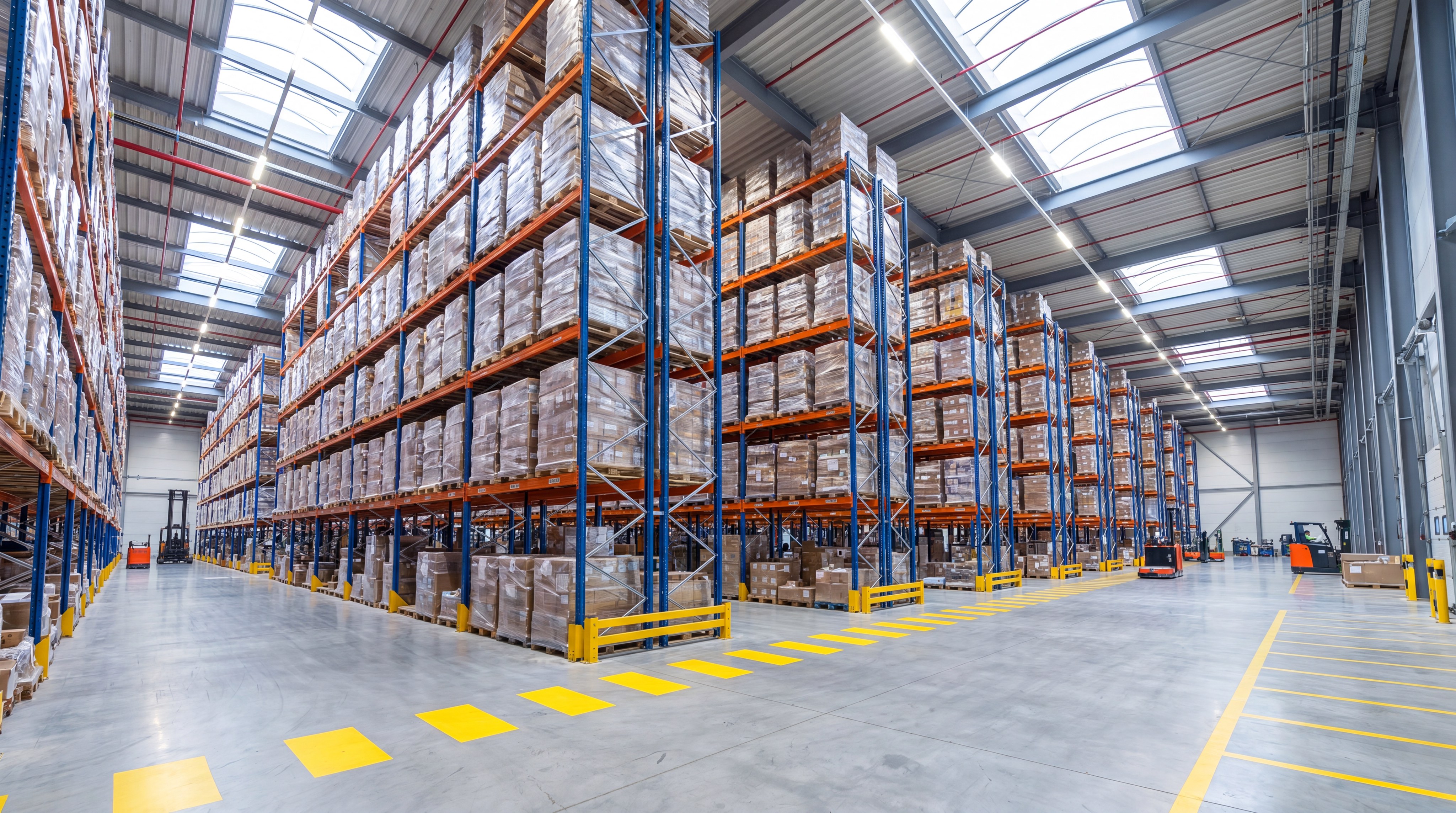
Designing a steel structure warehouse building to accommodate high-density vertical racking systems allows you to triple your storage volume without expanding your building’s footprint. This vertical integration maximizes every cubic meter of your physical space.
How do you utilize vertical clear heights?
Standard warehouses often waste valuable vertical clearance by relying on low storage systems. The bottom line is this: structural steel allows you to reach eave heights of over 12 meters to support multi-tier racking.
- Selective pallet racks for easy access to every item.
- Drive-in racking systems to maximize storage density.
- Automated storage and retrieval systems to cut retrieval times.
You should choose a racking system that fits your specific stock turnover speed and material handling workflows.
Why matches aisle layouts to forklift equipment?
The width of your aisles directly affects your forklift speeds and safety parameters. Think about it: planning narrow-aisle systems increases your total rack capacity but requires specialized turret trucks to operate.
You must coordinate your racking layouts with your equipment specs before fabricating the steel frame.
Key Takeaway: Designing your steel frame to match your racking height maximizes your overall space utility and streamlines order fulfillment.
| Racking System | Storage Density | Retrieval Speed | Aisle Space Needed | |
|---|---|---|---|---|
| Selective Racks | Low-to-Medium | Very Fast | Wide (3.5+ meters) | |
| Drive-In Racks | Extremely High | Moderate-to-Slow | Minimal (Dedicated bays) | |
| Automated VNA | Maximum | Extremely Fast | Narrow (under 1.8 meters) |
Having optimized your interior storage layout, you must select a location that supports easy transport access.
Where to Situate a Steel Structure Warehouse Building?
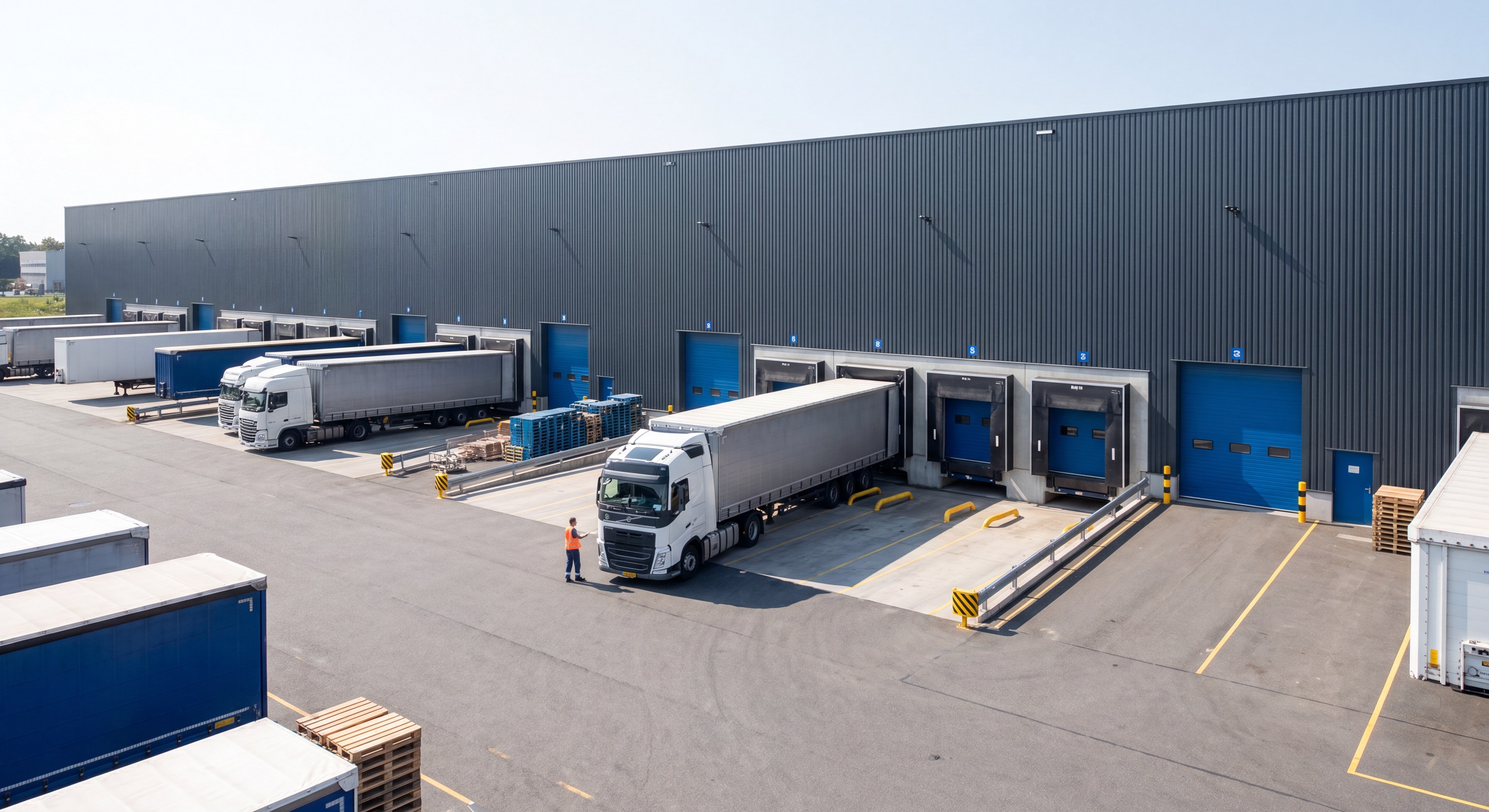
Selecting the ideal geographic location for your steel structure warehouse building ensures that your shipping cycles remain short and your foundation costs stay low. Your chosen plot must handle heavy trucks and provide easy access to highway networks.
Why are regional logistics networks crucial?
Your logistics facility needs to be close to major shipping lanes and population centers to keep freight costs low. Look: locating your building within five minutes of an interstate ramp can shave hours off your daily transit times.
- Shorter delivery loops for regional distribution.
- Easier access for third-party logistics carriers.
- Lower fuel costs for your delivery vehicles.
You will attract better logistics partners when your warehouse sits in a highly accessible industrial park.
How to evaluate terrain and soil quality?
The physical characteristics of your land play a massive role in your total site preparation budget. In fact: choosing a level plot with highly compacted sandy-gravel soil reduces concrete foundation costs by up to 30%.
Proper grading also prevents rainwater from collecting near your structural foundations.
Key Takeaway: Selecting a level, soil-tested site with great transport links reduces initial construction costs and speeds up your delivery cycles.
| Site Factor | Preferred Condition | Critical Concern | |
|---|---|---|---|
| Highway Proximity | Under 5 kilometers | High transport fuel costs | |
| Soil Classification | Compacted sand/gravel | Foundation settling risks | |
| Topography | Flat (under 1% slope) | Expensive grading work |
Once your location is secured, installing modern climate and air circulation features keeps your staff comfortable.
How to Ventilate a Steel Structure Warehouse Building?

Implementing effective natural and mechanical ventilation in your steel structure warehouse building stops moisture from building up and keeps your staff comfortable during extreme weather. Proper air circulation prevents stale air pockets and protects sensitive products from damage.
Can you achieve low-cost passive ventilation?
Passive ventilation utilizes natural physical principles to move hot air up and out of your facility. Believe it or not: installing continuous ridge vents along your roof peak draws hot air out without using electricity.
- Zero operational energy cost for year-round venting.
- Wall louvers that draw cool air in from ground level.
- Natural daylighting panels that reduce lighting power needs.
You can keep your warehouse comfortable during spring and autumn by using these simple passive systems.
When should you install active HVAC systems?
High-value pharmaceutical or food storage facilities require exact climate controls that natural breezes cannot provide. Best of all: the airtight seal of steel sandwich panels makes active climate control systems highly efficient.
High-volume low-speed ceiling fans keep air moving to prevent heat zones in winter.
Key Takeaway: Combining passive roof vents with active fans creates a comfortable workspace while keeping your energy costs low.
| Ventilation Type | Initial Cost | Energy Usage | Best Environmental Role | |
|---|---|---|---|---|
| Passive Ridge Vents | Low | Zero | Hot air exhaust (all seasons) | |
| Active HVLS Fans | Medium | Low | Equalizing multi-tier temperatures | |
| Ducted HVAC | High | High | Strict humidity & climate control |
Along with fresh air, installing advanced safety systems ensures your workers and inventory are fully protected.
Is Your Steel Structure Warehouse Building Safe?
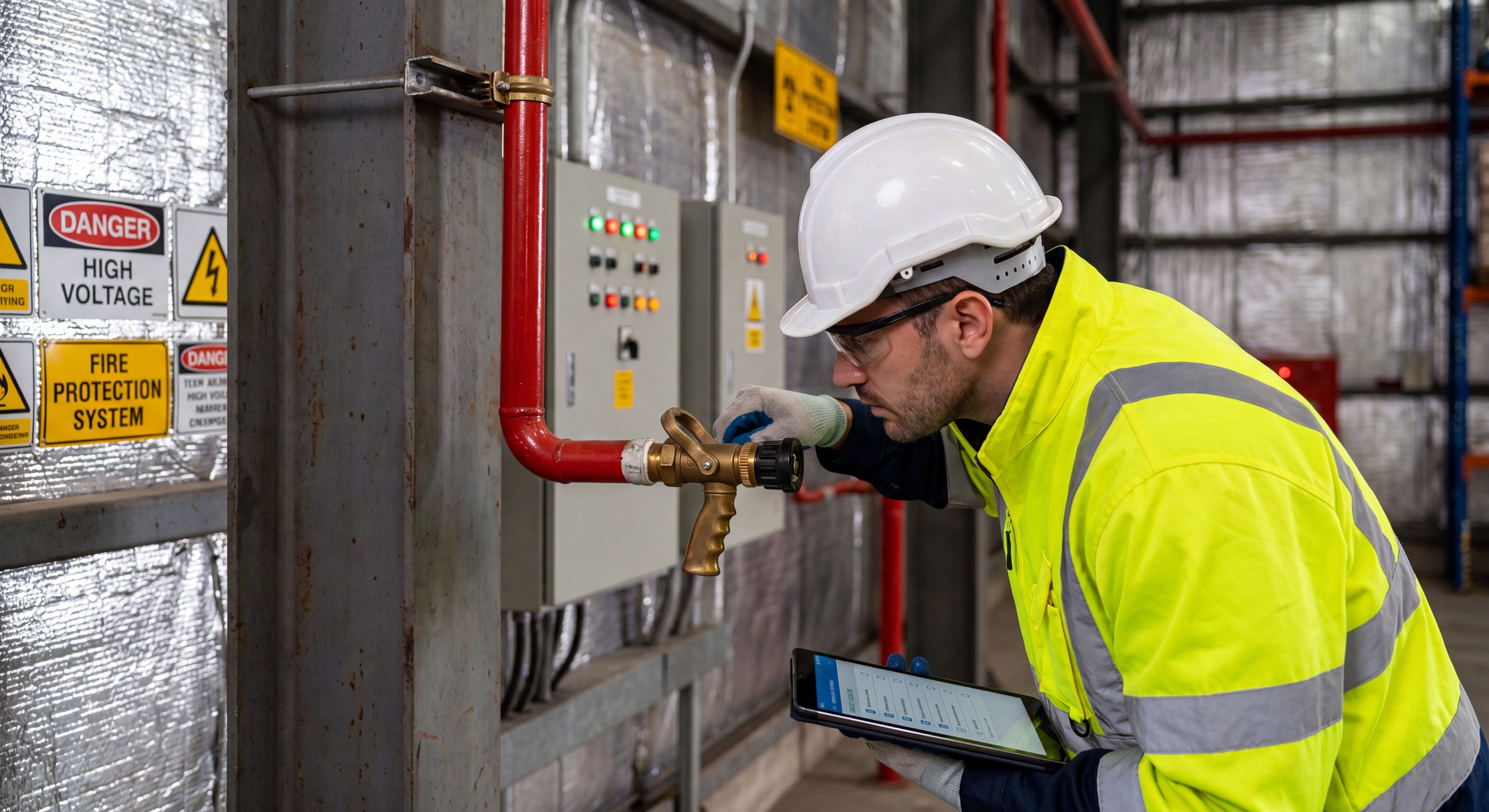
A modern steel structure warehouse building is highly durable and engineered to survive severe windstorms, earthquakes, and major fire emergencies. This structural resilience protects your valuable stored inventory and keeps your B2B operations fully compliant with modern safety codes.
How does structural steel resist fires?
Although raw metal does not burn, extreme heat can weaken structural columns over time if left unprotected. Think about it: applying professional thin-film intumescent coatings to your steel frame gives your building up to three hours of fire resistance.
- Non-combustible panels that stop flames from spreading.
- Integrated overhead wet-pipe sprinkler systems for immediate defense.
- Automated fire curtains that isolate high-hazard zones.
You will qualify for preferred commercial insurance rates by installing these active fire mitigation systems.
What structural protection stops collision damage?
High-speed forklift traffic in busy warehouse aisles poses a constant risk to primary structural columns. To prevent collision damage, you must install heavy-duty steel safety barriers around the base of every main frame column.
High-visibility yellow safety painting helps drivers avoid collisions entirely during busy shifts.
Key Takeaway: Combining fire coatings with steel barriers keeps your workplace safe and ensures your business remains fully compliant with safety standards.
| Safety Threat | Built-In Steel Solution | Secondary Protection | |
|---|---|---|---|
| Seismic Activity | Ductile frame flexes | High-strength structural bolts | |
| Fire Spread | Non-combustible framing | Intumescent paint coatings | |
| Forklift Collision | High-grade heavy steel | Concrete-filled bollards |
Implementing these structural safety systems completes the setup of your modern warehouse.
Conclusion
Building a high-quality logistics or storage facility does not have to be a slow process stalled by high labor costs, wood decay, or rigid internal columns. This article has detailed how pre-engineered steel designs solve these structural bottleneck scenarios by offering column-free floor layouts, exceptional wind and seismic safety, and superior thermal efficiency. Our expert team provides complete engineering compliance, factory-direct pricing, and customized clear-span design layouts to deliver an installation-ready system directly to your project site on time and within budget.
Stop letting slow construction times and high maintenance overhead delay your business expansion. We encourage you to contact us today to receive your free project design layout and custom material estimate within 24 hours. Our mission is to empower global B2B logistics networks by providing precision-engineered, sustainable steel structure spaces designed to protect your assets and scale alongside your business operations for generations to come.
Build Your Steel Structure Warehouse Today – Fast & Durable !
Email:sales@showhoo.com.cn
Phone/WhatsApp: + 86 186 7895 5927
Frequently Asked Questions
Can I customize the height of my warehouse building?
Yes, you can. We can easily adjust the eave height up to 15 meters or higher to accommodate multi-tier vertical racking, heavy cranes, or mezzanine office suites depending on your logistics requirements.
What’s the best insulation choice for dry storage warehouses?
Polyurethane sandwich panels are the best choice. They provide a continuous thermal seal that stops condensation, controls indoor temperature, and keeps your inventory completely safe from moisture damage.
How do I know if my local building codes allow clear-span steel designs?
Yes, they do. Our engineering team designs every single framing system to match or exceed your specific municipal wind-load, snow-load, and seismic-safety codes, providing certified drawings for your local permits.
Can I expand the length of my warehouse in the future?
Yes, absolutely. Pre-engineered portal frames are designed to unbolt easily at the end-wall, allowing you to connect and add new modular sections with minimal disruption to your daily operations.