
A Steel Structure Chicken House is a modern, prefabricated poultry farming facility constructed with engineered structural steel frames and insulated cladding panels to provide a secure, biosecure, and climate-controlled environment for intensive livestock production. Traditional wooden or concrete poultry sheds easily rot, harbor disease-causing pathogens, and fail under extreme weather conditions. If you continue to struggle with damp, poorly insulated environments, your flock’s mortality rate will climb, and skyrocketing heating and cooling bills will completely erode your profit margins. Transitioning to a pre-engineered steel-framed building solves these issues by creating an exceptionally durable, easy-to-sanitize, and weather-resistant envelope that guarantees long-term farm productivity.
Investing in a high-quality agricultural infrastructure ensures that your farming operations remain uninterrupted by external environmental threats. Let us explore how these advanced metal structures can elevate your poultry business.
1.Why are traditional materials failing modern farmers?
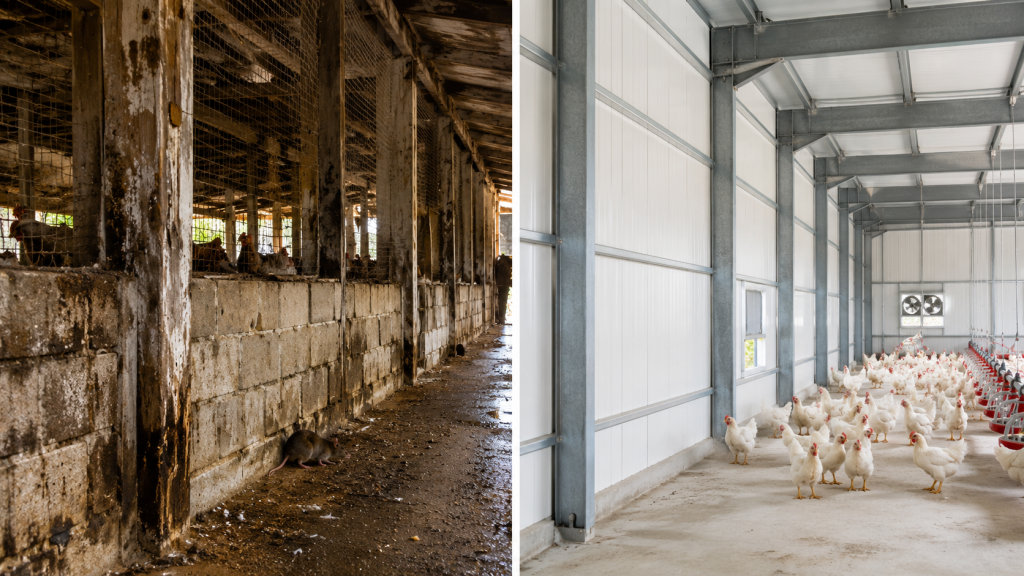
Old-school farming structures are costing you more than you think. Wooden columns absorb moisture, animal waste, and chemical disinfectants, creating a breeding ground for bacteria and mold.
- Moisture retention: Wood rots quickly when exposed to constant humidity and bird droppings.
- Pest invasion: Rodents and wild birds can easily chew through timber and nest in walls.
- Structural warping: Concrete blocks crack over time under shifting soil and seasonal temperature drops.
How does steel solve your biological security risks?
Structural steel delivers a completely non-porous surface that you can sanitize thoroughly in a fraction of the time. This medical-grade level of cleanliness keeps your flock healthy and prevents deadly disease outbreaks.
- Zero pest harboring: Termites and pests cannot chew through solid metal frames.
- Pathogen control: Steel columns and insulated sandwich panels do not absorb viruses or bacterial spores.
- Sealed envelope: Tight joints block external wild birds and air drafts from entering.
Key Takeaway: Switching to a modern steel frame eliminates biosecurity risks and structural degradation, laying a highly secure foundation for your livestock investment.
2. What Are the Main Types of Steel Structure Chicken Houses?

The main types of Steel Structure Chicken House layouts include open-sided buildings that rely on natural ventilation and fully enclosed, climate-controlled environments that optimize automated production. Choosing the right layout depends heavily on your local climate, target flock density, and investment budget. Both designs utilize prefabricated structural steel portal frames to ensure structural safety and speed up site assembly. Let us break down these two primary configurations so you can make an informed choice.
Selecting the correct structural type is critical because it dictates your daily energy consumption and biological security protocols. Let’s look closely at how each layout functions in real-world farming.
What is an open-sided poultry house layout?
For farms located in tropical or consistently warm climates, open-sided structures are highly economical. These buildings feature steel column portals with open side walls protected by steel wire mesh and adjustable PVC curtains.
- Natural cross-ventilation: Relies on natural winds to clear out heat, humidity, and ammonia.
- Lower energy bills: Minimal mechanical fans are needed, dramatically reducing your monthly electricity costs.
- Reduced initial capital: Simpler structural configurations and fewer mechanical parts keep your startup costs low.
What Is a Semi-Enclosed Chicken House Layout?
For poultry farms located in regions with seasonal temperature changes, a semi-enclosed chicken house provides a practical balance between natural ventilation and mechanical environmental control. The building typically uses an insulated steel frame structure, adjustable sidewall curtains or windows, exhaust fans, and optional cooling pads.
- Hybrid Ventilation: Natural airflow is used during mild weather, while exhaust fans and cooling systems provide additional ventilation during hot or humid periods.
- Improved Climate Control: Insulated roofing, sidewall curtains, fans, and cooling pads help maintain more stable indoor temperatures than an open-sided poultry house.
- Balanced Investment: A semi-enclosed system requires less equipment and operating energy than a fully enclosed house while offering better environmental control and stocking performance than an open-sided design.
Why choose a fully enclosed environmental system?
If you operate in areas with extreme seasonal shifts, a fully enclosed sandwich panel house offers absolute environmental control. These structures utilize automated climate equipment to maintain a constant, optimized temperature for high-density broiler or layer rearing.
- High stocking density: Controlled environments allow you to safely house more birds per square meter.
- Optimized feed conversion: Stable indoor climates ensure birds expend energy on growth rather than body temperature regulation.
- Total light control: Blackout cladding enables strict lighting schedules that boost egg production and bird health.
Key Takeaway: Open-sided steel houses offer low initial costs in warm regions, whereas fully enclosed systems maximize biosecurity, feed efficiency, and overall flock performance globally.
| House Type | Climate Suitability | Ventilation Method | Initial Cost | Biosecurity Level | |
|---|---|---|---|---|---|
| Open-Sided | Warm & Tropical | Natural airflow / manual curtains | Low | Moderate | |
| Semi-Enclosed | Mild to Hot Climates / Seasonal Weather | Natural airflow + mechanical fans / adjustable curtains | Medium | Moderate to High | |
| Enclosed Panel | All Climates / Extreme Weather | Automated negative pressure systems | High | High |
This comparison highlights how choosing the right model aligns your operational costs with local weather patterns.
Get Your Custom Steel Chicken House Plan and Quote Today !
Email:sales@showhoo.com.cn
Phone/WhatsApp: + 86 186 7895 5927
3. What Are the Main Components of a Steel Structure Chicken House?

The primary components of a Steel Structure Chicken House include the heavy-duty primary steel frame, secondary framing supports, roof and wall cladding, and integrated foundation accessories. This coordinated system is engineered as a complete kit of parts where every piece fits together perfectly. By utilizing prefabricated components, you eliminate the need for dangerous cutting and slow welding on the construction site. Let us examine the crucial parts that make up this durable agricultural building.
Every single component plays a key role in maintaining the structural integrity of your poultry shed. Understanding these structural layers helps you manage quality and safety during installation.
What makes up the primary steel frame skeleton?
The primary frame serves as the structural backbone of your building, consisting of high-strength H-section steel columns and roof rafters. These heavy steel members are anchored securely to concrete foundations using high-tensile anchor bolts.
- H-Section beams: Engineered to withstand vertical gravity loads and lateral wind pressures.
- Anchor bolts (Grade 8.8): Securely lock the primary frame columns to the concrete footings.
- Q235B & Q355B steel: Certified high-tensile steel grades that guarantee long-term safety and elasticity.
What is the role of secondary steel framing?
Secondary framing acts as a crucial support network that keeps the building rigid and prevents the main frame from twisting. It consists of lightweight, cold-formed galvanized profiles and high-tension bracing rods.
- C & Z purlins: Run horizontally along walls and roofs to support the heavy cladding panels.
- X-Bracing systems: Cross-bracing rods on the walls and roof that transfer wind loads safely to the foundation.
- Tie rods & fly bracing: Lock structural members in perfect alignment during high-wind storms.
Key Takeaway: A high-strength primary skeleton combined with robust secondary framing creates a rigid, unified structure capable of resisting extreme natural forces.
| Structural Layer | Key Components | Primary Function | Material Finish | |
|---|---|---|---|---|
| Primary Frame | H-Section columns & beams, anchor bolts | Carries gravity and lateral loads | Painted or Hot-dip galvanized | |
| Secondary Frame | C/Z Purlins, tie rods, fly bracing | Supports cladding, prevents frame twisting | Galvanized silver coating |
A balanced combination of primary and secondary steel members ensures your building remains stable under severe structural loads.
4. How Do Ventilation Systems Work in a Steel Structure Chicken House?
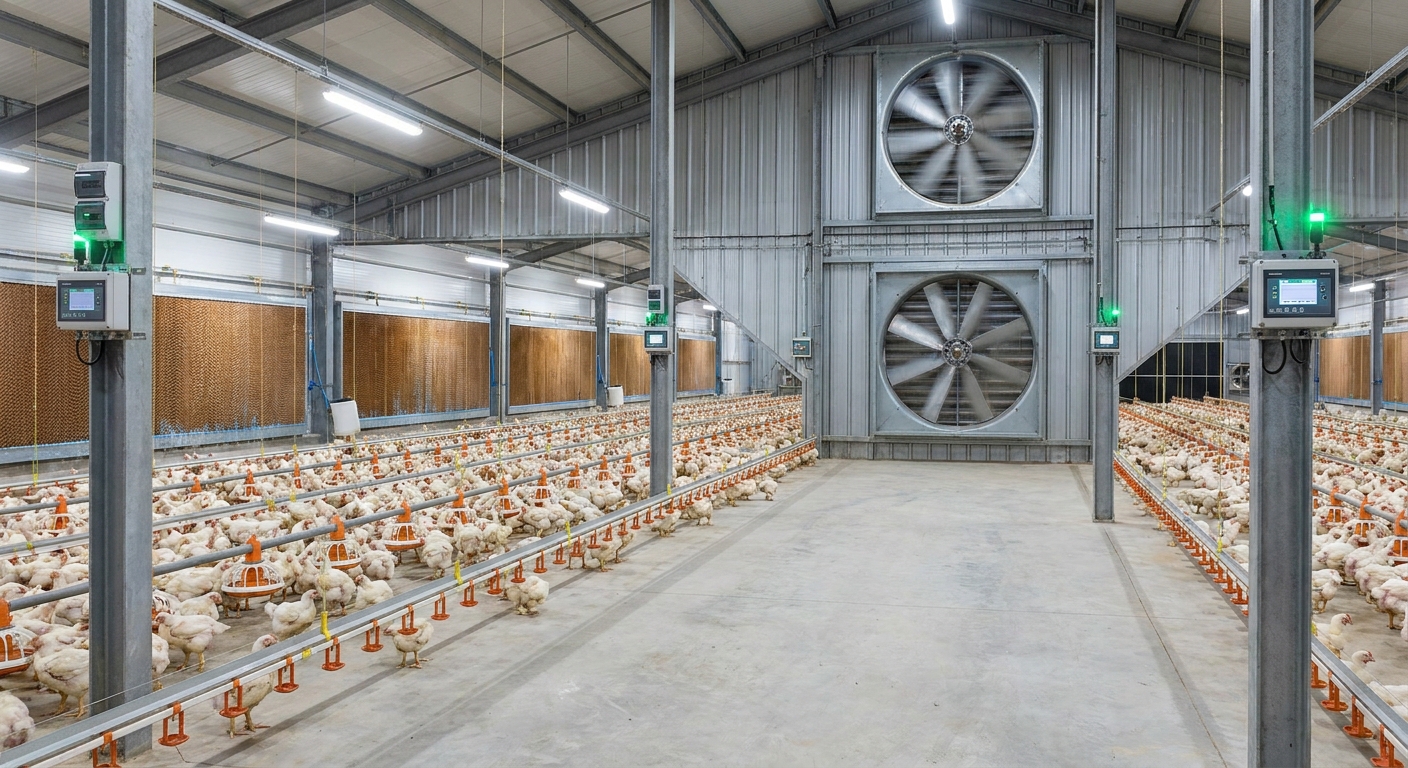
Ventilation systems in a Steel Structure Chicken House work by utilizing automated negative-pressure air exhaust fans and evaporative cooling pads to continuously refresh internal air and regulate temperature. This negative-pressure environment pulls fresh air in through side-wall inlets while expelling hot, stale air and toxic gases out of the building. Maintaining perfect climate conditions is essential to preventing heat stress and keeping your flock healthy. Let us dive into how these automated systems work together to optimize bird health.
Without proper ventilation, high levels of humidity, dust, and ammonia will quickly build up, threatening your entire flock. Let’s look at the mechanical components that prevent this hazard.
How do evaporative cooling pads lower temperatures?
During hot summer days, cooling pads act as your primary defense against extreme heat stress. Water is circulated through porous cellulose pads while exhaust fans pull hot, dry outdoor air through them.
- Evaporative cooling effect: Lowers incoming fresh air temperatures by 5°C to 12°C.
- Rust-proof framing: Heavy-duty PVC or stainless steel frames prevent corrosion from constant water contact.
- Sensor-controlled pumps: Turn on water flow automatically when the interior temperature reaches critical thresholds.
Why are automated air inlets critical for airflow?
Automated air inlets are small, strategically placed vents on the side walls that open and close in response to indoor air pressure. They ensure that fresh air is directed up toward the ceiling to mix with warm air before descending onto your birds.
- Uniform air distribution: Eliminates drafty dead spots, keeping the entire floor at a stable temperature.
- Ammonia reduction: Constantly dilutes and exhausts toxic ammonia fumes released from the litter.
- Energy efficiency: Smart climate controllers only run the required number of fans to maintain target pressures.
Key Takeaway: Combining negative-pressure exhaust fans with evaporative cooling pads ensures continuous fresh airflow and effective temperature regulation, protecting your birds from fatal heat stress.
| Ventilation Component | Typical Materials | Key Function | Operational Benefit | |
|---|---|---|---|---|
| Exhaust Fans | Stainless steel / Galvanized steel | Expels humid air, dust, and ammonia | Maintains continuous fresh air movement | |
| Cooling Pads | Cellulose paper, steel/PVC frames | Cools incoming air via water evaporation | Prevents heat stress on hot days | |
| Air Inlets | High-density polystyrene | Directs and balances fresh air intake | Prevents cold drafts from hitting birds |
This integrated mechanical ventilation approach ensures optimal air quality and stable temperatures throughout the entire grow-out cycle.
5. What Are the Advantages of Steel Structure Chicken Houses?
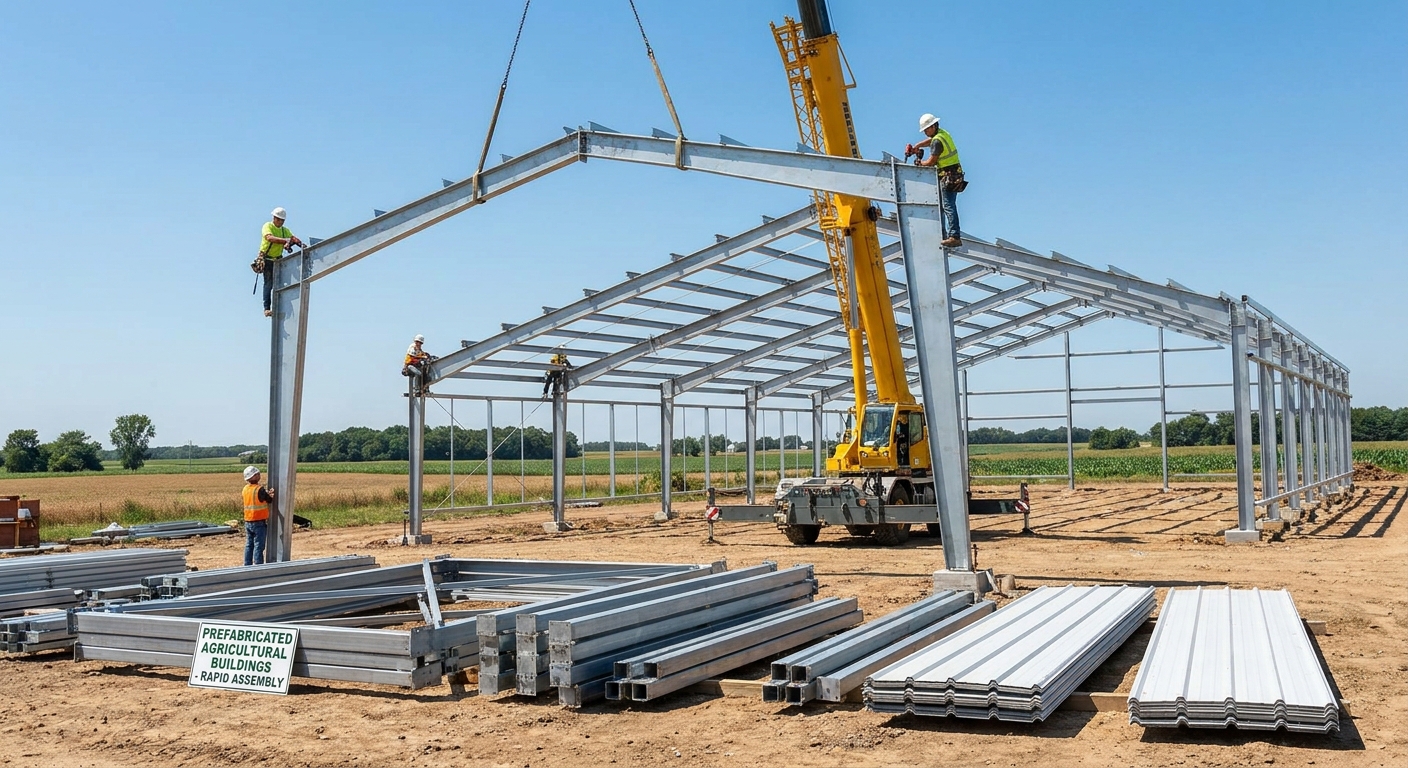
The key advantages of a Steel Structure Chicken House are its superior biological security, structural durability against extreme weather, rapid construction speed, and high energy efficiency. Modern poultry farming requires an environment that can be cleaned rapidly, remains stable during severe storms, and minimizes monthly utility costs. Transitioning away from traditional timber sheds to an engineered metal system directly boosts your operational profitability. Let us explore the primary structural benefits that make steel the smartest choice for B2B investors.
Investing in durable steel farming structures reduces your long-term maintenance costs to almost zero. Let’s analyze how this highly efficient building system protects your poultry business.
Why does steel improve your biosecurity standards?
Maintaining strict biosecurity is your primary defense against devastating bird flu outbreaks and other pathogens. Unlike porous wood, structural steel and smooth sandwich panel cladding do not absorb moisture or organic matter.
- Thorough sanitation: Non-porous surfaces allow you to wash, disinfect, and dry the house within hours.
- No biological nesting: Termites, wood-boring insects, and rodents cannot find nesting spaces in metal frames.
- Mold resistance: Steel framing does not harbor damp mold or fungi that cause respiratory illnesses in birds.
How does rapid assembly boost your return on investment?
Every week your facility is under construction is a week of lost production revenue. Because prefabricated steel components are engineered and manufactured in a factory, on-site assembly is incredibly fast.
- Bolted connections: Eliminates slow, weather-dependent field welding and structural alignment issues.
- Pre-drilled parts: Arrive marked and ready for quick hoisting, which cuts local labor costs in half.
- Early production startup: Gets your flock into the house weeks ahead of traditional masonry construction.
Key Takeaway: Steel poultry buildings provide an ultra-clean, pest-resistant, and rapidly constructed system that minimizes maintenance and accelerates your path to profitability.
| Advantage Area | Steel Structures | Traditional Wood / Concrete | Operational Impact | |
|---|---|---|---|---|
| Biosecurity | Excellent (Easy sanitizing, non-porous) | Poor (Absorbs moisture, harbors bacteria) | Reduced disease transmission & mortality | |
| Build Speed | Fast (Prefabricated bolted assembly) | Slow (Heavy masonry or slow carpentry) | Faster return on investment (ROI) | |
| Durability | High (Termite-proof, storm-resistant) | Low (Subject to rot, insect damage, cracking) | Lower maintenance costs, 30+ year lifespan |
This comparison illustrates why transitioning to a modern steel-framed system is a highly lucrative choice for growing operations.
6. What Design Data Is Needed for a Steel Structure Chicken House?
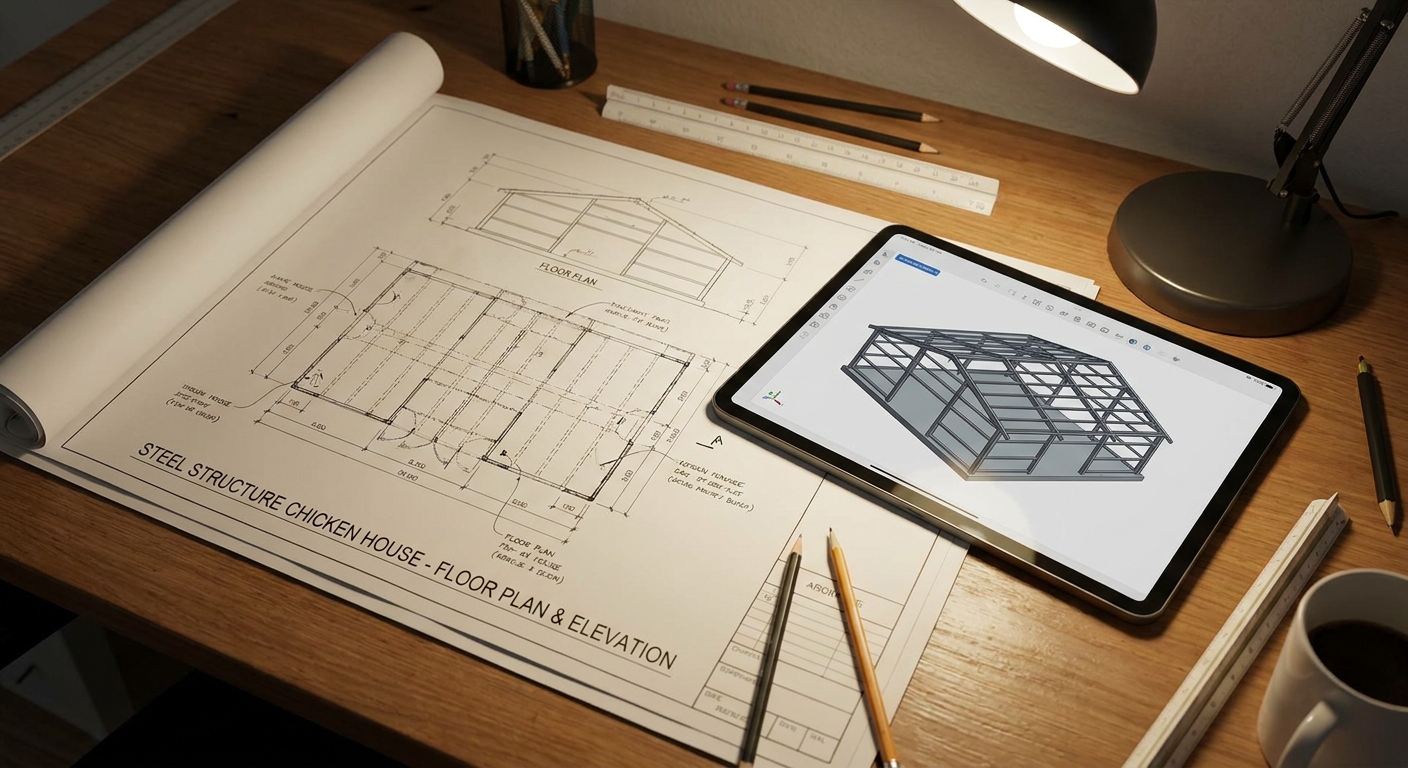
The key design data needed for a Steel Structure Chicken House includes regional wind and snow loads, local seismic conditions, soil bearing capacity, and specific equipment layout dimensions. Failing to calculate these values accurately before manufacturing can lead to devastating structural buckling or expensive equipment installation errors on site. Our engineering team uses this precise local data to customize the thickness and bracing of your steel frames. Let us look at the critical technical details we must analyze to design a stable structure.
Every poultry farm faces unique environmental and spatial requirements. Providing accurate site data ensures your building is engineered to withstand local forces safely.
How do environmental loads dictate steel thickness?
Designing a generic metal building without analyzing local weather history is a major risk. We customize the steel columns and roof pitches to handle the exact pressures your facility will face.
- Wind speed calculations: Steel frames are engineered to withstand lateral wind pressures up to 150 km/h or higher.
- Snow load resistance: Roof truss pitch and purlin spacing are adjusted to prevent roof collapse under heavy snow.
- Seismic zone engineering: Wall and roof bracing are reinforced to resist localized seismic vibrations safely.
Why must design layouts match your equipment?
Your steel building design must align perfectly with your automated feeding, drinking, and waste removal systems. Standard sizing must support the heavy hanging weights of feeding lines and giant exhaust fans.
- Clear-span spacing: Eliminates interior support columns to allow unobstructed movement of manure scrapers.
- Eave height planning: Keeps interior volume highly efficient for mechanical heating and cooling systems.
- Purlin suspension points: Engineered specifically to bear the hanging load of heavy feeder and waterer cables.
Key Takeaway: Precise environmental load calculations and matching equipment layouts ensure a safe, functional, and highly stable structure that fits your automation needs.
| Design Parameter | Engineering Calculation | Structural Purpose | |
|---|---|---|---|
| Wind & Snow Loads | Local meteorological pressure limits | Determines main column thickness and purlin spacing | |
| Clear-Span Width | Clear floor area (usually 12m to 15m) | Eliminates internal obstructions for automated feeding machinery | |
| Eave Height | Climate-optimized volume (2.5m to 3.5m) | Minimizes heating and cooling costs while allowing standard machinery |
These design parameters ensure that your steel structure remains stable under extreme weather while housing your automated equipment.
Get Your Custom Steel Chicken House Plan and Quote Today !
Email:sales@showhoo.com.cn
Phone/WhatsApp: + 86 186 7895 5927
7. How to Size a Steel Structure Chicken House?
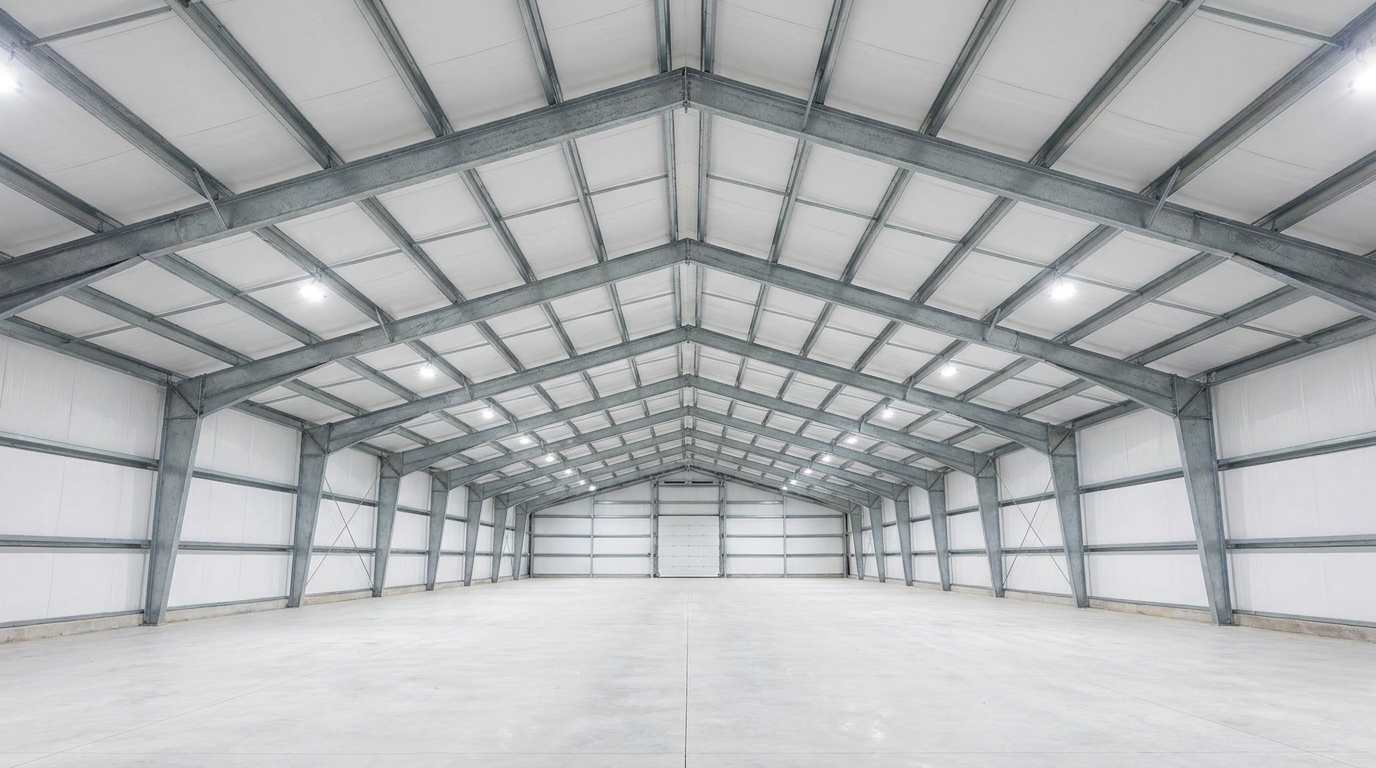
Sizing a Steel Structure Chicken House involves calculating your total target bird population, stocking density requirements, and the physical footprints of your automated feeding lines. Standard clear-span widths usually range from 12 to 15 meters to optimize internal ventilation patterns. Designing a building that is too wide or too narrow can create negative pressure dead zones, resulting in poor air quality. Let us guide you through the process of determining the perfect physical dimensions for your poultry project.
Getting your structural proportions right prevents overcrowded conditions and guarantees uniform growth across your flock. Let’s look at the mathematical standards that determine optimal shed sizing.
How do you calculate bird capacity and spacing?
To calculate the ideal dimensions of your poultry shed, you must start with your target bird population and modern stocking density standards. Different bird types (broilers vs. layers) require completely different spacing layouts.
- Broiler density standards: Typically range from 10 to 15 birds per square meter in environmentally controlled houses.
- Floor space calculation: A house designed for 20,000 broilers requires approximately 1,500 square meters of floor space.
- Cage layer systems: Sized to match the physical length, height, and aisle clearance of your cage battery racks.
What dimensions optimize mechanical ventilation?
The physical width and height of your steel structure dictate how effectively negative-pressure ventilation fans can draw fresh air through the building. Sticking to proven structural ratios prevents drafty zones and warm spots.
- Optimal width (12m – 15m): Allows cooling air from inlets to mix evenly before settling onto the birds.
- Standard length (60m – 150m): Matches the operating capacity of automated feeding chains and manure belts.
- Eave height (2.5m – 3.5m): Minimizes total air volume to keep heating and cooling costs low.
Key Takeaway: Sizing your chicken house based on target bird density and standardized ventilation widths prevents operational bottlenecks and promotes uniform flock growth.
| Target Stocking | Spacing Standard | Recommended Width | Recommended Length | Recommended Height | |
|---|---|---|---|---|---|
| 20,000 Broilers | 13 – 15 birds / m² | 12 meters | 120 meters | 2.8 meters | |
| 30,000 Broilers | 13 – 15 birds / m² | 15 meters | 140 meters | 3.0 meters | |
| 50,000 Layers | Battery cage layout | 15 meters | 120 meters | 4.5 meters (multi-tier) |
Applying these exact dimensional guidelines ensures your automated feeding and drinking equipment operate at peak physical efficiency.
8. How to Prevent Corrosion in a Steel Structure Chicken House?
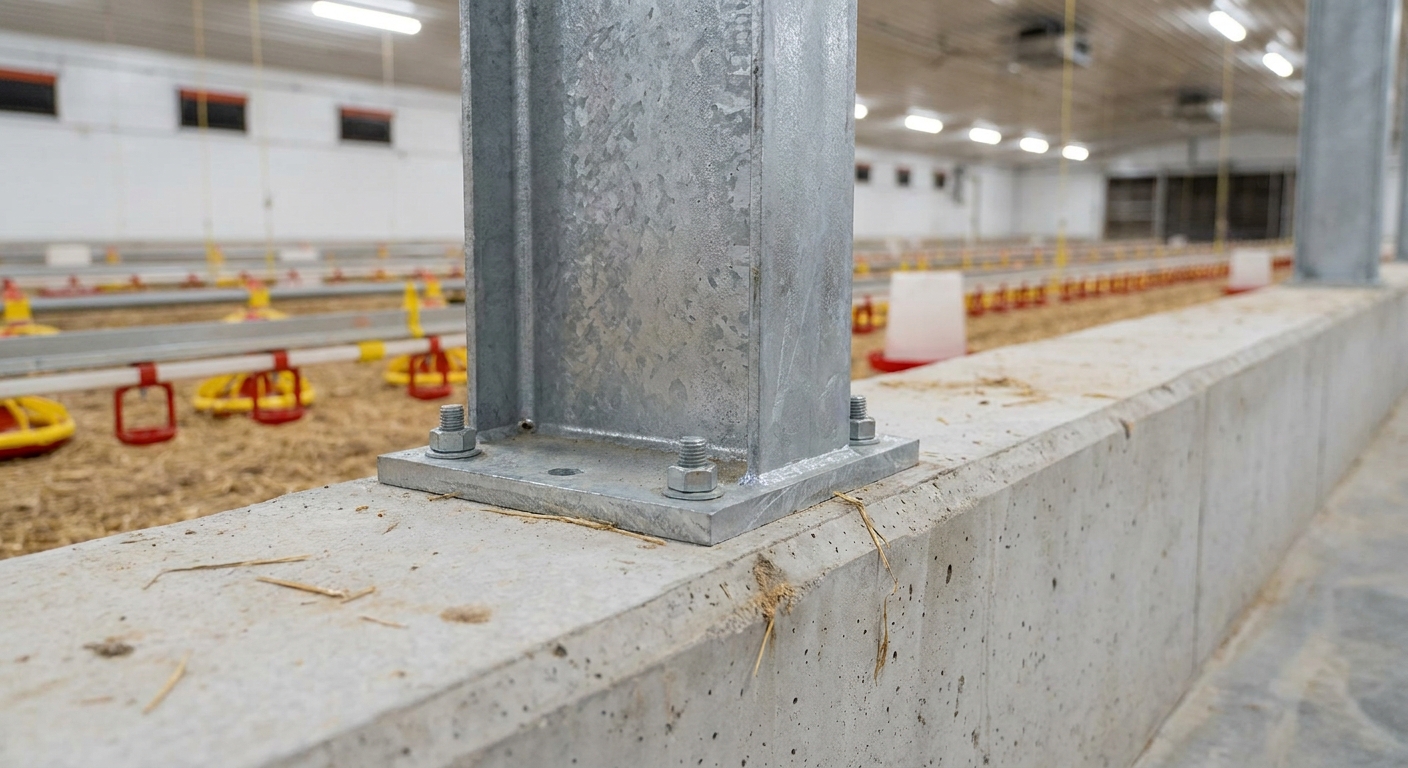
To prevent corrosion in a Steel Structure Chicken House, you must utilize hot-dip galvanized structural steel frames, apply high-grade anti-corrosion epoxy coatings, and install protective concrete dwarf walls. Poultry environments are highly corrosive because animal droppings release continuous warm moisture and high levels of acidic ammonia gas. Without advanced surface treatments, raw steel will rapidly oxidize, compromising the structural safety of your building. Let us look at the industry’s best protective techniques to secure your agricultural investment.
Defeating rust requires a multi-layered barrier system that isolates critical steel joints from acidic gases. Let’s analyze how to keep your metal frame clean and strong for over thirty years.
Why is hot-dip galvanizing the ultimate defense?
Hot-dip galvanizing involves coating structural steel with a protective layer of liquid zinc at extremely high temperatures. This metallurgical bond creates a tough, self-healing shield that resists physical impacts and acidic gases.
- Sacrificial zinc coating: The zinc layer corrodes preferentially to protect the underlying structural steel.
- Complete internal coverage: Coats the interior of hollow steel pipes and C-purlins where moisture accumulates.
- Low maintenance: Eliminates the need to repaint or recoat the steel frame every few years, saving you labor.
How do concrete dwarf walls protect column bases?
The lower 30 to 50 centimeters of your walls are exposed to direct contact with wet litter, bird feces, and heavy washing equipment. Building a solid concrete dwarf wall around the perimeter is essential to keeping your steel columns dry.
- Isolated column bases: Anchors are embedded in concrete above the wet litter line to prevent oxidation.
- Splash protection: Concrete shields steel columns from high-pressure water during clean-out cycles.
- Rodent barrier: Prevents burrowing pests from digging underneath your metal wall cladding panels.
Key Takeaway: Combining hot-dip galvanized frames with concrete dwarf walls creates an absolute defense against moisture and acidic ammonia, extending your building’s life past 30 years.
| Protection Method | Material/Finish | Corrosion Resistance | Best Application | |
|---|---|---|---|---|
| Hot-Dip Galvanizing | 80 – 120 micron zinc layer | Excellent (Decades of protection) | Primary H-beams, purlins, and truss frames | |
| Epoxy Coating Paint | Multi-layer epoxy primer & topcoat | Very Good (Chemical barrier) | Frame components in low-ammonia zones | |
| Concrete Dwarf Wall | Reinforced concrete (30-50cm height) | Physical / Chemical block | Wall base perimeter to keep steel dry |
Implementing these heavy-duty protective standards guarantees that your structural steel remains free from rust damage, regardless of cleaning frequency.
9. How to Import a Steel Structure Chicken House from China?
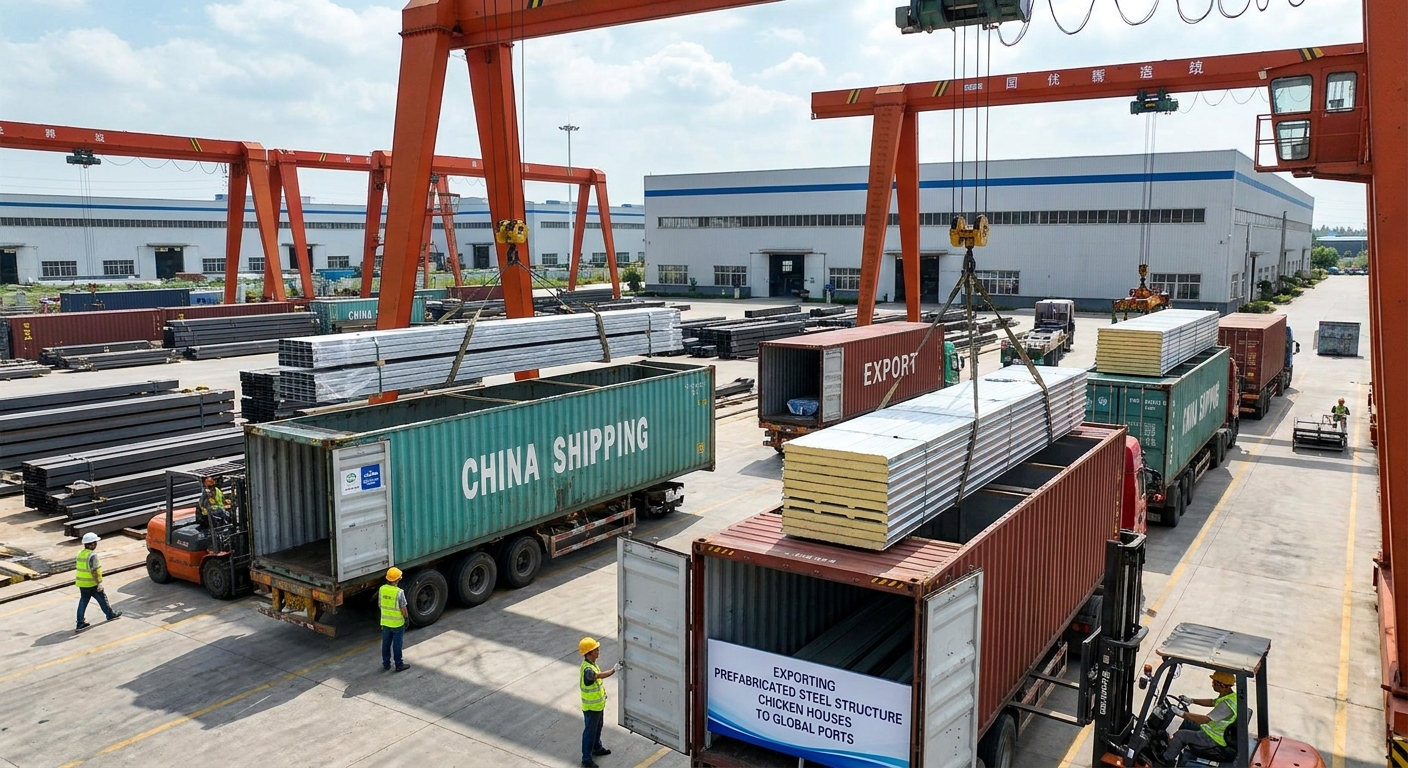
Importing a Steel Structure Chicken House from China involves sending your site requirements to a certified manufacturer, approving custom structural drawings, arranging safe container logistics, and handling customs clearance. China remains the world’s leading hub for pre-engineered steel buildings because of its advanced manufacturing technologies and highly competitive material pricing. Partnering directly with an experienced exporter ensures that all structural components are pre-machined and safely loaded for international ocean shipping. Let us guide you through a step-by-step import process to ensure a hassle-free delivery.
Navigating international shipping regulations can feel complex if you are importing agricultural structures for the first time. Let’s break down the essential steps to keep your procurement on schedule.
How do you confirm technical design approval?
Before manufacturing begins, you must review and sign off on detailed structural and architectural shop drawings. Our engineering team provides detailed 3D CAD blueprints that specify every beam length and bolt location.
- Design verification: Ensure that the blueprints comply with your local wind, snow, and seismic building codes.
- Component checking: Confirm that all openings for doors, automated exhaust fans, and cooling pads are sized correctly.
- Civil coordination: Share foundation drawings with your local civil contractor to prepare the concrete slab ahead of delivery.
What logistics ensure safe container shipping?
Because steel structures are heavy and bulky, professional factory loading is crucial to prevent structural bending during rough sea transit. All framing parts are bundled, labeled, and secured tightly inside shipping containers.
- Bundled H-Beams: Main steel columns are packed with soft dunnage to protect surface finishes from scratches.
- Standard 40ft HQ containers: Large open-top or high-cube containers are utilized to maximize loading and unloading speeds.
- Traceable part labeling: Every single component is labeled with a specific code that matches your 3D assembly guides.
Key Takeaway: Approving precise shop drawings and utilizing bundled container packaging guarantees that your steel structure arrives safely and fits together perfectly on site.
| Import Stage | Key Action Required | Crucial Document Needed | |
|---|---|---|---|
| 1. Custom Design | Submit site weather loads and layout dimensions | Detailed 3D CAD Shop Drawings | |
| 2. Factory Fabrication | Quality control checks on welding and galvanizing | Mill Test Certificates & Inspection Reports | |
| 3. Container Loading | Securely pack beams, panels, and accessories into 40′ HQ containers | Packing List & Bill of Lading | |
| 4. Port Arrival | Clear customs and transport components to your farm site | Commercial Invoice & Custom Declarations |
This structured approach streamlines your procurement timeline and eliminates potential delays at international shipping terminals.
10. How to Choose a Steel Structure Chicken House Manufacturer?
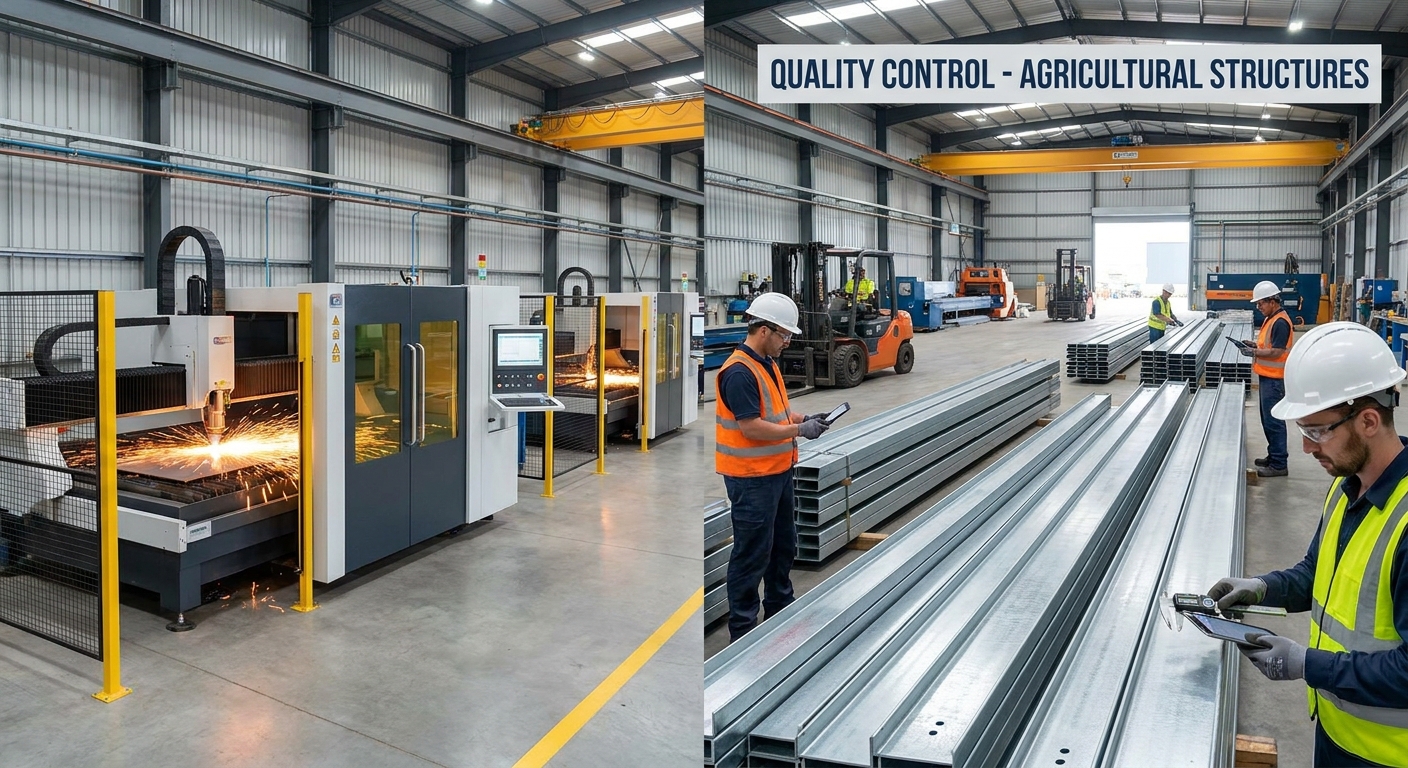
To choose a reliable Steel Structure Chicken House manufacturer, you must verify their design certifications, inspect their raw steel sourcing channels, and confirm their international project experience. The global market is filled with trading companies posing as direct factories, which often leads to poor material quality and delayed shipments. Partnering with a certified manufacturer guarantees that your building is constructed with raw materials from major steel groups. Let us examine the essential criteria you should use to select a trustworthy manufacturing partner.
Selecting the wrong supplier can result in structurally weak frames, missing parts, and zero after-sales installation support. Let’s look at how to verify a factory’s true capabilities.
How do you verify factory quality standards?
A professional steel fabrication factory must hold international quality management certifications and offer full material traceability. Do not hesitate to ask for official documentation before signing any purchase contract.
- ISO & CE Certifications: Ensure that the factory’s welding, cutting, and drilling processes meet rigorous safety standards.
- Traceable raw materials: Verify that all raw structural steel is sourced from major, certified domestic steel groups.
- Third-party inspections: A reputable manufacturer will welcome independent inspectors (like SGS or BV) to check fabrication quality.
What after-sales support should you demand?
The relationship with your manufacturer should not end once the shipping container leaves the port. You should demand comprehensive construction assistance to ensure your local crew installs the building safely.
- Detailed 3D assembly guides: Clear, step-by-step structural erection blueprints with matching component codes.
- Direct engineering support: Live communication channels with structural engineers to resolve site issues instantly.
- Complete accessory kit: All required high-strength structural bolts, self-drilling screws, and flashing trims included.
Key Takeaway: Partnering with a certified, direct manufacturer that offers full material traceability and robust after-sales support ensures a safe, successful, and cost-effective building project.
| Evaluation Factor | Verified Direct Manufacturer | Trading Company / Agent | |
|---|---|---|---|
| Material Quality | Certified Q235/Q355 steel with mill test certificates | Inconsistent steel grades, unknown origin | |
| Custom Design | In-house engineering team providing customized 3D CAD files | Limited, generic structural templates | |
| Installation Support | Detailed 3D erection drawings, direct engineer access | Minimal, hands-off after-sales service |
This checklist helps you identify a reliable long-term manufacturer, avoiding costly quality mistakes and shipping delays.
Frequently Asked Questions
Can I customize the physical dimensions of my poultry shed?
Yes, all steel poultry buildings can be customized to match your specific bird capacity, local environmental loads, and automated equipment dimensions. Our engineering team designs every project from scratch, tailoring the portal frame spans, eave heights, and column spacings to suit your site layout perfectly.
What is the best wall insulation for extremely cold climates?
Polyurethane (PU) sandwich panels are the absolute best choice for cold regions due to their superior thermal efficiency and airtight joint systems. These composite panels create an air-tight thermal envelope that keeps cold drafts out while keeping heat inside, reducing your winter heating bills.
How do I know if my concrete foundation layout is correct?
We provide complete, detailed foundation blueprints and anchor bolt loading parameters before fabrication begins. Your local civil engineer can use these engineering calculations to design and pour a concrete slab that perfectly matches our steel column connections.
How long does a steel frame poultry house last?
A well-constructed steel structure finished with hot-dip galvanizing or high-performance anti-corrosion paint easily lasts for over 30 to 50 years. This extreme durability provides a safe, low-maintenance home for your agricultural operations over multiple decades.
Secure Your Farming Business with Showhoo Quality
At Showhoo, we engineer and manufacture direct, high-quality, and cost-effective pre-engineered steel buildings designed to withstand demanding agricultural environments. Our massive annual production capacity ensures your project is fabricated quickly, while our strict quality control systems guarantee a smooth, hassle-free assembly on site. We provide comprehensive, ready-to-assemble packages with no field modifications required, allowing you to build with absolute confidence.
Are you ready to elevate your agricultural infrastructure and protect your flock? Please contact us today to receive a customized project design layout and a detailed price estimate within 24 hours. Let’s work together to build a highly profitable, modern poultry facility tailored to your long-term business goals.
Get Your Custom Steel Chicken House Plan and Quote Today !
Email:sales@showhoo.com.cn
Phone/WhatsApp: + 86 186 7895 5927