
Selecting the ideal framing system from the primary structural types in a multi-storey building—such as framed, shear wall, core, braced, and moment-resisting systems—is essential for ensuring maximum load capacity, architectural flexibility, and long-term cost efficiency in high-rise steel construction. Commercial developers face soaring material costs, strict seismic codes, and aggressive project schedules. Choosing an incorrect framing system can lead to massive field delays, excessive welding and fabrication re-work, compromised interior square footage, and severe structural vulnerabilities under lateral wind or seismic loads. Fortunately, partnering with a specialized factory-direct steel manufacturer allows you to optimize your multi-level framing system. Knowing exactly what is multi storey house construction and how to apply the correct engineering blueprint will ensure project profitability, structural durability, and rapid assembly times.
What is a framed structure multi-storey building?
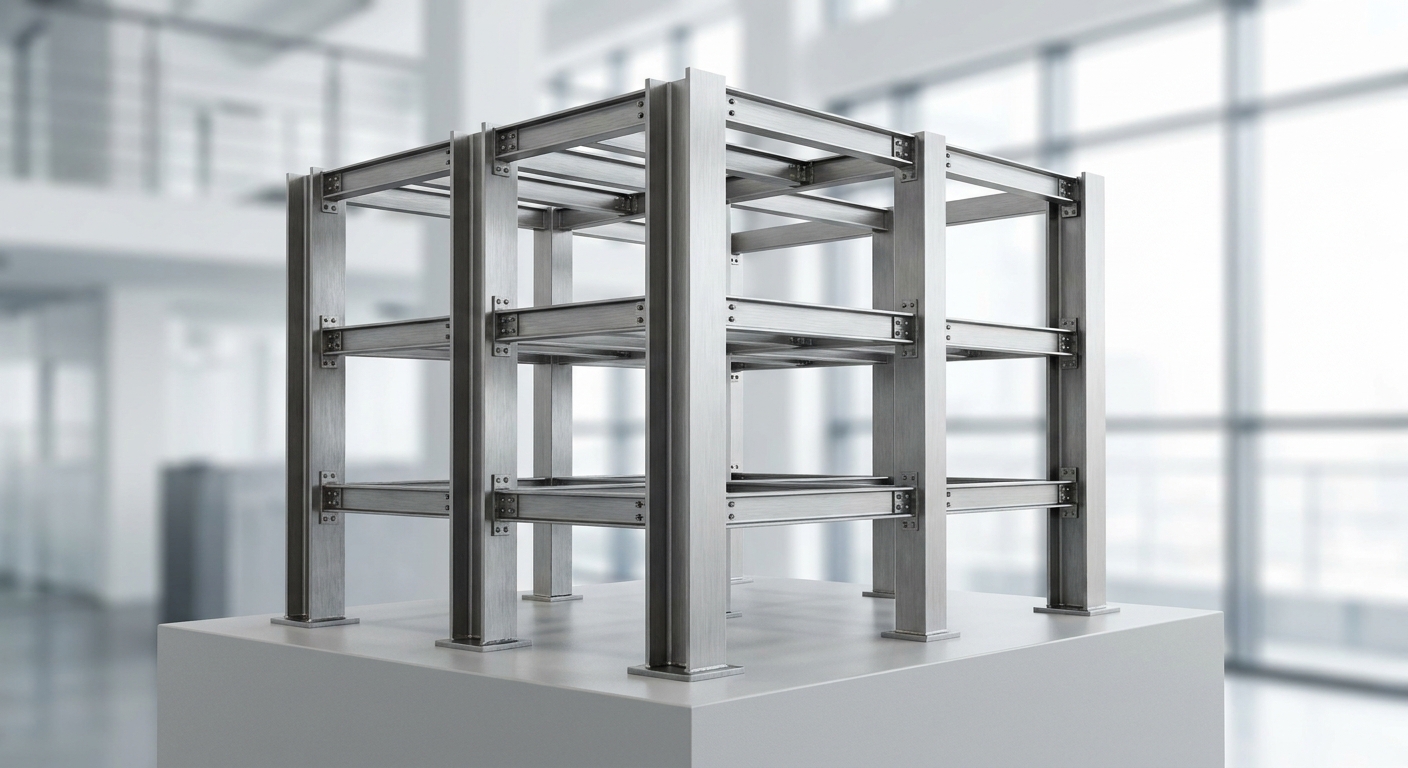
A framed structure is a robust skeleton composed of hot-rolled structural steel columns and horizontal beams rigidly connected to form a load-bearing grid that transfers gravity forces safely to the foundations. When evaluating options, you should know that what is multi storey house framing often relies on this core structural archetype. This setup is highly versatile and accommodates various floor plan configurations easily.
Structural Steel Frame Anatomy
When you build a modern multi-level facility, structural steel frames offer unmatched strength-to-weight ratios. Let’s face it: you need a skeleton that can handle heavy vertical loads without buckling. The system consists of heavy-duty I-beams, H-columns, and secondary purlins designed to carry composite floor decks.
By sourcing direct from a qualified manufacturer, you receive highly optimized, pre-drilled steel elements ready for immediate erection. This direct delivery eliminates curing delays compared to cast-in-place concrete options.
- High Load Capacity: Ideal for long-span floor grids without column interruption.
- Factory Precision: Every structural steel member is prefabricated under strict quality control.
- Rapid Erection: Speeds up your construction schedule significantly.
Key Takeaway: Structural steel frames provide the ultimate flexibility for multi-story buildings, ensuring rapid field erection and robust load-bearing performance.
| Column Spacing | Primary Beam Depth | Structural Weight | Primary Application | |
|---|---|---|---|---|
| 6m x 6m Grid | 300mm to 350mm | Low-to-Medium | Standard Multi-Story Residential | |
| 9m x 9m Grid | 400mm to 450mm | Medium | Commercial Office & Mixed-Use | |
| 12m+ Grid | 500mm+ Heavy W-Shape | High | Heavy-Duty Multi-Story Warehouses |
While standard framed grids handle vertical loads effectively, integrating cantilever elements can vastly expand your architectural footprint.
What is a cantilever structural system?
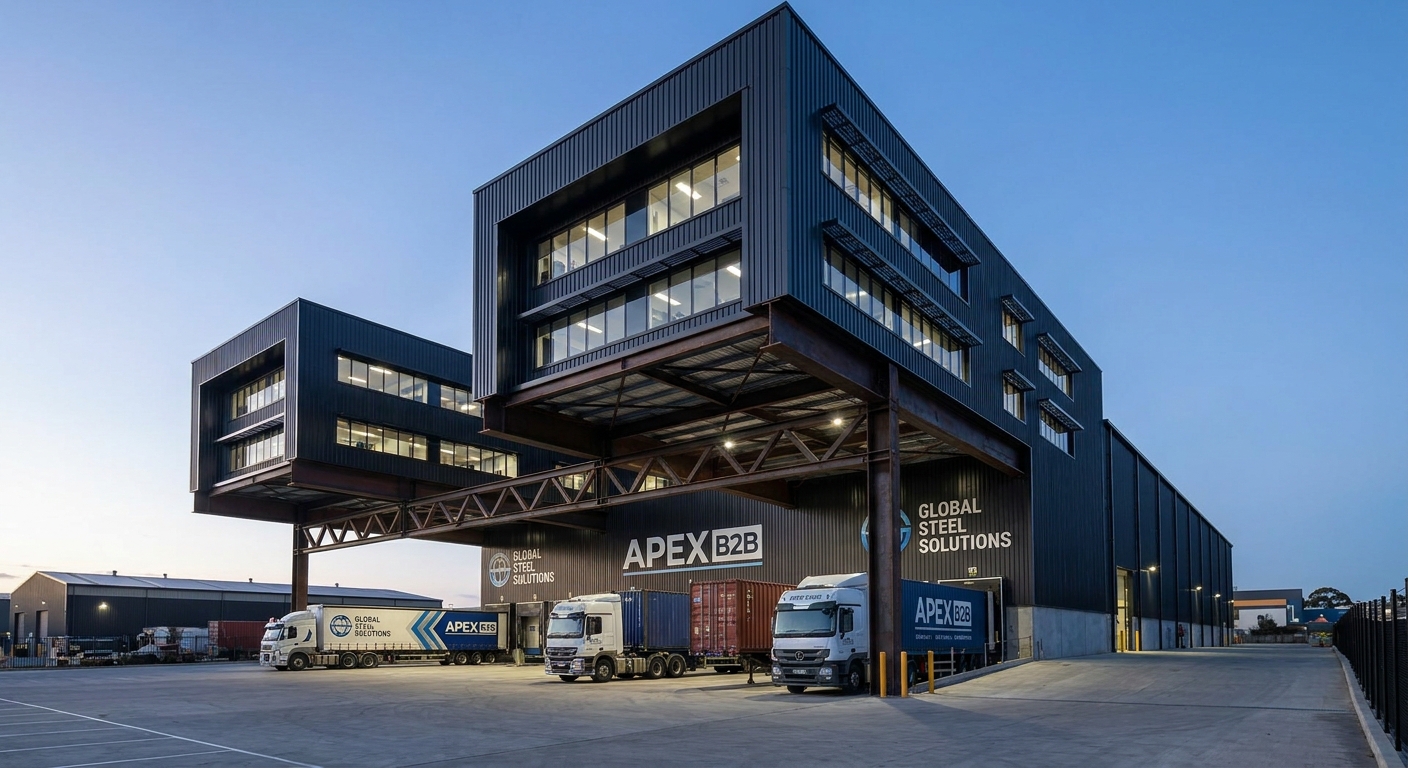
A cantilever system utilizes horizontal structural steel members or floor plates that project outward beyond vertical support columns, carrying loads back to the main structure. Understanding what is multi storey house cantilever design allows structural engineers to create striking overhangs and dynamic outdoor spaces without ground-level column support. This architectural approach is highly favored for modern commercial facades.
The Mechanics of Overhead Projections
When you incorporate cantilever elements, the primary engineering challenge is managing massive bending moments and deflection at the outer edge. Think about it: you need to securely anchor the projecting steel beams into deep web profiles within the interior backspan bay. This configuration transfers tension forces along the top flange and compression along the bottom.
Using structural steel for cantilevers is highly superior to concrete due to steel’s excellent tensile strength. This reduces the dead weight of the projecting floor plates significantly.
- Column-Free Space: Creates open ground-level plazas and unobstructed pathways below.
- Architectural Appeal: Enhances the modern visual profile of your high-end office designs.
- Reduced Footprint: Ideal for building sites with limited ground-level clearance.
Key Takeaway: Cantilever systems offer unique structural geometry and column-free floor areas but require rigorous attention to backspan moment forces.
| Cantilever Reach | Backspan Ratio | Deflection Limit | Minimum Beam Web Thickness | |
|---|---|---|---|---|
| Up to 3.0 meters | Minimum 2:1 Ratio | L/360 | 12mm Standard Web | |
| 3.0 to 5.0 meters | Minimum 2.5:1 Ratio | L/480 | 16mm Heavy Web | |
| 5.0+ meters | Engineered Truss Required | L/600 | Custom Reinforced Plate |
To limit structural deflection over long spans, you can support cantilever sections by pairing them with diagonal compression props.
Build Your Multi Storey Project Safely with Expert Steel Design!
Email:sales@showhoo.com.cn
Phone/WhatsApp: + 86 186 7895 5927
What is a propped steel structural frame?
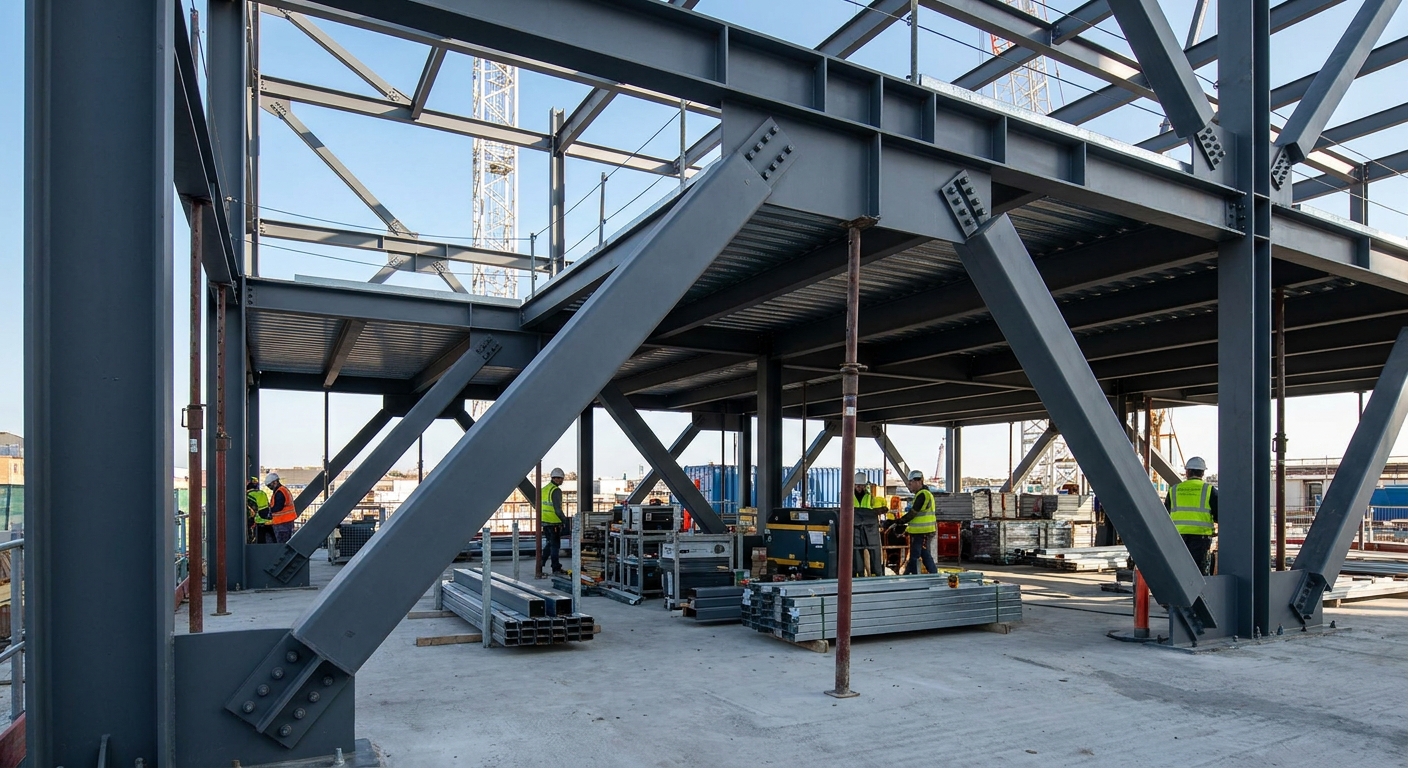
A propped structure is a composite structural frame where projecting cantilever floors or long-span beam systems are supported by diagonal steel struts, or “props,” to direct structural loads back to main columns. To grasp what is multi storey house engineering efficiency, you must analyze how diagonal propped columns stabilize large-span structures. This system minimizes bending stresses, letting you use lighter horizontal steel members safely.
When Are Diagonal Props Necessary?
When you face exceptionally long floor spans or heavy live loads, standard unbraced cantilevers are often structurally inefficient. Here is the deal: installing diagonal steel props under these overhangs creates an incredibly rigid triangular loading path. This diagonal strut directs load forces into the vertical columns, reducing bending stress on horizontal members.
These steel props can be designed to act either in compression or in tension depending on their architectural placement. You must ensure that connection pin nodes are precisely calculated to handle shear forces.
- Material Savings: Allows you to use shallower floor beams while maintaining high load limits.
- Enhanced Stability: Dramatically minimizes structural vibration on multi-level pedestrian walkways.
- Simple Retrofitting: Diagonal props can be easily welded or bolted onto existing structural columns.
Key Takeaway: Diagonal propped structures offer an economical, ultra-rigid alternative to unbraced cantilevers by utilizing triangular load distribution.
| Prop Angle (from Horizontal) | Load Transfer Efficiency | Connection Method | Profile Type | |
|---|---|---|---|---|
| 30 Degrees | Moderate (High Shear) | Double-Gusset Welded | Square Hollow Section (SHS) | |
| 45 Degrees | Optimum (Equal Shear/Axial) | Pin-Connected Clevis | Circular Hollow Section (CHS) | |
| 60 Degrees | High Axial (Low Shear) | Multi-Bolt Flange | Heavy Wide-Flange (H-Beam) |
If your design cannot accommodate diagonal props beneath floor levels, suspending the floors from above using tension members is an alternative.
What is a suspended floor structural system?
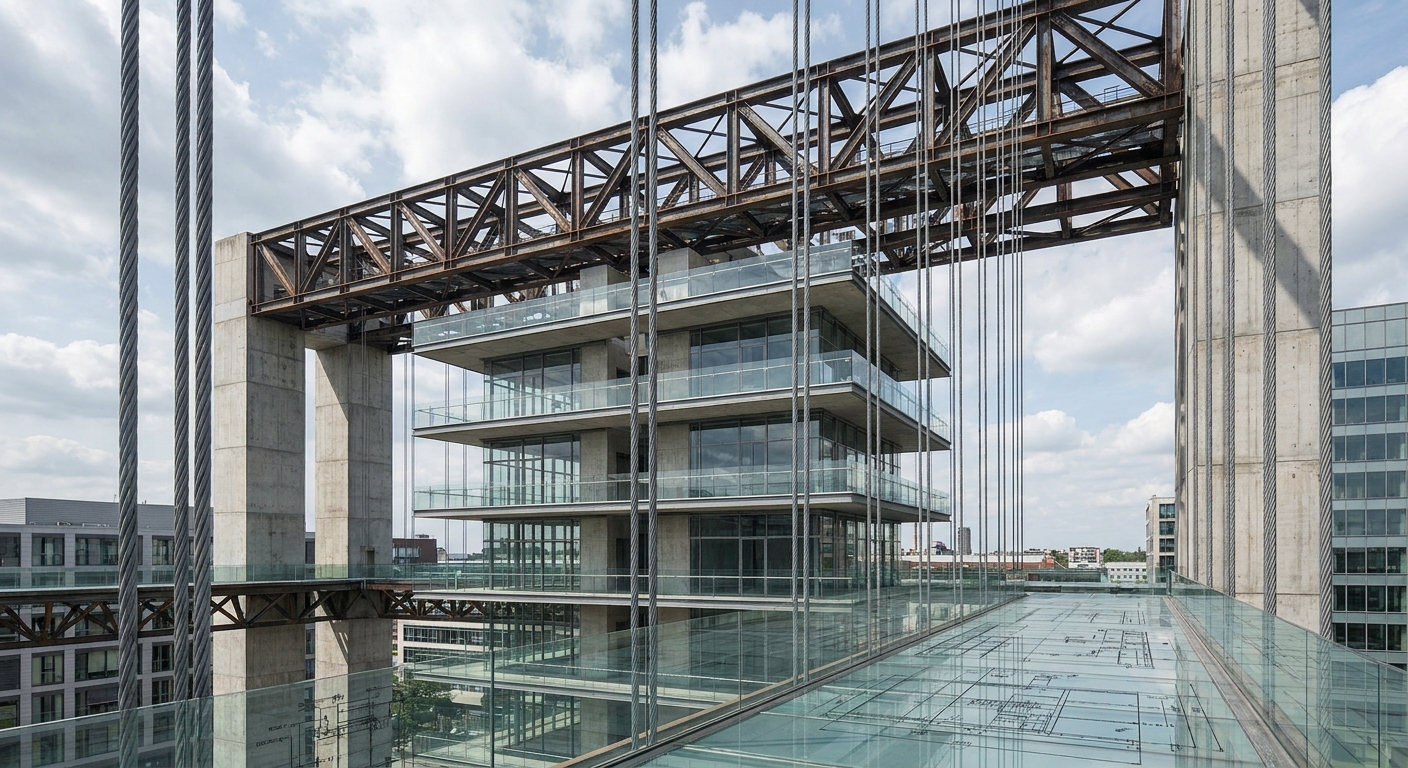
A suspended frame is a highly specialized architectural system where horizontal floor structures are suspended from main overhead roof trusses using solid steel tension rods or high-tensile cables. Exploring what is multi storey house suspended frame structural engineering reveals a layout that replaces traditional ground-level columns with heavy-duty overhead tension systems. This technique maximizes ground-level clearance and creates open lobbies.
High-Tension Hanger Cable Dynamics
When you build a suspended frame structure, the vertical loading path is directed upwards to massive roof-level trusses. But wait, there’s more: these main roof trusses are supported by highly rigid structural cores, transmitting all structural weight directly down to the foundation. This suspended layout removes the need for perimeter columns on lower floors, providing open interior space.
Each solid steel tension hanger must be manufactured with tight tolerances to prevent uneven floor settlement. High-strength steel alloys are ideal for this application, as they handle heavy tension loads without stretching.
- Ultimate Column-Free Space: Ideal for multi-story exhibition centers and grand lobbies.
- Unique Aesthetics: Delivers a clean, weightless architectural design that stands out.
- Slender Vertical Members: Uses ultra-thin tension rods instead of thick structural columns.
Key Takeaway: Suspended structures yield unparalleled column-free interior spaces by transferring floor loads upwards through high-tensile steel members.
| Hanger Diameter | Tensile Capacity | Adjustment System | Connection Node | |
|---|---|---|---|---|
| 50mm Solid Rod | 750 kN | Turnbuckle System | Pin-to-Gusset Connection | |
| 75mm Solid Rod | 1,700 kN | Threaded Sleeve | Heavy Plate Clevis | |
| 100mm Solid Rod | 3,100 kN | Custom Hydraulic Tensioner | Double-Shear Pin Joint |
While suspended designs offer column-free floor layouts, they require solid interior structural walls to maintain lateral stability.
What is a structural shear wall design?
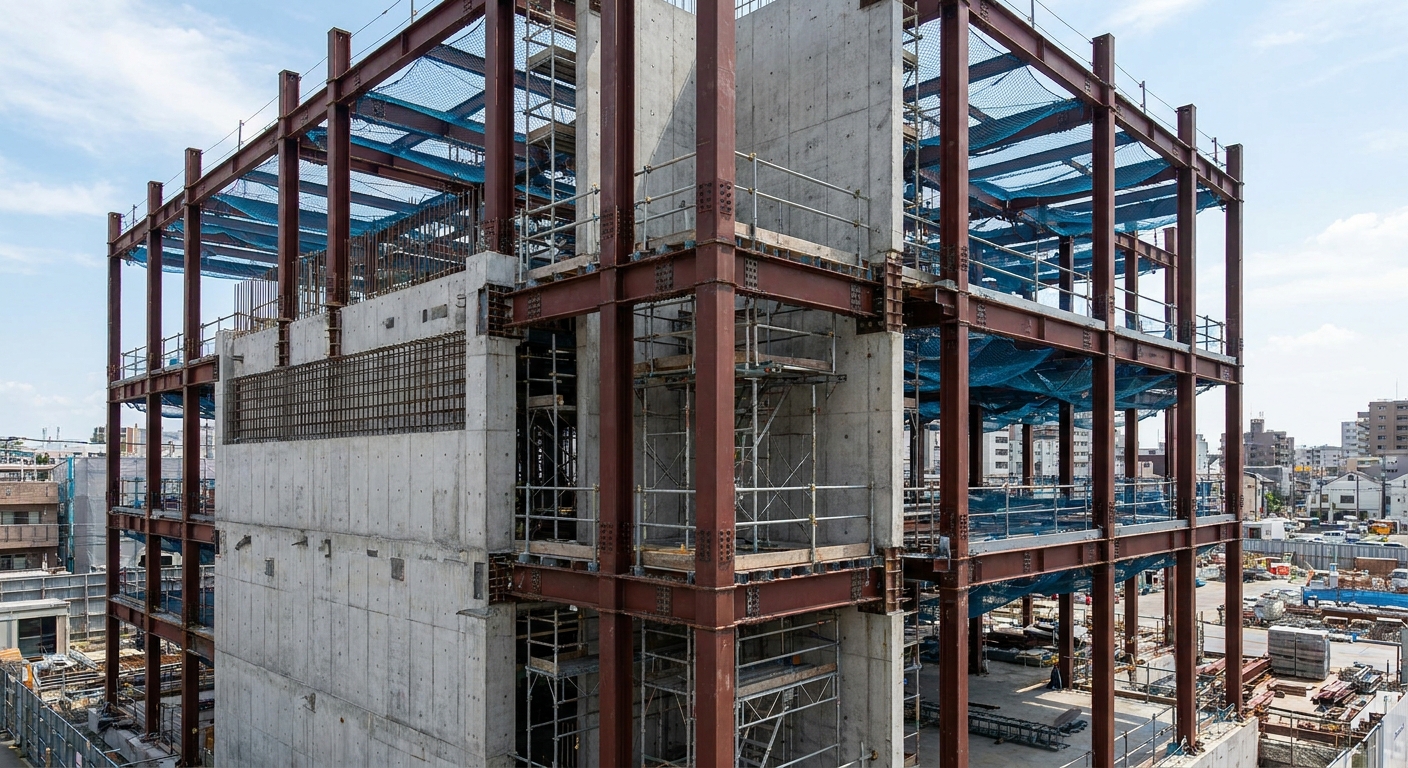
A shear wall design incorporates continuous vertical steel plates or reinforced concrete panels throughout the height of a building to resist lateral loads such as wind or seismic activity. When analyzing what is multi storey house safety standards, you will find that integrating shear walls protects multi-level facilities from collapsing under lateral forces. These walls form extremely rigid diaphragms that stabilize structural frames.
Lateral Force Resistance Mechanisms
When high winds or earthquakes strike your building, lateral forces can cause critical structural sway and joint fatigue. Let’s look closer: steel plate shear walls act as vertical cantilevers to absorb these lateral loads and transfer them straight to the foundation. This ductile design allows the steel plates to buckle slightly under tension, dispersing energy safely.
These systems are lighter than concrete shear walls, reducing the load on your foundation and saving on excavation costs. Their thin profile preserves valuable interior space, maximizing your usable floor area.
- Superior Ductility: Deforms safely during seismic events to absorb energy without failing.
- Thin Wall Profile: Maximizes your interior space compared to bulky concrete walls.
- Reduced Self-Weight: Minimizes total structural weight and lowers overall foundation costs.
Key Takeaway: Steel plate shear walls are a highly efficient, space-saving solution for lateral load resistance and seismic energy dissipation.
| Steel Plate Thickness | Typical Height Limit | Connection Style | Energy Dissipation | |
|---|---|---|---|---|
| 6mm to 8mm Plate | Up to 12 Stories | Standard High-Strength Bolting | Medium-High (Wind Focus) | |
| 10mm to 12mm Plate | 12 to 30 Stories | Welded/Bolted Hybrid | Exceptional (Seismic Focus) | |
| 14mm+ Heavy Plate | 30+ Stories | Full Penetration Butt Welding | Maximum Performance |
To maximize efficiency in taller towers, shear walls are often combined into a central core structure.
What is a building hull or tube design?
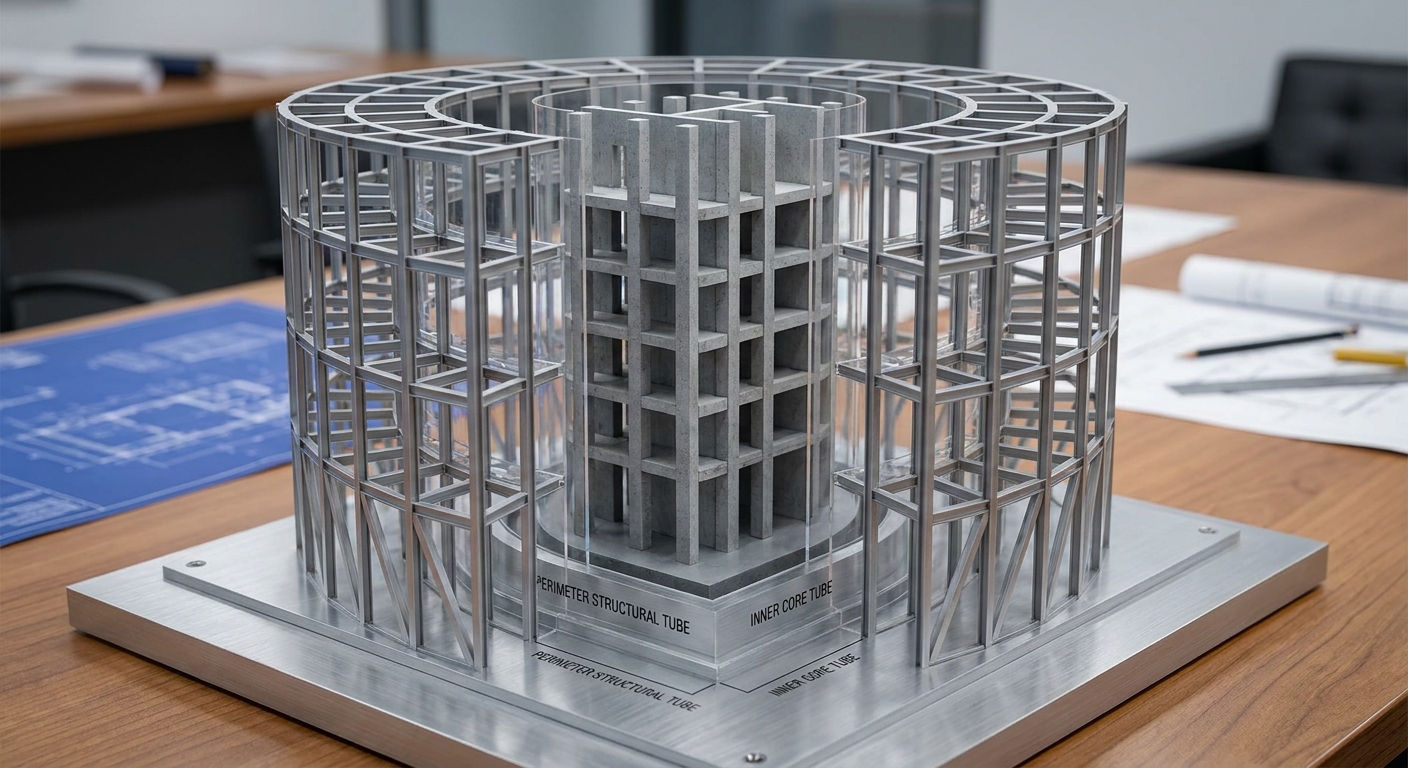
A hull design system, or tube structure, is an advanced layout where the outer perimeter of the building is constructed with closely spaced columns and deep spandrel beams to form a rigid tubular frame. Understanding what is multi storey house hull engineering allows developers to construct ultra-tall buildings that resist lateral loads by using the building’s exterior perimeter as a giant hollow tube. This design is standard in high-rise tower engineering.
Tube-in-Tube High-Rise Engineering
When you build skyscrapers, standard frame systems become ineffective against high-altitude lateral wind forces. Let’s face it: the tube design system turns the outer perimeter into a rigid structural hull that resists bending under wind loads. By spacing the outer columns close together and connecting them with deep spandrel beams, the exterior acts as a solid tube.
For ultra-tall projects, engineers often combine the outer hull with a rigid central core to create a robust system. This design prevents column shear lag, ensuring uniform load distribution across all steel members.
- Skyscraper Capability: Essential for safe steel construction on buildings taller than 40 stories.
- Unrivaled Wind Performance: Drastically reduces high-altitude sway and increases tenant comfort.
- Open Floor Layouts: Removes all interior columns between the central core and the outer hull.
Key Takeaway: Hull design systems turn the building’s exterior into a load-bearing tube, offering superior wind resistance for supertall towers.
| Perimeter Column Spacing | Spandrel Beam Depth | Maximum Safe Height | Principal Structural Material | |
|---|---|---|---|---|
| 1.0m to 1.5m | 800mm to 1000mm | 80+ Stories | Grade Q355B High-Strength Steel | |
| 1.5m to 2.5m | 600mm to 800mm | 50 to 80 Stories | Grade Q355B Hot-Rolled Steel | |
| 2.5m to 3.5m | 450mm to 600mm | Up to 50 Stories | Composite Steel-Concrete |
At the center of these perimeter systems sits the core structure, which houses elevators and critical building services.
Build Your Multi Storey Project Safely with Expert Steel Design!
Email:sales@showhoo.com.cn
Phone/WhatsApp: + 86 186 7895 5927
What is a central core structural system?
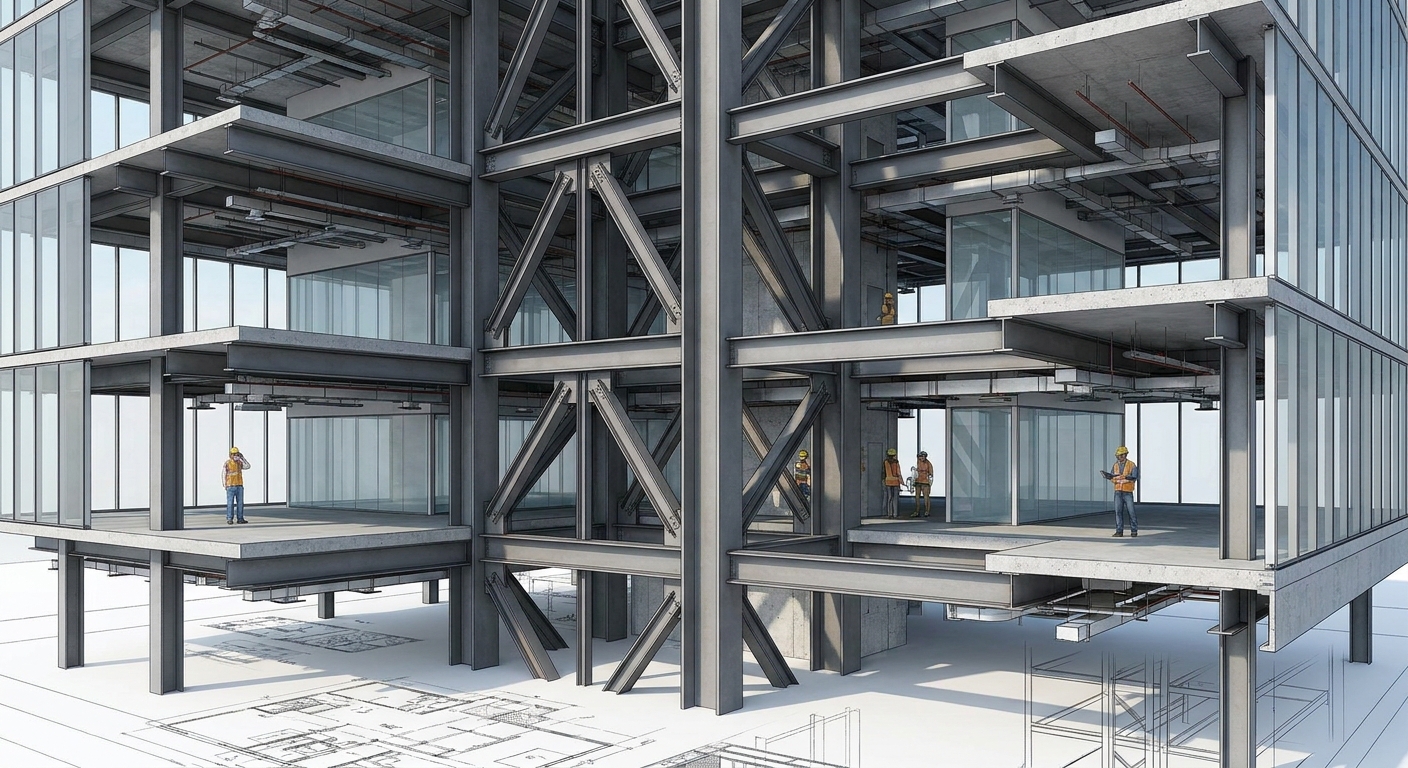
A core structure features a highly rigid central vertical shaft constructed from steel plates or reinforced concrete that houses services, lifts, and stairwells while providing main lateral support. Knowing what is multi storey house core design is essential, as the central core serves as the primary structural backbone for multi-level buildings. This structural configuration offers maximum torsional resistance.
Core-Shear Wall Synergy
When you layout a commercial multi-story building, placing services, stairs, and elevators in a central vertical zone is highly practical. Think about it: creating a structural steel core in this central zone provides excellent torsional resistance against wind loads. The core acts as a stiff vertical cantilever that holds the surrounding floor plates in place.
You must ensure that the connections between the floor beams and the central core are engineered to resist shear stress. Heavy-duty shear tabs and structural outriggers can be used to link the central core to the outer columns.
- Torsional Rigidity: Prevents the building from twisting under uneven wind or seismic loads.
- Efficient Services: Clusters all utility lines, plumbing, and elevators in one central area.
- Slender Exterior Columns: Allows you to design a lighter, more open outer building perimeter.
Key Takeaway: Central core structures provide the necessary stiffness to prevent building twist while neatly housing all critical utilities.
| Core Profile Geometry | Outrigger Integration | Lateral Stiffness Rating | Ideal Application | |
|---|---|---|---|---|
| Square Closed Steel Box | No Outriggers | Very High | 15 to 30 Story Office Towers | |
| Rectangular Core Grid | With Single Outrigger | Extremely High | 30 to 50 Story Mixed-Use | |
| Multi-Cellular Core System | Double Outriggers | Maximum Stiffness | Supertall Skyscrapers |
If you need to secure a building against lateral forces without using a full central core, a braced frame is an excellent, cost-effective alternative.
What is a braced frame structural layout?
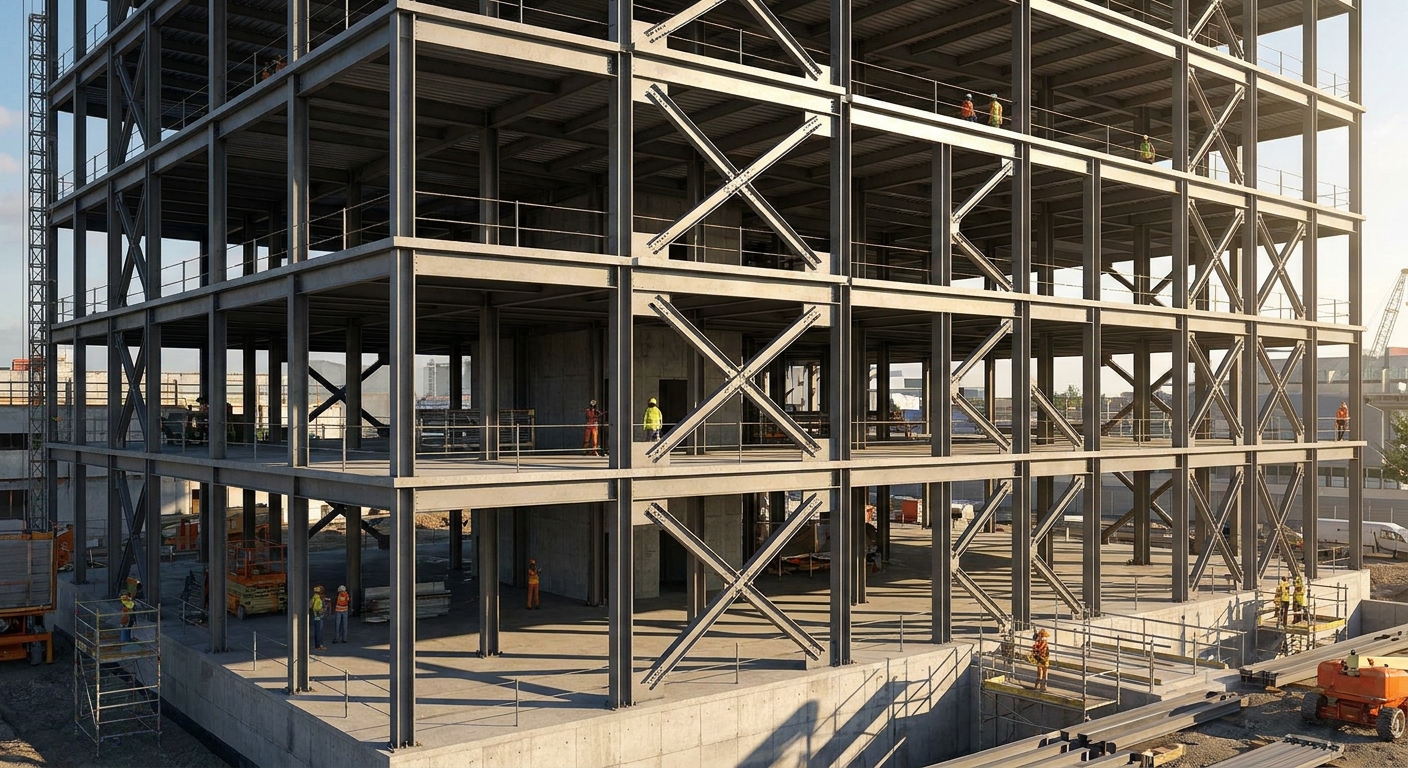
A braced frame is a structural framing system that utilizes diagonal steel members to resist lateral wind and seismic forces while keeping horizontal frame deflection to a minimum. When looking into what is multi storey house braced frame design, you will discover that diagonal bracing is one of the most efficient ways to protect multi-level buildings from horizontal movement. This layout is standard in commercial warehouse designs.
Concentric vs. Eccentric Bracing Systems
When you engineer diagonal bracing, you can choose between concentric and eccentric bracing designs. Here is the deal: in concentric systems, the bracing members meet at a single intersection point on the beam-column joints, making the frame highly rigid. This is a very cost-effective way to control horizontal drift in standard structural designs.
In eccentric systems, the brace is slightly offset from the joint, creating a structural “link” that bends safely during seismic events. This bending action absorbs energy, keeping the main columns from sustaining critical damage.
- Excellent Wind Control: Reduces lateral movement to protect interior finishes from cracking.
- Saves Weight: Uses light structural steel angles or hollow tubes to achieve high lateral strength.
- Fast Structural Assembly: Pre-fabricated bolted bracing speeds up field assembly times.
Key Takeaway: Diagonal braced frames offer a highly efficient, lightweight solution for wind control and seismic protection in multi-story steel buildings.
| Bracing Configuration | Stiffness Level | Seismic Ductility | Installation Complexity | |
|---|---|---|---|---|
| X-Bracing | Maximum Stiff | Low-Medium | Very Simple (Direct Bolting) | |
| Chevron (V) Bracing | High Stiff | Medium | Simple (Beam Center Connection) | |
| Eccentric Bracing | Balanced Stiff | Exceptional | Advanced (Requires Shear Link) |
When bracing cannot be used due to window or door openings, moment frames can provide lateral stability without obstructing the frame.
What is a rigid moment frame system?
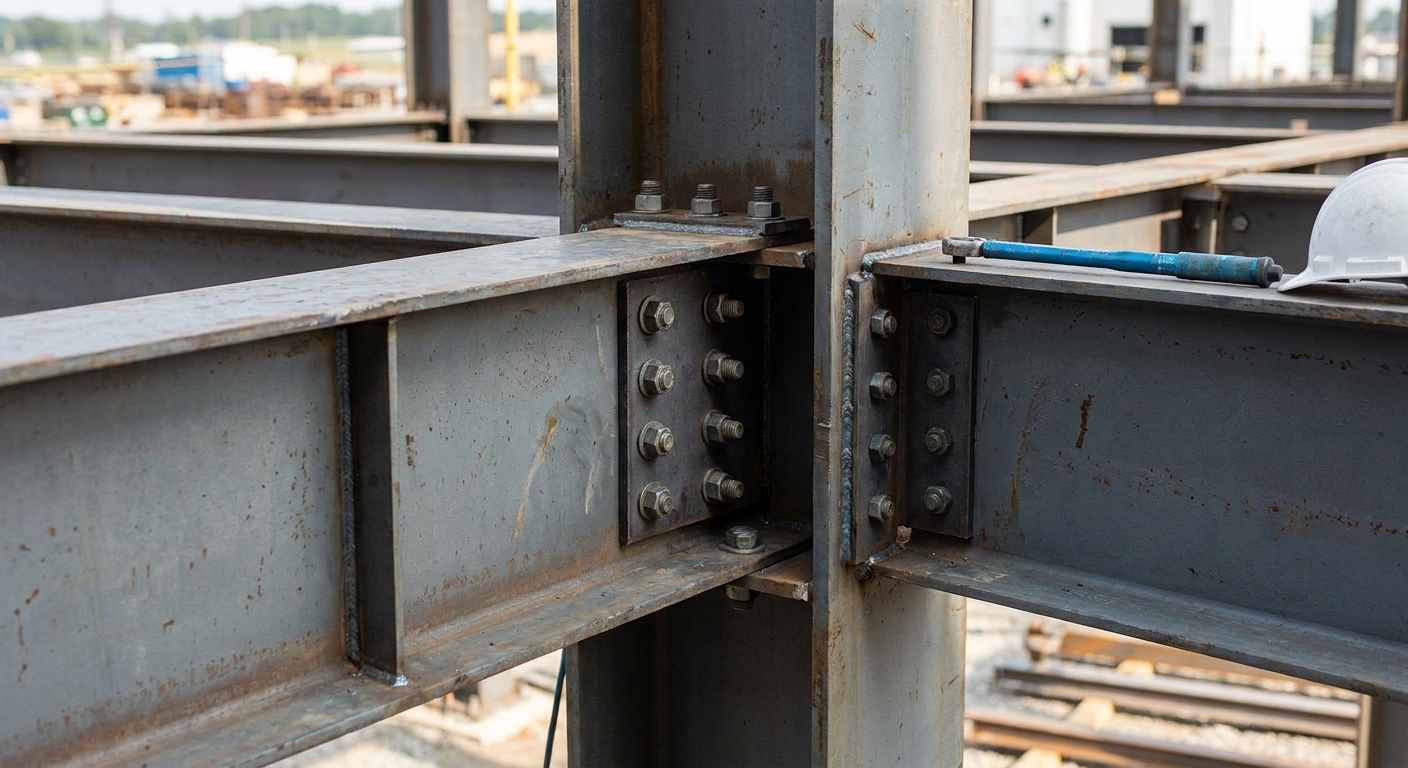
A moment frame is a structural layout where beams and columns are joined with rigid, moment-resisting connections to resist lateral and vertical loads without diagonal bracing. Understanding what is multi storey house moment frame design is key for projects that require completely open exterior window walls and flexible interior spaces. It provides structural integrity without blocking visual access.
Designing Moment-Resisting Connections
When you remove diagonal bracing, the beam-to-column connections must handle all lateral forces. But wait, there’s more: these joints must be highly rigid to resist bending moments under heavy wind loads. This requires using thick steel continuity plates, welded beam flanges, and bolted web plates to reinforce the joint.
These moment joints must be manufactured to precise tolerances to perform safely in the field. Sourcing prefabricated members helps reduce expensive field-welding issues, lowering your total labor costs.
- No Diagonal Obstructions: Ideal for continuous glass facades and open interior layouts.
- High Seismic Ductility: Absorbs seismic movement through controlled bending at the joints.
- Flexible Layouts: Makes it easy to change interior floor plans over the lifespan of the building.
Key Takeaway: Moment frames offer the ultimate design freedom for glass facades by replacing diagonal bracing with highly rigid beam-column joints.
| Joint Connection Type | Bending Resistance | On-Site Labor Requirement | Seismic Rating | |
|---|---|---|---|---|
| Welded Flange – Bolted Web | High Moment Capacity | Intensive (On-site welding required) | Seismically Certified | |
| Bolted End-Plate Connection | Medium-High Moment | Low (Fast bolted field assembly) | Standard Commercial Grade | |
| Reduced Beam Section (RBS) | Controlled Yielding | Moderate (Factory pre-cut profiles) | Ultimate Seismic Safety |
For projects that need both high lateral stiffness and structural efficiency, a diagrid system combines the best features of bracing and moment frames.
What is a structural diagrid design?
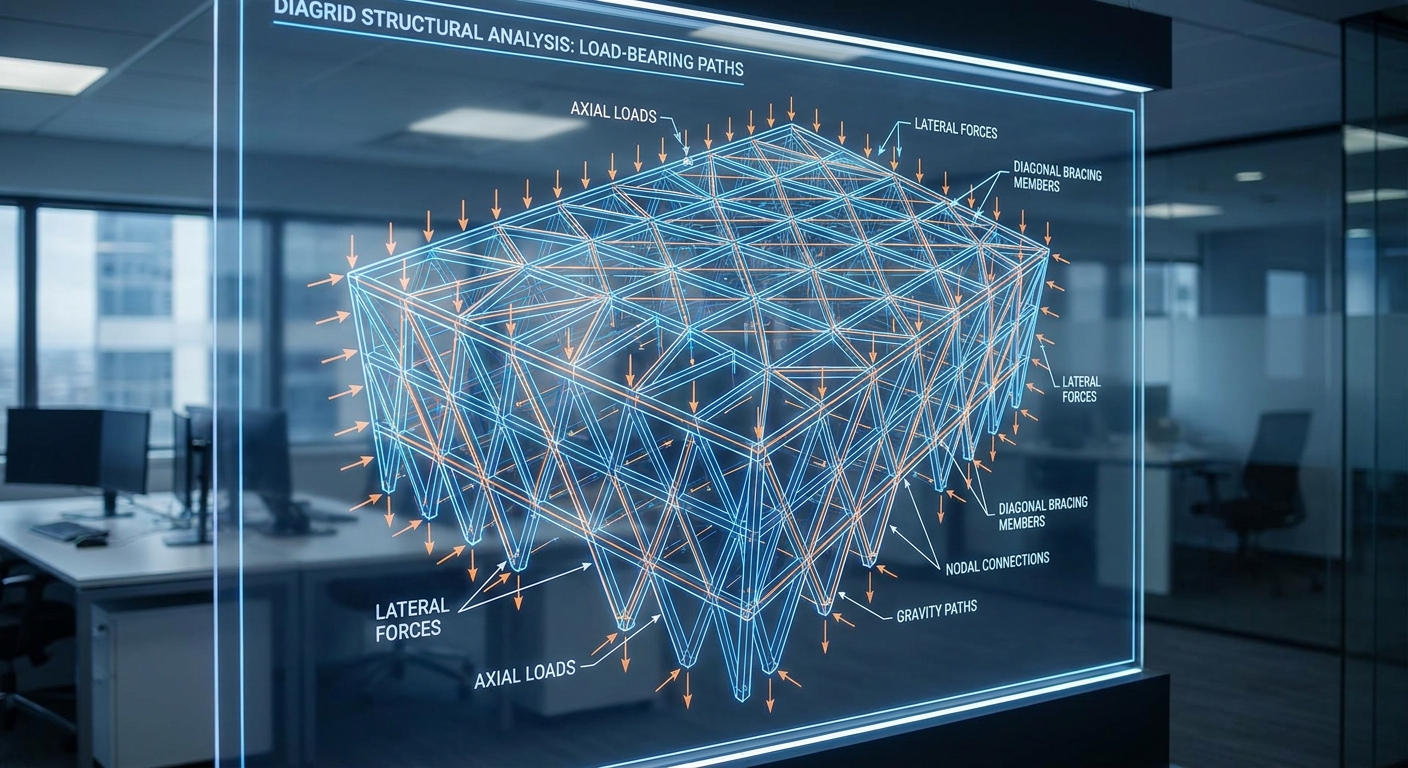
A diagrid frame is a structural design system that uses a perimeter network of diagonally intersecting steel beams to handle both gravity and lateral loads. To fully understand what is multi storey house diagrid engineering, you must analyze how this triangular steel outer frame supports ultra-modern high-rises. This system is exceptionally efficient at minimizing material usage.
The Unrivaled Efficiency of Diagrids
When you build a diagrid tower, the triangular grid acts as a structural envelope that handles all loads. Let’s look closer: the intersecting diagonal members carry both gravity weight and lateral wind forces, removing the need for traditional vertical columns on the perimeter. This triangulated layout is incredibly rigid, meaning you can use up to 20% less steel.
The main challenge in a diagrid design is fabricating the complex multi-directional node connections where the diagonal steel members meet. These nodes must be manufactured under strict factory conditions to ensure perfect structural alignment.
- Uses Less Steel: Reduces total structural steel weight by up to 20% for high-rise projects.
- Reduces Perimeter Columns: Offers completely open floor plates with clear views.
- Striking Architectural Profile: Gives your building a modern exterior look that attracts attention.
Key Takeaway: Diagrid frames use a rigid, triangular outer envelope to save on steel while creating a unique, column-free modern design.
| Diagrid Angle of Intersection | Vertical Load Capacity | Lateral Stiffness | Typical Node Weight | |
|---|---|---|---|---|
| 60 Degrees | High Capacity (Optimum) | Moderate-High | 5.5 to 8.0 Metric Tons | |
| 69 Degrees | Very High Load Capacity | Exceptional Stiffness | 8.0 to 12.0 Metric Tons | |
| 75 Degrees | Maximum Load Capacity | Good Stiffness | 12.0+ Metric Tons |
Evaluating these structural systems will help you choose the right framing layout to ensure project success and structural safety.
Conclusion
Selecting the right structural type for a multi-storey building is the ultimate key to project safety and cost efficiency. By working with a professional manufacturer, you bypass design delays and guarantee structural integrity across every vertical level. Our factory-direct fabrication ensures that each column, beam, and node is engineered to exact tolerances for fast field assembly. Partner with us to bring your commercial Mixed-Use, Warehouse, or multi-storey projects to life safely and sustainably. To request a comprehensive structural assessment and a highly competitive project quote, contact us today and let our engineering team support your construction journey from foundation to roof.
Build Your Multi Storey Project Safely with Expert Steel Design!
Email:sales@showhoo.com.cn
Phone/WhatsApp: + 86 186 7895 5927
Technical FAQ Section
Can I mix different multi-story steel framing types in a single commercial project?
Yes, combining systems is highly effective. You can pair a central structural core with perimeter moment frames or diagonal bracing to manage lateral wind loads while keeping your interior layout open.
What’s the best steel grade to use for heavy-duty columns in multi-story projects?
High-strength structural steel like Grade Q355B is the ideal choice. These grades provide the necessary yield strength and ductility to carry immense vertical loads safely with a much slimmer profile than concrete.
How do I know if my building design requires a braced frame instead of a moment frame?
Your choice depends entirely on your architectural goals and local wind conditions. If you need a cost-effective system to control lateral drift, a braced frame is best, whereas a moment frame is required if you want continuous glass facades without visual obstructions.
Can I build a multi-story steel structure on a site with poor soil conditions?
Yes, steel frames are exceptionally well-suited for poor soils. Because structural steel has an incredible strength-to-weight ratio, it is significantly lighter than reinforced concrete, which lowers foundation pressure and reduces excavation costs.