
Aircraft hangar buildings are highly specialized, clear-span steel structures specifically engineered to house, protect, and maintain valuable aviation assets. Storing high-value aircraft in standard, poorly engineered storage structures exposes your aviation investments to severe environmental damage, corrosion, and safety violations. Even minor weather changes or architectural oversights in typical commercial buildings can lead to compromised structural integrity and forced operational groundings by the FAA. Fortunately, our state-of-the-art construction hangar avion solutions offer custom-engineered prefabricated steel frames designed to withstand extreme wind, snow, and seismic loads while providing maximum space efficiency.
What are aircraft hangar buildings designed to do?
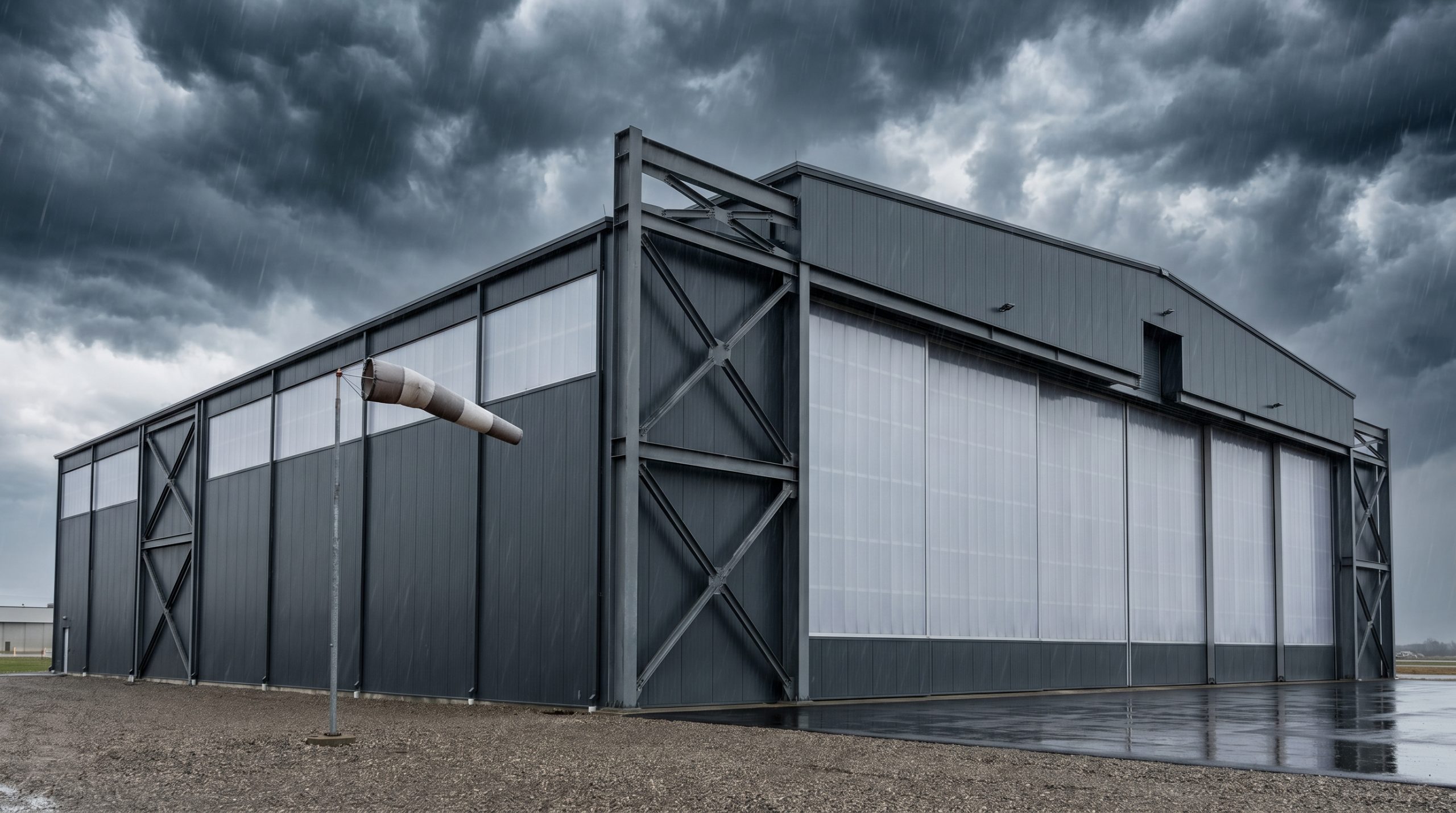
Aircraft hangar buildings are specialized, climate-resilient structures engineered to protect aircraft from environmental hazards, structural decay, and operational disruptions. When you invest in a professional construction hangar avion project, you ensure that your fleet remains safe under a high-strength, weather-resistant framework. These structures provide the space, shelter, and security necessary to maintain heavy commercial planes or recreational aircraft.
Custom pre-engineered designs also cater directly to the specific maintenance, storage, and operational demands of the aviation sector. By focusing on robust materials, you can rest assured that your hangar will resist rust, seismic forces, and high winds.
Why is weather resilience so vital?
Here is the deal: severe weather can destroy an aircraft parked in the open within minutes. If you do not have a weather-resilient structure, you risk losing millions in specialized electronic equipment and delicate composite frames.
- Threat mitigation: Defending against localized high-wind shear.
- UV shielding: Preserving sensitive exterior paint and window seals.
- Snow load resistance: Preventing roof collapse in cold climates.
Choosing the right structural steel components ensures that your building withstands localized microbursts or heavy snowfalls without flinching. You will significantly extend the service life of your aircraft by keeping them away from harsh weather cycles.
How do you protect your aviation assets?
As it turns out, protecting your aviation assets is about far more than just putting a roof over their wings. You must incorporate physical protection features such as high-grade insulation and localized hazard barriers.
- Fire containment: Utilizing automatic safety features.
- Moisture control: Minimizing relative humidity to avoid corrosion.
- Security systems: Restricting unauthorized access to active flight lines.
By taking these steps, you establish a secure, low-risk environment that lowers insurance premiums and guarantees immediate flight readiness.
Key Takeaway: Investing in high-durability steel engineering safeguards your multimillion-dollar aviation assets, minimizes structural maintenance costs, and ensures long-term operational peace of mind.
| Design Factor | Physical Protection Goal | Operational Benefit | |
|---|---|---|---|
| Weather Proofing | Prevents structural and panel leaks | Eliminates unplanned grounding times | |
| Insulation Systems | Regulates interior climate levels | Safeguards sensitive flight electronics | |
| Physical Security | Restricts taxiway access | Keeps aircraft safe from vandalism |
Let’s evaluate how clear-span steel frameworks provide the structural basis for this extensive security.
Why are clear span steel frames essential for aviation?
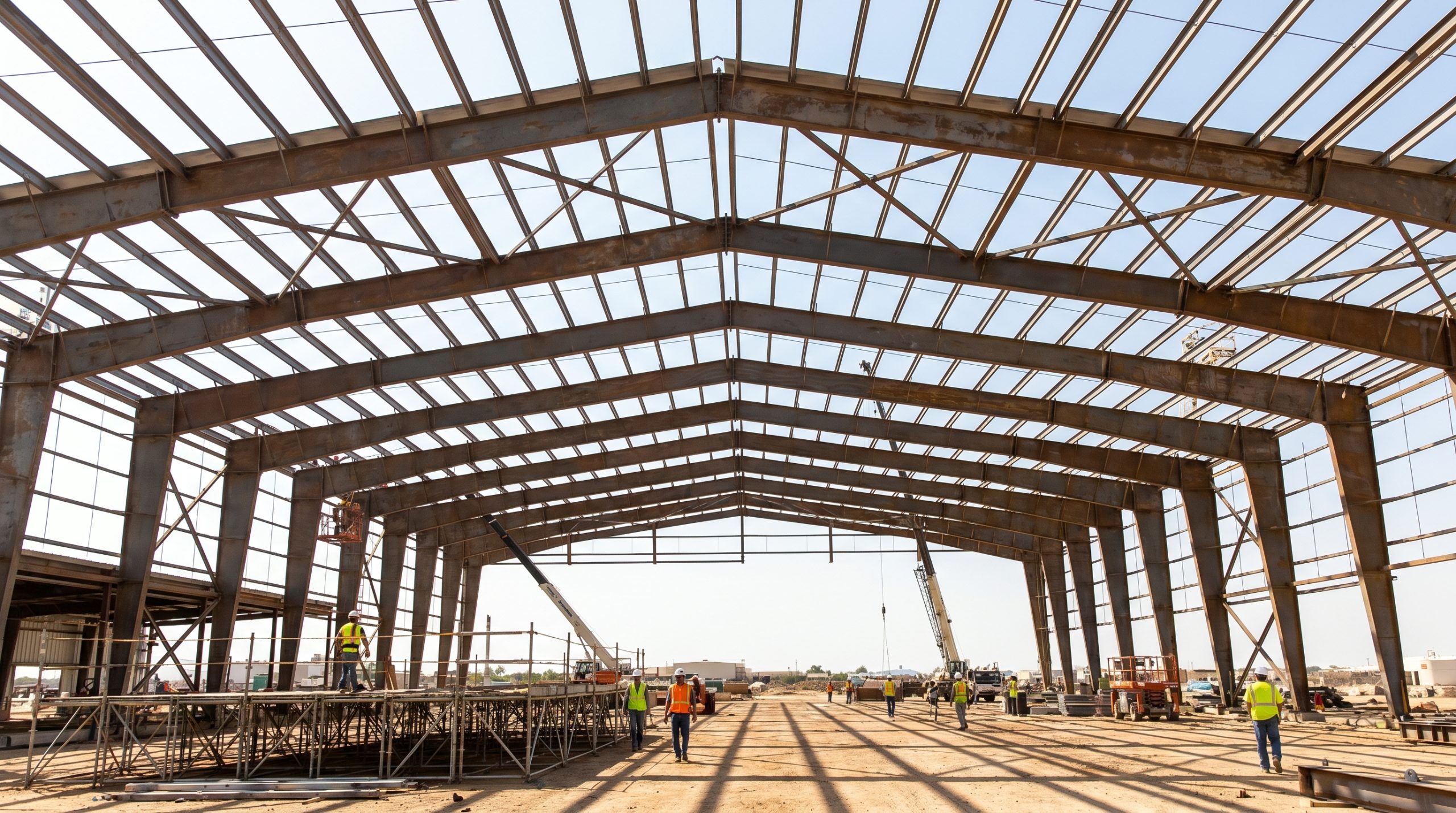
Clear span steel frames are essential because they eliminate interior support columns, allowing unobstructed space to safely maneuver and park aircraft of various sizes. Modern aviation logistics rely heavily on dynamic ground movements, making a standard commercial construction hangar avion layout completely impractical for your fleet. These frames transfer all load-bearing stress to the exterior walls, creating massive open interiors.
This open design lets you rearrange your hangar floor space at any moment without worrying about columns. It ensures that your ground crews can easily tow aircraft in and out without accidental wingtip collisions.
What are the clear span width limits?
But wait, there is more: prefabricated steel allows you to reach clear-span widths exceeding 150 feet without any mid-span columns. You can easily house multiple single-engine and twin-engine aircraft under a single roof structure.
- 40-60 feet spans: Perfect for standard single-engine recreational aircraft.
- 60-80 feet spans: Essential for larger light twin-engine models.
- 80-120+ feet spans: Mandatory for housing corporate jets.
When you choose high-tensile structural steel, your building’s engineering naturally accommodates these massive spans while maintaining total code compliance.
How does structural steel handle heavy loads?
As it turns out, the secret lies in rigid frame engineering that distributes extreme wind and roof loads evenly down to the foundation. You can trust that your heavy overhead equipment and crane systems will operate safely within this robust setup.
- Dead load capacity: Supports massive overhead hangar door weights.
- Live load management: Resists localized seismic shifting.
- Wind deflection: Maintains structural integrity under severe lateral pressure.
This exceptional load-bearing performance guarantees that your clear-span space remains completely safe, stable, and rigid for decades to come.
Key Takeaway: Selecting a clear-span steel structure eliminates column-related maneuvering hazards, maximizes usable workspace, and provides the heavy-duty framing required for modern aviation support equipment.
| Clear-Span Width | Best Aircraft Fit | Structural Framing Type | |
|---|---|---|---|
| 40′ to 60′ | Cessna 172, Piper Cherokee | Rigid Frame Steel | |
| 60′ to 80′ | King Air 200, Piper Seneca | Rigid Frame Steel | |
| 80′ to 120+’ | Citation X, Gulfstream G650 | Heavy Rigid Frame |
Let’s analyze how this structural scale translates directly into your baseline capital and construction expenditures.
Get a custom construction hangar avion quote today!
Email:sales@showhoo.com.cn
Phone/WhatsApp: + 86 186 7895 5927
How much does building a steel hangar cost?

Building a steel hangar typically costs between 15 and 35 per square foot for the basic prefabricated kit, with total installed costs ranging from 50 to 120+ per square foot depending on complexity. Before starting your build, choosing a cost-efficient construction hangar avion model will help you optimize your capital allocation. This price range includes everything from basic structures to complex corporate aviation hubs.
While base building kits remain remarkably affordable, your final investment will vary depending on your choice of doors, concrete thickness, and active fire suppression systems.
What are the main cost drivers?
Here is the deal: your choice of door systems and localized foundation requirements will dictate a large portion of your final budget. You must plan your cash flow carefully to avoid unexpected financial bottlenecks during the site preparation phase.
- Hangar doors: Bi-fold and hydraulic doors cost significantly more than sliding ones.
- Foundation depth: Expansive soils require deeper, more expensive concrete pours.
- Fire suppression: Large-scale foam systems add substantial infrastructure costs.
By identifying these key cost drivers early in your planning phase, you can easily control your spending and direct resources where they matter most.
Can you minimize hangar assembly expenses?
But wait, there is more: opting for prefabricated steel components dramatically reduces your on-site labor and assembly costs. You get a kit that is pre-punched, pre-welded, and ready for rapid erection by your local contracting crew.
- Factory-direct pricing: Cuts out middleman markups entirely.
- Reduced construction time: Lowers active on-site labor costs.
- Minimized material waste: Prevents costly excess cleanup fees.
This streamlined manufacturing approach ensures you receive an exceptionally durable building at a fraction of the cost of traditional construction methods.
Key Takeaway: Pre-engineered steel building kits offer predictable, transparent pricing and fast construction timelines, allowing you to maximize quality while keeping project costs well within budget.
| Construction Element | Average Cost per Sq. Ft. | Primary Budget Impact | |
|---|---|---|---|
| Steel Building Kit | 15to35 | Steel market pricing, clear-span width | |
| Foundation Concrete | 6to12 | Slab thickness, soil prep, reinforcement | |
| Door Installation | 15to35 | Type (Hydraulic vs. Sliding), size |
Let’s explore how these cost figures adapt when designing specialized facilities for private jet operations.
Which hangar design suits modern private jets?

The best hangar design for modern private jets features a rigid-frame clear-span steel structure combined with advanced climate control systems and dedicated crew support zones. Choosing a premium layout ensures that your luxury aircraft remains protected in an environment that matches its high-end performance. A high-quality construction hangar avion design should prioritize seamless taxiway access, pristine aesthetics, and advanced fire prevention.
This design layout also provides adequate vertical clearance to accommodate high tail structures, specialized ground power units, and maintenance scaffolding.
What dimensions do private jets require?
But wait, there is more: private jets require substantial clearance zones to prevent accidental wingtip overlaps and ground handling mistakes. You need to calculate both your current fleet size and your future aircraft upgrades before committing to final dimensions.
- Light Jets: Require a minimum of 55′ × 40′ floor space.
- Mid-Size Jets: Need at least 70′ × 50′ spatial footprint.
- Large Cabin Jets: Must have 100′ × 80′ or wider clearances.
Planning for these specific physical dimensions ensures that you never run out of room when maneuvering your high-value assets.
How can you optimize the interior layout?
Let’s look at the facts: a productive aviation environment requires a smart partition layout that separates your hangar floor from administrative spaces. You can establish dedicated zones that optimize workflow efficiency and safety.
- Aviation offices: Keep operations, crew lounges, and flight planning nearby.
- Tool storage: Place parts and tool cabinets along the perimeter walls.
- Utility drops: Install convenient power and water connections close to parking spots.
This strategic layout design keeps your workspace clean, organized, and running at maximum operational efficiency day after day.
Key Takeaway: Designing your hangar specifically for private jet operations requires generous clearance metrics and smart floor partitioning to guarantee safe movements and elite maintenance capabilities.
| Jet Category | Minimum Size | Recommended Size | Tail Height Clearance | |
|---|---|---|---|---|
| Light Jet | 55′ × 40′ | 65′ × 50′ | 15′ minimum | |
| Mid-Size Jet | 70′ × 50′ | 80′ × 57′ | 20′ minimum | |
| Large Jet | 100′ × 80′ | 120′ × 100′ | 28′ minimum |
Let’s look closer at how door system designs can impact your hangar’s overall clearance and daily accessibility.
How do you select the best hangar door system?

Selecting the best hangar door system involves balancing budget constraints, wind resistance, and spatial clearance needs with structural configurations like bi-fold, hydraulic, or sliding doors. Incorporating these large-scale door systems into your construction hangar avion design requires careful coordination with structural engineers to manage dynamic wall loads. The right door style changes how you use your hangar and how much wind pressure the frame must resist.
Each system introduces unique mechanical benefits and physical footprints, meaning that a choice should align closely with your localized flightline operations.
Should you choose hydraulic or bi-fold?
Here is the deal: hydraulic doors open as a single piece to create an instant exterior canopy, whereas bi-fold doors fold in half as they rise. You must decide which movement pattern fits your local taxiway clearance limits and aesthetic goals.
- Hydraulic doors: Offer excellent weathertight seals and simple, robust hydraulic cylinders.
- Bi-Fold doors: Provide reliable performance in high-wind regions but take up overhead room.
- Structural impact: Hydraulic doors exert a significant horizontal pull on the header.
Both options deliver exceptional reliability, but they require heavy-duty structural reinforcement to handle the massive dynamic loads.
Are sliding doors more reliable for you?
As it turns out, manual or electric sliding doors are highly cost-effective and have incredibly low mechanical failure rates over time. You do not have to worry about complex hydraulic systems or heavy electric motors failing during a storm.
- Low initial cost: Fits easily into budget-conscious hangar builds.
- Simple operation: Glides easily along floor tracks and guides.
- Track upkeep: Requires you to keep the bottom tracks clear of snow, ice, and gravel.
If you want a straightforward, highly reliable door system that lasts for decades with basic cleaning, sliding doors are hard to beat.
Key Takeaway: Hangar doors are a major structural component; choosing between hydraulic, bi-fold, or sliding options depends on your budget, clearance limits, and local wind conditions.
| Door Type | Best Suited For | Key Advantage | Maintenance Requirement | |
|---|---|---|---|---|
| Hydraulic | Corporate & Luxury Hangars | Serves as protective outdoor canopy | Seal inspection, hydraulic fluid checks | |
| Bi-Fold | Medium to Large Facilities | High wind resistance, reliable fold | Cable and strap tension inspections | |
| Sliding | Small to Budget Hangars | Lowest system cost, highly dependable | Bottom rail cleaning and debris removal |
Let’s evaluate how your chosen building dimensions and doors interact with FAA safety guidelines near active runways.
What strict FAA runway clearances must you maintain?
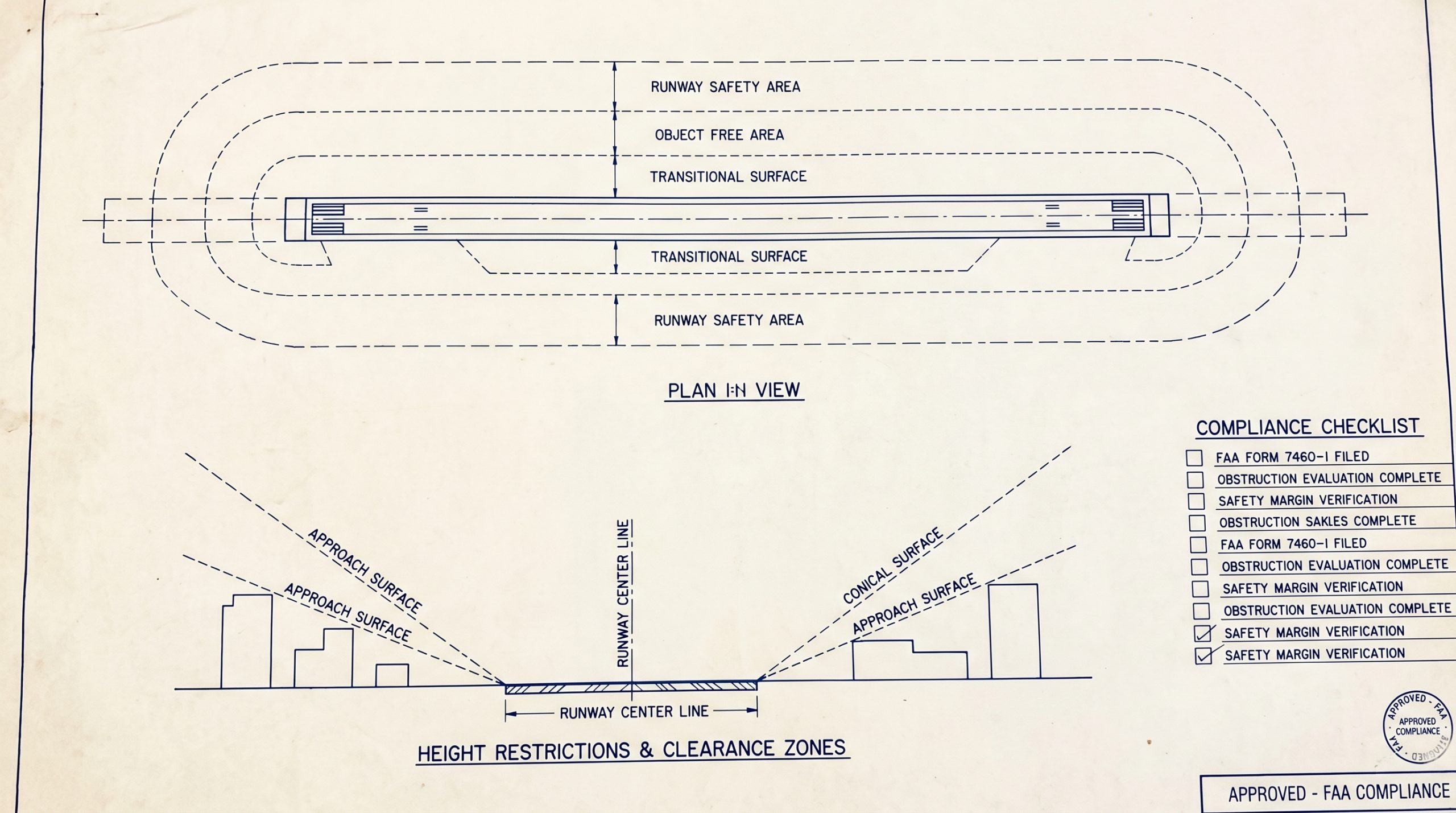
You must maintain strict runway clearances set by the FAA to ensure that your building’s height and physical footprint do not interfere with active flight paths, taxiways, or object-free zones. When drafting your plans, integrating these regulations into your local construction hangar avion blueprint is essential to avoid costly, forced layout revisions later. Ignoring these boundaries can lead to immediate halts in construction or expensive legal disputes.
Every structure built on or near a public-use airport must be vetted to verify that it does not pose a physical hazard to navigating aircraft.
What is FAA Form 7460-1?
But wait, there is more: you must file FAA Form 7460-1, “Notice of Proposed Construction or Alteration,” well before you break ground. This filing triggers an official airspace evaluation to make sure your building does not block navigational signals or flight paths.
- 45-day lead time: You should file this form at least 45 days before starting.
- Height analysis: Evaluates the highest point of your roof and crane setups.
- Safe taxiing zones: Confirms your structure sits outside active taxiway margins.
Securing this official approval early is the most important step in keeping your project on its planned timeline.
How do you verify obstruction standards?
As it turns out, you need to work closely with experienced structural planners who understand FAA Part 77 obstruction standards inside out. This ensures that your building design remains safely below imaginary airport boundary lines.
- Object-Free Areas (OFA): Keeps your building away from active runway centerlines.
- Obstruction lights: Mandates safety lighting if your roof exceeds local height limits.
- Airport Layout Plan (ALP): Confirms your project matches the airport’s official expansion blueprint.
By checking these standards ahead of time, you avoid costly modifications and make sure your structure is fully approved for long-term use.
Key Takeaway: Achieving complete FAA compliance by filing Form 7460-1 early guarantees that your steel hangar structure meets all flight safety standards, avoiding legal issues or forced structural redesigns.
| FAA Regulation | Core Requirement | Practical Impact on Hangar | |
|---|---|---|---|
| FAA Form 7460-1 | Mandatory airspace filing prior to build | Determines maximum allowed building height | |
| Part 77 Imaginary Surfaces | Keeps flight paths clear of physical obstacles | Restricts roof elevations near active runways | |
| Object-Free Area (OFA) | Bans structures near runway centerlines | Dictates the exact setback distance of hangar |
Let’s check how meeting these external design regulations affects the setup of your building’s internal systems and power supplies.
Get a custom construction hangar avion quote today!
Email:sales@showhoo.com.cn
Phone/WhatsApp: + 86 186 7895 5927
How do you design specialized electrical systems?

Designing specialized electrical systems requires the installation of high-voltage lines, explosion-proof fixtures, and reliable backup power systems tailored specifically for aviation ground support. Integrating these high-demand electrical grids into your construction hangar avion plans ensures that your ground crews have safe access to ground power units (GPUs) and heavy-duty maintenance outlets. A poorly designed electrical layout can create significant safety risks, particularly when dealing with aircraft fuel vapors.
By selecting specialized components, you ensure total compliance with local safety standards while establishing a productive, high-efficiency workspace.
Why use explosion-proof hardware?
Here is the deal: fuel vapors are heavier than air and naturally pool near the hangar floor, where any electrical spark can cause an explosion. You must mount all standard outlets and switches at least 18 inches above the floor level to stay safe.
- Class I, Division 1/2 fittings: Mandatory in aircraft maintenance and fuel-handling zones.
- Intrinsically safe wiring: Prevents electrical energy from reaching levels that trigger ignition.
- Sealed conduit runs: Stops flammable vapors from traveling through electrical pipes.
Following these rigid safety guidelines keeps your team protected and ensures your hangar meets strict fire marshal standards.
Can you meet heavy ground power loads?
But wait, there is more: modern private jets require steady, high-current ground power to run onboard systems during pre-flight checks and testing. You must design your electrical panel to handle these heavy, continuous industrial loads without tripping.
- 400 Hz power drops: Necessary for powering sensitive jet electronics.
- High-bay LED lights: Keeps the hangar bright and shadow-free without wasting energy.
- Dedicated machine outlets: Delivers 240V/480V power directly to your maintenance tools.
Installing these specialized power links ensures your hangar is fully prepared to service advanced corporate aircraft.
Key Takeaway: Implementing code-compliant, explosion-proof electrical layouts and heavy-duty power links provides your crews with the stable ground power and bright, safe conditions needed for expert aircraft service.
| System Element | Safety / Load Standard | Operational Purpose | |
|---|---|---|---|
| Explosion-Proof Outlets | Mounted 18″+ above floor (Class I, Div 1) | Prevents fuel vapor ignition from sparks | |
| Ground Power Units (GPU) | Dedicated 400 Hz power lines | Runs jet electronics without starting engines | |
| High-Bay LED Lights | High-efficiency, shadow-free output | Provides bright conditions for detailed checks |
Let’s analyze how these heavy interior systems rely on a robust foundation slab to handle active flightline loads.
Why is a reinforced concrete foundation critical?
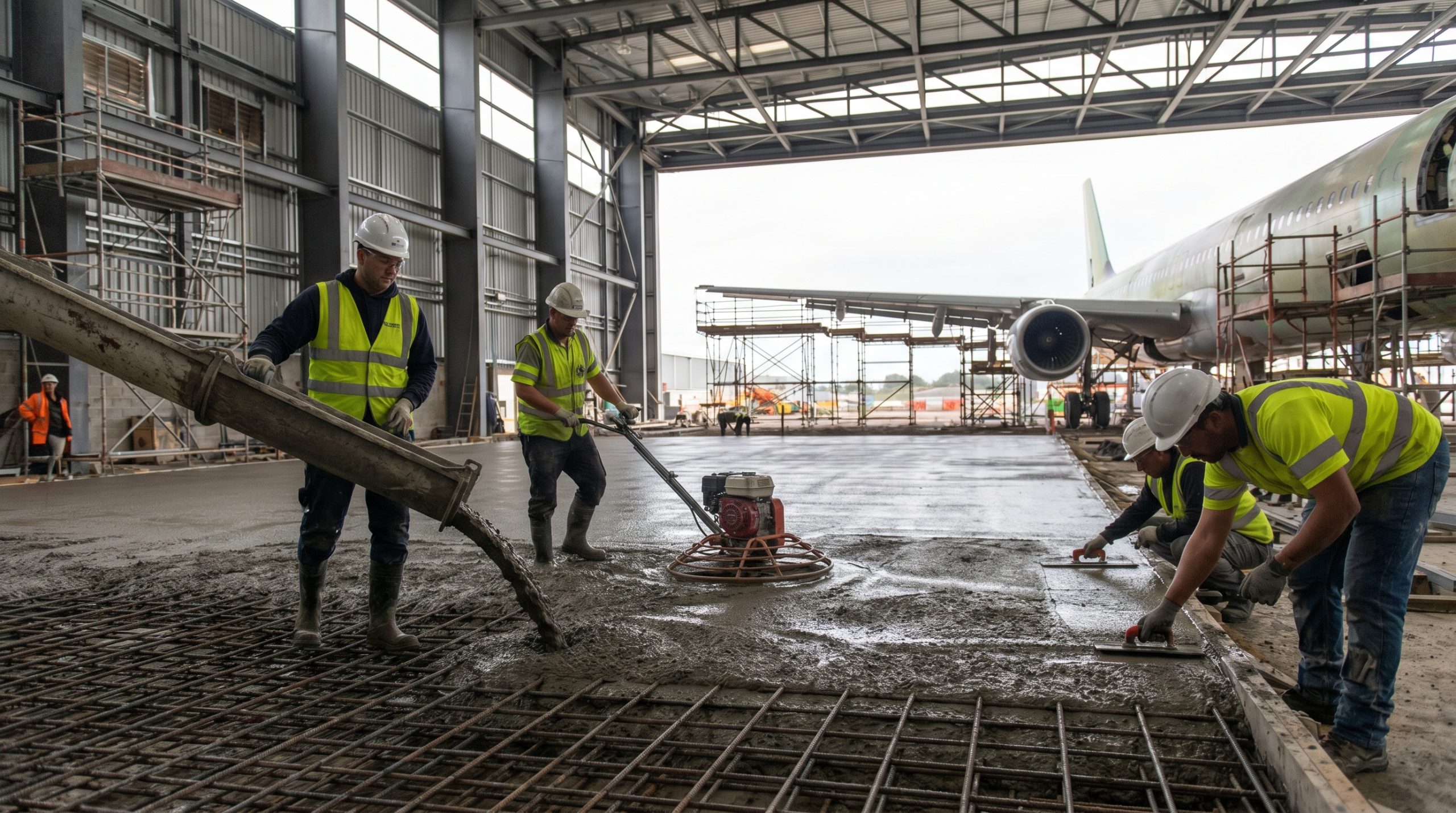
A reinforced concrete foundation is critical because it must support extreme structural point loads from aircraft landing gear while resisting chemicals and fuel spills over decades of use. Standard commercial foundations are simply not engineered to handle the concentrated weight of heavy aircraft, making a specialized construction hangar avion slab design absolutely necessary. This heavy-duty slab distributes structural loads evenly to prevent uneven settling or structural cracking.
Proper foundation planning also ensures that your massive hangar doors continue to glide smoothly along perfectly level tracks.
What thickness prevents slab cracking?
As it turns out, you need an aircraft-rated slab that is at least 6 to 8 inches thick, reinforced with a heavy-duty grid of steel rebar. This robust design stops point loads from cracking the concrete over years of constant taxiing.
- Rebar reinforcement: Distributes localized weight away from landing gear contact points.
- High-strength mix: Uses concrete rated at 4,000 to 5,000 PSI minimum.
- Compacted sub-base: Establishes a level, rock-solid subgrade to prevent hollow spots.
Investing in a premium reinforced foundation protects your floor from cracking under the weight of heavy aircraft and utility machinery.
How do you protect against fuel spills?
But wait, there is more: aviation fluids and jet fuels are highly corrosive and will quickly eat through untreated concrete, leaving ugly stains and causing structural decay. You must apply a chemical-resistant epoxy or polyurethane sealant to shield your floor.
- Epoxy coatings: Provide a high-gloss, chemical-resistant finish that is easy to wash.
- Oil-water separators: Catches fuel and oil run-off before it reaches drainage networks.
- Floor sloping: Channels spilled fluids safely toward integrated perimeter drains.
These protective sealants make cleanup simple while protecting your underlying concrete structure from chemical corrosion.
Key Takeaway: Pouring a thick, reinforced, chemical-sealed concrete foundation prevents slab cracking under heavy aircraft loads, keeps the floor easy to clean, and protects nearby water systems.
| Foundation Feature | Material Specification | Structural Role | |
|---|---|---|---|
| Slab Thickness | 6 to 8 inches (4,000+ PSI) | Carries concentrated landing gear point loads | |
| Steel Reinforcement | #4 or #5 rebar on a tight grid | Prevents concrete cracking and shifting | |
| Chemical Sealant | Multi-layer epoxy or polyurethane | Resists corrosive fuels, oils, and solvents |
Let’s explore how these foundation blueprints fit into the broader process of coordinating and permitting your airport construction site.
How do you coordinate airport construction plans?

Coordinating airport construction plans requires early alignment with local zoning laws, airport master layout plans, environmental impact studies, and local fire marshals. Navigating these overlapping regulatory bodies goes much smoother when you integrate these guidelines into your construction hangar avion design from day one. Failing to coordinate with airport authorities can lead to major project delays and unexpected compliance costs.
By establishing open communication with airport administrators early on, you ensure that your building meets all active flightline and safety guidelines.
How do you align with airport master plans?
Here is the deal: every airport operates under an official Master Plan that dictates exactly where and how new commercial or private hangars can be built. You must verify that your chosen site matches these long-term expansion goals.
- Ground lease agreements: Secures your right to build on public airport property.
- Taxiway access roads: Ensures a clear, approved path connects your hangar to active runways.
- Architectural consistency: Matches your building’s exterior design with surrounding airport facilities.
Aligning your structural plans with these local standards ensures a smooth approval process with the airport board.
What fire protection codes apply here?
As it turns out, you must follow NFPA 409 standards, which define the strict fire protection and sprinkler requirements for aircraft storage hangars. Meeting these codes keeps your team safe and protects your valuable fleet from fire hazards.
- Foam deluge networks: Instantly smothers fuel fires with high-expansion foam.
- Draft curtains: Traps heat and smoke to activate overhead sprinklers faster.
- Emergency exits: Provides clear, safe escape routes for your ground crews.
Designing your facility to meet NFPA 409 standards keeps your project fully compliant and helps lower your insurance premiums.
Key Takeaway: Coordinating with airport authorities and fire marshals early ensures your building plan fits the airport’s master layout and meets NFPA 409 codes, saving you from expensive structural changes later.
| Regulatory Area | Governing Body / Code | Core Project Impact | |
|---|---|---|---|
| Land Allocation | Airport Master Plan & Ground Lease | Confirms your site placement and taxiway connections | |
| Airspace Safety | FAA Part 77 imaginary surfaces | Sets height limits for roofs and cranes | |
| Fire Protection | NFPA 409 standards | Dictates foam sprinkler system requirements |
Let’s look at how to organize your interior floor plan to maximize workspace efficiency within these approved boundaries.
How do you plan an efficient hangar floor layout?
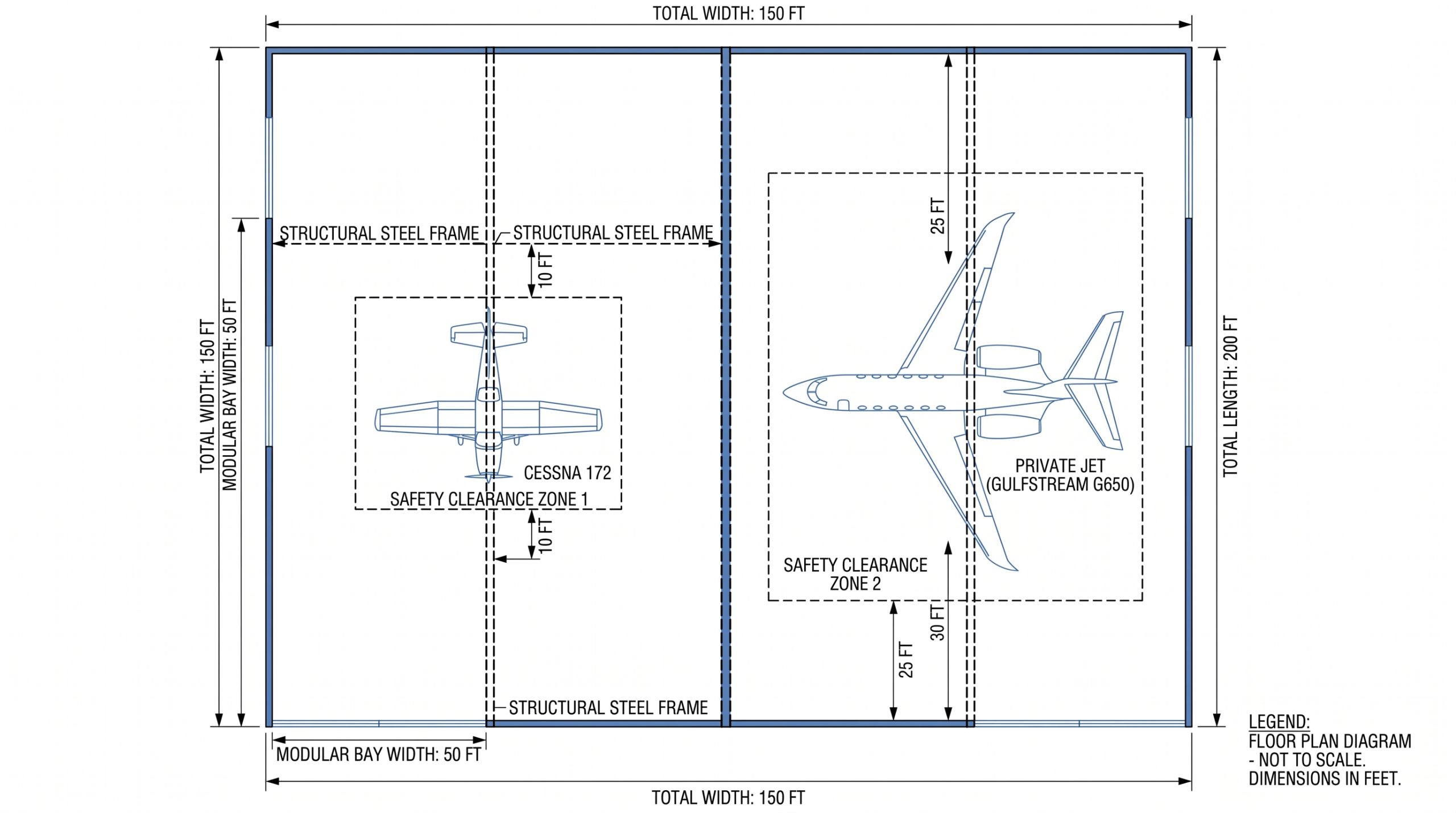
Planning an efficient hangar floor layout requires mapping out safe clearance zones, optimizing maintenance access, and sizing structural bays to handle your current and future aircraft. Drafting a clear floor plan is the key to maximizing utility space inside your construction hangar avion setup, preventing crowded, disorganized work areas. A smart layout design keeps your ground operations running smoothly and reduces the risk of accidental towing damage.
By organizing your workspace into specialized zones, you can easily handle regular maintenance tasks while keeping your primary aircraft parking areas clear.
What are safety clearance zones?
Here is the deal: you must maintain active safety clearance zones around each parked aircraft to prevent wingtips and tails from bumping into walls or nearby equipment. These safety buffers protect your aircraft during towing and parking.
- Wall setbacks: Keeps wings at least 5 to 10 feet away from structural steel columns.
- Towing pathways: Establishes wide, unobstructed paths for your aircraft tugs.
- Scaffolding clearances: Leaves plenty of room to set up maintenance stands around the fuselage.
Marking these safety zones clearly on your floor plan ensures your crews can move aircraft around safely without any close calls.
How can you space multi-aircraft fleets?
But wait, there is more: if you manage a fleet of different aircraft, arranging them in a nested pattern lets you park more planes in the same space. You can easily maximize your floor space by matching wingspans and tail heights.
- Nested parking: Angles nose cones under adjacent wings to save floor space.
- Modular bays: Allows you to partition off specific areas for smaller light planes.
- Future expansions: Leaves space for pre-planned structural bays as your fleet grows.
This efficient parking strategy lets you house a larger fleet without paying for a much larger building footprint.
Key Takeaway: Designing an organized floor layout with clear safety zones and nested parking patterns maximizes your usable square footage and reduces the risk of ground collisions.
| Layout Zone | Minimum Clearance | Operational Function | |
|---|---|---|---|
| Aircraft Parking Bay | 5 to 10 feet from walls | Safely holds planes without structural wingtip interference | |
| Towing Corridor | 15+ feet unobstructed path | Allows tow tractors to maneuver and park aircraft easily | |
| Maintenance Area | 8+ feet around work zones | Provides room for mechanics, tools, and scaffolding setups |
Let’s wrap up this guide by examining how to move forward with your hangar project and get the expert support you need.
Conclusion
Constructing a state-of-the-art clear-span steel facility is the ultimate way to protect your valuable aviation assets from harsh weather, maximize operational efficiency, and guarantee total compliance with FAA and fire safety regulations. From pouring a reinforced concrete slab and selecting a high-durability door system to designing specialized explosion-proof utility networks, pre-engineered steel buildings deliver the elite durability your flight operations demand. We are ready to help you navigate this complex planning, engineering, and permitting process with ease. To get customized structural drawings, detailed cost estimates, and professional engineering support tailored specifically to your fleet, please contact us today to start your project. Together, we can build a stronger, safer, and more resilient future for the global aviation community, one world-class hangar at a time.
Get a custom construction hangar avion quote today!
Email:sales@showhoo.com.cn
Phone/WhatsApp: + 86 186 7895 5927
Aircraft Hangar Buildings FAQ
Can I expand my steel aircraft hangar building in the future?
Yes, absolutely. Prefabricated steel frames can be engineered with expandable endwalls and modular bays, allowing you to easily add structural bays as your aviation fleet grows.
What’s the best door system for a high-wind coastal airport hangar?
A bi-fold door system is generally the best choice because its rigid, truss-reinforced panels provide superior wind resistance and structural durability in coastal wind zones.
How do I know if my aircraft hangar project requires a foam fire suppression system?
Typically, yes, if your building exceeds Class II size limits under NFPA 409 standards or is used for heavy commercial maintenance. Smaller private storage structures may only require standard water sprinklers or portable fire extinguishers.
Can I install a crane system inside a prefabricated steel hangar?
Yes, you can. The rigid frame steel pillars and overhead truss systems can be custom-engineered to support heavy overhead bridge cranes, hoists, and aviation maintenance scaffolding.
How do I know if my building height violates airport airspace regulations?
You must submit a formal airspace analysis using FAA Form 7460-1 prior to construction. The FAA will officially evaluate your proposed coordinates, roof elevation, and construction crane heights to ensure they do not cross active flight paths.