
Building a warehouse is a strategic process that involves meticulous site selection, professional structural design, and the integration of advanced logistics technology. You might find that your current facility is bursting at the seams, leading to disorganized inventory and delayed shipments. This operational bottleneck can choke your business growth and frustrate your most loyal customers. By following a structured roadmap for building a warehouse , you can transform these logistical headaches into a high-efficiency engine for your supply chain.
What are the first steps in building a warehouse?

The first steps involve defining your operational scope and analyzing your long-term storage requirements. Before moving any dirt, you must decide what the primary function of your facility will be. Successfully building a warehouse starts with a clear vision of your workflow.
Identifying your core operational needs
You need to determine if your facility will focus on cold storage, e-commerce fulfillment, or bulk manufacturing storage. Each of these functions requires different structural specifications and loading dock configurations.
Consider this:
- Specialized inventory often requires climate control.
- High-volume shipping needs more dock doors.
- Future scalability should be planned from day one.
How much storage space do you require?
Calculating your required square footage involves more than just measuring your current inventory levels. You should project your growth over the next five to ten years to ensure the facility remains viable.
The bottom line? You must account for aisle widths and vertical clearance when calculating total volume. If you underestimate your space needs now, you will face expensive expansion costs later.
Key Takeaway: Early planning prevents operational bottlenecks by ensuring the physical structure matches your specific business workflows.
| Planning Step | Description | Importance | |
|---|---|---|---|
| Operational Audit | Defining the primary use of the space | High | |
| Capacity Planning | Calculating current and future storage | Critical | |
| Workflow Mapping | Designing the movement of goods | Medium |
Establishing a solid foundation of data ensures your construction project remains on track from the very beginning.
Who should you hire when building a warehouse?
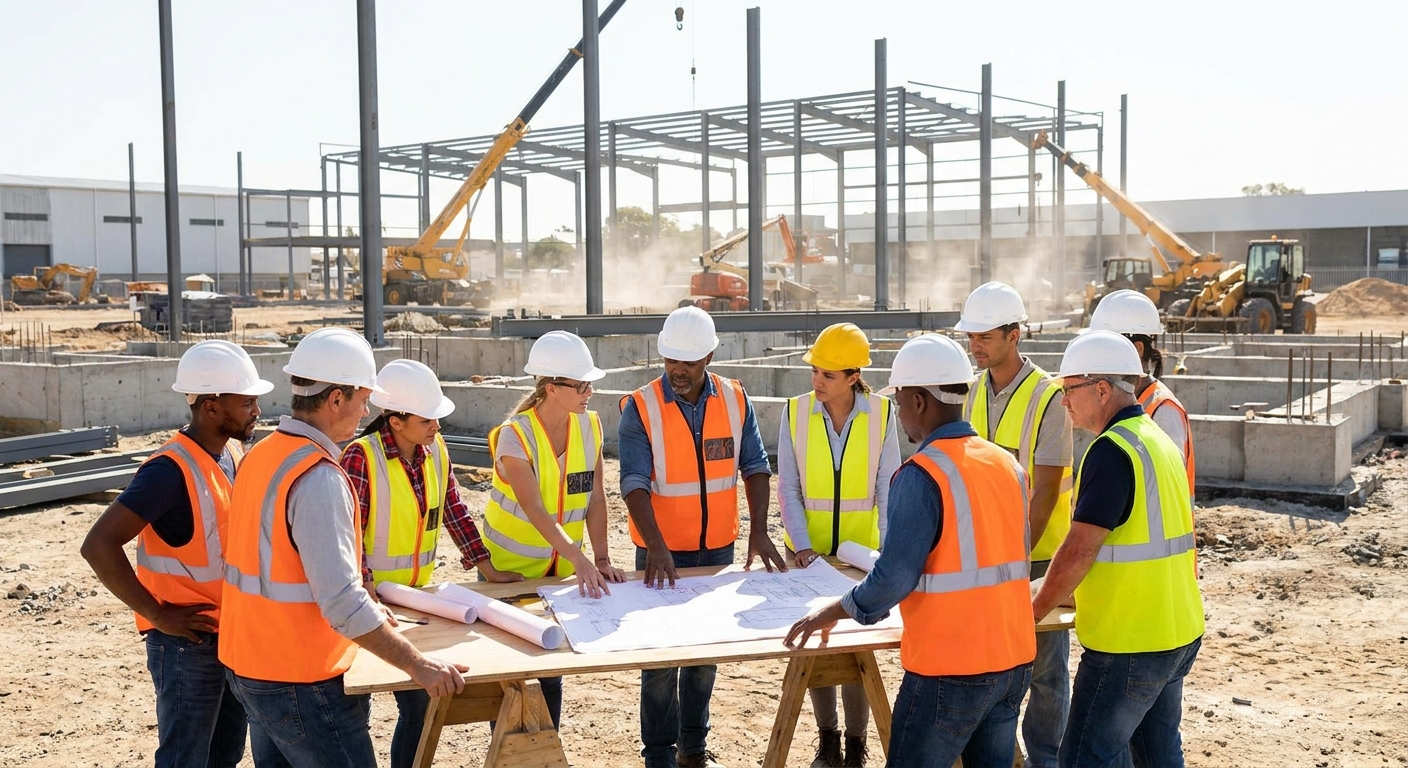
You must hire a specialized team consisting of industrial architects, structural engineers, and an experienced general contractor. Selecting the right partners for building a warehouse determines whether your project stays on budget or spiraling into costly delays.
Selecting industrial architects and engineers
Industrial architects specialize in the unique requirements of large-scale commercial buildings, such as fire suppression and heavy-duty load bearing. They work closely with structural engineers to ensure the building can withstand local environmental stressors.
Here is the kicker:
- Architects ensure the building code compliance.
- Engineers focus on the integrity of the steel frame.
- Collaborative design reduces the risk of mid-project changes.
Hiring a qualified general contractor
Your general contractor acts as the project manager, coordinating all subcontractors from plumbers to electricians. You should look for a firm with a proven track record in industrial steel construction.
Consider this:
- A local contractor understands regional permit nuances.
- Experienced firms have established relationships with reliable suppliers.
- Clear communication is the hallmark of a great partner.
Key Takeaway: Assembling an expert team shifts the burden of technical management away from you and onto seasoned professionals.
| Role | Primary Responsibility | Essential Skill | |
|---|---|---|---|
| Architect | Blueprint design and code compliance | Spatial optimization | |
| Engineer | Structural calculations and safety | Material science | |
| Contractor | On-site management and execution | Vendor coordination |
A cohesive team creates a seamless transition from the drawing board to the actual construction site.
Where is the best site for building a warehouse?
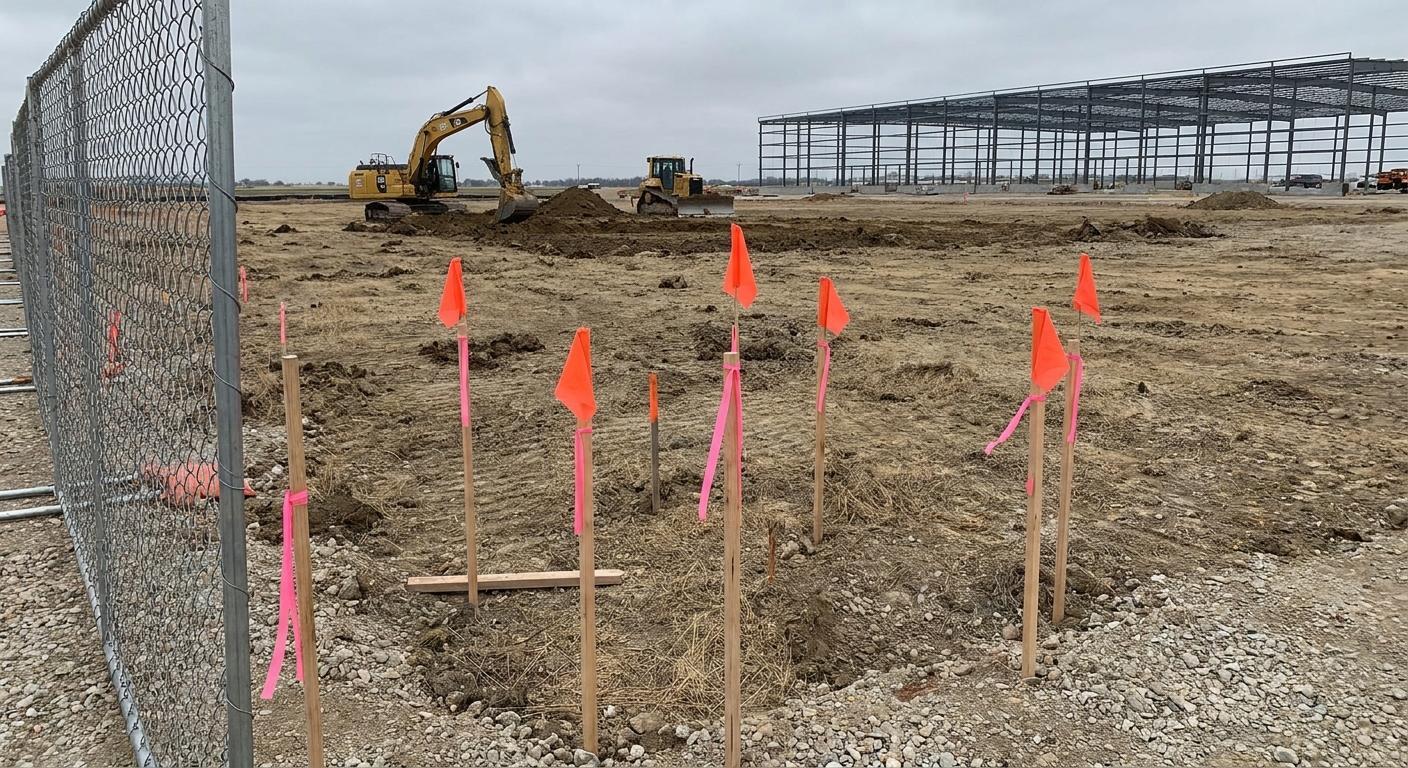
The best site is one that offers stable soil conditions and immediate proximity to major transport hubs like highways or ports. Location is the most permanent decision you will make when building a warehouse.
Evaluating soil quality and land grading
You must perform a geotechnical survey to ensure the ground can support the weight of a massive concrete slab and heavy inventory. Poor soil quality can lead to foundation cracking and structural failure over time.
Consider this:
- Soil density tests prevent future building settling.
- Proper grading ensures water drains away from the structure.
- Rocky terrain may increase your initial excavation costs.
Is the location accessible for logistics?
Your facility must be easily accessible for 53-foot trailers and delivery vans to ensure smooth inbound and outbound traffic. Proximity to your labor pool is also a critical factor for long-term operational success.
The bottom line?
- Easy highway access reduces fuel and transport costs.
- Zoning laws must allow for 24/7 industrial operations.
- Utilities like high-speed internet and power must be available.
Key Takeaway: Strategic site selection minimizes transportation overhead and ensures the physical longevity of your facility.
| Site Factor | Requirement | Operational Impact | |
|---|---|---|---|
| Soil Stability | High load-bearing capacity | Foundation integrity | |
| Logistics | Proximity to major transport routes | Shipping efficiency | |
| Zoning | Industrial M-1 or M-2 classification | Legal compliance |
Choosing the right plot of land is a balancing act between initial purchase price and long-term logistical savings.
How do you design for building a warehouse?
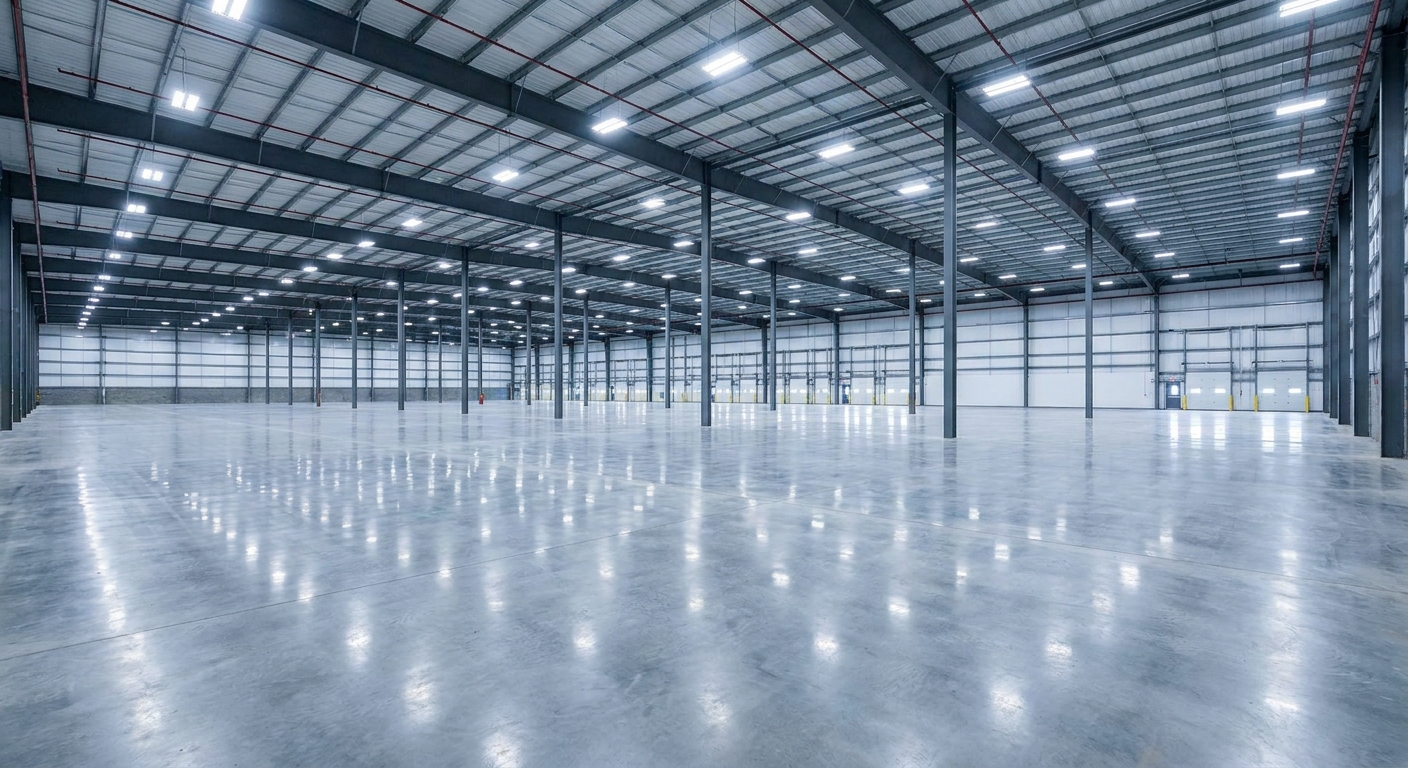
Designing for efficiency means creating a layout that minimizes travel time for workers and maximizes vertical cube space. Every inch of your floor plan matters when you are building a warehouse in a competitive market.
Optimizing layout for material flow
You should design your layout to follow a logical path from receiving to storage and finally to shipping. Cross-docking layouts are popular for high-velocity operations where goods move quickly through the facility.
Here is the kicker:
- U-shaped flows keep receiving and shipping on one side.
- Straight-through flows work best for long, narrow sites.
- Minimizing “touches” reduces the chance of inventory damage.
What is the ideal ceiling height?
High ceilings allow you to utilize vertical space, which is often cheaper than expanding the building’s footprint. Modern “big box” warehouses frequently feature clear heights of 32 to 40 feet.
Consider this:
- Higher ceilings require specialized fire sprinkler systems.
- Vertical storage demands high-reach forklift equipment.
- Lighting must be optimized for deep-aisle visibility.
Key Takeaway: Intelligent design allows you to store more products in a smaller footprint, significantly improving your ROI.
| Design Element | Focus Area | Benefit | |
|---|---|---|---|
| Floor Layout | Traffic and material movement | Labor efficiency | |
| Clear Height | Vertical storage capacity | Maximized cube space | |
| Dock Placement | Loading and unloading speed | Faster turnaround |
A well-designed interior ensures that your staff can work safely and efficiently during peak demand periods.
Which permits are needed for building a warehouse?
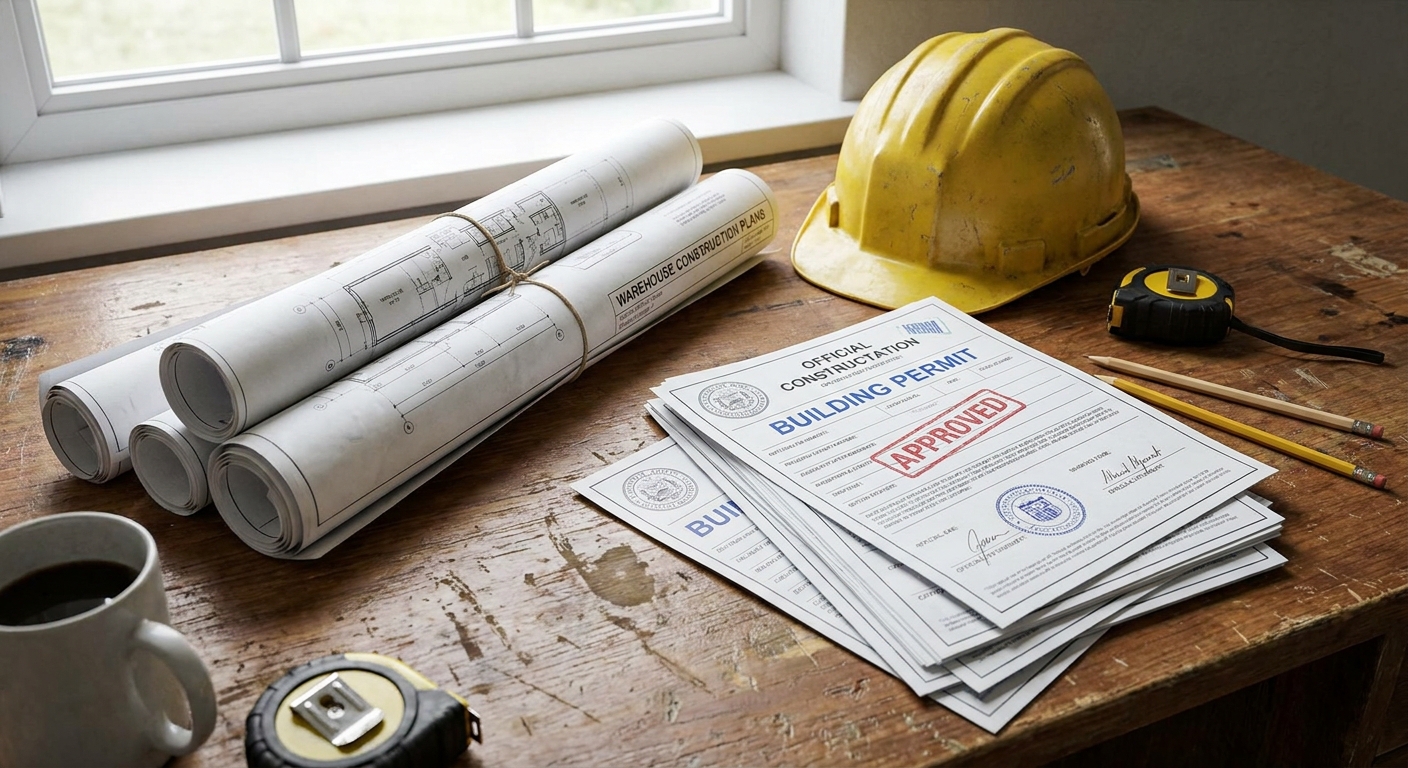
You primarily need zoning approvals, building permits, and environmental clearances from your local municipal authorities. Navigating the legal landscape is a mandatory step in building a warehouse that cannot be ignored.
Securing zoning and building approvals
You must confirm that your chosen land is zoned for industrial use before applying for specific building permits. Building permits ensure that your structural, electrical, and plumbing plans meet safety standards.
Consider this:
- Zoning variances can take months to negotiate.
- Building permits require detailed architectural drawings.
- Failure to secure permits can lead to work-stop orders.
Are environmental impact permits necessary?
Large-scale projects often require studies on how the building will affect local wetlands, air quality, or traffic patterns. Stormwater management permits are particularly important for warehouses with large roof surface areas.
The bottom line?
- Environmental audits protect local ecosystems.
- Traffic impact studies may require you to upgrade nearby roads.
- Green building certifications can offer long-term tax benefits.
Key Takeaway: Securing the correct permits upfront protects your investment from legal challenges and expensive fines.
| Permit Type | Authority | Purpose | |
|---|---|---|---|
| Zoning | City or County Planning | Land use legality | |
| Building | Local Building Department | Structural safety code | |
| EPA/Environmental | State or Federal Agency | Ecological protection |
Staying compliant with local regulations ensures your project moves forward without unexpected bureaucratic delays.
How is the base laid when building a warehouse?
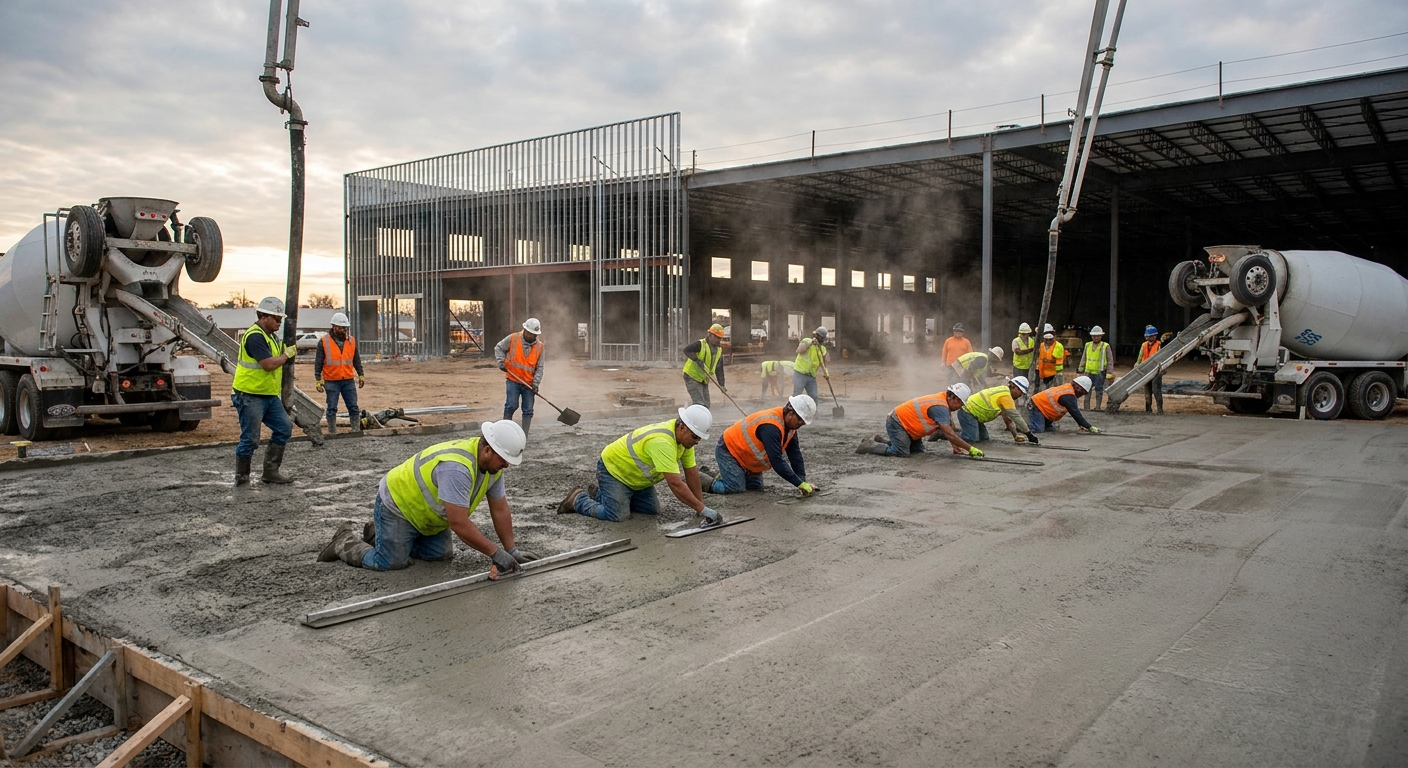
The base is established through professional land clearing, site grading, and the pouring of a reinforced concrete slab. A durable foundation is the most critical structural component when building a warehouse for heavy-duty use.
Preparing the site and drainage
You must clear all vegetation and level the land to prevent water from pooling under your future structure. Proper drainage systems, including retention ponds and French drains, are installed during this phase.
Here is the kicker:
- Compacted soil prevents the foundation from sinking.
- Drainage pipes must handle massive volumes of runoff.
- Underground utilities are laid before the concrete is poured.
Pouring a high-capacity concrete foundation
The floor of your warehouse must be thick enough to support heavy racking loads and constant forklift traffic. Most industrial slabs use high-strength concrete reinforced with steel rebar or fiber mesh.
Consider this:
- Vapor barriers prevent moisture from seeping through the floor.
- Expansion joints allow the concrete to move without cracking.
- Leveling is critical for the safety of high-reach equipment.
Key Takeaway: A high-quality foundation prevents floor cracks that can damage machinery and create safety hazards for your team.
| Phase | Action | Result | |
|---|---|---|---|
| Excavation | Removing debris and leveling soil | Stable building pad | |
| Reinforcement | Placing steel rebar or mesh | Increased load capacity | |
| Finishing | Power troweling the surface | Smooth, durable floor |
A perfectly leveled slab is the literal and figurative foundation of a successful warehouse operation.
What framing is used when building a warehouse?
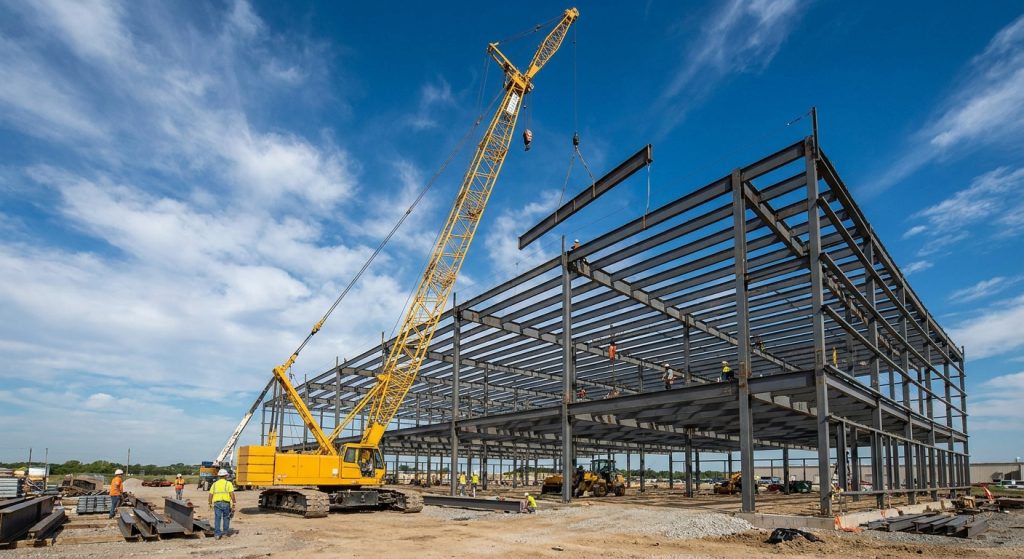
Most modern facilities use pre-engineered steel framing because of its incredible durability and cost-effectiveness. Steel is the preferred material for building a warehouse because it allows for wide-span interiors without cluttering the floor with columns.
Erecting steel beams and structural framing
You will watch the skeleton of your building rise quickly as prefabricated steel components are bolted together on-site. This phase is often the fastest part of the construction process once the foundation has cured.
The bottom line?
- Steel is resistant to pests, fire, and mold.
- Large bays allow for flexible interior layouts.
- Pre-engineered kits reduce on-site labor costs.
Installing the roof and exterior shell
The exterior walls and roof panels are typically made of insulated metal panels (IMPs) to provide thermal efficiency. These panels protect your inventory from the elements while keeping energy costs manageable.
Consider this:
- Standing seam roofs offer superior leak protection.
- Wall panels can be customized with your brand colors.
- Skylights can be added to reduce daytime lighting costs.
Key Takeaway: Steel framing provides the strength needed for large open spaces while offering the fastest assembly time of any building material.
| Component | Material | Benefit | |
|---|---|---|---|
| Primary Frame | Structural Steel | Wide-span capability | |
| Roof System | Standing Seam Metal | Weather resistance | |
| Wall Panels | Insulated Metal Panels | Energy efficiency |
The structural integrity of your building ensures a safe environment for your employees and your inventory.
How is tech managed when building a warehouse?
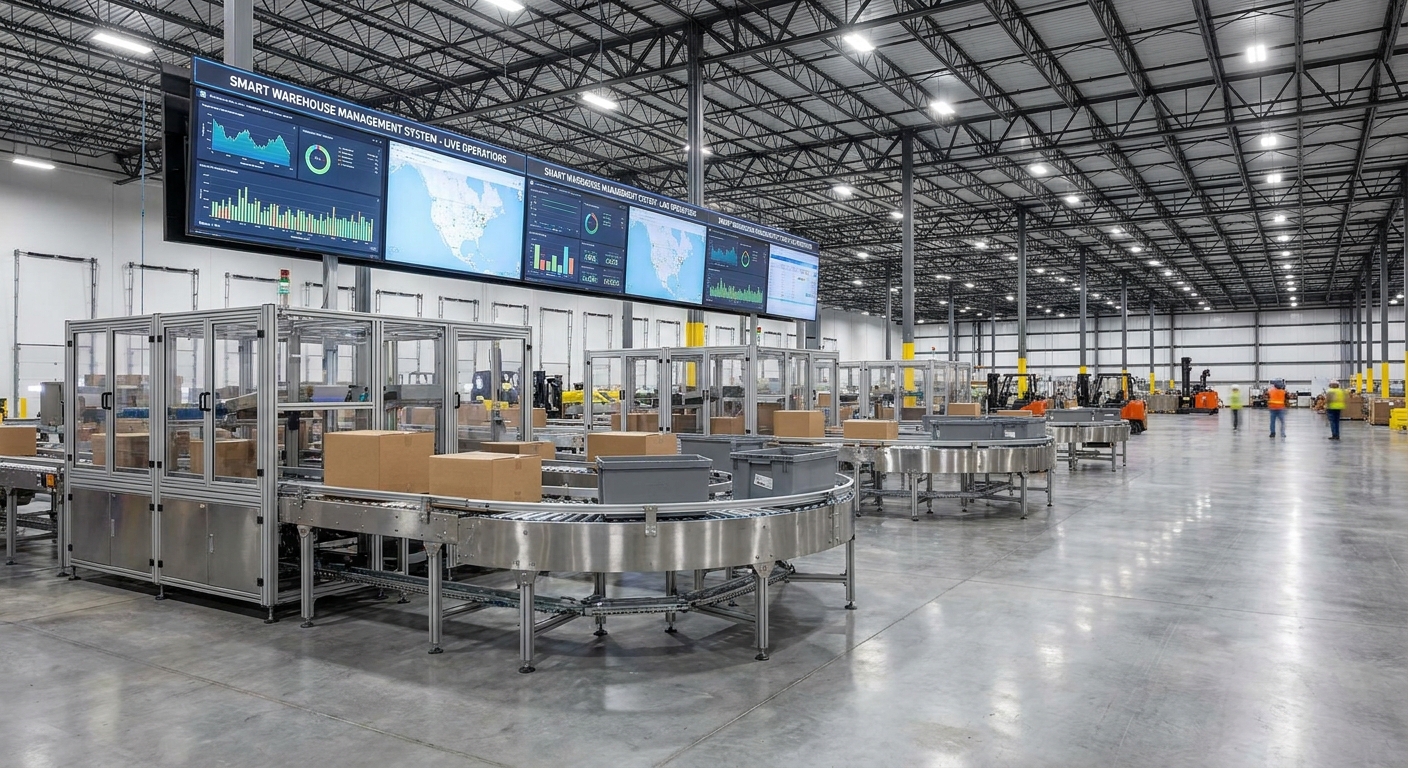
Technology is managed by installing robust electrical infrastructure and integrating smart warehouse management systems (WMS). In the modern era, building a warehouse means creating a “smart” facility that uses data to drive efficiency.
Electrical, plumbing, and HVAC rough-ins
You must plan for high-capacity electrical panels to power conveyor systems, charging stations, and climate control units. Proper HVAC is essential if you are storing temperature-sensitive goods or if you have a large workforce.
Consider this:
- LED lighting with motion sensors saves on power bills.
- Redundant power systems prevent downtime during outages.
- Efficient plumbing is necessary for employee breakrooms.
Integrating warehouse management systems
A WMS allows you to track every item in your building from the moment it arrives until it leaves. Integrating this software with your physical automated systems, like conveyors and sorters, is a game-changer for speed.
Here is the kicker:
- Real-time data prevents inventory shortages.
- Automated picking reduces human error.
- Cloud-based systems allow for remote monitoring.
Key Takeaway: Investing in technology during construction prevents the need for expensive retrofitting as your business evolves.
| Tech Layer | Focus | Operational Goal | |
|---|---|---|---|
| Infrastructure | Power and Connectivity | System uptime | |
| Automation | Conveyors and Robotics | Labor reduction | |
| Software | WMS and ERP Integration | Data accuracy |
A tech-forward warehouse is more than a building; it is a sophisticated tool for business competition.
Which floors work best for building a warehouse?
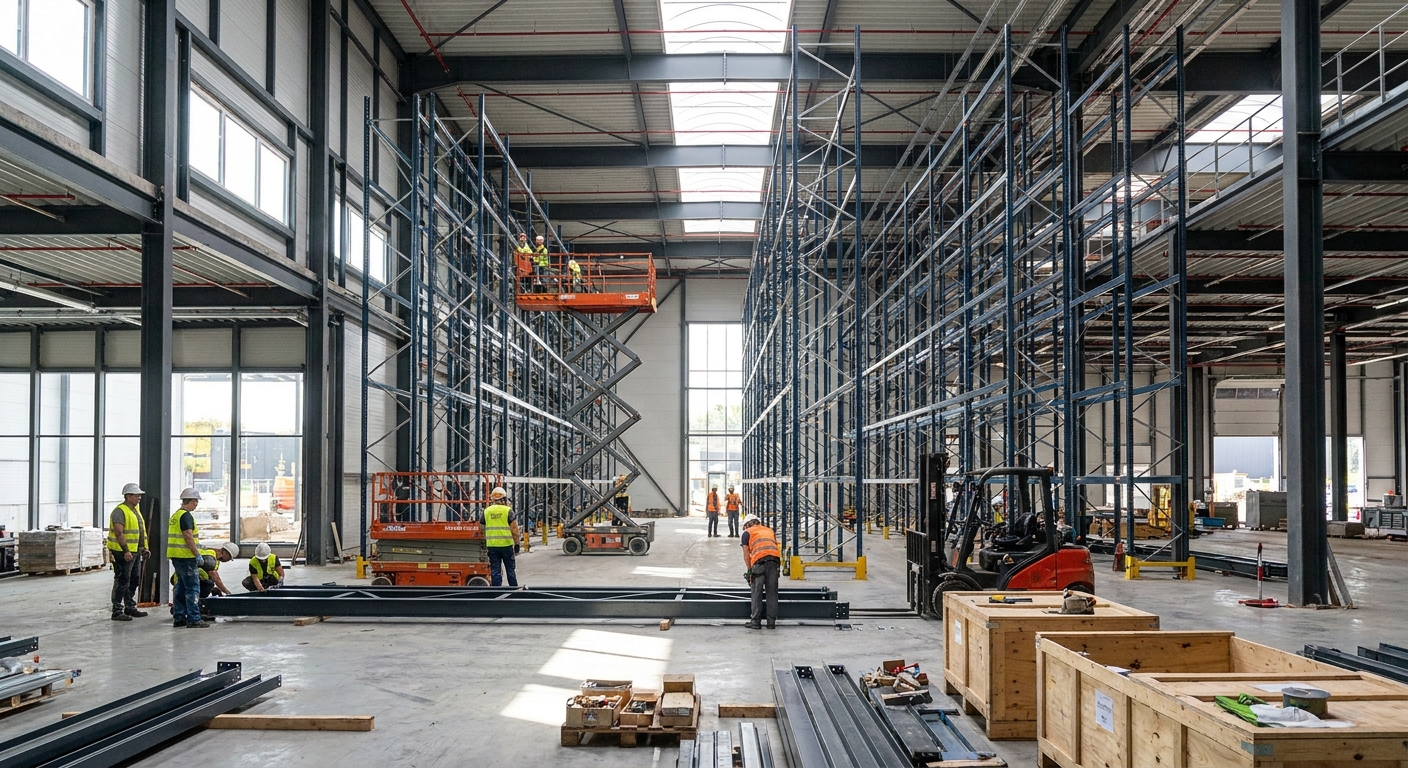
High-tolerance, super-flat concrete floors are the industry standard for supporting heavy racking and safe forklift operation. When building a warehouse, the floor finish is just as important as the walls that surround it.
Ensuring level flooring for forklift safety
You must ensure the floor is perfectly level to prevent forklifts from swaying when lifting pallets to high racks. Even a tiny deviation at floor level can become a dangerous tilt at forty feet in the air.
Consider this:
- Super-flat floors are measured using the F-number system.
- Polished concrete reduces dust and improves visibility.
- Floor sealants prevent stains from oil or chemicals.
Installing racks and storage equipment
Your choice of racking—whether selective, drive-in, or push-back—depends entirely on your inventory turnover rate. These systems must be anchored securely to the concrete floor to prevent collapse.
The bottom line?
- High-density racking maximizes your storage volume.
- Protective barriers prevent forklift damage to rack uprights.
- Clear aisle marking improves safety for pedestrians.
Key Takeaway: A specialized floor and racking system turns an empty shell into a functional storage powerhouse.
| Floor Feature | Specification | User Benefit | |
|---|---|---|---|
| Levelness | Super-flat (F-min) | Safe high-reach picking | |
| Coating | Epoxy or Polished | Low maintenance | |
| Anchoring | Heavy-duty expansion bolts | Racking stability |
Proper floor preparation ensures that your expensive material-handling equipment operates at peak performance.
What comes after building a warehouse?
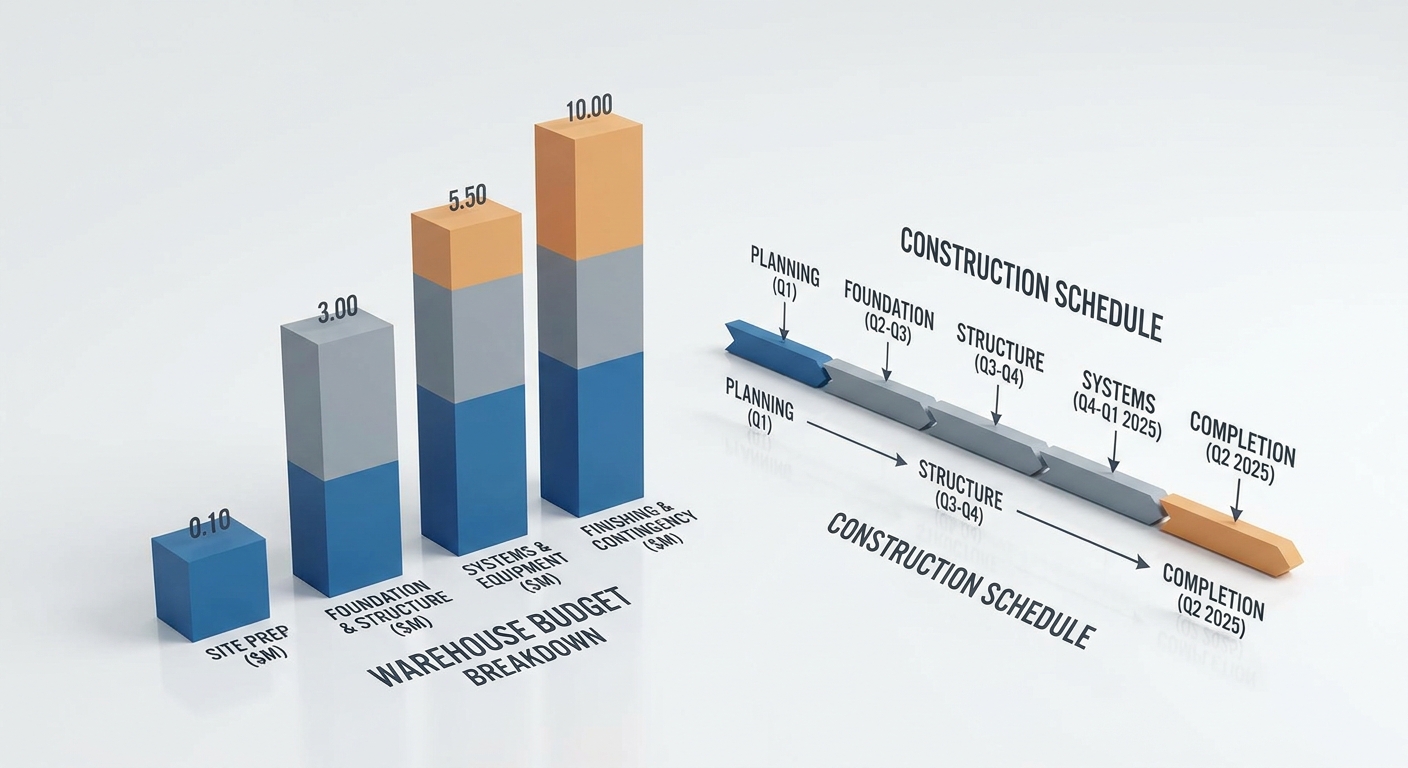
Post-construction steps include obtaining a certificate of occupancy and implementing a long-term facility maintenance plan. Finishing the physical structure is only the beginning of your journey after building a warehouse.
Final safety inspections and compliance
You must pass final inspections for fire safety, electrical wiring, and structural integrity before you can legally occupy the building. These checks ensure that the facility is safe for your employees to inhabit.
Consider this:
- Fire marshals will test your sprinkler systems.
- ADA compliance checks ensure accessibility for all.
- A final walkthrough identifies any minor “punch list” repairs.
How do you establish a maintenance plan?
A proactive maintenance schedule prevents small issues, like a roof leak or a cracked floor, from becoming major expenses. You should regularly inspect your HVAC systems, loading dock levelers, and lighting.
Here is the kicker:
- Preventive maintenance extends the life of your equipment.
- Regularly cleaning floors prevents forklift tire wear.
- Documenting repairs is necessary for insurance purposes.
Key Takeaway: Diligent post-construction management protects your capital investment and ensures uninterrupted business operations.
| Final Step | Requirement | Purpose | |
|---|---|---|---|
| Inspections | Local building official sign-off | Legal occupancy | |
| Maintenance | Quarterly system checks | Operational longevity | |
| Training | Staff safety orientation | Risk mitigation |
Completing the final paperwork allows you to finally open your doors and start generating revenue from your new asset.
Conclusion
Building a new industrial facility is a complex undertaking, but it provides the essential infrastructure your business needs to scale. We have covered everything from initial site surveys and permitting to the final safety inspections that make your building operational. Our expertise ensures that your project avoids the common pitfalls of budget overruns and design inefficiencies. If you are ready to take the next step in expanding your logistical footprint, reach out to our team for a comprehensive consultation. We believe that every business deserves a world-class facility that empowers growth and defines industry excellence.
| sales@showhoo.com.cn | |
| Phone/WhatsApp | +86 186 7895 5927 |
| Contact | Free Consultation, Instant Response |
FAQ
Can I build a warehouse on any piece of commercial land?No, you cannot build anywhere without checking local zoning laws first. You must ensure the land is specifically zoned for industrial use (M-1, M-2, or similar) to allow for the heavy traffic and noise typical of warehouse operations.
What is the best material for long-term warehouse durability?The best option is steel framing combined with a reinforced concrete slab. Steel offers the highest strength-to-weight ratio and resists the most common causes of industrial building degradation, such as fire and pests.
How do I know if I need a specialized flooring contractor?You need a specialist if you plan on using high-reach forklifts or automated robotics. Standard concrete contractors may not have the precision equipment required to achieve the “super-flat” tolerances necessary for high-rack safety.
Can I add more loading docks after the building is finished?Yes, it is possible, but it is significantly more expensive than installing them during the initial build. You should always include extra knockout panels in your original design to make future dock additions easier and cheaper.
What is the fastest way to complete a warehouse construction project?The fastest method is using a pre-engineered metal building (PEMB) system. Because the components are manufactured off-site and bolted together on-site, you can often cut your construction timeline by several months compared to traditional tilt-up concrete.