
Optimal housing management is the primary factor determining the health, comfort, and productivity of your livestock assets. Many producers struggle with rising veterinary costs and stagnating milk yields due to poorly ventilated or cramped living quarters. If you ignore the microclimate and hygiene of your facility, you risk significant financial losses through herd stress and disease outbreaks. Choosing a modern cow farm building provides a structured, scientific environment that protects your investment and maximizes growth potential.
How to select the best site for your cow farm building?
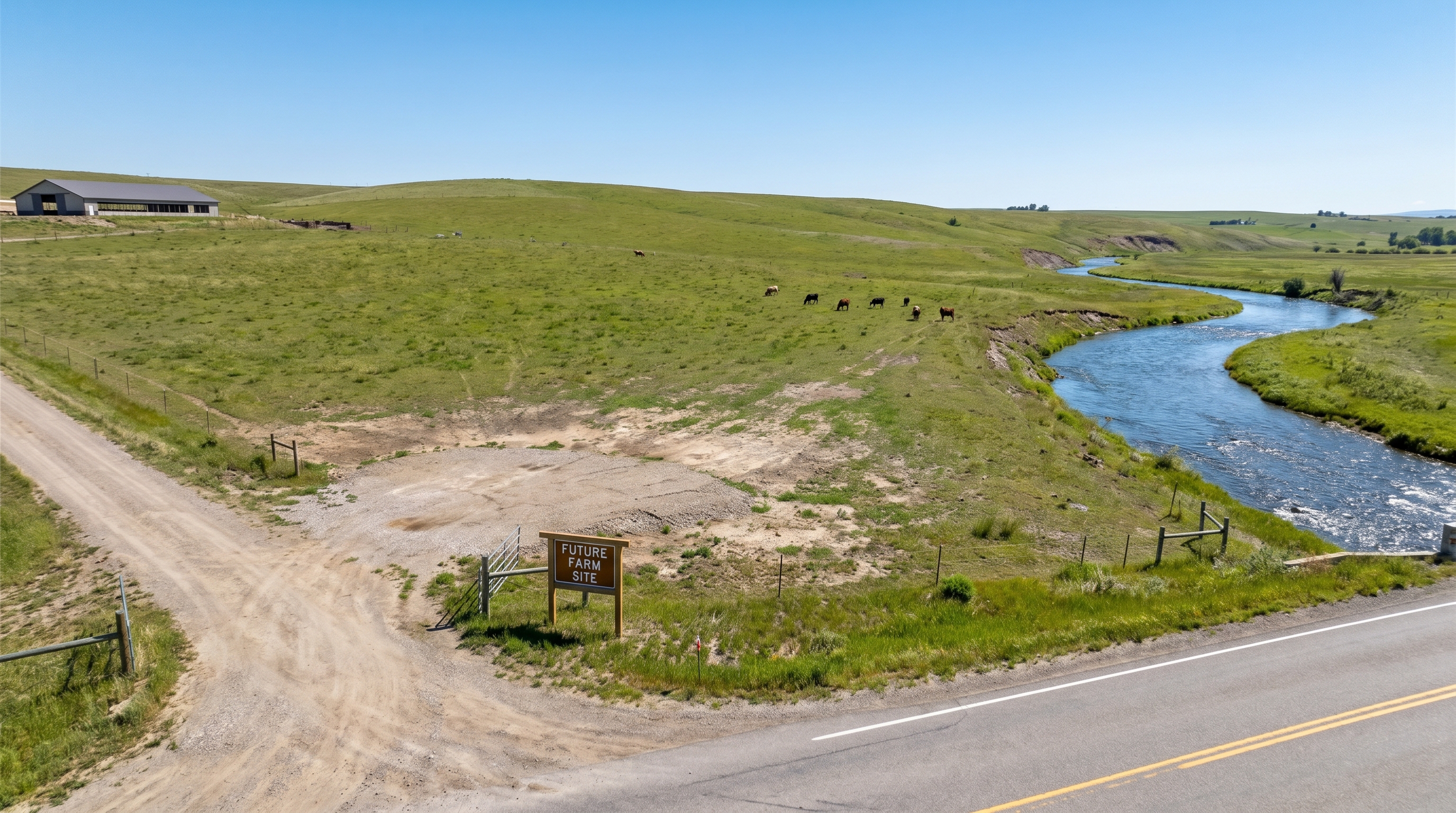
Selecting the right location involves assessing soil stability, resource availability, and logistical ease to support the facility’s lifecycle. A well-placed cow farm building benefits from natural drainage and proximity to essential utilities like electricity and clean water. You must prioritize high ground to prevent dampness, which is a leading cause of hoof rot and respiratory issues.
Choosing the right soil for a strong foundation
Look at it this way: the ground beneath your structure determines its durability. Loamy or gravelly soils are ideal because they provide a solid base and prevent moisture accumulation. You should avoid marshy or heavy clay areas that may shift or cause structural cracks over time.
Ensuring water and electricity availability
A successful operation requires a constant supply of clean water for drinking, washing, and milk processing. Reliable electricity is equally vital for operating machinery and maintaining proper lighting schedules.
- Locate a site with a permanent water source.
- Verify the proximity to existing power grids.
- Plan for backup generators to avoid outages.
Proximity to markets and transport networks
Developing a cow shed design near major roads reduces the cost of transporting feed and finished products. Being closer to urban centers ensures fresh milk reaches consumers quickly while maintaining high quality.
| Criterion | Requirement | Priority | |
|---|---|---|---|
| Soil Type | Loamy/Gravelly | High | |
| Drainage | Natural Slope | Critical | |
| Market Distance | Under 50km | Medium |
This evaluation ensures that your infrastructure remains cost-effective and operationally efficient from day one.
Key Takeaway: Site selection is not just about land; it is about building a foundation that supports future expansion and minimizes environmental stressors on your herd.
What are the key goals for a new cow farm building?
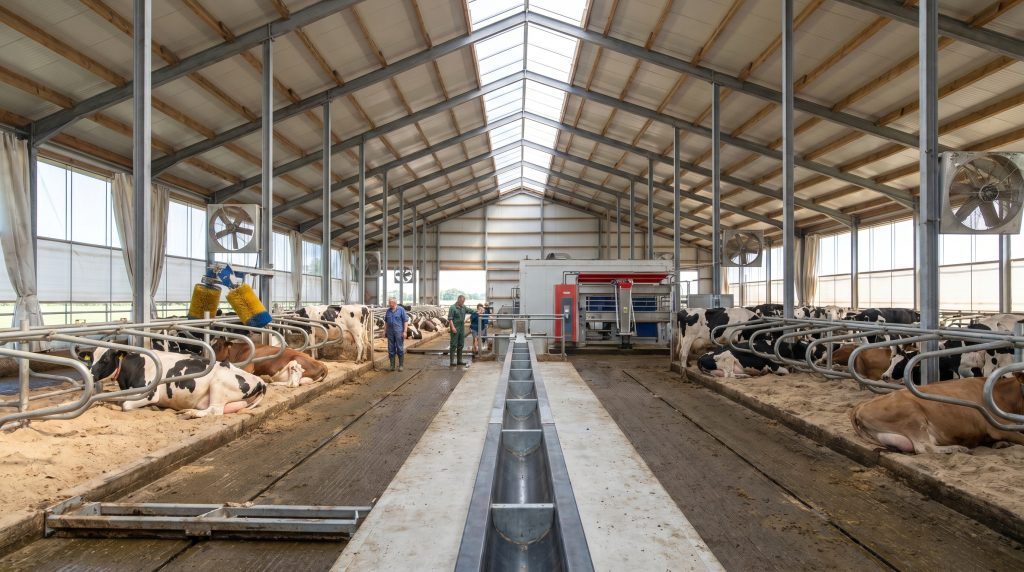
The primary objectives for a new cow farm building are to optimize animal welfare, streamline labor efficiency, and allow for scalable growth. Every design choice in your cow farm building should aim to reduce thermal stress and prevent injury. You want a facility that makes daily tasks faster for workers while keeping the cattle relaxed and healthy.
Designing for optimal herd health and comfort
The best part? Cattle that are comfortable produce significantly more milk and have higher conception rates. Proper stall dimensions and bedding materials are essential to encourage long resting periods.
- Provide ample headspace for natural rising.
- Use soft, dry bedding to prevent hock lesions.
- Ensure the air stays fresh with high ceilings.
Balancing construction costs with labor efficiency
Here is the kicker: high initial investment in automation often pays for itself through reduced labor hours. Designing circular travel paths and centralized feeding alleys allows a smaller crew to manage a larger herd effectively.
Planning for future herd expansion needs
Think about it. Your farm will grow, so your structure must be modular enough to accommodate more animals without a complete rebuild.
- Leave space at the ends of sheds for extensions.
- Design utilities with extra capacity.
- Use prefabricated components for easier additions.
| Goal | Primary Benefit | Metric | |
|---|---|---|---|
| Health | Low Mortality | Vet Cost reduction | |
| Labor | Faster Feeding | Man-hours per cow | |
| Expansion | Lower Future Costs | Modular readiness |
Understanding these goals allows you to prioritize features that offer the highest return on investment over the shed’s lifespan.
Key Takeaway: Modern housing isn’t just about shelter; it is a precision tool designed to maximize biological efficiency and operational profit.
Email:sales@showhoo.com.cn
Phone/WhatsApp:+86 186 7895 5927
Which housing system fits your cow farm building best?
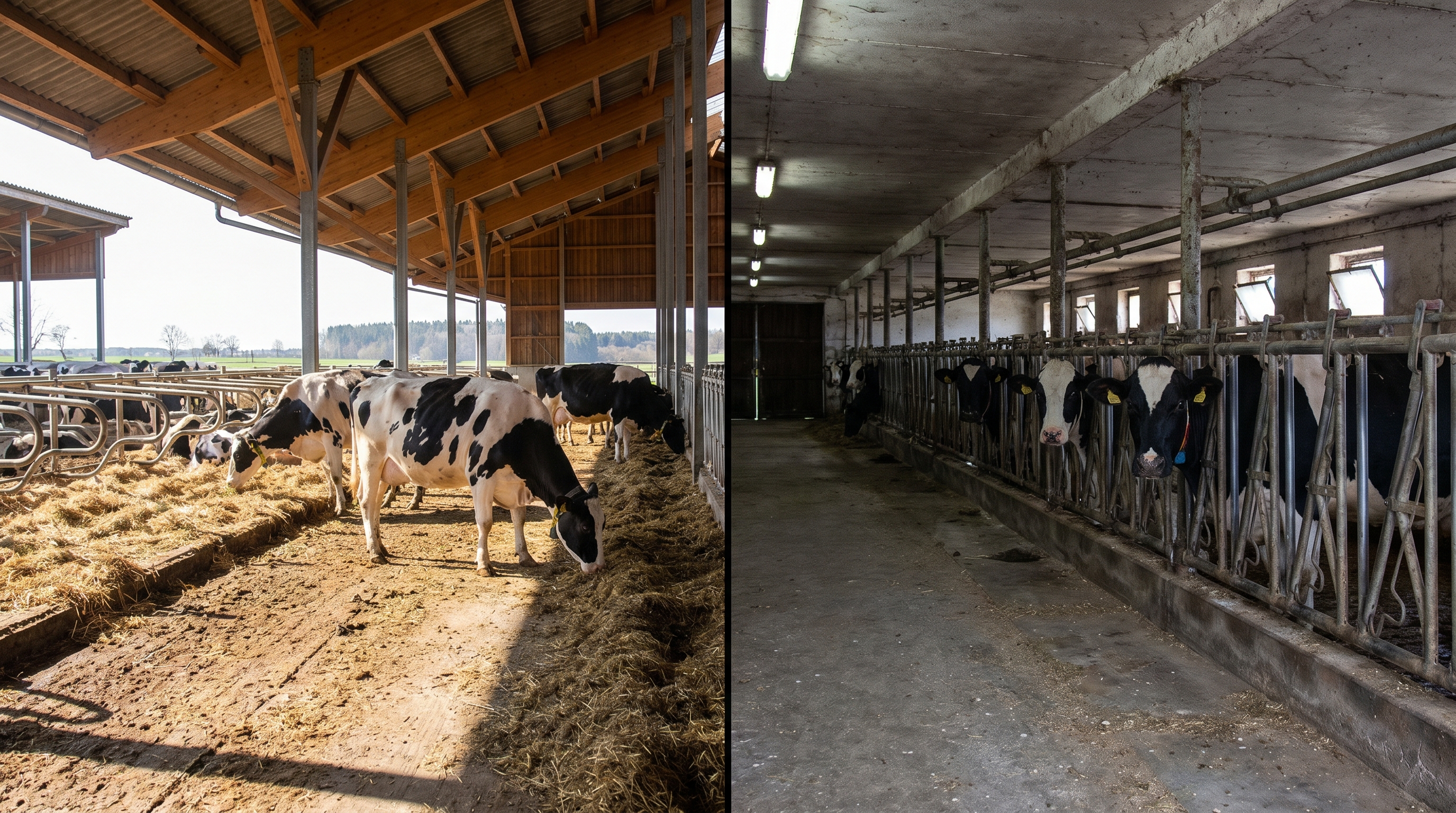
You must choose between loose housing and conventional stanchion barns based on your local climate and management style. A loose cow farm building allows animals to move freely, whereas a conventional setup provides more individual control. For most modern commercial dairy operations, the loose system is preferred due to lower construction costs and better animal welfare.
Benefits of the loose housing paddock system
You might be wondering: why is loose housing so popular? This cow shed types arrangement allows cattle to exercise naturally, reducing joint issues and boosting overall vigor.
- Lower initial construction expenditure.
- Easier detection of heat cycles.
- Improved animal exercise and circulation.
Features of conventional stanchion barns
In conventional barns, cattle are secured at the neck, which is ideal for temperate regions with extreme winters. This system allows you to provide precise individual feeding and more detailed veterinary attention.
Tail-to-tail vs. head-to-head arrangements
When building a double-row barn, you have to decide on the orientation of the animals.
- Tail-to-tail: Easier milking supervision and hygiene management.
- Head-to-head: Faster feeding processes and better display for visitors.
- Ventilation: Tail-to-tail allows for better fresh air access from side walls.
| System | Best Climate | Labor Requirement | |
|---|---|---|---|
| Loose Housing | Tropical/Sub-tropical | Low | |
| Conventional | Temperate/Cold | High | |
| Tail-to-Tail | All | Moderate |
Comparing these systems helps you align your infrastructure with your specific environmental challenges and production targets.
Key Takeaway: The choice of housing system dictates your daily labor workflow and the long-term health trajectory of your dairy herd.
Why is floor design vital for a cow farm building?
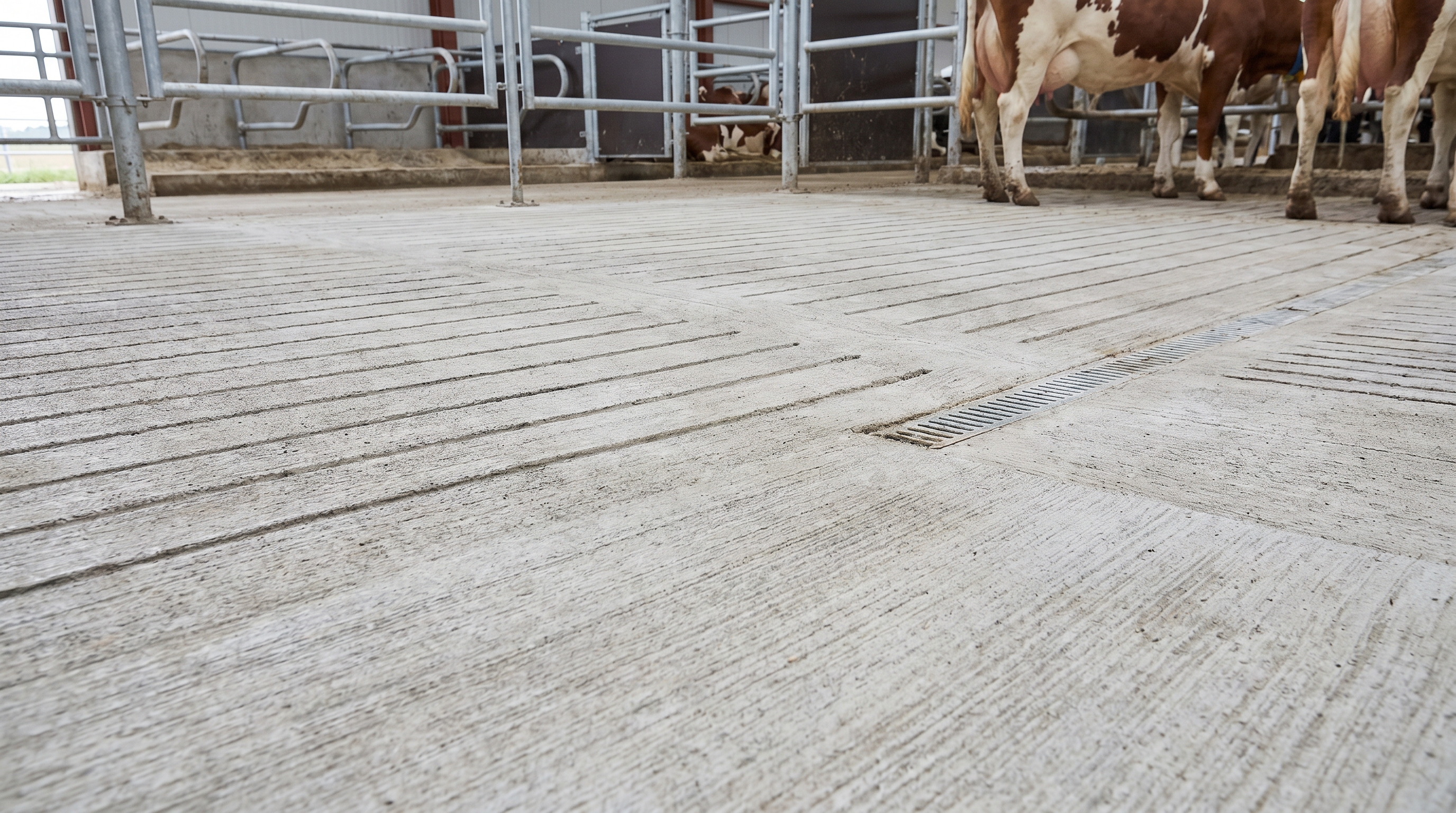
Flooring serves as the most used part of your cow farm building , directly impacting hoof health and sanitation efficiency. A poorly designed floor in your cow farm building can lead to permanent lameness or dangerous slips that result in animal loss. You must ensure the surface is durable enough to withstand the weight of the herd while remaining non-slip.
Selecting durable and non-slip floor materials
Let’s be honest. If the floor is too smooth, cows will be afraid to move, which decreases their feed intake. Textured concrete or vitrified paving bricks are excellent choices for maintaining traction.
- Use grooved concrete for better grip.
- Avoid smooth, polished surfaces.
- Ensure the material is resistant to acid corrosion.
Implementing proper gradients for drainage
Here is the secret: moisture is the enemy of a healthy cow shed. You must design a gradient of 1/40 to 1/60 leading toward the dung channel to ensure liquid waste flows away immediately.
Managing solid floors vs. deep litter systems
Different bedding strategies require different floor preparations.
- Solid Floors: Require daily cleaning and automated scrapers.
- Deep Litter: Uses organic matter to absorb moisture over months.
- Slotted Floors: Allow waste to fall into a pit, reducing manual labor.
| Material | Durability | Traction | |
|---|---|---|---|
| Grooved Concrete | High | Excellent | |
| Paving Bricks | Moderate | Good | |
| Gravel | Low | Fair |
This table outlines how flooring choices affect the safety and longevity of your livestock facility.
Key Takeaway: Invest in high-quality, textured flooring to prevent lameness and ensure that cleaning remains a fast, efficient process.
What materials work best for a cow farm building wall?
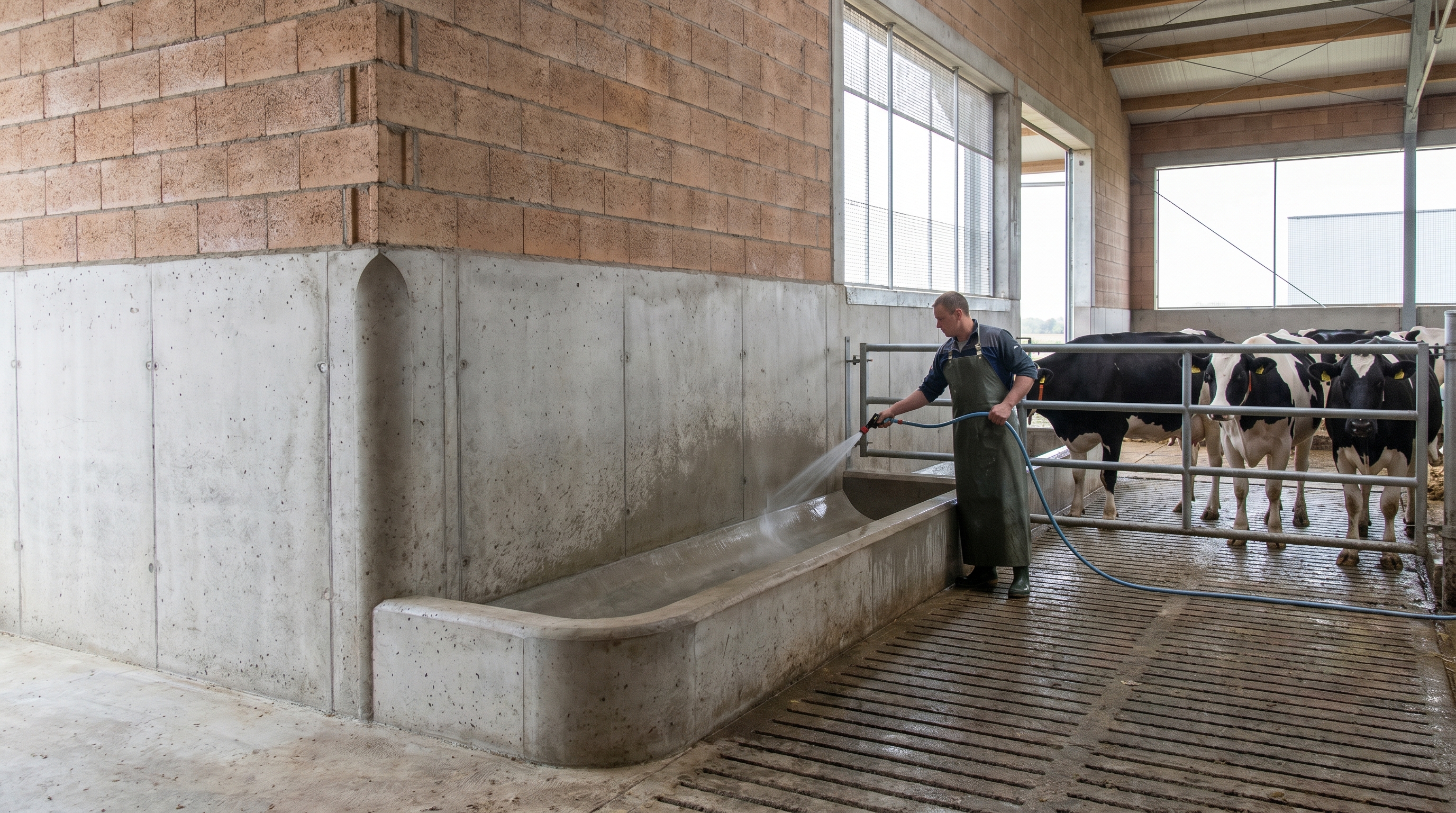
Walls in a cow farm building must be constructed using durable, easy-to-sanitize materials that can withstand physical impact from the animals. Using high-quality Cow & Sheep Shed Solutions often involves brick or stone foundations finished with smooth cement. You want walls that do not harbor bacteria and are resistant to the high-pressure washing needed for biosecurity.
Using brick, stone, or concrete for durability
Here is the truth: durability is non-negotiable when dealing with large cattle or buffalo. Concrete walls are the strongest, while brick provides a cost-effective alternative that still offers good thermal insulation.
- Concrete: Maximum strength and longevity.
- Brick: Good insulation and moderate cost.
- Stone: Highly durable but labor-intensive to build.
Finishing surfaces for hygiene and easy washing
You should finish the lower four feet of the walls with smooth cement plaster to make them completely washable. This prevents manure from sticking and reduces the risk of pathogens lingering in the environment.
Rounding edges to prevent animal injuries
Sharp corners are a liability on a busy farm.
- Round all door frames and partition edges.
- Smooth out joints between walls and floors.
- Ensure no protruding bolts or wires exist.
| Material | Cost | Hygiene Level | |
|---|---|---|---|
| Plastered Brick | Medium | High | |
| Bare Concrete | High | Medium | |
| Metal Panels | High | Excellent |
Selecting the right wall materials ensures that your maintenance costs stay low while your biosecurity remains high.
Key Takeaway: Wall design should prioritize the ability to be sterilized quickly, as the lower sections are frequently exposed to organic waste.
How to design the roof for a cow farm building?
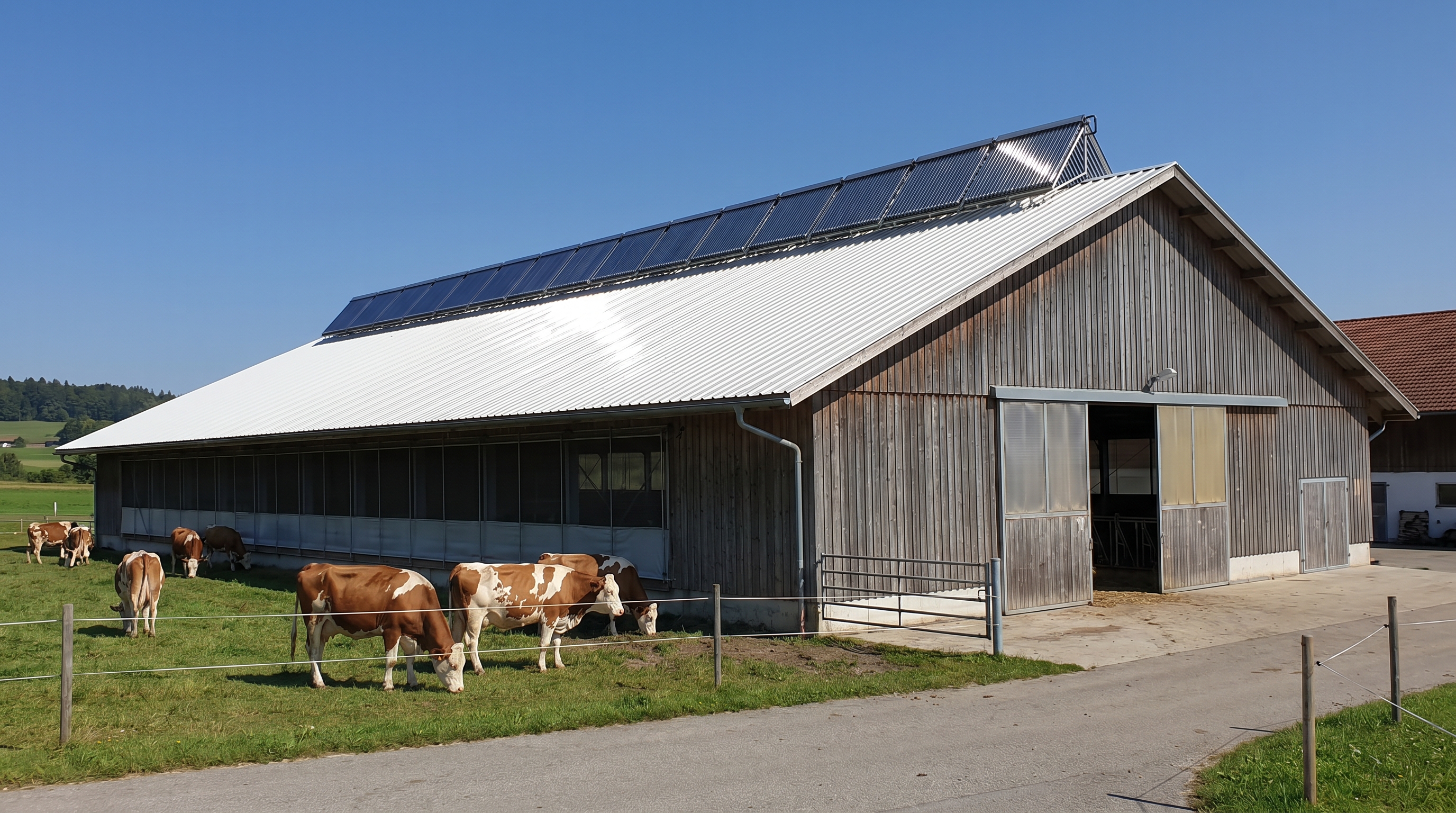
The roof of your cow farm building must provide maximum insulation and ventilation to combat heat stress. A well-engineered cow farm building utilizes gable or monitor roof patterns to allow hot air to escape through ridge openings. You should prioritize materials that reflect solar radiation to keep the internal temperature significantly cooler than the outside air.
Choosing between gable, monitor, and lean-to roofs
It gets better. A monitor roof provides a second level of ventilation, making it the gold standard for tropical livestock sheds. Gable roofs are versatile and easy to build, offering good drainage for areas with heavy rainfall.
- Gable: Best for moderate climates and simple builds.
- Monitor: Superior for high-density ventilation.
- Lean-to: Ideal for small extensions or isolated units.
Evaluating tiles, asbestos, and metal sheets
While tiles offer natural insulation, modern metal sheets with reflective coatings are often more durable and easier to install. Avoid plain galvanized iron if possible, as it can turn your barn into an oven during the summer months.
Insulation techniques to combat solar radiation
Think about the comfort of your cows.
- Paint metal roofs white to reflect heat.
- Use thatched layers over metal for natural cooling.
- Install false ceilings or specialized insulation boards.
| Roof Type | Ventilation | Cost | |
|---|---|---|---|
| Monitor | Excellent | High | |
| Gable | Good | Moderate | |
| Lean-to | Poor | Low |
This comparison helps you select a roof design that balances your budget with the critical need for climate control.
Key Takeaway: The roof is your primary defense against heat stress; prioritize ventilation and reflective materials to protect your herd’s productivity.
Email:sales@showhoo.com.cn
Phone/WhatsApp:+86 186 7895 5927
How much space is needed in a cow farm building?
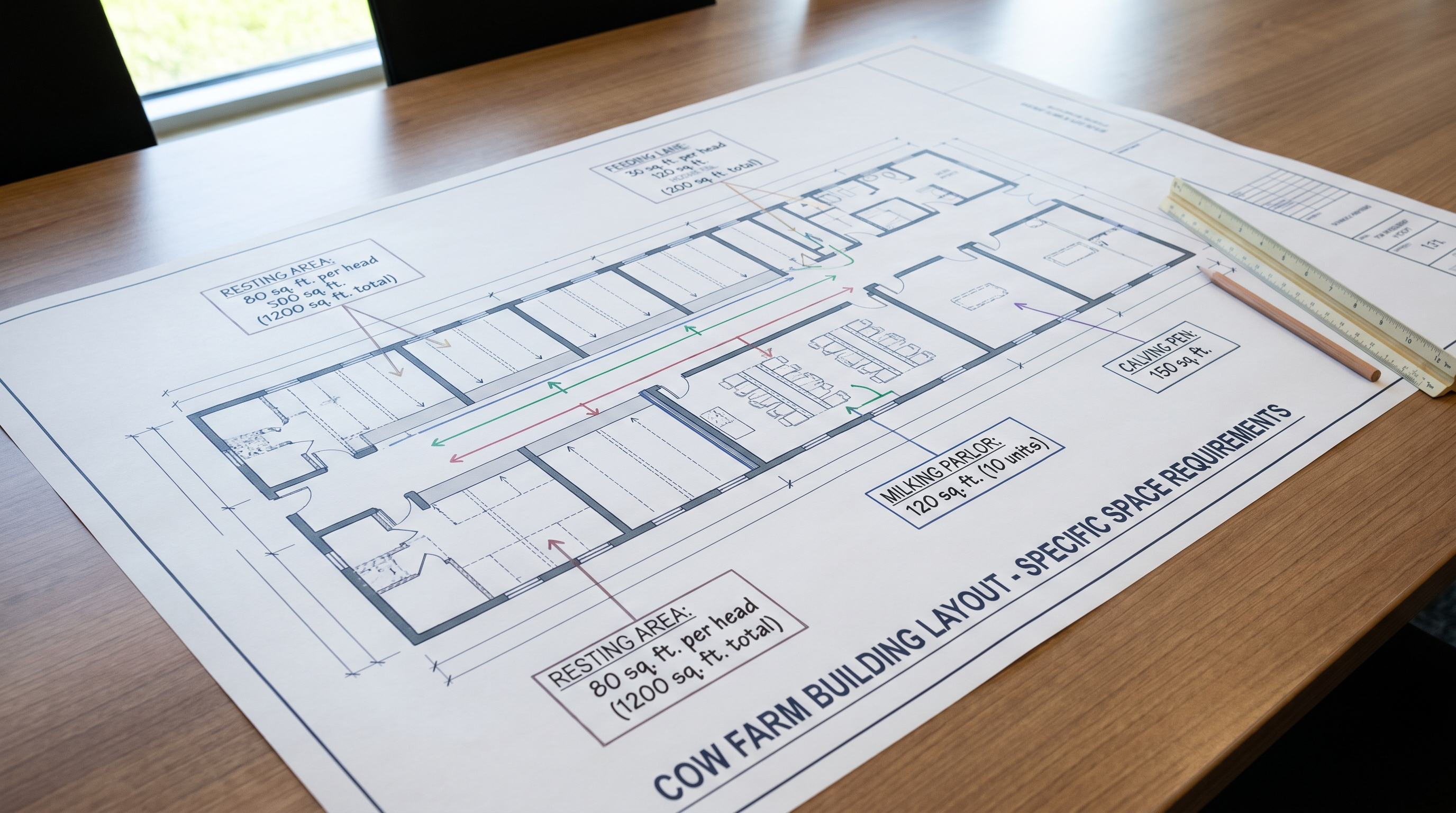
Space requirements are determined by the age and type of animal to ensure they can rest and feed without competition. In a modern cow farm building, you must provide distinct areas for resting, feeding, and movement. Providing a steel cattle barn with adequate square footage prevents the social stress that often leads to lower milk production.
Covered and open area requirements per animal
The reality is this: overcrowding is the fastest way to ruin a farm’s efficiency. Each adult cow needs a minimum of 3.5 square meters of covered space and twice that for an open paddock.
- Bulls: 12 sq. m (Covered) / 24 sq. m (Open).
- Cows: 3.5 sq. m (Covered) / 7.0 sq. m (Open).
- Calves: 1.0 sq. m (Covered) / 2.0 sq. m (Open).
Sizing mangers and watering troughs correctly
You must ensure that every animal can eat at the same time to prevent bullying. A standard manger should be about 60cm wide with a depth of 40cm to accommodate the necessary volume of fodder.
Managing stocking density for health
Don’t push your limits.
- Maintain a maximum of 50 animals per group pen.
- Provide at least 60cm of linear feeding space per cow.
- Ensure water troughs are accessible from multiple sides.
| Animal Type | Covered Space (m²) | Open Space (m²) | |
|---|---|---|---|
| Adult Cow | 3.5 | 7.0 | |
| Buffalo | 4.0 | 8.0 | |
| Young Calf | 1.0 | 2.0 |
Following these space guidelines ensures that your animals remain stress-free and that disease transmission is minimized.
Key Takeaway: Correct spacing is the best preventive medicine; it reduces social friction and ensures all animals have equal access to nutrition.
How to manage air and hygiene in a cow farm building?
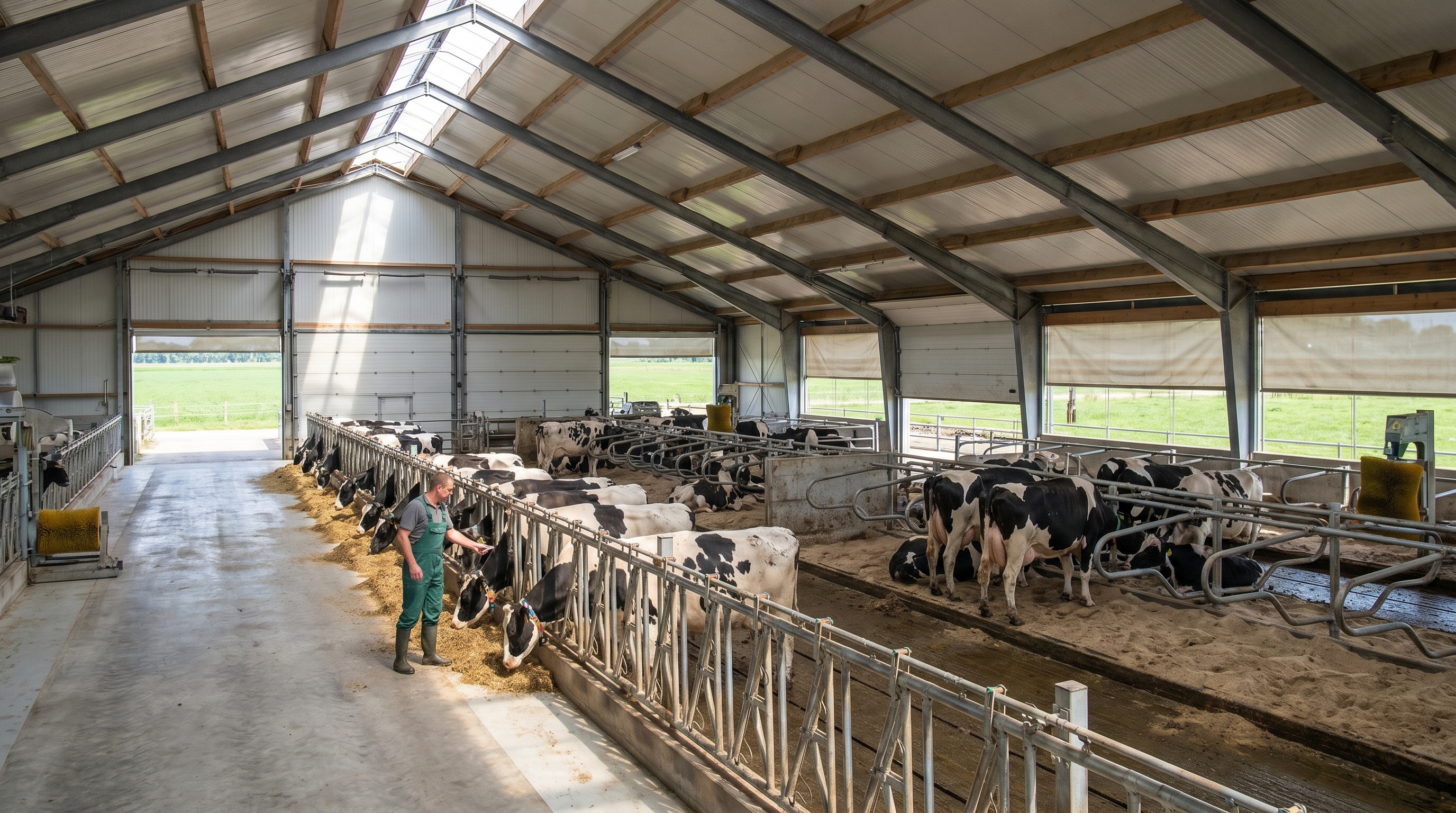
Effective air management relies on natural convection and strategic design to remove ammonia and heat from the cow farm building . High-quality hygiene in your cow farm building requires a layout that facilitates fast waste removal and regular disinfection. You need a constant flow of fresh air to prevent the buildup of pathogens that cause pneumonia and other respiratory diseases.
Natural ventilation through ridge openings
Don’t forget: air should enter through the side walls and exit through the roof ridge. This “chimney effect” keeps the environment dry and significantly reduces the bacterial load in the air.
- Keep eaves high for better airflow.
- Use adjustable curtains for wind protection.
- Ensure no “dead air” pockets exist in corners.
Designing gutters for efficient waste removal
A central gutter system behind the cows should be at least 30cm wide to allow for easy cleaning. This ensures that manure does not accumulate near the resting area, keeping the udders clean and reducing mastitis risk.
Daily cleaning routines for disease control
Consistency is key.
- Flush gutters at least twice daily.
- Scrub water troughs weekly to prevent algae.
- Use lime powder on floors to kill bacteria.
| Feature | Function | Frequency | |
|---|---|---|---|
| Ridge Vent | Heat Removal | Continuous | |
| Gutter Flush | Hygiene | Twice Daily | |
| Water Scrub | Health | Weekly |
This routine ensures that the environment remains conducive to high-quality milk production and animal comfort.
Key Takeaway: Clean air and dry floors are the two most important factors in preventing high-cost veterinary interventions on your farm.
Should a cow farm building include specialized units?
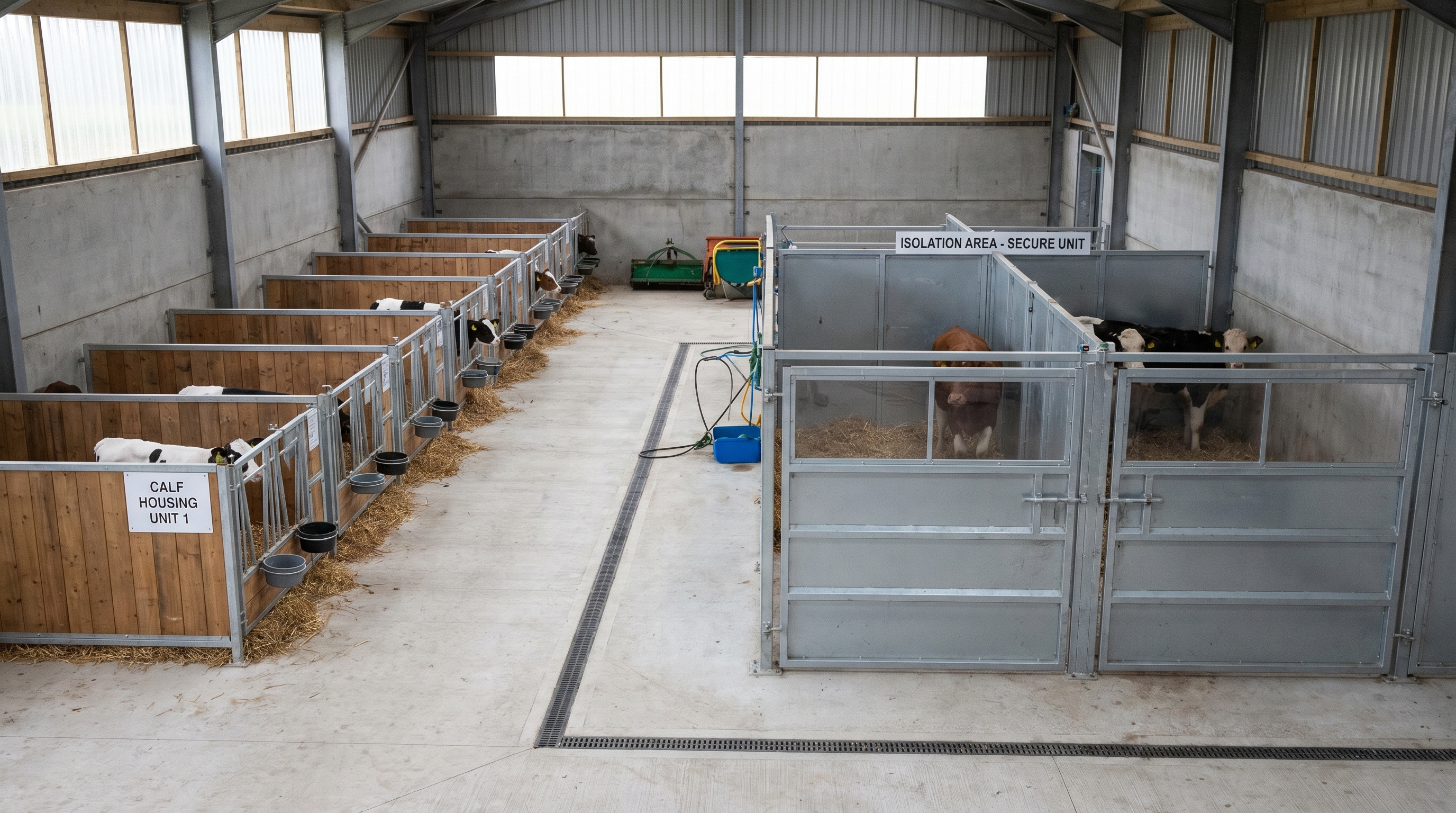
Yes, a comprehensive cow farm building must include separate units for calves, breeding bulls, and sick animals to maintain herd health. By focusing on productivity in your cow barn , you can create specialized zones that cater to the unique needs of each group. You must isolate new arrivals and vulnerable calves to prevent the spread of infectious diseases throughout the main herd.
Housing for calves to minimize mortality
Check this out: calf mortality can exceed 30% if they are housed with adults. Individual pens for the first month of life ensure they get enough colostrum and remain safe from parasites.
- Use individual pens for neonates.
- Provide dry, draft-free bedding.
- Ensure easy access for feeding milk.
Designing secure pens for breeding bulls
Bulls require heavy-duty fencing and much more space than cows to maintain their libido and physical fitness. A separate bull shed should include an exercise yard to prevent joint stiffness and behavioral issues.
Isolation and quarantine shed placement
Never mix new animals immediately.
- Place the quarantine shed at the farm entrance.
- Keep sick animals at the far end of the property.
- Use dedicated equipment for isolation units.
| Unit Type | Primary Function | Location | |
|---|---|---|---|
| Calf Pen | Growth/Safety | Near Milking | |
| Bull Shed | Breeding | Isolated | |
| Isolation | Disease Control | Periphery |
Specialized units allow for targeted management, ensuring that every animal receives the specific care it needs.
Key Takeaway: Segmenting your herd by age and health status is a vital strategy for long-term biosecurity and operational stability.
What modern upgrades improve a cow farm building?
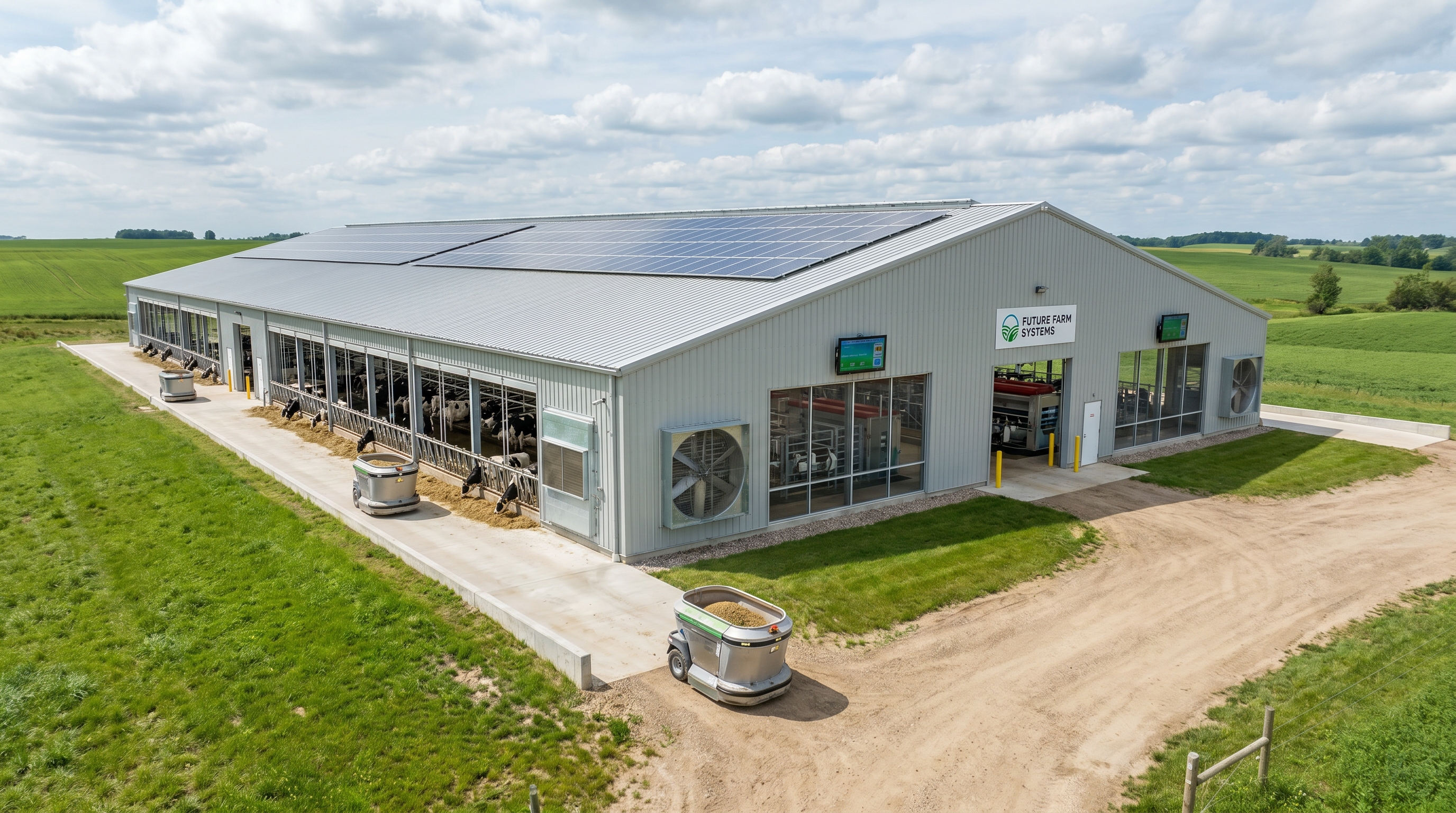
Modern upgrades like prefabrication, climate sensors, and automated feeding systems dramatically improve the efficiency of your cow farm building . Investing in a high-tech cow farm building reduces labor dependency and provides real-time data on animal health. You can now utilize steel structures that are faster to erect and more resistant to the harsh environment of a livestock farm.
Integrating prefabricated steel structures
In short: steel is the future of agricultural building. Prefabricated components allow for precision engineering, meaning your shed can be installed in half the time of traditional brick-and-mortar structures.
- Faster construction timelines.
- Resistant to pests and fire.
- Easily expandable and modular.
Environmentally controlled housing systems
High-tech farms use fans and misting systems triggered by temperature sensors to keep cattle cool during peak heat. This automation ensures the herd remains productive even during extreme weather events.
Automation in feeding and milking processes
Modern technology saves time.
- Robotic milking units allow cows to set their own schedule.
- Automated scrapers keep floors clean 24/7.
- Computerized feeding ensures precise nutrition.
| Upgrade | Investment Level | Impact | |
|---|---|---|---|
| Steel Prefab | Medium | High Durability | |
| Mist Systems | Low | Heat Reduction | |
| Robotic Milk | High | Labor Savings |
These advancements represent the next generation of dairy farming, focusing on data-driven results and maximum efficiency.
Key Takeaway: Embracing technology through steel structures and automation is the most effective way to future-proof your dairy operation.
Conclusion
Successful housing management is the result of balancing structural integrity with biological requirements. By prioritizing site selection, ventilation, and specialized housing, you create an environment where cattle and buffalo can thrive. Modern steel solutions and automated systems are no longer luxury items but essential tools for any competitive producer. If you are ready to modernize your infrastructure or plan a new facility, please contact us today. We are dedicated to providing the durable, efficient building solutions your farm needs to reach its full potential.
Email:sales@showhoo.com.cn
Phone/WhatsApp:+86 186 7895 5927
Frequently Asked Questions
Can I use wood for cow barn flooring?
No. Wood is highly absorbent, making it impossible to disinfect effectively, and it becomes dangerously slippery when wet.
What is the best orientation for a livestock shed?
East-West. This orientation minimizes direct solar radiation into the shed during the hottest parts of the day while taking advantage of prevailing winds.
How often should I clean the dung channels?
Twice daily. Regular removal prevents ammonia buildup and keeps the animals’ resting area clean, which is critical for preventing udder infections.
Why is natural ventilation better than just using fans?
Efficiency. Natural ventilation uses physics to move air for free, whereas fans should only be used as a supplement during periods of zero wind or extreme heat.
Is steel better than concrete for the main structure?
Yes. Steel offers faster installation, lower maintenance costs, and greater flexibility for future expansions compared to traditional heavy masonry.