
Effective housing management is the cornerstone of animal welfare and commercial productivity. Many farmers face low milk yield and high disease rates because their facilities are poorly ventilated or damp. This neglect leads to thermal stress and increased mortality, eroding your bottom line. You can fix this by implementing a precision cattle farm design that integrates proper orientation and high-quality materials.
How do you select the best site for cattle farm design?
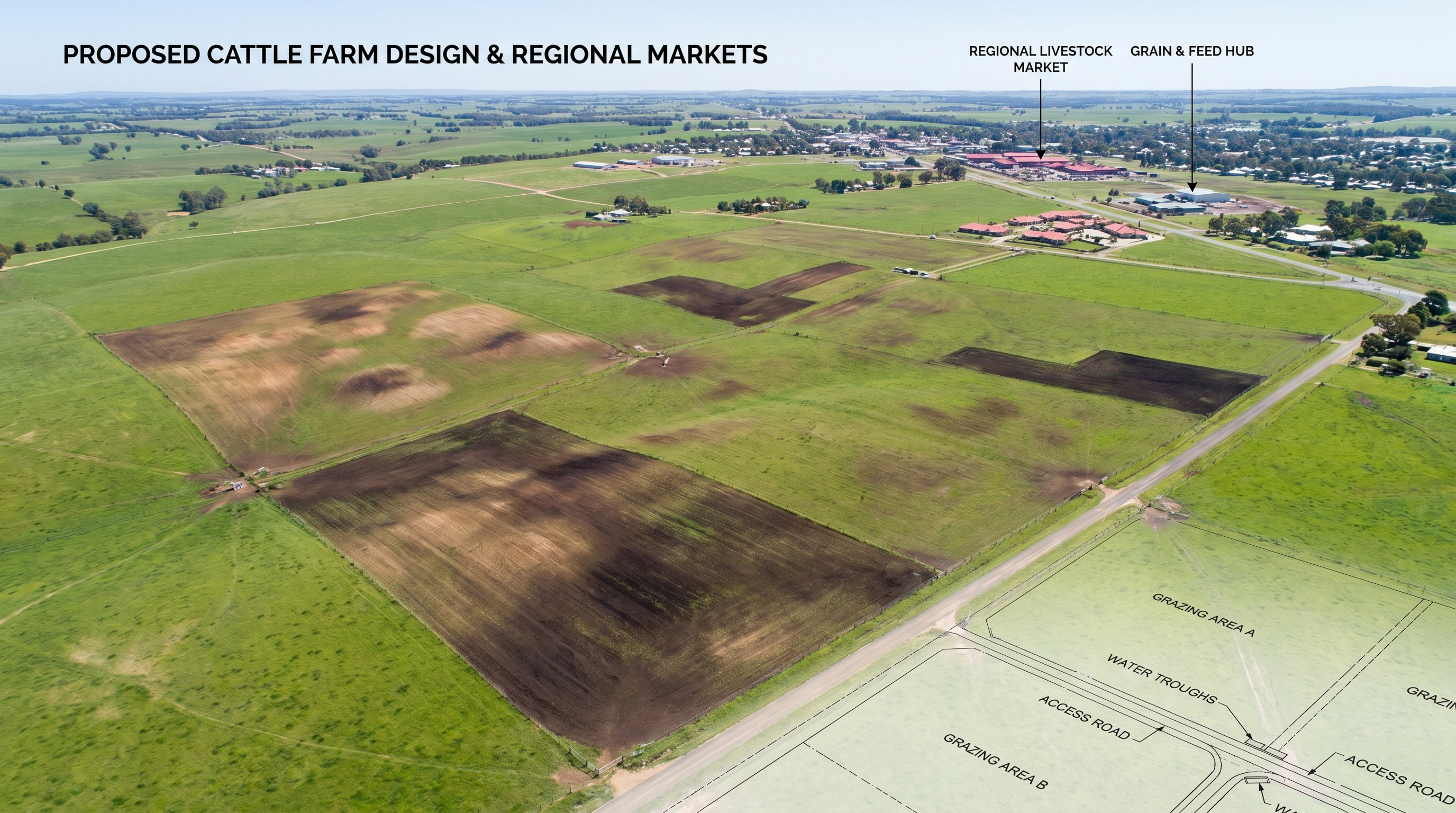
You select a site by evaluating soil stability, drainage, and proximity to infrastructure. A strategic cattle farm design begins with a location that offers high elevation to prevent waterlogging during rainy seasons.
By choosing loamy soil, your cattle farm design will have a stable foundation for heavy steel structures. Access to electricity and clean water is also mandatory for modern operations.
What are the critical soil requirements?
- Soil Type: Loamy or gravelly soils are preferred over clay.
- Slope: A gentle slope ensures natural drainage of waste.
- Stability: High-bearing capacity prevents foundation cracks.
The truth is, starting on marshy land will double your maintenance costs within five years.
Why does market proximity matter?
- Transport: Easy access reduces the cost of shipping milk and meat.
- Labor: Nearby towns provide a steady supply of skilled farmhands.
- Feedback: Local presence allows for quicker response to market changes.
Key Takeaway: A well-chosen site acts as the foundation for health, allowing for efficient waste management and easy transport of products.
| Site Factor | Optimal Requirement | Importance | |
|---|---|---|---|
| Soil | Loamy/Gravelly | High | |
| Slope | 1/60 gradient | Medium | |
| Location | Away from industry | High |
Selecting a site with proper elevation and soil drainage is the first step in preventing chronic hoof diseases.
What factors influence cattle farm design for different breeds?
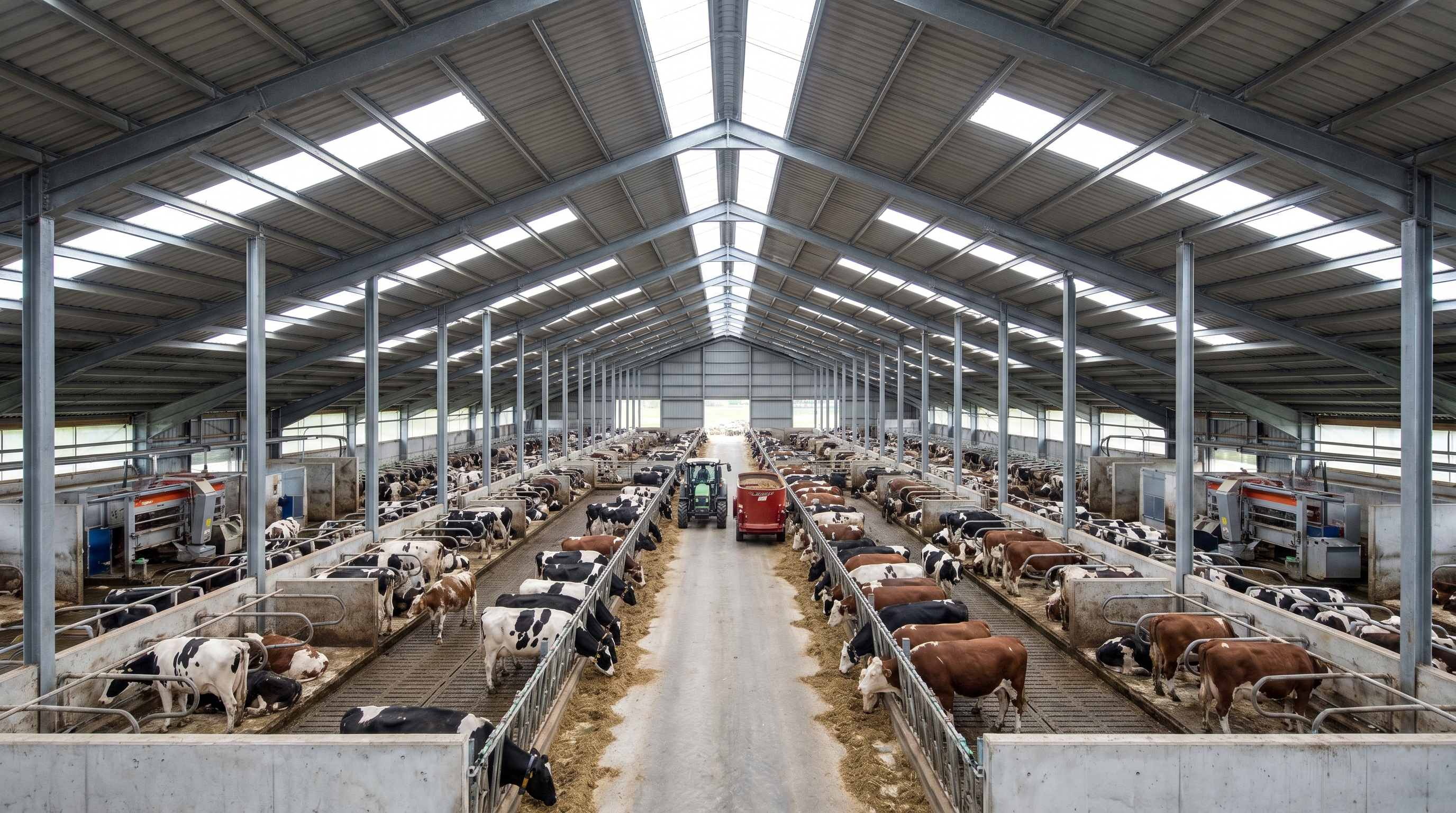
Breed factors influence the required stall dimensions, feeding capacity, and climate control mechanisms. When planning your cattle farm design, you must account for the larger frame size of buffalo compared to smaller local cattle breeds.
Standardizing your widths ensures that your cattle farm design remains functional even if you switch livestock types later. Larger animals require more standing space and wider gutters to manage waste effectively.
How do you determine stall dimensions?
- Width: Standardize at 1.05m to 1.2m for adult dairy cows.
- Length: Maintain 1.5m to 1.7m for comfortable resting.
- Gutter: Ensure at least 30cm depth for efficient manure removal.
Wait, there’s more: if the stalls are too narrow, animals will suffer from skin lesions and reduced resting time.
Can systems be adapted for buffalo?
- Space: Buffalo require 10-15% more space due to their heat sensitivity.
- Water: Include misting systems or wallowing tanks in the plan.
- Shade: Provide thicker insulation to protect against high humidity.
Key Takeaway: Flexibility in the initial structural plan saves significant costs when scaling your operations or switching livestock types.
| Breed Type | Stall Width | Area per Animal | |
|---|---|---|---|
| Dairy Cow | 1.1 m | 3.5 m² | |
| Buffalo | 1.3 m | 4.2 m² | |
| Heifer | 0.9 m | 2.5 m² |
Using standardized widths ensures that your internal fittings and feeding passages remain functional throughout the building’s lifecycle.
Email:sales@showhoo.com.cn
Phone/WhatsApp:+86 186 7895 5927
How does environment control impact cattle farm design efficiency?
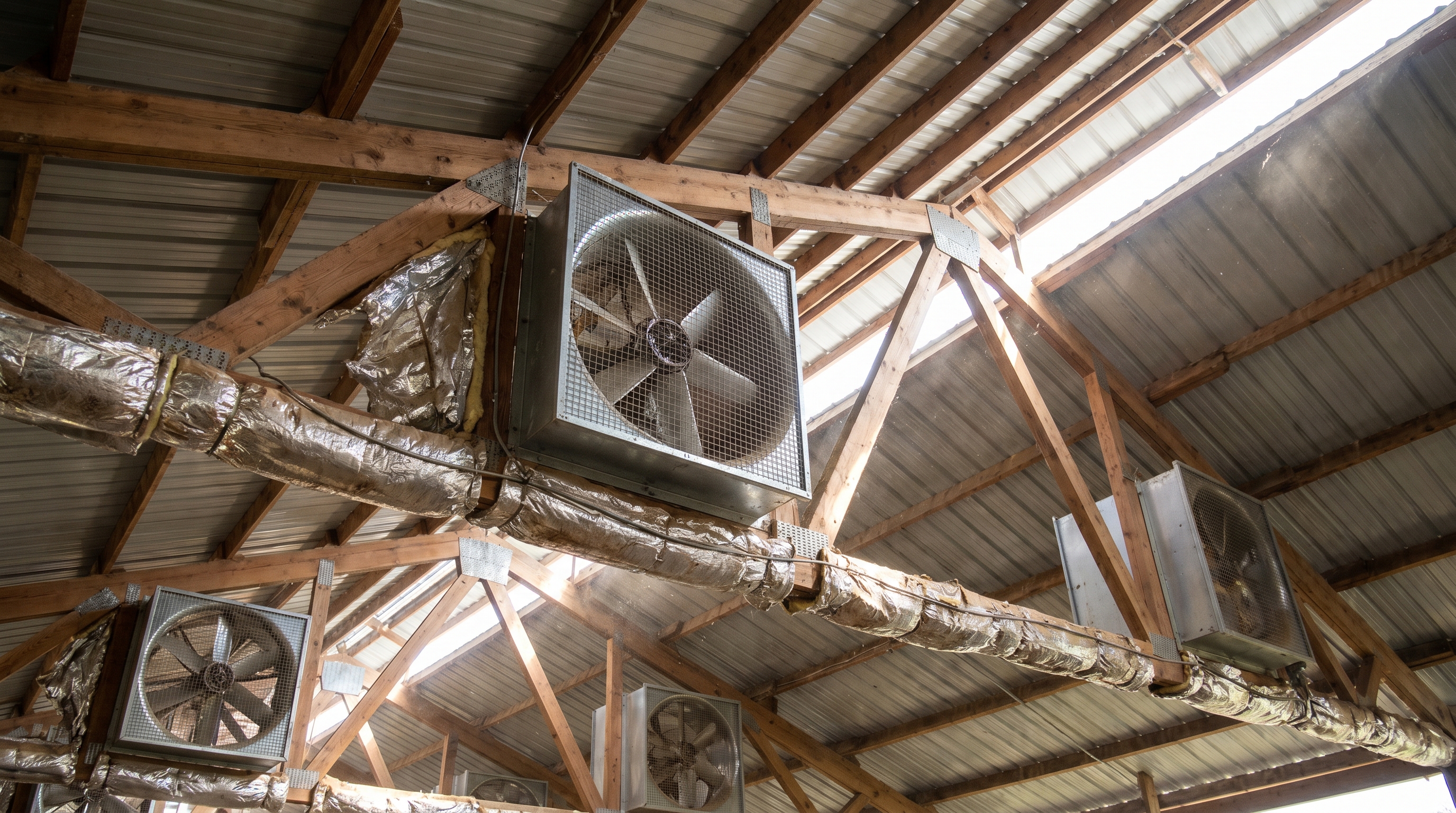
Environment control impacts efficiency by reducing heat stress and maintaining optimal air quality for the herd. Modern cattle farm design uses non-conducting roofing materials to keep the interior temperature lower than the outside ambient air.
By investing in automated ventilation, your cattle farm design will promote higher metabolic efficiency and milk production. Proper airflow removes ammonia and moisture, which are primary drivers of respiratory disease.
Why is insulation necessary?
- Thermal Shield: Aluminum or painted roofs reflect solar radiation.
- Comfort: Reduced heat allows animals to eat more feed.
- Longevity: Better climate control reduces structural wear from humidity.
Here is the kicker: high humidity is the predisposing cause for respiratory diseases in young animals.
How do you manage airflow?
- Natural: Use ridge vents and open sides for passive cooling.
- Mechanical: Install fans to maintain air velocity at 2 m/s.
- Direction: Align the building East-West to minimize direct sun.
Key Takeaway: Controlling the internal climate directly correlates to higher fecundity and better product quality, such as low-bacterial-count milk.
| Parameter | Optimal Level | Control Method | |
|---|---|---|---|
| Temperature | 15-25°C | Insulation/Fans | |
| Humidity | 50-70% | Ventilation | |
| Air Flow | 1-2 m/s | Ridge Vents |
Investing in insulated materials during the construction phase pays for itself through reduced veterinary interventions.
Which structural components are essential in cattle farm design?
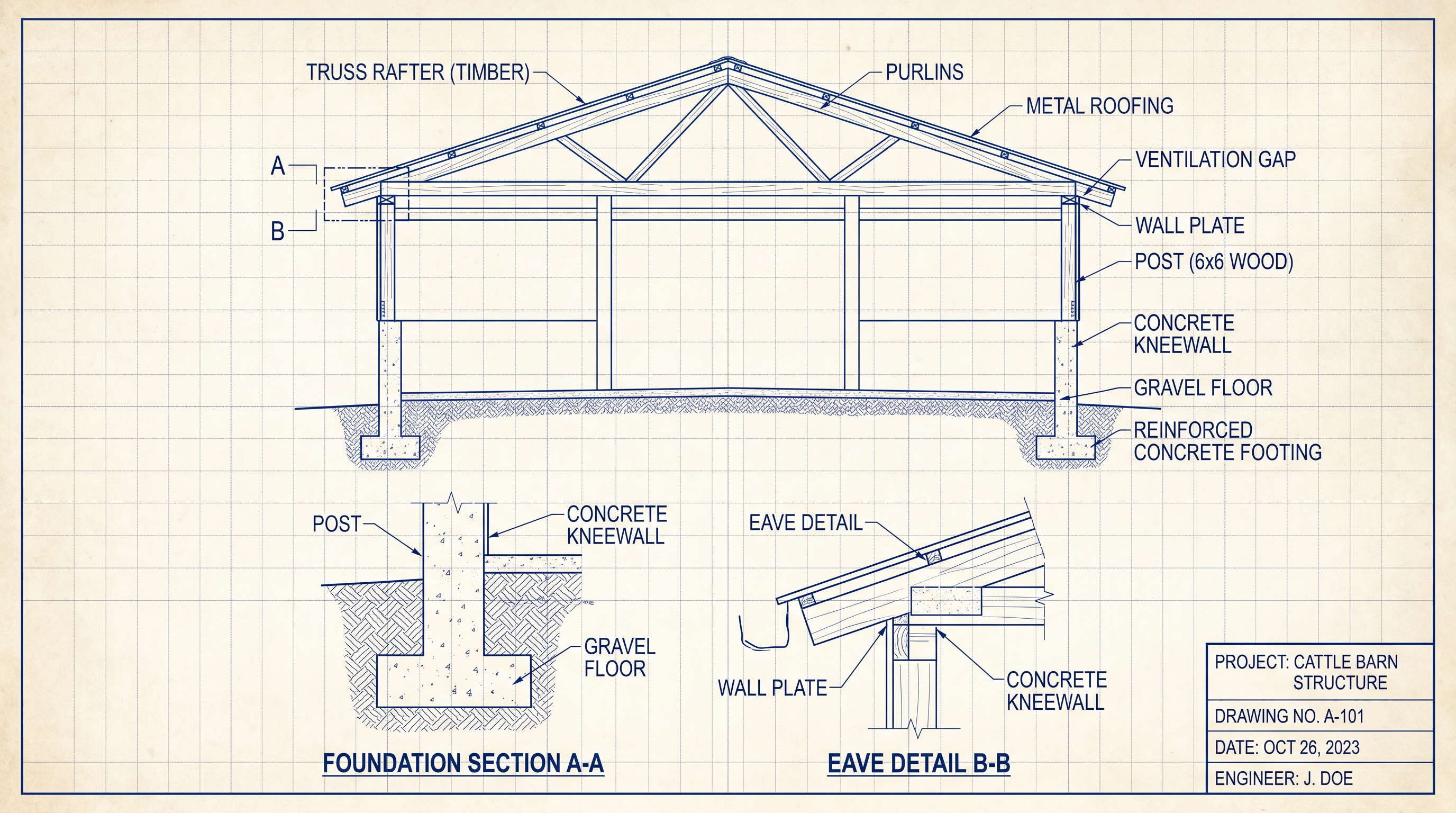
Essential components include reinforced foundations, damp-proof walls, and high-clearance roofing systems. Your cattle farm design must feature a foundation wall high enough to prevent water ingress during cleaning or storms.
The choice of steel frames in your cattle farm design provides a pillar-free interior for easier animal movement. Using vitrified bricks for the lower walls ensures a washable surface that resists bacterial growth.
What materials are best for walls?
- Concrete: Provides durability and ease of cleaning for waste areas.
- Bricks: Cost-effective for partitions and external boundaries.
- Steel: Best for long-span roofs and main support columns.
The best part? Choosing aluminum sheets provides reflective insulation that keeps the interior cool during the peak of summer.
Why are roof types important?
- Gable: Offers excellent ventilation and is suitable for hot climates.
- Monitor: Ideal for very wide buildings requiring central light.
- Lean-to: Best for small expansions or individual animal sheds.
Key Takeaway: Every material choice, from the cement mortar to the roofing tiles, impacts the internal temperature and the safety of the animals.
| Component | Material | Purpose | |
|---|---|---|---|
| Foundation | RC Concrete | Stability | |
| Frame | Galvanized Steel | Longevity | |
| Roof | Alum-Zinc Sheet | Heat Reflection |
Selecting the right roofing pattern, such as a monitor roof, is vital for naturally ventilating buildings with smaller widths.
Why is floor construction critical to cattle farm design success?
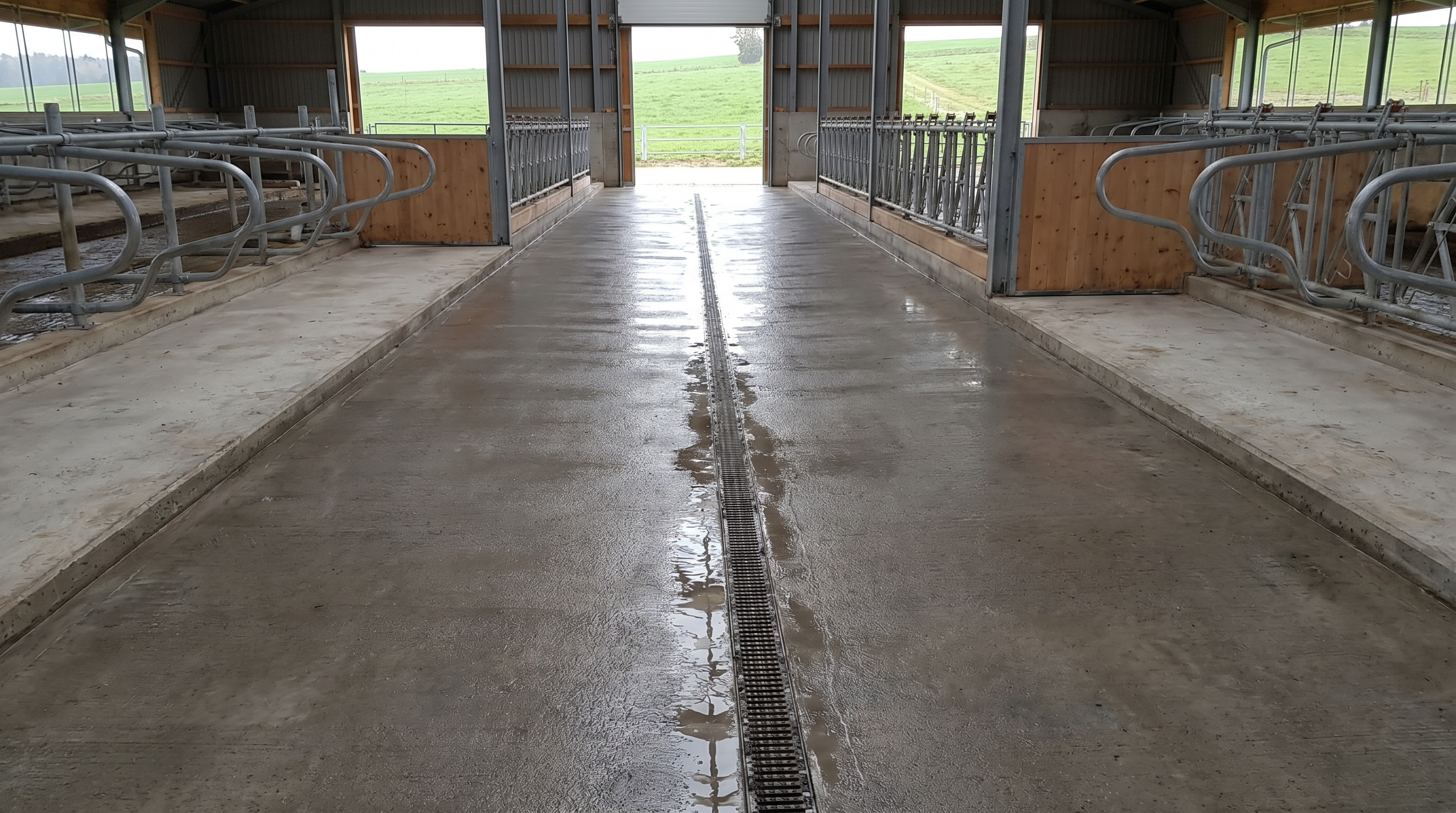
Floor construction is critical because it dictates animal safety and the efficiency of daily waste management. In a professional cattle farm design, the floor must have a precise gradient to ensure liquid waste flows toward the gutter.
A non-slippery surface in your cattle farm design prevents limb injuries and expensive veterinary calls. Use roughened concrete or grooved patterns to provide traction for heavy dairy cattle.
How do you achieve proper drainage?
- Gradient: Maintain a 1/60 slope from the manger to the rear.
- Gutter: Use a deep, wide channel for rapid manure clearance.
- Texture: Finish with a broom to create a slip-resistant surface.
Wait, there’s more: you must ensure the surface is roughened or grooved to prevent animals from slipping.
Are there alternative bedding options?
- Rubber Mats: Provide high comfort and protect the knees.
- Deep Litter: Uses straw to absorb moisture in colder climates.
- Concrete: The standard for easy washing and hygiene control.
Key Takeaway: A well-sloped, non-slippery floor is the most effective way to manage farm hygiene and prevent physical injuries to your stock.
| Floor Type | Advantage | Slope | |
|---|---|---|---|
| Concrete | Durable | 1 in 60 | |
| Deep Litter | Comfortable | N/A | |
| Rubber Mats | Joint Health | 1 in 50 |
Properly constructed floors with a 1/40 to 1/60 slope are the industry standard for automated and manual cleaning systems.
What are the differences between loose and conventional cattle farm design?
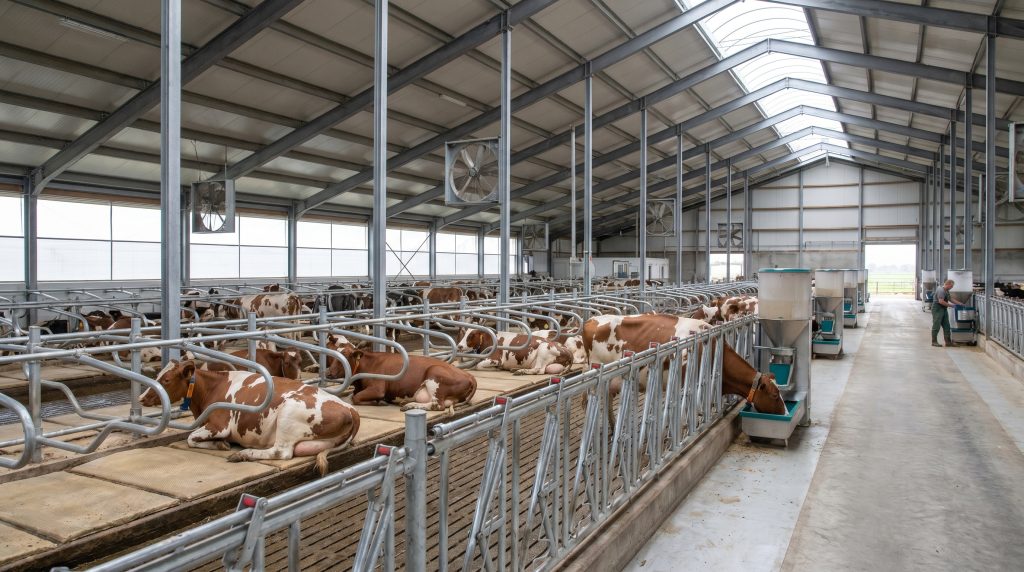
The difference lies in animal confinement, where loose housing permits free movement while conventional barns use stalls. When choosing your cattle farm design, you must weigh the benefits of exercise against individual management.
Loose housing in your cattle farm design is often cheaper to build and easier for future expansion. It allows for natural social behavior and better heat detection in breeding herds.
When should you use conventional barns?
- Climate: Better for regions with extreme winters or heavy rain.
- Breeding: Allows for individual feeding and health monitoring.
- Milking: Facilitates milking without moving animals to a parlor.
You might be wondering which system is better for clean milk production.
What are the perks of loose housing?
- Cost: Requires fewer internal partitions and metal fittings.
- Health: Animals get more exercise, reducing foot rot issues.
- Labor: Feeding can be automated more easily in open pens.
Key Takeaway: Choose loose housing for lower capital investment and better animal welfare, or conventional barns for individual attention in harsh climates.
| Feature | Loose Housing | Conventional | |
|---|---|---|---|
| Building Cost | Low | High | |
| Animal Liberty | High | Restricted | |
| Expansion Ease | Simple | Complex |
Your choice between these systems will dictate the daily labor requirements and the overall health management strategy of the farm.
Email:sales@showhoo.com.cn
Phone/WhatsApp:+86 186 7895 5927
How do you optimize cow and heifer units in cattle farm design?
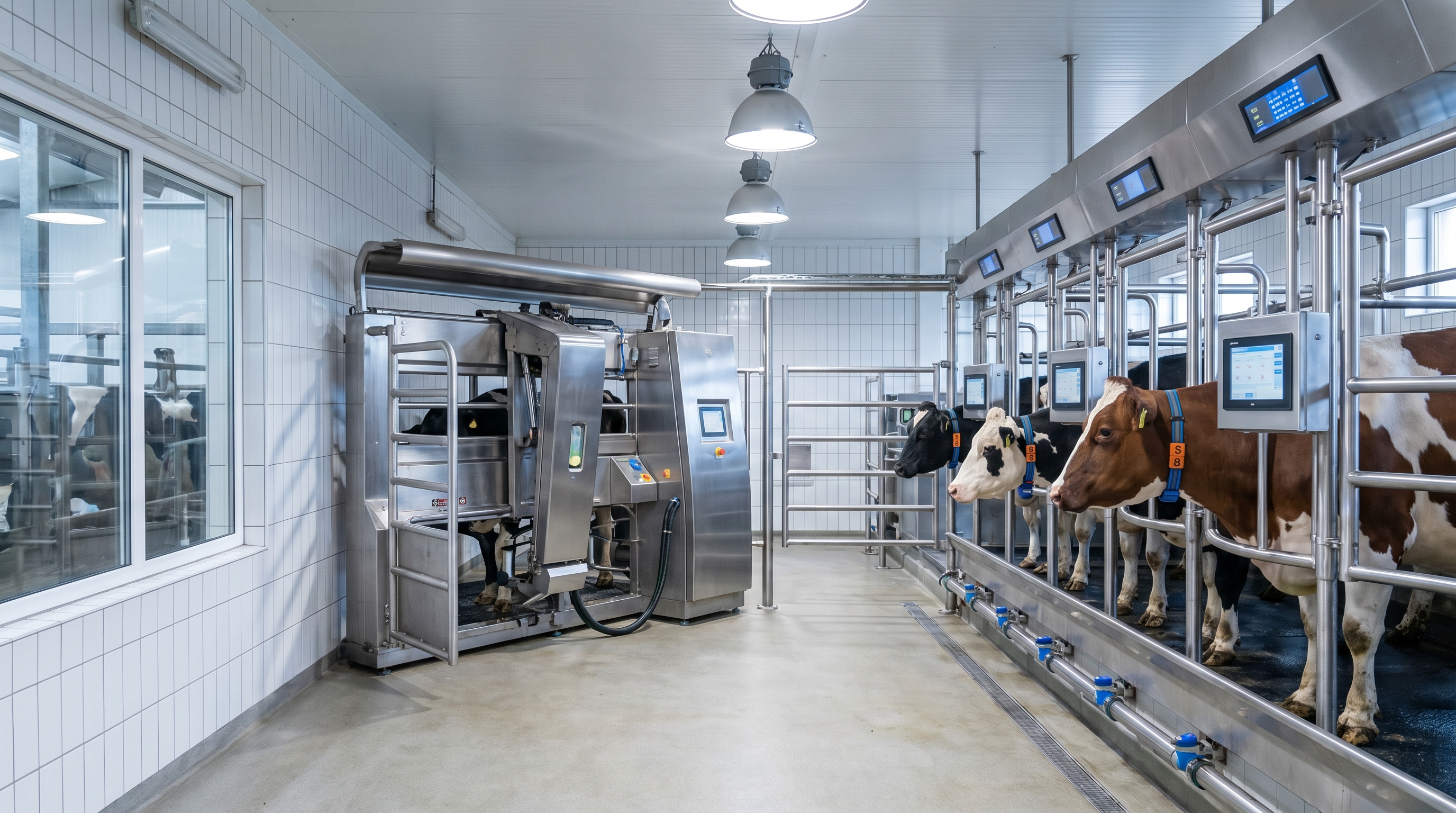
Optimizing units involves selecting layouts that maximize throughput in milking and simplify daily cleaning tasks. Your cattle farm design should prioritize the tail-to-tail arrangement to keep waste away from the central feeding area.
This layout in your cattle farm design allows supervisors to see the udders of all animals from one central passage. It also improves air circulation around the animals’ heads by keeping them near the walls.
Why is tail-to-tail the industry standard?
- Hygiene: Feed remains clean as it is separate from the dung.
- Efficiency: Milking machines can move faster between two cows.
- Supervision: Easier to detect heat or health issues during milking.
Let’s dive deeper: heifers and young stock should be grouped by age and housed separately from suckling calves.
Can head-to-head systems work?
- Display: Better for showing animals to buyers or visitors.
- Feeding: Allows a single person to feed two rows at once.
- Space: Often fits better in narrower, existing buildings.
Key Takeaway: The tail-to-tail arrangement is the superior choice for large-scale dairies focused on hygiene and labor efficiency.
| Layout | Cleaning | Feeding | Labor Cost | |
|---|---|---|---|---|
| Tail-to-Tail | Easy | Moderate | Low | |
| Head-to-Head | Hard | Fast | Moderate | |
| Single Row | Simple | Simple | High |
Properly sized gutters and central passages are essential in double-row systems to prevent bottlenecks during waste removal.
What specialized sheds are required in cattle farm design?
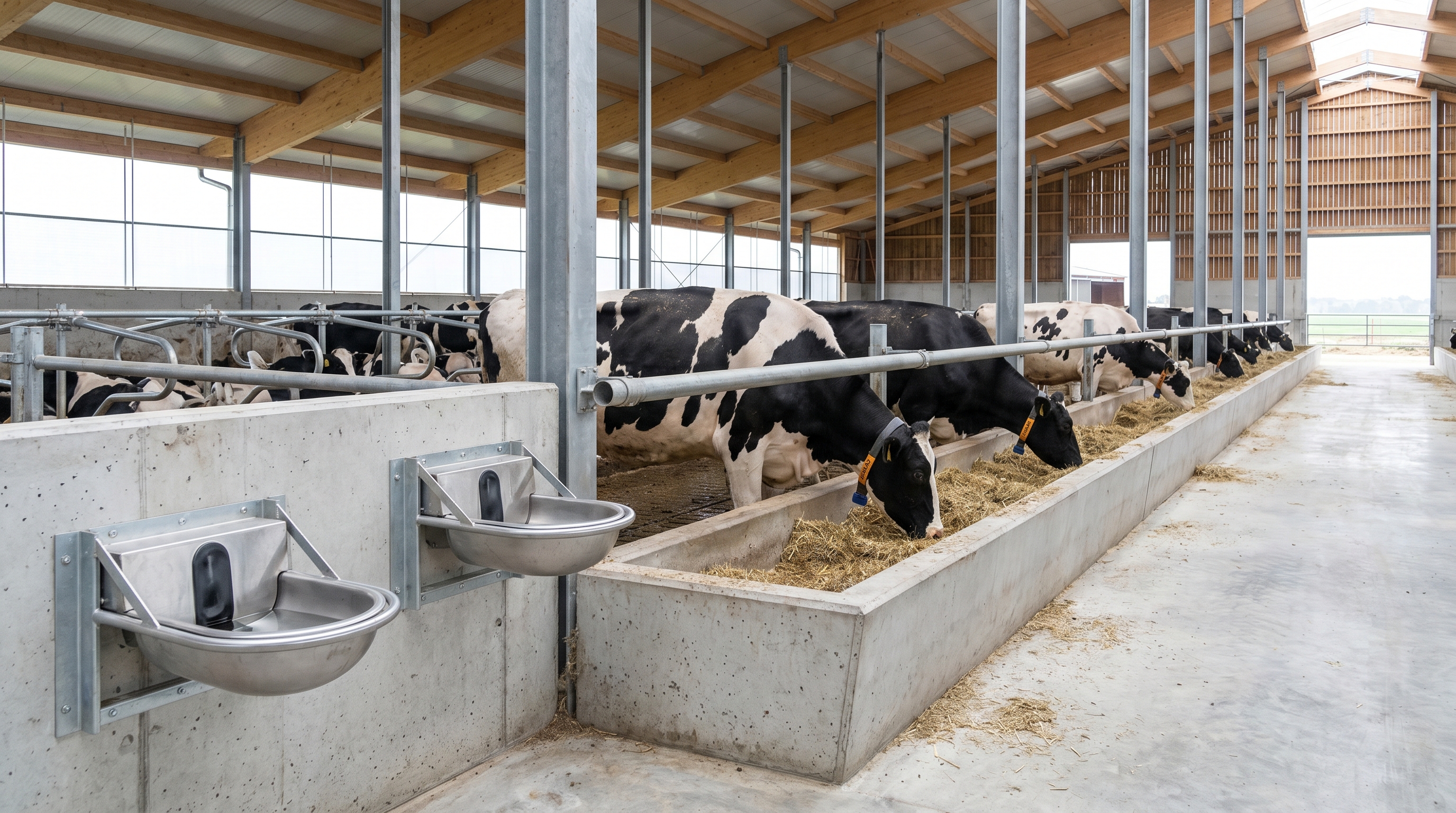
Specialized sheds include isolation units, calving pens, and quarantine areas to manage herd health and safety. A comprehensive cattle farm design separates sick or new animals from the main herd to prevent disease transmission.
Integrating these units into your cattle farm design ensures you are prepared for calving seasons and emergency health lockdowns. Locating the calving pen near the manager’s office allows for 24/7 supervision.
What is the role of a quarantine shed?
- Safety: Holds new arrivals for 30 days to check for disease.
- Testing: Allows for vaccination and screening before integration.
- Location: Always place this at the farm entrance, far from stalls.
In fact, your farm should also include rat-proof store rooms for feed and specialized milk rooms.
Why do you need a bull shed?
- Control: Keeps breeding bulls separate from cows to prevent injuries.
- Safety: Reinforced metal partitions protect staff from aggressive bulls.
- Exercise: Includes an attached yard for maintaining physical fitness.
Key Takeaway: Specialized sheds are not optional; they are the frontline defense against herd-wide disease outbreaks and reproductive failure.
| Shed Type | Function | Location | |
|---|---|---|---|
| Calving | Delivery | Center | |
| Isolation | Sick Animals | Far Corner | |
| Quarantine | New Arrivals | Entrance |
Locating the calving pen near the manager’s house allows for 24-hour supervision during critical delivery periods.
How do you manage calf housing within your cattle farm design?
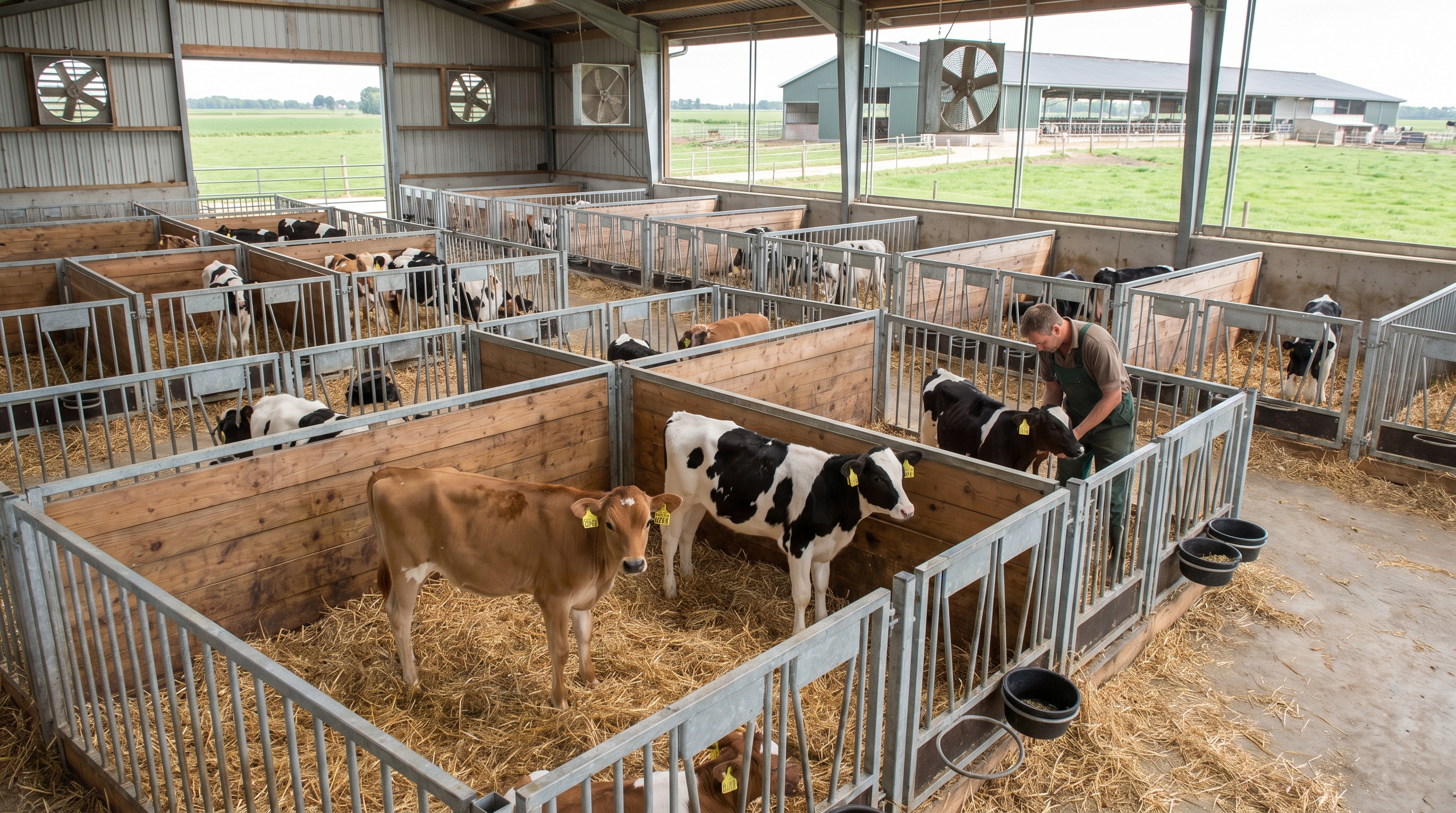
Calf housing management focuses on reducing mortality through isolation, dry bedding, and high air capacity. Your cattle farm design must include individual pens for newborns to stop the spread of infections like scours.
A dry, draft-free environment in your cattle farm design is essential for developing strong immune systems in young stock. Avoid placing calves on damp concrete floors; use straw or wooden platforms instead.
Why are individual pens best?
- Disease: Prevents physical contact between calves during the first month.
- Feeding: Allows precise tracking of milk and starter intake.
- Hygiene: Makes cleaning between batches of calves much easier.
It gets better: the height of the calf shed should allow air to enter well above the animal’s level.
When should they move to groups?
- Timing: Usually after 3 months when the immune system is stable.
- Size: Keep group sizes small (3-5 calves) to reduce stress.
- Weaning: Use the transition period to introduce social interaction.
Key Takeaway: Individual pens for young calves significantly reduce mortality rates by preventing physical contact and shared infections.
| Age | Area Req | Bedding | |
|---|---|---|---|
| 0-1 Month | 1.0 m² | Straw/Wood | |
| 1-3 Months | 1.5 m² | Wood Chips | |
| 3-6 Months | 2.5 m² | Concrete/Straw |
Providing a dry, well-ventilated environment is more effective than any medical intervention in ensuring calf survival.
What are the unique requirements for bull housing in cattle farm design?
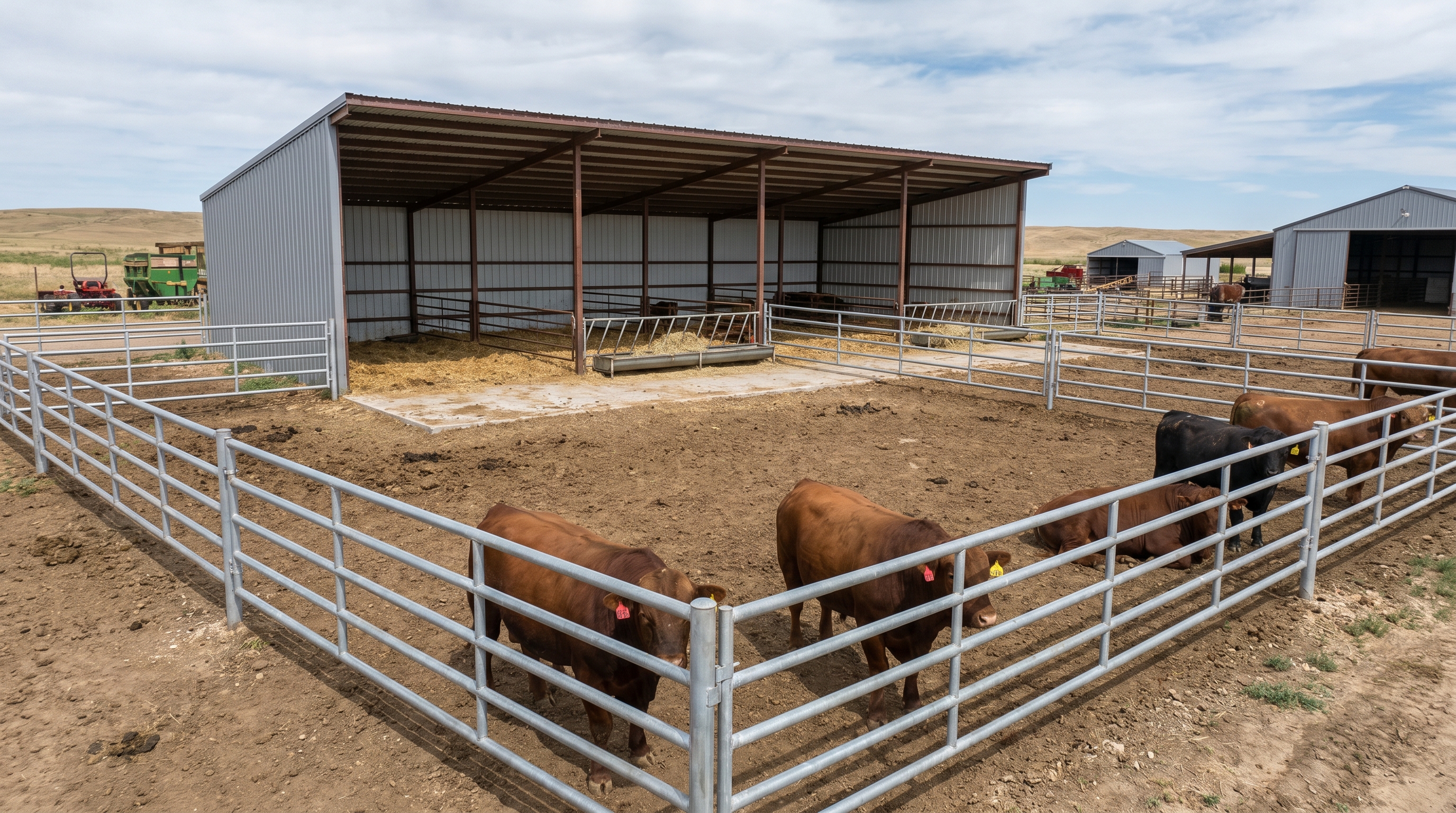
Bull housing requires reinforced structures and large exercise yards to maintain physical health and libido. The cattle farm design for bulls must prioritize safety with heavy-duty steel railings that can withstand immense force.
Providing a cool, shaded resting area in your cattle farm design is vital for maintaining high-quality semen. Heat stress can significantly reduce the fertility of your breeding bulls for months.
Why is an exercise yard mandatory?
- Health: Prevents obesity and maintains muscle tone for mating.
- Hooves: Natural ground helps wear down hooves correctly.
- Behavior: Reduces aggression by allowing the animal to move freely.
Keep this in mind: a bull’s semen quality and libido drop significantly if they are exposed to extreme heat.
How do you build for safety?
- Railings: Use 1.2m to 1.5m high steel pipes for the enclosure.
- Gates: Ensure heavy-duty locks that cannot be nudged open.
- Escape: Include safety passages for staff in case of emergencies.
Key Takeaway: A bull is half the herd; investing in a safe, cool, and spacious housing unit is essential for the genetic progress of your farm.
| Requirement | Specification | Goal | |
|---|---|---|---|
| Yard Size | 120 m² | Exercise | |
| Rail Height | 1.5 m | Security | |
| Roof | Insulated | Cooling |
The semen collection and processing labs should be situated close to the bull house for maximum efficiency.
Conclusion
Developing a world-class dairy operation requires more than just high-quality livestock; it demands a structural environment that supports every stage of the animal’s life. At Showhoo, our vision is to lead the global supply of high-quality steel structures, ensuring engineered excellence is delivered worldwide to solve your most complex agricultural challenges. If you are ready to modernize your facility and maximize your production, contact us today for a customized building solution.
Email:sales@showhoo.com.cn
Phone/WhatsApp:+86 186 7895 5927
FAQ
Can I use the same building for different types of livestock?
Yes, if you design a spacious building without internal pillars, it can be easily adapted for cattle, pigs, or sheep with minor modifications.
How do I prevent heat stress in a tropical cattle shed?
The most effective way is to use insulated roofing materials like aluminum or paint your roof white to reflect solar radiation.
What is the best way to manage waste in a double-row barn?
You should implement a central drainage gutter with a 1/60 slope and use washable cement plaster on the walls up to four feet high.
How many bulls do I need for my herd?
Typically, you need one bull for every 50 breedable females, though this is unnecessary if you utilize artificial insemination.
How do I know if my ventilation is adequate?
If you notice heavy ammonia smells at floor level or see calves coughing, your air exchange rate is likely too low.