
Protecting a steel poultry house from corrosion requires component-level decisions that keep moisture, manure by-products, cleaning chemicals, and exposed steel apart. Two bids may look comparable while one says only “galvanized” and the other defines the frame, purlins, cladding, fasteners, cut edges, and repair system. If ventilation openings are unresolved and the cleaning team plans aggressive wash-down chemicals, those gaps can become hidden rust, production disruption, and a dispute over responsibility.
A practical poultry house corrosion protection schedule connects each exposure zone to a material, coating, detail, inspection method, and maintenance action. It lets you compare suppliers on buildable evidence rather than coating labels. You also give the structural, envelope, ventilation, and farm-operation teams one coordinated basis for decisions.
1. Why Do Steel Chicken Houses Corrode?
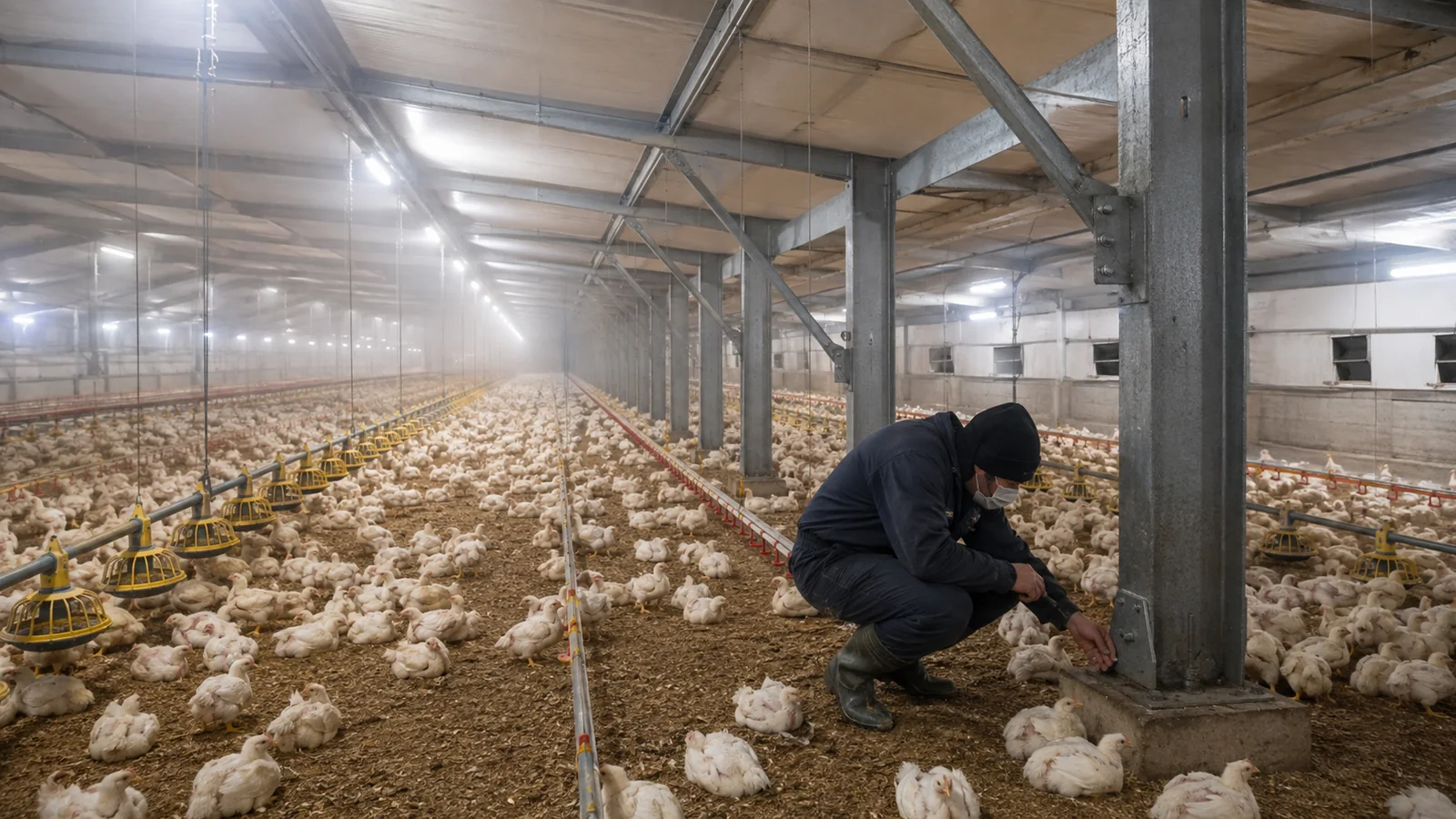
Steel chicken houses corrode when moisture and poultry contaminants remain on vulnerable surfaces, so poultry house corrosion protection has to interrupt that wet exposure. Manure decomposition products and dust can dissolve in condensation or wash water, creating an electrolyte on the metal.
How does the corrosive cell form?
Here is the working mechanism: corrosion needs an exposed metal area, an electrolyte, oxygen, and enough contact time. A coating defect beside a damp litter deposit can become the active site, while the surrounding coated surface hides the change. The buyer should review how moisture reaches and leaves each component, not just its coating name.
- Trace condensation paths from the roof skin to purlins and fasteners.
- Mark surfaces exposed to litter, wash water, disinfectant, or exhaust air.
- Identify crevices and horizontal ledges that retain damp dust.
Why should the building be divided into exposure zones?
The practical distinction is this: the underside of a roof, a column base, and an exterior wall away from fans do not face the same duty. Giving them one coating note can over-specify dry zones and leave wet zones exposed. A corrosion-zone drawing gives the engineer and supplier a shared map for component selection.
Key Takeaway: Divide the building by exposure source, wetting frequency, drying potential, and inspection access. That map is more useful to you than a single building-wide coating description.
| Zone | Main exposure | Buyer control |
|---|---|---|
| Roof void | Condensation and trapped dust | Vapor and drainage detail |
| Lower wall | Litter, splash, and wash water | Protected curb and liner |
| Fan discharge | Humid contaminated plume | Coated exterior detail |
The zone with the slowest drying period often deserves the closest review.
2. How Should Poultry House Corrosion Protection Be Specified?
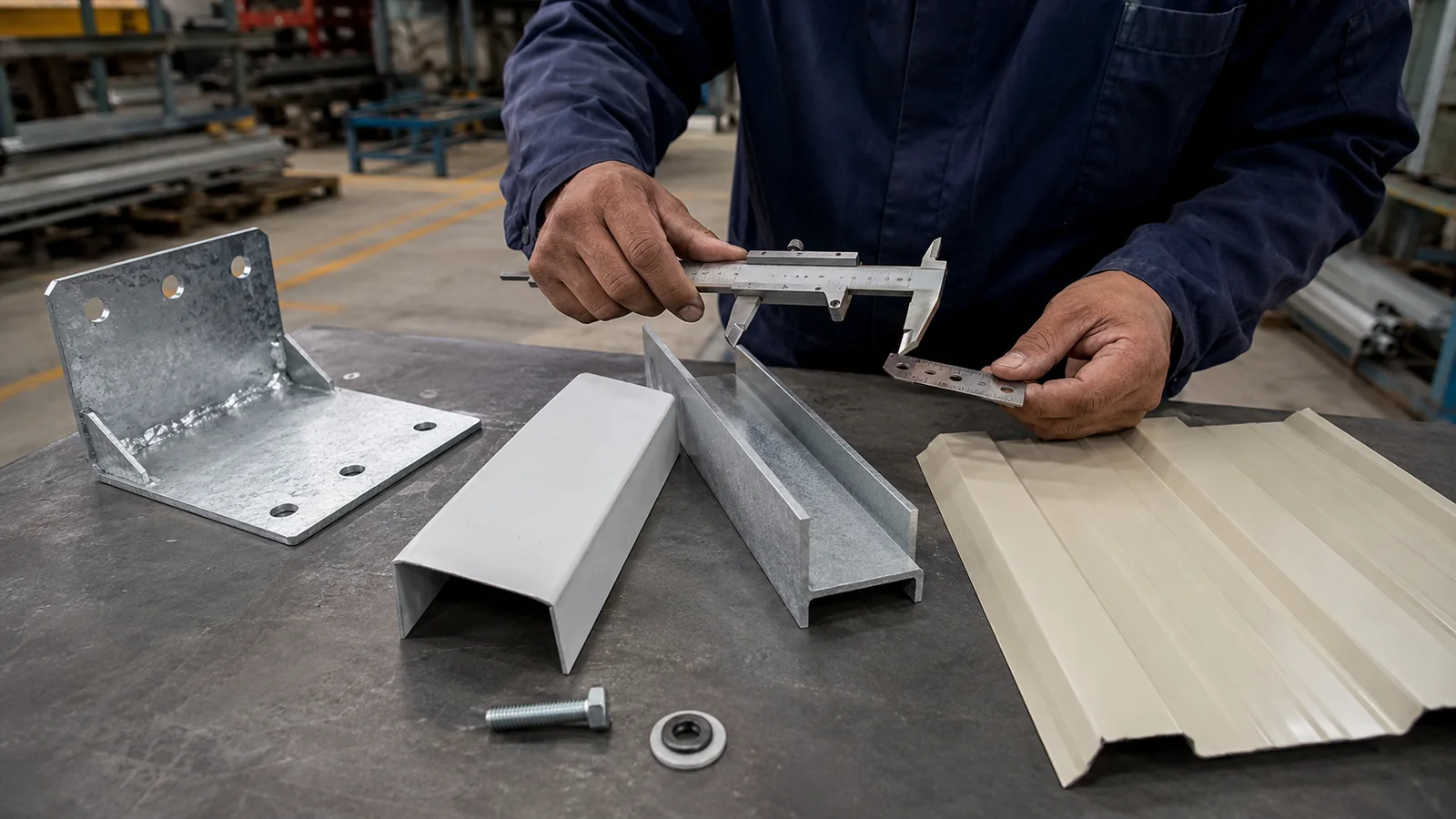
Poultry house corrosion protection should be specified through a component schedule tied to exposure, surface preparation, coating process, repair method, and acceptance evidence. The word “galvanized” does not tell you whether the supplier means a fabricated frame dipped after welding or sheet steel coated on a continuous line. Those products use different processes and specification systems.
What belongs in the component schedule?
Start with the actual parts: list columns, rafters, purlins, girts, bracing, cladding, liners, flashings, fasteners, and equipment frames separately. State whether field cutting or welding is expected, because that changes the repair scope. Ask the design team to assign the system, not leave substitutions to the erection crew.
- Component and exact exposure zone
- Substrate, preparation, and coating process
- Shop and field repair procedure
- Required certificate, test, or inspection record
How do you prevent a standards mismatch?
This is where bids separate: a sheet-coating designation does not describe batch galvanizing on a welded H-section. The submittal should identify the standard that applies to each product form and show how holes, welds, edges, and drainage features are treated.
Key Takeaway: Require a component-specific schedule and cross-check every standard against the product form. This gives you a traceable basis for bid comparison and inspection.
| Component | Schedule entry | Acceptance evidence |
|---|---|---|
| Fabricated frame | Post-fabrication coating process | Batch certificate and repair record |
| Cold-formed member | Coil coating designation | Supplier certificate |
| Roof or wall sheet | Metallic and paint system | Product data and batch identity |
A clear schedule exposes substitutions before material reaches the site.
3. Where Does Corrosion Usually Start?
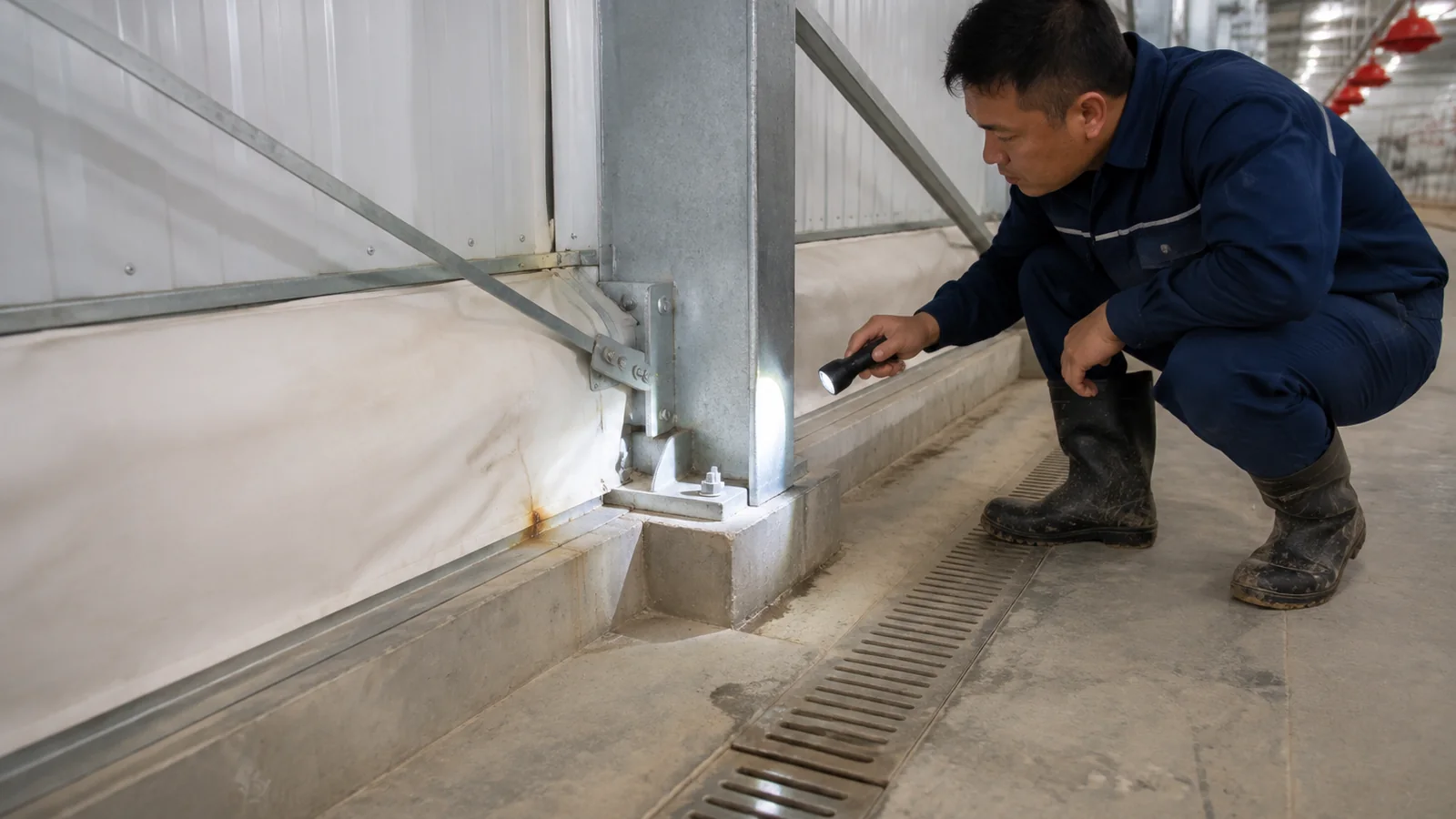
Poultry house corrosion protection often fails at column bases, lower wall edges, fastener holes, panel laps, exhaust openings, roof penetrations, and field repairs. These locations combine coating discontinuities with water retention or concentrated contaminants.
Which details trap moisture and contaminants?
Look closely at interfaces: a wall panel buried against a wet floor edge can remain damp after the aisle has dried. Unsealed laps draw contaminated water by capillary action, and flat connection plates collect dust. Detail drawings should show drainage, sealants, clearances, curbs, and access for cleaning.
- Keep primary steel out of direct litter and standing-water zones.
- Drain flashings without sending runoff across cut edges.
- Separate panel ends from absorbent materials and debris pockets.
How can buyers map hidden failure points?
Use a walk-through on paper: follow roof runoff, wash-down spray, fan discharge, litter movement, and equipment penetrations across the drawings. Mark every place where a barrier stops, changes material, or becomes difficult to inspect. Request enlarged details for those points before fabrication release.
Key Takeaway: Review interfaces as water paths rather than isolated details. A marked-up corrosion map directs attention to small areas that can govern repair cost.
| Hotspot | Likely failure | Verifiable item |
|---|---|---|
| Column base | Splash retained at base plate | Curb and drainage detail |
| Panel lap | Contaminated water drawn into seam | Lap and sealant submittal |
| Roof opening | Damaged coating and poor flashing | Penetration detail and site photo |
An interface review usually reveals risks that a general arrangement drawing cannot show.
4. How Do Ventilation and Condensation Change Corrosion Risk?
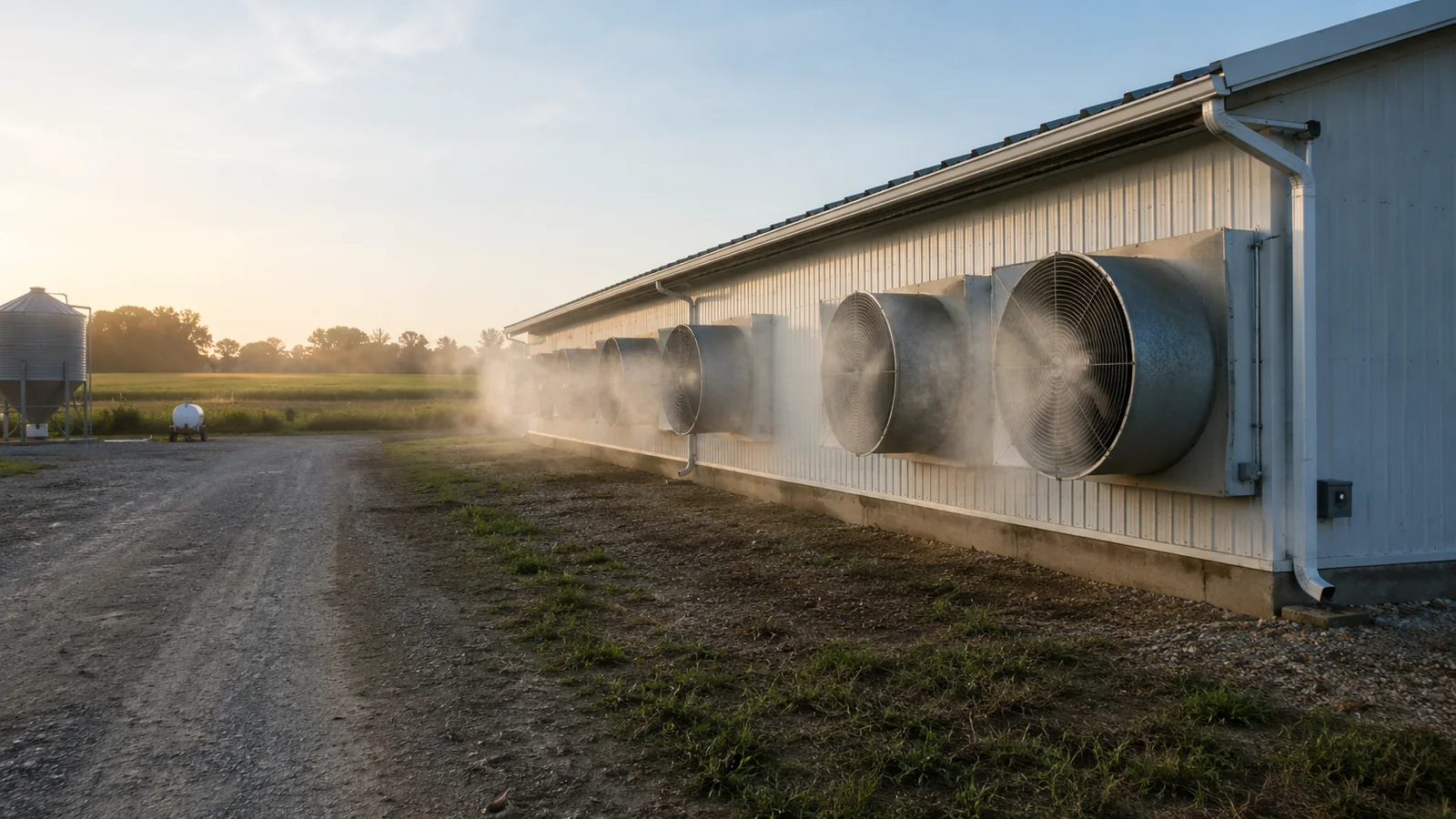
Poultry house corrosion protection depends on ventilation because airflow changes indoor humidity, condensation time, contaminant concentration, and exterior plume exposure. A system sized only for bird conditions can still leave stagnant roof pockets or discharge humid air against nearby cladding. Structural openings and fan locations need coordination before the frame and envelope are released.
How does airflow influence wetting and drying?
Follow the moisture balance: bird respiration, litter moisture, cooling systems, and cleaning add water to the house. When a cold surface falls below the local dew point, contaminants in the air settle into the condensate. The ventilation basis should identify seasonal operating modes and areas with limited air movement.
- Compare airflow paths with roof geometry and equipment obstructions.
- Review cold bridges at purlins, fasteners, and uninsulated openings.
- Provide a drying plan after cleaning and before flock placement.
Why do exhaust locations create exterior hotspots?
The risk moves outside: fan plumes can wet adjacent walls, eaves, roofs, service platforms, or another house. Wind direction and fan staging change the plume path, so a single operating sketch may not cover every condition. Ask for an opening schedule and an exterior corrosion review around each discharge zone.
Key Takeaway: Coordinate air quality, condensation control, and exhaust discharge with the building envelope. Ventilation drawings should become an input to corrosion zoning.
| Ventilation condition | Corrosion effect | Design response |
|---|---|---|
| Stagnant roof pocket | Longer condensate dwell time | Air path and thermal review |
| Fan plume near wall | Local exterior attack | Discharge clearance and protection |
| Post-wash closure | Slow interior drying | Defined drying mode |
Ventilation can relocate corrosion rather than simply remove it.
5. Which Steel and Coating Systems Fit Each Exposure Zone?
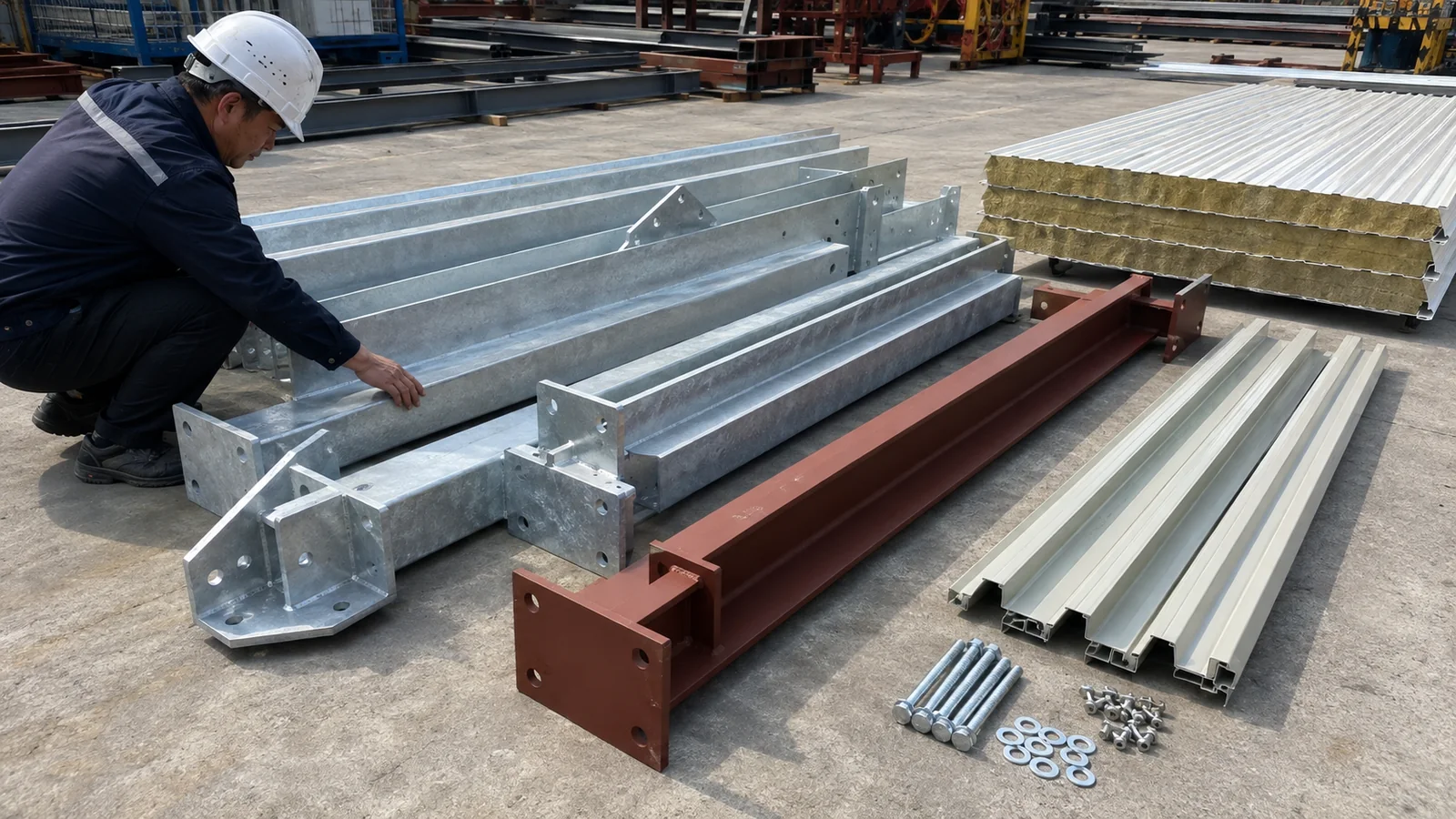
Poultry house corrosion protection uses different steel and coating systems because component geometry, fabrication sequence, exposure, and repair access vary. Paint can suit controlled shop work and straightforward field repair, while hot-dip galvanizing coats complex fabricated surfaces through immersion. A duplex system may extend barrier protection but adds preparation and compatibility controls.
What tradeoffs come with each system?
There is no single winner: painted steel needs verified surface preparation and film continuity, while galvanizing requires drainage, venting, and distortion review for fabricated shapes. Pre-coated sheet offers factory consistency, yet cut edges and drilled holes still need suitable details.
- Compare shop process control and field repair practicality.
- Check whether geometry is suitable for the proposed treatment.
- Confirm chemical compatibility with cleaners and sealants.
Where can an interior liner change the strategy?
A barrier can change exposure: a sealed liner may isolate structural steel and exterior cladding from the bird environment. Its joints, base closure, penetrations, and damage resistance then become part of the corrosion system. If the barrier leaks, hidden moisture can remain against cold metal with limited inspection access.
Key Takeaway: Select systems by component geometry, exposure, repair access, and barrier reliability. Ask suppliers to explain the whole assembly, not one coated coupon.
| System | Useful characteristic | Control point |
|---|---|---|
| Shop paint | Flexible color and repair options | Preparation and film checks |
| Hot-dip galvanizing | Coats immersed fabricated surfaces | Venting, drainage, and repair |
| Duplex coating | Combines metallic and paint barriers | Intercoat compatibility |
| Sealed liner | Isolates the main envelope | Joint and penetration continuity |
The assembly with the clearest inspection route may offer lower lifecycle uncertainty.
6. How Should Insulation and Vapor Barriers Be Detailed?
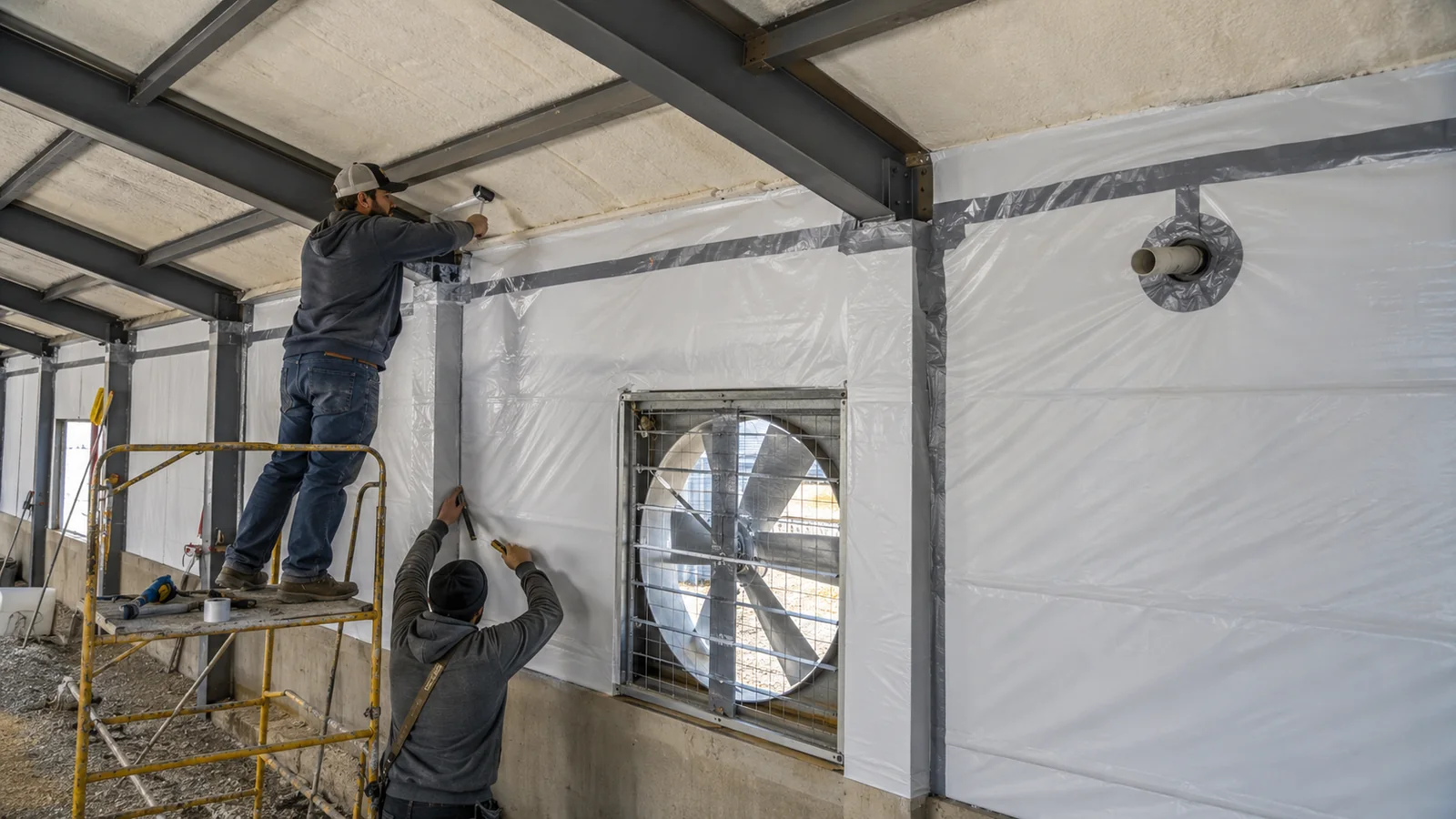
Poultry house corrosion protection requires a continuous warm-side vapor-control layer suited to the climate and operating conditions. Insulation reduces cold-surface condensation, but gaps, compressed zones, and conductive fasteners can create local cold bridges. The design should show how continuity is maintained at every edge and opening.
Where does vapor-control continuity break?
The weak points are predictable: roof-to-wall junctions, panel ends, fan curbs, cable trays, pipes, doors, and suspended equipment supports interrupt the plane. Generic notes rarely explain who seals penetrations installed after the envelope crew leaves. An interface matrix should assign each opening to a detail owner and inspection stage.
- Show laps, tapes, sealants, closures, and substrate preparation.
- Coordinate penetrations before panels enter production.
- Provide repair materials for later equipment changes.
What should an envelope submittal prove?
Ask for buildable continuity: panel layouts, joint sections, thermal bridges, opening details, and compatible sealant data should read as one system. A sample bay or interface mock-up can expose sequencing conflicts before repetitive installation. The engineer and suppliers should confirm whether the proposed assembly suits local vapor drive and cleaning conditions.
Key Takeaway: Treat insulation and vapor control as a continuous assembly with named interface owners. Hidden condensation risk rises where responsibility changes hands.
| Interface | Required detail | Buyer evidence |
|---|---|---|
| Roof-to-wall | Continuous barrier turn | Enlarged section |
| Fan opening | Sealed curb and closure | Approved shop drawing |
| Service penetration | Compatible boot or seal | Sample and installation record |
Interface ownership is as relevant as the insulation value printed on a panel.
7. Which Fasteners and Interfaces Need Extra Protection?
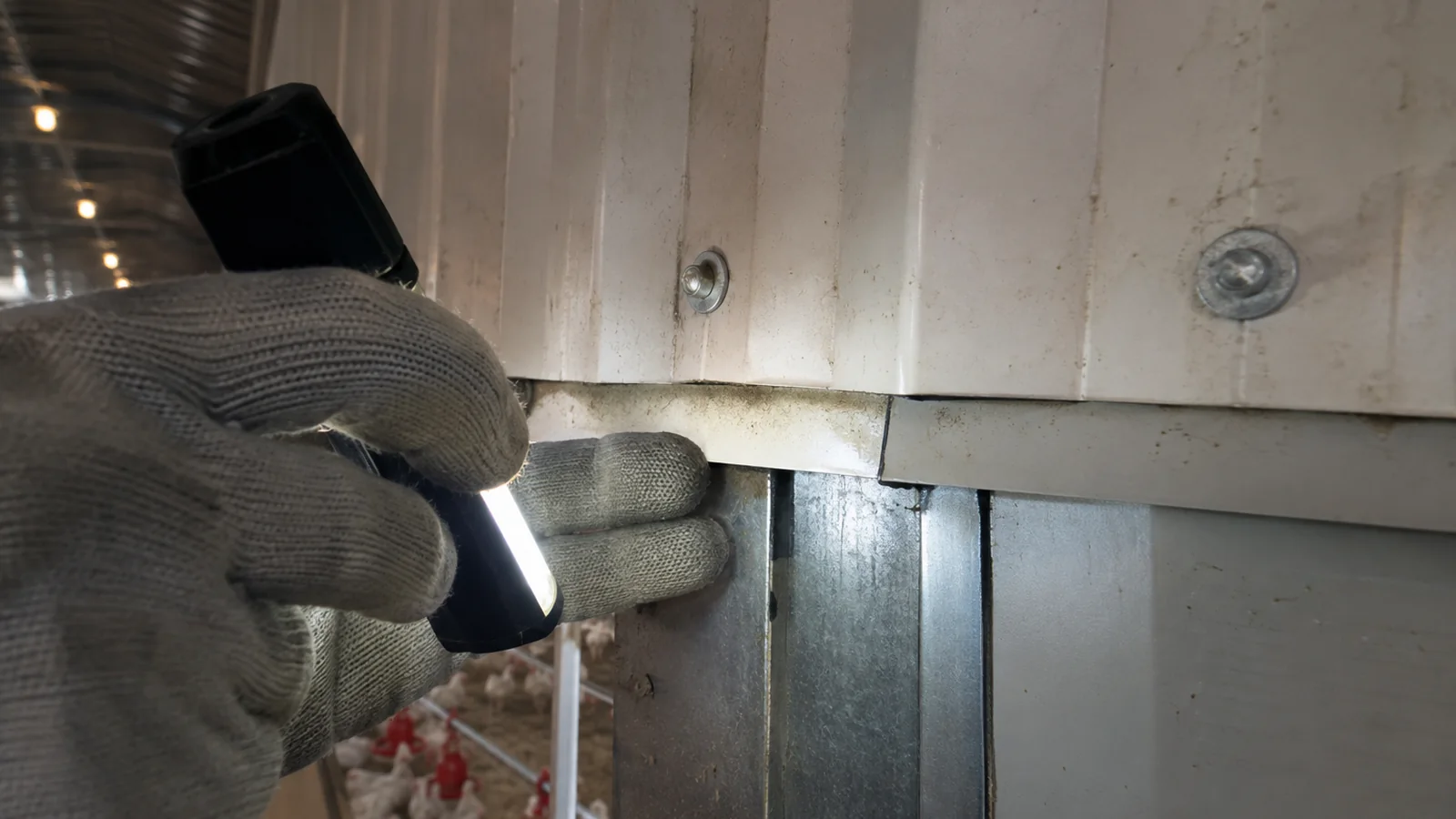
Poultry house corrosion protection needs extra control at fasteners, washers, laps, dissimilar-metal contacts, anchors, field cuts, and weld repairs. These small items break large protective surfaces and can concentrate moisture at stressed edges. A low-cost substitution can create hundreds of repeated leakage or rust points.
How should fasteners be matched to the assembly?
Check the complete fastener: base metal, coating, washer, seal, drill point, and connected materials work together. An incompatible metal pair can create galvanic attack when wet, while an overdriven washer may split and admit water. Require approved fastener data and installation guidance for each panel zone.
- Match corrosion resistance to the connected sheet and exposure.
- Review washer material against cleaners and temperature.
- Define installation checks for seating and damaged coatings.
How should field damage be repaired?
Control the unplanned work: field-cut holes, burned edges, scratched panels, and site welds need an approved repair route before crews encounter them. Improvised aerosol paint may not match the shop system or surface preparation. Record the location, preparation, product, applicator, and acceptance of each material repair.
Key Takeaway: Specify interfaces and repair work with the same care as large steel members. Repetition turns a minor detail into a building-wide exposure.
| Interface | Common defect | Required control |
|---|---|---|
| Panel screw | Split or poorly seated washer | Visual seating check |
| Dissimilar metals | Galvanic contact when wet | Isolation detail |
| Field cut or weld | Bare or heat-damaged edge | Approved repair record |
Sample inspections should focus on repeated details before the crew closes large areas.
8. How Should Cleaning and Waste Removal Shape the Design?
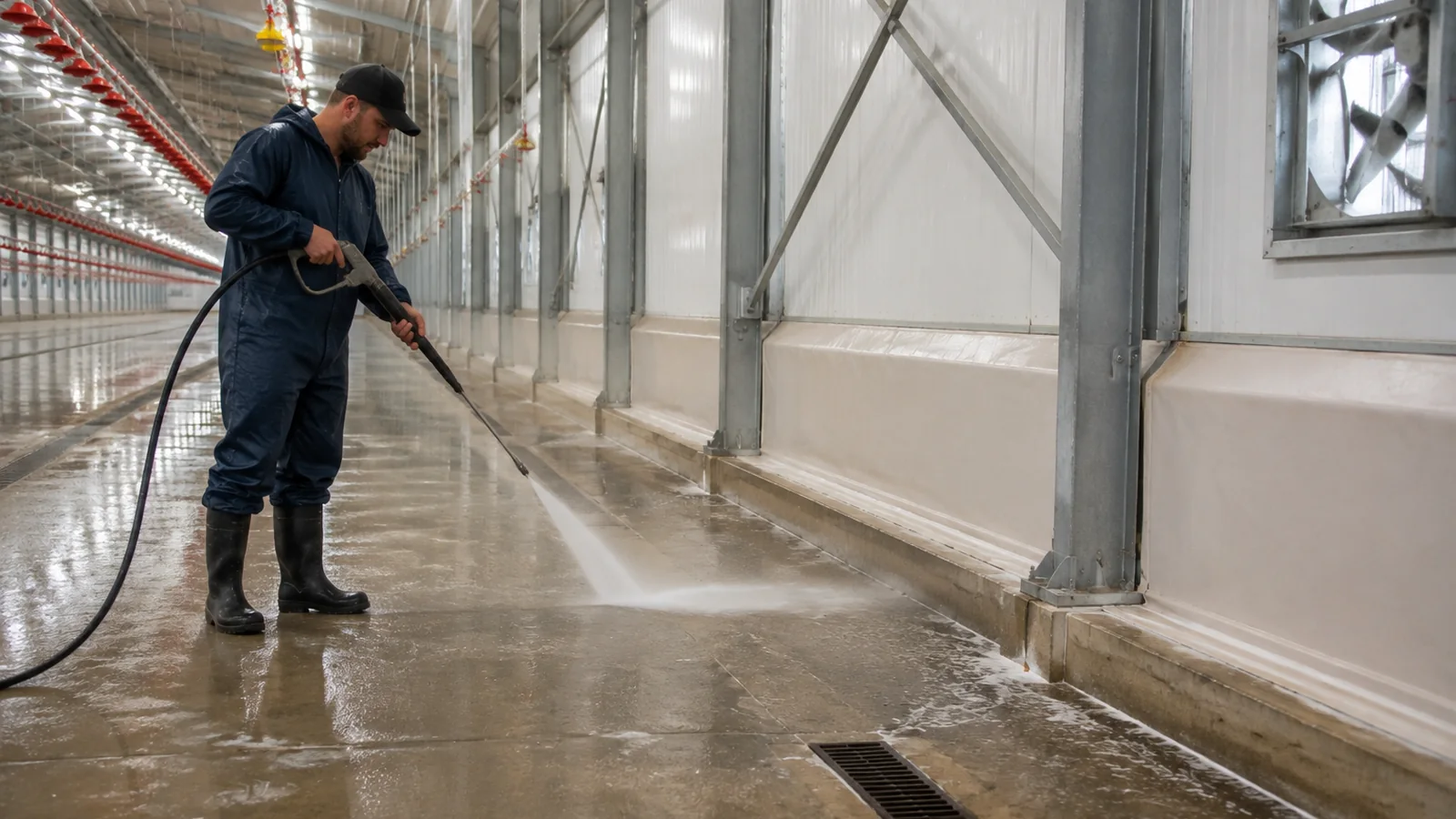
Poultry house corrosion protection should be designed around the farm’s litter system, manure route, cleaning chemistry, wash pressure, drainage, and drying sequence. A detail that performs in a dry broiler house may behave differently beside a manure belt or wet sanitation zone. Operations data belongs in the building design brief.
Which operating inputs change the exposure?
Bring the farm team in early: litter depth, manure storage, equipment cleaning, disinfectant families, and flock turnaround shape wetting frequency. The coating and sealant suppliers should confirm product compatibility with the proposed chemicals. The layout should keep waste and wash water away from primary steel where practical.
- Define wet-clean and dry-clean zones.
- Map hose reach, spray direction, and floor drainage.
- Protect lower walls and columns from impact and splash.
How can the building support maintainable cleaning?
Design out dirt traps: exposed ledges, open tubes, inaccessible backs of plates, and unsealed curb joints collect contaminated material. Removable guards or liners can protect high-wear zones if crews can inspect behind them. Maintenance access should not require dismantling poultry equipment for every routine check.
Key Takeaway: Convert the cleaning method into geometry, material, and access requirements. This reduces the gap between design assumptions and daily farm practice.
| Operating input | Building response | Record to request |
|---|---|---|
| Wash-down | Curbs, drainage, and protected bases | Cleaning-zone plan |
| Manure handling | Isolation from steel and cladding | Equipment interface drawing |
| Disinfectant use | Compatible coatings and seals | Written compatibility statement |
The maintenance crew can identify exposure paths that design documents often miss.
9. What Inspection Records Should Buyers Require?
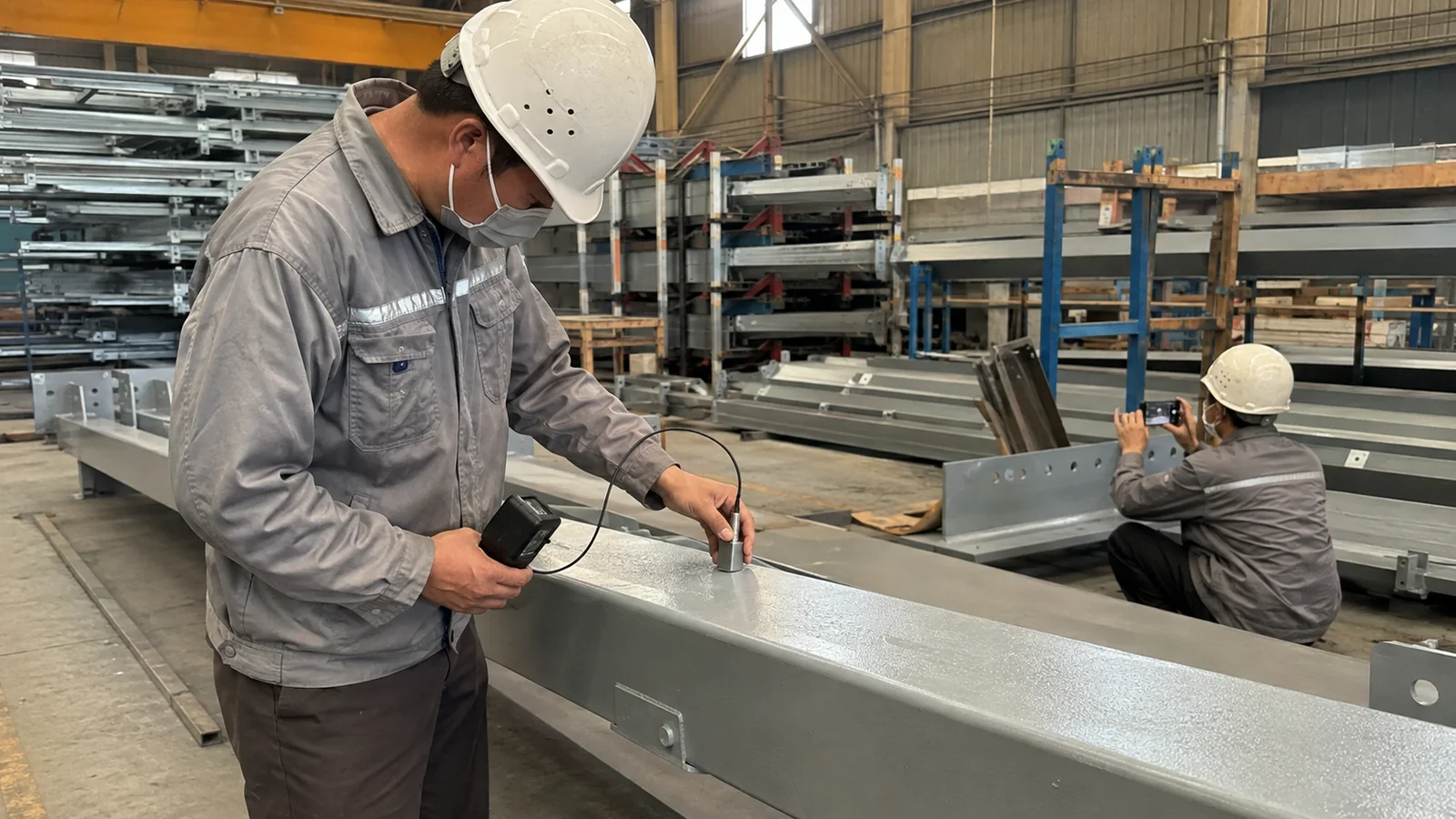
Poultry house corrosion protection should be accepted through traceable factory, delivery, erection, repair, and handover records. A certificate for one material does not prove coating continuity across fabricated, transported, and installed components. Inspection points should follow the component schedule and close before surfaces become concealed.
Which factory and delivery records matter?
Build the evidence chain: connect material identity to fabrication batch, coating batch, inspection result, packing mark, and delivered member. For painted work, records may include preparation and film measurements; galvanized work may require the specified certificate and repair documentation. Delivery photographs help separate transport damage from shop defects.
- Approved component and coating schedule
- Batch certificates and inspection reports
- Nonconformance and repair dispositions
- Packing list and delivery condition record
What should be captured during erection and handover?
Close work before concealment: inspect field repairs, panel laps, fasteners, barrier joints, openings, and lower-wall details while access remains. Create a baseline photo set so later inspections can distinguish new change from original condition. The handover package should also state approved repair materials and inspection intervals without inventing warranty obligations.
Key Takeaway: Link every acceptance record to a location and component. Traceability lets you resolve defects while the responsible team and access are still available.
| Stage | Evidence | Hold point |
|---|---|---|
| Factory | Certificate and inspection report | Before packing |
| Erection | Repair log and interface photos | Before concealment |
| Handover | Baseline survey and repair kit list | Before acceptance |
Evidence loses value when it cannot be tied to an installed location.
10. How Can You Turn Corrosion Control Into an RFQ?
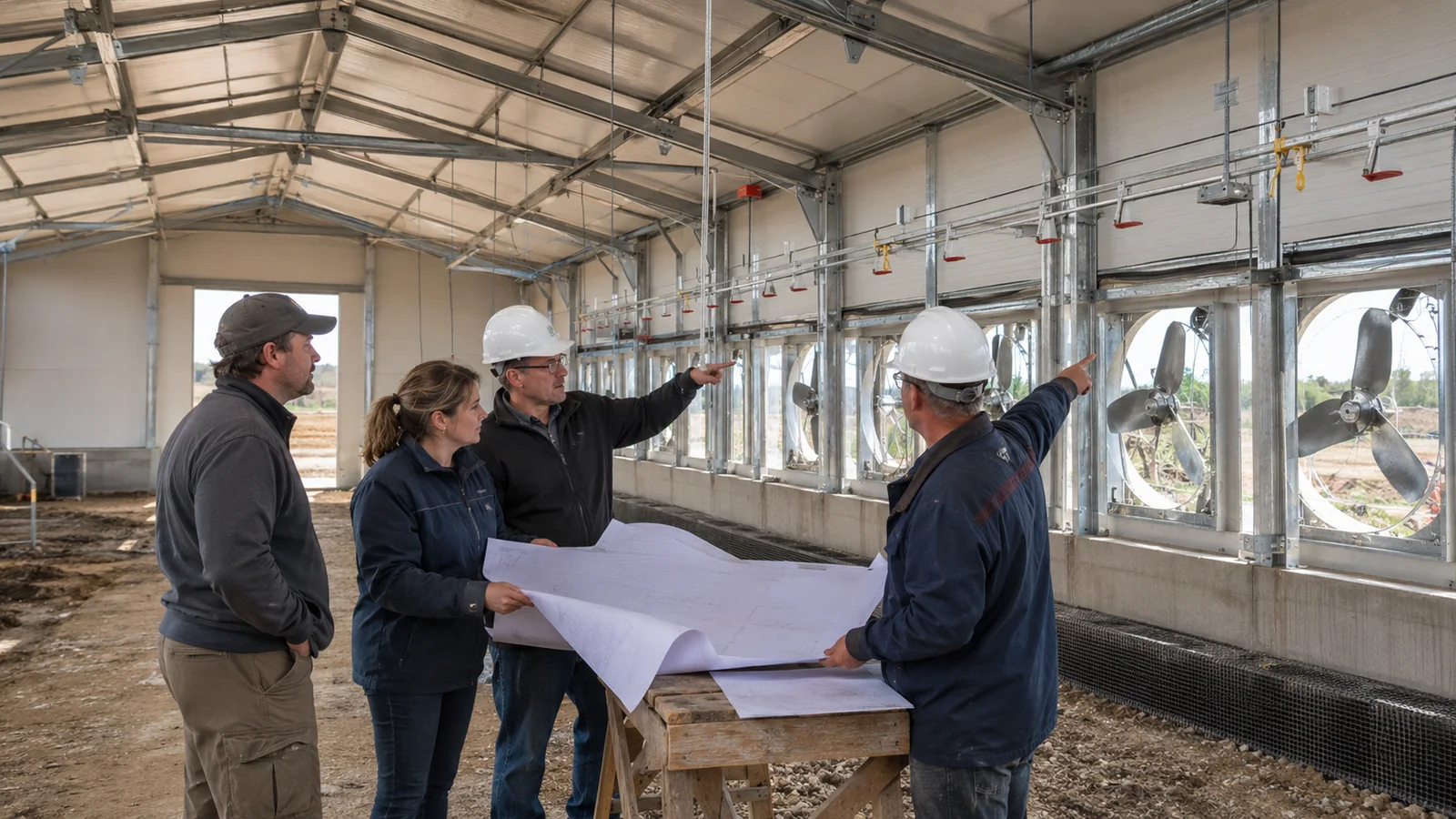
Poultry house corrosion protection becomes an RFQ package by defining exposures, component systems, interfaces, submittals, inspections, repairs, and handover evidence. This structure helps you compare bids that use different materials without accepting vague claims. It also identifies which decisions remain with the engineer, ventilation supplier, farm operator, or coating specialist.
Showhoo can coordinate the steel frame, envelope openings, fabrication records, packing marks, and erection information around your poultry-equipment and climate inputs. Share the site, house type, operating method, ventilation concept, and cleaning plan when you contact us today. We can then develop a buildable proposal with stated scope boundaries for your technical review.
What should every bidder receive?
Issue one common basis: provide the building geometry, local design criteria, operating environment, equipment openings, cleaning inputs, and required service interfaces. Attach a corrosion-zone drawing and component schedule, then ask bidders to list deviations. Silence should not be treated as agreement with an unstated requirement.
- Exposure zones and operating inputs
- Component-level coating and material schedule
- Interface, repair, inspection, and handover requirements
- Deviation form with named technical responsibility
How should you compare and close the bids?
Compare evidence, not adjectives: normalize exclusions, proposed standards, repair methods, inspection scope, and maintenance assumptions before evaluating price. Hold a technical clarification review and place accepted deviations in the contract documents. Ask who signs each submittal and who can approve a field change.
Key Takeaway: A coordinated RFQ turns hidden corrosion risk into visible scope, evidence, and decision ownership. It gives your team a firmer basis for procurement and later acceptance.
| RFQ item | Bidder response | Close-out evidence |
|---|---|---|
| Corrosion schedule | System by component and zone | Approved submittal |
| Interface matrix | Named scope owner | Coordinated drawings |
| Inspection plan | Method and witness point | Signed records |
| Repair procedure | Products and preparation | Location-based repair log |
Buildable steelwork, visible quality, and controlled delivery define the standard Showhoo brings to poultry-building projects.
Get Professional Poultry House Corrosion Protection Guidance !
Email:sales@showhoo.com.cn
Phone/WhatsApp:+86 186 7895 5927
Frequently Asked Questions
Q1: Can I use one coating specification for the whole chicken house?
Usually not. Primary frames, cold-formed members, cladding, fasteners, and wet lower-wall zones have different product forms and exposures, so a component schedule gives a clearer procurement basis.
Q2: What’s the best protection for steel near litter and wash water?
It depends on the assembly. Separation from direct contact, positive drainage, a protected curb or liner, and a compatible coating system often work together; the project engineer and suppliers should confirm the final detail.
Q3: How do I know if a galvanized quotation is complete?
Check the product form and evidence. The quotation should identify which members are galvanized, the applicable process or standard, field-repair method, excluded items, and inspection documents.
Q4: Can I choose fasteners after the wall panels arrive?
That creates avoidable risk. Fastener metal, coating, washer, drill point, and installation method should be matched to the panel system and exposure before procurement.
Q5: How do I know if hidden condensation is developing?
Look for indirect signs and inspect planned access points. Damp insulation, staining at joints, corroded fasteners, temperature bridges, or recurring wet zones can justify a closer envelope and ventilation review.