
Insulating a large-span steel aviation structure involves deploying a continuous thermal envelope utilizing specialized materials like foil-faced vapor barriers, insulated metal panels, or spray foam to combat radiant heat and moisture accumulation. Imagine managing a vast steel structure housing multi-million dollar aviation assets under highly volatile seasonal climates. Without proper climate control, moisture condenses on cold metal surfaces and drips onto sensitive airframes, which accelerates oxidation and compromises delicate avionics. The solution lies in choosing an engineered structural design that keeps your aircraft hangar insulated to maintain a stable interior microclimate and protect your investments.
How is a steel aircraft hangar insulated?
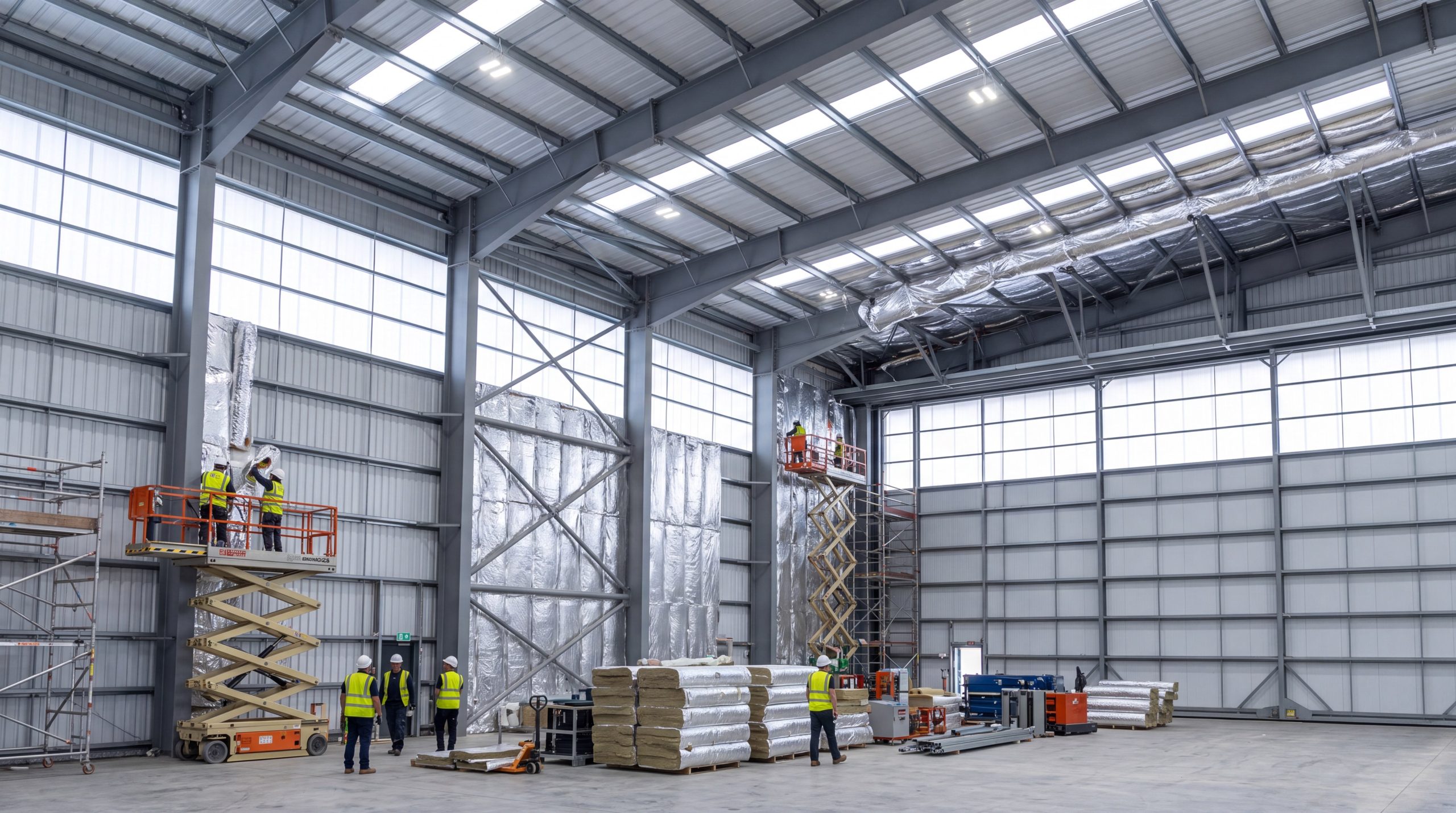
A steel aviation building is insulated by installing a heavy-duty vapor retarder combined with thick insulation blankets or rigid board systems during the structural assembly. This protective system ensures that the aircraft hangar insulated barrier remains highly intact to resist moisture and thermal transfer. Workers secure the insulation material between the primary steel framing and the exterior metal cladding to create a continuous barrier. This methodology significantly reduces energy consumption and limits utility costs over the operational life of the facility.
Properly sealing all structural joints and overlaps with heavy-duty pressure-sensitive tape is highly recommended. These measures prevent ambient humidity from penetrating the insulation core and causing structural degradation. Professional installers use high-performance adhesives to bond the materials to vertical walls. This ensures a durable fit that accommodates structural shifting under heavy environmental loads.
Selecting the Correct Core Insulation Materials
Here is why: you need to choose materials that handle high humidity without losing their thermal resistance over time. If you select glass wool or fiberglass, you are opting for a flexible and economical solution that fits custom dimensions. However, these materials can attract pests and moisture if they are not paired with a highly effective vapor retarder.
- Fiberglass Blankets: Offers excellent acoustic dampening and flexible thickness options.
- Foil-Faced Polyethylene: Provides a reliable radiant barrier and integrated vapor seal.
- Rigid Board Systems: Offers high thermal resistance per inch of material thickness.
The key takeaway is that selecting a dual-performance material with built-in vapor and radiant protection maximizes the safety of your aircraft. Investing in high-quality insulation upfront prevents expensive repair bills for both your building and your aircraft.
| Insulation Type | R-Value Range (per inch) | Moisture Resistance | Acoustic Performance | |
|---|---|---|---|---|
| Fiberglass Blanket | R-3.0 – R-4.2 | Moderate | High | |
| Polyethylene Foam | R-5.0 – R-6.0 | High | Moderate | |
| Rigid Board | R-6.0 – R-7.0 | High | Low |
Custom engineering dictates the ideal material thickness based on local environmental factors and your building’s heating requirements.
Why should you keep an aircraft hangar insulated?
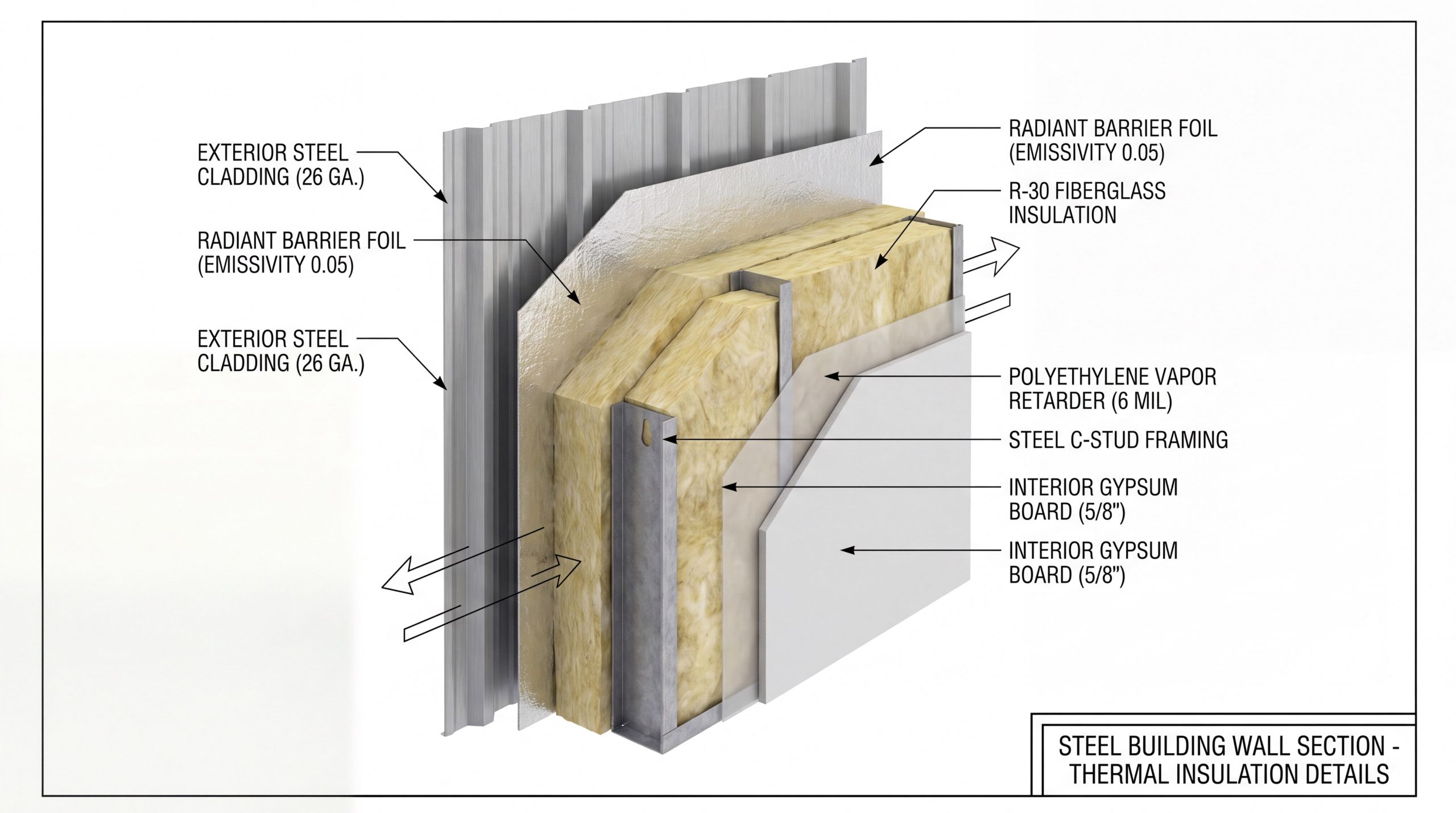
You keep an aviation structure insulated to prevent destructive condensation cycles and to maintain a stable interior working environment. Keeping your aircraft hangar insulated protects multi-million dollar airframes from moisture-induced corrosion. Uncontrolled interior climates can damage complex electronics and compromise structural safety. Establishing a stable temperature also ensures comfortable conditions for maintenance crews working long shifts.
Large steel structures are highly vulnerable to rapid temperature fluctuations between day and night. When warm, humid air contacts cold, uninsulated steel panels, liquid water forms immediately. This moisture can drip onto delicate equipment, leading to mold growth and electrical failures. Installing high-quality thermal barriers mitigates these risks by shifting the dew point outside the steel envelope.
Understanding the Threat of Condensation
Look: when condensation forms on the ceiling, it acts as a silent threat to your valuable aviation assets. You can easily prevent this sweating slab syndrome by ensuring that your thermal envelope remains highly continuous. If you ignore this issue, structural steel components can rust, weakening the entire frame over time.
- Corrosion Control: Prevents rust from developing on the aircraft skin and structural joints.
- Avionics Protection: Guards sensitive navigation systems against moisture damage.
- Floor Safety: Eliminates slippery concrete surfaces to protect your ground crew.
The key takeaway is that active moisture management is just as important as temperature regulation for maintaining a safe, long-term aviation facility. Resolving condensation issues preserves the resale value of your aircraft and the building itself.
| Environmental Hazard | Structural Impact | Risk Level (Uninsulated) | Prevention Method | |
|---|---|---|---|---|
| Airframe Corrosion | Surface pitting and joint weakness | High | Continuous vapor retarder | |
| Mold Growth | Compromised air quality and surface rot | Moderate | R-value optimization | |
| Concrete Sweating | Slip hazards and foundation moisture | High | Under-slab vapor barrier |
Tailoring your insulation system to your geographical location provides the most reliable protection against humidity.
Which thermal barriers keep an aircraft hangar insulated?
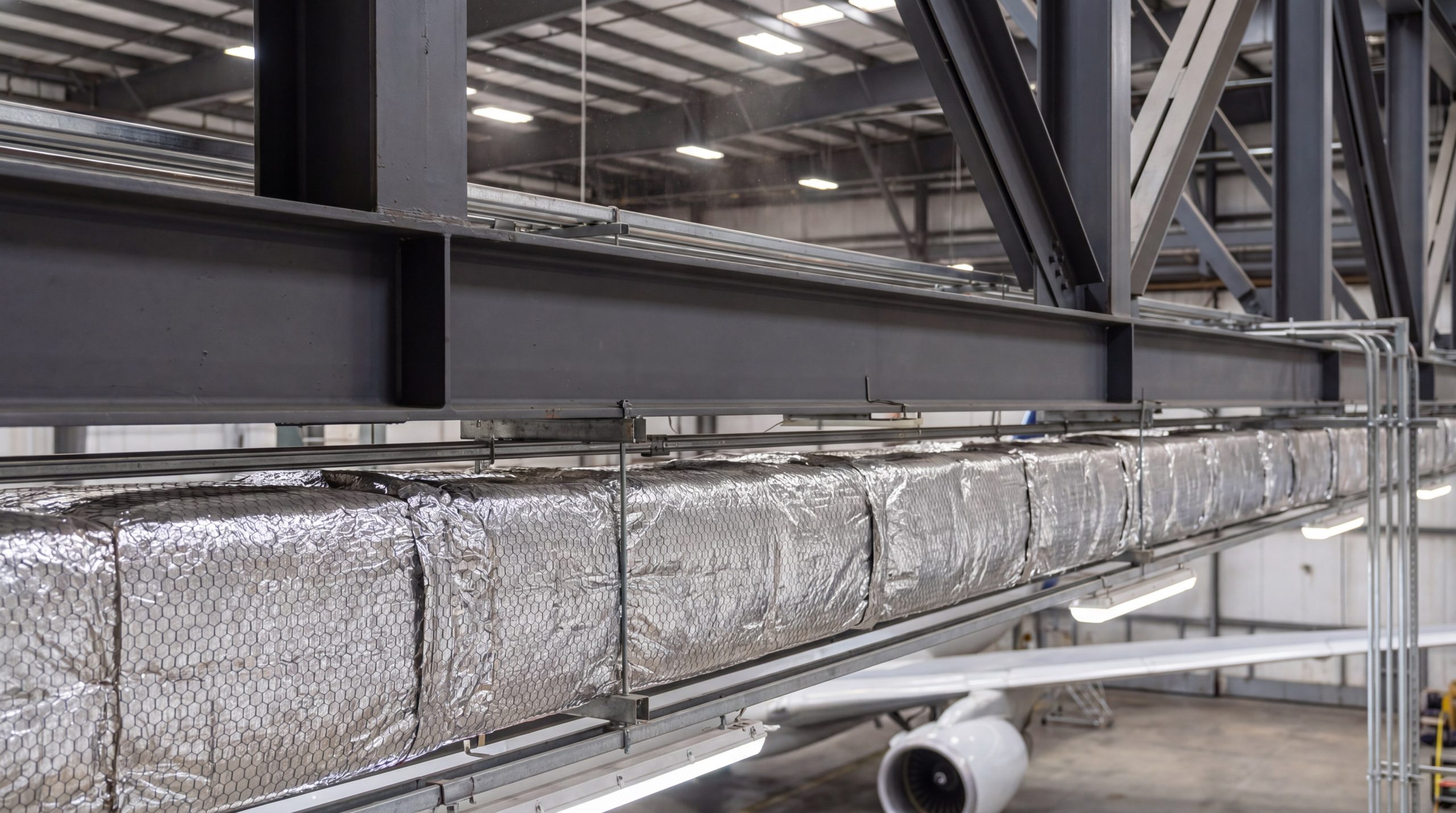
Modern projects rely on composite sandwich panels, foil-faced bubble wraps, and spray polyurethane foams to achieve high thermal resistance. These advanced materials keep the aircraft hangar insulated against severe outdoor heat and sub-zero winter temperatures. Specifiers select specific barrier types based on local wind loads and fire resistance codes. Choosing the right material combination ensures long-term energy efficiency and structural durability.
Sandwich panels provide an all-in-one solution that combines structural cladding with a pre-insulated core. Foil-faced radiant barriers reflect solar heat away from the roof, reducing cooling loads significantly. Spray foam fills hard-to-reach voids and acts as an excellent air sealant when applied correctly. Each system is designed to meet custom load requirements and environmental demands.
Hybrid Insulation Systems for Wide-Span Roofs
But that is only the beginning. You can combine different barrier systems to create a custom hybrid envelope that fits your project budget. For example, installing rigid boards alongside flexible fiberglass blankets offers a cost-effective way to achieve high R-values.
- Fiberglass Blankets: Offers a lower initial cost and fast installation on secondary framing.
- Spray Polyurethane Foam: Delivers an airtight seal but requires specialized application tools.
- Composite Panels: Combines exterior steel and insulation into a single structural unit.
The key takeaway is that evaluating the total lifecycle cost of your insulation barrier helps you make a smarter procurement decision. Selecting high-durability composite materials minimizes future maintenance overhead and heating costs.
| Performance Factor | Fiberglass Blankets | Spray Polyurethane | Composite IMPs | |
|---|---|---|---|---|
| Installation Speed | High | Moderate | Very High | |
| Air Sealing Ability | Low | High | Excellent | |
| Lifespan Category | Moderate | High | Excellent |
Selecting composite panels offers a clean interior finish that enhances light reflectance and facility aesthetics.
How does purlin design keep an aircraft hangar insulated?
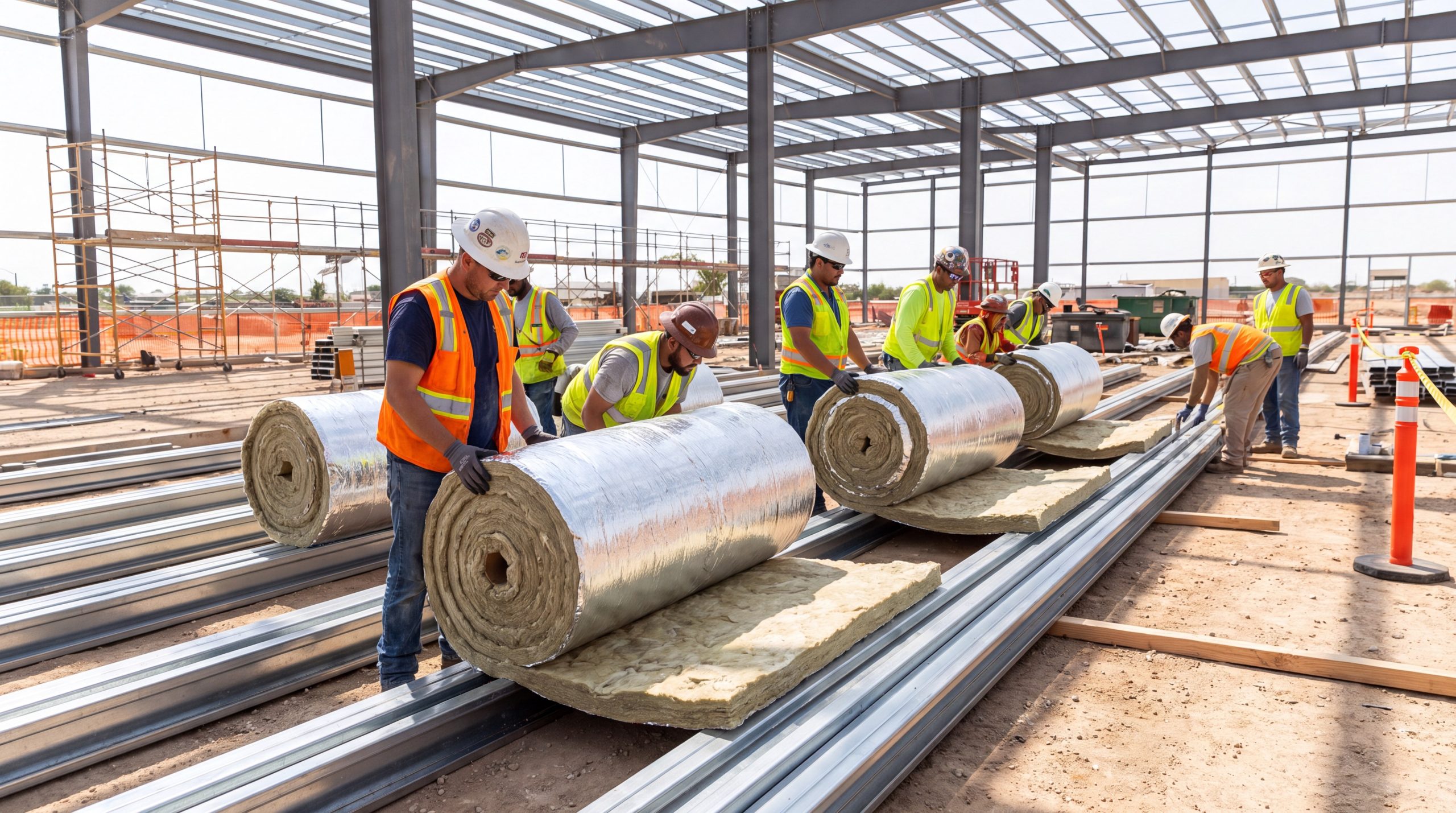
Purlin spacing and the integration of thermal spacer blocks prevent thermal bridging and ensure the installation remains secure. A well-designed steel framing structure helps keep your aircraft hangar insulated by reducing heat transfer through metal-to-metal contact. Engineers place thermal breaks between the exterior metal roof sheets and the supporting secondary steel members. This layout blocks conductive heat pathways and prevents localized cold spots from forming inside the building.
Secondary framing members like Z-purlins and C-girts are engineered to hold thick insulation blankets without compressing the material. Compressed insulation loses its effective thermal resistance, which can compromise the entire building’s energy performance. Using specialized sag rods and strapping keeps the insulation uniform across large spans. This layout ensures consistent performance and clean aesthetics throughout the interior of the structure.
Eliminating Thermal Bridges in Steel Framing
Think about it: steel is an excellent conductor of heat, which means every structural joint can act as a pathway for thermal loss. You need to address these cold bridges during the early design phase to protect your heating system. By placing heavy-duty insulation blocks over the purlins, you create a continuous thermal barrier.
- Thermal Spacer Blocks: Placed over purlins to prevent conductive heat loss.
- Insulation Strapping: Supports blankets over wide spans to prevent sagging.
- Sealed Overlaps: Prevents humid air from reaching the cold steel framework.
The key takeaway is that a thermal barrier is only as strong as its weakest point, which is typically the metal framing. Addressing thermal bridging at the purlins prevents energy waste and eliminates hidden condensation.
| Component Option | Structural Role | Thermal Conductivity | Material Composition | |
|---|---|---|---|---|
| Z-Purlin | Supports roof sheeting | High | Q235/Q355 Steel | |
| Spacer Block | Creates thermal break | Extremely Low | Extruded Polystyrene | |
| Tension Straps | Holds insulation flat | Low | Galvanized Steel / PET |
Incorporating thermal blocks into your framing design is a cost-effective way to boost overall R-values without changing panel thickness.
Can reflective foils keep an aircraft hangar insulated?
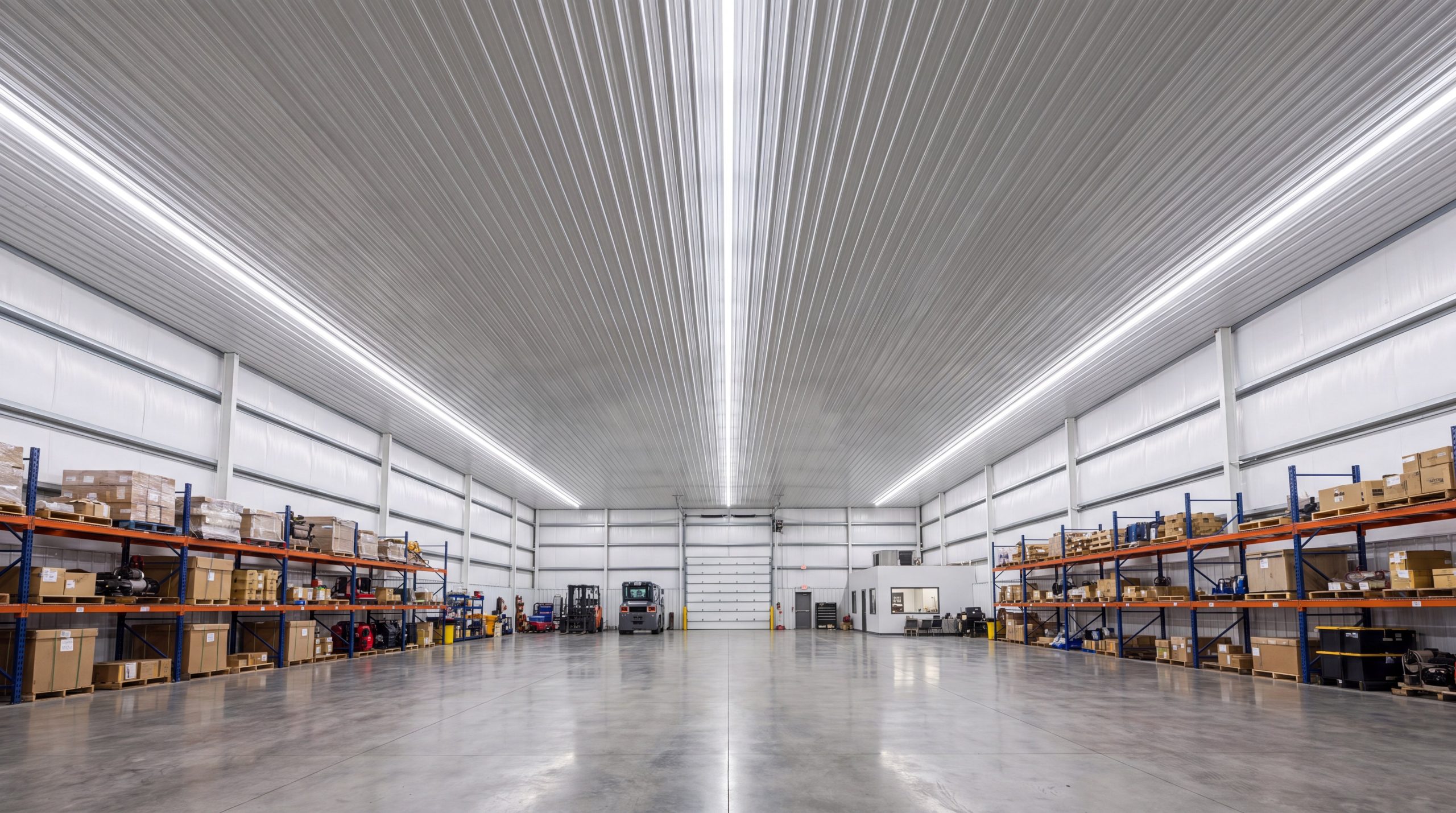
Reflective foils block radiant heat transfer by reflecting solar energy away from the building envelope. This technology keeps the aircraft hangar insulated by lowering roof surface temperatures during hot summer months. The highly reflective outer layer is bonded to a durable polyethylene bubble or foam core. This design works exceptionally well in open-span buildings with high ceilings where radiant heat is a major concern.
A premium radiant barrier reflects a high percentage of solar radiation back toward the sky. This reduces the load on your cooling systems and helps maintain comfortable interior temperatures. It also serves as an effective vapor barrier when all joints are sealed with foil tape. This dual-purpose performance makes reflective foil a popular choice for modern steel workshops and hangars.
How Radiant Barriers Control High Ceilings
It gets even better: reflective foil insulation does not degrade when exposed to moisture, making it highly durable. You can clean the exposed surface easily to maintain high light-reflectance inside your workspace. If you combine it with LED lighting, you create a bright, professional environment that reduces utility bills.
- Solar Reflection: Reflects radiant heat to lower roof temperatures.
- Light Reflectance: Brightens the interior, reducing the need for artificial lighting.
- Vapor Retarder: Provides a continuous seal to prevent humidity transfer.
The key takeaway is that radiant barriers are ideal for facilities located in warm climates with high solar exposure. They provide a cost-effective shield that keeps your workspace cool and bright.
| Property | Standard Foil Barrier | Bubble Core Barrier | Double-Foil Foam | |
|---|---|---|---|---|
| Solar Reflectance | High | High | High | |
| Core R-Value | Nominal | Moderate | Moderate-High | |
| Durability Rating | Moderate | High | Excellent |
Combining radiant foils with bulk insulation blankets creates an optimized thermal defense system for year-round comfort.
Does engineering code keep an aircraft hangar insulated?
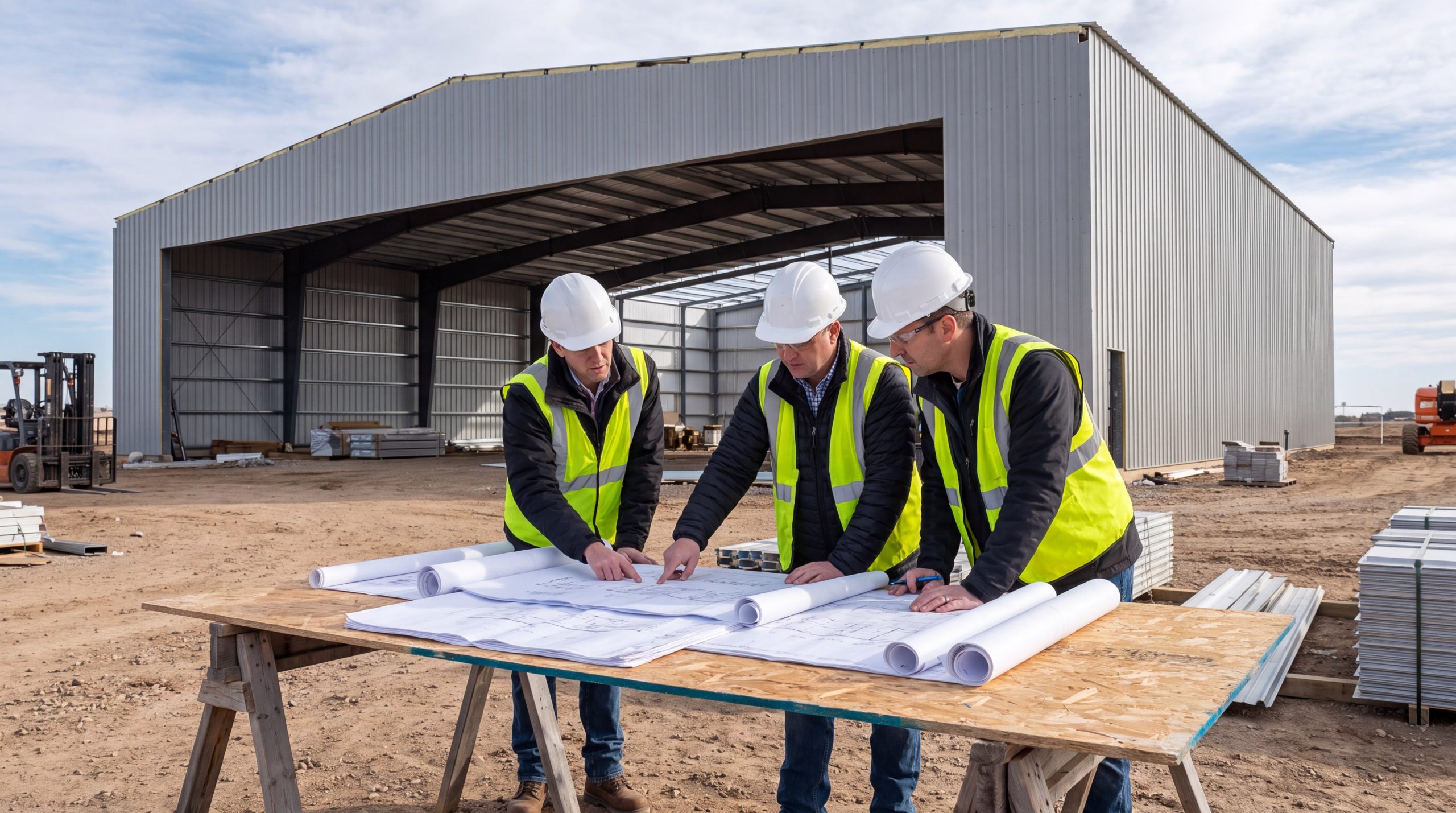
Local building codes and ASHRAE standards specify the minimum thermal resistance required for industrial facilities. Designing your aircraft hangar insulated to meet these codes ensures safety, compliance, and long-term energy efficiency. Engineers review geographic snow loads, wind loads, and seismic factors to design the supporting steel frame. This structured design process guarantees that the insulation system integrates safely with the building’s structural load requirements.
Compliance with NFPA 409 codes is also necessary when designing aircraft storage facilities. Fire ratings of insulation facings are strictly regulated to minimize smoke and flame spread in an emergency. ASTM E84 testing classifications guide the selection of safe, Class-A rated materials. Engaging experienced engineers ensures your facility meets all building and safety requirements.
Navigating Industrial Fire and Energy Standards
Here is why: building inspectors will verify the flame spread and smoke indexes of your wall and ceiling linings. You can ensure a smooth approval process by choosing certified Class-A insulation materials from the start. If you fail to comply with these codes, you risk costly delays and potential insurance issues down the road.
- Class A Fire Rating: Limits flame spread to protect high-value aircraft.
- ASHRAE 90.1 Compliance: Sets thermal guidelines based on your climate zone.
- Structural Load Limits: Ensures the framing supports the insulation weight.
The key takeaway is that code compliance is a critical design factor that protects both your capital investment and your personnel. Designing for safety and efficiency upfront guarantees long-term operational success.
| Code/Standard | Testing Parameter | Target Rating | Primary Objective | |
|---|---|---|---|---|
| ASTM E84 | Flame Spread Index | Class A (≤25) | Fire safety | |
| NFPA 409 | Facility Classification | Custom Design | Fire suppression | |
| ASHRAE 90.1 | Envelope R-Value | Zone-Specific | Energy conservation |
Engineering reviews guarantee that your thermal envelope meets local environmental demands without overloading the steel frame.
Which panels keep your aircraft hangar insulated?
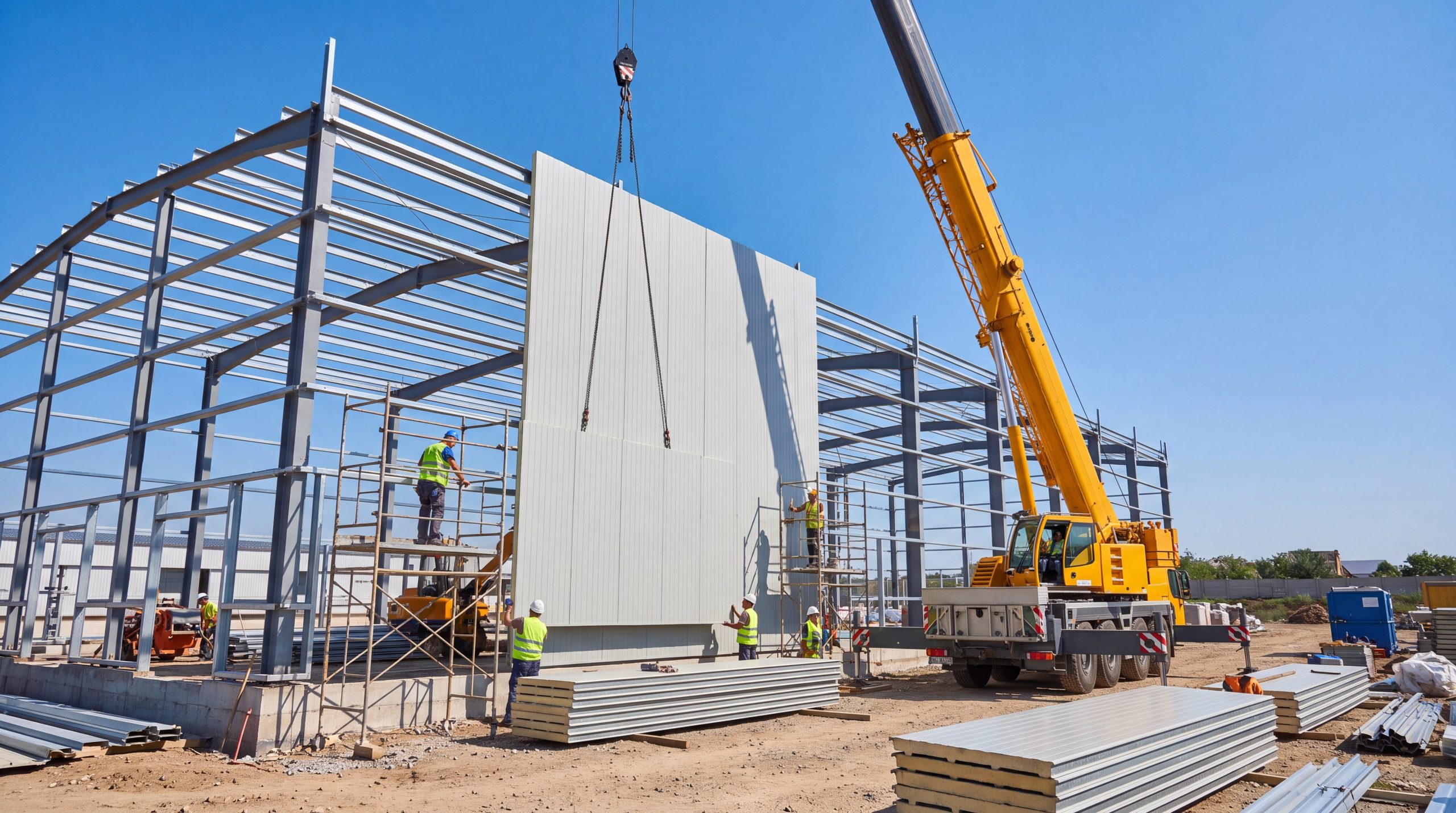
Insulated metal panels (IMPs) provide an exceptional thermal boundary by sandwiching high-performance foam between two steel skins. These composite panels keep the aircraft hangar insulated while acting as both the exterior cladding and the interior finish. Builders install them quickly using tongue-and-groove joints that create an airtight seal along the walls and roof. This integrated design reduces installation time and minimizes labor costs on-site.
The polyurethane core provides high thermal resistance per inch of thickness compared to standard insulation blankets. The steel faces protect the foam core from damage, pests, and moisture over decades of use. This structural durability makes IMPs an excellent choice for premium commercial and military aviation projects. Custom thicknesses are available to meet specific thermal and aesthetic requirements.
The Advantages of Insulated Metal Panels
But that is only the beginning. You get a clean, professional interior wall finish that is easy to wash and maintain. If you manage a busy maintenance facility, you will appreciate how well these panels resist impact and wear.
- All-in-One Design: Combines structural panel, insulation, and vapor retarder.
- Rapid Installation: Tongue-and-groove joints speed up building assembly.
- Superior R-Value: High-density foam core delivers excellent thermal protection.
The key takeaway is that insulated metal panels represent a premium, low-maintenance option that delivers exceptional lifetime energy savings. They are perfect for projects that require fast assembly and a clean, durable interior.
| Panel Specification | Core Material | Standard Thicknesses | Thermal Resistance | |
|---|---|---|---|---|
| Polyurethane (PIR) | High-Density Foam | Custom Design | High | |
| EPS Panel | Expanded Polystyrene | Custom Design | Moderate | |
| Rockwool Panel | Mineral Wool | Custom Design | High (Excellent Fire) |
Utilizing composite panels eliminates the need for a separate vapor barrier installation, which simplifies your construction schedule.
How does condensation control keep an aircraft hangar insulated?
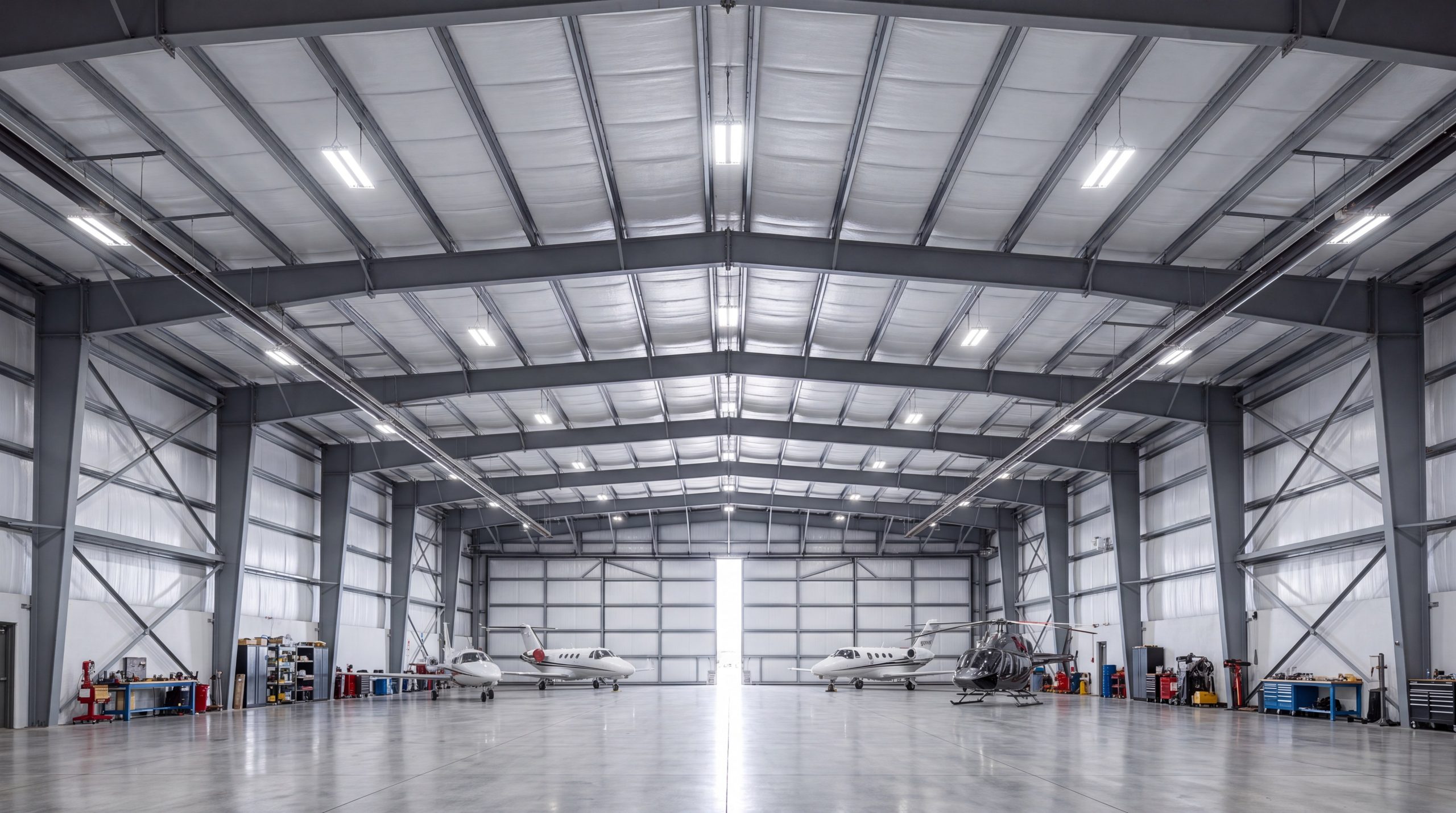
Managing interior humidity and sealing the vapor barrier stops moisture from condensing on cold steel surfaces. Controlling this condensation is essential to keep your aircraft hangar insulated and dry throughout the changing seasons. Vapor retarders are installed on the warm side of the insulation layer to block moisture movement. Sealing all seams with high-adhesion tape creates a continuous barrier that protects the building’s structural integrity.
Without a proper vapor seal, moisture can penetrate the insulation and cause it to sag. This leads to cold spots and mold growth, which reduces the building’s overall thermal performance over time. Proper ventilation also plays a key role in keeping indoor humidity levels balanced. Combining continuous vapor barriers with calculated air exchange provides a reliable defense against condensation.
Designing a Comprehensive Moisture Defense
Look: condensation can rust the inner structural components of your building before you even notice the damage on the outside. You need to monitor indoor humidity, especially if you wash aircraft inside the facility. By sealing the thermal envelope, you keep moisture away from vulnerable structural joints.
- Vapor Retarders: Blocks moisture from reaching cold exterior metal panels.
- Seam Sealing: High-adhesion tape seals overlaps for a continuous barrier.
- Ventilation Control: Balanced airflow lowers interior humidity levels.
The key takeaway is that active moisture management is vital for extending the lifespan of both your building and your aircraft. A vapor-sealed envelope protects your structural steel and maintains peak thermal efficiency.
| Vapor Retarder Class | Permeance Rating (Perms) | Recommended Use | Material Composition | |
|---|---|---|---|---|
| Class I | ≤0.1 | High-Humidity Zones | Foil / Polyethylene | |
| Class II | 0.1−1.0 | Moderate Climates | Vinyl Facings | |
| Class III | 1.0−10 | Dry Climates | Kraft Paper |
Specifying a Class I vapor retarder is highly recommended for cold climates to prevent hidden interstitial condensation.
Who helps you get a custom aircraft hangar insulated?
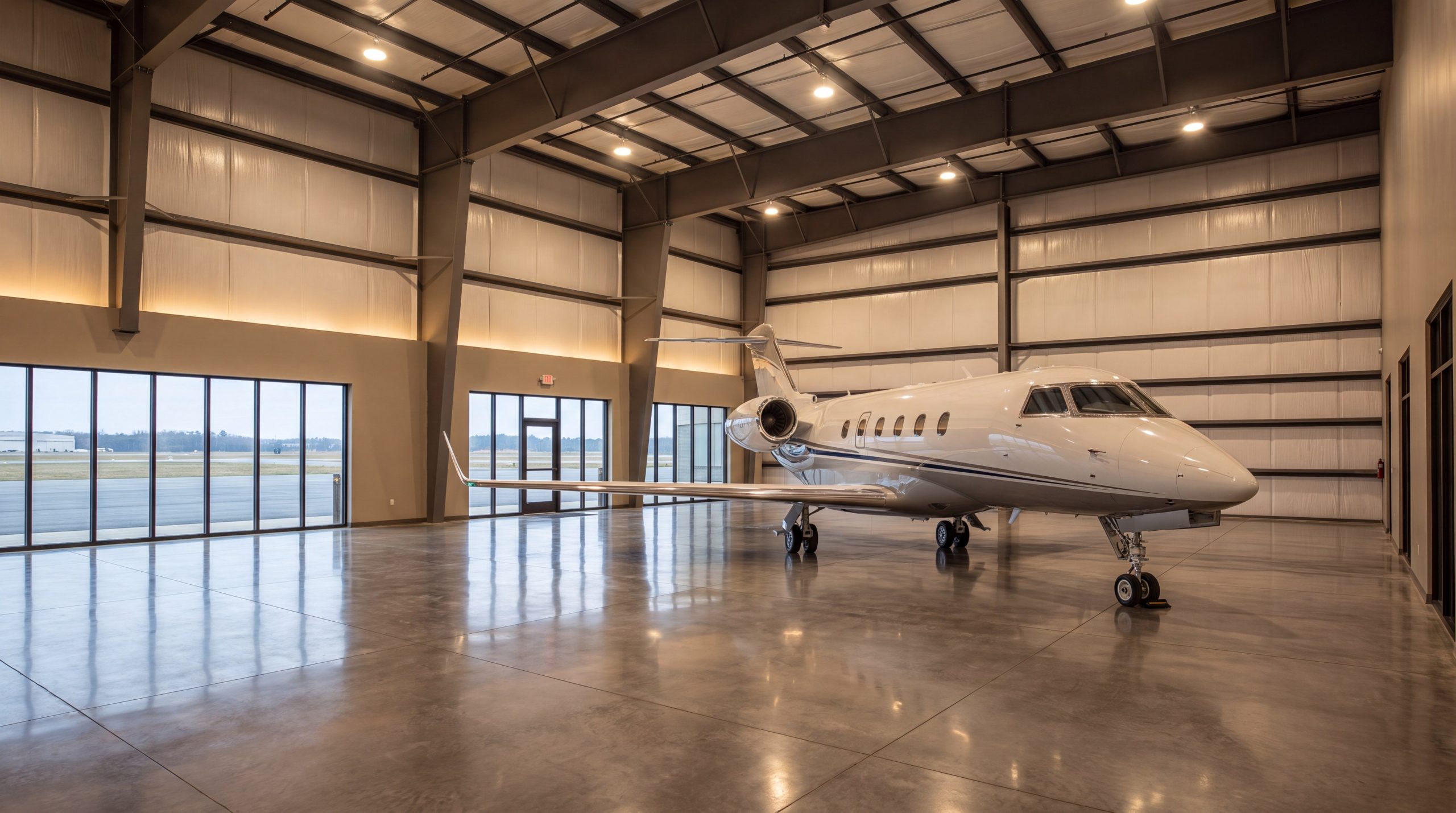
Experienced steel structure manufacturers provide complete, customized engineering and material solutions tailored to your project’s environmental conditions. Working with experts helps you get your aircraft hangar insulated correctly according to local wind, snow, and seismic load requirements. Professional designers guide you through the process of choosing the best structural systems, insulation cores, and connection methods. This comprehensive support ensures your facility meets all commercial and industrial standards.
Custom engineering allows you to select the ideal insulation thickness, panel profiles, and accessories for your location. Manufacturers coordinate the entire workflow from initial architectural drawings to factory production and final site delivery. This seamless process reduces design errors and saves valuable construction time. Partnering with a trusted supplier guarantees a durable, high-performance building that protects your aviation assets.
The Value of Factory-Direct Custom Design
It gets even better: you receive fully detailed engineering blueprints and installation manuals designed specifically for your project. You can coordinate easily with local contractors to ensure the building is assembled safely and efficiently. If you have unique structural needs, like massive clear-span frames or specialized crane structures, custom designers can integrate them.
- Custom Engineering: Tailored designs based on local weather and load requirements.
- One-Stop Solutions: Full service covering design, fabrication, and material delivery.
- Expert Selection: Professional guidance on selecting the best insulation core.
The key takeaway is that partnering with an experienced manufacturer ensures your building is engineered to perform reliably under your local climate conditions. Custom design protects your investment and simplifies your path to completion.
| Service Component | Manufacturer Deliverables | Quality Control Standards | B2B Value Benefit | |
|---|---|---|---|---|
| Structural Design | Blueprints & load calculations | Local Building Codes | Guaranteed compliance | |
| Steel Fabrication | Pre-punched & cut members | ISO Certified Facility | Fast on-site assembly | |
| Insulation Package | Custom-cut panels & accessories | ASTM Fire Standards | Reliable thermal barrier |
Factory-direct coordination guarantees that all structural components and insulation materials fit together perfectly on-site.
Can retrofit panels keep an aircraft hangar insulated?
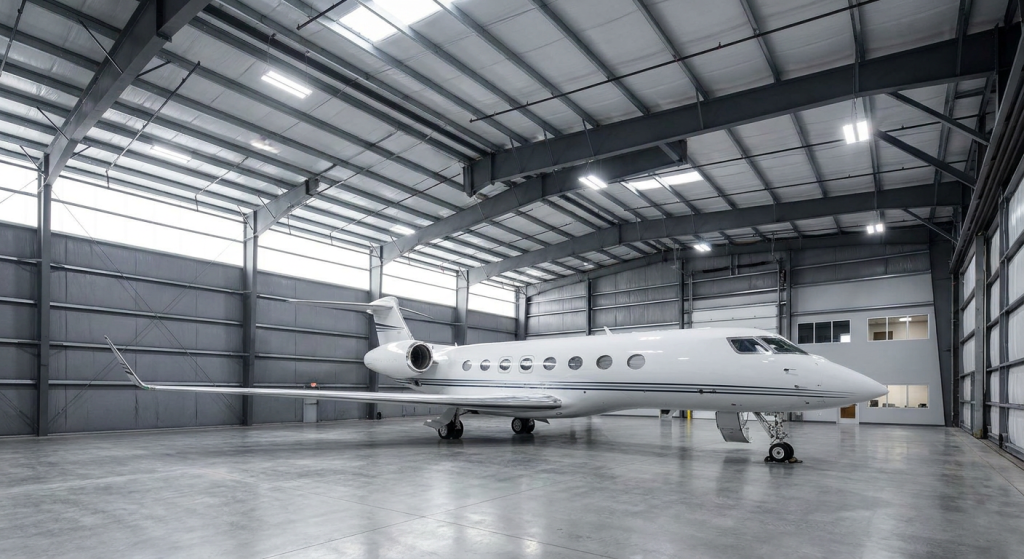
Retrofitting existing steel structures with insulated metal panels or thin foil systems is an effective way to upgrade thermal performance. Upgrading an older aircraft hangar insulated shell significantly reduces energy loss and eliminates drafts through worn panels. Installers secure the new barrier directly to the existing purlins or wall framing with specialized self-tapping fasteners. This straightforward process allows you to modernize your facility with minimal disruption to your daily operations.
Retrofit projects require a careful evaluation of the existing structural frame to ensure it can support any added weight. Lightweight foil barriers and thin composite boards are excellent choices for older buildings because they add minimal load. Sealing older joints during the installation process also helps prevent condensation issues in the future. Investing in a professional thermal upgrade can cut heating bills and extend the life of your facility.
Upgrading Older Steel Aviation Buildings
Look: you do not have to replace your entire building to enjoy the benefits of modern climate control. You can upgrade your existing envelope with high-performance materials that fit your current layout. If you add a durable vapor barrier, you will also stop hidden structural rust from weakening your steel frame.
- Envelope Upgrade: Improves thermal performance without structural replacement.
- Draft Reduction: Seals gaps in older panel joints to lower energy loss.
- Rust Prevention: Stops condensation from forming on old steel members.
The key takeaway is that retrofitting is a practical, cost-effective way to improve climate control and extend the lifespan of an older hangar. Selecting lightweight, high-R-value materials preserves your structural framing while lowering your energy bills.
| Upgrade Method | Material Selection | Weight Category | Primary Benefit | |
|---|---|---|---|---|
| Panel Retrofit | Thin composite boards | Moderate | Clean interior finish | |
| Foil Insulation | Double-sided reflective wrap | Light | Excellent radiant block | |
| Spray Foam Seal | Closed-cell polyurethane | Moderate | Monolithic air barrier |
A thorough structural review is highly recommended before installing heavy retrofit panels on older secondary framing.
Designing Your Thermal Solution
Successfully insulating a steel aviation facility requires careful planning, specialized materials, and precise engineering. Selecting the right combination of thermal barriers and vapor retarders protects your aircraft from moisture and extreme temperatures. Because every site experiences unique wind loads, snow loads, seismic factors, and local building codes, custom engineering is necessary for long-term safety. We provide fully customized design solutions, material packages, and structural plans tailored to your specific environmental conditions. To receive a professional, project-specific design proposal and competitive pricing, please provide your building dimensions, intended usage, geographical location, and local load requirements when you contact us today . Our dedicated engineering team is ready to analyze your requirements and deliver a high-performance building system that protects your investments for decades.
Protect Your Aircraft with a Custom Insulated Hangar !
Email:sales@showhoo.com.cn
Phone/WhatsApp:+86 186 7895 5927
FAQ
Can I use standard residential fiberglass insulation in a steel aircraft hangar?
Using standard residential fiberglass is not recommended for industrial steel buildings. Residential products typically lack the heavy-duty vapor facings and reinforced backings needed to control large-scale condensation on metal panels.
What’s the best way to prevent condensation in a cold climate hangar?
The best solution is to install a continuous Class I vapor retarder on the interior side of high-R-value bulk insulation. This barrier blocks interior humidity from reaching the cold steel roof cladding, shifting the dew point safely outside.
How do I know if my building frame can support thick retrofit insulation?
A professional structural engineering review of your existing framing is required to make this determination. Older secondary framing members may require reinforcement to safely bear the load of heavy, multi-layered panel retrofits.
Can I combine a radiant barrier foil with bulk fiberglass blankets?
Combining these systems is a highly effective way to manage both radiant solar heat and conductive heat transfer. This hybrid approach keeps your interior exceptionally comfortable during hot summers and freezing winters.
What’s the best method to seal joints between insulation panels?
Using specialized, heavy-duty pressure-sensitive tape that matches your insulation facing is the preferred method. This creates an airtight and continuous moisture seal that resists temperature swings without peeling.