
Technical Review: Reviewed by Showhoo Steel Structure Engineering Team
Review Scope: Riding arena dimensions, minimum interior clear height, steel structure design, material configuration, delivery and installation requirements.
Last Updated: July 2026
Choosing the right horse riding arena size starts with the intended discipline, number of riders, horse size, required interior clear height and supporting functions. A compact private arena may be suitable for individual flatwork, while multi-rider training, dressage and jumping require more usable space.
This guide compares common indoor riding arena dimensions, explains the difference between the riding surface and the overall building footprint, and shows how structural span, materials, site conditions, cost, delivery and installation affect a steel riding arena project.
Quick Answer
A 60′ × 120′ arena can be considered for compact private flatwork, while 70′–80′ wide and 140′–200′ long layouts provide more flexibility for general training. An 80′ × 200′ riding area is commonly considered for multiple riders and multi-purpose use.
Dressage court dimensions are 20m × 40m for a small court and 20m × 60m for a standard court. These are usable riding dimensions rather than the final external size of the steel building.
The final building size must also allow for kickboards, wall clearance, doors, maintenance equipment, lighting, ventilation and any connected horse barn or service areas.
What Is a Standard Horse Riding Arena Size?
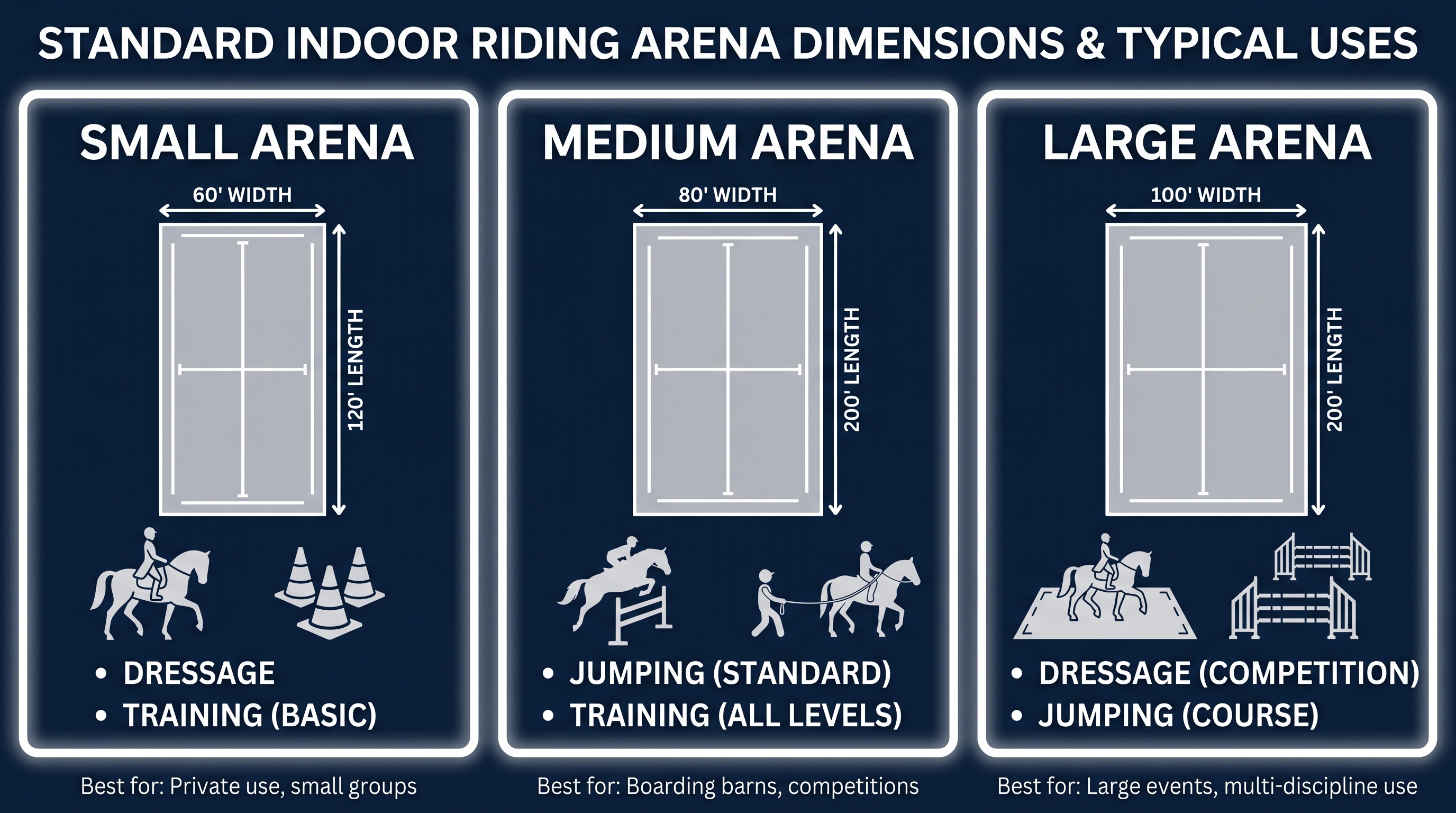
There is no single standard horse riding arena size for every facility. The appropriate dimensions depend on the riding discipline, horse size, number of simultaneous riders, training intensity and available site area.
The dimensions below should be used as preliminary planning references rather than universal safety standards.
Recommended Dimensions by Intended Use
Intended Use Preliminary Riding Dimensions Planning Considerations Compact Private Flatwork 60′ × 120′ Individual riding, ponies or basic flatwork General Private Training 70′ × 140′ to 80′ × 150′ More space for circles, transitions and lateral work Multiple Riders and Multi-Purpose Use 80′ × 200′ or larger Better circulation and separation between riders Small Dressage Court 20m × 40m Usable court size; additional building clearance required Standard Dressage Court 20m × 60m Usable court size; not the final building footprint Jumping Training Project-specific Depends on fence height, course layout and rider level These dimensions describe the approximate usable riding area. The overall building width and length may need to be larger to accommodate kickboards, wall clearance, entrance zones, maintenance equipment and supporting facilities.
Riding Surface Size vs. Overall Building Size
The usable riding surface and the overall steel building size are not the same measurement. A 20m × 60m dressage court, for example, describes the marked riding area rather than the external dimensions of the completed building.
The building layout may require additional space for:
- Kickboards or rider guards;
- Clearance between the riding track and wall panels;
- Entrance and exit zones;
- Double-leaf or sliding doors;
- Mounting blocks and training equipment;
- Footing maintenance machinery;
- Lighting, fans and internal services;
- Spectator, storage or horse-preparation areas.
Before confirming the quotation, the buyer should identify both the required usable riding dimensions and the preferred overall building dimensions.
Real Project Example: A 30×85m Indoor Riding Arena and Horse Barn Facility in Uruguay
Choosing the right riding arena size requires more than following standard dimensions. The ideal size depends on the intended use, riding activities, available land, and supporting facilities. A well-planned equestrian facility usually combines the riding arena with horse accommodation areas to create an efficient environment for both horses and riders.
To demonstrate how practical dimensions are applied in real projects, Showhoo delivered a customized steel structure equestrian facility project in Uruguay, including a 30m × 85m indoor riding arena and a 20m × 65m steel horse barn.
Project Overview
| Item | Details |
|---|---|
| Project Location | Uruguay |
| Project Type | Steel Structure Equestrian Facility |
| Indoor Riding Arena Size | 30m × 85m × 4m |
| Horse Barn Size | 20m × 65m × 4m |
| Main Structure | Prefabricated Steel Structure |
| Application | Horse riding, training, and horse accommodation |
Indoor Riding Arena Designed for Practical Horse Training Needs
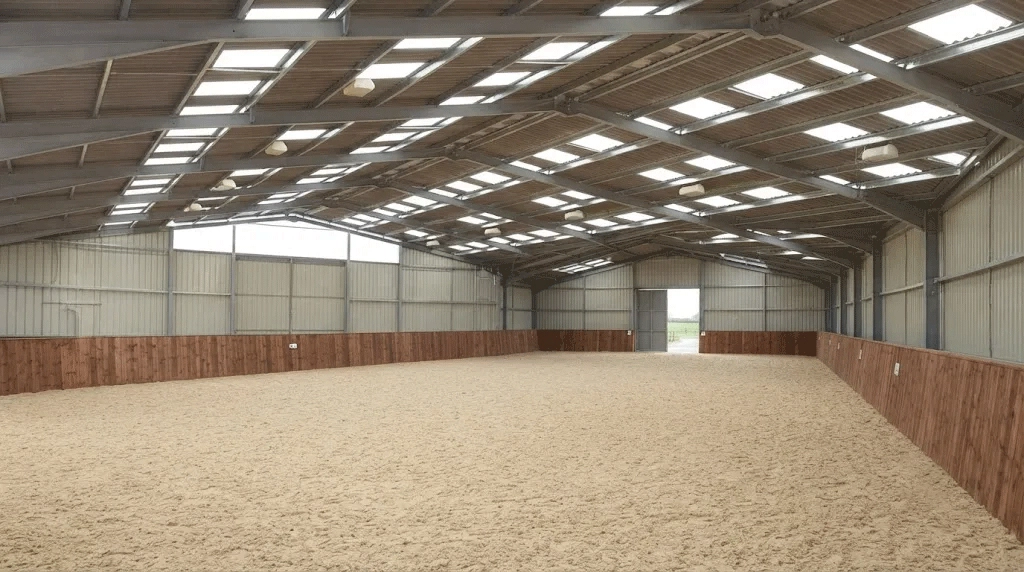
The 30m × 85m indoor riding arena provides a spacious enclosed environment suitable for daily riding activities and horse training. The large floor area allows riders to perform different training exercises while maintaining sufficient movement space.
The steel structure design provides several advantages for equestrian facilities, including:
- Large clear-span space without unnecessary internal columns;
- Flexible layout according to riding requirements;
- Efficient construction and installation;
- Durable performance for long-term facility operation.
The 4m building height also helps provide a comfortable indoor environment with adequate vertical clearance for regular riding activities.
Supporting Horse Barn Layout for Complete Facility Operation
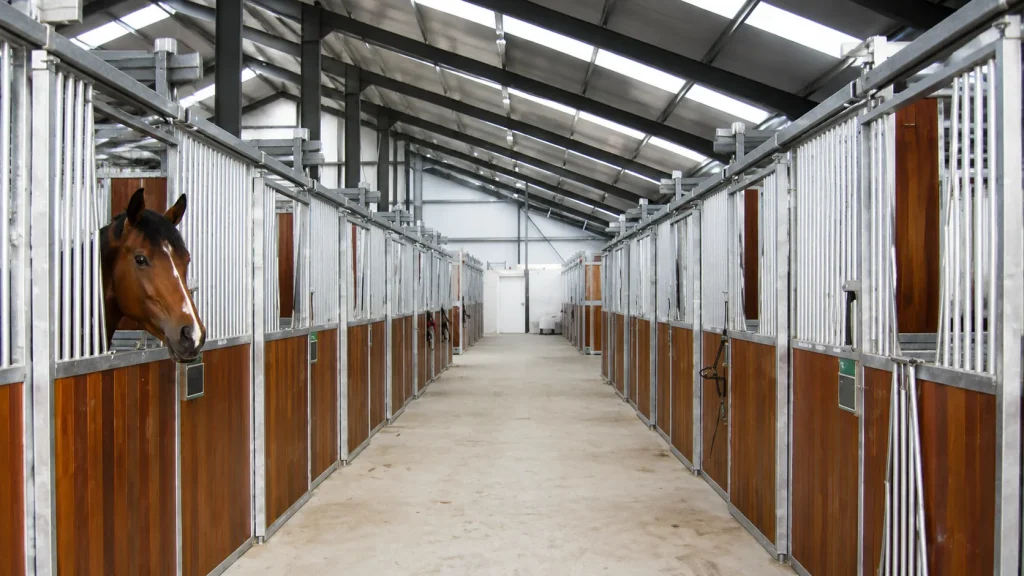
Besides the riding arena, this project included a 20m × 65m steel horse barn designed to support daily horse management.
The horse barn layout includes:
- Individual horse stall areas;
- Central aisle circulation;
- Organized horse management space;
- Practical access for daily feeding and maintenance.
Combining the riding arena and horse barn within one equestrian facility allows owners to optimize workflow between horse accommodation, preparation, and training activities.
What This Project Shows About Riding Arena Size Planning
This Uruguay project demonstrates that there is no universal riding arena size suitable for every facility.
The final dimensions should be determined according to:
- Type of riding activities;
- Number of horses and riders;
- Training requirements;
- Available construction area;
- Supporting facilities such as horse barns and storage spaces.
A properly planned riding arena should not only provide enough riding space but also integrate efficiently with other functional areas of the equestrian facility.
How Riding Discipline Changes Arena Dimensions
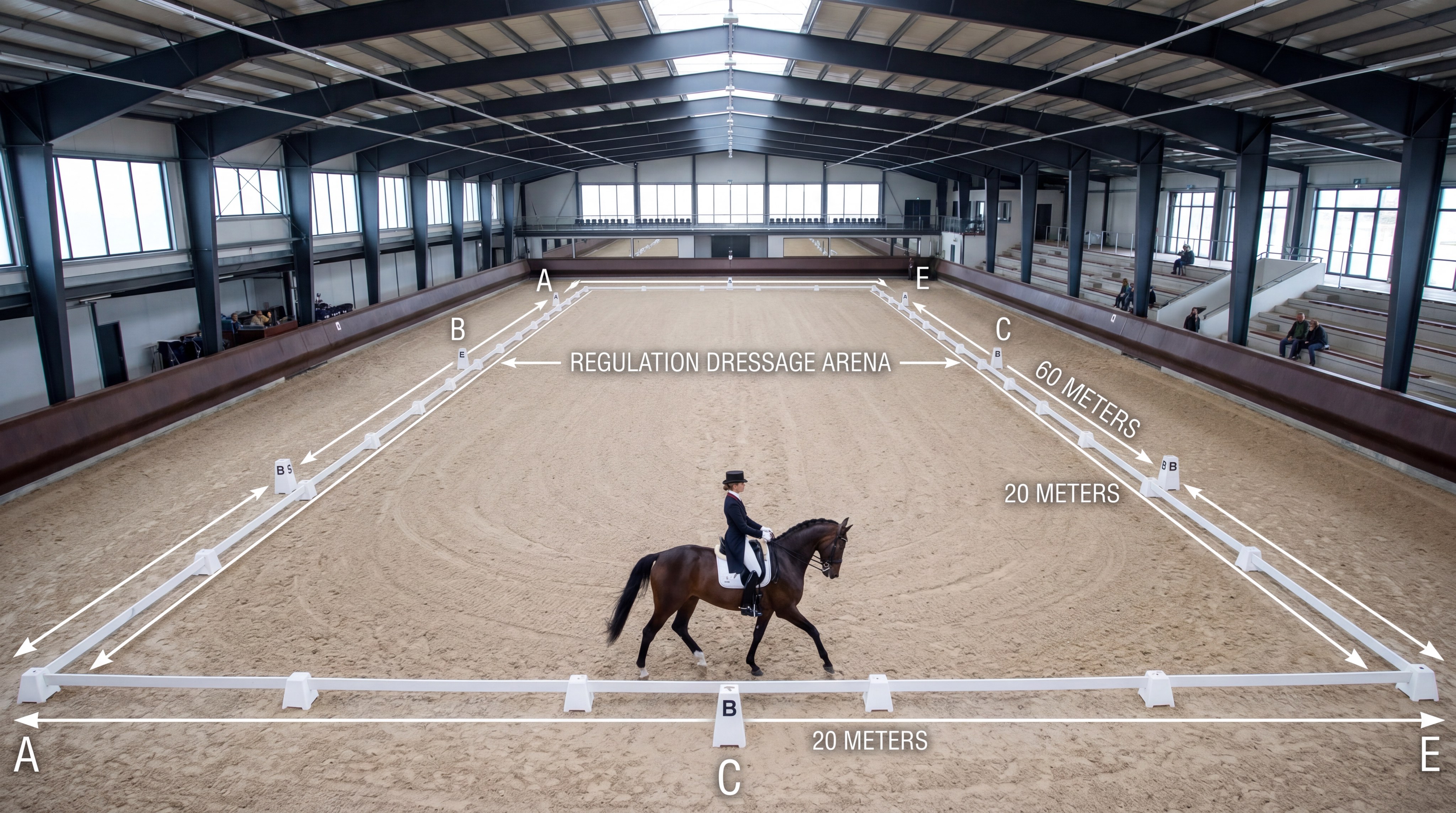
Riding discipline affects the required length, width, turning radius and internal clearance. A layout suitable for individual flatwork may not provide enough room for multiple riders, a full dressage court or a jumping course.
Dressage Arena Size
A small dressage court measures 20m × 40m, while a standard dressage court measures 20m × 60m. These dimensions apply to the marked riding court.
The surrounding building should provide additional clearance for kickboards, wall separation, entry at A, mounting equipment and any judge or viewing area required by the facility.
Horse Jumping Arena Dimensions
Jumping arena dimensions should be determined according to fence height, course complexity, horse experience and the number of riders using the arena. A longer and wider layout provides more flexibility for combinations, approaches and recovery distances.
Competition requirements should be checked against the applicable federation and event rules before the steel building footprint is finalized.
Multiple Riders and Club Training
Riding clubs and facilities serving multiple riders generally require more width and length than a private single-rider arena. The layout should allow riders to pass safely, maintain separation and avoid congestion around doors, corners and training equipment.
An 80′ × 200′ riding area can be used as an initial planning reference, but the final dimensions should be confirmed according to expected rider numbers and training activities.
Key Takeaway: Always build slightly larger than the regulation court size to accommodate kickboards and mounting blocks without obstructing the rideable path.
What Clear Height Does an Indoor Riding Arena Need?
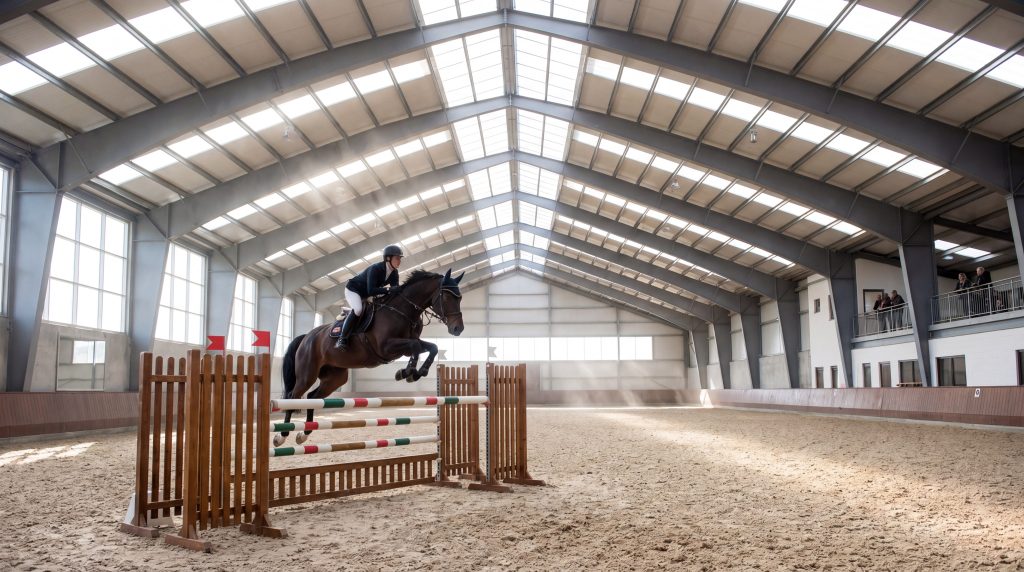
Interior clear height should be measured from the finished riding surface to the lowest obstruction, including roof framing, bracing, lighting, fans, ducts or suspended equipment. It should not be confused with the external eave height of the building.
The required clear height depends on:
- Flatwork, dressage or jumping use;
- Maximum planned obstacle height;
- Horse and rider clearance;
- Roof-frame depth;
- Lighting and ventilation equipment;
- Door height and maintenance access;
- Local structural design requirements.
Is a 4m Clear Height Suitable for Every Arena?
The Uruguay project uses a confirmed minimum interior clear height of 4m for its private daily-training requirements. This is a project-specific value rather than a universal recommendation.
Facilities intended for jumping, competition use or suspended mechanical equipment may require greater clearance. The required height should therefore be confirmed before the portal-frame geometry and foundation loads are calculated.
Key Takeaway: Higher ceilings facilitate better light diffusion and heat dissipation, creating a more comfortable training environment for both horse and human.
This vertical dimension is just as important as the floor plan when designing a functional facility.
How Do Site Conditions Affect Arena Size and Foundation Cost?
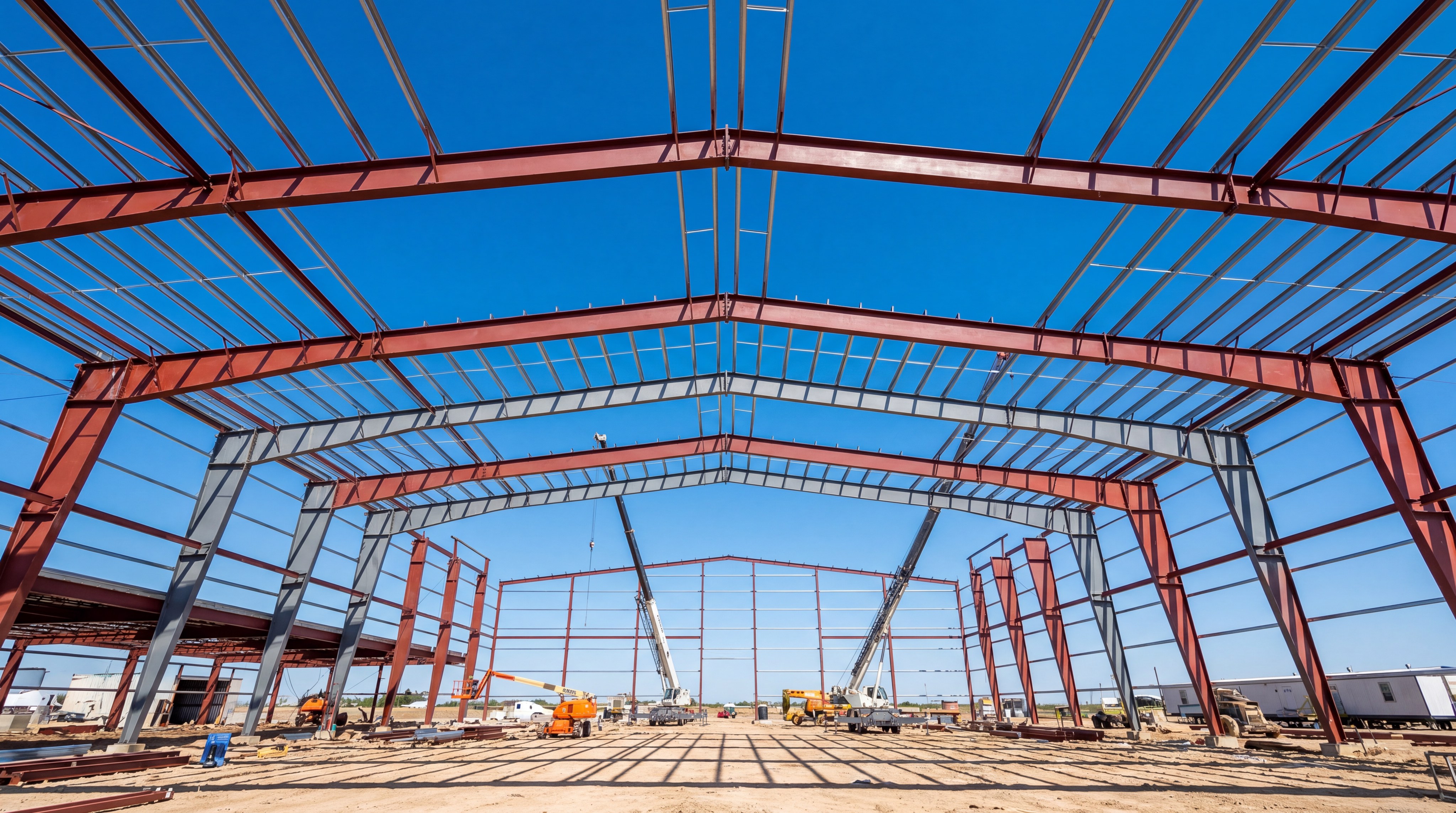
The selected site must provide enough space for the building, drainage, trailers, delivery vehicles, cranes and future maintenance. A low-lying or poorly drained location may increase earthwork, foundation and water-management requirements.
Before the structural design is finalized, the project should confirm:
- Topographic levels and drainage direction;
- Soil bearing capacity;
- Groundwater conditions;
- Cut-and-fill requirements;
- Access for containers, trailers and lifting equipment;
- Distance from the horse barn and service areas;
- Space for gutters, downpipes and external drainage;
- Future expansion requirements.
Why Is a Soil Report Important?
Foundation type and size depend on the structural reactions and actual ground conditions. A local geotechnical or soil-bearing report helps the engineer determine whether isolated footings, ground improvement or another foundation solution is required.
Showhoo can provide foundation reaction data and foundation drawings based on the agreed design conditions. Final local approval and construction requirements should be coordinated with the client’s local engineer.
Site Factor Why It Matters Soil Bearing Capacity Affects footing dimensions and ground treatment Ground Level Affects excavation and fill quantities Drainage Reduces water accumulation around the building Delivery Access Determines whether containers and cranes can reach the site Barn Proximity Affects daily horse movement and facility workflow Expansion Area Helps avoid costly future relocation or redesign
What Local Approvals Are Required Before Construction?
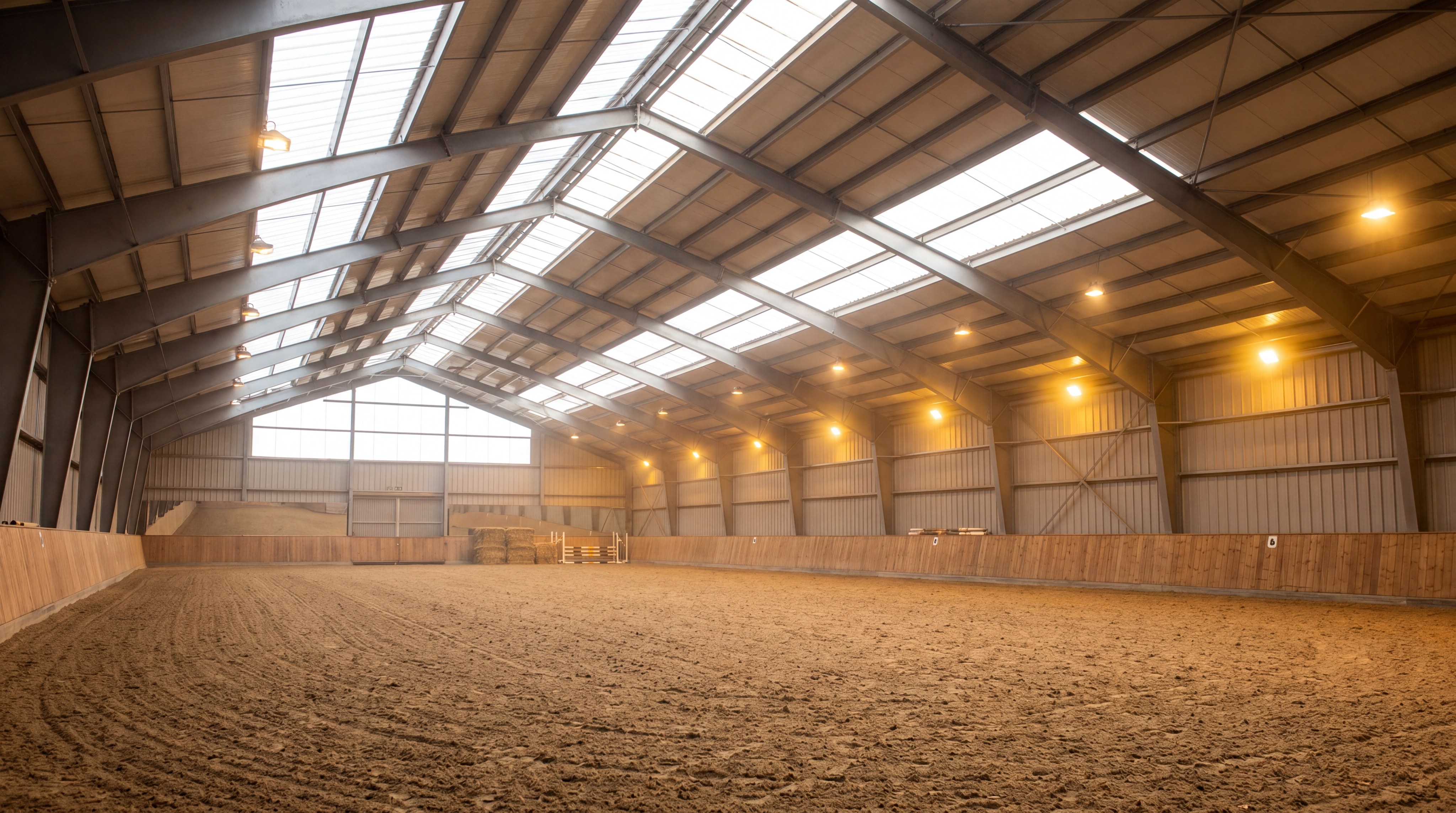
Building permits, zoning rules, agricultural-use restrictions, drainage requirements and engineer-stamping procedures vary by country and municipality. The buyer should confirm local requirements before manufacturing begins.
Local authorities may request:
- Site and zoning approval;
- Structural calculations;
- Foundation drawings;
- Wind, snow and seismic design data;
- Drainage or environmental documentation;
- Fire-safety or electrical documentation;
- Review and stamping by a locally licensed engineer.
How Does Showhoo Support Local Engineering Review?
Showhoo prepares structural calculations, foundation reaction data and engineering drawings according to the agreed GB-based design criteria and project load inputs.
When local statutory approval or professional stamping is required, the client should arrange review by a locally licensed engineer. Showhoo can provide technical documents, respond to engineering comments and revise agreed details to support the review process.
How Do Footing and Drainage Affect the Usable Arena Area?

Riding footing is a complete system rather than a single surface material. Its performance depends on the subgrade, base, drainage, top layer, moisture control, maintenance method and intended riding discipline.
Poor drainage, uneven compaction or material migration can reduce the usable area near walls and corners. The arena layout should also provide enough space for watering and grooming equipment to operate without damaging kickboards or wall panels.
How Should Riding Footing Materials Be Selected?
Possible surface materials include locally graded sand, sand-and-fiber blends and other discipline-specific footing systems. The final specification should be determined according to:
- Intended riding activity;
- Local aggregate characteristics;
- Indoor humidity and dust control;
- Drainage and watering method;
- Grooming equipment;
- Maintenance capability;
- Local material availability.
Showhoo can include riding-surface materials within the agreed supply scope. However, local aggregate testing and specialist footing advice may still be required before the final layer composition and thickness are confirmed.
Why Use a Clear-Span Steel Riding Arena Building?
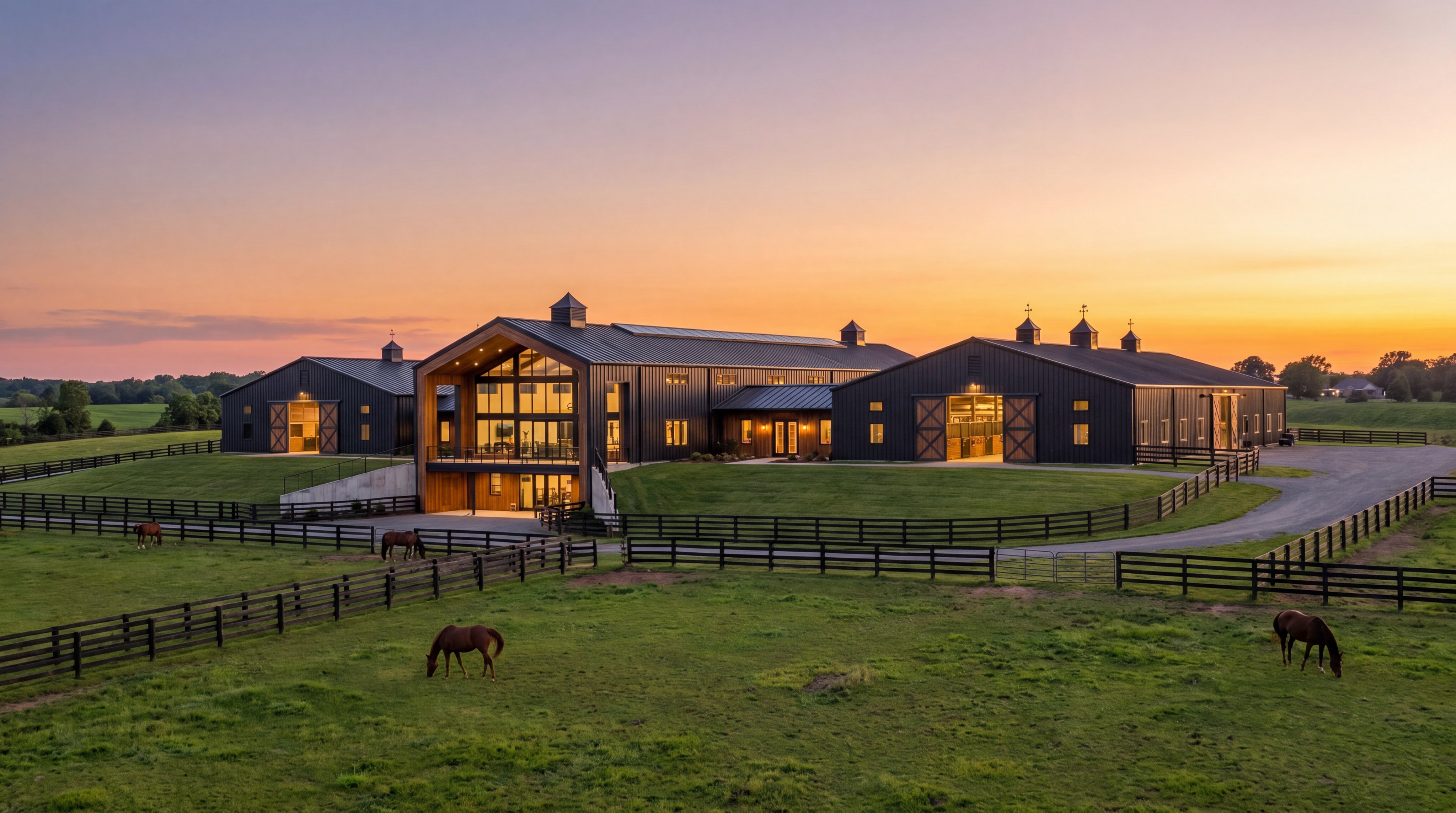
A steel portal-frame system is well suited to indoor riding arenas because it can provide a wide, column-free training area. Removing internal columns improves riding circulation, visibility and the movement of footing-maintenance equipment.
The economical clear span is not unlimited. It must be calculated according to:
- Building width and length;
- Minimum interior clear height;
- Wind, snow and seismic loads;
- Roof slope and cladding weight;
- Door and opening locations;
- Deflection limits;
- Transportation and installation conditions;
- Foundation capacity.
What Does a Clear-Span Horse Arena Improve?
A clear-span layout provides:
- Unobstructed riding and training space;
- Flexible placement of dressage courts or jumping equipment;
- Easier movement for tractors and grooming equipment;
- Better visibility across the arena;
- Greater flexibility for future internal layouts.
Final frame sizes, steel quantities and connection details must be determined through structural calculations rather than selected from width alone.
Which Roof and Wall Materials Suit an Indoor Horse Arena?
Roof and wall materials should be selected according to climate, insulation requirements, condensation risk, fire-performance requirements and budget.
A fully enclosed arena may use insulated sandwich panels to reduce direct heat transfer and improve the indoor environment. Translucent roof panels can introduce natural daylight, while doors, louvers and ventilation openings support air movement.
EPS Sandwich Panels
The Uruguay riding arena and horse barn use insulated EPS sandwich panels for the roof and wall enclosure. EPS panels provide a lightweight insulated building envelope and can be manufactured in different thicknesses according to the project specification.
Panel thickness, facing-sheet specification and fire-performance requirements should be checked against local building regulations and insurer requirements.
Daylighting and Door Configuration
Translucent roof panels reduce dependence on artificial lighting during daytime operation. Their quantity and position should be coordinated with roof purlins, waterproofing details and internal glare control.
Double-leaf doors can provide practical access for horses, maintenance equipment and daily operations. Door width and height should be confirmed before the portal frame, wall bracing and panel layout are finalized.
How Should Indoor Arena Ventilation Be Planned?
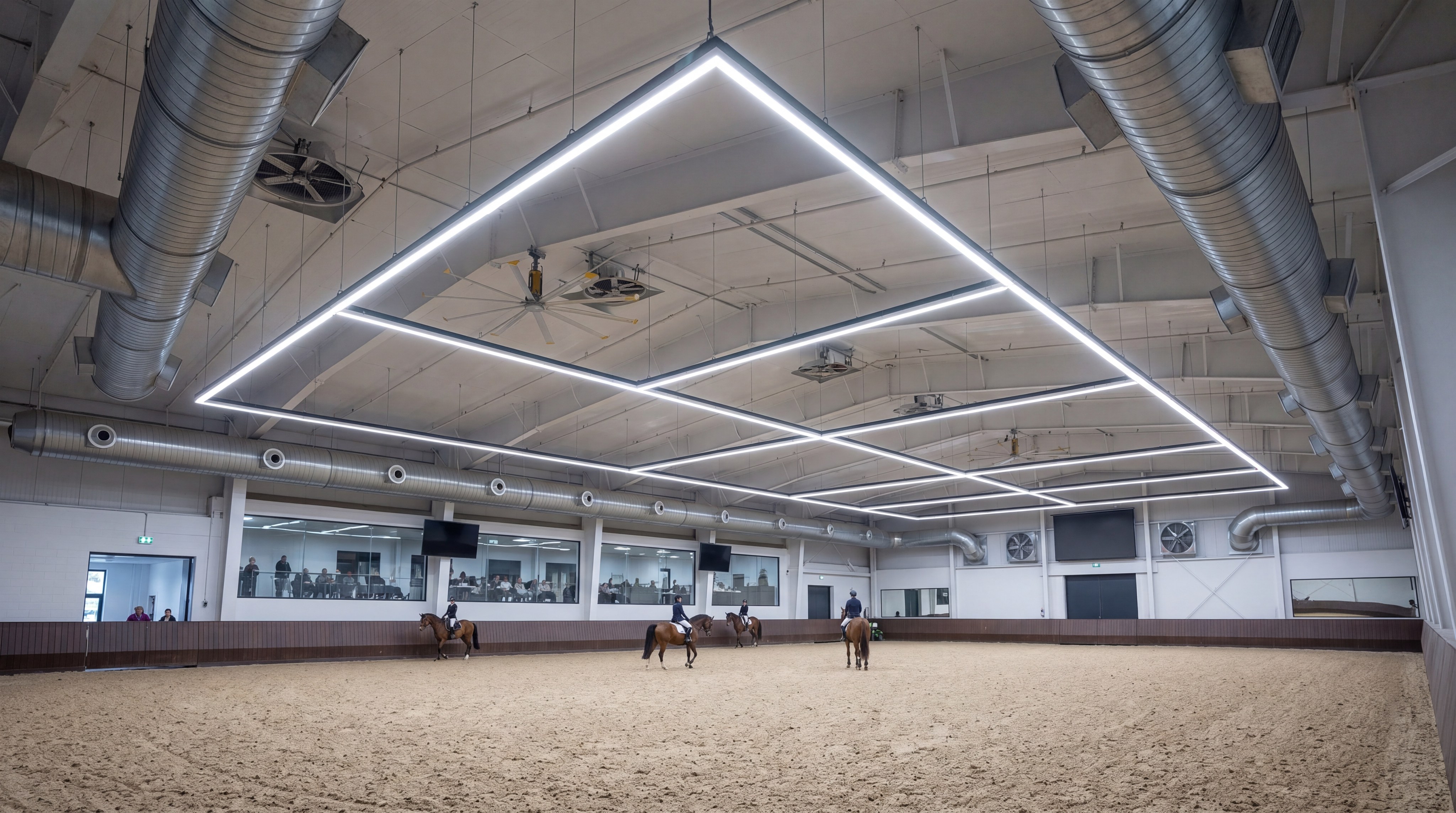
Indoor arena ventilation should control heat, moisture and airborne dust while maintaining comfortable air movement for horses and riders. If the arena connects directly to horse stalls or manure-handling areas, the design should also reduce the transfer of odors and ammonia into the riding space.
The ventilation strategy depends on:
- Local summer and winter conditions;
- Building width, length and clear height;
- Full or partial enclosure;
- Number of horses and riders;
- Footing moisture and dust levels;
- Door-opening patterns;
- Insulation and condensation risk.
What Ventilation Features Can Be Considered?
Depending on the project, possible ventilation features include:
- Ridge or roof exhaust vents;
- Wall louvers or controlled air inlets;
- Operable doors and windows;
- HVLS circulation fans;
- Mechanical exhaust fans;
- Separate ventilation for connected horse-barn areas.
Vent openings, fans and doors should be coordinated with the steel bracing, wall panels, electrical system and minimum interior clear height.
How Does Horse Riding Arena Size Affect Construction Cost?
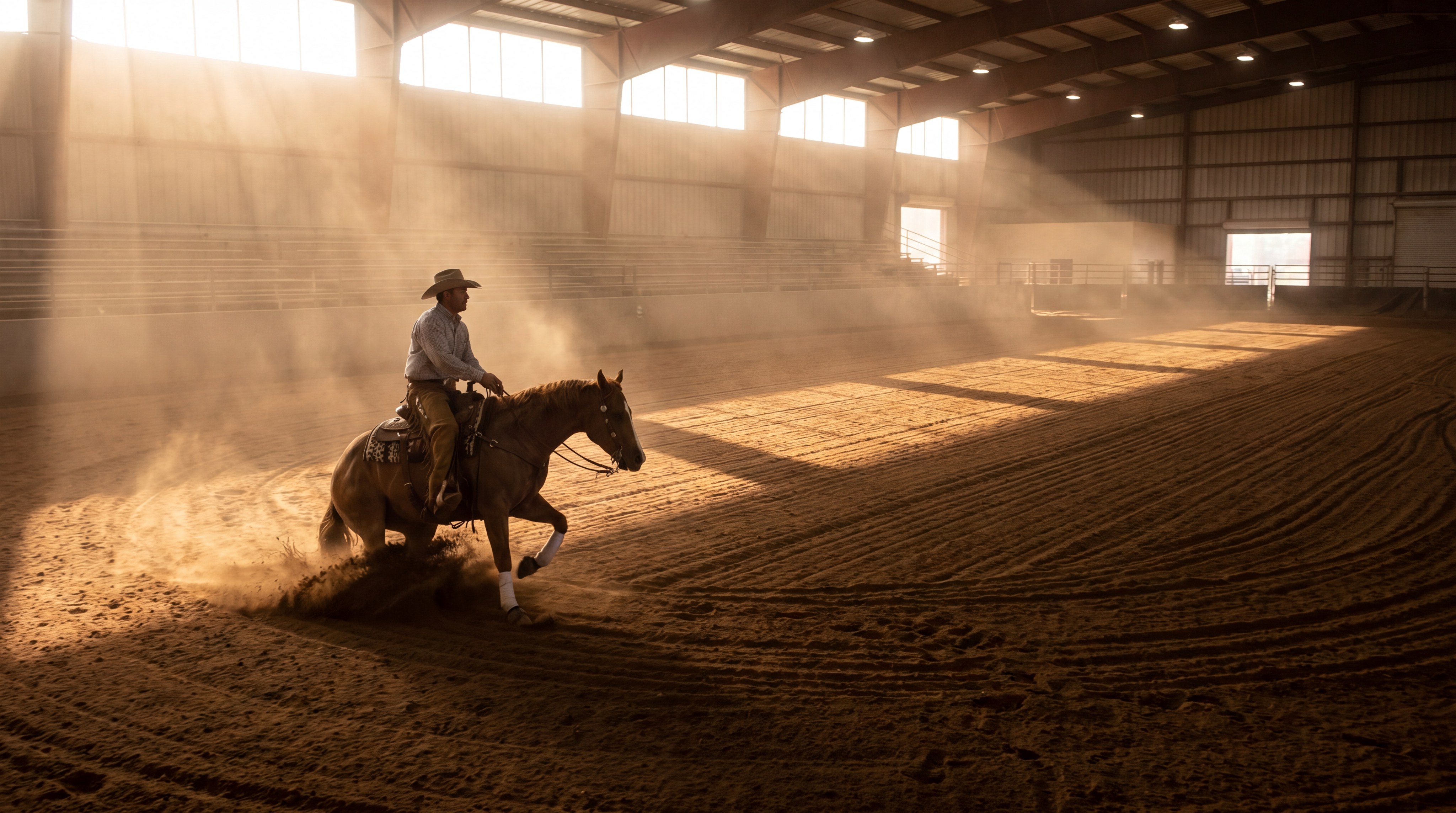
A larger arena requires more steel, roof and wall panels, foundations, riding-surface materials, lighting and installation work. However, width and length do not affect structural cost in the same way.
Increasing the building length usually adds portal-frame bays, cladding and foundation locations. Increasing the clear-span width may also require heavier rafters, columns, connections and foundations. For this reason, adding width can have a greater structural impact than adding the same amount of length.
| Cost Factor | How It Affects the Project |
|---|---|
| Clear-Span Width | May require heavier primary frames and foundations |
| Building Length | Adds structural bays, cladding and footing locations |
| Interior Clear Height | Affects column length, frame geometry and wall area |
| Wind, Snow and Seismic Loads | Affect steel sections, bracing and connections |
| Full Enclosure | Adds wall panels, doors, flashing and accessories |
| EPS Insulation | Affects panel type, thickness and freight volume |
| Doors and Openings | Affect frame, bracing and panel detailing |
| Footing System | Depends on area, material and local availability |
| International Freight | Depends on packing volume, containers and destination |
| Foundation and Installation | Depend on local ground and labor conditions |
What Can Be Included in a Showhoo Quotation?
The final quotation should clearly define the included and excluded scope. Depending on the agreed contract, Showhoo can provide:
- Architectural layout and steel structure design;
- Structural calculations;
- Foundation reaction data and foundation drawings;
- Steel portal frames and secondary members;
- EPS roof and wall sandwich panels;
- Translucent roof panels;
- Doors, windows, gutters and downpipes;
- Horse stalls and related internal systems;
- Feed-area and wash-area equipment;
- Riding-surface materials;
- Export packing and container loading;
- International shipping coordination;
- Installation drawings and remote guidance;
- On-site installation support;
- Foundation construction.
Local approval fees, engineer stamping, import duties, customs clearance, local utilities and project-specific temporary works should be confirmed separately in the contract.
How Can the Arena Be Planned for Future Expansion?
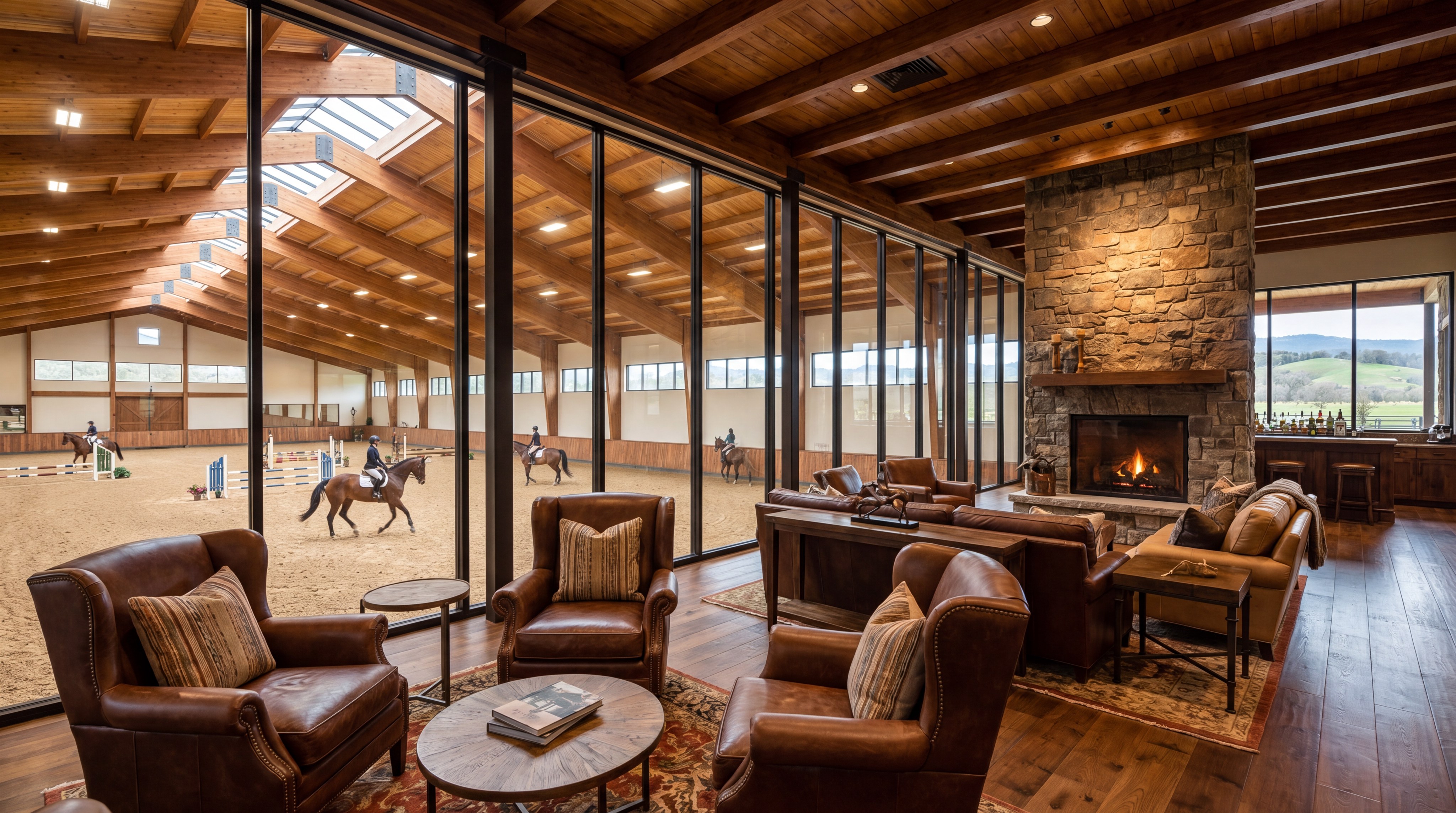
Future expansion should be considered before the structural grid, doors, bracing and foundations are finalized. Rather than increasing every building by a fixed percentage, the project should identify the functions that are most likely to expand.
Possible future requirements include:
- Additional horse stalls;
- Tack and feed rooms;
- Wash bays;
- Viewing or reception areas;
- Additional doors;
- Extended riding length;
- New ventilation or lighting equipment;
- Connections to future buildings.
How Should Kickboards Be Coordinated with the Building?
Kickboards or rider guards can help separate horses and riders from wall panels and structural elements. Their height, angle, material and support system should be coordinated with the usable riding width, wall girts, doors and footing depth.
If future building extension is expected, one end wall can be planned with removable cladding and an expandable structural arrangement, subject to engineering review. ensures your equestrian facility remains valuable and functional for decades to come.
Frequently Asked Questions
Can I build an arena smaller than 60 feet wide?It is possible, but not recommended for full-sized horses because it makes tight turns difficult and increases the risk of injury. A width of 66 feet is generally the absolute minimum for safe, balanced schooling.
What’s the best height for an indoor arena?An eave height of 16 feet is the standard for flatwork, while 18 to 20 feet is best for jumping. This ensures that even high-jumping horses have enough vertical clearance to avoid spooking or hitting trusses.
How do I know if I need a professional footing expert?You should hire an expert if you are installing high-end synthetic or textile footing, as the drainage and compaction levels be precise. Professional installation prevents the footing from shifting or failing prematurely under heavy use.
Can I add horse stalls to my indoor arena later?Yes, provided you choose a clear-span steel structure that allows for internal layout changes without moving support pillars. Planning for a slightly longer building (e.g., adding 36 feet for a row of stalls) is much cheaper during the initial build.
What’s the best way to control dust in a large indoor arena?The most effective method is a combination of specialized footing additives and an automated sprinkler system. Additives like magnesium chloride or wax-coated sand can also significantly reduce the frequency of watering.
Building Your Equestrian Legacy
Choosing the right dimensions for your facility is about more than just square footage; it is about creating an environment where horses and riders can thrive. At Showhoo, our vision is to provide high-quality, durable steel structures that stand the test of time and support the unique needs of the equestrian community. We focus on clear-span designs that offer the maximum usable space for training, jumping, and boarding operations. If you are ready to take the next step in your equestrian journey, contact us today for a personalized quote and expert guidance. Together, we can build a facility that reflects your passion and dedication to the sport.
Choose the Right Horse Riding Arena Size—Get a Quote !
Email:sales@showhoo.com.cn
Phone/WhatsApp:+86 186 7895 5927