
The Ultimate Horse Arena Construction Guide is your essential roadmap to building a professional-grade equestrian facility from the ground up. You face a significant risk when you underestimate the technical requirements of a riding surface. Poorly planned arenas lead to waterlogged sand, uneven footing, and increased horse injuries, turning your major investment into a source of stress. We provide the expert engineering and material insights needed to ensure your project delivers long-term durability and safety regardless of your standard outdoor horse arena size .
What is the standard outdoor horse arena size for your discipline?
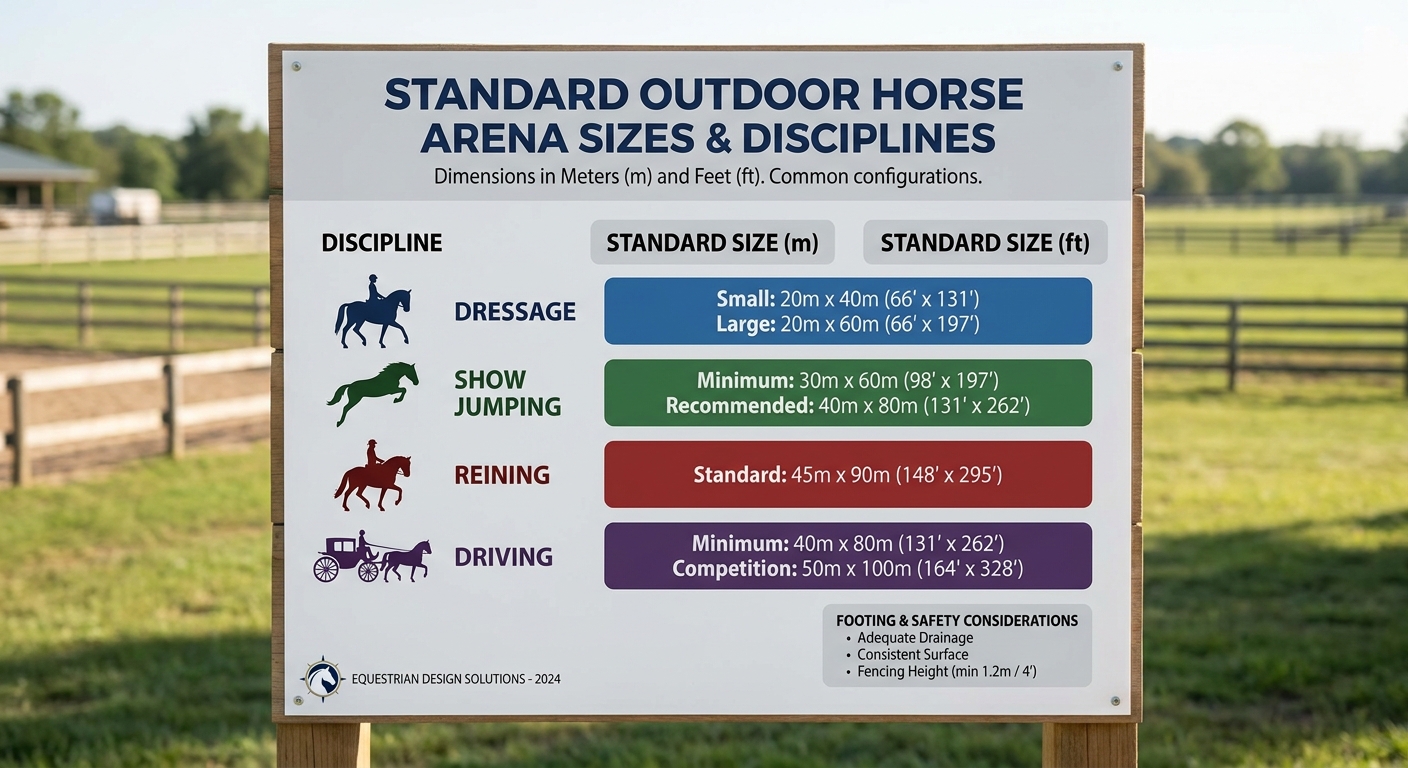
Determining your dimensions is the first step because size impacts your budget and your location selection. You should note that the standard outdoor horse arena size for a dressage competition is typically 20m x 60m. Training facilities may opt for smaller footprints depending on the available land.
How do dressage requirements vary?
Dressage requires precise dimensions to accommodate specific movements and letters. A small training ring might only be 20m x 40m, while international competition necessitates the full 60m length.
Here is the kicker: If your arena is even a few inches off, your horse’s transitions will feel cramped. You need to ensure the perimeter is perfectly squared.
What space do jumpers and barrel racers need?
Jumpers require significantly more room to allow for complex course approaches and galloping stretches. Barrel racers often look for a 150ft x 200ft layout to maintain speed and safety during tight turns.
- Hunter/Jumper: Minimum 50m x 80m recommended.
- Barrel Racing: 150ft x 200ft is the competitive standard.
- Polo: Requires vast acreage, often 300ft x 600ft.
Key Takeaway
| Discipline | Standard Size (Metric) | Standard Size (Imperial) | |
|---|---|---|---|
| Dressage | 20m x 60m | 66ft x 197ft | |
| Show Jumping | 50m x 80m | 164ft x 262ft | |
| Barrel Racing | 45m x 60m | 150ft x 200ft |
Selecting the right footprint ensures your horses can perform maneuvers safely without hitting the rails.
How do you choose the perfect location for your horse arena?
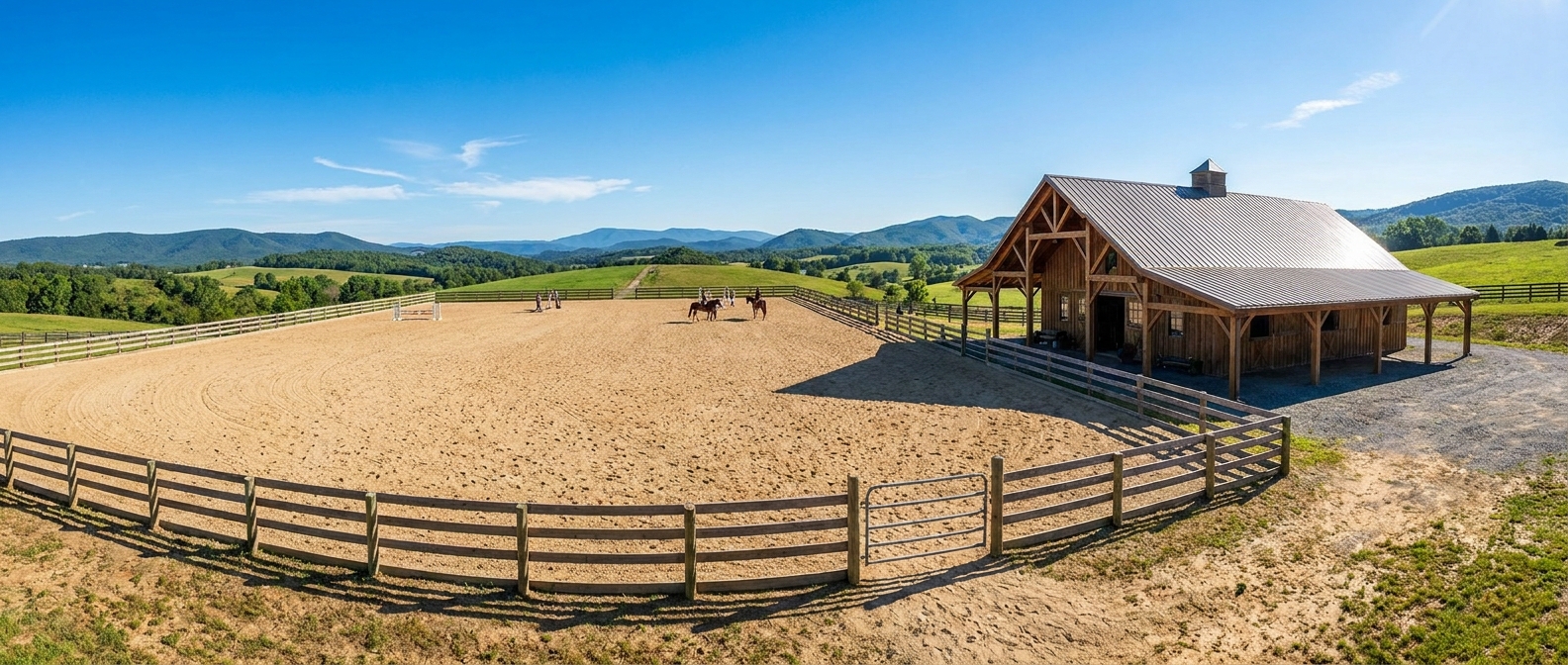
Selecting the right site involves evaluating topography, soil quality, and proximity to your existing stables. Even if you have a perfect standard outdoor horse arena size in mind, a low-lying spot will lead to constant flooding. You must choose high ground that allows for natural water runoff away from the surface.
Why is soil testing necessary before building?
You need to know if you are building on heavy clay or shifting peat. Native soil stability determines how much excavation and fill material your project will require.
But that’s not all. Poorly chosen soil can cause the entire base to shift over time. This leads to “potholes” beneath your expensive footing.
How does proximity to the barn affect utility?
Placing the arena near your horse barn increases efficiency for daily training sessions. You should also consider the path for water trucks or tractors used for maintenance.
- High Ground: Prevents water pooling from nearby hills.
- Wind Exposure: Consider if you need windbreaks to prevent sand loss.
- Accessibility: Ensure heavy machinery can reach the site for construction.
Key Takeaway
| Selection Criteria | Ideal Condition | Risks of Poor Choice | |
|---|---|---|---|
| Elevation | High and naturally level | Chronic flooding issues | |
| Proximity | Near stable and water | Higher labor for daily chores | |
| Soil Stability | Well-draining mineral soil | Base failure and shifting |
A strategic location minimizes long-term maintenance costs and maximizes the usability of your facility.
What are the primary cost factors in arena construction?
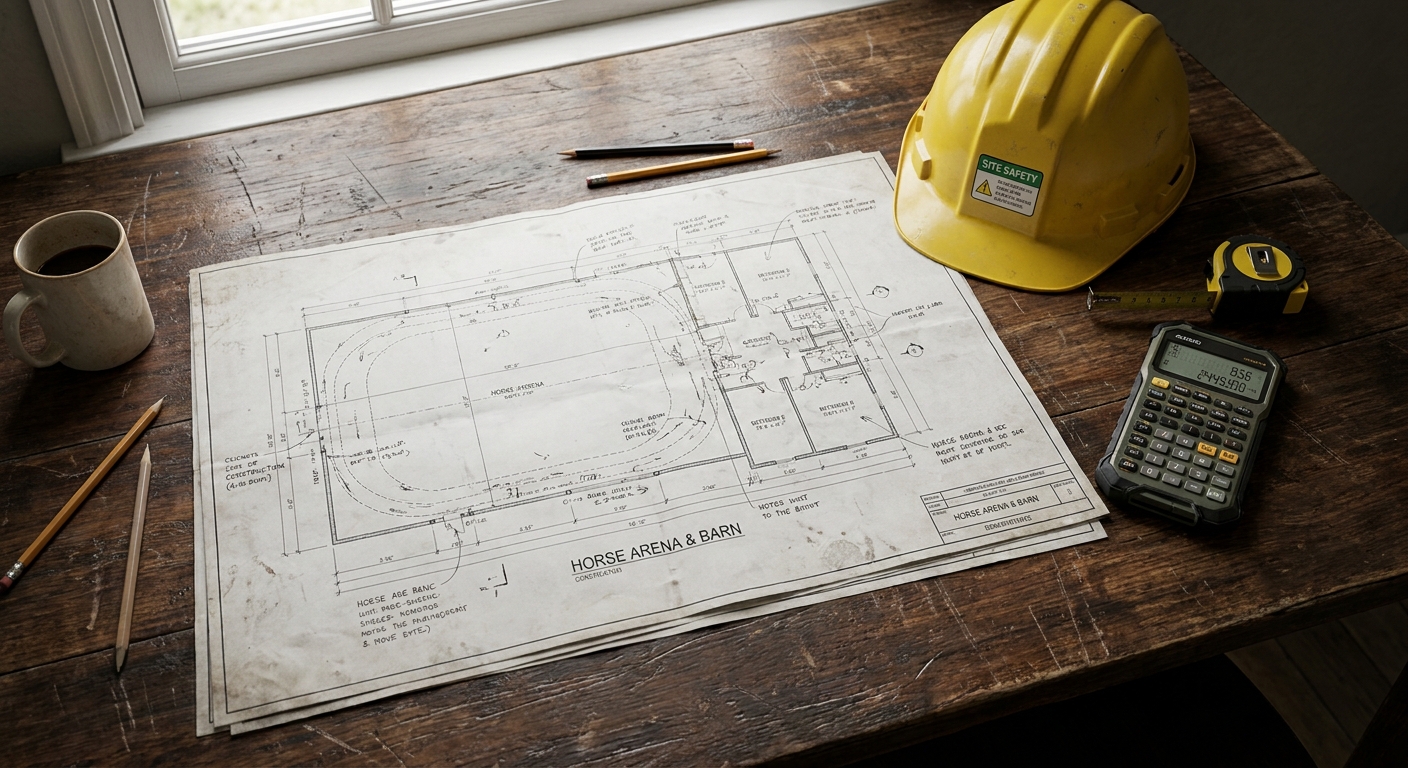
Construction costs fluctuate based on materials, excavation depth, and the standard outdoor horse arena size you select. You should budget for base materials as the most significant expense, often ranging from 1.50 to 5.00 per square foot. Utilizing modern geocells can help you reduce aggregate needs by up to 50%.
How do material choices impact your budget?
Investing in high-quality geotextile fabrics prevents the sub-base from mixing with your clean aggregate. While this adds to the upfront cost, it saves thousands in future repair expenses.
It gets better: Using metal building kits for covered portions can protect your footing from UV damage. This extends the lifespan of your materials significantly.
Are there hidden costs in site preparation?
Excavation often uncovers unexpected rocks or moisture pockets that require more fill material. You must account for the transport of gravel and sand, which varies by your distance from the supplier.
- Grading: 20% of the total budget.
- Base Materials: 40% of the total budget.
- Footing: 30% of the total budget.
- Fencing/Lights: 10% of the total budget.
Key Takeaway
| Budget Item | Typical Cost Range | Savings Tip | |
|---|---|---|---|
| Excavation | 2,000−10,000 | Choose a naturally level site | |
| Base Layer | 5,000−25,000 | Use geocells to reduce rock needs | |
| Top Footing | 3,000−15,000 | Buy from local high-quality quarries |
Allocating your budget toward the unseen base layers prevents the most common and expensive arena failures.
Quick, customized quotation from our professional engineering team
Email:sales@showhoo.com.cn
Phone/WhatsApp:+86 186 7895 5927
Why is drainage the most critical factor in arena longevity?
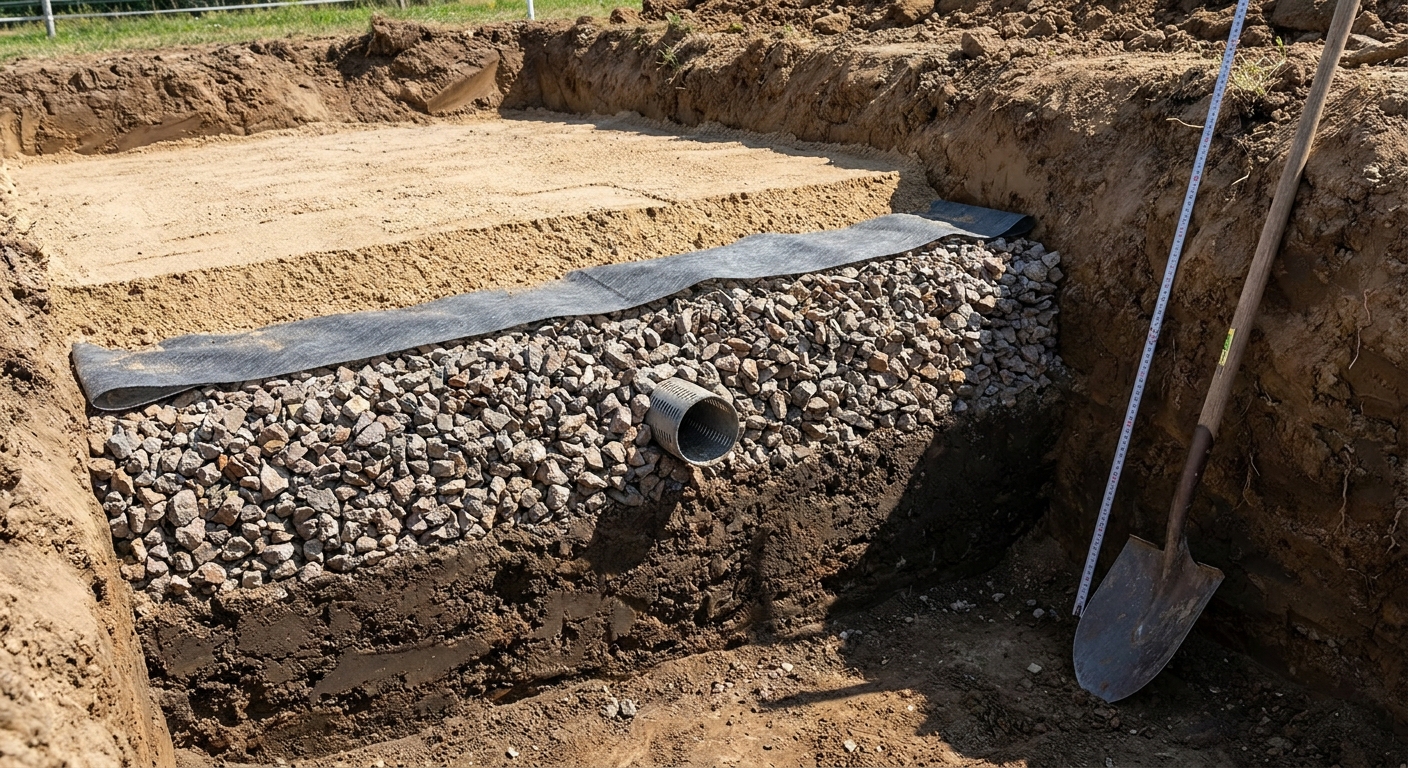
Effective drainage ensures your arena remains usable after heavy rainfall and prevents the footing from turning into mud. Even for a standard outdoor horse arena size, you must implement a 1-2% crown in the center to move water outward. Without a dedicated drainage plan, your aggregate base will eventually wash away or become saturated.
How do perimeter drains protect the base?
You should install French drains or gravel-filled trenches around the outside of the retaining boards. These systems collect the surface water and direct it to a designated runoff area.
Think about it: Water is the enemy of any equestrian surface. If it sits on the base, the structure loses its interlocking stability.
What role do retaining boards play?
Retaining boards act as a physical barrier to keep your footing material contained within the arena. They also prevent surrounding dirt and organic matter from washing into your clean sand.
- Center Crown: A subtle 1% slope from the middle out.
- Retaining Timber: Pressure-treated wood to withstand moisture.
- Base Permeability: Using angular rock that allows micro-drainage.
Key Takeaway
| Drainage Component | Function | Technical Spec | |
|---|---|---|---|
| Surface Slope | Moves water to the edges | 1% to 2% grade | |
| French Drains | Carries water away from site | Perforated pipe in gravel | |
| Retaining Wall | Keeps footing inside | 2×10 or 2×12 timber |
Prioritizing water management is the only way to guarantee a 20-year lifespan for your riding facility.
Which essential tools and equipment are needed for the build?
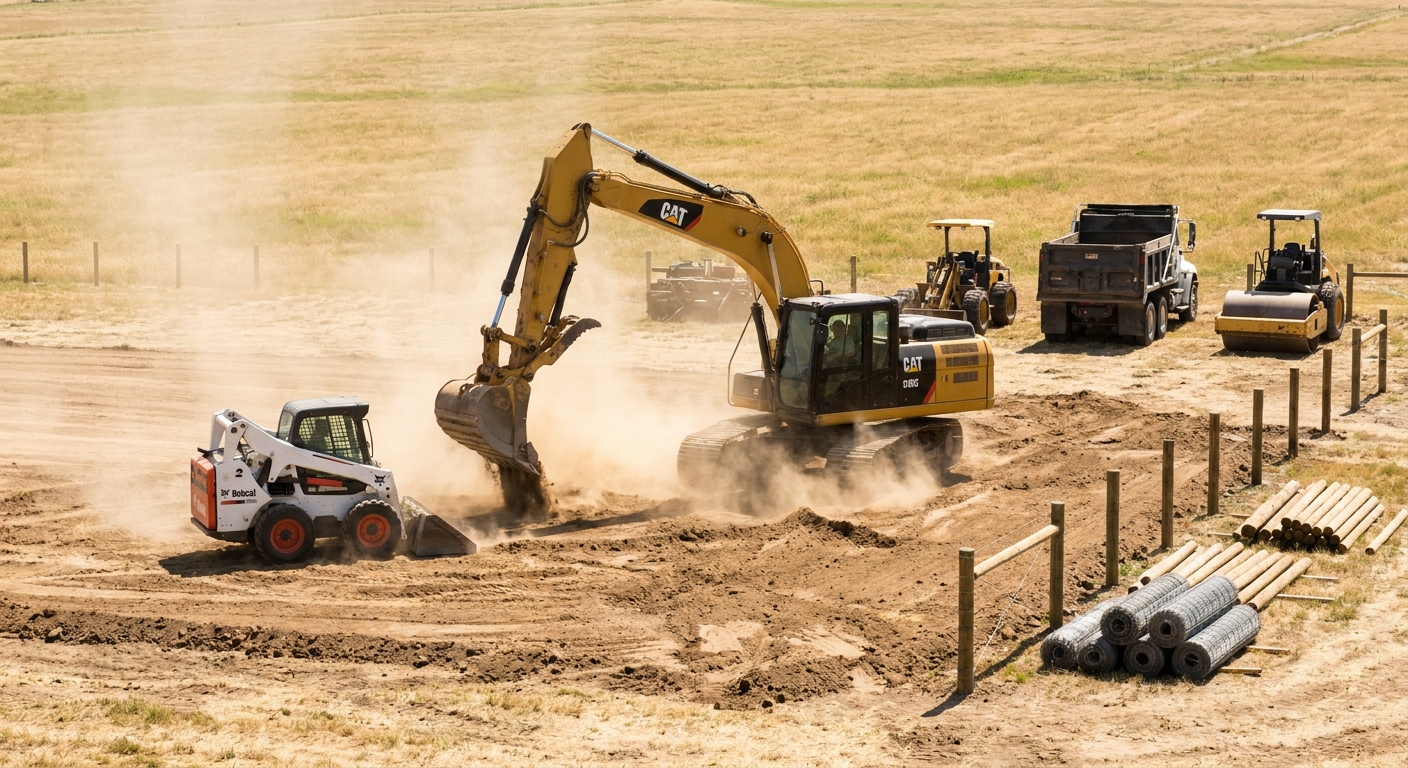
Professional-grade equipment is required to move hundreds of tons of earth and achieve a perfectly level finish. Whether you are building a steel structure workshop or a standard outdoor horse arena size, you need excavators and skid steers. Using a laser level is non-negotiable for ensuring the base doesn’t have dangerous high or low spots.
Why is a laser level essential for grading?
You cannot eye-ball a level surface over 12,000 square feet without significant error. A laser level provides real-time data to the operator to ensure a uniform depth across every inch.
The bottom line is this: A variation of just two inches can cause a horse to trip at a high-speed gallop. Precision is your primary safety metric.
When should you use a vibratory roller?
After spreading your aggregate, you need a heavy roller to interlock the crushed stone. This creates a hard-packed surface that acts as the backbone of your products .
- Excavator: For bulk earth removal and ditching.
- Skid Steer: For spreading base materials and sand.
- Compactor: To solidify the sub-base and aggregate layers.
Key Takeaway
| Equipment Type | Required For | Professional Tip | |
|---|---|---|---|
| Laser Level | Precision grading | Check every 10 feet during prep | |
| Vibratory Roller | Base compaction | Use moisture to help rock interlock | |
| Grip Rake | Final footing spread | Avoid disturbing the base layer |
Renting the right machinery or hiring a specialized operator ensures the technical foundation is built to code.
How do you prepare a stable sub-base for your arena?
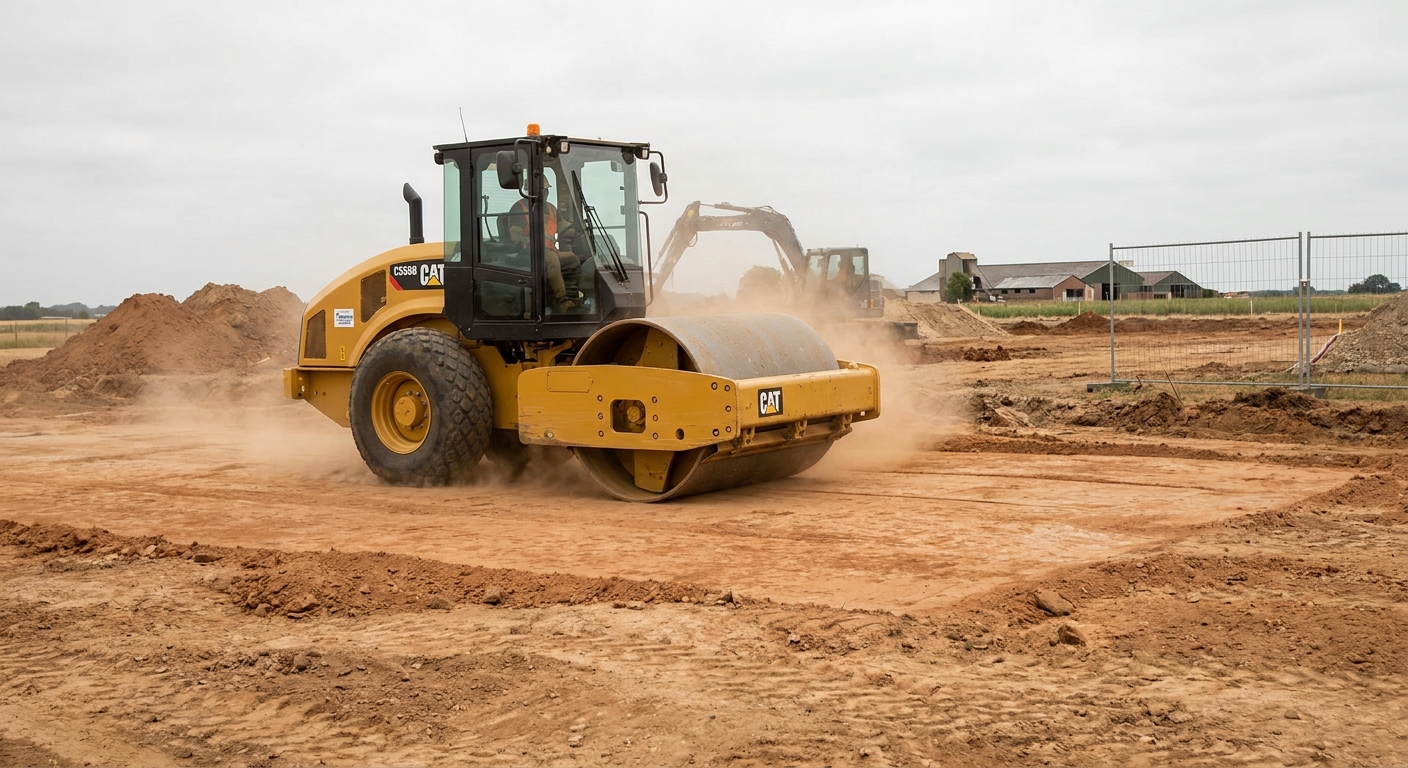
The sub-base is the native soil cleared of all organic matter and compacted to maximum density. Regardless of the standard outdoor horse arena size, you must strip away all grass and topsoil until you reach stable mineral ground. You then use a compactor to eliminate air gaps that could lead to future settling.
Why is removing organic matter critical?
Grass and roots will eventually rot, creating voids in the ground that lead to surface collapses. You need a clean, inorganic sub-base to support the weight of the aggregate and the horse.
Make no mistake: Cutting corners on the sub-base is the fastest way to ruin an arena. It is the foundation upon which everything else rests.
How do geotextile fabrics protect the layers?
You should lay a non-woven geotextile fabric over the compacted sub-base before adding rock. This fabric acts as a barrier, preventing the native mud from migrating upward into your clean base materials.
- Stripping: Remove 4 to 6 inches of topsoil.
- Compaction: Achieve 95% Proctor density for stability.
- Separation: Use 8oz non-woven fabric for drainage.
Key Takeaway
| Sub-Base Step | Action | Objective | |
|---|---|---|---|
| Grubbing | Remove all roots and vegetation | Prevent organic decay | |
| Leveling | Fill low spots with mineral soil | Establish the base grade | |
| Rolling | Compress with heavy machinery | Prevent future settling |
A well-prepared sub-base ensures that the heavy layers above it remain level and stable for decades.
What materials create the ideal compacted aggregate base?
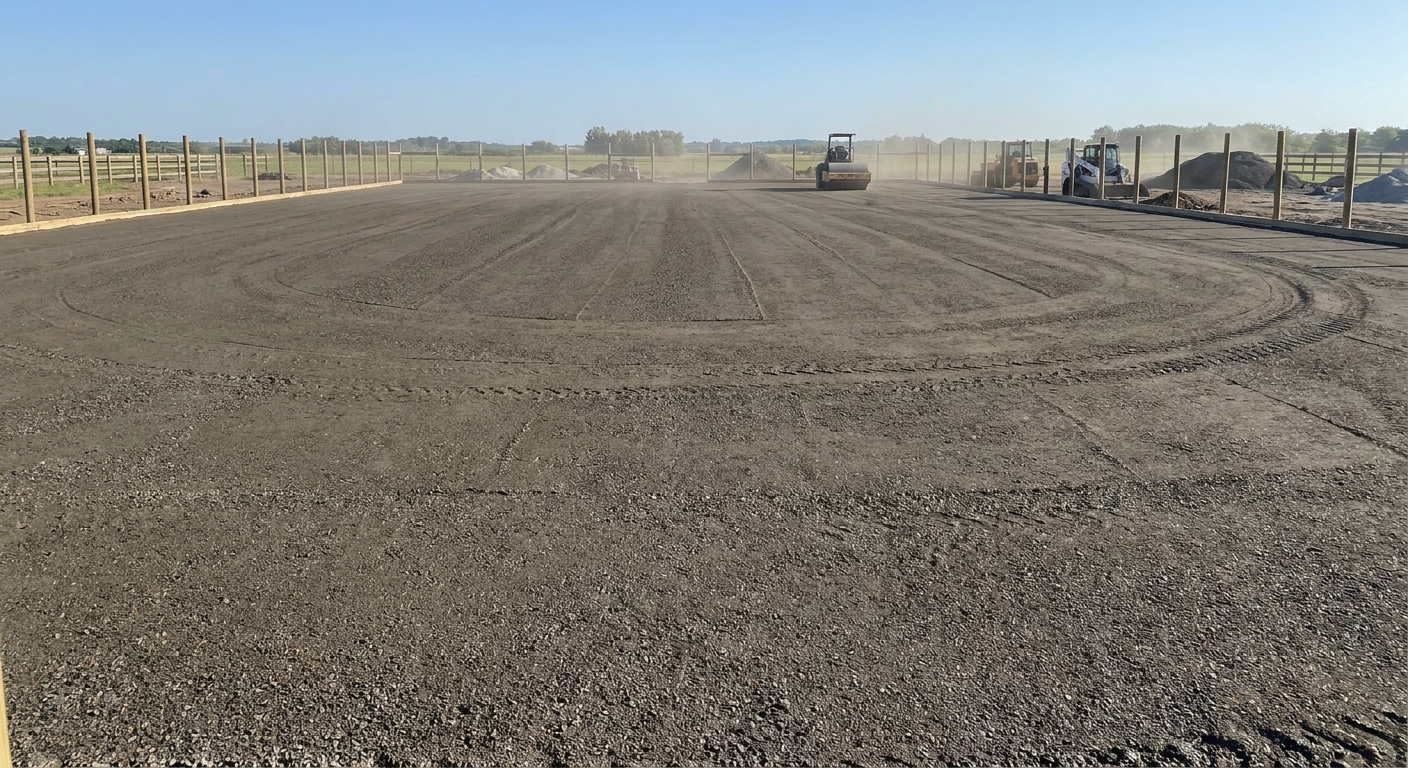
A high-performance base typically consists of 4 to 6 inches of angular crushed rock that interlocks under pressure. For a standard outdoor horse arena size , you should use “crusher run” or “dense graded aggregate” for maximum stability. This layer provides the structural strength to handle the impact of a landing horse without shifting.
Why is angular rock superior to round stone?
Round stones, like pea gravel, act like ball bearings and will never lock together. You need angular edges that “bite” into each other when compressed by a vibratory roller.
Here is the kicker: If your base is too soft, your horse will feel like they are riding on a sponge. This leads to tendon fatigue and decreased performance.
How do geocells enhance load distribution?
Modern arena builds often incorporate geocell technology to provide lateral confinement for the rock. This allows you to use less aggregate while achieving a more stable and better-draining foundation.
- Material: 3/4″ minus crushed limestone or granite.
- Depth: Minimum 4 inches after compaction.
- Finish: Top with a thin layer of screenings for smoothness.
Key Takeaway
| Base Material | Best Use Case | Performance Factor | |
|---|---|---|---|
| Crushed Rock | Standard base layer | High stability and drainage | |
| Geocells | Soft or wet ground | Prevents lateral shifting | |
| Stone Dust | Final smoothing layer | Creates a flat plane for footing |
Using the correct aggregate ensures that your top footing stays consistent and your drainage remains functional.
Quick, customized quotation from our professional engineering team
Email:sales@showhoo.com.cn
Phone/WhatsApp:+86 186 7895 5927
How do you select the best footing material for your needs?
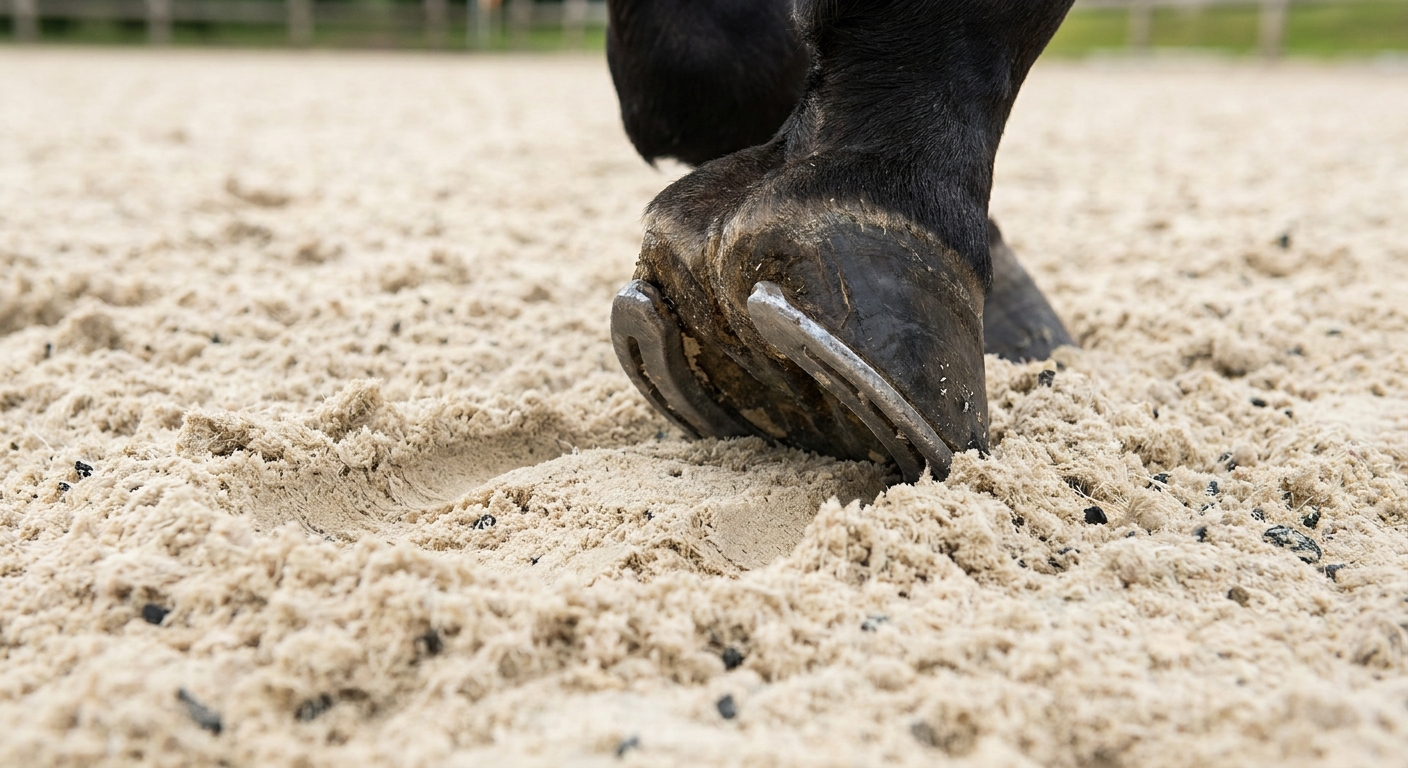
Your footing is the final 2 to 4 inches of material that provides cushion, grip, and rebound for the horse. While sand is common for a standard outdoor horse arena size, you must select “sub-angular” sand that doesn’t break down into dust. Many professional facilities now use synthetic blends to reduce maintenance and improve joint health.
What are the benefits of synthetic additives?
You can blend your sand with fiber, rubber, or foam to increase the “rebound” of the surface. This helps the horse’s hoof stay on top of the footing rather than sinking too deep.
But that’s not all. Synthetic footing retains moisture better than pure sand. This means you spend less time watering and more time riding.
How do you prevent footing from becoming dusty?
Dust is caused by sand particles breaking down into fine silt over time. You should choose high-silica sand and consider dust-suppressant additives if you live in an arid climate.
- Sand Type: Hard, sub-angular silica is the gold standard.
- Additives: Fiber for stability, foam for cushion.
- Moisture: Essential for keeping sand particles locked together.
Key Takeaway
| Footing Type | Maintenance Level | Best For | |
|---|---|---|---|
| Pure Sand | High | General training, budget builds | |
| Sand/Fiber Blend | Medium | Show jumping and high performance | |
| Coated Footing | Low | Indoor arenas and dust-sensitive areas |
The right footing choice directly impacts your horse’s soundess and your overall riding experience.
Should you consider an indoor or covered arena structure?
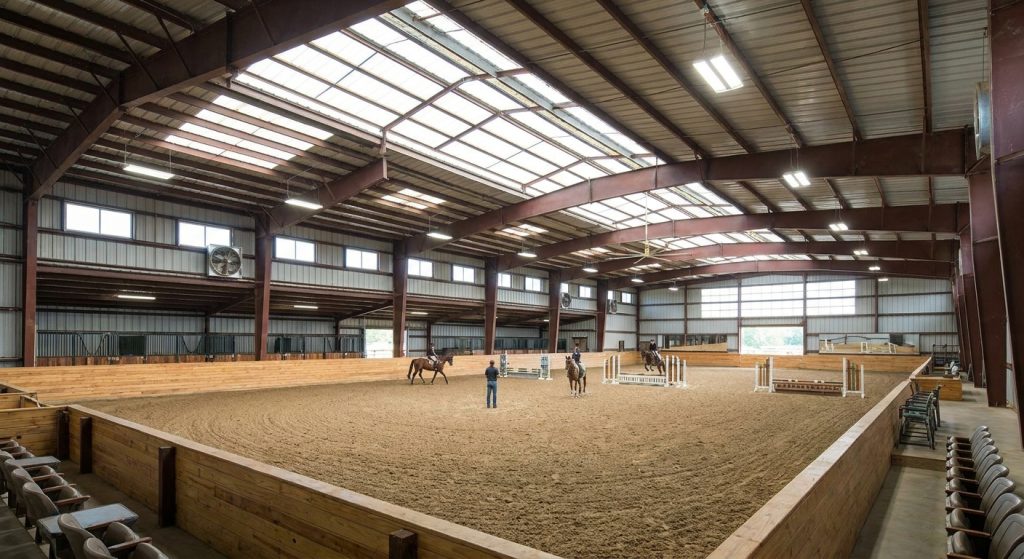
Indoor structures allow for year-round training regardless of snow, rain, or extreme heat. When you scale up from a standard outdoor horse arena size to an indoor facility, you protect your footing from the elements. This prevents the “washing out” of sand that occurs in unprotected outdoor rings during storms.
How does a steel structure protect your investment?
A clear-span steel building provides a column-free interior, ensuring maximum safety for the rider. It also keeps your footing at a consistent moisture level, reducing the need for constant grooming.
It gets better: A covered arena can increase the property value of your equestrian estate. It demonstrates a commitment to professional-level training and horse care.
What are the lighting and ventilation needs?
You need bright, shadow-free LED lighting to ensure the horse doesn’t spook at dark corners. Large roll-up doors or ridge vents are essential to maintain airflow and keep the arena cool.
- Clear Span: No internal poles for safety.
- Eave Height: Minimum 14 to 16 feet for jumping clearance.
- Natural Light: Translucent roof panels can reduce energy costs.
Key Takeaway
| Feature | Outdoor Arena | Indoor Steel Structure | |
|---|---|---|---|
| Weather Protection | None | 100% Protection | |
| Footing Longevity | 5 – 10 Years | 15 – 20 Years | |
| Construction Time | 2 – 4 Weeks | 2 – 4 Months |
Moving indoors is a major capital investment that pays off in consistent training and material durability.
What routine maintenance will keep your arena in top shape?
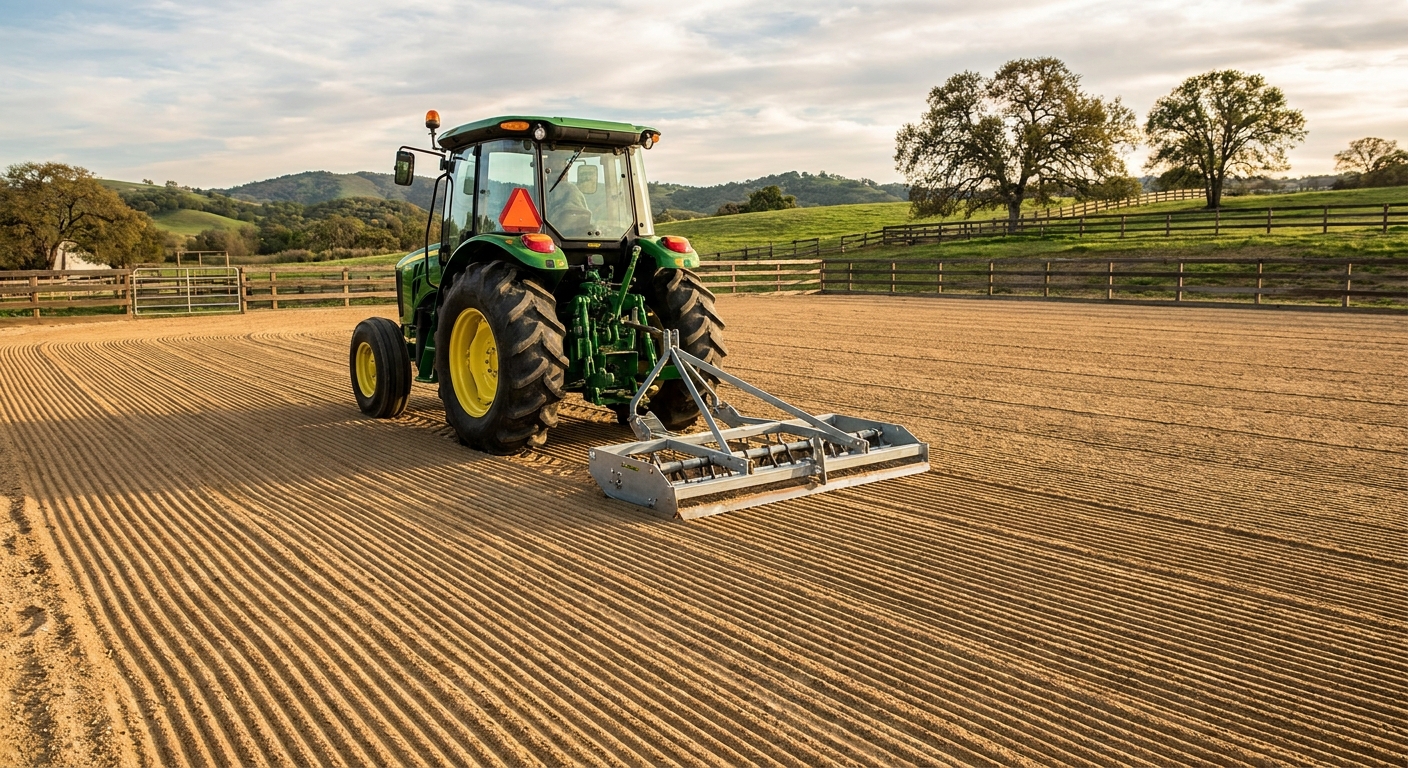
Maintenance is the daily and weekly process of grooming the surface to prevent compaction and depth variation. Even a perfectly built standard outdoor horse arena size will fail if you don’t drag it regularly. You must re-distribute the footing that is pushed to the rails back toward the center where most of the traffic occurs.
How often should you drag the surface?
You should aim to drag the arena after every 10 to 15 rides to maintain a level plane. This prevents the formation of a “track” or deep groove around the perimeter.
Here is the kicker: Compacted footing becomes as hard as concrete, increasing the shock on your horse’s legs. Regular grooming keeps the surface “fluffy” and safe.
Why is watering essential for sand health?
You need to maintain a specific moisture level to keep the sand particles from shifting too much. Water acts as a binder, providing the “grip” necessary for tight turns and athletic jumps.
- Daily: Spot-rake heavy traffic areas and remove manure.
- Weekly: Full drag with a tractor-mounted grooming tool.
- Annually: Check depths with a measuring stick to ensure evenness.
Key Takeaway
| Maintenance Task | Frequency | Tool Needed | |
|---|---|---|---|
| Manure Removal | After every ride | Shovel and bucket | |
| Dragging | Every 2-3 days | Arena drag/Tractor | |
| Watering | Daily (if dry) | Sprinkler or water truck |
Consistent maintenance is the only way to prevent your expensive footing from migrating or becoming dangerous.
Conclusion
Building a professional horse arena is an engineering feat that requires precision at every layer. By following this guide—from selecting the standard outdoor horse arena size to implementing advanced drainage and maintenance—you ensure a facility that supports equine health and rider success. At Showhoo, we are committed to providing the durable steel structures and engineering expertise required for world-class equestrian projects.
Contact us today to discuss your custom arena needs and receive a factory-direct quote for your next build.
Quick, customized quotation from our professional engineering team
Email:sales@showhoo.com.cn
Phone/WhatsApp:+86 186 7895 5927
FAQ
1. Can I build a horse arena on a slope?Yes, but you must perform extensive cut-and-fill excavation to create a level pad. This is necessary because riding on a slope causes uneven footing migration and increased joint stress for the horse.
2. What’s the best sand for a horse arena?The best option is sub-angular silica sand with a low silt content. This reason is that silica is highly durable and won’t break down into dust as quickly as common “river sand” or limestone.
3. How do I know if my arena drainage is failing?You will see standing puddles that remain for more than 24 hours after a storm or “soft spots” that feel mushy. This happens when the base becomes saturated or the surface slope is insufficient to move water.
4. Can I use wood chips for arena footing?You can, but it is generally discouraged for high-performance use. Wood chips rot over time, hold too much moisture, and become slippery when wet, which compromises horse safety.
5. What’s the best way to prevent dust?The most effective method is a combination of regular watering and using a synthetic additive like fiber. These materials hold moisture longer, preventing the sand from turning into airborne dust particles.