
An aviation hangar is a specialized, large-span structure engineered to provide a secure and controlled environment for the storage, maintenance, and protection of aircraft. Without proper aircraft hangar construction, your multi-million dollar assets are left vulnerable to environmental degradation, extreme weather, and operational inefficiencies. Imagine the frustration of seeing a grounded fleet due to preventable corrosion or finding that your facility cannot accommodate the next generation of larger aircraft. This is why investing in professional aircraft hangar construction is the only viable solution to ensure long-term structural integrity and maximized aircraft availability.
How do you plan for aircraft hangar construction?
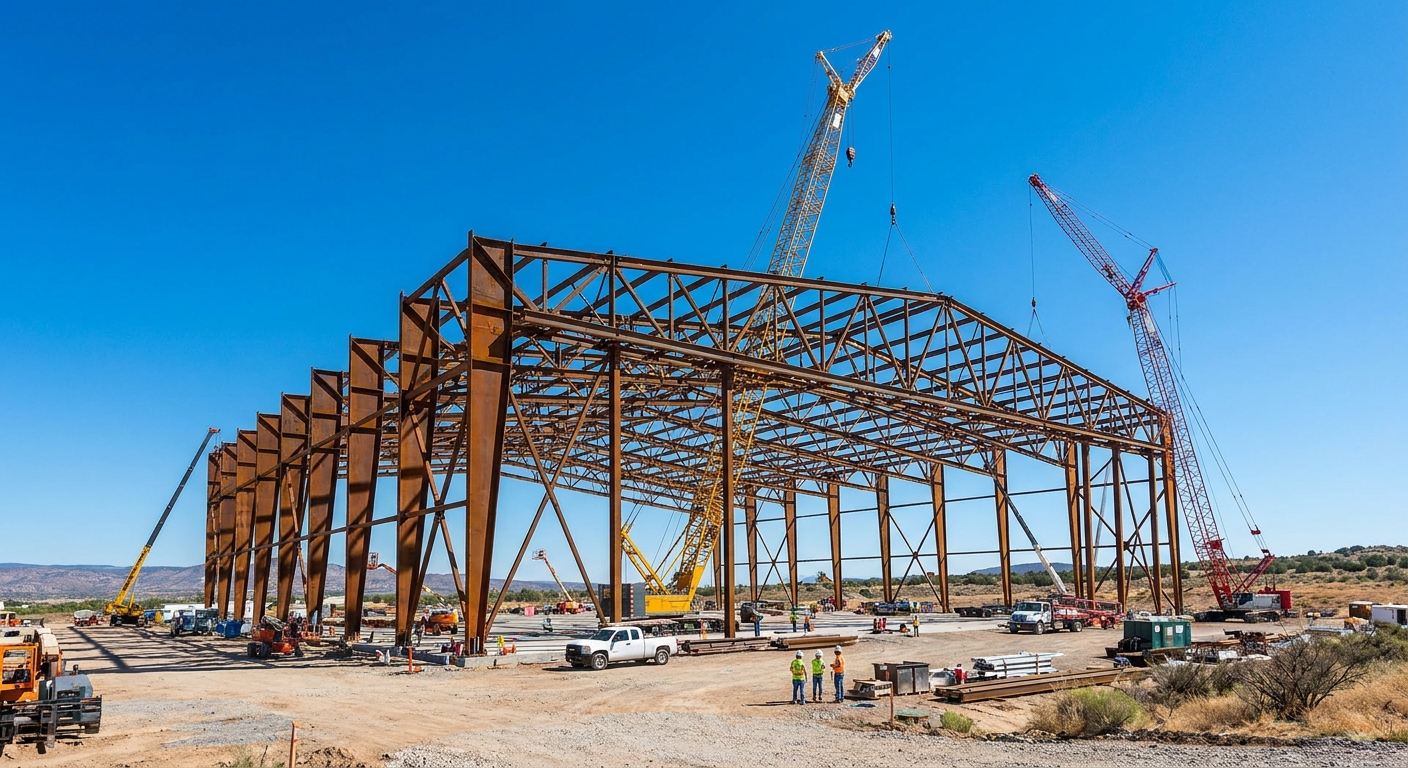
Successful aircraft hangar construction begins with a precise evaluation of your fleet’s current and future dimensions. You must account for the specific wingspans, tail heights, and turning radii of all aircraft intended for the facility.
What are the first steps in hangar design?
Think about it: a hangar built for today’s fleet might be obsolete tomorrow. You need to involve stakeholders early to define the facility’s primary mission—whether it is simple storage or a complex robotic coating bay.
- Identify aircraft mix and future fleet expansion plans.
- Consult with structural engineers on clear-span requirements.
- Assess local zoning and airport authority restrictions.
How do you determine space needs?
The truth is, space efficiency is the cornerstone of a high-functioning aviation facility. You should use scaled templates of your aircraft to arrange floor plans that permit safe movement and maintenance access.
- Calculate minimum separation distances between aircraft and obstructions.
- Include space for tow vehicle turning and ground support equipment.
- Ensure emergency egress paths meet life safety codes.
Key Takeaway: Precise planning in the early stages prevents costly structural modifications and ensures the facility can grow alongside your aviation operations.
| Planning Component | Priority Level | Key Metric | |
|---|---|---|---|
| Fleet Dimension Analysis | High | Maximum Tail Height | |
| Mission Definition | Medium | Maintenance vs. Storage | |
| Future Scalability | High | Expandable Bays |
The data above illustrates that fleet sizing is the most critical variable in initial structural planning.
Where is the best site for aircraft hangar construction?
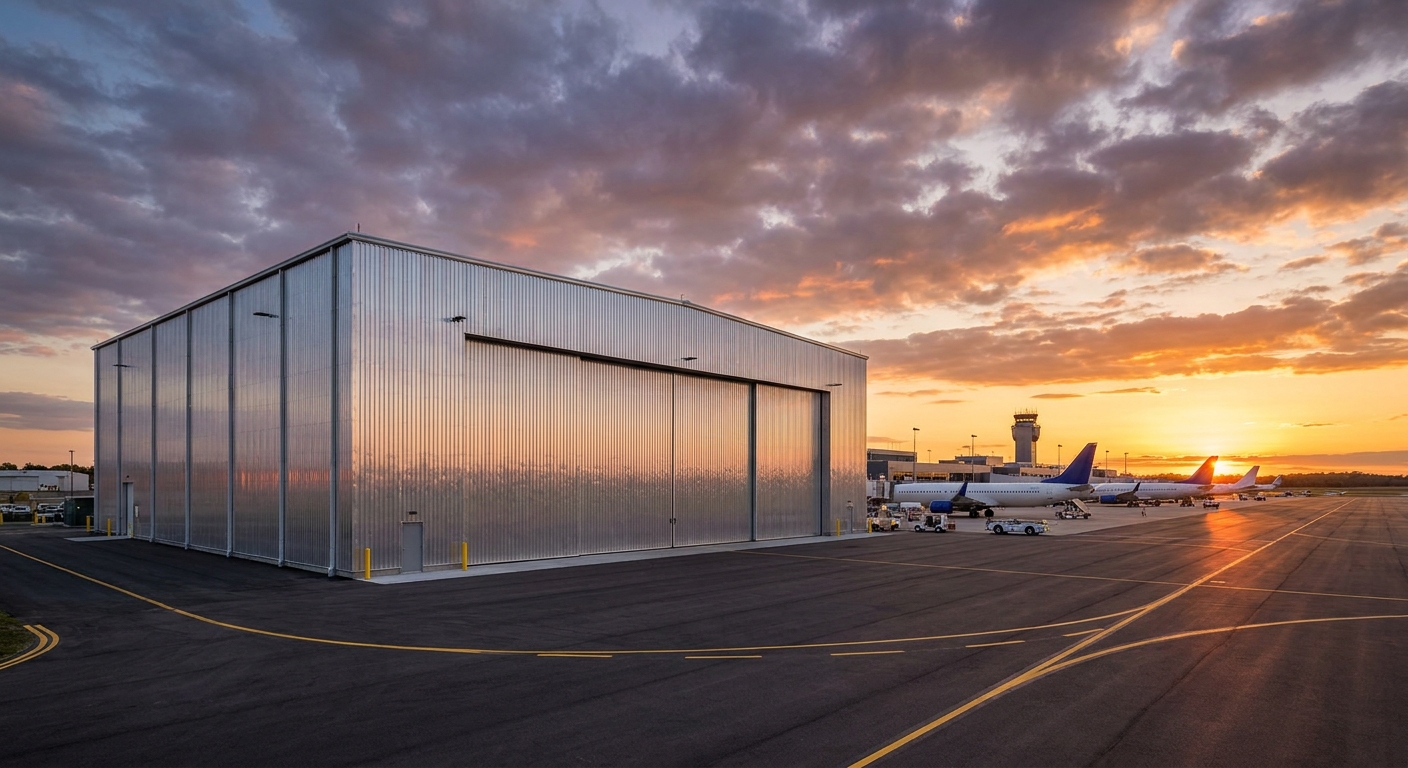
Selecting the right location for your aircraft hangar construction project involves more than just finding an empty plot of land. You must analyze soil stability, drainage, and proximity to taxiways to ensure seamless flight operations.
Why is soil quality vital for hangars?
Here is the deal: heavy aircraft exert immense pressure on the foundation. Professional construction requires a site with high load-bearing capacity to prevent slab cracking or sinking over time.
- Conduct geotechnical surveys to assess soil composition.
- Plan for reinforced concrete slabs capable of supporting heavy landing gear.
- Evaluate drainage patterns to prevent water accumulation near the structure.
How does site proximity affect utility?
You should always consider the logistical flow between the hangar and the runway. A poorly placed hangar can lead to excessive taxi times and increased fuel consumption for every movement.
- Verify direct access to established taxiways and aprons.
- Ensure proximity to existing power, water, and sewage lines.
- Check for clear lines of sight from the air traffic control tower.
Key Takeaway: A strategically selected site minimizes operational costs and guarantees the long-term stability of the hangar’s heavy-duty foundation.
| Site Factor | Impact | Optimal Condition | |
|---|---|---|---|
| Geotechnical Profile | Foundation Integrity | High-Density Soil | |
| Taxiway Proximity | Operational Efficiency | Direct Access | |
| Utility Availability | Construction Cost | Pre-existing Hookups |
Site selection determines the baseline operational costs and the structural lifespan of the hangar.
What steel types suit aircraft hangar construction?
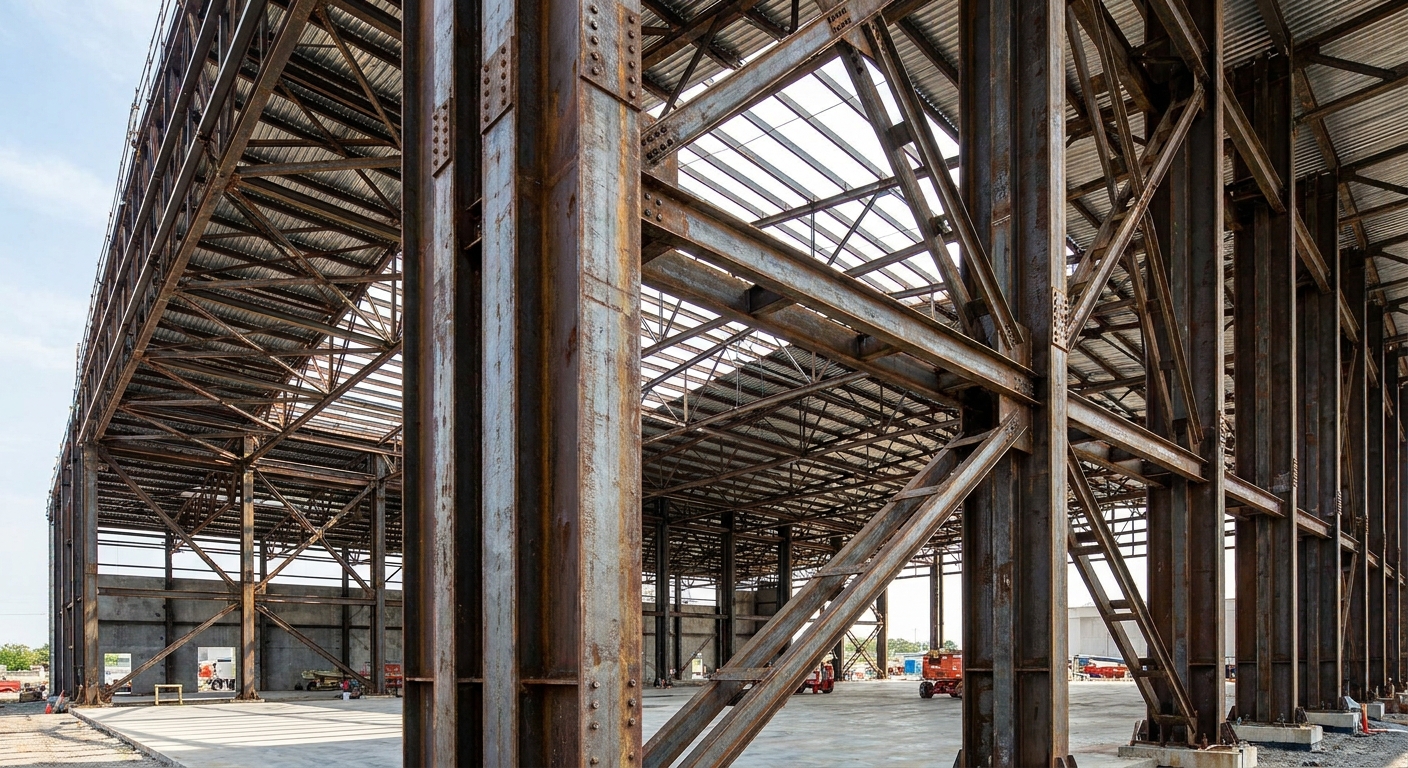
High-strength steel is the industry standard for aircraft hangar construction due to its ability to achieve massive clear spans without the need for interior support columns. This material flexibility is essential for maneuvering large-wing aircraft within the facility.
Why choose steel for large spans?
The bottom line is that steel offers the best strength-to-weight ratio for hangar applications. You can achieve spans exceeding 100 meters, providing an unobstructed floor space for diverse aircraft configurations.
- Utilize H-section steel beams for primary load-bearing frames.
- Implement secondary bracings and tie rods for lateral stability.
- Apply anti-corrosion coatings for facilities in marine or humid climates.
Is prefabricated steel more efficient?
You will find that pre-engineered steel buildings significantly reduce on-site labor and project timelines. Every component arrives marked and ready for assembly, ensuring a precision-built structure every time.
- Benefit from factory-direct quality control and precision welding.
- Reduce waste through optimized computer-aided manufacturing.
- Lower total project costs through rapid erection and installation.
Key Takeaway: Steel structures provide the necessary durability and clear-span capability required to house modern aircraft safely and efficiently.
| Steel Feature | Structural Benefit | Application | |
|---|---|---|---|
| Clear-Span Design | Column-free Interior | Aircraft Maneuvering | |
| Corrosion Resistance | Longevity | Coastal Environments | |
| Rapid Erection | Faster ROI | Urgent Projects |
Steel remains the most cost-effective and structurally sound choice for modern aviation infrastructure.
Custom project quotes from our engineers – fast and reliable
Email:sales@showhoo.com.cn
Phone/WhatsApp: +86 186 7895 5927
How does maintenance impact aircraft hangar construction?
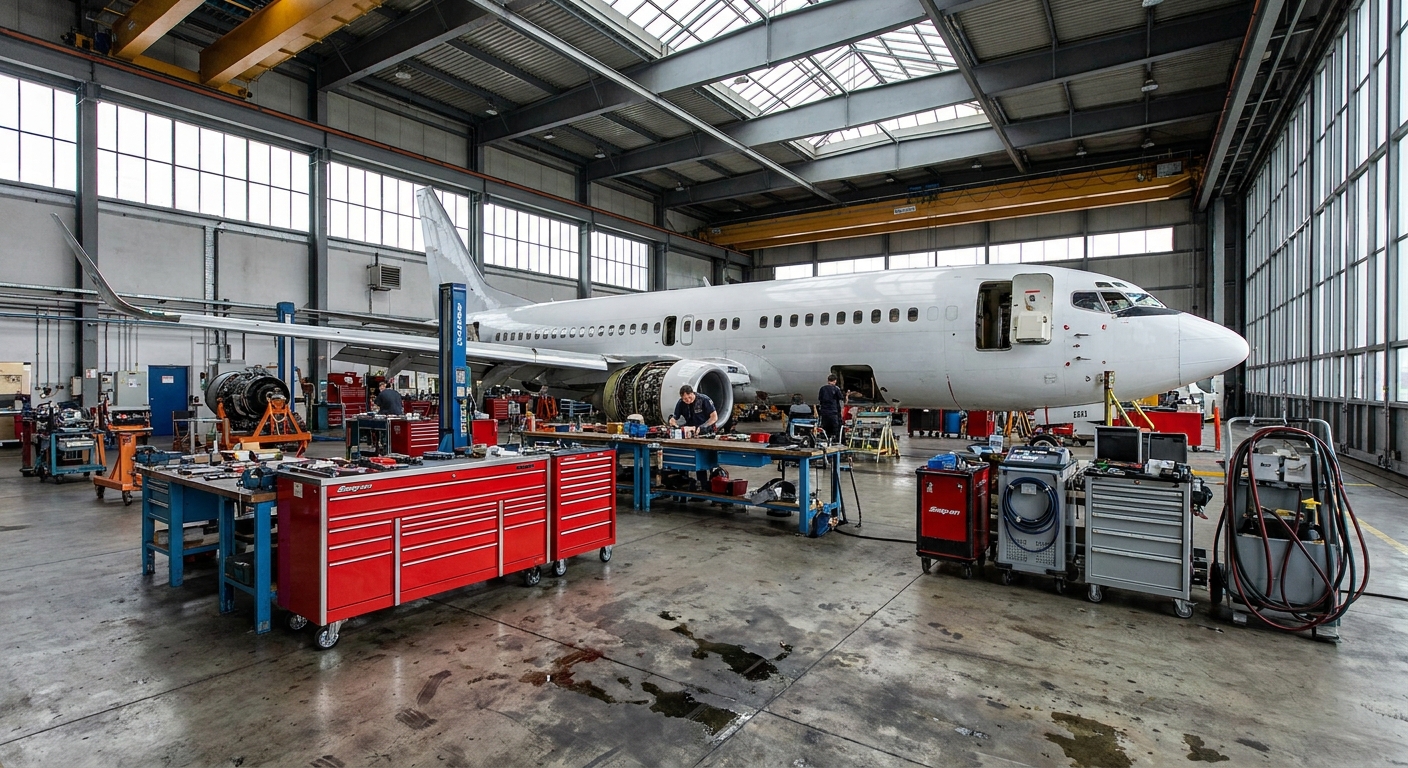
The level of maintenance you intend to perform is a primary driver in the complexity of your aircraft hangar construction project. Simple storage sheds require far fewer utilities than full-service maintenance, repair, and overhaul (MRO) facilities.
What are the MRO space requirements?
Think about it: maintenance isn’t just about the plane; it’s about the tools, the parts, and the people. A professional workshop integrated into a hangar needs dedicated zones for specialized tasks.
- Incorporate designated areas for engine repair and aerospace systems.
- Designate “clean rooms” for sensitive avionics and composite work.
- Ensure adequate shop space for fabrication and airframe repair.
How do you plan for specialty areas?
You need to consider the human element of hangar operations. Efficient facilities include administrative offices, locker rooms, and personnel training areas located adjacent to the main hangar floor.
- Calculate 175 to 250 square feet of office space per staff member.
- Include battery servicing and cryogenics maintenance zones.
- Design for hazardous material storage that meets environmental regulations.
Key Takeaway: Designing with maintenance in mind ensures that your facility is a productive workspace rather than just a storage garage.
| Maintenance Zone | Primary Function | Special Requirement | |
|---|---|---|---|
| Main Bay | Aircraft Housing | Heavy-Duty Crane Rails | |
| Component Shop | Part Repair | Precision Environment | |
| Admin Wing | Operational Management | Standard HVAC |
Integrated maintenance zones maximize the utility of the hangar and reduce aircraft downtime.
Which safety codes govern aircraft hangar construction?
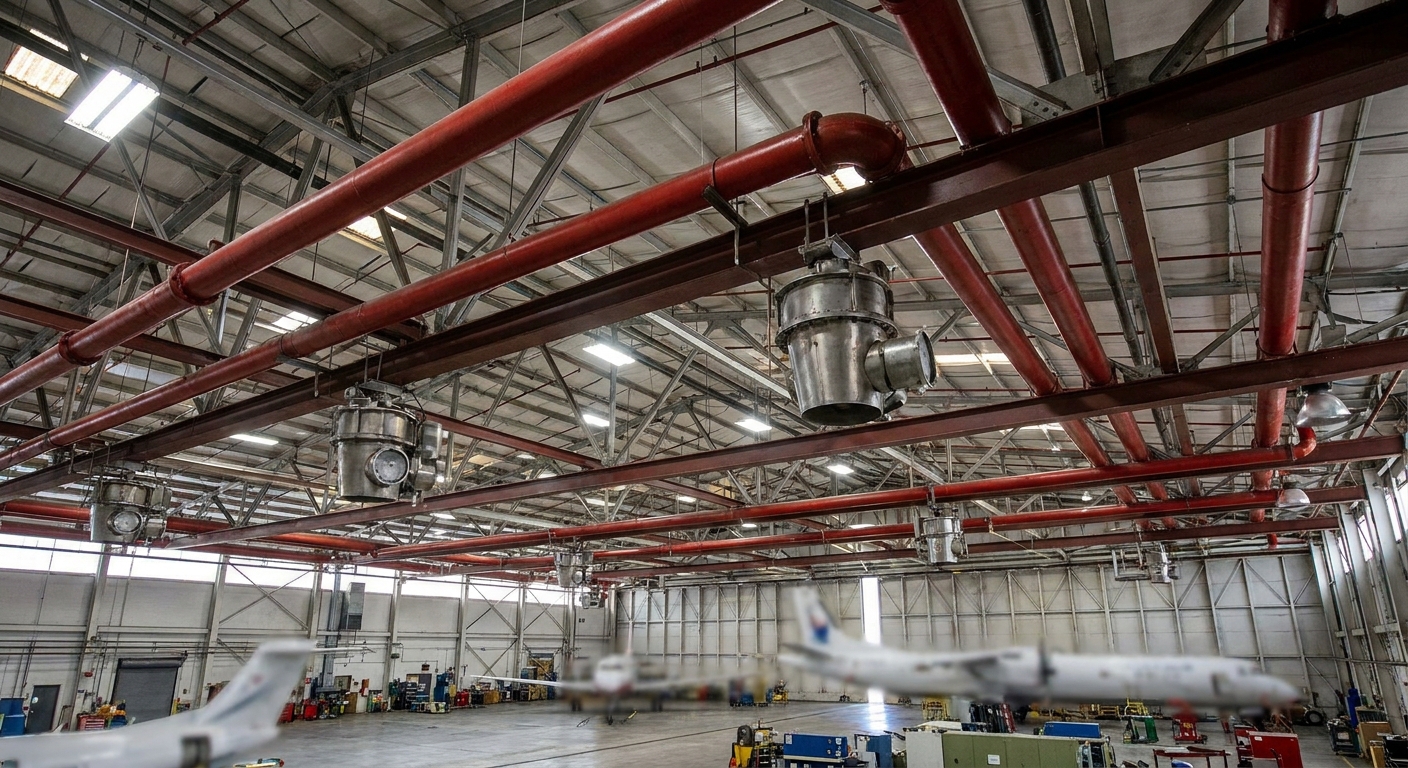
Compliance with fire protection standards is non-negotiable in aircraft hangar construction due to the presence of flammable aviation fuels. Adhering to NFPA 409 and local building codes is essential for protecting your assets and personnel.
What is the NFPA 409 standard?
Here is the deal: your fire suppression system must be capable of extinguishing a fuel spill fire within seconds. For high-quality engineering standards, we prioritize systems like Aqueous Film Forming Foam (AFFF).
- Install overhead deluge systems or floor-mounted water cannons.
- Integrate flame and smoke detectors with emergency shut-off valves.
- Provide adequate water reservoirs and booster pumps for fire flow.
How are hazardous zones classified?
You must classify hangar spaces as hazardous or non-hazardous based on the likelihood of flammable vapor presence. This classification dictates the type of electrical equipment and wiring methods required.
- Use NEMA Type 4 waterproof equipment for deluge-protected areas.
- Ensure all electrical installations meet NFPA 70 (NEC) requirements.
- Implement explosion-proof lighting in high-risk zones.
Key Takeaway: Rigorous adherence to safety codes prevents catastrophic losses and ensures your facility remains insurable and legally compliant.
| Safety System | Compliance Standard | Key Feature | |
|---|---|---|---|
| Fire Suppression | NFPA 409 | AFFF Foam Delivery | |
| Electrical Layout | NFPA 70 | Explosion-Proof Fittings | |
| Life Safety | NFPA 101 | Clear Egress Routes |
Safety compliance is the single most important factor in protecting the financial and human capital within a hangar.
How is HVAC integrated into aircraft hangar construction?
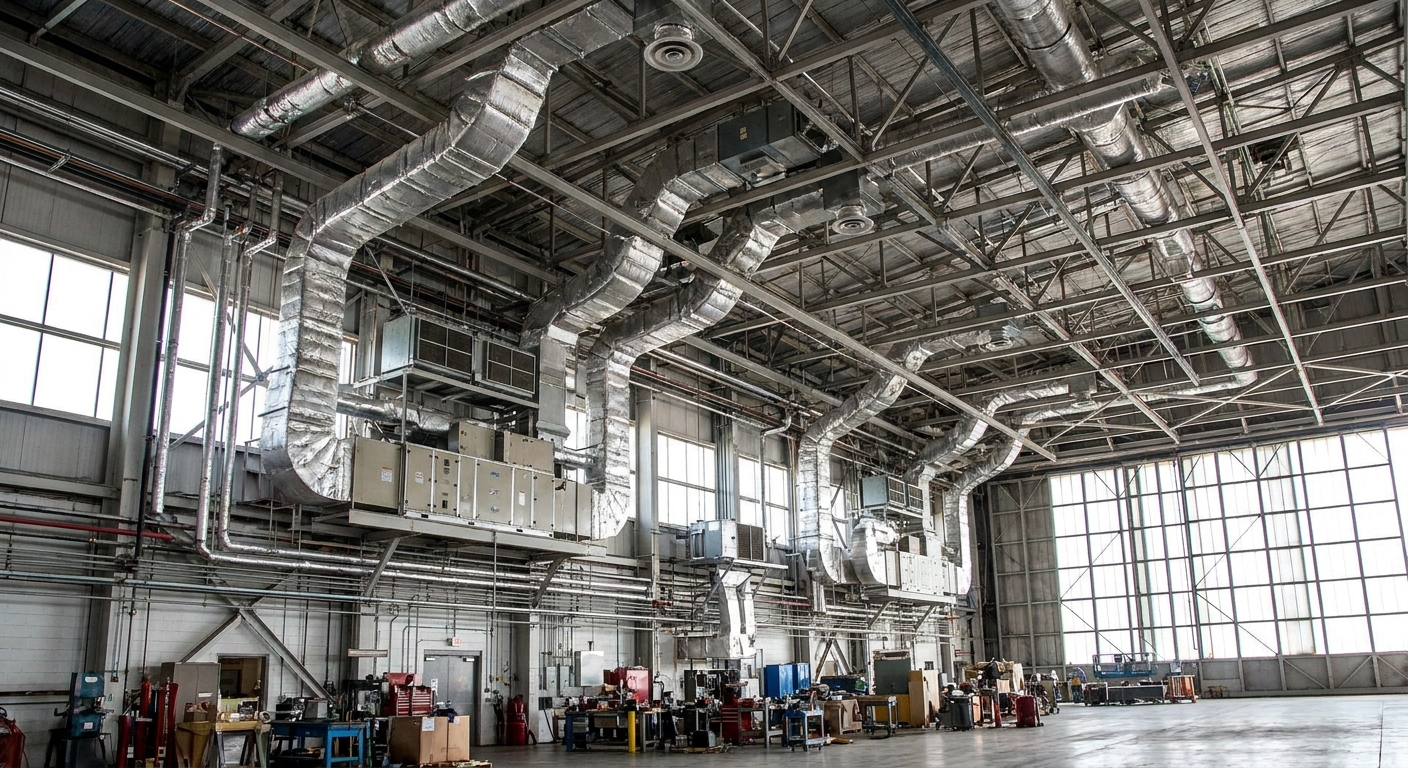
Climate control in aircraft hangar construction presents unique challenges due to the massive volume of air and frequent door openings. Precision HVAC systems are necessary to maintain the stable temperatures required for composite curing and sensitive avionics.
Why is ventilation critical for hangars?
Think about it: toxic effluents and fuel vapors must be constantly removed to maintain a safe working environment. Advanced hangar designs utilize high-exchange ventilation systems to ensure air quality.
- Install industrial-grade exhaust fans to remove heavy vapors.
- Implement make-up air units to balance internal pressure.
- Coordinate HVAC shutdown with fire detection systems for safety.
Can hangars be energy efficient?
You should consider radiant floor heating or high-efficiency infrared heaters to maintain warmth without heating the entire air volume. This is especially effective in large-span structures where traditional forced air is inefficient.
- Use insulated roof and wall panels to reduce thermal transfer.
- Implement destratification fans to push warm air back to the floor.
- Install high-speed hangar doors to minimize climate loss during movement.
Key Takeaway: A well-designed HVAC system protects sensitive aircraft components while significantly reducing your facility’s monthly utility expenses.
| HVAC Element | Function | Benefit | |
|---|---|---|---|
| Exhaust Fans | Vapor Removal | Worker Safety | |
| Radiant Heating | Zonal Warming | Energy Savings | |
| Insulated Panels | Thermal Barrier | Cost Efficiency |
The HVAC system must balance operational safety with long-term energy sustainability.
Custom project quotes from our engineers – fast and reliable
Email:sales@showhoo.com.cn
Phone/WhatsApp: +86 186 7895 5927
What electrical specs guide aircraft hangar construction?
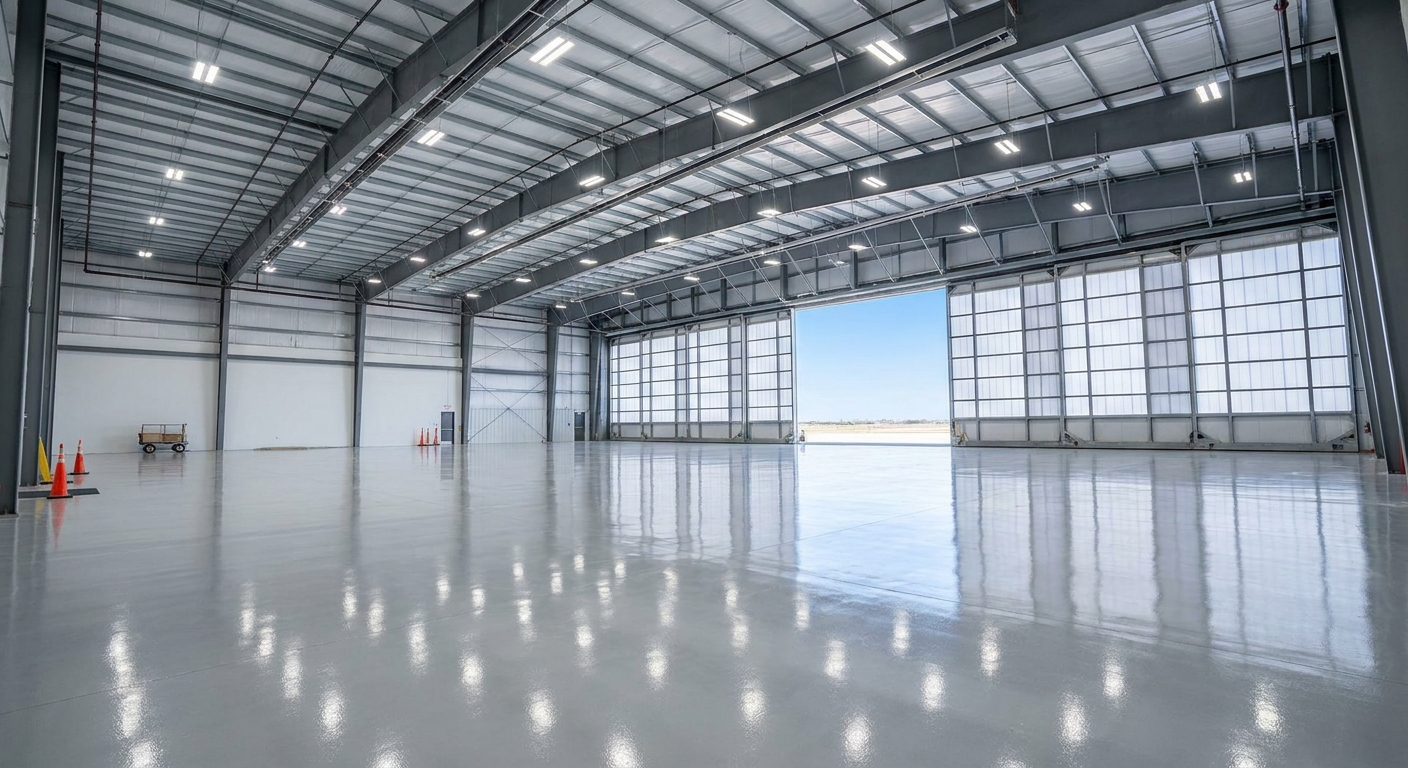
The electrical infrastructure in aircraft hangar construction must support both the building’s needs and the specialized power requirements of the aircraft themselves. Modern hangars require a mix of standard and high-frequency power supplies.
Why are multiple voltages needed?
Here is the deal: many aircraft systems operate on 400Hz power, which is different from the 60Hz provided by public utilities. Your construction must include frequency converters to support ground support equipment.
- Install 400Hz power pits at key maintenance stations.
- Provide high-amperage outlets for specialized testing rigs.
- Ensure grounding systems are robust to prevent static discharge.
How does lighting impact productivity?
You need high-intensity, glare-free lighting to ensure technicians can perform precision work on shadowed under-wing areas. LED technology is the preferred choice for its long life and low energy consumption.
- Use high-bay LED fixtures for uniform ceiling illumination.
- Incorporate localized task lighting for detailed maintenance work.
- Implement emergency lighting systems that activate during power loss.
Key Takeaway: A comprehensive electrical plan ensures that your technicians have the power and visibility they need to maintain aircraft safety standards.
| Electrical Component | Power Type | Purpose | |
|---|---|---|---|
| Frequency Converters | 400Hz | Aircraft Ground Power | |
| High-Bay LEDs | 110V/220V | General Illumination | |
| Static Grounding | Passive | Fire Prevention |
Proper electrical engineering supports both the daily operation of the building and the technical needs of the fleet.
Why are doors vital in aircraft hangar construction?
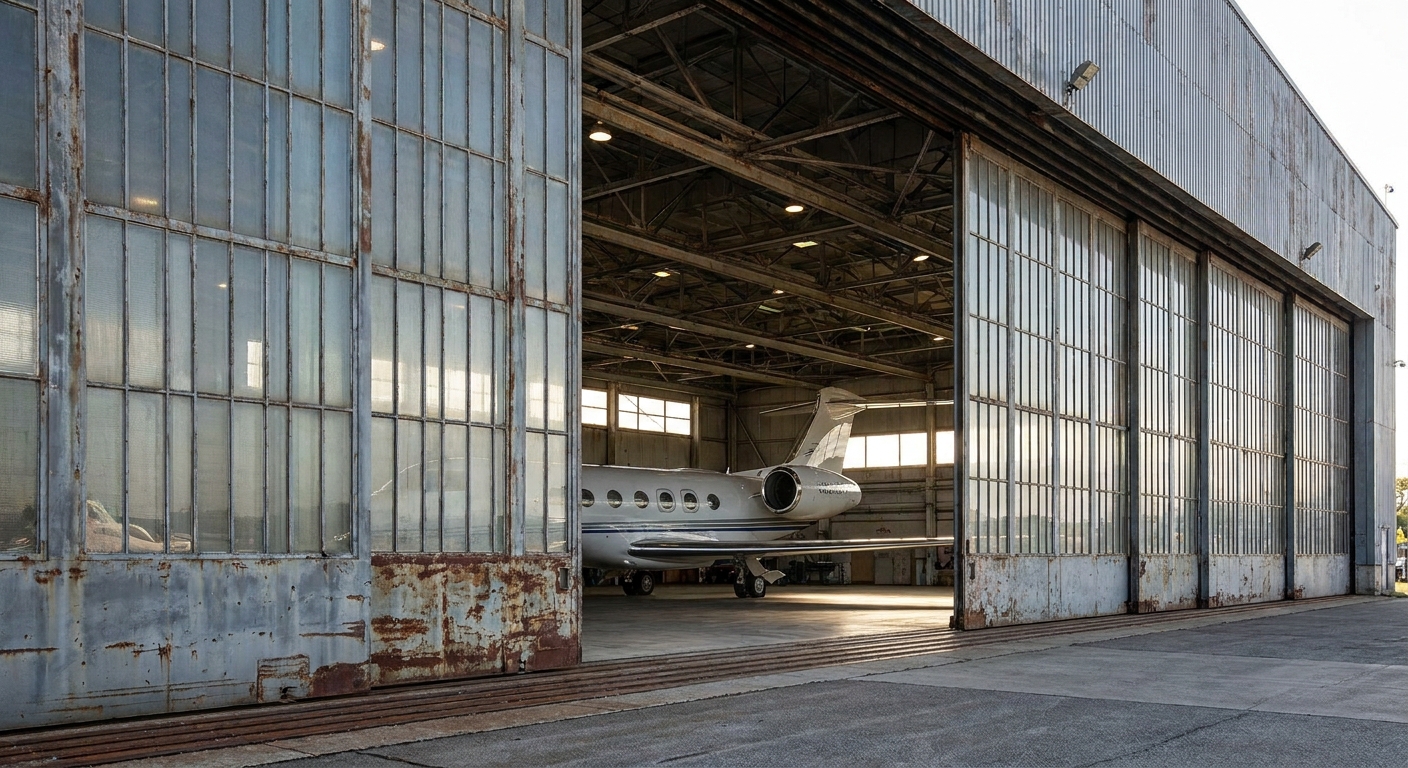
The door system is the most significant mechanical component of any aircraft hangar construction project. Choosing the right door type affects the structural design, opening speed, and overall energy efficiency of the facility.
Which door type is best for you?
The bottom line is that your choice depends on the available space and operational frequency. For example, projects with limited lateral space often utilize vertical lift or fabric doors.
- Sliding Doors: Reliable and cost-effective for large openings.
- Vertical Lift: Saves exterior space but requires higher roof clearance.
- Bifold Doors: Provides a canopy effect but adds stress to the header.
How do doors affect the structure?
You should be aware that the weight and wind load of the hangar doors significantly impact the structural engineering of the building. The headers and columns must be reinforced to support these massive moving parts.
- Incorporate heavy-duty door tracks and guiding systems.
- Ensure door seals are airtight to prevent climate loss and pest entry.
- Integrate safety sensors to prevent accidental closure on aircraft.
Key Takeaway: Selecting the appropriate door system is critical for balancing operational speed with structural integrity and thermal control.
| Door Type | Space Requirement | Operational Speed | |
|---|---|---|---|
| Rolling Slide | High Lateral | Moderate | |
| Vertical Lift | High Overhead | Fast | |
| Fabric / Bifold | Low Lateral | Fast |
The door system is the gateway to your operations and a primary driver of structural design complexity.
Is sustainability part of aircraft hangar construction?
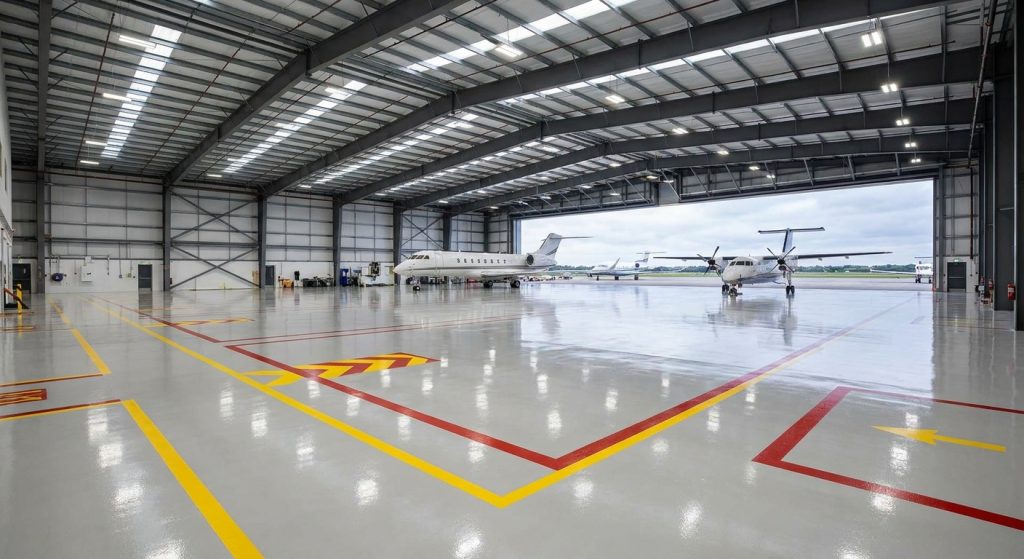
Modern aircraft hangar construction is increasingly focusing on sustainable design to reduce environmental impact and lower lifecycle costs. Implementing green technologies can yield significant ROI through reduced energy consumption.
How does insulation reduce costs?
Think about it: heating or cooling a massive hangar is expensive. High-performance insulation acts as a thermal barrier, keeping the interior stable despite external weather extremes.
- Use sandwich panels with high R-value foam cores.
- Apply reflective roof coatings to reduce solar heat gain.
- Install high-efficiency thermal breaks at all door and window joints.
Can hangars utilize natural light?
You will find that incorporating translucent panels or skylights can drastically reduce the need for artificial lighting during daylight hours. This not only saves energy but also improves the working environment for technicians.
- Integrate light-transmitting wall panels for diffused side lighting.
- Use reflective white interior coatings to enhance light distribution.
- Implement automated lighting controls that dim during bright sunlight.
Key Takeaway: Sustainable building practices protect the environment while providing substantial long-term financial benefits through lower utility bills.
| Sustainable Feature | Environmental Impact | Financial Benefit | |
|---|---|---|---|
| High-R Insulation | Reduced Carbon Footprint | Lower HVAC Bills | |
| Translucent Panels | Reduced Energy Use | Lower Lighting Costs | |
| LED Retrofitting | Reduced Waste | Lower Maintenance |
Sustainability in aviation infrastructure is no longer a luxury; it is a smart financial strategy.
What is the ROI of aircraft hangar construction?

Investing in professional aircraft hangar construction provides a measurable return on investment through asset protection, operational efficiency, and increased property value. A high-quality facility is an asset that appreciates over time while safeguarding your fleet.
How does construction quality impact ROI?
The truth is, a cheaper building often costs more in the long run. Professional construction reduces maintenance downtime and prevents premature structural failure.
- Eliminate the risk of roof leaks that damage sensitive electronics.
- Improve aircraft resale value by proving they were stored in a climate-controlled space.
- Reduce insurance premiums through superior fire and wind resistance.
Is professional construction faster?
You will find that working with experienced manufacturers who provide integrated delivery systems eliminates the risk of missing parts or field modifications. This ensures your project is completed on time and within budget.
- Benefit from clear Bill of Materials (BOM) and installation drawings.
- Reduce field labor costs through precision-engineered components.
- Achieve faster operational status and start generating revenue sooner.
Key Takeaway: Quality construction is an investment that pays for itself through reduced operational risks and enhanced long-term utility.
| ROI Driver | Impact | Long-Term Result | |
|---|---|---|---|
| Durability | Lower Maintenance | Extended Facility Life | |
| Protection | Asset Preservation | Higher Aircraft Value | |
| Efficiency | Reduced Downtime | Increased Mission Ops |
Investing in a professional hangar is the most effective way to secure the future of your aviation assets.
Conclusion
Building a world-class aviation facility requires a deep understanding of structural engineering, safety compliance, and operational workflow. Throughout this guide, we have explored how professional aircraft hangar construction addresses the critical challenges of fleet protection, climate control, and fire safety. By choosing a partner who understands the complexities of large-span steel structures and high-tech maintenance requirements, you ensure that your investment is built to last.
Our mission is to deliver engineered excellence that empowers your aviation operations. Whether you are housing a single private jet or a fleet of commercial airliners, we provide the precision-manufactured systems needed for a seamless construction experience. If you are ready to secure your fleet with a facility designed for the future, contact us today to discuss your project requirements.
Custom project quotes from our engineers – fast and reliable
Email:sales@showhoo.com.cn
Phone/WhatsApp: +86 186 7895 5927
FAQ: Common Questions on Aviation Hangars
Can I customize the door size for future larger aircraft?Yes, we highly recommend designing the structural header for the largest anticipated aircraft. This “future-proofing” prevents the need for massive structural alterations if you upgrade your fleet later.
What’s the best way to control humidity in a coastal hangar?The most effective method is combining high-performance insulation with a specialized dehumidification HVAC system. Additionally, using galvanized steel and marine-grade coatings will prevent structural corrosion.
How do I know if my hangar needs foam suppression?This is typically determined by the size of the hangar and the type of aircraft being housed, according to NFPA 409. Most Group I and Group II hangars require AFFF foam systems to meet fire safety and insurance standards.
What is the fastest construction method for a large hangar?Pre-engineered steel buildings (PEB) are the fastest choice. Since all parts are fabricated in a controlled factory environment, they can be erected on-site in a fraction of the time required for traditional construction.
Can I integrate a workshop into the main hangar structure?Absolutely, and it is standard practice. We design integrated shop areas, offices, and warehouses as lean-to structures or mezzanine levels to maximize the use of your floor space.