
The best cow shed design integrates natural ventilation, durable steel structures, and optimized space allocation to maximize herd health and operational ROI. Traditional wooden or poorly ventilated structures often lead to respiratory issues and lower milk yields. If you don’t address these environmental stressors, your farm’s profitability will suffer under the weight of high veterinary bills and stagnant production.
Why Does Cow Shed Design Matter for Farm Efficiency?

Proper design directly impacts the metabolic health and productivity of your herd. By choosing a high-quality cow shed design, you ensure that cattle remain stress-free and protected from environmental hazards. This leads to higher milk fat content and more consistent growth rates across the board.
Efficient structures also reduce the labor hours required for daily maintenance. When you streamline waste management and feeding routes, your staff can focus on animal welfare rather than manual labor. Investing in a professional layout is the first step toward a modern, high-yielding dairy operation.
Boosting Herd Productivity
Here is the deal: A well-ventilated space prevents heat stress, which is the leading cause of production drops in dairy farming. Cattle that stay cool and comfortable spend more time ruminating and less time standing in distress.
- Improved air quality reduces pneumonia.
- Proper lighting increases milk production.
- Comfortable stalls improve rest cycles.
But wait, there’s more: a productive cow is a profitable cow, and the building environment is the foundation of that productivity.
Reducing Daily Labor Costs
Look at it this way: if your staff spends three hours cleaning instead of one, you are losing money every single day. A smart cattle shed design incorporates automated systems that handle the heavy lifting for you.
- Integrated manure scrapers.
- Easy-access feeding troughs.
- Centralized milking parlor routes.
The best part? You can reallocate that saved time into herd expansion or genetic improvement programs.
Key Takeaway: A strategic facility design transforms your farm from a labor-intensive operation into a streamlined, high-output production center.
| Feature | Impact on Efficiency | ROI Level | |
|---|---|---|---|
| Natural Ventilation | Reduces disease costs | High | |
| Automated Feeding | Lowers labor hours | Medium | |
| Optimized Stall Layout | Increases milk yield | High |
Maximizing structural efficiency is the most reliable way to insulate your farm against rising labor and energy costs.
How to Plan a Cow Shed Design Layout for Herd Sizes?
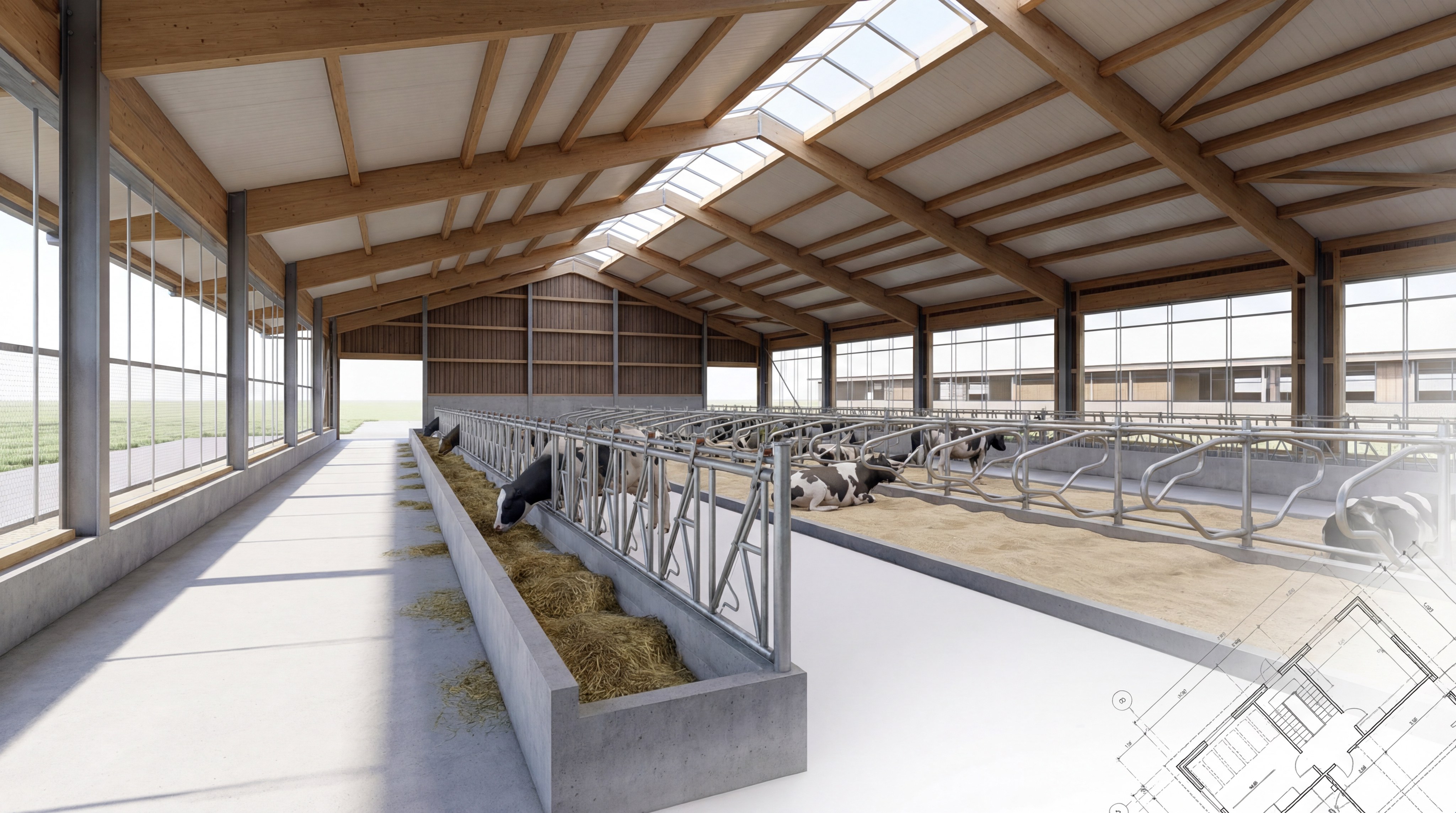
Planning a layout requires calculating the total animal units and designating zones for feeding, resting, and milking. A professional cow shed design helps you visualize the flow of animals and machinery to prevent bottlenecks. Efficiency starts with a blueprint that respects the natural movement of the cattle.
You must also consider the specific needs of different life stages, from calves to lactating cows. Separating these groups within the cow shed layout ensures that each animal receives the appropriate nutrition and care. Scaling your layout correctly prevents overcrowding, which is a primary trigger for herd aggression.
Designing for 50 Cows
Think about it: a small cow shed design for 50 cows allows for a more intimate management style while still benefiting from industrial-grade materials. You can utilize a simple mono-slope or gable roof structure to keep costs low.
- Single feeding alley.
- Two rows of head-to-head stalls.
- Integrated calf pens.
Here is why: small-scale operations thrive when every square inch of the footprint is used for multiple purposes without compromising animal comfort.
Planning for 100 Cows
But wait, there’s more: as you scale to a large dairy shed design, the logistics of manure and feed delivery become the dominant design drivers. A 100-cow facility typically requires a double-span or multi-span steel structure to provide a clear-span interior.
- Four-row stall configurations.
- Wide drive-through feeding lanes.
- Separated maternity sections.
Here is the deal: clear-span designs allow you to move tractors and scrapers freely without hitting support pillars.
Key Takeaway: Scaling your layout based on specific herd numbers ensures that your infrastructure supports growth without creating operational bottlenecks.
| Herd Size | Layout Style | Primary Benefit | |
|---|---|---|---|
| 50 Cows | Mono-slope / Small Gable | Low initial investment | |
| 100 Cows | Double-span Clear Frame | Superior machinery access | |
| 200+ Cows | Multi-span Industrial | Maximum labor automation |
Selecting a layout that matches your current herd size while allowing for modular expansion is the most cost-effective growth strategy.
What Are the Key Factors in Cow Shed Design?
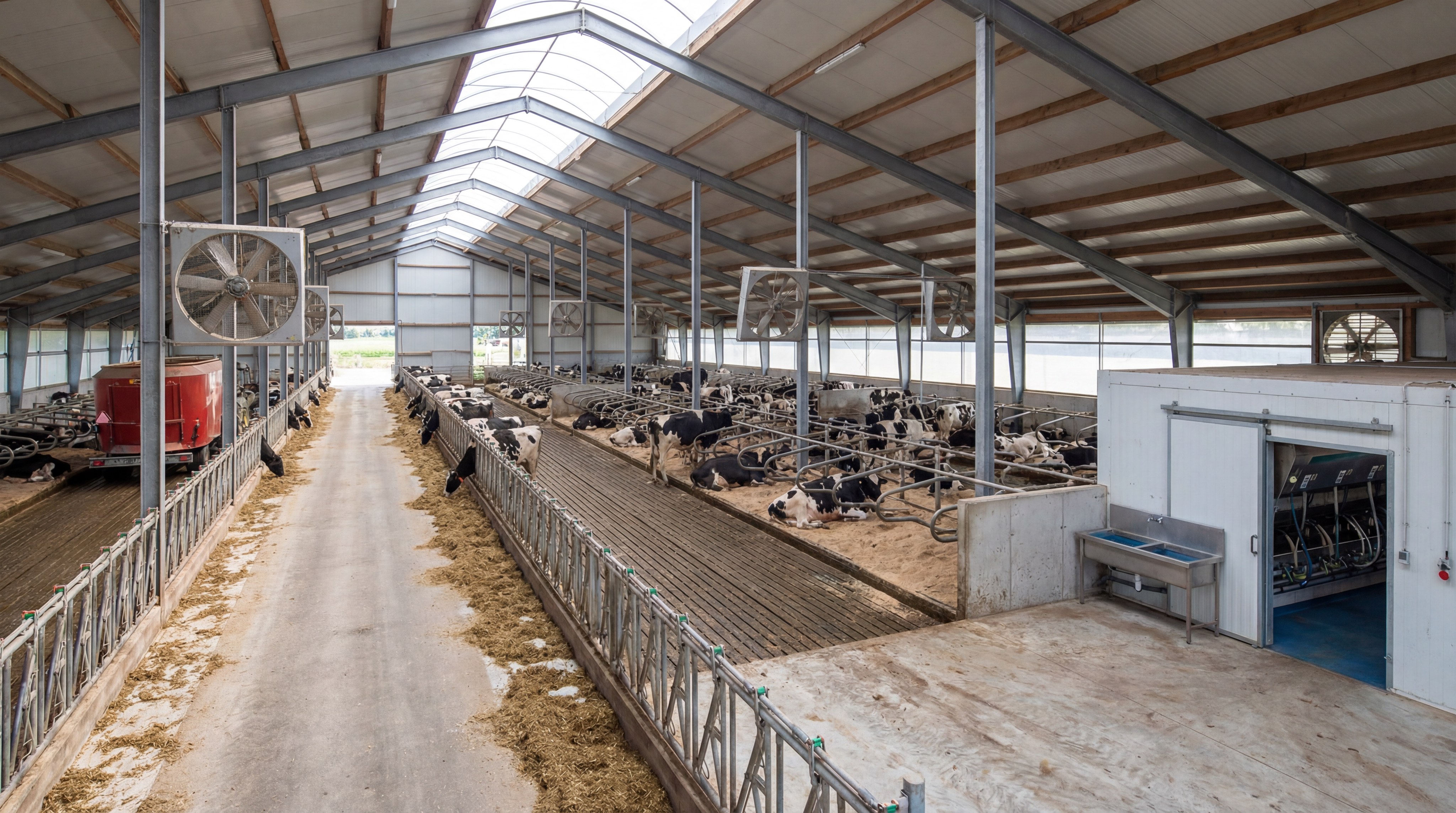
Key factors include orientation for sunlight, drainage systems, and high-quality construction materials. A successful cow shed design prioritizes the biological needs of the animal over simple aesthetic choices. You must balance the need for shelter with the necessity of constant fresh air exchange.
The orientation of the building should ideally be East-West to minimize direct solar heat gain during the hottest parts of the day. Additionally, the slope of the floor is critical for preventing standing water and bacterial growth. Ignoring these fundamental factors can lead to permanent structural issues and poor animal health.
Climate and Orientation
Here is the deal: the sun’s path can either be your best friend or your worst enemy depending on how you position your cattle shed. Proper orientation ensures your cows get enough light without being overheated.
- East-West alignment for shade.
- High eaves for hot climates.
- Insulated roofing for cold regions.
Think about it: a building that works with the local climate reduces your reliance on expensive mechanical cooling systems.
Drainage and Sanitation
Look at it this way: standing water is a breeding ground for mastitis and hoof rot. Your cow shed floor plan must include a 2-3% slope toward drainage channels to keep the walking surfaces dry.
- Non-clogging gutter systems.
- Easy-to-flush alleyways.
- Moisture-resistant wall panels.
But wait, there’s more: dry floors also improve the air quality by reducing the surface area of wet manure that releases ammonia.
Key Takeaway: Focusing on orientation and drainage protects your long-term investment by reducing both disease rates and building degradation.
| Design Factor | Target Specification | Goal | |
|---|---|---|---|
| Orientation | East-West Axis | Heat stress reduction | |
| Floor Slope | 2% to 3% Grade | Moisture management | |
| Roof Pitch | 4:12 to 6:12 Ratio | Natural air lifting |
Properly addressing environmental factors at the design stage eliminates the need for expensive retrofitting later in the farm’s lifecycle.
How Much Space Does Each Cow Need in Shed Design?
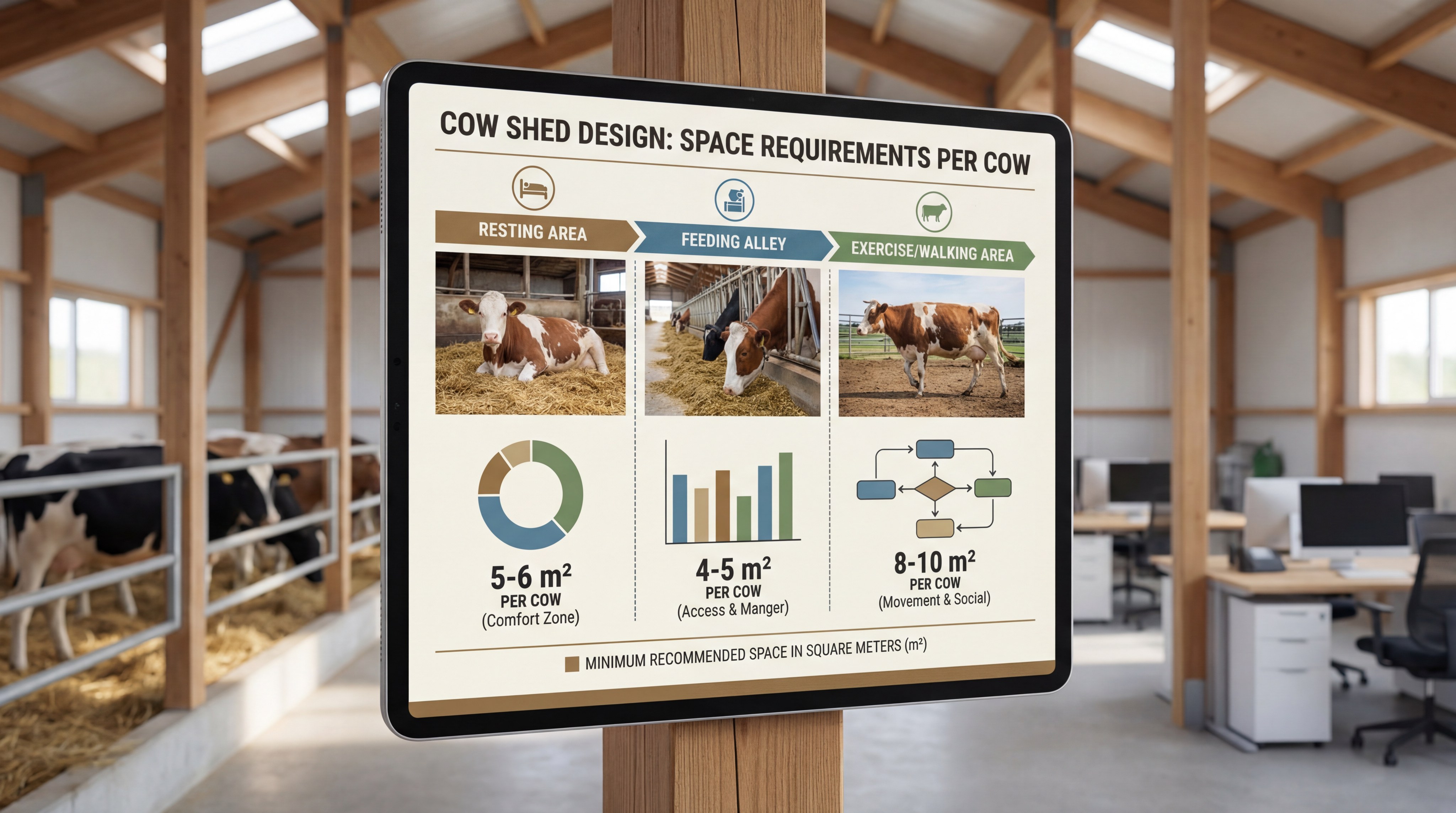
A standard dairy cow requires between 4 to 10 square meters depending on whether the system is loose or cubicle-based. Getting the space per cow in shed calculations right is the difference between a calm herd and one prone to injury. A professional cow shed design utilizes these metrics to ensure every animal has a dedicated place to lie down and feed.
Overcrowding leads to “slug feeding” and increased competition for stalls, which can lower total milk production. You must also account for the width of the feeding alleys to allow two cows to pass each other comfortably. Precise space allocation ensures that your dairy cow shed design remains functional even during peak occupancy.
Stall and Cubicle Dimensions
Think about it: if a stall is too small, a cow will refuse to use it; if it is too large, she will soil the bedding. You need to match the stall size to the specific breed of your cattle.
- 1.2m width for Holsteins.
- 2.4m length for resting.
- Adjustable neck rails.
Here is the deal: comfort is directly correlated to the number of hours a cow spends lying down and producing milk.
Feeding and Walking Alleys
But wait, there’s more: the space behind the cows is just as important as the stalls themselves. Walking alleys should be wide enough to prevent “traffic jams” when the herd moves toward the milking parlor.
- 3.5m minimum for feed alleys.
- 2.5m minimum for return alleys.
- Non-slip surface treatments.
The best part? Wide alleys make it significantly easier for automated scrapers to keep the environment clean.
Key Takeaway: Providing adequate space for each animal prevents stress-related health issues and ensures the longevity of your stall hardware.
| Area Type | Space per Cow | Priority | |
|---|---|---|---|
| Resting Cubicle | 2.8 – 3.2 sq. meters | Comfort & Rest | |
| Feeding Alley | 0.7 – 0.8 meters (linear) | Nutrition Access | |
| Exercise Area | 4.0 – 5.0 sq. meters | Hoof Health |
Strategic space management is the most effective way to prevent herd hierarchy stress and ensure consistent milk production.
Open vs Closed Cow Shed Design: Which Fits You Best?
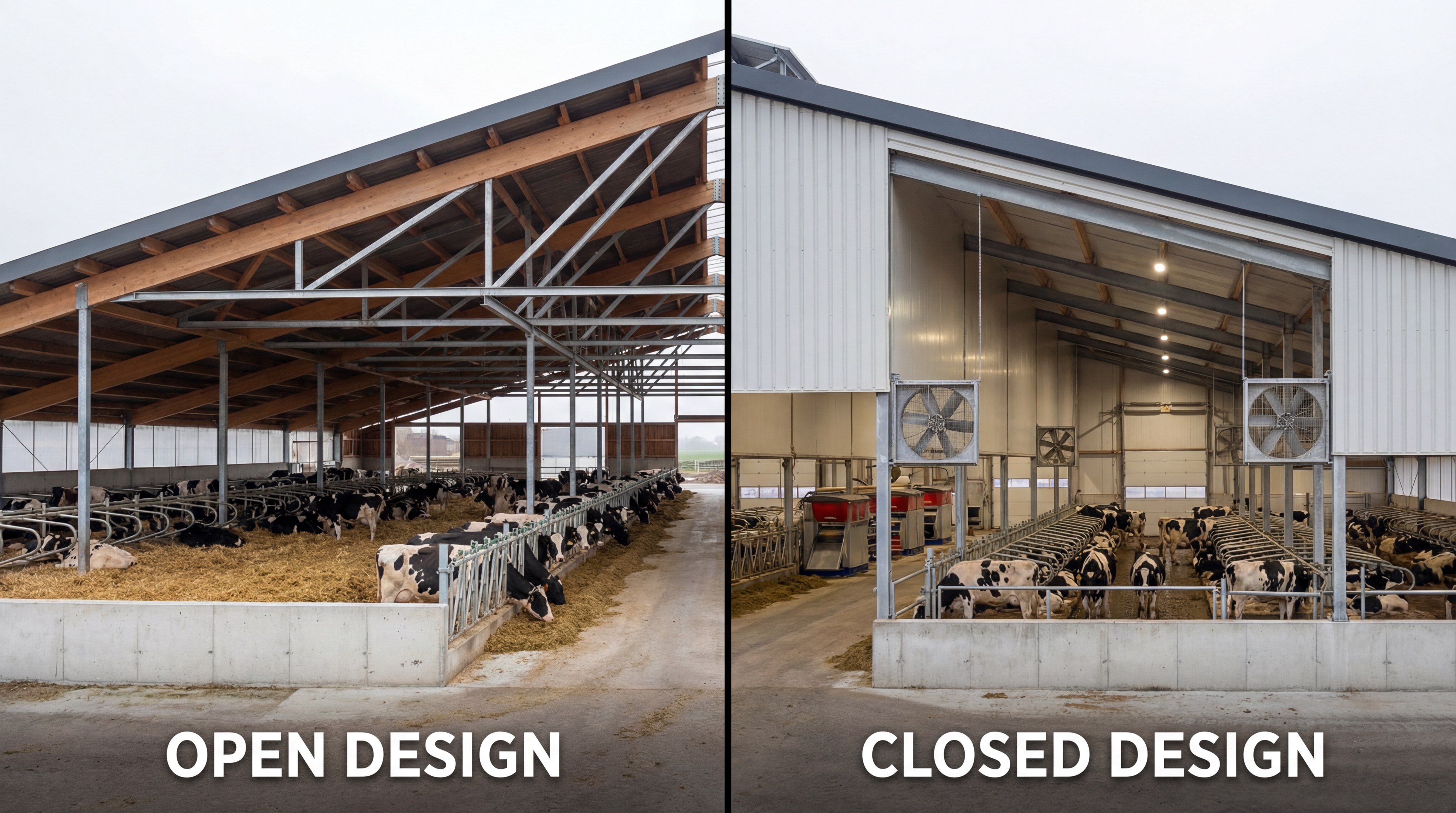
Open designs are superior for warm climates with natural airflow, while closed designs protect herds in extreme cold. Choosing between an open vs closed cow shed depends entirely on your local weather patterns and budget. A modern cow shed design can often incorporate hybrid elements, such as curtain walls, to provide the best of both worlds.
Open-sided sheds are generally less expensive to build and provide excellent natural ventilation. However, closed sheds offer better control over the internal environment, which can be critical for high-performance dairy farms in northern latitudes. You must evaluate the trade-off between initial cattle shed price and long-term climate control capabilities.
Benefits of Open Sheds
Here is the deal: open sheds capitalize on natural wind to move air through the building at zero cost. This is the ideal cattle shed design for tropical and temperate regions where heat is the primary concern.
- Lower construction costs.
- Maximum natural light.
- Reduced ammonia buildup.
Think about it: an open structure requires far fewer fans and mechanical parts to maintain healthy air quality.
When to Use Closed Sheds
But wait, there’s more: if you live in a region with heavy snow or freezing winds, a closed metal cow barn is essential. These structures allow you to maintain a consistent temperature, which prevents cows from burning energy just to stay warm.
- Insulated sandwich panels.
- Automated ridge vents.
- Climate-controlled lighting.
The best part? Closed sheds allow for complete bio-security control, protecting your herd from outside environmental pathogens.
Key Takeaway: Aligning your building type with your local climate prevents seasonal production drops and optimizes your energy expenditures.
| Shed Type | Best Climate | Cost Factor | |
|---|---|---|---|
| Open Sided | Warm / Tropical | Lower | |
| Closed / Insulated | Cold / Alpine | Higher | |
| Hybrid (Curtains) | Variable / Four Seasons | Moderate |
Evaluating your local weather data is the most critical step in deciding which structural enclosure will protect your ROI.
Is Steel Cow Shed Design the Best Modern Solution?
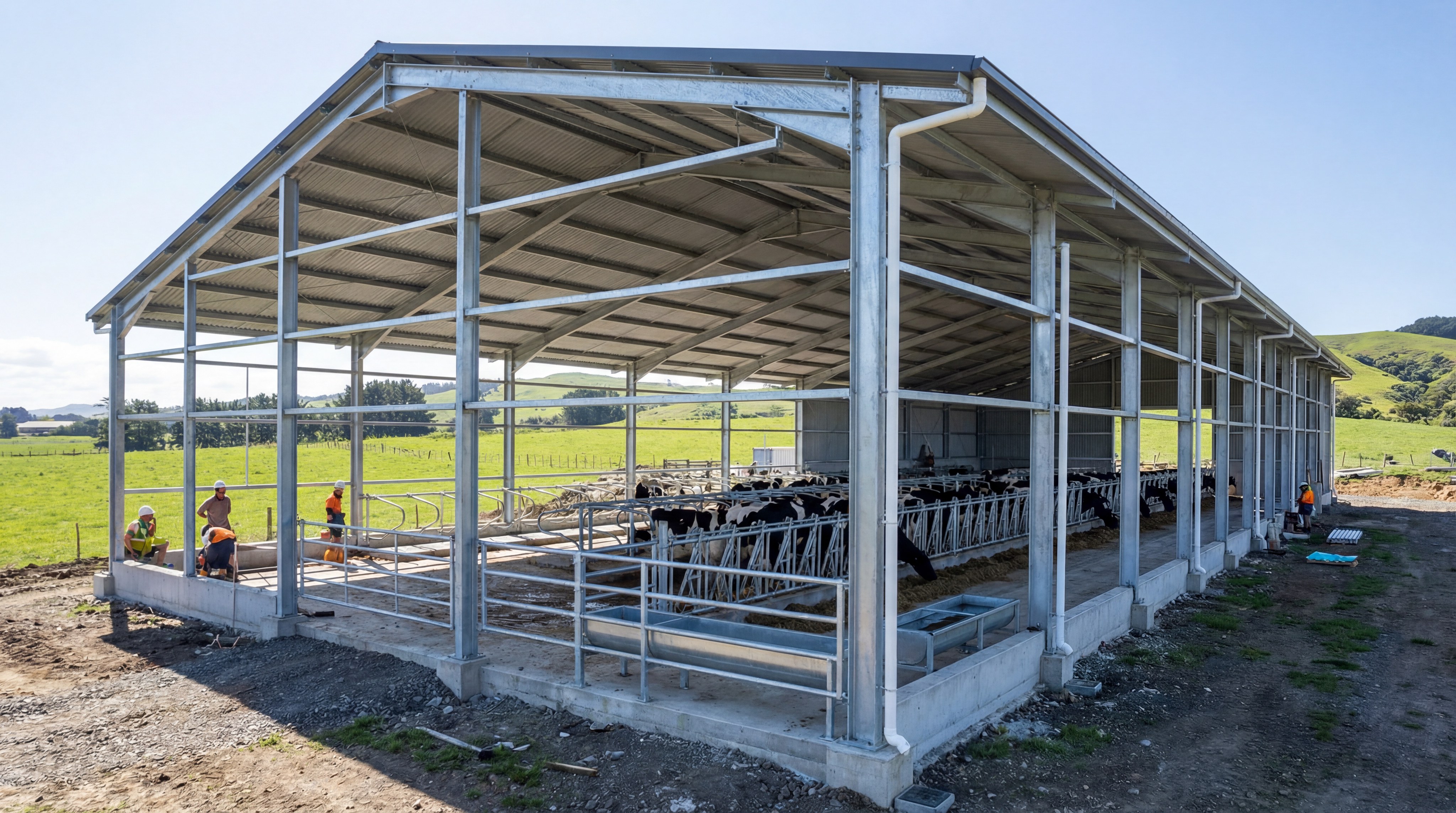
Steel is currently the most efficient material due to its clear-span capabilities and resistance to pests and fire. A high-quality cow shed design using steel avoids the rot and termite issues associated with traditional timber. You can achieve much wider spans without internal columns, which is a massive advantage for machinery operation.
Furthermore, a prefabricated cow shed made of steel can be erected much faster than traditional masonry. This speed of construction means you can get your herd into the building and start generating revenue sooner. Steel also offers a high strength-to-weight ratio, ensuring the building stands up to high winds and heavy snow loads.
Durability of Metal Barns
Look at it this way: a steel structure cattle shed is built to last for decades with minimal maintenance. Unlike wood, steel does not warp, crack, or harbor mold, which is vital for a sanitary dairy environment.
- Hot-dip galvanized coatings.
- Fire-resistant properties.
- Termite and pest proof.
Here is the deal: the long-term maintenance savings of steel far outweigh the slightly higher initial material cost compared to low-grade wood.
Fast Prefabricated Assembly
But wait, there’s more: choosing a prefabricated cow shed allows for precision engineering that eliminates errors during on-site construction. Every component arrives ready to be bolted together, reducing labor costs.
- Precision-cut H-beams.
- Pre-drilled connection holes.
- Standardized assembly kits.
The best part? You can expand a steel building easily by adding new bays to the existing frame as your business grows.
Key Takeaway: Steel provides a superior strength-to-cost ratio and hygiene profile, making it the industry standard for modern dairy infrastructure.
| Material | Lifespan | Maintenance Needs | |
|---|---|---|---|
| Galvanized Steel | 30+ Years | Low | |
| Treated Timber | 15-20 Years | High | |
| Concrete | 40+ Years | Medium |
Investing in steel structures ensures your farm’s physical assets remain durable and functional through decades of intensive use.
How Do Ventilation Systems Work in Cow Shed Design?
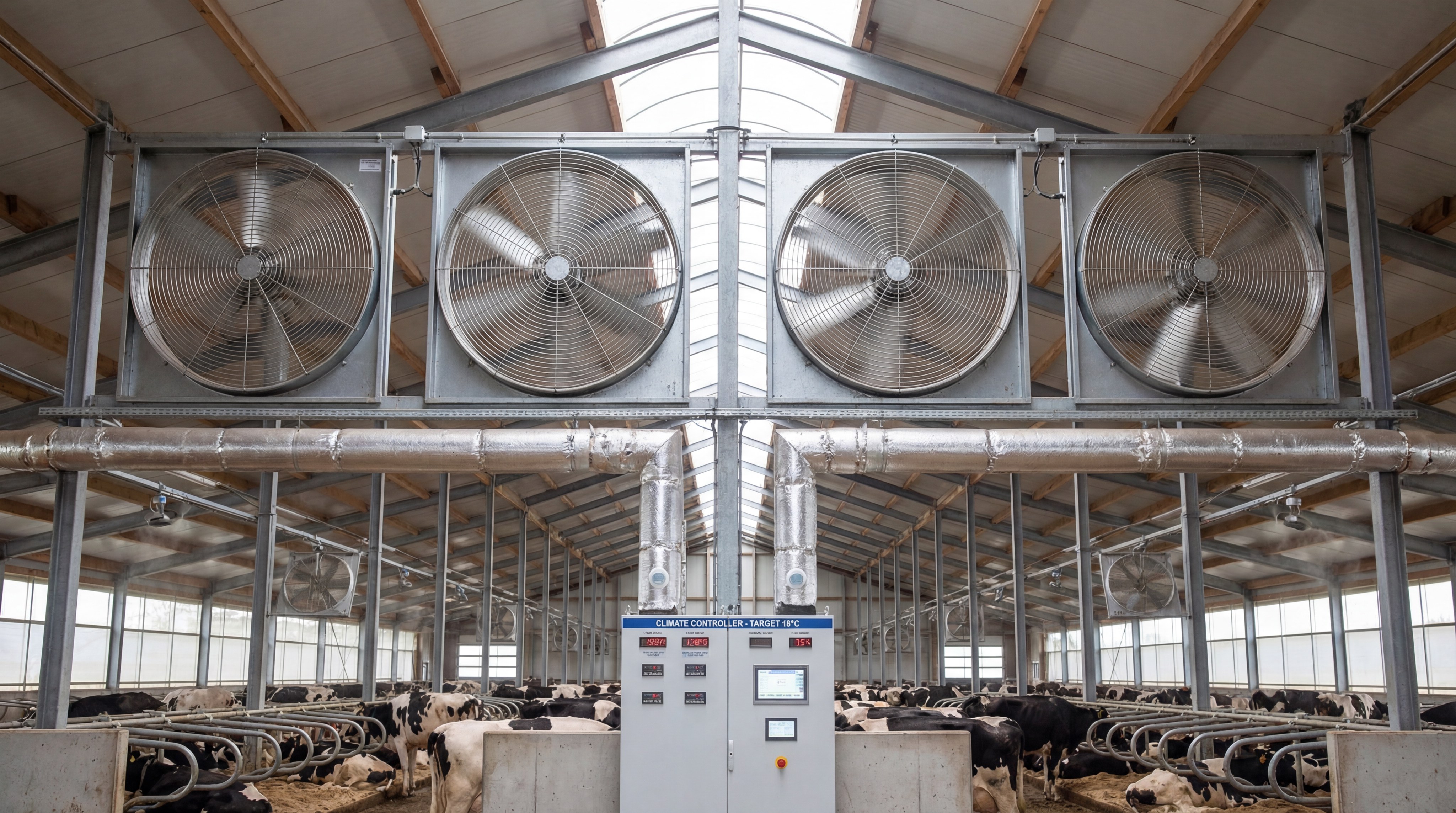
Ventilation works by using ridge vents and side openings to replace humid, ammonia-filled air with fresh oxygen. In a professional cow shed design, the roof pitch and eave height are calculated to create a “chimney effect.” This natural rising of warm air draws in cooler air from the sides, keeping the cows comfortable.
Without proper ventilation, moisture builds up on the walls and floors, leading to respiratory diseases and bedding degradation. You must also consider the placement of fans to assist airflow during stagnant summer days. A well-ventilated cattle shed design is the most effective non-medical way to keep your herd healthy.
Natural Airflow Principles
Think about it: nature provides the best cooling system if you design your building to catch it. High roof ridges and open eaves allow heat to escape before it settles on the animals.
- Minimum 4:12 roof pitch.
- Open ridge vents.
- Adjustable side curtains.
Here is the deal: natural ventilation costs nothing to operate and provides the most consistent air exchange for the herd.
Mechanical Ventilation Support
But wait, there’s more: sometimes natural wind isn’t enough, and that’s where high-volume, low-speed (HVLS) fans come into play. These fans move massive amounts of air to disrupt the boundary layer of heat around the cow’s body.
- HVLS ceiling fans.
- Cross-ventilation wall fans.
- Fogging systems for extreme heat.
The best part? Modern fans are highly energy-efficient and can be linked to temperature sensors for automated operation.
Key Takeaway: A dual-approach ventilation strategy ensures that your cattle remain in the “thermoneutral zone” regardless of external weather shifts.
| Ventilation Type | Primary Driver | Best Use Case | |
|---|---|---|---|
| Passive | Roof Ridge / Eaves | Year-round base airflow | |
| Mechanical | Fans / Blowers | Peak summer heat relief | |
| Tunnel | High-speed Fans | High-density housing |
Effective air exchange is the single most important factor in preventing the spread of airborne pathogens within a confined herd.
What Are the Best Flooring Systems in Cow Shed Design?
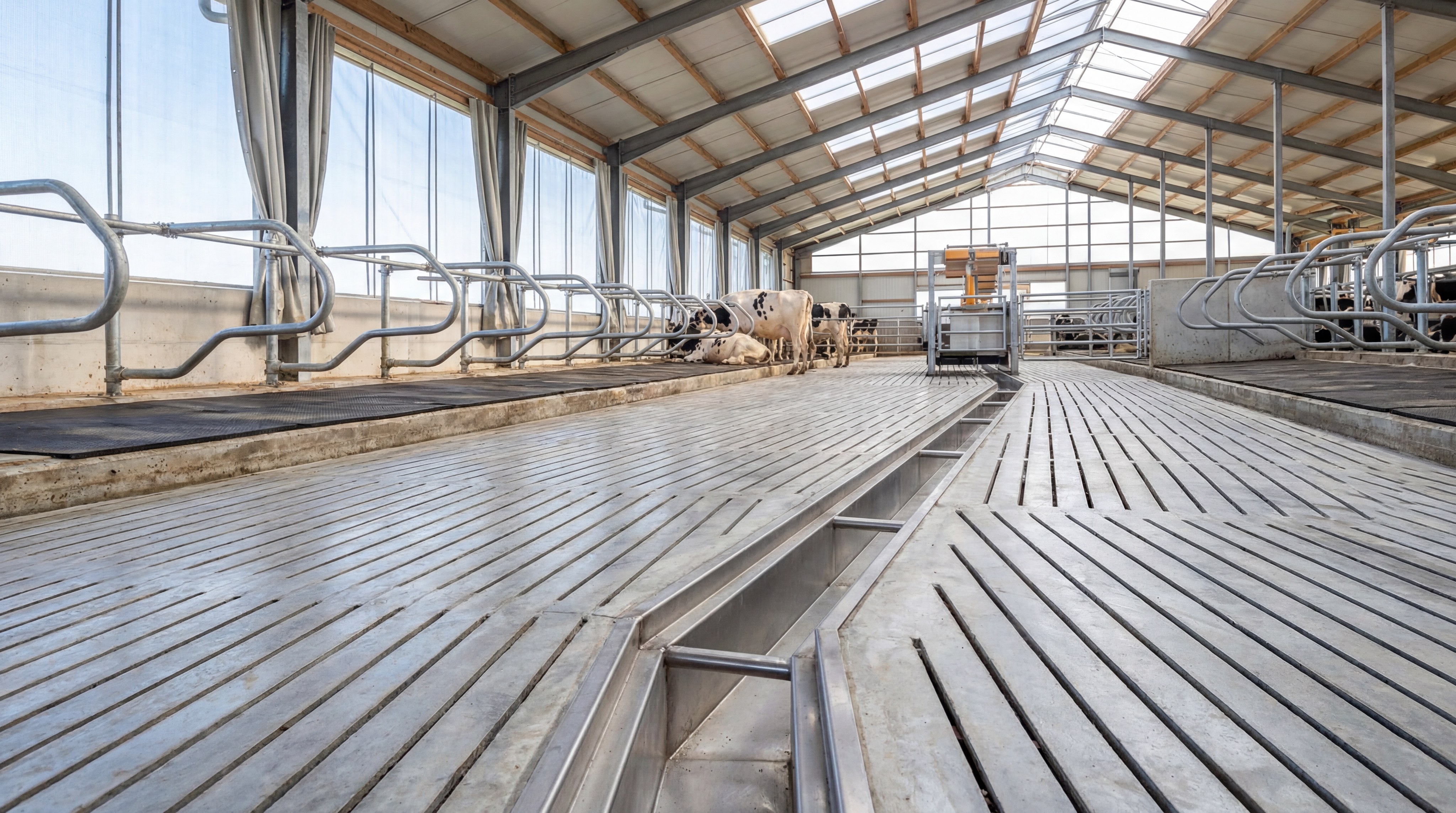
The best flooring uses non-slip grooved concrete or rubber mats to prevent lameness and facilitate easy cleaning. In a modern cow shed design , the floor is much more than just a surface; it is a critical health component. You need a floor that provides enough traction for cows to walk confidently but is smooth enough to be scraped clean.
Poor flooring is the leading cause of “culling” in dairy cows due to leg and hoof injuries. By investing in high-quality textures and materials, you extend the productive life of each cow in your herd. Your cow shed floor plan should clearly define where heavy traffic occurs and where extra cushioning is needed.
Concrete Grooving Patterns
Here is the deal: smooth concrete becomes like ice when wet with manure or water. Professional flooring systems use specific diamond or parallel grooving patterns to give the hoof a “grip” point.
- Diamond pattern for junctions.
- Parallel grooves for alleys.
- Proper depth to avoid trapping debris.
Think about it: a cow that feels secure on her feet will walk to the feed bunk more often, increasing her intake.
Rubber Matting Benefits
But wait, there’s more: while concrete is durable, it is hard on the joints of a heavy cow. Installing rubber mats in the milking parlor and holding areas can significantly reduce the incidence of lameness.
- Increased standing comfort.
- Reduced hoof wear.
- Thermal insulation from cold ground.
The best part? Happy cows with healthy hooves have higher conception rates and more consistent milk cycles.
Key Takeaway: Non-slip, cushioned flooring is a direct investment in the longevity and mobility of your most valuable assets—the cows.
| Floor Type | Traction Level | Comfort Level | |
|---|---|---|---|
| Grooved Concrete | High | Medium | |
| Rubber Mats | Very High | Very High | |
| Sand Bedding | Medium | High |
Selecting a floor surface that balances grip with ease of sanitation is essential for maintaining a high-health dairy environment.
How Does Cow Shed Design Impact Construction Costs?

Strategic design reduces costs by minimizing material waste through prefabricated components and efficient site prep. The cow shed cost is largely determined by the complexity of the steel frame and the type of cladding you choose. You can lower the total cost to build a cow shed by selecting standard dimensions that align with factory-produced steel lengths.
Don’t be fooled by the lowest initial cattle shed price, as cheap materials often lead to high repair costs within just a few years. A well-engineered steel cow shed cost might be higher upfront, but it offers a much lower total cost of ownership over 20 years. Proper planning also prevents “scope creep” during the construction phase.
Prefabrication and Savings
Look at it this way: when parts are made in a controlled factory environment, they fit together perfectly the first time. This eliminates the need for expensive on-site welding or cutting, which saves you thousands in labor.
- Reduced on-site waste.
- Faster erection timelines.
- Lower engineering fees.
Here is the deal: time is money, and a building that goes up in two weeks instead of two months saves you significant interest and labor costs.
Long-term ROI and Value
But wait, there’s more: a high-quality building increases the resale value of your property. If you ever decide to sell or pivot your operations, a durable metal cow barn is a versatile asset that can be converted for other uses.
- Higher insurance ratings for steel.
- Lower maintenance requirements.
- Modular expansion potential.
The best part? You can often depreciate steel structures more favorably in your tax filings compared to temporary wooden sheds.
Key Takeaway: Focus on the “total cost of ownership” rather than just the initial quote to ensure your farm remains financially viable for decades.
| Cost Element | Steel Structure | Wood Structure | |
|---|---|---|---|
| Initial Price | Moderate / High | Low / Moderate | |
| Maintenance | Very Low | High | |
| Service Life | 30+ Years | 10-15 Years |
Balancing your budget between upfront material quality and long-term maintenance savings is the hallmark of a savvy B2B farm manager.
What Are Custom Cow Shed Design Solutions for Farms?
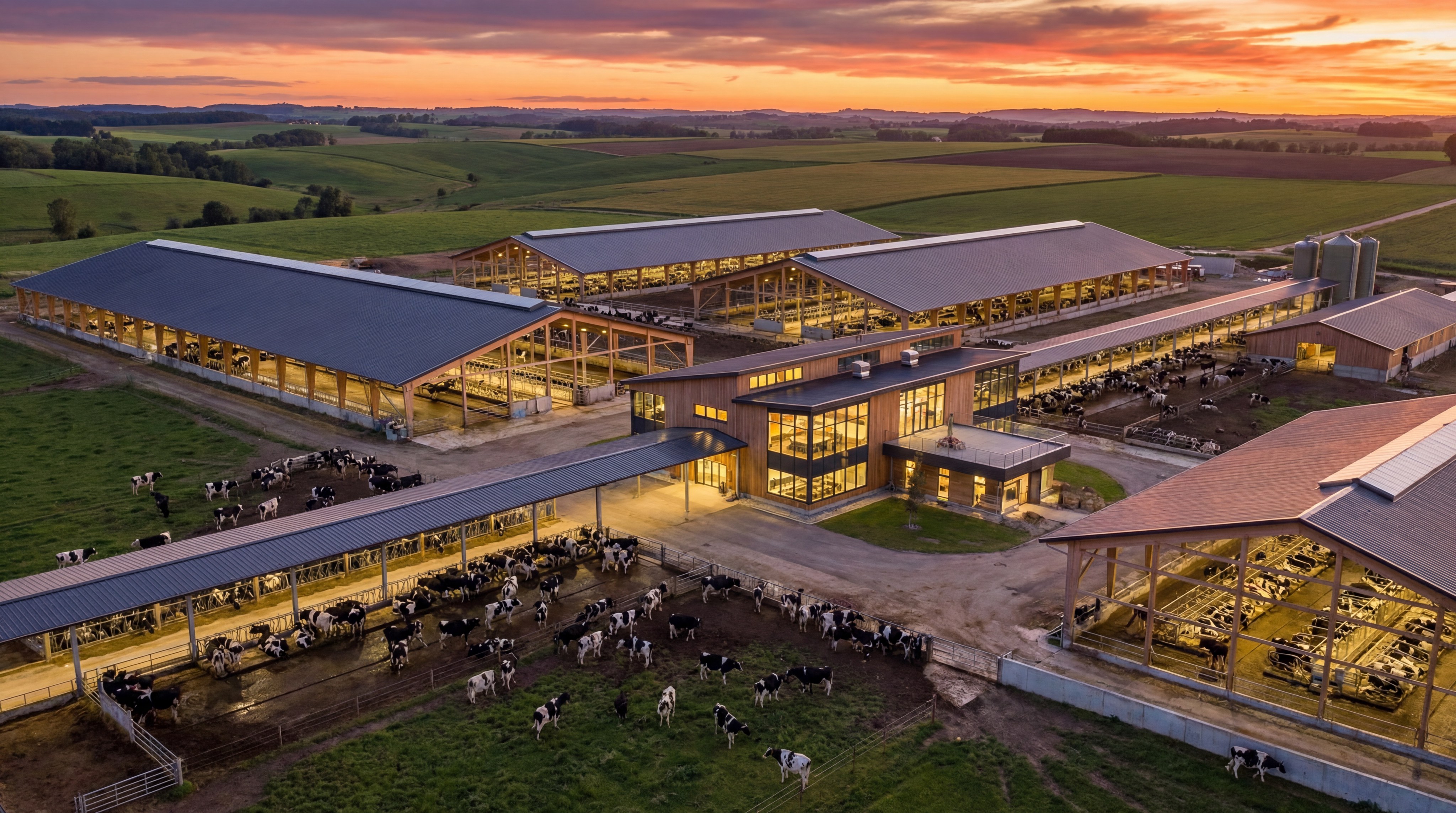
Custom solutions involve tailoring the pitch of the roof and the placement of gates to your specific site terrain and climate. A bespoke cow shed design allows you to integrate existing infrastructure, such as older silos or milking parlors, into a new, efficient flow. You don’t have to settle for a “one-size-fits-all” model that doesn’t account for your specific geographic challenges.
Customization also allows for the integration of modern technology, such as automated calf feeders or robotic milking arms. By working with a specialist, you can design a building that specifically handles the wind loads of your coastal area or the heavy snows of your mountain region. This level of detail ensures that your cattle shed price covers exactly what you need and nothing you don’t.
Adapting to Site Conditions
Think about it: your land isn’t perfectly flat, and your building shouldn’t be designed as if it were. Custom designs account for natural drainage and soil types to prevent foundation cracking or pooling.
- Tailored foundation designs.
- Integrated retaining walls.
- Site-specific wind bracing.
Here is the deal: a building designed for your specific plot of land will always outperform a generic kit in terms of longevity.
Integration of Automation
But wait, there’s more: the future of farming is automated, and your shed should be ready for it. Custom layouts include the necessary clearance and power routing for the latest in dairy technology.
- Space for robotic milkers.
- Automated lighting controls.
- Integrated feed pusher routes.
The best part? You can “future-proof” your building now, even if you don’t plan to install the robots until three years down the line.
Key Takeaway: Customization ensures your facility is a perfect match for your management style, your site, and your future technological ambitions.
| Custom Feature | Purpose | Value Added | |
|---|---|---|---|
| Site Bracing | Regional safety | Structural integrity | |
| Tech Integration | Automation ready | Future-proofing | |
| Modular Framing | Easy expansion | Business growth |
Choosing a custom-engineered solution allows you to solve site-specific problems before they become permanent operational headaches.
Conclusion
Creating the perfect cow shed design is a complex balancing act between animal welfare, operational efficiency, and long-term cost management. By choosing modern materials like steel and prioritizing factors such as ventilation and floor traction, you are building more than just a shelter—you are building a production engine. A well-designed shed pays for itself through higher yields, lower vet bills, and reduced labor costs. Whether you are planning a small cow shed design or a large-scale industrial dairy, the fundamentals of airflow and space remain the same.
If you are ready to upgrade your farm infrastructure with a durable, cost-effective steel solution, contact us today to discuss your custom project requirements. Our engineering team is dedicated to providing high-quality, factory-direct structures that help your herd—and your business—thrive.
FAQ
Can I use a steel cow shed design in a corrosive coastal environment?Yes, but you must ensure the steel is treated with hot-dip galvanization or specialized protective coatings. These treatments provide a barrier against salt-rich air that would otherwise cause premature rusting in standard metal buildings.
What’s the best roof pitch for natural ventilation in a dairy shed?It depends, but generally a 1:4 (about 14 degrees) to 1:3 (about 18 degrees) pitch is ideal for the chimney effect. This allows warm air to rise and exit through the ridge vent effectively while still shedding rain and snow.
How do I know if my existing cow shed floor plan is too crowded?It depends on the behavior of your herd; if you see cows “waiting” for stalls or if there is excessive aggression at the feed bunk, your space per cow is likely too low. Modern standards suggest at least one stall per cow plus 10% extra to ensure all animals can rest at once.
Can I expand my prefabricated cow shed later if my herd grows?Yes, one of the primary benefits of steel structures is their modular nature. You can easily remove an end wall and add additional bays to the existing frame without compromising the structural integrity of the original building.
What’s the best way to reduce heat stress in an open cow shed design?It depends on combining natural orientation with high eaves and mechanical support. Orienting the building East-West and installing high-volume fans will move enough air to significantly lower the effective temperature for the cattle.