
Choosing the right cow shed types is one of the most important decisions for dairy farmers, beef cattle owners, and agricultural investors. The structure of a cattle building directly affects animal comfort, ventilation performance, labor efficiency, construction costs, and long-term farm productivity.
Different types of cow sheds are designed for different farming goals. A small family dairy farm may require a compact housing system with easy individual management, while a commercial dairy operation with hundreds of cows usually needs a high-efficiency free stall barn with optimized feeding, resting, and manure management areas.
Modern livestock housing is also moving toward durable and flexible building solutions. Steel cow sheds are increasingly preferred because they provide large clear-span spaces, corrosion resistance, easy expansion, and compatibility with modern farming equipment.
This guide explains the major cow shed types, their advantages, suitable applications, layout requirements, ventilation methods, and how to select the right cattle housing solution.
What Are the Different Cow Shed Types?
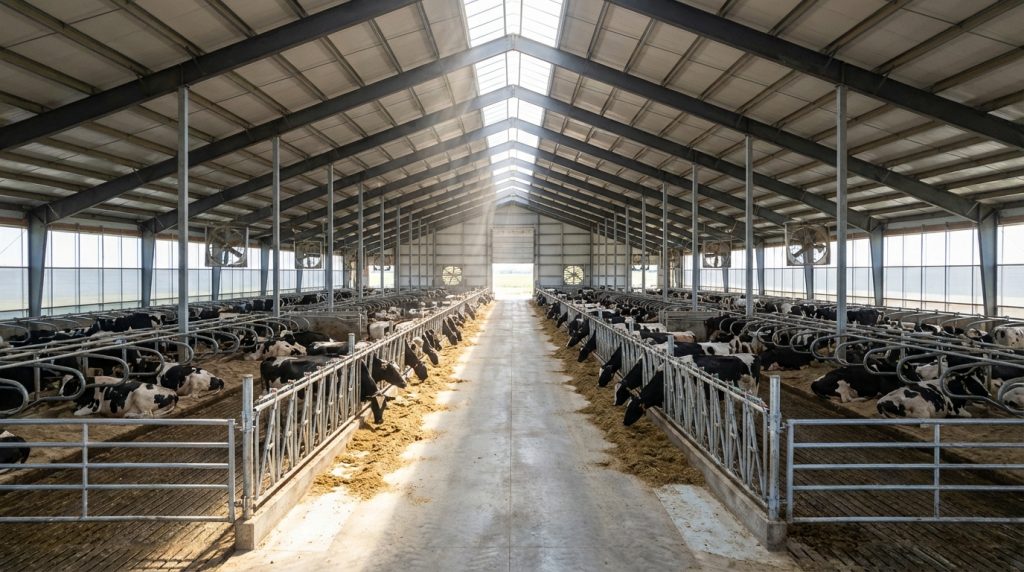
The most common cow shed types include free stall barns, tie stall barns, loose housing systems, open- sided cattle sheds, semi-open barns, and fully enclosed cattle buildings.
Each system has different characteristics depending on:
- Herd size
- Climate conditions
- Animal management method
- Labor availability
- Automation requirements
- Farm expansion plans
Free Stall Barns
Free stall barns are one of the most widely used cattle housing systems for modern dairy farms. In this design, cows can move freely between resting stalls, feeding areas, drinking points, and milking zones.
This type of dairy cow shed design focuses on improving animal movement while allowing efficient farm management.
Advantages of Free Stall Barns
- Better cow movement and comfort
- Suitable for medium and large dairy farms
- Easier feeding management
- Compatible with automatic manure scrapers
- Suitable for robotic milking systems
Free stall barns are often selected by commercial dairy farms because they balance animal welfare with operational efficiency.
Tie Stall Barns
Tie stall barns provide individual spaces where cows remain in assigned positions for feeding, resting, and management.
This system is commonly used for smaller farms or operations where farmers need close monitoring of individual animals.
Advantages of Tie Stall Barns
- Easy observation of individual cows
- Better control of feeding quantity
- Suitable for small dairy farms
- Lower initial construction complexity
However, tie stall systems usually require more manual labor and provide less flexibility compared with free stall designs.
Loose Housing Systems
Loose housing allows cattle to move freely within a shared open area. This cattle shed type is commonly used for beef cattle and growing animals.
The system supports natural movement and flexible grouping.
Advantages of Loose Housing
- Flexible animal grouping
- Suitable for beef cattle production
- Lower management complexity
- Easy access for machinery
Loose housing is often considered an efficient option for beef cattle farms because it provides a practical balance between animal comfort and construction cost.
Open-Sided Cow Sheds
Open-sided cow sheds are designed mainly for warm and humid climates where natural ventilation is important.
Instead of relying heavily on mechanical cooling systems, these buildings use airflow from open walls, roof ventilation, and proper orientation.
Advantages of Open-Sided Cow Sheds
- Excellent natural ventilation
- Reduced heat stress
- Lower energy consumption
- Suitable for tropical regions
A well-designed open steel cow shed can maintain better air movement while protecting cattle from excessive sunlight and rain.
Semi-Open and Closed Cow Barns
Semi-open and closed cattle barns provide more environmental control compared with open-sided structures.
These designs are commonly used in regions with extreme weather conditions.
They may include:
- Insulated roof and wall systems
- Ventilation fans
- Cooling systems
- Adjustable curtains
- Environmental monitoring equipment
These cow shed types are suitable for farms requiring more precise climate management.
Cow Shed Types Comparison
Cow Shed Type Best Application Main Advantages
Free Stall Barn Large dairy farms High efficiency and automation
Tie Stall Barn Small dairy farms Individual animal management
Loose Housing Beef cattle farms Flexible and economical
Open-Sided Shed Hot climates Natural ventilation
Closed Barn Extreme climates Environmental control
How to Choose the Right Cow Shed Type?
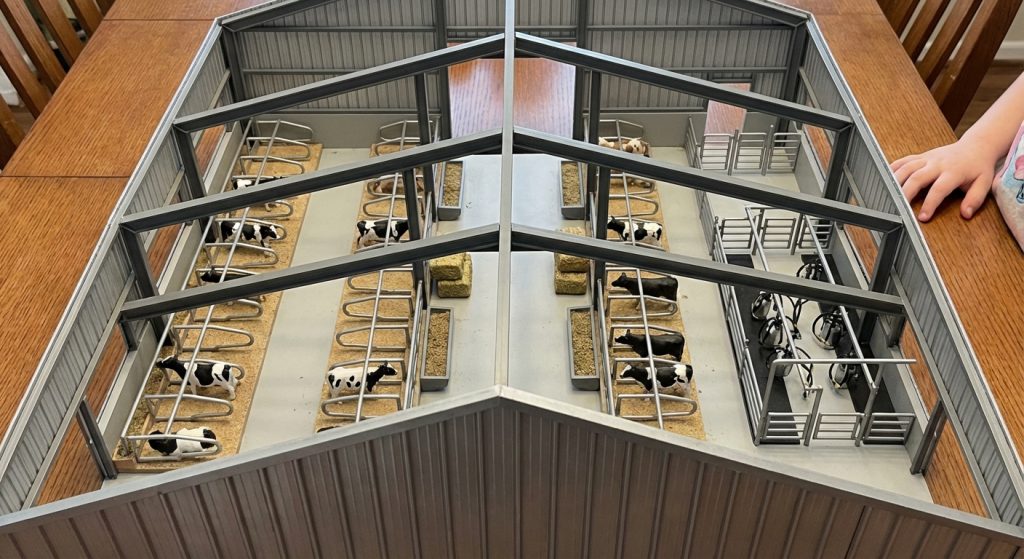
Choosing the right cattle shed type depends on several important factors.
Herd Size
Small farms usually benefit from simpler layouts, while large dairy farms require efficient systems that support automation and future expansion.
Climate Conditions
Warm regions often require open-sided designs with strong airflow.
Cold regions may require insulated structures with controlled ventilation.
Farming Purpose
Dairy farms usually prioritize:
- Resting comfort
- Milking efficiency
- Feeding management
Beef farms often prioritize:
- Space efficiency
- Easy cleaning
- Flexible grouping
Cow Shed Layout Design Requirements
A successful cattle housing design should include:
Feeding Area :The feeding area should allow easy access and reduce competition among animals.
Resting Area :Proper resting space improves animal welfare and supports better productivity.
Walking Alleys :Adequate movement areas reduce congestion and improve farm operation efficiency.
Manure Management Area
Modern layouts should consider:
- Scraper systems
- Drainage
- Cleaning access
Future Expansion Space
A steel structure cow shed can be designed with modular expansion capability, allowing additional bays to be added when herd size increases.
Cow Shed Ventilation Design
Ventilation is one of the most important factors in livestock housing.
Poor airflow can increase:
- Heat stress
- Moisture accumulation
- Ammonia concentration
- Respiratory problems
Natural Ventilation System
Natural ventilation uses:
- Open side walls
- Ridge vents
- High roof design
- Proper building orientation
This method is especially effective for open-sided cow shed types.
Mechanical Ventilation System
Large commercial barns may require:
- HVLS fans
- Exhaust fans
- Cooling systems
Mechanical ventilation helps maintain stable environmental conditions in
large buildings.
Why Steel Structures Are Popular for Modern Cow Sheds?
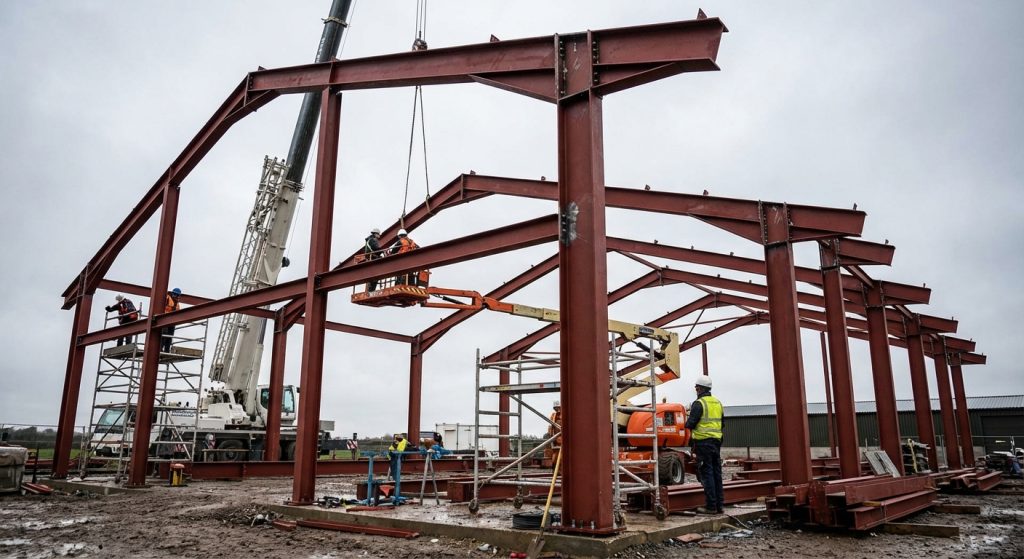
Steel cow sheds are widely used in modern livestock projects because they provide durability, flexibility, and efficient construction.
Main Advantages
- Long Service Life
- Galvanized steel structures resist moisture, corrosion, and harsh agricultural environments.
- Large Clear Span Design
Steel frames allow wide internal spaces without excessive columns,
improving:
- Animal movement
- Equipment operation
- Future modification
Faster Construction
Prefabricated steel components can reduce on-site construction time compared with traditional building methods.
Easy Expansion
Modular steel structures allow additional bays or sections to be added when farm requirements change.
Cost Considerations for Different Cow Shed Types
The total cost depends on:
- Building size
- Structural system
- Roof and wall materials
- Ventilation equipment
- Feeding and cleaning systems
- Local construction conditions
A lower initial cost does not always mean a lower long-term investment.
Farm owners should consider:
- Maintenance requirements
- Service life
- Labor costs
- Expansion possibility
Future-Proofing Your Cow Shed Design
Modern farms increasingly use:
- Automatic feeding systems
- Robotic milking
- Smart sensors
- Climate monitoring
A future-ready cattle building should provide:
- Flexible internal space
- Strong structural capacity
- Equipment installation zones
- Efficient utility planning
Steel Cow Shed Projects and Manufacturing Experience
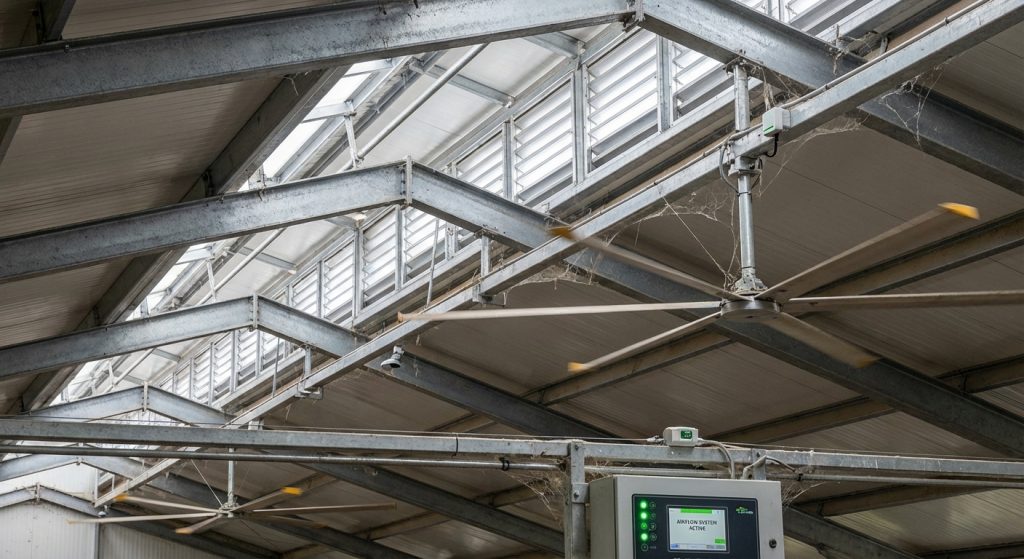
At Showhoo Building, we provide customized steel livestock building solutions for global agricultural customers.
Our services include:
- Structural design
- Engineering calculation
- Steel fabrication
- Export packing
- Installation drawings
- Technical support
A professional cattle building solution should consider local climate conditions, farming requirements, and future development plans.
Frequently Asked Questions
What are the main cow shed types?
The main cow shed types include free stall barns, tie stall barns, loose housing systems, open-sided cattle sheds, semi-open barns, and closed cattle buildings.
Which cow shed type is best for dairy farming?
Free stall barns are commonly selected for medium and large dairy farms because they improve animal movement, feeding efficiency, and automation possibilities.
Are steel cow sheds suitable for hot climates?
Yes. Open-sided steel cow sheds combined with proper ventilation design, roof systems, and airflow planning can help reduce heat stress.
How much space does a cow need in a shed?
Space requirements depend on the housing system, herd size, and management method. Professional layout planning should consider resting areas, feeding alleys, and movement zones.
Can steel cattle sheds be expanded later?
Yes. Properly designed prefabricated steel structures can be extended by adding additional bays or sections.
Need a Customized Cow Shed Design?
Every farm has different requirements based on climate, herd size, and production goals. Showhoo Building provides customized steel cow shed solutions for dairy farms, beef cattle operations, and agricultural investors. Contact our engineering team to receive a customized cattle building proposal.