
Cattle barns optimize herd health and production efficiency by providing a controlled environment that shields livestock from extreme weather stressors and promotes consistent weight gain. When your animals are left unprotected, they face a constant battle against temperature fluctuations, heavy rain, and biting winds. This environmental stress forces cattle to expend valuable energy just to maintain body temperature, which leads to stalled growth and weakened immune systems.
The resulting increase in veterinary costs and higher mortality rates can quickly erode your operation’s profitability. Fortunately, transitioning to a precision-engineered cattle barn from Showhoo offers a strategic solution that stabilizes production. By creating a thermoneutral zone for your herd, these steel structures ensure that every pound of feed is directed toward growth rather than survival, ensuring long-term agricultural success.
Why choose a monoslope cattle barn?
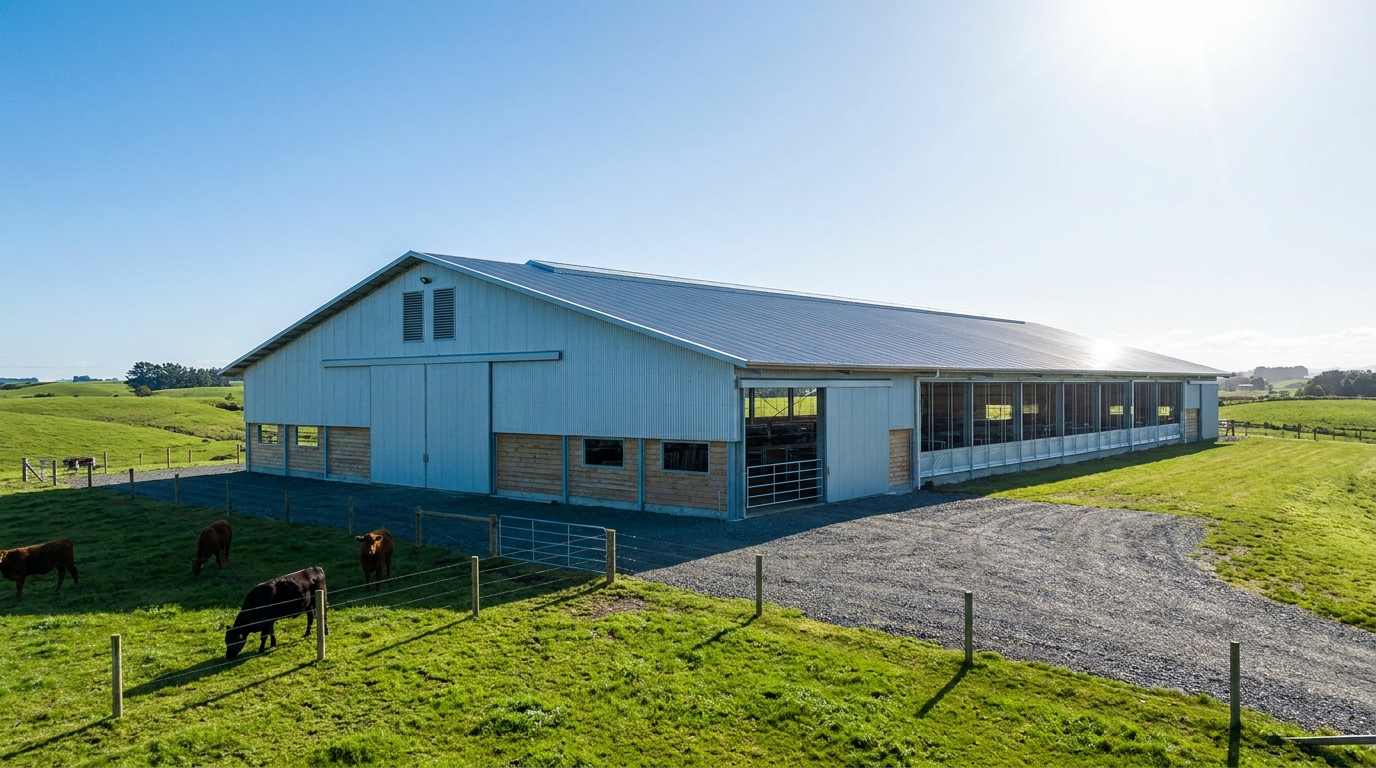
A monoslope cattle barn is chosen primarily for its superior ability to manage natural ventilation and seasonal solar orientation to maximize animal comfort. By utilizing a single-pitch roof design, this type of cattle barn creates a natural chimney effect that pulls fresh air across the herd. You will find that this configuration is particularly effective for beef steer operations where air quality is a top priority.
Optimizing airflow and natural ventilation
The truss-free interior of a monoslope structure allows for unobstructed air movement, preventing the buildup of harmful gases like ammonia. Because there are no internal supports to trap air, the exchange remains even and constant throughout the day.
- High-side orientation to capture prevailing summer breezes.
- Low-side positioning to deflect harsh northern winds.
- Truss-free design for maximum air volume.
Believe it or not, this simple design change can significantly reduce respiratory issues. You gain a self-regulating environment that works with nature rather than against it.
Maximizing seasonal sun exposure
In the winter, the lower sun angle allows warmth to penetrate deep into the barn to keep the cattle comfortable. Conversely, during the peak of summer, the large roof overhang provides essential shade to prevent overheating.
Here is the kicker: this dual-purpose regulation happens without expensive mechanical cooling systems. You essentially leverage the building’s geometry to save on operational costs.
Key TakeawayThe monoslope design is a high-efficiency layout that uses structural orientation to provide natural climate control and superior ventilation for year-round production.
| Design Feature | Primary Benefit | Operational Impact | |
|---|---|---|---|
| Single-Pitch Roof | Natural Air Exchange | Lower Disease Risk | |
| Southern Exposure | Solar Heating | Reduced Winter Feed Costs | |
| Large Overhangs | Summer Shading | Prevention of Heat Stress |
This strategic design ensures your facility remains productive regardless of the external weather conditions.
How does a cattle barn improve herd health?
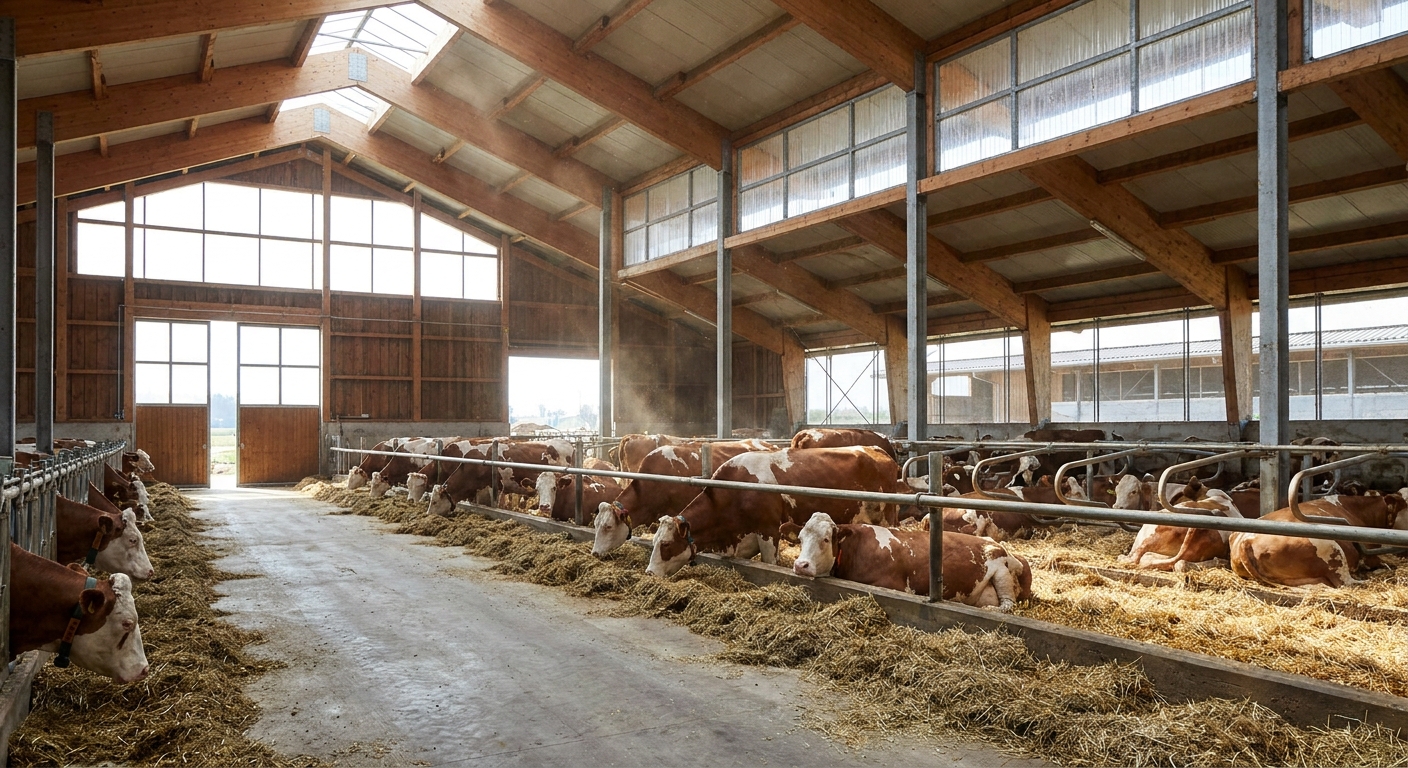
A cattle barn improves herd health by significantly reducing respiratory stress and keeping bedding dry to prevent the spread of hoof rot and infections. By investing in a high-quality cattle barn , you eliminate the mud and moisture that typically plague outdoor lots. This controlled environment ensures that your animals remain in a thermoneutral zone, which is critical for maintaining a strong immune system.
Reducing respiratory stress through design
The constant exchange of fresh air is the most effective way to prevent bovine respiratory disease (BRD) in your herd. A well-ventilated structure removes moisture and pathogens before they can settle in the animals’ lungs.
- Continuous ridge vents for passive exhaust.
- Open-sided walls for cross-ventilation.
- High ceilings to dissipate heat and humidity.
But that’s not all. Proper airflow also keeps the interior surfaces dry, further reducing the growth of bacteria that could compromise your cattle’s health.
Maintaining dry and comfortable bedding
Steel structures provide a leak-proof envelope that ensures your bedding materials stay bone-dry even during heavy downpours. Dry bedding is essential because it provides insulation and prevents the skin irritations common in wet conditions.
You will notice that cattle are more likely to rest and ruminate when they have a clean, dry surface. This increased resting time is directly linked to better digestive health and overall well-being.
Key TakeawayHealth-focused barn designs prioritize air quality and moisture control to eliminate the environmental triggers of common livestock illnesses.
| Health Factor | Barn Solution | Resulting Benefit | |
|---|---|---|---|
| Air Quality | Passive Ventilation | 30% Lower BRD Risk | |
| Bedding Condition | Steel Roof Protection | Prevention of Hoof Rot | |
| Climate Stability | Insulated Panels | Reduced Metabolic Stress |
Dry conditions and fresh air are the foundation of any high-performing livestock health protocol.
Email:sales@showhoo.com.cn
Phone/WhatsApp:+86 186 7895 597
What materials are used in a cattle barn?
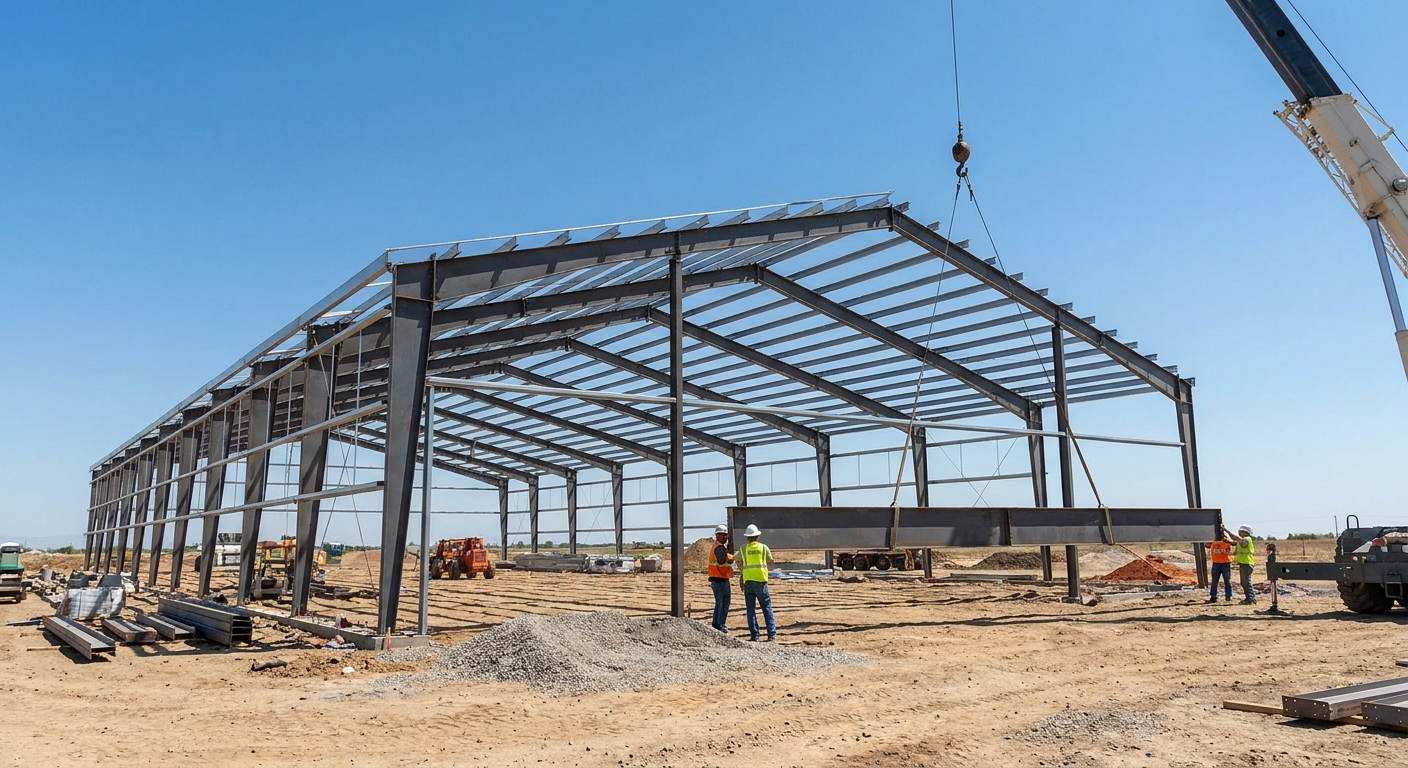
The primary materials used in a cattle barn are high-strength H-section steel for the main frame and galvanized steel panels for the roof and wall cladding. These materials are selected because the cattle barn environment is inherently corrosive due to moisture and animal waste. Using heavy-duty steel ensures that your structure remains stable and safe for decades without the risk of rot or pest damage.
High-strength H-section steel frames
The backbone of the structure consists of hot-rolled or welded H-section columns and beams that provide massive clear spans. This allows you to organize your herd without worrying about internal pillars getting in the way of machinery or animal movement.
- Hot-dip galvanization for maximum corrosion resistance.
- Precision-engineered bolts for secure connections.
- High load-bearing capacity for snow and wind.
Make no mistake about it, the quality of your steel frame determines the lifespan of your entire investment. Choosing factory-direct steel ensures you get the strength your operation demands.
Durable roof and wall cladding panels
Steel cladding provides the first line of defense against the elements, featuring specialized coatings to resist fading and rust. You can also choose to include thermal insulation layers within these panels to further regulate the internal temperature.
Here is the best part: these panels are designed for rapid installation. You can have a fully enclosed facility in a fraction of the time it takes for traditional masonry or wood construction.
Key TakeawayUtilizing industrial-grade steel and protective coatings ensures the barn can withstand both the external climate and the internal corrosive environment of a livestock operation.
| Component | Material Type | Key Performance Metric | |
|---|---|---|---|
| Main Frame | H-Section Steel | Seismic & Wind Resistance | |
| Secondary Frame | Galvanized Purlins | Rust Prevention | |
| Cladding | Coated Steel Panels | UV & Moisture Barrier |
Selecting the right materials upfront prevents costly structural repairs and replacements later in the building’s lifecycle.
Can a cattle barn boost weight gain results?
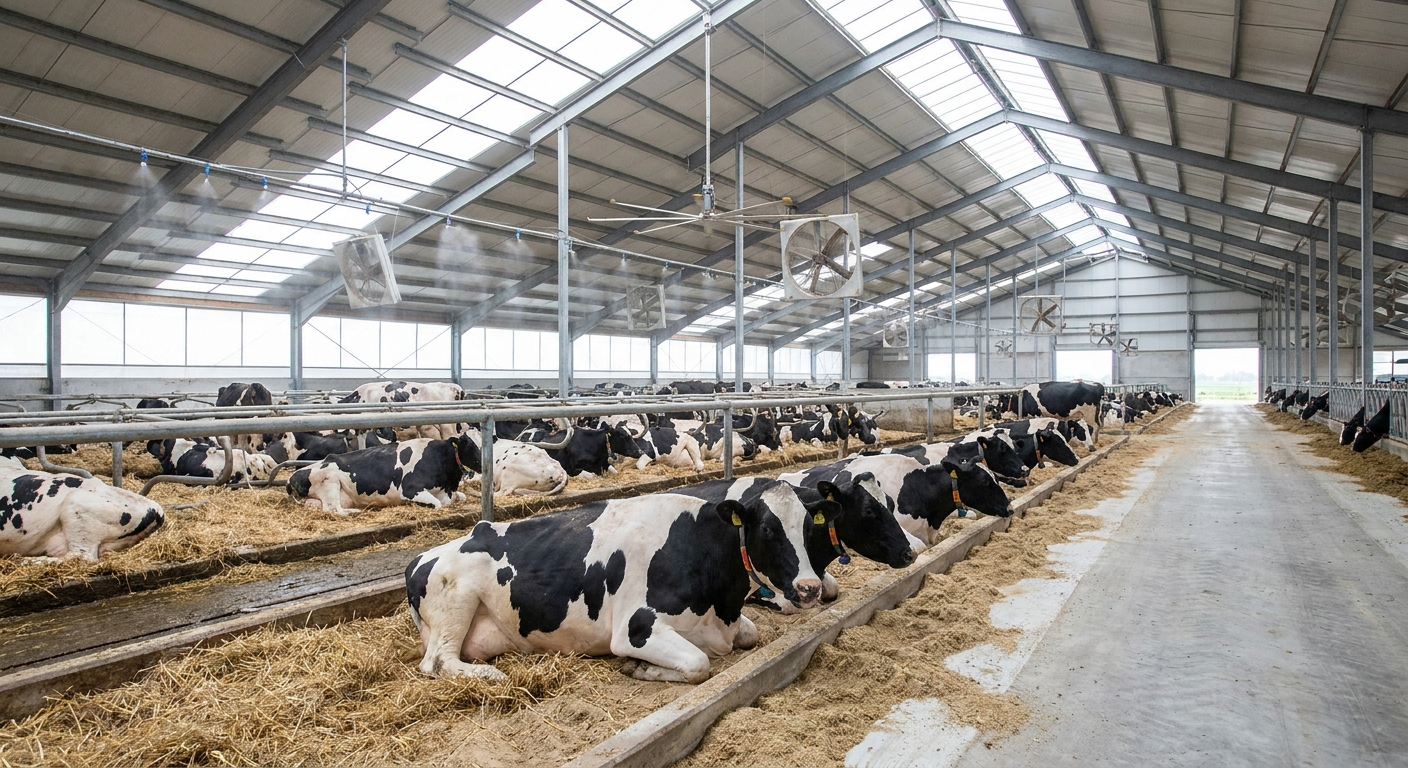
A cattle barn boosts weight gain results by directing metabolic energy toward growth instead of body temperature regulation and maintenance. When you house your animals in a precision-designed cattle barn , you ensure that their feed intake is converted into muscle and fat as efficiently as possible. This controlled feeding environment prevents feed spoilage and encourages consistent consumption patterns across the entire herd.
Controlling the feeding environment
By keeping feed bunks protected from rain and sun, you maintain the nutritional integrity and palatability of the ration. You won’t have to worry about mold or wastage caused by weather-damaged feed.
- Under-roof feeding systems for 24/7 access.
- Adjustable neck rails to reduce feed sorting.
- Clean concrete aprons to prevent feed contamination.
You will see a noticeable improvement in feed conversion ratios when your cattle are not fighting for space or dealing with wet feed. It really is that simple.
Reducing energy expenditure from stress
During extreme cold, an outdoor animal can lose a significant percentage of its weight just trying to stay warm. A steel barn acts as a thermal buffer, keeping the interior significantly warmer than the ambient outdoor temperature.
But that’s not all. The stress reduction provided by shade in the summer prevents the “panting” that burns calories and reduces appetite. You keep the animals in a “gain-mode” all year long.
Key TakeawayOptimizing the thermal environment and protecting the feed supply are the two most effective ways to accelerate weight gain and improve feed efficiency.
| Factor | Barn Impact | Weight Gain Effect | |
|---|---|---|---|
| Temperature | Thermoneutral Zone | +10-15% Gain Efficiency | |
| Feed Quality | Weather Protection | Reduced Spoilage Loss | |
| Animal Stress | Calm Environment | Consistent Daily Gains |
Consistent daily gains are the key to hitting market weights faster and increasing your annual turnover.
How is a steel cattle barn manufactured?
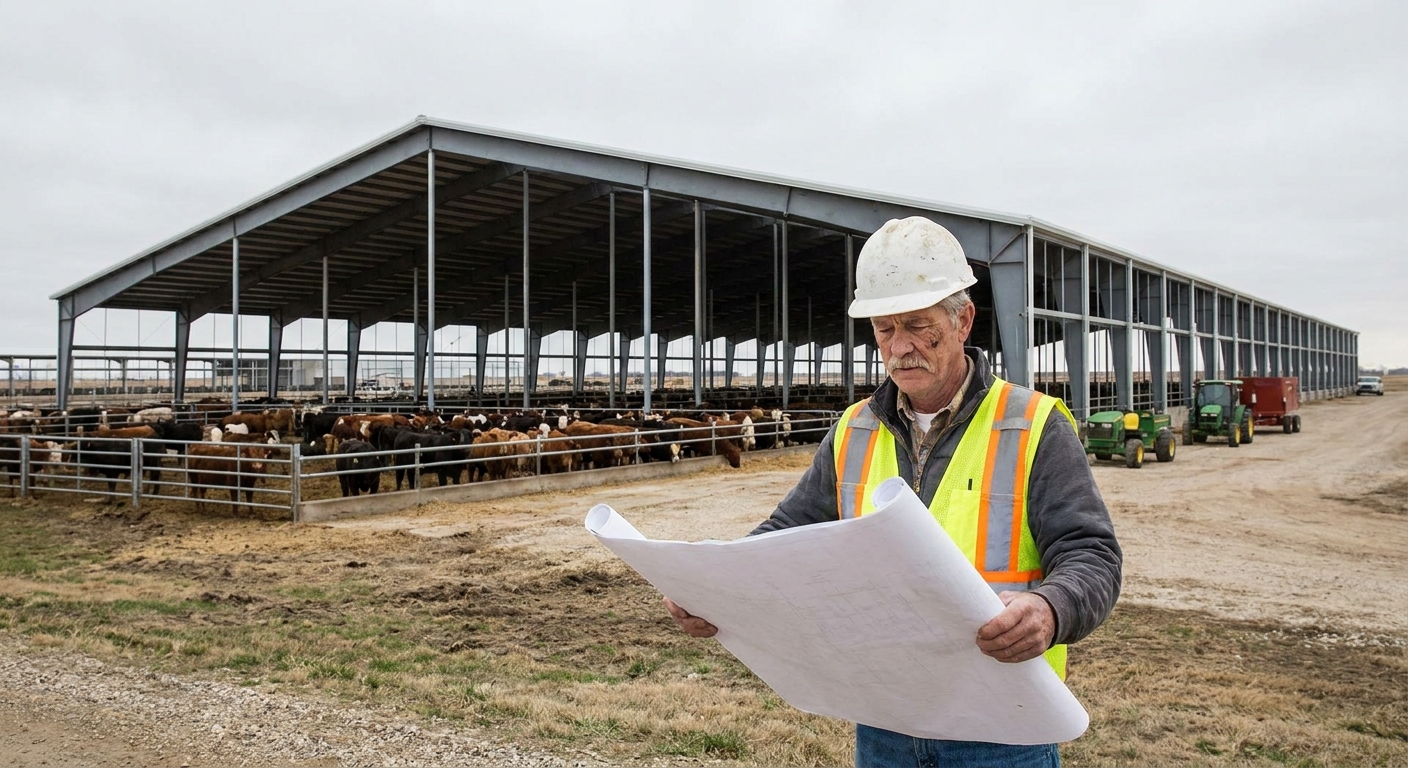
A steel cattle barn is manufactured through a precise sequence of automated cutting, submerged arc welding, and specialized surface treatment. Every component of your cattle barn is designed using advanced 3D modeling to ensure that every bolt hole aligns perfectly on-site. This industrial process guarantees that the structural integrity of your building meets or exceeds local building codes for wind and snow loads.
Precision cutting and submerged arc welding
The manufacturing process starts with raw steel plates that are cut to size using CNC technology for extreme accuracy. These plates are then joined using submerged arc welding, which creates a deep, strong bond between the steel sections.
- Automated welding for consistent bead quality.
- CNC drilling for precise bolt-hole alignment.
- Ultrasonic testing to verify weld integrity.
The bottom line is this: factory-controlled manufacturing eliminates the human errors and inconsistencies often found in on-site construction. You receive a verified, buildable structure every single time.
Sandblasting and protective coating systems
Before the steel leaves the factory, it undergoes rigorous sandblasting to remove any mill scale or rust. This creates the perfect surface for the application of high-performance primers and topcoats or hot-dip galvanization.
Here is the kicker: these coatings are designed specifically for the high-ammonia environment of a livestock facility. You don’t have to worry about the structure degrading after just a few years of use.
Key TakeawayFactory-direct manufacturing ensures that your barn is built to exact engineering specifications with industrial-grade finishes that outlast traditional building methods.
| Process Stage | Technology Used | Quality Outcome | |
|---|---|---|---|
| Design | 3D Structural Modeling | Perfect Component Fit | |
| Fabrication | Submerged Arc Welding | High Structural Rigidity | |
| Finishing | Sandblasting & Coating | 20+ Year Rust Protection |
Industrial manufacturing provides a level of precision and durability that simply cannot be matched by local contractors using raw materials.
Does a cattle barn need custom features?
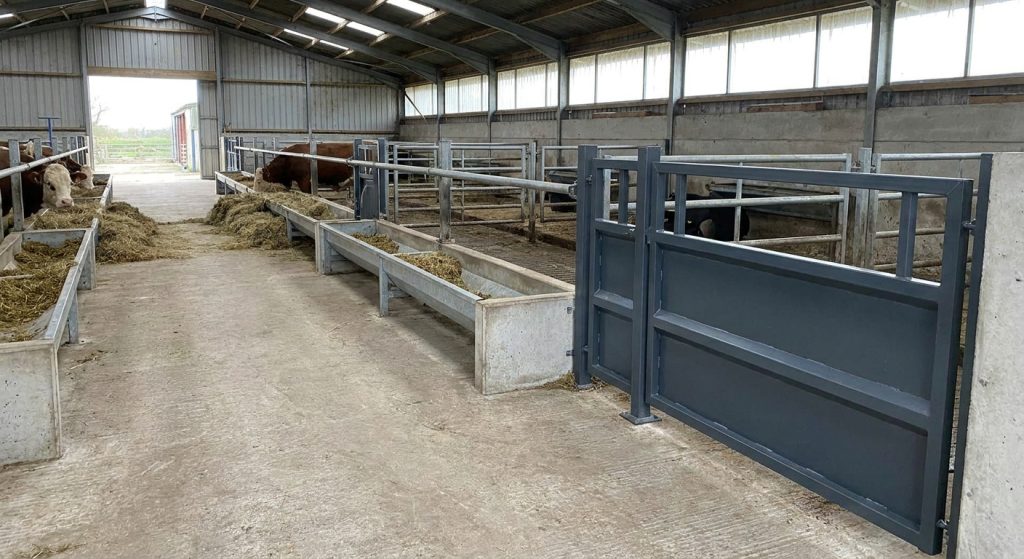
A cattle barn needs custom features like integrated feed bunks, heavy-duty gates, and specialized fencing to match the specific workflow of your operation. When you customize your cattle barn , you are optimizing the daily tasks of feeding, sorting, and cleaning. These features are not just add-ons; they are essential components that determine how efficiently you can manage a large number of animals with minimal labor.
Integrating feed bunks and neck rails
Custom-designed feed bunks can be built directly into the perimeter of the structure to allow for easy drive-by feeding. You can also specify the height and spacing of neck rails to accommodate different ages and sizes of cattle.
- J-Bunk or H-Bunk configurations for varied diets.
- Self-locking headlocks for safe veterinary checks.
- Removable rails for easy cleaning and maintenance.
Wait, there’s more. By customizing these elements, you can significantly reduce the amount of feed that cattle pull back into the pen, saving you thousands in wasted grain.
Custom gates and fencing systems
The internal layout of your barn should facilitate the “low-stress” movement of cattle. Heavy-duty gates can be positioned to create sorting alleys or sick pens that allow you to isolate animals without disrupting the whole herd.
You should consider the thickness and galvanization of these internal panels. Since cattle can be rough on equipment, using industrial-grade materials for your gates is a smart move for long-term durability.
Key TakeawayCustomization allows you to tailor the building to your specific management style, reducing labor requirements and improving animal handling safety.
| Feature | Customization Option | Efficiency Gain | |
|---|---|---|---|
| Feed Alleys | Drive-through Width | Faster TMR Delivery | |
| Internal Pens | Modular Gates | Easier Animal Sorting | |
| Access Points | Industrial Rollers | Better Machinery Clearance |
A barn that is customized to your workflow will pay for itself through labor savings and reduced animal handling stress.
Email:sales@showhoo.com.cn
Phone/WhatsApp:+86 186 7895 597
How do cattle barn designs handle winter?
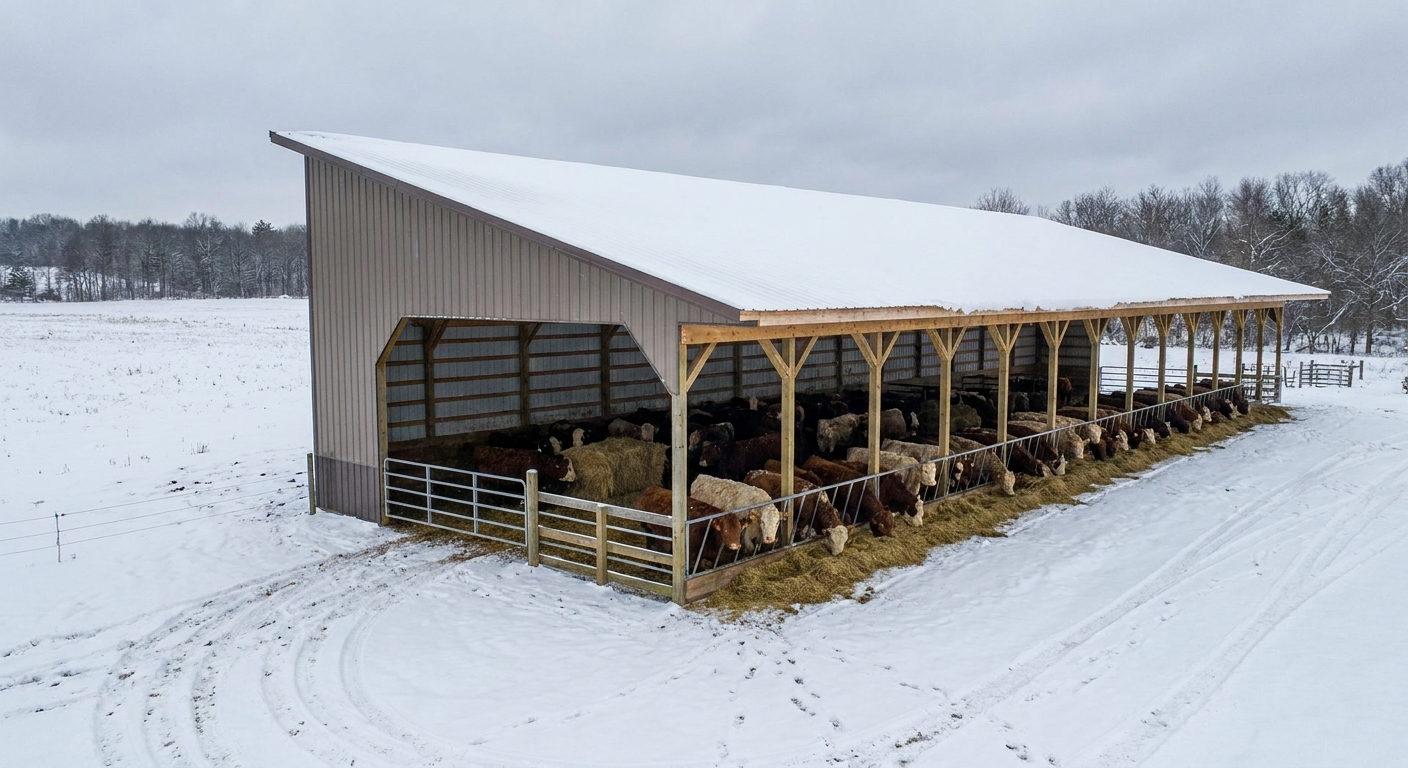
Cattle barn designs handle winter by utilizing southern-facing openings to capture solar warmth and low-profile back walls to block northern wind chill. During the coldest months, a properly oriented cattle barn can stay 10 to 15 degrees warmer than the outside air without any supplemental heating. This natural regulation is vital for maintaining the body weight of your calves and steers when the temperature drops below zero.
Utilizing low-angle winter sunlight
The monoslope design is engineered so that the sun, which sits low on the horizon during winter, can shine directly into the building. This provides a natural “solar-heater” effect that warms the bedding and the animals’ coats.
- Southern orientation for maximum solar gain.
- Clear-span interiors to allow light to reach the back.
- Darker roofing options to absorb and radiate heat.
But that’s not all. The sun also helps to dry out the interior humidity, which is a major factor in preventing winter-time pneumonia outbreaks.
Restricting northern wind penetration
The back wall of the barn is typically built lower and positioned to face the prevailing winter winds. This creates a large wind-shadow that protects the cattle from the “chill factor” that can strip away their energy.
The result is a calm, protected environment where cattle can huddle comfortably. You will find that this drastically reduces the amount of extra feed required to keep animals warm during a blizzard.
Key TakeawayWinter-ready designs use natural solar energy and strategic windbreaks to protect the herd’s energy reserves and maintain health during extreme cold.
| Winter Stressor | Design Solution | Physiological Result | |
|---|---|---|---|
| Wind Chill | Solid Back-Wall Barrier | Reduced Energy Loss | |
| Freezing Temps | Passive Solar Heating | Stable Body Temperature | |
| Snow Load | Reinforced Steel Purlins | Structural Safety |
By leveraging the building’s placement on your site, you can turn your barn into a powerful tool for winter survival.
What is the cattle barn installation process?
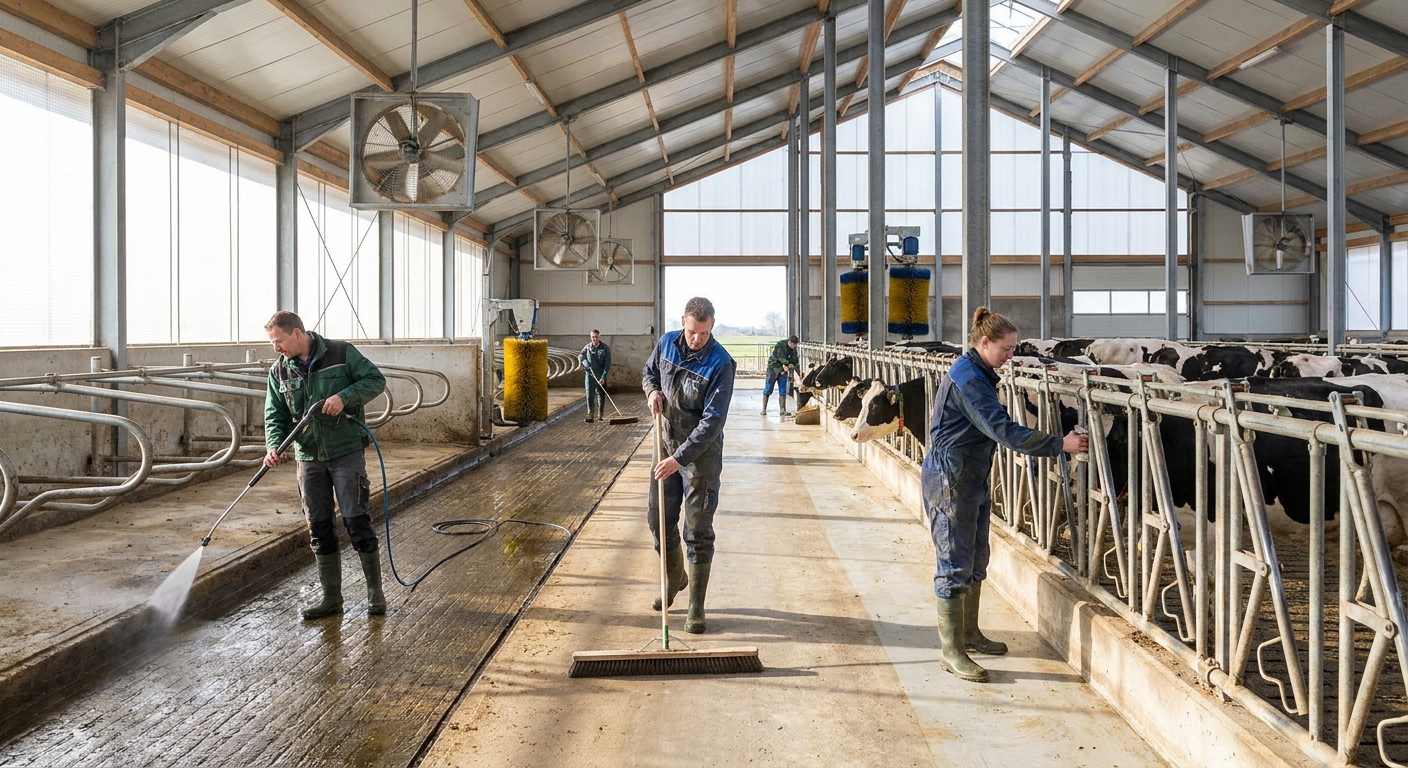
The cattle barn installation process involves three main phases: foundation preparation, primary steel frame erection, and the final installation of roof and wall panels. When you receive a cattle barn kit, every part is numbered and ready for assembly according to detailed engineering drawings. This systematic approach allows you to complete the construction much faster than traditional methods, often saving you weeks in labor costs.
Foundation and anchor bolt preparation
The process begins with the pouring of concrete footings and the precise setting of anchor bolts. These bolts provide the critical connection between the earth and your heavy steel columns, ensuring the building can resist uplift from high winds.
- Laser-leveled foundations for perfect alignment.
- Heavy-duty anchor bolts for structural stability.
- Reinforced concrete to support livestock weight.
Make no mistake, a solid foundation is the most important part of the build. Once the concrete is cured, the steel components can be bolted into place with incredible speed.
Column and beam frame assembly
The primary H-section columns are stood up first, followed by the roof beams. High-strength bolts are used to secure the connections, eliminating the need for any on-site welding which can be dangerous and time-consuming.
Believe it or not, a professional crew can often erect the main frame of a standard-sized barn in just a few days. You will see your investment take shape almost overnight.
Key TakeawayThe modular nature of steel barn kits allows for a fast, predictable installation process that minimizes on-site errors and reduces construction timelines.
| Installation Step | Key Action | Success Metric | |
|---|---|---|---|
| Phase 1 | Anchor Bolt Setting | Plumb & Level Columns | |
| Phase 2 | Frame Bolting | Structural Rigidity | |
| Phase 3 | Cladding Attachment | Weather-Tight Envelope |
A streamlined installation process means your animals can move in sooner, allowing you to start seeing a return on your investment immediately.
Is ventilation vital in a cattle barn?
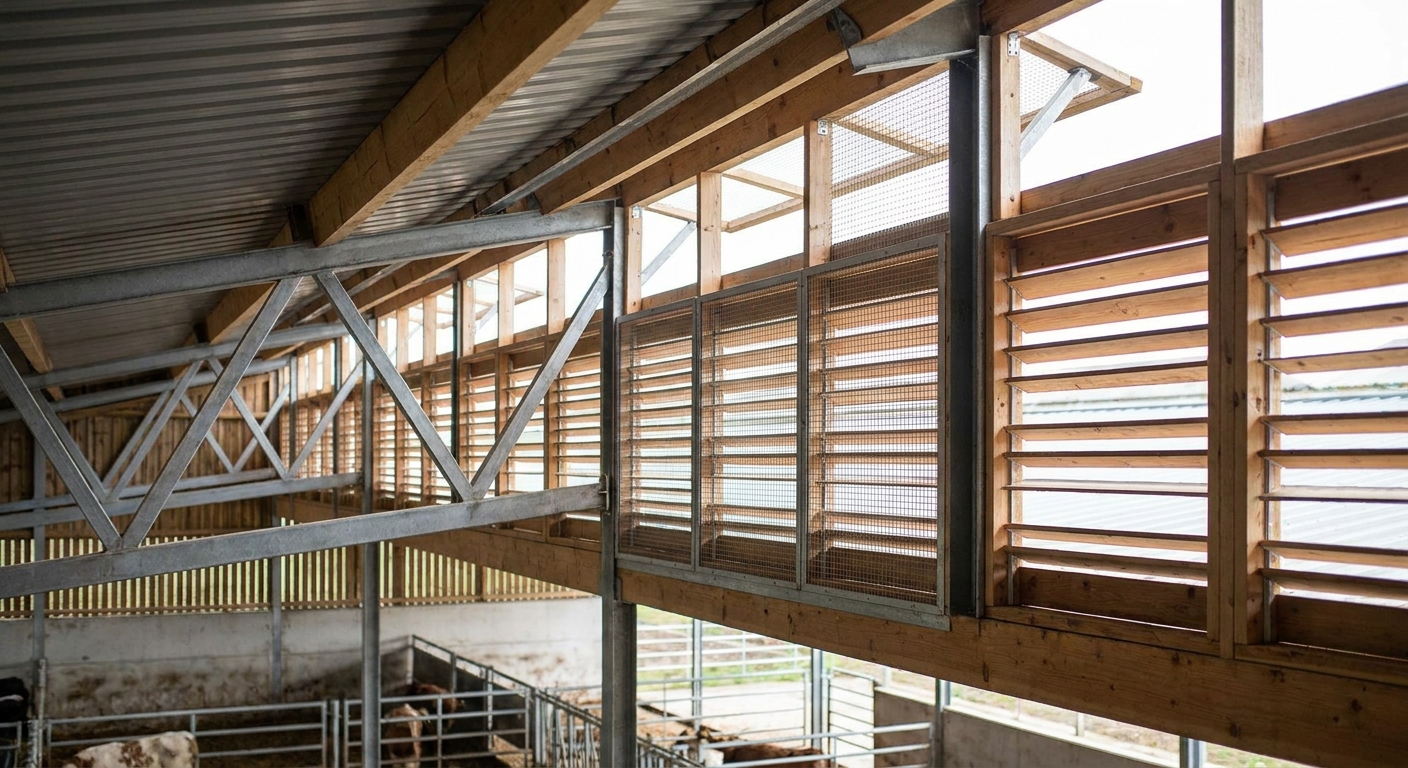
Ventilation is absolutely vital in a cattle barn to remove excess moisture, heat, and ammonia that can lead to chronic respiratory disease and reduced growth rates. In a modern cattle barn, ventilation is achieved through a combination of building orientation and passive openings like ridge vents and eave gaps. Without this constant air exchange, the interior environment becomes stagnant and humid, which is a perfect breeding ground for pathogens.
Preventing ammonia and moisture buildup
Ammonia is a byproduct of manure and urine that can irritate the sensitive linings of a bovine’s lungs. Proper airflow flushes these gases out of the building before they reach concentrations that can damage your animals’ health.
- Eave inlets to bring in cool, fresh air.
- Ridge outlets to exhaust hot, moist air.
- Sidewall curtains for adjustable airflow control.
You will notice that a well-ventilated barn feels fresh and dry, even with a high density of animals. This is a clear indicator of a healthy environment.
Passive cooling via truss-free designs
The height of a monoslope barn naturally encourages the “stack effect,” where warm air rises and pulls in cooler air from the sides. Because there are no trusses to obstruct this flow, the air moves quickly and efficiently.
Here is the best part: this passive system works 24 hours a day without any electricity. You get the benefits of a mechanical fan system without the ongoing power bills or maintenance issues.
Key TakeawayEffective ventilation is the most critical factor in maintaining long-term herd health and preventing the respiratory issues that cause mortality.
| Ventilation Goal | Design Feature | Impact on Cattle | |
|---|---|---|---|
| Moisture Removal | High Ridge Vents | Dryer Lungs & Bedding | |
| Heat Dissipation | Open Sidewalls | Prevention of Heat Stress | |
| Ammonia Control | Constant Cross-Flow | Improved Respiratory Health |
Investing in a superior ventilation design is an investment in the longevity and productivity of your livestock.
How to plan your cattle barn project budget?
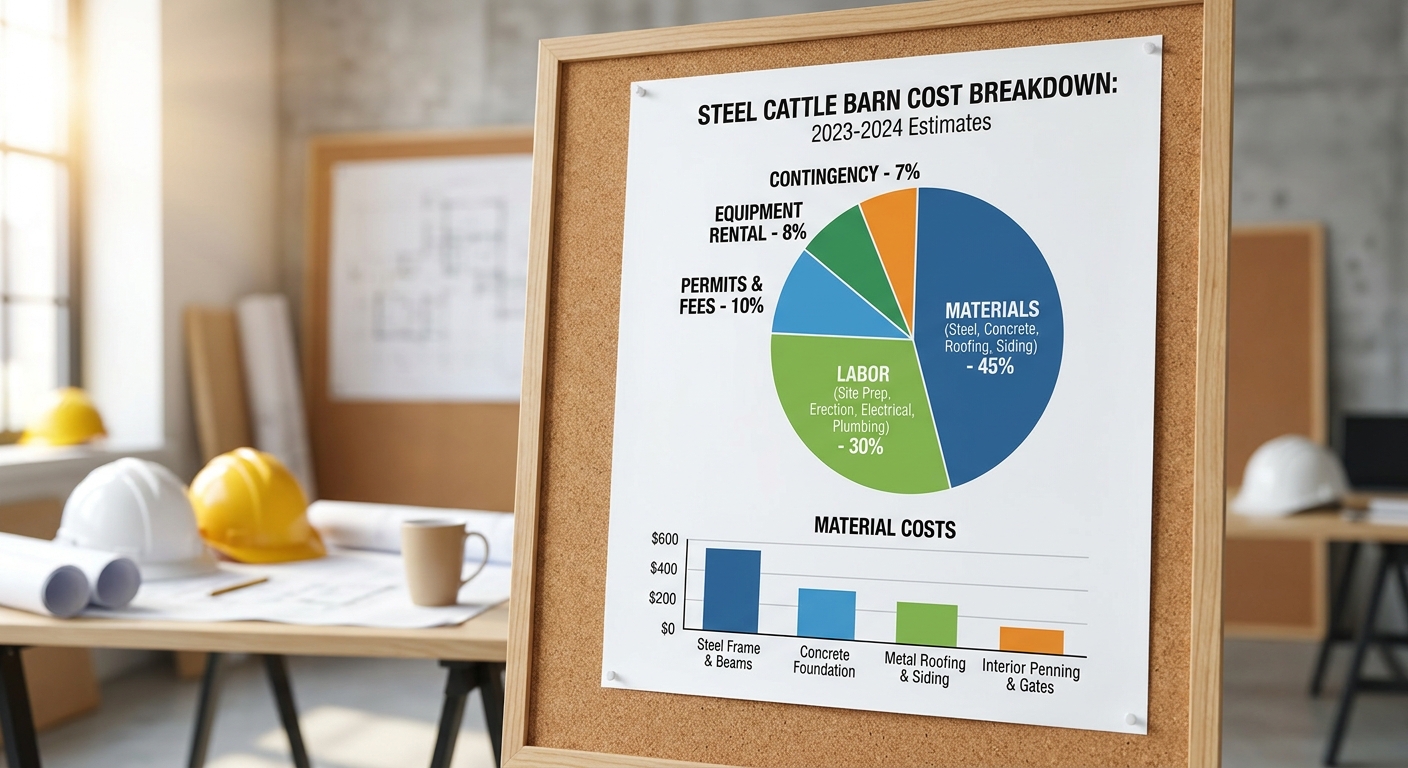
Planning your cattle barn project budget requires balancing factory-direct material costs with local site preparation and long-term maintenance savings. Sourcing your cattle barn directly from a manufacturer eliminates middleman markups and allows you to put more money into high-quality features like galvanization. You must also account for local building permits and engineering requirements that are specific to your region’s wind and snow loads.
Factoring in factory-direct costs
When you buy direct, you are paying for the raw steel and the manufacturing labor, rather than the overhead of a retail dealer. This often allows you to upgrade to a larger footprint or thicker steel cladding within the same budget.
- Detailed BOM (Bill of Materials) for transparency.
- Integrated shipping to reduce logistics headaches.
- No hidden fees or middleman commissions.
You should ask for a comprehensive quote that includes all primary and secondary structures, as well as fasteners. Knowing your “all-in” material cost upfront is crucial for securing financing.
Evaluating long-term maintenance savings
While the initial cost of a steel barn may be higher than a simple wooden shed, the long-term savings are significant. Steel does not require painting every few years, and it is completely resistant to termites and wood rot.
The bottom line is that you should look at the “Total Cost of Ownership” over 20 years. When you factor in the reduced repair costs and the higher resale value of a steel building, it becomes the most economical choice.
Key TakeawayA well-planned budget considers both the immediate construction costs and the decade-long savings associated with durable steel structures.
| Budget Item | Percentage of Total | Cost Control Tip | |
|---|---|---|---|
| Steel Package | 50-60% | Buy Factory-Direct | |
| Foundation/Concrete | 20-25% | Use Local Contractors | |
| Labor/Erection | 15-20% | Use a Skilled Crew |
Proper financial planning ensures that your project is completed on time and meets all the operational needs of your cattle business.
Strategic Summary: Maximizing Your Investment
Investing in a modern steel cattle barn is a strategic move that addresses the core challenges of livestock production: weather protection, disease prevention, and growth efficiency. By utilizing monoslope designs and high-quality steel components, you can create a sustainable environment that maximizes the health of your herd and the ROI of your operation.
Ready to enhance your livestock operation? Contact us today to receive a customized design and quote for your next cattle barn project. At Showhoo Building, we stand for engineering excellence and factory-direct value, ensuring your agricultural facility is built to last for generations.
Email:sales@showhoo.com.cn
Phone/WhatsApp:+86 186 7895 597
Decision FAQ
Can I customize the dimensions of my cattle barn to fit my existing site?Absolutely. Steel structures are highly flexible and can be engineered to specific lengths, widths, and eave heights to accommodate your specific herd size and land constraints.
What’s the best way to ensure my cattle barn lasts for decades in a corrosive environment?It is essential to opt for hot-dip galvanized steel frames and high-quality coated panels, which provide the highest level of resistance to moisture and animal waste.
What’s the best roof pitch for a monoslope cattle barn?The optimal pitch depends on your geographic location, but a single-pitch design that is high on the south side is generally preferred for the best seasonal temperature regulation.
How do I know if my cattle barn needs additional ventilation?If you notice condensation on the ceiling, a strong smell of ammonia, or cattle huddling near openings, your structure definitely requires improved airflow or a more efficient passive ventilation design.
Can I add insulation to the roof of a steel cattle barn later?While it is possible to retrofit insulation, it is much more cost-effective and structurally sound to include insulated sandwich panels during the initial fabrication and installation phase.