
The primary pros and cons of steel frames include exceptional structural durability and rapid assembly speeds, countered by high thermal conductivity and significant initial material costs. Imagine you are overseeing a high-stakes industrial project where every delay translates to lost revenue and mounting labor expenses. You need a structural solution that minimizes on-site errors while maximizing the usable lifespan of the asset. By opting for steel frame building construction, you effectively mitigate traditional construction delays through precision engineering and prefabricated components. This steel frame building construction methodology provides a resilient, low-maintenance foundation for warehouses, workshops, and commercial facilities.
What is steel frame building construction?
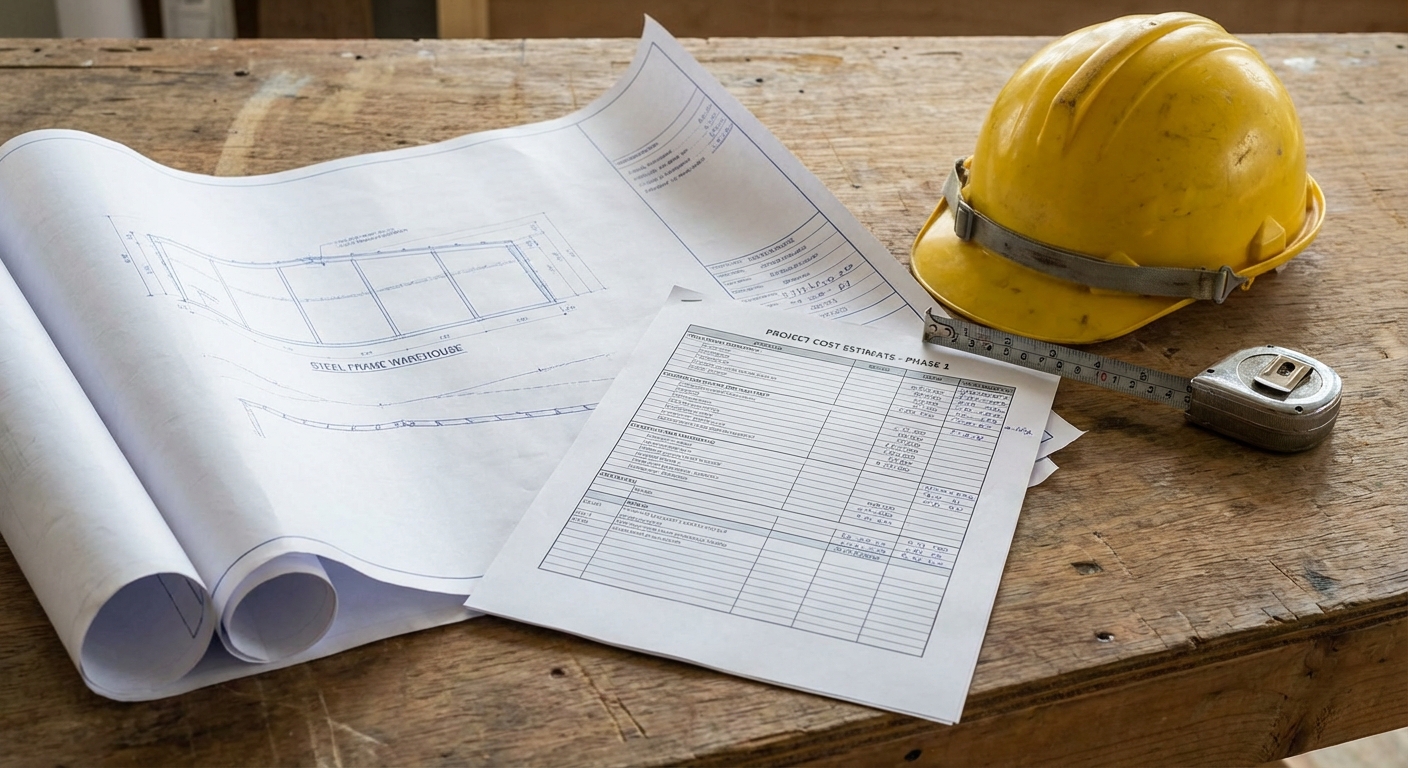
Steel frame building construction is a modern engineering method that utilizes a skeletal framework of vertical columns and horizontal beams to support the building’s weight. This system allows for the creation of massive, column-free internal spaces that are essential for industrial operations. Unlike traditional masonry, the structural load is carried entirely by the steel, allowing for flexible exterior cladding options.
How does the structural skeleton work?
The core of this system relies on high-strength steel members that are bolted or welded together to form a rigid grid. This skeletal approach ensures that the building remains stable even under significant external pressure.
Here is the deal:
- Vertical columns transfer the load directly to the foundation.
- Horizontal beams support the flooring and roofing systems.
- Bracing members provide lateral stability against wind and seismic forces.
You will find that this arrangement allows for much higher structures than traditional wood framing.
What materials are typically used?
While most people think of generic metal, the industry utilizes specific grades like Q355B or Q235 to ensure safety and compliance. These materials are treated with anti-corrosive coatings or galvanization to prevent environmental degradation.
Look:
- Hot-rolled steel for heavy load-bearing sections.
- Cold-formed steel for secondary members like purlins.
- Zinc-based coatings for long-term rust prevention.
The Key Takeaway for you is that the precision of these materials reduces on-site adjustments, leading to a much more predictable construction timeline.
| Component | Function | Material Grade | |
|---|---|---|---|
| Primary Frame | Load-bearing support | Q355B / Q235 Steel | |
| Purlins/Girts | Cladding support | Galvanized Steel | |
| Cladding | Wall and roof shell | Sandwich Panels / Single Sheet |
This data confirms that the reliance on standardized high-grade materials is the foundation of structural reliability in modern projects.
How does it compare to traditional methods?
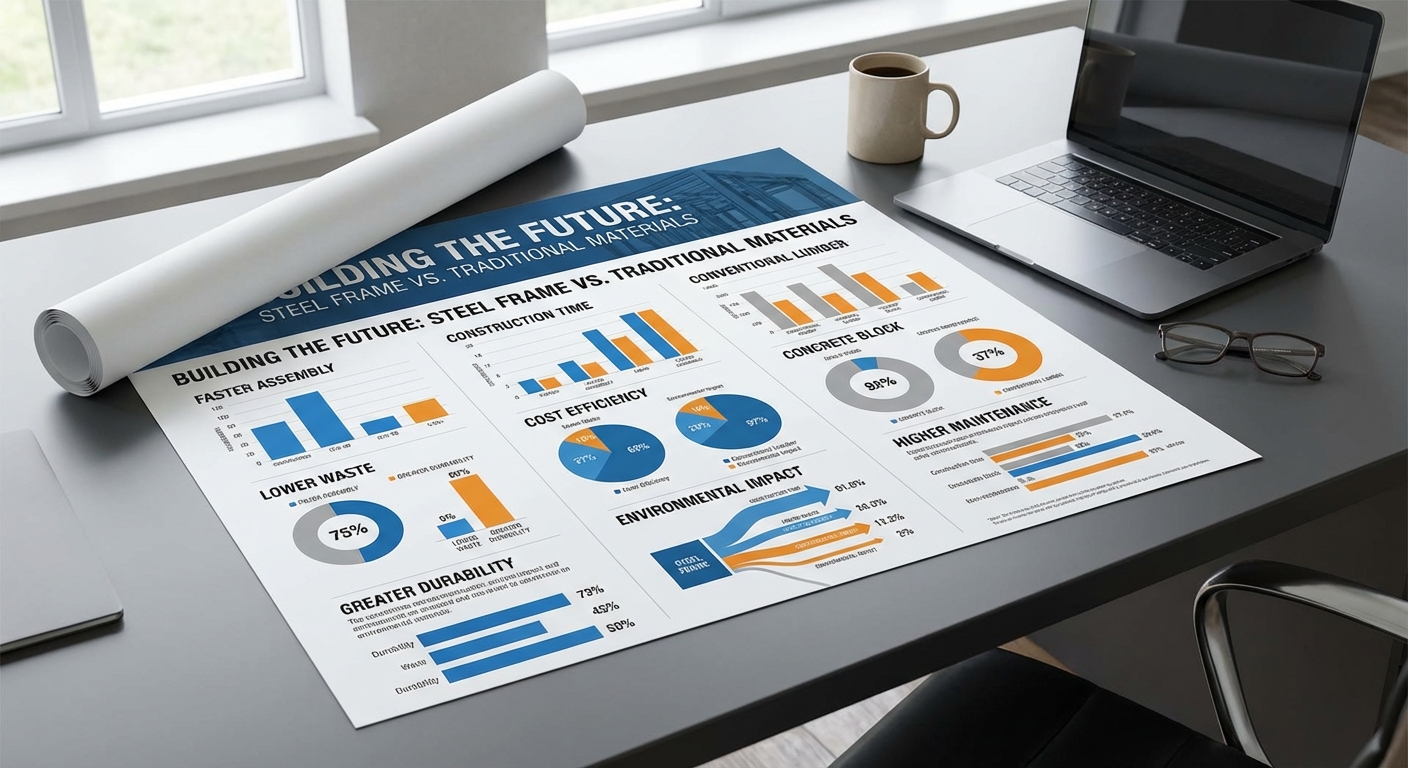
When evaluating steel frame building construction , the most immediate difference is the significant reduction in construction time compared to concrete or timber. Traditional methods often suffer from weather-related delays and labor-intensive site work that can derail a budget. Steel components arrive ready for assembly, turning a construction site into an efficient assembly line.
Why is assembly speed a major factor?
The pre-fabrication process allows for simultaneous site preparation and building manufacturing. This means that while your foundation is being poured, the building is already being fabricated in a controlled factory environment.
But there is more:
- Components are pre-drilled and marked for immediate installation.
- Fewer workers are required on-site to erect the structure.
- Weather delays are minimized since the frame goes up quickly to provide cover.
This streamlined process can reduce your total project duration by up to 50% compared to traditional builds.
How is waste management improved?
Steel is manufactured to exact specifications, which virtually eliminates the excess material typically found on a traditional job site. Any scrap generated in the factory is immediately recycled, contributing to a much cleaner environmental profile.
The fact is:
- Precise cut lists ensure minimal off-cuts.
- Steel is 100% recyclable at the end of its life cycle.
- There is no need for chemical treatments that leach into the soil.
The Key Takeaway is that choosing steel reduces your environmental impact while simultaneously lowering disposal costs during the construction phase.
| Metric | Steel Frame | Traditional Concrete | |
|---|---|---|---|
| Build Time | 30-50% Faster | Standard | |
| On-site Waste | Minimal (<2%) | High (10-15%) | |
| Recyclability | 100% | Low/Difficult |
Analytical evidence suggests that the speed and efficiency of steel structures provide a much faster path to operational readiness for businesses.
What are the primary structural benefits?
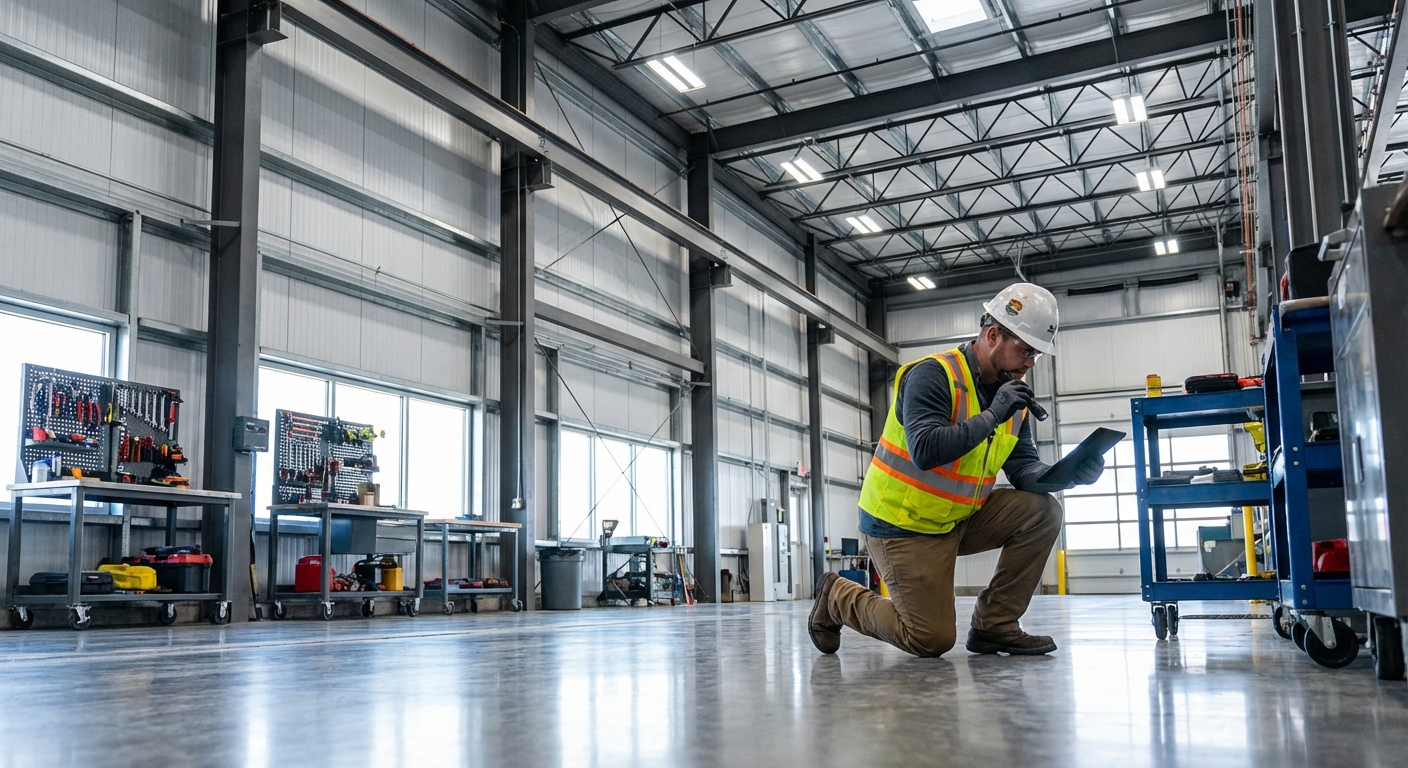
The primary benefits of steel frame building construction include an unparalleled strength-to-weight ratio and long-term resistance to biological threats. Steel does not warp, rot, or expand significantly with moisture, ensuring that the building’s geometry remains perfect for decades. This stability is critical for facilities housing sensitive machinery or high-density storage systems.
Why is unrivaled durability important?
Industrial environments are harsh, and your building needs to withstand more than just the weather. Steel frames are designed to support heavy cranes, mezzanine floors, and industrial vibrations without compromising structural integrity.
Look at this:
- High tensile strength allows for thinner, lighter beams.
- Connections remain secure over long periods of use.
- The structure does not settle like wood or crack like concrete.
This durability means you spend less time on structural repairs and more time on your core business.
How does it handle pests and rot?
Unlike timber, steel is entirely impervious to termites, carpenter ants, and fungi. You will never have to worry about the structural hidden damage caused by wood-boring insects or dry rot.
Here is the deal:
- Zero risk of termite infestations.
- No mold growth within the structural members.
- Resistant to rodent damage.
The Key Takeaway for you is that the biological resistance of steel eliminates the need for expensive chemical treatments and frequent pest inspections.
| Threat | Steel Resistance | Wood Vulnerability | |
|---|---|---|---|
| Termites | Absolute | High | |
| Mold/Rot | Absolute | Moderate | |
| Warping | None | High |
This comparison highlights that for long-term facility health, steel frames offer a “set it and forget it” advantage regarding biological maintenance.
Is steel better than timber for commercial use?
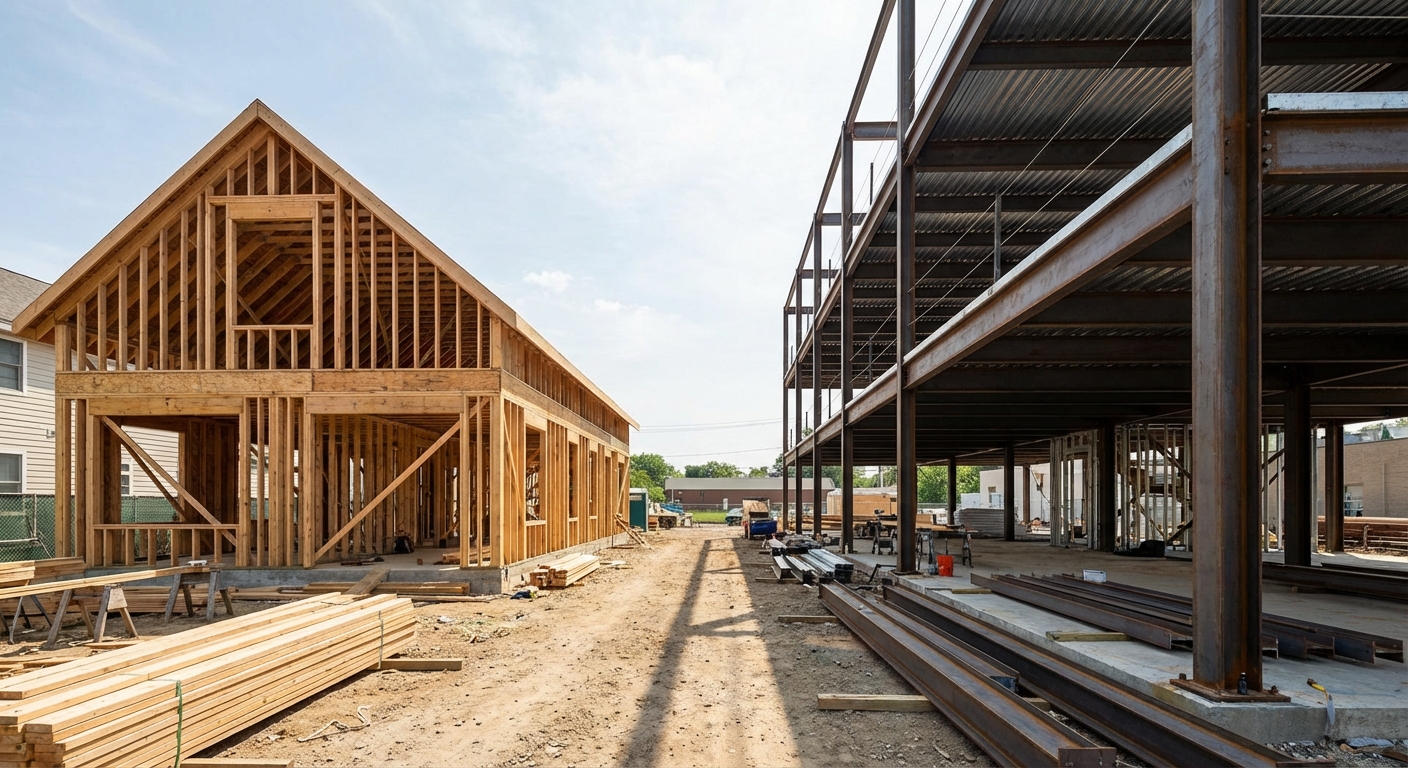
In large-scale commercial applications, steel frame building construction is almost always superior to timber due to its ability to achieve massive clear spans. Timber is limited by the natural size of trees, whereas steel can be engineered to cover vast distances without intermediate support columns. This architectural freedom is essential for aircraft hangars, logistics centers, and large retail spaces.
Can steel achieve larger clear spans?
Clear span refers to the distance between supporting columns, and steel is the king of this category. You can achieve spans of 30 to 40 meters or more with ease using portal frame designs.
The reality is:
- Maximum interior flexibility for racking and equipment.
- Fewer obstacles for forklift and vehicle movement.
- Easier future re-configuration of the interior space.
Timber simply cannot compete with these distances without becoming prohibitively bulky and expensive.
What about dimensional stability?
Timber is a natural material that moves, twists, and shrinks as it dries or absorbs moisture. In contrast, steel is dimensionally stable, meaning your doors will always close properly and your roof panels will remain perfectly aligned.
Consider this:
- Consistent dimensions throughout the entire structure.
- Tight seals for better energy efficiency.
- Less “creaking” and noise during temperature changes.
The Key Takeaway is that the dimensional accuracy of steel ensures a higher quality finish and better long-term performance for your commercial investment.
| Feature | Steel Frame | Timber Frame | |
|---|---|---|---|
| Max Clear Span | 40m+ | Typically <15m | |
| Stability | Constant | Seasonal Movement | |
| Industrial Load | Excellent | Limited |
Choosing steel for commercial projects provides the structural capacity needed for modern industrial demands that timber simply cannot meet.
How does weather affect construction timelines?
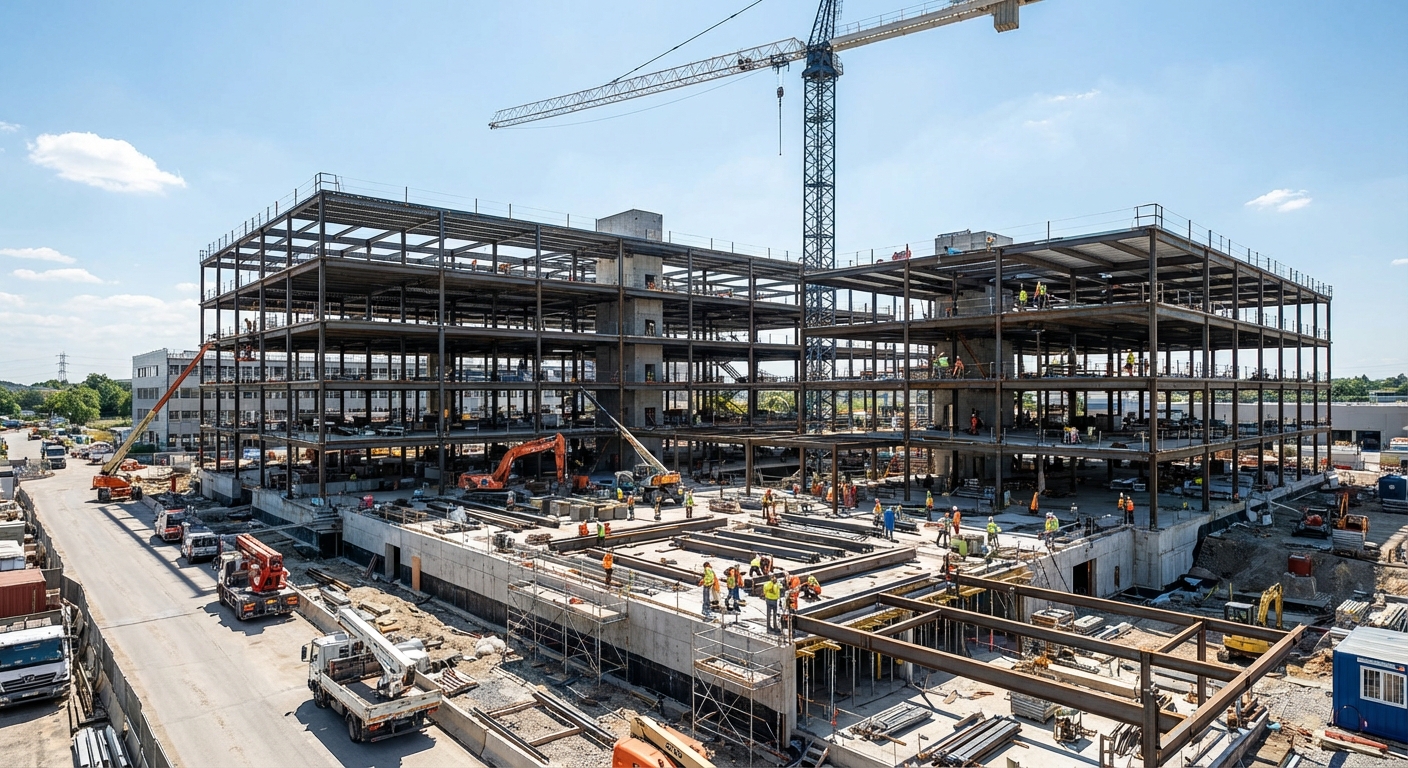
Weather has a much lower impact on steel frame building construction than on traditional wet-trade methods like concrete or masonry. Because the components are dry and pre-fabricated, assembly can continue in temperatures and conditions that would halt other projects. This predictability is a massive advantage for meeting strict occupancy deadlines.
Is construction possible in cold climates?
Concrete requires specific temperature ranges to cure correctly, often necessitating expensive heating equipment in winter. Steel, however, can be bolted together in sub-zero temperatures without any loss in structural performance.
But there is more:
- No waiting for materials to dry or cure.
- Reduced site preparation for winter conditions.
- Immediate structural loading is possible.
This allows you to maintain progress through the winter months, avoiding the “dead season” of traditional construction.
How does rain impact the project?
While heavy rain can make any site difficult, it doesn’t damage the structural integrity of the steel components. Timber can warp or grow mold if left exposed to rain during construction, but galvanized steel remains protected.
The fact is:
- Materials do not absorb water.
- Site cleanup is faster due to lack of mud and debris.
- Panels can be installed quickly to create a dry interior.
The Key Takeaway for you is that the “dry” nature of steel construction provides a reliable schedule that isn’t at the mercy of the local weather forecast.
| Weather Condition | Steel Impact | Concrete/Timber Impact | |
|---|---|---|---|
| Freezing | Minimal | Severe (No curing) | |
| Heavy Rain | Low | Moderate (Warping/Mud) | |
| High Humidity | None | High (Mold risk) |
Predictability is the primary benefit here, ensuring that your project stays on track regardless of seasonal shifts.
Can these buildings survive extreme climates?
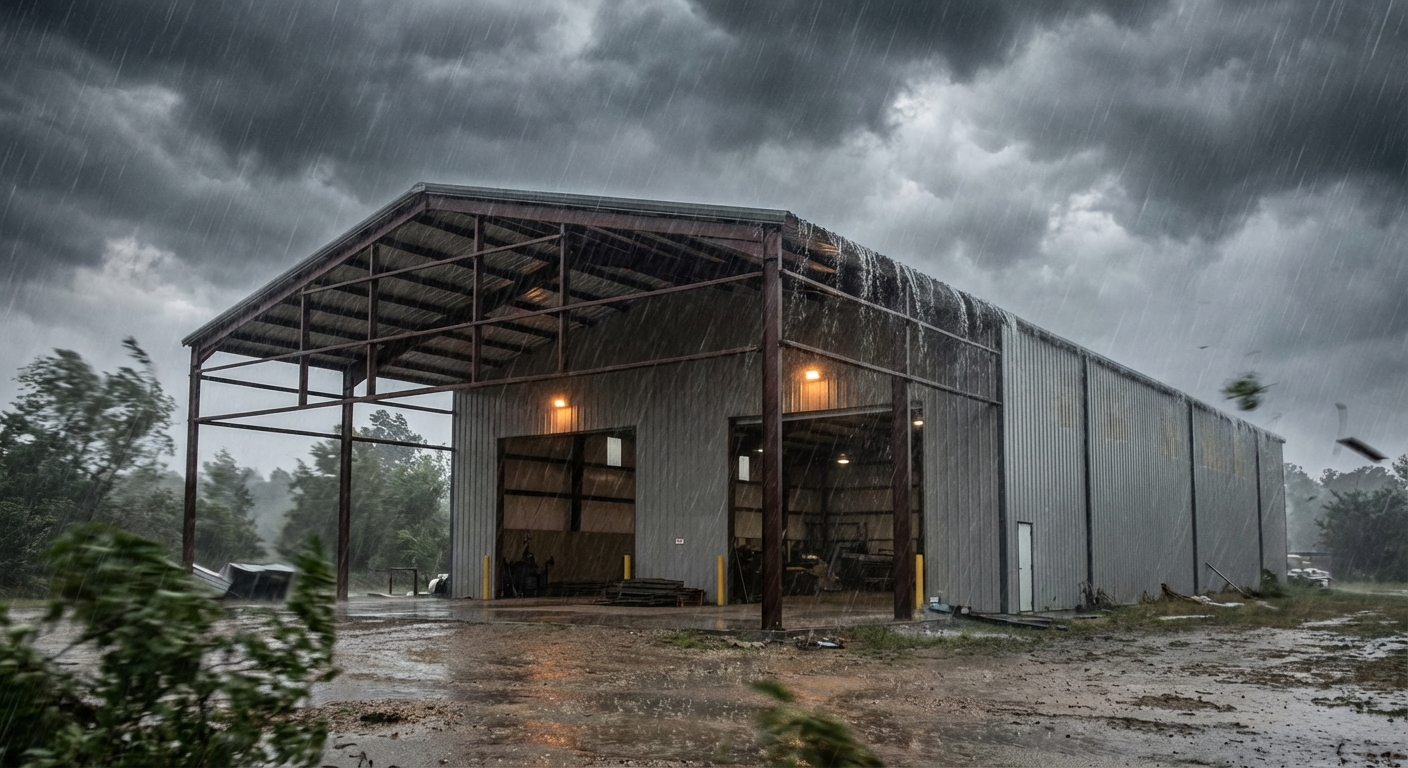
Buildings engineered with steel frame building construction are specifically designed to survive the world’s most extreme climates. From hurricane-force winds to high-magnitude seismic zones, steel’s inherent ductility allows it to absorb and dissipate energy without failing. This makes it the safest choice for high-risk geographical locations.
How does steel handle wind and earthquakes?
Steel is a ductile material, meaning it can bend slightly under extreme stress without snapping. In an earthquake, this flexibility allows the building to sway and absorb shock, whereas rigid masonry might crumble.
Here is the deal:
- Engineered to meet specific local wind load codes.
- Lightweight nature reduces the seismic force on the foundation.
- High-strength bolts provide secure connections during movement.
You can rest easy knowing your facility is built to modern safety standards for extreme events.
What about corrosion in coastal areas?
Many people fear rust, but modern coatings have solved this issue for buildings in salty or humid environments. High-quality galvanization and specialized paint systems provide a barrier that lasts for decades.
Look:
- Hot-dip galvanizing protects every corner of the steel.
- Powder coatings offer additional aesthetic and protective layers.
- Regular inspections can catch and fix minor issues before they grow.
The Key Takeaway is that with the right specification, a steel building can thrive in coastal regions just as well as in inland environments.
| Environmental Risk | Steel Protection | Result | |
|---|---|---|---|
| High Winds | Portal frame rigidity | Structural stability | |
| Earthquakes | Ductility and lightness | Life safety | |
| Salt Air | Galvanization/Coating | Corrosion resistance |
The analytical conclusion is that steel provides the most customizable level of protection against specific regional climate threats.
Does steel allow for flexible interior design?
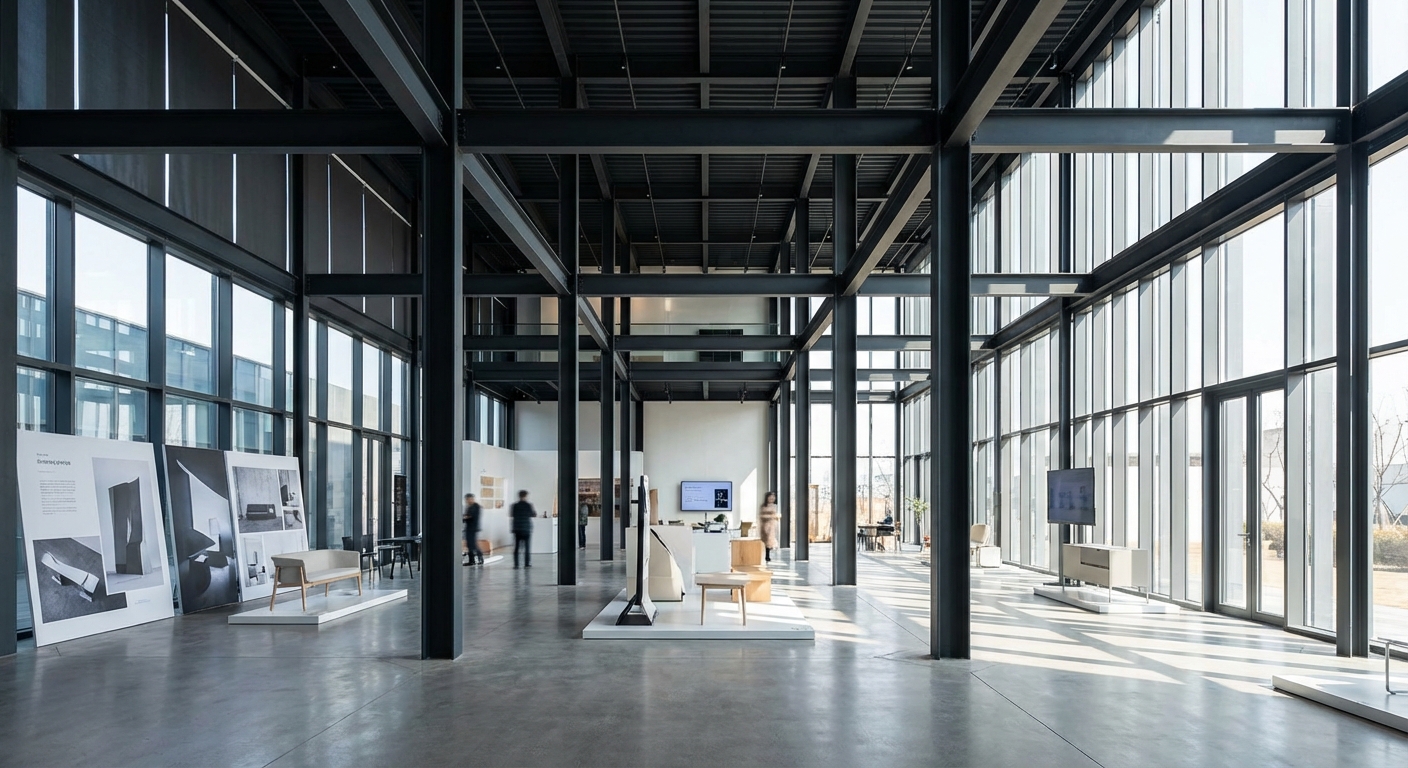
The inherent strength of steel frame building construction opens up a world of interior design possibilities that are impossible with other materials. Because the outer frame carries the load, the interior walls can be placed—or moved—anywhere. This flexibility is vital for businesses that anticipate growth or changing operational needs.
Why are open floor plans easier?
Without the need for interior load-bearing columns every few meters, you have a “blank canvas” for your layout. This is perfect for showrooms, offices, and manufacturing floors where workflow is everything.
Look at this:
- No columns to block lines of sight or machinery.
- High ceilings are easy to achieve for a sense of space.
- Integration of large glass facades is structurally simple.
This openness creates a much more modern and professional environment for your staff and clients.
Can the layout be changed later?
Business needs change, and a steel building can change with them. Adding a mezzanine floor or removing a partition wall is a straightforward process when the main structure is independent of the interior layout.
The fact is:
- Interior walls are usually non-structural.
- Electrical and plumbing systems are easily accessible.
- Expansion is often as simple as adding another frame segment.
The Key Takeaway for you is that a steel building is an adaptable asset that can evolve alongside your business strategy.
| Design Element | Steel Capability | Traditional Constraint | |
|---|---|---|---|
| Interior Walls | Mostly Non-structural | Often Load-bearing | |
| Window Size | Floor-to-ceiling possible | Limited by lintels | |
| Mezzanine | Easy to integrate | Requires heavy support |
The flexibility of the interior space ensures that your building remains functional and relevant for many years.
What are the main challenges to consider?
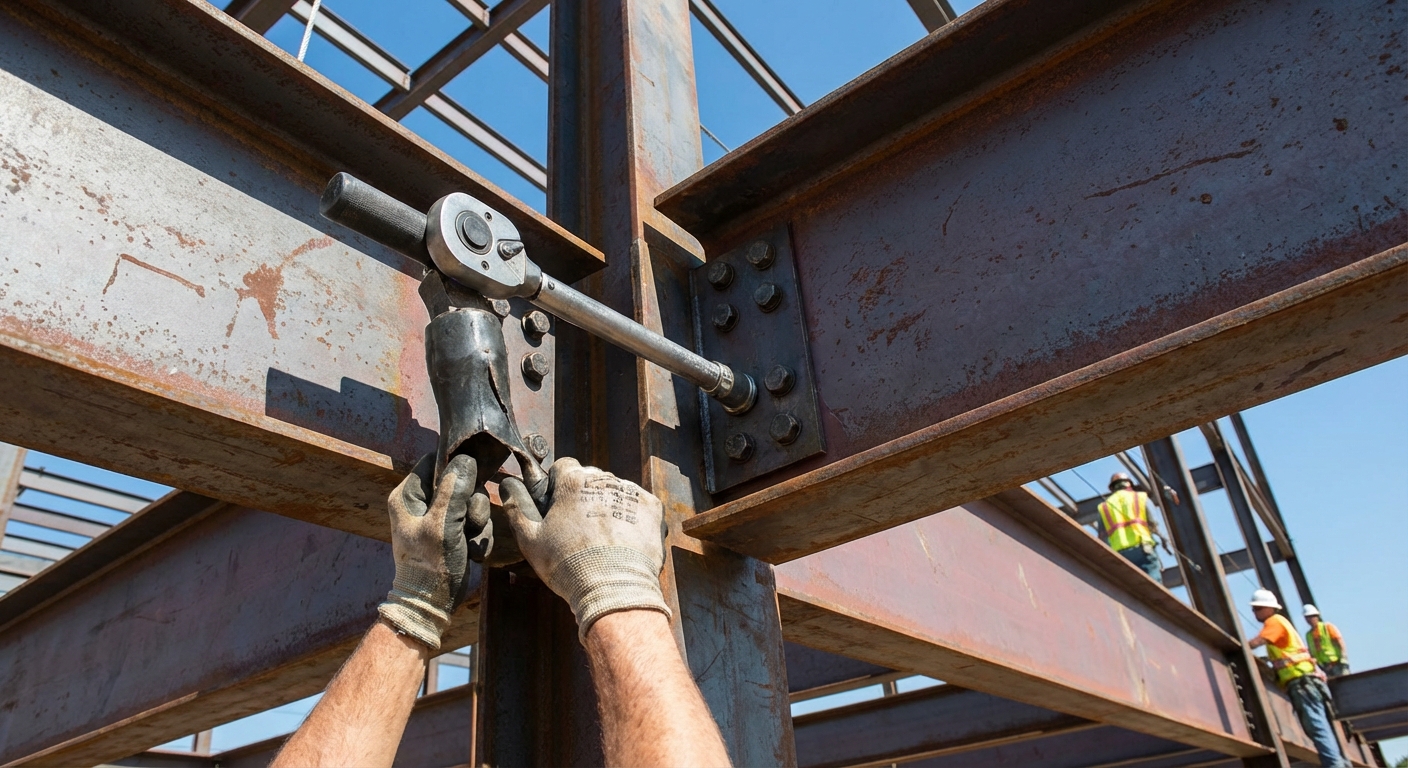
While the benefits are numerous, steel frame building construction does present specific challenges like thermal bridging and initial cost volatility. Steel is a highly conductive material, which means it can transfer heat or cold from the outside to the inside if not properly insulated. Understanding these drawbacks allows you to mitigate them during the design phase.
How do you solve thermal bridging?
Thermal bridging occurs when the metal frame creates a direct path for heat transfer. This can lead to higher energy bills and condensation issues if it isn’t addressed with modern insulation techniques.
But there is more:
- Use of “thermal breaks” between the frame and cladding.
- High-performance sandwich panels provide excellent R-values.
- Proper ventilation prevents moisture buildup inside the shell.
With modern materials, the energy efficiency of a steel building can actually exceed that of a traditional brick home.
Why is precision manufacturing so critical?
Unlike wood, which can be cut and adjusted on-site, steel components must be perfect when they arrive. If a beam is fabricated incorrectly, it can cause significant delays while a replacement is manufactured.
Consider this:
- Reliance on accurate 3D BIM modeling.
- The need for highly skilled fabricators.
- Very little margin for error on the job site.
The Key Takeaway is that while precision is a challenge, it also results in a much higher quality finished product with perfect lines and joints.
| Challenge | Impact | Solution | |
|---|---|---|---|
| Thermal Bridging | Energy loss | Insulated sandwich panels | |
| Upfront Cost | Budget pressure | Offset by faster build/lower labor | |
| Site Accuracy | Delayed assembly | Strict BIM modeling/QC |
Awareness of these factors allows you to choose a supplier that specializes in high-performance insulation and precision engineering.
Is steel construction fire resistant?
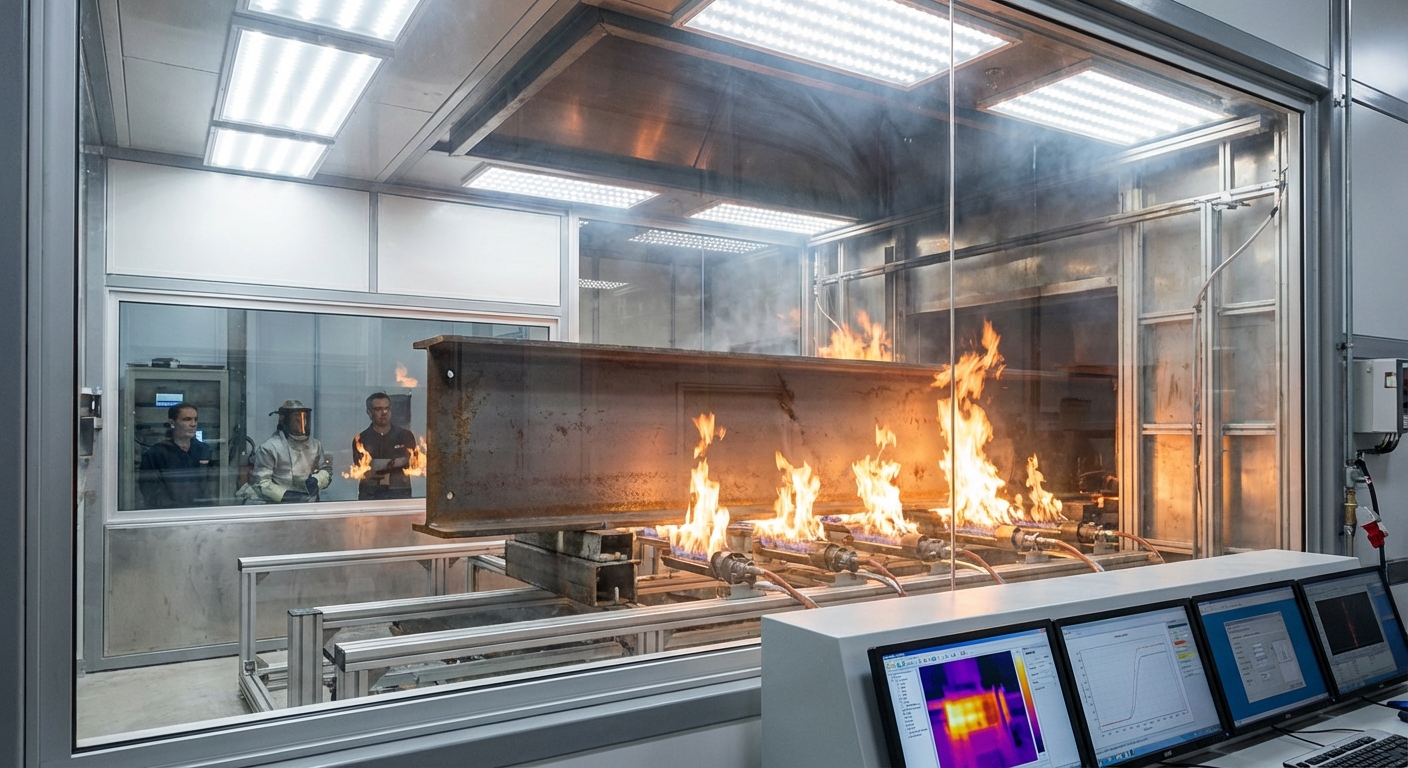
It is a common misconception that steel is fireproof; in reality, steel frame building construction requires specific treatments to maintain structural integrity during a fire. While steel does not burn or contribute fuel to a fire like wood does, it loses its strength at high temperatures. Therefore, fireproofing is a mandatory part of the design process for commercial safety.
What are the fireproofing requirements?
To protect the frame, engineers use various methods to keep the steel cool during a fire. This gives occupants time to evacuate and firefighters time to control the blaze before the structure collapses.
Here is the deal:
- Intumescent paints that expand when heated to provide a barrier.
- Concrete encasement for primary load-bearing columns.
- Spray-applied fire-resistive materials (SFRM).
These measures are strictly regulated by building codes to ensure maximum safety for your facility.
How does it improve overall safety?
Even without treatment, steel has a major advantage over wood: it doesn’t feed the fire. A wood-framed building provides fuel that makes a fire grow faster and hotter, whereas steel remains inert.
Look:
- Steel won’t contribute to smoke toxicity.
- It doesn’t provide a path for fire to travel between floors.
- The structural collapse is usually more predictable than wood.
The Key Takeaway for you is that while fireproofing adds cost, the non-combustible nature of the frame significantly lowers the overall fire risk of the building.
| Factor | Steel Frame | Timber Frame | |
|---|---|---|---|
| Combustibility | Non-combustible | Highly Combustible | |
| Fire Spread | Does not contribute | Contributes fuel | |
| Protection | Coatings/Encasement | Built-in (Charring) |
Proper fireproofing ensures that the inherent non-combustible nature of steel is matched with the structural endurance needed in an emergency.
What is the long-term ROI of steel frames?
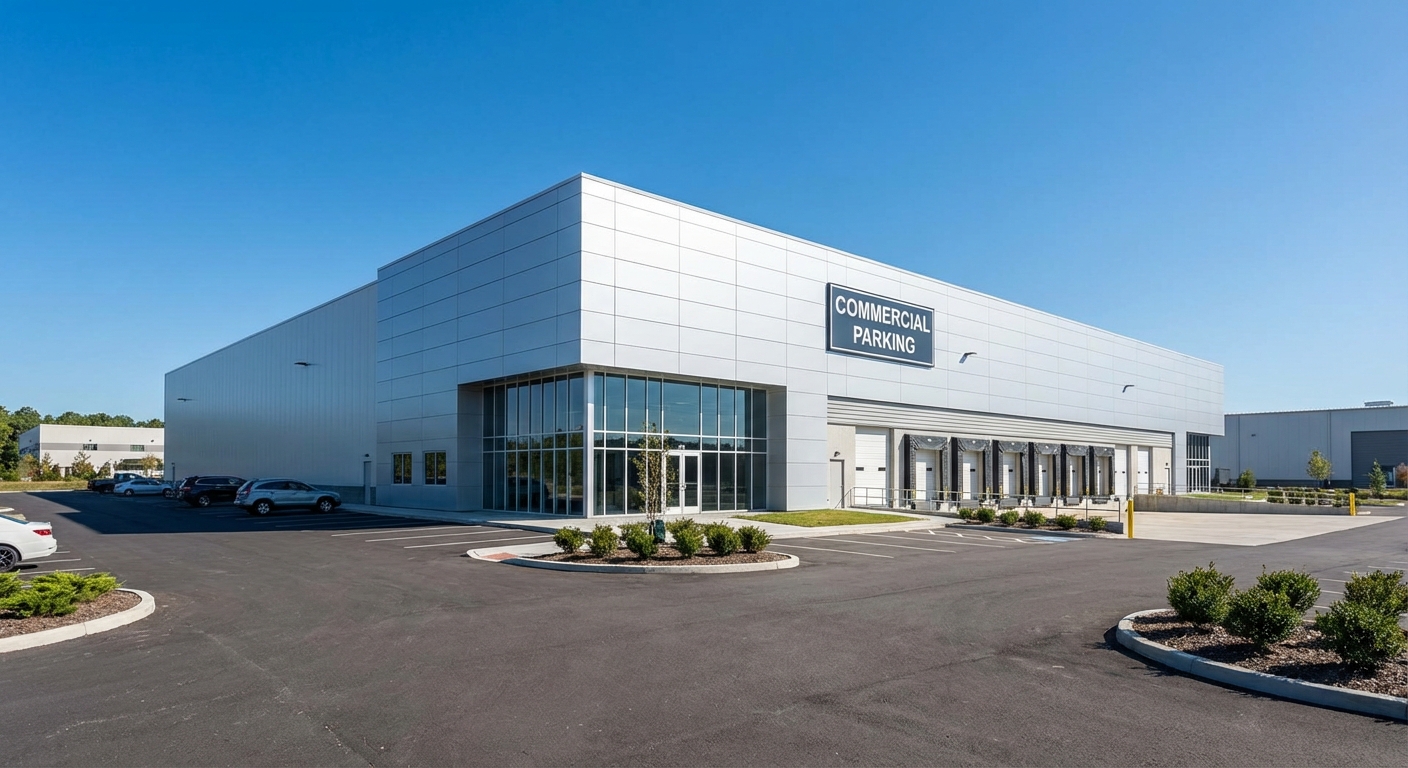
The long-term ROI of steel frame building construction is exceptionally high when you factor in the total cost of ownership over 30 to 50 years. While the initial investment might be higher than some low-grade alternatives, the savings in maintenance, insurance, and operational efficiency are substantial. A steel building is a high-value asset that maintains its structural and aesthetic appeal with very little effort.
How are maintenance costs reduced?
Because steel doesn’t rot, warp, or attract pests, your annual maintenance checklist is remarkably short. You won’t be paying for expensive foundation repairs due to settling or structural re-leveling.
Look at this:
- Exterior panels only require occasional cleaning.
- Paint finishes are designed to last for decades without peeling.
- Structural inspections are fast and straightforward.
This allows you to reinvest those maintenance dollars back into your business operations instead of your building.
Does it have better resale value?
A 20-year-old steel building often looks and performs exactly like a new one. This longevity, combined with the ease of interior remodeling, makes it a very attractive option on the secondary real estate market.
The fact is:
- Structures are easily certified for safety years later.
- Adaptability makes them suitable for many different buyers.
- High-quality appearance retains “curb appeal” longer.
The Key Takeaway is that your initial investment in steel is protected by the material’s legendary durability and its appeal to future commercial tenants or buyers.
| ROI Factor | Steel Frame Impact | Financial Benefit | |
|---|---|---|---|
| Maintenance | Low requirement | Annual cost savings | |
| Insurance | Lower premiums | Reduced overhead | |
| Resale | High retention | Capital gains protection |
When viewed as a 20-year asset, the financial case for steel frames is significantly stronger than any other construction methodology.
Conclusion
Navigating the complexities of industrial construction requires a balance between performance and price. Steel frames solve the most common pain points of modern building projects: slow timelines, high maintenance, and structural vulnerability. By choosing a solution that prioritizes precision and durability, you ensure that your facility remains a productive asset for decades.
If you are ready to start your next project with a partner that understands the nuances of global engineering and high-quality fabrication, contact us today for a comprehensive quote. Our vision is to provide every client with a world-class structure that embodies the strength and innovation of modern steel design. Let’s build your future together.
FAQ
Can I easily expand a steel building in the future?Yes, expanding a steel structure is much simpler than traditional builds because the components are modular. You can often remove an end wall and bolt on additional frame segments to increase your square footage with minimal disruption.
What’s the best way to prevent rust in a humid climate?The most effective method is specifying hot-dip galvanized steel for the main frame and using high-quality anti-corrosive coatings for secondary members. These treatments create a chemical barrier that prevents moisture and oxygen from reaching the raw steel.
How do I know if my site is suitable for a steel building?Generally, any site with a solid foundation can support a steel building, but you should always perform a soil test first. Steel buildings are actually lighter than concrete ones, which can sometimes make them better for sites with lower soil bearing capacity.
Can I use a steel frame for a multi-story office?Absolutely, steel frames are the standard for multi-story commercial buildings because they can support heavy vertical loads while maintaining thin floor profiles. This allows for more floors within the same height limit compared to concrete.
How do I choose the right insulation for my steel warehouse?The best choice is typically glass wool or rock wool sandwich panels because they offer both high R-values and fire resistance. These panels are easy to install and provide a finished look for both the interior and exterior walls.