
How to choose broiler cage equipment in the Philippines is a critical question for poultry farmers looking to scale up their production and improve overall efficiency in a competitive tropical market. Filipino poultry farmers often struggle with high mortality rates, low FCR, and expensive labor costs due to outdated rearing systems. It is incredibly frustrating to watch heat stress and poor hygiene eat away at your profit margins season after season. Fortunately, modern automated cage solutions provide a controlled environment that minimizes disease transmission, optimizes feed delivery, and multiplies your farm’s operational efficiency.
Upgrading to automated broiler equipment allows growers in the Philippines to shift from low-yield floor systems to high-density multi-tier battery cage architectures. This transition ensures your flock is raised in a clean, temperature-controlled environment that guarantees optimal growth.
Why invest in Philippine broiler equipment?
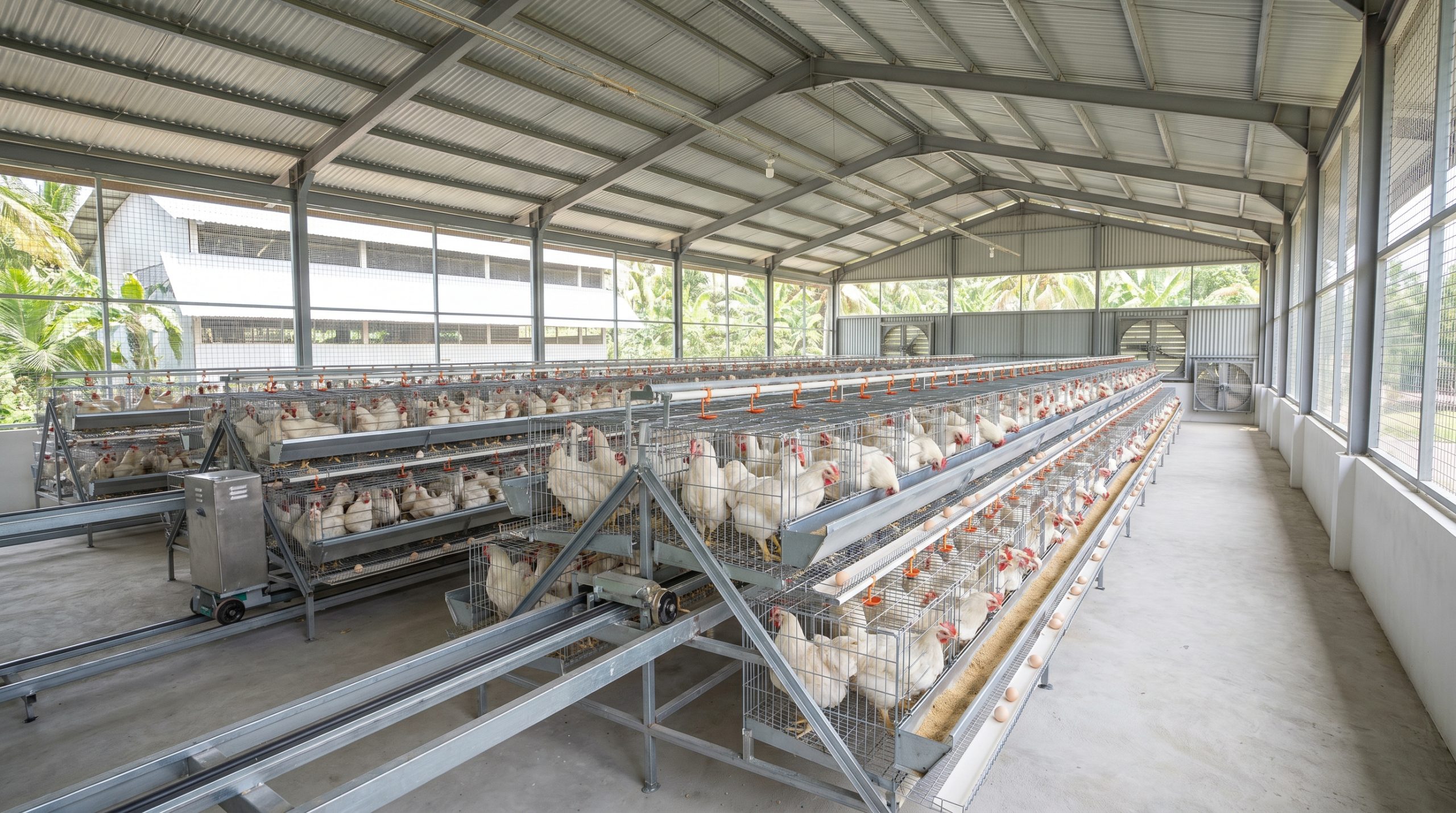
Investing in modern Philippine broiler equipment is the single most effective way to multiply your farm capacity while lowering operational costs and disease risks. It transforms traditional open-sided manual setups into highly efficient, high-density operations.
What are the primary growth benefits?
Look: Upgrading to high-density tiers unlocks a massive performance leap for your business.
- Increased Stocking Density: Raise up to 1.7 times more birds in the exact same footprint.
- Accelerated Growth Rate: Controlled environments optimize weight gain and reduce growth cycles.
- Enhanced Biosecurity: Elevating birds off the ground blocks parasite cycles.
This ensures you maximize land use and grow healthier birds.
Can you overcome rising labor costs?
Here is the reality: Manual feeding and cleaning are no longer financially viable under modern commercial poultry margins in the Philippines.
- Labor Efficiency: A single worker can comfortably manage a 50,000-bird automated house.
- Minimized Human Error: Automation delivers precise daily feed and water allocations consistently.
- Improved Farm Safety: Reducing manual handling keeps biosecurity risks extremely low.
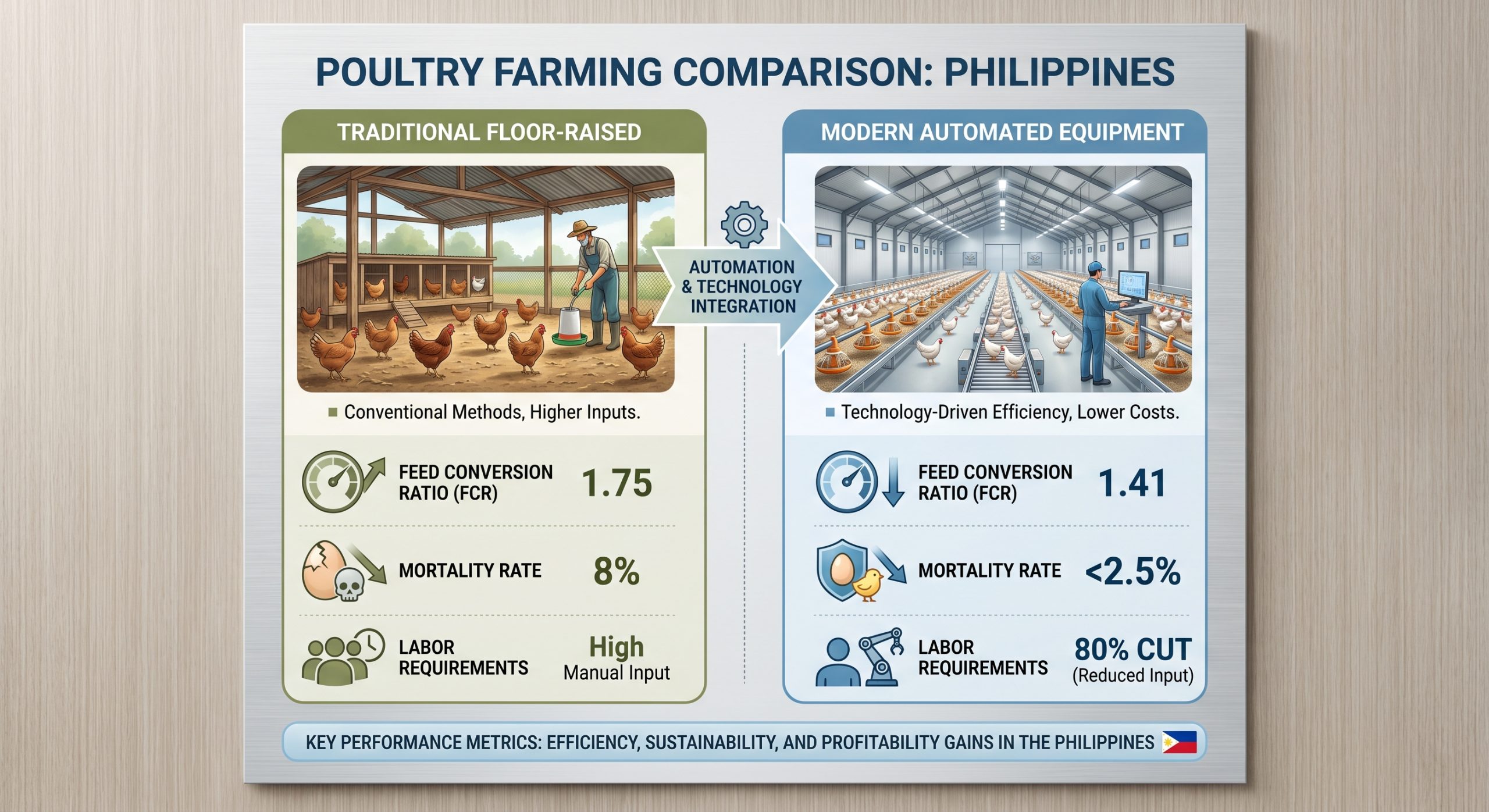
Key Takeaway: Moving from floor raising to modern vertical systems immediately solves your labor shortages and increases stocking capacity by 1.7x.
| Parameter | Manual Floor System | Automated Cage System | Difference | |
|---|---|---|---|---|
| Labor Requirement | 5 workers / 30k birds | 1 worker / 50k birds | 80% decrease | |
| Bird Density | Low (Floor) | High (Multi-tier) | 1.7x capacity | |
| Biosecurity Level | Low (Exposed) | High (Isolated) | Major risk reduction |
Analytical Guide: The comparison above demonstrates that automated equipment transitions poultry farming from a high-risk, labor-intensive chore into an optimized, predictable industrial production engine.
How does broiler equipment boost farm ROI?
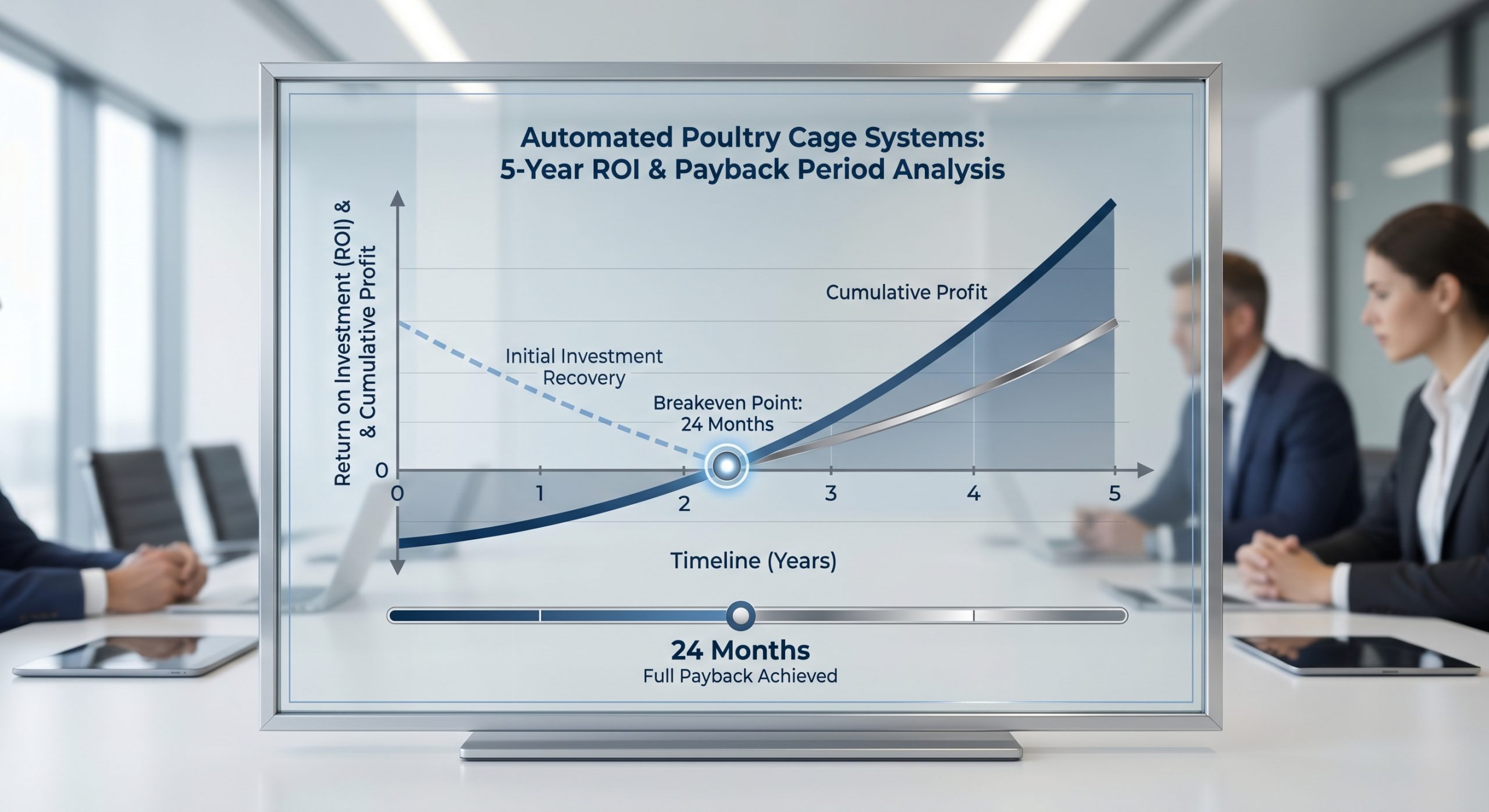
Modern broiler equipment boosts your farm’s Return on Investment (ROI) by maximizing feed efficiency, reducing mortality rates, and achieving a complete payback in less than 24 months. By converting feed directly into muscle instead of waste, your operational margins expand rapidly.
How fast is initial capital recovery?
Think about it: The initial capital expense of high-end machinery is easily offset by your daily operational savings.
- Short Payback Cycle: Achieve complete break-even within 20 to 24 months of continuous operation.
- Higher Flock Turnover: Run up to 6.5 growth cycles per year instead of just 5.
- Premium Market Pricing: Uniform, injury-free broilers secure better rates from wholesale buyers.
This turns a heavy upfront cost into a highly predictable profit generator.
What is the impact on feed and mortality?
The best part? You stop wasting expensive feed while drastically improving bird survival rates.
- Exceptional Feed Savings: Keep feed wastage below 1.5% compared to 12% in floor setups.
- Under 2.5% Mortality: Controlled sanitary cages keep your mortality rates exceptionally low.
- Low Vet Expenditures: Sanitary isolation eliminates the need for expensive routine medication.
Key Takeaway: Investing in automated systems guarantees a rapid 24-month payback through massive feed savings and high bird survival rates.
| Financial Metric | Manual Floor Setup | Automated Cage Setup | Financial Impact | |
|---|---|---|---|---|
| Payback Period | N/A (Low Margins) | 20 to 24 Months | Rapid asset recovery | |
| Annual Flock Cycles | 5 Cycles | 6.5 Cycles | 30% revenue boost | |
| Average Mortality | 6% to 8% | Under 2.5% | 68% survival increase |
Analytical Guide: Achieving a rapid financial payback is only possible when you select equipment engineered specifically for the local environmental conditions.
Boost your farm efficiency—upgrade to modern broiler equipment today!
Email:sales@showhoo.com.cn
Phone/WhatsApp: + 86 186 7895 5927
Which broiler equipment suits local climate?
Choosing broiler equipment that integrates seamlessly with an enclosed climate-controlled house is essential for surviving the hot and humid Philippine climate. Selecting broiler equipment designed for high-humidity conditions protects your flock from devastating heatwaves.
How do battery cages handle high humidity?
Here is the reality: High-density vertical battery cages must be paired with automated environmental controls to prevent dangerous stagnant air pockets.
- Optimized Air Distribution: Multi-tier layouts allow continuous wind-chill effects to reach every bird.
- Reduced Heat Sensation: Keeping birds elevated away from hot floor litter prevents heat retention.
- Moisture Control: Fast manure removal keeps humidity levels from spiking inside the house.
This creates a perfect micro-climate even during extreme summer afternoons.
Why choose closed-house systems over open-sided ones?
Look: Open-sided housing leaves your valuable flock completely vulnerable to the unpredictable Philippine weather.
- Total Environment Control: Easily adjust wind speed and cooling pad moisture at any time.
- Complete Biosecurity Shield: Prevent wild birds and pests from spreading diseases to your flock.
- Typhoon Resistance: Closed houses provide maximum structural protection during heavy tropical storms.
Key Takeaway: Enclosed battery cage configurations are the absolute standard for tropical poultry farming, keeping internal temperatures stable regardless of outdoor conditions.
| Environmental Metric | Open-Sided Floor House | Closed-House Cage System | Local Benefit | |
|---|---|---|---|---|
| Heat Stress Risk | High (Uncontrolled) | Near 0% (Controlled) | Prevents summer mortality | |
| Wind-Chill Airflow | Inconsistent | 2.5 to 3.0 m/s (Uniform) | Maximizes bird comfort | |
| Typhoon Protection | Low (Vulnerable) | High (Engineered Structure) | Protects farm infrastructure |
Analytical Guide: Managing tropical climates successfully requires highly durable automated mechanics that can run continuously without failing.
Is automated broiler equipment durable enough?
Heavy-duty automated broiler equipment is engineered to withstand the harshest tropical farm environments by utilizing premium hot-dip galvanized steel frames. This ensures your capital assets remain structurally sound and completely rust-free for more than 15 years.
How does material selection prevent rust?
Think about it: Poultry manure releases high levels of acidic ammonia which will easily corrode low-grade metals in months.
- Thick Hot-Dip Galvanization: Provides a heavy zinc coating of up to 500 g/m² for maximum protection.
- Corrosion-Resistant Alloys: Zinc-aluminum-magnesium coatings offer ultimate durability in coastal zones.
- Seamless Welding: High-frequency automated welds prevent structural moisture traps and weak spots.
This ensures your steel cages remain robust through countless sanitization washdowns.
What mechanical tests guarantee durability?
The best part? Every automated part is rigorously load-tested to handle continuous heavy-duty operations.
- Reinforced Bearing Assemblies: High-durability motor gearboxes prevent unexpected system breakdowns.
- Tension-Tested Belts: Heavy-duty manure belts run smoothly without stretching or drifting off-center.
- Solid Floor Supports: Rigid cage frames prevent sagging under the weight of mature birds.
Key Takeaway: Standardizing on heavy hot-dip galvanized steel prevents premature rust, protecting your physical assets for over 15 years.
| Material Feature | Standard Electro-Galvanized | Heavy Hot-Dip Galvanized | Lifespan Advantage | |
|---|---|---|---|---|
| Coating Thickness | Low (40 – 60 g/m²) | High (275 – 500 g/m²) | 5x longer rust defense | |
| Expected Lifespan | 2 to 3 Years | 15+ Years | Saves long-term CAPEX | |
| Ammonia Resistance | Low (Corrodes quickly) | High (Chemical resistant) | Maintains structural integrity |
Analytical Guide: Although hot-dip galvanization carries a higher upfront material cost, it prevents structural failure and keeps your farm running smoothly for up to 15 years.
Can modern broiler equipment save your feed?
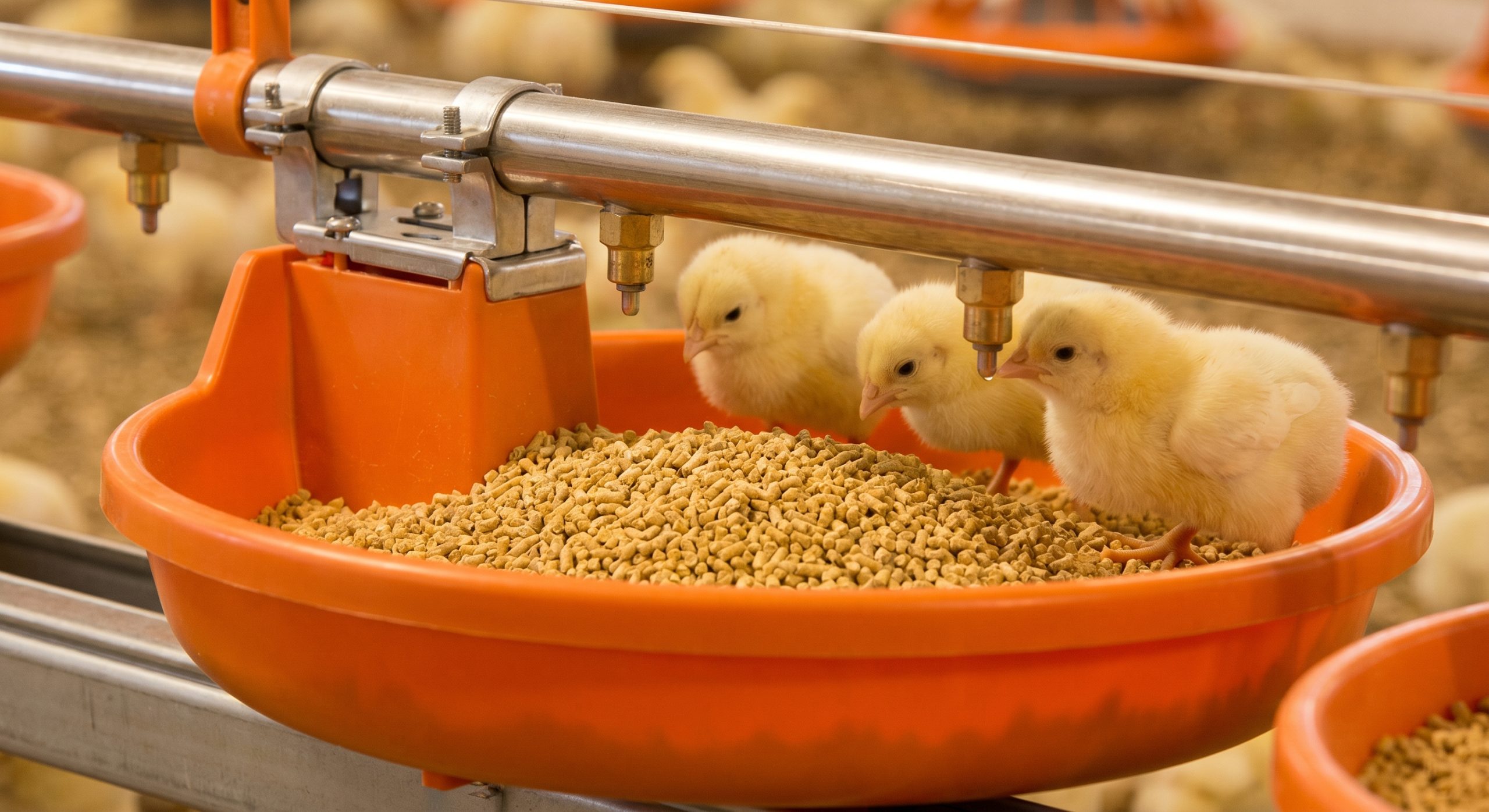
Modern broiler equipment can save massive amounts of feed by utilizing computer-controlled automated feeding lines that eliminate spillage and bird scratching. This high-precision system ensures your broiler equipment reduces feed waste to less than 1.5%.
How do precision feed pans work?
Look: Traditional feeding troughs allow birds to scratch and waste expensive feed directly into the manure.
- Anti-Scratch Grids: Circular physical barriers stop birds from kicking feed out of the pans.
- Adjustable Flow Collars: Easily customize feed levels as your chicks grow to prevent overflow.
- Deep Lip Designs: Curved outer edges keep feed safely inside the pan at all times.
This translates to immediate feed cost savings starting from day one.
Can automated distribution improve FCR?
Here is the reality: Consistent feed timing and uniform portion control are essential for achieving a perfect Feed Conversion Ratio (FCR).
- Synchronized Auger Delivery: Heavy-duty augers distribute identical portions across the entire row instantly.
- Timed Feeding Programs: Program exact feed times to stimulate healthy digestion and rapid bird growth.
- Zero Feed Stagnation: Continuous motion keeps feed fresh and prevents harmful mold from growing.
Key Takeaway: Upgrading to automated pan feeders drops your FCR to an exceptional 1.4:1 ratio by eliminating daily feed waste.
| Feeding Metric | Manual Hopper Trough | Automated Auger Pan | Feed Efficiency Gains | |
|---|---|---|---|---|
| Feed Waste Rate | 8% to 15% Spillage | Less than 1.5% Spillage | 90% waste reduction | |
| Feed Conversion (FCR) | 1.85 : 1 | 1.41 : 1 | Saves 440g feed per bird | |
| Feed Freshness | Low (Exposed to dust) | High (Sealed storage) | Prevents mold contamination |
Analytical Guide: By transitioning from manual hand-feeding to computer-controlled automatic dispensers, you can drop your FCR to an outstanding 1.4:1 ratio.
How does broiler equipment optimize climate?
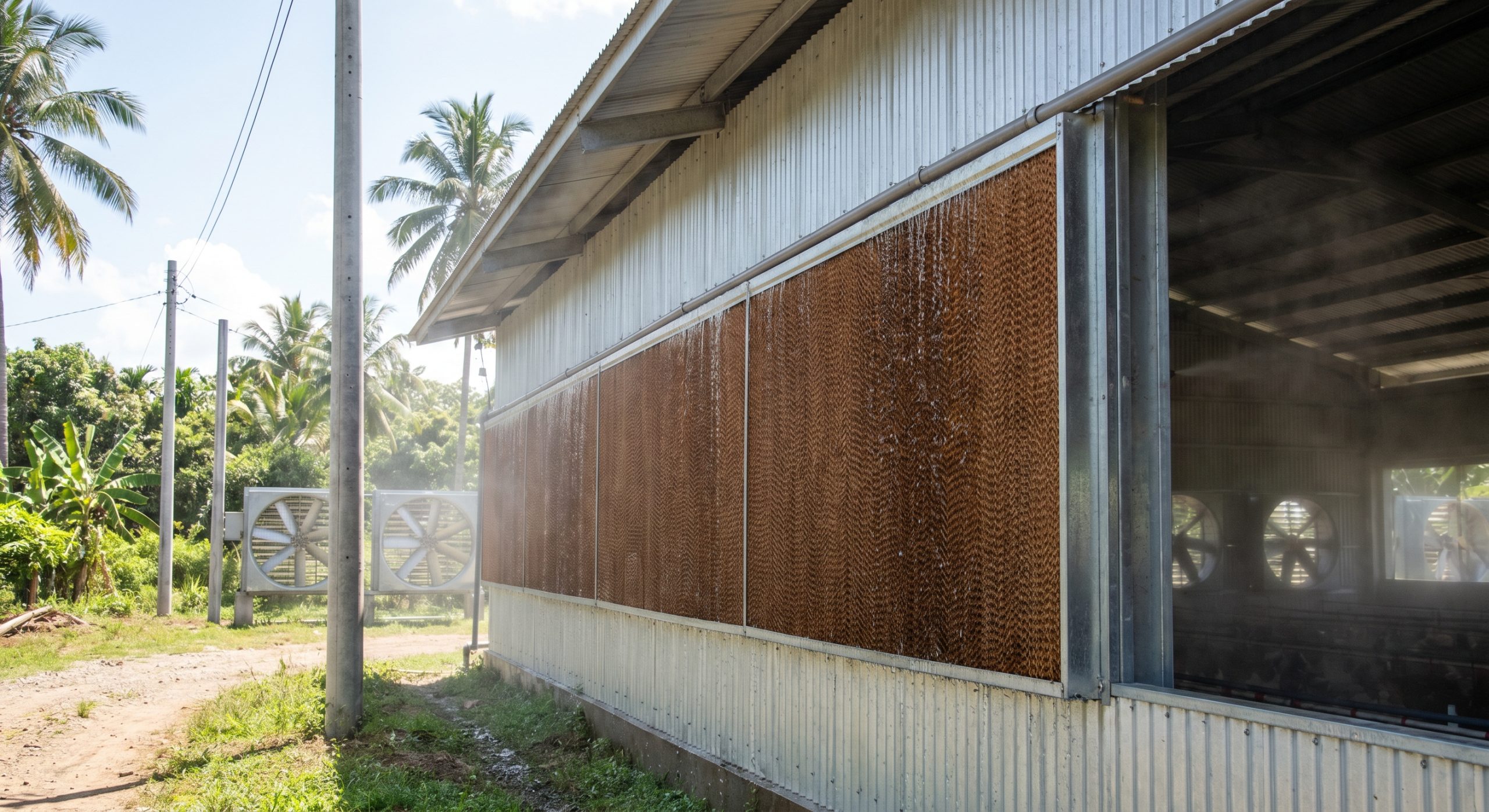
Automated broiler equipment optimizes climate by connecting advanced ventilation fans with wet evaporative cooling pads to maintain internal temperatures below 28°C. This integrated system keeps air moving at a continuous speed to cool your flock during hot days.
How do cooling pads cool the air?
The best part? Hot outdoor air is drawn through thick wet cooling pads, dropping the temperature by up to 10°C.
- High-Density Cellulose Pads: Deliver uniform water absorption for maximum evaporative cooling efficiency.
- Smart Water Pump Control: Cycle water usage intelligently to keep humidity from spiking too high.
- Airtight House Sealing: Force all incoming hot air to pass through the cooling system.
This creates a cool, comfortable breeze throughout the entire poultry house.
What role do high-volume fans play?
Think about it: Without steady airflow, high-density battery cages will quickly trap heat and suffocate your birds.
- Tunnel Ventilation Strategy: Powerful exhaust fans pull air across the entire length of the house.
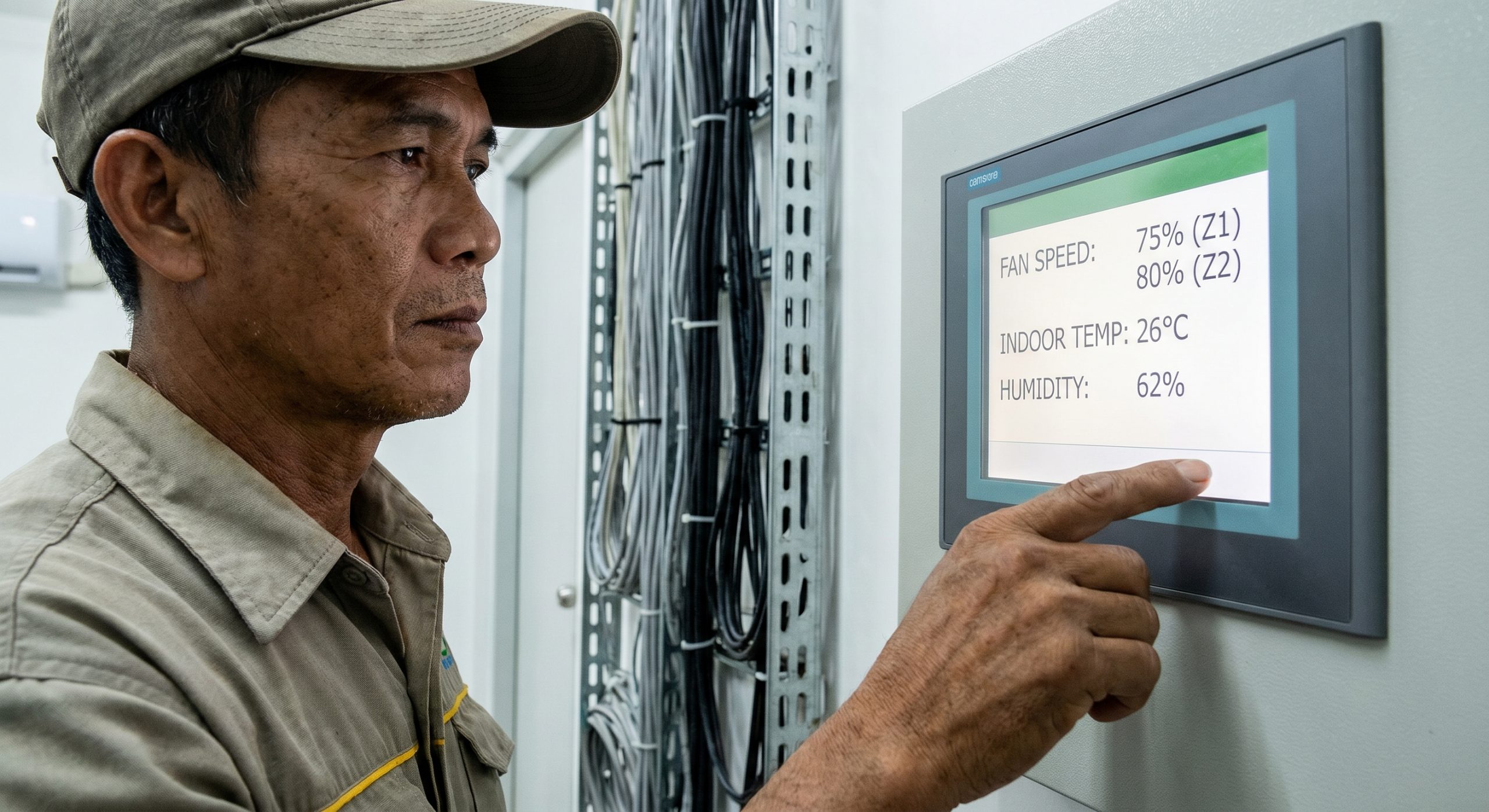
- Wind-Chill Comfort: Maintain air speeds of 2.5 to 3.0 m/s to cool birds naturally.
- Automated Speed Adjustments: Intelligent sensors automatically speed up fans when temperatures rise.
Key Takeaway: Integrating cooling pads with tunnel fans keeps your house 10°C cooler than outdoor temperatures, eliminating heat stress.
| Climate Parameter | Outdoor Philippine Air | Optimized Closed House | Performance Impact | |
|---|---|---|---|---|
| Temp on Hot Days | 35°C to 38°C | 24°C to 26°C | Prevents thermal shock | |
| Relative Humidity | 80% to 90% (Sultry) | 60% to 65% (Balanced) | Enhances breathing comfort | |
| Air Speed | Inconsistent (Stagnant) | 2.5 to 3.0 m/s (Uniform) | Delivers active cooling |
Analytical Guide: Maintaining a strict temperature curve using automated climate controllers is the single most important factor for securing a survival rate of over 99% in tropical climates.
Boost your farm efficiency—upgrade to modern broiler equipment today!
Email:sales@showhoo.com.cn
Phone/WhatsApp: + 86 186 7895 5927
Does broiler equipment improve bird health?
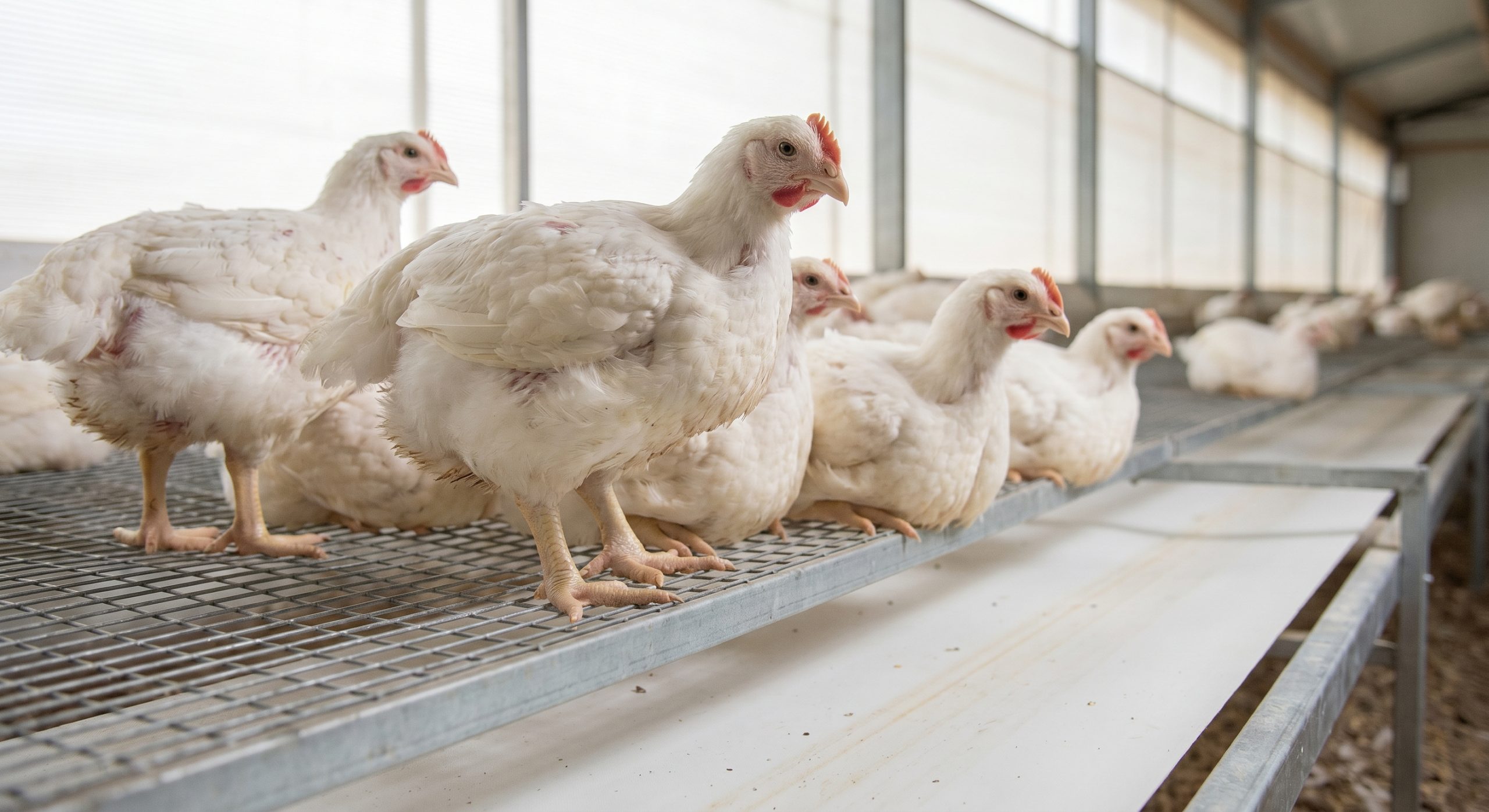
Modern broiler equipment improves bird health by physically isolating chickens from their droppings and maintaining pristine sanitary conditions. Raising birds on elevated mesh grids using broiler equipment eliminates contact with pathogens and prevents foot lesions.
How do plastic-coated floors protect birds?
Look: Rough, poorly designed wire floors can cause painful breast blisters and down-graded carcass values.
- Soft Mesh Materials: Flexible plastic-coated wire grids prevent foot pad dermatitis entirely.
- Self-Cleaning Gaps: Droppings fall instantly through the floor onto manure belts below.
- Anti-Slip Walking Surfaces: Clean grid spacing allows young chicks to stand securely without injury.
This keeps your birds’ feet dry and clean for their entire life cycle.
Can clean water prevent disease spread?
Here is the reality: Open water troughs are easily contaminated by dust, feed, and droppings, which rapidly spreads diseases.
- Closed Nipple Drinking Lines: Deliver clean water directly from a sealed pipe network.
- Precision Pressure Regulators: Ensure uniform water flow down the entire line without leaks.
- 360-Degree Nipple Triggers: Allow young chicks to drink easily from any angle with zero spillage.
Key Takeaway: Isolating birds from manure and providing closed water lines reduces disease rates and lowers vet costs by 75%.
| Health Indicator | Traditional Ground Litter | Elevated Cage System | Disease Control Impact | |
|---|---|---|---|---|
| Ammonia Levels | 25 to 45 ppm (Dangerous) | Less than 8 ppm (Safe) | Stops respiratory illness | |
| Foot Pad Damage | Up to 15% of Flock | Under 1.2% of Flock | Delivers premium carcass | |
| Coccidiosis Risk | High (Litter contact) | Near 0% (Isolated floor) | Eliminates medication cost |
Analytical Guide: Elevating birds off the floor and pairing cages with automated manure belts is the absolute baseline requirement for modern poultry biosecurity and high-yield processing.
Why choose steel-framed broiler equipment?
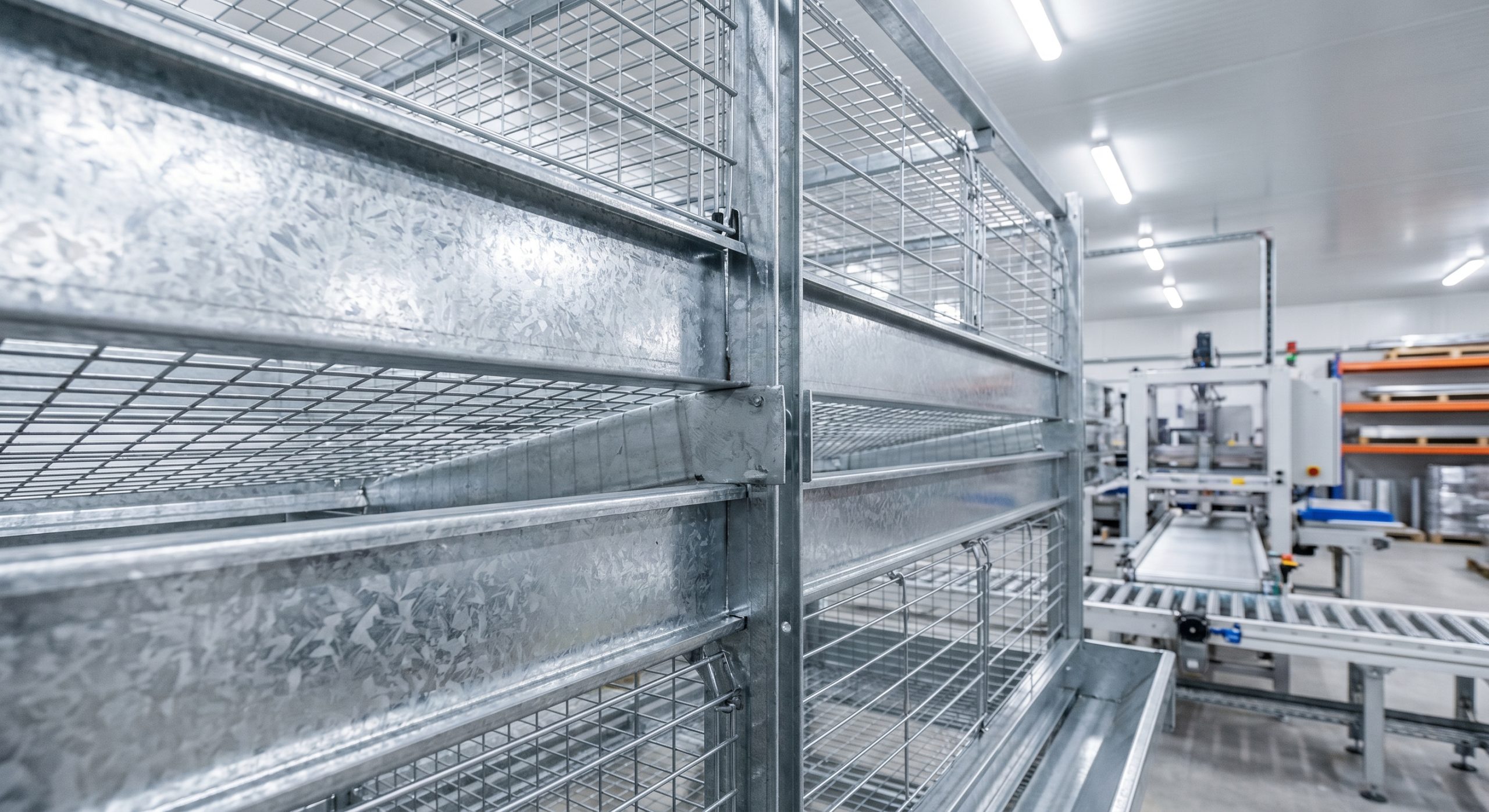
Choosing steel-framed broiler equipment is essential because it provides the structural strength needed to support high-density cages and withstand typhoons. This rigid framework keeps all automated tracks aligned and running smoothly without binding.
What are the main structural benefits?
Think about it: A weak frame will sag under the heavy weight of mature birds, causing automated lines to jam.
- High-Tensile Steel Columns: Support multi-tier cage loads easily without bending.
- Typhoon-Proof Framing: Designed to withstand heavy tropical wind speeds of up to 250 km/h.
- Perfect Track Alignment: Keeps feeding trolleys and manure belts running straight.
This protects your expensive machinery from premature wear and structural failures.
Does modular assembly simplify installation?
The best part? The entire steel framework is prefabricated at the factory, allowing for fast and easy assembly on site.
- Precision Bolt Connections: Eliminate the need for slow, costly on-site welding.
- Standardized Frame Parts: Allow you to expand your cage system easily as your business grows.
- High-Precision Foundations: Secure anchor bolts firmly lock the columns to level concrete floors.
Key Takeaway: Rigid, typhoon-rated steel frames prevent automated systems from jamming, securing your long-term operations.
| Structural Feature | Low-Cost Lightweight Frames | Premium Steel Frames | Structural Advantage | |
|---|---|---|---|---|
| Wind Load Resistance | Under 120 km/h | Up to 250 km/h (Typhoon) | Survives tropical storms | |
| Multi-Tier Support | Max 2 Tiers (Weak) | Up to 4 Tiers (Strong) | Doubles vertical capacity | |
| On-Site Construction | Welding required (Slow) | Bolt assembly (Fast) | Slashes labor setup costs |
Analytical Guide: Selecting a manufacturing partner with proven compliance to Philippine wind and seismic codes removes structural risk from your long-term investment.
Can broiler equipment streamline waste removal?
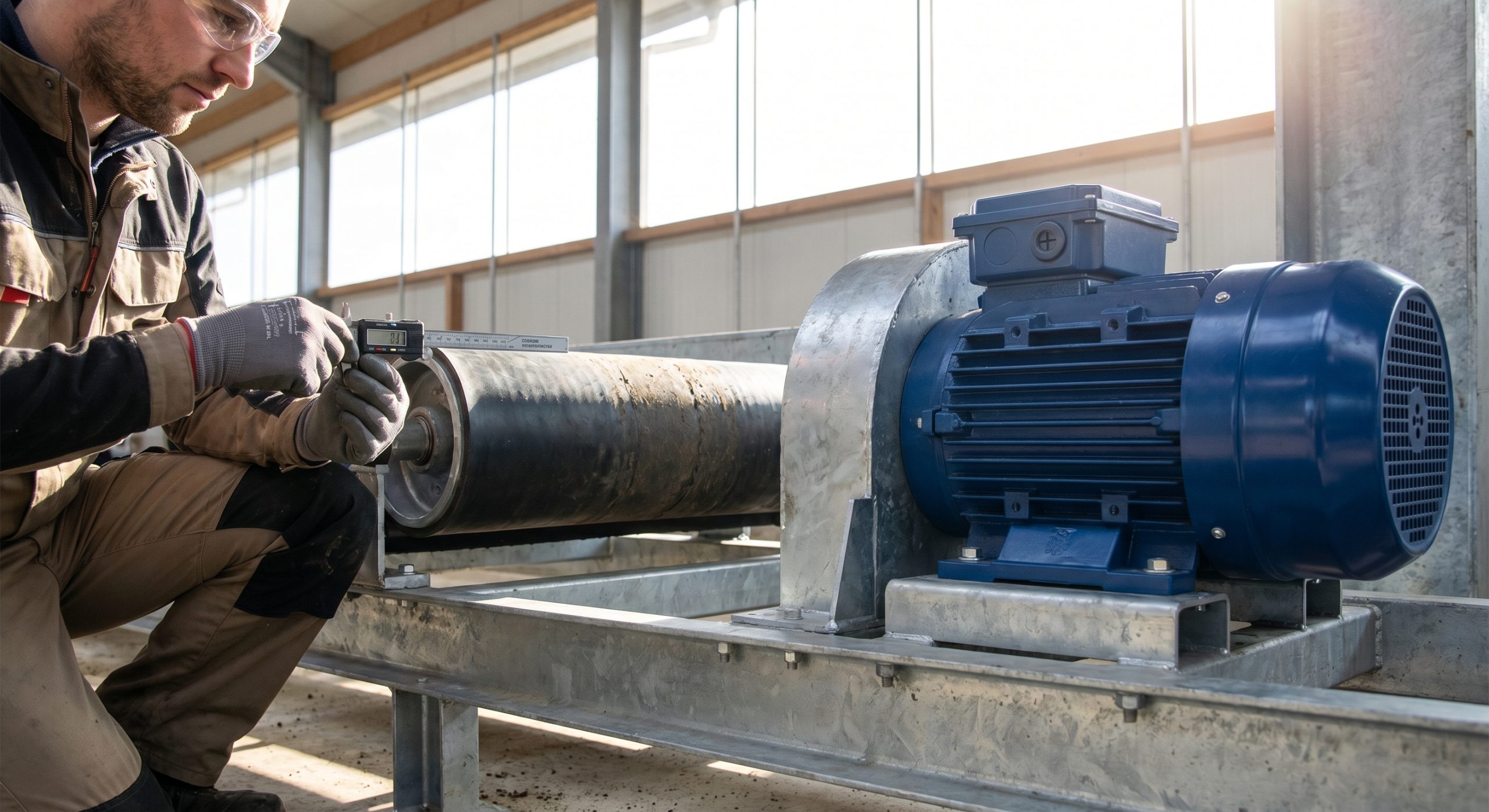
Automated broiler equipment streamlines waste removal by using high-strength polypropylene belts to carry manure out of the house instantly. This automated broiler equipment ensures ammonia levels remain low while saving hours of manual labor.
How do automated manure belts work?
Look: Manure left inside the house quickly breaks down, releasing toxic ammonia fumes that damage birds’ lungs.
- Continuous Waste Removal: PP manure belts run under each cage tier to collect waste.
- Heavy-Duty Scraping Blades: Clean the belts thoroughly at the end of each row.
- Transverse Transfer Belts: Carry waste out of the building directly into disposal trucks.
This keeps your poultry house clean and free of bad odors.
How does waste removal improve farm hygiene?
Here is the reality: Keeping manure out of the house is the fastest way to break pest and disease life cycles.
- Near-Zero Ammonia Levels: Keep toxic fumes well below 8 ppm for better breathing conditions.
- Fly and Pest Control: Removing wet manure deprives flies and beetles of breeding grounds.
- Biosecure Disposal: Transport waste safely to treatment areas without cross-contamination.
Key Takeaway: Automated PP manure belts remove waste instantly, keeping ammonia levels below 8 ppm and eliminating manual cleaning.
| Waste Management Metric | Manual Litter Removal | Automated Manure Belt | Hygiene Improvement | |
|---|---|---|---|---|
| Cleaning Frequency | Every 40 days (Post-harvest) | Daily / Custom schedule | 100% cleaner environment | |
| Internal Ammonia | 25 to 45 ppm | Less than 8 ppm | Keeps bird lungs healthy | |
| Fly Breeding Risk | High (Stagnant waste) | Negligible (Fast removal) | Reduces local pest count |
Analytical Guide: Efficient waste management completes the core loop of automation, letting you focus on customizing your equipment layout.
How to customize your new broiler equipment?
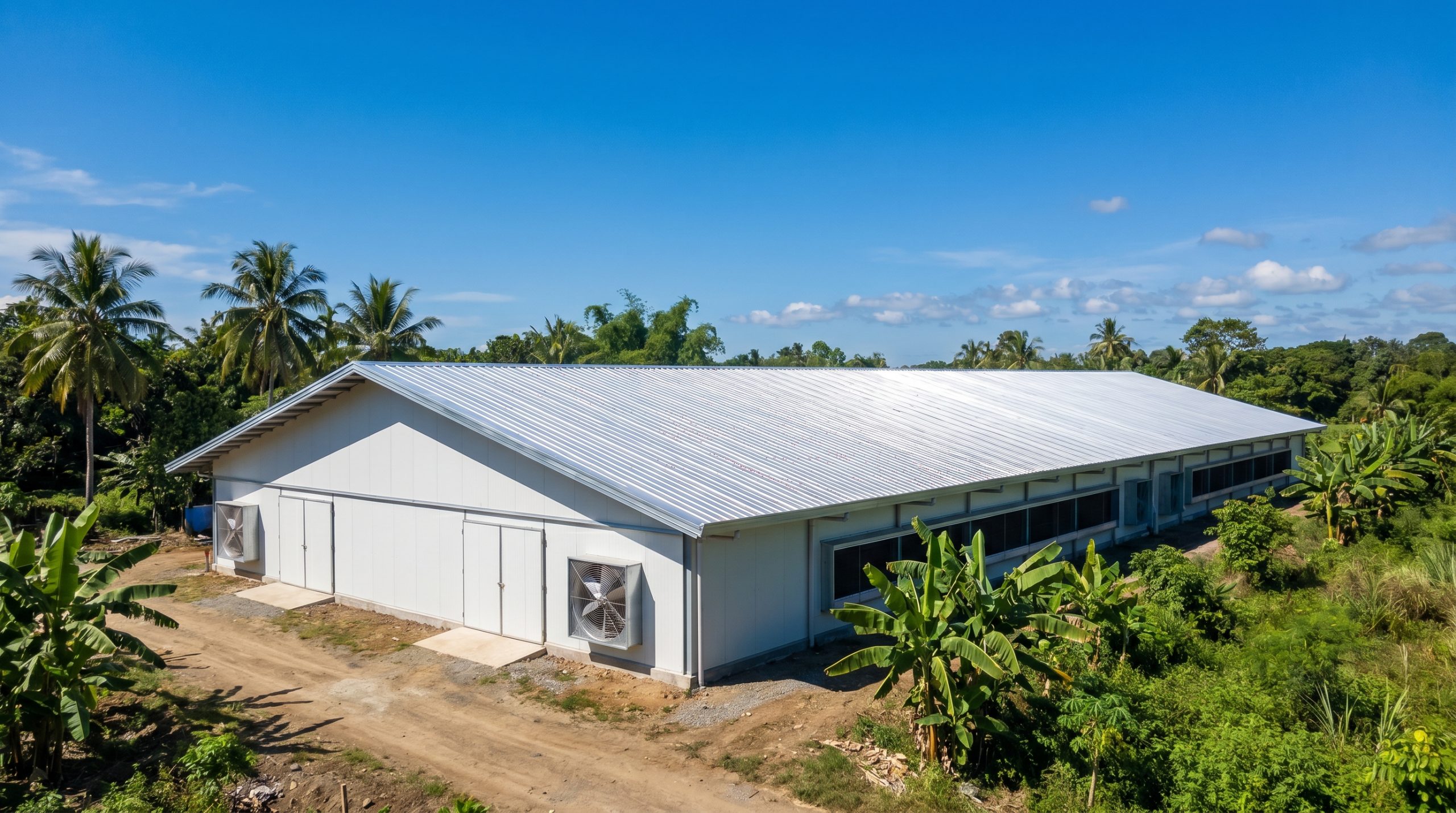
Customizing your new broiler equipment involves matching your farm’s land footprint, target bird capacity, and ventilation needs with modular 3-tier or 4-tier configurations. Tailoring your broiler equipment layout ensures you maximize floor space efficiency while keeping installation costs low.
How do you select the right tier count?
The best part? Modular cage layouts let you scale your bird capacity to match your business goals.
- 3-Tier Configurations: Ideal for lower ceilings and simple retrofitting projects.
- 4-Tier Fully Automated: Maximizes vertical volume for high-capacity commercial operations.
- Custom Aisle Dimensions: Design corridors of 1.0 to 1.2 meters for easy worker access.
This lets you build a highly productive system tailored specifically to your land.
How to plan the building integration?
Think about it: Your poultry house structure and cage layout must be engineered together to ensure perfect airflow.
- Integrated Building Design: Prefabricated steel frames are sized to fit your cages perfectly.
- Optimized Fan Placement: Mount exhaust fans at exact heights to pull air evenly.
- Future Expansion Ready: Add more cage rows or longer housing sections as your market grows.
Key Takeaway: Working with a manufacturer to customize your layout guarantees perfect ventilation and maximizes your stocking density.
| Customization Tier | Ideal Ceiling Height | Best For | Land Efficiency | |
|---|---|---|---|---|
| 3-Tier Cage | 3.2 to 3.5 Meters | Retrofits & Medium Farms | High (2.5x floor capacity) | |
| 4-Tier Cage | 4.0 to 4.5 Meters | Large Commercial Projects | Maximum (4x floor capacity) | |
| Aisle Clearance | 1.0 to 1.2 Meters | Standard Worker Access | Optimized for maintenance |
Analytical Guide: Customizing your equipment is the final step toward building a highly profitable, modern poultry enterprise.
Conclusion
Maximizing profitability in the competitive Philippine poultry market requires moving away from outdated manual rearing systems. Selecting the right combination of automated, hot-dip galvanized broiler cages, robust structural frames, and advanced tropical climate control systems allows you to boost farm productivity by up to 1.7 times while keeping biosecurity risks to a minimum.
At Showhoo Building, we solve the complex challenges of modern poultry farming by providing integrated, typhoon-rated, and highly insulated steel building packages that work in perfect harmony with advanced broiler equipment. Whether you are upgrading an older house or building a new, large-scale commercial poultry facility, we deliver high-quality, factory-direct steel structures designed to withstand the toughest Philippine weather. Please contact us today to discuss your poultry housing needs and receive a comprehensive, customized project design within 24 hours.
Boost your farm efficiency—upgrade to modern broiler equipment today!
Email:sales@showhoo.com.cn
Phone/WhatsApp: + 86 186 7895 5927
Decision FAQ
Can I build a broiler chicken house on a sloped layout?
Yes, but you must construct a level concrete foundation first. Automated manure belts and feeding augers require a flat structural frame to prevent drifting, mechanical strain, and premature motor failure.
What’s the best steel coating for poultry cage structures in coastal areas?
Heavy hot-dip galvanized steel or zinc-aluminum-magnesium alloy coatings are the absolute best choices. They provide thick, self-healing protection that easily withstands salty sea air and acidic chicken manure.
How do I know if my broiler equipment layout has adequate airflow?
You should measure internal air velocity and ammonia levels at the center of the cage rows. If ammonia levels rise above 15 ppm or air velocity drops below 2.0 m/s on warm days, you need to adjust fan speeds or clear obstacles from the aisles.
Can I run a fully automated broiler cage system on a single-phase power connection?
No, commercial automated systems require a stable, three-phase power supply. This is necessary to run high-volume ventilation fans, manure belts, and feeding motors without overloading the electrical system.