
Modern livestock engineering directly prevents high mortality and low yield by controlling environmental stress. Commercial enterprises often face devastating bottlenecks like parasite outbreaks, respiratory illnesses, and depressed daily weight gains. These crippling issues stem directly from damp, poorly engineered, and improperly ventilated shelters. By investing in a scientifically designed goat farming house , you permanently eliminate these environmental risks, ensuring optimal biosecurity, structural longevity, and maximum commercial profit.
Why Does Modern Goat Housing Matter?
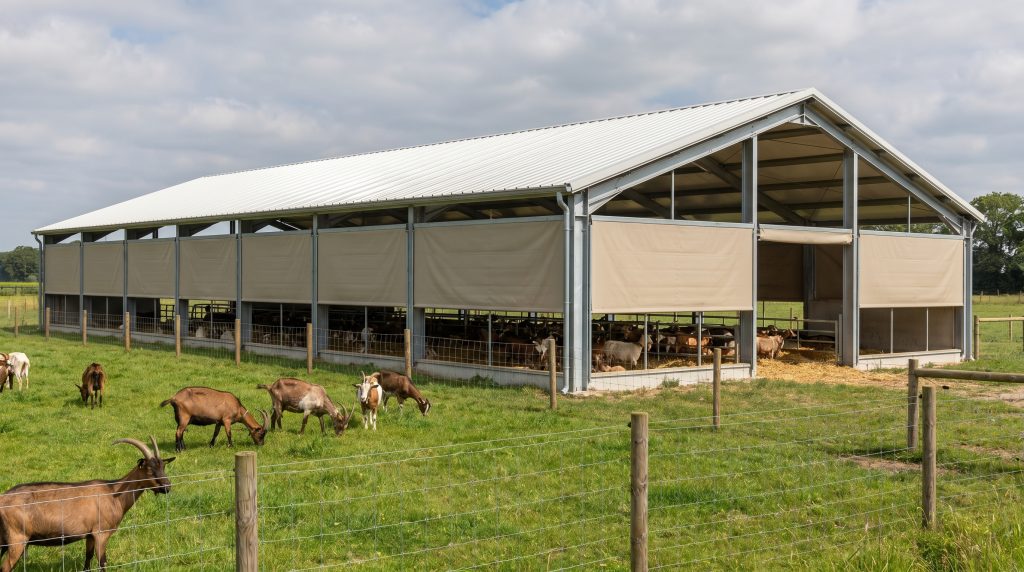
A modern goat farming house matters because it fundamentally acts as the primary defense against climate-induced stress and disease vectors.
This engineered sanctuary guarantees that metabolic energy is spent on growth rather than fighting infections. When you control the indoor environment, you directly control your overall commercial yield.
How do management systems dictate design?
Think about it: your structural footprint completely dictates your labor efficiency and daily workflow. Deploying custom ventilation profiles and engineered waste management allows operators to match their specific livestock management system seamlessly.
- Custom ventilation profiles
- Engineered waste management
- Optimized veterinary access
What are the costs of poor housing?
Here is the kicker: substandard shelters silently destroy your profit margins through rampant disease. High humidity coupled with poor floor drainage creates lethal breeding grounds for coccidiosis and internal parasites.
- Increased hoof rot
- Severe respiratory disease
- Higher kid mortality
Key Takeaway: Eliminating dampness immediately boosts herd conversion rates and slashes veterinary interventions.
| Metric | Substandard Housing | Engineered Shelter | Economic Impact | |
|---|---|---|---|---|
| Kid Mortality Rate | 25% – 40% | < 5% | High herd replacement costs | |
| Average Daily Gain | 80g – 110g | 150g – 220g | Shorter time-to-market | |
| Disease Treatment | Weekly interventions | Seasonal preventative | High veterinary labor costs |
Upgrading from subsistence to engineered housing dramatically slashes mortality and veterinary overhead.
Which Production System Fits Your Farm?
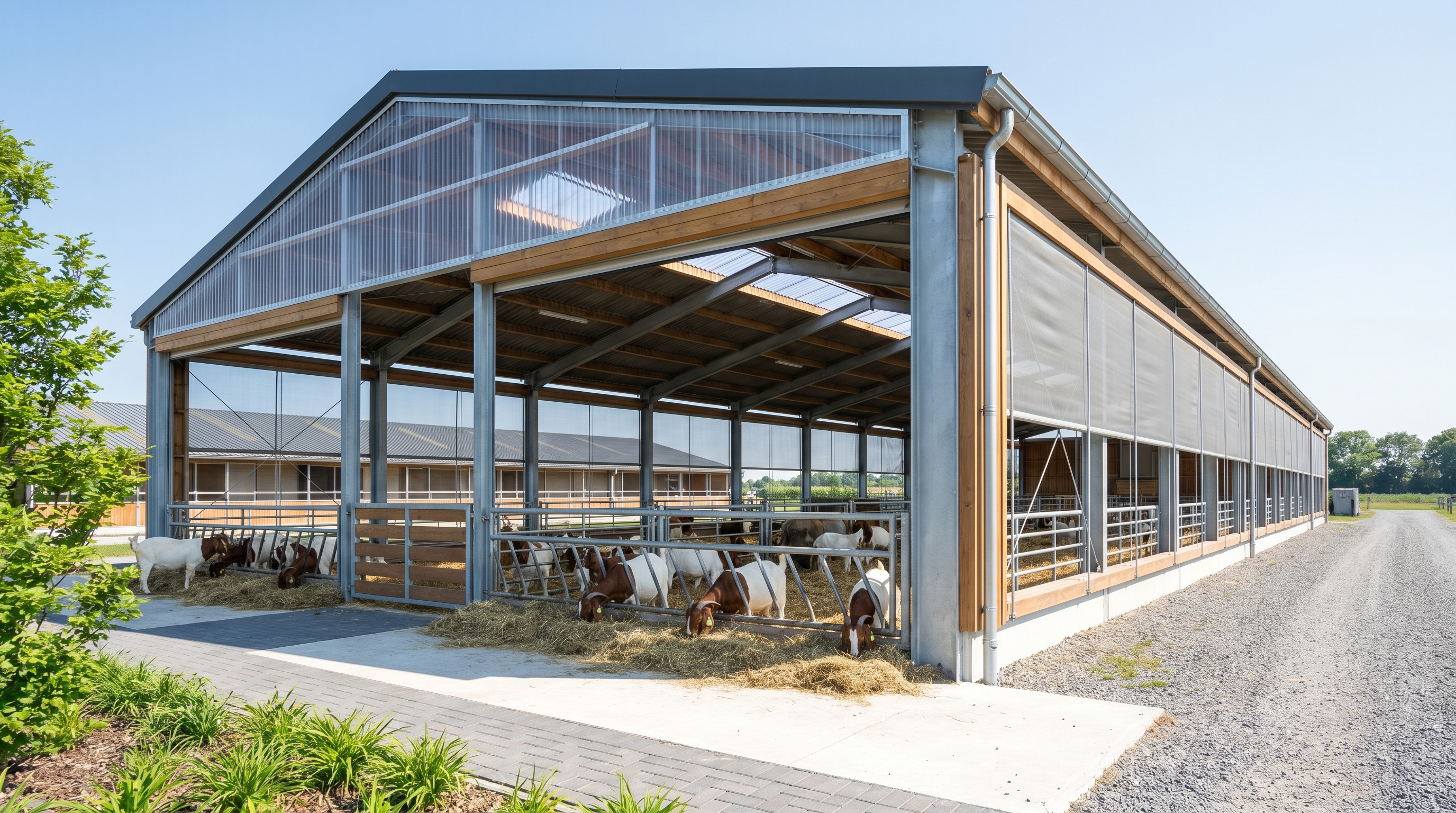
Determining the correct goat farming house layout depends entirely on whether your operation relies on extensive grazing or intensive confinement.
The right structural framework ensures seamless herd management and optimal resource allocation. Intensive setups demand far more precise environmental controls than broad pasture systems.
The extensive farming approach
But that is only half the story: extensive systems still need robust overnight protection from predators and extreme cold. The housing focus here relies heavily on sturdy perimeter fencing and dry, shaded resting areas.
- Heavy-duty perimeter fencing
- Secure sorting pens
- Dry resting areas
Intensive production for max yield
Consider this: zero-grazing systems demand precise structural engineering to handle high stocking densities. This framework provides the highest protection from parasites but requires flawless ventilation.
- Automated feed alleys
- Slatted waste floors
- Controlled stocking densities
Key Takeaway: Match your shelter’s intensity to your feeding and grazing strategy to avoid overcapitalization.
| System Type | Grazing Pattern | Primary Housing Role | Waste Management | |
|---|---|---|---|---|
| Subsistence | Daytime tethering | Nighttime protection | Manual daily sweeping | |
| Extensive | Wide-range pasture | Nighttime containment | Scraping of dry lot yard | |
| Intensive | Zero-grazing | Total life-cycle shelter | Gravity drop to pit |
Intensive setups require higher capital but yield superior, predictable year-round output.
“Get Your Custom Steel Solution Today!”
Email:sales@showhoo.com.cn
Phone/WhatsApp:+86 186 7895 5927
How Do Climates Dictate Housing Design?
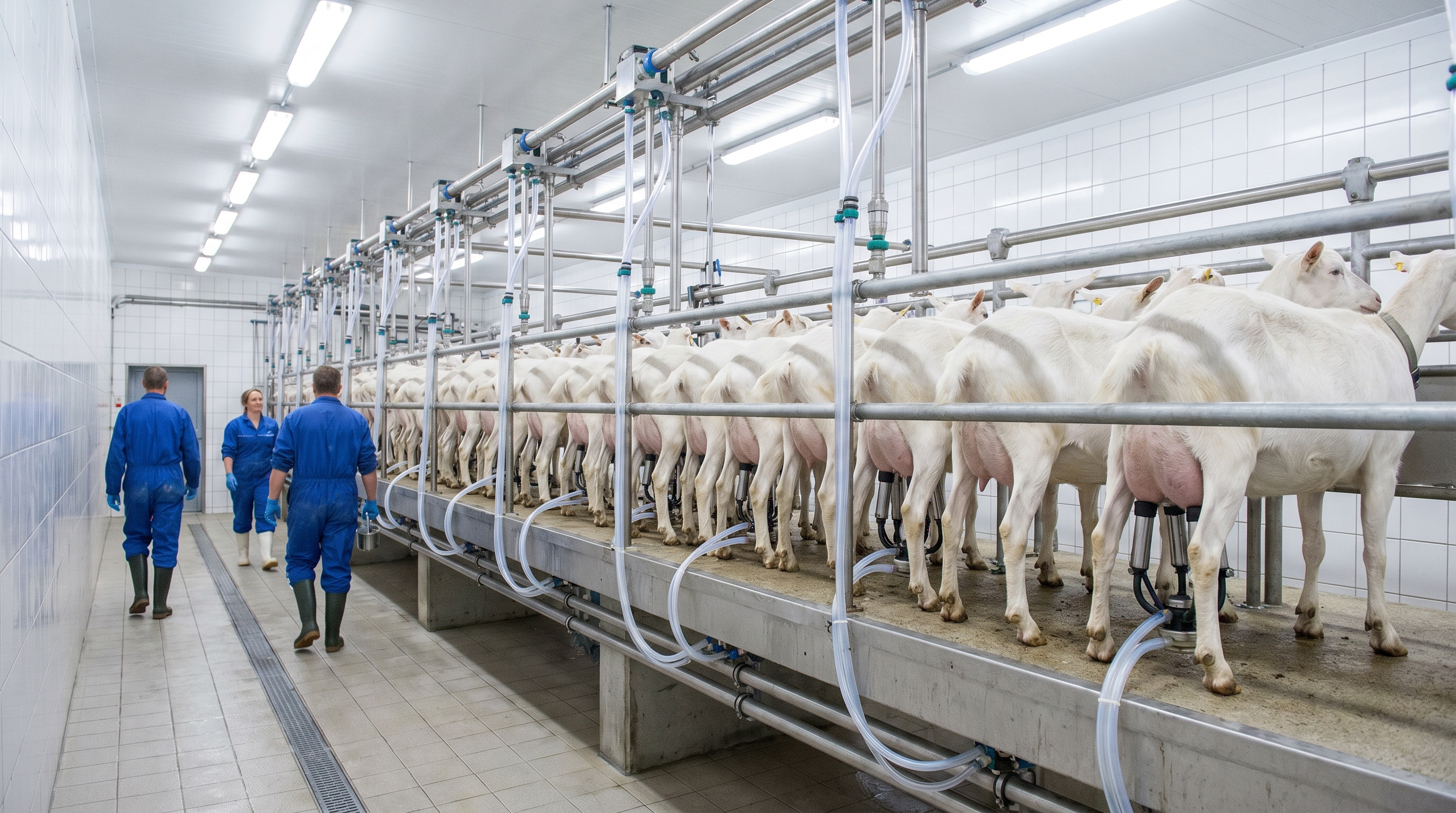
Local weather extremes dictate the structural elevation and ventilation profile of your goat farming house .
Failing to adapt your building’s architecture to regional humidity or frost guarantees widespread herd illness. Proper orientation leverages natural elements to maintain a stable internal temperature.
Arid vs humid tropical challenges
The truth is: humid climates demand stilted, open-sided designs to manage deadly moisture buildup. Goats rapidly succumb to respiratory illnesses if damp air gets trapped near the floor.
- Wide roof overhangs
- Raised slatted floors
- High-pitch roofs
High-altitude and temperate solutions
Here is the catch: cold zones require precise draft control without sacrificing fresh air exchanges. An open-front design facing the equator captures solar heat, while solid back walls block prevailing winds.
- Insulated metal roofs
- Solid masonry back walls
- Equator-facing open fronts
Key Takeaway: Tailoring your shelter’s airflow and insulation to local climates directly prevents respiratory outbreaks.
| Climate Zone | Ventilation Strategy | Wall Construction | Floor Design | |
|---|---|---|---|---|
| Arid Tropics | Maximum open cross-draft | Minimal open rails | Rammed earth or gravel | |
| Humid Tropics | High elevated cross-flow | Open-slatted wood | Slatted floor raised 1.5m | |
| Cold Zones | Adjustable baffles | Insulated solid wall | Concrete apron sloped 1:50 |
Properly oriented structures leverage passive solar heating while deflecting prevailing lethal winds.
What Are the Exact Space Requirements?
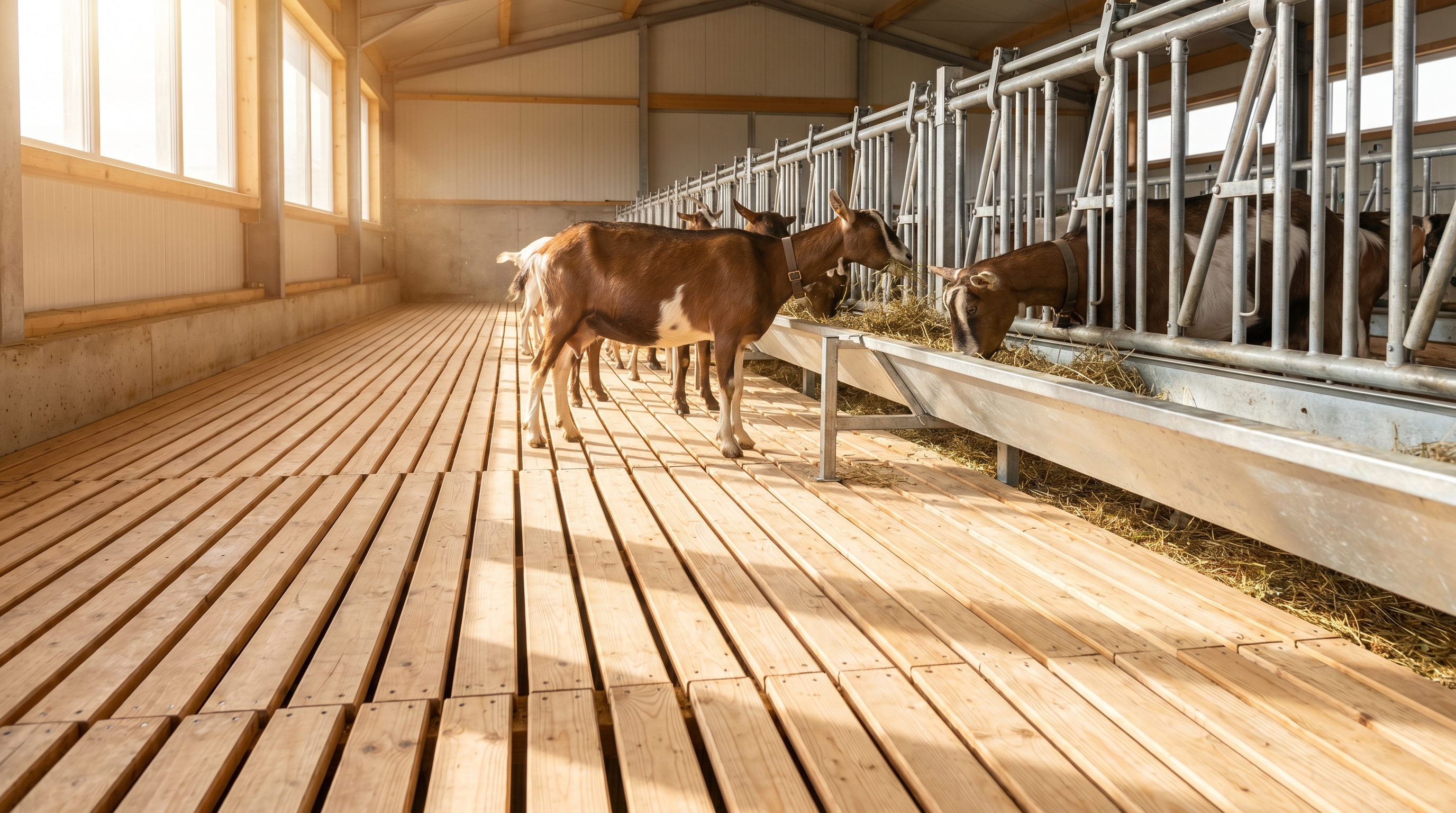
The spatial blueprint of a goat farming house must precisely allocate minimum square meterage based on live weight and flooring type.
Overcrowding inevitably sparks intense feed competition, aggressive behavior, and rapid disease transmission. Precision spacing ensures stable psychological environments for the herd.
Sizing solid floors vs slatted floors
Look at it this way: slatted floors allow denser stocking because waste falls away instantly, keeping the surface sanitary. This completely reduces the amount of expensive bedding needed to maintain dryness.
- 0.9 square meters for slatted floors (50kg doe)
- 1.1 square meters for solid floors (50kg doe)
- Reduced bedding requirements
Designing trough space and kidding pens
What does this mean for you? Equal feed access prevents dominant goats from starving weaker, younger animals. Individual kidding pens are essential for intensive operations to reduce newborn mortality rates.
- 0.4 meters trough space per adult
- 1.5 to 2.0 square meters for kidding pens
- Smooth traffic patterns
Key Takeaway: Calculated space allocation stabilizes herd growth and drastically slashes newborn kid mortality.
| Animal Class | Live Weight | Solid Floor (m²) | Slatted Floor (m²) | Trough Space (m) | |
|---|---|---|---|---|---|
| Ewe / Doe | 35 kg | 0.8 | 0.7 | 0.35 | |
| Ewe / Doe | 50 kg | 1.1 | 0.9 | 0.40 | |
| Lamb / Kid | Under 20 kg | 0.5 | 0.4 | 0.30 |
Adhering to strict spatial guidelines ensures uniform nutrition intake and peaceful herd dynamics.
Why Choose Elevated Stilted Structures?
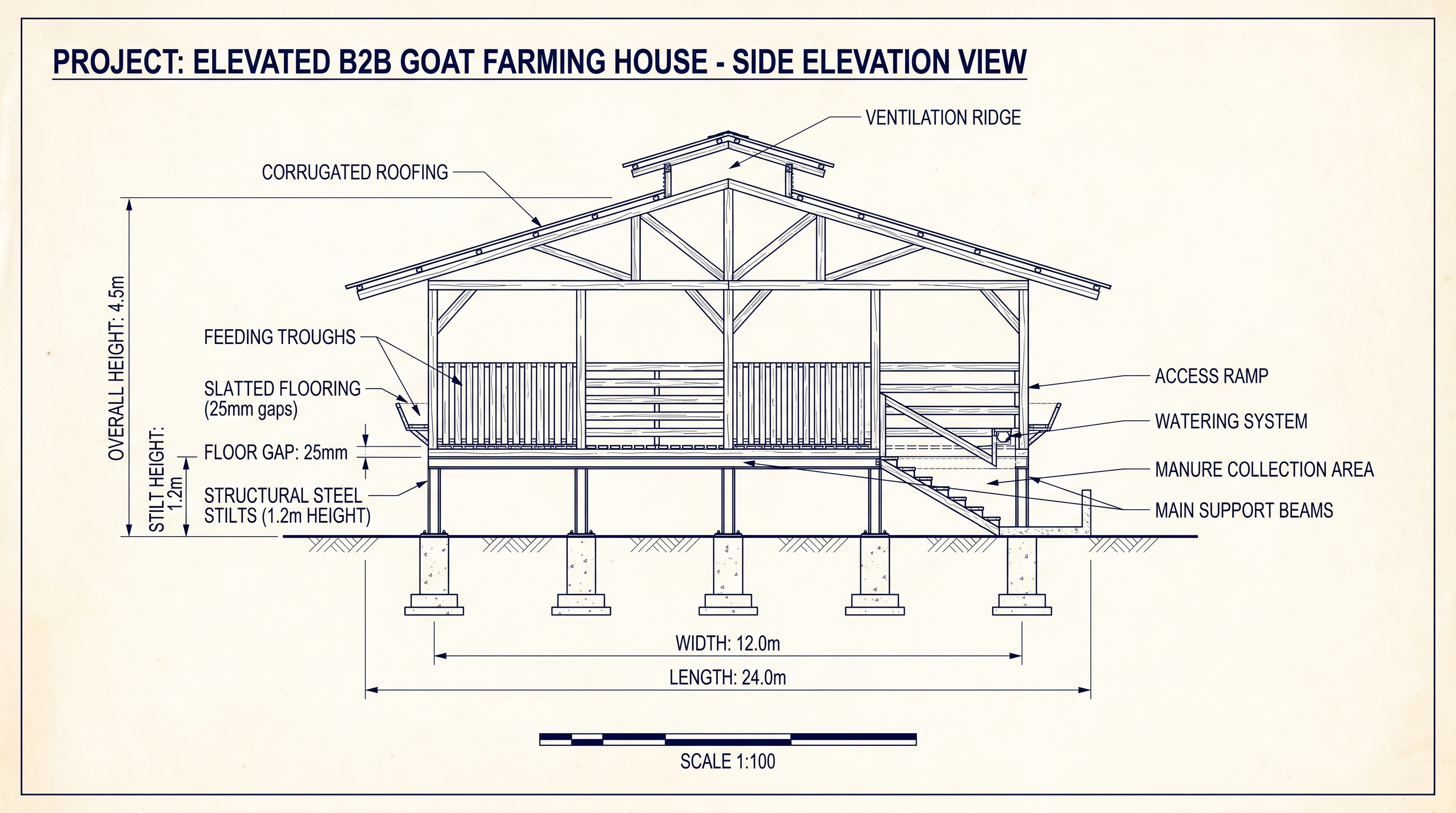
Choosing an elevated goat farming house completely removes animals from toxic ammonia and wet mud.
Raising the structural deck above the earth is the single most effective hygiene intervention available. It physically separates the livestock from their own corrosive waste.
How stilted designs improve hygiene
It gets better: gravity does the tedious waste management work for you in elevated setups. A raised floor creates an unobstructed crossbreeze underneath, instantly dissipating dangerous ammonia gas.
- 1.5-meter ground clearance
- Unobstructed under-floor crossbreeze
- Daily dry dung collection
Constructing durable floor slats
Make no mistake: precision slat spacing is a matter of life and death for delicate young kids. If the gaps are too wide, legs easily snap; if too narrow, feces clogs the surface.
- Uniform 25mm floor gaps
- 70mm to 100mm slat width
- High-load composite or timber
Key Takeaway: Precision-spaced elevated floors eradicate hoof rot and completely automate daily waste clearance.
| Parameter | Timber Slats | Composite Slats | Concrete Slats | |
|---|---|---|---|---|
| Slat Width | 70 mm – 100 mm | 50 mm – 80 mm | 80 mm – 120 mm | |
| Spacing Gap | 25 mm (uniform) | 20 mm – 22 mm | 25 mm | |
| Primary Advantage | Low material cost | Easy to sanitize | Longest lifespan |
Utilizing the correct slat gap maximizes waste throughput while absolutely preventing catastrophic leg fractures.
How Can Design Simplify Daily Milking?
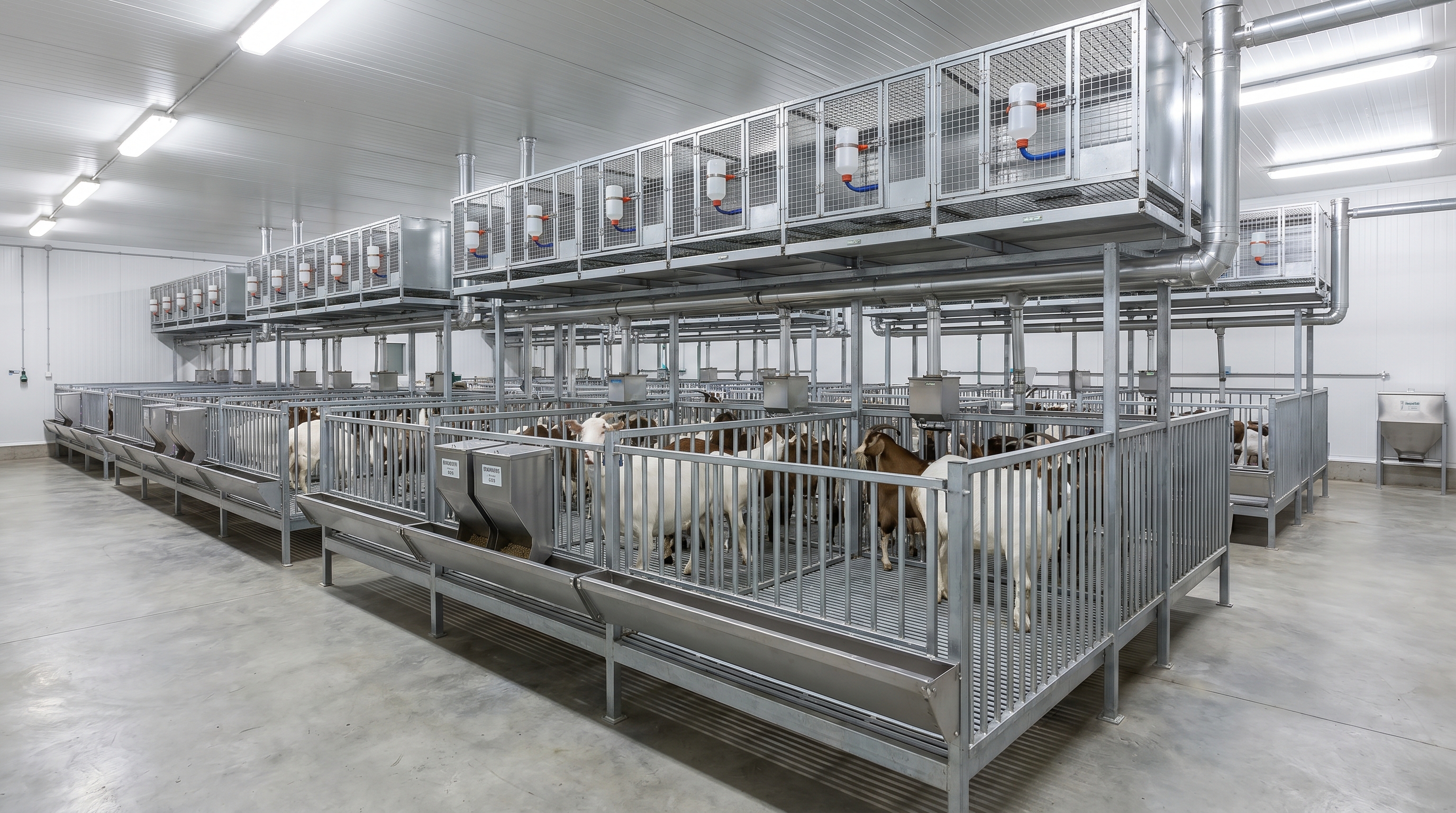
An optimized goat farming house integrates ergonomic, elevated milking parlors to drastically reduce daily labor time.
Smooth internal traffic flow keeps animals calm and consequently keeps milk yields high. Proper facility design prevents workflow bottlenecks.
Structuring the elevated milking platform
Think about it: forcing milkers to bend over continuously destroys worker retention and slows overall production. A properly elevated platform positions the udder perfectly, allowing rapid, painless attachment of milking cups.
- 0.45-meter platform elevation
- 0.8-meter platform depth
- Ergonomic udder access
Safe traffic entry and exit layouts
But here is the real secret: isolated entry and exit lanes entirely eliminate stressful parlor bottlenecks. Grouping animals correctly before entry keeps the repetitive milking workflow moving at top speed.
- Maximum 1:4 ramp gradient
- Quick-release head gates
- Dedicated post-milking holding pens
Key Takeaway: Ergonomic parlors protect worker health and drastically speed up the daily milking cycle.
| Feature | Recommended Dimension | Operational Purpose | |
|---|---|---|---|
| Platform Depth | 0.8 meters | Fits adult dairy goats comfortably | |
| Platform Height | 0.45 meters | Ergonomic positioning for milkers | |
| Ramp Slope | 1:4 gradient | Prevents slipping during movement |
Strategic parlor dimensions ensure stress-free goat positioning and rapid, hygienic milk extraction.
“Get Your Custom Steel Solution Today!”
Email:sales@showhoo.com.cn
Phone/WhatsApp:+86 186 7895 5927
What Biosecurity Infrastructure Is Vital?
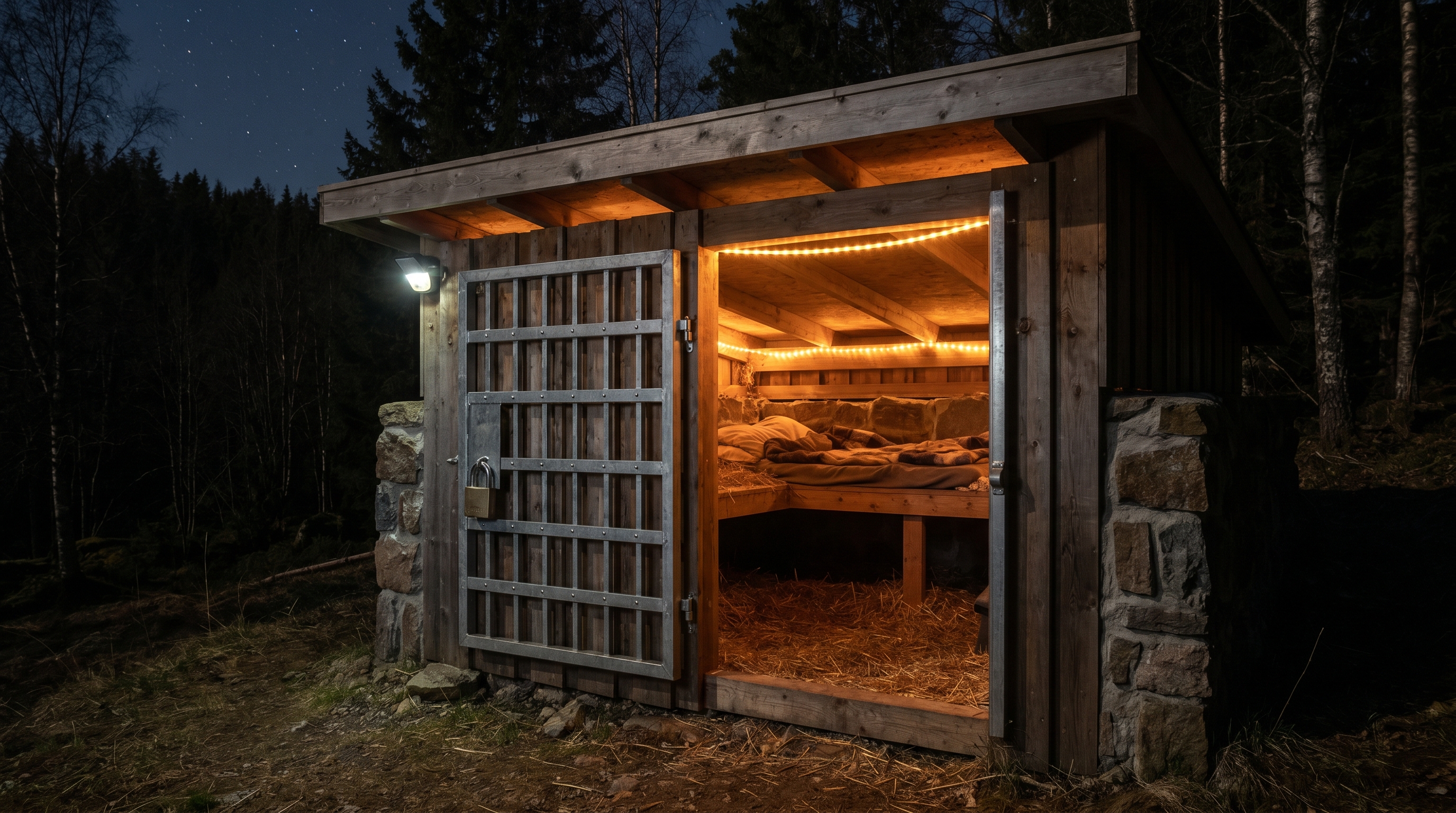
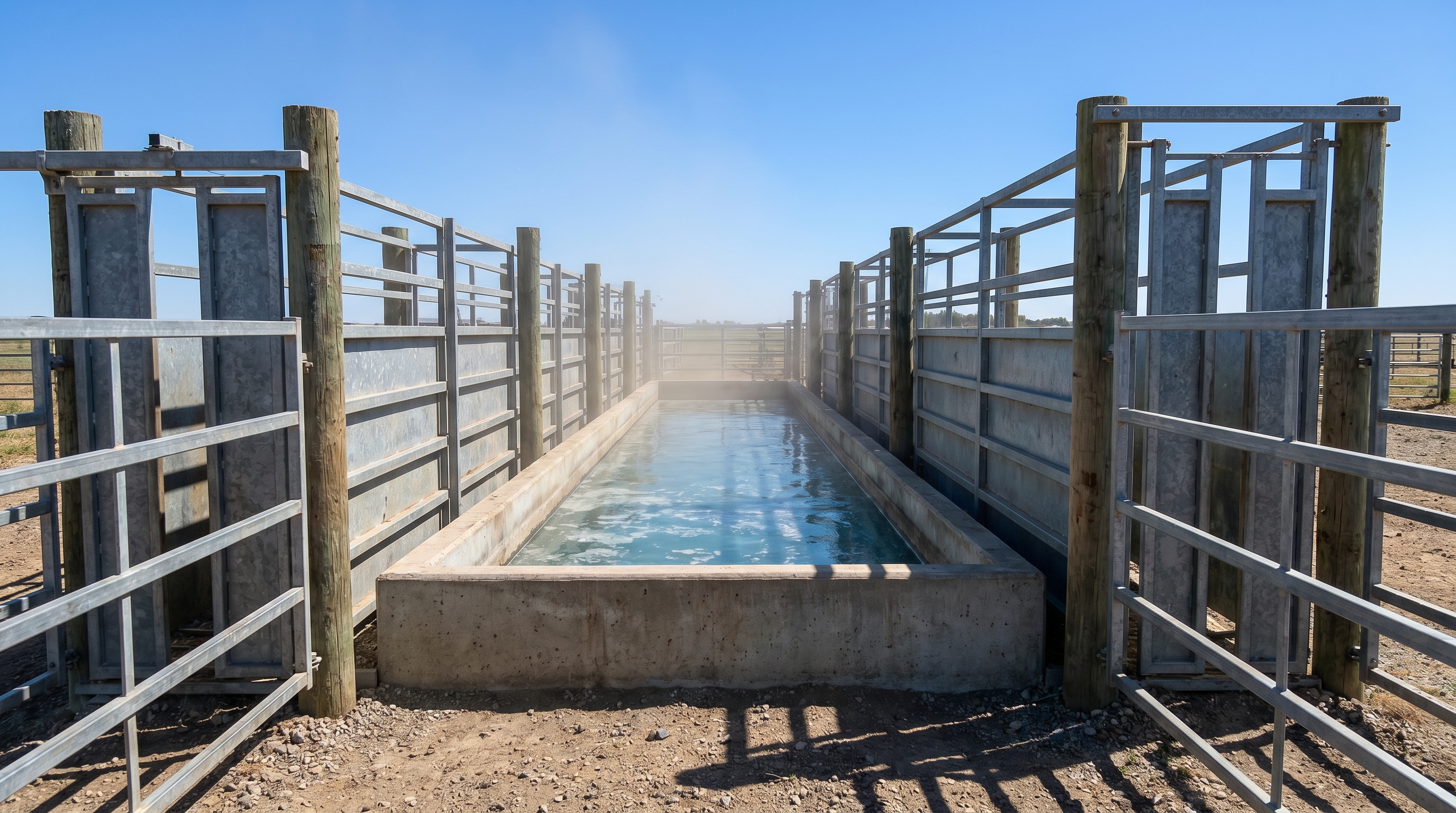
A secure goat farming house must include integrated dipping tanks and footbaths to physically strip parasites from the herd.
Large-scale chemical intervention requires dedicated, safe concrete zones to prevent soil contamination. These structures form the frontline of your veterinary defense.
Designing sheep and goat dipping tanks
You might be wondering: how do you safely immerse hundreds of animals without causing panic? Dipping tanks utilize a steep drop-off to ensure total submersion, instantly killing ticks and lice.
- Narrow entry chutes
- Deep concrete swim sections
- Sloped chemical recovery ramps
Footbaths and walk-through control
Beyond that: daily footbaths are your absolute best defense against crippling, highly contagious hoof rot. Placing a shallow copper sulfate bath at the mandatory exit lane guarantees every animal is treated automatically.
- Flat-bottomed concrete troughs
- Copper sulfate solutions
- Mandatory exit lane placement
Key Takeaway: Built-in parasite control infrastructure guarantees long-term herd longevity and protects organic yields.
| Facility Component | Length (m) | Liquid Depth (m) | Key Material | |
|---|---|---|---|---|
| Dipping Tank | 3.5 – 5.0 | 1.0 – 1.2 | Waterproof concrete | |
| Draining Race | 4.0 – 6.0 | Dry floor | Sloped concrete | |
| Footbath | 2.4 – 3.0 | 0.10 – 0.15 | Acid-resistant cement |
Proper drainage and recovery ramps recycle expensive chemicals while totally preventing dangerous environmental contamination.
How to Combine Goat and Rabbit Systems?
A combined goat farming house maximizes vertical facility space by placing modular rabbit hutches above grazing floor pens.
This dual-species setup amplifies profit per square meter without requiring extra land expansion. It is a highly efficient operational matrix.
Managing mixed footprint demands
Here is the fascinating part: utilizing the upper wall space for rabbits leaves the ground completely free for goats. This layered architecture requires strict structural planning to support the heavy hanging loads.
- Ground-level slatted lounging
- Wall-mounted wire hutches
- Unified roofing protection
Waste and disease isolation
However, a word of caution: rabbits are hyper-sensitive to ammonia rising directly from goat waste below. Installing self-cleaning slatted floors for both species ensures that dangerous waste drops far away from the respiratory zone.
- Strict daily waste flushing
- Draft-free solid partitions
- Dedicated automated water lines
Key Takeaway: Vertical integration of species maximizes utility but demands uncompromising, high-volume ventilation control.
| Livestock Species | Housing Unit | Space Metric | Key Environmental Risk | |
|---|---|---|---|---|
| Goat (Ewe) | Open-sided pen | 0.9 m² per animal | Mud, hoof rot, humidity | |
| Rabbit (Doe) | Modular hutch | 80 cm x 115 cm | Cold drafts, coccidiosis | |
| Rabbit (Fattener) | Colony pen | 1000 cm² per kg | Ear mites, dampness |
Physical separation of waste streams is the only guaranteed way to prevent lethal cross-species pathogen transfer.
What Equipment Maximizes Feed Efficiency?
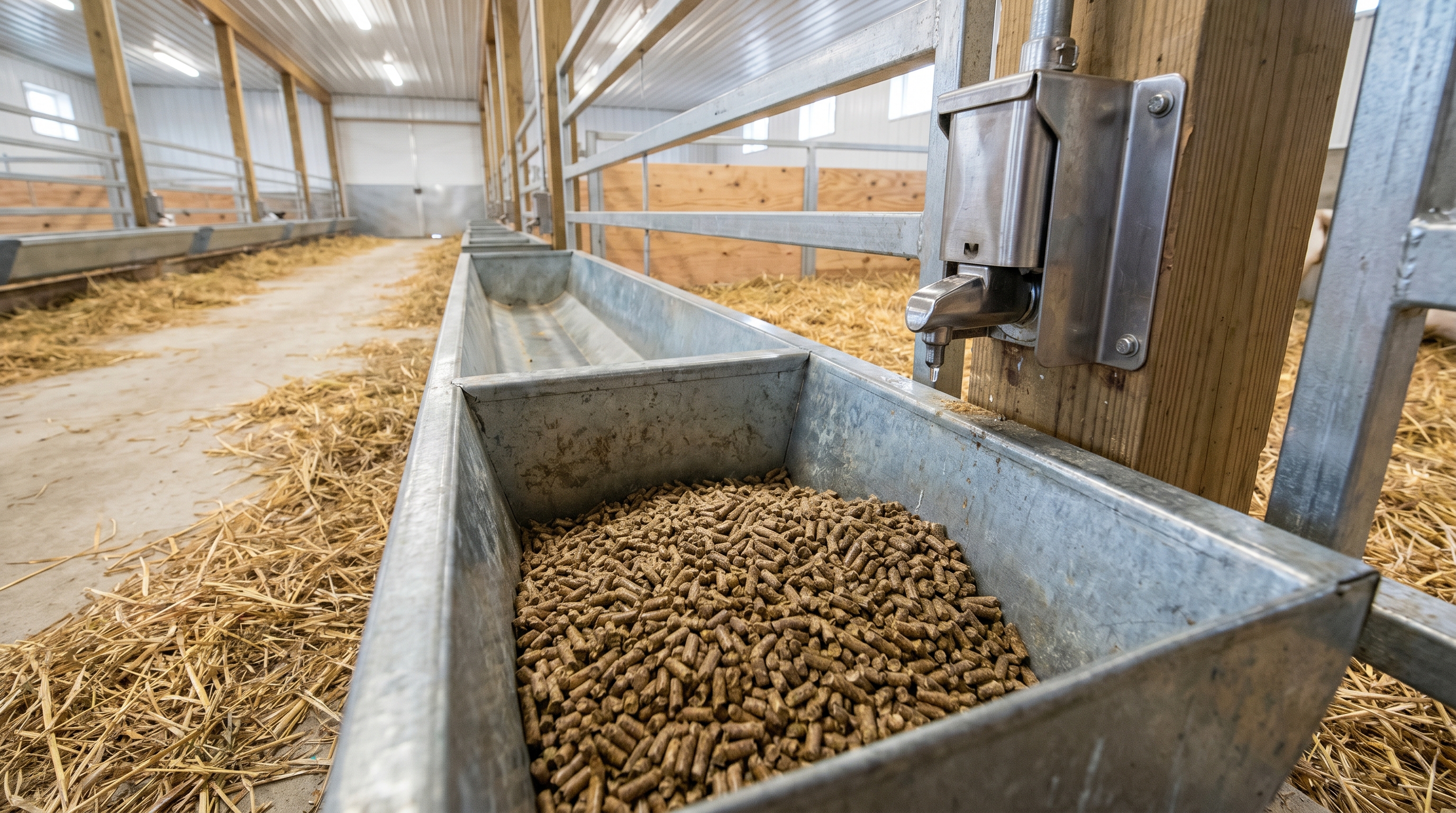
Outfitting your goat farming house with specialized barriers stops animals from trampling and urinating on expensive forage.
Controlled delivery systems are the absolute key to maintaining high feed conversion ratios. Heavy-duty equipment prevents massive daily financial losses.
Feed trough configurations
Consider this fact: goats will completely refuse to eat perfectly good feed if they have stepped in it. A deep metal hopper with a high barrier wall completely locks out their dirty hooves.
- 0.6-meter high barrier walls
- 0.4-meter deep metal hoppers
- External alley reload access
Automated watering systems
The bottom line is: a lactating dairy doe requires massive, uninterrupted volumes of clean water to produce milk. Stainless steel nipple drinkers provide a closed, sanitary hydration loop that prevents dangerous floor puddles.
- Stainless steel nipple drinkers
- Float-controlled 2.5L bowls
- Splash-proof mounting brackets
Key Takeaway: Heavy-duty metal feeders lock out bacterial contamination and drastically slash monthly feed waste.
| Equipment Type | Suitable For | Key Dimensions | Cleaning Frequency | |
|---|---|---|---|---|
| Deep Front Hopper | Pellets, grain | 0.4 m deep | Daily sweep | |
| V-Shaped Manger | Forage, hay | 50mm mesh openings | Daily stalk removal | |
| Nipple Drinker | All goats | 0.5m – 0.7m high | Weekly pressure flush |
Automated fluid delivery completely removes manual hauling while ensuring optimal dairy production hydration.
How Do Prefabricated Steel Sheds Perform?
A prefabricated steel goat farming house permanently outperforms timber by offering fireproof, rot-proof, and easily sanitized structural spans.
Galvanized metal simply ignores the highly corrosive effects of concentrated livestock waste. It represents the pinnacle of modern agricultural engineering.
Why steel beats traditional timber
Let me be clear: porous wood absorbs deadly bacteria, warps under humidity, and rots within a decade. Hot-dip galvanized steel frames are completely non-porous and can withstand decades of aggressive chemical pressure washing.
- Non-porous galvanized frames
- Zero termite vulnerability
- Immune to manure acids
Rapid deployment and durability
Best of all: modern pre-engineered kits bolt together in mere weeks, slashing expensive construction downtime. These massive clear-span structures give you unlimited flexibility to rearrange your internal floor plans.
- 30 to 50-year lifespan
- Clear-span layouts up to 30m
- High-pressure wash compatibility
Key Takeaway: Commercial steel infrastructure is a generational asset that slashes maintenance and maximizes biosecurity.
| Parameter | Prefabricated Steel Shed | Traditional Timber Structure | |
|---|---|---|---|
| Lifespan | 30 to 50+ years | 8 to 15 years | |
| Sanitation | Excellent (pressure-washable) | Poor (absorbs pathogens) | |
| Construction Time | 2 to 4 weeks | 8 to 12 weeks |
The vast clear-span capability of steel frames allows for infinite interior pen reconfigurations over the decades.
Upgrading your commercial livestock operation begins with establishing a pristine, fully controlled environment. By transitioning to engineered steel frameworks, raised slatted floors, and automated feeding alleys, you permanently eradicate the environmental variables that cripple herd profitability. Stop losing margins to preventable diseases and inefficient labor workflows. Partner with industry-leading manufacturers to deploy a structure that guarantees biosecurity and maximizes your long-term yield. Ready to build the ultimate high-performance facility? Contact us today to engineer your success. Showhoo Building—where structural durability meets agricultural perfection.
“Get Your Custom Steel Solution Today!”
Email:sales@showhoo.com.cn
Phone/WhatsApp:+86 186 7895 5927
FAQ
What is the best flooring material for humid climates?
Elevated timber or composite slatted floors are absolutely the best choice for humid climates because they instantly separate animals from moisture and waste.
Can I house goats and sheep in the exact same pen?
No, housing them in the exact same pen triggers dangerous mineral toxicity risks, as sheep cannot process the high copper levels present in goat feed.
How do I know if my ventilation is adequate?
Your ventilation is inadequate if you can actively smell a sharp ammonia odor upon entering the shelter at dawn.
What is the best way to prevent rapid hoof rot?
Installing an elevated slatted floor and implementing a mandatory daily copper sulfate footbath completely prevents hoof rot outbreaks.
Can I build a commercial shelter without interior columns?
Yes, utilizing prefabricated hot-dip galvanized steel frames allows for massive clear-span layouts up to 30 meters wide without a single interior post.