
Optimizing a cattle barn involves integrating clear-span layouts, automated systems, and durable steel materials to enhance herd productivity. Managing a growing livestock operation without a dedicated facility leads to increased animal stress, higher labor costs, and vulnerability to unpredictable weather. Showhoo Building provides factory-direct steel solutions that transform these operational hurdles into a streamlined, high-yield agricultural environment.
Why does layout matter for a cow barn?
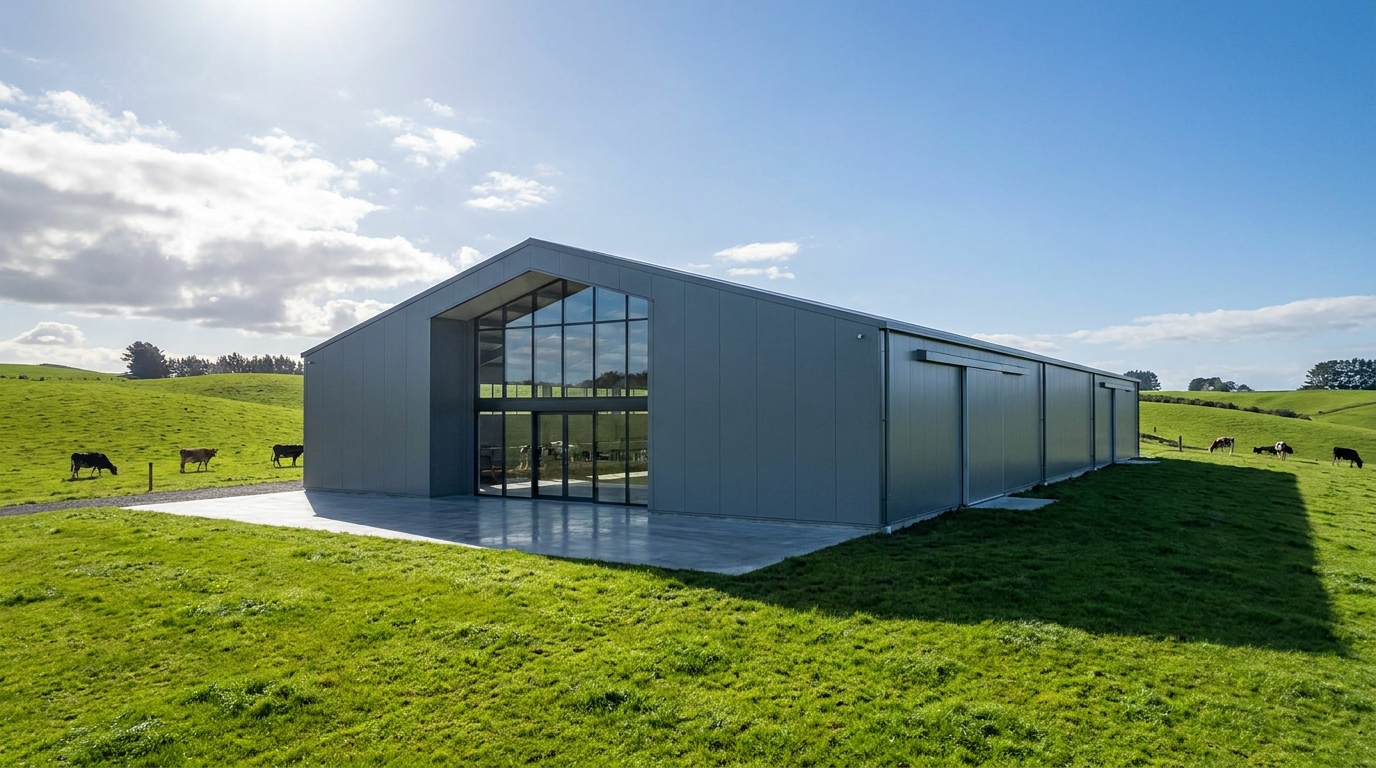
An optimized layout in your cow barn provides enough room for operations to be efficient rather than a logistical headache for your staff. By choosing a professional cow barn design, you ensure that every square meter serves a specific purpose in your daily workflow.
Is there enough space for movement?
You must verify that there is adequate space for your specific breeds to move around comfortably and access water. Overcrowded pens lead to aggressive behavior and decreased weight gain among your livestock.
Believe it or not: adequate spacing can increase milk production and overall animal docility by over 15%.
- Prevents animal injuries during social interactions.
- Facilitates easier movement to feeding troughs.
- Ensures cows can lie down and rest without stress.
How does steel support open spans?
You can achieve massive, column-free interiors using H-section steel beams that traditional wood structures cannot match. These wide-open spaces allow for the seamless operation of heavy machinery inside the building.
The best part? Clear spans up to 40 meters mean you have no internal pillars blocking your tractors or automated cleaning equipment.
- Maximizes every inch of available floor space.
- Allows for flexible internal stall configurations.
- Accommodates large-scale automated feeding systems.
Key Takeaway: Efficient layouts reduce labor hours by ensuring that movement and maintenance are never restricted by the building’s skeleton.
| Layout Feature | Primary Benefit | |
|---|---|---|
| Clear Span Design | Unobstructed machinery movement | |
| Wide Alleys | Faster waste removal and feeding |
Analysis: Professional housing structures represent the foundation of a modern, biosecure ranching operation.
Can ventilation protect your cow barn?
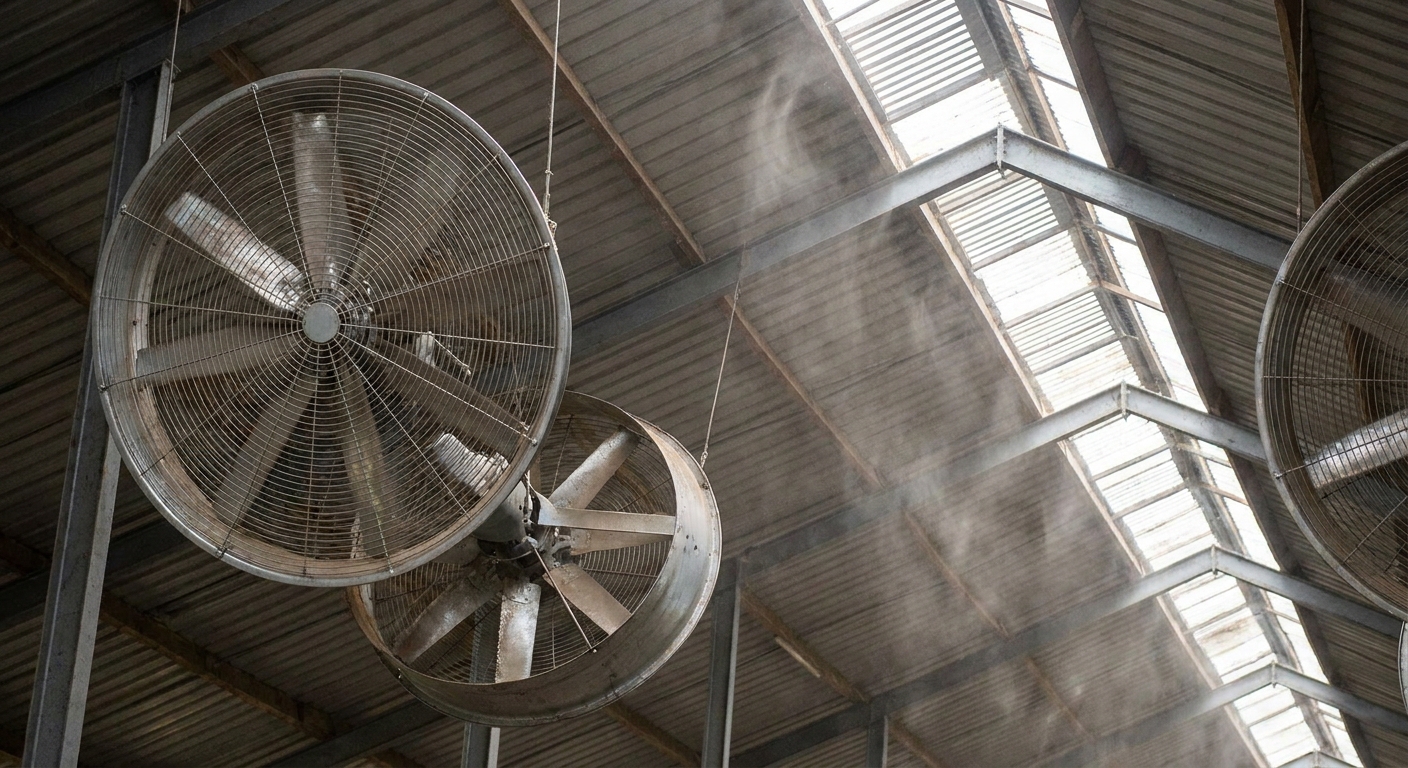
Proper ventilation in a cow barn prevents disease by ensuring high air quality and reducing moisture levels that degrade both steel and health. High humidity is a breeding ground for bacteria, making airflow management a top priority for any serious rancher.
Does airflow prevent disease?
You have to prioritize air exchange to clear out ammonia and pathogens that build up in enclosed agricultural spaces. Stagnant air often leads to respiratory infections that can spread rapidly through your entire herd.
Here is the kicker: poor air quality is the leading cause of veterinary costs in indoor cattle rearing.
- Exhausts toxic ammonia fumes from manure.
- Reduces airborne pathogen concentrations effectively.
- Controls internal humidity to prevent mold growth.
How do steel vents reduce moisture?
You can easily integrate industrial-grade ridge vents and louvers into a steel roof system to promote natural convection. Unlike porous wood, steel does not absorb moisture, allowing your ventilation system to work more efficiently.
Make no mistake: a dry environment is essential for maintaining the structural integrity of your secondary framing.
- Prevents condensation on the underside of the roof.
- Extends the life of the metal cladding.
- Keeps bedding material dry and sanitary for animals.
Key Takeaway: Active and passive ventilation systems act as the “lungs” of your facility, keeping both animals and the structure healthy.
| Ventilation Tool | Function | |
|---|---|---|
| Ridge Vents | Natural hot air exhaust | |
| Industrial Fans | Active cooling and high air exchange |
Analysis: Strategic airflow management is the most cost-effective way to prevent large-scale herd illness.
Email:sales@showhoo.com.cn
Phone/WhatsApp:+86 186 7895 5927
Why is natural light vital for a cow barn?
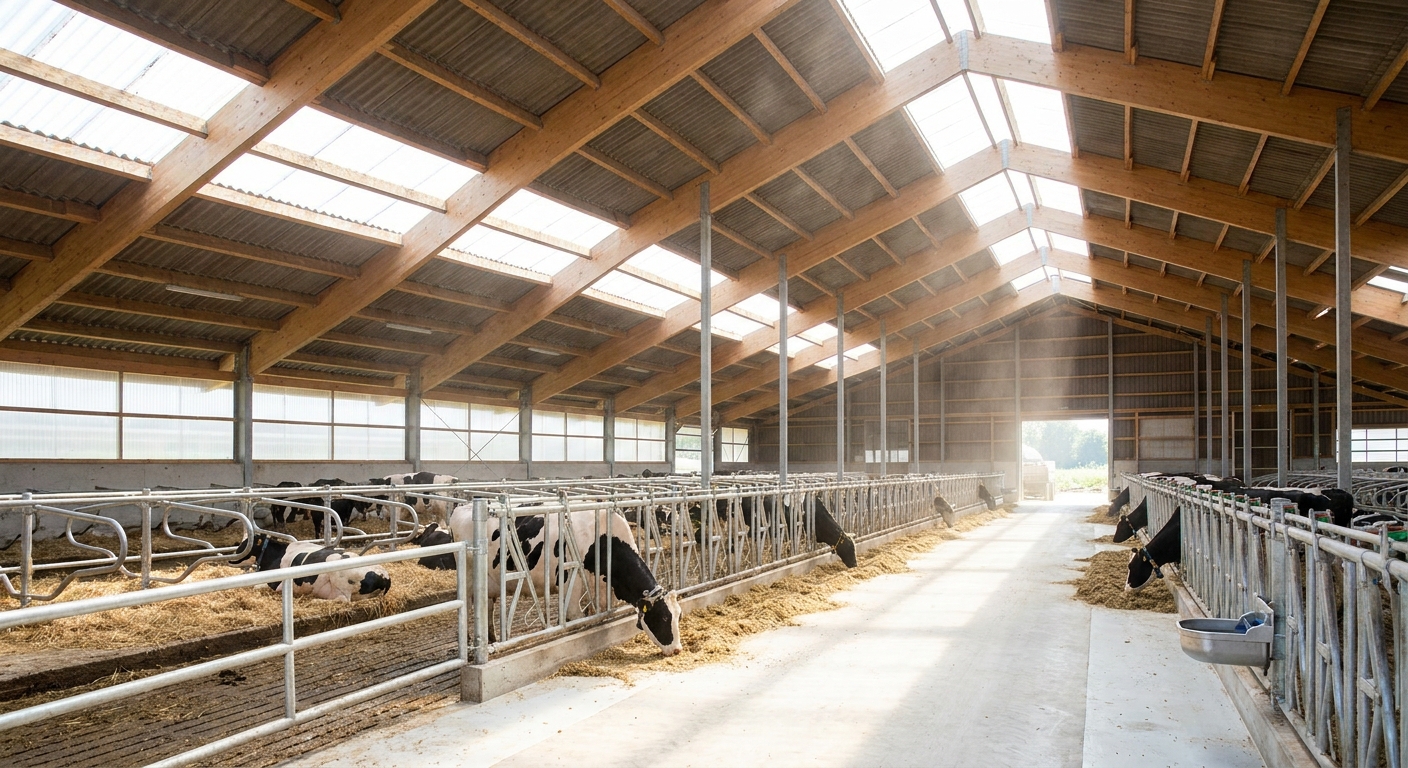
Integrating natural light into your cow barn design modulates hormones in cattle, leading to improved overall health and mental well-being. Studies indicate that livestock in a well-lit cow barn exhibit more predictable behavior and better metabolic rates.
Can sunlight improve herd wellness?
You should offer natural lighting within the barn to mimic the outdoor environment and maintain the biological clocks of your cows. Proper circadian rhythms are essential for cattle to maintain a healthy appetite and reproductive cycle.
Think about it: cows exposed to natural light cycles show significantly lower stress markers in their blood.
- Boosts vitamin D production for bone health.
- Regulates natural sleeping and feeding patterns.
- Improves the mood and docility of the animals.
Is artificial light necessary too?
You will definitely need high-intensity LED systems to ensure operations can be performed safely during the night or early morning. Artificial lighting allows your staff to monitor the herd 24/7 without risking injury in dark corners.
Here is the deal: precision medical checks and emergency calving often happen during the night hours.
- Ensures 24/7 operational capability for staff.
- Provides safety for workers during winter months.
- Allows for accurate veterinarian diagnostic tests.
Key Takeaway: A hybrid lighting approach ensures your herd stays healthy while your staff stays safe and productive at any hour.
| Light Source | Primary Use Case | |
|---|---|---|
| Translucent Panels | Zero-cost daytime illumination | |
| LED High Bays | Nighttime work and emergency care |
Analysis: Lighting is not just for visibility; it is a physiological requirement for high-performance livestock.
How does automation upgrade a cow barn?
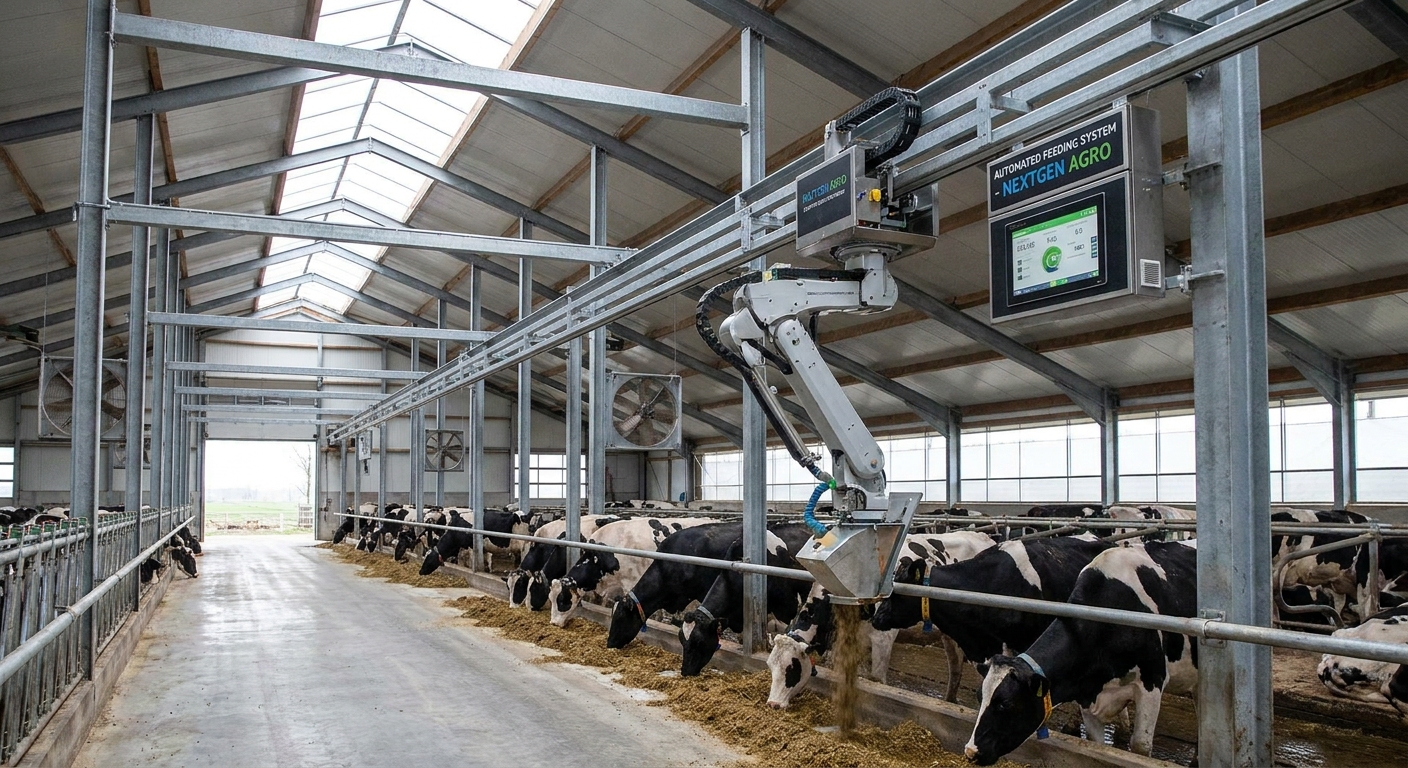
An automated cow barn is a massive advantage for optimizing operations, enabling everything from precision feeding to advanced climate control. Utilizing modern technology allows you to scale your operation without a proportional increase in manual labor costs.
Can automation save you labor?
You can implement smart systems that monitor your cattle and environment without needing a person on-site around the clock. These systems can trigger feeders or fans based on specific environmental data points.
It’s a fact: automated feeding systems can reduce your manual labor requirements by up to 50%.
- Power for automatic watering systems.
- Electricity for diagnostic veterinary tools.
- Energy for HVAC and large-scale industrial fans.
Are smart sensors worth the cost?
You should install sensors that alert you to temperature swings or unusual movement patterns before they become a crisis. These early warning systems allow you to intervene quickly if an animal becomes sick or trapped.
Here is the kicker: automated sensors can detect a fever in a cow days before physical symptoms appear.
- Automated security cameras for 24/7 monitoring.
- Smart climate control sensors for heat management.
- Electric fencing integration for pen management.
Key Takeaway: Automation turns a simple shed into a high-tech hub of agricultural productivity and real-time monitoring.
| Automation Tool | Operational Gain | |
|---|---|---|
| Robotic Feeders | Consistent nutrient delivery | |
| Climate Sensors | Reduced heat stress mortality |
Analysis: Power and automation are the prerequisites for scaling a cattle operation from a hobby to a commercial enterprise.
Is plumbing essential in a professional cow barn?
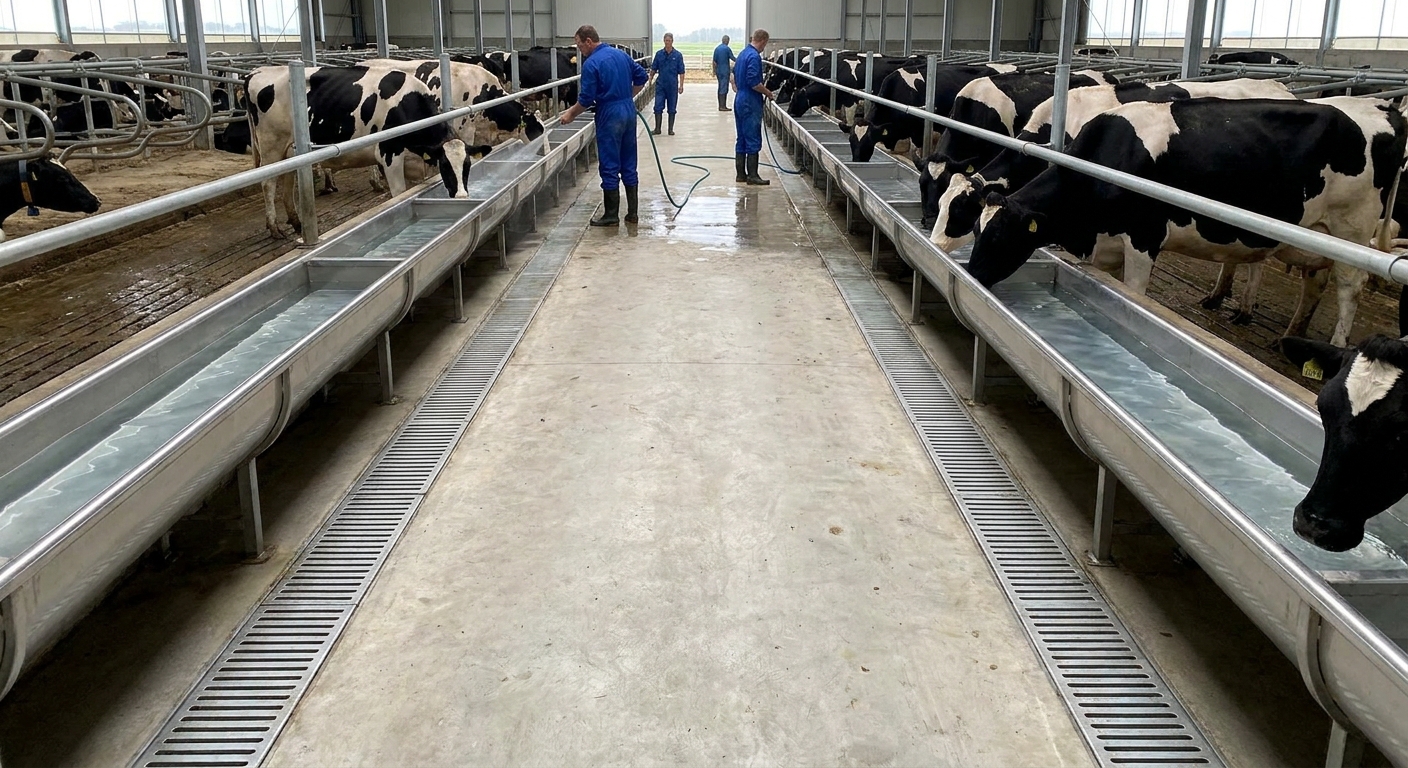
Access to water and drainage in a cow barn allows for necessary medical procedures and ensures the sanitary conditions required for health. A professional cow barn must have integrated plumbing to maintain biosecurity standards and keep animals hydrated.
How does water help medical care?
You must have an on-hand source of clean water to perform healthcare checks and maintain surgical-level cleanliness. Using a garden hose from the main house is insufficient for the high-pressure cleaning required in a large facility.
The best part? Integrated plumbing ensures high-pressure water is available exactly where you need it for sanitization.
- Facilitates quick cleaning of medical stalls.
- Ensures constant access to fresh drinking water.
- Allows for automated trough filling systems.
Is drainage vital for sanitation?
You need proper floor slopes and drainage channels to make sure cleaning your facility is a quick and efficient affair. Standing water and waste are the primary causes of hoof rot and other costly bacterial infections.
Here is the deal: steel buildings allow for easy integration of concrete floors with built-in drains.
- Prevents stagnant pools of water in stalls.
- Makes manure wash-down significantly faster.
- Reduces humidity and odor within the barn.
Key Takeaway: Plumbing and drainage are the foundation of a sanitary environment that protects your herd’s long-term health.
| Plumbing Feature | Maintenance Benefit | |
|---|---|---|
| Central Drains | Fast waste removal and floor cleaning | |
| Automatic Troughs | Consistent hydration without manual labor |
Analysis: A well-plumbed barn is a hygienic barn, directly reducing the risk of costly infection outbreaks.
How to manage waste in a modern cow barn?
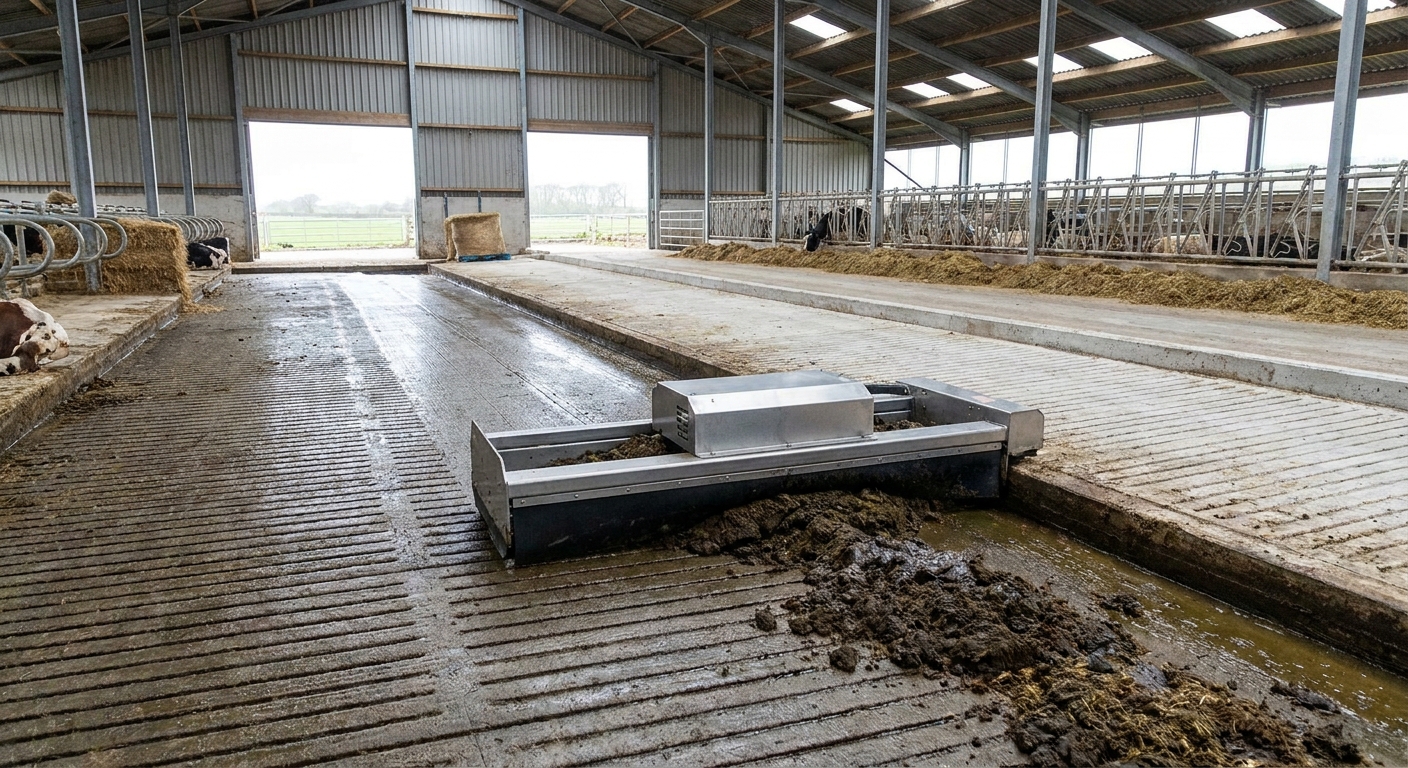
Effective manure management in a cow barn design is critical for maintaining hygiene and turning waste into a valuable byproduct. If you fail to manage waste properly, you risk environmental fines and a significant decline in animal health.
Is manure removal simplified with steel?
You can design your steel barn with wide aisles and high ceilings to allow skid steers and tractors to clear waste quickly. Manual waste removal is a physical toll that limits the number of animals you can effectively manage.
Believe it or not: mechanical scraping systems can clean a barn in 1/10th the time of manual labor.
- Enables mechanical scraping systems for efficiency.
- Speeds up the daily cleaning cycle for staff.
- Reduces the physical toll on your ranch hands.
Can composting be integrated?
You should consider building a dedicated composting area adjacent to your steel barn to handle the significant volume of waste. Manure is a valuable resource that can be processed into high-quality fertilizer for your fields.
Make no mistake: on-site composting turns a waste problem into a sustainable revenue stream.
- Turns waste into high-quality fertilizer.
- Reduces the environmental impact of runoff.
- Creates an additional revenue stream for the farm.
Key Takeaway: Modern waste management turns a major operational hurdle into a streamlined, ecologically sound process.
| Waste Method | Time Efficiency | |
|---|---|---|
| Mechanical Scraping | 80% faster than manual cleaning | |
| On-site Composting | High long-term ROI on waste products |
Analysis: Efficient waste handling is not just about cleanliness; it is about maximizing the total value of your farm’s output.
Email:sales@showhoo.com.cn
Phone/WhatsApp:+86 186 7895 5927
Can bedding comfort improve your cow barn?
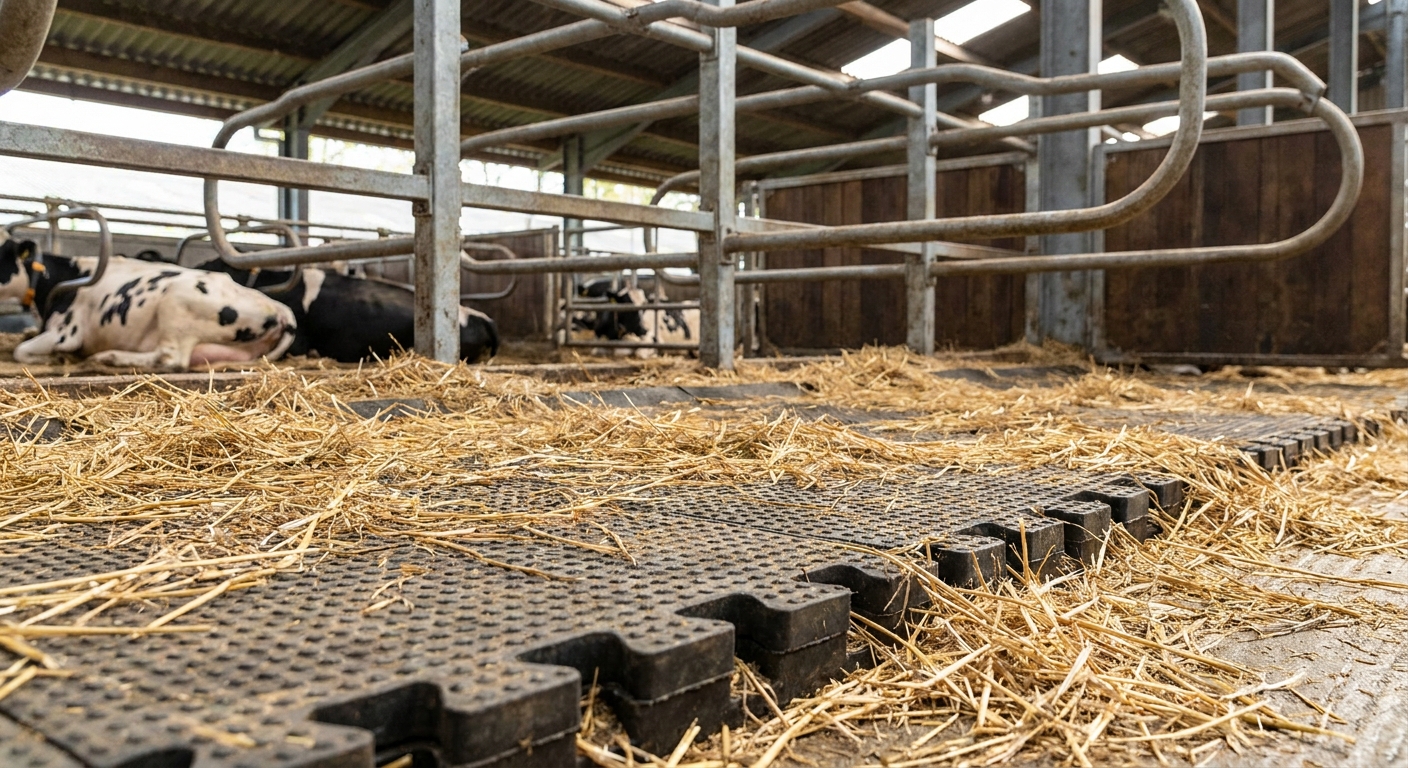
High-quality bedding and stall design in a cow barn are essential for preventing injuries and maximizing the rest time of your cattle. When you invest in a cow barn , prioritizing stall comfort directly correlates to higher growth rates.
Does bedding impact health?
You must provide soft, dry bedding to prevent hock lesions and joint issues that plague cattle on hard surfaces. Comfortable cows lie down for longer periods, which is when they process nutrients and produce milk.
Here is the kicker: every extra hour a cow spends lying down results in a measurable increase in milk yield.
- Reduces the risk of joint and hoof injuries.
- Keeps animals warm during the winter months.
- Minimizes the spread of bacteria in rest areas.
What are the best bedding materials?
You can choose from sand, straw, or rubber mats depending on your local availability and the specific needs of your breed. Steel barns offer the durability to handle the weight and acidity of various bedding types without corroding.
The best part? Non-slip flooring ensures your cows have solid footing, preventing panic-induced injuries.
- Sand provides excellent drainage and cooling.
- Straw offers superior insulation in cold climates.
- Rubber mats reduce long-term joint wear.
Key Takeaway: Stall comfort is a direct investment in the biological productivity of your herd.
| Bedding Type | Best For | |
|---|---|---|
| Sand | Bacterial control and hoof health | |
| Straw | Thermal insulation and comfort |
Analysis: Livestock comfort is not a luxury; it is a fundamental requirement for a high-yield dairy or beef operation.
Does steel improve the cow barn structure?
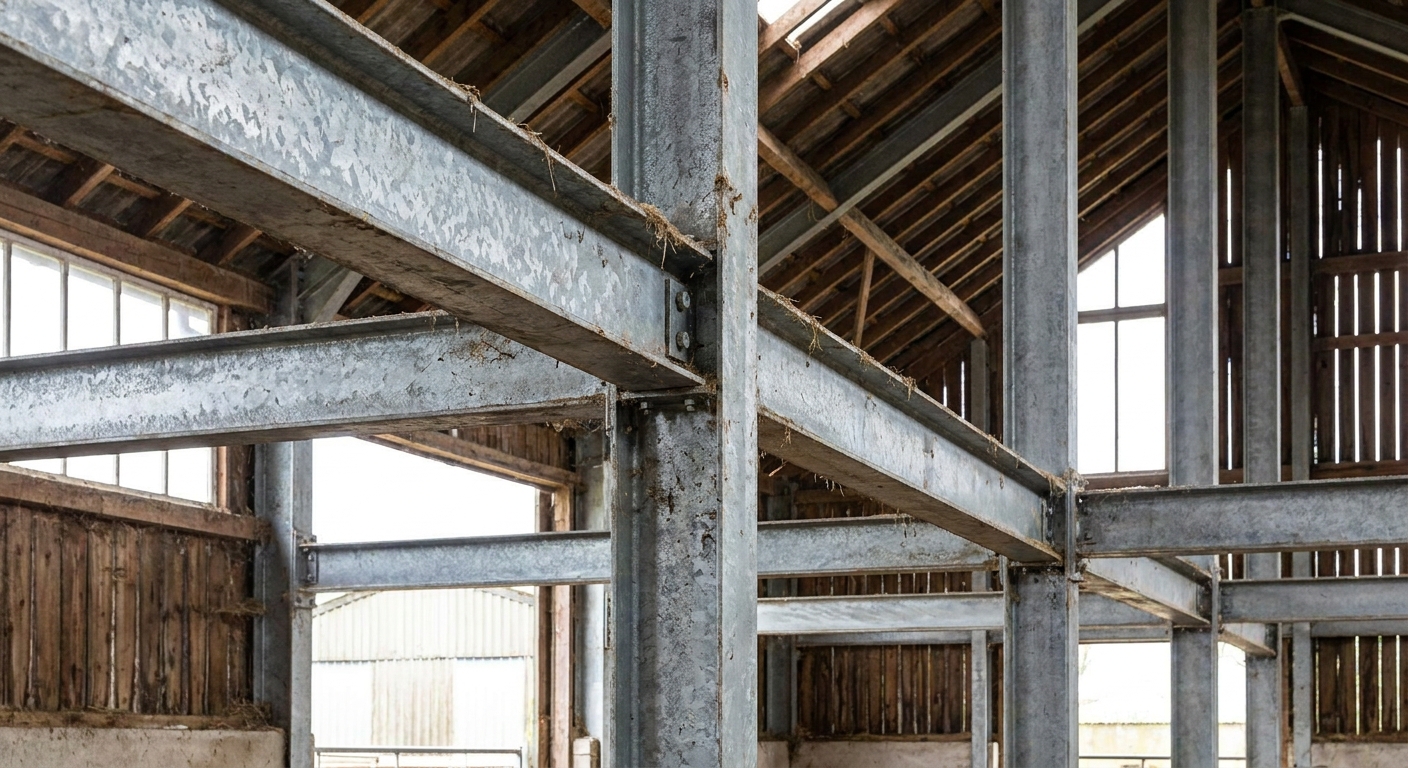
Using galvanized steel for your cow barn ensures a structure that can withstand hurricane-force winds, heavy snow loads, and corrosive manure. Traditional building materials often fail under the extreme conditions of a working livestock ranch.
Is steel more durable than wood?
You gain peace of mind knowing that steel structures will not rot, warp, or attract wood-destroying pests like termites. This durability means your building remains a functional asset for decades with minimal maintenance costs.
Think about it: a steel barn can last over 50 years with almost no structural repairs.
- Rated for extreme wind and snow loads.
- Non-combustible materials for superior fire safety.
- Corrosion-resistant coatings for harsh farm environments.
How does steel handle fire safety?
You significantly reduce the fire risk on your farm by choosing non-combustible steel panels and framing. In a rural setting where fire response may be slow, using fire-resistant materials is the best way to protect your herd.
It’s a fact: steel does not provide fuel for a fire, potentially saving your entire livestock investment.
- Does not contribute to fire spread.
- Lowers insurance premiums for agricultural buildings.
- Protects expensive equipment stored inside.
Key Takeaway: Steel provides a fortress-like environment that protects your livestock from the most severe climatic and environmental threats.
| Material Feature | Protection Level | |
|---|---|---|
| Galvanized Coating | Superior rust and corrosion resistance | |
| H-Section Steel | Maximum structural integrity in storms |
Analysis: Investing in premium steel materials ensures your facility remains an asset rather than a maintenance liability for a lifetime.
What is the ROI of a steel cow barn?
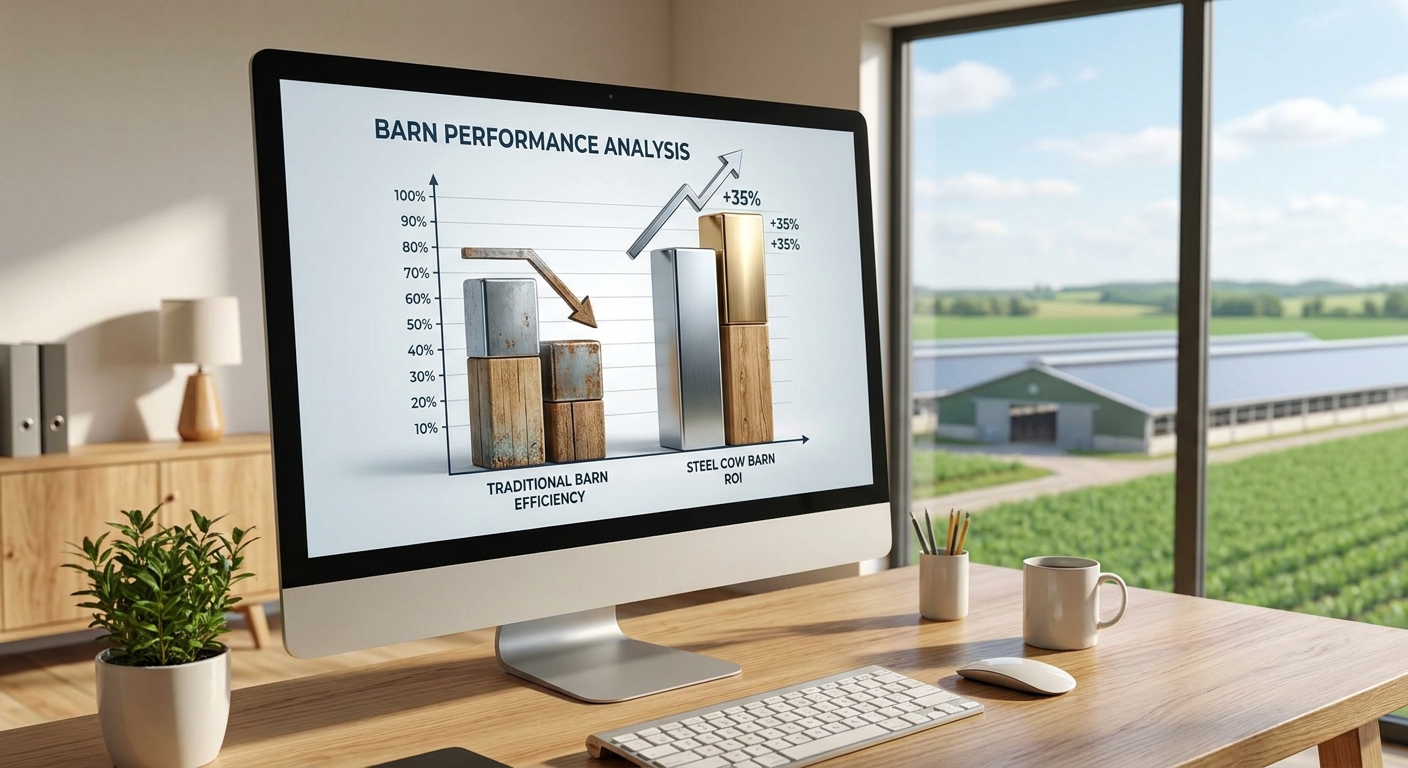
The return on investment for a modern cow barn comes from reduced animal mortality, lower labor costs, and higher production yields. By analyzing your data in a cow barn environment, you can see exactly how a controlled facility pays for itself.
How do buildings reduce costs?
You can lower your feed waste and veterinary bills by providing a controlled environment that minimizes stress-induced illnesses. Centralized operations allow your staff to manage more cattle in less time, drastically reducing overhead.
Here is the deal: a professional barn can pay for its own construction costs through increased yield within 5 to 7 years.
- Lowers the cost per head for daily care.
- Minimizes feed spoilage from pests and weather.
- Reduces animal loss during extreme weather events.
Is a steel barn a long-term asset?
You will find that steel structures hold their value and have higher resale potential than traditional wooden pole barns. The modular nature of steel also allows you to expand the building easily as your business grows.
Believe it or not: steel buildings often appreciate in value due to their structural longevity.
- Higher appraisal values for the farm property.
- Modular design allows for low-cost expansion.
- Minimal annual maintenance preserves your capital.
Key Takeaway: A steel barn is a financial engine that increases the efficiency and total value of your ranching enterprise.
| ROI Factor | Financial Impact | |
|---|---|---|
| Reduced Labor | 30% decrease in operational overhead | |
| Increased Yield | 15-20% boost in milk or meat production |
Analysis: Professional housing is the most significant upgrade a rancher can make to improve their bottom-line profitability.
How does shelter impact cow barn health?
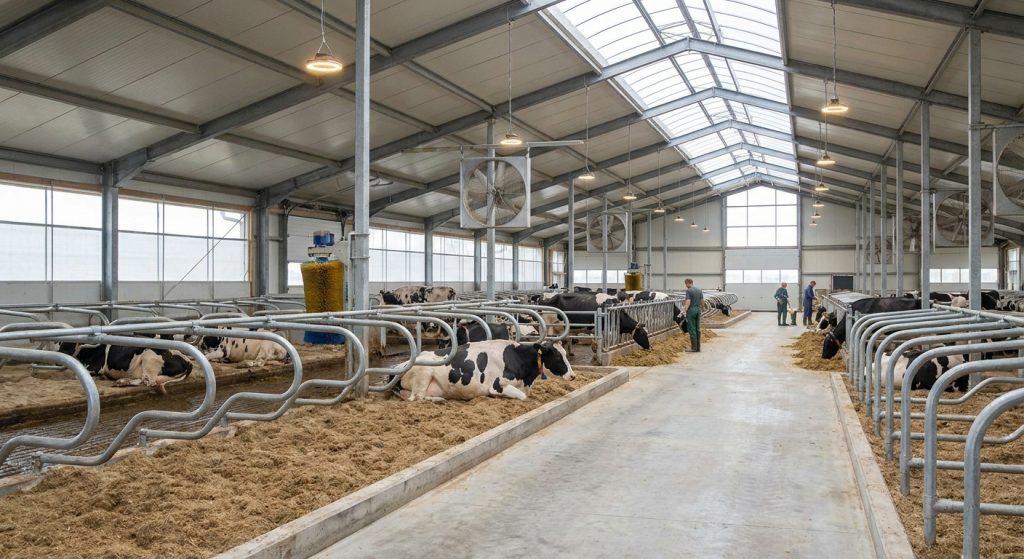
The primary purpose of a cow barn is to provide a controlled environment that protects your herd from the metabolic stress of outdoor living. Without proper shelter, cattle must use their energy for thermal regulation rather than growth or milk production.
Can shelter increase growth rates?
You will see faster weight gain in your herd when they are protected from freezing rain and extreme summer heat. Energy that was previously spent shivering or panting is redirected toward building muscle and fat.
The best part? A sheltered cow is a more efficient converter of feed into revenue-generating product.
- Reduces cattle mortality rates during major storms.
- Minimizes environmental stress on pregnant heifers.
- Provides a safe haven from predator threats at night.
How is health monitoring improved?
You need a dedicated space where you and your veterinarian can work safely and efficiently on individual animals. Having specific treatment rooms and isolation stalls within your barn prevents the spread of contagious diseases.
Here is the kicker: isolation is the most effective tool in preventing a farm-wide outbreak.
- Allows for controlled medical procedures in clean areas.
- Provides dedicated spaces for vaccinations and tagging.
- Enables easier monitoring of injured or calving animals.
Key Takeaway: A modern facility streamlines medical care and protection, ensuring your livestock investment remains healthy and productive.
| Feature | Impact on Operations | |
|---|---|---|
| Steel Shelter | 30% reduction in weather-related stress | |
| Isolation Stalls | Maximum disease control efficiency |
Analysis: Professional housing structures represent the foundation of a modern, biosecure ranching operation.
Optimizing Your Ranching Future
Maximizing the efficiency of your cattle operation requires more than just a roof; it requires a precision-engineered environment. By focusing on layout, ventilation, and durable steel construction, you ensure that your herd stays healthy and your labor costs stay low. Our factory-direct approach eliminates middleman markups, providing you with a high-quality facility that fits your budget.
Showhoo Building is dedicated to providing high-quality, factory-direct steel structures that meet the rigorous demands of global agriculture. We believe that every rancher deserves a building that works as hard as they do, designed to withstand the elements while optimizing daily workflows. Our engineering team is ready to help you design a space that maximizes your ROI for decades to age.
Ready to upgrade your facility with a custom-engineered solution? Contact us today to receive a free quote and professional design consultation for your next project.
Email:sales@showhoo.com.cn
Phone/WhatsApp:+86 186 7895 5927
Cattle Barn Design FAQ
1.Can I customize the span of my steel cow barn?
Yes, our H-section steel designs allow for clear spans up to 40 meters, providing an unobstructed interior for any layout or machinery.
2.What’s the best material for a low-maintenance cow barn?
Hot-dip galvanized steel is the gold standard because it provides superior corrosion resistance and requires no painting or structural repairs for decades.
3.Can I install solar panels on a steel cow barn roof?
Absolutely. Steel roofs are structurally engineered to handle the additional load of solar arrays, helping you further reduce your operational energy costs.
4.What’s the fastest way to build a cow barn?
Pre-engineered steel buildings are the fastest option because all components arrive pre-cut and drilled, allowing for rapid assembly on-site.
5.Can I expand my cow barn in the future?
Yes, steel structures are inherently modular, meaning you can easily add sections to the length of your building as your herd grows.