
Chicken layer cage design enhances poultry farming efficiency by optimizing house space, automating waste and feed delivery, and protecting hens from ground-level disease exposure. Imagine running a traditional floor-rearing farm where labor costs climb daily while egg production drops. You struggle with high mortality rates, dirty eggs, and uneven feed intake among your hens. This is exactly where a professional layer poultry farm design becomes your game-changer by integrating durable steel structures with automated battery cages to maximize profits.
How does layer poultry farm design boost yields?
An optimized layer poultry farm design directly increases egg yields by reducing bird stress and optimizing space. When hens live in a controlled, clean structural system, their biological energy shifts from survival to maximum productivity. This configuration ensures consistent access to vital resources for every single bird.
Why clean roll-out floors protect your harvest
When eggs roll away instantly, they stay safe from hungry beaks and dirty feet. You will notice a dramatic drop in cracked or contaminated shells because the wire slope is engineered perfectly.
Look:
- Sloped mesh floors roll eggs away safely.
- Less contact with hens minimizes bacterial spread.
- Clean environments lower washing costs.
How stress reduction increases laying rate
Minimizing stress is critical to maintaining a reliable daily laying cycle. You can keep birds separated into peaceful tiers rather than dealing with crowded, aggressive floor fights.
Think about it:
- Uniform grouping prevents competitive behavior.
- Calmer hens convert feed to eggs more efficiently.
- Controlled territories reduce stress-induced mortality.
A secure, clean layout ensures hens remain stress-free, directly maximizing your salable egg volumes.
| Metric | Caged Layout | Traditional Floor | |
|---|---|---|---|
| Egg Cleanliness | Excellent (Roll-out) | Poor (Nest-soil contact) | |
| Cracked Egg Rate | Less than 0.5% | Up to 5.0% |
Transitioning to optimized cages guarantees immediate improvements in both egg hygiene and physical output.
Why does layer poultry farm design require precision?
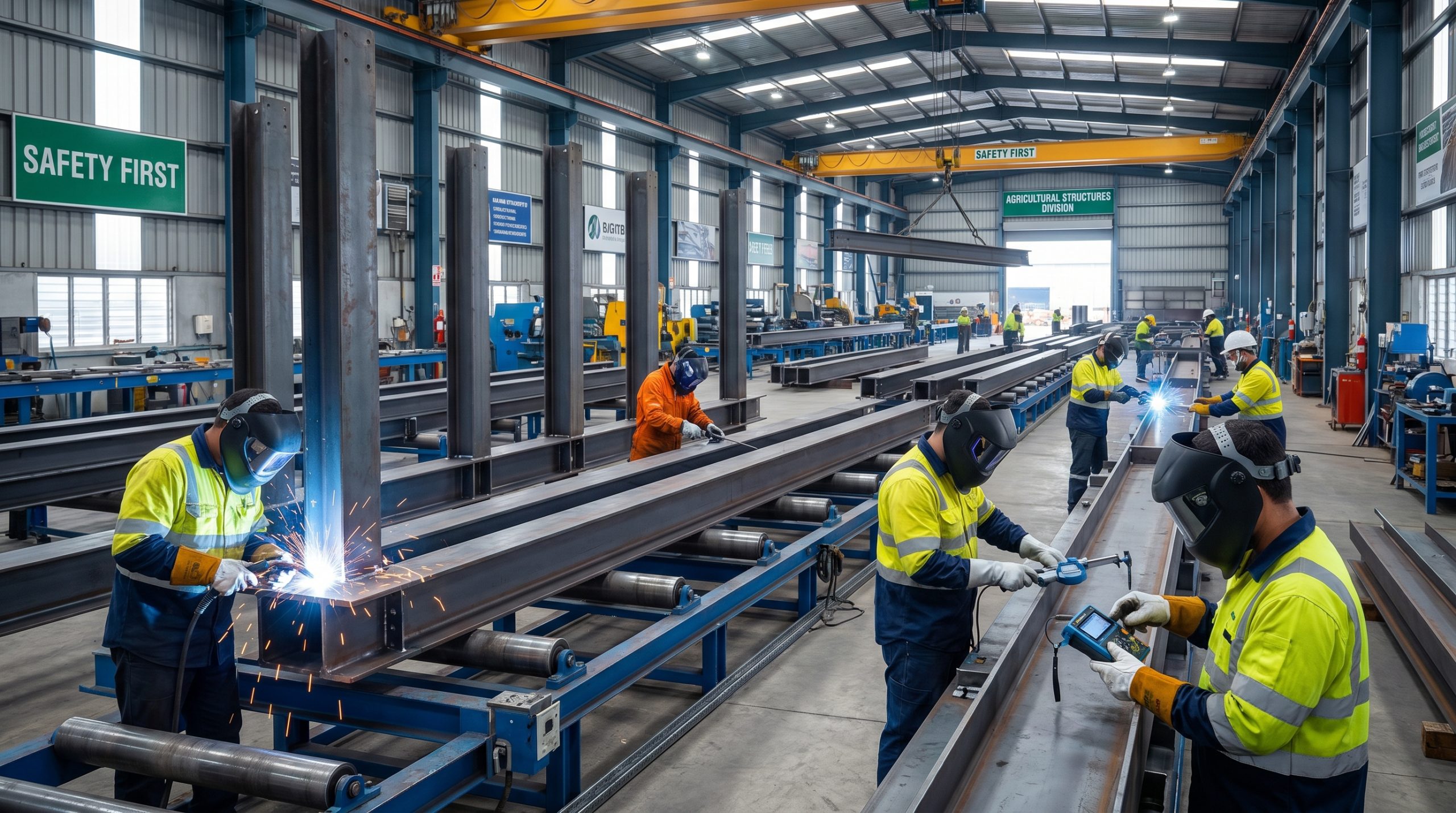
Accurate layout planning and precise steel fabrication in layer poultry farm design prevent costly equipment mismatches and structural failures. High-density battery cage installations demand strict structural tolerances to function correctly over decades. Our advanced factory production ensures every pre-engineered part aligns seamlessly on your farm.
How exact fabrication prevents installation delays
When your steel components are engineered with computerized precision, your local team can assemble the structures without field cutting. You will save valuable days during the construction phase because everything fits.
The best part?
- Factory-welded brackets ensure immediate alignment.
- Pre-drilled bolt holes eliminate manual errors.
- Modular components adapt to your specific footprint.
The importance of structural tolerances
Automated cage machinery can jam or fail if your building’s frame deflects even slightly under heavy loads. You need a stiff, reliable structure to keep your automated feeders and manure belts moving smoothly.
Here is the truth:
- Precise leveling maintains automatic system integrity.
- Heavy steel framing resists environmental load shifts.
- Standardized connections prevent localized wear points.
Precise manufacturing prevents operational issues and allows for quick, trouble-free structural installation.
| Quality Metric | Factory Fabrication | Field Welding | |
|---|---|---|---|
| Error Margin | +/- 1mm (CNC cut) | +/- 10mm (Manual) | |
| Installation Speed | Fast (Bolt-together) | Slow (On-site adjustments) |
High-precision engineering eliminates structural bottlenecks before the materials ever arrive at your job site.
Get Your Free Layer Poultry Farm Design & Quote in 24 Hours!
Email:sales@showhoo.com.cn
Phone/WhatsApp: + 86 186 7895 5927
Does layer poultry farm design affect house lighting?
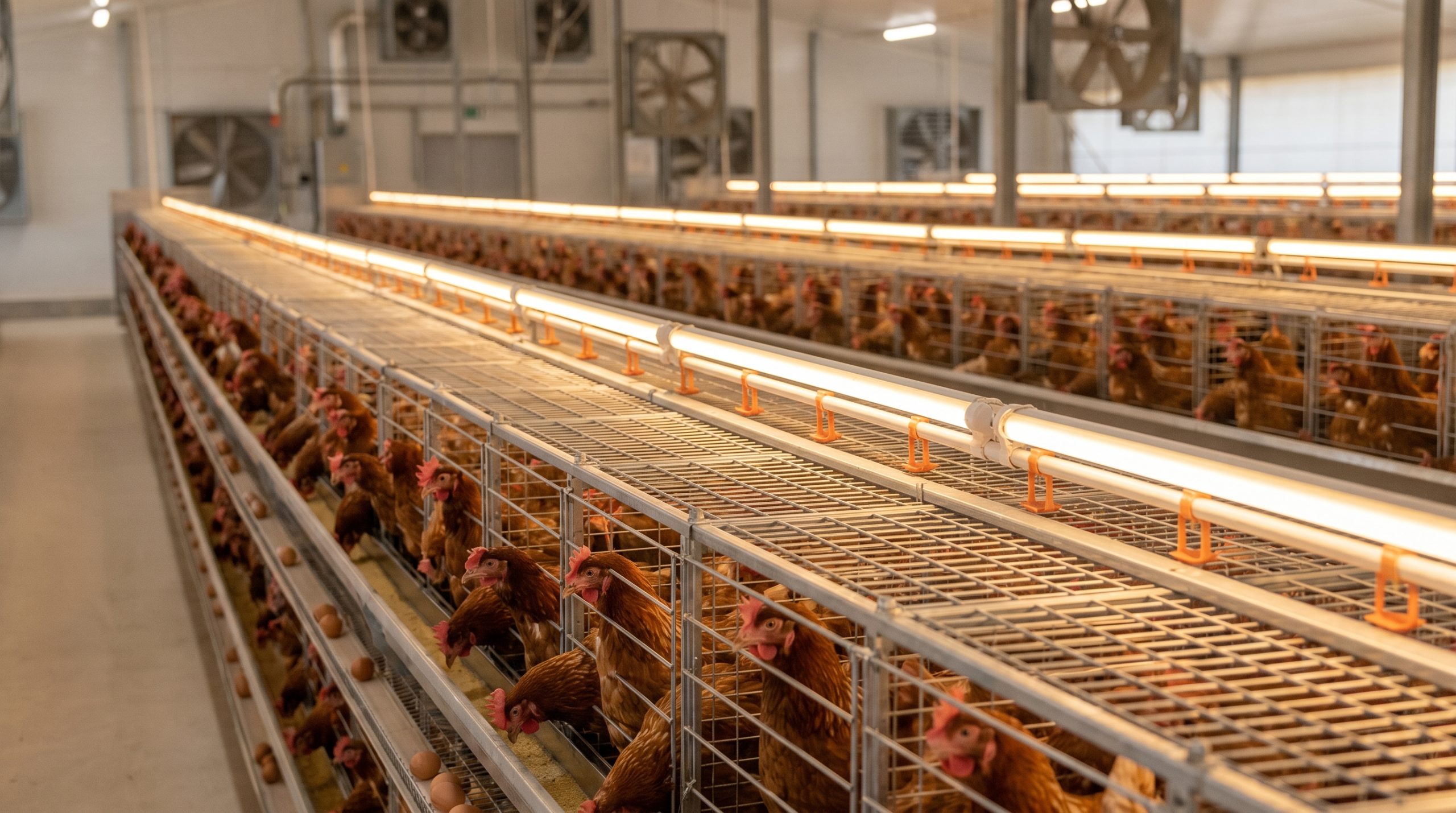
Strategic lighting integration in layer poultry farm design regulates the biological clock of your hens, which directly stimulates consistent egg production. Dark zones inside a poorly planned house can cause some birds to stop laying entirely. Utilizing a dedicated illumination plan prevents uneven laying rates and flock behavior issues.
Why LED lighting promotes hormonal health
Uniform brightness throughout the multi-tier cage stacks stimulates the hens’ pituitary glands to release egg-producing hormones. You must provide consistent light to guarantee your birds do not go into early molt.
But wait, there’s more:
- LED lights run cooler and use less electricity.
- Specific light spectrums keep your flock calm.
- Programmed dimming mimics natural sunrise and sunset.
Eliminating shadows in multi-tier systems
In deep battery cage rows, lower tiers often suffer from shadow blocks if your lights are poorly spaced. You must position light fixtures to reach every corner of the cage layout.
Think about it:
- Proper spacing prevents dark nesting corners.
- Balanced lux levels ensure uniform feed consumption.
- Accessible light tracks simplify monthly cleanings.
An optimized illumination plan eliminates shadows, ensuring all birds receive equal stimulation for maximum lay rates.
| Lighting Aspect | Proper LED Layout | Direct Shadows | |
|---|---|---|---|
| Flock Calmness | High (Dimmable bulbs) | Low (Aggressive behavior) | |
| Egg Output | Uniform | Fluctuating |
Consistent, well-placed lighting is the simplest way to maintain a highly productive and calm flock environment.
How does layer poultry farm design automate feeding?
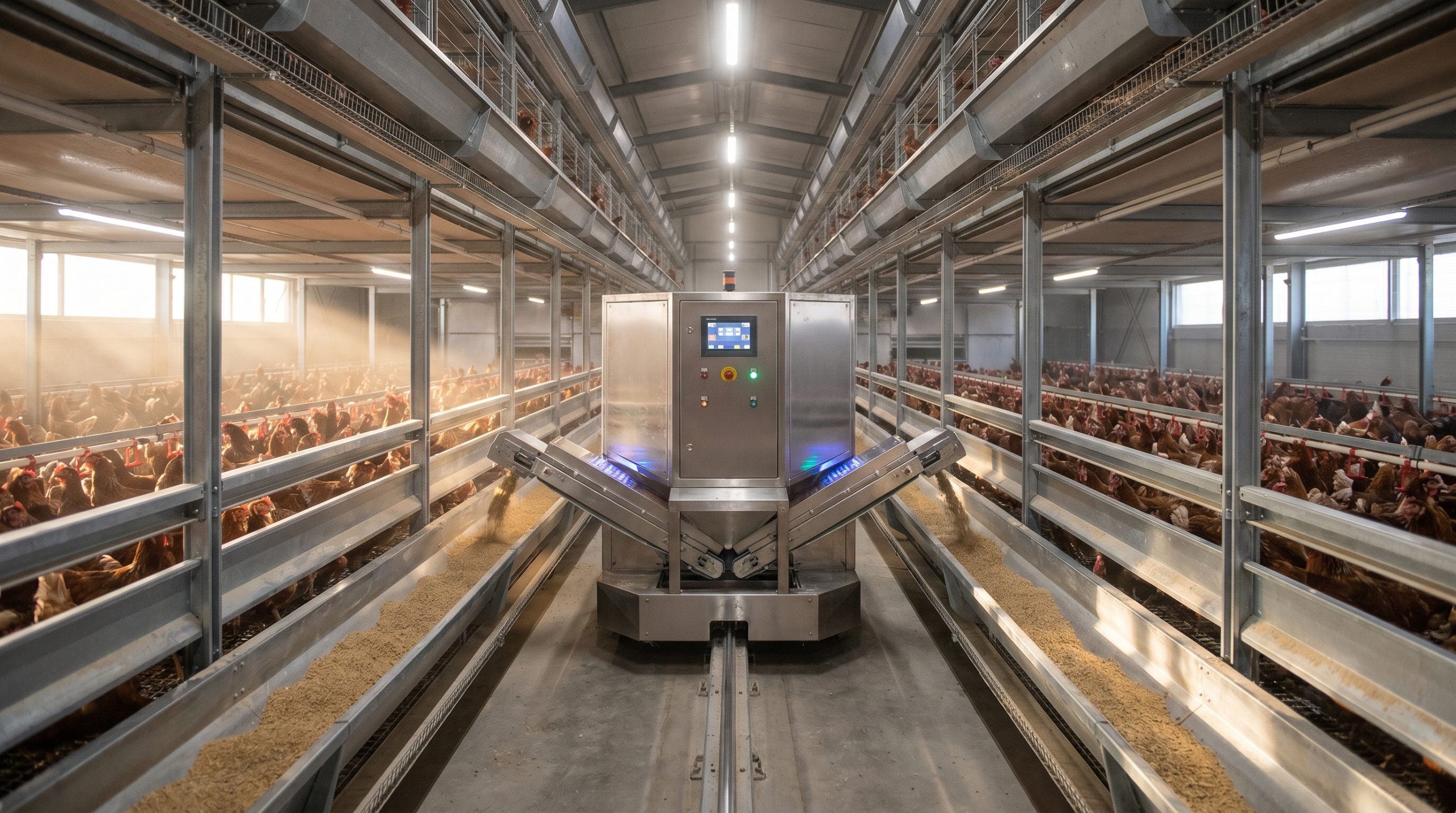
Integrating automated feeding trolleys directly into your layer poultry farm design prevents costly feed wastage and guarantees uniform nutrient distribution. Manual feeding often leads to overfilled troughs and selective eating, which hurts flock uniformity. Modern systems transport precise feed portions directly to every hen simultaneously.
Eliminating feed waste with specialized troughs
Troughs with inner anti-roost and anti-flick lips stop chickens from throwing expensive grains onto the floor. You will save up to 15% on your monthly feed bills simply by upgrading your trough geometry.
Look:
- Roll-formed troughs maintain constant feed depth.
- Durable materials resist corrosive bird saliva.
- Guard rails prevent contamination from entering.
Why automated feeding trolleys ensure uniformity
Automated hoppers travel smoothly down the long rows, releasing equal feed volumes for both top and bottom tiers. You can rest easy knowing weaker hens will not be starved out by aggressive cage mates.
The best part?
- Programmed schedules deliver feed on time.
- Equal distribution reduces flock sizing variance.
- Electronic controls monitor daily intake patterns.
Automating feed distribution reduces wastage while ensuring equal nutritional access for every bird.
| Feeding Variable | Automated Trolley | Manual Feeding | |
|---|---|---|---|
| Feed Spillage | Under 1% | Over 10% | |
| Labor Allocation | Minutes (Automated) | Hours (Physical hauling) |
Switching to an automated feeding configuration directly protects your highest operational cost item: feed.
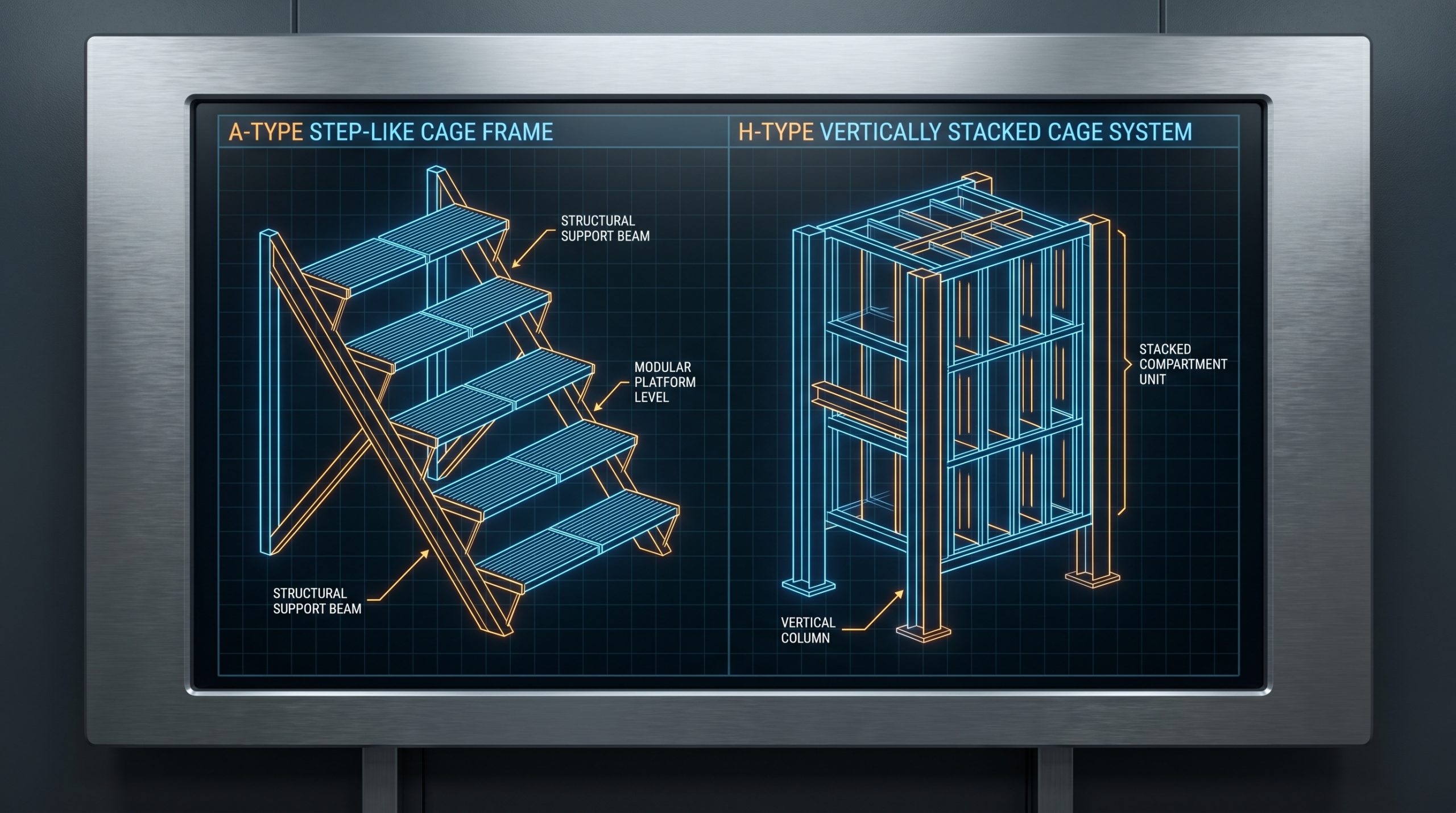
Why is H-type best for layer poultry farm design?
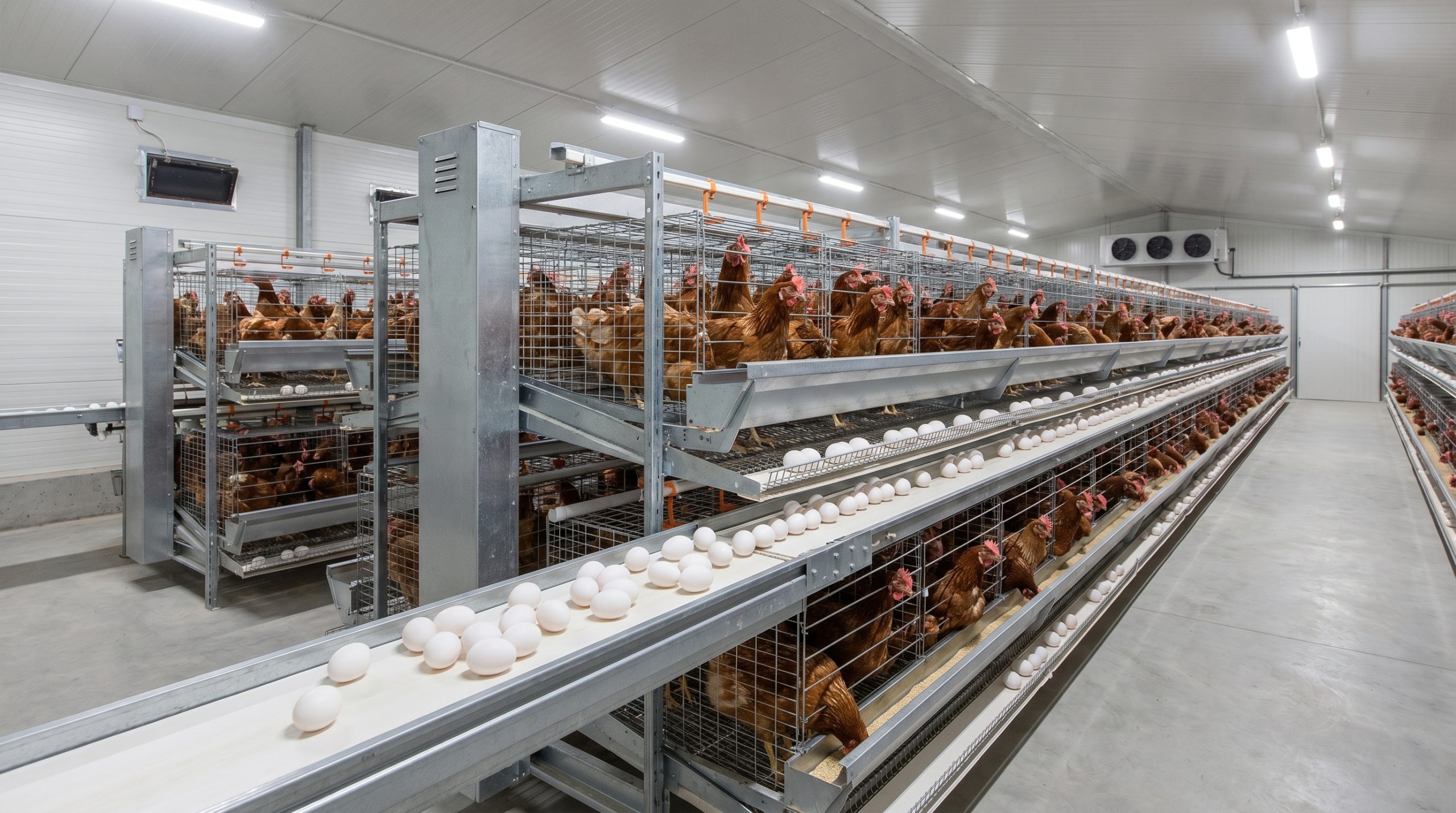
Selecting H-type cage configurations in your commercial layer poultry farm design maximizes your land-use efficiency and allows for full operational automation. Unlike A-type structures, H-type cages stack directly on top of each other, creating a space-saving vertical arrangement. This design is highly recommended for high-capacity farms targeting optimal efficiency.
Maximizing stocking density per square meter
Vertical stacking allows you to house three to four times more birds within the same land footprint. You can minimize your building footprint cost while exponentially scaling your commercial business capacity.
Here is the truth:
- Multi-tier layouts optimize expensive concrete foundations.
- Vertical configurations lower overall heating costs.
- Compact housing simplifies bio-security controls.
Seamless integration with heavy machinery
The structural shape of H-type cages is tailor-made for integrated manure belts, automated egg collectors, and traveling feed systems. You will cut down on manual labor costs because the system runs itself with minimal oversight.
But wait, there’s more:
- Direct compatibility with high-speed egg belts.
- Easy maintenance access for cage technicians.
- Standardized cage frames simplify part replacements.
H-type structures maximize your business scalability by optimizing both valuable land space and mechanization.
| System Feature | H-Type Cages | A-Type Cages | |
|---|---|---|---|
| Stocking Capacity | Maximum (Vertical Stack) | Moderate (A-frame Step) | |
| Automation Compatibility | Fully Integrated | Partially Integrated |
High-volume poultry businesses require H-type configurations to achieve true cost-efficiency at scale.
Does layer poultry farm design improve ventilation?
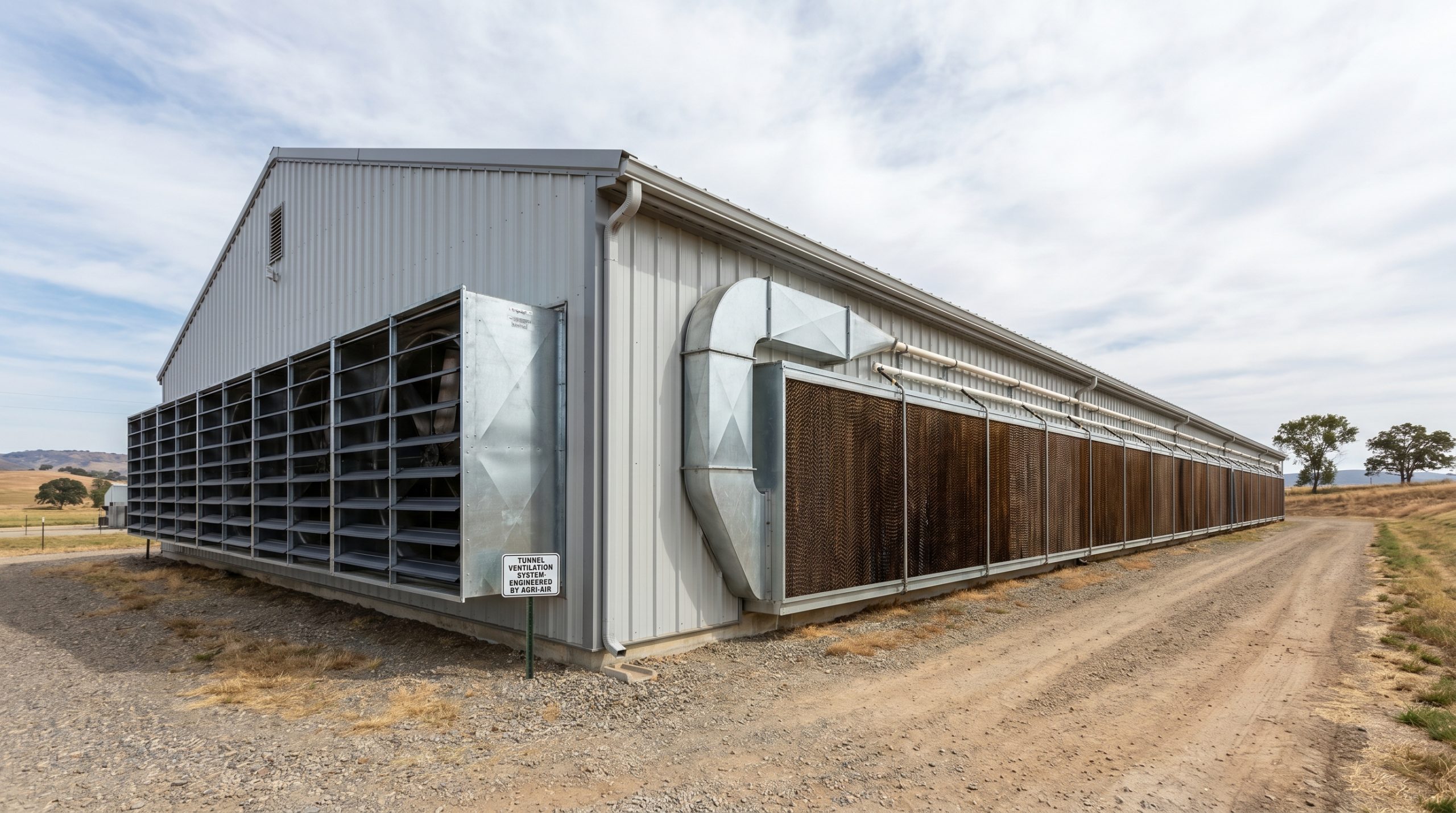
Yes, a professional layer poultry farm design integrates tunnel ventilation and cooling systems to eliminate dangerous heat stress and toxic ammonia buildup. High stocking density requires consistent airflow to regulate temperatures and maintain clean air throughout the structure. Without mechanical ventilation, birds quickly overheat and experience massive drops in egg output.
The power of evaporative cooling pads
Air passing through wet cooling pads drops in temperature before moving over your hens, keeping them comfortable during hot summers. You will prevent production slumps caused by heat stress because the interior stays cool.
Think about it:
- Cool air prevents birds from panting excessively.
- Stable temperatures maintain strong eggshell thickness.
- Low stress keeps daily food consumption normal.
Removing toxic ammonia with exhaust fans
Heavy-duty exhaust fans draw out stale air, dust, and ammonia gas from the house, protecting the birds’ respiratory health. You will keep your workforce and flock safer by maintaining clean air parameters inside the building.
Look:
- Continuous air exchange prevents lung irritation.
- Dry airflow keeps cage structures from rusting.
- Automated climate sensors adjust fan speeds instantly.
Mechanical ventilation secures bird health and protects your laying consistency from extreme summer weather.
| Climate Condition | Controlled Tunnel Vent | Open-Sided Natural Vent | |
|---|---|---|---|
| Air Velocity Control | Precise | Non-Existent | |
| Max Temp Reduction | Up to 10°C | No Reduction |
Active ventilation control is the most critical safeguard against catastrophic summer heat mortality.
Get Your Free Layer Poultry Farm Design & Quote in 24 Hours!
Email:sales@showhoo.com.cn
Phone/WhatsApp: + 86 186 7895 5927
How does steel mesh protect layer poultry farm design?
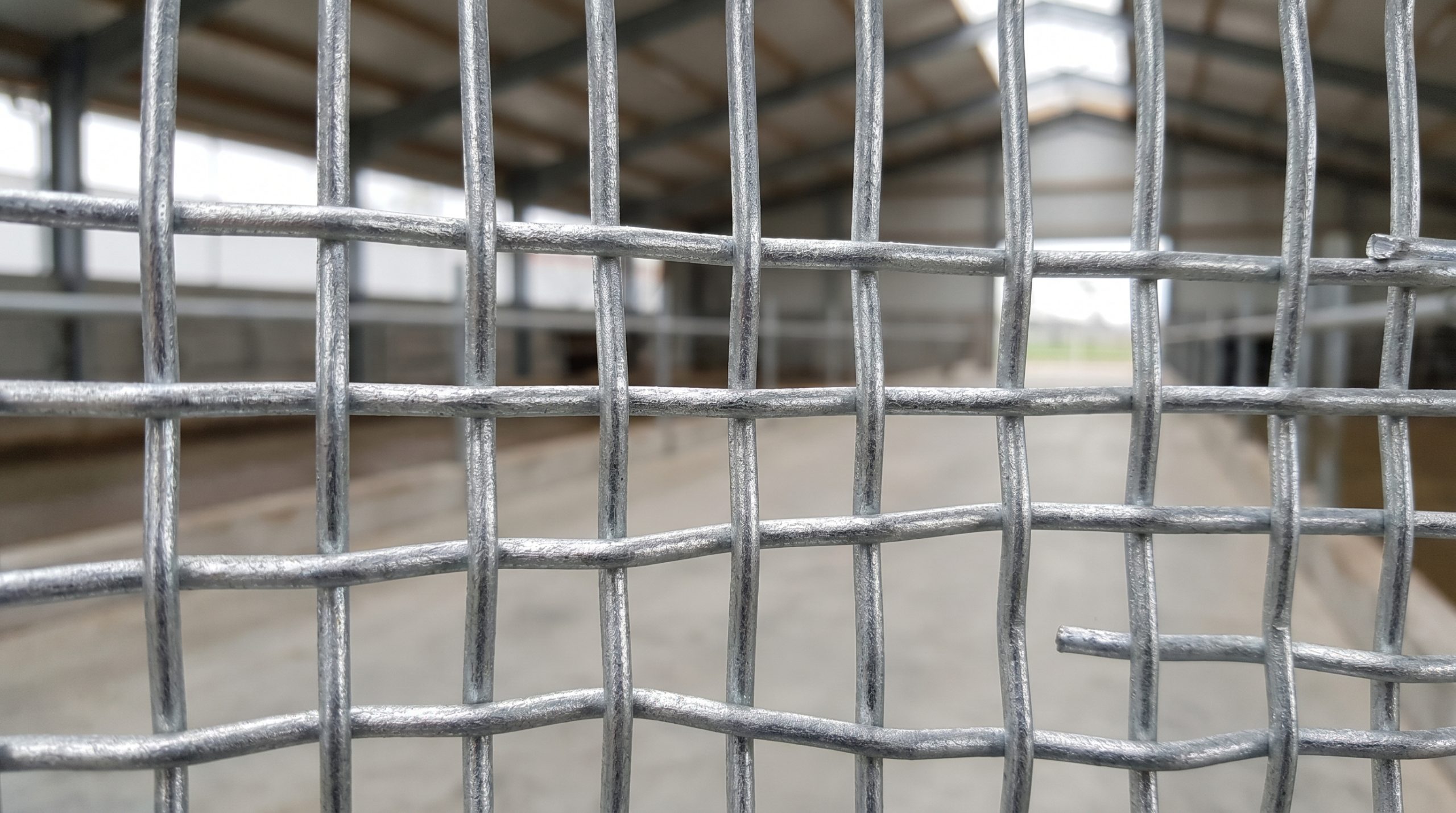
High-strength galvanized wire mesh used in layer poultry farm design protects birds from injuries and resists the corrosive environments of commercial layer houses. Cheap, low-quality mesh rusts rapidly under continuous exposure to acidic bird droppings and chemical cleanings. Choosing durable hot-dip galvanized steel extends your equipment’s lifespan by up to fifteen years.
Why hot-dip galvanizing resists corrosive ammonia
The heavy zinc layer acts as a sacrificial barrier that prevents rust from eating into the steel wire core. You do not have to worry about premature wire snapping or cage collapse.
Here is the truth:
- Zinc coatings block aggressive moisture penetration.
- Thick wires handle high bird weights without bending.
- Smooth surfaces make thorough disinfection easier.
Protecting birds from wire-induced injuries
Smooth wire joints and optimized mesh spacing prevent hens from trapping their feet or damaging their feathers. You can lower bird mortality and improve welfare scores when your cage floors are safe.
The best part?
- Rounded weld points prevent skin abrasions.
- Precise spacing stops birds from getting trapped.
- Springy floor mesh supports soft egg landings.
Using premium galvanized steel wire preserves your capital equipment and guarantees a safe environment for your layers.
| Wire Specification | Hot-Dip Galvanized Mesh | Cold Galvanized Mesh | |
|---|---|---|---|
| Lifespan | 15–20 Years | 3–5 Years | |
| Rust Resistance | Exceptional | Poor (Rapid pitting) |
Premium steel wire mesh is a necessary long-term asset that reduces maintenance labor and replacement costs.
How does layer poultry farm design secure hydration?
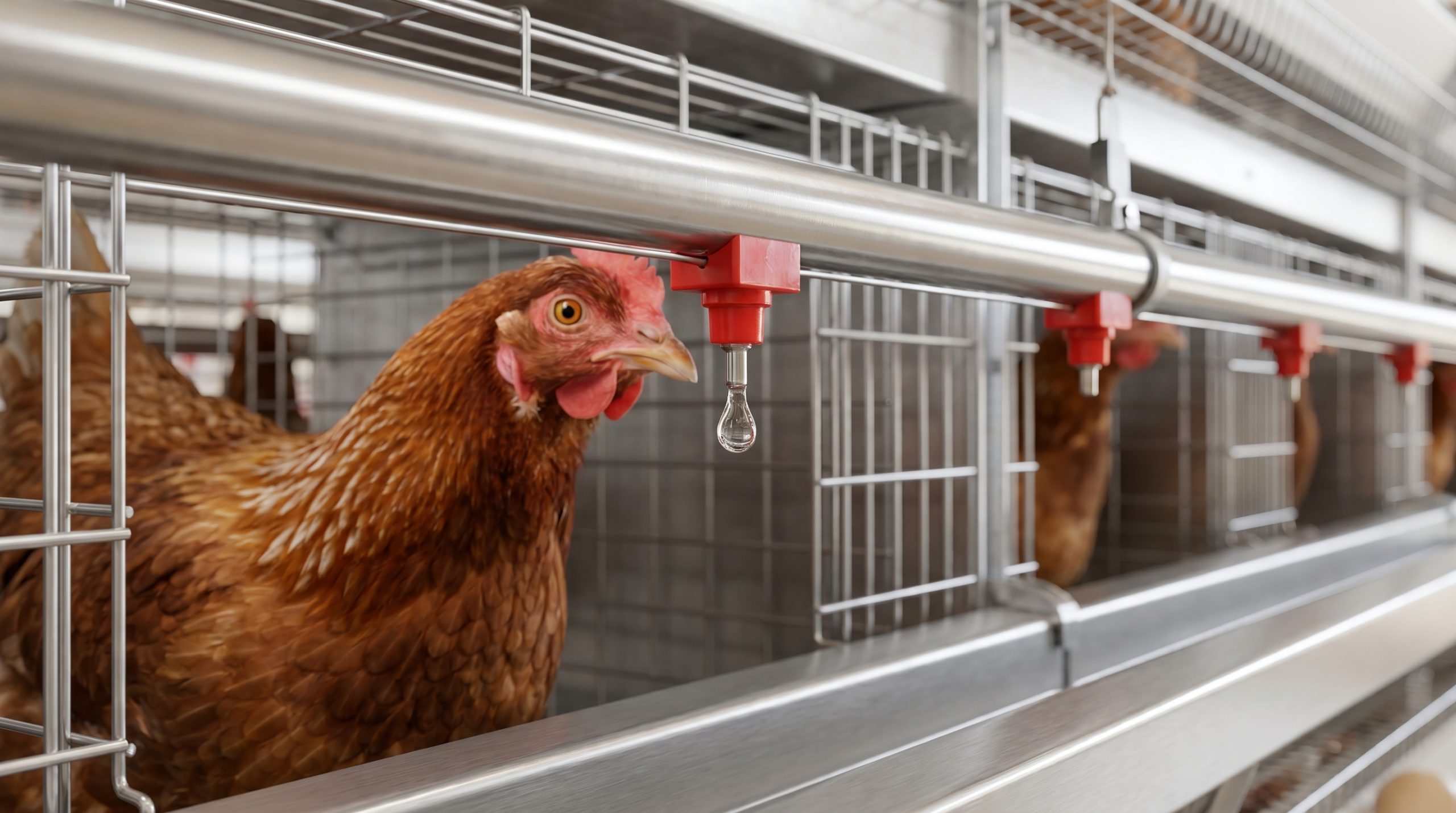
Installing automated nipple drinking lines in your layer poultry farm design ensures that clean, fresh water is available to every bird without any spillage. Water troughs are easily fouled with feed and dust, leading to bacterial growth and flock disease. Closed-pipe systems protect water quality and keep cage areas dry.
Why 360-degree nipple drinkers prevent water wastage
Hens simply tap the steel nipple to drink, and the valve seals instantly once they pull away, preventing floor puddles. You will maintain dry manure belts and lower humidity levels in the poultry house.
Think about it:
- Double-seal valves eliminate continuous leaking.
- Integrated drip cups catch runaway droplets.
- Heavy-duty plastic pipes resist chemical line flushes.
Ensuring uniform pressure across long lines
Pressure regulators keep water flowing evenly from the front of the house to the very back, regardless of line length. You can prevent dehydration and laying drops in hens housed at the end of the rows.
But wait, there’s more:
- Pressure meters indicate potential blockages instantly.
- Clean water lines reduce medication delivery issues.
- Accessible lines allow quick height adjustments.
Closed automatic drinking systems guarantee continuous, hygienic hydration to sustain optimal egg production.
| Hydration System | Closed Nipple Lines | Open Water Troughs | |
|---|---|---|---|
| Hygiene Level | Excellent (Hermetically sealed) | Poor (Open contamination) | |
| Water Loss Rate | Under 1% | Over 12% |
Securing a reliable, clean water supply is the most basic yet vital foundation of bird health.
Does layer poultry farm design simplify waste removal?
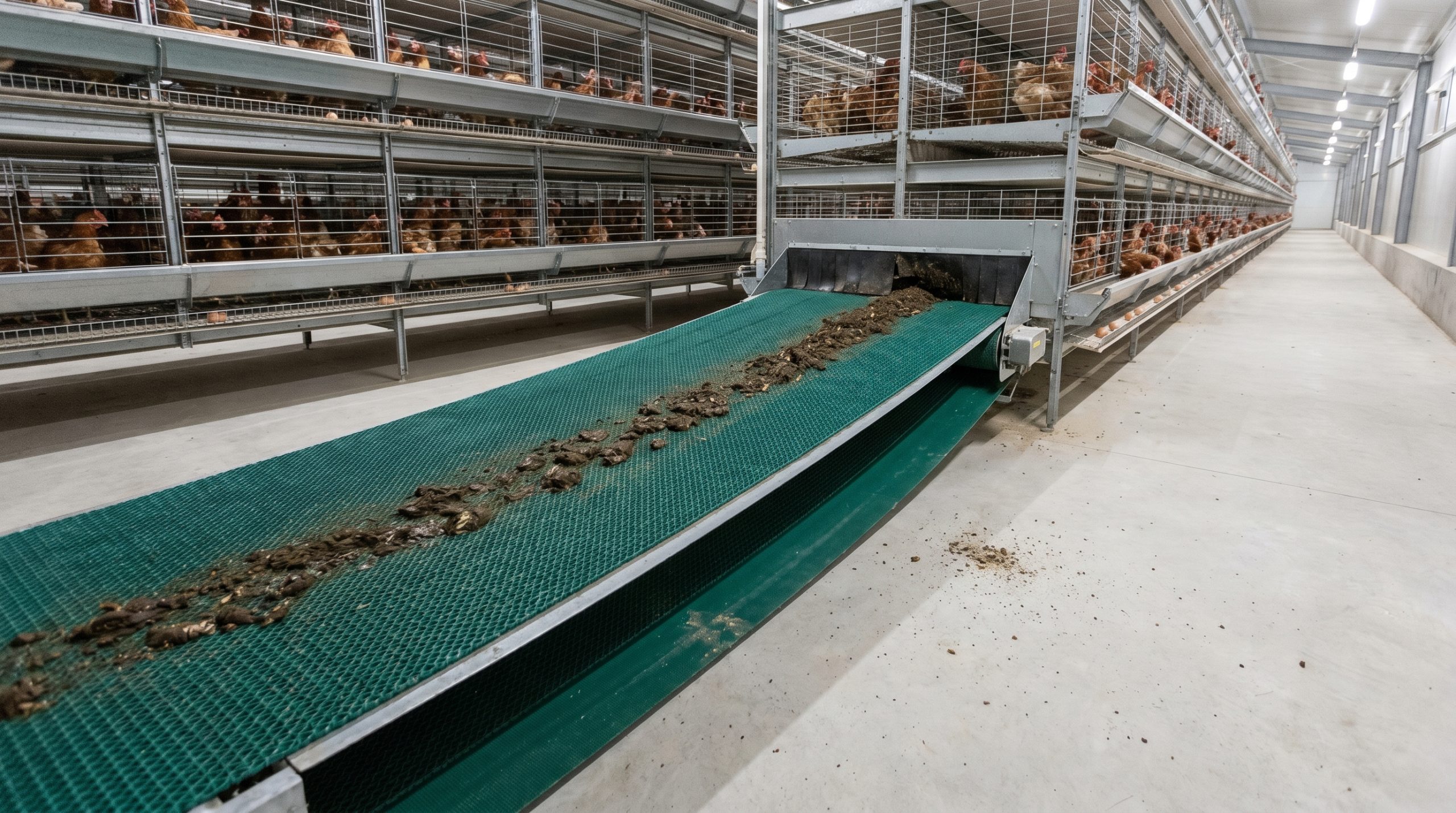
Yes, designing heavy-duty conveyor belts under each cage tier in layer poultry farm design allows for quick, automated waste removal and drastically reduces labor. Removing wet manure daily prevents toxic gas accumulation and blocks standard disease vectors. This automated approach keeps the entire house fresh and clean.
Why polypropylene belts prevent odor problems
Polypropylene manure belts do not absorb liquids, allowing you to scrape droppings out of the building with zero mess. You will maintain a pleasant working environment and stay in compliance with local environmental rules.
Look:
- Non-stick surfaces discharge waste completely.
- High chemical resistance prevents belt decay.
- Smooth drives prevent slippage during operation.
Breaking pathogen transmission cycles
Because birds never come into contact with their waste, common internal parasites and fly issues are effectively eliminated. You can reduce your reliance on veterinary treatments and save on health bills.
Here is the truth:
- Dry manure removal prevents ammonia generation.
- Rapid extraction stops fly larvae development.
- Low disease pressure keeps flock survival high.
Automated manure belts improve building biosecurity while providing valuable, dry fertilizer for crop farms.
| Scraping Method | Automated PP Belts | Manual Floor Cleaning | |
|---|---|---|---|
| Cleaning Interval | Daily (Push-button) | Weeks / Months (Physical) | |
| Fly & Pest Count | Negligible | Very High |
Regular automated waste extraction prevents the biological hazards associated with traditional poultry farms.
What supports a heavy layer poultry farm design?
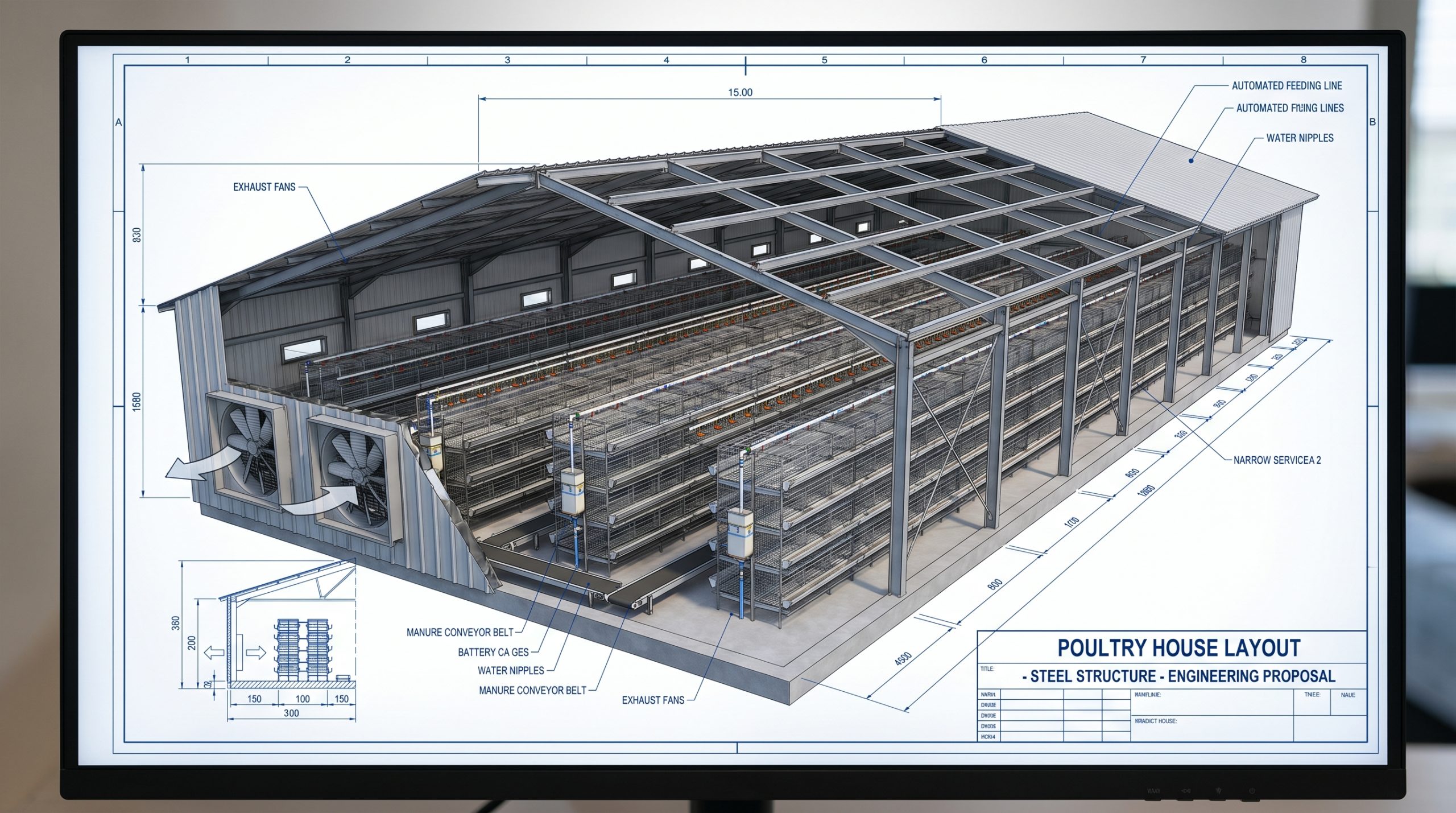
Pre-engineered steel structure buildings provide the high load-bearing capacity and wide clear-spans needed for a heavy layer poultry farm design. Multi-tier H-type cages filled with thousands of birds exert massive, continuous forces onto your building’s frame. Selecting industrial-grade steel framing ensures your agricultural investment remains safe and rigid over decades.
Why clear-span structures optimize cage placement
Clear-span steel frames do not require internal columns, giving you complete freedom to place your cage rows efficiently. You can maximize your floor space utilization and plan perfect ventilation pathways.
The best part?
- Unobstructed floors accommodate large equipment easily.
- Wall-to-wall design improves air current patterns.
- Prefabricated framing cuts construction labor costs.
Engineering for extreme local weather
Commercial steel poultry buildings are calculated to withstand strong regional wind speeds, heavy snow loads, and seismic activities. You will protect your flock investment from natural disasters and structural collapse.
Think about it:
- Galvanized steel frames prevent interior rust damage.
- Insulated sandwich panels maintain perfect temperatures.
- Tight seals block wild birds and pests completely.
Pre-engineered steel houses provide the structural security needed to support modern, high-density automated systems.
| Building Element | Steel Frame Building | Traditional Timber Frame | |
|---|---|---|---|
| Span Capacity | Up to 40m clear-span | Limited (Frequent pillars) | |
| Moisture Resistance | Superior (Galvanized steel) | Poor (Rot, mold, warping) |
Investing in a premium steel structural envelope is essential to support complex automated cage lines.
Conclusion: Scale Your Agricultural Venture with Confidence
Transitioning from traditional floor systems to an optimized vertical layout is the most effective way to scale your operations. High flock mortality, rising feed costs, and manual labor inefficiencies no longer need to restrict your agricultural business expansion. By integrating high-strength pre-engineered steel buildings with advanced automatic battery cages, we build customized, high-performance poultry structures. With an annual capacity of over 30,000 tons and successful project deliveries in over 50 countries, we are fully equipped to design your high-efficiency system. Ready to revolutionize your egg yields? To receive a free custom layout drawing and a project quote within 24 hours, contact us today . Partner with Showhoo Building to construct the durable structural foundations of your long-term agricultural success.
Get Your Free Layer Poultry Farm Design & Quote in 24 Hours!
Email:sales@showhoo.com.cn
Phone/WhatsApp: + 86 186 7895 5927
Frequently Asked Questions
Can I customize the layout of my steel poultry house?
Yes, you can fully customize the dimensions. Our engineering team designs the steel structure based on your specific multi-tier cage configurations and local wind and snow loads.
What’s the best cage system for operations with over 50,000 layers?
The H-type battery cage system is highly recommended. This vertically stacked layout optimizes spatial density, supports comprehensive automation, and maintains superior environmental cleanliness.
How do I know if hot-dip galvanized steel is necessary for my farm?
It is absolutely necessary for any commercial facility. The ammonia fumes produced by manure are extremely corrosive, and only hot-dip galvanization provides the durable protection needed to prevent rust.
Can I install these complex steel buildings with local contractors?
Yes, local installation is straightforward. We provide complete 3D architectural drawings, clear assembly guidelines, and direct video support to guide your on-site building team.
What is the estimated delivery timeframe for a complete structure?
Manufacturing is completed within 30 to 45 days. The entire prefabricated building kit is then securely packed and shipped directly to your port.