
Imagine walking into your facility only to find forklifts idling in narrow aisles while pickers navigate a maze of misplaced pallets. This lack of organization leads to “space creep,” where invisible inefficiencies drain your profit margins through increased labor costs and delayed shipments. Implementing a strategic warehouse layout design is the solution to reclaiming your floor space and boosting throughput.
Why is Warehouse Layout Design Crucial for Success?
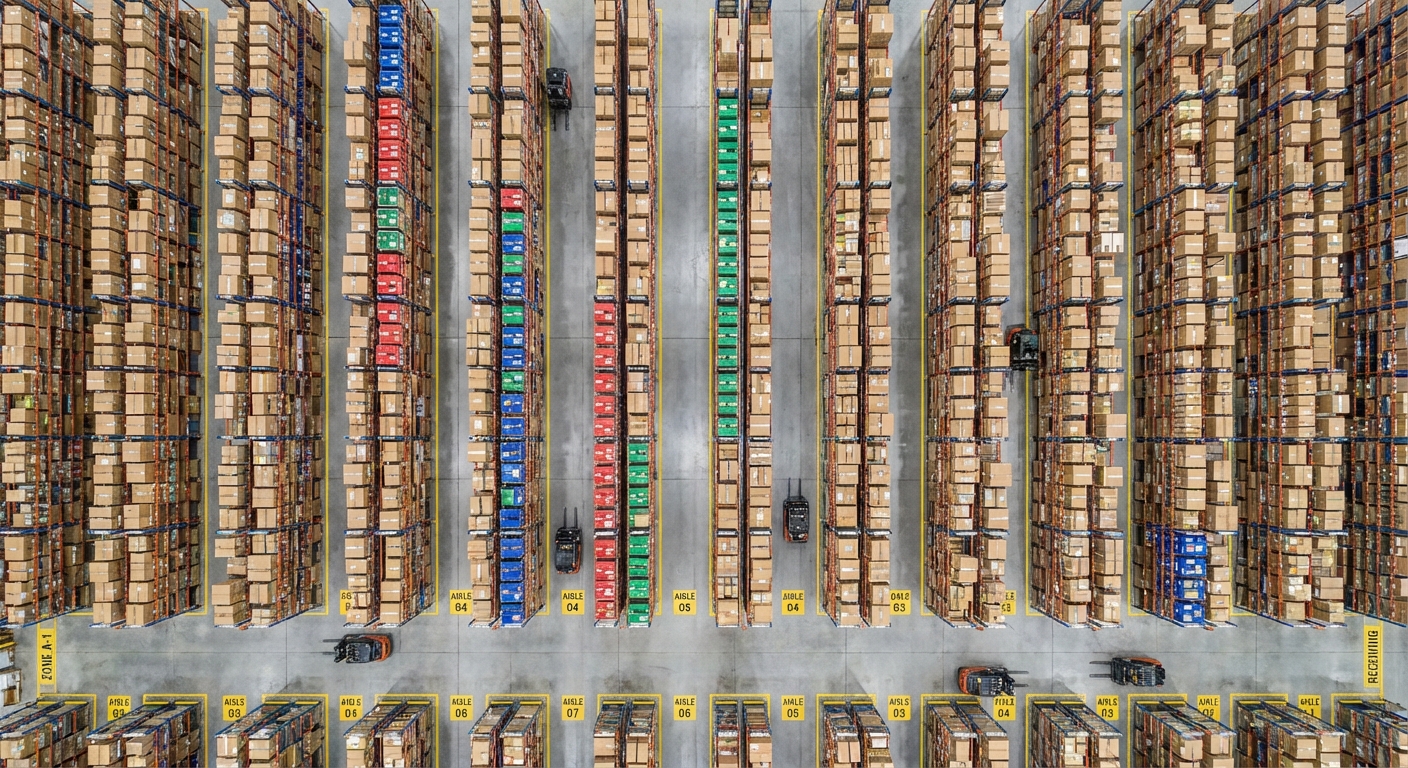
An efficient layout is crucial because it serves as the operational blueprint that minimizes material handling time and maximizes storage density. Investing in a professional warehouse layout design is the most effective way to improve your facility’s productivity and reduce long-term labor overhead.
How does design impact productivity?
Believe it or not, the distance your team travels can account for over 50% of your total labor costs. You need a structure that minimizes steps and maximizes motion efficiency.
- Reduced Travel: You can place high-frequency items near shipping docks to save time.
- Clearer Paths: You eliminate congestion by defining one-way traffic lanes.
- Error Reduction: You provide better visibility and organization for warehouse workers.
Does layout affect worker safety?
But wait, there’s more to consider than just speed. A cluttered floor plan creates blind spots that lead to accidents and equipment damage.
- Safety Zones: You separate pedestrian paths from heavy machinery lanes.
- Ergonomics: You design shelving heights to reduce physical strain on staff.
Key Takeaway: A well-planned layout directly correlates to faster order fulfillment and lower operational risks.
| Metric | Impact of Good Layout | |
|---|---|---|
| Picking Speed | Increases by 20-30% | |
| Storage Capacity | Gains of up to 40% | |
| Safety Incidents | Significant reduction |
How Can You Maximize Vertical Storage Space?
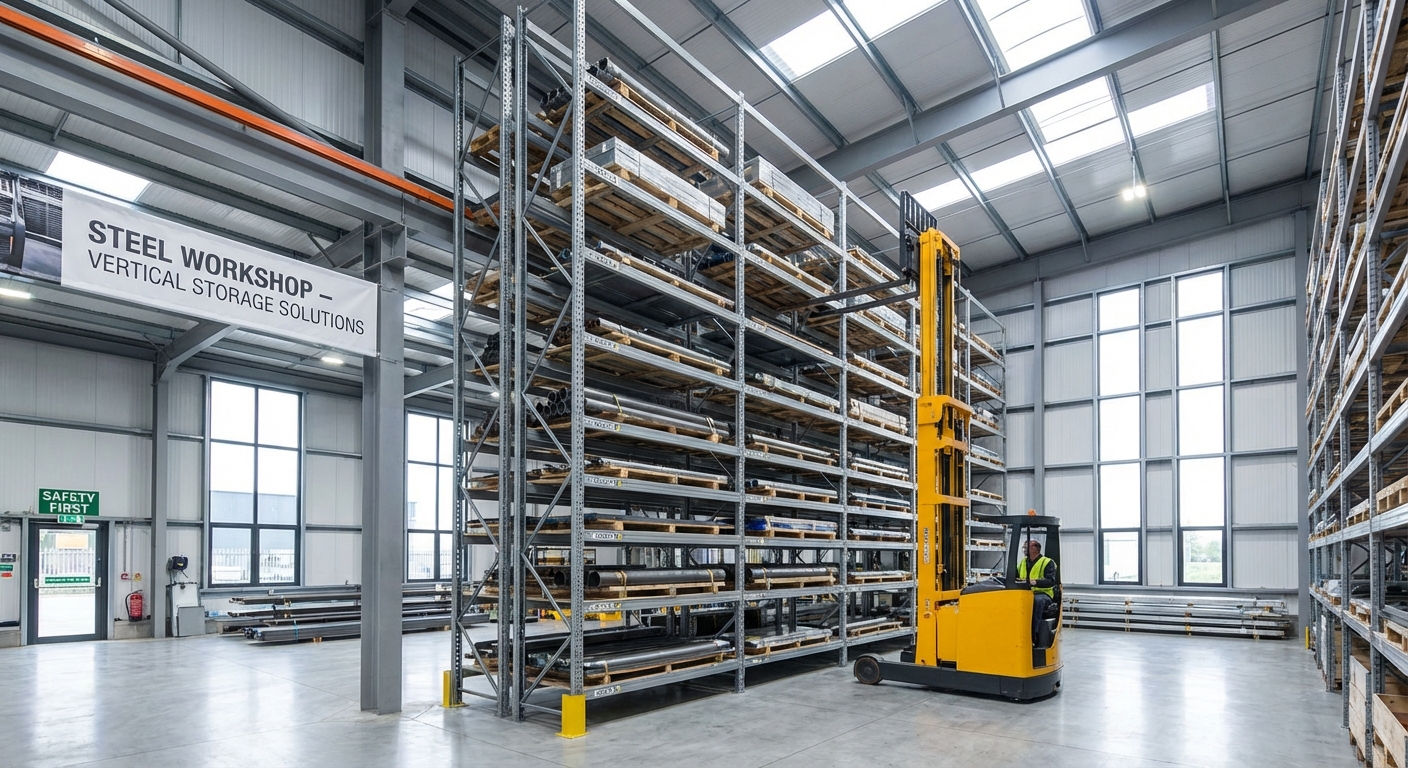
You maximize vertical space by utilizing high-density racking systems and mezzanines to exploit the full cubic volume of your facility. A tailored warehouse layout design looks upward to double your capacity without expanding your physical footprint.
Are mezzanines right for your facility?
And the best part? You can gain an entire second floor of storage without pouring a new foundation.
- Modular Growth: You can add elevated platforms for office space or light picking.
- Clear Span Advantage: You utilize the air space above loading docks.
- Cost Savings: You avoid the massive expense of a new building extension.
Key Takeaway: Vertical expansion is the most cost-effective method to scale storage capacity in fixed-size buildings.
| Solution | Benefit | Space Gain | |
|---|---|---|---|
| Double-Deep Racks | Increases density | 50% increase | |
| Mezzanine Floors | Doubles floor surface | 100% increase | |
| Very Narrow Aisles | Maximizes rack count | 30% increase |
Which Flow Pattern Fits Your Operation Best?
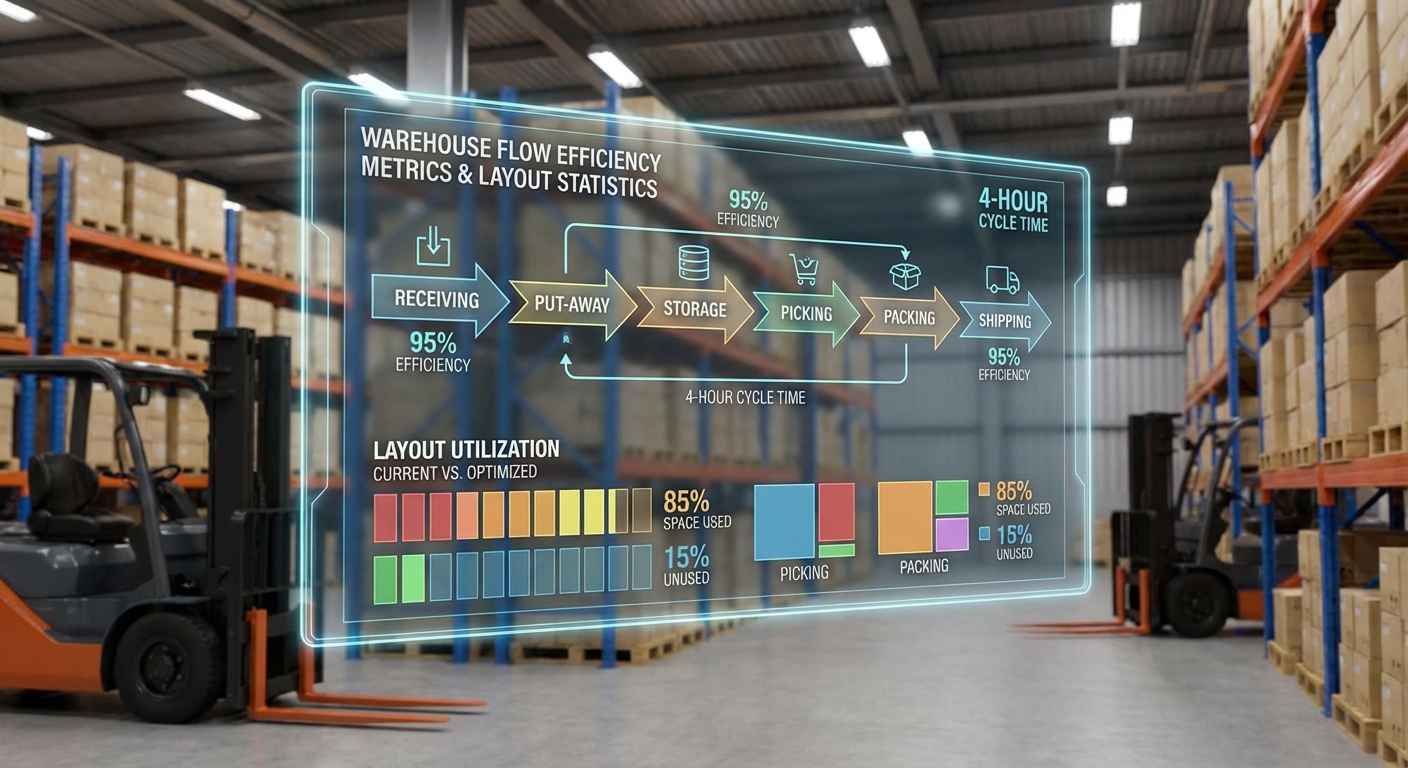
The best flow pattern depends on your volume requirements and whether you prefer shared or separate shipping and receiving zones. Your warehouse layout design should follow a blueprint that prevents cross-traffic congestion and streamlines the movement of goods.
Is the U-shaped flow most efficient?
Let’s dive in to why this is the most popular choice for smaller operations. It allows you to centralize your workforce and dock resources.
- Shared Docks: You can use the same equipment for both receiving and shipping.
- Security: You centralize entry and exit points for better inventory control.
- Flexibility: You easily adapt the middle section for storage or value-added services.
When should you use I-shaped layouts?
But wait, there’s more to consider if you handle massive daily volumes. This “through-flow” design is perfect for high-speed environments.
- No Bottlenecks: You prevent traffic jams by having goods enter one side and exit the other.
- Clear Separation: You eliminate the risk of inbound products mixing with outbound orders.
Key Takeaway: The flow pattern dictates the “pulse” of your warehouse and must match your building shape.
| Flow Type | Best For | Main Advantage | |
|---|---|---|---|
| U-Shape | Small/Medium | Resource sharing | |
| I-Shape | High Volume | Straight-line speed | |
| L-Shape | Specialized | Corner space usage |
How Do You Optimize the Picking Process?
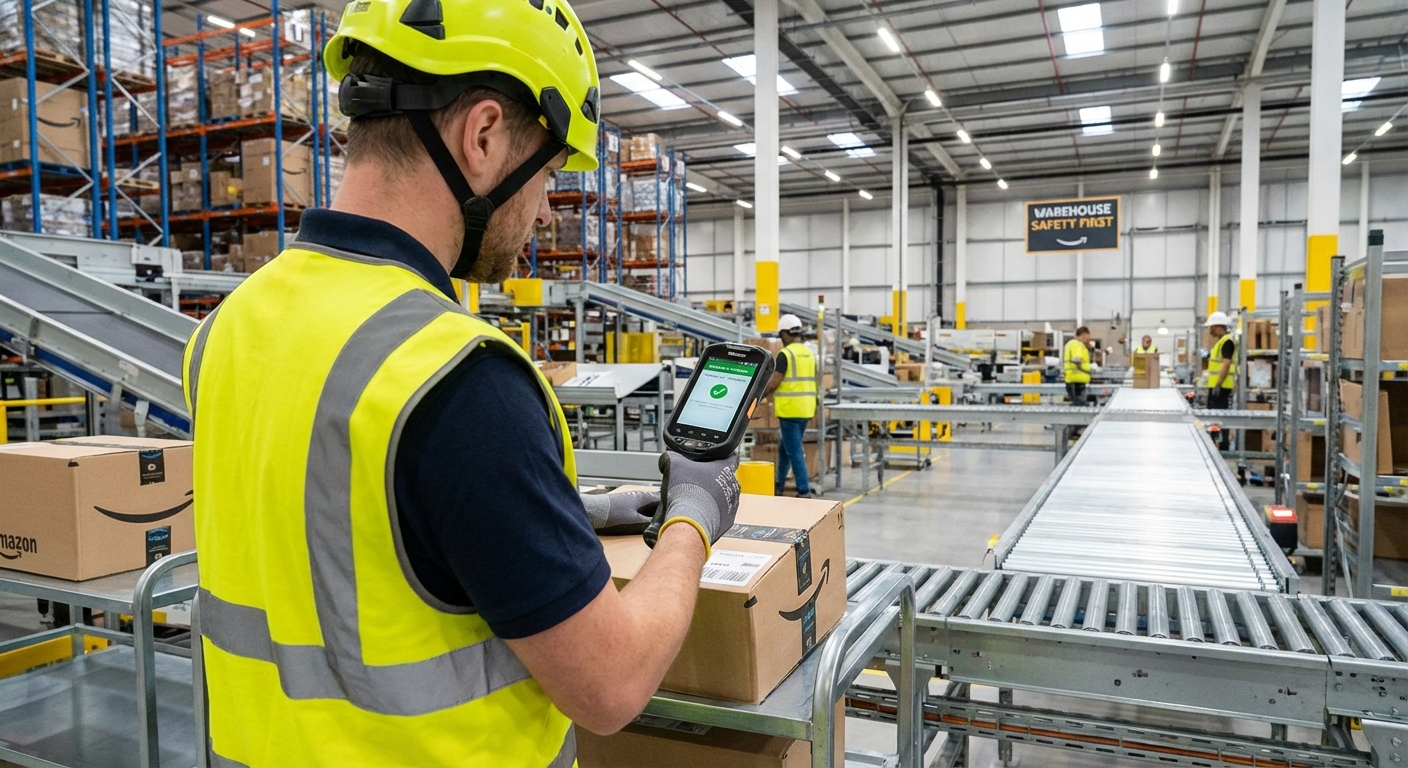
Optimizing the picking process requires placing high-velocity items in accessible “hot zones” to reduce worker travel time. A smart warehouse layout design reduces the number of steps your team takes to fulfill a single order.
What strategies reduce travel time?
You might be surprised to learn how much time is wasted just walking back and forth. Implementing logic-based picking zones is the easiest fix.
- Zone Picking: You assign workers to specific sections to master their inventory.
- Batch Picking: You allow one picker to fulfill multiple orders in a single trip.
- Wave Picking: You coordinate picking cycles based on shipping schedules.
Key Takeaway: Efficient picking is the heart of warehouse operations and requires both logic and spatial organization.
| Strategy | Implementation | Benefit | |
|---|---|---|---|
| Slotting | Place fast-movers low | Reduced fatigue | |
| Cross-Docking | Skip storage entirely | Immediate shipping | |
| RF Technology | Real-time tracking | 99% accuracy |
Why Are Loading Docks Often Bottlenecks?
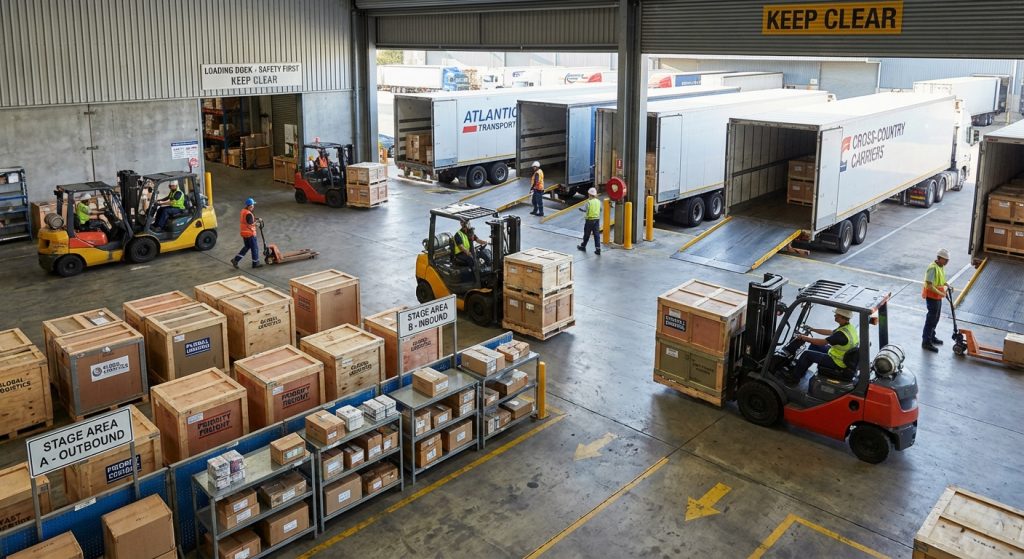
Loading docks become bottlenecks when there is insufficient staging area for incoming goods to be inspected before put-away. Your warehouse layout design must account for the physical footprint of trailers and the turning radius of forklifts to maintain a steady rhythm.
How can you streamline receiving?
Here is the kicker: the faster you “put away” items, the sooner they are available for sale. You need dedicated zones that keep the traffic moving.
- Ample Staging: You provide enough room to inspect goods without blocking aisles.
- Dock Levelers: You ensure smooth transitions for machinery between the truck and floor.
- Clear Labeling: You use floor markings to designate “Inbound Only” zones.
Key Takeaway: The efficiency of your loading area determines the speed of your entire supply chain.
| Component | Function | Efficiency Gain | |
|---|---|---|---|
| Staging Area | Inspection/Sorting | Reduced errors | |
| Vehicle Restraints | Safety/Security | Faster loading | |
| Wide Aisles | Equipment Flow | Less congestion |
What Safety Hazards Should You Avoid?
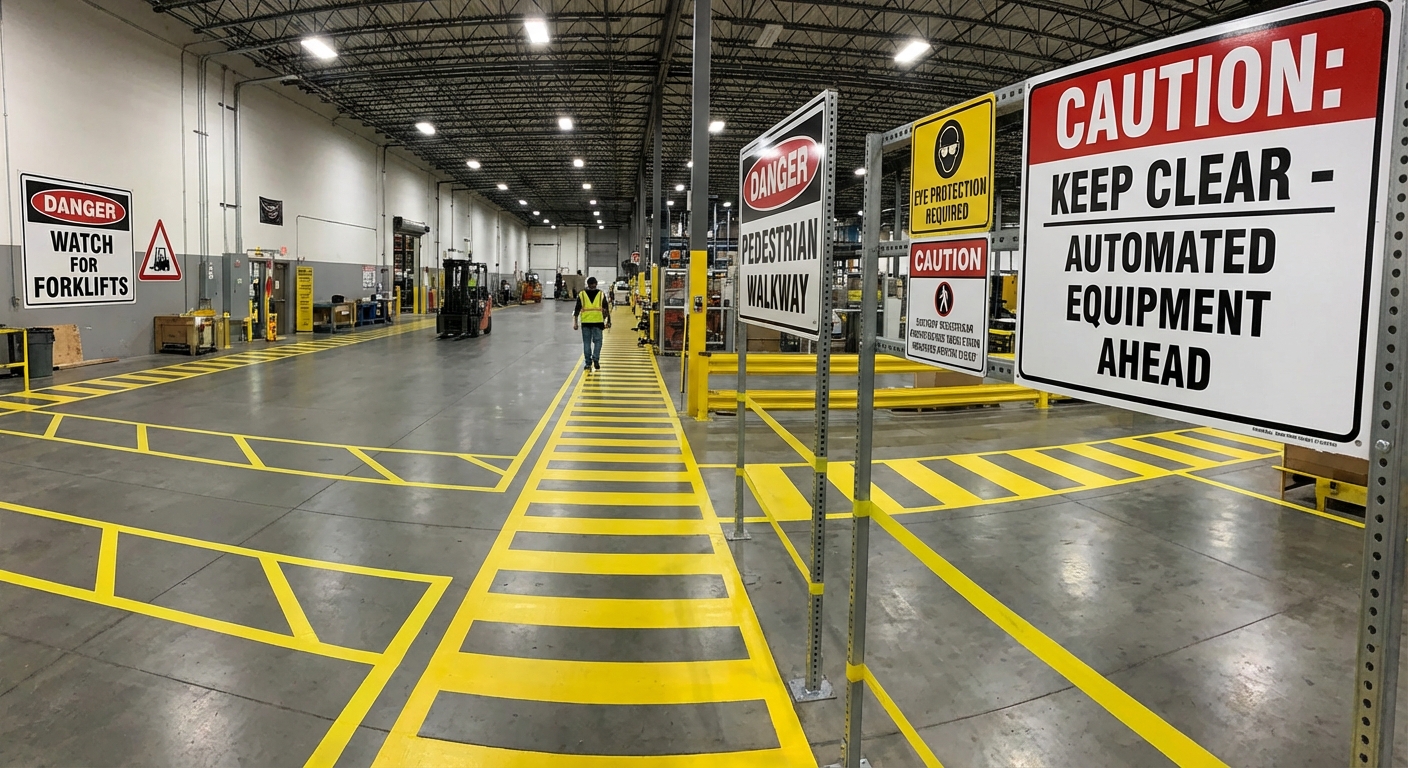
You should avoid hazards such as blind corners, uneven flooring, and poorly designated pedestrian-vehicle crossing points. A safe warehouse layout design prioritizes the well-being of your staff while ensuring compliance with local building codes.
Is your flooring safe for machinery?
Believe it or not, even a small slope or crack can cause accidents with heavy-duty equipment. You must ensure the surface is flat and durable.
- Anti-Slip Surfaces: You ensure traction for both workers and forklifts.
- Pedestrian Lanes: You separate walking paths from high-traffic vehicle zones.
- Impact Barriers: You protect racking systems and columns from accidental collisions.
Key Takeaway: A safe warehouse is a productive warehouse; injuries cause more downtime than any other factor.
| Safety Feature | Purpose | Level of Priority | |
|---|---|---|---|
| Rack End Protectors | Prevent rack collapse | Essential | |
| Convex Mirrors | See around corners | High | |
| Yellow Floor Tape | Designate lanes | Mandatory |
How Do You Assess Current Storage Needs?
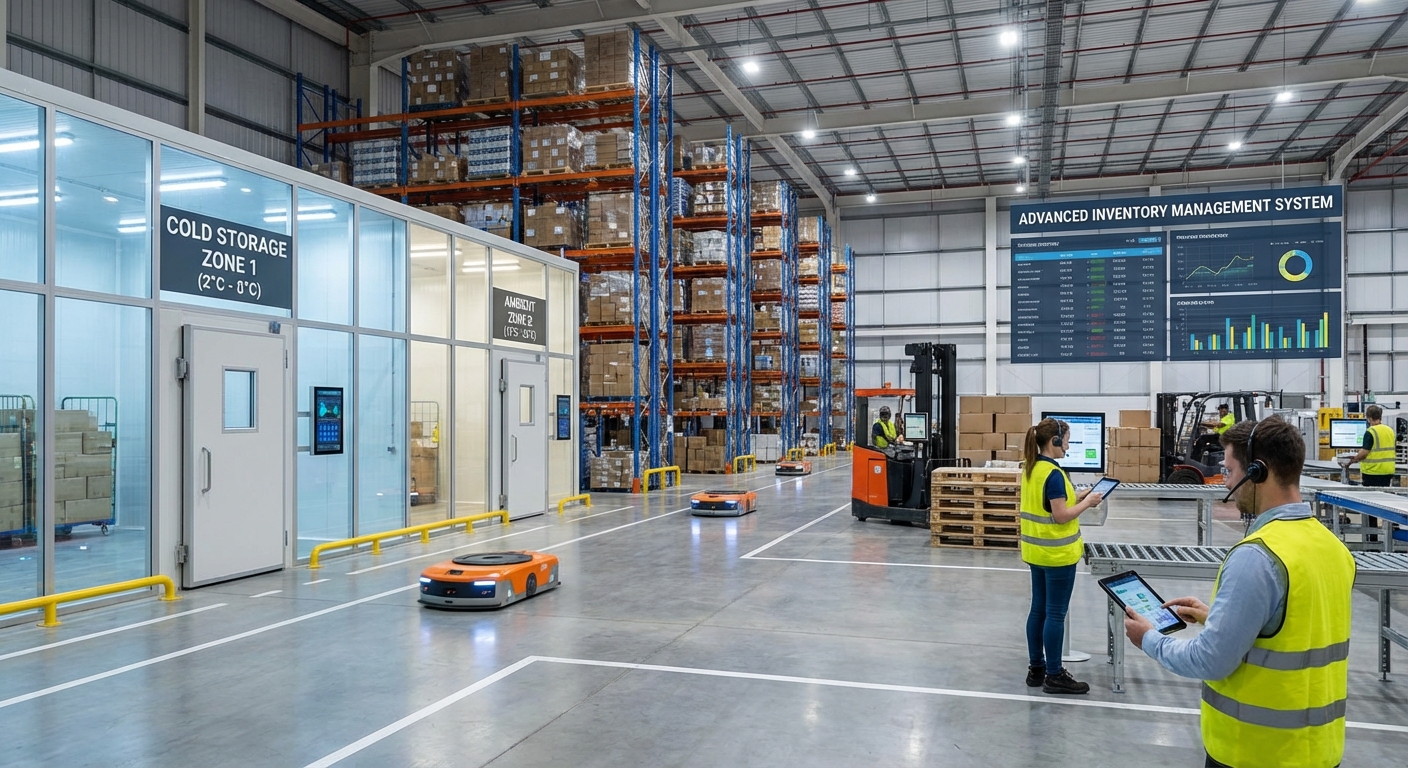
Assessing storage needs involves analyzing SKU velocity, physical dimensions, and inventory turnover rates to determine necessary rack capacity. Your warehouse layout design should be based on data-driven forecasts rather than guesswork about how much space you might need.
Which data points matter most?
You need to look at more than just the total number of items you stock. Understanding your turnover cycle helps you slot inventory correctly.
- SKU Velocity: You identify which products move the fastest and need prime spots.
- Seasonality: You plan for extra space during peak demand periods like holidays.
- Cubic Volume: You calculate the total air space required for different pallet sizes.
Key Takeaway: Accurate data is the foundation of a layout that scales with your business needs.
| Data Point | Application | Layout Impact | |
|---|---|---|---|
| Weight Capacity | Floor load requirements | Critical | |
| Pallet Height | Rack level spacing | High | |
| Order Frequency | Proximity to packing | High |
Can Technology Improve Your Spatial Planning?
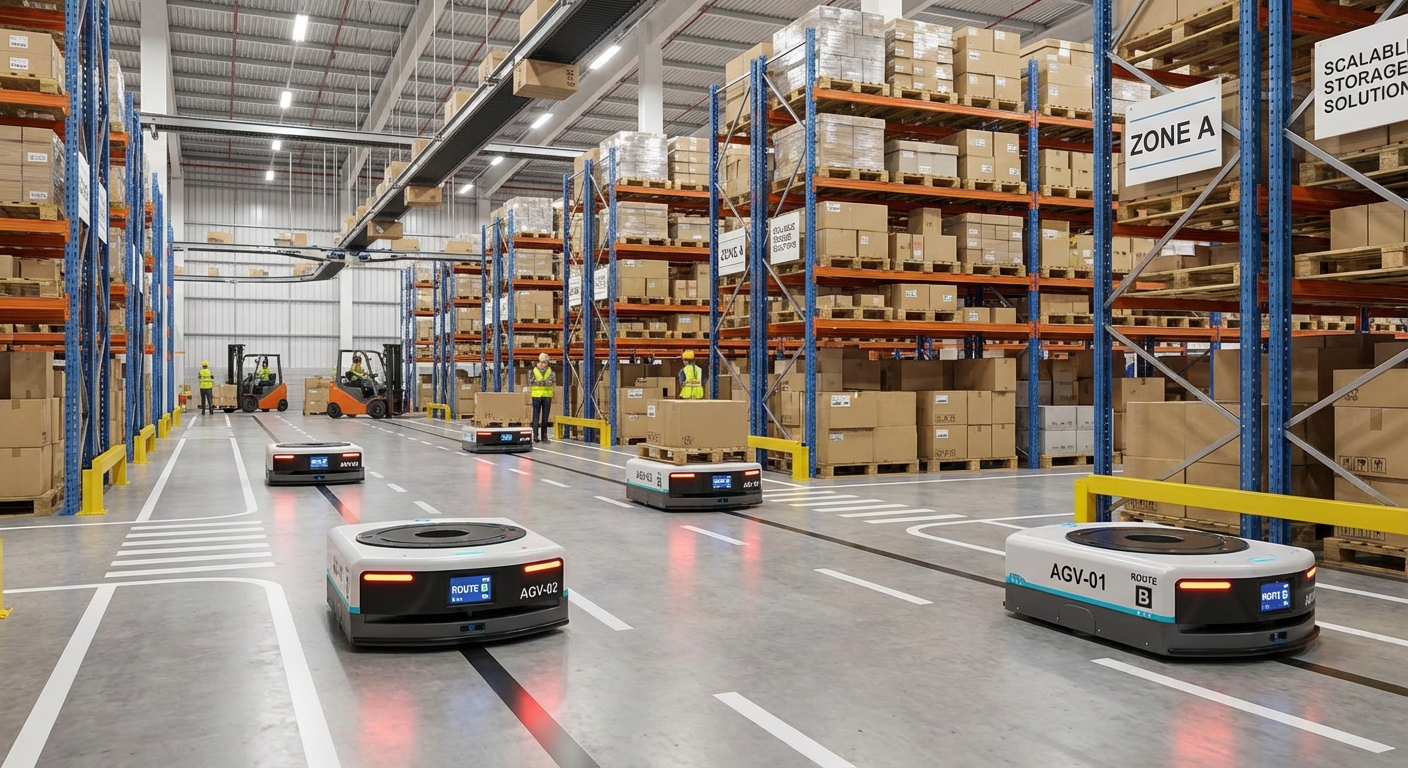
Technology such as heat mapping and 3D simulation identifies underutilized zones and predicts traffic congestion before it occurs. Incorporating tech into your warehouse layout design provides real-time visibility into how your space is actually being used.
Is simulation software worth the investment?
And the best part? You can see potential bottlenecks before they happen in the real world.
- Heat Mapping: You visualize which areas of your warehouse are most congested.
- Automated Slotting: You let software decide the best place for every item.
- Inventory Tracking: You reduce the need for “buffer” space through better accuracy.
Key Takeaway: Modern software transforms static warehouse space into a dynamic, responsive asset.
| Tool Type | Primary Function | Value Level | |
|---|---|---|---|
| WMS | Real-time tracking | Very High | |
| 3D Simulation | Risk-free testing | High | |
| RFID Tags | Instant scanning | Medium |
How Do You Prepare for Future Growth?
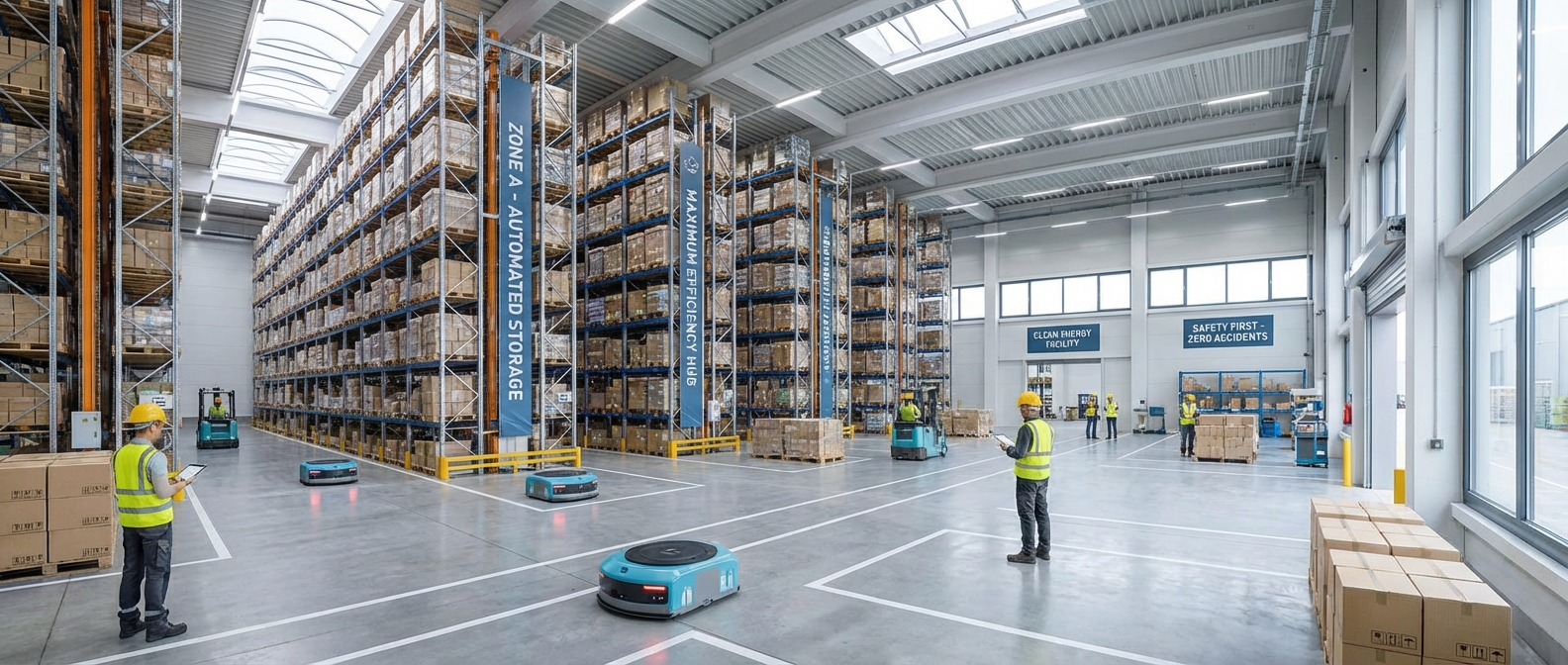
Preparing for growth involves designing a modular layout with clear spans that allow for easy racking reconfiguration or expansion. Your warehouse layout design should never be static; it must be a flexible framework that supports your long-term business strategy.
Is your layout scalable enough?
You should always build with the “next five years” in mind, not just today. Using modular components allows you to pivot quickly.
- Modular Racking: You use systems that can be adjusted or expanded easily.
- Clear Spans: You choose building structures that don’t have intrusive support columns.
- Multi-Use Zones: You design areas that can switch between storage and packing.
Key Takeaway: Scalability ensures that your facility remains an asset rather than a limitation as you grow.
| Growth Strategy | Implementation | Cost Level | |
|---|---|---|---|
| Height Expansion | Add rack levels | Low | |
| Equipment Upgrade | Automated picking | High | |
| Re-Slotting | Move inventory | Medium |
How Should You Implement Layout Changes?
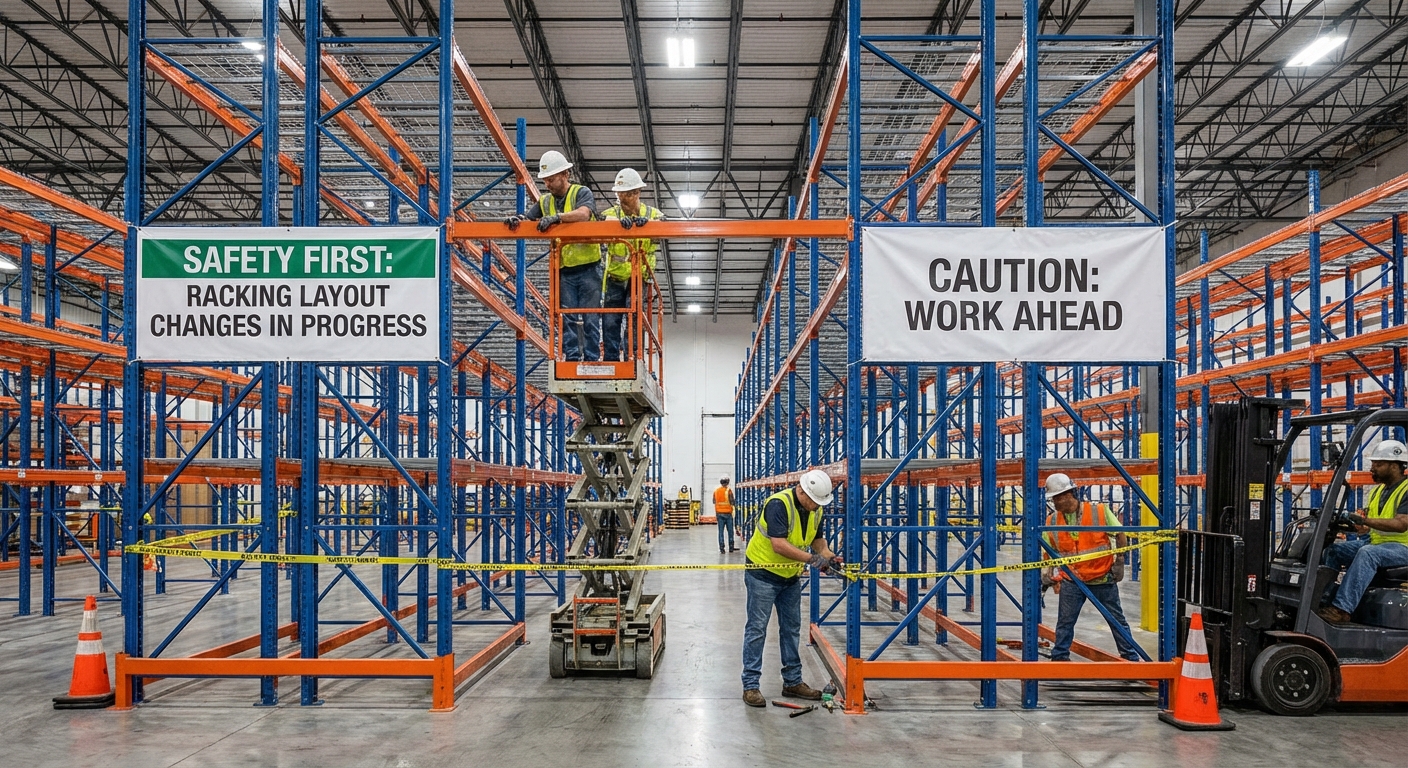
Implementation should follow a phased approach that uses floor taping and off-peak scheduling to minimize operational downtime. A successful warehouse layout design concludes with a rigorous testing period and comprehensive staff training.
Is staff training necessary for a new layout?
The truth is, even the best layout will fail if your team doesn’t understand the new flow. You need to walk them through the changes.
- Hands-On Walkthroughs: You let workers experience the new paths before going live.
- Feedback Loops: You listen to the pickers who are on the floor every day.
- Clear Signage: You use high-contrast labels to guide the transition period.
Key Takeaway: Change management is just as important as the physical moving of racks and equipment.
| Step | Purpose | Timing | |
|---|---|---|---|
| Floor Taping | Visualizing the change | Pre-Move | |
| Off-Peak Moving | Minimize downtime | Nights/Weekends | |
| Performance Review | Measure the gains | Post-Move (30 days) |
Frequently Asked Questions
Can I change my warehouse layout without stopping operations?Yes, you can implement changes in phases, moving one section at a time during off-peak hours to ensure customer orders are never delayed.
What’s the best way to handle seasonal stock?The best strategy is to designate a flexible “overflow” area or use adjustable racking that can accommodate larger pallet sizes during peak months.
How do I know if my aisles are too narrow?You can determine this by checking the minimum turning radius of your material handling equipment; if forklifts are frequently slowing down, your aisles are too tight.
What’s the best storage for heavy equipment?The best solution is heavy-duty H-section steel racking anchored to a reinforced concrete floor to ensure structural stability and safety.
How do I know if automated picking is right for me?You should consider automation if your order volume exceeds the capacity of your manual labor force or if your error rates are consistently high.
Conclusion
Maximizing your warehouse space is a continuous journey of optimization, data analysis, and strategic structural planning. At Showhoo, we believe that your building should work as hard as you do, providing the durability and flexibility required for global logistics excellence. Contact us today to discover how our custom steel structures and expert design services can help you build the warehouse of the future.