
The best size for an indoor riding arena is typically 80′ x 200′ for multi-discipline use, though a minimum of 60′ x 120′ is necessary for basic training. Maintaining a consistent training schedule becomes nearly impossible when you are at the mercy of unpredictable weather and poor footing. This lack of control often leads to frustrated riders, injured horses, and lost revenue for commercial facilities. By investing in a high-quality standard horse arena size , you provide a safe, year-round environment that protects your equine partners and professional reputation.
What is the minimum standard horse arena size?
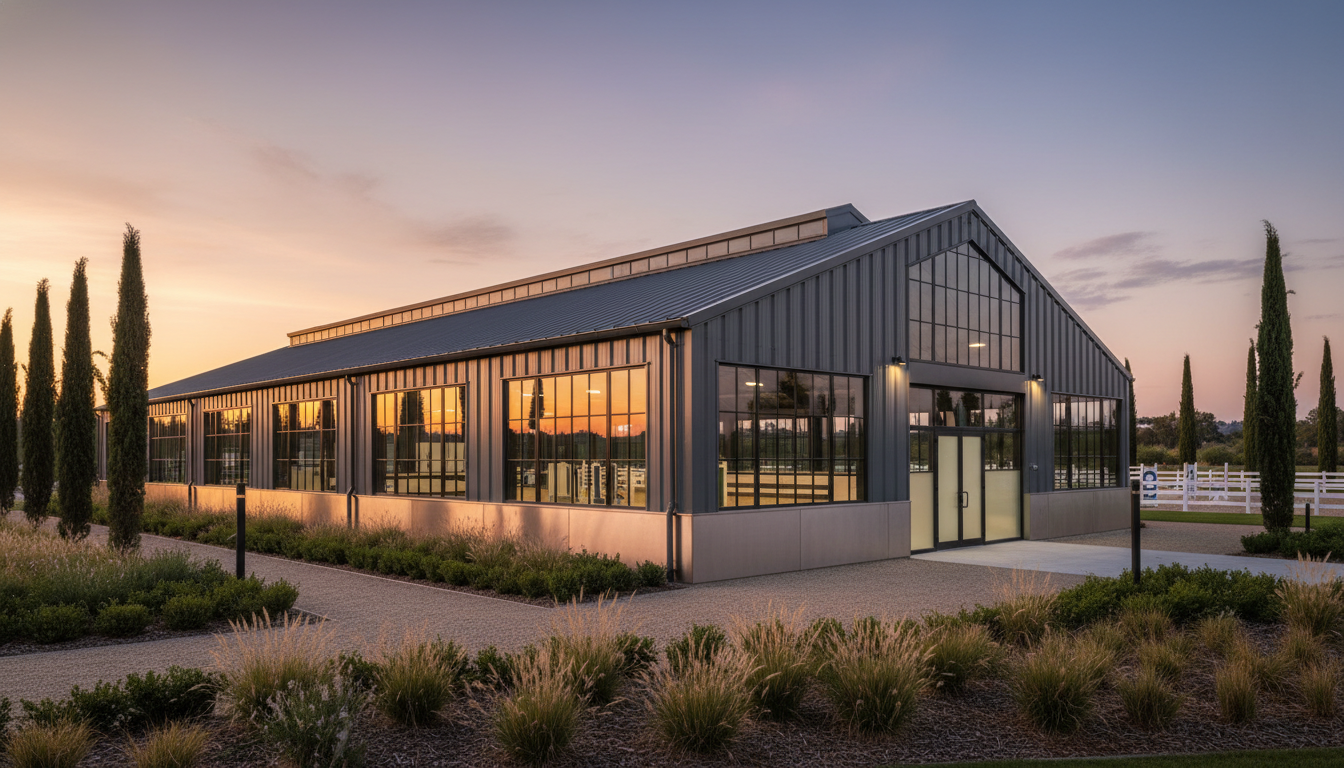
The minimum viable standard horse arena size for most riding disciplines is 60 feet wide by 120 feet long. This footprint provides just enough room for a horse to perform basic flatwork and maintain a comfortable canter without feeling physically restricted by the walls. Anything narrower than 60 feet can compromise the safety of the horse’s joints during tight turns.
Why is 60 feet the essential width?
You will find that 60 feet is the baseline because it allows a horse to travel on a 20-meter circle with only a small margin of error. If you build narrower than this, you risk your horse losing balance or hitting the kickboards during upward transitions.
Here is the deal:
- Standard 20m circles require roughly 66 feet of clear space.
- Anything less than 60 feet forces a horse into an uncomfortably tight radius.
- Wider spans reduce the physical strain on your horse’s hocks and stifles.
- Safety margins protect your knees from scraping against the arena perimeter.
Key Takeaway: For private exercise and basic schooling, a 60′ x 120′ footprint is the functional baseline, though wider is always better for long-term horse health.
| Dimension | Square Footage | Best Use | |
|---|---|---|---|
| 60′ x 120′ | 7,200 sq. ft. | Private flatwork and basic exercise |
A 60′ x 120′ layout is cost-effective but limits you to one rider at a time and minimal jump equipment.
Which standard horse arena size fits dressage?
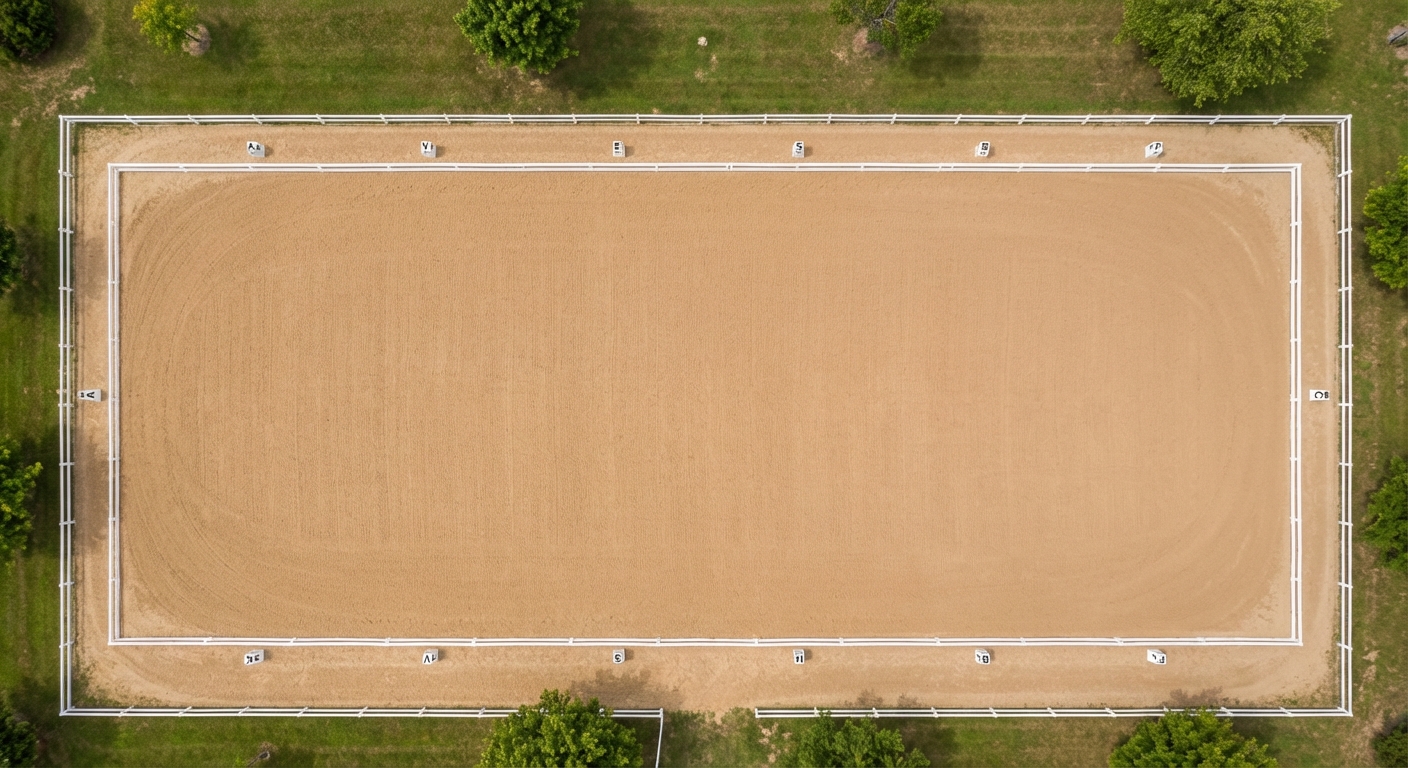
A standard dressage arena requires a 20m x 60m (approximately 66′ x 198′) footprint to accommodate full-scale competition tests. For smaller training spaces, a 20m x 40m layout is often used, but it does not allow for the completion of senior-level movements. You must also account for additional space beyond the rail for judges’ booths and spectator seating.
Can you use a small dressage arena?
You can certainly use a 20m x 40m space if you are focusing on lower-level training or have limited property space. However, you will eventually outgrow this dimension if you plan to school advanced movements like the extended trot or complex lateral work.
But wait, there is more:
- Small arenas (20m x 40m) are ideal for young horses or pony training.
- Full-size arenas (20m x 60m) are mandatory for Third Level tests and above.
- Steel buildings allow you to reach these lengths without internal support pillars.
- Extra width helps you prevent “wall-shyness” in sensitive competition horses.
Key Takeaway: If you are serious about dressage competition, a building that accommodates a 70′ x 210′ footprint ensures you have room for the rail and the judges.
| Arena Type | Metric Size | Imperial Equivalent | |
|---|---|---|---|
| Small Dressage | 20m x 40m | ~66′ x 132′ | |
| Standard Dressage | 20m x 60m | ~66′ x 198′ |
Standardizing your build to 70′ x 200′ provides the necessary clearance for competition rails and peripheral judge seating.
How does standard horse arena size affect jumping?
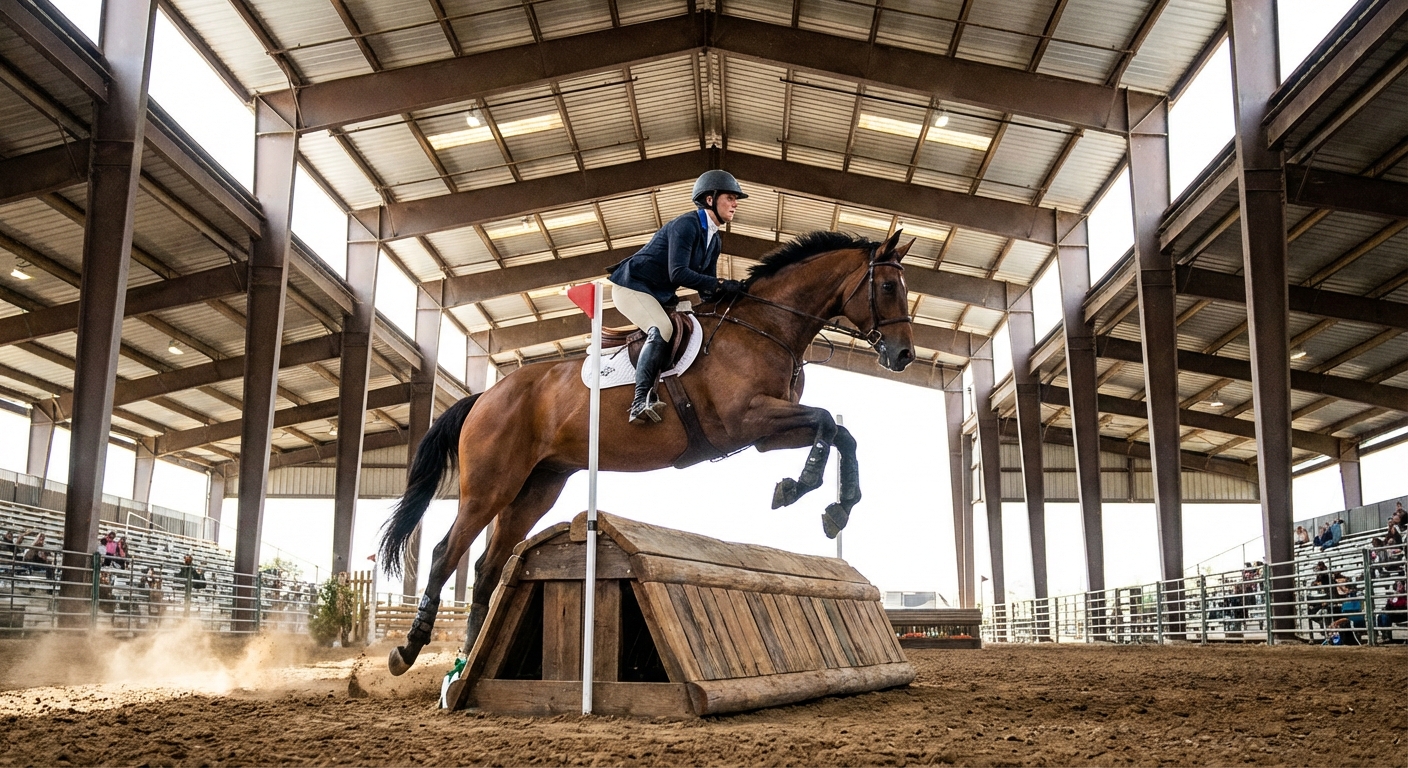
Jumping disciplines require a standard horse arena size of at least 80′ x 200′ to allow for safe approach lines and stride counts between fences. The increased width is critical for executing “rollback” turns and managing complex course layouts without crowding the obstacles. You also need to prioritize vertical clearance to ensure horses can safely clear high rafters during the arc of a jump.
How much height do you need for jumps?
You should aim for a minimum eave height of 18 to 20 feet if you plan on jumping obstacles higher than three feet. This ensures that even a tall horse with a high-seated rider will have plenty of headroom when clearing a fence.
It gets even better:
- Higher eaves improve ventilation and prevent the arena from feeling claustrophobic.
- Wider arenas allow you to set up “lines” with standard 12-foot strides.
- Clear-span design removes the dangerous obstacle of interior support columns.
- Large footprints allow you to keep a permanent course set up while schooling.
Key Takeaway: Jumping facilities require more horizontal and vertical volume than flatwork barns to ensure both the horse’s stride and the rider’s safety are never compromised.
| Feature | Minimum Requirement | Professional Standard | |
|---|---|---|---|
| Width | 80 Feet | 100 Feet | |
| Eave Height | 16 Feet | 18 – 20 Feet |
Choosing a 100-foot width allows you to design more fluid courses with professional-grade safety margins for high-speed turns.
Is a larger standard horse arena size worth it?
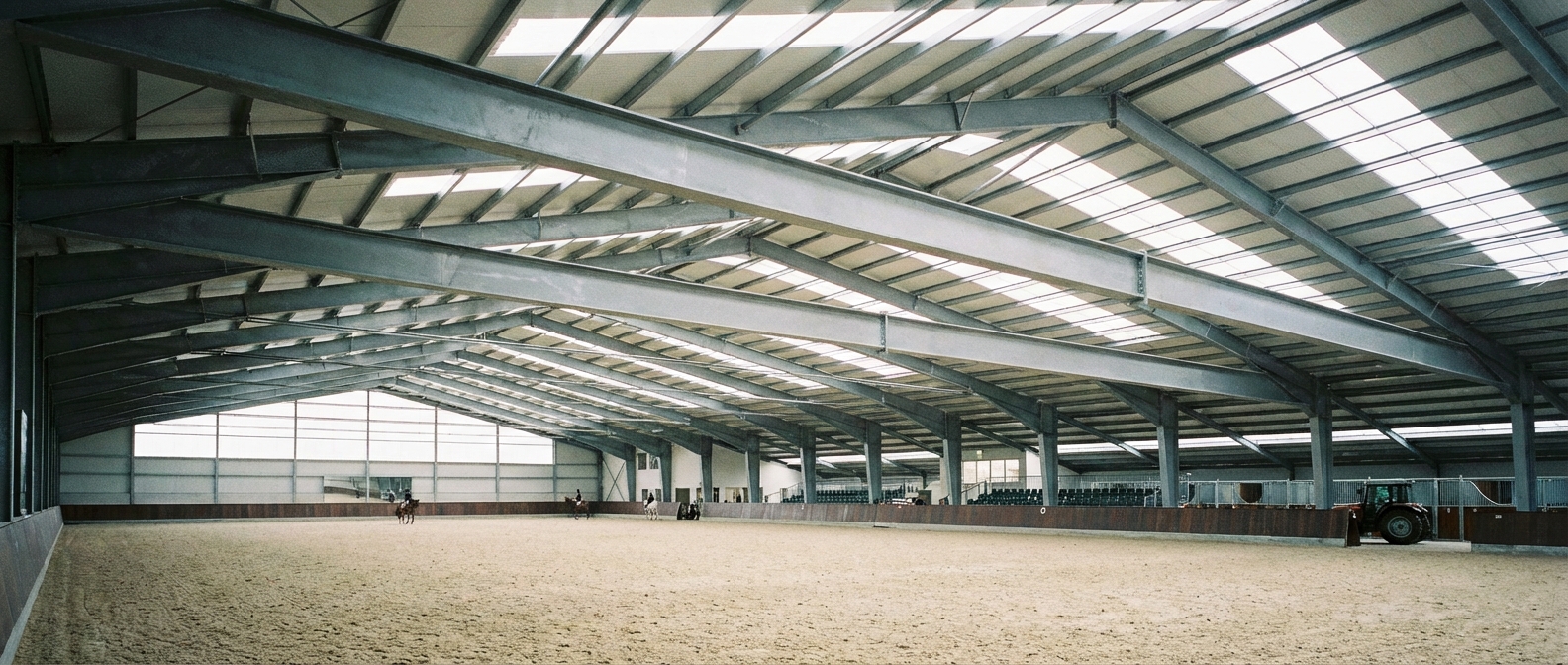
A larger footprint like 100′ x 250′ is worth the investment because it allows for multi-rider training sessions and significantly higher resale value. Commercial operations benefit from being able to host clinics or small shows, which is impossible in a cramped 60-foot wide building. While the initial cost is higher, the utility and professional appeal of a large arena pay dividends over decades.
Will a bigger arena improve your ROI?
You will see a much better return on investment if your facility can accommodate every riding discipline from reining to show jumping. Prospective buyers look for “international standard” sizes, making a larger building a much easier asset to sell in the future.
Here is the kicker:
- Resale value is significantly higher for buildings with 80-foot+ spans.
- You can lease out the space for clinics or local horse shows.
- Multiple trainers can work simultaneously without crossing paths.
- Large arenas require less frequent footing maintenance per square foot of use.
Key Takeaway: If your budget allows, opting for an 80′ x 200′ or larger footprint future-proofs your facility against changing riding needs and market demands.
| Arena Size | Usage Capacity | Resale Potential | |
|---|---|---|---|
| 60′ x 120′ | 1-2 Riders | Moderate | |
| 100′ x 250′ | 5+ Riders | High |
Larger buildings provide the professional infrastructure needed for high-revenue commercial boarding and training operations.
How does standard horse arena size impact budget?
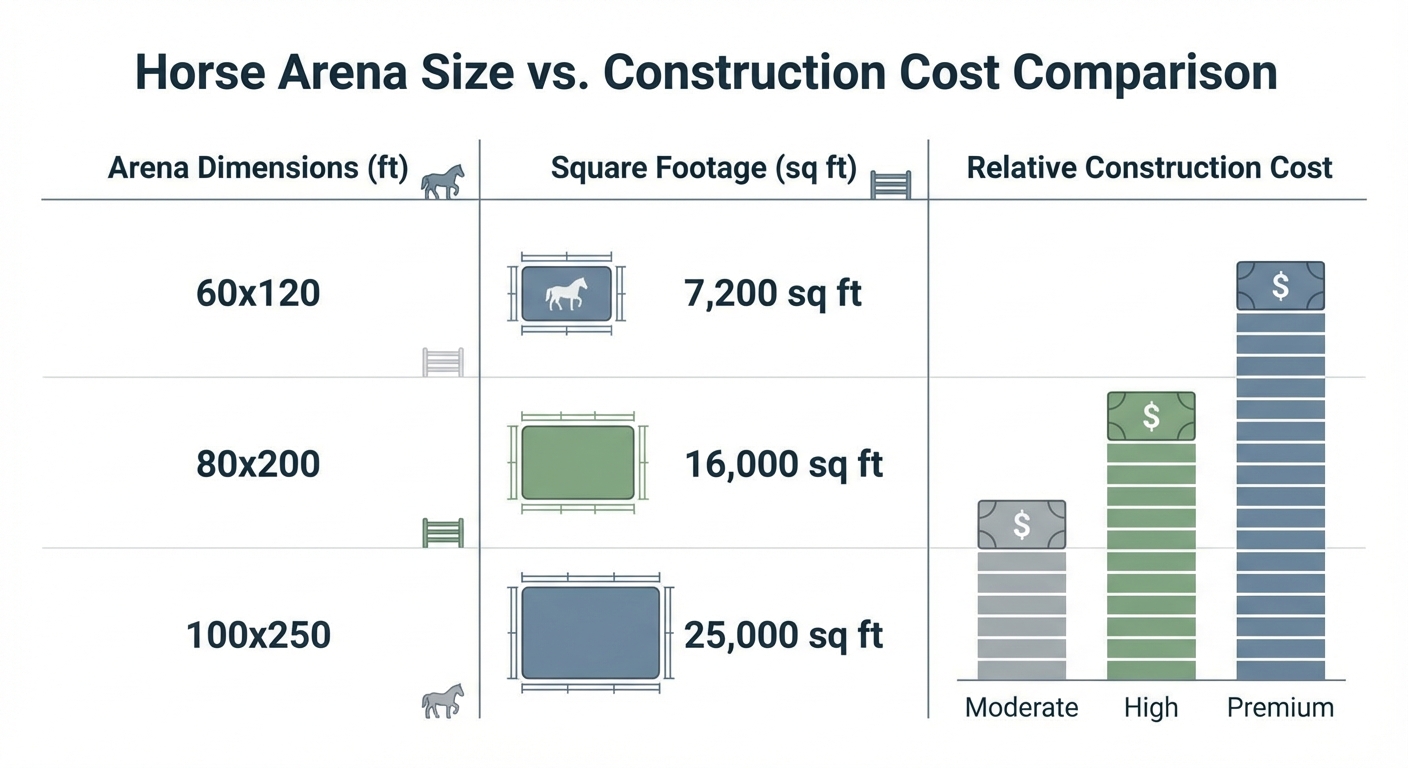
The cost of a standard horse arena size project is heavily influenced by the volume of materials needed for footing, lighting, and structural steel. Every ten feet of additional width requires more robust engineering to maintain a clear span without internal supports. You must also account for the long-term maintenance costs of watering and grooming a larger surface area.
Can you reduce footing costs?
You can manage your budget by choosing a size that perfectly matches your discipline rather than building “extra” space you won’t use. High-quality sand and fiber mixes are expensive, so every additional square foot adds hundreds of dollars in initial material and future replenishment costs.
Think about it:
- Footing depth should be a consistent 3-4 inches across the entire floor.
- Larger arenas require more powerful tractors and wider drags for maintenance.
- Dust control systems must be sized to cover the entire square footage.
- Steel buildings offer the lowest cost-per-square-foot for wide-span structures.
Key Takeaway: Budgeting for an arena requires a holistic view that includes the steel structure, the foundation, the specialized footing, and ongoing utility costs.
| Cost Category | 60′ x 120′ Arena | 100′ x 200′ Arena | |
|---|---|---|---|
| Steel Structure | Moderate | High | |
| Footing Materials | ~90 Tons | ~250 Tons |
Construction costs for wider spans are higher due to the heavier steel required to maintain a safe, pillar-free interior.
Does structure limit standard horse arena size?
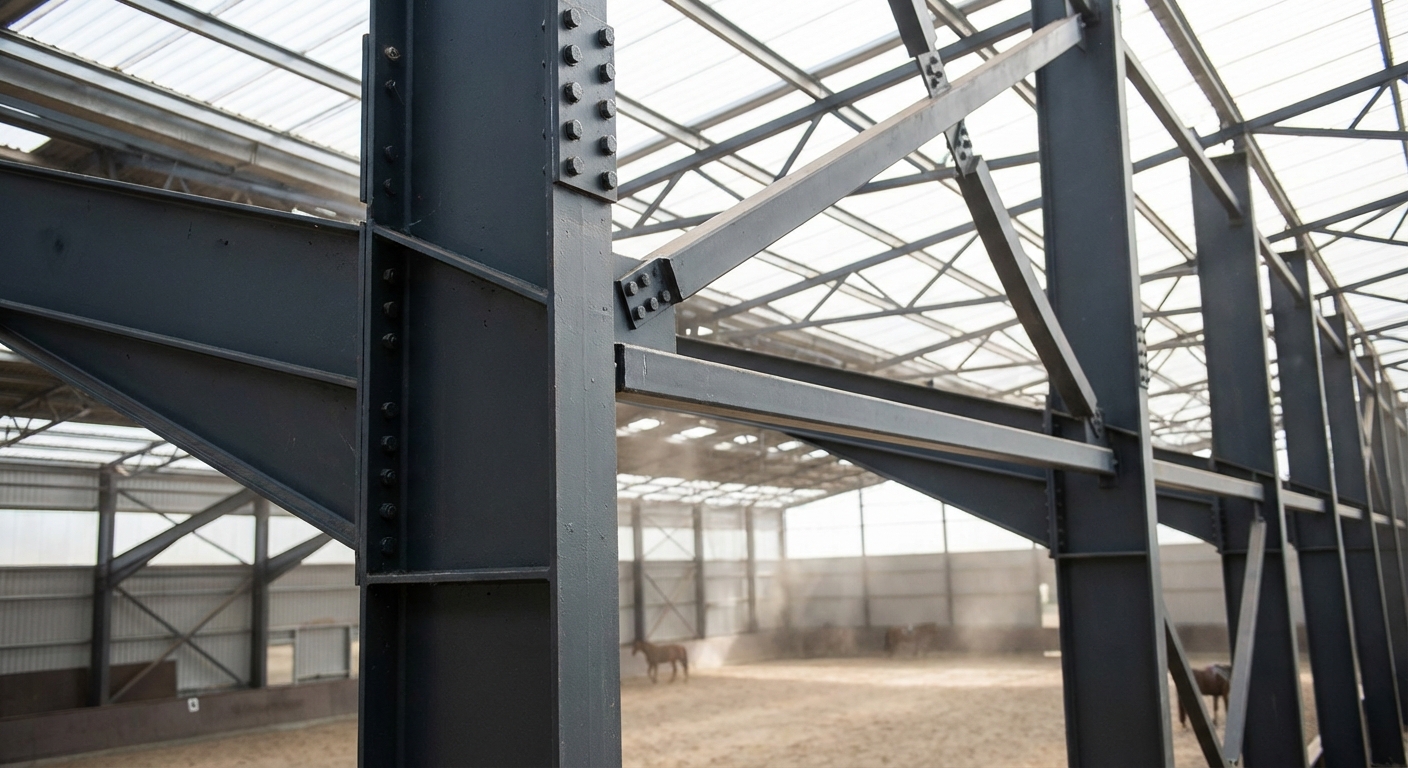
Steel frames are the only structural solution that allows for a massive standard horse arena size without the need for dangerous interior columns. While wood post-frames often max out at 80 to 90 feet in width, pre-engineered steel can easily reach spans of 100 to 200 feet. This clear-span capability is essential for safety, as any internal obstruction is a major hazard for horses working at high speeds.
Why choose steel for wide spans?
You should choose steel because it offers superior durability against rot, pests, and fire compared to traditional timber. Steel components are manufactured with extreme precision, ensuring that your building goes up quickly and remains structurally sound under heavy snow and wind loads.
The bottom line is this:
- Steel allows for widths of 100+ feet without middle support beams.
- Maintenance is minimal compared to wood, which can warp or crack.
- Precision engineering ensures all bolts and holes line up perfectly.
- Clear-span interiors provide 100% usable space for riding and training.
Key Takeaway: For professional arenas requiring widths over 80 feet, steel is the most efficient and safest structural material available.
| Material Type | Max Clear Span | Durability | |
|---|---|---|---|
| Wood Post-Frame | ~80-90 Feet | Moderate | |
| Pre-Engineered Steel | 200+ Feet | Extreme |
Steel structures provide the only viable way to build professional-grade arenas with massive, unobstructed riding surfaces.
Does standard horse arena size change lighting?
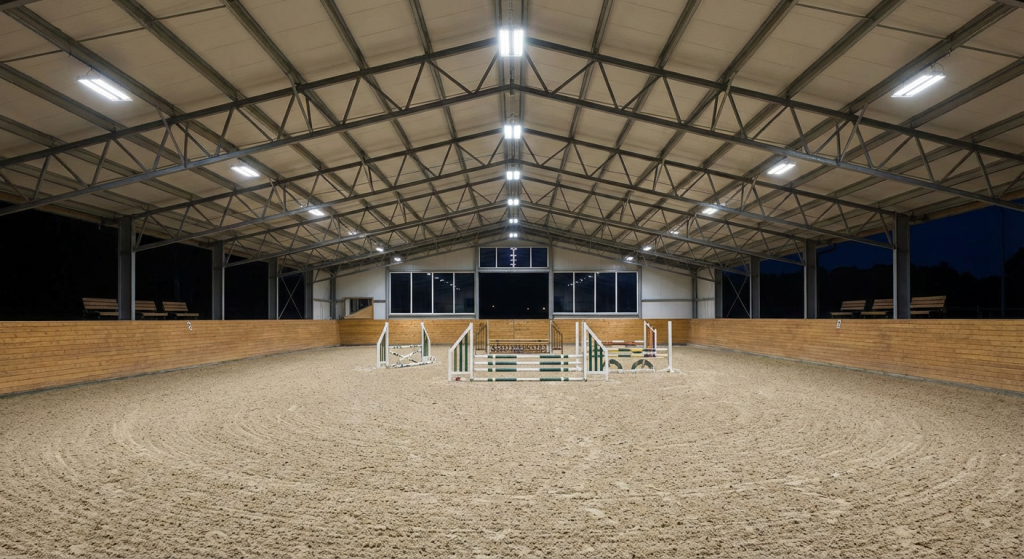
Larger standard horse arena size layouts require a more complex lighting plan to eliminate “spook-inducing” shadows and dark corners. As the distance between the walls and the center of the arena increases, you need a higher density of high-bay LED fixtures to maintain uniform illumination. Poor lighting can cause horses to shy or misjudge the distance to a jump, creating a significant safety risk.
Should you install sidelights?
You should consider installing translucent sidelights along the upper walls to flood the arena with free, natural light during the day. These panels are more cost-effective and easier to maintain than traditional skylights, which are prone to leaks and can be difficult to clean.
But it doesn’t stop there:
- LED fixtures should be positioned to avoid glare in the rider’s eyes.
- Natural sidelights can reduce your daytime electricity bills significantly.
- Uniform light prevents the “black hole” effect that scares sensitive horses.
- Proper lighting makes a facility look professional and inviting to boarders.
Key Takeaway: Lighting is a critical safety component that must be scaled alongside your arena’s dimensions to ensure a “shadow-free” environment.
| Light Source | Pros | Cons | |
|---|---|---|---|
| High-Bay LED | Consistent, controllable | Ongoing energy cost | |
| Wall Sidelights | Free, natural light | Daytime use only |
A hybrid approach using both LEDs and sidelights provides the best visibility while minimizing long-term operational expenses.
Where can you fit a standard horse arena size?
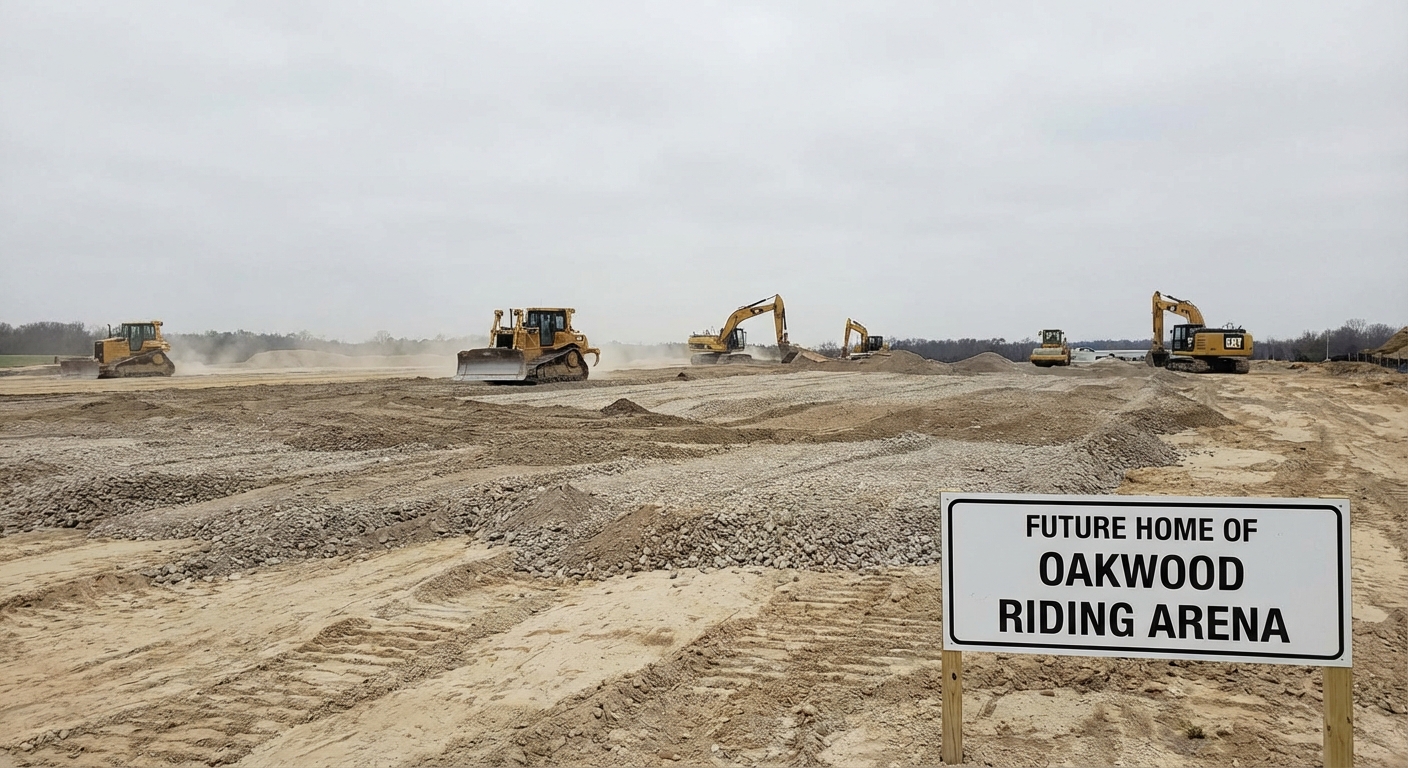
The ideal site for a standard horse arena size is a naturally level area with excellent soil percolation and easy access for heavy equipment. You must ensure that the building site is at least 20 feet larger than the structure on all sides to accommodate drainage channels and maintenance paths. Site preparation is often the most overlooked cost, as moving thousands of cubic yards of dirt can be expensive.
How do you handle site drainage?
You must plan for roof runoff to be diverted away from the arena foundation to prevent the footing from becoming a swampy mess. If your property is sloped, you may need to install retaining walls or complex “cut and fill” systems to create a perfectly level 20,000-square-foot pad.
Make no mistake:
- Water pooling near the foundation will eventually destroy your footing.
- The sub-base must be compacted limestone or clay for long-term stability.
- Drainage pipes should be installed to carry water to a designated pond or swale.
- Leveling the ground properly is the most important step for horse safety.
Key Takeaway: Proper site selection and drainage engineering are just as important as the building’s dimensions for the longevity of your facility.
| Site Step | Importance | Primary Goal | |
|---|---|---|---|
| Soil Testing | Critical | Ensure foundation stability | |
| Grading | Essential | Prevent water pooling and erosion |
Ignoring site preparation can lead to a “sinking” building or footing that stays wet for days after a storm.
Will standard horse arena size affect permits?
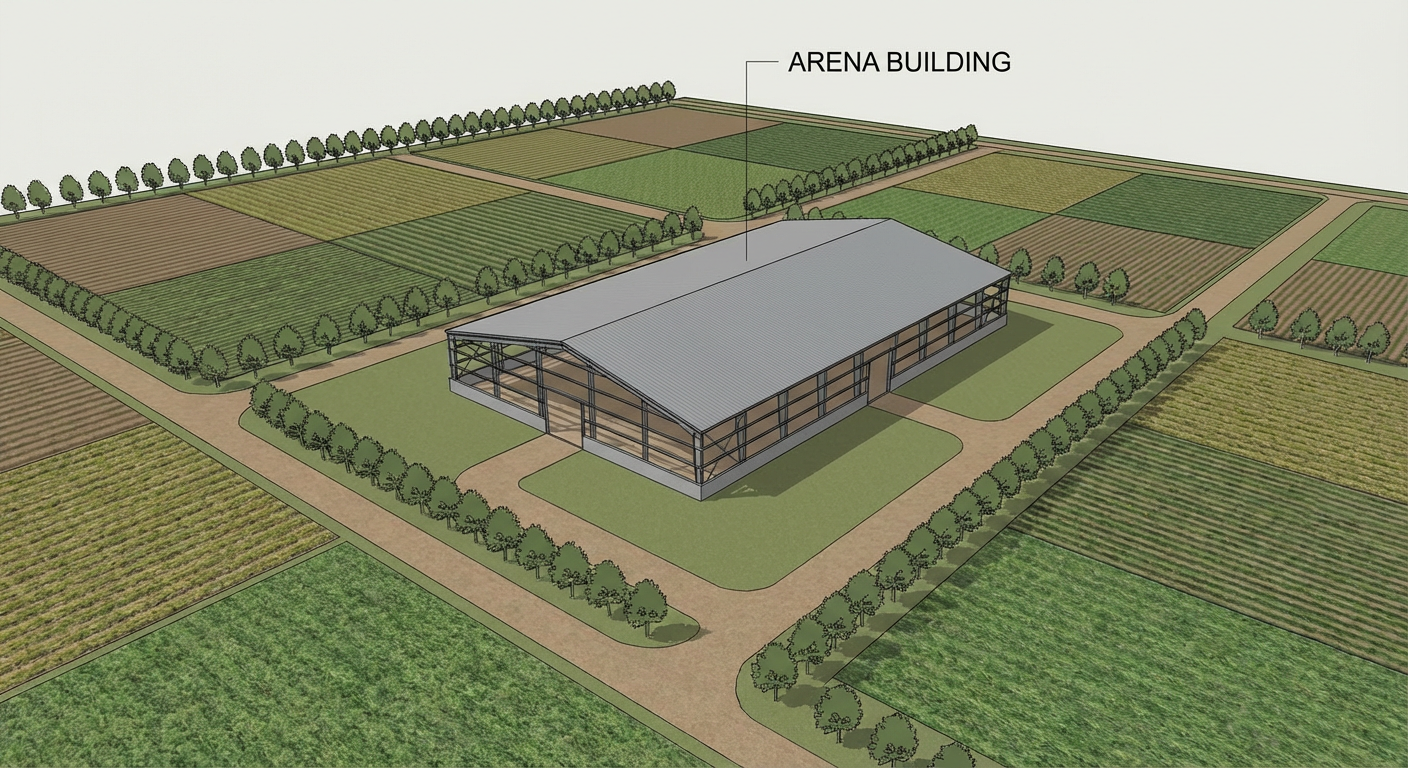
Navigating the legal requirements for a standard horse arena size involves checking local zoning laws, setback requirements, and environmental regulations. Many municipalities have strict agricultural exemptions that may apply if the building is strictly for private use, but commercial boarding usually requires full commercial permits. You will also need engineer-approved plans to ensure the structure can handle local snow and wind loads.
Do you need an engineer for approval?
You absolutely need engineer-stamped drawings to obtain building insurance and to guarantee the structural integrity of the arena. Without these documents, you risk the building being condemned by local authorities or failing under extreme weather conditions.
Here is the truth:
- Insurance companies will not cover buildings without approved engineering.
- Zoning boards look for compliance with local setbacks and height limits.
- Environmental reports may be required for large-scale water runoff.
- Steel buildings come with pre-approved engineering packages to save you time.
Key Takeaway: Permit compliance is a mandatory phase of construction that protects your investment and ensures the safety of everyone using the facility.
| Permit Factor | Impact | Requirement | |
|---|---|---|---|
| Zoning | High | Check commercial vs. private use | |
| Engineering | Mandatory | Professional stamped structural plans |
Starting the permit process early—ideally three months before construction—prevents costly delays and legal headaches.
How to optimize your standard horse arena size?
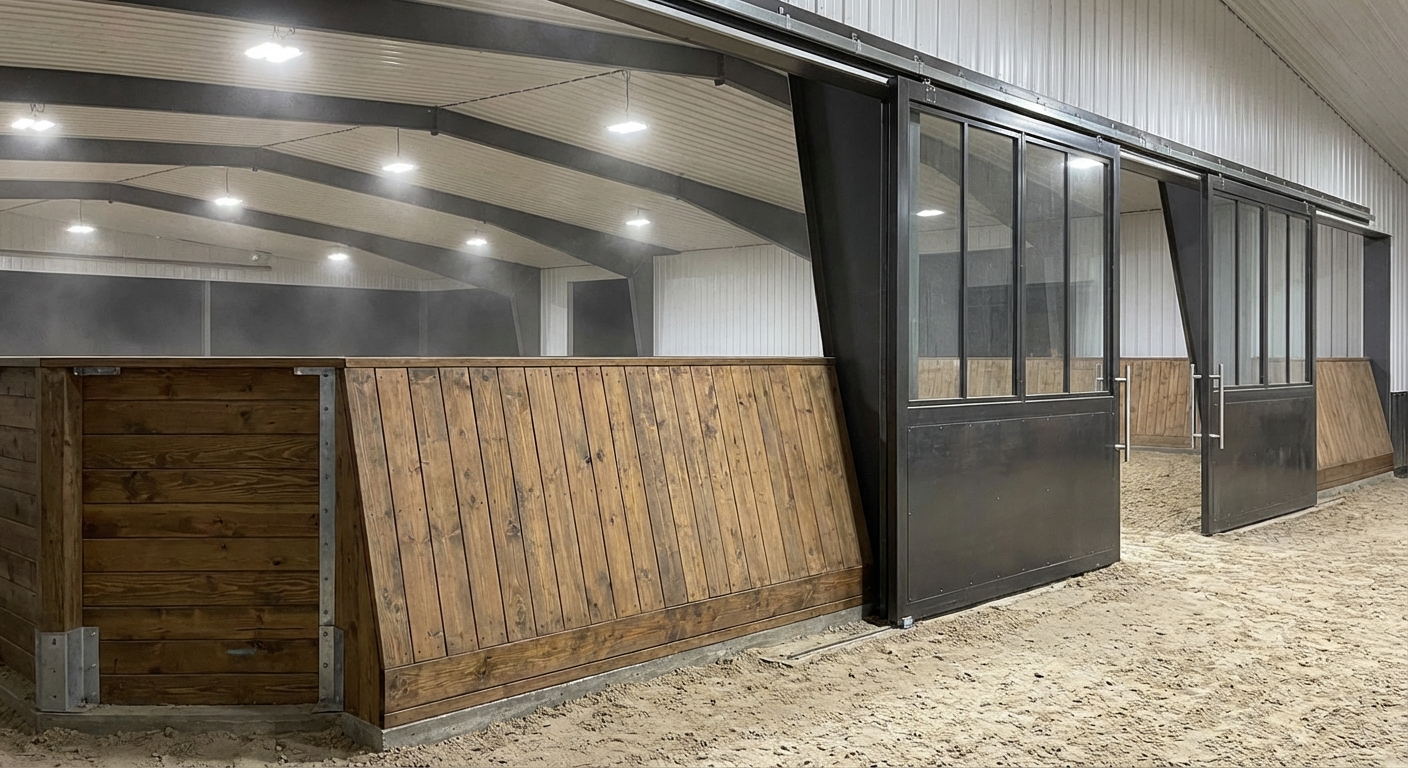
You can optimize a standard horse arena size by installing angled kickboards and oversized sliding doors to improve both safety and workflow. Angled “rider guards” protect your legs from hitting the walls while making the interior space feel more finished and professional. Strategically placed doors allow for better ventilation and easier access for footing maintenance equipment like tractors and drags.
Can you add rider guards for safety?
You should install angled kickboards that slant inward at the base to create a buffer zone between the horse’s hooves and the wall’s structural framing. This simple addition prevents the horse from “hugging” the wall too closely and keeps the rider’s stirrups from snagging on the steel columns.
Look at it this way:
- Angled walls make the arena easier to clean and drag efficiently.
- Oversized doors (16′ wide) allow mounted riders to enter safely.
- Cross-ventilation from opposing doors keeps the arena cool in summer.
- Kickboards protect the steel wall panels from dents and horse kicks.
Key Takeaway: Small design details like kickboards and door placement can dramatically improve the safety and functionality of your riding space.
| Feature | Function | Safety Benefit | |
|---|---|---|---|
| Rider Guards | Protect legs | Prevents wall-related impact injuries | |
| Large Doors | Equipment access | Safe passage for mounted riders |
Optimizing the interior layout ensures that even a standard-sized building performs like a high-end equestrian center.
Choosing the perfect dimensions for your arena is a balance between your current training needs and your future equestrian goals. Whether you are building a private dressage oasis or a professional jumping center, the right size ensures a safe and durable environment for your horses. At Showhoo, we are committed to delivering precision-engineered steel structures that set the global standard for equestrian excellence. To begin designing your world-class facility, contact us today .
Decision FAQ
Can I customize the width beyond 100 feet?Yes, our steel structures allow for clear spans well exceeding 100 feet, providing the ultimate space for polo or high-level jumping.
What’s the best footing for an indoor arena?Direct judgment suggests a mixture of washed medium-course sand and specialized fibers over a compacted limestone base is superior for traction and shock absorption.
Is a steel structure better than wood for arenas?Steel is significantly better because it offers longer clear spans, zero risk of rot or pests, and much lower long-term maintenance costs.
How much height is needed for a jumping arena?You need a minimum of 18 feet of eave height to safely accommodate the arc of a horse clearing a high obstacle.
Why does ventilation matter in indoor riding?Proper ventilation is vital because it prevents dust and ammonia buildup, protecting the respiratory health of both horse and rider.