
A prefabricated school building is a high-quality educational structure manufactured in a factory and then transported to its final site for rapid assembly. Many school districts currently face a mounting crisis of aging facilities and severe overcrowding that traditional construction cannot solve quickly enough. You likely see the impact of these delays in rising costs and students packed into outdated, poorly ventilated classrooms that hinder learning. Choosing a prefabricated school building offers a sophisticated, factory-engineered solution that delivers modern, permanent facilities in half the time of conventional methods.
What is a prefabricated school building?
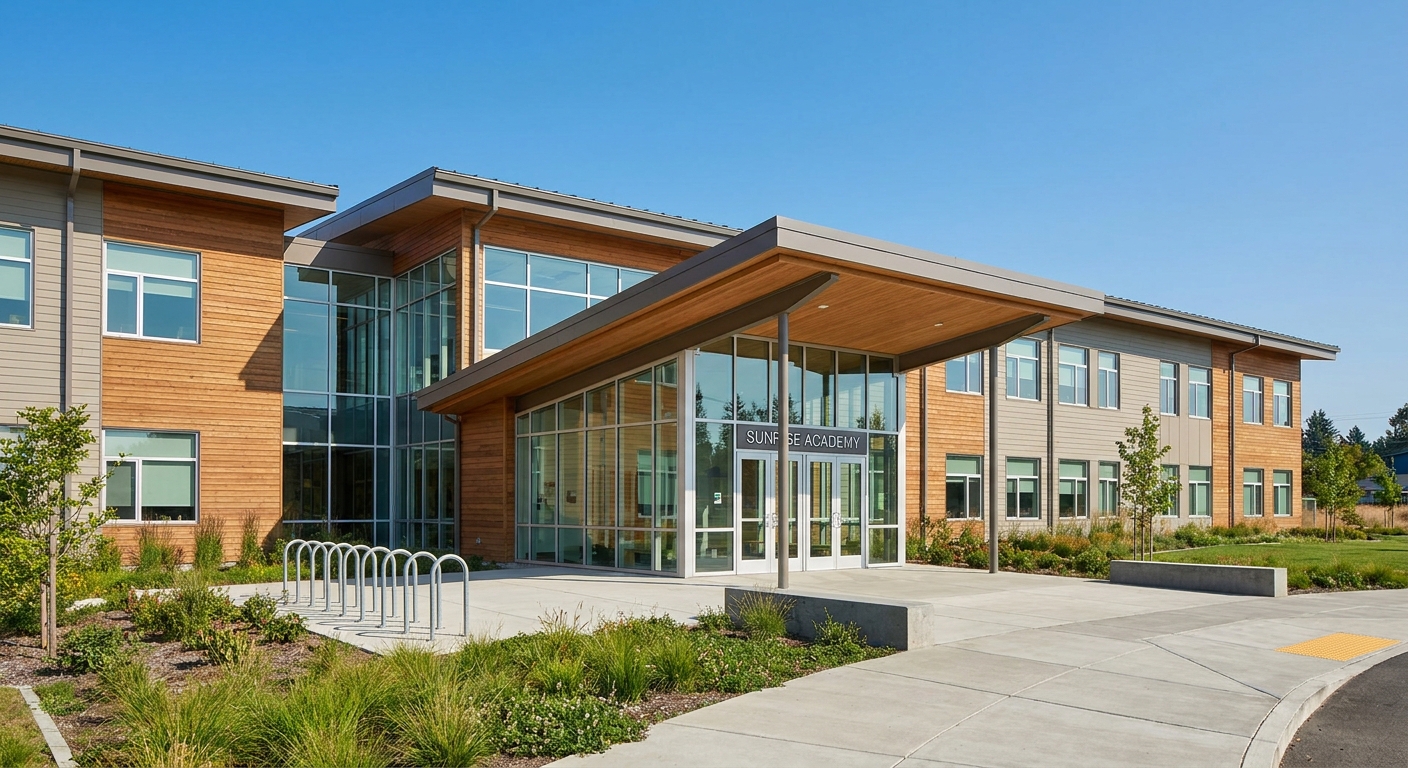
A prefabricated school building is a structure composed of factory-built components designed to meet strict educational standards and safety codes. This modern construction method moves the majority of the build process into a controlled indoor environment to ensure maximum precision. Unlike temporary trailers, these are permanent assets engineered for decades of heavy use.
Defining Modern Modular Design
Modern design philosophy focuses on creating open, light-filled spaces that promote student engagement and collaboration. These buildings utilize advanced steel frames that allow for large clear spans and flexible classroom configurations.
Look: The best designs integrate technology and aesthetics seamlessly into the structural components.
- High-strength steel framing
- Insulated wall panels
- Integrated HVAC and electrical systems
- Standardized window and door units
| Feature | Traditional Construction | Prefabricated School | |
|---|---|---|---|
| Production Site | Outdoor lot | Controlled factory | |
| Precision | Site-dependent | Machine-calibrated | |
| Quality Control | Visual inspection | Multi-stage QC checkpoints |
This comparison shows how shifting production to a factory environment drastically improves the consistency of the final educational facility.
Key TakeawayPrefabricated school buildings represent a shift from traditional labor-intensive construction to high-precision manufacturing, resulting in more reliable and durable learning environments.
Why choose a prefabricated school building?
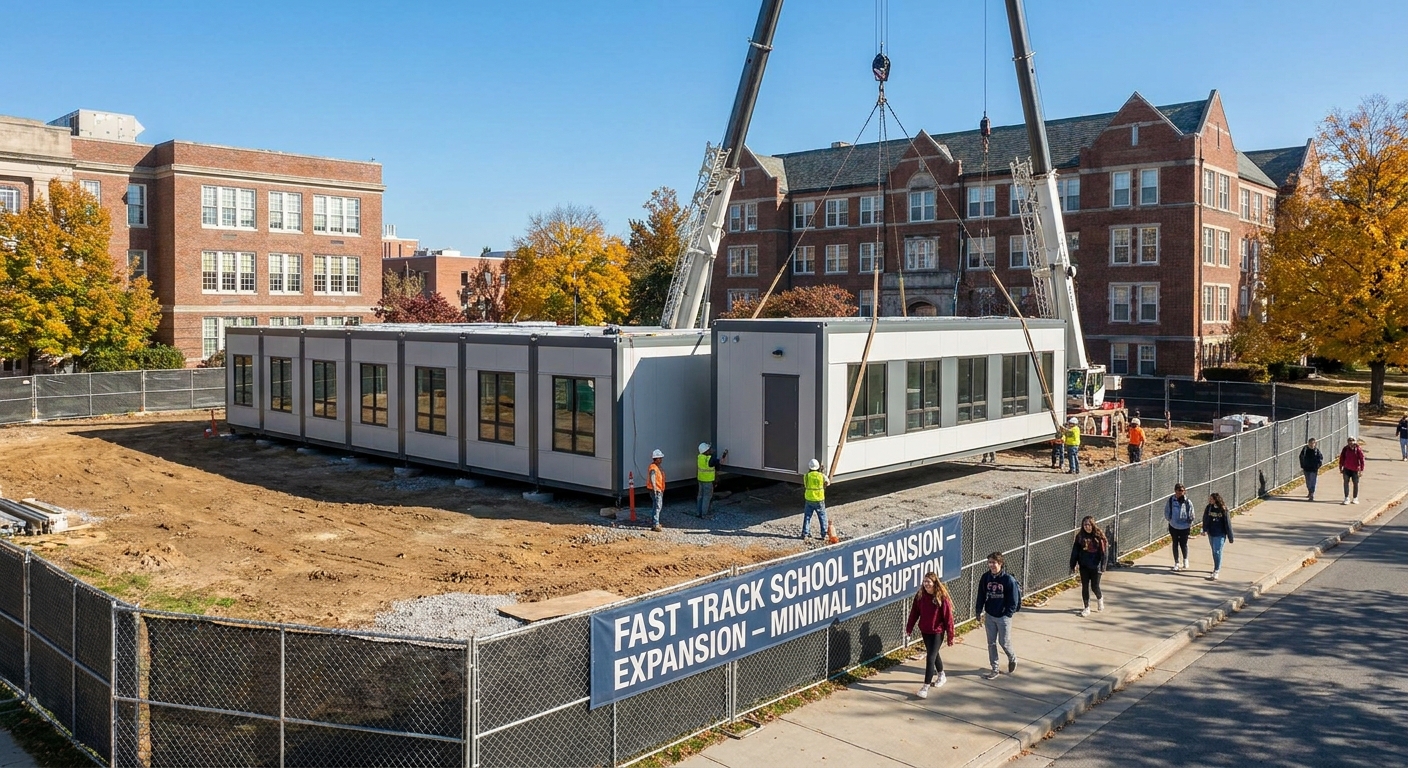
You should choose a prefabricated school building because it offers significantly faster project completion and predictable costs without compromising on architectural quality. These structures allow schools to address urgent enrollment growth before the new semester begins. By minimizing site labor, you also reduce the risks associated with weather delays and material shortages.
Rapid Deployment Benefits
The primary driver for many administrators is the ability to bypass the years-long wait times typical of masonry or wood-frame builds. Off-site construction allows site preparation and building fabrication to happen simultaneously.
The best part? Your school can be fully operational in months rather than years.
- Reduced site disruption
- Earlier campus occupancy
- Fixed manufacturing costs
- Enhanced worker safety
- Minimized local traffic impact
| Metric | Conventional Build | Prefabricated Solution | |
|---|---|---|---|
| Site Disturbance | 12 – 24 months | 3 – 6 months | |
| Budget Predictability | Variable (overruns common) | Highly stable | |
| Schedule Reliability | Weather-dependent | Factory-controlled |
The data indicates that prefabrication is the superior choice for institutions needing to expand quickly while maintaining tight control over their capital budgets.
Key TakeawayOpting for a prefabricated model solves the infrastructure gap by compressing the development timeline and providing financial certainty in an unpredictable construction market.
Email:sales@showhoo.com.cn
Phone/WhatsApp:+86 186 7895 5927
How is a prefabricated school building constructed?
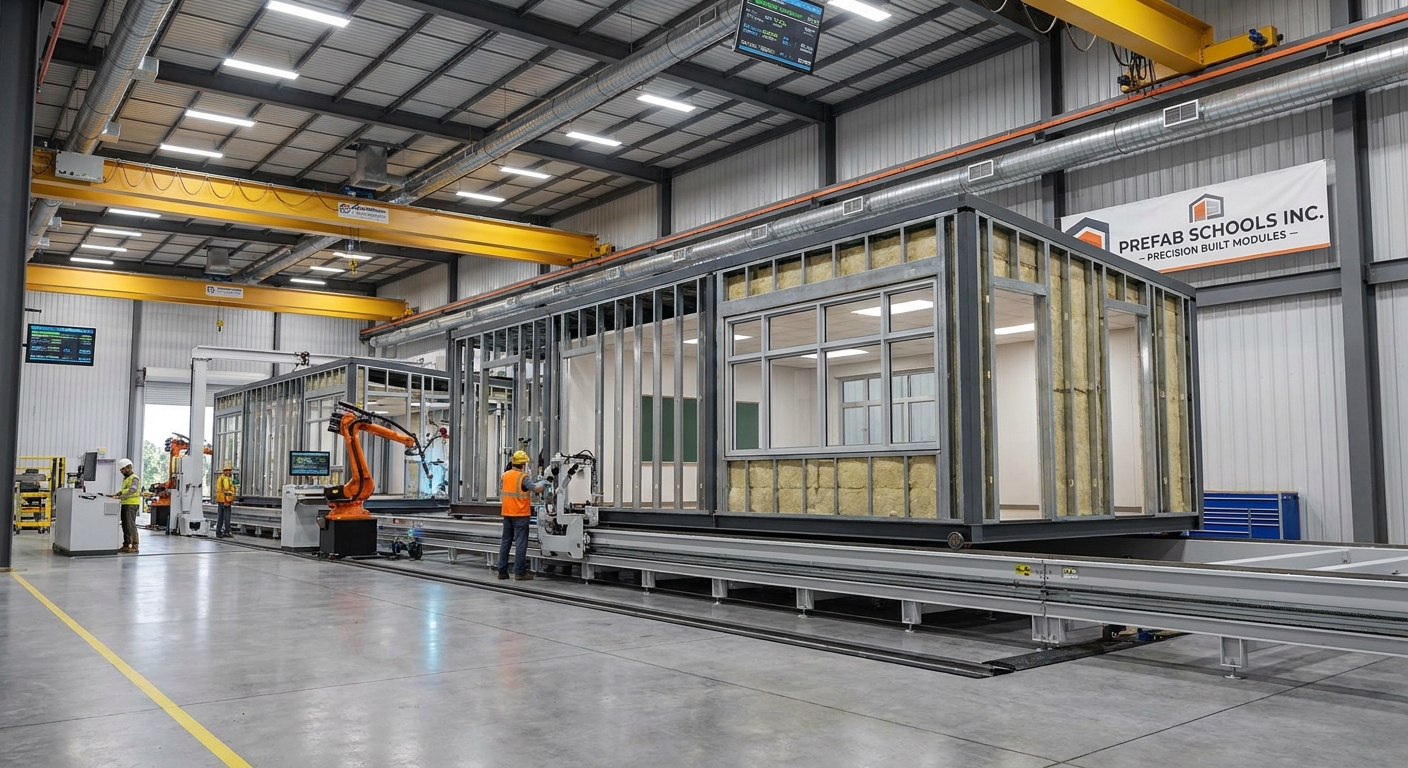
The manufacturing of a prefabricated school building involves precision engineering of steel components followed by automated cutting, welding, and finishing. High-grade steel sections are fabricated based on local building codes to ensure the structure can withstand extreme environmental loads. Every part is labeled and sequenced at the factory to facilitate a “plug-and-play” assembly process once delivered to the campus.
Factory-Direct Precision Engineering
The construction process starts with advanced 3D modeling to ensure every bolt hole and connection fits perfectly. Robots and specialized machinery execute the welding and cutting to tolerances that are impossible to achieve on a standard construction site.
Think about it: Precision in the factory means zero field modifications are required during the final installation phase.
- CNC-controlled steel cutting
- Submerged arc welding for frames
- High-performance protective coatings
- Pre-installed insulation layers
| Process Phase | Action Taken | Duration Estimate | |
|---|---|---|---|
| Design | 3D modeling & engineering | 2 – 4 weeks | |
| Fabrication | Factory-based component creation | 4 – 8 weeks | |
| Shipping | Integrated delivery in containers | 3 – 5 weeks |
A streamlined production workflow ensures that every structural element arrives at the site ready for immediate and safe erection by the local crew.
Key TakeawayFactory fabrication eliminates human error and site-related delays, ensuring that your prefabricated school building is built to the highest engineering standards.
Is a prefabricated school building durable?
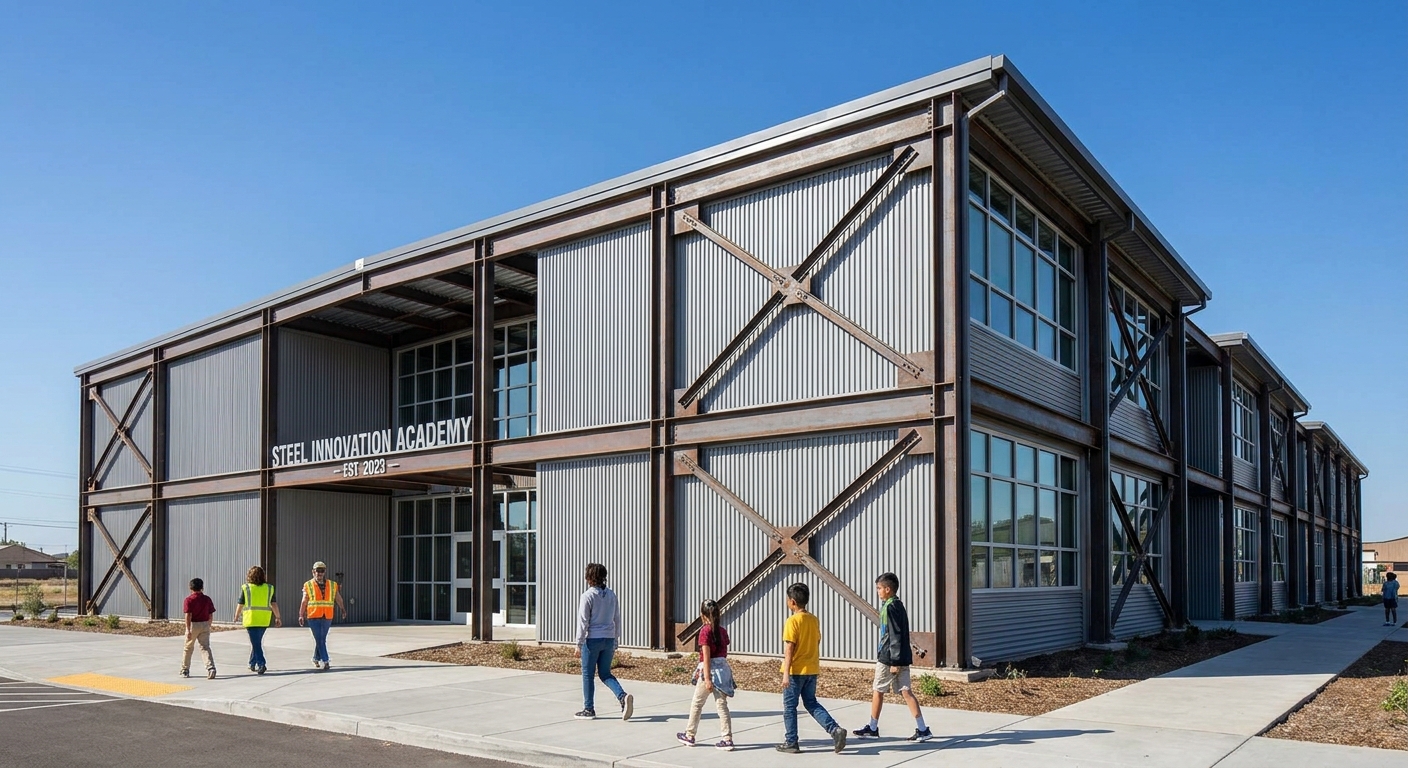
A prefabricated school building is exceptionally durable, often designed with a 50-year structural lifespan that meets or exceeds traditional brick buildings. The use of heavy-duty galvanized steel framing provides superior resistance to rot, pests, and fire compared to wood. These buildings are engineered specifically to handle high wind speeds, heavy snow loads, and seismic activity according to local requirements.
Long-Term Maintenance and Resilience
Steel structures require far less maintenance over time because they do not warp, shrink, or crack like traditional masonry. The high-performance exterior panels are designed to maintain their appearance and thermal efficiency even in harsh climates.
The bottom line? You are investing in a permanent structure that will serve multiple generations of students with minimal upkeep costs.
- Fire-resistant steel framing
- Anti-corrosion coating systems
- Durable impact-resistant interior walls
- Seismic-rated structural connections
| Durability Factor | Traditional Masonry | Steel Prefabricated | |
|---|---|---|---|
| Fire Resistance | High | Excellent (non-combustible) | |
| Pest/Rot Risk | Low | Zero | |
| Structural Lifespan | 50+ Years | 50+ Years |
While both methods offer longevity, steel prefabrication provides a higher level of structural resilience against natural disasters and biological degradation.
Key TakeawayModern steel-framed schools are permanent, robust investments that offer superior durability and safety for long-term educational use.
How much does a prefabricated school building cost?
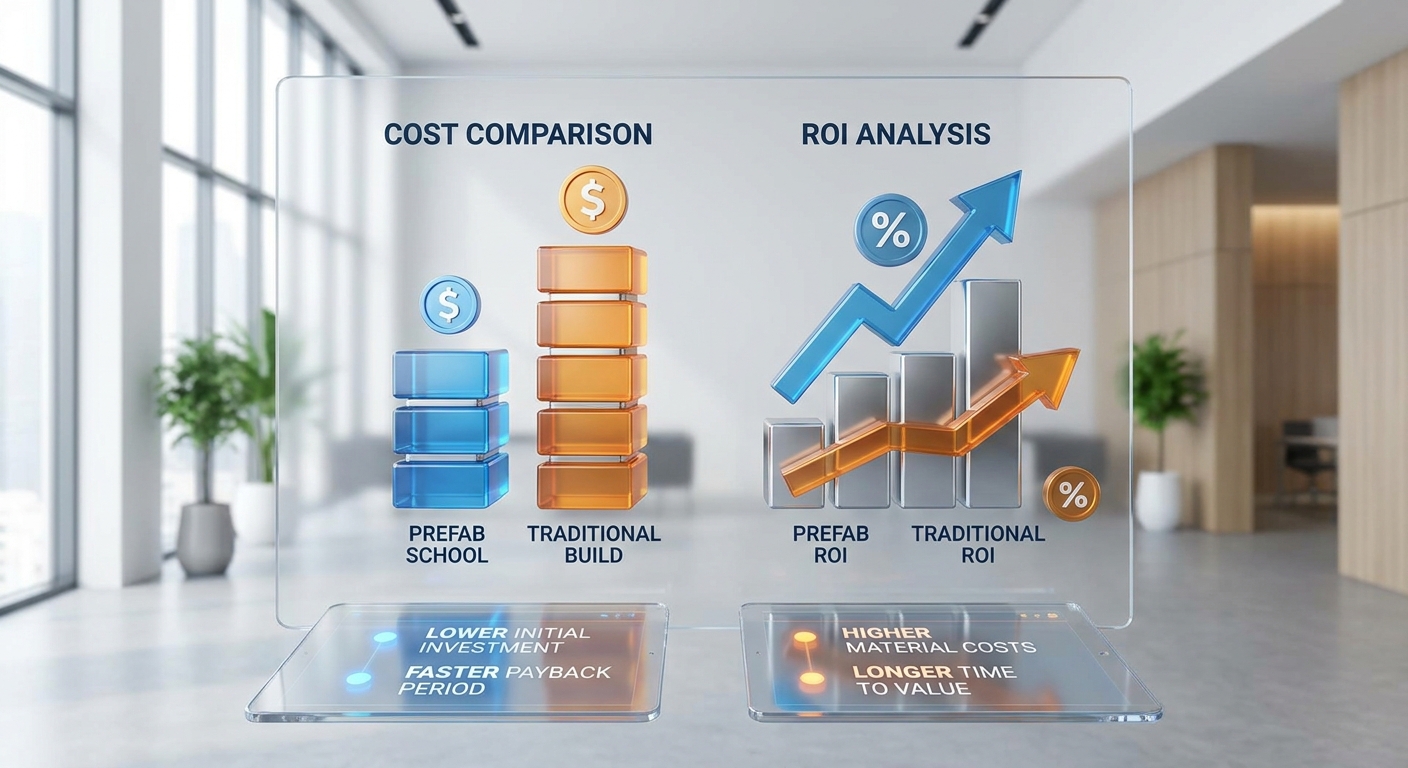
The cost of a prefabricated school building is typically 20% to 30% lower than traditional construction due to reduced labor hours and material waste. By eliminating middleman markups and utilizing factory-direct pricing, school districts can stretch their budgets much further. You also save significantly on “soft costs” like site security, long-term equipment rentals, and administrative overhead.
Return on Investment Analysis
Investing in prefabrication leads to a faster payback period because the facility becomes revenue-generating or utility-providing much sooner. Reduced waste and optimized material usage mean you only pay for what is actually used in the structure.
Imagine this: Saving six months of construction time translates into massive operational savings for any school board.
- Lower initial capital expenditure
- Reduced on-site labor expenses
- Minimized material waste costs
- Lower long-term maintenance fees
| Cost Category | Traditional School | Prefabricated School | |
|---|---|---|---|
| Design/Engineering | 10% – 15% | 5% – 8% | |
| Construction Labor | 40% – 50% | 15% – 20% | |
| Material Efficiency | High Waste | Zero Waste |
The financial advantages of prefabrication become even more apparent when considering the total cost of ownership and the speed of occupancy.
Key TakeawayPrefabricated school buildings offer a cost-effective alternative that maximizes the value of taxpayer or donor funds through industrial efficiency.
Can you customize a prefabricated school building?
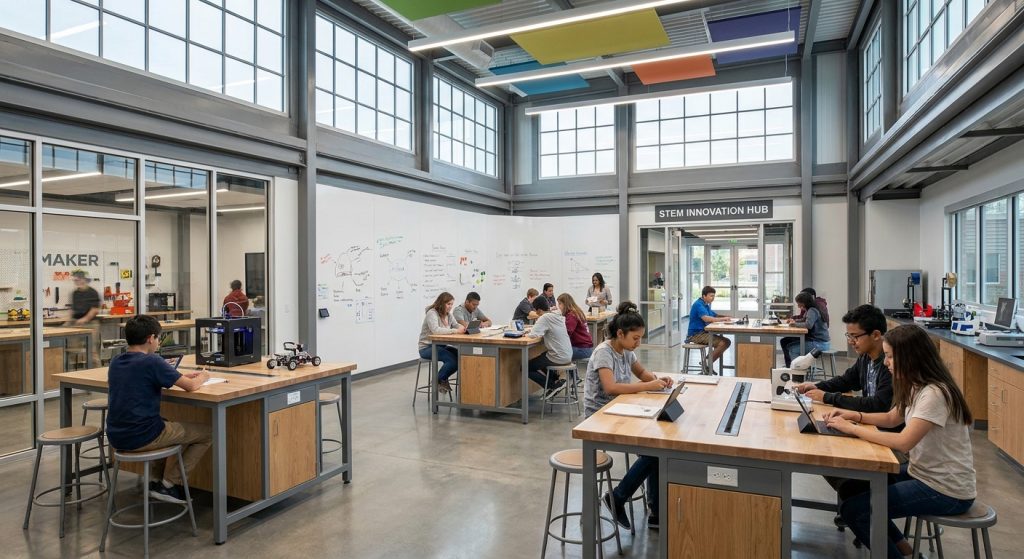
Yes, you can fully customize a prefabricated school building to include specialized STEM labs, gymnasiums, and administrative offices with tailored architectural finishes. Advanced engineering allows for flexible floor plans that can be adapted to specific pedagogical needs. You are not limited to a “box” look; a wide variety of facade options, including glass, stone, and wood textures, are available.
Specialized Educational Spaces
Customization extends to the interior environment, where you can specify acoustic treatments, specialized lighting, and built-in technology hubs. Prefabricated systems are ideal for creating modern Maker Spaces or science wings that require specific utility layouts.
Here is the deal: Standardization in the frame does not mean standardization in the final aesthetic or function.
- Custom window placement
- Specialized lab ventilation
- Acoustic ceiling upgrades
- Varied exterior cladding types
- Modular expansion capabilities
| Customization Area | Standard Options | Premium Upgrades | |
|---|---|---|---|
| Interior Layout | Open plan | Individual labs/offices | |
| Exterior Facade | Painted steel | Stone/Glass/Composite | |
| Technology | Basic wiring | Fully integrated smart labs |
The flexibility of modular steel construction ensures that every building can reflect the unique identity and functional requirements of the institution.
Key TakeawaySophisticated design tools allow for complete architectural freedom, making prefabricated buildings indistinguishable from high-end custom site-built schools.
Email:sales@showhoo.com.cn
Phone/WhatsApp:+86 186 7895 5927
Is a prefabricated school building eco-friendly?
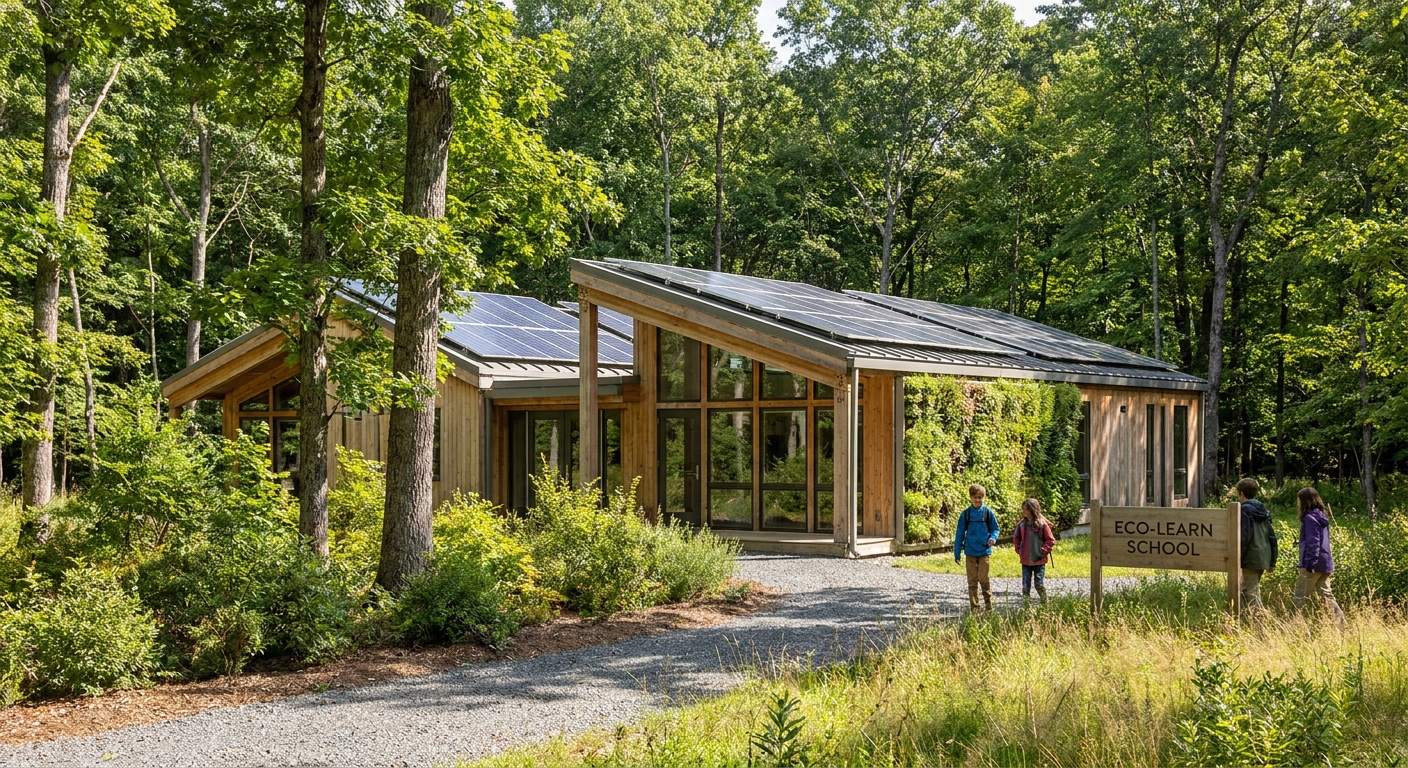
A prefabricated school building is highly environmentally friendly because factory production reduces material waste by up to 90% compared to traditional sites. Steel is one of the most recycled materials on earth, and the energy-efficient design of prefab panels significantly lowers the building’s carbon footprint. Controlled factory conditions also allow for superior insulation installation, leading to lower HVAC energy consumption over the building’s life.
Sustainable Material Management
By using a precise bill of materials (BOM), manufacturers ensure that only the necessary amount of steel and insulation is used. Any scrap material generated in the factory is immediately collected and recycled rather than ending up in a local landfill.
It gets better: The speed of installation means less disruption to local ecosystems and fewer carbon emissions from idling construction machinery.
- High-recycled-content steel
- Energy-star rated insulation
- Minimal site debris
- Reduced heavy equipment usage
- Adaptable for solar integration
| Green Metric | Traditional Construction | Prefabricated Build | |
|---|---|---|---|
| Material Waste | 10% – 15% | < 2% | |
| Recyclability | Moderate | Very High | |
| Energy Efficiency | Variable | High (Precision Seals) |
This structural approach supports green building certifications and helps schools meet their sustainability goals while providing a healthy environment for students.
Key TakeawayPrefabricated construction is the greenest way to build new schools, combining resource efficiency with high-performance energy standards.
How fast is a prefabricated school building installed?
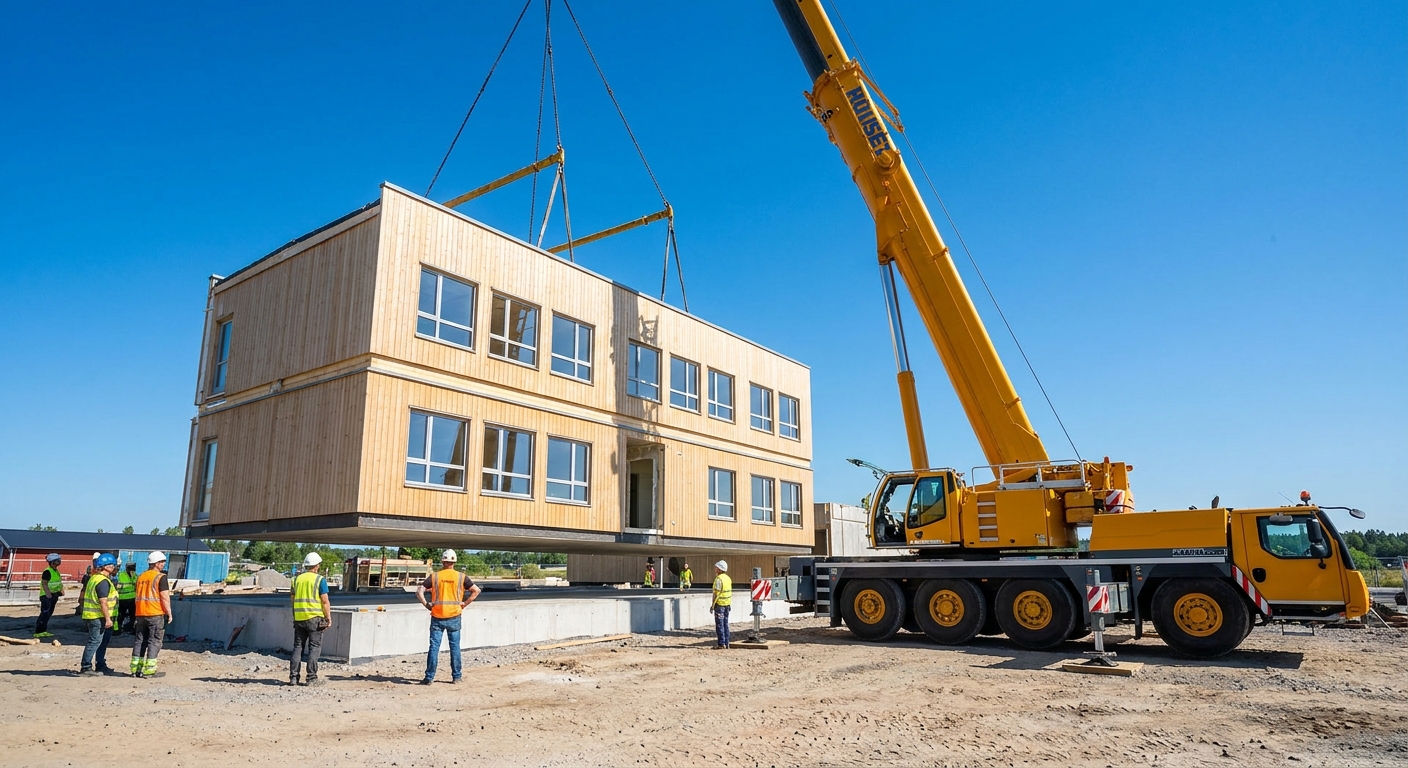
The final installation of a prefabricated school building can be completed in just a few weeks once the components arrive at the site. While the building is being manufactured in the factory, local teams can simultaneously prepare the foundation and utility connections. This concurrent workflow removes the “critical path” delays that often plague traditional construction schedules.
Streamlined Assembly Logistics
Because all components are pre-fitted at the factory, the on-site assembly is more like a mechanical installation than a construction project. Large cranes lift modules or frames into place, and high-strength bolts secure the structure instantly.
Surprisingly: A six-classroom wing can often be erected and dried-in within a single weekend.
- Concurrent site and factory work
- Mechanical bolted connections
- Pre-finished interior panels
- Integrated utility runs
- Rapid roof installation
| Milestone | Traditional Timeline | Prefabricated Timeline | |
|---|---|---|---|
| Foundation/Site Work | Month 1-2 | Month 1-2 | |
| Structure Erection | Month 3-6 | Week 1-2 | |
| Final Interior Finish | Month 7-12 | Week 3-4 |
The significant reduction in time-to-occupancy makes this method the only viable solution for schools facing sudden student population surges.
Key TakeawayBy separating site preparation from building manufacturing, the total project timeline is slashed, allowing schools to open their doors months earlier.
What safety standards does a prefabricated school building meet?
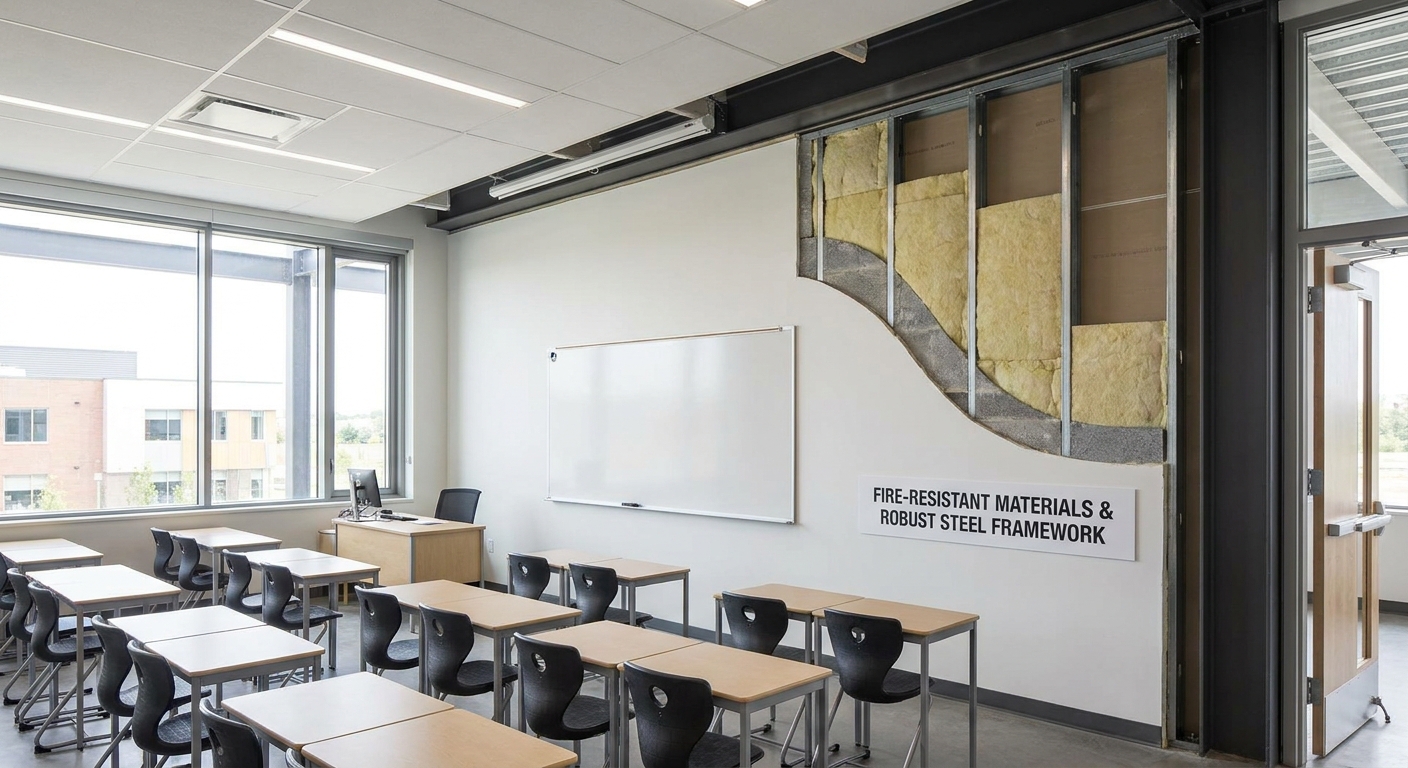
Every prefabricated school building is engineered to meet or exceed local building codes, fire safety regulations, and seismic requirements. Factory environments allow for rigorous third-party inspections and quality control checks that are often more stringent than on-site inspections. Steel framing provides a non-combustible structure that offers superior protection in the event of a fire or extreme weather event.
Compliance and Certifications
Manufacturers provide full documentation, including mill test certificates and welding inspection reports, for every project. This transparency ensures that school administrators and parents can have total confidence in the structural integrity of the campus.
In fact: Factory-built schools often outperform traditional structures in seismic zones due to the inherent ductility of high-quality steel.
- Non-combustible steel materials
- Local seismic code compliance
- Strict acoustic performance standards
- Rigorous welding certifications
- Third-party QC audit trails
| Safety Check | Site-Built Verification | Factory-Built Verification | |
|---|---|---|---|
| Material Origin | Often unverified | Mill certificates provided | |
| Welding Quality | Visual on-site | Digital/X-ray in factory | |
| Code Compliance | Inspector schedule-based | Continuous QC monitoring |
The structured nature of off-site manufacturing inherently leads to a safer final product through better material handling and closer supervision.
Key TakeawayRigorous factory standards ensure that prefabricated schools provide a safe, secure, and fully compliant environment for students and staff alike.
How to source a quality prefabricated school building?
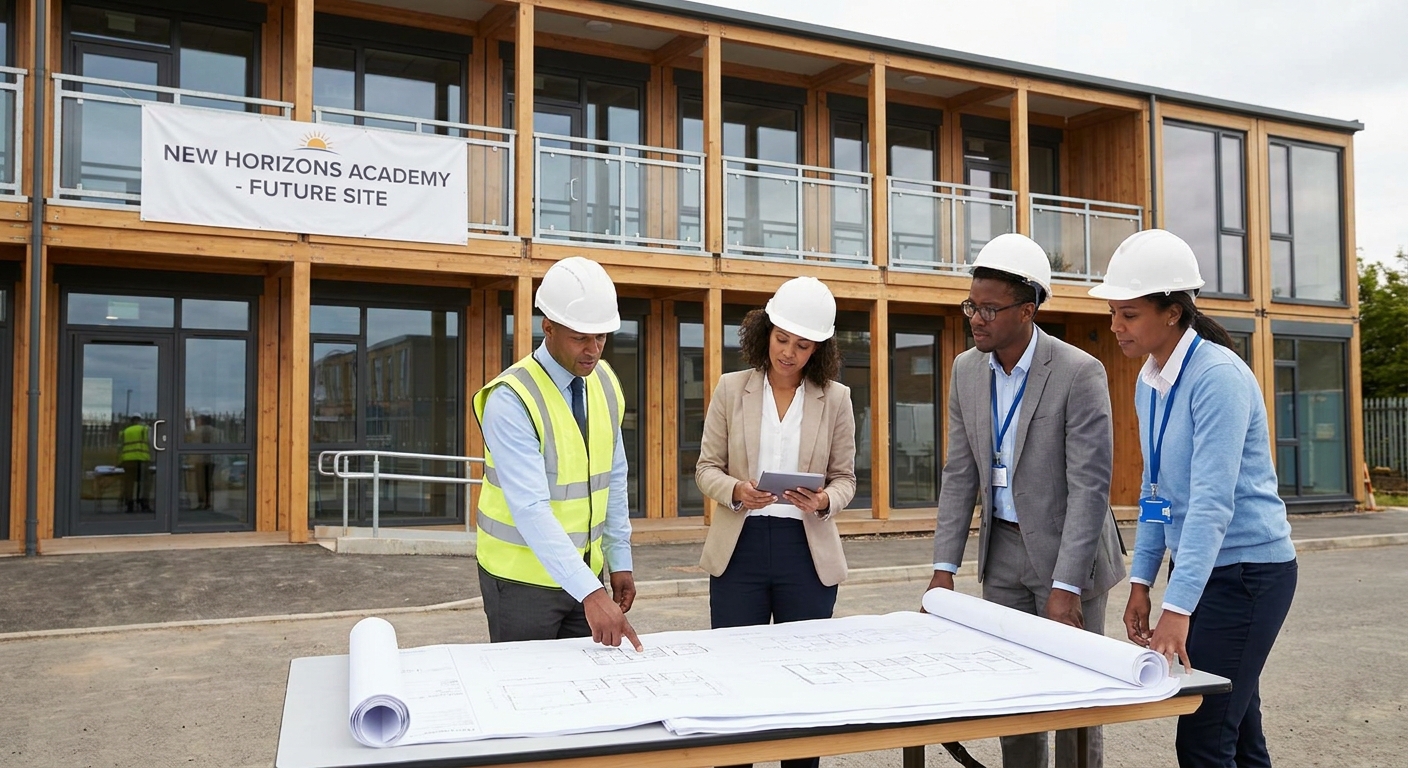
Sourcing a quality prefabricated school building requires selecting a manufacturer with extensive international experience, factory-direct pricing, and a proven track record of engineering compliance. You should look for a partner that offers an integrated delivery system, including design, fabrication, and installation guidance. Verifying their production capacity and quality control protocols is essential to ensuring a successful and timely project.
Evaluating Global Manufacturers
A reputable supplier should provide a clear Bill of Materials (BOM) and detailed installation drawings before shipment. They must be able to handle complex logistics and provide remote or on-site support throughout the construction phase.
To be honest: The manufacturer’s experience with local codes is just as important as their fabrication capability.
- Factory-direct pricing (no middlemen)
- Proven export track record
- In-house engineering team
- Comprehensive QC checkpoints
- Clear installation documentation
| Vetting Criteria | What to Look For | Red Flags | |
|---|---|---|---|
| Manufacturing | Owns the factory | Outsources production | |
| Experience | 1,000+ completed projects | New to international markets | |
| Documentation | Full BOM & 3D models | Vague part lists |
Choosing the right partner ensures that your project remains on budget, on schedule, and meets the highest safety standards required for educational facilities.
Key TakeawaySuccessful school expansion depends on partnering with an experienced manufacturer that prioritizes transparency, engineering excellence, and end-to-end support.
Building the Future of Education
Prefabricated school buildings are no longer just a temporary fix; they are a sophisticated, permanent solution to the global infrastructure crisis in education. By embracing factory-direct manufacturing, educational leaders can bypass the traditional headaches of construction while delivering safe, sustainable, and modern learning environments. We are committed to helping you solve your facility challenges with engineering excellence and unmatched speed. To begin your campus transformation, contact us today for a customized project quote.
Email:sales@showhoo.com.cn
Phone/WhatsApp:+86 186 7895 5927
Strategic FAQ Section
- Can I expand a prefabricated school later?
Absolutely. The modular nature of these structures makes it easy to add new wings or floors as your enrollment continues to grow.
- What is the best way to handle acoustics in prefab classrooms?
We recommend high-density insulation and specialized sandwich panels that provide superior sound dampening between rooms.
- Can I use these for temporary classroom needs?
Yes, but keep in mind that modern steel-framed buildings are designed as permanent, long-lasting assets for your campus.
- How long does the shipping process take?
Typically, international shipping takes between 3 to 5 weeks, depending on your location and port logistics.
- Can I choose my own contractor for installation?
Definitely. We provide a complete installation-ready system and detailed guides so your local team can handle the assembly easily.