
The ultimate horse arena construction guide is a comprehensive technical roadmap that integrates structural steel portal frame engineering with the specific spatial requirements of diverse equestrian disciplines. Building a high-performance facility involves more than just leveling dirt; it requires a deep understanding of subgrade stability, moisture management, and the architectural freedom provided by modern steel. By utilizing a professional riding arena size guide , you can transform your property into a world-class training center that prioritizes equine safety and long-term durability.
How do I determine the right footprint using a riding arena size guide?
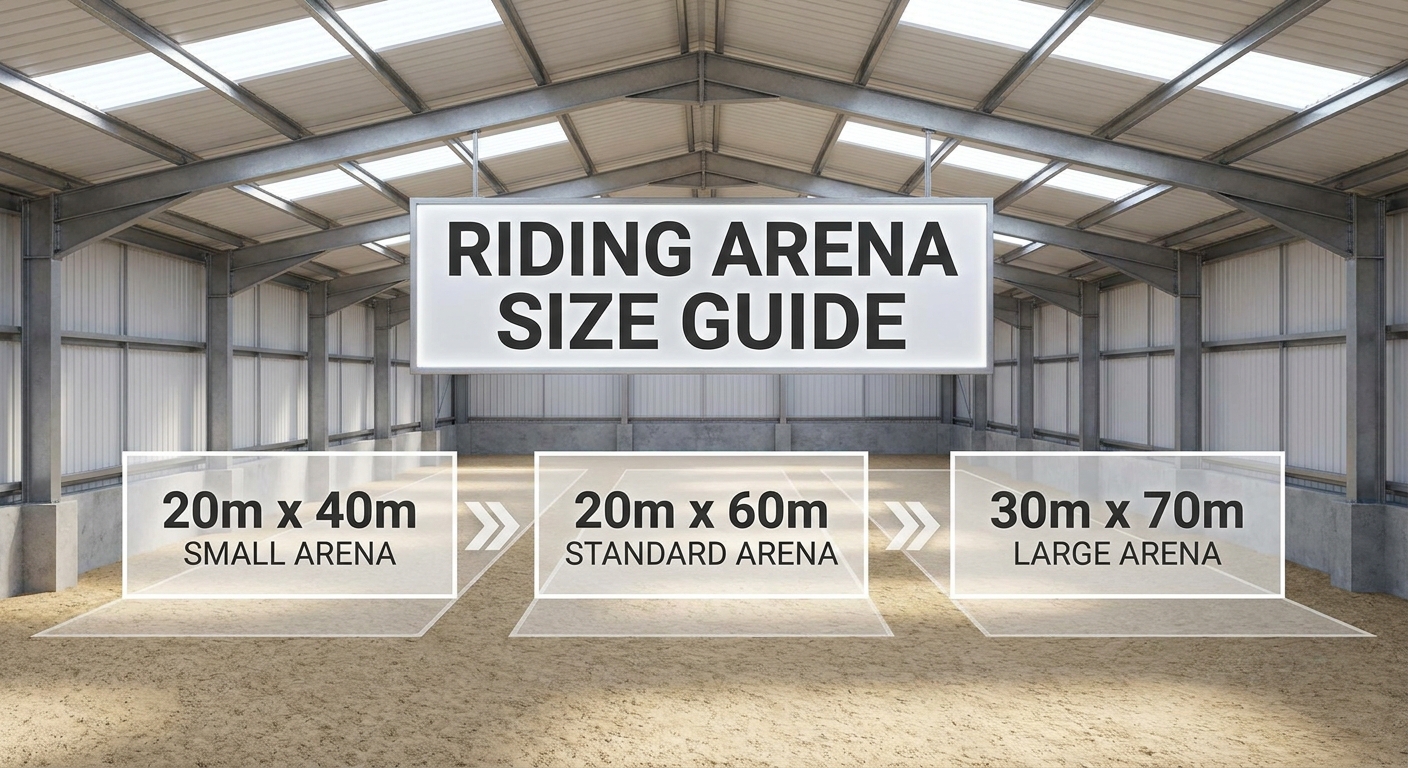
You determine the right footprint by matching your primary riding discipline’s international standards to the physical boundaries of your land and your future training goals. Selecting the wrong dimensions can lead to cramped corners that stress a horse’s joints or overbuilt spaces that inflate your construction budget. Referencing a riding arena size guide early in the process ensures that your steel structure will accommodate the necessary stride patterns for dressage, jumping, or general schooling.
What are the standard dimensions for dressage?
Think about this: dressage requires extreme precision in geometry, meaning the arena must be perfectly square and adhering to specific metric markers. A standard small court is 20m x 40m, while the large competition arena used globally is 20m x 60m.
- Training Court: 20m x 40m (66ft x 131ft).
- Competition Court: 20m x 60m (66ft x 197ft).
- Clearance Zone: Minimum 1m buffer around the perimeter.
How much space is required for jumping?
Here is the deal: jumping arenas require significantly more width to allow for safe approach angles and balanced landing zones between obstacles. You should aim for a minimum width of 30 meters to set up a basic course without compromising the horse’s rhythm.
- Minimum Width: 30m (98ft) for safety.
- Professional Length: 70m to 100m.
- Vertical Clearance: 5.5m minimum for high-level oxers.
Key Takeaway: Discipline-specific dimensions determine the structural requirements of your steel frame and the safety of your horse.
| Arena Type | Metric Size | Imperial Size | Primary Use | |
|---|---|---|---|---|
| Small Dressage | 20m x 40m | 66′ x 131′ | Private Schooling | |
| Standard Dressage | 20m x 60m | 66′ x 197′ | Competitive Prep | |
| Jumping Arena | 30m x 70m | 98′ x 230′ | Course Training |
The data above illustrates how discipline-specific needs dictate the necessary square footage of your steel portal frame building.
Why is a riding arena size guide essential for site preparation?
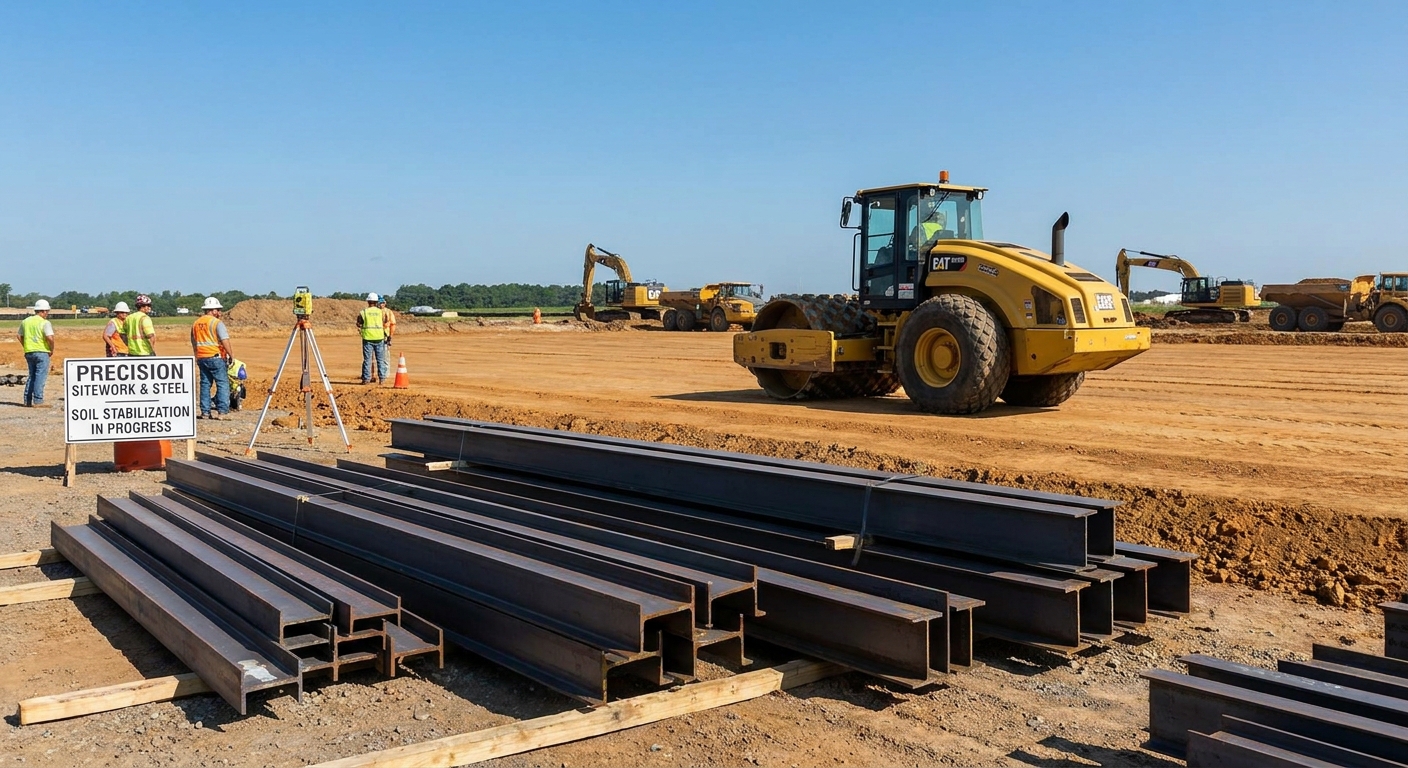
A riding arena size guide is essential for site preparation because it dictates the total volume of organic topsoil removal and the specific grading plan required to support a heavy steel building. Proper site work prevents the foundation from settling unevenly, which could cause structural stress on the portal frame. Exploring our recent steel structure projects can show you how others have successfully adapted arenas to varied terrains.
How does topography affect excavation costs?
Believe it or not, topography is the single biggest variable in your initial construction budget. A site with more than a 2% slope will require a cut-and-fill operation to create a level pad for the arena footing and frame.
- Ideal Slope: 1% to 2% for natural runoff.
- Maximum Cut: Depends on local soil stability.
- Tooling: Laser-guided bulldozers for precision.
Why is subgrade compaction vital?
Look at it this way: the strength of your steel building is only as good as the ground it stands on. Compacted sub-base prevents the “base layers” from mixing with native soil, ensuring the riding surface remains consistent for decades.
- Vibratory Roller: 10-ton minimum recommended.
- Density Test: Should reach 95% Proctor density.
- Moisture Content: Must be controlled during compaction.
Key Takeaway: Precise site preparation according to your footprint prevents foundation shifts and ensures a level riding surface.
| Prep Stage | Requirement | Equipment | Goal | |
|---|---|---|---|---|
| Stripping | 150mm depth | Excavator | Remove organic matter | |
| Grading | 1.5% Grade | Laser Level | Surface drainage | |
| Compaction | 95% Density | Smooth Drum Roller | Structural stability |
Rigorous site preparation is the only way to guarantee that your arena surface remains level and your steel frame stays plumb over decades of use.
Boost Your Efficiency Today
Email:sales@showhoo.com.cn
Phone/WhatsApp:+86 186 7895 5927
How does a riding arena size guide affect drainage planning?
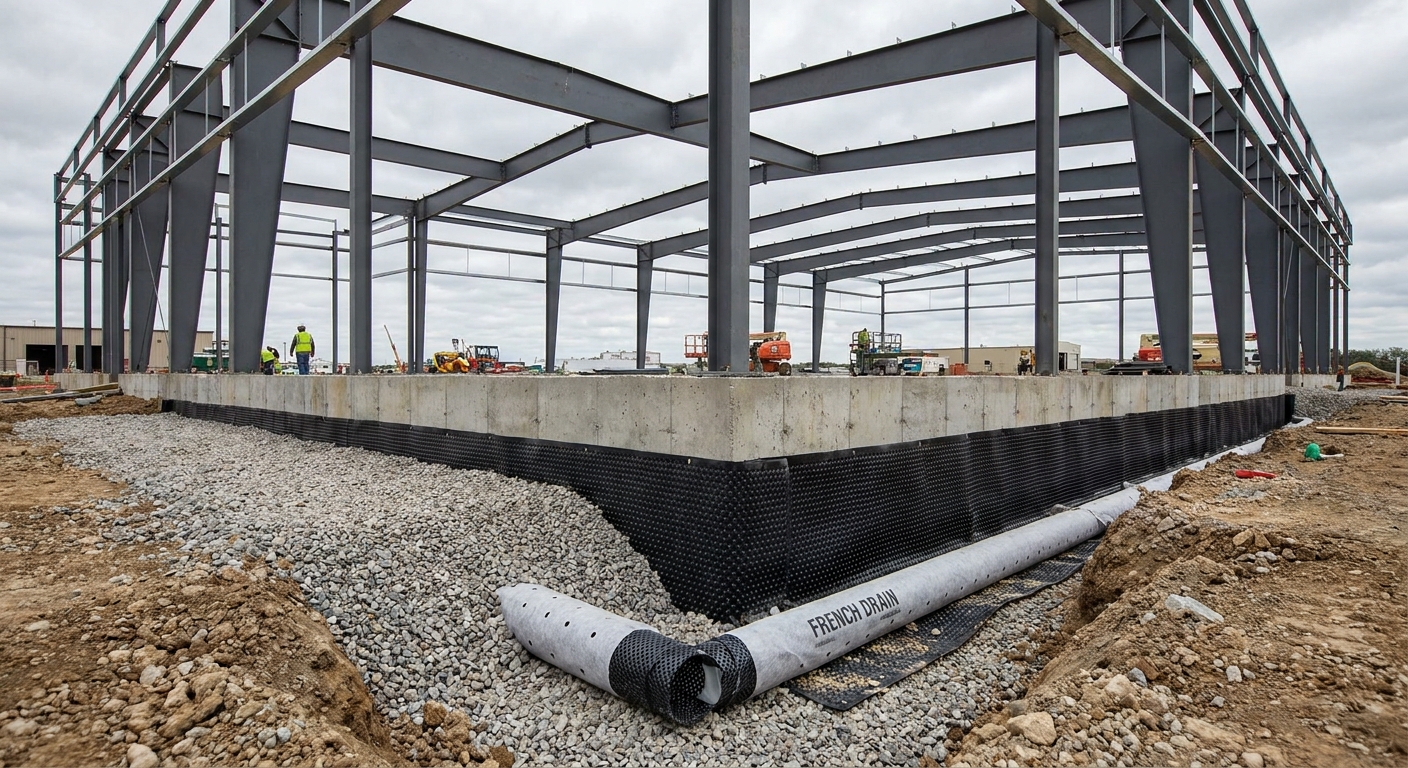
The riding arena size guide affects drainage because the total surface area determines the volume of water that must be managed, both from roof runoff and surface seepage. A large-span steel roof generates a massive amount of water that must be directed away from the arena’s footing to prevent the surface from becoming a swamp. Utilizing an integrated drainage plan protects the integrity of your prefabricated horse stables and the arena base layers.
What are the benefits of French drains?
It gets even better when you plan ahead: French drains act as subterranean highways that collect water and move it rapidly to a designated discharge area. These systems are essential for outdoor arenas but are also used around the perimeter of indoor facilities to prevent water “wicking” into the footing.
- Pipe Type: Perforated PVC.
- Filter: Geotextile fabric wrap.
- Aggregate: Clean, washed stone.
How do roof gutters protect the foundation?
But wait, there is more: without gutters, rain falling from a 30-meter-wide steel roof will erode the area directly outside your walls and eventually saturate the base. Properly sized downspouts should lead to underground pipes that carry water at least 5 meters away from the structure.
- Gutter Size: 6-inch minimum.
- Downspouts: One every 10 meters.
- Drainage Path: Gravity-fed to swales or ponds.
Key Takeaway: Water management is the most critical factor in extending the life of your arena footing and structural foundation.
| Drainage Tool | Function | Maintenance | Frequency | |
|---|---|---|---|---|
| Swales | Divert surface runoff | Mowing/Clearing | Monthly | |
| Catch Basins | Collect silt and debris | Clean out | Annually | |
| Perimeter Pipe | Sub-surface removal | Jetting/Flush | Bi-annually |
An integrated drainage strategy ensures that your riding surface remains consistent and usable regardless of external weather conditions.
Which riding arena size guide works best for steel portal frames?
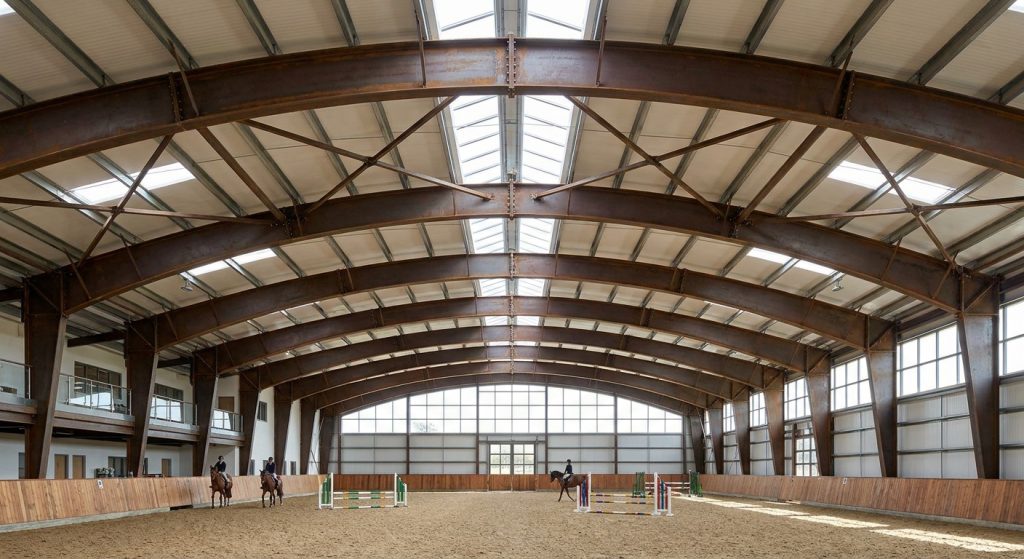
The riding arena size guide that works best for steel portal frames is one that emphasizes a clear-span interior, providing a safe and unobstructed riding environment. A clear-span portal frame design maximizes every square inch of your interior, allowing you to execute complex movements without navigating around dangerous middle columns. Steel is the industry standard for large arenas due to its ability to cover wide widths—often exceeding 60 meters—without internal supports.
Why is clear-span design the safety standard?
Think about this for a second: internal pillars in a horse arena are a high-risk collision hazard for both horse and rider during active training. Steel frames transfer all the structural load to the outer walls, leaving the center completely open for jumping courses or dressage movements.
- Unobstructed Space: 100% usable floor area.
- High Ceilings: Safe clearance for jumping oxers.
- Durability: Resistant to fire, rot, and termites.
How does steel compare to timber frames?
Believe it or not: steel offers a much higher strength-to-weight ratio than timber, which allows for longer spans and a lower overall building profile. While wood may look traditional, steel portal frames require significantly less maintenance and provide superior resistance to extreme wind and snow loads.
- Span Capacity: Steel easily reaches 40m+; timber struggles over 24m.
- Installation: Prefabricated steel bolts together in weeks.
- Maintenance: No warping or cracking over time.
Key Takeaway: Steel portal frames provide the safest and most efficient long-term solution for professional-grade indoor riding facilities.
| Frame Feature | Steel Benefit | Timber Comparison | Impact | |
|---|---|---|---|---|
| Clear Span | High (Up to 70m) | Limited (Under 30m) | Rider Safety | |
| Fire Rating | Non-combustible | High Risk | Insurance Cost | |
| Footprint | Minimal Columns | Large Posts | Usable Space |
The structural efficiency of steel portal frames provides the most cost-effective long-term solution for professional indoor riding.
How do I calculate base volumes using a riding arena size guide?
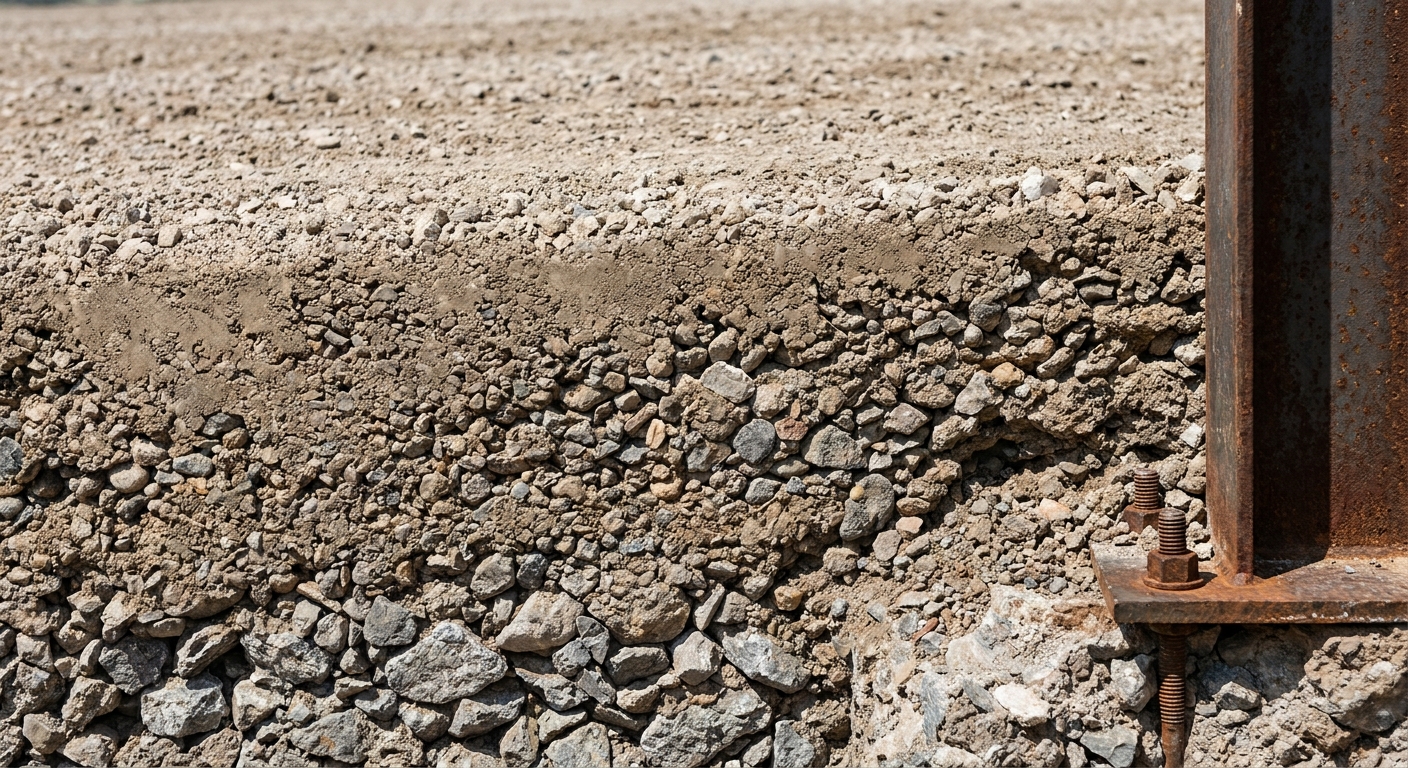
You calculate base volumes by multiplying your arena’s total square footage by the required depth of compacted aggregate, typically between 100mm and 150mm. Using a riding arena size guide ensures you order the correct tonnage of gravel to create a stable, non-shifting foundation for your top footing. This base layer acts as a sacrificial surface that protects the horse’s legs from hitting the hard subgrade.
What aggregate types are best for the base?
Here is the deal: you should use a “dense-grade” aggregate that contains a mix of sizes from 20mm down to dust, as this packs tightly into a concrete-like surface. Avoid using large, round stones that can migrate upward and eventually puncture your expensive top footing.
- Crushed Limestone: Packs extremely well.
- Road Base: Affordable and durable.
- Decomposed Granite: Excellent for drainage and stability.
Is a geotextile membrane necessary?
In fact, it is a game changer: placing a high-quality geotextile fabric between the subgrade and the aggregate base prevents soil from “pumping” upward into your arena layers. This separation is vital for maintaining the permeability of your drainage system over several decades.
- Woven Fabric: Best for separation and strength.
- Non-Woven: Best for high-volume drainage.
- Installation: Overlap seams by 300mm minimum.
Key Takeaway: A meticulously compacted base prevents the riding surface from developing “holes” or uneven spots that lead to equine injury.
| Base Layer | Thickness | Material | Purpose | |
|---|---|---|---|---|
| Geotextile | <1mm | Polypropylene | Separation | |
| Main Base | 100-150mm | Crushed Rock | Foundation | |
| Choke Layer | 25mm | Stone Dust | Leveling Top |
The success of your arena depends on the synergy between the solid base and the scientifically blended footing layers above.
Boost Your Efficiency Today
Email:sales@showhoo.com.cn
Phone/WhatsApp:+86 186 7895 5927
How is high-performance footing installed with a riding arena size guide?
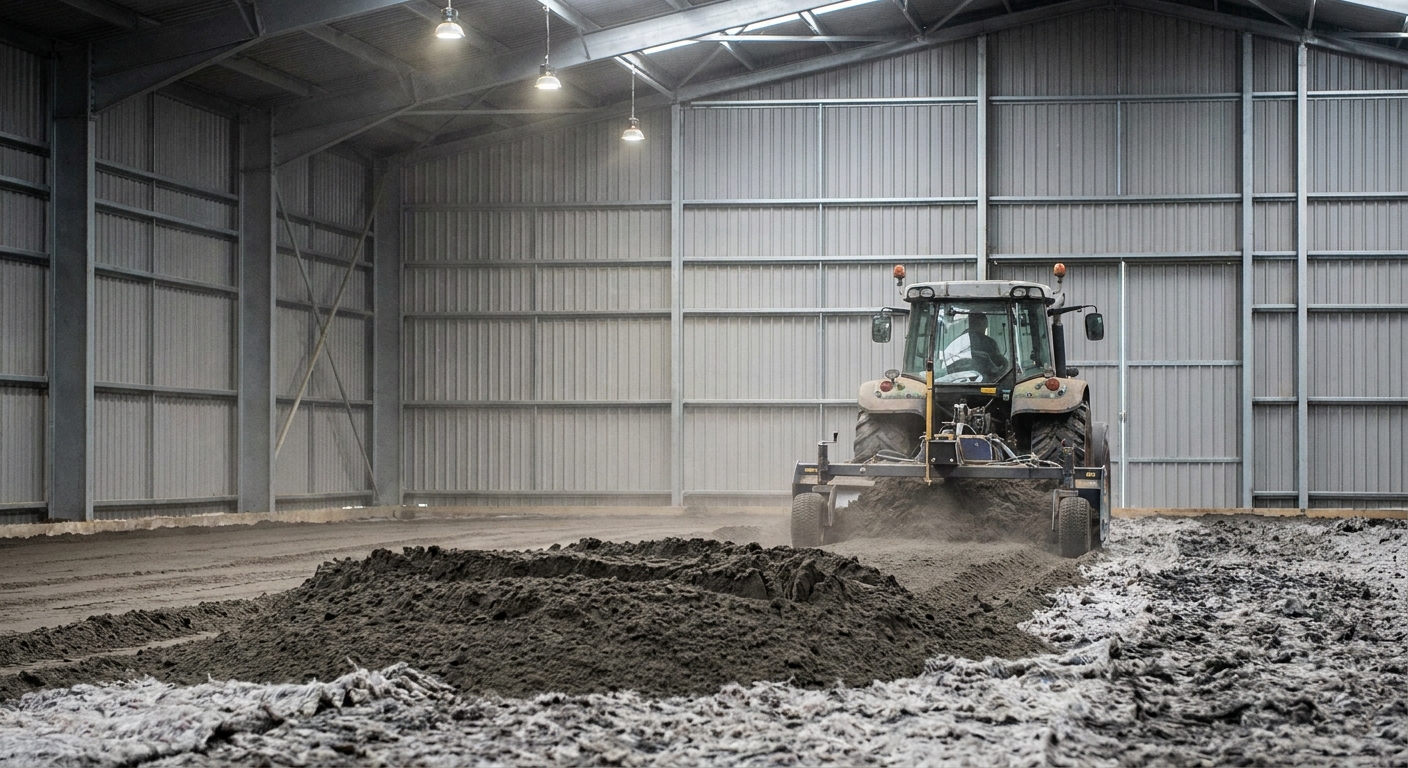
High-performance footing is installed by spreading a precisely calculated mix of sub-angular silica sand and synthetic additives across the arena footprint defined by your size guide. The goal is to create a surface that offers both “grip” for turns and “cushion” for impact absorption. A riding arena size guide helps you determine the exact cubic yardage needed to achieve a uniform 50mm to 100mm depth across the entire area.
Why is silica sand superior to beach sand?
The truth is: not all sand is created equal for horses. Silica sand has a sub-angular grain shape that “locks” together under pressure, providing stability, whereas round beach sand will shift like deep snow, causing tendon strain.
- Sub-Angular Sand: Provides stability and traction.
- Round Sand: Causes horses to “sink” and fatigue.
- Dust Control: Silica sand is generally cleaner and lower in silt.
How do synthetic fibers improve the surface?
Keep this in mind: adding geotextile fibers or felt to your sand increases moisture retention and creates a “spring” that mimics the feel of natural turf. This synthetic reinforcement prevents the sand from compacting too tightly, maintaining a consistent feel even in high-traffic training centers.
- Fibers: Provide “knit” and surface stability.
- Felt: Increases water retention and cushion.
- Ratio: Typically 1kg to 3kg per square meter.
Key Takeaway: Investing in premium footing materials pays for itself by reducing vet bills and extending the training life of your horses.
| Footing Component | Best Material | Depth | Performance Impact | |
|---|---|---|---|---|
| Main Sand | Silica | 75mm | Stability | |
| Additive | Synthetic Fiber | N/A | Rebound/Grip | |
| Moisture | Water/Polymer | N/A | Dust Suppression |
Proper footing installation creates a safe interface between the equine athlete and the ground, maximizing performance.
Does a riding arena size guide influence interior kick wall design?
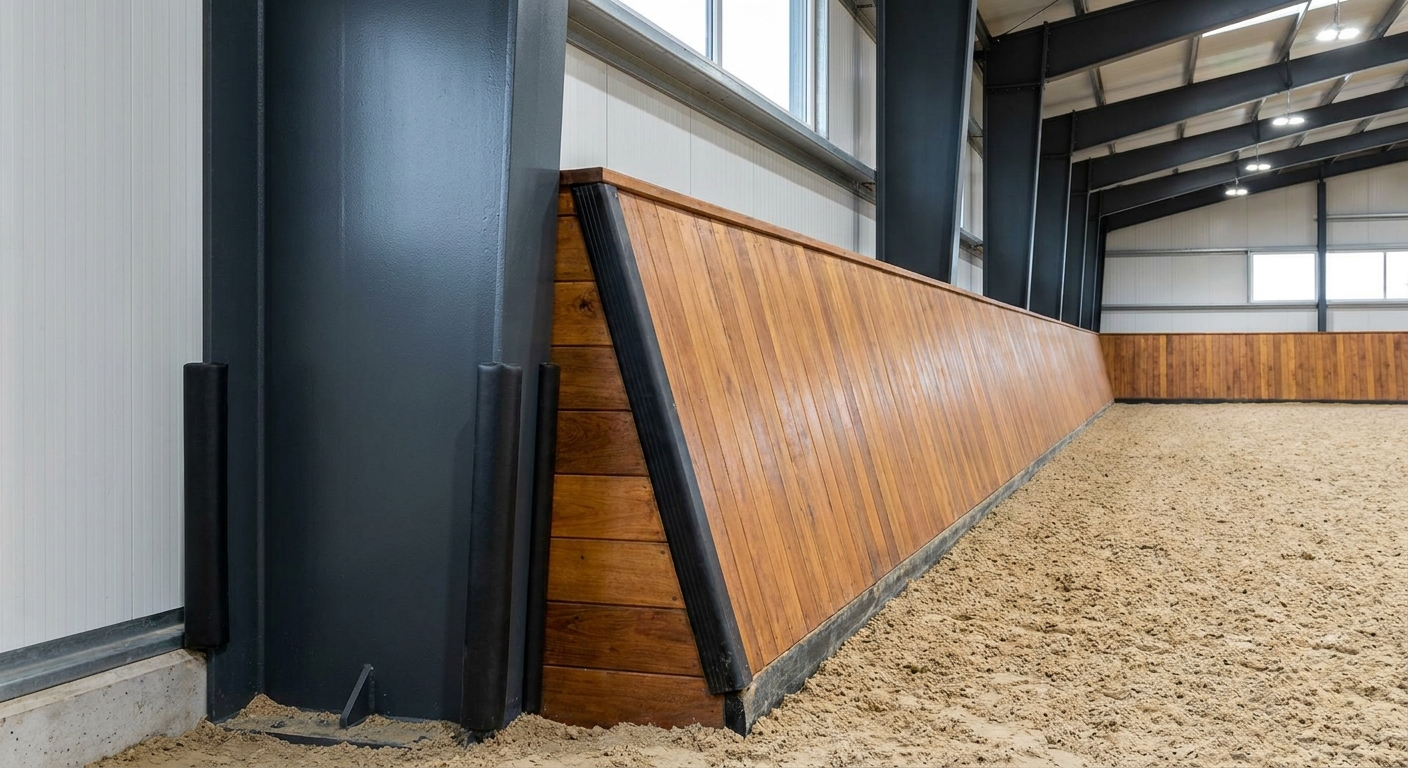
Yes, a riding arena size guide influences interior kick wall design by defining the safe perimeter and the specific angle required to protect the horse’s legs from the building’s steel columns. A slanted timber kick wall is an essential safety feature that prevents a horse from making physical contact with the exterior steel cladding or columns. This wall also serves to contain the footing, preventing it from pushing against the metal and causing corrosion.
What is the ideal angle for a kick wall?
It turns out that: a 10-degree outward slant at the top of the wall is the industry standard for preventing a rider’s leg from being crushed against the wall if a horse “spooks” or leans. This angle also helps deflect the horse’s hooves back toward the center of the arena.
- Slant Angle: 10 to 12 degrees.
- Wall Height: 1.2 meters (4 feet).
- Material: Plywood or hardwood tongue-and-groove.
Can kick walls protect the steel frame?
But wait, there is more: kick walls prevent moisture-laden footing from sitting directly against the steel portal frame base plates, which is a primary cause of rust in older arenas. By creating a physical barrier, you ensure that the structural integrity of your building is preserved for decades.
- Air Gap: Allows ventilation behind the wall.
- Debris Guard: Prevents sand from entering frame gaps.
- Access: Include panels for column inspection.
Key Takeaway: Interior finishing like kick walls are as much about structural protection as they are about horse and rider safety.
| Feature | Standard | Material | Benefit | |
|---|---|---|---|---|
| Wall Height | 1.2m | Timber | Rider Leg Safety | |
| Wall Slant | 10 Degrees | Plywood | Hoof Deflection | |
| Rail Cap | Rounded Edge | Hardwood | Prevent Splinters |
The structural integrity of your riding arena depends entirely on the quality and engineering of the interior safety components.
How does a riding arena size guide determine your lighting layout?
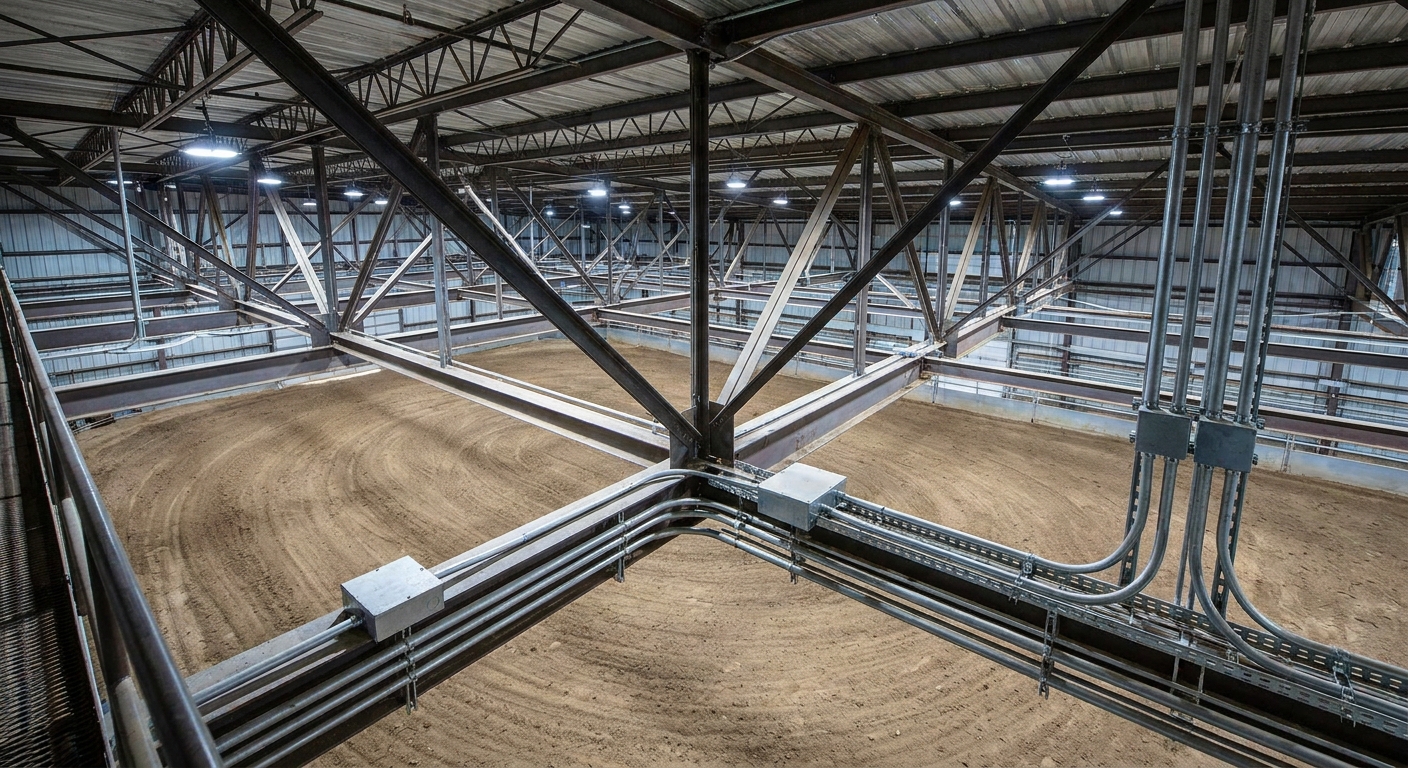
A riding arena size guide determines your lighting layout by allowing electrical engineers to calculate the precise spacing and “foot-candle” intensity required for shadow-free visibility. Uniform lighting is critical for safety; shadows in an arena can be misinterpreted by horses as obstacles, leading to dangerous “spooks” or missteps. Modern LED fixtures are favored for steel buildings because they provide high-intensity light without the massive energy draw of traditional bulbs.
How many lumens are required for training?
Simply put: more is usually better. For a professional training arena, you should aim for 30 to 50 foot-candles (300 to 500 lux) of light at ground level to ensure that every corner of the footing is clearly visible.
- Training Level: 300 Lux.
- Competition Level: 500+ Lux.
- Placement: Symmetrical grid to eliminate shadows.
Why use LED technology in steel arenas?
Believe it or not: LEDs reduce energy consumption by up to 60% and have a significantly longer lifespan, which is vital when fixtures are mounted 6 meters high on a steel portal frame. High-bay LEDs are also resistant to the dust and vibration common in equestrian environments.
- Lifespan: 50,000+ hours.
- Durability: IP65 rated against dust/moisture.
- Instant On: No warm-up time required.
Key Takeaway: A well-designed lighting layout increases the usability of your arena during winter months and provides a safer environment for evening riding.
| Lighting Goal | Standard Value | Result | |
|---|---|---|---|
| Intensity | 30-50 Foot-candles | Clear visibility | |
| Color Temp | 5000K | Daylight simulation | |
| Uniformity | 0.7 Min Ratio | No scary shadows |
Strategic lighting design creates a temperate and healthy indoor climate that allows for year-round training regardless of time.
Boost Your Efficiency Today
Email:sales@showhoo.com.cn
Phone/WhatsApp:+86 186 7895 5927
Why is a riding arena size guide important for dust control and ventilation?
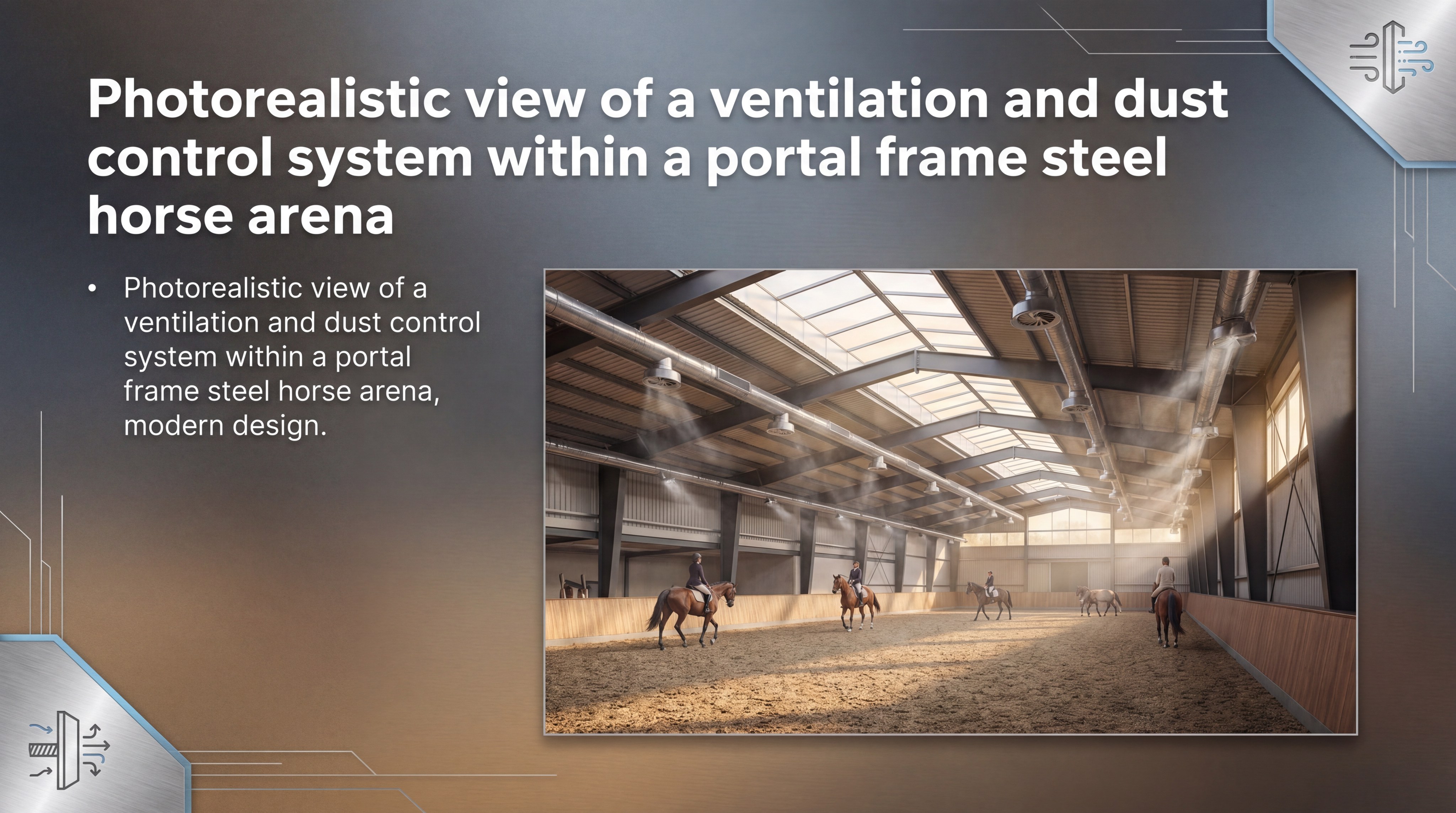
A riding arena size guide is important because the total cubic volume of the building determines the number of air changes per hour needed to maintain a healthy respiratory environment. Stale, dusty air can lead to inflammatory airway disease in horses, which significantly impairs their performance and health. Utilizing breathable sandwich panels and high-volume ventilation systems allows for constant fresh air exchange.
How do ridge vents improve air quality?
Keep this in mind: hot, stale air naturally rises, and without a ridge vent at the peak of your steel roof, this air becomes trapped, creating a humid and dusty “ceiling.” Ridge vents allow this air to exhaust passively, pulling fresh air in through lower wall vents.
- Ridge Vents: Continuous exhaust at the roof peak.
- Wall Louvers: Lower intake for cross-flow.
- Fans: Active circulation for humid climates.
Can misting systems assist with dust control?
In fact, it is a game changer: many modern steel arenas integrate overhead misting systems that deliver a fine fog of water to the footing. This keeps the sand moist and prevents dust particles from becoming airborne during high-intensity training sessions.
- Automated: Sensors monitor footing moisture.
- Uniformity: Covers 100% of the arena floor.
- Efficiency: Uses less water than manual hoses.
Key Takeaway: Strategic ventilation and dust management are the keys to maintaining equine lung health in an indoor environment.
| Vent Type | Location | Benefit | |
|---|---|---|---|
| Ridge Vent | Roof Peak | Heat exhaust | |
| Louvers | Side Walls | Fresh air intake | |
| Misting | Overhead | Dust suppression |
Proper ventilation design ensures a comfortable environment for both the equine athlete and the human trainers.
Is a riding arena size guide useful for ongoing maintenance?
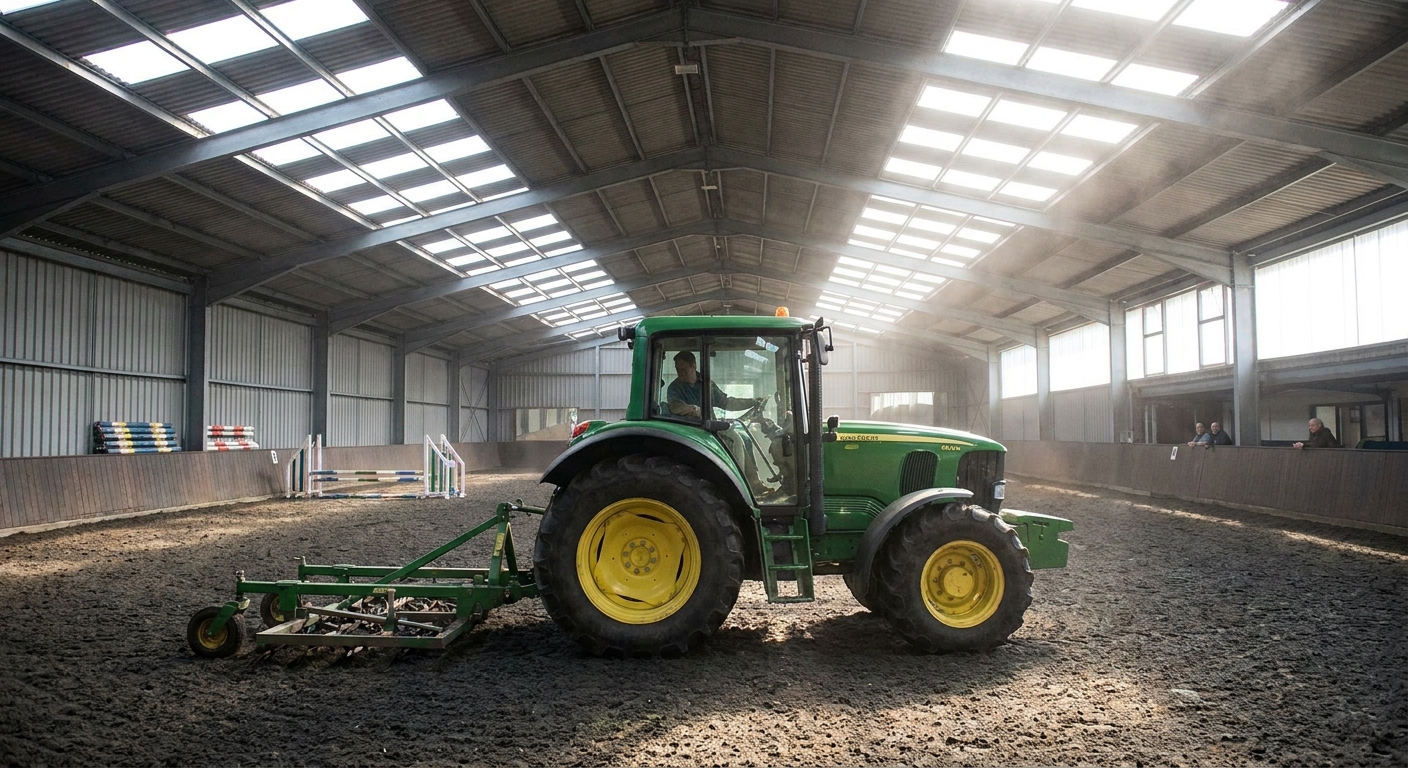
A riding arena size guide is useful for maintenance to calculate the exact time and mechanical energy required to groom the surface properly. Consistent maintenance is the only way to prevent footing from migrating to the edges and exposing the hard base underneath. A well-maintained surface ensures that your horse’s joints are protected by a uniform layer of cushion during every session.
What is the ideal grooming schedule?
Here is the truth: neglect leads to failure. You should drag or “harrow” your arena footing at least once a day if it sees heavy use, or after every 5-10 rides to keep the surface level and aerated.
- Daily: Dragging to level the footing.
- Weekly: Deep moisture monitoring.
- Annually: Inspecting the steel frame for rust or loose bolts.
Why is moisture monitoring critical?
But wait, there is more: footing that is too dry will become loose and dusty, while footing that is too wet will become heavy and “sticky.” Maintaining a consistent 10-15% moisture content is the secret to a professional-grade riding surface that mimics the feel of a competitive venue.
- Squeeze Test: Footing should hold its shape without dripping.
- Irrigation: Use sprinklers for even coverage.
- Additives: Consider hygroscopic salts to retain water.
Key Takeaway: Consistent maintenance is the most cost-effective way to ensure your horse arena remains a high-performance facility for decades.
| Task | Frequency | Goal | |
|---|---|---|---|
| Grooming | Daily | Surface levelness | |
| Watering | Daily | Dust suppression | |
| Edging | Weekly | Prevent footing piles |
Completing this maintenance checklist marks the transition from building a structure to managing a world-class equestrian environment.
Conclusion
Constructing a professional-grade horse arena is a multifaceted project that requires a perfect balance of structural engineering and specialized equestrian knowledge. By following a detailed riding arena size guide and investing in a clear-span steel portal frame, you address the primary challenges of drainage, safety, and longevity. We specialize in providing engineered steel solutions that transform complex construction variables into seamless, durable realities for horse owners worldwide. If you are ready to build a facility that enhances your horse’s performance while standing the test of time, contact us today for a professional consultation. Our mission is to engineer the foundations of equestrian excellence, one steel frame at a time.
Boost Your Efficiency Today
Email:sales@showhoo.com.cn
Phone/WhatsApp:+86 186 7895 5927
FAQ
Can I build a steel horse arena without a permit?
Usually not, as most local jurisdictions classify steel portal frames as permanent structures that require engineering approval and zoning permits. It is always best to check with your local planning department to avoid costly fines or legal disputes.
What is the best way to control dust in an indoor arena?
The most effective way is a combination of high-quality silica sand footing, automated misting systems, and strategic cross-ventilation. Proper moisture levels in the footing are the primary defense against airborne dust particles.
How long does it take to erect a steel portal frame arena?
Once the foundation is poured and the steel is delivered, the actual framing process typically takes between 2 to 4 weeks depending on the size of the footprint. Total project time including site prep usually spans 3 to 6 months.
Is a 20m x 40m arena big enough for jumping?
While it is possible to set a single vertical or small line in a 20m x 40m space, it is generally considered too narrow for safe course work. For jumping, a minimum width of 30 meters is recommended to allow for balanced turns.