
Investing in high-quality swine housing is the most critical step toward ensuring livestock health and maximizing farm profitability. Many producers struggle with outdated wood or masonry structures that deteriorate quickly under the harsh ammonia-rich conditions of a pig farm. This degradation leads to high maintenance costs and frequent disease outbreaks that can cripple your bottom line. We provide portal steel frame solutions that offer a durable, biosecure, and cost-effective alternative for modern intensive breeding.
Why invest in portal frame swine housing?
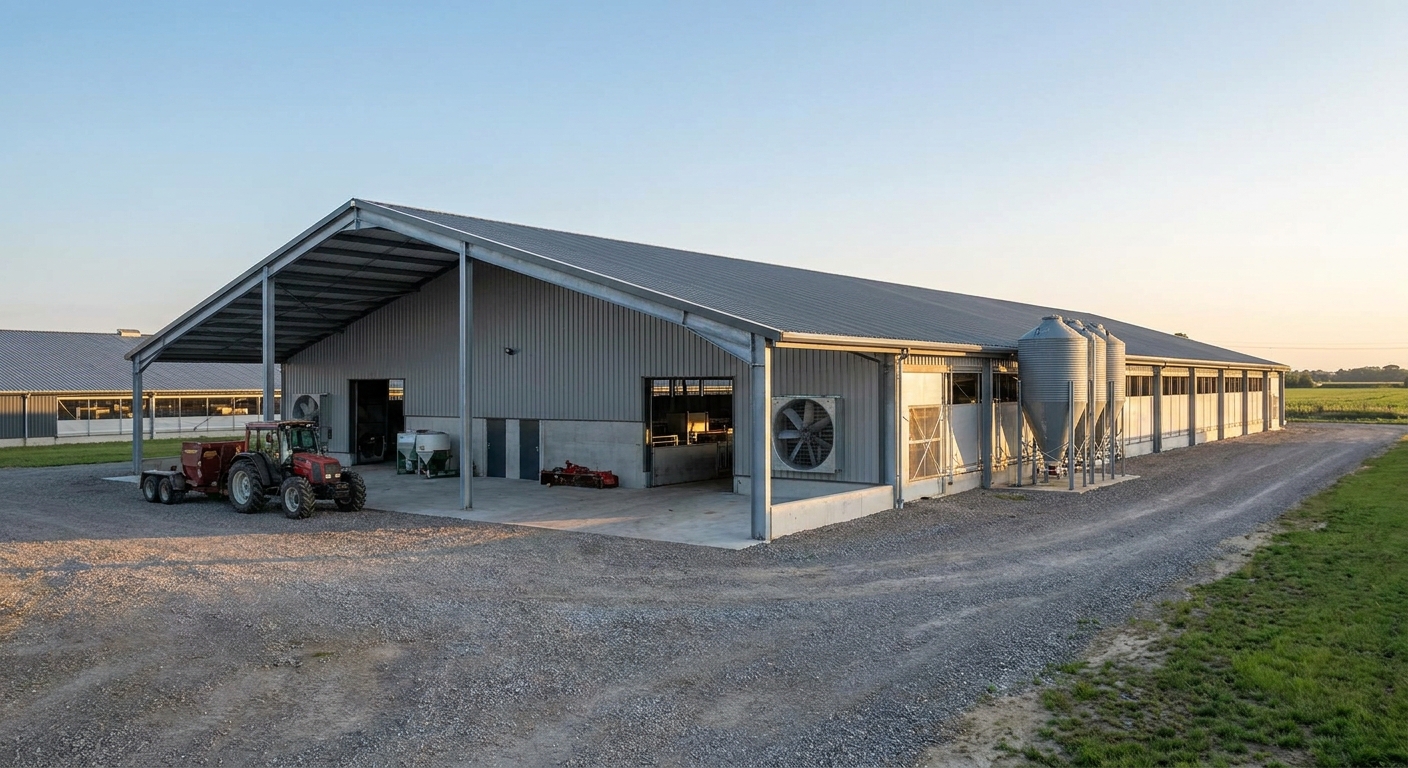
Portal steel frames are the superior choice for swine housing because they offer unmatched structural integrity and rapid assembly compared to traditional building materials. These structures use high-strength steel beams to create large, open interiors without the need for restrictive support columns. This design ensures that you can move equipment and livestock with ease, significantly improving daily operational efficiency.
What are the main benefits of steel structures?
Steel offers a level of durability that organic materials simply cannot match in a farm environment. Here is the kicker: steel is naturally resistant to the pests and mold that often plague wooden barns.
- Fire Resistance: Steel does not contribute fuel to potential fires.
- Pest Control: Rodents cannot chew through steel frames or siding.
- Stability: Portal frames handle extreme wind and snow loads with ease.
How does this lead to long-term cost efficiency?
While the initial investment might seem higher, the lifecycle cost of a steel building is remarkably lower. Think about it: you spend less on repairs, insurance premiums, and chemical treatments over the building’s 50-year lifespan.
Key Takeaway: Steel portal frames minimize maintenance downtime and maximize the usable lifespan of your investment.
| Feature | Steel Portal Frame | Traditional Wood | |
|---|---|---|---|
| Lifespan | 50+ Years | 15-20 Years | |
| Maintenance | Low (Corrosion resistant) | High (Rot/Pests) | |
| Biosecurity | High (Easy to sanitize) | Moderate (Porous) |
This comparison clearly demonstrates why industrial-grade steel is the standard for modern intensive livestock production.
How to choose a site for swine housing?
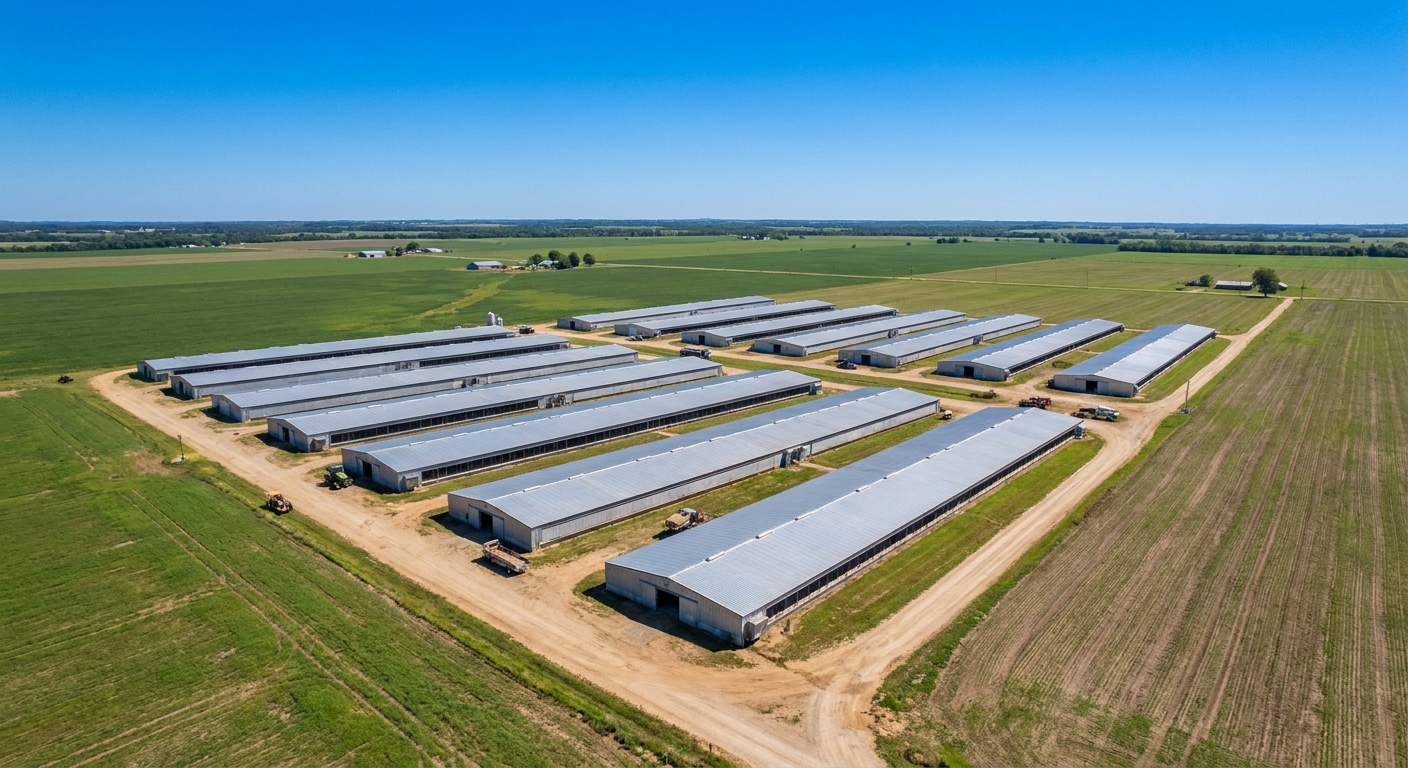
Selecting an elevated location with excellent drainage is vital for swine housing to prevent flooding and manage agricultural runoff effectively. You must also consider the prevailing wind direction to ensure optimal natural ventilation and effective odor management for neighboring residences. Proper site selection reduces the risk of soil-borne diseases and simplifies the construction of manure management systems.
How should you evaluate drainage and slope?
A site with a slight natural slope allows for gravity-assisted waste removal, saving you thousands in pumping costs. You want to avoid low-lying areas where water pools, as dampness is a primary driver of respiratory issues in pigs.
- Elevation: Ensure the floor is at least 60cm above the water table.
- Soil Type: Stable soil prevents the heavy steel frame from shifting over time.
Why do biosecurity and wind direction matter?
Biosecurity starts with where you place the building relative to other livestock and roads. You need to position the length axis in an East-West direction to protect the interior from direct solar heat while utilizing cross-breezes.
Key Takeaway: Correct orientation and elevation are the foundation of a healthy, low-odor farming environment.
| Site Factor | Requirement | Impact on Pigs | |
|---|---|---|---|
| Distance | 8-10m from residences | Odor & Dust control | |
| Elevation | Elevated/Non-flooding | Reduced dampness | |
| Access | Year-round road access | Efficient logistics |
Proper planning at the site stage prevents expensive structural modifications or environmental fines in the future.
Secure Your Project Timeline Now
Email:sales@showhoo.com.cn
Phone/WhatsApp:+86 186 7895 5927
Why is structural span key in swine housing?
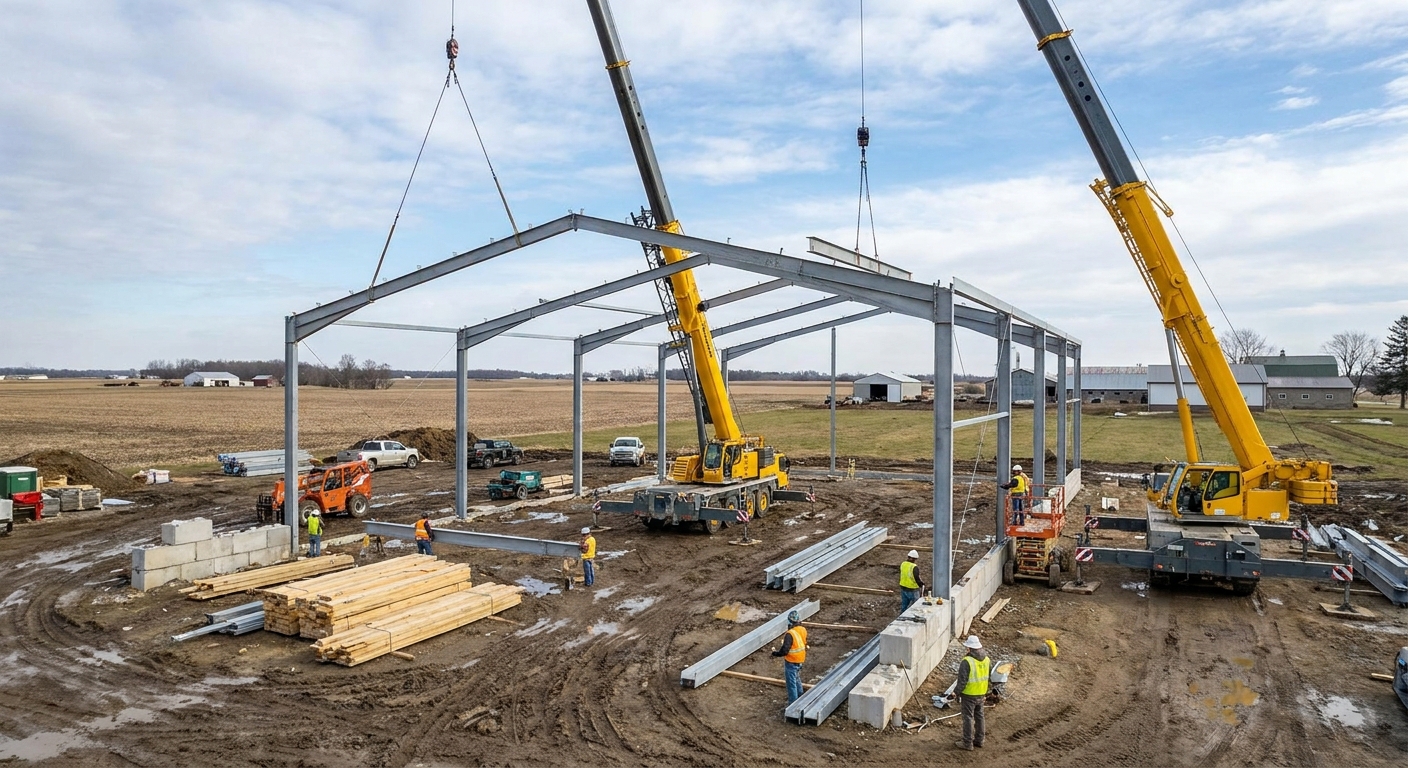
The clear-span capability of portal frames is essential for swine housing because it allows for an unobstructed floor plan that can be customized for any production phase. Unlike traditional buildings that require interior columns, portal frames support the roof load entirely through the exterior walls. This flexibility means you can reconfigure pen layouts as your herd size grows or your production goals shift.
How do you maximize clear-span interiors?
Using a portal frame design allows for widths of up to 30 meters or more without any internal pillars. This is the real secret: a column-free space allows for the seamless installation of automated feeding and cleaning lines.
- Flexibility: Move partitions easily between batches.
- Safety: No columns for pigs to injure themselves against.
Can these structures accommodate large equipment?
Modern farming requires heavy machinery for feeding and waste management, and portal frames provide the necessary height and width. You can install large rolling doors that allow tractors to enter directly for deep cleaning or maintenance.
Key Takeaway: Clear-span designs provide the future-proof flexibility needed for evolving agricultural technology.
| Span Type | Max Width | Best Use Case | |
|---|---|---|---|
| Clear Span | Up to 60m | Large-scale finishing | |
| Multi-Span | Unlimited | Breeding complexes | |
| Custom Height | Variable | Specialized ventilation |
By removing internal obstacles, you create a safer and more efficient workflow for both staff and animals.
How to manage airflow in swine housing?
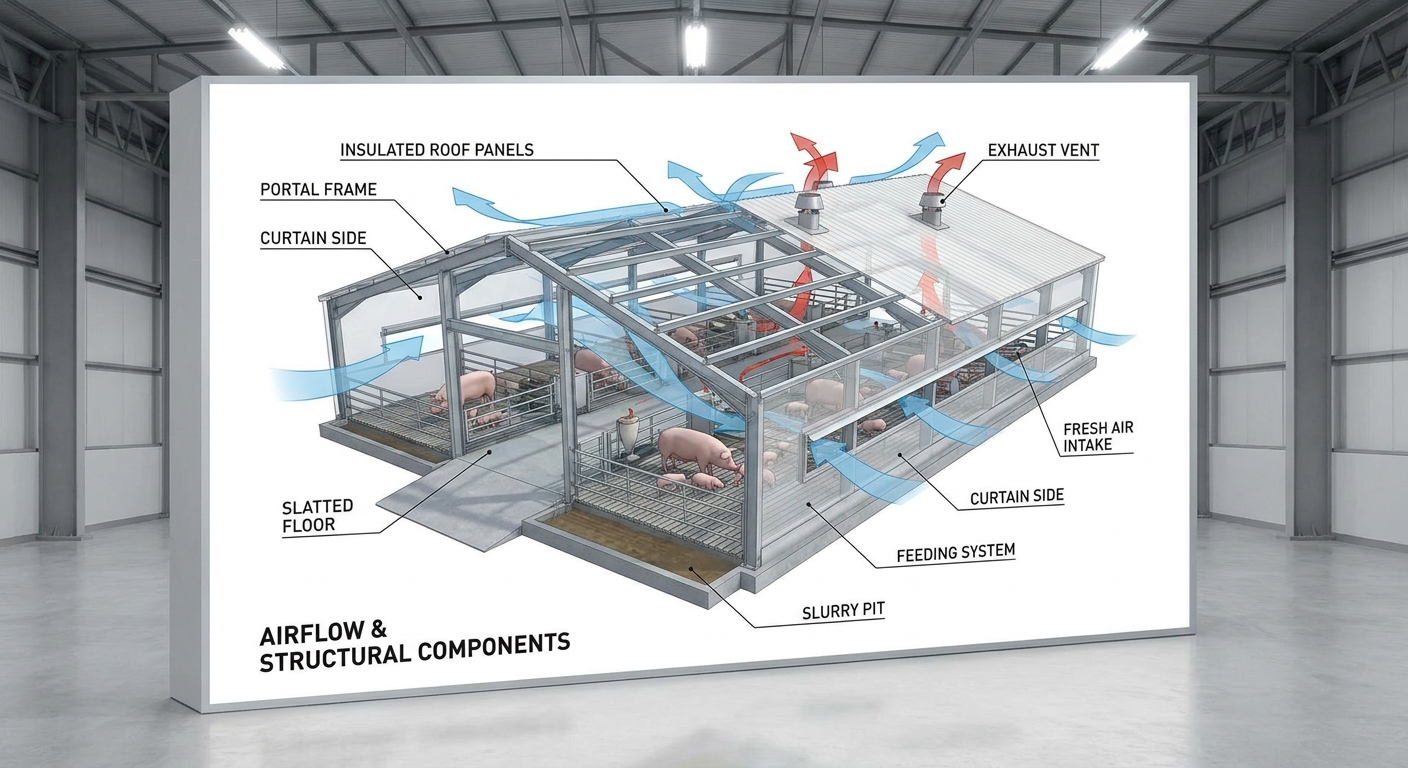
Integrating advanced mechanical ventilation into your swine housing is critical for removing harmful ammonia, carbon dioxide, and excess moisture from the air. Portal steel frames are designed with specialized roof pitches and wall openings that facilitate either natural or forced-air cooling. Maintaining a constant flow of fresh air is the most effective way to prevent the spread of airborne pathogens.
What goes into portal frame ventilation design?
The design often includes ridge vents and side curtains that can be adjusted based on the weather. Believe it or not, a well-ventilated steel building can stay significantly cooler than a concrete structure in high summer.
- Side Curtains: Allow for massive natural airflow on mild days.
- Exhaust Fans: Pull stale air out of the building efficiently.
Which automated climate control tools are best?
Modern systems use sensors to adjust fan speed and curtain height automatically based on real-time temperature readings. This ensures that your pigs remain in their “thermal neutral zone,” where they convert feed into growth most efficiently.
Key Takeaway: Automated ventilation systems in steel buildings ensure consistent air quality regardless of outside conditions.
| Ventilation Component | Function | Benefit | |
|---|---|---|---|
| Ridge Vents | Heat escape | Lower cooling costs | |
| Mist Systems | Evaporative cooling | Reduced heat stress | |
| Sensors | Real-time monitoring | Precise environment |
A data-driven approach to airflow management directly results in lower mortality rates and higher average daily gains.
What flooring is ideal for swine housing?
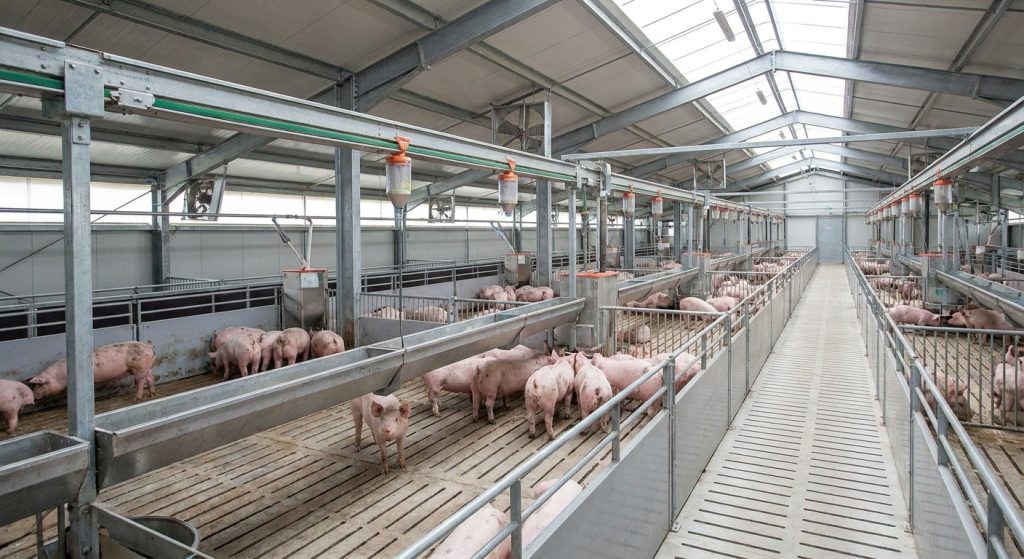
Slotted concrete or plastic flooring is the gold standard for swine housing because it allows waste to fall immediately into a slurry pit, keeping the pigs dry and clean. The portal frame’s foundation is typically designed to incorporate these pits, ensuring structural stability while managing large volumes of waste. This separation of the animal from its excrement is the single most important factor in reducing bacterial infections.
What are the slotted concrete floor benefits?
Concrete slats are durable enough to withstand the weight of heavy sows while providing the traction necessary to prevent slips. Here is the kicker: the spacing between slats is carefully calculated to be safe for hooves but large enough for waste.
- Sanitation: Floors stay dry, discouraging fly breeding.
- Labor Saving: Dramatically reduces the time spent manually shoveling manure.
How do you manage waste and drainage?
The pits beneath the flooring should have a 2% slope toward a central collection point. This allows for easy periodic flushing, ensuring that ammonia levels within the building remain within safe limits for both humans and pigs.
Key Takeaway: Professional flooring systems integrated with steel frames create a self-cleaning environment that protects herd health.
| Floor Material | Best For | Key Advantage | |
|---|---|---|---|
| Concrete Slats | Fattening/Sows | Durability & Grip | |
| Plastic Slats | Piglets/Nursery | Warmth & Comfort | |
| Cast Iron | Farrowing | Cooling & Strength |
Choosing the right flooring for each production stage is essential for minimizing limb injuries and maximizing growth.
Secure Your Project Timeline Now
Email:sales@showhoo.com.cn
Phone/WhatsApp:+86 186 7895 5927
How to calculate space in swine housing?
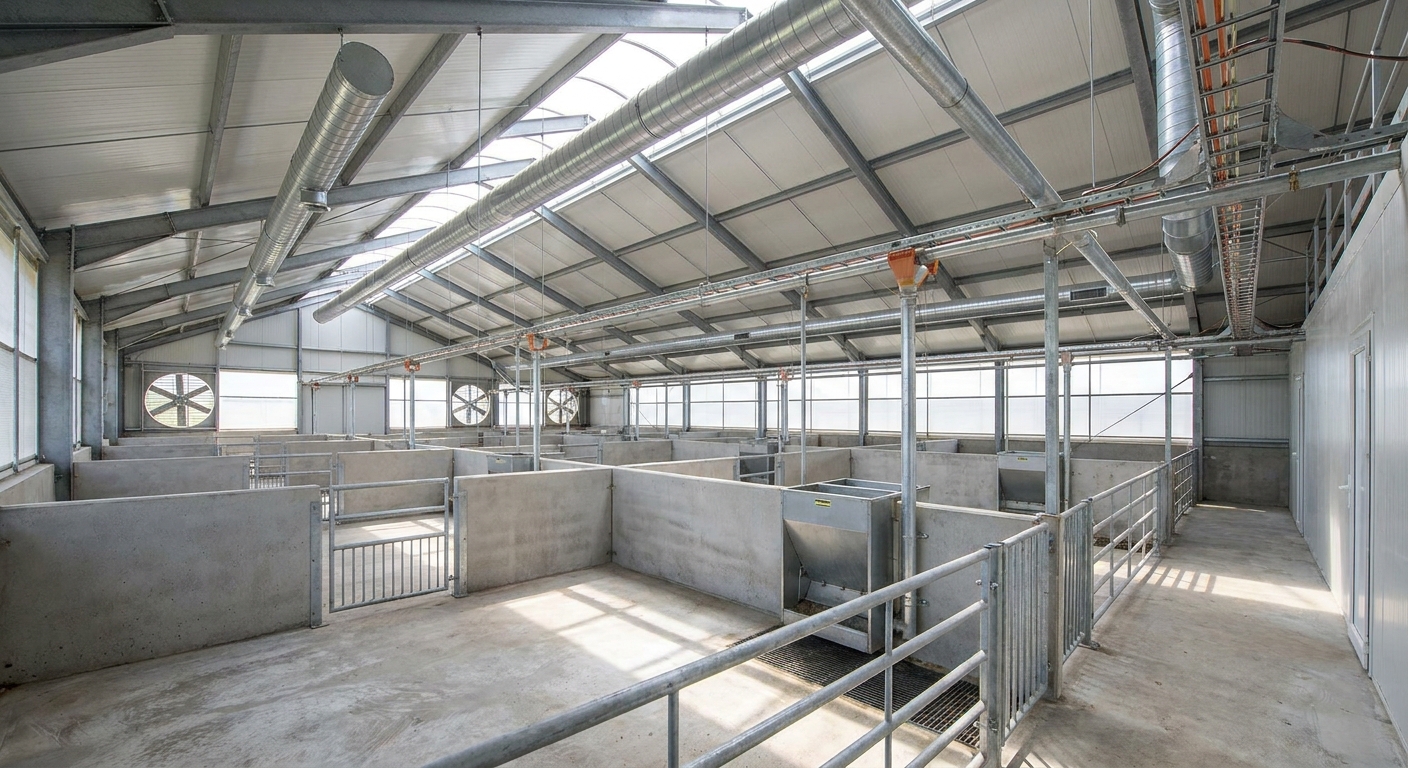
Calculating the correct stocking density for swine housing is vital to prevent stress-induced aggression and ensure that every animal has access to feed and water. Portal frame buildings make this calculation easier by providing clear, measurable square footage that is not interrupted by structural supports. Overcrowding leads to poor air quality and increased competition, which invariably lowers your overall farm productivity.
What are the requirements for fattening pigs?
Fattening pigs generally require between 0.5 to 1.0 square meters each, depending on their final weight targets. You must balance the need for efficiency with the physical space pigs need to lie down and move comfortably.
- Pen Size: Standard pens are often 3m x 3m for groups.
- Feeding Space: Ensure every pig can reach the feeder simultaneously if limit-feeding.
Which pen size configurations are optimal?
Using the clear-span interior, you can set up long rows of pens with central or side aisles for easy inspection. Think about it: a well-organized layout reduces the time your staff spends moving animals by up to 30%.
Key Takeaway: Strategic space allocation prevents behavioral issues and ensures uniform growth across the herd.
| Pig Category | Space Required (sqm) | Model Configuration | |
|---|---|---|---|
| Weaners | 0.3 – 0.5 | Small group nursery | |
| Fatteners | 0.5 – 1.0 | Group pens | |
| Pregnant Sows | 1.5 – 2.0 | Individual or small group |
Precise space management allows you to accurately predict feed requirements and market timelines.
How does insulation affect swine housing?
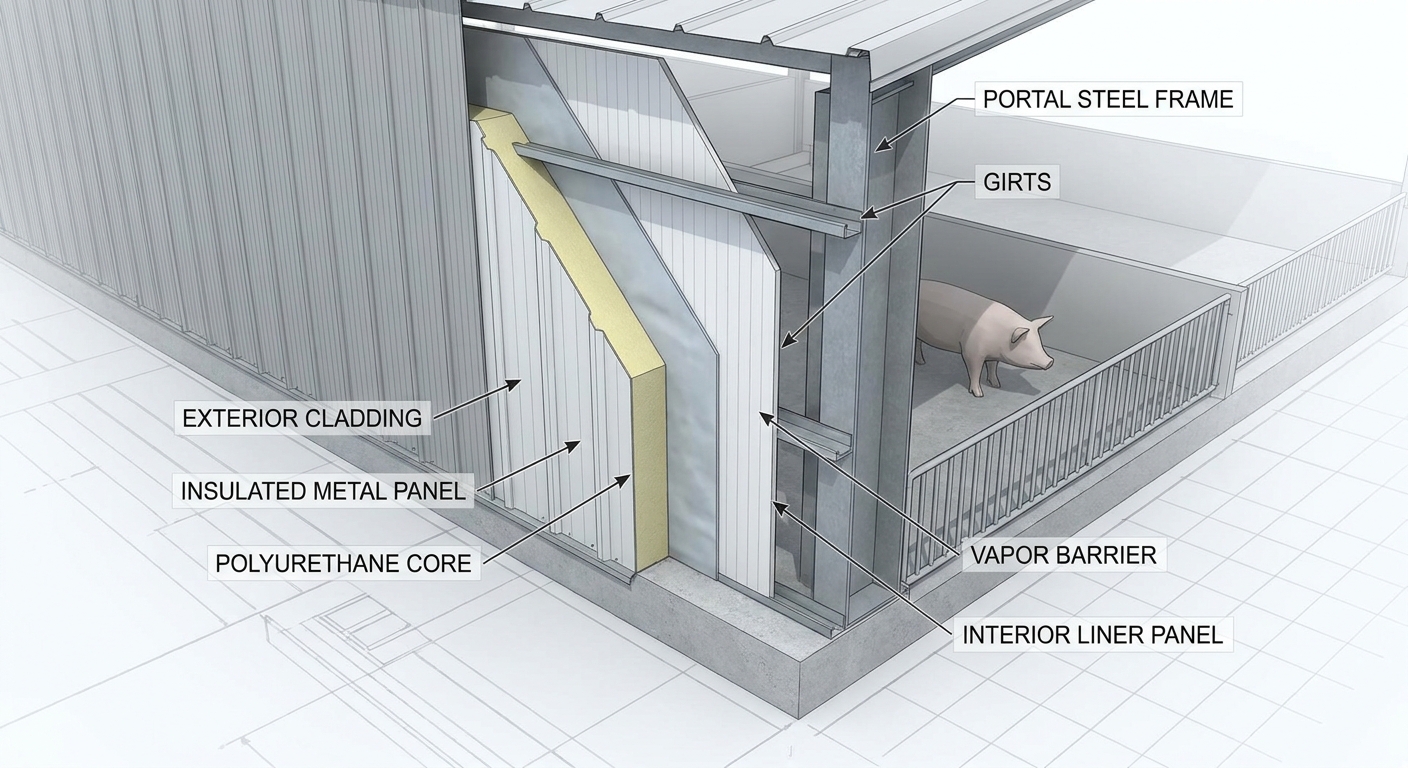
Proper insulation is essential in swine housing to maintain a stable internal temperature and prevent the extreme thermal fluctuations that cause respiratory disease. Our steel structures utilize high-performance sandwich panels for the roof and walls, which provide an airtight seal and superior thermal resistance. In cold climates, this keeps the pigs’ metabolic heat inside, while in hot climates, it reflects solar radiation away from the building.
Why use sandwich panel roofing?
Sandwich panels consist of a thick foam core bonded between two steel sheets, providing structural strength and insulation in one unit. This is the real secret: high-quality insulation can reduce your energy costs for supplemental heating by up to 40%.
- Vapor Barrier: Prevents condensation from dripping on the pigs.
- Energy Savings: Keeps the environment stable without overworking fans.
How does this reduce thermal fluctuations?
Rapid temperature changes are a major stressor that can trigger outbreaks of PRRS or Swine Flu. Insulation acts as a thermal buffer, ensuring that the transition between day and night temperatures is gradual and safe.
Key Takeaway: High-R-value insulation is a primary defense against environmental stress and rising energy costs.
| Insulation Material | R-Value | Durability | |
|---|---|---|---|
| PUR Sandwich Panel | High | Excellent (Sealed) | |
| Fiberglass Batts | Medium | Low (Moisture risk) | |
| Spray Foam | Variable | Moderate |
Investing in a well-insulated shell pays for itself through improved feed conversion ratios and lower veterinary bills.
How to maintain hygiene in swine housing?
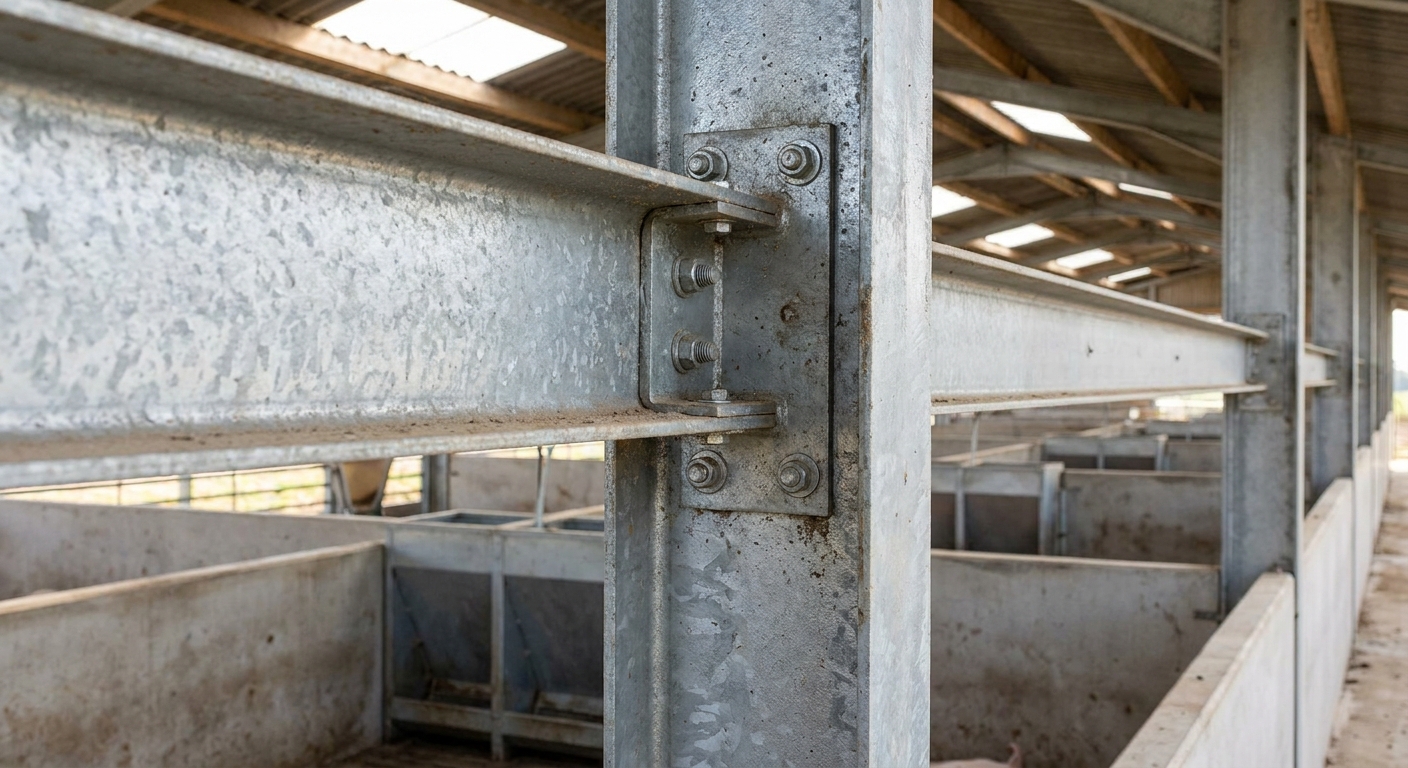
Maintaining a sterile environment is much simpler in swine housing built with hot-dip galvanized steel because the surfaces are non-porous and resistant to harsh disinfectants. Traditional materials like wood absorb bacteria and viruses, making them nearly impossible to fully sanitize between batches. Steel surfaces can be high-pressure washed and chemically treated without degrading, ensuring a truly “all-in, all-out” production cycle.
Why are non-porous steel surfaces better?
Bacteria like Salmonella and E. coli struggle to survive on smooth, dry steel compared to rough, damp wood. Think about it: every hour saved on cleaning is an hour you can spend on herd management.
- Washability: Water beads off galvanized steel, allowing for fast drying.
- Chemical Resistance: Steel withstands the acidic nature of swine waste.
What are the efficient manure disposal paths?
Our designs incorporate integrated drainage channels that lead directly from the pens to external storage lagoons. This ensures that raw waste never lingers near the animals, keeping the air fresh and the risk of infection low.
Key Takeaway: Non-porous materials are the backbone of a modern biosecurity protocol.
| Material | Porosity | Sanitization Ease | |
|---|---|---|---|
| Galvanized Steel | Zero | Very Easy | |
| Concrete (Sealed) | Low | Easy | |
| Timber | High | Very Difficult |
A hygienic building doesn’t just look better; it significantly reduces the need for antibiotics and other medical interventions.
Secure Your Project Timeline Now
Email:sales@showhoo.com.cn
Phone/WhatsApp:+86 186 7895 5927
How to design multi-phase swine housing?
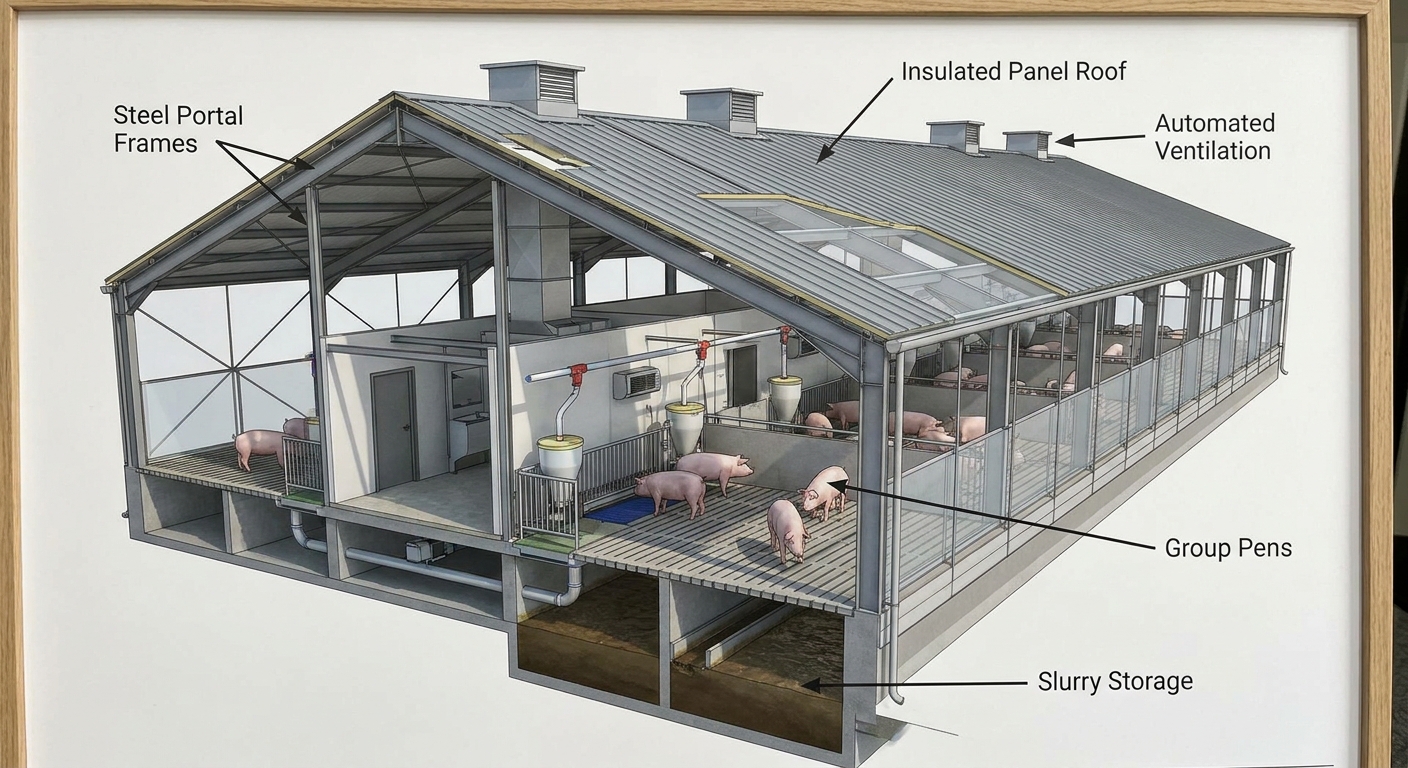
Designing a multi-phase facility allows you to manage the entire lifecycle from farrowing to finishing within a single, integrated swine housing complex. Portal frames allow for internal partitions that create distinct micro-climates for different age groups under one roof. This “closed loop” system minimizes the stress of transporting pigs and reduces the risk of introducing external pathogens into the herd.
How should farrowing and nursery layouts look?
Farrowing areas require extra heat for piglets and cooling for the sow, which can be achieved through localized heating pads and specialized ventilation zones.
- Creep Areas: Small, heated boxes where piglets stay warm.
- Nursery Pens: Transition spaces with high-quality flooring and easy-access feeders.
What about breeding and gestation areas?
These zones need robust partitions to manage the weight and strength of mature boars and sows. Here is the kicker: individual gestation stalls or group pens can be easily swapped if your welfare standards change.
Key Takeaway: Integrated lifecycle housing improves efficiency and reduces the biosecurity risks associated with moving livestock.
| Phase | Temp Requirement | Space Requirement | |
|---|---|---|---|
| Farrowing | 22°C (Sow) / 32°C (Piglet) | 4 – 6 sqm / sow | |
| Nursery | 24°C – 30°C | 0.3 sqm / piglet | |
| Finishing | 18°C – 22°C | 0.7 – 1.0 sqm / pig |
Modern portal frames provide the modularity needed to run a complex, multi-stage operation with minimal logistical friction.
Why is durability vital for swine housing?
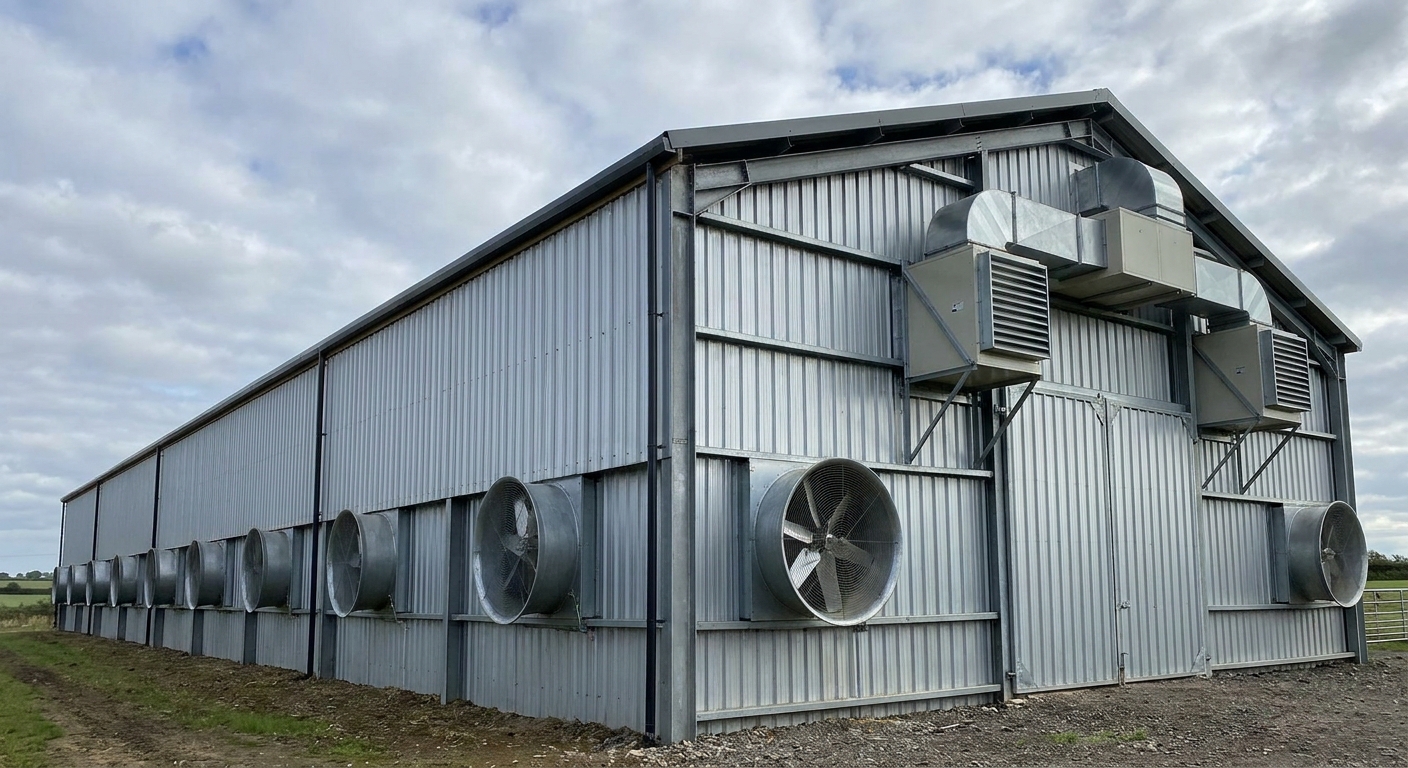
Durability is the most important factor in swine housing because the internal environment is one of the most corrosive in any industry due to ammonia and high humidity. Our portal frames are treated with advanced anti-corrosion coatings, such as hot-dip galvanization, which provide a protective barrier for decades. A building that fails structurally after ten years is a financial disaster; our steel solutions are designed to outlast the equipment inside them.
Why choose corrosion-resistant steel frames?
Unprotected steel would rust quickly in a barn, but galvanized steel undergoes a chemical reaction that creates a sacrificial layer of zinc. Believe it or not, even if the surface is scratched, the surrounding zinc will protect the underlying steel.
- Longevity: Expected structural life of 50 years or more.
- Reliability: No sagging roofs or warping walls over time.
How do you minimize structural maintenance?
By using bolt-together steel components, you eliminate the weak points often found in welded or wooden joints. Periodic inspections and simple wash-downs are all that is required to keep the structure in peak condition.
Key Takeaway: High-spec steel finishes ensure that your infrastructure remains a valuable asset, not a liability.
| Damage Type | Steel Resistance | Wooden Barn Impact | |
|---|---|---|---|
| Ammonia Corrosion | High (with coating) | Severe Rot | |
| UV Exposure | Immune | Brittle/Warping | |
| Impact | High | Structural Splitting |
Choosing the right material from day one is the only way to avoid the cycle of constant, expensive agricultural repairs.
Conclusion
At Showhoo Building, we understand that your farm is more than just a business—it is a legacy. We have solved the common problems of premature structural decay, poor biosecurity, and high energy costs by perfecting the portal steel frame for the modern producer. Whether you are expanding a commercial finishing operation or building a new farrowing facility, we provide the engineering expertise and high-quality materials to ensure your success.
Our vision is to empower global agriculture with infrastructure that is as resilient as the farmers who use it. We are committed to sustainability, efficiency, and the welfare of your livestock. Let us help you build a facility that maximizes your yield and protects your bottom line for generations to come.
Contact us today to receive a customized quote and start planning your next-generation farm.
Secure Your Project Timeline Now
Email:sales@showhoo.com.cn
Phone/WhatsApp:+86 186 7895 5927
FAQ
How do I know if a portal steel frame is right for my climate?
It is likely the best choice because we engineer every building to meet or exceed local codes for wind, snow, and seismic activity. Our experts analyze your local weather data to recommend the specific insulation and coating thicknesses needed for your region.
What’s the best way to handle ammonia buildup in a steel barn?
A combination of high-efficiency mechanical ventilation and regular flushing of the slurry pits is the most effective method. Because our steel surfaces are non-porous, they do not “hold” the smell of ammonia, making ventilation much more effective than in older wooden structures.
Can I expand my swine housing facility in the future?
Yes, because portal frames use a modular design that allows for easy extensions. You can simply add more frame sections to the end of your existing building without compromising the structural integrity of the original barn.
What’s the best flooring for a breeding sow?
Slotted concrete is the preferred option because it provides the necessary strength to support a 250kg animal while offering excellent grip. The slats allow the sow to stay clean, which is vital for preventing udder infections and ensuring the health of the piglets.
Can I install solar panels on the roof of a portal frame building?
Absolutely, as we can engineer the portal frames with the specific load-bearing capacity required for solar arrays. This is an excellent way to offset the energy costs of your fans and lighting, further increasing your farm’s profitability.