
The correct size for a standard horse stall is 12×12 feet, though larger breeds and specific uses like foaling require expanded dimensions. You likely understand the frustration of designing a facility only to realize the interior dimensions don’t support your animals’ natural movements. Choosing inadequate horse stall sizes often leads to “stall-walking,” hock sores, and chronic respiratory stress due to poor air volume. Imagine a high-value Warmblood trying to lie down for vital REM sleep, only to get “cast” against a wall because the turning radius was too tight. By planning your horse barn with optimized horse stall sizes, you ensure the safety of your equine partners and the long-term functional value of your steel structure.
1. What are standard horse stall sizes for most horses?
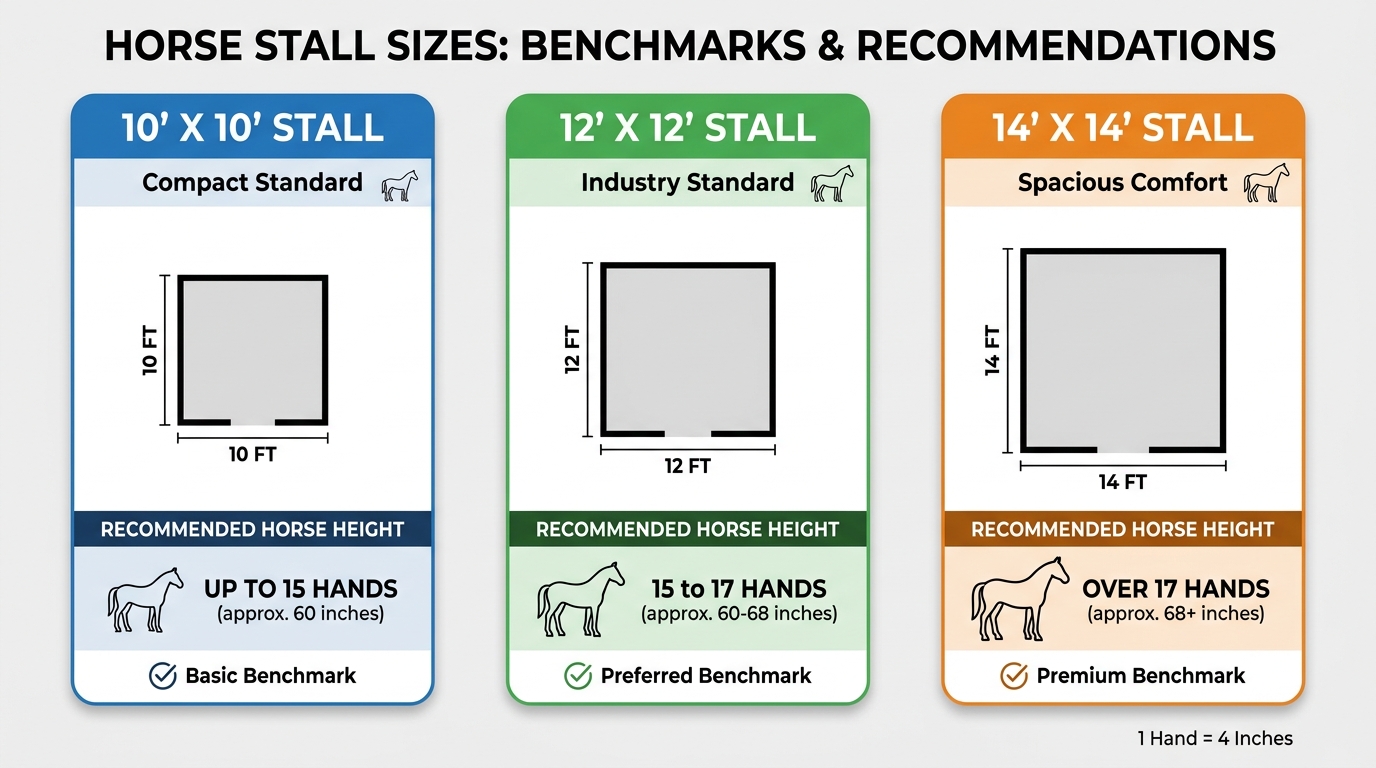
The industry benchmark for a standard riding horse is a 12′ x 12′ enclosure. Determining the right horse stall sizes involves balancing the physical needs of a 1,200-pound animal with the architectural efficiency of your building.
Why is 12×12 the industry standard?
This dimension provides approximately 144 square feet of movement, which is the “sweet spot” for most breeds between 15 and 16 hands. It allows enough space for a horse to turn around without touching the walls and to lie down comfortably.
Consider this: Standardization simplifies everything from construction to daily maintenance.
- Fits standard 4-foot sliding door kits.
- Matches standard rubber matting dimensions.
- Streamlines bedding volume calculations.
Is square footage the only metric?
While floor space is critical, the layout must also accommodate feeding systems and waterers without encroaching on the horse’s rest area. A narrow stall might have the same square footage but limit the horse’s ability to roll safely.
Here is why: Geometry impacts how a horse utilizes the space provided.
- 12×12 promotes a natural “flight” circle.
- Square shapes prevent horses from getting trapped in narrow corners.
- It provides ample room for wall-mounted hay racks.
| Stall Dimension | Ideal Horse Height | Square Footage | |
|---|---|---|---|
| 10′ x 10′ | Under 14.2 hands | 100 sq. ft. | |
| 12′ x 12′ | 15 – 16.2 hands | 144 sq. ft. | |
| 12′ x 14′ | 16.2 – 17.2 hands | 168 sq. ft. |
Key Takeaway: Adhering to the 12′ x 12′ standard ensures your facility is versatile enough to house the majority of riding horse breeds safely.
2. Do draft breeds need specific horse stall sizes?
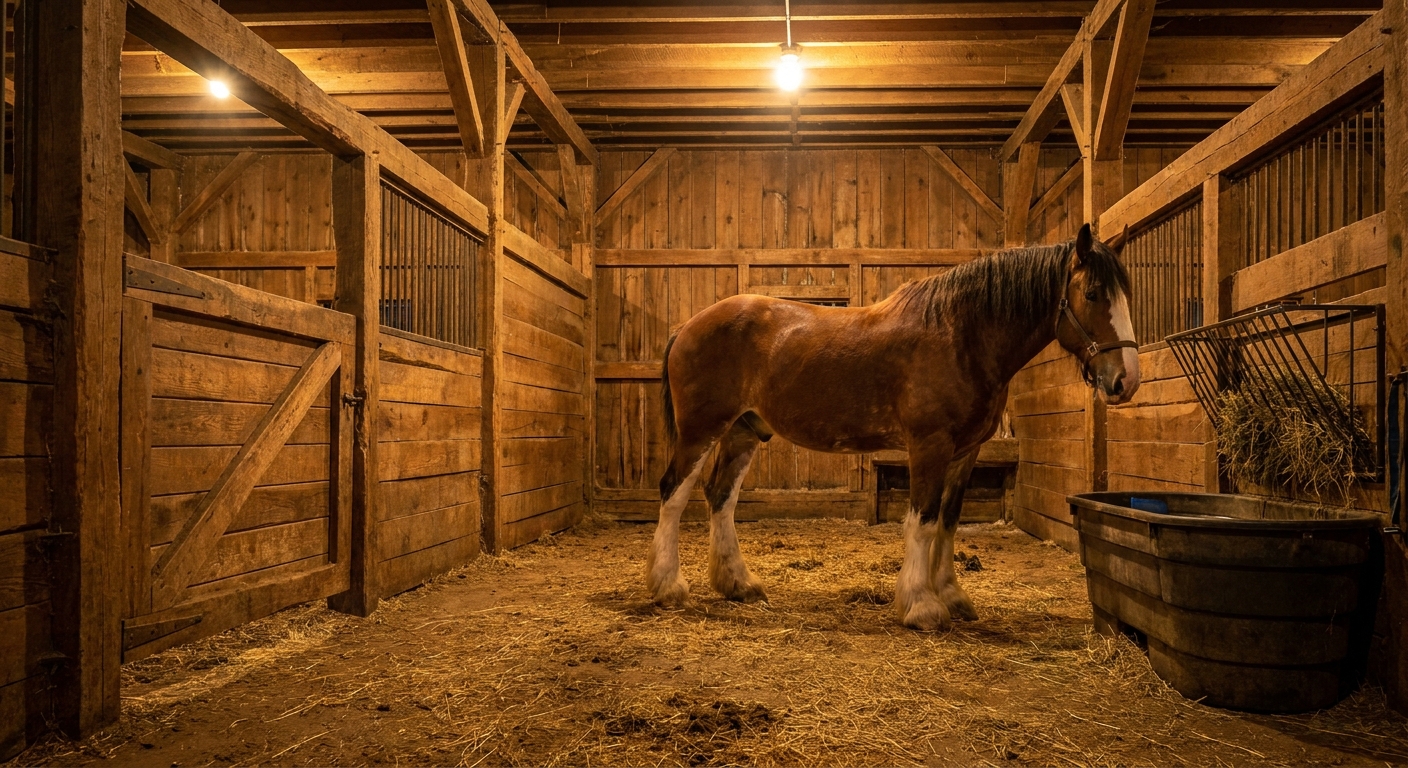
Draft horses typically require a minimum of 14′ x 14′ to accommodate their massive frames and wider turning radii. Choosing larger horse stall sizes for heavy breeds prevents structural damage to your partitions and reduces the risk of joint injuries.
How do you accommodate the “heavy hitters”?
A 2,000-pound Shire or Clydesdale exerts significantly more force on stall walls than a lighter riding horse. If the dimensions are too tight, the horse will constantly rub against the partitions, leading to hardware failure.
Believe it or not: Drafts need 50% more space to feel as comfortable as a Quarter Horse in a standard stall.
- 14′ x 14′ is the absolute minimum recommendation.
- 16′ x 16′ is preferred for permanent draft housing.
- Requires reinforced steel framing to handle the weight.
What are the safety clearances for giants?
Draft horses have much wider hips and shoulders, meaning doorways must be adjusted alongside the interior footprint. Standard 4-foot doors are often too narrow, leading to “hip-knocking” as the horse enters or exits.
The reality is this: Wider access points are just as important as the interior square footage.
- Install 5′ to 6′ wide sliding doors.
- Use heavy-duty track systems for larger door panels.
- Ensure partition height prevents “peeking” over the top.
| Breed Type | Recommended Stall Size | Door Width | |
|---|---|---|---|
| Percheron / Shire | 14′ x 14′ to 16′ x 16′ | 60″ – 72″ | |
| Large Warmbloods | 12′ x 14′ | 48″ – 60″ | |
| Standard Draft | 14′ x 14′ | 60″ |
Key Takeaway: Oversizing stalls for draft breeds is a critical safety measure that protects both the animal’s physical health and the structural integrity of your barn.
3. Which horse stall sizes are best for ponies?
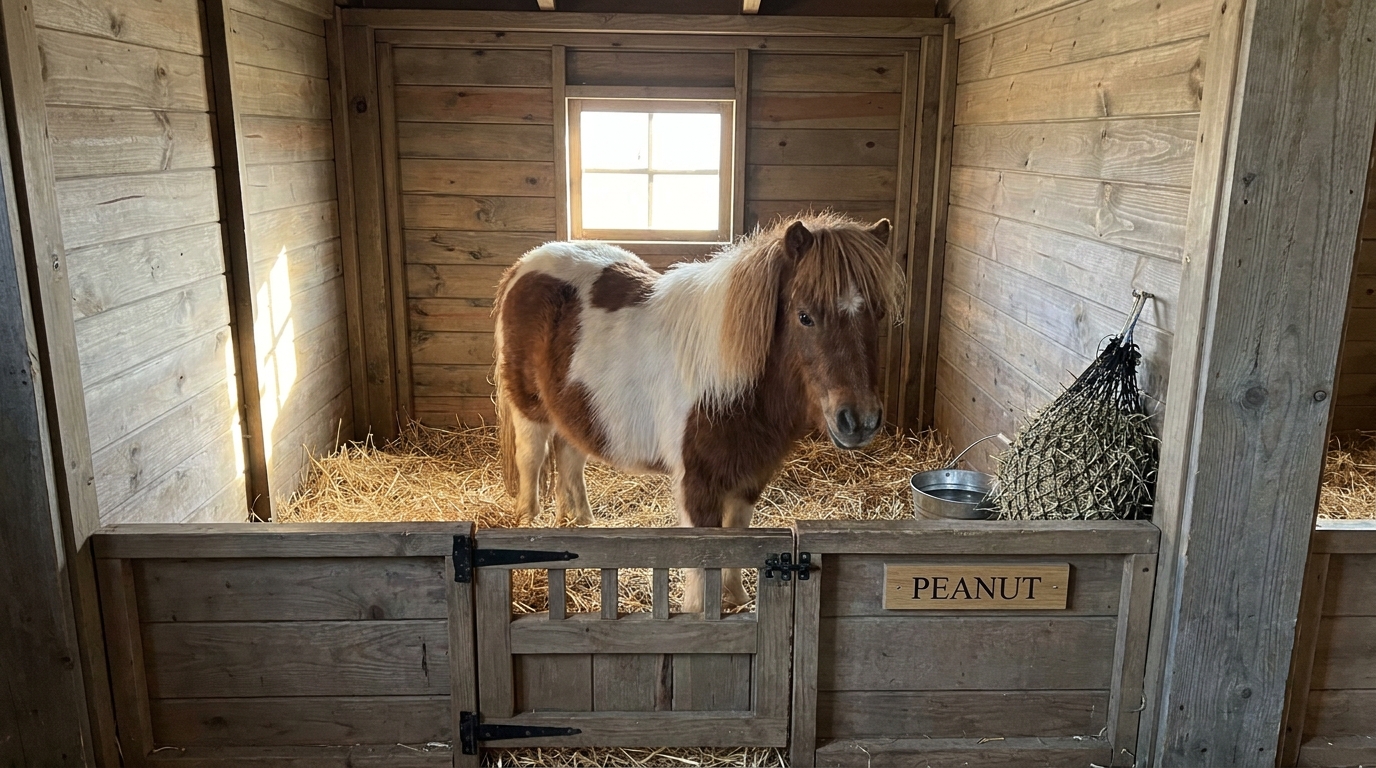
Ponies can thrive in smaller 10′ x 10′ stalls, which allows you to maximize the density of your barn layout. While they can use standard horse stall sizes, scaling down can reduce bedding costs and labor requirements significantly.
Is it efficient to scale down for ponies?
Using a 12×12 for a 10-hand Shetland often results in “dead space” that simply accumulates more manure and requires more bedding. A more compact footprint is often easier to keep clean for smaller equines.
Here is the secret: You can fit more animals in the same building footprint by tailoring dimensions.
- 10′ x 10′ is ideal for most pony breeds.
- 8′ x 10′ works well for smaller Shetlands.
- Lowered hay feeders match their shorter stature.
What height considerations apply to minis?
Miniature horses don’t just need less floor space; they need lower visibility bars to avoid feeling isolated. If the solid portion of the stall wall is too high, the mini cannot see out, which increases anxiety and stress.
But that’s not all. Partition design must change along with the footprint.
- Lower the solid wall height to 3 or 3.5 feet.
- Use mesh or vertical bars with smaller spacing.
- Ensure door latches are reachable for handlers but “pony-proof.”
| Pony Type | Compact Stall Size | Partition Height | |
|---|---|---|---|
| Mini Horse | 8′ x 8′ or 8′ x 10′ | 3.5′ | |
| Small Pony | 10′ x 10′ | 4′ | |
| Large Pony | 10′ x 12′ | 4.5′ |
Key Takeaway: Customizing smaller stalls for ponies optimizes your barn’s efficiency and improves the social well-being of smaller equines by providing better visibility.
Request Your Custom Steel Structure Design on WhatsApp
Email:sales@showhoo.com.cn
Phone/WhatsApp: +86 186 7895 5927
4. Why do mares need larger horse stall sizes?
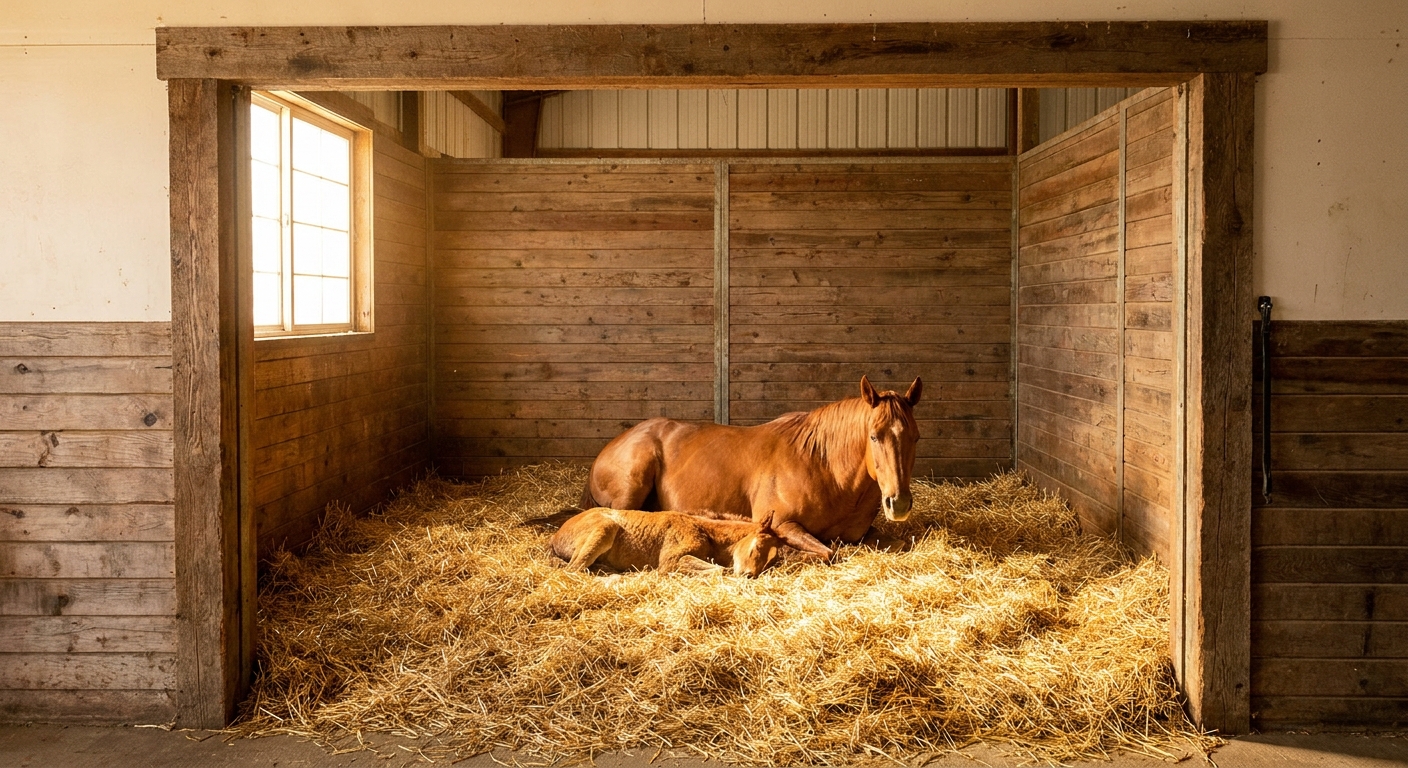
Foaling mares require “double stalls,” typically 12′ x 24′, to provide a safe nursery environment for both the horse and the handlers. Utilizing convertible horse stall sizes allows you to use the space for standard boarding when foaling season ends.
How do you create a safe nursery?
A foaling stall must be large enough for the mare to circle during labor and for a vet to stand safely during the delivery. In a standard stall, the risk of a foal being stepped on or a human being pinned against a wall is unacceptably high.
Think about it: Space is your primary safety tool during the birthing process.
- Provides 288 square feet of unobstructed area.
- Allows the foal to learn to walk without hitting walls.
- Facilitates “safe zones” for veterinary staff.
Is the moveable partition solution effective?
Many modern steel barns utilize swinging or removable partitions between two standard 12×12 stalls. This flexibility means you don’t have a massive, empty stall for half of the year.
The best part? You get the benefits of a nursery without losing permanent boarding capacity.
- Pull a pin to convert two stalls into one.
- Solid bottom boards prevent the foal from getting stuck.
- Seamless wall transitions minimize injury risks.
| Stall Usage | Recommended Size | Primary Feature | |
|---|---|---|---|
| Standard Mare | 12′ x 12′ | Solid Partition | |
| Active Foaling | 12′ x 24′ | No Center Wall | |
| Mare & Foal | 14′ x 14′ | Extra Deep |
Key Takeaway: Implementing foaling-specific dimensions is non-negotiable for breeders to ensure the survival and health of both the mare and the newborn foal.
5. Do horse stall sizes affect animal health?
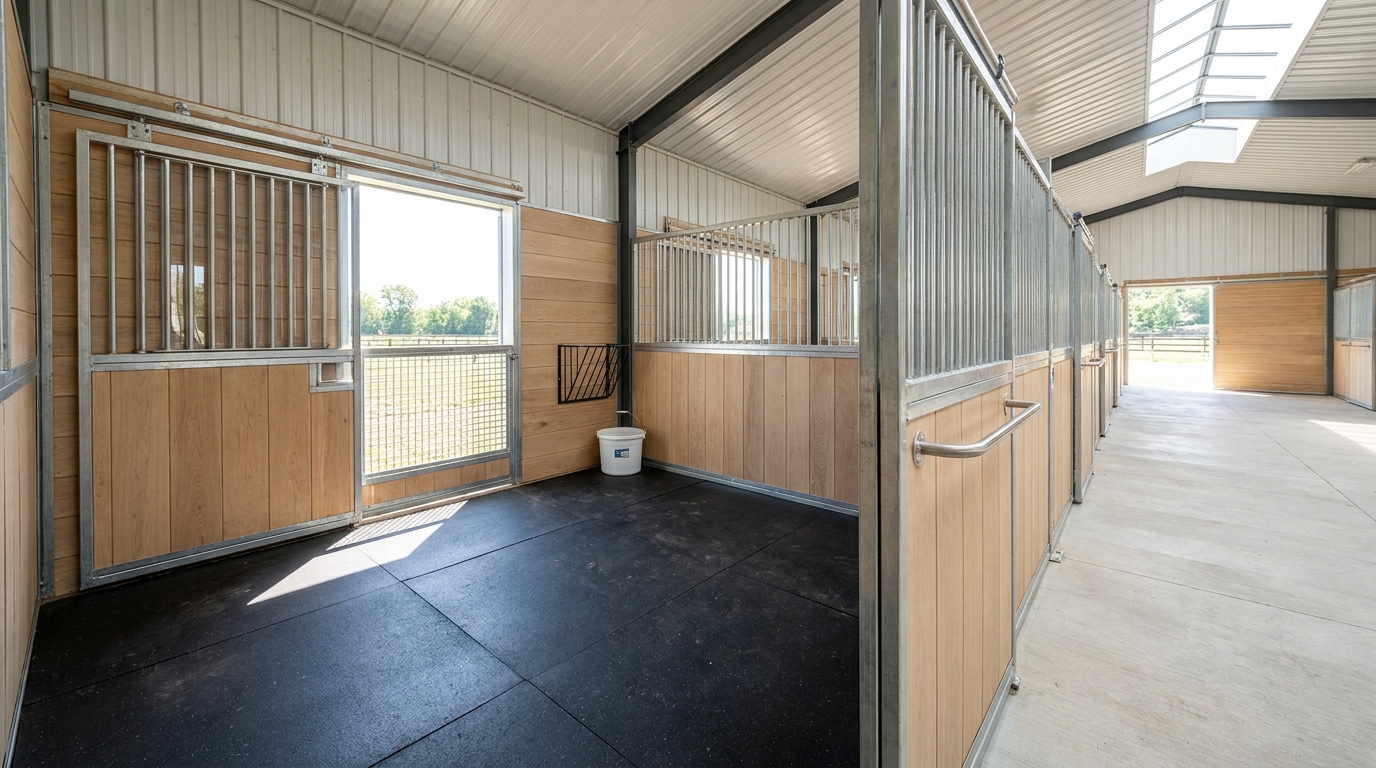
Larger horse stall sizes directly improve respiratory health by increasing the total volume of air available and reducing ammonia buildup. Small, cramped spaces trap dust and pathogens, which can lead to chronic Equine Asthma (Heaves) and other performance-limiting issues.
Are there respiratory benefits to volume?
It isn’t just about the floor; it’s about the “cube” of air the horse breathes. Larger stalls allow for better air circulation and prevent the concentration of urea-based gases near the floor where the horse sleeps.
In other words: Size acts as a natural filtration system for the animal’s lungs.
- Dilutes airborne pathogens and dust.
- Encourages natural convection currents.
- Reduces moisture buildup in bedding.
Can space prevent behavioral vices?
Horses are naturally nomadic, and being confined to a tiny space often triggers stress-related behaviors like “weaving” or “cribbing.” Increasing the stall dimensions gives the horse more room to move, which lowers cortisol levels and mental frustration.
Here is why: Movement is the best cure for barn-induced boredom.
- Discourages repetitive “stall-walking” patterns.
- Reduces “stocking up” in the legs due to inactivity.
- Improves the horse’s overall temperament and trainability.
| Health Factor | Impact of Small Stalls | Impact of Large Stalls | |
|---|---|---|---|
| Ammonia Level | High / Dangerous | Low / Safe | |
| Mental Stress | Risk of Vices | Calm Behavior | |
| Leg Circulation | Poor (Stocking Up) | Improved |
Key Takeaway: Investing in larger stall dimensions serves as a preventative healthcare strategy that reduces veterinary costs and extends the horse’s athletic career.
6. Can custom horse stall sizes improve barn flow?
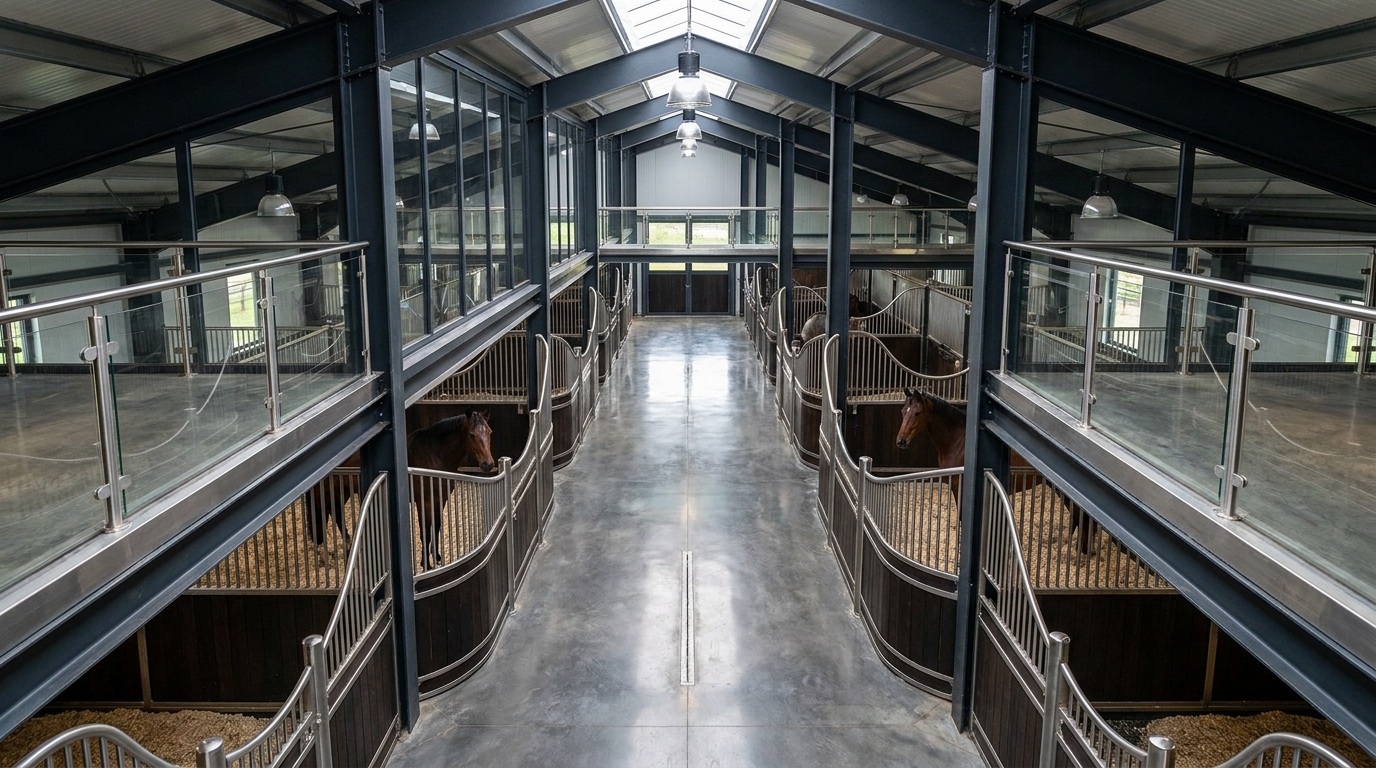
Customizing your horse stall sizes allows you to optimize aisle widths and cleaning workflows, as seen in many high-efficiency case studies . Smart geometry ensures that your barn isn’t just a housing unit, but a streamlined workplace for staff.
How does size impact cleaning efficiency?
If a stall is too small, a person with a wheelbarrow or a compact tractor will struggle to navigate the space. Designing stalls that accommodate mechanical cleaning tools can shave hours off your weekly labor schedule.
But wait, there’s more. Wider stalls often stay cleaner because horses establish distinct “toilet” areas.
- Allows for “corner-manure” habits to develop.
- Accommodates automated waterers in low-traffic spots.
- Enables the use of larger, more absorbent mats.
Does stall depth impact aisle width?
When you customize the depth of your stalls, you have more control over the “main artery” of your barn. An extra-wide aisle is often more valuable for safety and machinery access than an extra foot of stall length.
The reality is this: Your stall dimensions dictate the usability of the entire building.
- Wider aisles prevent “door-fighting” between neighbors.
- Allows two horses to pass safely in the corridor.
- Facilitates easy emergency egress for humans and animals.
| Design Strategy | Adjustment | Operational Gain | |
|---|---|---|---|
| Tractor Access | 10′ deep stalls | 14′ wide aisles | |
| Max Boarding | 12′ deep stalls | 10′ wide aisles | |
| Training Flow | 12′ x 12′ | Standardized rotation |
Key Takeaway: Customizing stall dimensions helps you balance individual animal comfort with the overall logistical efficiency of your facility management.
7. Are commercial horse stall sizes different?
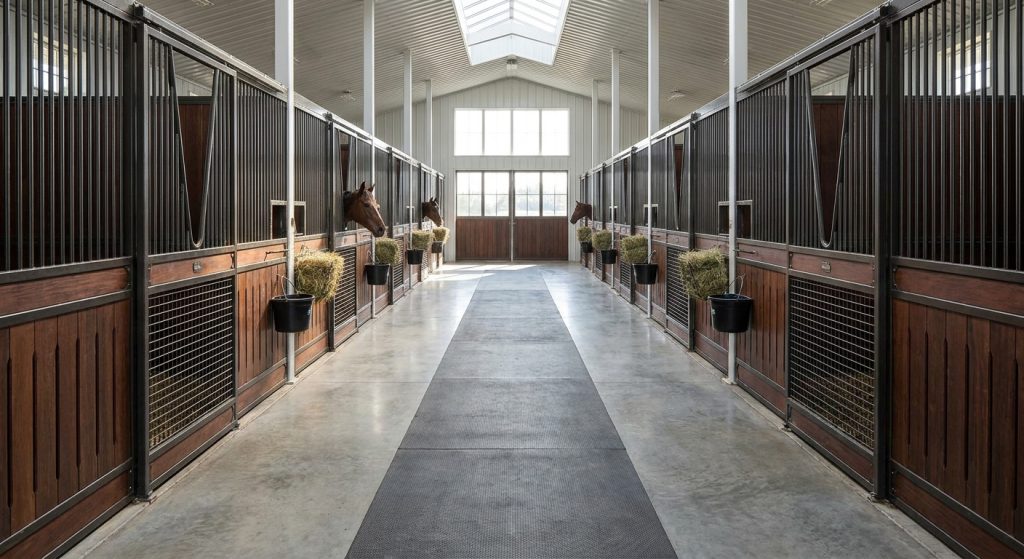
Commercial boarding facilities often prioritize 12′ x 12′ horse stall sizes to maintain maximum versatility for a rotating clientele of various breeds. Sticking to this standard ensures that any new boarder, from a Quarter Horse to a Warmblood, will fit safely in any open stall.
What is the boarding business model?
In a commercial setting, “heads in beds” is the primary revenue driver. However, offering “oversized” stalls (12×14 or 14×14) can be a major marketing advantage that allows you to charge premium monthly rates.
You might be wondering: How do you choose between density and luxury?
- Standard Stalls: 12×12 for high-volume boarding.
- Premium Stalls: 14×14 for elite show horses.
- Flex Stalls: Removable walls for foaling season.
Why is uniformity important for staff?
When every stall in a 20-stall barn is the same size, your maintenance routines become predictable. Staff don’t have to guess how much bedding is needed for a specific row, and equipment fits every unit perfectly.
The reality is this: Uniformity reduces the mental load and error rate for barn employees.
- Consistent cleaning times per unit.
- Universal fit for replacement parts and mats.
- Simpler inventory management for supplies.
| Stable Type | Standard Stall Size | Target Clientele | |
|---|---|---|---|
| Lesson Barn | 10′ x 12′ | Budget-conscious | |
| Boarding Barn | 12′ x 12′ | Mid-range owners | |
| Show Stable | 14′ x 14′ | High-end / Sport |
Key Takeaway: Commercial stables benefit from the 12′ x 12′ standard for its versatility, but “Premium” dimensions can significantly increase your boarding ROI.
8. How do materials impact horse stall sizes?
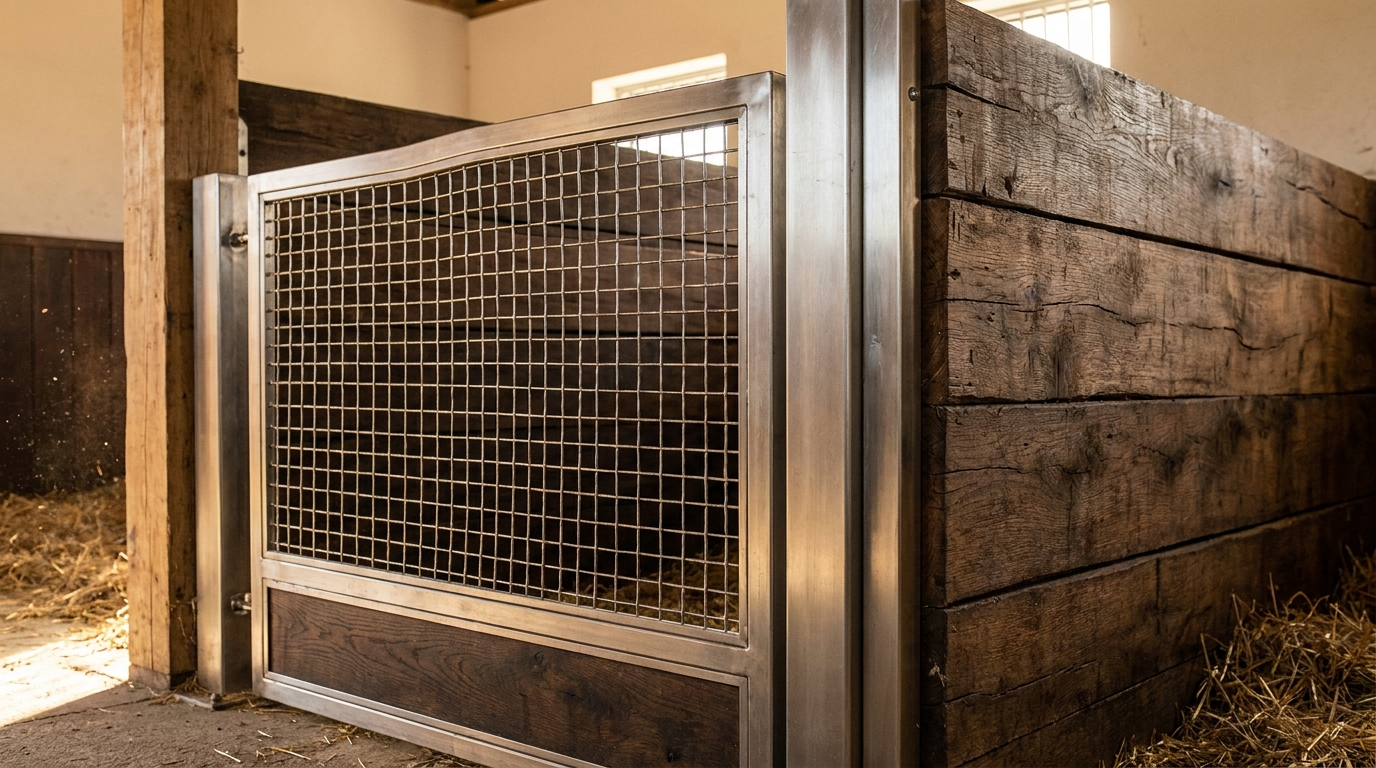
The thickness of your wall materials can “shrink” your effective interior horse stall sizes by several inches. When you learn more about us , you will see that steel-framed stalls offer a slimmer profile that maximizes usable square footage.
Steel vs. Wood: Which has a better footprint?
Traditional timber stalls often use heavy 4×4 or 6×6 posts that eat into the horse’s space. Modern steel partitions are much thinner while providing superior strength, giving the horse more room within the same building footprint.
Believe it or not: You can gain up to 6 inches of “hidden” space by switching to steel.
- Steel panels are only 2 inches thick.
- Wood walls can exceed 6 inches in thickness.
- Steel doesn’t warp or require bulky internal bracing.
Does structural integrity affect space?
A stall wall must withstand the kick of a 1,500-pound animal. If the material is weak, you have to build it thicker, which further reduces the horse’s internal living area and makes the barn feel more cramped.
Here is why: Strength-to-width ratio is a vital metric in barn design.
- High-tensile steel allows for “open-air” bar tops.
- Provides better visibility without sacrificing safety.
- Resists “chewing,” which maintains the stall’s dimensions over time.
| Material | Wall Thickness | Space Loss (Per Stall) | |
|---|---|---|---|
| Steel Frame | 2.0 inches | Negligible | |
| 2×6 Lumber | 5.5 inches | Moderate | |
| Cinder Block | 8.0 inches | Significant |
Key Takeaway: Choosing modern steel framing allows you to maximize the internal living space for your horses without increasing the overall size of your building.
9. Why does height matter for horse stall sizes?
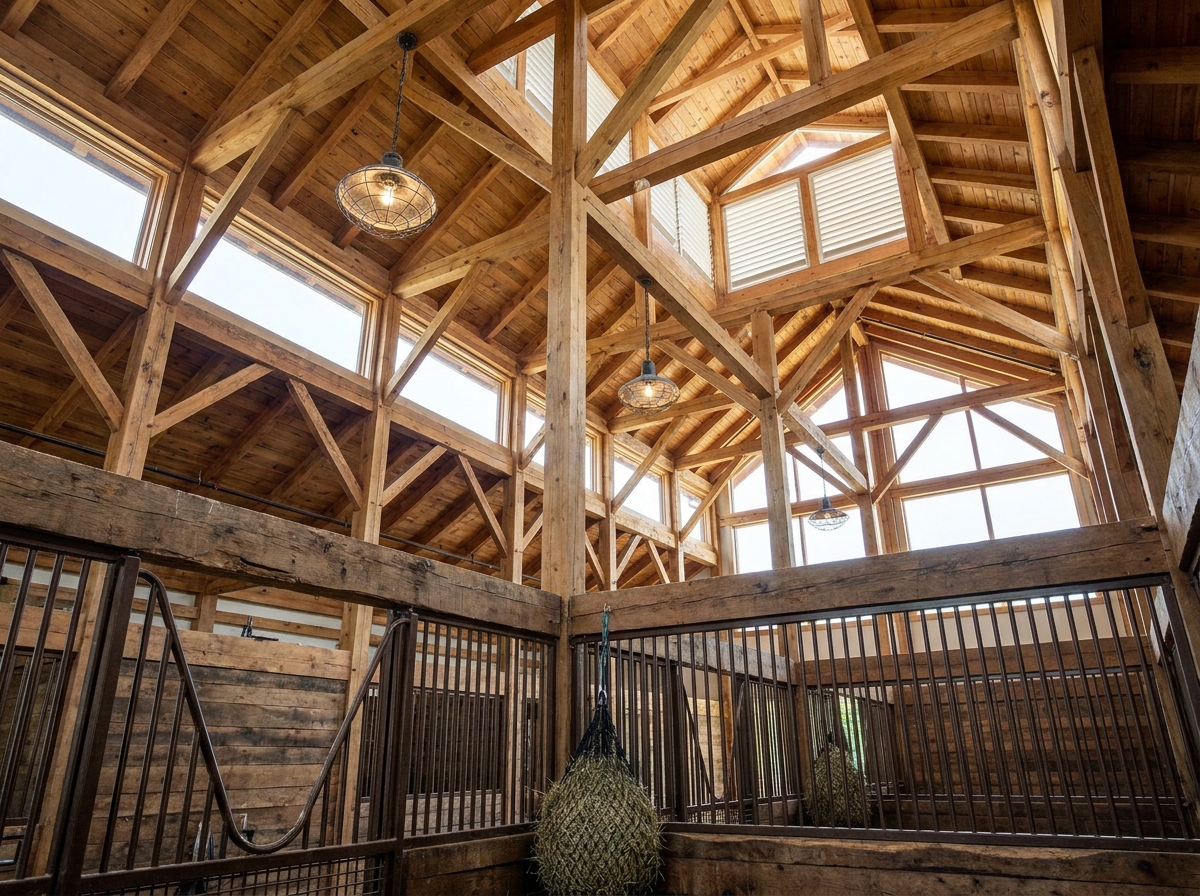
Vertical clearance is just as important as the horizontal horse stall sizes, with a minimum of 10 feet required for safety. If a horse rears in a stall with a low ceiling, they risk catastrophic head and neck injuries.
How do you avoid the “closed-in” effect?
A 12×12 stall with an 8-foot ceiling feels like a cave and traps heat and gases. Vaulted or high ceilings (12-14 feet) create a “chimney effect” that naturally pulls stale air up and out of the barn.
Keep this in mind: Height is the most overlooked safety dimension in equine facilities.
- 10 feet is the absolute minimum safe height.
- 12 feet is the standard for high-end sport barns.
- Prevents horses from hitting light fixtures.
Are there lighting safety considerations?
In a stall with a low ceiling, horses can easily reach or kick light fixtures. Increasing the vertical dimension allows you to place lights safely out of reach while providing more uniform illumination for grooming and vet checks.
The reality is this: Extra height provides a “buffer zone” for both the horse and electrical systems.
- Allows for recessed or caged lighting.
- Reduces the risk of fire from shattered bulbs.
- Facilitates better natural light through high windows.
| Ceiling Height | Safety Rating | Air Quality | |
|---|---|---|---|
| 8 Feet | Dangerous | Poor / Stagnant | |
| 10 Feet | Minimum Safe | Average | |
| 12+ Feet | Ideal / High-End | Excellent |
Key Takeaway: Never compromise on vertical clearance; a 10 to 12-foot ceiling is essential for preventing physical injury and ensuring adequate air exchange.
10. How to optimize small barn horse stall sizes?
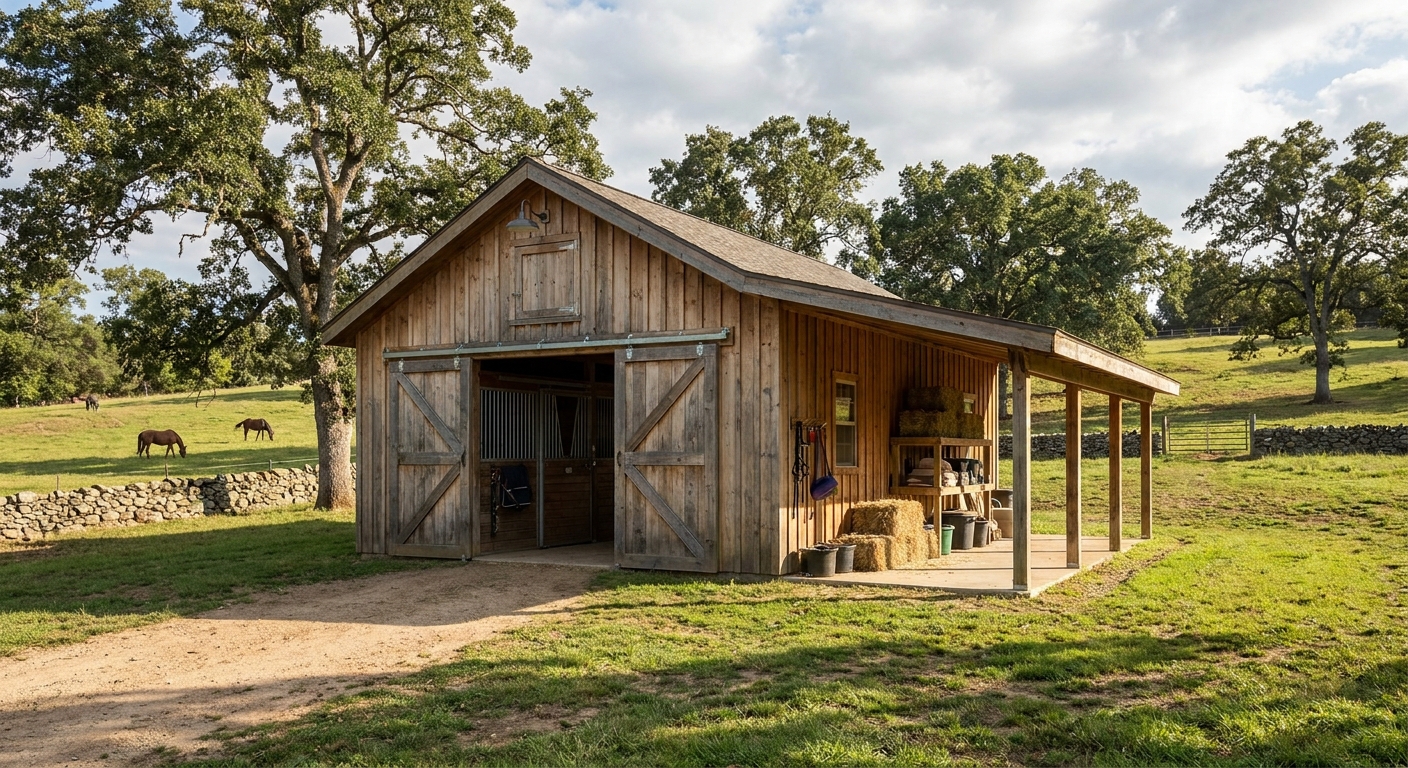
Even on a limited acreage, you can achieve professional horse stall sizes by utilizing smart geometry and sliding components. If you are struggling with a tight layout, you can contact us(WhatsApp) to discuss custom steel designs that maximize every square inch.
How can smart geometry save space?
By placing stalls in the corners of your barn, you utilize “dead” space that would otherwise be wasted. This allows you to maintain 12×12 dimensions while keeping the overall building footprint compact and cost-effective.
Believe it or not: Small barns can feel massive if you eliminate “swing room” requirements.
- Use sliding doors to keep aisles clear.
- Install “open-concept” stall fronts for visual space.
- Consolidate feed and tack storage to one end.
Can multi-functional design help?
In a small barn, every stall might need to serve multiple purposes, from grooming to medical recovery. Designing stalls with removable mesh partitions allows you to create a larger “community” space when a stall isn’t occupied.
Here is why: Flexibility is the key to managing a small-scale facility.
- Allows for “swing” use as a grooming bay.
- Simplifies cleaning with shared drainage.
- Improves social interaction for horses.
| Space-Saving Tip | Impact | Efficiency Gain | |
|---|---|---|---|
| Sliding Doors | Saves 4′ of aisle | High | |
| Corner Stalls | Uses dead space | Moderate | |
| Mesh Partitions | Increases light | Mental Space |
Key Takeaway: Small barn owners can provide high-end animal care by focusing on sliding doors and corner-based layouts to maintain standard 12′ x 12′ stall dimensions.
Summary FAQ: Common Horse Stall Sizes Questions
1. Is a 10×10 stall too small for a 16-hand horse?Yes, it is generally considered unsafe for long-term use. While a horse can fit, they will struggle to turn or lie down without hitting the walls, increasing the risk of getting cast.
2. Can I use 12′ x 12′ stalls for all my horses?Yes, this is the most versatile choice for a mixed barn. It is large enough for most riding horses and small enough to be efficient for ponies.
3. How wide should a stall door be for safety?A minimum of 4 feet (48 inches) is required. For draft horses or foaling mares, a 5-foot or 6-foot door is recommended to prevent hip injuries.
4. Does the ceiling height really affect horse health?Absolutely, because lower ceilings trap ammonia and heat. A 10-12 foot ceiling ensures the horse has enough clean air volume to prevent respiratory diseases.
5. How high should stall partitions be?They should be 7 to 8 feet tall. This prevents horses from trying to jump over or bite their neighbors while still allowing for air flow through the top bars.
Conclusion
Choosing the right horse stall sizes is the single most important decision you will make for the safety and longevity of your equine facility. Whether you are managing a small private barn or a high-traffic commercial stable, prioritizing the animal’s ability to move and breathe ensures your investment remains valuable for decades. Ready to build a structure that perfectly fits your herd? Contact us today to start your project with a high-quality steel building that brings engineering excellence to your equestrian vision.
Key Takeaway: Researching and implementing correct stall dimensions today prevents costly renovations and avoidable equine health crises in the future.