
Aircraft hangar lighting should be designed around maintenance tasks, aircraft geometry, glare, emergency use, and maintainable fixture access. An operator can buy efficient high-bay fixtures yet still leave wing undersides, tail surfaces, work platforms, and open-door zones poorly lit. That mismatch can slow inspection, hide surface detail, and trigger costly electrical changes after steelwork and services are fixed. A coordinated aircraft hangar lighting brief turns operational needs into a photometric, electrical, structural, and commissioning package.
1. Which maintenance tasks should set the lighting brief?

Maintenance tasks should set the lighting brief because illuminance at the floor does not describe visibility on a fuselage, wing underside, engine bay, or raised platform. Map task location, viewing direction, object size, contrast, duration, worker position, aircraft type, and equipment movement before selecting fixtures.
How should operators map the work?
Divide the hangar into arrival, parking, inspection, line maintenance, component work, wash, stores, offices, circulation, apron, and egress zones. Link the map to the aircraft hangar construction plan so doors, trusses, platforms, cranes, ducts, and cable routes share the same coordination model.
- Task plane and viewing direction
- Aircraft envelope and likely parking positions
- Mobile stands, cranes, tugs, and access platforms
- Cleaning, painting, fueling, charging, or chemical activities
What goes wrong with one uniform target?
A floor-based target can produce bright concrete while the aircraft blocks light from the work surface. The resulting shadow reduces contrast, and a technician may miss a leak, fastener condition, or surface defect. The operator defines tasks, the lighting designer models them, and maintenance representatives review the assumptions.
2. What should the photometric model prove?

The photometric model should prove usable light on horizontal and vertical task planes, distribution uniformity, glare control, emergency coverage, and operation under realistic aircraft positions. It should use actual room geometry, surface reflectance assumptions, fixture data, mounting heights, obstructions, and maintenance factors.
Which model views matter to buyers?
Ask for calculation grids at the floor, workbench, wing underside, fuselage side, tail access, inspection pit, and major circulation routes. Review results with hangar doors open and closed where daylight contrast affects operations.
- Average and minimum values on stated task planes
- Uniformity ratio and dark-zone plots
- Glare assessment method and viewing directions
- Luminaire locations, aiming, mounting, and control zones
Why does maintenance factor change the answer?
Dust, dirt, lumen depreciation, damaged optics, and failed drivers lower delivered light over time. If the model uses only new-luminaire output, measured performance can fall below the operating requirement before the planned service interval. State the maintenance factor, cleaning environment, replacement policy, and acceptance basis in the design brief.
3. How can the design control shadows and glare?
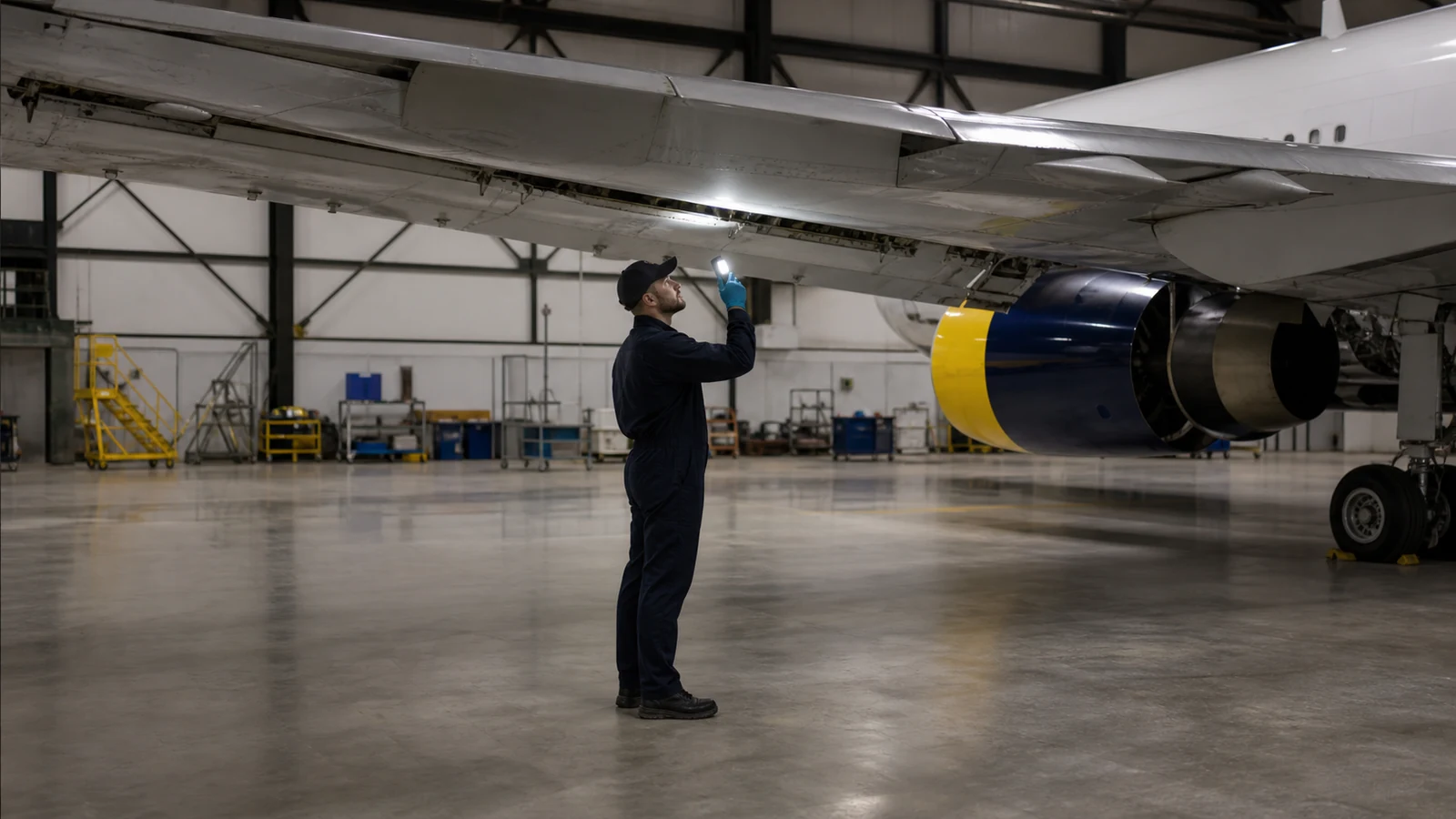
Control shadows and glare with overlapping light distributions, suitable mounting angles, local task lighting, balanced surface reflectance, and fixture positions outside common sightlines. More lumens do not correct a poor direction of light.
Where do hangar shadows form?
Wings, fuselages, tails, mezzanines, platforms, cranes, and open doors can interrupt ceiling light. Diffuse ceiling and wall reflection may support visibility, while portable or fixed task lights can address cavities and underside work.
- Model representative aircraft silhouettes
- Review vertical surfaces from technician viewpoints
- Keep bright sources out of low-angle sightlines
- Coordinate portable-light connection points and cable routes
How does glare become an inspection risk?
A bright fixture or sunlit doorway within the field of view lowers apparent contrast on a darker component. The worker’s visual adaptation then makes small surface details harder to distinguish. Review high-angle and open-door views, reflective aircraft finishes, polished floors, and task-light shielding with the operator.
4. How should high-bay fixtures fit the steel frame?
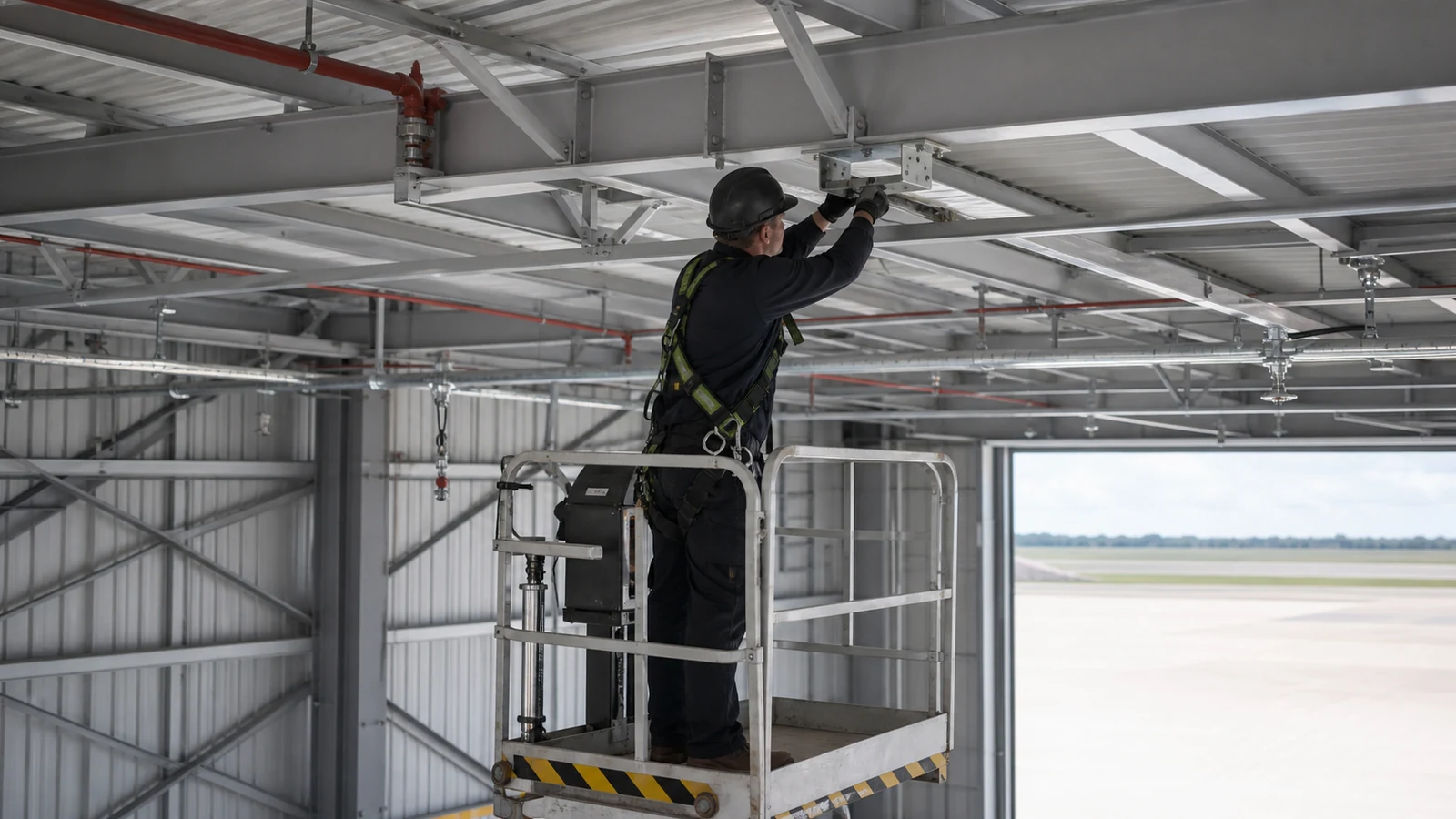
High-bay fixtures should fit the steel frame through coordinated mounting, access, cable routing, vibration, thermal, door, crane, and sprinkler clearances. Late fixture placement can conflict with bracing, purlins, services, or moving equipment.
Which interfaces belong on one drawing?
Use a coordinated reflected ceiling plan showing primary steel, secondary steel, bracing, doors, cranes, sprinklers, ducts, cable trays, fixtures, access routes, and fall-protection provisions. The structural designer should approve attachment loads and details rather than allowing ad hoc drilling.
- Fixture and bracket weights with load locations
- Cable-tray and conduit routes
- Door travel and crane operating envelopes
- Access method for cleaning and driver replacement
What happens when access is ignored?
A fixture above a parked aircraft or inside a crane envelope may require operational shutdown or special equipment for routine service. Deferred cleaning or failed-driver replacement then lowers actual light levels. Coordinate access before steel and service openings are released for fabrication.
5. How should daylight and the envelope work together?
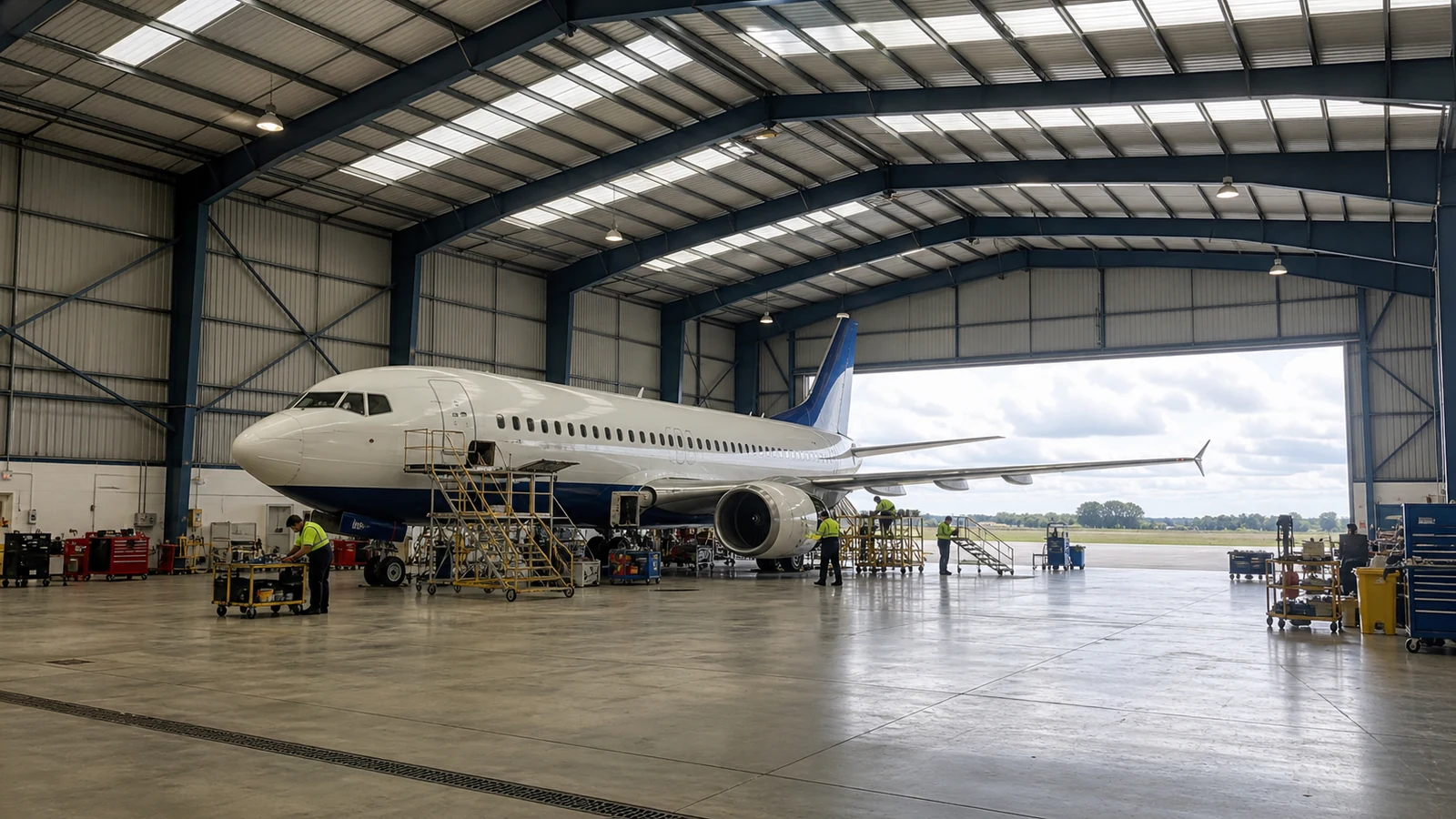
Daylight should reduce daytime electrical demand without creating disabling contrast, uncontrolled glare, solar gain, leaks, or difficult-to-maintain envelope penetrations. Rooflights and translucent panels need coordination with structure, fire strategy, drainage, insulation, and aircraft operations.
Which daylight questions belong in design review?
Model seasonal sun positions, door-open periods, work zones, internal reflectance, shading, and control response. Coordinate the result with the hangar insulation and condensation strategy because thermal breaks, vapor control, and roof penetrations affect both systems.
- Daylight distribution with representative aircraft present
- Glare views from work platforms and cockpit height
- Sensor location away from local shadows
- Flashing, curb, seal, and maintenance details
Which failure chain is common?
An uncontrolled bright doorway can make the adjacent interior appear dark even when the meter reading is acceptable. Poorly detailed rooflights can also admit water or create condensation at cold interfaces. Treat daylight devices as envelope assemblies with photometric, thermal, structural, and drainage responsibilities.
6. Which electrical hazards change fixture selection?

Electrical hazards change fixture selection where fuel vapor, paint, solvents, batteries, washdown, dust, or corrosive chemicals create classified or harsh locations. The project team has to define operations and area boundaries before equipment is specified.
Who sets the classification basis?
The fire and electrical professionals should prepare a hazardous-area classification drawing using the adopted code, operational procedures, ventilation, aircraft servicing conditions, pits, drains, and adjacent rooms. NFPA 70 Article 513 is a recognized U.S. concept for aircraft hangars when adopted, while other jurisdictions use different rules.
- Classified zones and vertical extents
- Normal and abnormal operating scenarios
- Equipment protection, temperature, and ingress ratings
- Ventilation and interlock assumptions
What is the consequence of a wrong assumption?
Standard equipment placed in a classified zone may provide an ignition source, leading to rejection by the authority or a severe safety exposure. Overclassifying every space can drive cost and maintenance burden without improving risk control. Record the basis, approver, drawing revision, and equipment certificates before procurement.
7. How should emergency lighting and controls operate?
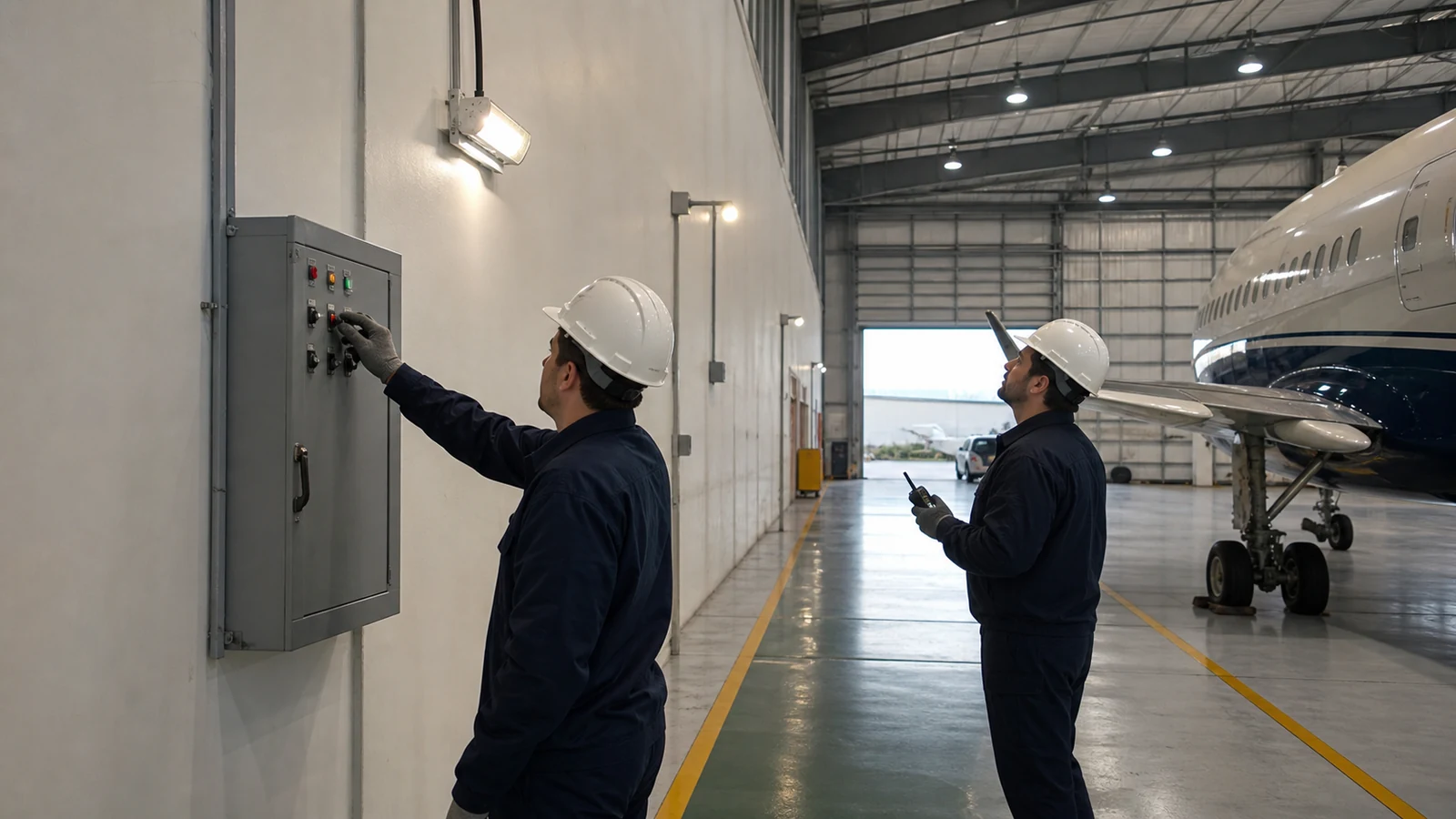
Emergency lighting and controls should preserve visible egress while adapting normal lighting to occupancy, daylight, task demand, and maintenance operations. Control zones should not switch off work areas occupied by a person who is hidden from a sensor by an aircraft.
What belongs in the controls narrative?
Define normal scenes, door-open response, daylight dimming, occupancy timeouts, manual overrides, cleaning mode, emergency behavior, alarm interfaces, and failure state. Coordinate these functions with the hangar fire and power systems.
- Zone boundaries and sensor coverage
- Override locations and authorization
- Emergency supply, transfer, and test method
- Monitoring, alarms, and fault reporting
Which rule needs jurisdiction review?
U.S. workplace rules require exit routes to remain adequately lighted and protective safeguards to work, while local building and fire codes set the project criteria elsewhere. A functional test should simulate loss of normal power, confirm transfer, measure selected routes, and record deficiencies. The authority having jurisdiction and responsible design professionals approve the final basis.
8. Which submittals and tests prove performance?
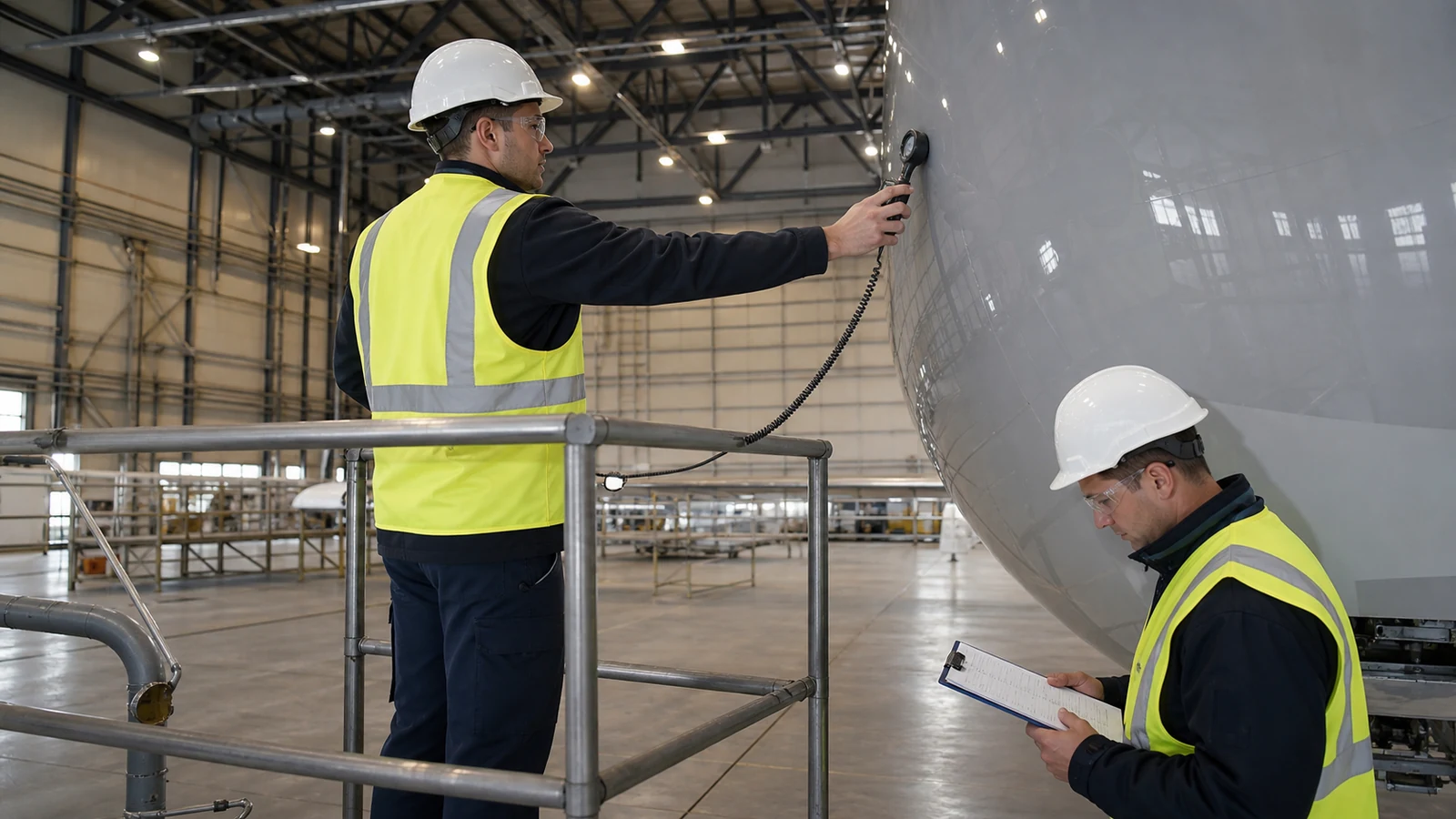
Submittals and tests prove performance when they connect the approved model to installed products, locations, controls, emergency circuits, and measured results. Catalogue sheets alone do not show that the system meets the task brief.
What should the contractor submit?
Require the photometric report, luminaire schedule, certified data, coordination drawings, attachment details, circuiting, controls narrative, emergency basis, hazardous-location documents, commissioning plan, and maintenance information.
- Approved model input and output file
- Fixture and driver identifiers tied to drawings
- Inspection and test forms with calibrated meters
- As-built layout, settings, warranties, and spares
How should acceptance be measured?
Measure selected horizontal and vertical task planes after dark or under a stated daylight condition, with representative control scenes and a documented aircraft arrangement. Record meter calibration, grid points, readings, uniformity, emergency operation, sensor response, and corrective actions. Any deviation should be rerun through the model or corrected in the field before handover.
9. Who owns each lighting decision?

Each lighting decision should have a named preparer, reviewer, approver, installer, and evidence owner. This prevents gaps between the operator’s task needs, the lighting calculation, the hangar structure, electrical classification, and commissioning.
What does the responsibility matrix show?
| Decision or evidence | Operator | Designers | Contractor | Commissioning party |
|---|---|---|---|---|
| Task and occupancy schedule | Prepares | Reviews | Uses | Tests selected scenes |
| Photometric model | Confirms aircraft use | Prepares and approves | Coordinates products | Verifies field result |
| Hazard classification | Defines operations | Approves code basis | Supplies compliant equipment | Checks records |
| Mounting and access | Confirms operations | Coordinates loads and clearances | Installs controlled details | Reviews maintainability |
| Handover | Accepts training and records | Closes design comments | Compiles as-builts | Issues test report |
How does an illustrative project use it?
Illustrative scenario: A maintenance operator plans two aircraft positions, a large open door, mobile tail access, and a future bridge crane. The model shows adequate floor light but weak vertical light under one wing and glare toward the door. The team relocates several fixtures, adds shielded task lighting, preserves crane clearance, and repeats the calculated and field test points before handover.
10. What should an aircraft hangar lighting RFQ contain?

An aircraft hangar lighting RFQ should contain operational tasks, aircraft envelopes, architectural and structural models, code basis, hazardous-area information, performance criteria, controls, emergency operation, submittals, tests, and maintenance requirements. Bidders should return a calculation and deviation schedule, not only a fixture count.
Which inputs help suppliers price accurately?
Provide the site, hangar size, clear height, door type, aircraft mix, maintenance activities, operating hours, reflectance assumptions, ceiling and service layout, environmental conditions, power standard, control needs, and commissioning scope.
What should the next action be?
Include the lighting brief with the broader hangar RFQ and state which party designs attachments, circuits, classifications, controls, and tests. For a coordinated building review, submit your project specifications with the aircraft layout and task schedule. Good lighting procurement makes visibility, safety, access, and acceptance measurable before equipment reaches the site.
Plan Safer Aircraft Hangar Lighting—Request Expert Support !
Email:sales@showhoo.com.cn
Phone/WhatsApp:+86 186 7895 5927
Frequently Asked Questions
Can I select fixtures before the aircraft layout is fixed?
Only provisionally. Aircraft geometry and parking positions affect shadows, glare, access, and task planes, so the design should be recalculated after the layout is stable.
What’s the best way to compare two lighting proposals?
Compare the same model inputs, task planes, maintenance factor, uniformity method, glare approach, controls, emergency scope, product life assumptions, and commissioning evidence.
How do I know if glare has been addressed?
Review calculated or visualized views from technician positions, door-facing work areas, platforms, and reflective aircraft surfaces, then confirm selected conditions during commissioning.
Can daylight replace high-bay lighting?
Not for all operating conditions. Daylight varies with weather, season, door position, and aircraft shading, so electric lighting and controls still need a stated performance basis.
What’s the best handover evidence?
A coordinated package is strongest: as-built drawings, fixture data, settings, measured results, emergency tests, classification records, maintenance access, spares, and training records.