
Raising 10,000 layer chickens requires an estimated total investment of approximately $359,395 to cover construction, equipment, and biological rearing expenses over a standard 100-week cycle. Many aspiring poultry farmers jump into the egg-production market only to find themselves bleeding cash due to high mortality rates, poor feed conversion ratios, and fragile housing structures. A single disease outbreak or a poorly ventilated room can wipe out your entire flock overnight, leaving you with massive debts and useless buildings. By building a modern, structurally engineered poultry house for 10000 chickens , you can establish a biosecure, climate-controlled environment that guarantees optimal egg-laying rates and rapid return on investment.
Is a poultry house for 10000 chickens expensive?
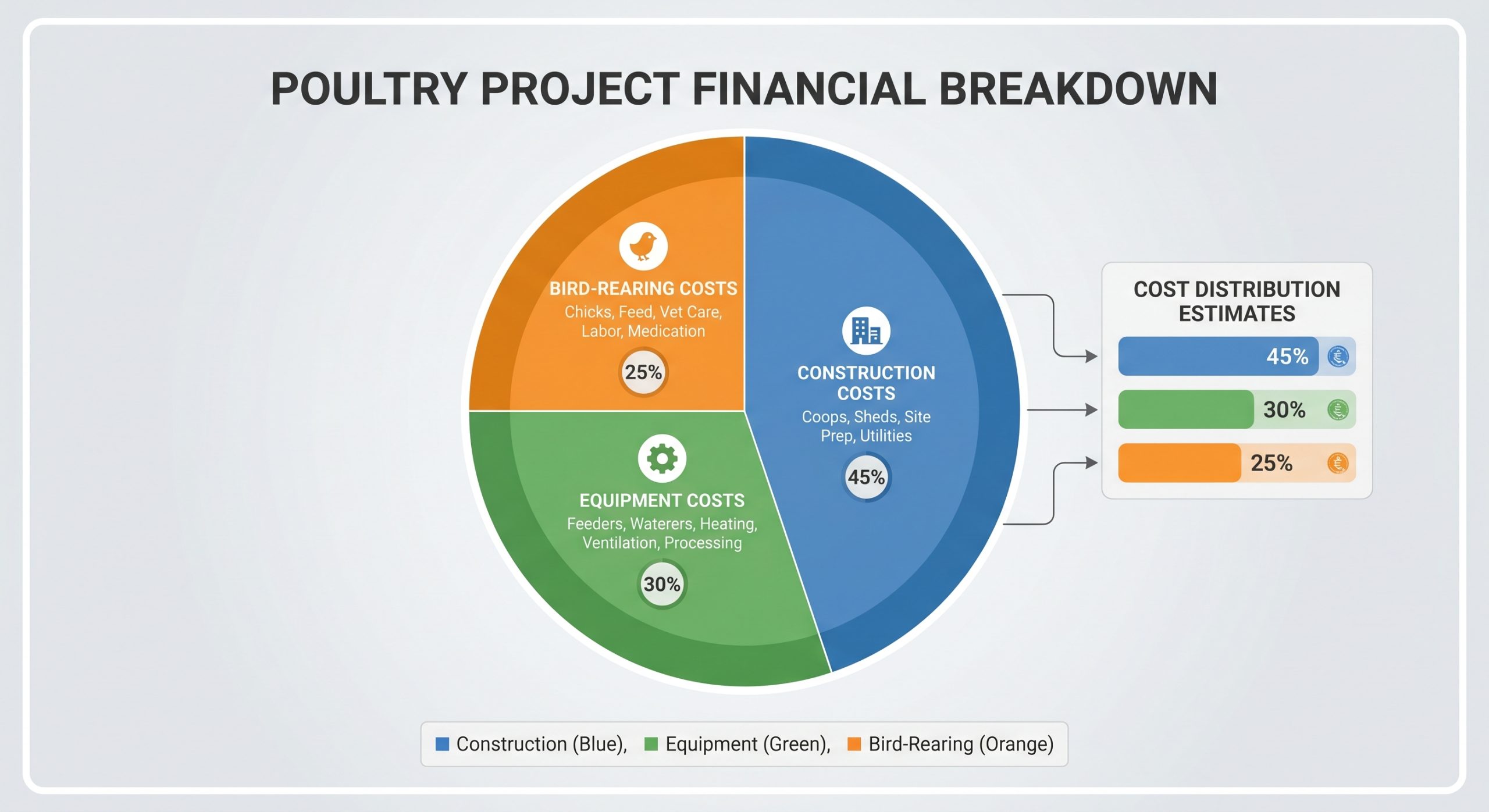
Establishing a professional setup for ten thousand layers represents a significant initial capital layout, typically ranging from 20,000 toover 30,000 for infrastructure alone depending on your design choice. Starting a commercial layer business requires careful budgeting across multiple cost categories. When investing in a poultry house for 10000 chickens , you must carefully balance your capital between infrastructure, automated equipment, and bird rearing.
Over half of your lifetime budget will go toward feed and biological management. However, cutting corners on the physical building shell will only lead to higher operational costs and lower production.
Financial breakdown for a ten thousand bird farm
Let’s face it: navigating the initial setup costs can feel overwhelming when you are planning a commercial-scale operation. You need to look closely at how every dollar is split between physical structures and biological assets.
- Construction Costs: Coops, sheds, site preparation, and basic utility connections (45%).
- Equipment Costs: Automatic feeders, nipple drinkers, ventilation fans, and heaters (30%).
- Bird-Rearing Costs: Day-old chicks, starter feed, veterinary medication, and early labor (25%).
Think about it: if you allocate too much budget to birds but fail to provide a sturdy climate shelter, your mortality rates will spike. Investing in a durable steel framing system protects your core biological assets and keeps your running costs predictable.
| Investment Category | Average Cost Share | Estimated Capital Needed (USD) | |
|---|---|---|---|
| Infrastructure Construction | 45% | 21,858−31,000 | |
| Automated Cage Equipment | 30% | 15,000−20,000 | |
| Initial Bird-Rearing Costs | 25% | 318,094 (including feed) |
This balance of initial capital shows how crucial proper facility planning is before buying your first batch of chicks.
Key Takeaway: Understanding these financial ratios allows you to secure proper financing and prevents you from running out of capital mid-project.
Where to site a poultry house for 10000 chickens?
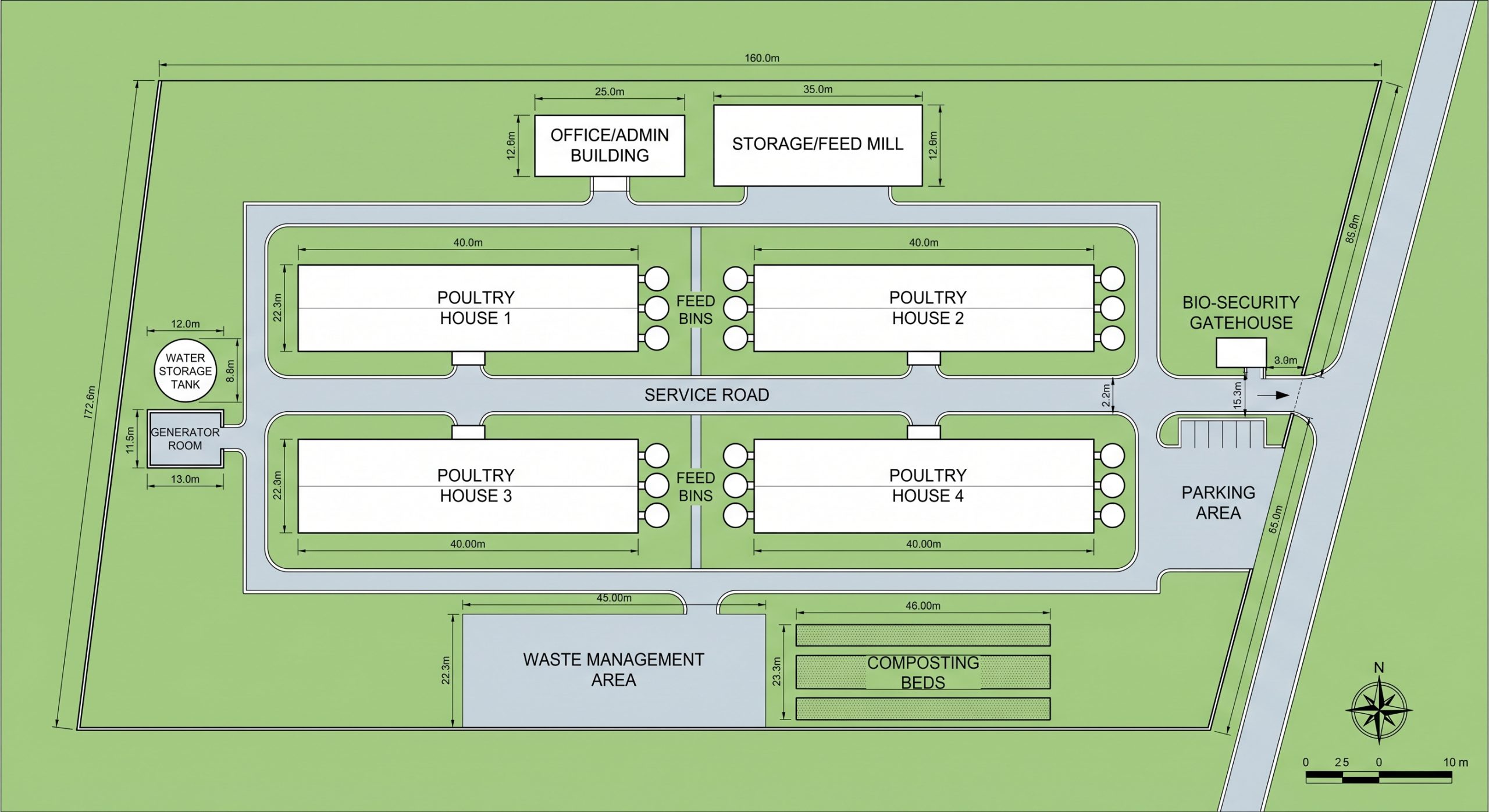
You should locate your laying facility on a dry, accessible parcel of land with a biosecure buffer zone of at least 500 meters from other farms. Choosing the correct location ensures long-term operational ease and complies with local zoning codes. Your poultry house for 10000 chickens must be built on high-ground land with excellent natural drainage to prevent seasonal flooding.
Additionally, you need reliable roads to handle heavy feed and egg delivery trucks. Easy access to stable electricity and large volumes of clean water is also mandatory for daily farm running.
How layout planning secures your long term success
Here is the deal: a poorly situated farm will face endless logistical bottlenecks and biosecurity hazards. You want your service roads, waste disposal sites, and offices kept completely separate from the clean bird zones.
- Biosecurity Buffer: Keep clean egg-packing areas far from manure storage piles.
- Logistics Lanes: Ensure wide turning circles for bulk feed trucks and waste removal.
- Future Expansion: Leave space to build identical secondary structures later.
Look at the numbers: optimizing your farm layout can shave off up to 15% of your daily labor and transport costs. If you design the layout correctly from day one, you protect your flock from external pathogens while simplifying workflow.
| Site Component | Standard Buffer Distance | Required Road Infrastructure | |
|---|---|---|---|
| Main Layer Houses | 500m from main highway | Heavy-duty paved or gravel lanes | |
| Waste & Composting | 100m downwind from birds | Dedicated direct-access lanes | |
| Office & Admin | 50m from production houses | Clean parking area with sanitizing baths |
Separating the clean and dirty zones of your site plan is the most effective passive biosecurity step you can take.
Key Takeaway: Placing your facility in a remote, accessible area minimizes transport expenses and shields your birds from deadly viral infections.
Build your poultry house for 10000 chickens today—secure high egg yields fast!
Email:sales@showhoo.com.cn
Phone/WhatsApp: + 86 186 7895 5927
What size fits a poultry house for 10000 chickens?
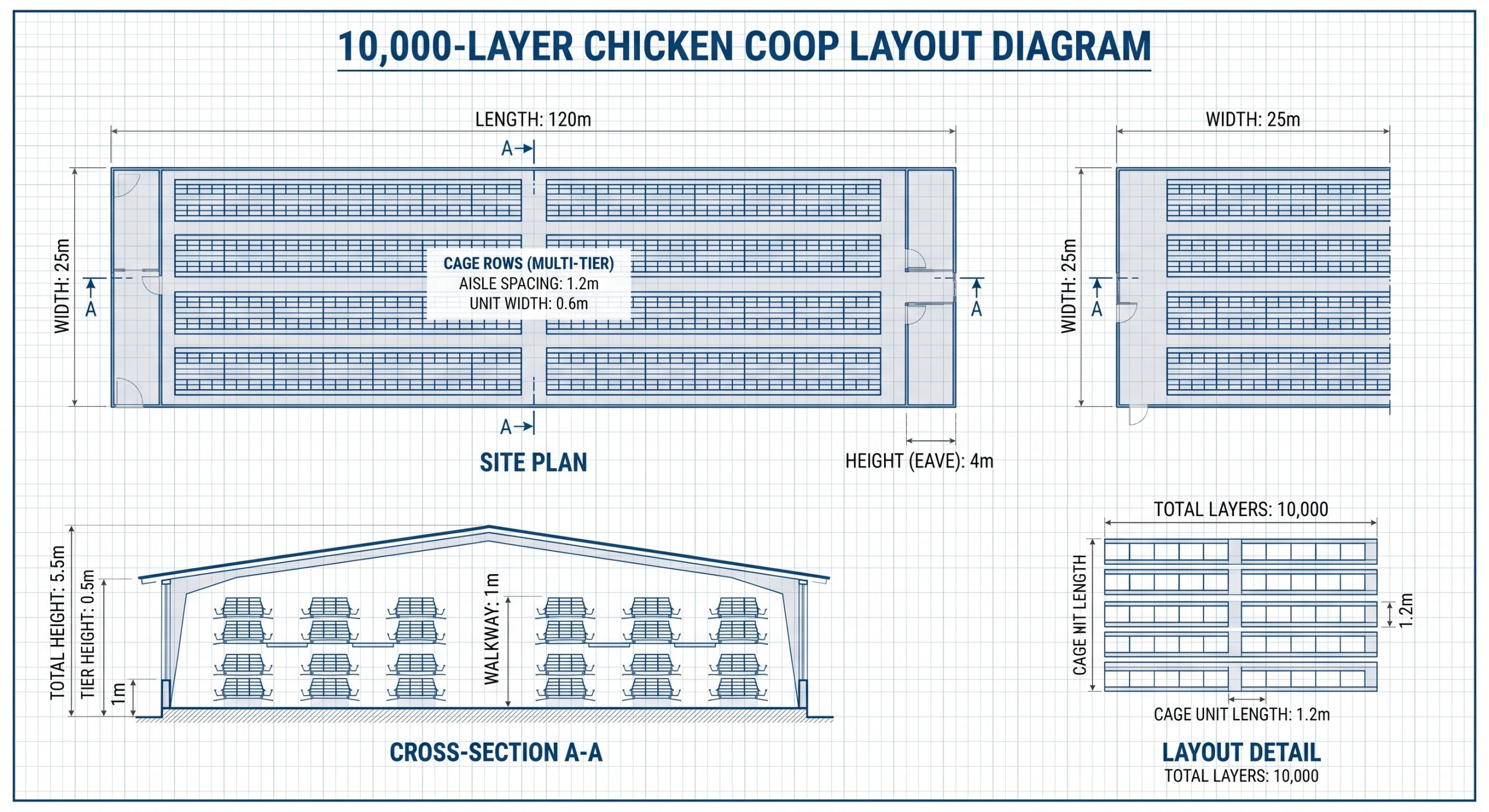
A standard open-sided structure for ten thousand laying hens measures 85 meters long, 7.5 meters wide, and 3.2 meters high. Getting your dimensions right is the only way to avoid harmful overcrowding and poor flock health. A standard poultry house for 10000 chickens provides enough volume for high-capacity battery cages while keeping walkways clear.
Overcrowded houses lead to quick ammonia buildup, high heat stress, and lower overall egg-laying numbers. Designing the physical dimensions properly ensures each bird gets enough fresh air and drinking water.
Physical space needs for your flock and cages
But wait, there is more: you also have to leave precise space for walkways, feeding systems, and manure removal gutters. Failing to measure these details accurately will make daily egg collection and feeding an exhausting struggle.
- Walkway Clearance: Minimum of 1.0 to 1.2 meters between cage rows for worker access.
- Manure Gutters: Dual concrete tracks of 3.9 meters combined width under cages.
- Eave Height: At least 3.2 to 4.0 meters for adequate hot air rising and natural draft.
Why does this matter? If your walkways are too narrow, your staff cannot push egg trolleys safely, leading to higher egg breakage rates. You should always build according to precise structural blueprints to ensure your team and your machinery move smoothly.
| Building Part | Length | Width | Height | |
|---|---|---|---|---|
| Main Housing Shell | 85.0 meters | 7.5 meters | 3.2 meters | |
| Service Aisles | Full length | 1.2 meters | Open clearance | |
| Cage Unit Footprint | 1.2 meters | 0.6 meters | 0.5 meters |
These dimensions guarantee that your layout easily fits multi-tier cages while maintaining ideal airflow.
Key Takeaway: Adhering to professional sizing standards keeps your birds comfortable, which directly translates into premium feed conversion ratios and consistent egg size.
How to design a poultry house for 10000 chickens?
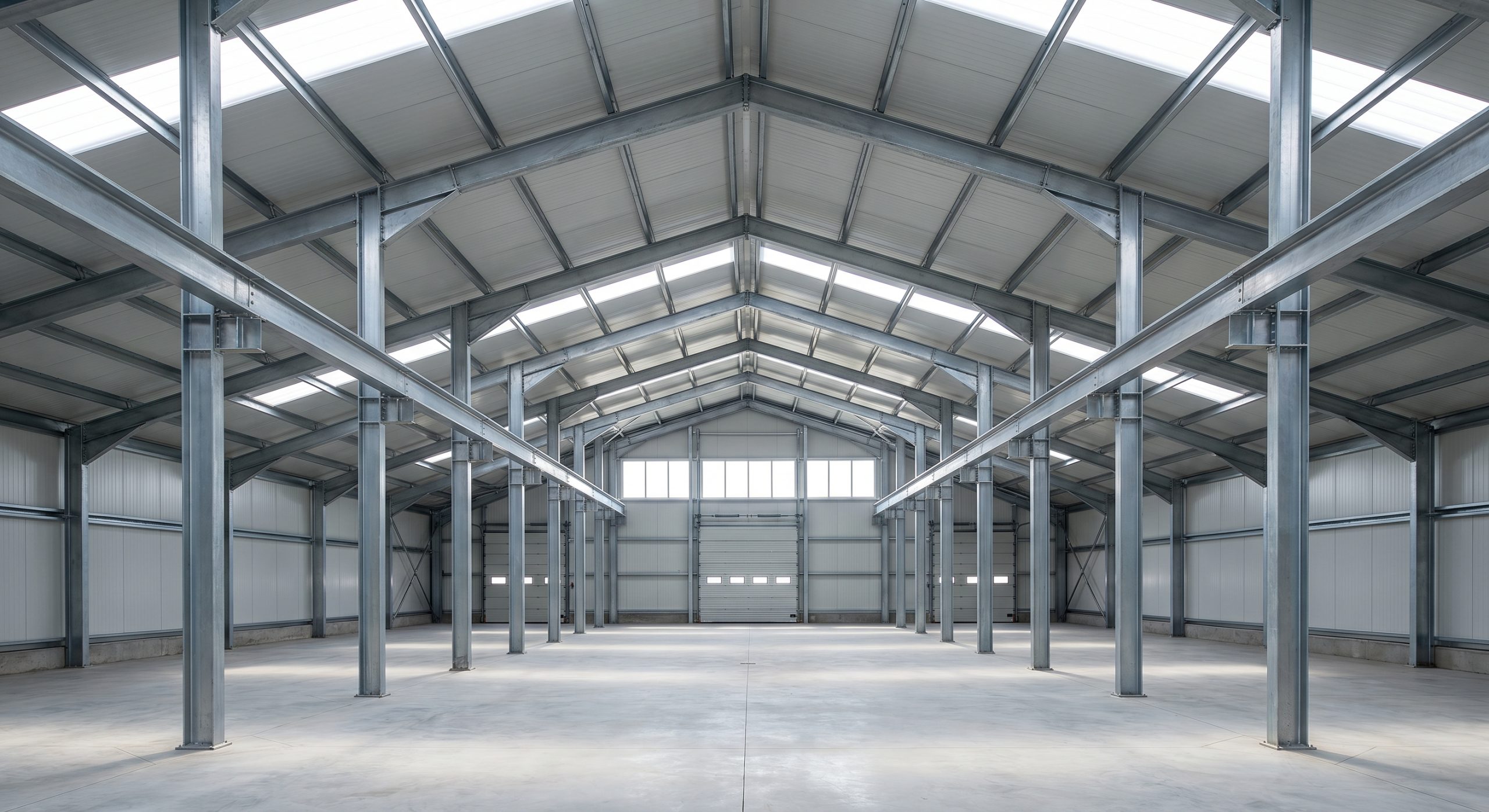
Designing a modern laying facility requires prioritizing stable temperatures, airtight ventilation paths, and rodent-proof concrete barriers. A robust design is the foundation of high bio-security and daily performance. Your poultry house for 10000 chickens should use insulated sandwich wall panels and hot-dip galvanized steel columns to stand up to moisture.
It must also feature clean concrete floors that are smooth enough to wash and disinfect frequently. Using high-quality steel structures protects your investment from intense tropical heat, extreme winter freezes, and heavy typhoons.
Smart interior layout and flow systems
Think about it: a poorly insulated building is a massive energy drain during cold months and a heat trap in the summer. You need to control the environment completely so your birds stay focused on laying eggs instead of trying to stay warm.
- Frame Durability: Hot-dip galvanized steel resists toxic ammonia fumes from droppings.
- Biosecurity Barriers: 60cm brick side walls prevent rodents and snake entry.
- Lighting Control: Exact light schedules keep birds laying at high rates.
And the best part? Modern steel framing cuts assembly time in half, meaning your farm can start producing revenue months ahead of a brick building. If you plan your internal air patterns carefully, you will completely avoid high summer mortality.
| Design Element | Recommended Material | Major Performance Benefit | |
|---|---|---|---|
| Structural Columns | Q355 Galvanized Steel | Superior rust resistance and strength | |
| Side Insulation | Polyurethane Sandwich Panels | Keeps internal temperature highly stable | |
| Floor Finish | 20cm smooth-poured concrete | Easy disinfection, zero pest nesting |
Combining high-grade steel framing with insulated walls gives you total control over your internal microclimate.
Key Takeaway: Investing in a professional structural design protects your birds from external weather threats and drastically lowers your annual heating bills.
What cost builds a poultry house for 10000 chickens?
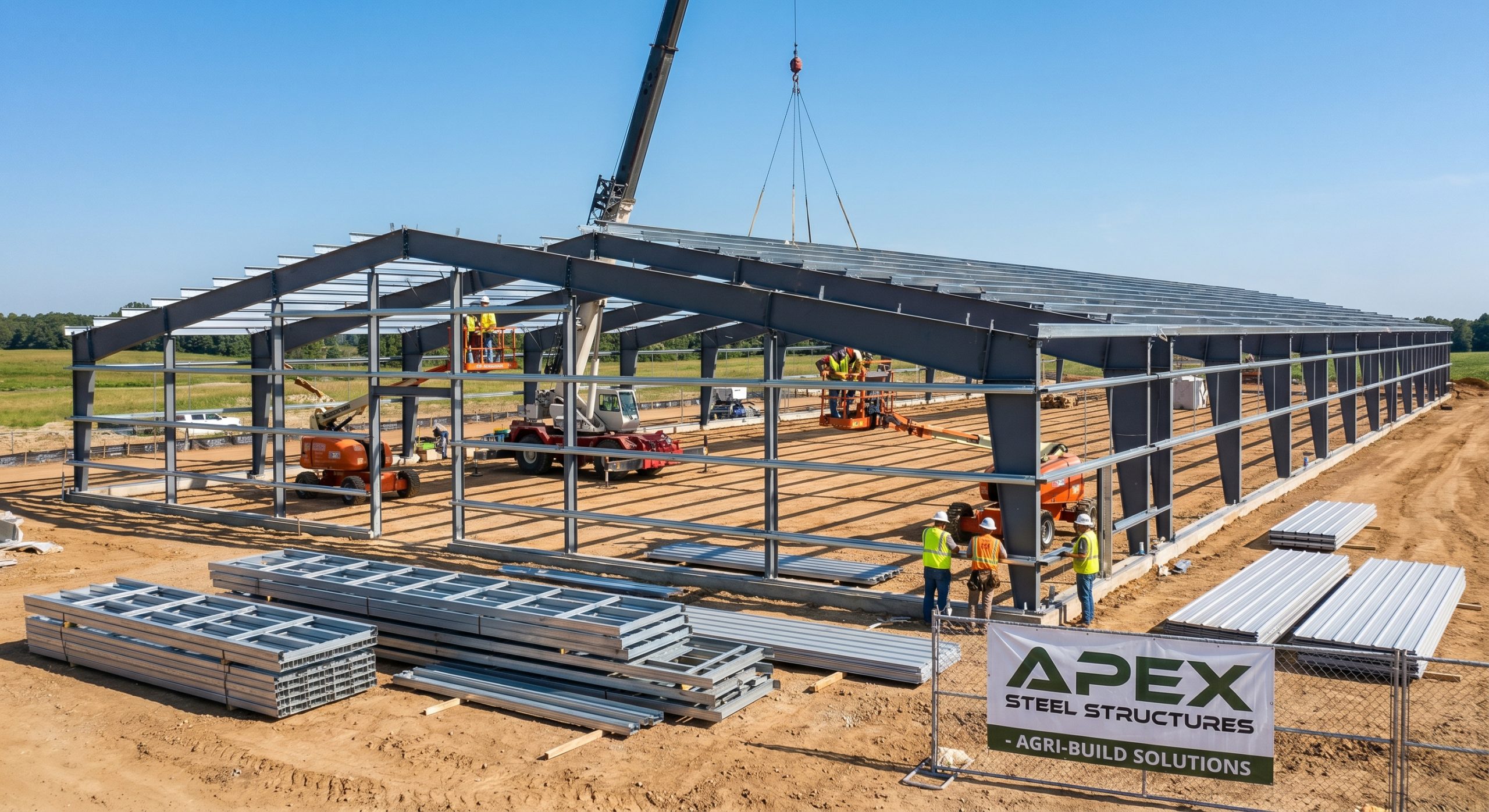
Constructing an open-sided house costs roughly 21,858,while a premium,fully−closed prefabricated steel house averages around 30,992. Infrastructure budgets must cover the roof, side walls, concrete foundation, and basic structural steel frame. When pricing out a poultry house for 10000 chickens , you must choose between an economical natural-ventilation style or a highly secure closed style.
While closed steel sheds have higher initial build costs, they offer superior airtightness and last more than 20 years. They also reduce labor needs, making them much cheaper to run over time.
Understanding the construction cost differences
Let’s face it: trying to save money on cheap building materials is a recipe for quick structural failure. You do not want a heavy windstorm tearing off your roof or damp conditions rotting away your wooden framing.
- Roofing Sheet: Simple color steel sheets ($6.95/sqm) vs. insulated panel options.
- Foundation Concrete: Roughly 340 tons of cement needed at $46.33 per ton.
- Assembly Labor: Quick bolt-together steel reduces on-site construction bills.
Look at the numbers: a prefabricated steel house can be assembled in just a few weeks compared to months for traditional brick. This speed means your capital is not tied up in idle construction projects for very long.
| Construction Phase | Open-Sided House Cost | Closed Steel House Cost | |
|---|---|---|---|
| Metal Roof & Frame | $4,669 (Colored Steel) | $12,500 (Insulated Panel) | |
| Concrete Flooring | $15,750 (340 Tons) | $14,500 (Thicker Slab) | |
| Walls & Doors | $1,438 (60cm Brick) | $3,992 (Full Panels) |
Steel structures show clear cost advantages due to their short construction times and minimal maintenance needs.
Key Takeaway: Choosing a prefabricated steel structure minimizes setup labor and provides a durable, biosubstantial environment that lasts for decades.
Which cages suit a poultry house for 10000 chickens?
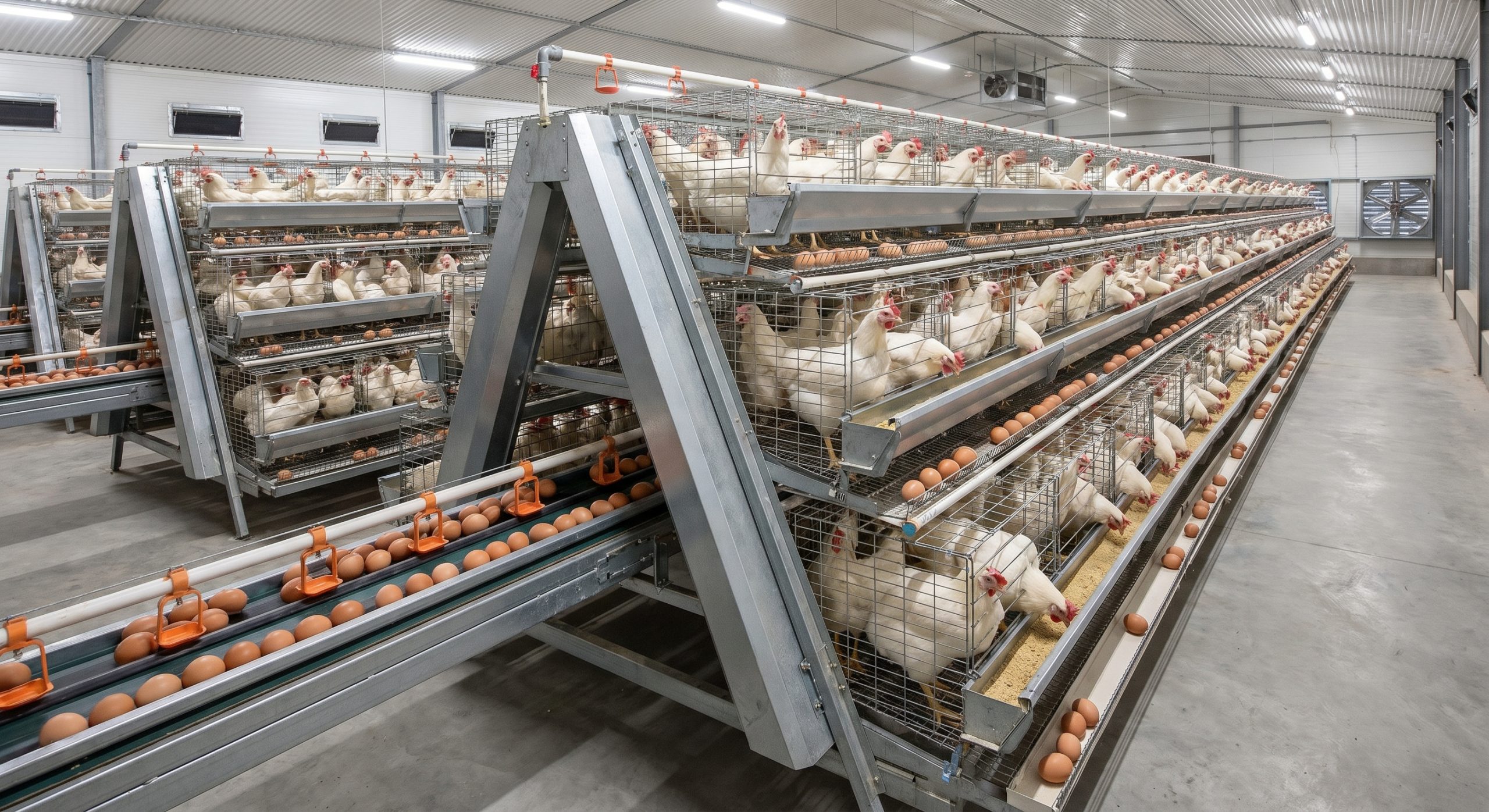
Automated 4-tier A-type battery cage systems are the most efficient and reliable choice for a ten thousand layer operation. Choosing the correct cage layout is vital to simplify feeding, protect eggs, and keep mortality rates low. Your poultry house for 10000 chickens must be paired with high-quality galvanized wire cages to keep birds safe and clean.
Automated cages prevent birds from contacting their waste, which stops the spread of common gut diseases. They also feature automatic feeding, drinking, and egg collecting belts that cut down on cracked shells.
Selecting the right layout for efficient farming
Think about it: trying to feed ten thousand chickens by hand is a massive chore that leads to major feed waste. You want a smart system that delivers the exact same feed portion to every bird automatically.
- A-Type 4-Tier: Great natural ventilation, very budget-friendly for open designs.
- H-Type Multi-Tier: Maximizes floor space, perfect for closed houses.
- Water Lines: High-quality nipple systems keep litter dry and clean.
Here is the deal: automatic egg collector belts can lower egg damage rates from a high 8% down to less than 1.5%. This saving alone can put thousands of dollars back in your pocket during your first year.
| Cage Type | Space Efficiency | Ventilation Need | Best Environment | |
|---|---|---|---|---|
| A-Type Cages | Moderate | Natural airflow | Economical open sheds | |
| H-Type Cages | High | Automated Fans | Closed climate systems |
The choice of your cage type determines how much land you need and the ventilation setup you must buy.
Key Takeaway: Automated cages make egg farming simple, drastically reduce manual labor, and help you get the highest egg production from your flock.
Build your poultry house for 10000 chickens today—secure high egg yields fast!
Email:sales@showhoo.com.cn
Phone/WhatsApp: + 86 186 7895 5927
What feed bills hit a poultry house for 10000 chickens?
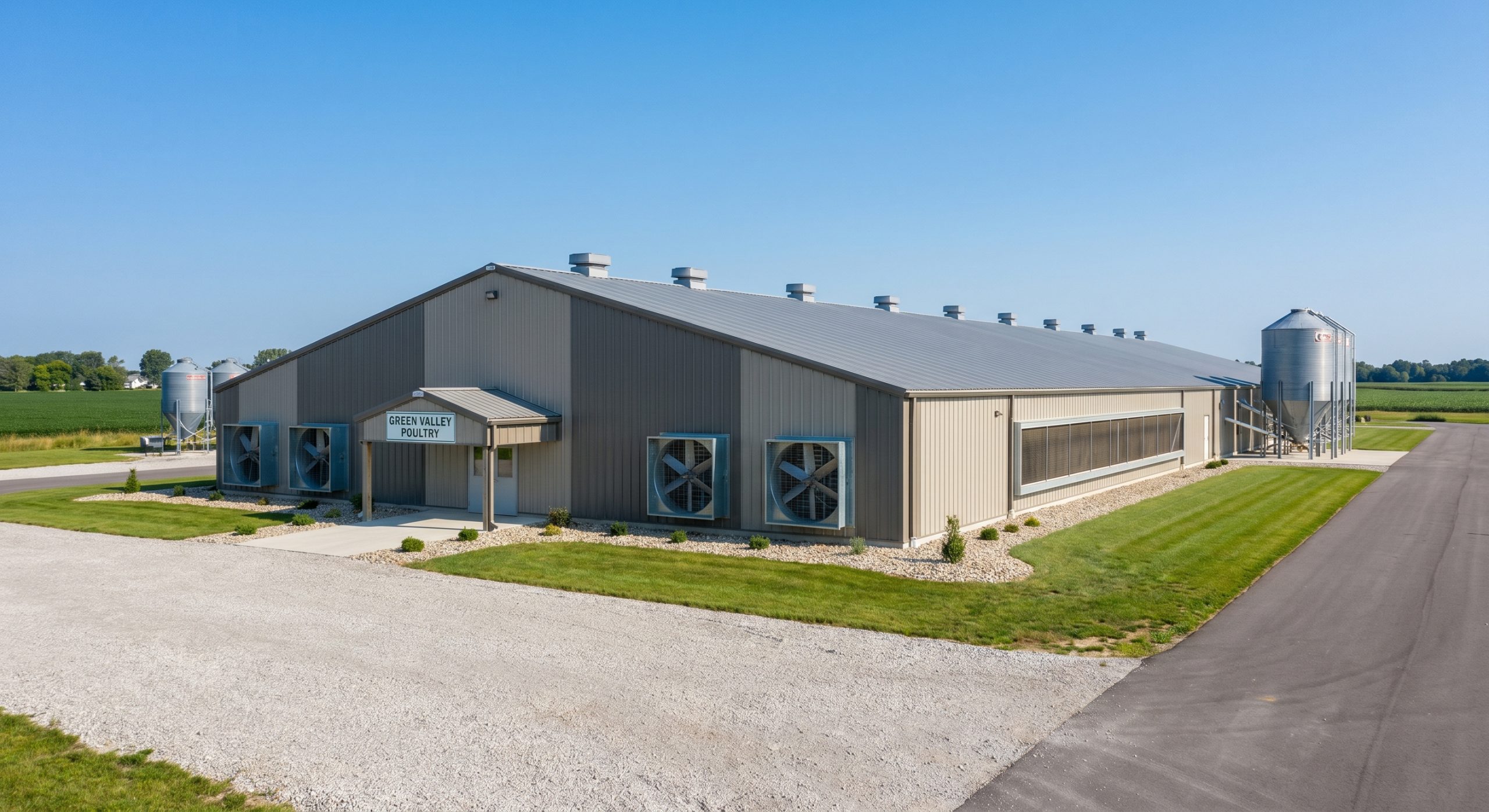
Feed bills will total approximately $318,094 over a 100-week cycle, representing your single largest operational expense. Nutrition expenses must be planned carefully to keep your feed conversion ratios profitable. In a modern poultry house for 10000 chickens , you will feed your birds pullet grower mix during early weeks, then switch to calcium-rich layer formulas.
A single layer hen consumes roughly 68.78 kg of feed over its lifetime from chick to elimination. Finding ways to minimize feed spills and waste is the most important step to secure your profits.
Calculating your feed and nutritional requirements
Let’s face it: even a tiny feed spill of just 2 grams per bird daily adds up to over 7 tons of wasted feed every year. You must use automated feeding hoppers and specialized deep troughs to prevent your birds from scratching feed out.
- Brooding Feed: 5.78 kg per bird (weeks 0 to 17) costing $2.66.
- Laying Feed: 63.00 kg per bird (weeks 18 to 100) costing $28.98.
- Bulk Storage: Use steel feed silos to protect against mold and pests.
Look at the numbers: feeding ten thousand laying hens costs over $290,000 during the active egg production cycle. Buying your feed ingredients in bulk and storing them in sealed steel silos is the best way to get lower prices and prevent spoilage.
| Rearing Phase | Feed per Bird | Cost per kg | Total Feed Cost (10,000 Birds) | |
|---|---|---|---|---|
| Brooding (Weeks 0-17) | 5.78 kg | $0.46 | $27,325 | |
| Laying (Weeks 18-100) | 63.00 kg | $0.46 | $290,769 | |
| Total Cycle | 68.78 kg | $0.46 | $318,094 |
High feed bills make it absolutely necessary to invest in automated feeding troughs that prevent spilling and pest access.
Key Takeaway: Managing your feed purchases in bulk and reducing trough waste keeps your feed conversion ratio highly competitive.
What runs inside a poultry house for 10000 chickens?
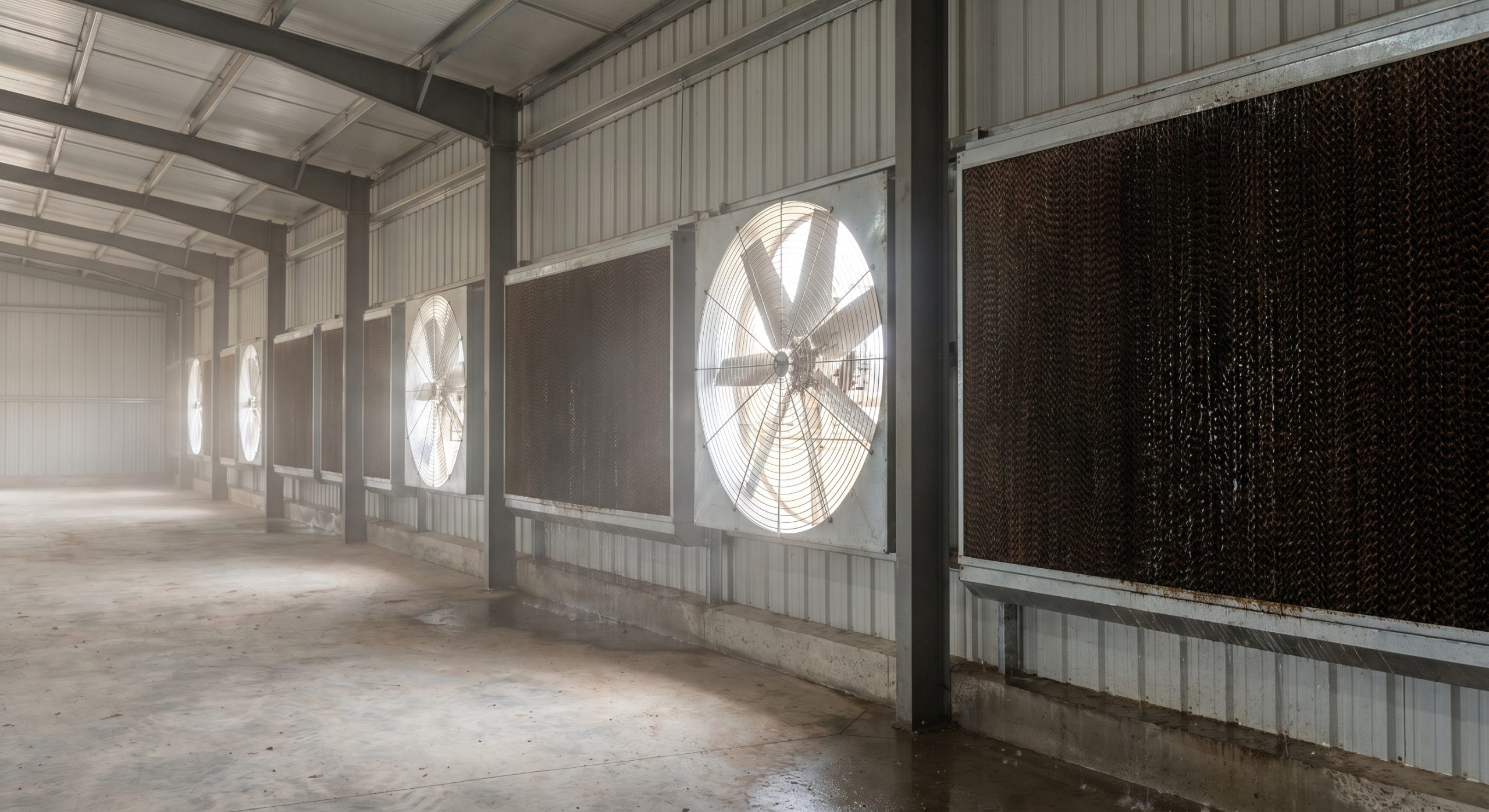
Running a ten thousand bird farm requires budgeting for labor, high-volume water access, electricity, and essential vaccine schedules. Managing these daily operational expenses keeps your poultry house for 10000 chickens running cleanly and efficiently. Automated systems allow a single worker to easily manage the daily feeding, watering, and cleaning schedules.
You must also budget for regular veterinary inspections, vaccines, and electricity to keep your ventilation fans running. Clean water is also critical, with birds needing over 1,275 tons of water per cycle.
Optimizing ventilation and climate controls
Think about it: a hot afternoon without ventilation fans can result in severe heat stress and destroy your daily egg yield in just a few hours. You need reliable backup power generators to keep your ventilation and water systems running during outages.
- Vaccines: Essential medical prevention costs around $3,088 per cycle.
- Water Consumption: 1,275 tons of water costs roughly $804.
- Electric Power: Running ventilation fans and lights costs $1,605.
Why does this matter? If your indoor humidity or ammonia levels rise too high, your birds will stop laying eggs and could develop respiratory infections. Automated climate controls keep the interior air clean and the temperature perfectly stable.
| Running Cost Category | 100-Week Budget (USD) | Share of Running Budget | |
|---|---|---|---|
| Farm Labor | $17,990 | 76.6% | |
| Veterinary & Vaccines | $3,088 | 13.1% | |
| Power & Lighting | $1,606 | 6.8% | |
| Water Utility | $804 | 3.5% |
These recurring costs highlight why automating your farm’s climate control and feeding saves a lot of money on labor.
Key Takeaway: Keeping your daily operating costs low through smart automation ensures your business stays highly profitable even during market downturns.
Build your poultry house for 10000 chickens today—secure high egg yields fast!
Email:sales@showhoo.com.cn
Phone/WhatsApp: + 86 186 7895 5927
What profit comes from a poultry house for 10000 chickens?
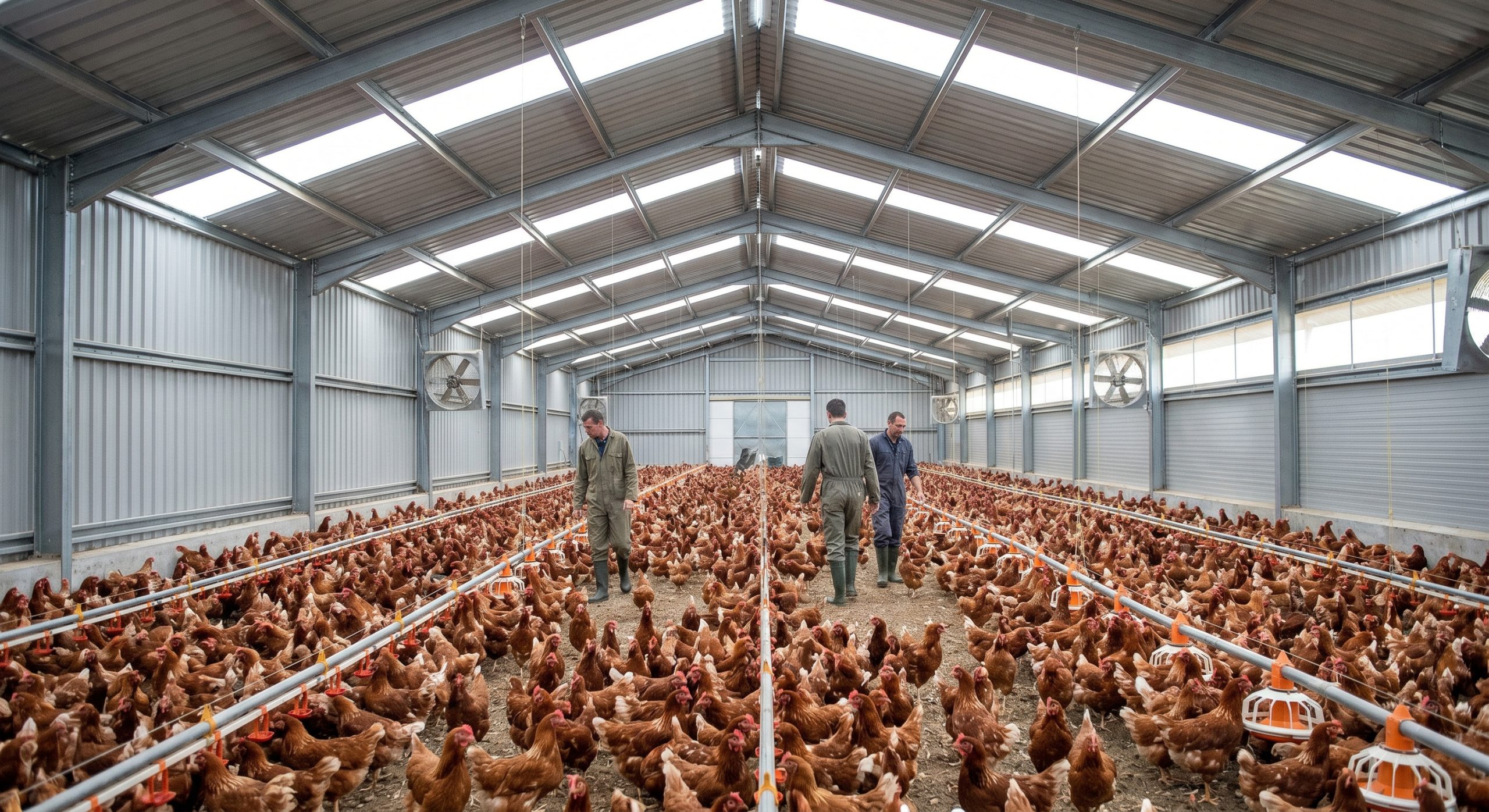
A ten thousand bird layer farm can generate a net profit of approximately $65,905 per 100-week production cycle. Egg production is a highly lucrative business when you manage your operating costs with modern, automated buildings. By housing your flock in an engineered poultry house for 10000 chickens , you maintain an 83% egg-laying rate.
Your revenue will come from two main sources: wholesale egg sales and selling spent layer hens at the end of their cycle. Combined, these sales streams bring in solid cash flow and provide rapid payback on your building setup.
Estimating your net annual cash flow and returns
But wait, there is more: you can also sell the chicken manure as natural organic fertilizer to local crop farms to earn extra revenue. This extra income can help cover your monthly utility bills and lower your operating costs.
- Egg Revenue: 4.73 million eggs sold at 0.083per piece yields 393,146.
- Hen Sales: 9,500 spent layers (95% survival) sold at 1.70/kg yields 32,154.
- Manure Fertilizer: Provides extra seasonal cash from local farmers.
Here is the deal: achieving these numbers requires avoiding high bird mortality and feed waste. With a sturdy, climate-controlled setup, you ensure your birds lay consistently throughout their peak cycle.
| Revenue & Cost Summary | Total Cycle Value (USD) | Business Impact | |
|---|---|---|---|
| Gross Revenue | $425,300 | High daily cash inflow | |
| Total Expenditures | $359,395 | Covers all setup and run costs | |
| Net Profit Margin | $65,905 | Healthy ROI per laying cycle |
This profit projection shows that commercial egg farming is highly rewarding when using high-efficiency buildings.
Key Takeaway: Securing steady wholesale buyers for your eggs and spent hens guarantees regular cash flow and rapid payback on your steel building.
How to optimize a poultry house for 10000 chickens?
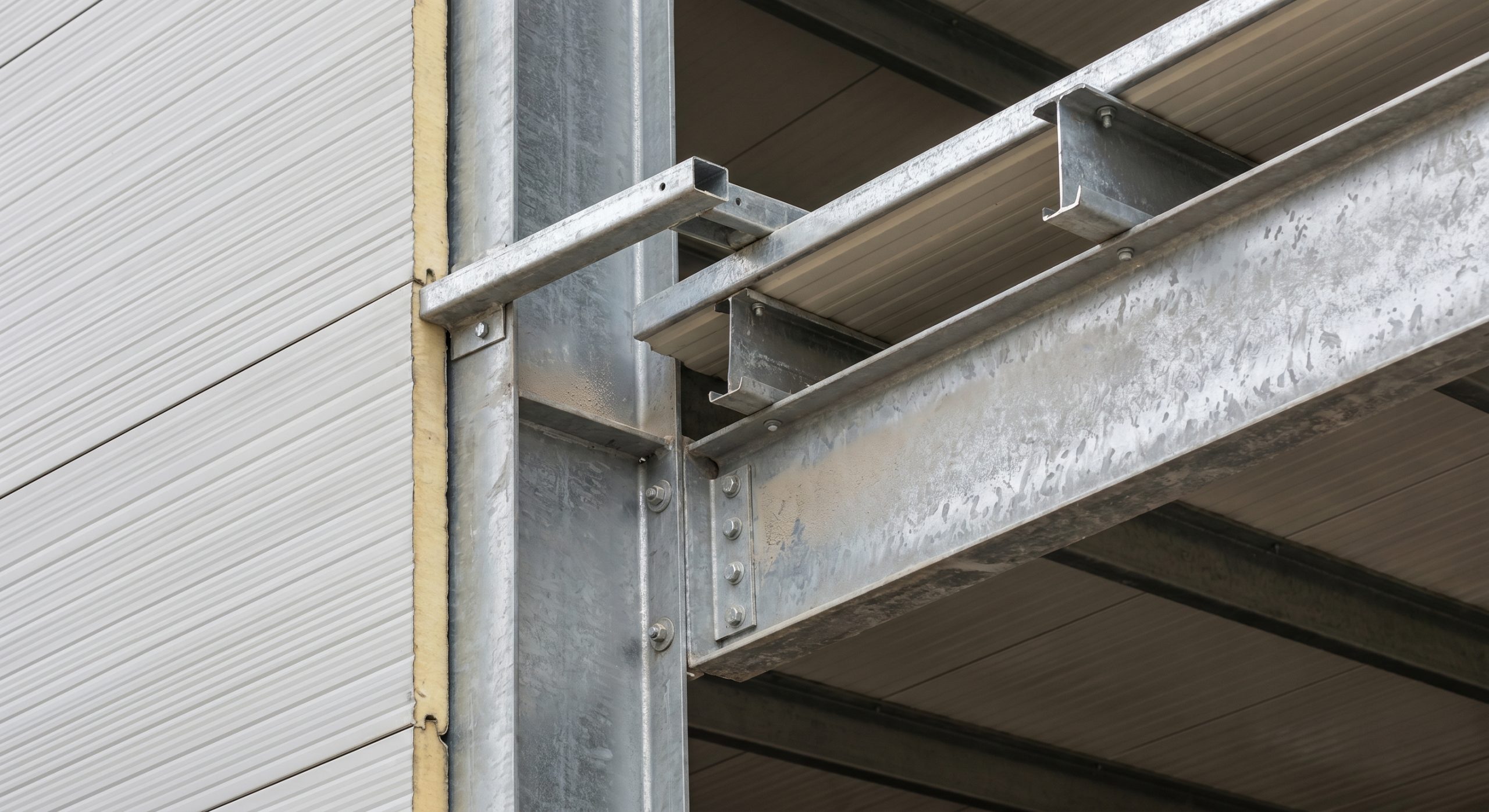
Optimizing your facility requires working with trusted turnkey suppliers, keeping strict biosecurity rules, and choosing high-grade galvanized steel. Turnkey engineering solutions save you time and prevent costly mismatches between your building shell and automated cages. Your poultry house for 10000 chickens should be built with hot-dip galvanized steel to withstand humid conditions.
It is also smart to design modular structures so you can easily extend the building length as your flock grows. Investing in high-quality materials today prevents expensive rust issues and structural repairs tomorrow.
Best practices for engineering and maintenance
Look at the numbers: choosing matched components from a single turnkey supplier can save you up to 30% in construction and assembly time. You do not want the headache of trying to fit cages into a building that was designed with wrong measurements.
- Galvanization: Use hot-dip galvanized steel to protect against corrosion.
- Modular Frames: Select bolt-connected frames for easy future expansion.
- Biosecurity Baths: Install concrete vehicle dips at your entry gate.
And the best part? A highly optimized prefabricated steel house holds its value and can be cleaned and disinfected in just a fraction of the time. This keeps your farm safe, highly productive, and ready to expand into a larger business.
| Optimization Choice | Actionable Step | Main Long-Term Benefit | |
|---|---|---|---|
| Turnkey Design | Source frame and cages together | Eliminates assembly errors | |
| Rust Protection | Choose hot-dip galvanized steel | Prevents structural failure | |
| Expansion Plan | Use modular frame designs | Lowers cost of future growth |
Proper upfront design planning ensures your facility runs efficiently and is easy to expand later.
Key Takeaway: Working with a dedicated turnkey partner protects your initial investment and gives you a durable, high-yielding egg farm.
Partner with a Turnkey Expert Today
Are you worried about high feed costs, disease risks, or construction delays in your upcoming poultry project? Building a commercial egg farm does not have to be a stressful gamble. Our professional engineering team is ready to design and manufacture a custom prefabricated steel layer house tailored exactly to your local climate and budget. We provide complete turnkey systems that integrate structural framing, durable insulated panels, and state-of-the-art automated cage equipment. Let us help you eliminate assembly mistakes, minimize bird mortality, and secure high egg production for years to come. To get a free customized layout design and a competitive quote, contact us today .
Build your poultry house for 10000 chickens today—secure high egg yields fast!
Email:sales@showhoo.com.cn
Phone/WhatsApp: + 86 186 7895 5927
Frequently Asked Questions
- Can I build a poultry house for 10000 chickens on my own?
No, attempting a DIY build is highly risky due to the complex requirements of negative-pressure ventilation, weight loads of heavy multi-tier cages, and exact climate-control settings. Working with a professional prefabricated steel supplier ensures your structure is safe, durable, and engineered to support automated equipment.
- What’s the best ventilation system for hot climates?
Absolutely a closed tunnel-ventilation system featuring high-velocity exhaust fans and evaporative cooling pads is the ultimate choice. This setup maintains stable indoor temperatures and quickly removes toxic ammonia fumes, keeping your birds comfortable and laying consistently during severe summer heat.
- How do I know if my building needs insulated panels?
Definitely yes if your local summer temperatures exceed 30°C or drop below 10°C in the winter. High-quality polyurethane or EPS sandwich wall panels provide the necessary thermal barrier, reducing your energy bills and keeping bird performance high.
- Can I start with an open house and automate it later?
Yes, you can easily do this, but you must design the initial steel frame and concrete foundation to handle the weight and electrical requirements of automated cages and manure scrapers from day one. This planning avoids extremely expensive reconstruction costs down the road.
- What’s the best cage style to maximize egg collection?
An automated 4-tier A-type battery cage system is widely considered the best choice because it combines cost-effectiveness with excellent natural airflow, easy egg-belt collection, and simple waste removal.