
A successful church building project involves strategic architectural design, precise cost analysis, and the selection of high-durability materials to create a functional sanctuary for worshippers. Many growing ministries find themselves trapped in cramped, aging facilities that hinder their mission and drain resources through constant repairs. This stagnation can lead to a loss of momentum, making it difficult to attract new families or host impactful community events. By embracing modern construction methods and strategic planning, you can overcome these obstacles and deliver a cost-effective, durable structure that fulfills your spiritual vision.
Why is a church building essential for your ministry?
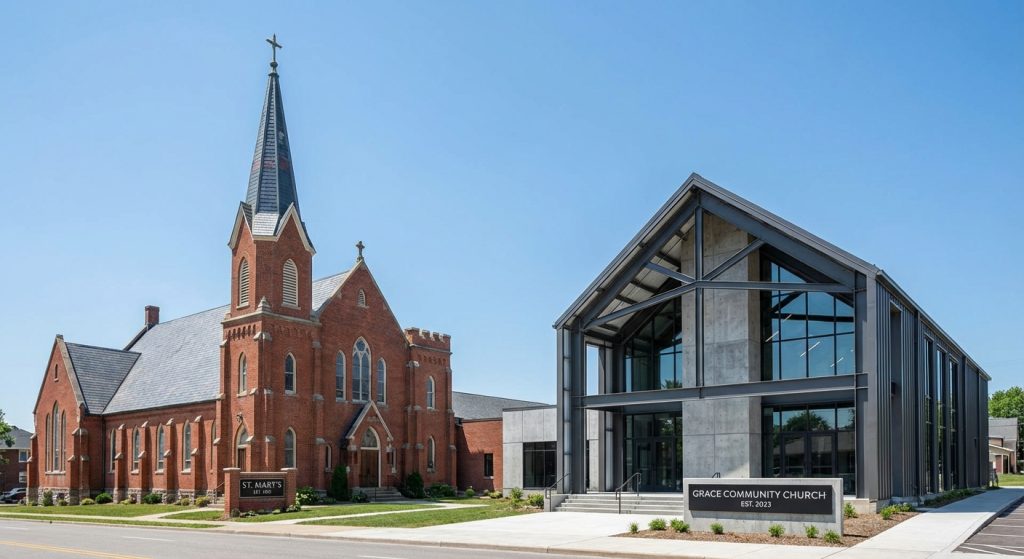
A dedicated church building provides a stable foundation for spiritual growth and community outreach by offering a permanent home for your congregation. It serves as a beacon of hope in the neighborhood while providing the necessary infrastructure for diverse ministry programs. Having a physical presence allows you to establish roots and build long-term trust with local residents.
What problems do aging facilities cause?
Older structures often suffer from inefficient layouts and high maintenance costs that divert funds away from your core mission. You may find that your current space lacks the technology and accessibility required to engage a modern, diverse audience.
- Frequent plumbing and electrical failures.
- Poor energy efficiency leading to high bills.
- Inadequate space for youth and children’s programs.
How does modern construction solve expansion issues?
Modern methods allow you to create flexible spaces that can be adapted for multiple uses throughout the week. Here is the deal: you don’t have to choose between a sanctuary and a fellowship hall when a smart design provides both.
| Feature | Impact on Ministry | |
|---|---|---|
| Flexible Seating | Allows for worship, banquets, and seminars. | |
| Open Foyers | Encourages social interaction and visitor welcome. | |
| Modern HVAC | Ensures comfort while lowering operational costs. |
This table illustrates how specific modern features directly benefit your daily operations.
Key Takeaway: Investing in a modern church building eliminates the physical barriers to growth and allows you to focus your financial resources on people rather than repairs.
What are the primary types of church building structures?
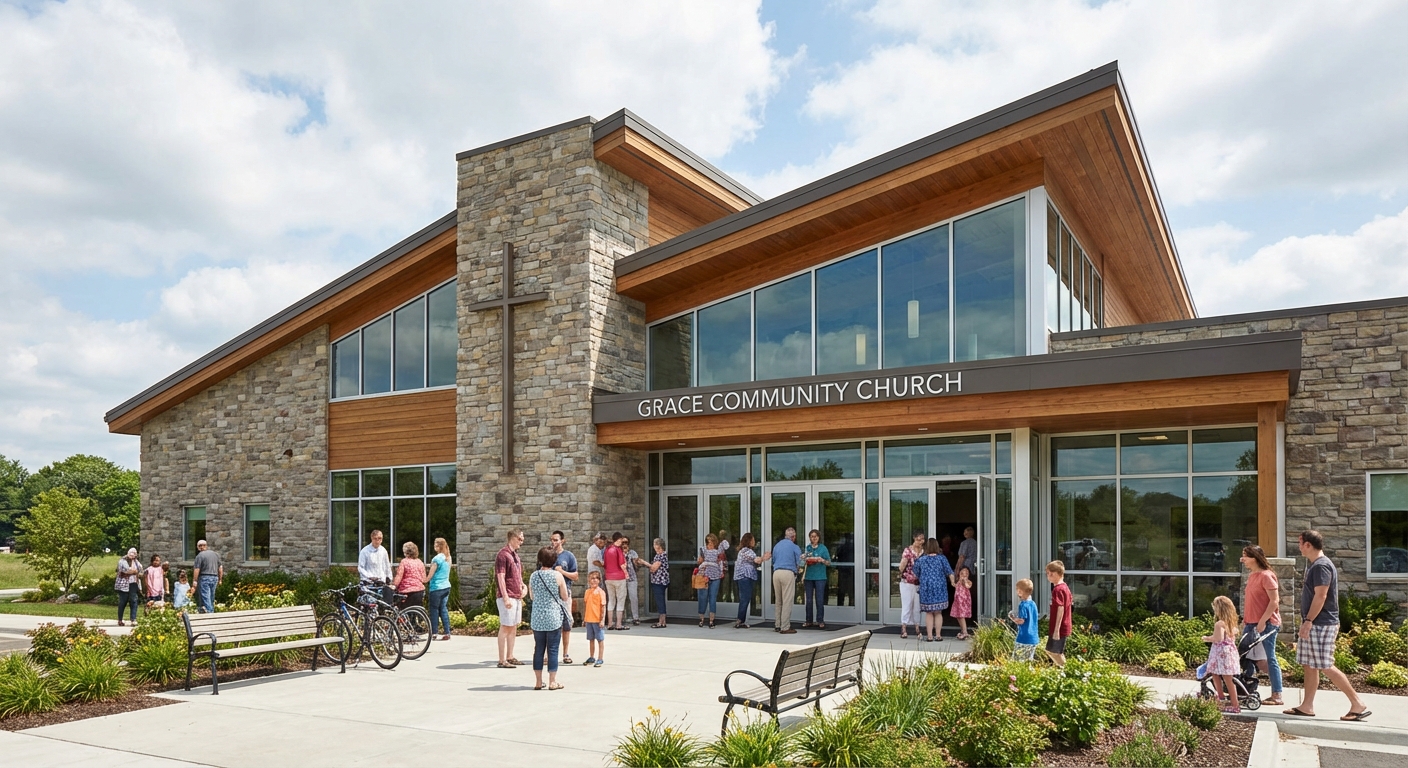
The primary types of church building structures include traditional masonry, wood-frame construction, and high-efficiency steel systems. Each type offers distinct advantages regarding aesthetics, construction speed, and total project budget. You must weigh these factors against your congregation’s long-term vision and financial capacity.
Are traditional masonry buildings still viable?
Traditional masonry offers a sense of permanence and classic architectural beauty that many congregations find appealing for worship. However, the labor-intensive nature of brick and stone often leads to much longer construction timelines and higher costs.
- Iconic architectural presence.
- Excellent thermal mass for temperature stability.
- High initial construction investment.
Why choose a steel structure?
Steel structures have become the top choice for modern ministries due to their incredible durability and speed of erection. The best part? You can achieve a wide, clear-span interior without the need for obstructive support columns that block sightlines.
| Building Type | Build Speed | Maintenance | Design Flexibility | |
|---|---|---|---|---|
| Steel | Very Fast | Very Low | High | |
| Wood | Moderate | High | Moderate | |
| Masonry | Slow | Moderate | Low |
The data shows why steel remains the most efficient choice for modern religious facilities.
Key Takeaway: Selecting a steel church building allows you to maximize your interior space while significantly reducing the time it takes to move into your new sanctuary.
How do you develop effective church building plans?
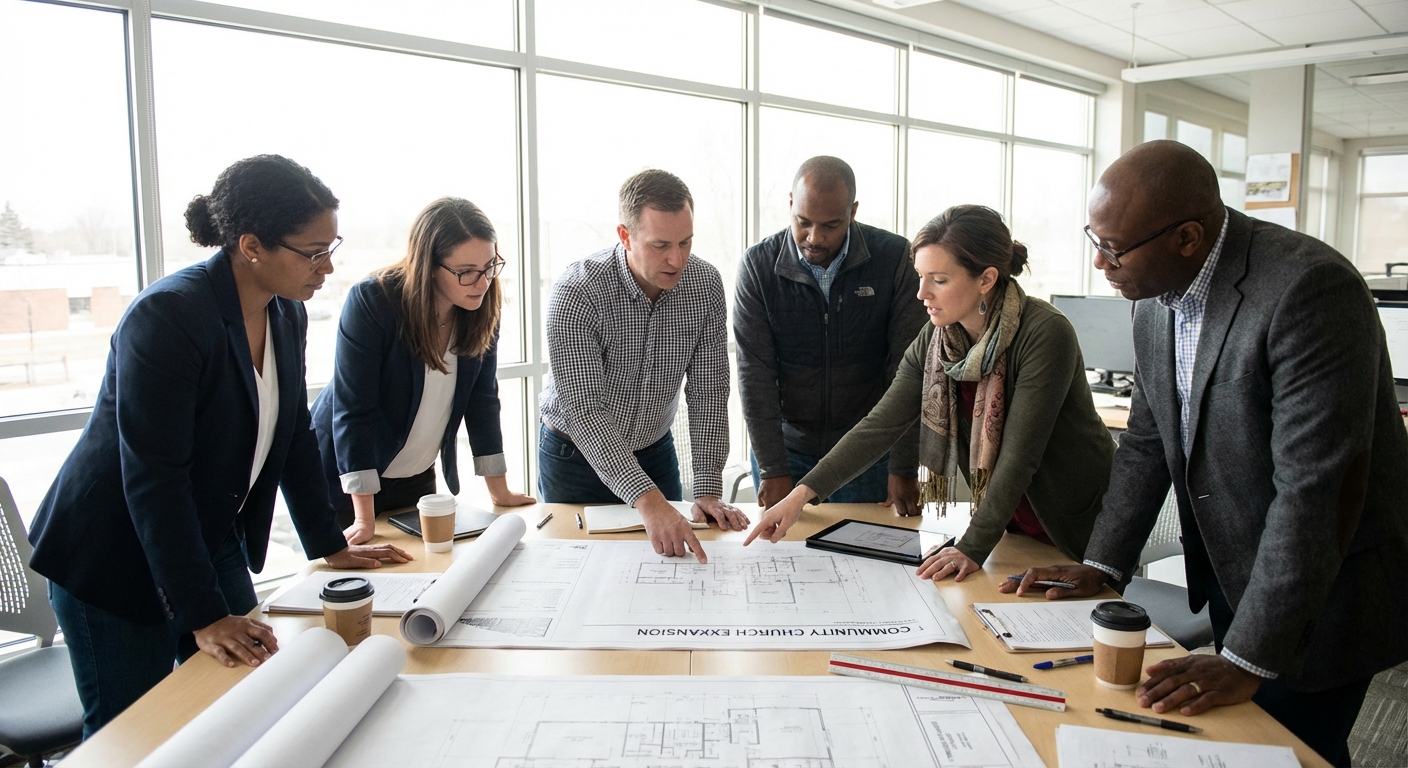
Effective church building plans require a deep understanding of your ministry’s unique workflow, visitor journey, and future expansion goals. You need a design that facilitates seamless movement from the parking lot to the sanctuary while prioritizing safety and comfort. Professional planning ensures that every square foot is utilized to its full potential.
What should be included in the floor plan?
A comprehensive floor plan must balance the sanctuary space with auxiliary areas like classrooms, offices, and restrooms. You should prioritize the foyer as a “Third Space” for community building and informal gatherings before and after services.
- Centralized check-in for children’s security.
- Spacious corridors to prevent bottlenecks.
- Adequate storage for equipment and supplies.
Can you design for future growth?
Designing for growth means creating a structure that can be easily expanded as your attendance increases over the years. Look: building a facility that is too small for your five-year projection is one of the most common mistakes in religious construction.
| Planning Area | Focus Metric | Goal | |
|---|---|---|---|
| Sanctuary | Seats per Sq. Ft. | Comfort and clear sightlines. | |
| Classrooms | Student Capacity | Safe and engaging environments. | |
| Parking | Spots per Attendee | Ease of access for visitors. |
Use these planning metrics to ensure your facility remains functional as your congregation expands.
Key Takeaway: Well-conceived church building plans act as a roadmap for success, preventing expensive redesigns and ensuring the facility serves your needs for decades.
What factors influence the total church building cost?
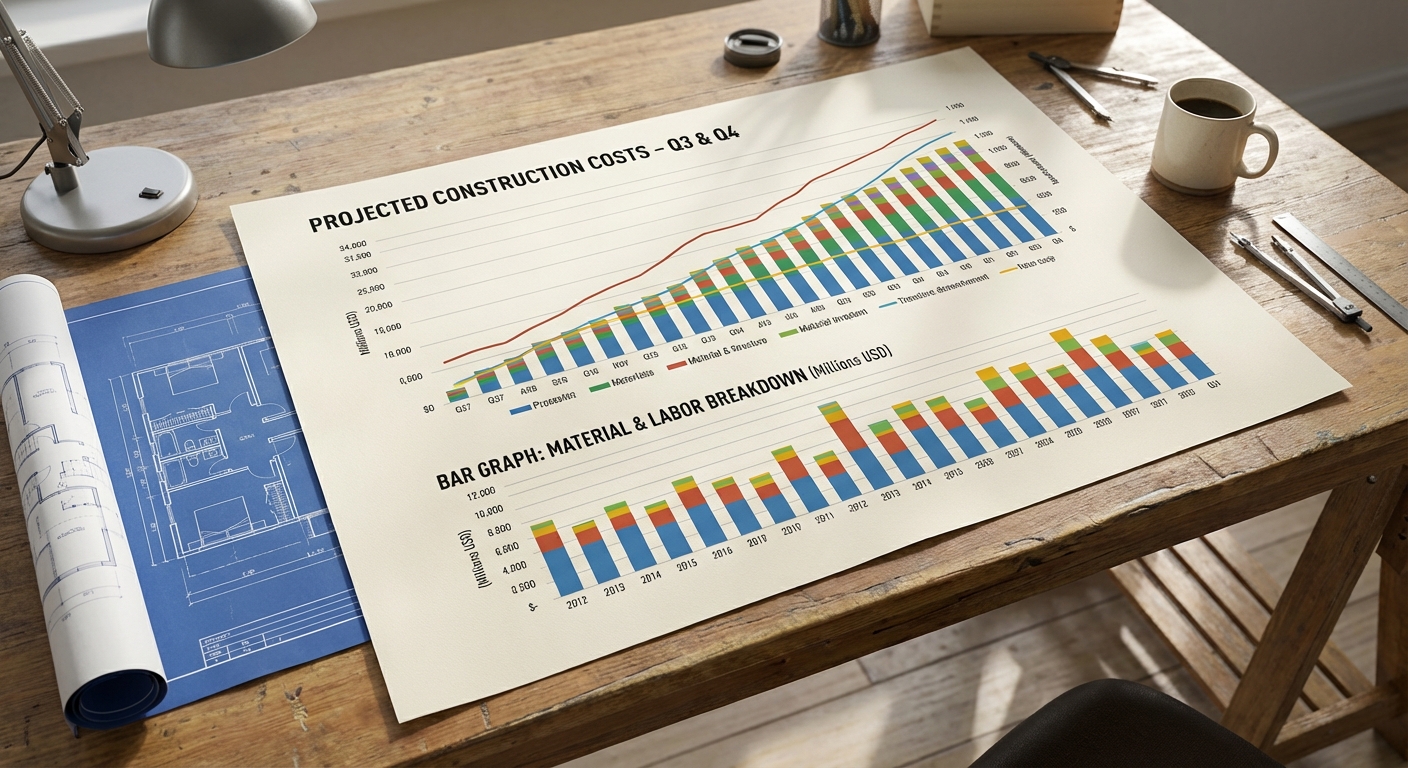
The total church building cost is primarily influenced by site preparation, material selection, and the complexity of the interior finishes. Geographic location also plays a significant role, as local labor rates and permit fees vary widely across different regions. You should establish a realistic contingency fund to handle unexpected site conditions during the early phases of construction.
How much does site preparation cost?
Site preparation includes grading the land, installing utilities, and ensuring proper drainage to protect your investment from water damage. Here is the deal: neglecting soil testing early on can lead to massive foundation expenses that were never in the original budget.
- Excavation and land clearing.
- Connection to city water and sewer lines.
- Paving parking lots and walkways.
Is there a way to reduce construction expenses?
You can significantly lower your total expenses by opting for a prefabricated system that reduces the amount of specialized labor required on-site. The best part? These systems arrive ready for assembly, which slashes the interest costs associated with long-term construction loans.
| Cost Factor | Traditional Build | Prefab Steel | |
|---|---|---|---|
| Labor | Very High | Moderate | |
| Materials | Variable | Controlled | |
| Timeline | 12-18 Months | 6-9 Months |
This comparison highlights how modern methods can save your ministry both time and money.
Key Takeaway: Understanding the variables of church building cost allows your committee to make informed decisions that protect the congregation’s financial health.
Which church building materials offer the best durability?
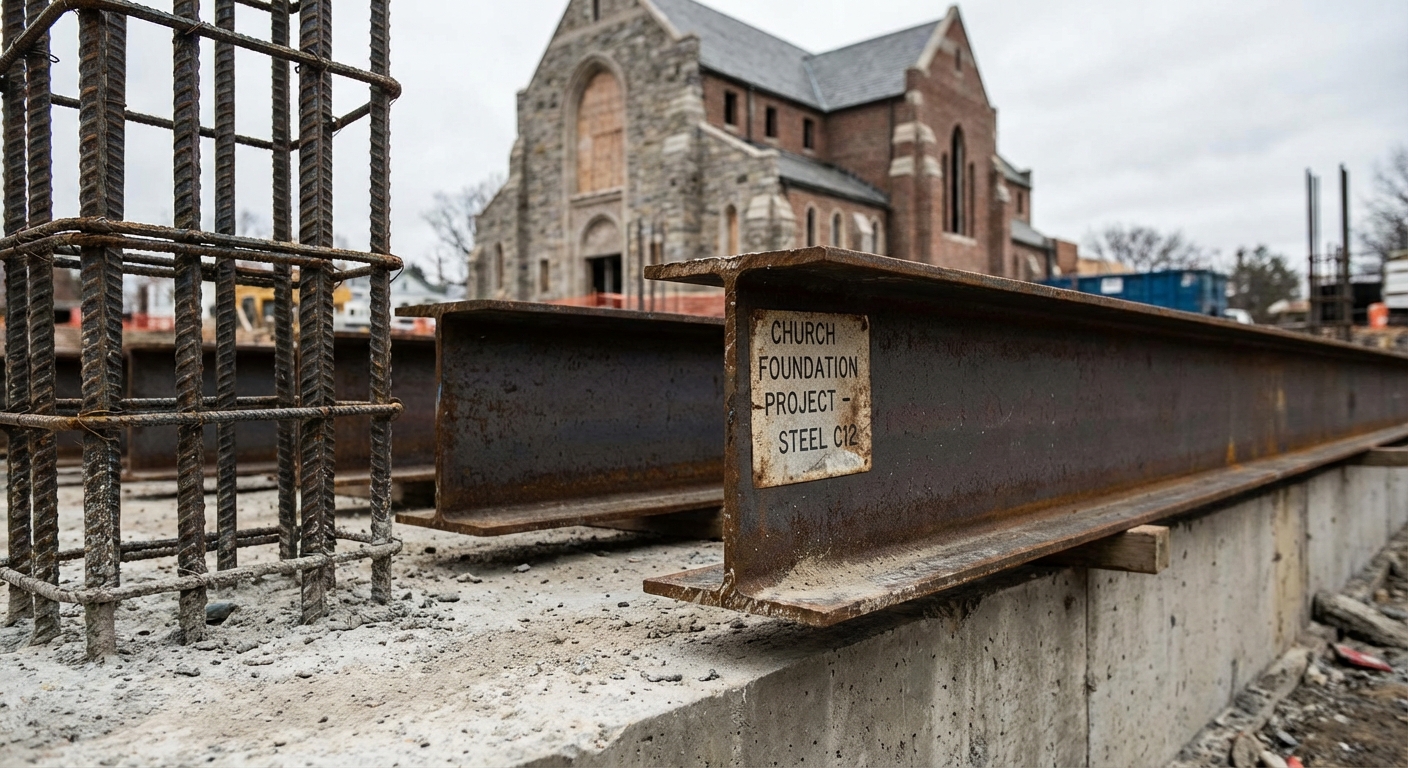
High-quality church building materials such as structural steel and insulated panels offer the best resistance to fire, pests, and extreme weather. Choosing durable materials ensures that your facility remains a safe environment for your members while keeping insurance premiums low. You should prioritize longevity over initial savings to avoid the “hidden” costs of frequent repairs.
Why is steel better than wood for churches?
Steel is far superior to wood because it does not rot, warp, or attract termites, which are common issues in older religious structures. You also benefit from much higher fire ratings, which is critical for buildings that host large public assemblies.
- Non-combustible structural components.
- Resistance to high winds and seismic activity.
- Lower long-term maintenance requirements.
What wall and roof panels should you use?
Insulated sandwich panels provide exceptional energy efficiency by creating a tight thermal envelope around the entire building. Look: investing in high-quality insulation today will save your ministry thousands of dollars in utility costs every single year.
| Material | Lifespan | Energy Efficiency | |
|---|---|---|---|
| Galvanized Steel | 50+ Years | High (with insulation) | |
| Fiberglass | 20-30 Years | Moderate | |
| Traditional Wood | 30-40 Years | Low |
Selecting materials with high lifespan and efficiency ratings is essential for long-term stewardship.
Key Takeaway: Selecting industrial-grade church building materials provides a resilient sanctuary that protects your worshippers and your financial investment for generations.
How do you choose the right size for a church building?
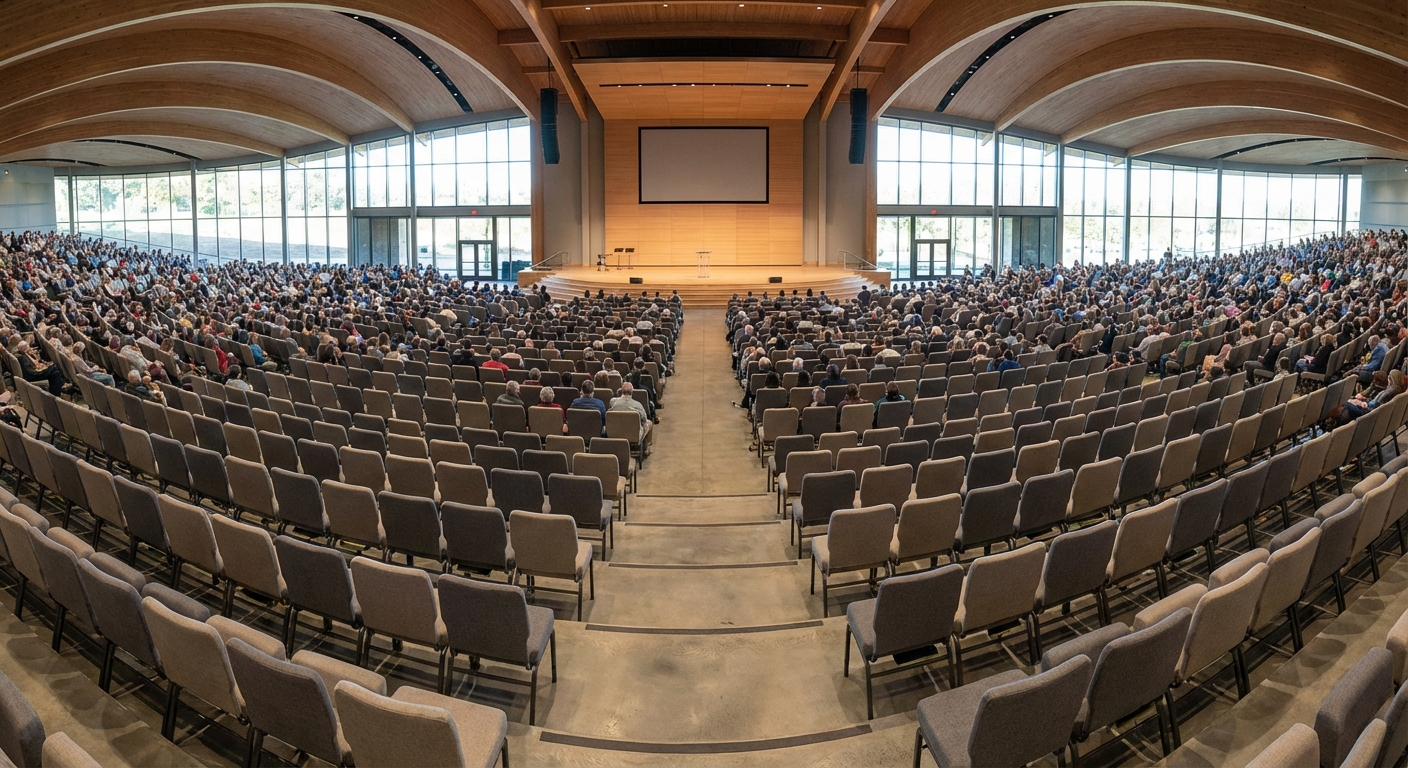
Choosing the right church building size requires a careful analysis of your current peak attendance and your projected growth over the next five to ten years. A common rule of thumb is to build for “80% capacity,” as a room that feels mostly full generates more energy than one that is half-empty. You must also account for the square footage needed for non-worship activities like fellowship and education.
How many square feet per person is needed?
For a comfortable sanctuary, you should generally allocate between 15 and 17 square feet per person if using fixed pews. If you choose theater-style seating or moveable chairs, you can often increase your capacity within the same footprint.
- 15-17 sq. ft. for traditional pews.
- 10-12 sq. ft. for flexible chair layouts.
- Additional space for the altar and platform.
What auxiliary spaces are required?
Your building must include enough restroom facilities and hallway space to accommodate the entire congregation during the transition between services. The best part? Smart design allows you to use your foyer for multiple functions, effectively increasing your usable square footage without building a larger shell.
| Space Type | Recommended Percentage | Purpose | |
|---|---|---|---|
| Sanctuary | 40% – 50% | Worship and assembly. | |
| Education | 20% – 30% | Children and youth programs. | |
| Admin/Misc | 10% – 20% | Offices and storage. |
Use these percentages to distribute your total square footage across the different ministry departments.
Key Takeaway: Right-sizing your church building ensures that you aren’t paying for empty space while still providing plenty of room for new families to join.
Why is a steel structure church building a smart investment?
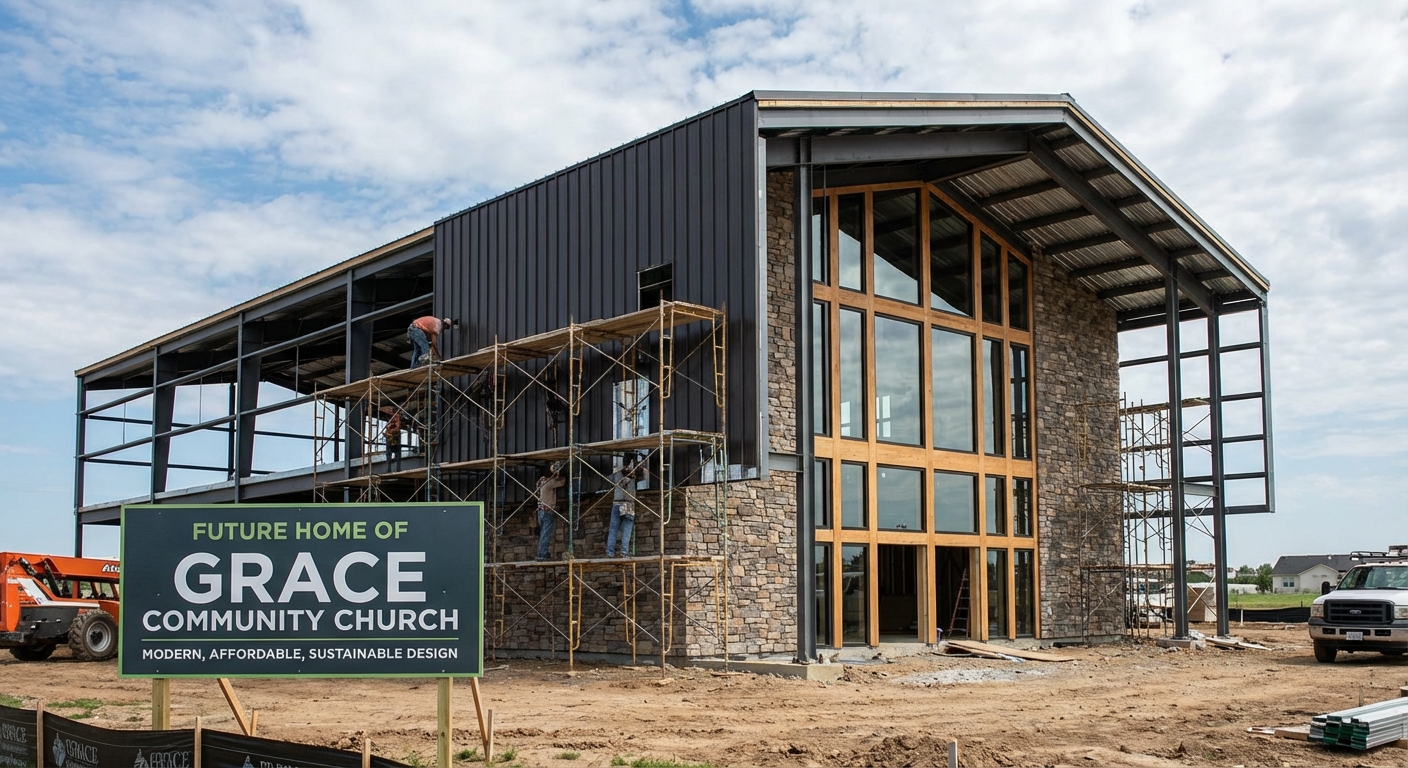
A steel structure church building is a smart investment because it combines extreme structural integrity with unmatched architectural flexibility. These buildings can be designed to look exactly like traditional churches while providing the benefits of industrial engineering. You gain a facility that is built to last for more than fifty years with minimal upkeep required.
What are the main engineering benefits?
Steel allows for massive clear-span designs, meaning you can have a large auditorium without any columns blocking the view of the platform. This is essential for modern worship environments where high-quality video and clear sightlines are a priority for every attendee.
- Spans of up to 40 meters without interior supports.
- High strength-to-weight ratio for safety.
- Factory-precision components for a perfect fit.
Is the installation process faster?
The installation process for a steel system is significantly faster than traditional methods because the components are manufactured in a controlled factory environment. Here is the deal: your building can be erected in weeks rather than months, allowing you to launch your new location much sooner.
| Project Stage | Time Benefit | Impact | |
|---|---|---|---|
| Fabrication | Concurrent with site prep. | Saves 2-3 months. | |
| Erection | Bolted connections. | Saves 4-6 months. | |
| Finishing | Ready for cladding. | Faster occupancy. |
The speed of a steel build allows your ministry to maintain momentum during the expansion process.
Key Takeaway: A steel church building provides the most durable, flexible, and cost-effective solution for a modern congregation looking to maximize their impact.
How can a church building improve community engagement?
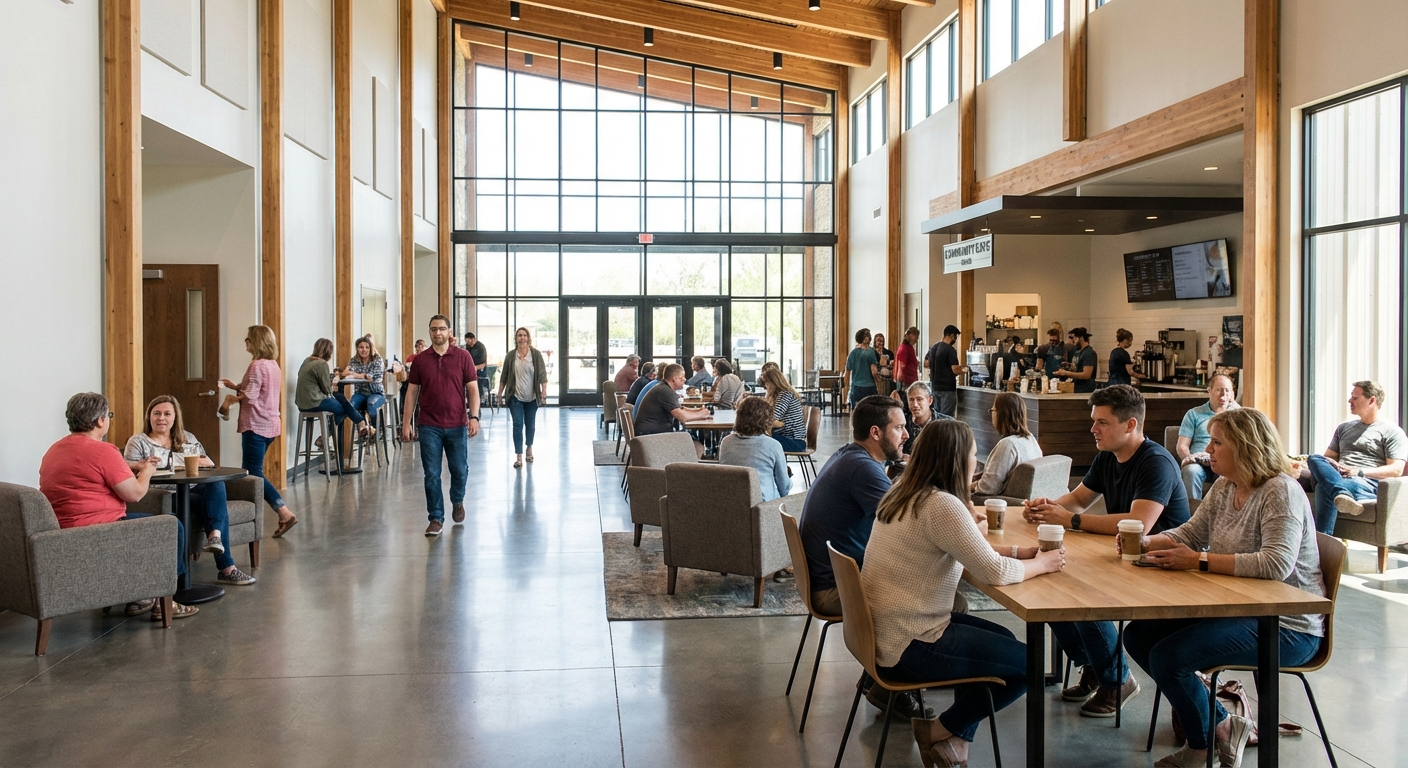
A modern church building can improve community engagement by providing versatile spaces that serve local needs beyond Sunday morning services. By designing your facility as a community hub, you make the church an essential part of the local social fabric. You should look for ways to make the building feel welcoming and accessible to everyone in the neighborhood.
Can you include social spaces like cafes?
Including a foyer café or a social lounge encourages people to arrive early and stay late, fostering deeper relationships within the congregation. The best part? These spaces can also be used during the week for small groups, community meetings, or as a co-working space for local residents.
- Inviting coffee bar and lounge seating.
- Outdoor porches for community events.
- High-speed internet for public use.
How does layout affect the visitor experience?
A transparent and intuitive layout reduces the “anxiety of the unknown” for first-time visitors who may be unfamiliar with your church. Look: if a visitor can easily find the restrooms, the children’s check-in, and the sanctuary, they are much more likely to return for a second visit.
| Experience Factor | Design Solution | Result | |
|---|---|---|---|
| Navigation | Clear signage and open sightlines. | Lower visitor stress. | |
| Atmosphere | Natural light and warm finishes. | Welcoming environment. | |
| Safety | Secure and visible kids’ area. | Trust from parents. |
Focusing on these experience factors ensures your building serves as an effective tool for outreach.
Key Takeaway: A well-designed church building acts as a silent invitation to the community, making your ministry more approachable and engaging for everyone.
What steps are involved in the church building process?
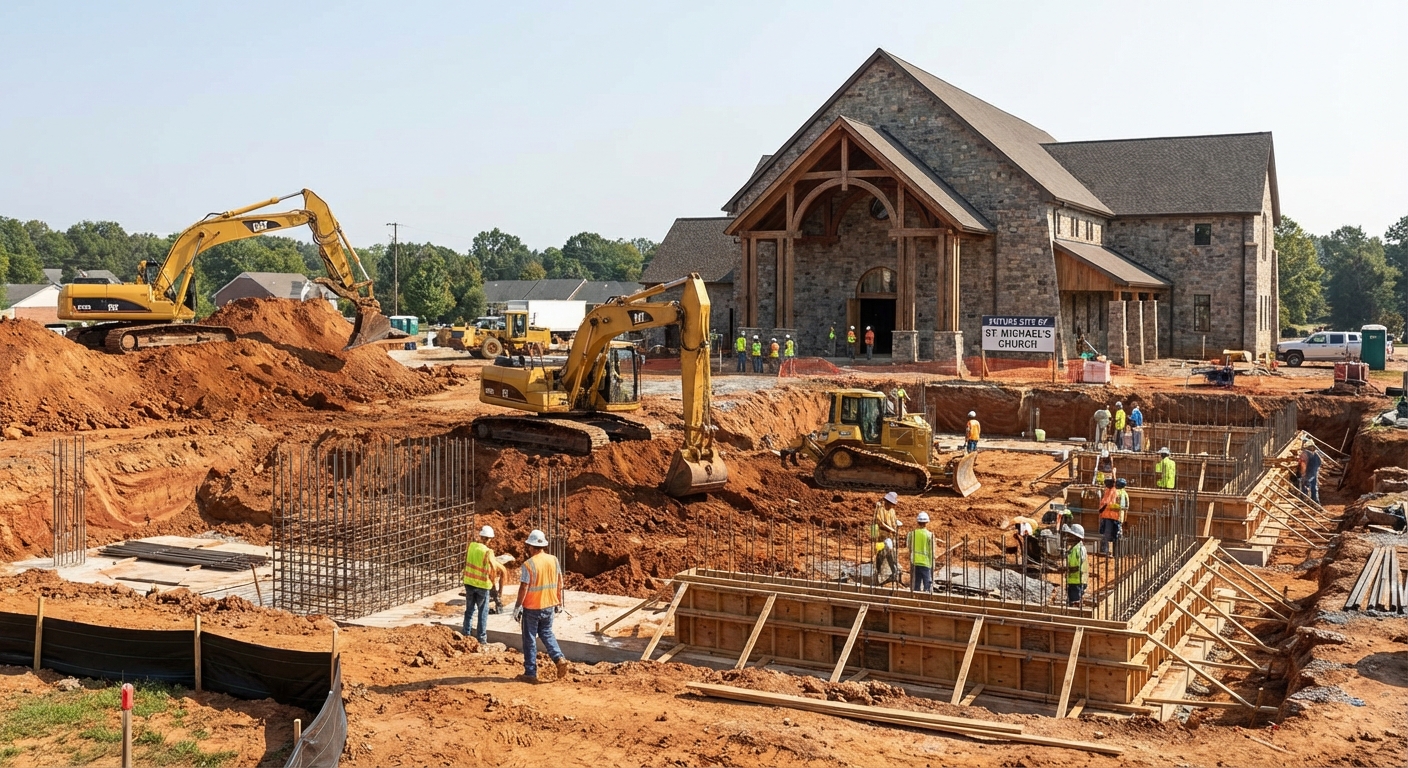
The church building process involves several critical phases, starting from the initial vision casting and moving through design, permitting, and final construction. Each step must be managed with precision to ensure the project stays on schedule and within the allocated budget. You need a dedicated building committee to work closely with the engineers and contractors throughout the duration of the project.
Where do you start with the foundation?
Everything begins with a solid foundation and a clear set of anchor bolts that are precisely placed according to the engineering drawings. Here is the deal: if the foundation is off by even an inch, it can create massive assembly problems when the steel frame arrives at the site.
- Geotechnical soil reports.
- Precise anchor bolt placement.
- Professional concrete pouring and curing.
How do you manage the project timeline?
Managing the timeline requires constant communication between the factory and the on-site construction crew to ensure materials arrive exactly when they are needed. The best part? Choosing an integrated delivery system ensures that all parts—from the frame to the fasteners—are present and ready for assembly.
| Construction Phase | Key Task | Duration (Est.) | |
|---|---|---|---|
| Foundations | Concrete and utility rough-in. | 4-8 Weeks | |
| Framing | Steel columns and beams. | 2-4 Weeks | |
| Enclosure | Roof and wall panels. | 3-6 Weeks |
This timeline represents a typical schedule for a mid-sized religious facility using modern steel systems.
Key Takeaway: Following a structured church building process ensures that your project moves smoothly from a concept on paper to a completed sanctuary for your congregation.
Where can you find customized church building solutions?
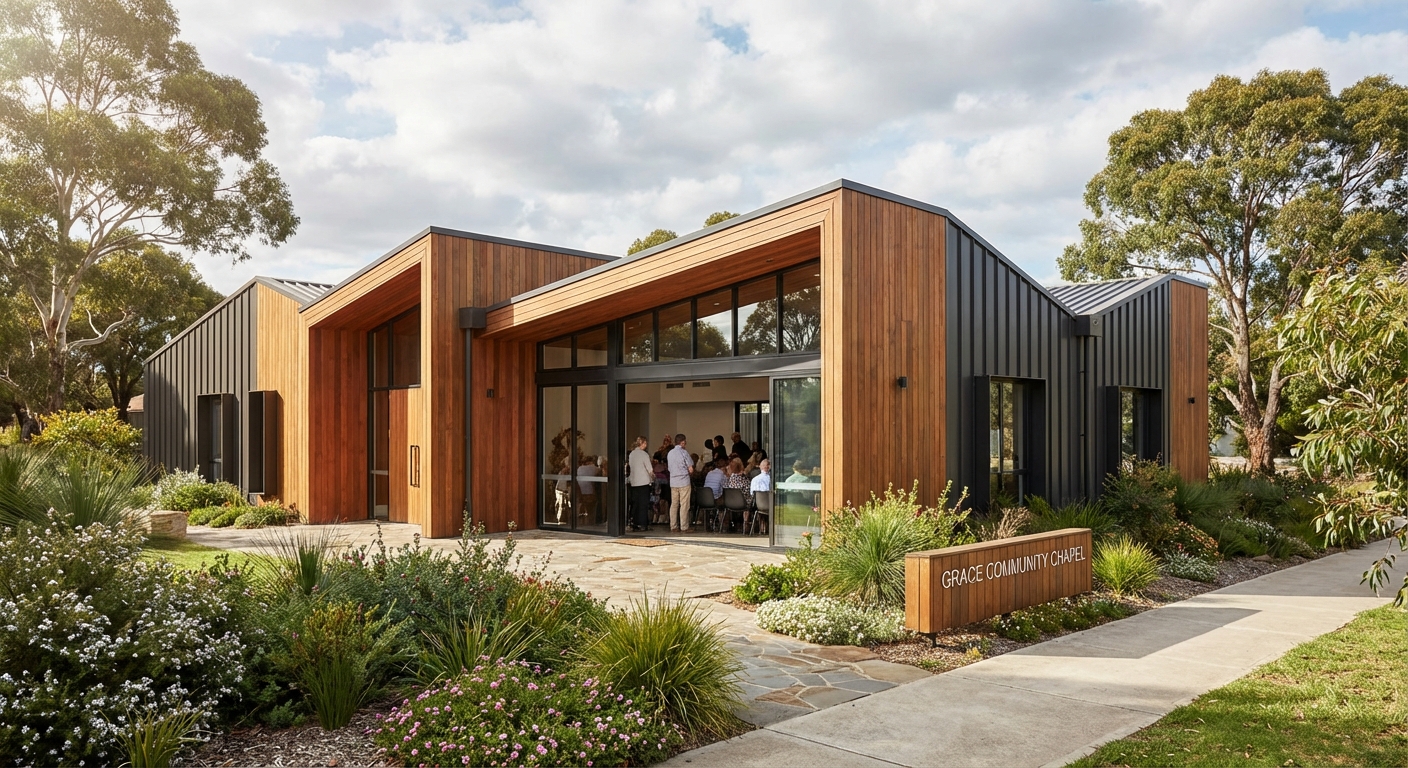
You can find customized church building solutions from manufacturers who specialize in engineering steel structures for international religious projects. These providers offer factory-direct pricing and full engineering support to ensure your building meets all local codes. You should partner with a supplier that offers a complete system, including the frame, panels, and all necessary accessories.
Are modular designs fully customizable?
Yes, modern modular and prefabricated steel designs are highly customizable to match your specific architectural vision and ministry needs. You can add decorative steeples, varied roof pitches, and custom glass entryways to create a unique look that reflects your church’s identity.
- Custom window and door placements.
- Variety of exterior cladding options.
- Flexible internal mezzanine levels.
How do you get a project quote?
The best part? You can receive a detailed project quote within 24 hours by sharing your basic dimensions and seating requirements with a specialist. Look: having an accurate quote early in the process is essential for launching a successful capital campaign or securing a construction loan.
| Inquiry Detail | Importance | Reason | |
|---|---|---|---|
| Dimensions | Critical | Determines the structural frame. | |
| Local Code | Critical | Ensures wind and snow safety. | |
| Usage | High | Dictates the insulation and layout. |
Providing these details allows the engineering team to create a solution tailored specifically for your location.
Key Takeaway: Choosing a customized church building solution provides you with a precision-engineered facility that is specifically designed to support your ministry’s unique vision.
Conclusion
Building a new sanctuary is one of the most significant milestones in the life of a ministry, representing a commitment to growth and a legacy for the future. By understanding the core aspects of church building design, selecting durable steel materials, and managing your budget with precision, you can create an inspiring space that serves your community for decades. We have explored how modern construction solutions solve the problems of aging facilities while providing the flexibility needed for today’s multi-functional ministries.
If you are ready to turn your vision into a reality, our team is here to support you with expert engineering and factory-direct solutions. We specialize in delivering high-quality, installation-ready systems that allow you to build faster and more affordably. Contact us today to discuss your project requirements and receive a customized quote for your new home. Together, we can build a facility that honors your mission and welcomes your community for generations to come.
Frequently Asked Questions
Can I build a church in phases to manage my budget?Yes, you can. Many congregations start with a “Phase 1” multi-purpose building and add a dedicated sanctuary later as their membership and funding grow.
What’s the best material for a church in a coastal environment?Galvanized steel with high-quality coating systems is the best choice because it resists the corrosive effects of salt air and high humidity.
How do I know if a steel building is right for my church?You know it’s the right choice if you need a large, open worship area with low maintenance costs and a fast construction timeline that saves on labor.
Can I use my own local architect for the design?Yes, you definitely can. Most steel building manufacturers work directly with your local engineer or architect to ensure the fabrication drawings meet all your specific requirements.
What’s the best way to handle thermal insulation?The best way is to use insulated sandwich panels or high-R value blanket insulation with a vapor barrier to keep the interior comfortable and energy bills low.