
A prefabricated warehouse building is the most efficient solution for rapid industrial expansion. You may be struggling with sudden logistics bottlenecks, where your current facility is bursting at the seams and every day of delay means lost revenue and frustrated clients. Traditional construction is often a nightmare of unpredictable weather delays, skyrocketing labor costs, and complex permit cycles that can take a year or more to resolve. By choosing a prefabricated warehouse building , you bypass these obstacles with a streamlined, factory-controlled engineering process that delivers a high-performance facility in weeks, not months.
Why is a prefabricated warehouse building the best choice for growth?
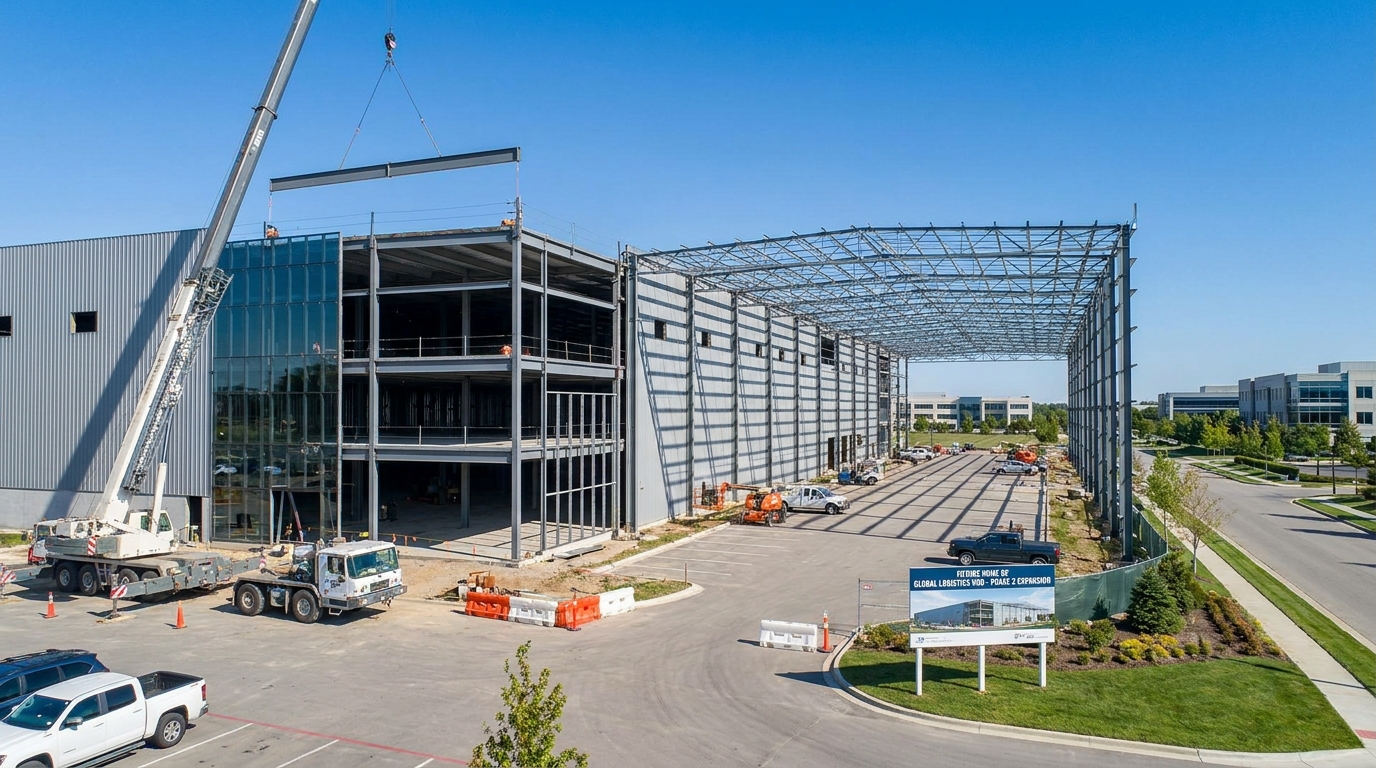
A prefabricated warehouse building is the ideal choice for growth because its modular design allows for effortless scalability and structural flexibility. When you invest in a prefabricated warehouse building , you are securing an asset that can expand alongside your business. The use of Q355B high-strength steel ensures that your structure can handle the weight of heavy-duty operations while offering the largest possible clear-span widths—up to 50 meters—without obstructive interior columns.
Can you expand later?
You certainly can, as these structures are designed to be “open-ended” for future additions. If you find your inventory needs doubling next year, you simply order additional bays that bolt directly into the existing primary frame. This avoids the messy demolition and structural risks associated with traditional masonry additions.
Why is clear-span important?
You need maximum floor space to optimize your workflow and accommodate changing rack configurations. With a clear-span of up to 50m, you have total freedom to move forklifts and install large machinery without hitting supports.
The truth is:
- Modular frames grow with your revenue.
- Clear-span design maximizes every square inch.
- High-grade steel supports heavy industrial loads.
Key Takeaway: Modular scalability and wide clear-spans ensure your facility is never a bottleneck for your business expansion.
| Feature | Specification | Impact on Growth | |
|---|---|---|---|
| Clear Span Width | Up to 50m | 100% usable floor space | |
| Steel Grade | Q355B / Q235B | Extreme load capacity | |
| Expansion Type | Modular Bolt-on | Low-cost future additions |
Analysis: Flexibility in floor layout is the single biggest factor in long-term industrial efficiency.
How does a prefabricated warehouse building reduce construction costs?
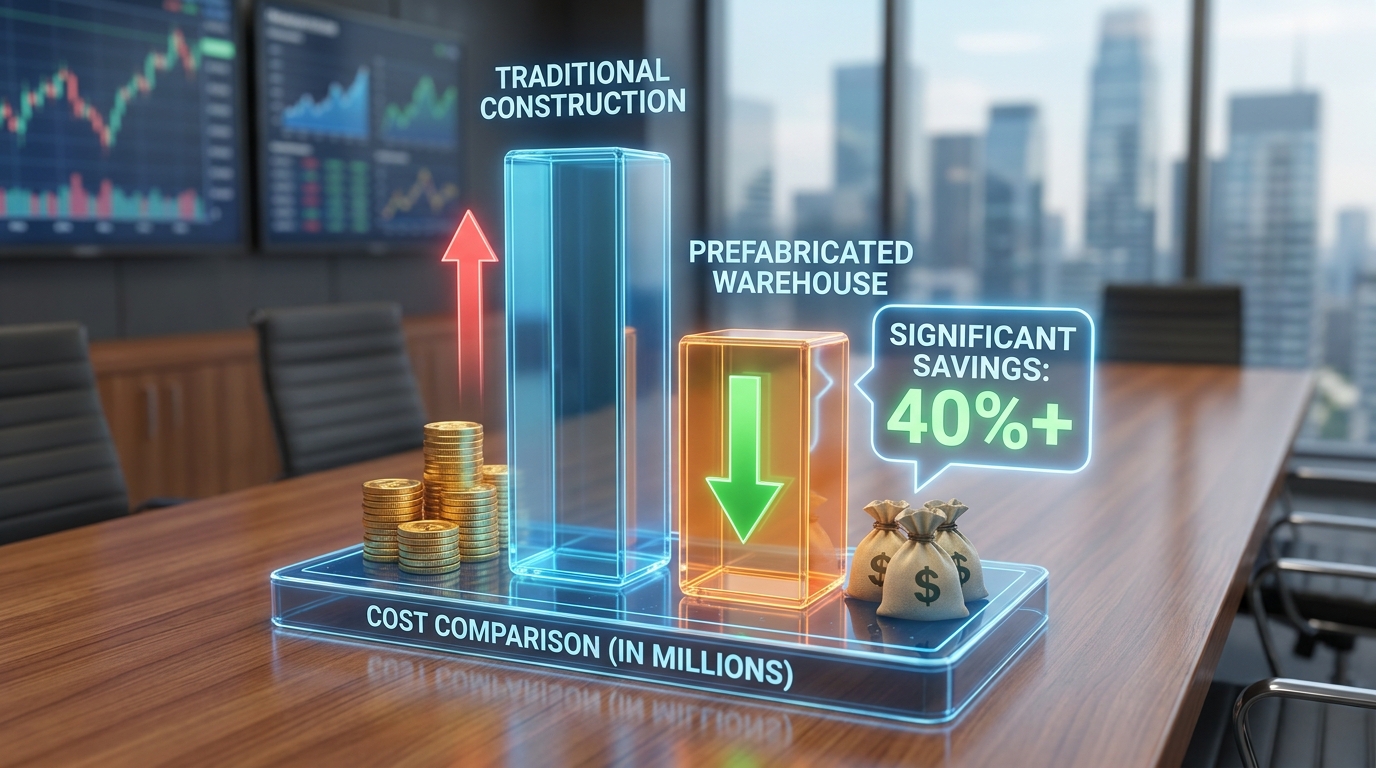
A prefabricated warehouse building reduces construction costs by significantly lowering on-site labor requirements and eliminating material waste through precision factory engineering. Because every component of a prefabricated warehouse building is cut, drilled, and welded in a controlled environment, you avoid the “hidden costs” of field errors and weather-related work stoppages. This streamlined process typically results in a 30% to 50% reduction in total project expenditure compared to conventional brick-and-mortar builds.
Are labor costs lower?
You will spend much less on specialized trades because the structural components arrive at your site ready for immediate assembly. Instead of paying for a large crew of welders and fabricators for months, you only need a small assembly team to bolt the “kit” together.
How is waste eliminated?
Factory manufacturing uses CNC machinery to ensure every piece of steel is utilized perfectly according to the blueprint. You aren’t paying for scrap metal or dumpster rentals for construction debris that would usually pile up on a traditional job site.
Here is the deal:
- Controlled costs with no surprise change orders.
- Reduced site management overhead.
- Minimum waste of high-value raw materials.
Key Takeaway: Precision engineering moves the expensive work from the field to the factory, saving you thousands in labor and waste.
| Cost Driver | Traditional Method | Prefab Steel | |
|---|---|---|---|
| Labor Hours | High (Manual Fabrication) | Low (Fast Assembly) | |
| Material Waste | 10% – 15% | Under 2% | |
| Weather Risk | High Delays | Minimal Impact |
Analysis: Shifting construction to a factory model transforms an unpredictable capital expense into a fixed-cost asset.
Contact Information:
Email: sales@showhoo.com.cn
Phone/WhatsApp: +86 186 7895 5927
Can a prefabricated warehouse building withstand extreme weather?
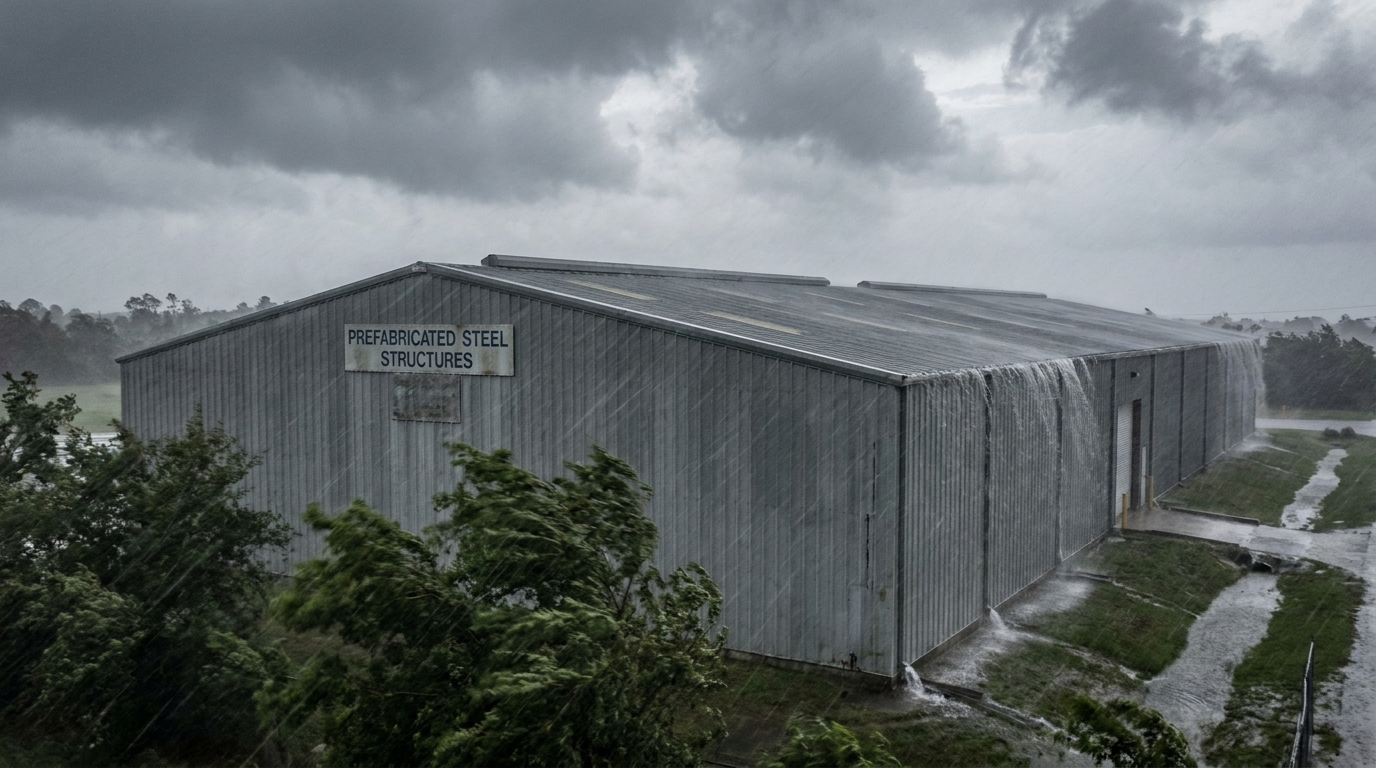
Yes, a high-quality steel structure is engineered specifically to withstand hurricane-force winds, heavy snow loads, and seismic activity. Every prefabricated warehouse building we design is calculated based on your local climate data to ensure maximum safety. Our buildings are ISO9001 and CE certified, meeting international standards for structural resilience in the face of natural disasters.
Is it wind-resistant?
You can rest easy knowing your facility is rated for wind speeds exceeding 150km/h through the use of reinforced bracing and high-tensile bolt connections. The aerodynamic profile of our roof systems further reduces the lift effect during severe storms.
What about heavy snow?
Your roof pitch and purlin spacing are engineered to support the exact snow load requirements of your specific region. We use thick-gauge steel sheets that resist deformation even under massive weight accumulation during winter months.
Believe it or not:
- Rated for Zone 8 seismic activity.
- Corrosion-resistant coatings for coastal areas.
- Certified to meet local building codes globally.
Key Takeaway: Rigorous site-specific engineering makes steel buildings the safest haven for your valuable inventory in any climate.
| Climate Stress | Engineering Solution | Protection Grade | |
|---|---|---|---|
| High Winds | Cross-Bracing / Portals | Hurricane-Ready | |
| Seismic Shock | Ductile Steel Frames | High-Magnitude Rated | |
| Corrosion | Hot-Dip Galvanizing | Marine-Grade Available |
Analysis: Site-specific engineering ensures your building is not a generic shell but a tailored shield against local risks.
What makes a prefabricated warehouse building faster to install?
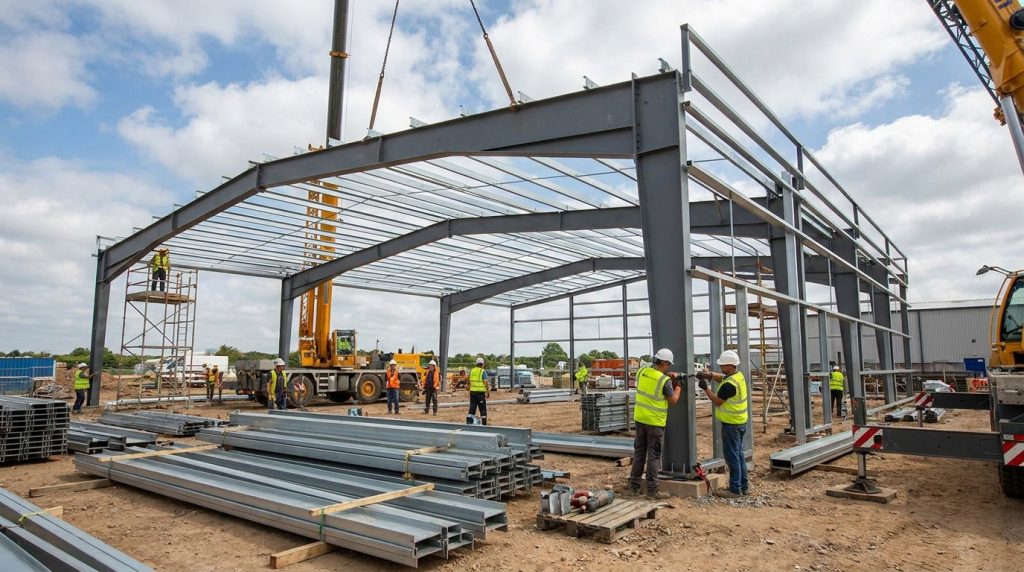
The speed of a prefabricated warehouse building comes from its “kit-of-parts” assembly logic, where all components are pre-punched and pre-drilled for immediate bolting. When a prefabricated warehouse building arrives at your site, the heavy engineering is already finished, allowing your crew to bypass the weeks of measurement and cutting required for other materials. This “plug-and-play” construction method can get your facility weather-tight in as little as 4 to 6 weeks.
How is the site ready so fast?
You can prepare your foundation and anchor bolts while the building is being manufactured in the factory. This parallel workflow means that the moment your slab is cured, the steel arrives and the vertical progress begins immediately.
Why is assembly simpler?
Every beam and column is numbered and corresponds to a detailed 3D assembly map provided with your order. You won’t have to worry about your crew making “field adjustments” or corrections because the components can only fit together in the correct orientation.
It gets better:
- No welding required on most sites.
- Predictable assembly timelines.
- Reduced coordination between multiple subcontractors.
Key Takeaway: Eliminating on-site fabrication allows you to start generating ROI months faster than traditional construction.
| Project Phase | Traditional Time | Prefab Steel Time | |
|---|---|---|---|
| Engineering | 4 – 8 Weeks | 1 – 2 Weeks | |
| Fabrication | On-site (Slow) | Factory (Fast) | |
| On-site Assembly | 12 – 20 Weeks | 4 – 6 Weeks |
Analysis: Speed to market is often the deciding factor in securing large logistics contracts and outperforming competitors.
Is customization possible with a prefabricated warehouse building?
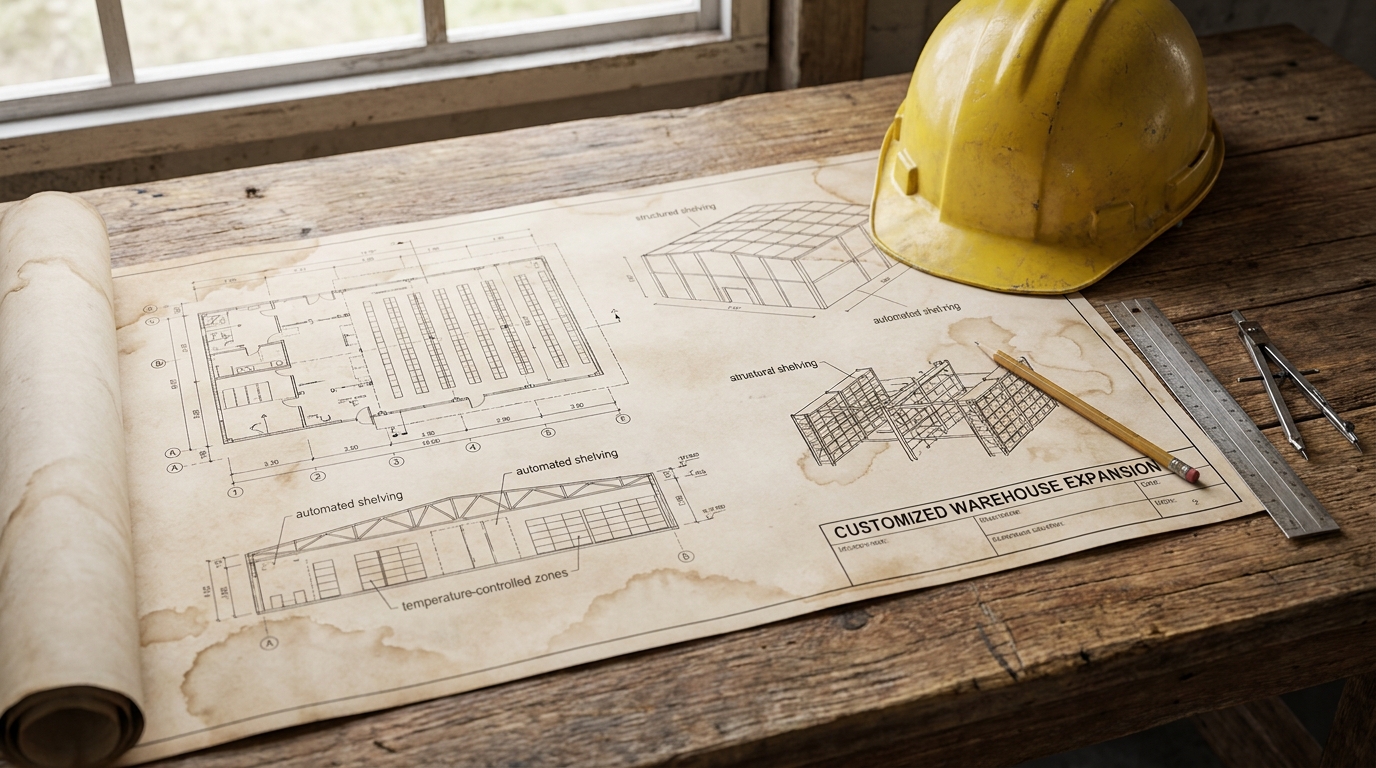
Absolutely, as modern industrial needs require tailored solutions such as integrated mezzanine offices, crane runways, and specialized climate-controlled zones. By choosing a prefabricated warehouse building , you are not limited to a “standard box” but have access to a fully customizable architectural system. You can specify anything from the type of insulation (PU, Rockwool, or EPS) to the number of high-speed dock doors needed for your shipping lanes.
Can you add mezzanines?
You can easily integrate a second level for administrative offices or light-duty assembly without increasing your building’s footprint. We engineer the primary frames to carry the additional weight of these internal platforms seamlessly.
What about heavy lifting?
Your building can be designed with heavy-duty crane beams that support 5-ton to 50-ton overhead cranes. This is essential for manufacturing facilities that need to move large components safely across the workshop floor.
Don’t overlook this:
- Specialized sandwich panels for cold storage.
- Aesthetic options like glass curtain walls.
- Integrated skylights for natural lighting.
Key Takeaway: Customization turns a simple storage shell into a specialized tool that enhances your specific operational efficiency.
| Custom Option | Industrial Purpose | Benefit | |
|---|---|---|---|
| Crane Girders | Heavy Manufacturing | Easy Material Handling | |
| Sandwich Panels | Food / Pharma Storage | Thermal Insulation | |
| Mezzanine | Office / Storage | Multi-Level Utility |
Analysis: A building that is custom-tailored to your workflow will always outperform a generic rented space.
Contact Information:
Email: sales@showhoo.com.cn
Phone/WhatsApp: +86 186 7895 5927
How does a prefabricated warehouse building enhance operational safety?
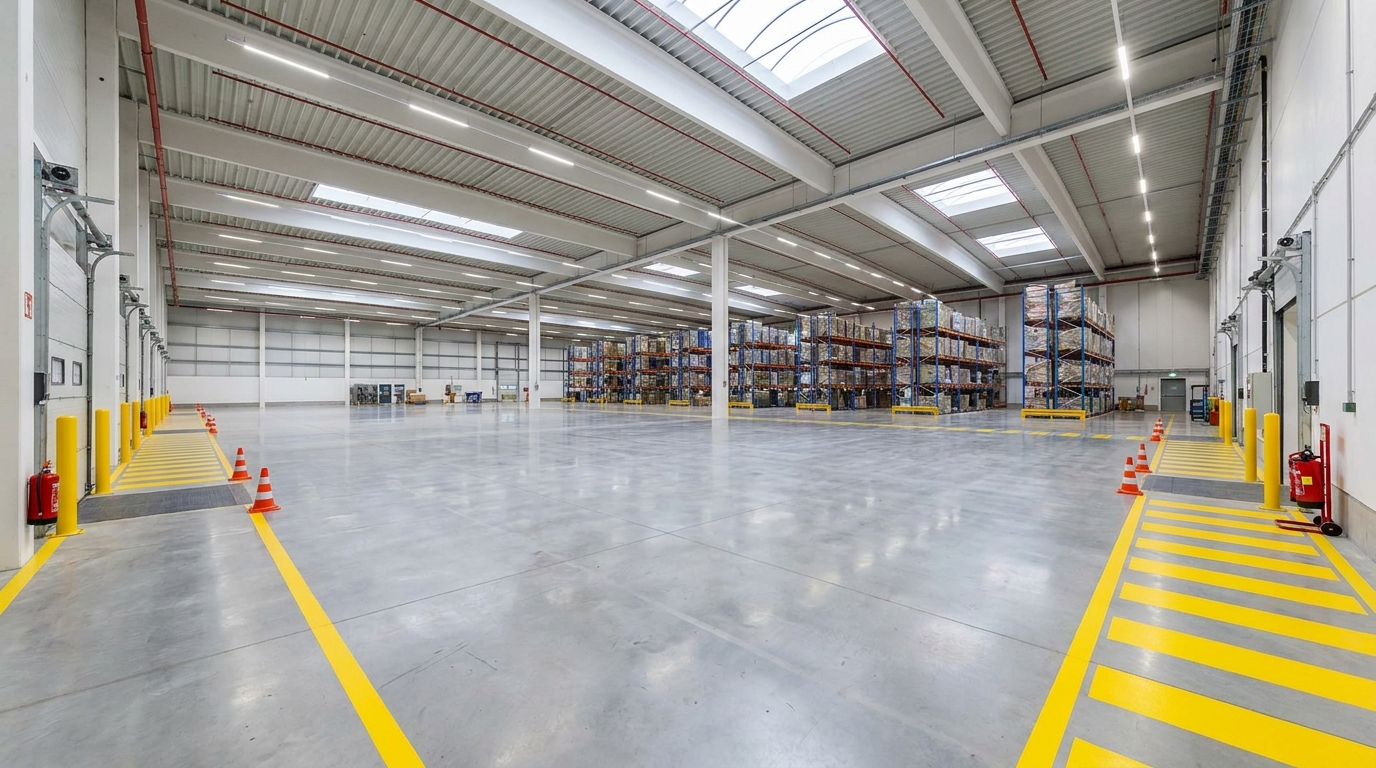
Safety is enhanced through the use of non-combustible steel materials and clear-span designs that remove dangerous interior obstructions. A prefabricated warehouse building provides a much safer environment for your staff because the precision of the frame prevents the structural shifting or cracking often seen in older concrete buildings. Furthermore, the absence of interior columns in a prefabricated warehouse building reduces the risk of forklift collisions, which is a leading cause of industrial accidents.
Is fire resistance standard?
Steel does not burn or contribute fuel to a fire, which can significantly lower your insurance premiums and provide more evacuation time in an emergency. You can further enhance this by choosing fire-rated Rockwool sandwich panels for your wall cladding.
How do clear sightlines help?
The open floor plan allows supervisors to monitor the entire facility from a single point, ensuring all safety protocols are being followed. You won’t have “blind spots” created by support pillars where accidents are likely to occur.
The bottom line is:
- Fire-resistant materials protect your assets.
- Better visibility reduces pedestrian-forklift accidents.
- Durable steel frames resist seismic collapse.
Key Takeaway: Investing in a steel building is an investment in the safety of your people and the continuity of your operations.
| Safety Feature | Steel Advantage | Risk Reduction | |
|---|---|---|---|
| Column-Free | Open Sightlines | 70% fewer forklift impacts | |
| Non-Combustible | Fire Safety | Lower insurance costs | |
| Precise Engineering | Load Integrity | Prevents structural failure |
Analysis: Occupational safety directly impacts your insurance rates and employee retention, making it a financial priority.
Why is a prefabricated warehouse building more sustainable?
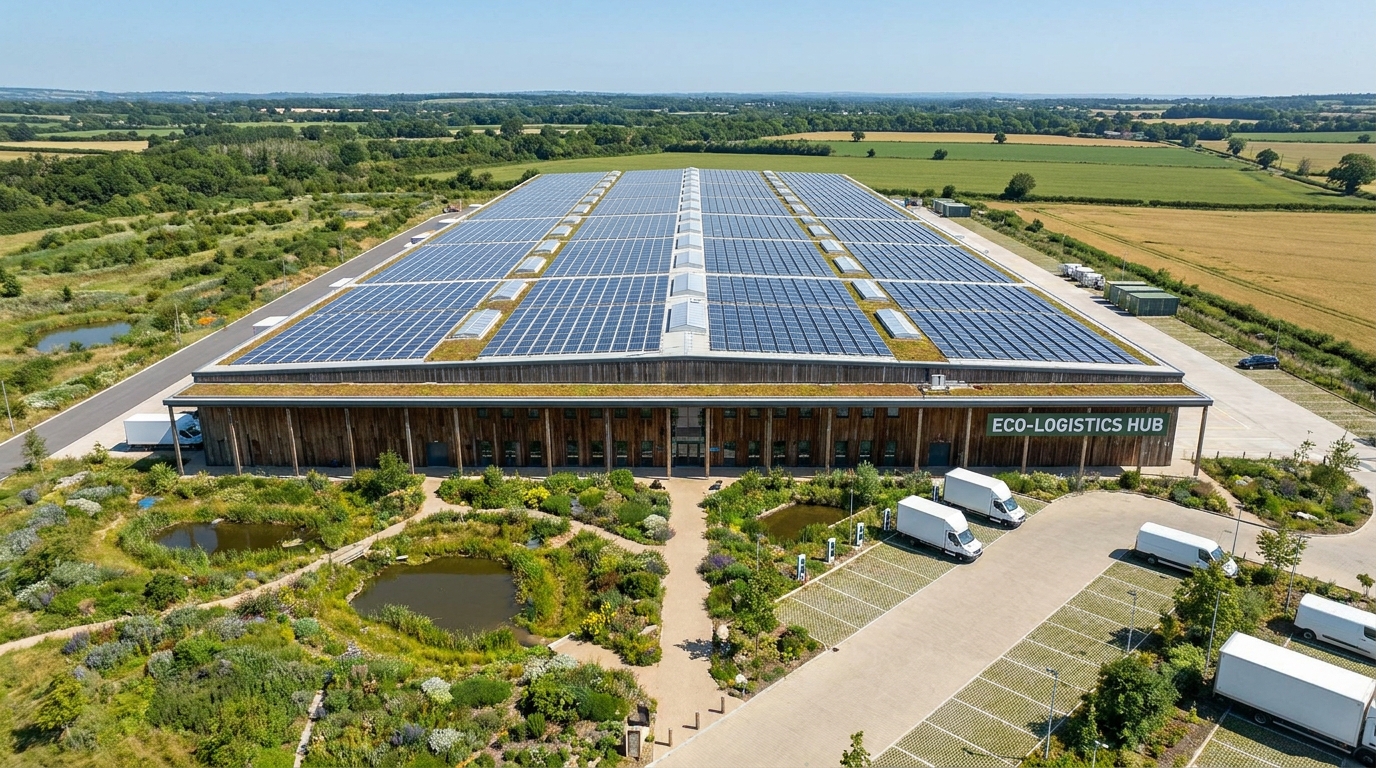
Steel is the most recycled material on the planet, and a prefabricated warehouse building can be constructed with a much lower carbon footprint than concrete. When you select a prefabricated warehouse building for your project, you are participating in a circular economy where nearly 100% of the structure can be recycled at the end of its life. Additionally, the high-efficiency insulation options we provide help reduce the energy consumption required to heat or cool your facility.
Is the insulation effective?
You can choose PU (Polyurethane) sandwich panels that offer superior thermal resistance, keeping your energy bills low even in extreme climates. This makes your building “greener” and significantly reduces your monthly overhead.
Can you use solar energy?
The large, flat roof areas of modern steel warehouses are perfect for installing solar arrays. We can engineer your roof purlins to support the additional weight of photovoltaic panels, allowing you to generate your own clean energy.
Think about it:
- 100% recyclable structural components.
- Energy-efficient wall and roof systems.
- Low environmental impact during assembly.
Key Takeaway: Modern industrial buildings must balance productivity with environmental responsibility, and steel is the premier material for both.
| Sustainability Factor | Benefit | Long-Term Value | |
|---|---|---|---|
| Recyclability | 98% Steel Recovery | High scrap value later | |
| Thermal Efficiency | PU Sandwich Panels | 40% lower energy costs | |
| Construction Waste | Near Zero | Reduced landfill fees |
Analysis: Sustainability is no longer a “nice-to-have” but a requirement for modern global supply chain contracts.
Does a prefabricated warehouse building require frequent maintenance?
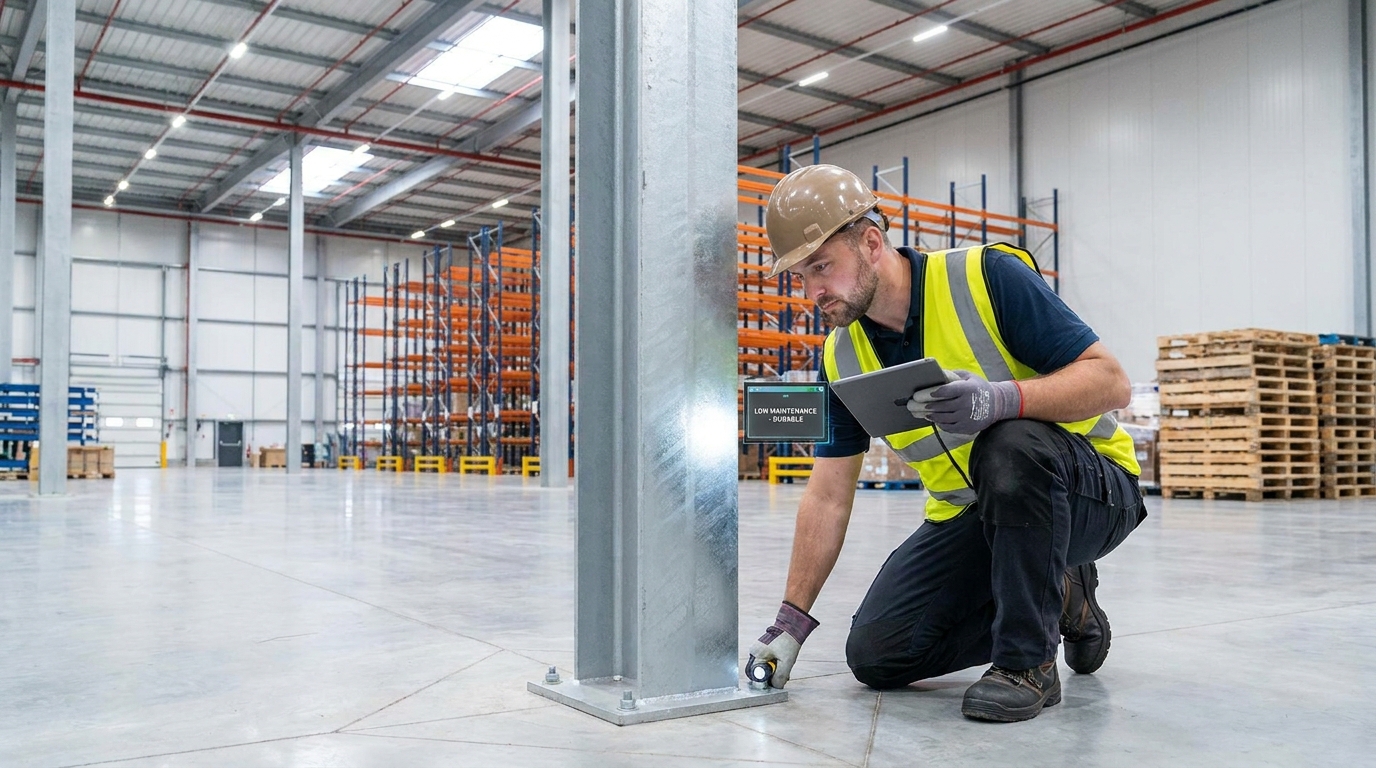
No, because the galvanized and painted steel surfaces are designed to resist rust, pests, and rot for decades with minimal intervention. A prefabricated warehouse building is essentially a “set-and-forget” investment compared to wood or masonry structures that require constant painting, sealing, or pest control. The high-performance coatings applied to a prefabricated warehouse building in the factory are far more durable than anything applied in the field, ensuring your building looks new for years.
Is rust a problem?
Not if you use our hot-dip galvanized steel frames, which provide a protective zinc coating that prevents oxidation even in high-humidity or coastal environments. This eliminates the need for expensive repainting cycles.
Are there pest issues?
Unlike timber structures, steel is immune to termites, mold, and rot. You won’t have to worry about structural degradation caused by insects or fungus, which can be a massive hidden cost in older warehouses.
You need to know:
- No termites or wood rot.
- Corrosion-resistant factory coatings.
- Simple cleaning is usually all that’s required.
Key Takeaway: Low maintenance costs mean more of your operating budget stays in your pocket rather than going toward facility repairs.
| Maintenance Task | Traditional Building | Prefab Steel Building | |
|---|---|---|---|
| Pest Treatment | Annual Requirement | Never Required | |
| Structural Painting | Every 5-7 Years | 15+ Year Warranty | |
| Roof Resealing | Frequent Leaks | Durable Overlapping Panels |
Analysis: Total Cost of Ownership (TCO) is the metric that matters, and steel wins every time on maintenance.
Contact Information:
Email: sales@showhoo.com.cn
Phone/WhatsApp: +86 186 7895 5927
Can a prefabricated warehouse building improve inventory management?
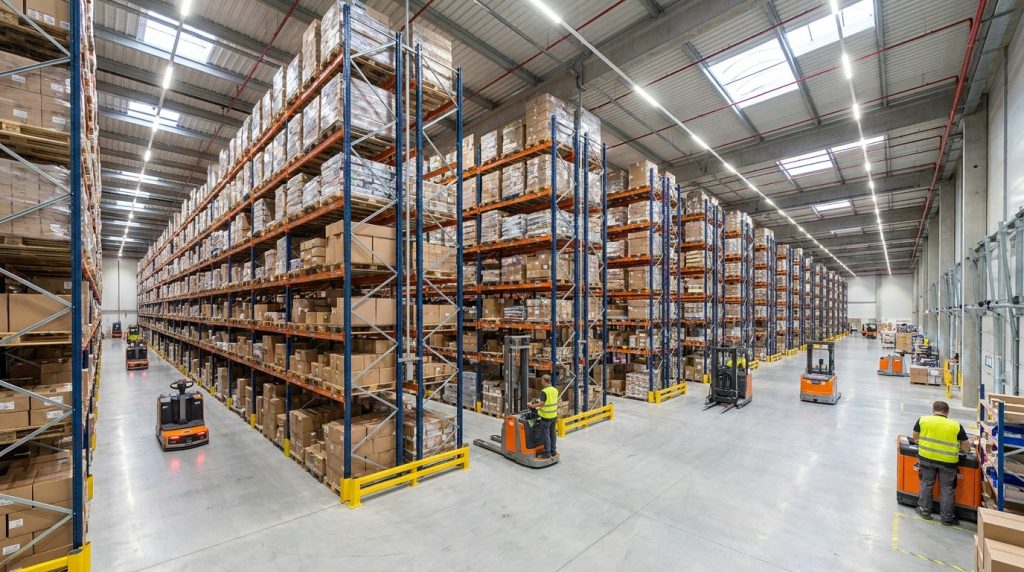
Yes, because the clear-span interior of a prefabricated warehouse building allows you to design high-density racking systems without being restricted by pillars. When you have an open floor plan, you can implement the most efficient “First-In, First-Out” (FIFO) or “Last-In, First-Out” (LIFO) logistics flows. This flexibility in a prefabricated warehouse building means you can fit up to 20% more pallets in the same square footage compared to a building with support columns.
Can you use high-racking?
You can specify eave heights of up to 30 meters, allowing you to build “up” instead of “out.” High-bay storage maximizes your vertical cubic space, which is critical in areas where land costs are high.
How does traffic flow improve?
Without columns to navigate around, your forklifts can move in straight lines at optimal speeds. This reduces “turning time” and significantly lowers the frequency of rack damage and product breakage.
The truth is:
- Higher storage density per square meter.
- Faster picking and packing cycles.
- Easier implementation of automated systems.
Key Takeaway: An optimized building layout is the foundation of a high-speed, high-accuracy logistics operation.
| Storage Metric | Columned Warehouse | Clear-Span Warehouse | |
|---|---|---|---|
| Usable Floor Area | ~85% | 100% | |
| Rack Configuration | Restricted | Fully Flexible | |
| Picking Speed | Slower (Obstacles) | Optimized (Straight Lines) |
Analysis: Warehouse throughput is directly tied to floor plan simplicity; more columns mean more delays.
Is a prefabricated warehouse building a smart long-term investment?
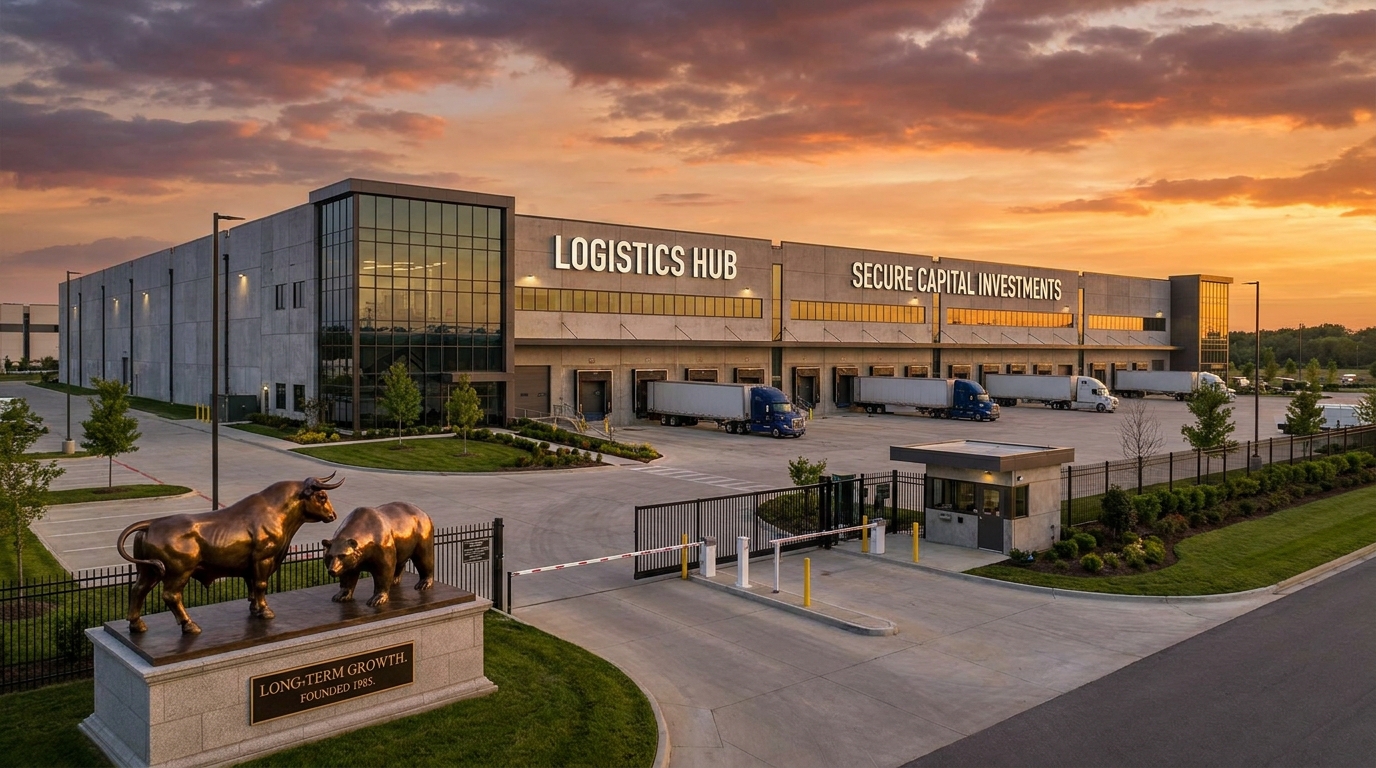
It is one of the most secure industrial investments because it retains a high resale value and offers extreme longevity with low operating costs. A prefabricated warehouse building is not a temporary shelter; it is a permanent asset engineered for a 50-year lifespan. Because these buildings are so easily adaptable to different industries, they are highly sought after in the real estate market if you ever decide to sell or lease your property.
Does it hold resale value?
Industrial buyers value the flexibility of steel buildings because they can easily reconfigure the interior for their own specific needs. A clear-span steel warehouse is a “blank canvas” that appeals to a wide range of tenants, from manufacturers to e-commerce fulfillment centers.
What about insurance?
Insurance companies prefer steel construction due to its fire and wind resistance, often resulting in premiums that are 20% to 30% lower than masonry or wood. These annual savings compound over the life of the building, significantly improving your net ROI.
Think about it:
- 50-year structural lifespan.
- Higher appraisal values for flexible spaces.
- Lower annual insurance and energy overhead.
Key Takeaway: Low initial costs combined with high durability and low operating expenses result in the highest possible Return on Investment.
| Investment Factor | Impact on Profit | Result | |
|---|---|---|---|
| Construction Speed | Faster Revenue Generation | Improved Cash Flow | |
| Maintenance Costs | Minimal Expenditure | Higher Net Profit | |
| Resale Value | Strong Market Demand | Secure Exit Strategy |
Analysis: Strategic infrastructure investment is about maximizing utility while minimizing ongoing risk and expense.
Summary: Building Your Competitive Advantage
By choosing a prefabricated warehouse building, you have successfully addressed the core challenges of modern industrial growth: construction delays, rising costs, and operational safety. These buildings provide the scalability to expand your footprint, the durability to withstand extreme weather, and the flexibility to optimize your inventory flow. We provide engineered excellence that transforms your vision into a high-performance facility that works as hard as you do.
If you are ready to expand your capacity with a world-class facility, contact us today to receive a customized quote and expert design consultation.
Contact Information:
Email: sales@showhoo.com.cn
Phone/WhatsApp: +86 186 7895 5927
FAQ
Can I insulate my prefabricated warehouse building for cold storage?Yes, you certainly can. Most industrial warehouses use PU (Polyurethane) sandwich panels specifically designed for high-thermal resistance, which is the industry standard for refrigerated and frozen goods storage.
What’s the best way to determine the size of my new warehouse?The best approach is to calculate your maximum pallet count and the clearance required for your tallest equipment. We recommend building 15% larger than your current needs to accommodate future growth without immediate expansion.
How do I know if the building meets my local seismic codes?Our engineering team utilizes advanced software to calculate wind, snow, and seismic loads based on your specific GPS coordinates. We provide stamped engineering drawings that are guaranteed to pass local building inspections.
Can I install a 20-ton crane in a prefabricated warehouse building?Yes, it is possible and quite common. We simply need to know the crane’s weight and capacity during the design phase so we can reinforce the primary columns and crane girders to handle the dynamic loads safely.
What’s the best foundation for a steel warehouse?A reinforced concrete slab with thickened edges (poured-in-place) is generally the best foundation. The anchor bolts are set into the concrete during the pour, providing a rock-solid base for the primary steel frames.