
Maintaining a profitable poultry operation is a constant struggle against environmental stressors and disease threats that can devastate your flock overnight. Without a specialized facility, your birds are vulnerable to predators, fluctuating temperatures, and poor air quality, leading to high mortality and low feed conversion. Investing in a high-quality commercial chicken house ensures a biosecure, controlled environment that maximizes broiler growth and safeguards your investment.
Modern Commercial Chicken House Design Standards
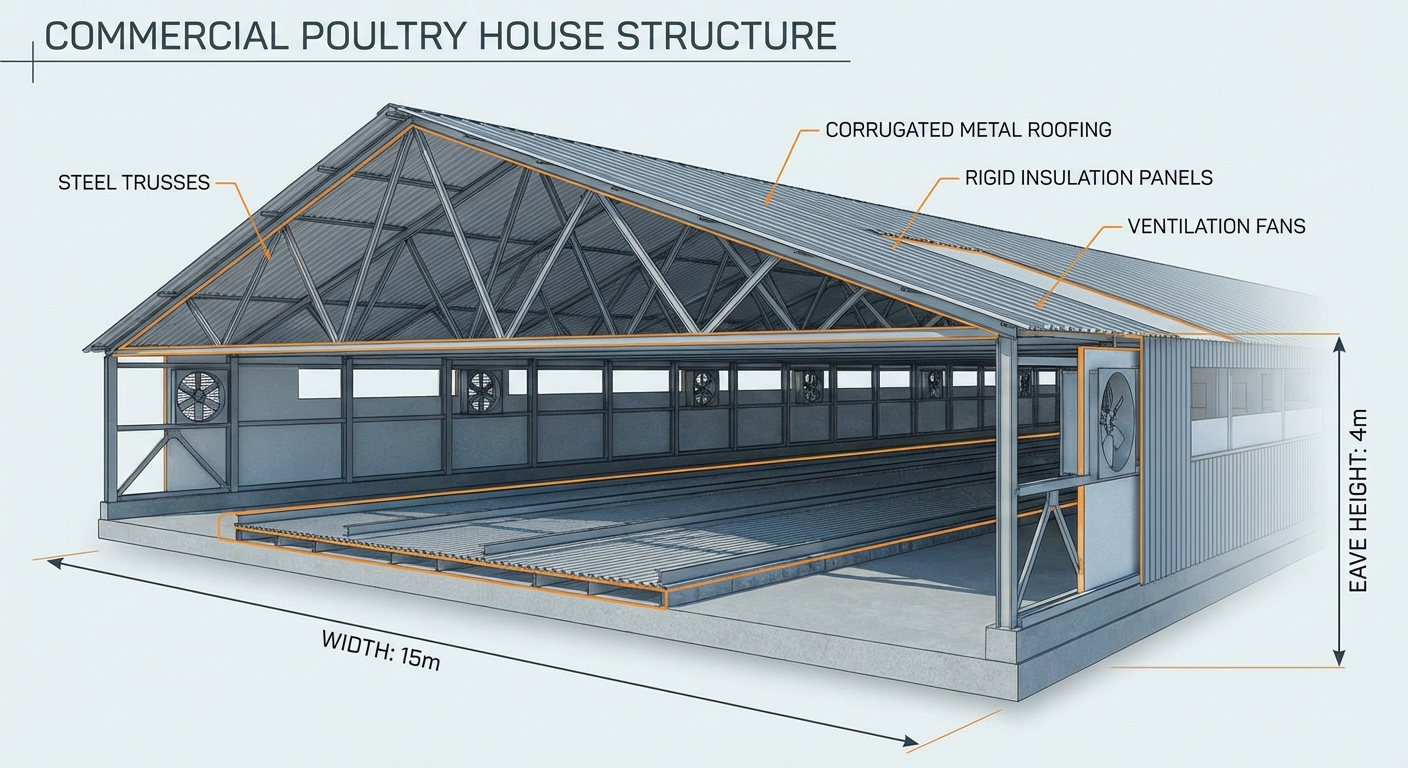
Modern commercial chicken house design focuses on structural durability and precise environmental control using steel or wood truss systems. A steel structure building is often preferred for these facilities because it resists rodent damage and allows for faster assembly. These structures provide the solid barrier needed to prevent wood rot and sagging roofs over time.
Comparing Steel and Wood Truss Systems
Steel truss houses are highly efficient and offer better longevity in corrosive agricultural environments. Wood truss houses remain popular for their initial cost-effectiveness and efficiency when designed with a drop ceiling.
- Steel resists moisture and pests.
- Wood requires careful rot prevention.
- Both support advanced tunnel ventilation.
Think about it. Key Takeaway: Steel structures provide superior biosecurity and lower long-term maintenance costs for modern farming.
| Feature | Steel Truss | Wood Truss | |
|---|---|---|---|
| Longevity | 20+ Years | 10-15 Years | |
| Rodent Resistance | High | Low | |
| Construction Speed | Fast | Moderate |
Modern commercial chicken houses utilize steel frames to ensure a lifetime of structural stability and pest resistance.
Optimal Stocking Density in a Commercial Chicken House
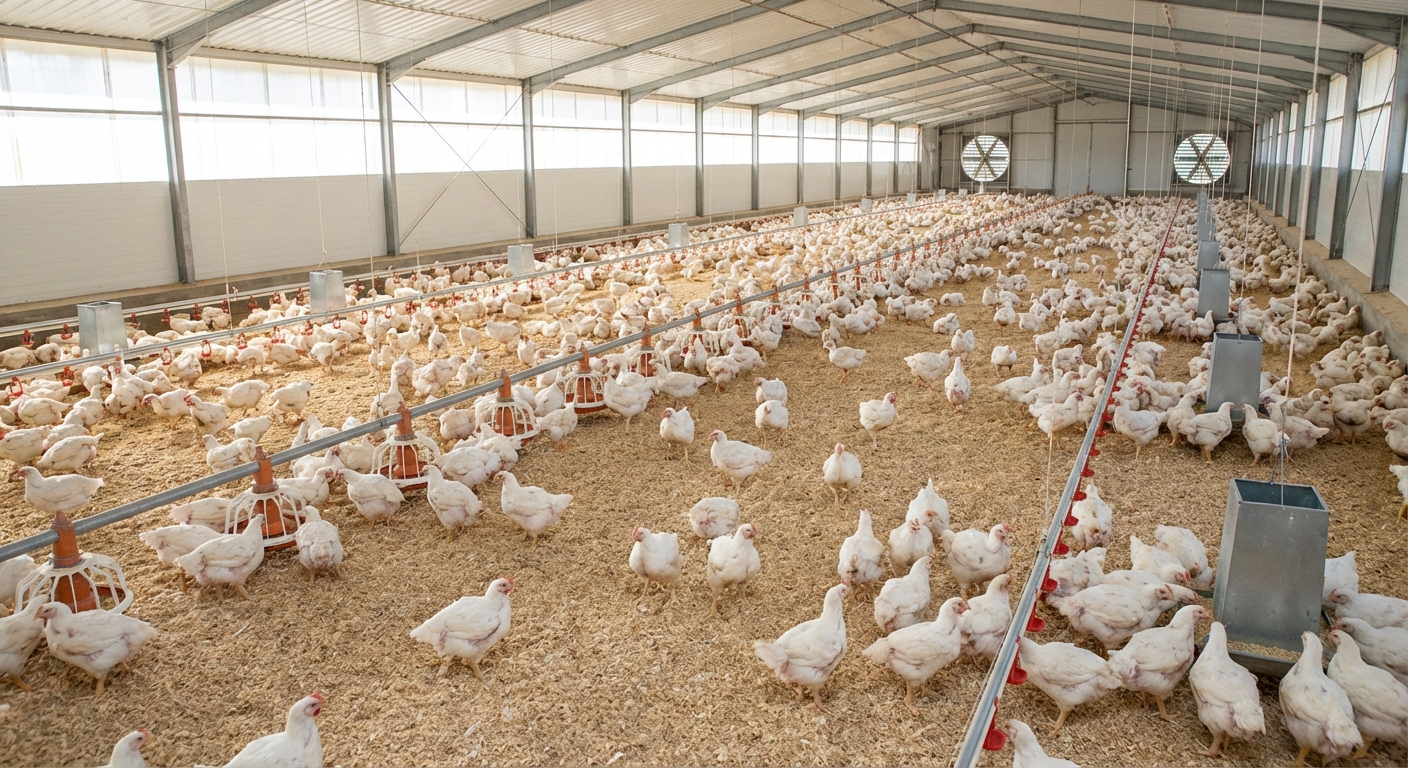
Determining the correct stocking density in a commercial chicken house is vital for bird uniformity, welfare, and overall product quality. You must balance the live weight of the birds with the available floor space to prevent overcrowding issues. While densities vary, an average of 0.84 square feet per bird is a common industry standard for broiler placement.
Balancing Weight and Floor Space
Climate and season play significant roles in how many birds you can safely place in a house. During winter, you might place more birds because the extra heat they produce is easier to manage with cold outside air.
- Target weight dictates space.
- Welfare regulations set limits.
- Seasonal adjustments prevent heat stress.
The bottom line? Key Takeaway: Maintaining target stocking density prevents poor feed conversion and reduces flock mortality rates significantly.
| Target Weight (lb) | Sq. Ft per Bird | Birds per Sq. Ft | |
|---|---|---|---|
| 4.0 | 0.70 | 1.4 | |
| 6.0 | 0.90 | 1.1 | |
| 8.0 | 1.15 | 0.9 |
Managing bird density ensures that every broiler has equal access to resources within the commercial chicken house.
Efficient Feeder Systems for a Commercial Chicken House
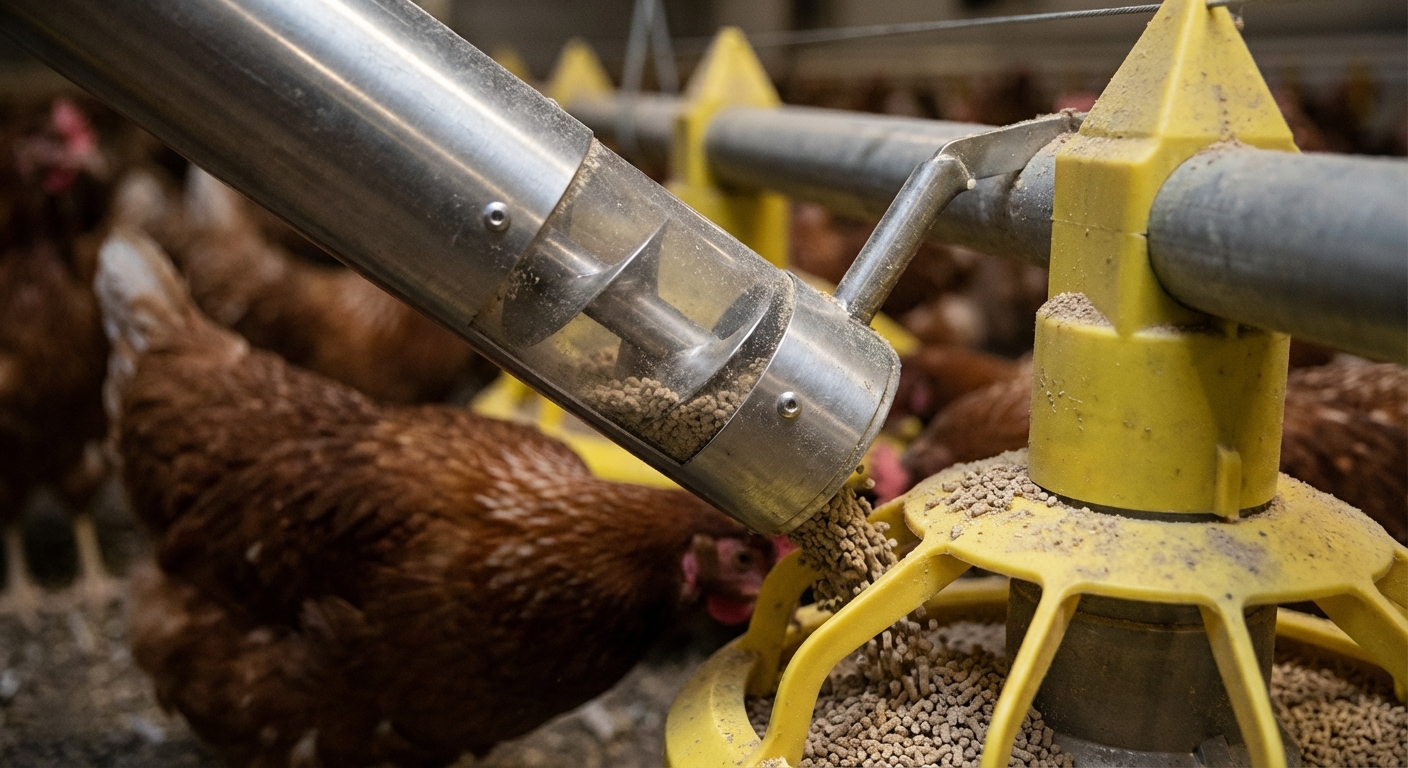
An efficient feeder system in a commercial chicken house relies on automated round pans and auger lines to distribute feed uniformly. Most modern facilities, much like a high-capacity warehouse , require organized logistics to ensure feed bins stay full and lines stay operational. This automation reduces labor while ensuring birds have continuous access to fresh nutrients.
Automating Feed Distribution
The system uses metal tubes containing an auger to move feed from outside bins to internal hoppers. Control pans at the end of the line signal the auger to run when feed levels drop too low.
- Round pans prevent feed wastage.
- Augers allow for rapid filling.
- Control pans automate the process.
You see, it’s all about flow. Key Takeaway: Automated feeding systems ensure unrestricted bird movement and precise nutrient delivery across the entire house.
| Component | Function | Benefit | |
|---|---|---|---|
| Feed Auger | Moves material | Reduced manual labor | |
| Control Pan | Triggers refill | Constant feed supply | |
| Round Pan | Bird access | Less feed spillage |
The integration of automated feeders in chicken houses commercial operations is the backbone of rapid broiler growth cycles.
Superior Closed Drinker Systems for a Commercial Chicken House
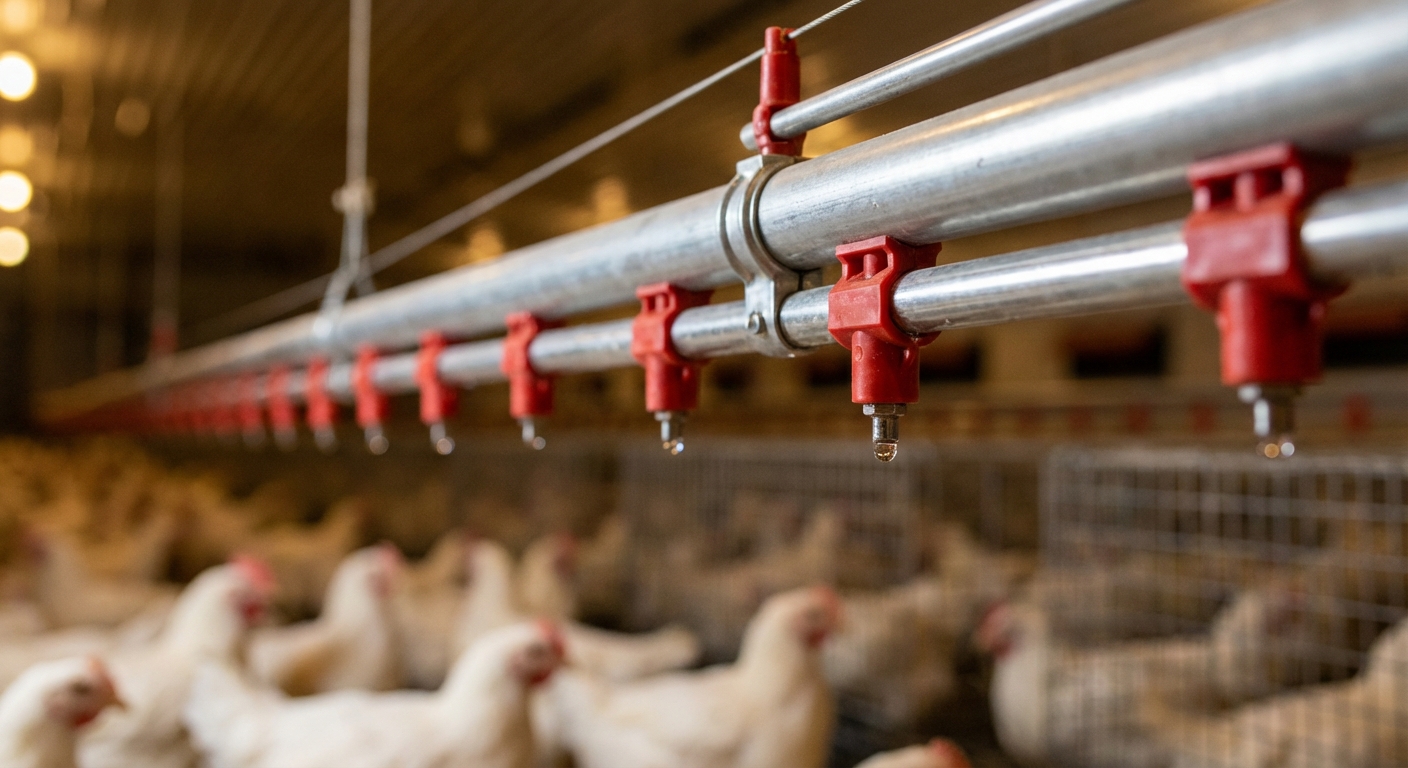
A closed drinker system in a commercial chicken house is a significant improvement over open troughs or bell drinkers. These nipple-based systems prevent water contamination and keep the litter drier, which is essential for maintaining bird health. Most producers prefer low-flow nipple drinkers that dispense water only when the birds peck at the trigger.
Maintaining Litter Quality
Proper water management prevents excess moisture from accumulating in the bedding material. You must adjust the height of the drinker lines daily so the birds stretch slightly to reach the nipple.
- Closed systems reduce bacteria.
- Nipple drinkers minimize spillage.
- Water meters monitor consumption rates.
Here is the secret. Key Takeaway: Closed water systems drastically improve sanitation and reduce the labor required for daily cleaning and maintenance.
| System Type | Contamination Risk | Labor Level | |
|---|---|---|---|
| Open Bell | High | High | |
| Nipple Drinker | Low | Low | |
| Trough | Very High | Constant |
Controlling water access in a commercial chicken house is the most effective way to manage litter moisture and ammonia.
Lighting Influences in a Commercial Chicken House
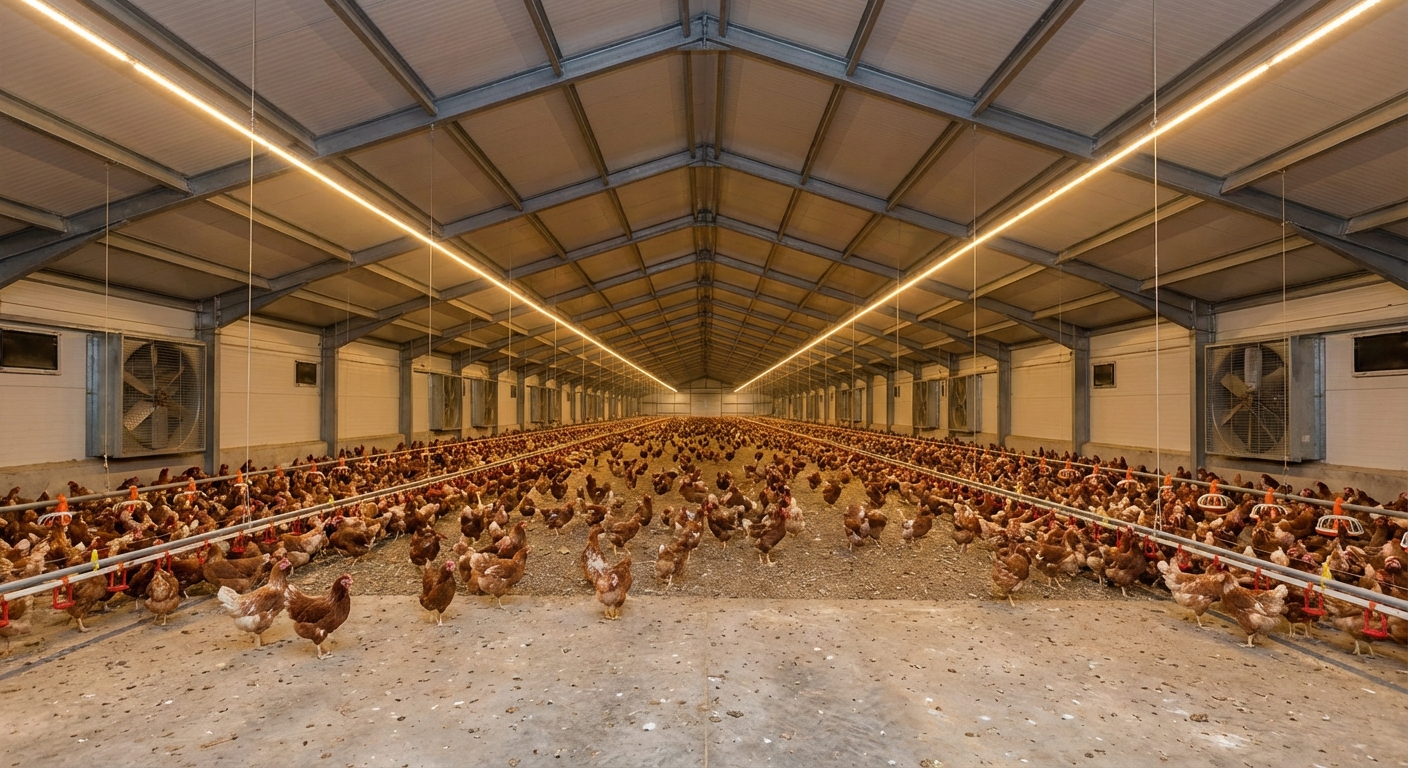
Lighting in a commercial chicken house represents a large portion of electrical costs and directly affects bird digestion. Much like a high-tech workshop , the lighting layout must be consistent to ensure even bird distribution. You should implement a period of darkness to improve feed efficiency and reduce the incidence of metabolic disorders.
LED Bulbs vs Traditional Lighting
LED bulbs are gaining popularity in commercial chicken houses due to their extreme durability and energy savings. They offer a better spectral range than incandescent bulbs and do not lose intensity as quickly as fluorescent options.
- 4 to 6 hours of darkness.
- LED bulbs resist harsh air.
- Dimmable systems mimic dawn.
It gets better. Key Takeaway: Proper photoperiods and high-efficiency LED lighting promote bone health and optimize the diurnal rhythms of the flock.
| Bulb Type | Lifespan | Energy Efficiency | |
|---|---|---|---|
| Incandescent | 6 Months | Low | |
| CFL | 2-3 Years | Moderate | |
| LED | 5+ Years | High |
Selecting the right lighting system for chicken houses commercial projects reduces operational overhead while supporting bird welfare.
Heating Systems for Brooding in a Commercial Chicken House
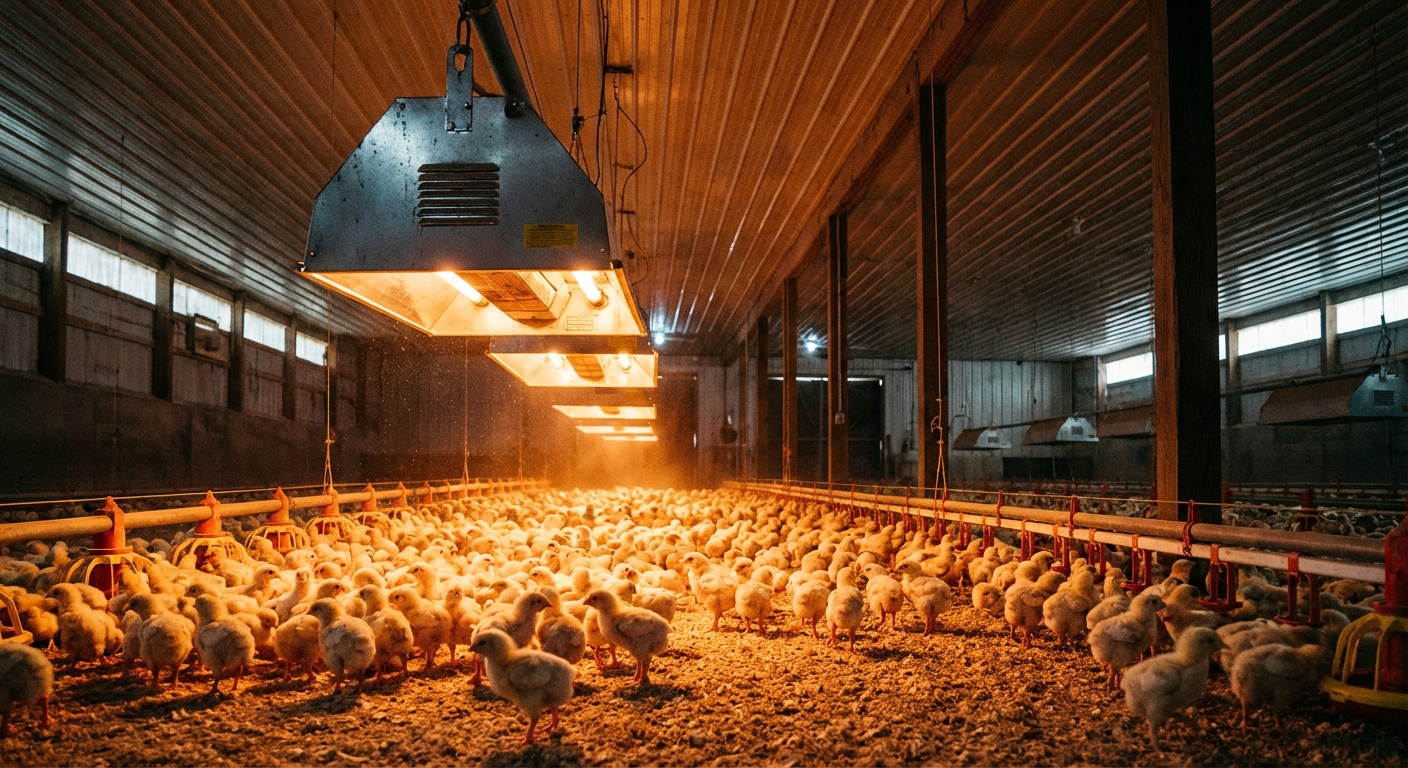
Heating a commercial chicken house is critical during the first 14 days of a broiler’s life when they cannot regulate body temperature. You can choose between convection heat, which warms the air, or radiant heat, which warms objects directly. Radiant heaters are often preferred because they create comfort zones, allowing chicks to move to the temperature that suits them.
Radiant vs Convection Heating
Radiant brooders use infrared waves to heat the birds and the litter without wasting energy on the air above. Forced air heaters, or space heaters, provide a uniform temperature but offer fewer options for bird self-regulation.
- Pancake brooders create “zones.”
- Space heaters heat the whole room.
- Tube heaters warm the entire floor.
The result? Key Takeaway: Radiant heaters provide the most efficient brooding environment by heating the birds directly rather than the entire air volume.
| Heater Type | Heat Method | Efficiency | |
|---|---|---|---|
| Space Heater | Convection | Moderate | |
| Radiant Brooder | Infrared | High | |
| Tube Heater | Radiant | High |
Reliable heating in a commercial chicken house ensures that young chicks remain active and reach feed and water easily.
Ventilation and Air Quality in a Commercial Chicken House
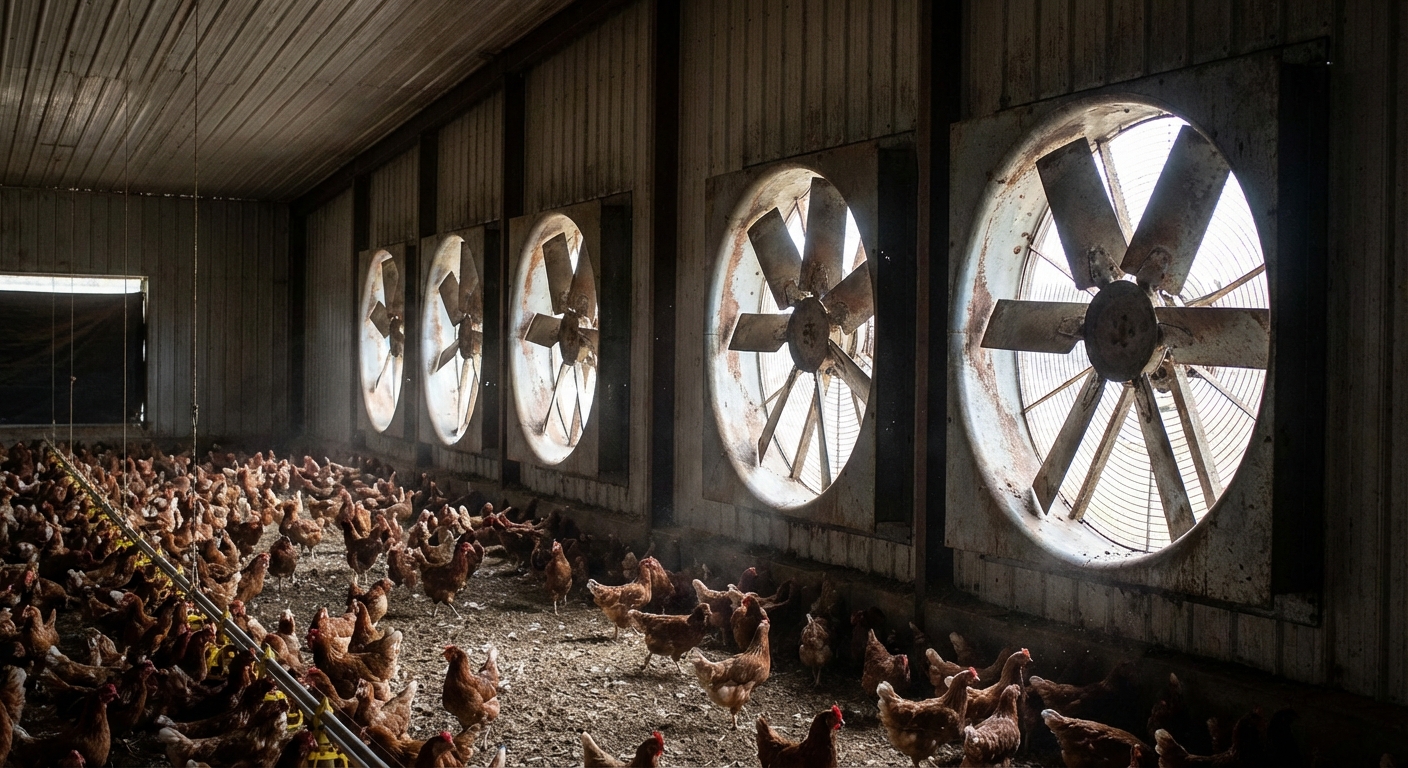
Ventilation is the primary method for controlling the internal environment of a commercial chicken house. Utilizing a steel workshop style of extraction, power ventilation systems pull air through the building to remove moisture and ammonia. This negative pressure system ensures that fresh oxygen is distributed evenly to support the birds’ metabolic needs.
Managing Ammonia and Moisture
High ammonia levels can cause respiratory damage and eye irritation, which severely stunts broiler growth. You must increase ventilation rates as the birds age to keep relative humidity below 70% and prevent wet litter.
- Tunnel ventilation cools birds.
- Migration fences keep air moving.
- Foggers assist on hot days.
Believe it or not. Key Takeaway: Active ventilation is the most important factor in preventing ammonia buildup and maintaining optimal litter conditions.
| Objective | Target Level | Risk if Failed | |
|---|---|---|---|
| Humidity | 50% – 70% | Wet litter/Dust | |
| Ammonia | < 25 ppm | Respiratory damage | |
| Oxygen | Maximum | Metabolic stress |
A well-ventilated commercial chicken house maintains a fresh environment that supports rapid growth and high-quality meat production.
Computerized Controllers in a Commercial Chicken House
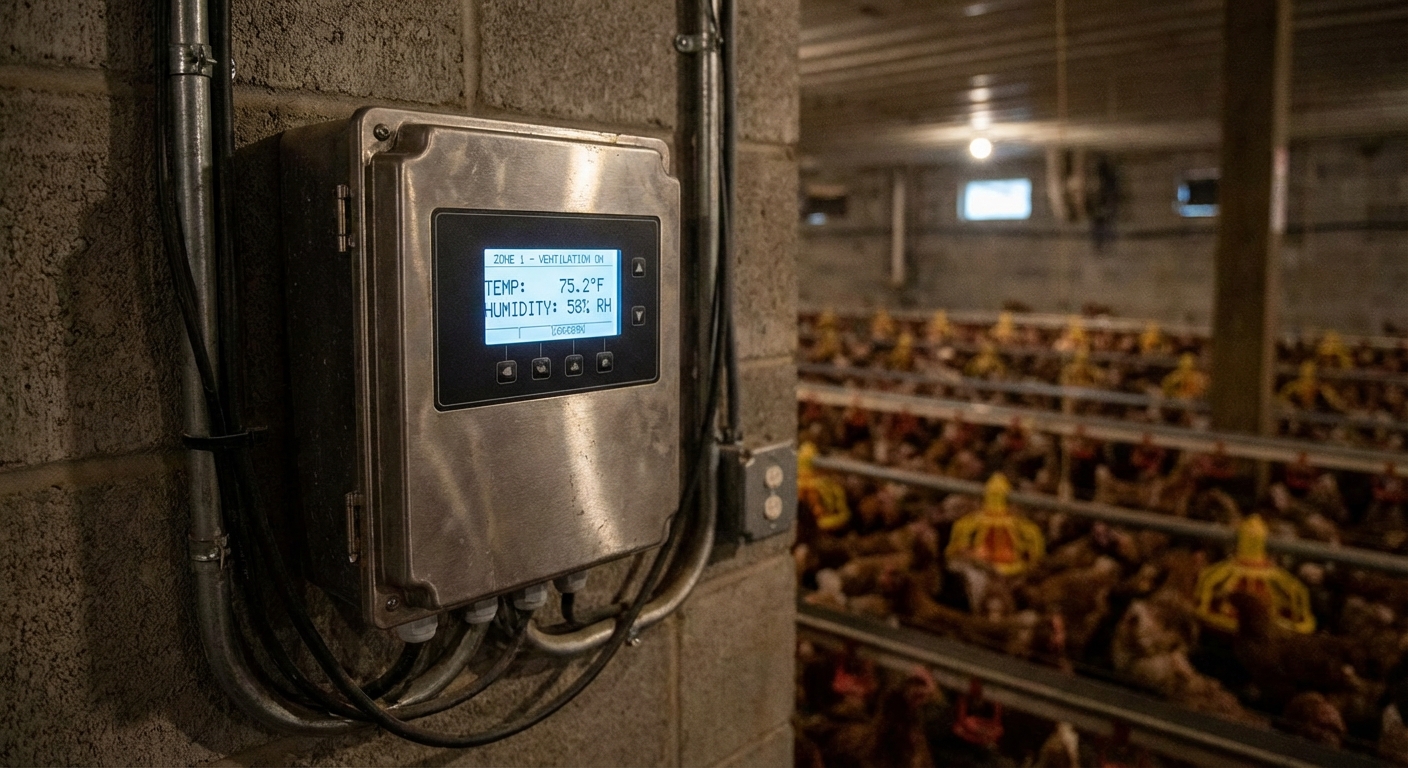
Using a computerized controller in a commercial chicken house allows you to monitor and adjust environmental parameters in real-time. These systems integrate sensors for temperature, humidity, and ammonia, providing a historical record of the house conditions. You can even link these controllers to your personal computer for remote management and alarm notifications.
Real-Time Environmental Monitoring
Controllers manage fan and heater runtimes based on pre-set parameters that change automatically as the broilers age. They feature high and low temperature alarms to alert you immediately in the event of a system failure.
- Sensor input automates fans.
- Remote data links improve oversight.
- Power failure alarms protect flocks.
This is the future. Key Takeaway: Computerized controllers remove the guesswork from flock management and provide a failsafe against environmental disasters.
| Parameter | Sensor Type | Controller Action | |
|---|---|---|---|
| Temperature | Thermal Probe | Activates fans/heaters | |
| Humidity | RH Sensor | Increases air exchange | |
| Water Use | Pulse Meter | Leak detection |
Automated oversight in commercial chicken houses ensures that the environment remains within the narrow range required for broiler success.
Best Litter Materials for a Commercial Chicken House
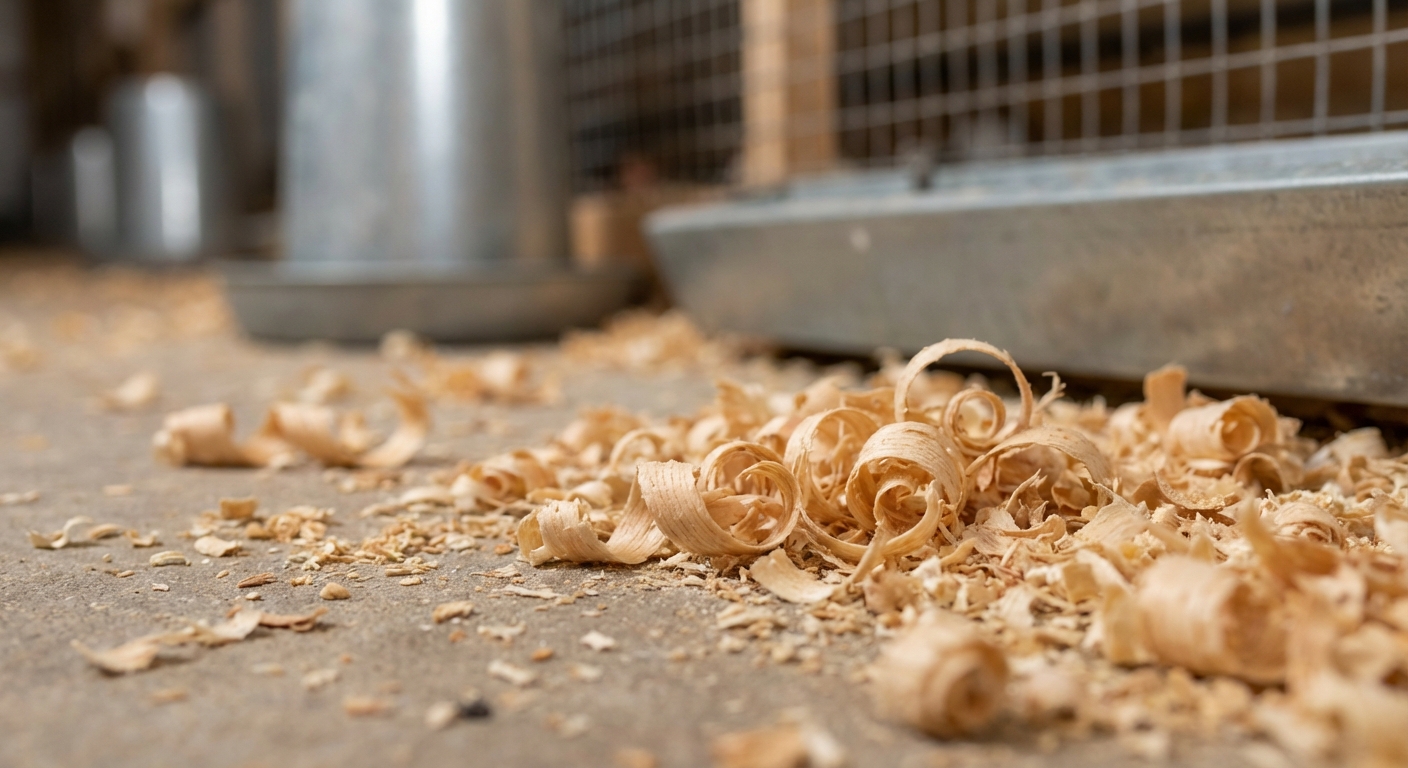
Choosing the right bedding for your commercial chicken house is an investment in bird comfort and health. While you might use a steel structure building for storage, the litter itself must be absorbent and free of pathogens. Rice hulls and pine shavings remain the industry favorites because they dry quickly and provide excellent floor insulation.
Evaluating Bedding Options
Litter acts as a cushion for breast muscles and feet while absorbing fecal moisture to promote a dry environment. You should maintain a litter depth of 3 to 4 inches to ensure adequate insulation and moisture absorption capacity.
- Rice hulls dry rapidly.
- Pine shavings are soft.
- Peanut hulls are an alternative.
Wait, there’s more. Key Takeaway: High-quality litter reduces footpad dermatitis and breast blisters, directly improving the market value of your broilers.
| Material | Absorbency | Cost | |
|---|---|---|---|
| Pine Shavings | High | Moderate | |
| Rice Hulls | Moderate | Low | |
| Sand | Low | Variable |
The quality of the floor in a commercial chicken house is just as important as the roof for long-term bird performance.
Preventing Disease Entry in a Commercial Chicken House
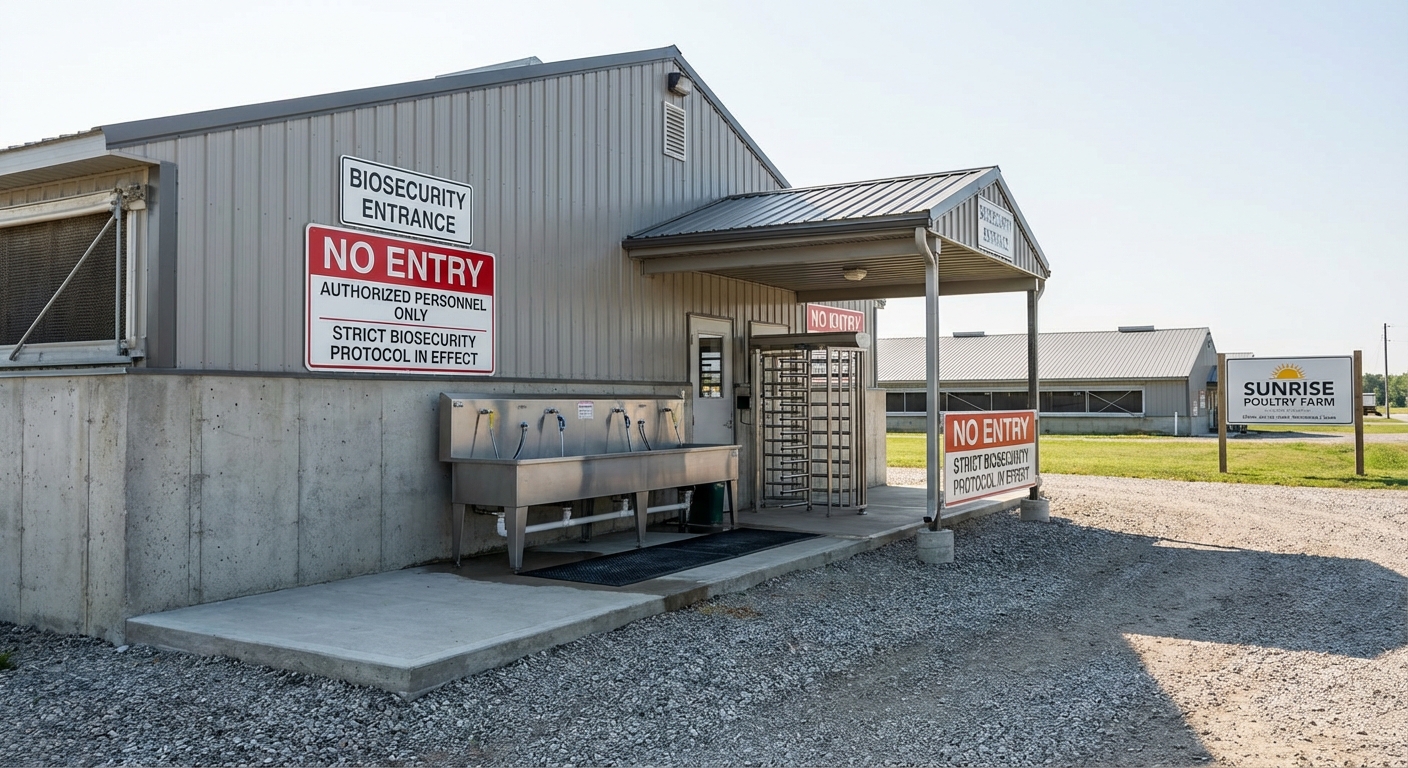
A commercial chicken house must act as a biosecure barrier to protect your flock from wild birds and predators. Enclosed housing is the standard because it limits the exposure of your birds to external pathogens and disease-carrying animals. You should also ensure a solid footing around the base of the house to exclude rodents and other harmful pests like litter beetles.
Excluding Predators and Pests
Properly sealed side walls and air inlets prevent the entry of rodents that can spread disease and damage insulation. A dedicated biosecurity entrance ensures that staff and equipment do not introduce contaminants into the clean growing area.
- Enclosed walls block wild birds.
- Solid footings stop burrowing.
- Managed inlets filter airflow.
Think of it as a fortress. Key Takeaway: Biosecurity starts with the physical structure of the house, preventing disease before it can reach your flock.
| Threat | Prevention Method | Impact | |
|---|---|---|---|
| Wild Birds | Enclosed housing | Reduced viral risk | |
| Rodents | Steel/Concrete barrier | Intact insulation | |
| Humans | Sanitation protocols | Controlled pathogen entry |
Securing the perimeter of your commercial chicken house is the first step in a successful health management strategy.
Investing in a modern broiler facility is about more than just shelter; it is about creating a precision-engineered environment for growth. From the structural integrity of the steel frame to the automated feeding and ventilation systems, every component works together to maximize your return on investment. If you are ready to upgrade your poultry operations with a durable, biosecure solution, contact us today for a customized quote.
Frequently Asked Questions
Can I use alternative litter materials if wood shavings are unavailable?Yes, you can use materials like rice hulls, peanut hulls, or chopped straw as long as they are highly absorbent, non-dusty, and free of pesticide residues or pathogens.
What is the best way to handle a sudden ventilation failure?Your house should have automated high-temperature and power-failure alarms that notify you immediately, allowing for the activation of backup generators or manual curtain drops.
How often should I calibrate environmental sensors?You should check and calibrate sensors for temperature, humidity, and ammonia before every new flock placement to ensure the computerized controller receives accurate data.
What is the most energy-efficient lighting for a chicken house?LED bulbs are currently the best choice because they offer significant energy savings, superior durability in harsh environments, and longer lifespans than incandescent or CFL options.
How do I know if my stocking density is too high?Signs of overstocking include poor feed conversion efficiency, reduced body weight uniformity, increased mortality rates, and a rise in carcass condemnations during processing.