
Designing a high-performance broiler facility requires a strategic integration of advanced climate systems, automated feeding, and durable biosecure structures. Every day, commercial growers face fluctuating weather, rising energy bills, and disease pressures that threaten flock survival. Traditional or poorly insulated shelters suffer from drafts, moisture buildup, and pest invasions that continuously degrade bird health and erode your bottom line. To solve these critical vulnerabilities, modern prefabricated steel poultry houses provide a fully sealed, climate-controlled ecosystem that maximizes feed conversion and ensures long-term operational profitability.
What is the ideal layout for modern poultry houses?
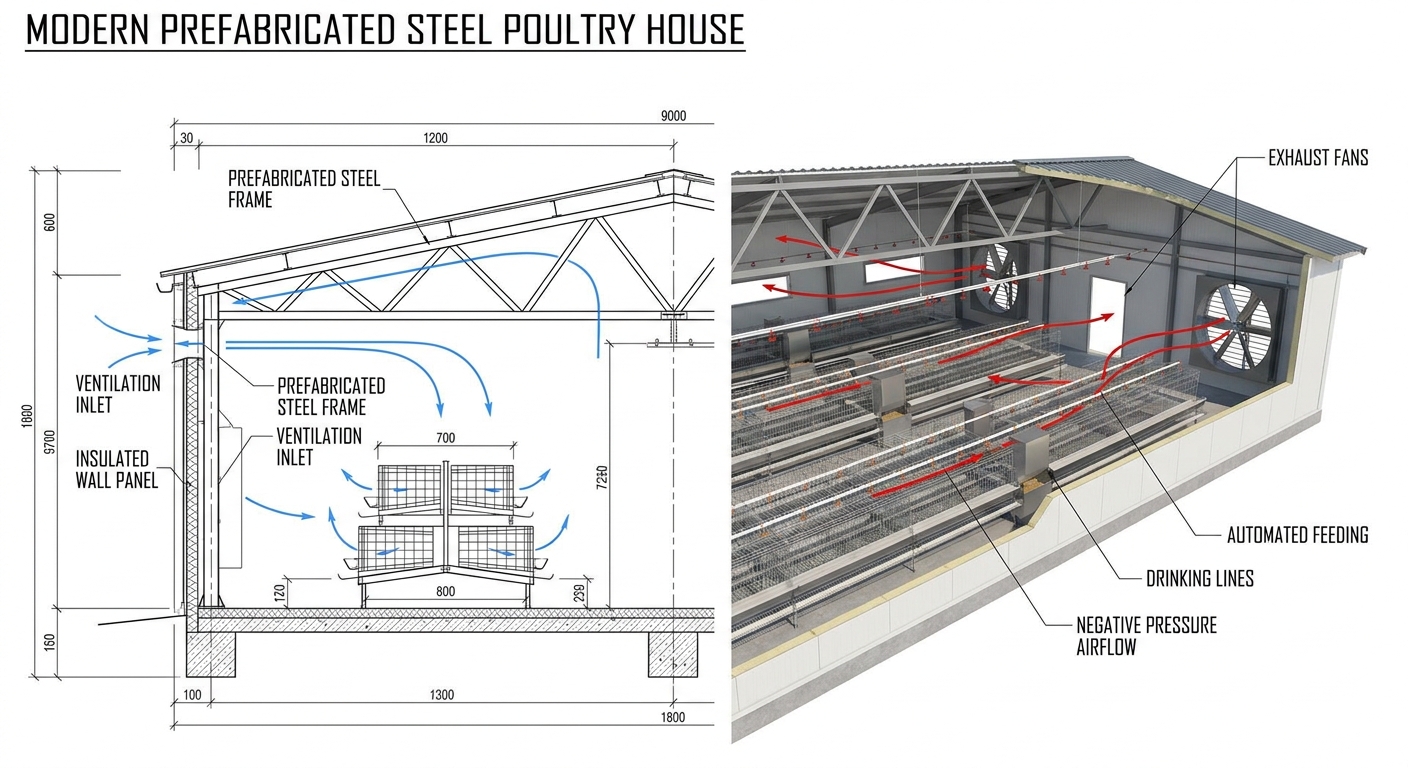
The ideal layout for modern poultry houses relies on a clear-span steel design with standard dimensions of 43 by 500 feet to optimize automated airflow and equipment pathways. This layout ensures that there are no interior support columns blocking your machinery during cleanout or disrupting the uniform path of ventilation. Why does this matter? By removing physical structural barriers, you create a seamless environment where birds can move freely and automated systems run with maximum efficiency.
Why are steel truss frames superior to wood options?
Building with pre-engineered steel trusses eliminates the common failures of traditional wood, such as warping, rot, and structural sagging. Steel frames naturally resist agricultural moisture and organic acids that quickly degrade wood over time. In addition, these metal systems prevent wood-boring pests from compromising the building envelope. Here is the kicker: you get a lifetime structure that maintains its insulation value and structural integrity for decades.
- Eliminates rot and mold risks from high humidity.
- Slashes on-site assembly and construction time.
- Provides completely clear internal span space with zero columns.
How do standard dimensions streamline operations?
Adhering to standard commercial dimensions of 43 to 50 feet in width allows you to easily fit off-the-shelf automated feeding and ventilation systems. Going wider than 50 feet often creates dead-air pockets along the side walls where dangerous moisture accumulates. Conversely, excessively narrow buildings increase your initial capital expenditure per square foot of rearing area. Let us look at how the structural types compare.
| Metric | Steel Truss Frame | Wood Truss Frame | |
|---|---|---|---|
| Lifespan | 30+ Years (Rust-protected) | 10-15 Years (Prone to rot) | |
| Pest Protection | High (Termite and beetle proof) | Low (Harbors litter beetles) | |
| Clear Span Limit | Up to 100+ feet column-free | Extremely limited width |
This structural comparison demonstrates why pre-engineered steel has become the dominant choice for modern commercial growers.
Key Takeaway: Choosing a standard 43’x500′ clear-span steel layout protects your structural investment from environmental rot while providing the exact proportions required for perfect ventilation.
How does stocking density impact modern poultry houses?
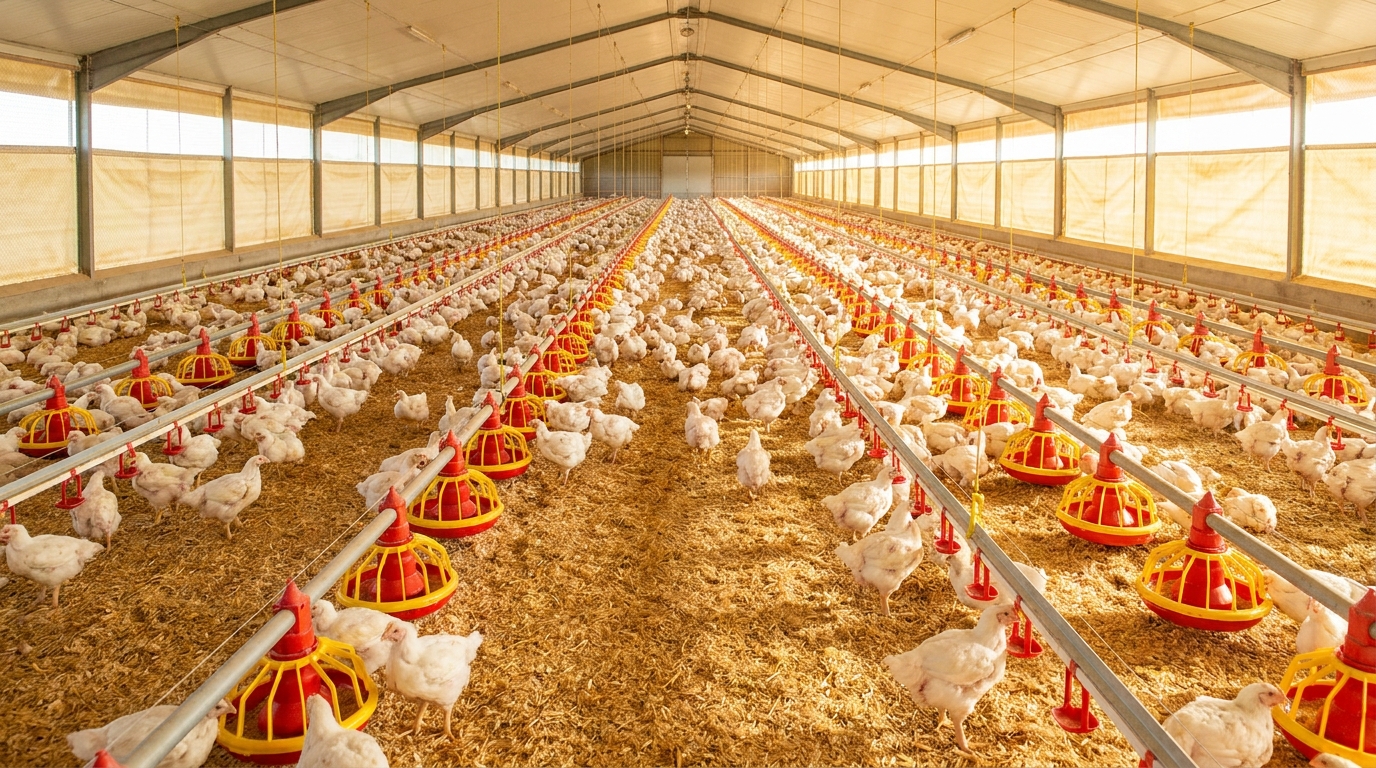
Stocking density inside commercial poultry houses directly influences the growth rate, physical health, and overall feed efficiency of your flock. When you overcrowd the rearing area, birds struggle to access feeder pans and water lines, which leads to highly uneven batches. Why does this matter? Maintaining the correct density targets prevents territorial stress and keeps mortality rates to an absolute minimum.
Balancing bird weight with seasonal density shifts
During cold winter months, you can slightly increase bird density because the extra metabolic heat helps warm the space. However, hot summer cycles demand that you drop your density targets to allow adequate heat dissipation. Failing to make these adjustments will lead to rapid heat stress, bird piling, and heavy losses. To prevent this, you must constantly align your placement numbers with local climate conditions.
- Winter Target: 1.0 to 1.15 sq ft per bird for heat retention.
- Summer Target: 0.85 to 0.90 sq ft per bird to prevent heat stress.
- Feeder space: Must scale up in tandem with stocking density.
Managing floor space to minimize broiler stress
Providing ample floor space allows your broilers to develop healthy legs and prevents painful breast blisters. When birds have room to move, the litter stays drier because droppings are distributed more evenly. Here is the kicker: dry litter directly correlates with lower skin condemnations at the processing plant. Let us examine the target density ratios.
| Target Bird Weight | Space per Bird (Sq Ft) | Weight Density (Lbs/Sq Ft) | |
|---|---|---|---|
| 3.0 Lbs | 0.50 | 6.00 | |
| 5.0 Lbs | 0.85 | 5.91 | |
| 7.0 Lbs | 1.00 | 7.04 |
These spacing guidelines establish the exact limits of bird weight-to-space ratios required to avoid physiological stress.
Key Takeaway: Fine-tuning your stocking density based on target broiler weights and seasonal ambient temperatures is vital to secure high uniformity and protect your feed investment.
Which feeding system maximizes modern poultry houses?
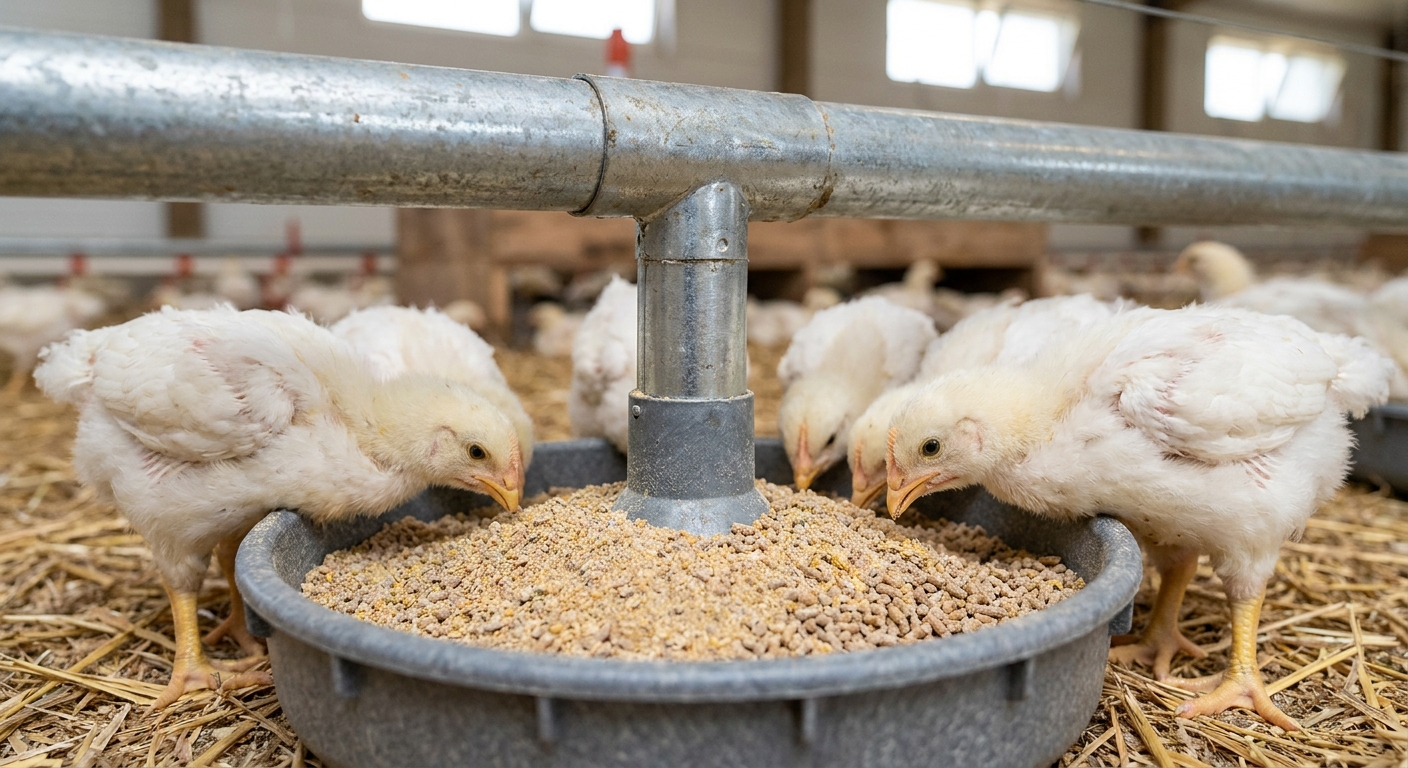
The most effective feeding system to maximize efficiency in automated poultry houses is a closed-loop auger network equipped with adjustable, round plastic feed pans. This mechanical system automatically distributes fresh feed from outside bins directly to the birds without exposing it to contamination. But that is not all. Elevating these pans as the birds grow prevents scratching behavior and eliminates feed waste.
Adjusting pan height to prevent feed wastage
You must adjust your feeder pan heights daily so that the lip of each pan remains level with the broiler’s back. If the pans are left too low, birds will easily scratch feed into the bedding, leading to massive financial waste. If the pans are too high, smaller chicks will be blocked from feeding, causing uneven growth rates. This daily task is critical to keeping your feed conversion ratio as low as possible.
- Daily Height Check: Align pan lip with the bird’s back.
- Pan Capacity: 1 pan serves between 45 and 80 birds.
- Control Pan: Must be cleaned daily to keep augers running smoothly.
Sizing bulk feed storage bins for security
Your bulk storage bins must be completely watertight to prevent toxic mold growth and feed clumping. Installing a dual-bin setup for each house allows you to switch feed formulations instantly or administer medications without mixing. Why does this matter? A minimum five-day feed buffer protects your operation from transport delays and supply chain breakdowns.
| House Width | Feed Lines Required | Birds per Feeder Pan | |
|---|---|---|---|
| 42 Feet | 2 Lines | 45 – 80 | |
| 50 Feet | 3 Lines | 45 – 80 | |
| 65 Feet | 4 Lines | 45 – 80 |
This mechanical layout ensures that no bird has to travel too far to find fresh, high-quality feed.
Key Takeaway: Combining automated feed distribution with daily pan height adjustments and secure bulk bins minimizes waste and directly improves feed conversion rates.
Why is a closed water system vital in poultry houses?
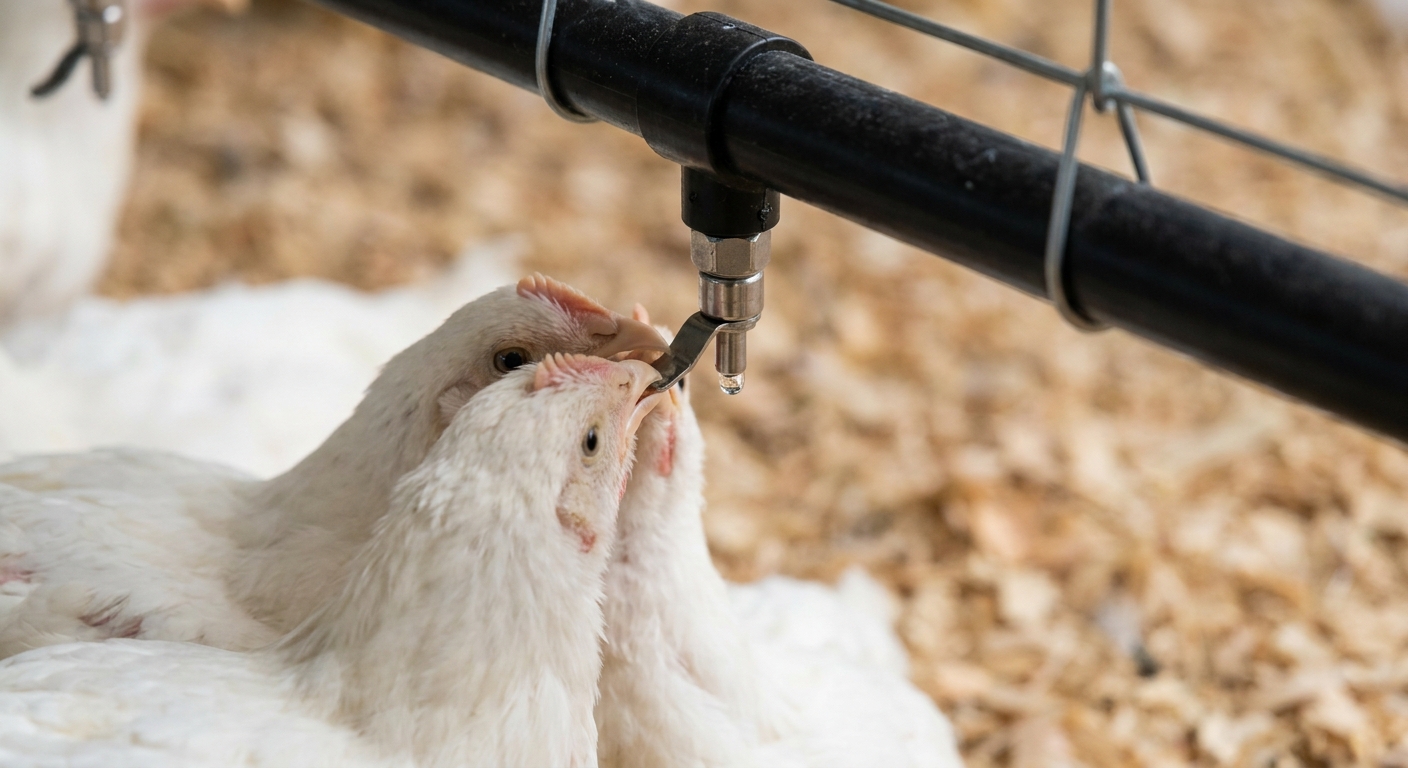
A closed water system is vital in poultry houses because it completely isolates the water supply from airborne pathogens, dust, and litter contamination. Traditional open bell drinkers or troughs quickly become fouled with organic matter, spreading disease rapidly through the flock. Why does this matter? Upgrading to an enclosed nipple system keeps the water clean and cold while preventing spillages that ruin your bedding.
Choosing between low-flow and high-flow nipples
Low-flow nipple systems are the industry benchmark because they release water only on demand, keeping your floor dry. However, in hot climates, some growers prefer high-flow systems paired with drip-catching cups to maximize water intake. Whichever system you choose, maintaining the correct line pressure is essential to prevent leaks. You must monitor litter conditions beneath the water lines daily.
- Low-flow: Best for keeping litter dry; 10 birds per nipple.
- High-flow: Best for hot climates; requires catch cups; 12 birds per nipple.
- Height tuning: Birds should drink at a comfortable 45-degree angle.
Tracking flock health via water meter data
Water consumption is directly linked to feed intake, making your water meter an invaluable diagnostic tool. A sudden drop in daily water intake is often your first warning sign of disease onset, extreme stress, or feed issues. Here is the kicker: tracking these metrics digitally allows you to intervene days before physical symptoms appear in the flock.
| Ambient Temperature | Water-to-Feed Ratio | Necessary Action | |
|---|---|---|---|
| 39°F | 1.7 : 1 | Check line pressures, prevent wet spots | |
| 68°F | 2.0 : 1 | Standard baseline consumption | |
| 99°F | 5.0 : 1 | Flush water lines to keep temperature cool |
This ratio chart highlights how dramatically water consumption escalates to combat heat stress as temperatures rise.
Key Takeaway: Installing closed nipple drinker systems and monitoring water meters gives you a biological barrier against disease and an early warning system for flock health.
How do you design optimal lighting for poultry houses?
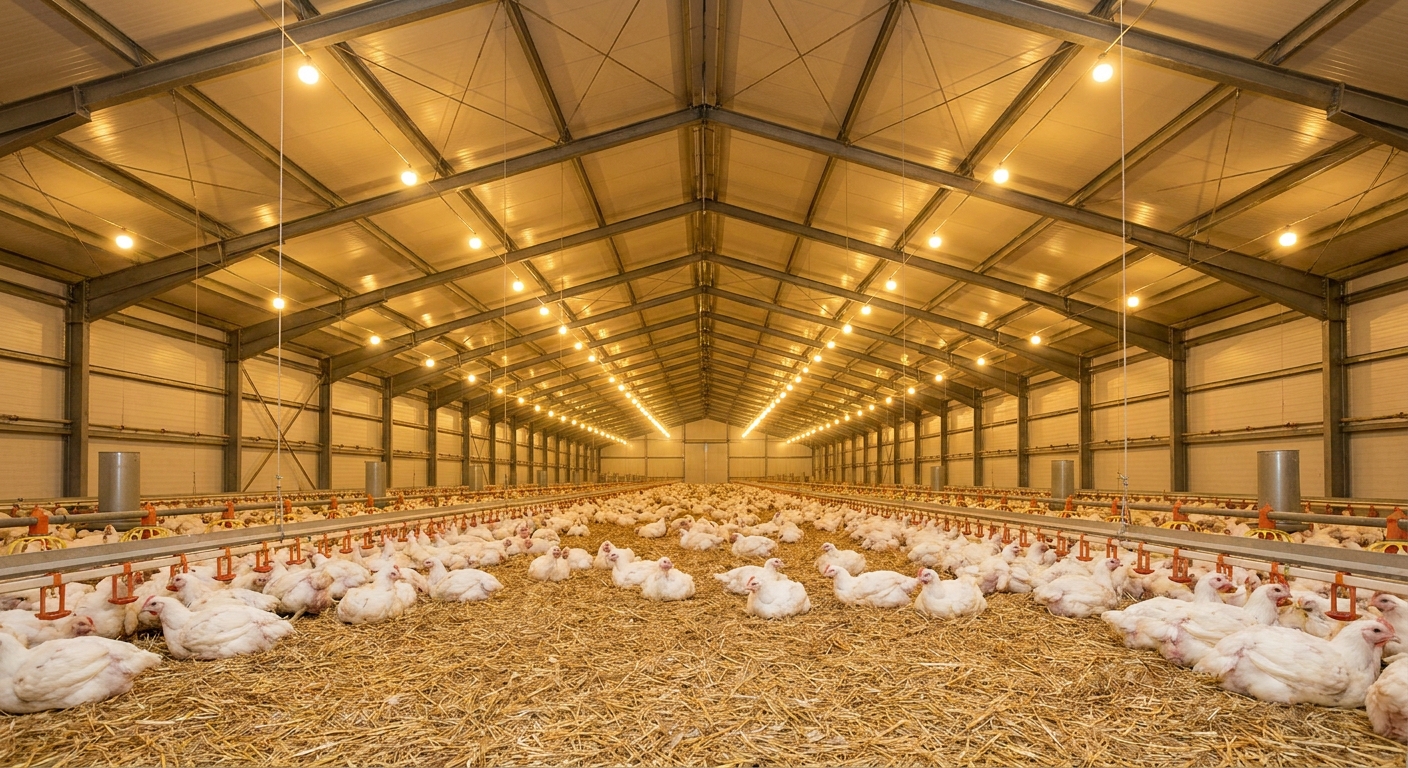
Designing optimal lighting for commercial poultry houses requires installing a dimmable LED grid that provides uniform light coverage while incorporating structured periods of total darkness. Proper photoperiod management stimulates natural broiler behavior, feeding activity, and physiological rest. But that is not all. Providing a balanced light schedule is essential for healthy bone development and prevents dangerous stress-induced piling.
Why photoperiod rest improves feed efficiency
Subjecting your broilers to continuous 24-hour light causes extreme metabolic stress and skeletal diseases. By enforcing 4 to 6 hours of darkness daily, you allow the birds to rest, which significantly improves feed conversion efficiency. This resting phase aligns with the bird’s natural diurnal rhythm, facilitating normal digestion and bone mineralization. Why does this matter? It dramatically lowers the rate of sudden death syndrome and ascites.
- Reduces metabolic disorders like ascites and skeletal failures.
- Promotes natural resting behavior and flock calm.
- Enhances muscle growth through balanced growth hormone release.
Comparing LED, CFL, and incandescent bulbs
While traditional incandescent bulbs have low upfront costs, they are highly inefficient and burn out within months. Dimmable compact fluorescent bulbs (CFLs) offer better energy efficiency but decay in brightness and struggle in dusty environments. Here is the kicker: industrial LED bulbs are the ultimate choice because they survive harsh washdowns and save up to 80% on electrical bills.
| Bulb Type | Average Lifespan | Energy Efficiency | Moisture Resistance | |
|---|---|---|---|---|
| Incandescent | 5 – 6 Months | Low | Poor | |
| CFL | 12 – 18 Months | Moderate | Moderate | |
| LED | 36 – 60+ Months | High | Excellent |
This evaluation clearly shows why LED systems deliver the lowest total cost of ownership for commercial lighting programs.
Key Takeaway: Implementing dimmable LED lighting coupled with a strict 4-to-6-hour daily dark period improves metabolic health and slashes energy costs.
What heating options work best in poultry houses?
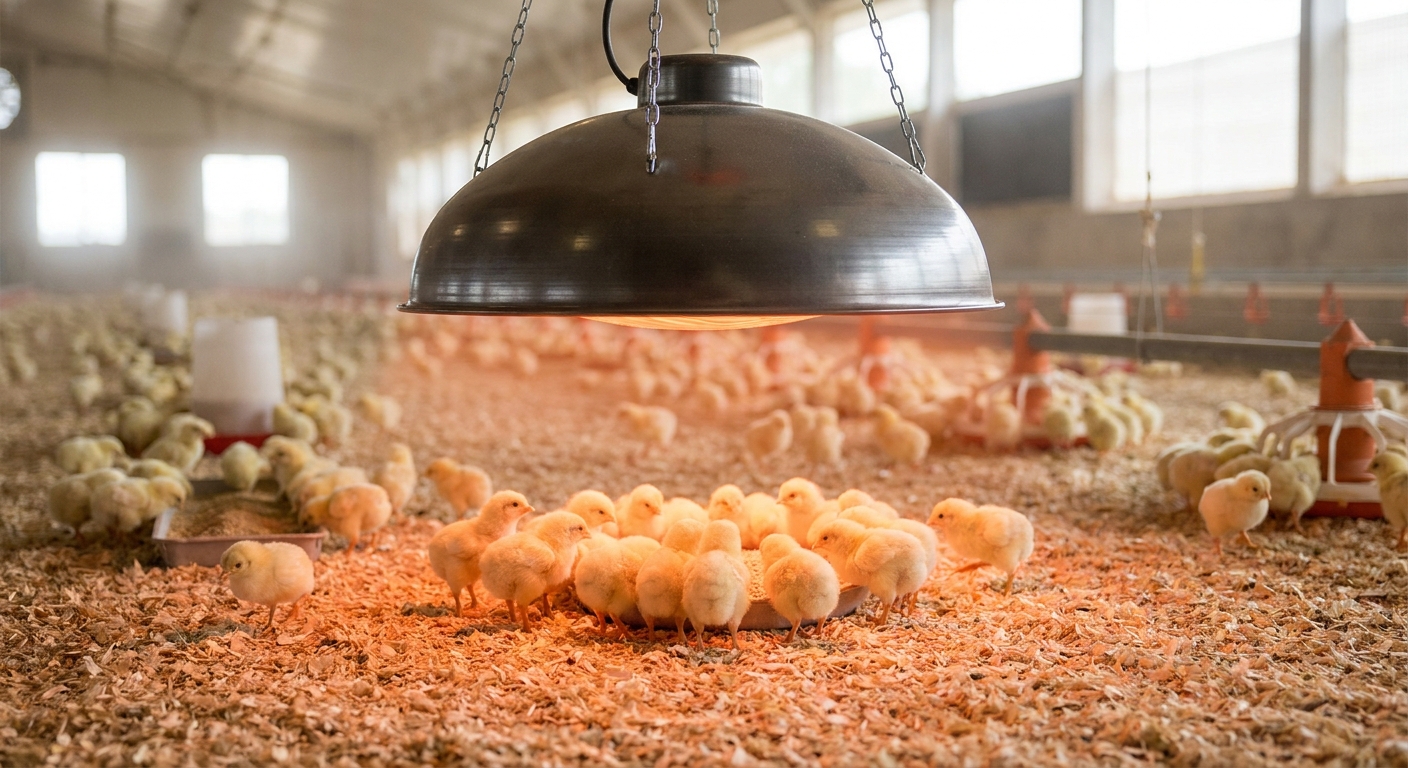
The heating options that work best in modern poultry houses are radiant pancake brooders for early-stage chicks and forced-air convection space heaters for the grow-out phase. Because newborn chicks cannot regulate their own body temperature, providing direct, reliable warmth is critical during the first fourteen days. Why does this matter? A cold floor environment leads to piling, starvation, and elevated mortality rates.
Radiant heat zones vs convection warming
Convection heaters warm the entire volume of air, meaning you must burn massive amounts of fuel before the floor and litter feel warm. Radiant pancake heaters, however, project infrared waves directly onto the floor and the chicks, warming them instantly. This creates comfortable thermal zones where chicks can choose their own distance from the heat source. By using radiant zones, you significantly reduce overall fuel consumption.
- Radiant pancake: Focuses infrared heat directly on chicks; highly efficient.
- Forced air convection: Warms air volume; best for older birds.
- Radiant tubes: Ideal for uniform whole-house floor heating.
Siting sensors to prevent overheated floors
If you choose radiant tube heaters, you must position computerized floor sensors carefully to prevent the bedding from overheating. Excessive floor temperatures will dry out chick footpads and drive them away from vital feeding and watering zones. Here is the kicker: integrating your heaters with digital floor probes ensures a safe, stable temperature without wasting fuel. Let us compare the systems side by side.
| Heating Type | Primary Heat Transfer | Brooding Suitability | Fuel Efficiency | |
|---|---|---|---|---|
| Radiant Pancake | Direct Infrared | Excellent (0-14 days) | High | |
| Convection Air | Air Circulation | Poor for early chicks | Moderate | |
| Radiant Tube | Whole-Floor Infrared | Good (requires sensors) | High |
This mechanical comparison outlines which heating methodology is best suited for different stages of the broiler grow-out cycle.
Key Takeaway: Deploying direct infrared radiant pancake brooders for early-stage chicks provides energy-efficient heat zones that protect fragile birds and lower fuel costs.
How do controllers automate climate in poultry houses?

Computerized environmental controllers automate climate management inside modern poultry houses by continuously regulating fans, heaters, and air inlets based on real-time sensor feedback. These intelligent units work around the clock to eliminate human error and maintain a rock-solid environment. But that is not all. By monitoring moisture, they also help minimize condensation, which is a major factor in structural rust and deterioration.
Placing multi-sensor thermal networks correctly
You must position multiple temperature and humidity sensors at bird height down the entire length of the building. Relying on a single sensor in a massive space will lead to undetected cold draft zones or dangerous hot spots. The controller averages these sensor readings to stage fans and heaters smoothly. Why does this matter? Keeping temperatures within a tight 3°F window prevents flock stress and respiratory illness.
- Multi-sensor arrays: Placed at bird height for true readings.
- Automated staging: Matches fan speed to the average temperature.
- Real-time logging: Tracks daily water use, humidity, and heat cycles.
Designing failsafe emergency alarm setups
A sudden power drop or fan failure can cause catastrophic bird losses in an enclosed facility within minutes. Your environmental controllers must be backed up by battery-powered alarm systems that send instant mobile alerts. Here is the kicker: pairing these controllers with automatic emergency side-curtain drops can save your entire flock during a major electrical grid failure.
| Parameter | Target Range | Automated Controller Reaction | |
|---|---|---|---|
| Relative Humidity | 50% to 70% | Speeds up exhaust fans when over 70% | |
| Ammonia Level | Under 20 ppm | Increases minimum ventilation timer | |
| Static Pressure | 0.05 to 0.08 in. WC | Adjusts sidewall inlet baffles |
This operational parameters guide shows how your central controller automatically coordinates mechanical devices to maintain structural and flock equilibrium.
Key Takeaway: Centralizing your climate control into a multi-sensor computerized network with battery-backed emergency failsafes eliminates environmental swings and protects your flock from power outages.
What is the best ventilation strategy for poultry houses?
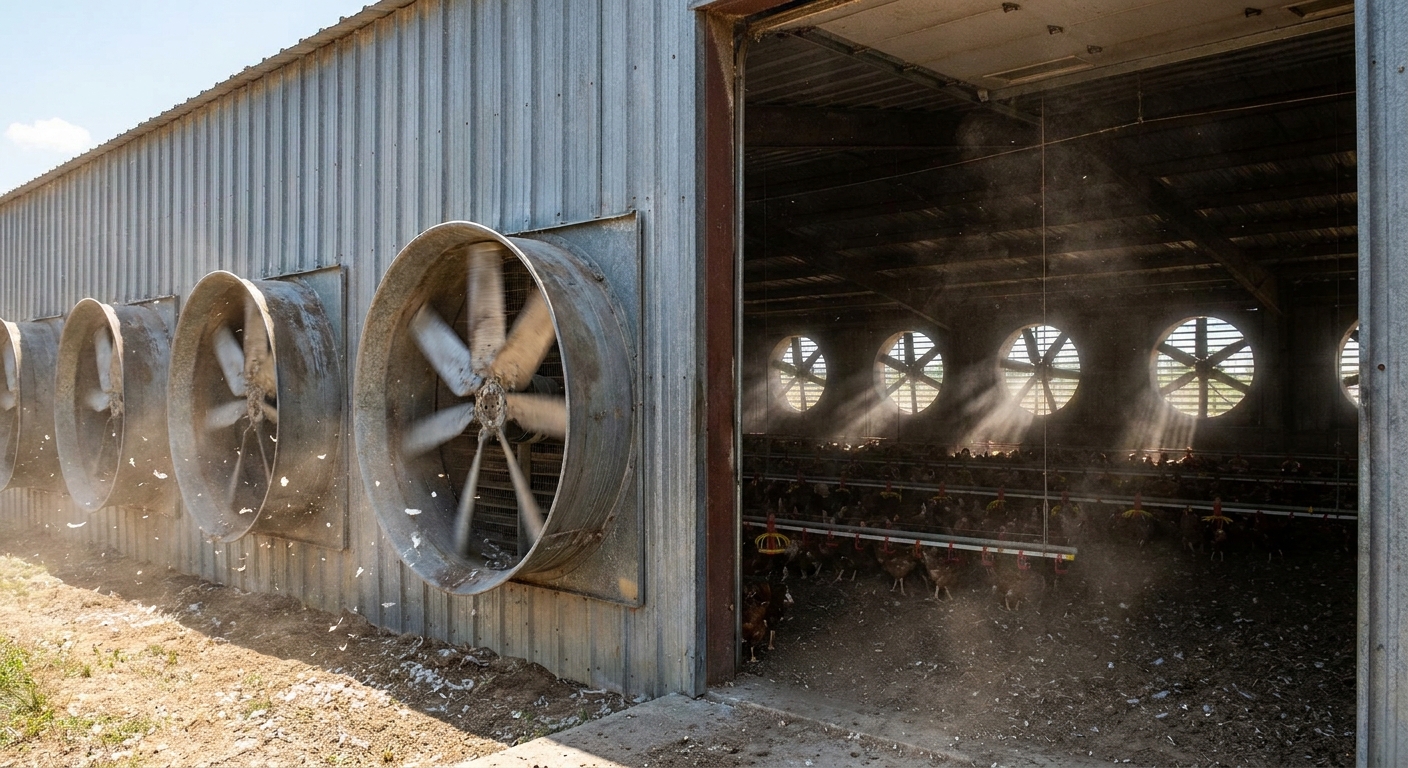
The best ventilation strategy for modern poultry houses is tunnel ventilation combined with computerized negative static pressure control to maintain fresh air exchange. This setup relies on high-velocity exhaust fans at one end of the building pulling fresh air through cooling pads or inlets at the opposite end. Why does this matter? This rapid air movement creates a cooling wind-chill effect that keeps heavy broilers active and comfortable during extreme heat waves.
Tunnel ventilation vs natural open-sided systems
Natural open-sided facilities are cheap to operate but leave your flock completely vulnerable to zero-wind summer afternoons. Tunnel ventilation systems, however, give you absolute environmental control by artificially creating high-velocity breezes. To make this system work, you must install migration fences inside the building. This prevents your birds from crowding near the bright air inlets where they might pile up.
- Tunnel systems: Absolute climate control; essential for high density.
- Natural open-sided: Vulnerable to weather; suitable only for low densities.
- Migration fences: Keeps bird distribution perfectly uniform.
Controlling negative static pressure and ammonia
You must maintain a constant negative static pressure to ensure incoming cold winter air shoots toward the ceiling to warm up before touching the birds. This simple physical technique prevents cold drafts and keeps your litter bone-dry. Here is the kicker: keeping your relative humidity below 70% completely stops the bacterial breakdown of uric acid, which is the primary source of toxic ammonia gas.
| Toxic Gas / Element | Maximum Safe Limit | Consequence of Excess | |
|---|---|---|---|
| Ammonia (NH3) | < 20 ppm | >25 ppm causes severe respiratory lesions | |
| Carbon Dioxide (CO2) | < 3,000 ppm | Dulls activity levels, lowers weight gain | |
| Relative Humidity | < 70% | Triggers wet litter, footpad dermatitis |
This exposure limits chart shows why precise mechanical ventilation is mandatory to keep internal toxic gases below dangerous biological levels.
Key Takeaway: Implementing automated tunnel ventilation and keeping static pressure in the 0.05 to 0.08 in. WC range ensures fresh air, low humidity, and safe ammonia levels.
Which litter management protocols work in poultry houses?
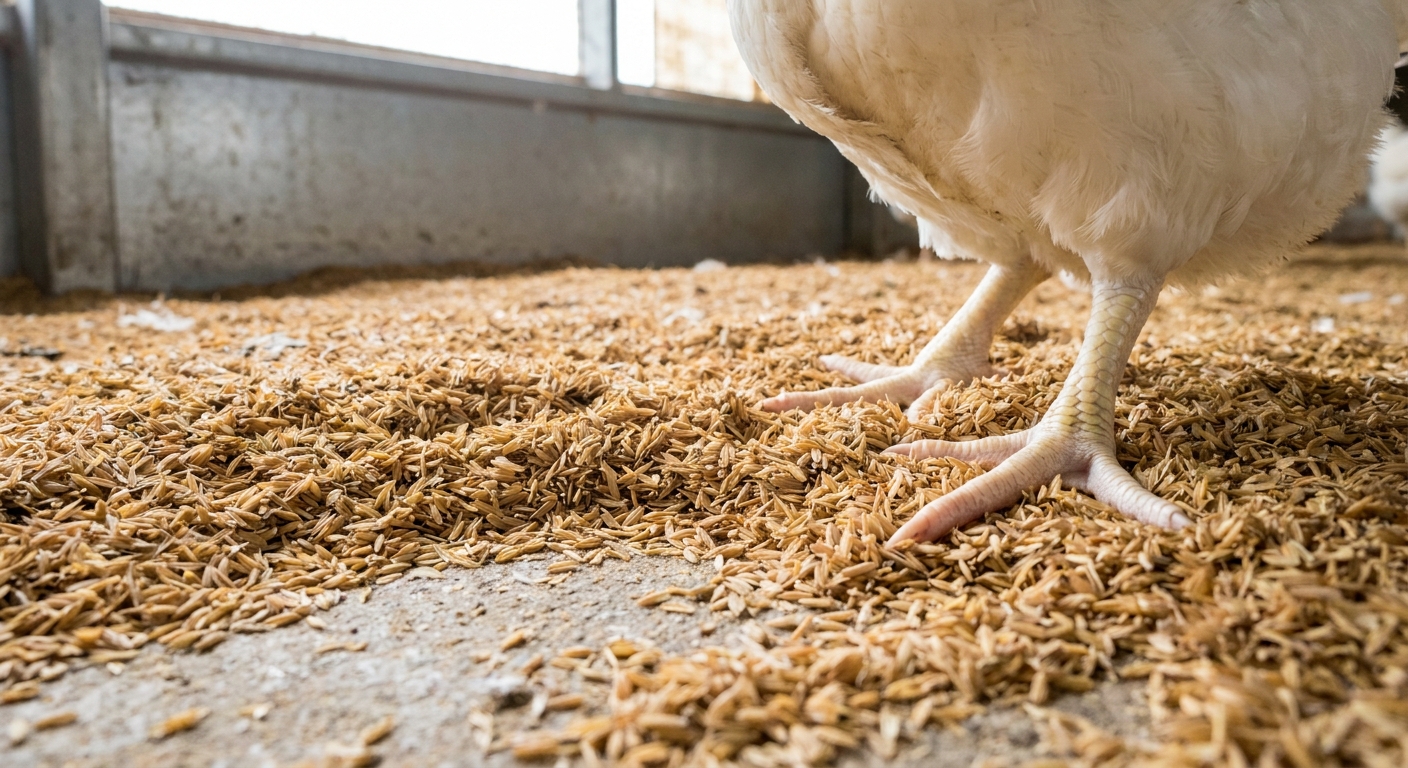
The best litter management protocols in commercial poultry houses involve using dry pine shavings or rice hulls spread to a uniform depth of at least three to four inches. High-quality bedding acts as a sponge, absorbing fecal moisture and diluting bird droppings. Why does this matter? Keeping your bedding dry prevents the build-up of pathogenic bacteria and mold, protecting your birds from footpad dermatitis and respiratory illness.
Selecting the right absorbent bedding materials
While kiln-dried pine shavings and clean rice hulls are the top industry choices, supply chain shifts have made them increasingly expensive. You can successfully utilize alternative beddings like peanut hulls, chopped straw, or wood shavings if they are guaranteed free of mold and chemical residues. However, you must avoid damp sawdust because it traps moisture and encourages fungal growth. Here is the kicker: storing your bedding in dry, covered barns before use is critical.
- Pine shavings: Superior absorbency, soft texture, premium cost.
- Rice hulls: Excellent drainage, resists caking, moderate availability.
- Chopped straw: Affordable option, but packs down easily.
Preventing breast blisters with correct depth
Spreading your bedding to a minimum depth of three inches provides a critical insulating layer from the cold ground during winter. This soft barrier also cushions your broilers’ heavy breast muscles and legs as they rest. If the litter layer gets too thin, birds will suffer from painful breast blisters and joint bruising. To maintain this protective layer, you must rake and break up any caked spots daily.
| Bedding Material | Moisture Absorption | Caking Risk | Initial Cost Profile | |
|---|---|---|---|---|
| Pine Shavings | Exceptionally High | Low (with ventilation) | Premium Pricing | |
| Rice Hulls | Very Good | Extremely Low | Moderate | |
| Hardwood Shavings | Fair | Moderate | Budget-Friendly |
This material analysis matrix details how the physical properties of bedding types affect moisture retention and crop safety.
Key Takeaway: Maintaining absorbent pine shavings or rice hulls at a depth of 3 to 4 inches cushions heavy broilers, protects carcasses, and controls moisture levels.
How do structure choices block pests in poultry houses?
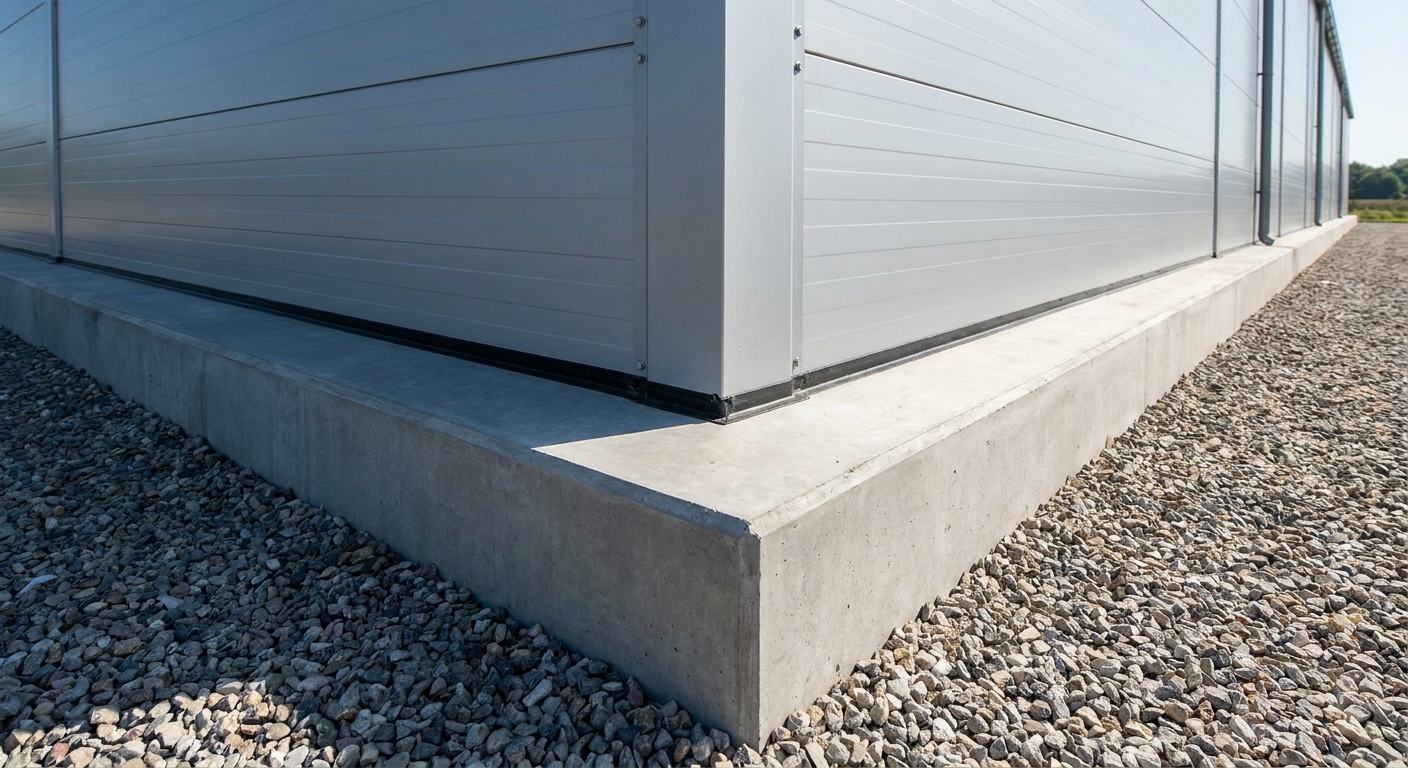
Making smart structural choices blocks pests in poultry houses by building a continuous concrete footing curb and utilizing insulated steel sandwich panels. These heavy-duty structural choices form an impenetrable barrier that keeps out wild birds, rodents, and destructive insects. Why does this matter? Sealing off pest entry points protects your expensive wiring, prevents insulation damage, and eliminates the primary carriers of dangerous diseases like salmonella.
Continuous concrete footings vs soil floors
A continuous concrete footing curb running around the perimeter of your building stops burrowing rats and mice from digging under the walls. It also acts as a solid moisture barrier, preventing ground dampness from rotting your wall frames. Here is the kicker: this concrete base creates a flat, smooth joint that allows your team to easily wash down and sanitize the facility between flocks. Without this solid perimeter, complete biosecurity sanitization is practically impossible.
- Rodent barrier: Blocks mice and rats from tunneling into the house.
- Moisture shield: Stops soil humidity from causing structural corrosion.
- Sanitation curb: Enables high-pressure washdowns of wall-floor joints.
Steel panels protect insulation from beetles
Litter beetles and mealworms love to burrow into standard fiberglass insulation, quickly turning it to dust and destroying your heating efficiency. By using metal-skinned polyurethane sandwich panels, you enclose the insulation in steel, making it impossible for pests to penetrate. This robust barrier preserves your building’s R-value and saves you thousands of dollars in heating bills over time. Let us look at how structural biosecurity elements protect your investments.
| Building Element | Pest Prevention Function | Structural Lifespan | Energy Savings | |
|---|---|---|---|---|
| Concrete Footing | Blocks burrowing rodents | Permanent | Prevents ground draft leaks | |
| Metal Sandwich Panels | Stops litter beetles from tunneling | 25+ Years | High (retains R-value) | |
| Sealed Side Inlets | Keeps out wild birds | 10 – 15 Years | Moderate |
This structural biosecurity breakdown illustrates the direct relationship between durable structural materials, long-term pest exclusion, and thermal efficiency.
Key Takeaway: Investing in continuous concrete curbs and metal-skinned sandwich panels creates an airtight, pest-proof envelope that secures flock biosecurity and reduces energy loss.
Build Better Poultry Houses—Get Your Custom Quote Today !
Email:sales@showhoo.com.cn
Phone/WhatsApp:+86 186 7895 5927
FAQs
Can I convert my old wood-truss broiler houses to tunnel ventilation?
Yes, you can. However, because older wood houses typically have open, high ceilings, you must install a smooth, airtight drop ceiling to minimize empty headspace. This physical change is necessary to ensure the high-speed air travels directly at bird level where cooling is needed.
What is the best bedding material if pine shavings are too expensive?
Rice hulls are the absolute best alternative. They drain moisture exceptionally well, flow easily through automated spreaders, and resist caking much better than chopped straw or paper-based beddings.
How do I know if my water line pressure is too high?
Check the litter beneath the drinking nipples immediately. If you observe wet, slicked-over, or heavily caked spots directly under the water lines, your pressure regulator is set too high, causing water to drip when the birds tap the trigger pin.
Can I run my broiler house using natural ventilation year-round?
Absolutely not for high-yield commercial setups. Relying solely on natural breezes leaves your birds vulnerable to hot, windless summer afternoons, leading to severe heat stress, reduced growth rates, and catastrophic flock mortality.
What is the best way to monitor static pressure in my facility?
Use a digital pressure sensor connected to your environmental controller. This setup automatically reads the pressure drop and adjusts the opening width of your sidewall inlets to keep incoming air shooting upward toward the center peak of the ceiling.
Conclusion
Building a successful broiler business requires structural choices that solve real-world problems. By selecting prefabricated steel frames over traditional wood materials, you eliminate costly operational threats like structural rot, air leaks, and pest damage. This structural foundation is the crucial first step to achieving precise climate control and maximizing farm biosecurity.
Our world-class engineering team is here to support you at every stage of your development. We offer complete custom design, high-quality steel fabrication, expert global logistics, and long-lasting corrosion-resistant finishes. We tailor every structural frame, insulation package, and wall panel interface to meet your exact regional climate and capacity needs.
Our grand vision is to build sustainable, highly biosecure, and automated global poultry systems designed to feed the world efficiently. To begin planning your high-yield, durable facility, please submit your customized quote request to our design team today. Let us build a reliable, high-yield facility that protects your investment and grows your business for decades to come.