
I built my sheep barn by utilizing a clear-span steel structure and a professional sheep barn layout to ensure long-term durability and flock health. Many producers struggle with aging timber sheds that harbor moisture, leading to high lambing mortality and respiratory issues. You may find that your current setup is difficult to clean and lacks the ventilation necessary for a productive breeding season. By investing in a modern steel facility, you provide a sterile, dry environment that protects your investment and streamlines daily management. Find the right configuration for your flock at our sheep barn layout resource page.
Why did I choose a steel structure for my barn?
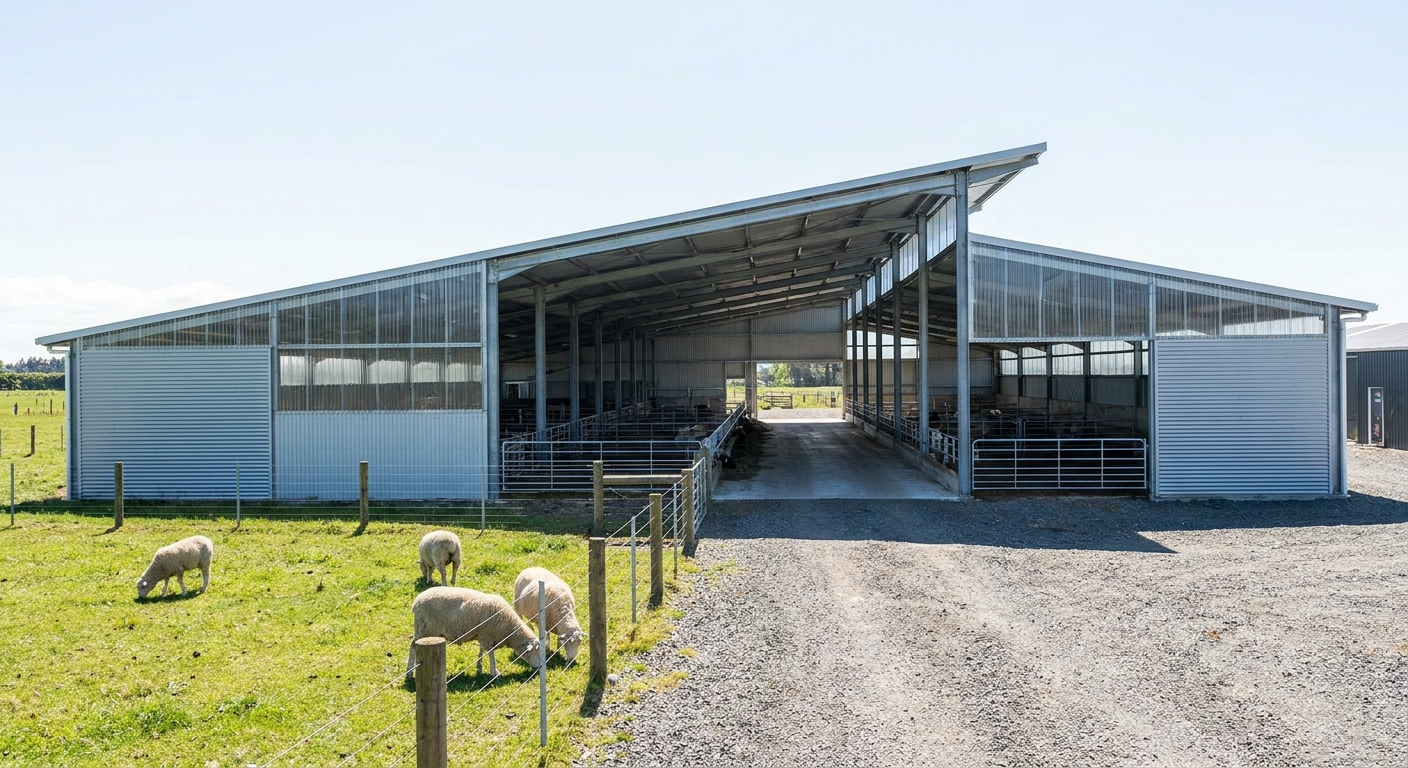
I chose a steel structure because it offers unmatched durability and a clear-span interior that optimizes the sheep barn layout. Steel components resist the corrosive effects of livestock waste far better than traditional wood. You will find that pre-engineered steel buildings provide a consistent, high-quality environment for years. These structures are designed to handle heavy snow loads and wind while requiring minimal maintenance.
Benefits of clear-span design
The primary advantage of steel is the ability to create a wide-open space without central support pillars. You can maneuver tractors and cleaning equipment freely throughout the facility.
But here is the kicker:
- No interior posts to hit with machinery.
- Complete flexibility for pen placement.
- Improved air circulation across the floor.
Think about it: an unobstructed floor plan is the foundation of a successful sheep operation.
Longevity and ROI factors
Investing in a steel building provides a superior return on investment due to lower insurance premiums and reduced repair costs. You won’t have to worry about rot, termites, or sagging roof lines over time.
Check this out:
- Steel is fire-resistant and pest-proof.
- Fast assembly reduces initial labor costs.
- High resale value for the property.
Key Takeaway: Choosing steel ensures a maintenance-free structure that allows for total interior flexibility.
| Feature | Steel Barn | Wood Barn | |
|---|---|---|---|
| Span | Up to 100ft+ clear | Limited by posts | |
| Durability | 50+ Years | 15-25 Years | |
| Maintenance | Minimal | High (Painting/Rot) |
Modern steel fabrication allows for precision-engineered components that fit perfectly every time.
Where is the best location for a new sheep barn?
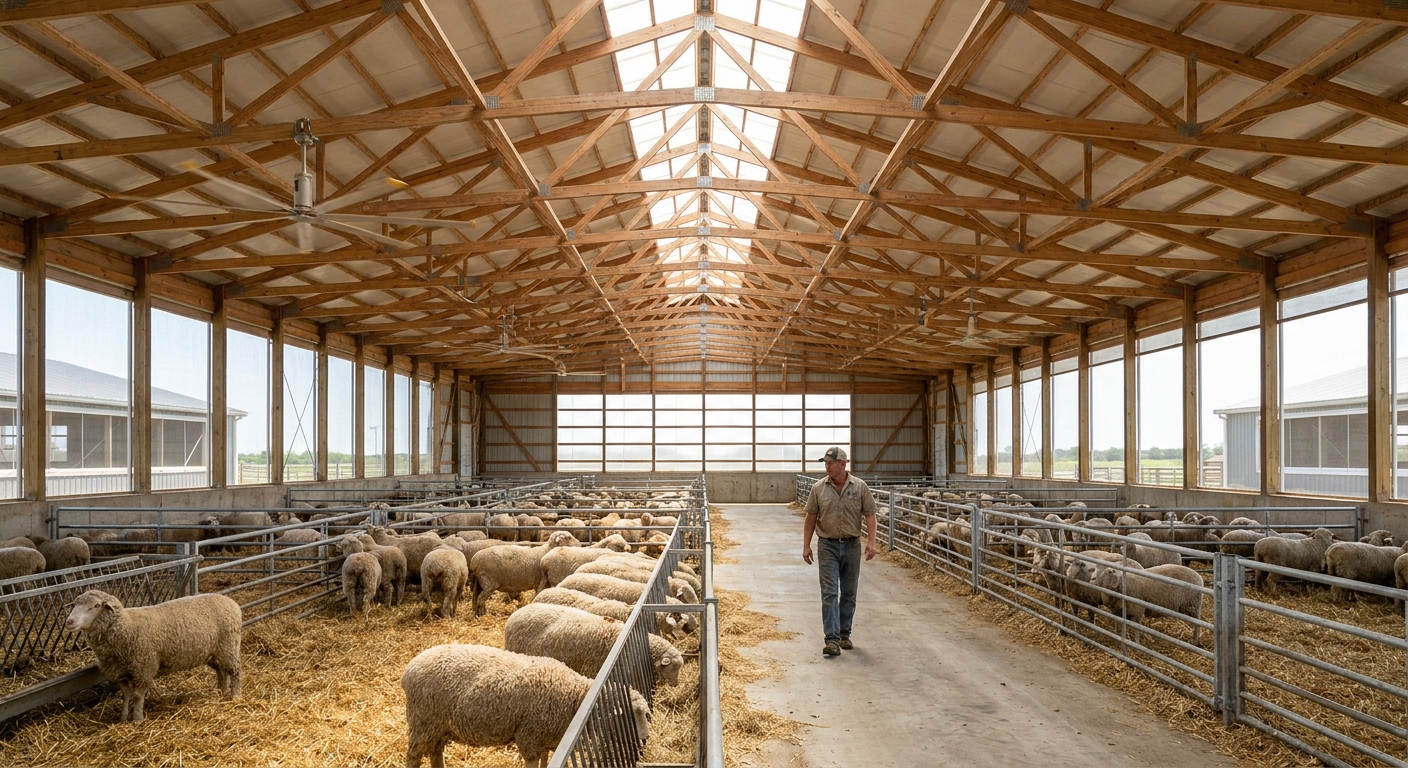
The best location for a barn is high ground with excellent drainage to support an efficient sheep barn layout . You must avoid low-lying areas where water pools, as damp floors are the primary cause of hoof rot. Proper site selection ensures that your facility remains accessible during heavy rains and winter snows. A well-drained site also prevents the buildup of ammonia and bacteria near the foundation.
Evaluating site topography
You should look for a site with a slight slope to direct runoff away from the barn’s entrance. This natural drainage reduces the need for expensive underground piping systems.
Look at the facts:
- Slopes prevent standing water near gates.
- High ground captures better cross-breezes.
- Dry soil simplifies foundation preparation.
Make no mistake: starting with the right ground is half the battle in barn construction.
Access and utility proximity
Your barn location must be accessible for large trucks delivering hay or picking up livestock. You also need to consider the distance to existing water lines and electrical hookups.
Think about it:
- Easy access saves time during feeding.
- Close utilities reduce trenching costs.
- Future expansion should be part of the plan.
Key Takeaway: Site selection impacts every aspect of daily management, from drainage to logistics and utility costs.
| Site Factor | Recommended Condition | Impact | |
|---|---|---|---|
| Elevation | Above surrounding terrain | Prevents flooding | |
| Soil Type | Well-drained gravel/clay | Stable foundation | |
| Sunlight | Southern exposure | Natural warmth/drying |
Proper positioning on your property ensures the longevity of the structure and the health of the flock.
Contact Us for a Customized Solution
Email:sales@showhoo.com.cn
Phone/WhatsApp:+86 186 7895 5927
How do you organize a sheep barn for maximum flow?
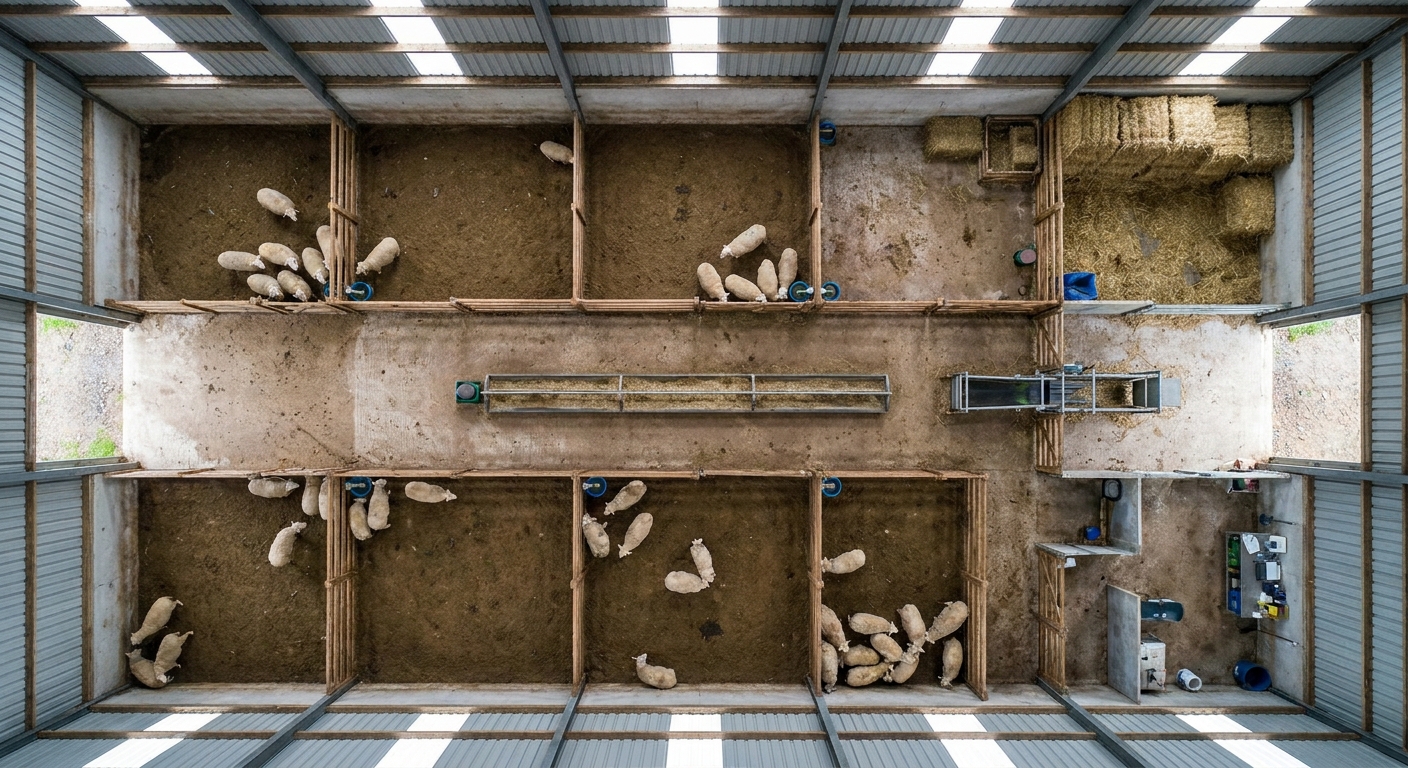
You organize a barn by creating dedicated zones for feeding, lambing, and movement within the sheep barn layout. An efficient design allows a single operator to move sheep between areas without stress or extra labor. You should place high-traffic areas near the main entrances to minimize travel distances for feed and manure. A logical flow reduces the time spent on daily chores and improves overall safety.
Creating efficient movement alleys
Central alleys are essential for moving sheep quickly and safely between the main housing area and the sorting chutes. You want these alleys to be wide enough for a tractor but narrow enough for easy sheep control.
Here is the kicker:
- Alleys double as sorting lanes.
- Smooth walls prevent injury to fleece.
- One-way gates improve flock flow.
Think about it: if you can’t move your sheep easily, you can’t manage your flock effectively.
Strategic zone placement
By grouping ewes according to their physiological state, you can tailor feeding and care to specific needs. You should keep the lambing area separated from the general flock to maintain hygiene.
Consider these points:
- Separate pens for dry and pregnant ewes.
- Feed storage near the feeding troughs.
- Easy access to the hospital pen.
Key Takeaway: A zoned layout minimizes labor and ensures that every animal receives the appropriate level of care.
| Zone Type | Primary Use | Location Tip | |
|---|---|---|---|
| Feeding | Daily nutrition | Near hay storage | |
| Lambing | Specialized care | Quietest part of barn | |
| Handling | Sorting and medical | Near the exit door |
Proper zoning is the hallmark of a professional agricultural facility designed for high-volume production.
What flooring works best for managing sheep waste?
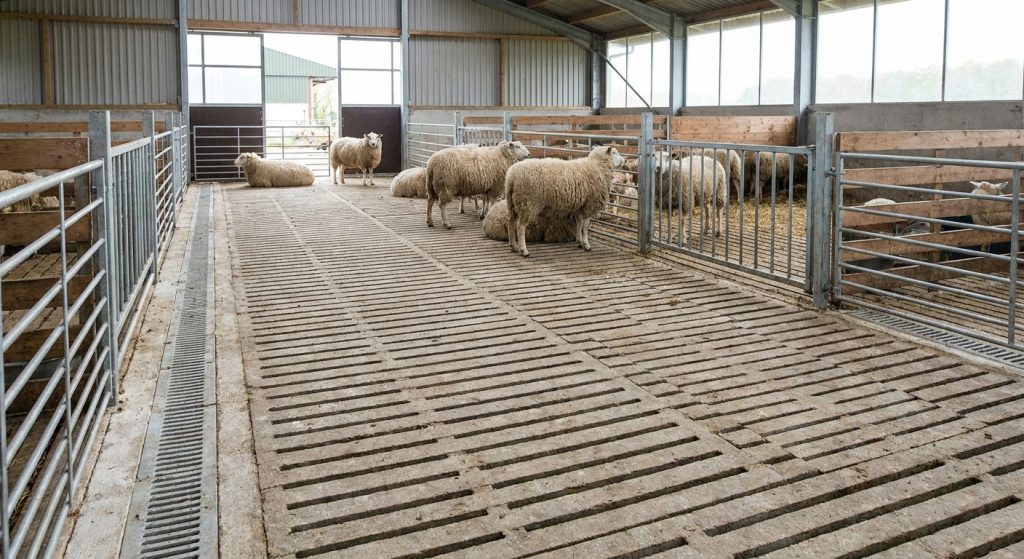
Slatted concrete or heavy plastic flooring works best for waste management in a modern sheep barn layout . This system allows manure and urine to fall through to a collection pit below, keeping the animals’ coats and hooves dry. You will notice a significant reduction in labor because the need for daily bedding replenishment is virtually eliminated. This type of flooring is particularly effective for high-density finishing operations or intensive breeding facilities.
Advantages of slatted flooring
The primary benefit of a slatted system is the dramatic improvement in hygiene and air quality within the barn. You won’t have to deal with the ammonia buildup typically found in deep-litter straw systems.
Check this out:
- Sheep stay cleaner and drier.
- Parasite cycles are easier to break.
- Waste can be pumped out as liquid fertilizer.
But here is the kicker: slatted floors require a higher initial investment but save thousands in bedding and labor.
Alternate flooring considerations
In some climates, a well-drained dirt or clay floor covered with a thick layer of straw may be more appropriate. You must ensure that these floors are scraped regularly and refreshed to prevent moisture buildup.
Think about it:
- Dirt floors are cheaper to install.
- Straw provides natural warmth for lambs.
- Requires heavy machinery for cleaning.
Key Takeaway: Flooring choice determines your daily labor requirements and the overall health of the sheep’s feet and lungs.
| Floor Type | Initial Cost | Labor Level | |
|---|---|---|---|
| Slatted | High | Very Low | |
| Soil/Clay | Low | High | |
| Concrete | Medium | Medium |
Modern steel structure warehouse designs can be adapted to accommodate any of these flooring systems easily.
Why is light and airflow critical for flock health?
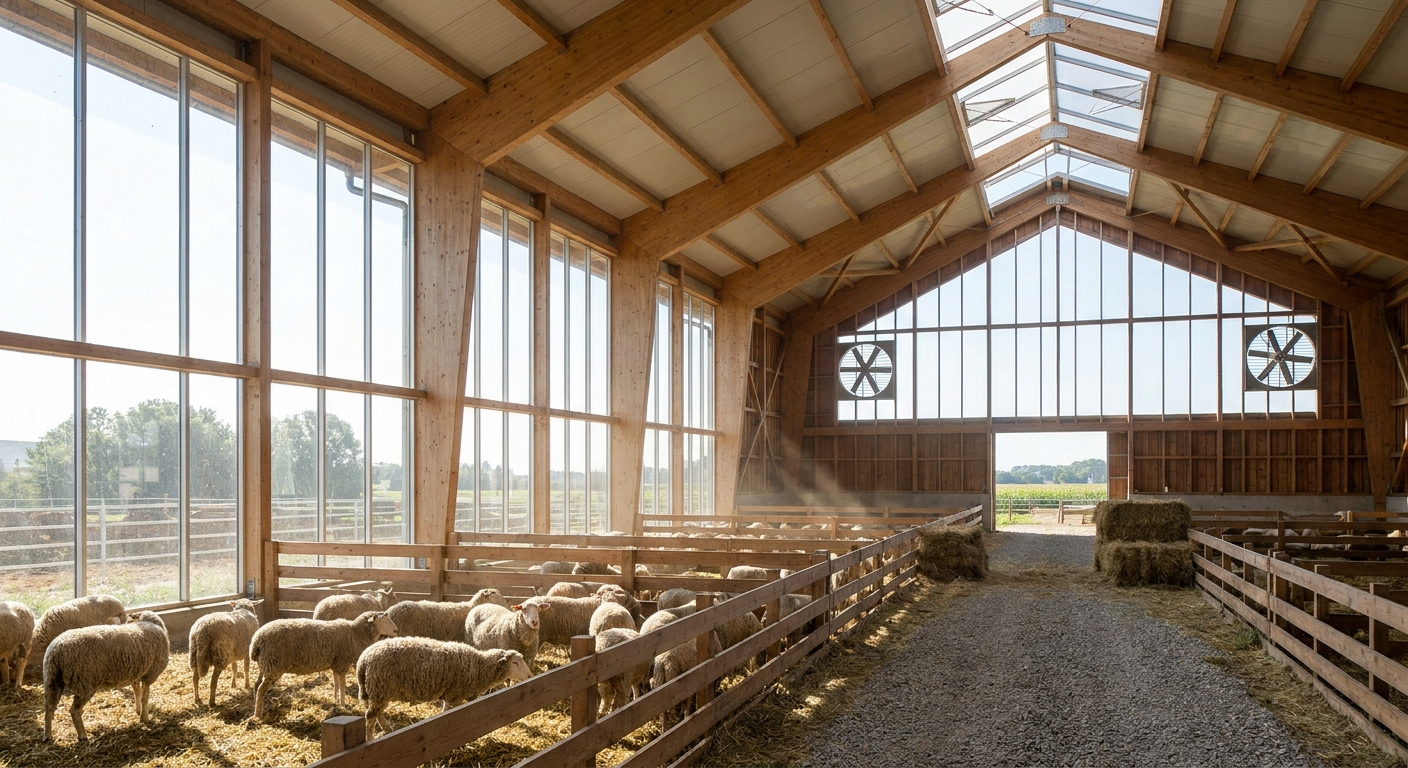
Light and airflow are critical because they prevent respiratory disease and promote natural biorhythms in the sheep barn layout. You need a constant exchange of air to remove moisture, heat, and pathogens that accumulate in confined spaces. Sheep are naturally cold-hardy, but they are highly susceptible to pneumonia when forced to breathe stale, humid air. Adequate natural light also improves the ewes’ reproductive cycles and makes the workspace safer for you.
Passive ventilation techniques
By using adjustable curtains or high-eave vents, you can harness natural cross-breezes to keep the air fresh. You want the air to move above the sheep’s heads to avoid chilling them while removing rising heat.
Here is the kicker:
- Curtains allow for seasonal adjustments.
- Ridge vents exhaust warm, moist air.
- Natural airflow costs nothing to operate.
Make no mistake: a barn that smells like ammonia is a barn that is failing your flock.
Maximizing natural daylight
Translucent roof panels or “skybelts” can flood the interior with natural light without the heat gain of large windows. You will find that sheep are calmer and easier to handle in a well-lit environment.
Think about it:
- Sunlight is a natural disinfectant.
- Reduces dependence on electric lighting.
- Improves mood for the human workers.
Key Takeaway: Proper ventilation and lighting are the most effective non-medical ways to maintain a healthy flock.
| System | Goal | Implementation | |
|---|---|---|---|
| Airflow | Remove Ammonia/CO2 | Eave vents & Curtains | |
| Light | Health/Productivity | Translucent panels | |
| Insulation | Prevent Condensation | Drip-stop roof coating |
High-quality poultry house and livestock designs always prioritize these two environmental factors.
Contact Us for a Customized Solution
Email:sales@showhoo.com.cn
Phone/WhatsApp:+86 186 7895 5927
How much space do sheep really need in a barn?
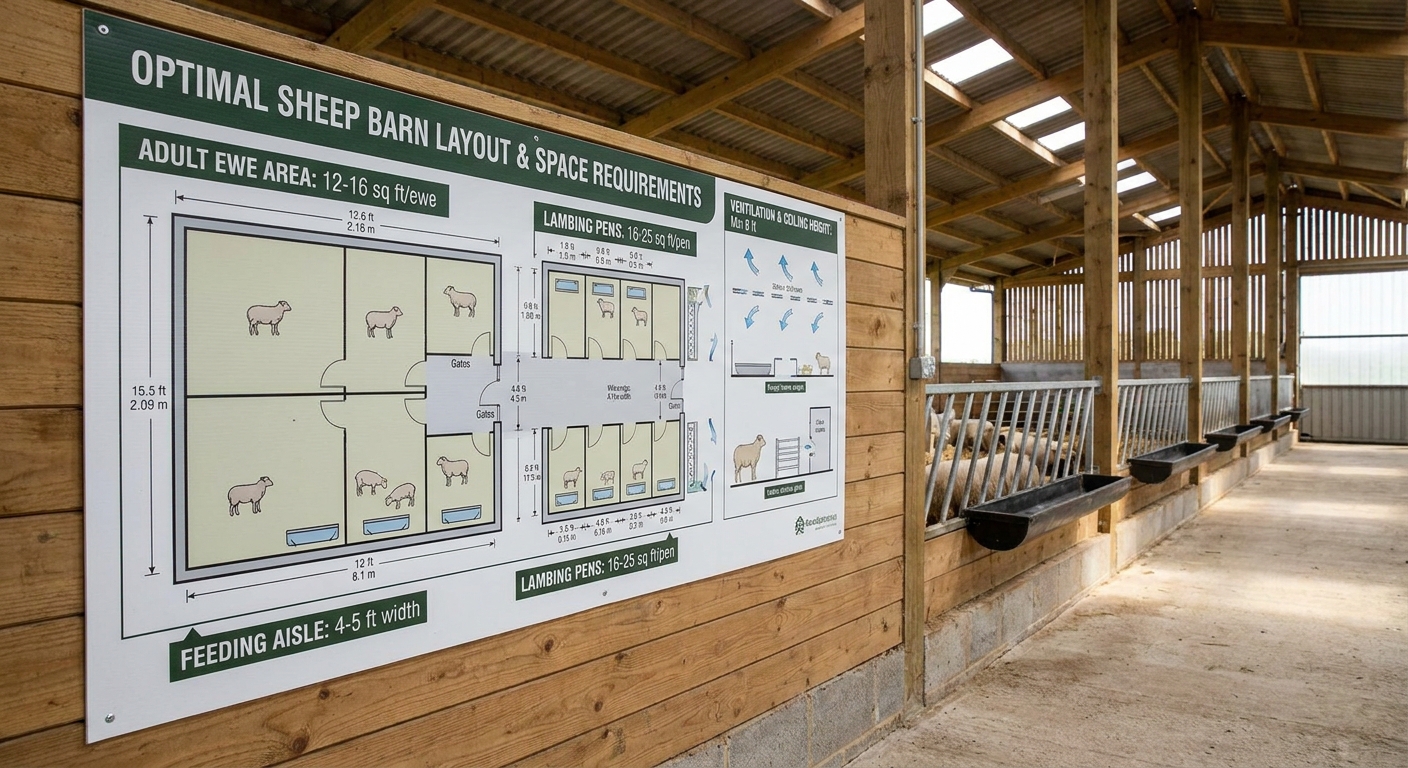
Sheep require between 12 and 16 square feet per adult ewe depending on their breed and pregnancy status in the sheep barn layout . You must provide enough room for every animal to lie down and move comfortably to the feed bunk. Overcrowding leads to increased stress, aggressive behavior, and the rapid spread of diseases. It is better to have a slightly larger barn than to cram too many animals into a confined space.
Space requirements per animal type
Pregnant ewes require the most space to ensure they aren’t jostled, which can lead to complications or abortions. You also need to account for the space taken up by feeders, waterers, and internal gates.
Check these numbers:
- Dry ewes: 10-12 sq ft.
- Pregnant ewes: 14-16 sq ft.
- Rams: 20-30 sq ft.
But here is the kicker: the “effective” space is often less than the total square footage once infrastructure is installed.
Calculating feeder and bunk space
You must ensure that every sheep can eat at the same time to prevent weaker animals from being pushed away. This requires approximately 16 to 20 inches of bunk space per adult animal.
Think about it:
- Competition for food causes stress.
- Uniform growth depends on bunk access.
- Double-sided feeders save floor space.
Key Takeaway: Accurate space planning prevents social stress and ensures all animals have equal access to nutrition.
| Sheep Status | Floor Space (sq ft) | Bunk Space (inches) | |
|---|---|---|---|
| Dry Ewe | 12 | 16 | |
| Pregnant | 16 | 20 | |
| Ewe + Lamb | 20 | 20 |
Following these metrics ensures your facility meets the highest standards for animal welfare and productivity.
Where should feeding and watering stations be placed?
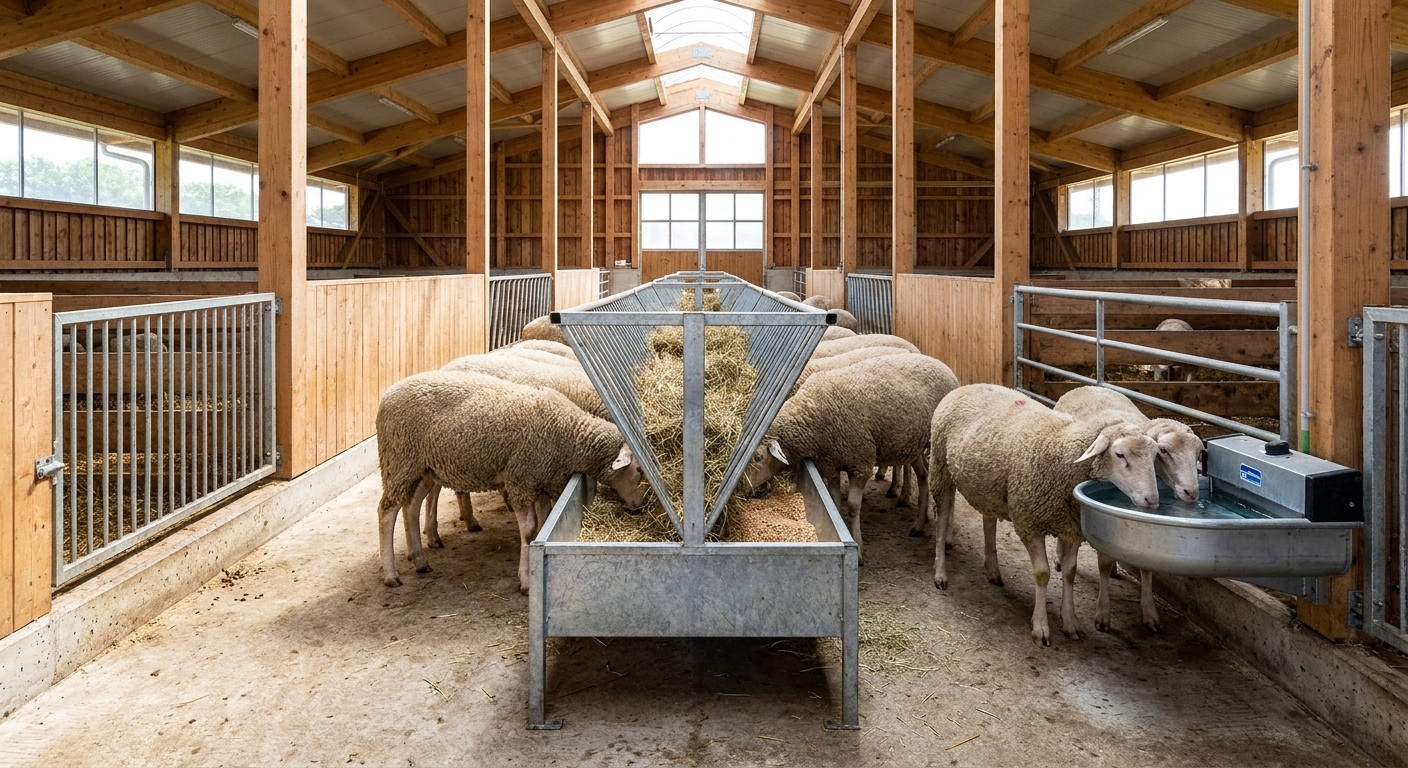
You should place feeding and watering stations along the edges of the sheep barn layout to allow for easy filling and cleaning. Placing hay feeders along the central alley allows you to feed the flock without entering the pens. You must locate waterers away from the feeding area to prevent hay from contaminating the water and causing spoilage. Easy access to fresh water is essential, as sheep can drink up to four gallons per day during peak lactation.
Optimizing feeder placement
Feeders should be designed to minimize waste and keep hay off the ground where it can become soiled. You can use walk-through feeders to create internal divisions within the larger barn.
Here is the kicker:
- Fenceline feeding reduces labor.
- Slanted bars prevent sheep from pulling hay out.
- Easy to clean with a skid steer.
Think about it: every pound of hay on the ground is lost profit for your operation.
Waterer safety and accessibility
Waterers should be frost-proof and mounted at a height that prevents lambs from accidentally falling in. You should place them on a concrete pad to prevent the surrounding area from becoming a mud hole.
Consider these tips:
- Automatic waterers provide a constant supply.
- Clean waterers weekly to prevent algae.
- Locate near drainage for easy flushing.
Key Takeaway: Strategic placement of utilities reduces daily labor and keeps the bedding area much drier and cleaner.
| Station | Ideal Placement | Key Benefit | |
|---|---|---|---|
| Hay Bunk | Alley-side | No pen entry needed | |
| Waterer | Opposite feed | Keeps water clean | |
| Mineral Block | High-traffic area | Ensures intake |
Efficient utility placement is what separates a professional livestock facility from a hobby shed.
Contact Us for a Customized Solution
Email:sales@showhoo.com.cn
Phone/WhatsApp:+86 186 7895 5927
How do you design an efficient lambing pen area?
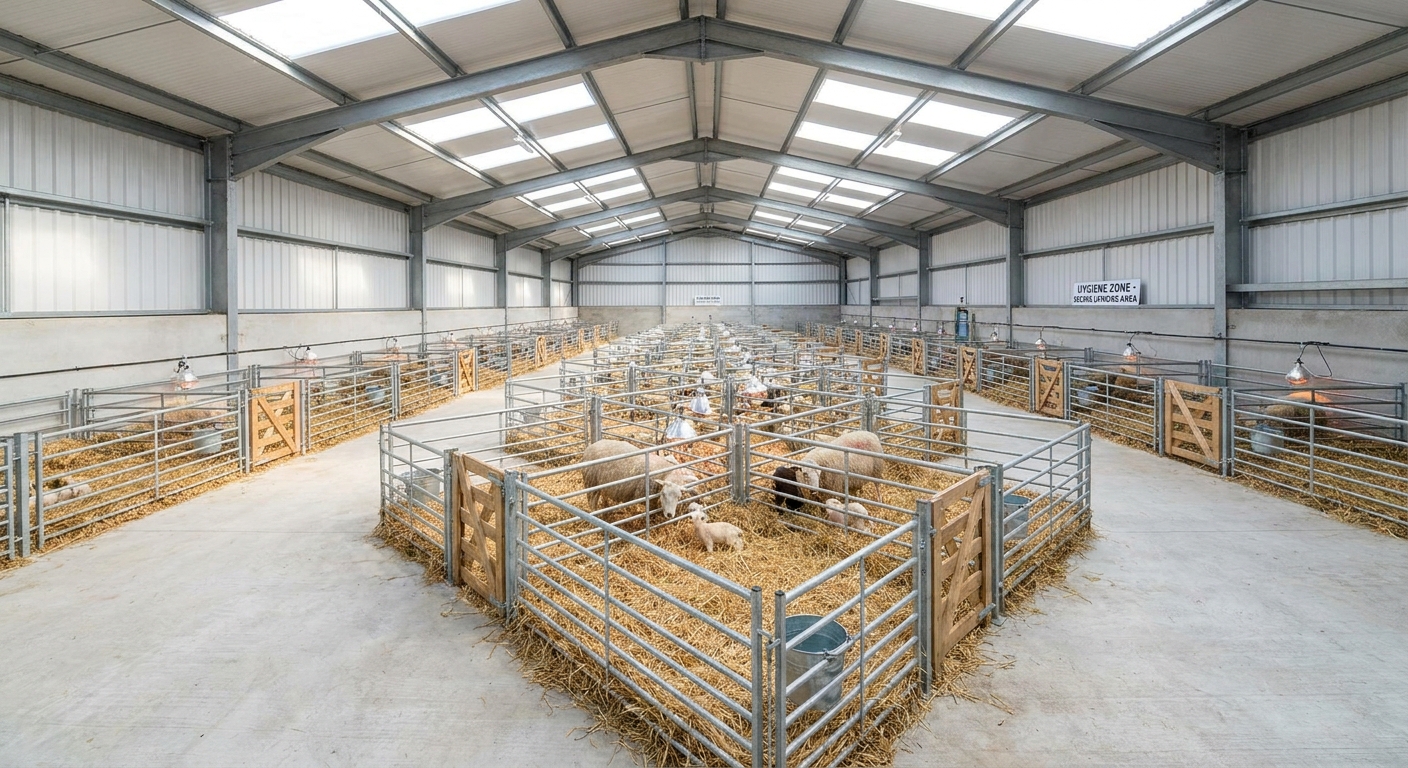
You design a lambing area by creating modular “jugs” or individual pens within the sheep barn layout during the peak season. These pens should be 4’x4′ or 5’x5′ to allow the ewe to bond with her lambs in a quiet, safe environment. You should position this area in the warmest, least drafty part of the barn to protect newborn lambs from chills. Modular gates allow you to expand or contract the lambing area as the season progresses.
The role of lambing jugs
Jugs are temporary individual pens used for the first 24 to 48 hours after birth to ensure the lambs are nursing properly. You can easily monitor each ewe and provide medical assistance if necessary.
Here is the kicker:
- Prevents lamb grafting issues.
- Easier to administer vaccinations.
- Keeps newborns away from the main flock.
Think about it: the first 24 hours determine the survival rate of your lamb crop.
Heating and lighting for newborns
In cold climates, you may need to install safe heat lamps or “creep” areas where lambs can stay warm. You must ensure that all electrical wiring is well out of reach of the sheep to prevent accidents.
Check this out:
- Lamps should be 24+ inches high.
- Use sturdy chains, not just cords.
- Dedicated circuits prevent fire risks.
Key Takeaway: A well-organized lambing area reduces ewe stress and significantly increases the survival rate of lambs.
| Pen Type | Size | Duration | |
|---|---|---|---|
| Individual Jug | 5′ x 5′ | 1-2 Days | |
| Mixing Pen | 10′ x 20′ | 1-2 Weeks | |
| General Flock | Open | Post-weaning |
Using modular panels allows you to reclaim this space for hay storage once the lambing season ends.
What are the requirements for sorting and handling?
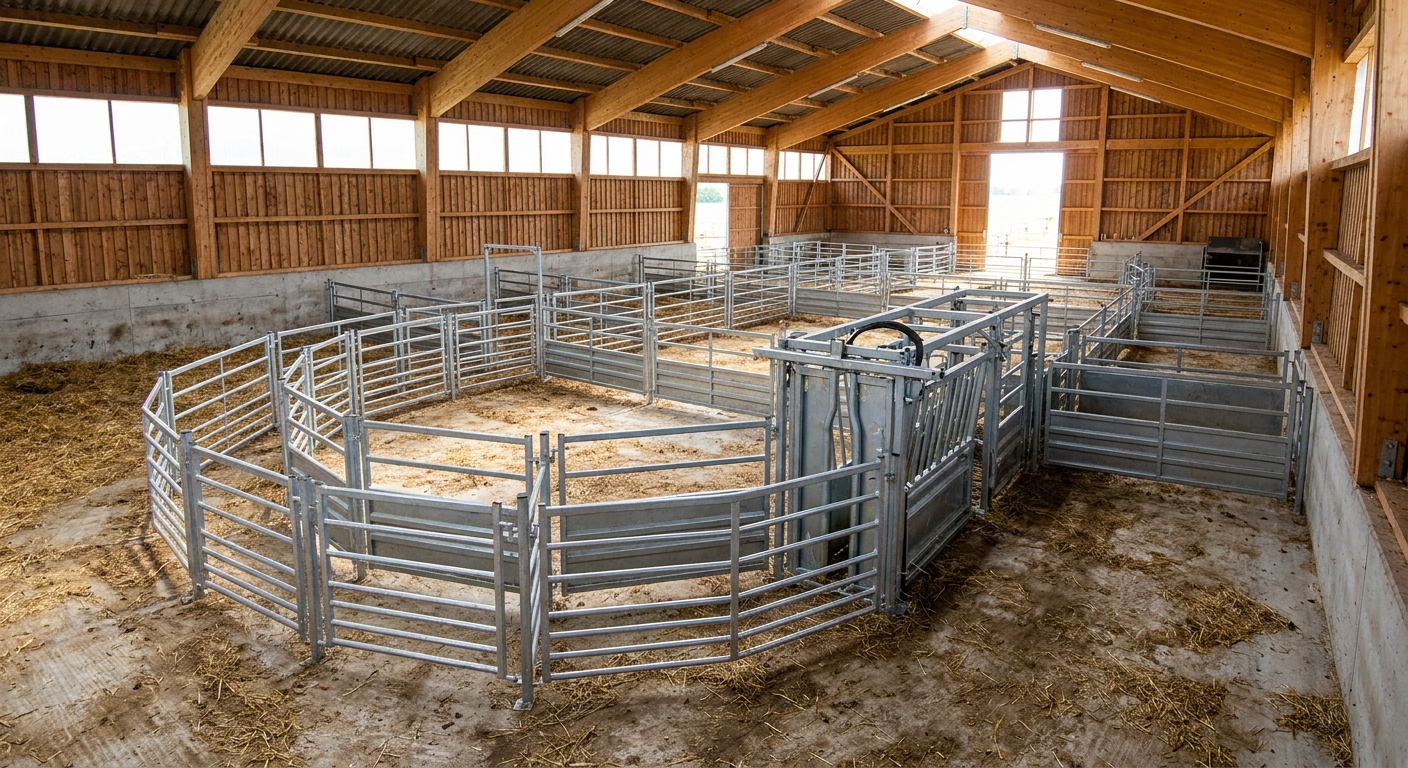
Sorting and handling require a dedicated race or chute system integrated into the sheep barn layout to facilitate medical treatments. You should design the system with curved lanes and solid walls, as sheep move more easily when they cannot see distractions ahead. You need a setup that allows for one-way movement to prevent the flock from turning back and causing jams. An efficient handling system makes tasks like deworming, shearing, and weighing much faster and safer.
Components of a handling system
A professional handling system includes a sweep tub, a drafting gate, and a head bale for individual animal restraint. You will find that sheep follow each other into a narrow race with less resistance than a wide gate.
Look at these essentials:
- Tapered sides prevent turnarounds.
- Anti-backing gates keep flow moving.
- Sorting gates allow for 3-way drafts.
But here is the kicker: a well-designed chute system is the only way to manage a large flock with minimal help.
Safety for sheep and handlers
All gates and chutes should be free of sharp edges or gaps where a foot could become trapped. You should use a non-slip surface in the handling area to prevent sheep from falling and injuring themselves.
Think about it:
- Smooth surfaces prevent fleece damage.
- Quiet gates reduce flock anxiety.
- Good lighting is vital for medical work.
Key Takeaway: Handling systems are essential for health management and reducing the physical strain on the operator.
| Handling Part | Function | Material Tip | |
|---|---|---|---|
| Race/Chute | Single file movement | Solid side panels | |
| Draft Gate | Separating sheep | Light, fast action | |
| Head Bale | Restraining individual | Galvanized steel |
Investing in a high-quality sorting system pays for itself in labor savings every time you process the flock.
Can a spacious interior layout improve productivity?
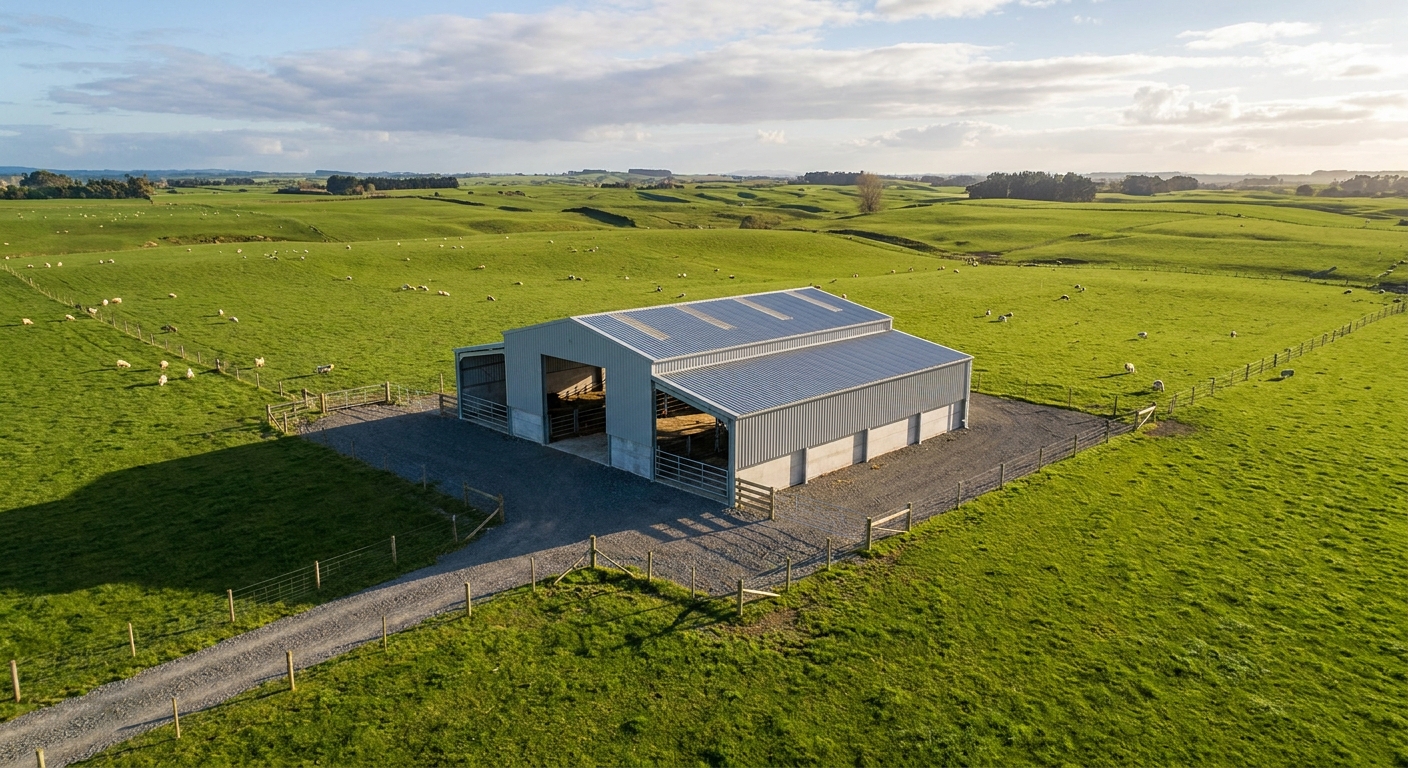
A spacious interior improves productivity by reducing the social friction that occurs in a cramped sheep barn layout . You will see better weight gains and lower disease rates when sheep have ample room to express natural behaviors. A spacious design also allows you to mechanize more tasks, such as using a skid steer for cleaning and a tractor for feeding. The extra room provides the flexibility needed to handle unexpected increases in flock size or changes in management strategy.
Facilitating mechanical cleaning
A large, open barn allows you to use heavy machinery to remove manure quickly, which is the most labor-intensive part of sheep farming. You want your entrances and internal gates to be wide enough to accommodate your largest tractor.
Here is the kicker:
- Cleaning takes hours, not days.
- Deeper litter can be managed effectively.
- Wide gates prevent machinery damage.
Make no mistake: if you can’t clean your barn with a machine, you are wasting valuable time and energy.
Future-proofing your operation
A spacious design ensures that your building can adapt as your business grows or as you change sheep breeds. You should always build slightly larger than your current needs to avoid the high cost of additions later.
Think about it:
- Space for more ewes in the future.
- Room for indoor hay storage.
- High ceilings for better air volume.
Key Takeaway: Spaciousness is not a luxury; it is a functional requirement for a modern, scalable livestock business.
| Expansion Factor | Benefit | Design Requirement | |
|---|---|---|---|
| Extra Width | More bunk space | Clear-span frame | |
| Extra Length | Modular pen addition | Standard bay sizes | |
| Ceiling Height | Improved ventilation | 14ft+ eave height |
A well-designed interior ensures that your facility remains a productive asset for the next generation of farmers.
Conclusion
Investing in a professional sheep barn is a strategic decision that defines the future of your farming operation. By focusing on clear-span steel construction, natural ventilation, and efficient flow, you create an environment where both the animals and the business can thrive. Our goal is to provide the engineering excellence and high-quality materials required to build structures that last for decades. We invite you to contact us to start the design process for your customized facility. Together, we can build a sheep barn that meets your specific needs and sets a new standard for agricultural performance.
Contact Us for a Customized Solution
Email:sales@showhoo.com.cn
Phone/WhatsApp:+86 186 7895 5927
Frequently Asked Questions
Can I build a sheep barn on a slope?
Yes, a slight slope is actually preferred as it aids in natural drainage away from the structure. However, the internal floor area must be leveled and properly compacted to ensure the stability of the penning systems.
What’s the best way to prevent ammonia buildup?
The best way is a combination of high-volume natural ventilation and a well-managed bedding or slatted floor system. Ammonia rises with heat, so effective ridge vents are essential for exhausting these gases before they affect the sheep’s lungs.
Can I use a sheep barn for other livestock?
Yes, our steel buildings are highly versatile. The modular interior design allows you to reconfigure the pens for goats, calves, or even equipment storage if your farming focus shifts in the future.
What’s the best height for a sheep barn?
A minimum eave height of 12 to 14 feet is recommended. This provides enough air volume for good ventilation and allows for the safe operation of tractors and skid steers inside the building.
Can I add insulation to a steel sheep barn?
Yes, we recommend using a “drip-stop” or anti-condensation coating on the roof panels. For colder climates, specialized insulation can be added to the walls to prevent heat loss during the sensitive lambing season.