
School design inspirations featuring steel building systems center on creating open, flexible, and rapidly deployable environments that maximize both student safety and long-term institutional value. You are likely facing a common dilemma: the urgent need for more classroom space paired with a shrinking budget and limited construction windows. Traditional masonry builds often fall behind schedule, leaving you with mounting costs and overcrowded hallways.
By transitioning to a modular steel school building, you solve these structural and financial headaches simultaneously. These systems offer the structural integrity of industrial builds with the refined aesthetics required for modern education. Now, let’s explore how these inspirations can reshape your next campus project.
Why choose a steel school building for your campus?
You choose a steel school building because it offers a unique combination of structural resilience and construction speed that traditional materials simply cannot match. This approach allows you to secure a 20+ year lifespan for your facilities while cutting traditional construction timelines by up to 40%. When you need a campus that stands the test of time, steel provides the ultimate foundation.
Integrating a steel school building into your master plan means you are investing in a facility designed for 50t crane capacities and 40m spans. This level of engineering ensures that your classrooms remain safe under heavy snow loads or high-traffic usage.
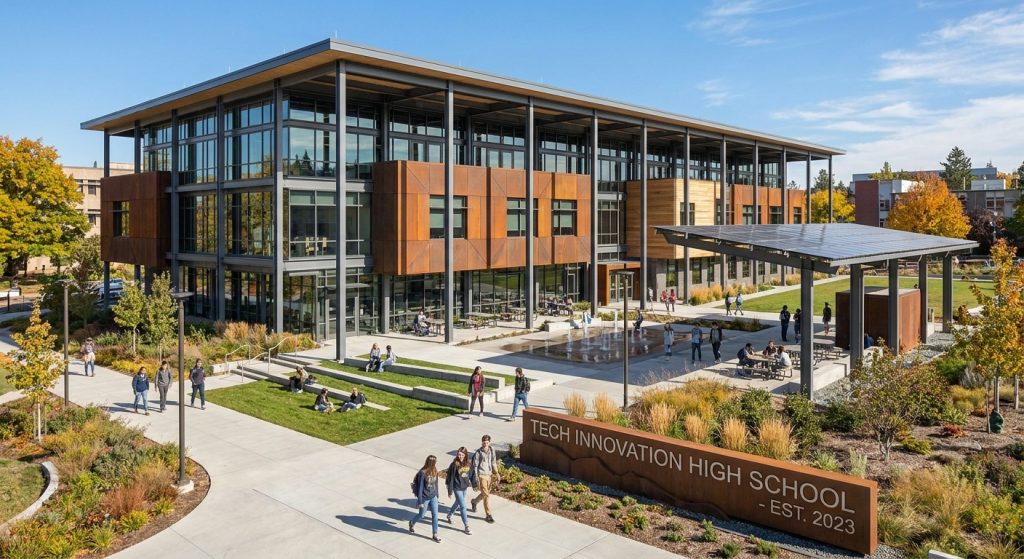
Superior Durability and Lifecycle
Steel is naturally resistant to many of the common threats that plague older school buildings. Unlike wood, it does not rot, and unlike concrete, it is less prone to cracking over decades of thermal expansion.
- Resistant to pests and termites.
- Low-maintenance exterior cladding.
- High strength-to-weight ratio.
Unmatched Seismic and Wind Resistance
Safety is your top priority, and steel structures are engineered to withstand extreme environmental forces. These buildings are designed to handle 55m/s typhoons and significant seismic activity without compromising the envelope.
Here is the deal: When a storm hits, a steel frame flexes rather than fractures, providing a safe haven for students. This engineering focus provides peace of mind for administrators and parents alike.
Key Takeaway: Choosing steel ensures a long-term, low-maintenance asset that protects your students against the most extreme environmental threats.
| Feature | Steel System Benefit | |
|---|---|---|
| Lifespan | 20+ years with minimal upkeep | |
| Resistance | High wind (55m/s) and seismic protection | |
| Maintenance | Corrosion-resistant coatings reduce repair costs |
Investing in high-grade structural steel minimizes the total cost of ownership over the building’s entire lifecycle.
How does modular design enhance classroom flexibility?
Modular design enhances classroom flexibility by utilizing steel school building systems to create wide, column-free interiors that can be reconfigured as your teaching needs change. You no longer have to worry about load-bearing interior walls trapping you in a rigid layout. This open-span capability allows you to transition a space from a traditional lecture hall to a collaborative makerspace in a single weekend.
A steel school building also supports phased growth, meaning you can add new classroom blocks as your enrollment numbers climb. The factory-controlled manufacturing process ensures that every new module fits perfectly with your existing structure.
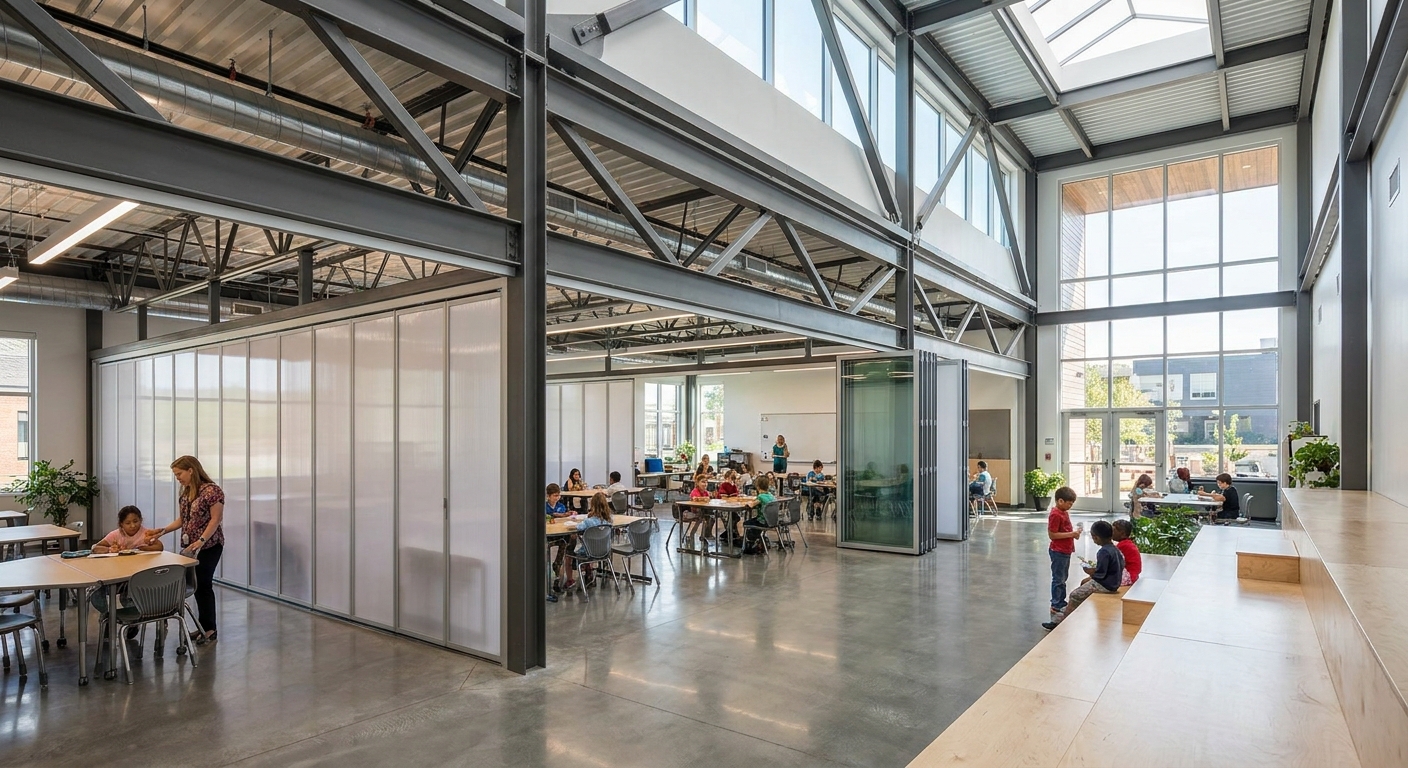
The Power of Column-Free Spans
Large, open spaces are essential for modern pedagogical approaches that favor group work and movement. Steel joists and girders allow you to span distances of up to 40 meters without requiring internal supports.
- Facilitates multi-purpose usage.
- Increases usable square footage.
- Simplifies interior furniture layout.
Adapting to Future Enrollment Growth
What happens when you suddenly need three more classrooms for the next semester? Because the system is modular, the expansion costs are often 35-50% less per square meter than your initial build.
But wait, there is more: You can actually plan for these expansions during the initial design phase. By preparing the foundations and connections early, adding a second floor or a new wing becomes a plug-and-play operation.
Key Takeaway: Modular steel systems give you the “spatial insurance” to adapt your campus to whatever educational trends or enrollment surges come next.
| Design Aspect | Impact on Learning Environment | |
|---|---|---|
| Open Spans | Allows for fluid movement and diverse teaching styles | |
| Modularity | Enables rapid, cost-effective campus expansion | |
| Customization | Layouts can be tailored to specific student counts |
Modular architecture allows schools to evolve alongside their students without requiring expensive demolition.
Can steel systems improve student health and safety?
Steel systems significantly improve student health and safety by using non-combustible materials and enabling the integration of high-performance steel school building ventilation frameworks. You provide a safer environment because steel does not contribute fuel to a fire, providing more evacuation time in emergencies. Furthermore, the precision of steel framing allows for airtight seals that optimize indoor air quality.
Your steel school building can also incorporate 100mm PU panels that reduce heat gain by up to 60%. This thermal regulation keeps classrooms at comfortable temperatures, which is proven to increase student focus and performance.
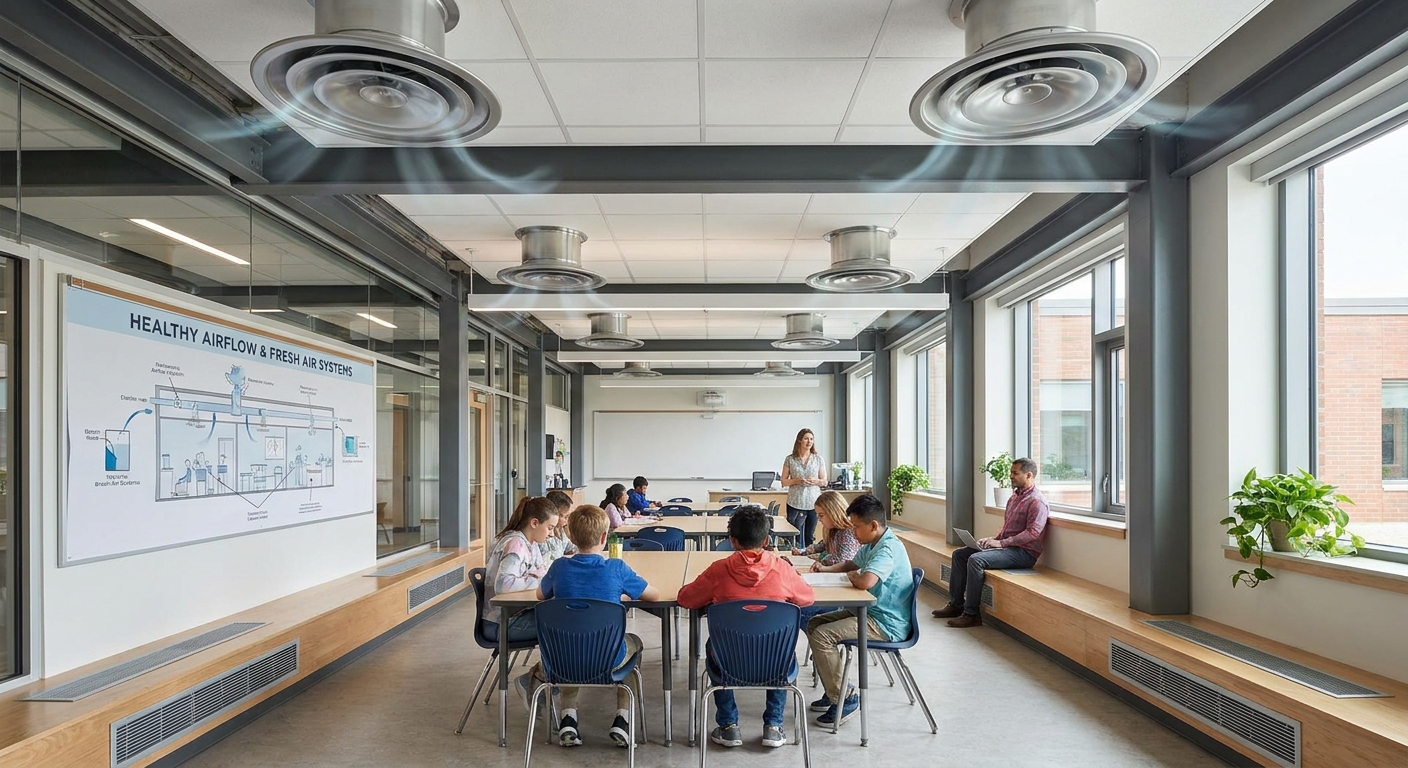
Non-Combustible Material Benefits
Unlike traditional timber-framed portables, steel structures offer superior fire resistance. This is a critical consideration for meeting modern building codes and securing lower insurance premiums for your district.
- Steel does not ignite or spread flames.
- Structural integrity remains longer under heat.
- Smoke development is significantly reduced.
Advanced Ventilation and Climate Control
Modern steel buildings are designed with integrated HVAC channels that ensure a constant flow of fresh air. This reduces the concentration of CO2 and airborne pathogens in the classroom.
Make no mistake: The health of your students is directly tied to the air they breathe. Steel structures allow for the installation of heavy-duty filtration systems that smaller, weaker buildings cannot support.
Key Takeaway: A steel-based facility provides a “hardened” health environment that protects students from fire risks and poor air quality.
| Safety Category | Steel Building Advantage | |
|---|---|---|
| Fire Safety | Non-combustible framing and cladding | |
| Air Quality | Precision-engineered seals for HVAC efficiency | |
| Thermal Comfort | PU insulation reduces indoor heat by 8-12°C |
A healthier classroom environment directly correlates with higher attendance rates and better academic outcomes.
Is rapid deployment possible for educational facilities?
Rapid deployment is entirely possible for educational facilities when you utilize a steel school building system that shifts 80% of the labor to a controlled factory environment. You can go from a vacant lot to a finished, 12-classroom block in as little as 8 to 12 weeks of on-site work. This speed allows you to complete entire projects during summer breaks, avoiding any disruption to the school year.
Every component of your steel school building is pre-engineered and numbered before it leaves the factory. This “Lego-style” assembly eliminates the common delays caused by on-site measurements and cutting errors.
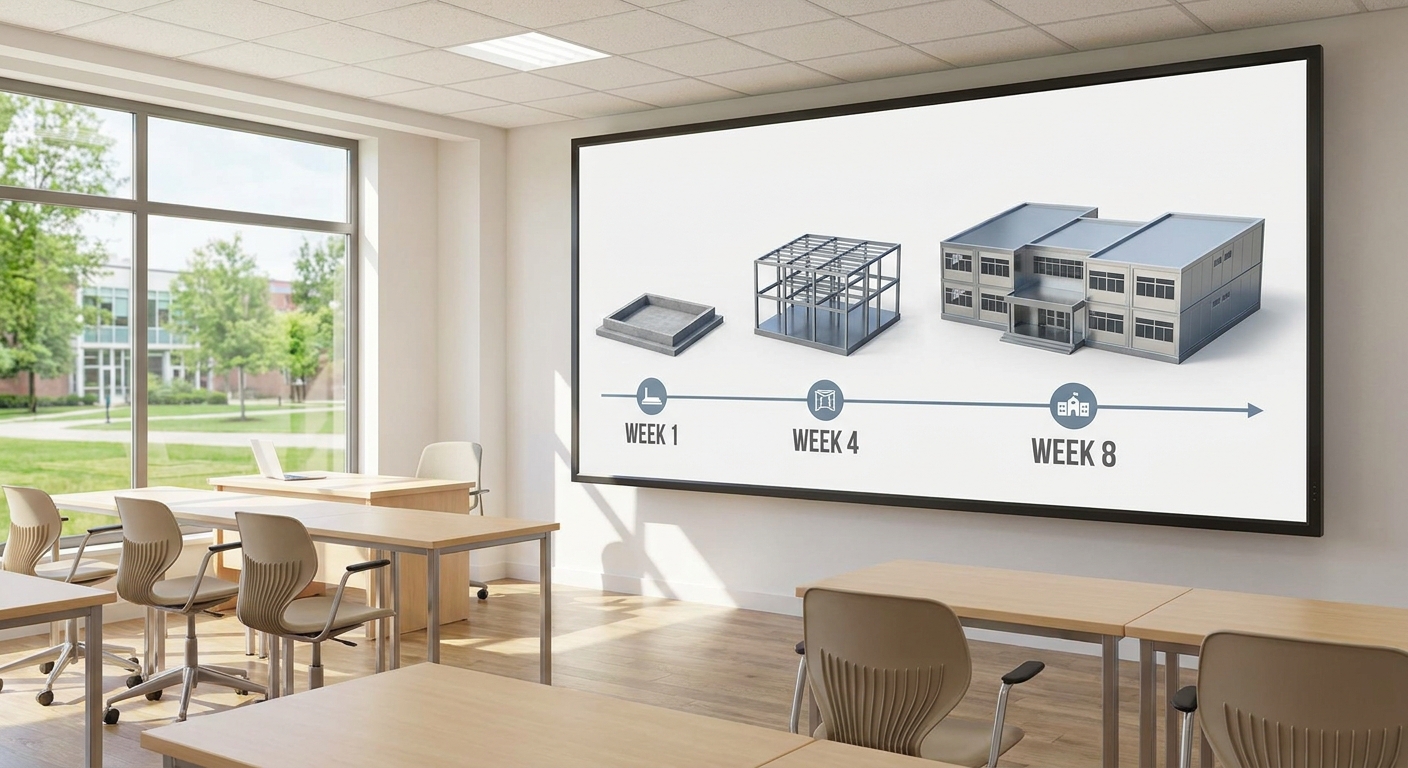
Accelerated Manufacturing Timelines
While your foundation is being poured on-site, the structural steel is being fabricated in a high-capacity facility. This parallel processing saves months of total project time.
- Standardized parts for quick turnaround.
- Quality control is performed at the factory level.
- No delays due to on-site weather conditions during framing.
Streamlined On-Site Assembly
The assembly process is significantly quieter and cleaner than traditional concrete construction. This is a major benefit if you are building an addition near existing classrooms that are still in use.
Think about it: A 1,000-student campus that would take two years in concrete can be delivered in just six months using steel. That is eighteen months of additional educational service you provide to your community.
Key Takeaway: Speed of construction is the primary driver for administrators who need to solve overcrowding issues without waiting years for a traditional build.
| Milestone | Traditional Timeline | Steel Building Timeline | |
|---|---|---|---|
| Design/Engineering | 3 – 5 Months | 1 – 2 Months | |
| On-Site Erection | 12 – 18 Months | 2 – 3 Months | |
| Total Delivery | 18 – 24 Months | 5 – 6 Months |
Shorter construction cycles reduce overhead costs and allow for faster responses to community growth.
How do clear-span structures transform school gymnasiums?
Clear-span structures transform school gymnasiums by providing massive, unobstructed floor areas that are essential for basketball, volleyball, and indoor assemblies. By using a steel school building gymnasium kit, you eliminate the need for interior columns that would otherwise interfere with gameplay or spectator sightlines. These designs allow you to host professional-level athletic events right on your campus.
Your steel school building gymnasium can also feature specialized acoustic roof decks. These systems manage the high noise levels typical of sporting events, ensuring that the space is also suitable for school-wide graduation ceremonies.
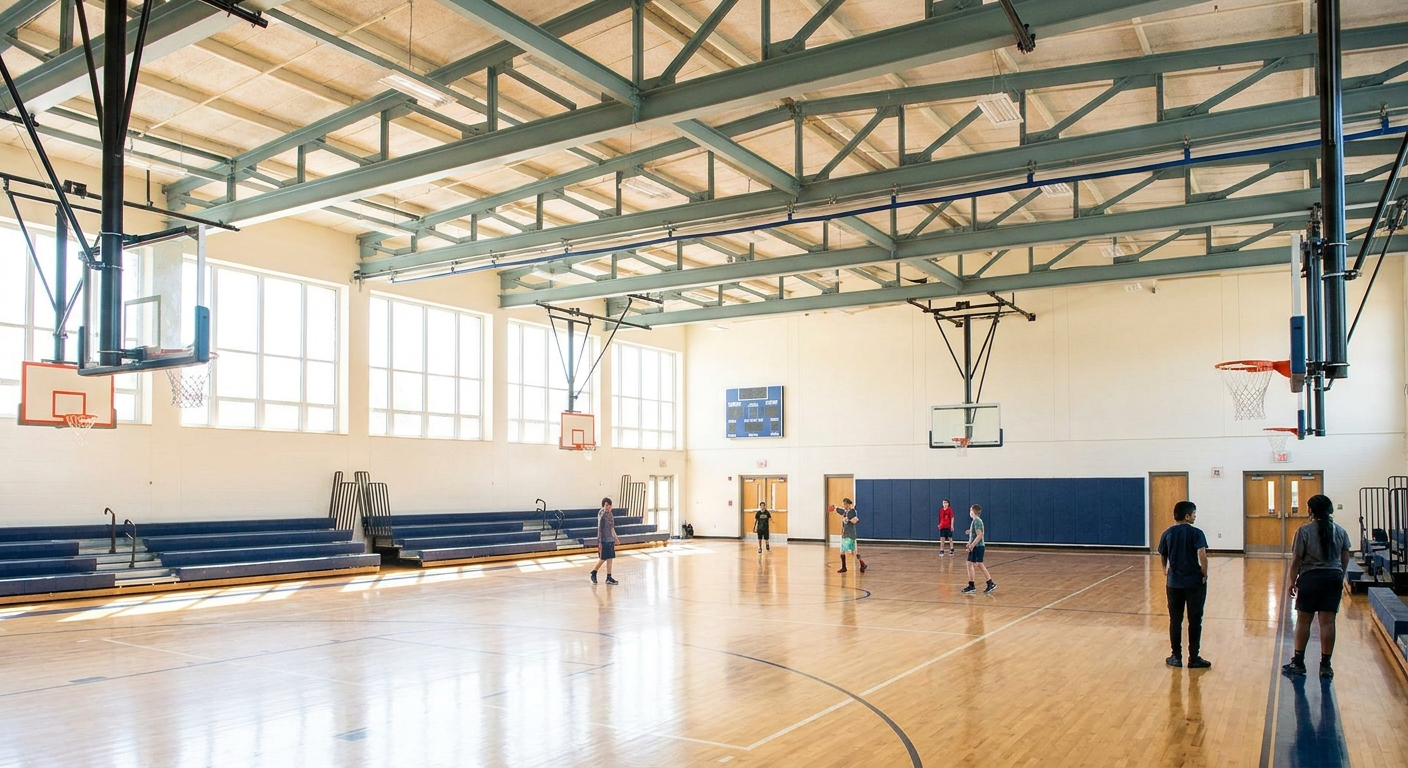
Unobstructed Views for Spectator Sports
A gym is only as good as its visibility. Steel systems allow for 185-foot-long joists that support the roof without a single pillar in the middle of the bleachers.
- Maximum seating capacity.
- Flexibility for multiple court layouts.
- Enhanced safety for moving athletes.
Acoustic Management in Large Volumes
The echo in a large metal building can be deafening if not handled correctly. Modern designs utilize perforated steel decks and insulation layers to absorb sound.
Believe it or not: A properly designed steel gym can have better acoustics than a traditional concrete hall. The secret lies in the integration of acoustic panels directly into the ceiling joist system.
Key Takeaway: Steel provides the “big room” capabilities schools need for athletics and community gatherings without the structural limitations of other materials.
| Facility Requirement | Steel Structural Solution | |
|---|---|---|
| Wide Open Space | Long-span joists up to 40m+ | |
| Sound Control | Integrated acoustic roof decking | |
| Multi-Purpose | Column-free floor for bleachers/stages |
Clear-span engineering turns a simple gym into a multi-functional community hub for sports and events.
Are steel buildings effective for specialized science labs?
Steel buildings are exceptionally effective for specialized science labs because they can support the heavy dead loads of laboratory equipment and complex piping systems. When you design a lab within a steel school building, you gain the structural strength needed to hang gas lines, ventilation hoods, and chemical storage units from the ceiling joists. This keeps the floor clear for student movement and flexible workstation arrangements.
The vibration-resistant nature of heavy-duty steel framing is also a plus for sensitive experiments. In a steel school building, you can trust that your microscopes and precision scales will remain stable even when students are walking in the hallways.
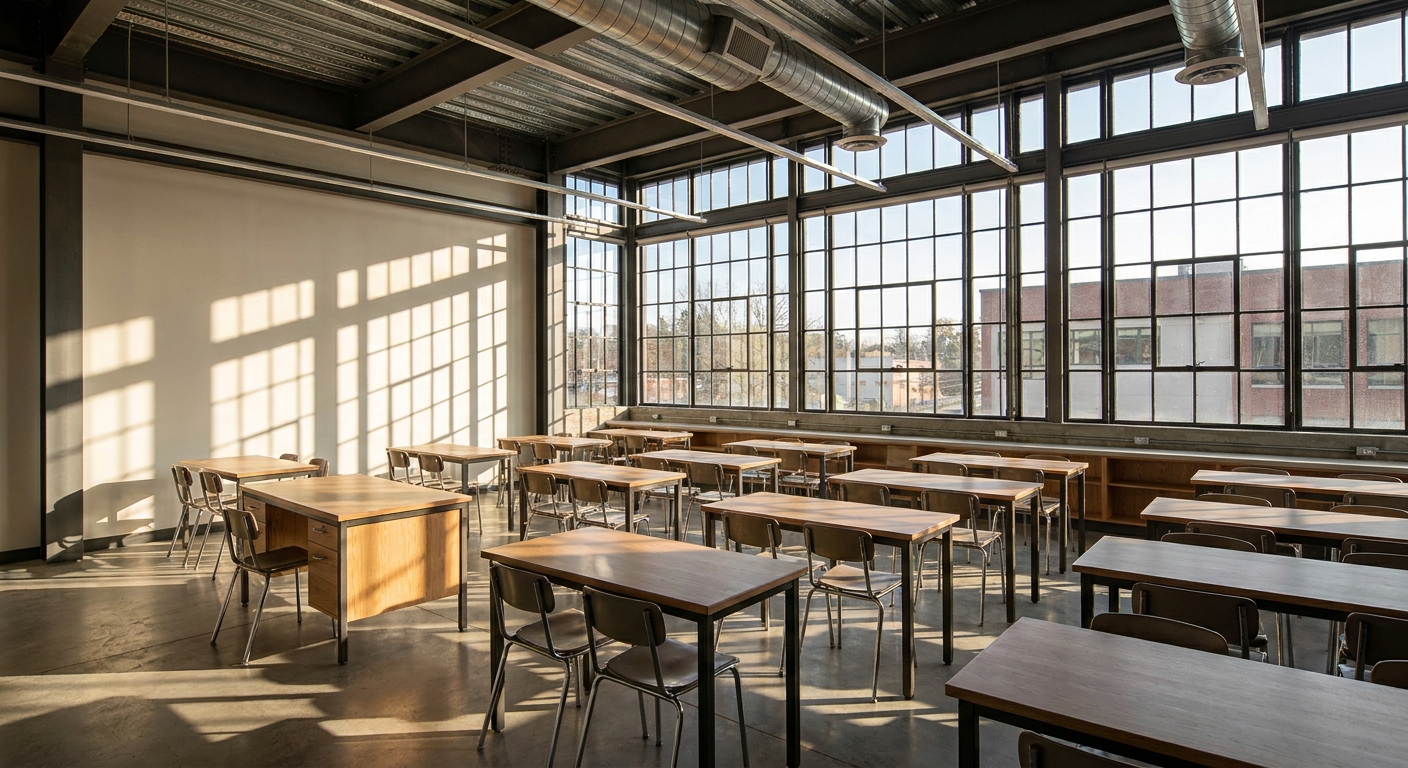
Supporting Heavy Research Equipment
Science curriculums are becoming more tech-heavy. Steel structures easily accommodate the weight of large 3D printers, CNC machines, and industrial-grade fume hoods.
- Joists are engineered for specific load requirements.
- Easy attachment points for overhead utilities.
- Reinforced floors for heavy machinery.
Integrating Modern Technical Infrastructure
Modern labs require a web of electrical, water, and data lines. The open nature of steel joists makes it incredibly easy for contractors to run these utilities through the ceiling.
It boils down to this: You save money on plumbing and electrical labor because the workers don’t have to drill through concrete beams to install the necessary lab infrastructure.
Key Takeaway: Steel’s strength and utility-friendly design make it the superior choice for high-tech STEM and science facilities.
| Lab Need | Steel Building Capability | |
|---|---|---|
| Equipment Support | High-load joists for overhead mounting | |
| Utility Routing | Open-web joists for easy pipe/wire runs | |
| Stability | Vibration-dampening framing for precision work |
Technical facilities require structural adaptability to accommodate the evolving tools of modern science.
What makes steel a sustainable choice for eco-schools?
Steel is a sustainable choice because it is one of the most recycled materials on earth and its precision manufacturing minimizes construction waste. In a steel school building project, nearly 100% of the steel can be recycled at the end of the building’s life. This makes it an ideal fit for districts committed to reducing their carbon footprint and teaching students about environmental responsibility.
Furthermore, the insulation capabilities of a steel school building are top-tier. By using PU sandwich panels, you can reduce your energy consumption for cooling and heating by up to 60%, drastically lowering your monthly utility bills.
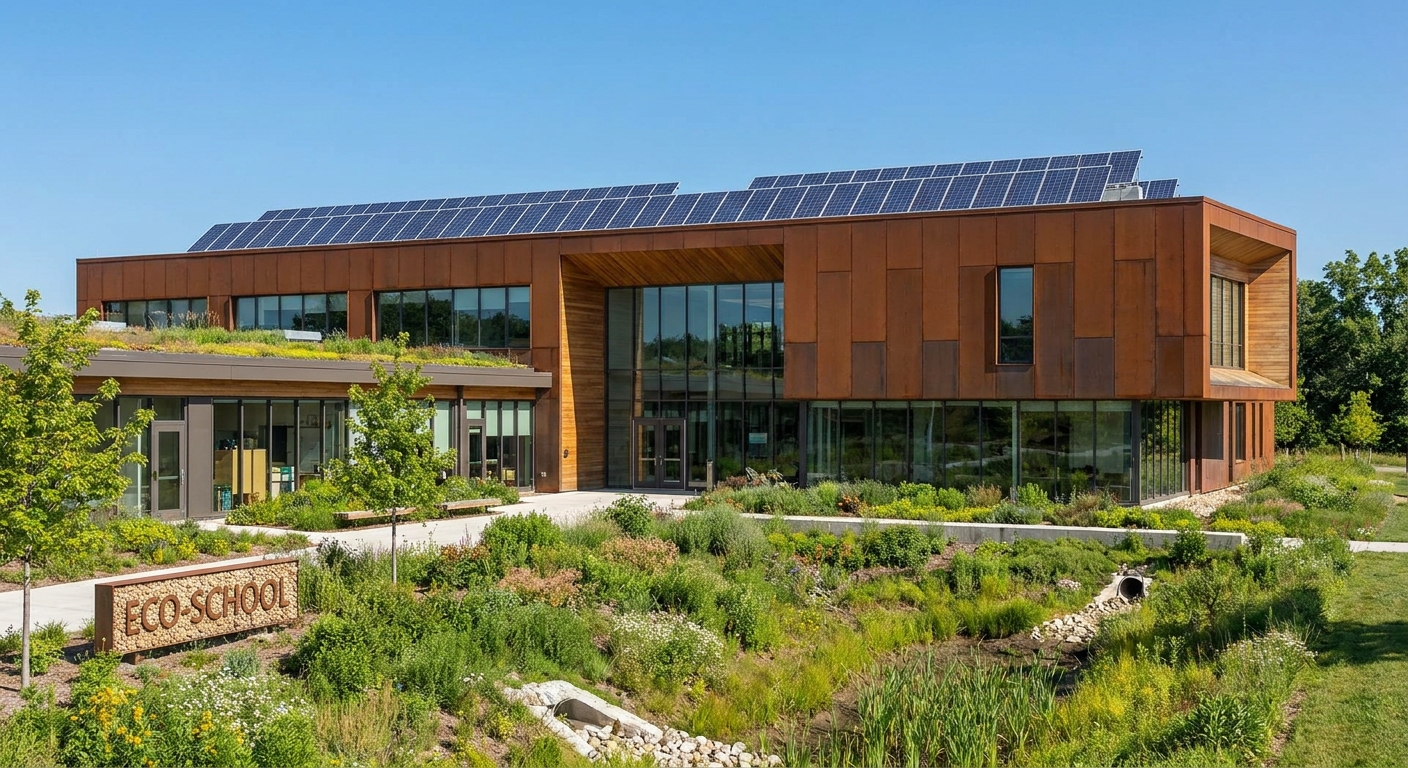
High Recyclability and Reduced Waste
Traditional construction sites are famous for their dumpsters full of wasted wood and concrete. Steel buildings are cut to exact lengths in the factory, meaning there is virtually zero waste on your school’s property.
- Components are 100% recyclable.
- Factory fabrication reduces site pollution.
- Efficient transport due to lightweight components.
Thermal Efficiency with PU Panels
Energy costs are often the second-largest expense for a school after teacher salaries. High-quality insulation panels create a tight thermal envelope.
The reality is: You can reinvest the money you save on electricity back into classroom supplies and student programs. A sustainable building isn’t just good for the planet; it’s good for your school’s bottom line.
Key Takeaway: Sustainable steel construction allows your school to serve as a living example of green technology while saving significantly on energy costs.
| Sustainability Goal | Steel Building Contribution | |
|---|---|---|
| Waste Reduction | Precision factory cutting eliminates site scrap | |
| Energy Savings | 100mm PU panels reduce heat gain by 60% | |
| End-of-Life | 100% of structural frame is recyclable |
Green buildings foster a culture of environmental stewardship while providing long-term operational savings.
Can you achieve modern aesthetics with metal structures?
You can absolutely achieve high-end modern aesthetics with metal structures by using a variety of cladding options, glass curtain walls, and sleek architectural lines. A steel school building no longer has to look like a warehouse; it can feature beautiful wood-grain finishes, vibrant colors, or industrial-chic exposed beams. These designs create an inspiring atmosphere that makes students want to come to school every day.
Inside a steel school building, you can create soaring, light-filled libraries and common areas. The strength of the steel frame allows for large windows that flood the interior with natural light, which is scientifically linked to improved mood and learning outcomes.
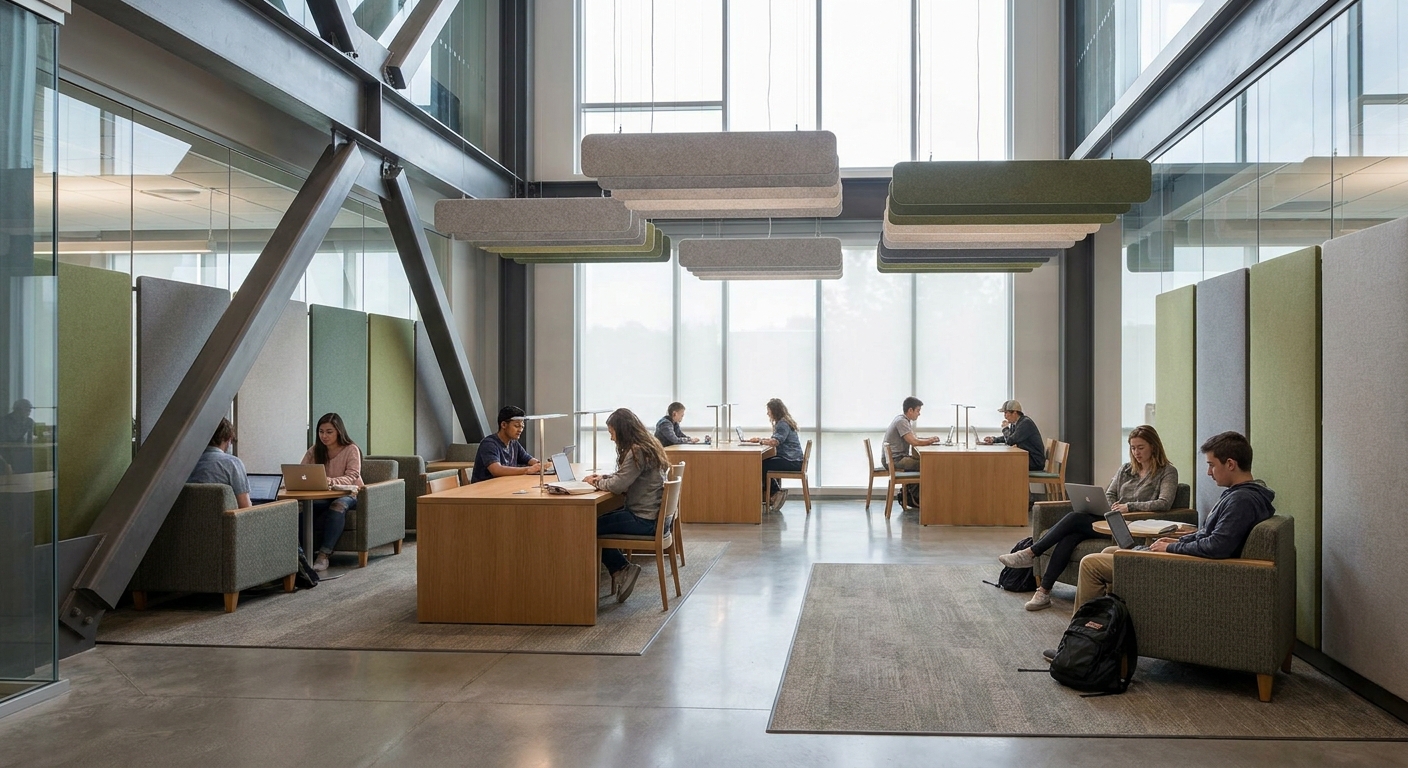
Customizable Cladding and Visual Finishes
The exterior of your school is the first thing people see. Steel panels come in hundreds of textures and colors to match your district’s branding or the local landscape.
- Choice of vertical or horizontal paneling.
- Integration of brick or stone veneers.
- Modern metallic finishes for a high-tech look.
Creating Inspiring Learning Libraries
Steel’s ability to support large spans without walls means you can create “learning commons” that feel more like a modern university than a traditional K-12 building.
But it gets better: These open spaces can incorporate mezzanines and floating staircases made of steel, adding a sense of drama and openness that concrete simply can’t achieve without massive expense.
Key Takeaway: Modern steel buildings are architectural chameleons that can be designed to be as beautiful as they are functional.
| Aesthetic Feature | Design Benefit | |
|---|---|---|
| Glass Integration | Large windows for maximum natural light | |
| Exposed Steel | Modern, industrial-chic interior vibe | |
| Panel Options | Endless colors and textures for curb appeal |
Inspiring architecture plays a vital role in student engagement and community pride.
How does steel construction help manage tight school budgets?
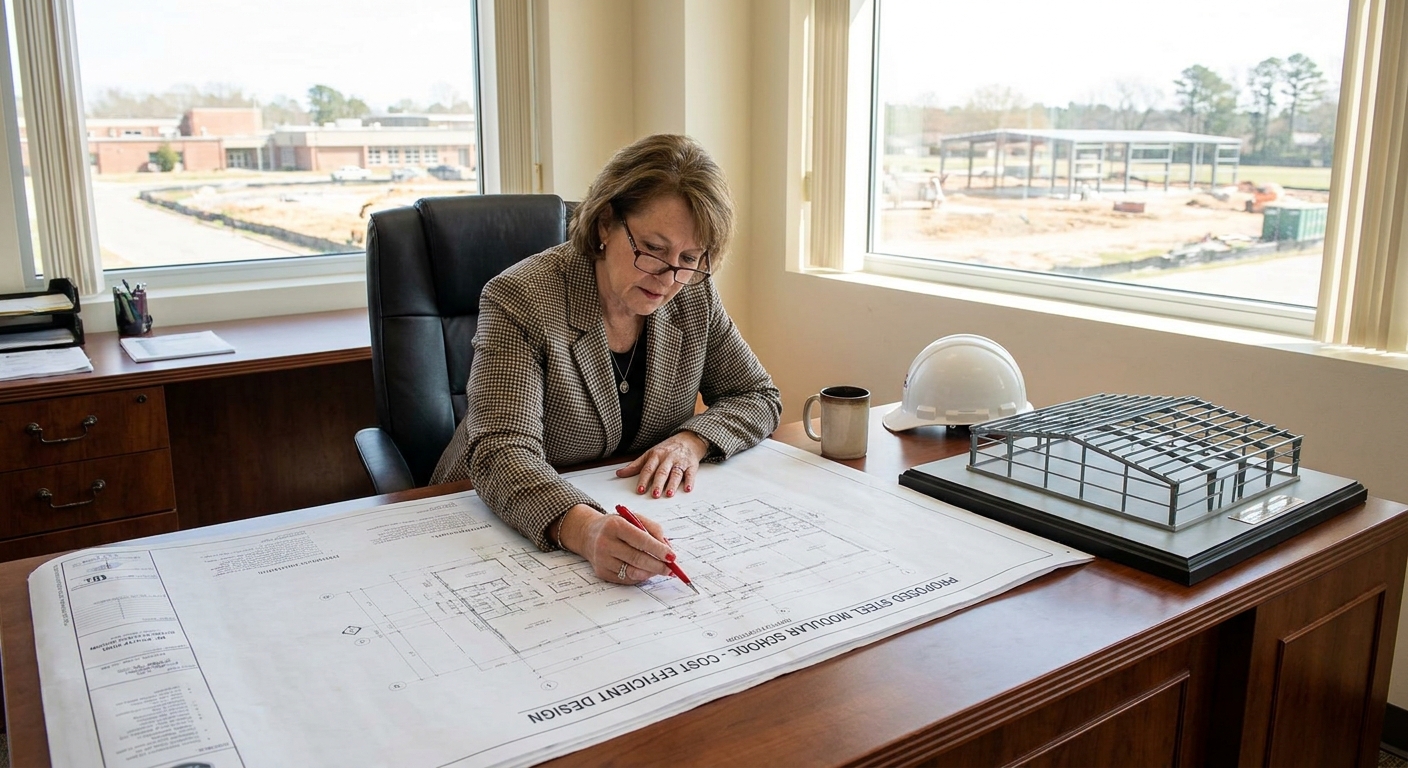
Steel construction helps you manage tight budgets by providing steel school building solutions that are 15-30% cheaper than traditional masonry. Because you are buying factory-direct, you eliminate the “middleman” markups that often inflate public project costs. This efficiency allows you to build more classrooms for every dollar of taxpayer or donor money spent.
The financial benefits of a steel school building extend far beyond the initial construction. Because the structures are so durable and resistant to common damage, your long-term maintenance budget will be significantly lower than that of an older, conventional facility.
Factory-Direct Pricing Advantages
When you work with a manufacturer that has a 50,000 m² facility, you benefit from economies of scale. All components are sourced and built in-house, keeping the price per student remarkably low.
- Reduced logistical costs.
- Fixed pricing with fewer “change order” surprises.
- Lower on-site labor requirements.
Long-Term Maintenance Cost Reductions
Steel doesn’t warp, sag, or require frequent repainting if finished with high-quality coatings. This stability saves you tens of thousands of dollars in “facade repairs” over the next two decades.
Check this out: Every dollar you don’t spend on fixing a leaky roof or a cracked wall is a dollar that can go toward student technology. Steel is the smart choice for administrators who think about 10-year and 20-year budget cycles.
Key Takeaway: Steel offers the lowest total cost of ownership by combining lower initial prices with significantly reduced ongoing maintenance.
| Budget Factor | Traditional Savings vs. Steel | |
|---|---|---|
| Initial Cost | Steel is 15-30% less expensive | |
| Expansion Cost | Modular additions are 40% cheaper | |
| Labor Cost | 40% reduction in on-site man-hours |
Strategic budget management requires choosing building materials that offer both low entry costs and high durability.
Why is climate adaptation critical in new school design?
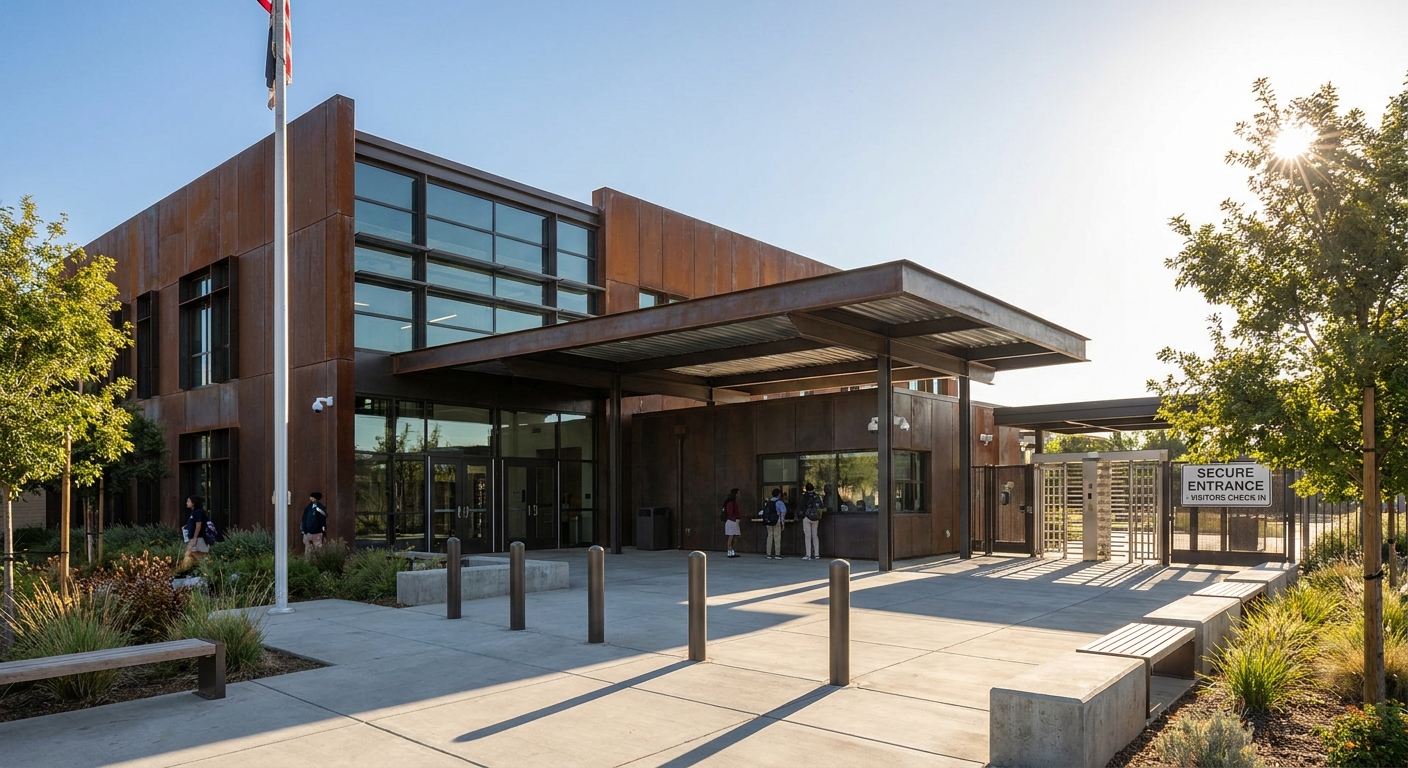
Climate adaptation is critical because your steel school building must protect students from increasingly frequent extreme weather, such as heatwaves and high-velocity winds. If you are building in a tropical or arid region, your classrooms must stay cool without bankrupting the school with air conditioning costs. Steel structures are uniquely suited for these “climate-resilient” designs due to their high-performance insulation.
A steel school building also excels in regions prone to heavy rain or snow. The steep-pitched roof designs and high-strength girders ensure that the building never sags under the weight of an unexpected blizzard or tropical downpour.
Resilience Against Extreme Weather Events
Standardized steel builds are tested to withstand 55m/s winds. This level of engineering is often higher than what local codes require, giving you an extra margin of safety.
- Waterproof seals prevent mold growth.
- Heavy-duty roof systems for snow loading.
- Corrosion resistance for coastal environments.
Optimizing Energy Use in Variable Climates
The use of sandwich panels with PU or Rockwool cores acts as a thermal break. This prevents the outside heat from entering the classroom, keeping students alert even in 40°C weather.
What does this mean for you? It means you can build a comfortable, safe school in any environment—from the humid Philippines to the remote regions of Kenya—and know that the students inside will be protected from the elements.
Key Takeaway: Climate-adapted steel buildings are an insurance policy for your educational mission, ensuring the school stays open regardless of the weather.
| Climate Challenge | Steel Design Solution | |
|---|---|---|
| Extreme Heat | 100mm PU panels reduce heat by 60% | |
| High Winds | Pre-engineered for 55m/s typhoon speeds | |
| Heavy Rainfall | High-performance drainage and waterproof seals |
Building for the climate of tomorrow is a fundamental responsibility of today’s school administrators.
Building the Future of Education
Your journey toward a more efficient, safe, and flexible campus begins with rethinking the very materials you use to build. We have seen how steel systems solve the most pressing problems in education today: overcrowding, rising costs, and climate instability. By choosing a prefabricated steel approach, you aren’t just putting up walls; you are creating a scalable platform for learning that can grow alongside your community.
At Showhoo, we are dedicated to providing factory-direct, high-quality educational infrastructure that meets global safety standards without the premium price tag. Our vision is to empower every school district to provide world-class facilities to their students through innovative engineering and rapid deployment.
Don’t let budget constraints or slow construction cycles hold your students back any longer. We invite you to contact us today to discuss your specific campus needs and receive a comprehensive quote for your next project.
Frequently Asked Questions (FAQ)
Can I expand a steel school building later if my enrollment grows?
Yes, expansion is one of the primary benefits of this system. Because the structures are modular, you can add new classroom blocks or even additional floors at a cost that is 35-50% less than the initial build, with very little disruption to your current students.
How do I know if a steel building will meet my local safety codes?
Showhoo buildings are engineered to ISO9001 and EN1090 certifications, which are recognized globally. Our engineering team uses advanced BIM modeling to ensure your specific project meets all local seismic, wind, and snow load requirements before the first piece of steel is ever cut.
Will the metal exterior make the classrooms too hot in the summer?
Absolutely not, provided you use the correct insulation. By utilizing our 100mm PU sandwich panels, you can actually reduce the indoor temperature by 8-12°C compared to the outside air, making the building more thermally efficient than many traditional concrete structures.
Is the maintenance on a steel school difficult compared to brick?
Actually, it is much easier and more cost-effective over time. High-quality galvanized steel and advanced exterior coatings are resistant to rust, rot, and pests, meaning you won’t deal with the cracking or termite issues that common masonry or wood buildings face.
Can a steel building really be finished in just a few months?
Yes, it is standard for our projects to be completed in a 5 to 6-month total window. Because the components are manufactured in our factory while your foundation is being prepped, on-site erection for a typical classroom block only takes 8 to 12 weeks.